Golden-mantled Tree Kangaroo Dendrolagus pulcherrimus
Golden-mantled Tree Kangaroo Dendrolagus pulcherrimus
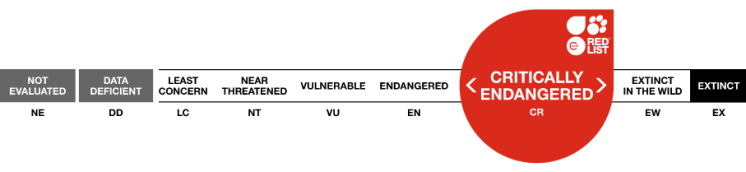
Red List Status: Critically Endangered
Location: Papua New Guinea (Torricelli Range), West Papua (Foja Mountains)
In the misty cloud forests of New Guinea’s mountains, where ancient trees emerge from perpetual fog and birdsong echoes through emerald canopies, Golden-mantled Tree Kangaroos move with quiet grace through their vanishing world.
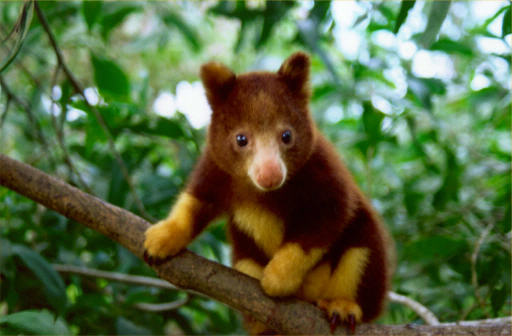
Golden-mantled Tree Kangaroos are one of the world’s rarest marsupials. Rarely glimpsed in the wild, their distinctive chestnut coats are adorned with golden stripes. These remarkable climbing kangaroos have suffered a catastrophic 90% population decline over three generations, leaving fewer than 500 individuals clinging on for survival in two remote mountain ranges. Palm oil expansion strips away their ancient forest homes while hunting pressure decimates remaining populations. The Tenkile Conservation Alliance protects the Torricelli population through community-based conservation, offering hope for recovery. #BoycottPalmOil #Boycott4Wildlife
Golden-mantled Tree #Kangaroos 🦘🤎 are critically endangered #marsupials of #PapuaNewGuinea 🇵🇬 They’re on the edge of #extinction from #palmoil #deforestation and #hunting. Resist for them and #Boycottpalmoil 🌴☠️🤮🙊⛔️ #Boycott4Wildlife @palmoildetect https://palmoildetectives.com/2021/01/26/golden-mantled-tree-kangaroo-dendrolagus-pulcherrimus/
Share to BlueSkyShare to TwitterAppearance and behaviour
The lowland areas of their distribution are earmarked for deforestation and oil palm expansion.
IUCN Red List
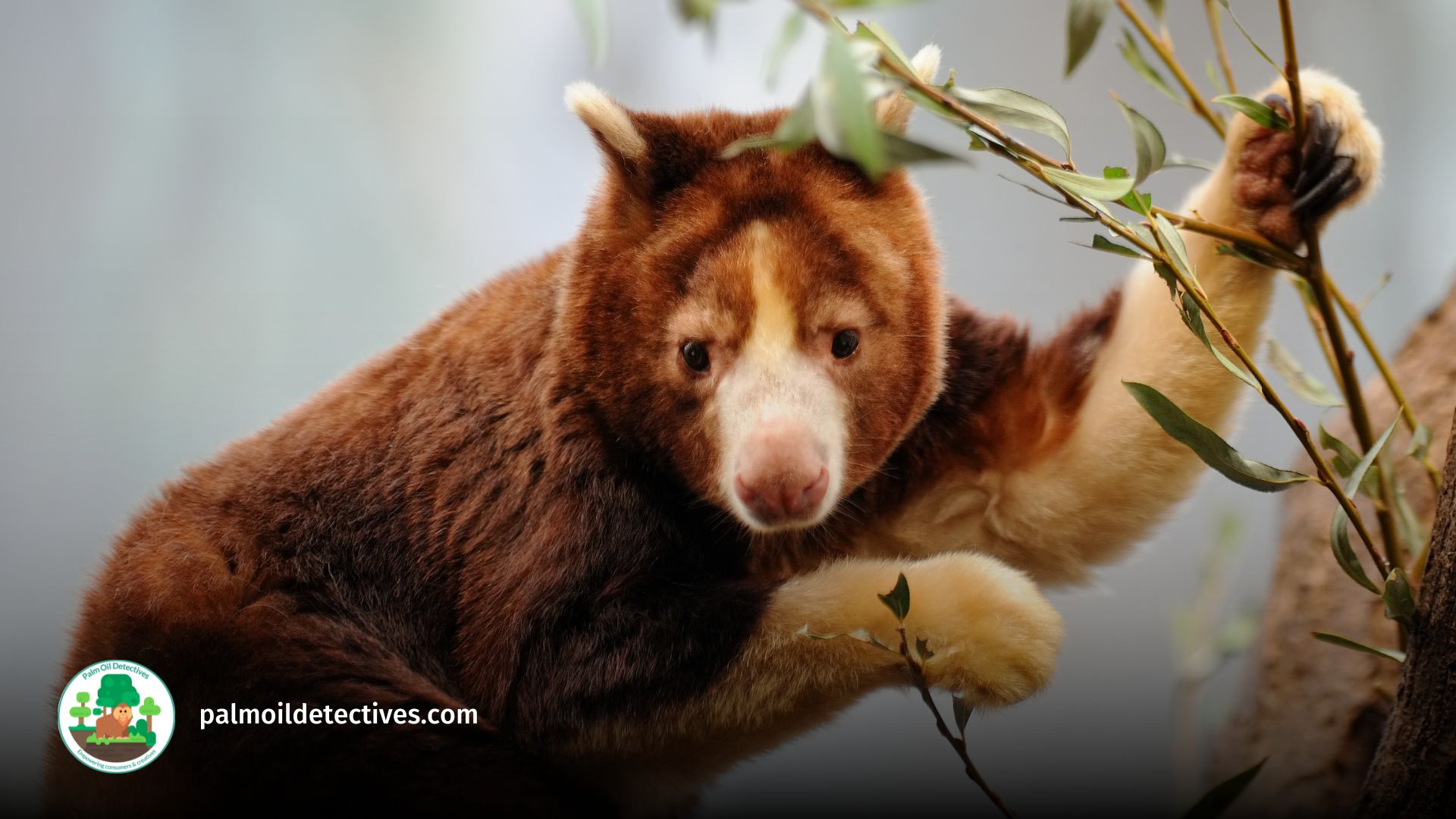
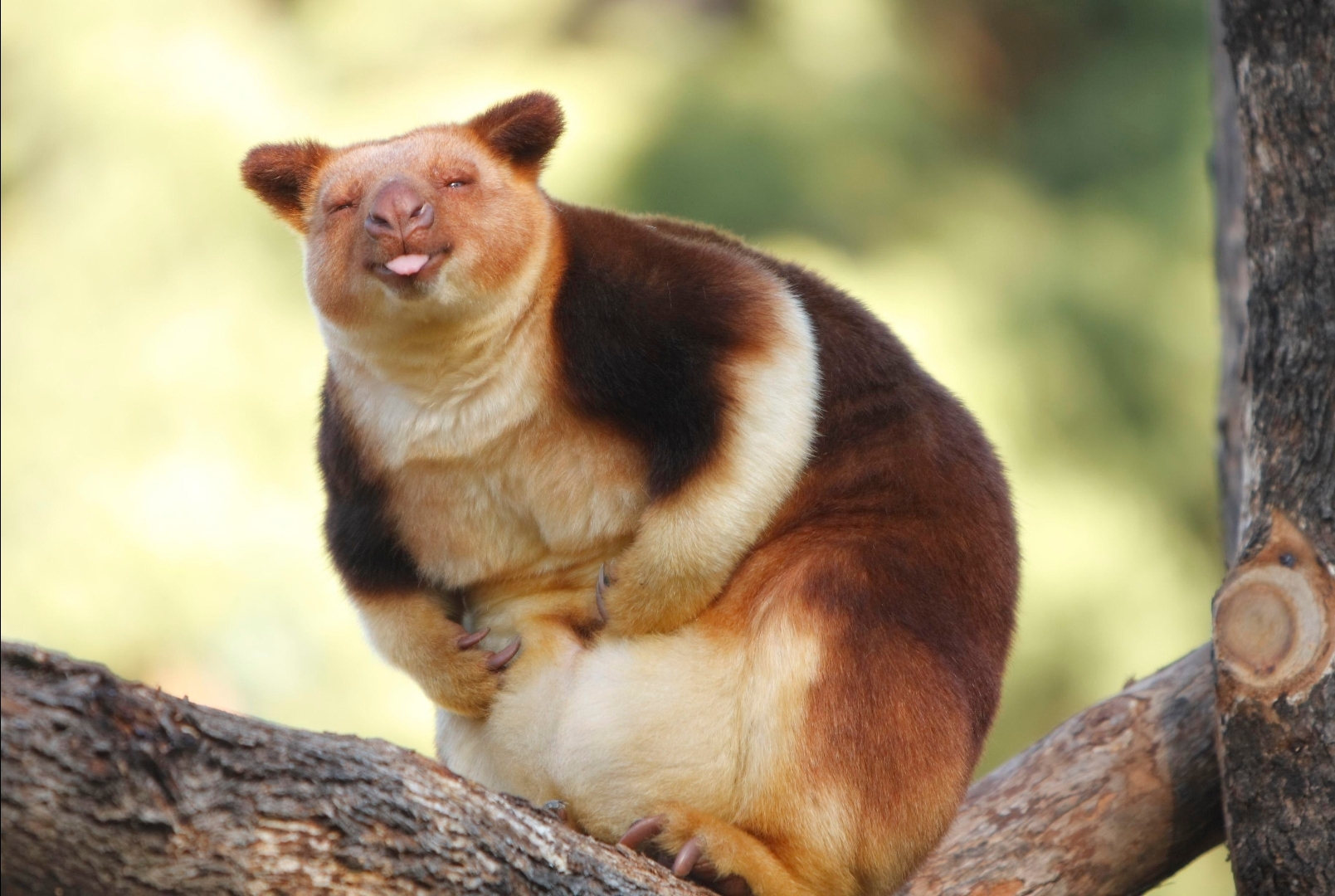
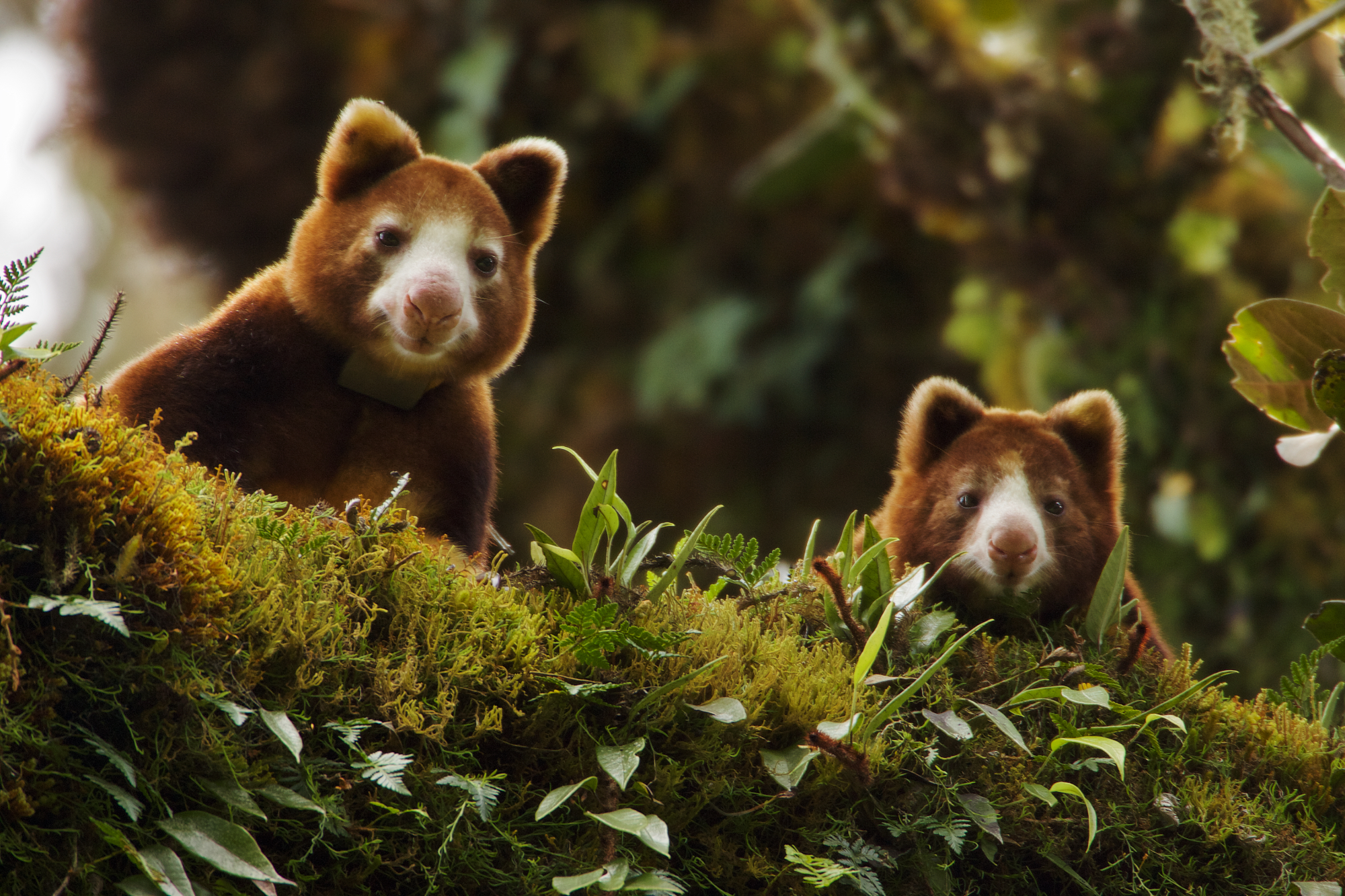
These resilient Tree Kangaroos display the physiological adaptations of arboreal marsupials with chestnut-brown coats, pale bellies, and distinctive double golden stripes running down their backs. Their yellowish necks, cheeks, and feet create a striking contrast against their darker fur, while their powerful tails marked with pale rings provide essential balance during canopy travel. These compact marsupials measure 40-77 centimetres in body length with tails reaching 40-87 centimetres.
Golden-mantled Tree Kangaroos possess powerful forelimbs and curved claws perfectly adapted for gripping bark and branches. Their shorter hind legs allow independent movement essential for navigating complex three-dimensional forest environments. Unlike ground kangaroos, these arboreal specialists can move both forwards and backwards along branches, using their long tails as fifth limbs for stability and balance.
Diet
Golden-mantled Tree Kangaroos are primarily folivorous, feeding on leaves from dozens of plant species found throughout their montane forest habitat. They supplement their diet with seasonal fruits, herbs, and sedges, spending considerable time foraging both in trees and on the forest floor. These selective feeders prefer young leaves and shoots from specific plant species, making them vulnerable when preferred food sources disappear.
Their feeding behaviour includes both arboreal and terrestrial foraging, with Golden-mantled Tree Kangaroos descending to ground level to access fallen fruits and herbs. This dietary flexibility has allowed them to persist in their restricted mountain habitats, though their dependence on specific plant species makes them particularly vulnerable to habitat conversion and fragmentation.
Reproduction and mating
Golden-mantled Tree Kangaroos reach sexual maturity at approximately two years of age with no defined breeding season. Females have an oestrous cycle estimated at 54 days with a gestation period of about 45 days. Once born, the tiny joey remains in the mother’s pouch for 10 months before emerging to spend another 2-3 months at foot, learning essential climbing and foraging skills.
These marsupials live relatively long lives, with captive individuals surviving over 14 years, suggesting wild Golden-mantled Tree Kangaroos could live 8-10 years under optimal conditions. Their extended dependency period reflects the complex skills required for arboreal survival, with mothers teaching joeys essential climbing techniques and food recognition during their extended care period.
Geographic Range
Golden-mantled Tree Kangaroos now survive in only two isolated mountain ranges across New Guinea. The Torricelli Range population in Papua New Guinea extends from Weight to Kuliek, while a smaller population persists in West Papua’s Foja Mountains. Fossil records indicate they once ranged across the Vogelkop Peninsula and other areas, but have been extirpated from 99% of their historical range.
Unconfirmed sightings from Papua New Guinea’s Prince Alexander Range suggest possible remnant populations, though these require verification. Their extremely restricted range of just 300 square kilometres makes Golden-mantled Tree Kangaroos particularly vulnerable to local extinctions from habitat loss, hunting, or natural disasters.
Threats
Industrial palm oil deforestation
Palm oil companies systematically bulldoze and burn Golden-mantled Tree Kangaroo habitat across West Papua, replacing mid-montane rainforests with lifeless monocultures. Korean company Korindo has destroyed 11,700 hectares of pristine rainforest in recent years, eliminating the complex canopy structure these arboreal marsupials require for survival. The company burns forests illegally, knowing this practice destroys critical habitat for tree kangaroos, birds of paradise, and cassowaries. Palm oil expansion has eliminated lowland portions of their range entirely, forcing Golden-mantled Tree Kangaroos into higher elevation refuges. Plantation development fragments the continuous forest cover essential for these territorial animals, creating isolated patches too small to support viable populations.
Hunting for bushmeat
Local communities hunt Golden-mantled Tree Kangaroos for subsistence protein, targeting them with guns during opportunistic forest expeditions. Hunting pressure intensifies near human settlements where access improves through road development and infrastructure expansion. The species’ small group sizes and territorial nature make them particularly vulnerable to hunting pressure, with entire local populations eliminated through intensive harvesting.
Infrastructure and road projects
Road construction opens previously inaccessible mountain areas to human exploitation, bringing hunting pressure and habitat disturbance into formerly secure territories. Small-scale agriculture eliminates forest understory vegetation while creating edge effects that degrade remaining habitat quality. The conversion of traditional forest management systems to intensive agriculture removes the ecological balance that historically supported both human communities and wildlife populations.
Take Action!
Use your wallet as a weapon and #BoycottPalmOil #Boycott4Wildlife every time you shop. Adopt a vegan lifestyle protecting both wild and farmed animals from agricultural expansion. Support the Tenkile Conservation Alliance’s community-based protection programmes recognising indigenous land rights. Refuse products containing palm oil, as this is driving Golden-mantled Tree Kangaroos towards extinction. #BoycottPalmOil #Boycott4Wildlife #Vegan
FAQs
How do Golden-mantled Tree Kangaroos climb trees?
Golden-mantled Tree Kangaroos have powerful forelimbs with curved claws that grip bark securely, while their shorter hind legs allow independent movement essential for navigating branches. They possess strong grips on their paws and foot soles providing non-slip traction when climbing. Their long tails act as fifth limbs, pressing against tree trunks for balance and stability during movement.
What do Golden-mantled Tree Kangaroos eat?
Golden-mantled Tree Kangaroos are primarily herbivorous, feeding on leaves from 91 known plant species, seasonal fruits, herbs, and sedges found in their montane forest habitat. They spend considerable time foraging both in trees and on the forest floor, preferring young leaves and shoots from specific plant species. Some sources suggest they occasionally consume young birds and bird eggs, though their diet consists predominantly of plant matter. Their selective feeding habits make them vulnerable when preferred food sources disappear due to habitat conversion or climate change.
How long do Golden-mantled Tree Kangaroos live?
In the wild, they typically live approximately 8-10 years, though current threats including hunting and habitat destruction may be reducing average lifespans. Captive individuals have survived over 14 years, suggesting they have potential for longer lifespans when protected from human pressures. Their generation length is approximately 10 years, indicating they reach reproductive maturity relatively late compared to smaller marsupials.
How big are Golden-mantled Tree Kangaroos?
Golden-mantled Tree Kangaroos measure 40-77 centimetres in body length with tails reaching 40-87 centimetres, making them substantially smaller than ground kangaroos. They weigh approximately 15.5 kilograms, a relatively light build essential for their arboreal lifestyle where they must be supported by tree branches. Both males and females are similar in size, showing less sexual dimorphism than many other kangaroo species.
Why are Golden-mantled Tree Kangaroos endangered?
Tragically, these tree kangaroos have experienced a catastrophic 90% population decline over three generations due to palm oil deforestation and hunting pressure. Palm oil companies have destroyed 99% of their historical habitat, replacing mid-montane rainforests with monoculture plantations offering no food or shelter. Hunting for bushmeat provides essential protein for local communities but removes breeding individuals from critically small populations. Their extremely restricted range of just 300 square kilometres makes them vulnerable to local extinctions, while habitat fragmentation prevents genetic exchange between isolated populations.
Can Golden-mantled Tree Kangaroos jump?
Golden-mantled Tree Kangaroos are capable jumpers, able to leap distances of up to 9 metres between trees and drop up to 18 metres to the forest floor without injury. They can climb heights equivalent to a 10-storey building, using their powerful hind legs and long tails for balance during aerial manoeuvres. Their jumping ability allows them to navigate between the treetops without descending to the dangerous ground level where predators pose greater threats. Their remarkable leaping capacity is essential for accessing food sources and escaping danger in their three-dimensional forest environment.
https://www.youtube.com/watch?v=5WAiBl_b2cE
Further Information
Eldridge, M. D. B., Potter, S., Helgen, K. M., Sinaga, M. H., Aplin, K. P., Flannery, T. F., & Johnson, R. N. (2018). Phylogenetic analysis of the tree-kangaroos (Dendrolagus) reveals multiple divergent lineages within New Guinea. Molecular Phylogenetics and Evolution, 127, 589-599. https://doi.org/10.1016/j.ympev.2018.05.030
Flannery, T. F. (1993). Taxonomy of Dendrolagus goodfellowi with description of a new subspecies. Records of the Australian Museum, 45(1), 33-42.
Leary, T., Wright, D., Hamilton, S., Helgen, K., Singadan, R., Aplin, K., … & Seri, L. (2016). Dendrolagus pulcherrimus. The IUCN Red List of Threatened Species 2016: e.T136696A21957219.
Porolak, G., Dabek, L., & Krockenberger, A. K. (2014). Ranging behaviour of tree kangaroos in upper montane forest. PLoS ONE, 9(4), e91870.
Leary, T., Wright, D., Hamilton, S., Helgen, K., Singadan, R., Aplin, K., Dickman, C., Salas, L., Flannery, T., Martin, R. & Seri, L. 2016. Dendrolagus pulcherrimus. The IUCN Red List of Threatened Species 2016: e.T136696A21957219. https://dx.doi.org/10.2305/IUCN.UK.2016-2.RLTS.T136696A21957219.en. Downloaded on 26 January 2021.
You can support the conservation of this animal:

Golden-mantled Tree Kangaroo Dendrolagus pulcherrimus

How can I help the #Boycott4Wildlife?
Take Action in Five Ways
1. Join the #Boycott4Wildlife on social media and subscribe to stay in the loop: Share posts from this website to your own network on Twitter, Mastadon, Instagram, Facebook and Youtube using the hashtags #Boycottpalmoil #Boycott4Wildlife.
Enter your email address
Sign Up
Join 3,529 other subscribers2. Contribute stories: Academics, conservationists, scientists, indigenous rights advocates and animal rights advocates working to expose the corruption of the palm oil industry or to save animals can contribute stories to the website.
Wildlife Artist Juanchi Pérez

Mel Lumby: Dedicated Devotee to Borneo’s Living Beings
Anthropologist and Author Dr Sophie Chao

Health Physician Dr Evan Allen

The World’s Most Loved Cup: A Social, Ethical & Environmental History of Coffee by Aviary Doert

How do we stop the world’s ecosystems from going into a death spiral? A #SteadyState Economy
3. Supermarket sleuthing: Next time you’re in the supermarket, take photos of products containing palm oil. Share these to social media along with the hashtags to call out the greenwashing and ecocide of the brands who use palm oil. You can also take photos of palm oil free products and congratulate brands when they go palm oil free.
https://twitter.com/CuriousApe4/status/1526136783557529600?s=20
https://twitter.com/PhillDixon1/status/1749010345555788144?s=20
https://twitter.com/mugabe139/status/1678027567977078784?s=20
4. Take to the streets: Get in touch with Palm Oil Detectives to find out more.
5. Donate: Make a one-off or monthly donation to Palm Oil Detectives as a way of saying thank you and to help pay for ongoing running costs of the website and social media campaigns. Donate here
Pledge your support#Boycott4wildlife #BoycottPalmOil #CriticallyEndangeredSpecies #deforestation #Dendrolagus #extinction #ForgottenAnimals #GoldenMantledTreeKangarooDendrolagusPulcherrimus #hunting #Indonesia #Kangaroos #Macropod #Mammal #mammals #Marsupial #marsupials #palmoil #PapuaNewGuinea #PapuaNewGuineaSpeciesEndangeredByPalmOilDeforestation #PapuaNewGuinea #TreeKangaroo #treekangaroos #vegan #WestPapua #WestPapua
Encountering the World’s Most Endangered Kangaroo: The Wondiwoi Tree Kangaroo
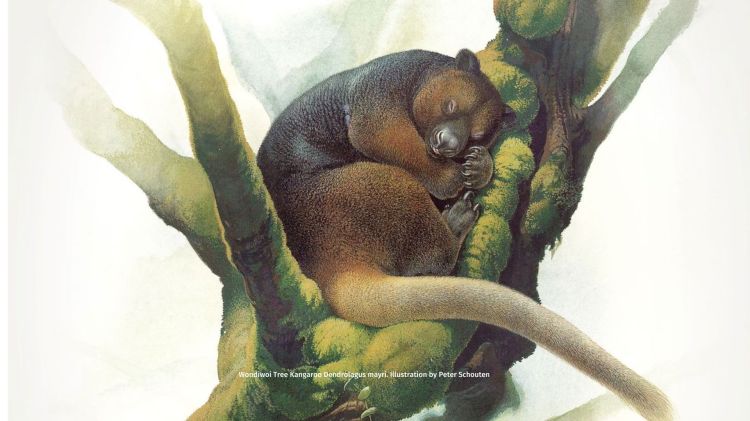
Encountering the Wondiwoi tree kangaroo, the world’s most endangered kangaroo, in West Papua’s lush forests is a bittersweet tale. Rediscovered in 2018 by British botanist Michael Smith, this rarest kangaroo, with soulful eyes and burnt umber fur, symbolises tranquillity amidst severe threats like palm oil deforestation and hunting. Less than 50 kangaroos remain alive, underscoring the urgent need for conservation efforts prioritising indigenous sovereignty. To help save these remarkable creatures, join the #Boycottpalmoil and #Boycott4Wildlife and take action via this website.
The rediscovery of the rarest #kangaroo alive the Wondiwoi kangaroo in #WestPapua 🌿is bittersweet as they were previously thought to be #extinct 🙀learn about their rare beauty 😍🦘 and #Boycottpalmoil #Boycott4Wildlife ✊🌿 @palmoildetect https://wp.me/pcFhgU-8yg
Share to BlueSkyShare to TwitterThe Wondiwoi tree #kangaroo 🦘🌿 is the most endangered kangaroo alive due to #palmoil #deforestation 🪔🌴 and hunting across their range of #WestPapua. Take action to help these wide-eyed beauties #Boycottpalmoil 👎 #Boycott4Wildlife 🚫 @palmoildetect https://wp.me/pcFhgU-8yg
Share to BlueSky Share to TwitterA Bittersweet Rediscovery of the Rarest Kangaroo Alive
In the dense, emerald heart of the Wondiwoi Mountains, in West Papua the trees echo with the haunting refrains of the vogelkop superb bird-of-paradise. Underfoot, the ground is soggy and dense with mossy herbaceous fragrances and the scuttling of an eastern long-beaked echidna as she burrows into her subterranean domain. In 2018, an extraordinary moment was captured forever on camera in 2018. High in the treetops, amidst the thick moss-covered branches, a shy Wondiwoi tree kangaroo lay in quiet repose, a symbol of sturdy, plump beauty. This creature was believed to be extinct for nearly a century. Yet a chance encounter by British amateur botanist Michael Smith in 2018 has thrust this creature back into the spotlight.
Wondiwoi tree kangaroos Dendrolagus mayri have an odd combination of kangaroo and monkey qualities. Large and soulful eyes blink from behind long eyelashes and thickly furred paddle-like arms culminate in strong sharp claws fit for grasping tree branches. Their bodies are the colour of burnt umber and terracotta and embody the tranquillity of Papua’s majestic montane forests where they blend into the painter’s palette of the jungle.

Smith’s serendipitous discovery of Wondiwoi tree kangaroos, known as the world’s rarest and most endangered kangaroo, highlights their precarious existence due to human-related threats like palm oil deforestation, rare mineral mining and hunting throughout their range.
A Journey Fuelled by Passion and Curiosity
Michael Smith is an amateur botanist from England. He spends a lot of his free time traversing remote locations like Indonesia, Pakistan and Kurdistan in the faint hope of encountering the rarest species on earth.
“I want these animals to be the poster children for seriously threatened and ancient habitats. I’m trying to get evidence of something interesting – and in terms of getting people involved and excited about conservation, it seems to be effective.”
He understands that time is of the essence to save these animals and many others from the relentless growth of palm oil deforestation.
It’s hard to know if things will change fast enough for there to be anything left. In the 1990s, Papua New Guinea was just a big forest, with a few people. Now it’s still 80% or 90% forest, but there is huge pressure from people and investors who want to make palm oil.”
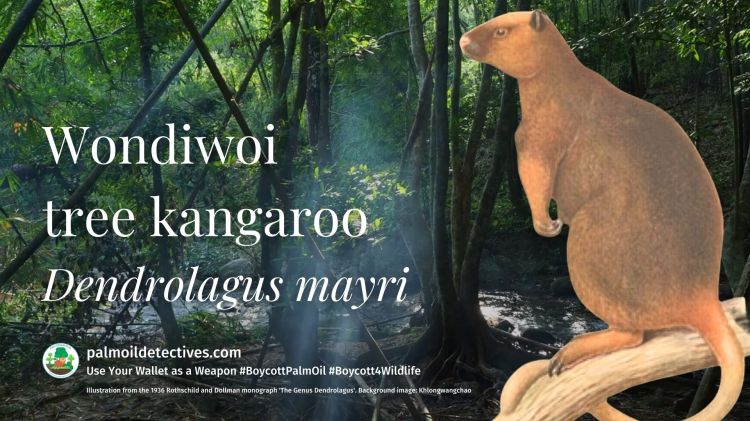
The Enigmatic Wondiwoi Tree Kangaroo
The bittersweet rediscovery of the Wondiwoi tree kangaroo underscores their gravely precarious position as the rarest kangaroo in the world. Originally they were discovered in 1928 by Ernst Mayer and known only by a single specimen. Papuan non-profit Tenkile Conservation Alliance estimates that less than 50 individuals remain alive.
The Wondiwoi tree kangaroo’s habitat is under severe threat from palm oil deforestation and the extraction of rare minerals such as mica and gold. The forests of West Papua, once a haven for diverse wildlife, are being decimated in silence.
The Guardians of the Forest
The survival of the Wondiwoi tree kangaroo is intricately linked to the sovereignty, and land stewardship of the Papuan indigenous peoples. Their deep spiritual and ancestral connection to the land and its human and more-than-human inhabitants stands in stark contrast to the destructive policies of the colonialist Indonesian government. Conservation efforts must prioritise indigenous rights and knowledge, recognising that true protection of these animals lies in the hands of those who have lived in harmony with the forest for many millennia.
Tenkile Conservation Alliance have a range of programmes helping indigenous peoples to understand the importance of conserving rather than hunting tree kangaroos and providing them with ways to harvest alternative sources of food. They have developed tree kangaroo hunting moratoriums as well alongside village communities.

The Jungle Kingdom of Dendrolagus: Tree Kangaroos
The genus Dendrolagus, more enchantingly known as tree kangaroos, embody arboreal grace and irresistible chubby cuteness. These marsupials are lesser known than their iconic ground-dwelling cousins further south in Australia and possess a range of distinctive traits making them masters of the jungle canopy.
Their exceptionally long, pendulous tails act as elegant counterbalances, helping with every leap and bound. Strong forelimbs, paired with shorter and broader hind feet, provide them with superior strength and agility. Long curved claws and spongy paws enhance grip, like natural bouldering shoes, allowing them to climb and cling effortlessly to branches.
Females possess a forward-opening pouch (marsupium) containing four teats. These provide a nurturing haven for their developing young. Their teeth are adapted for shearing leaves, reveal their dietary preference for the verdant foliage of the treetops.
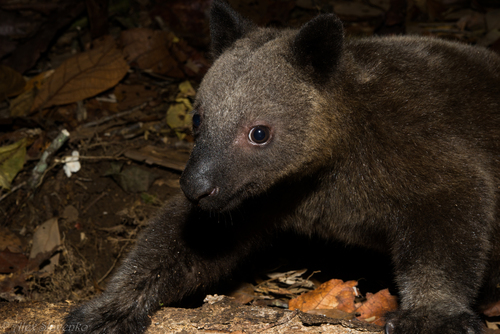
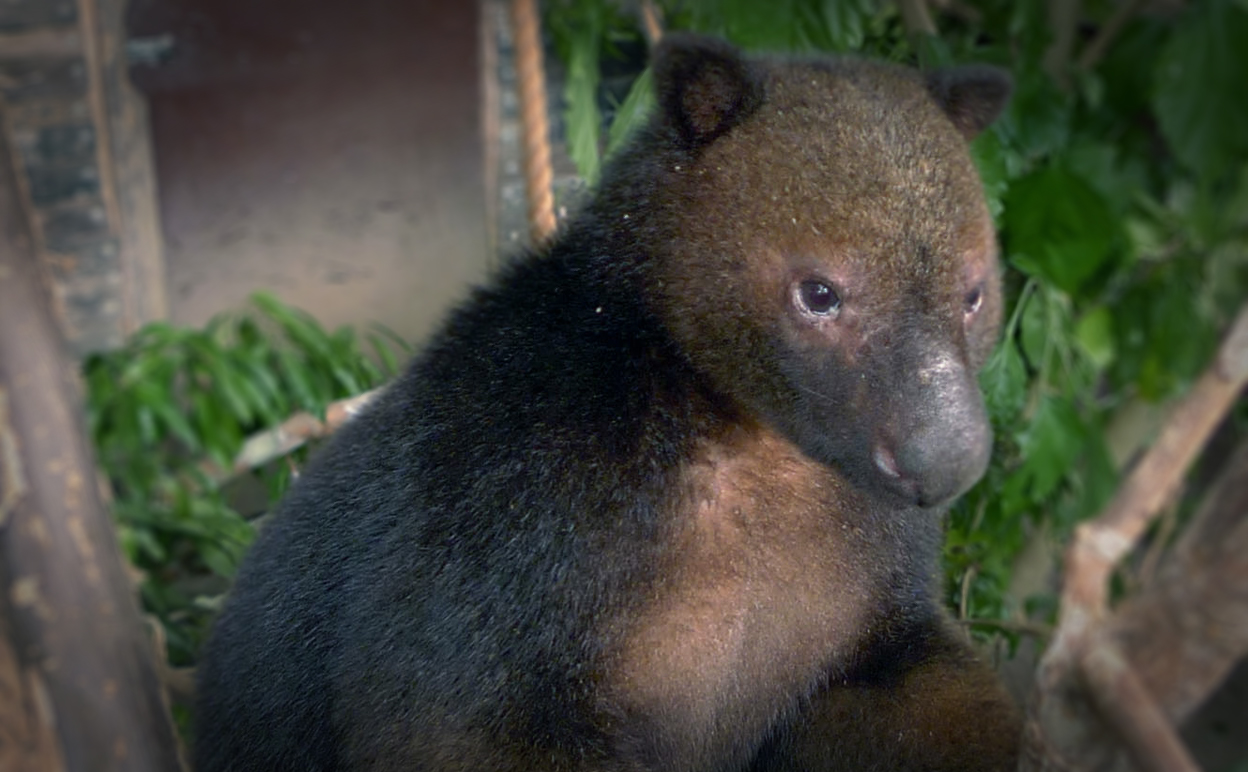
The almost ‘bears’ and barely there Dendrolagus genus:
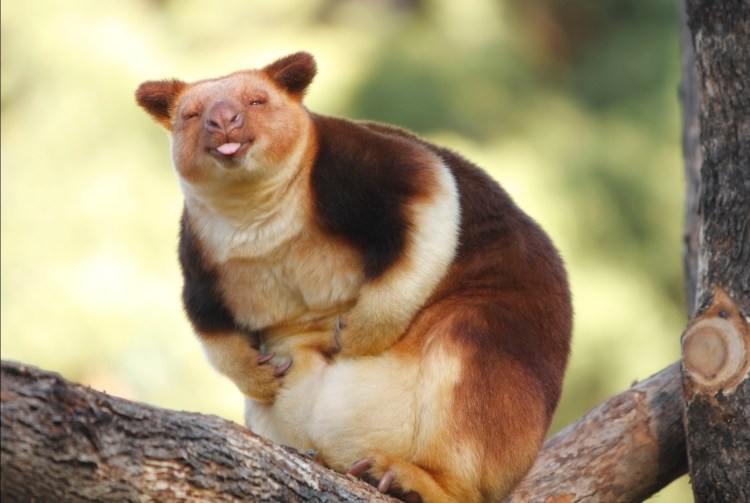 Goodfellow’s Tree Kangaroo Dendrolagus goodfellowi
 - Doria’s Tree Kangaroo Dendrolagus dorianus: With their robust build and dark brown fur and are listed as Vulnerable on the IUCN Red List. Learn more.
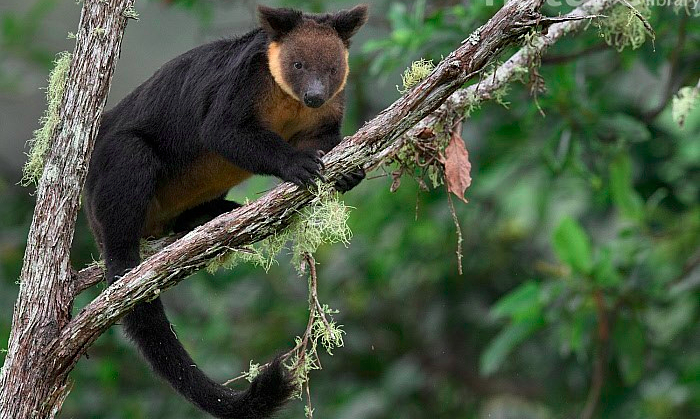
- Lowlands Tree Kangaroo Dendrolagus spadix: Known for their reddish-brown fur, gentle demeanour andd striking striped tails, these kangaroos are also listed as Vulnerable. Learn more.
- Ifola Dendrolagus notatus: A shy and elusive tree kangaroo with dark fur, this species is classified as Endangered, mostly from hunting and habitat loss. Learn more.
- Tenkile Dendrolagus scottae: Also known as the Scott’s tree kangaroo, the tenkile is critically endangered, with fewer than 300 individuals remaining. Learn more.
- Golden-mantled Tree Kangaroo Dendrolagus pulcherrimus: Known for their vibrant golden fur the colour of a sunset, these tree kangaroos are sadly critically endangered. Learn more.
- Vogelkop Tree Kangaroo Dendrolagus ursinus: Endemic to the Vogelkop Peninsula, these kangaroos have unique black and grey fur. Learn more.
- Huon Tree Kangaroo Dendrolagus matschiei: A portly and robust tree kangaroo known for their rich reddish-brown fur, tragically classified as endangered. Learn more.
- Goodfellow’s Tree Kangaroo Dendrolagus goodfellowi: A striking red and gold coat announces the arrival of the Goodfellow’s tree kangaroos, sadly they are now endangered. Learn more.
- Grizzled Tree Kangaroo Dendrolagus inustus: Distinguished by their grey fur and gentle eyes, these kangaroos are classed as vulnerable. Learn more.
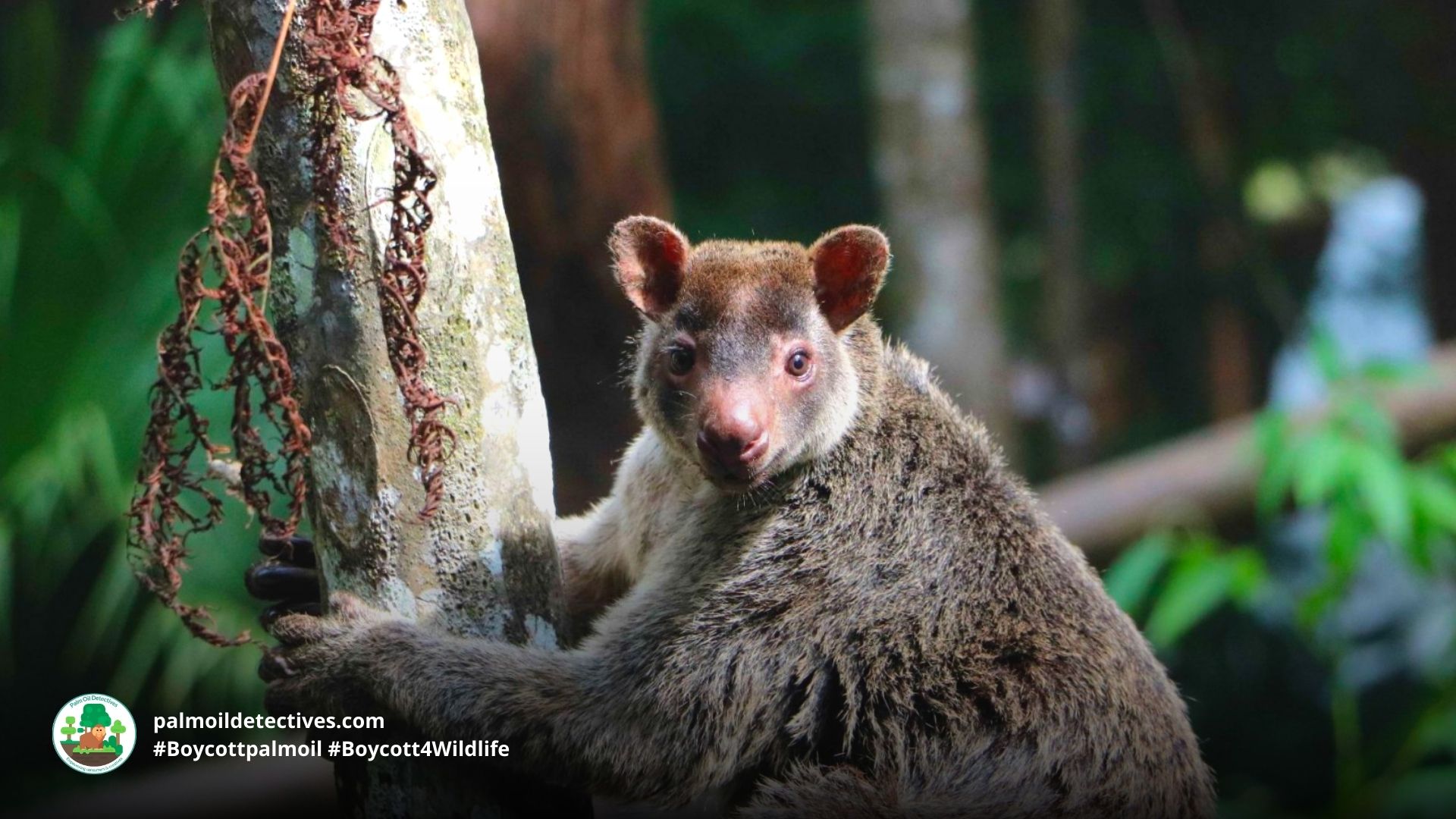
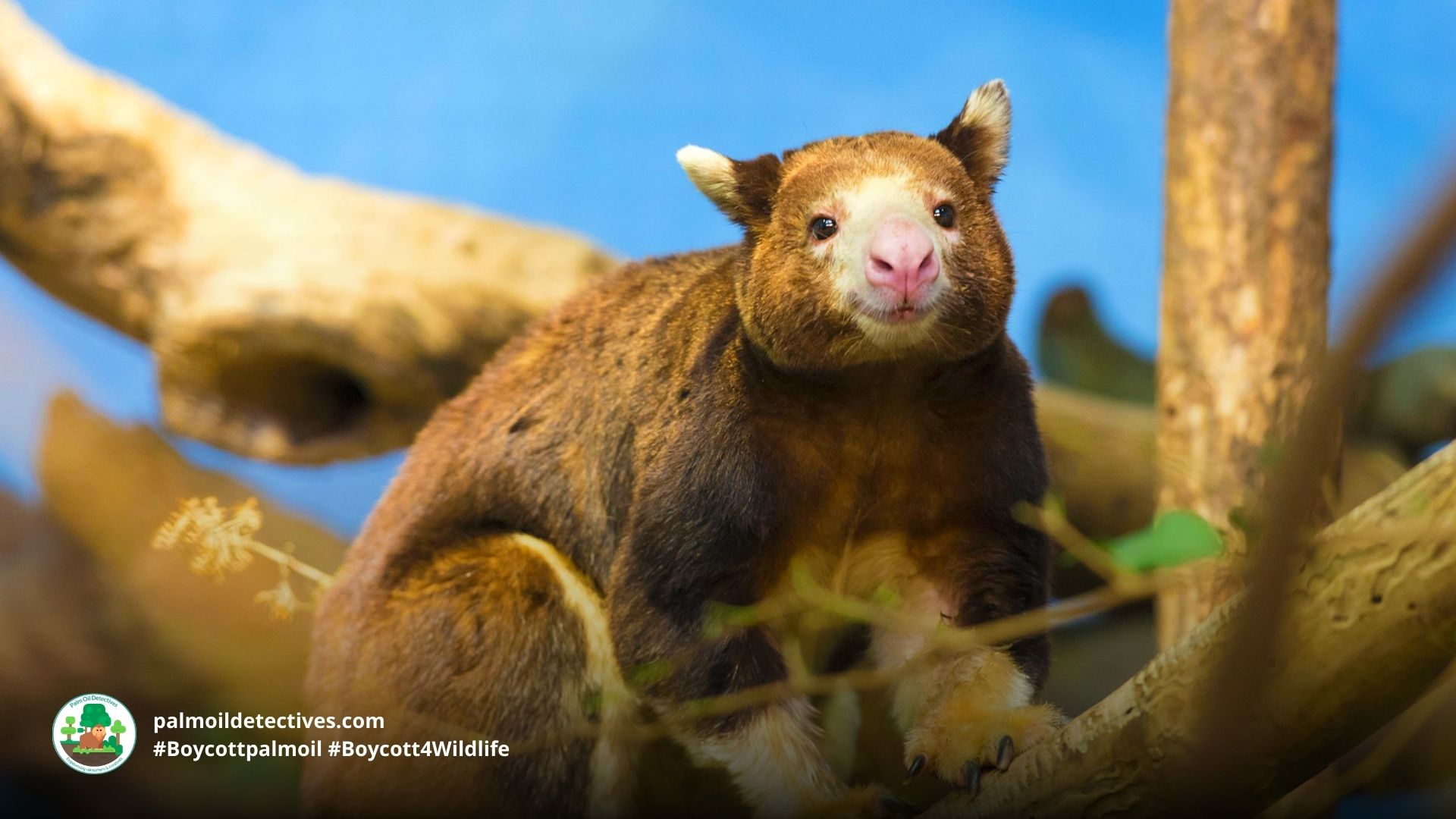
Taking Action: How You Can Help
 Take action by using your wallet as a weapon #Boycottpalmoil #Boycott4Wildlife
The rediscovery of the Wondiwoi tree kangaroo underscores the urgent need for consumer action. Here’s how you can make a difference:
- Boycott Palm Oil: Reject RSPO greenwashing and avoid products containing “sustainable” palm oil. Use your purchasing power to demand palm oil free in the supermarket. Join the #Boycottpalmoil and #Boycott4Wildlife movement on social media.
- Raise Awareness: Share posts on social media and engage in supermarket sleuthing to expose brands that use palm oil. Highlight the ongoing deforestation and animal cruelty.
- Support Indigenous Sovereignty: Advocate for the rights and sovereignty of Papuan indigenous peoples, recognising their crucial role in conserving rainforest habitats and as guardians of rare species.
- Donate: Support the ongoing advocacy of Palm Oil Detectives and the non-profit Tenkile Conservation Alliance, who work tirelessly to protect indigenous peoples, endangered species and their environments.
- Get Involved: Participate in local and global conservation efforts. Whether through social media activism, community education, or direct action, every effort counts.
By taking these steps, you can help ensure that the Wondiwoi tree kangaroo and other endangered species in Papua have a fighting chance to survive and thrive.
The fight to protect the Wondiwoi tree kangaroo is a testament to the resilience of nature and the enduring spirit of people all over the world who strive to safeguard it. Together, we can shine a light on the darkness of deforestation and exploitation, ensuring a brighter future for these remarkable creatures and their forest home.
Further Reading
Pickrell, J. (2018). Rare Wondiwoi tree kangaroo rediscovered. National Geographic. Retrieved from https://www.nationalgeographic.com/animals/article/rare-wondiwoi-tree-kangaroo-discovered-mammals-animals
IUCN. (2015). Dendrolagus mayri. The IUCN Red List of Threatened Species. Retrieved from https://www.iucnredlist.org/species/136668/21956785#assessment-information
Tenkile Conservation Alliance. (n.d.). Wondiwoi tree kangaroo. Retrieved from http://www.tenkile.com/wondiwoi-tree-kangaroo.html
Smith, M. (2024, January 10). I discovered a tree kangaroo that had only been seen once – by the man who shot it in 1928. The Guardian. Retrieved from https://www.theguardian.com/environment/2024/jan/10/i-discovered-tree-kangaroo-only-seen-once-1928-aoe
Palm Oil Detectives. (2021, February 3). Doria’s Tree Kangaroo. Retrieved from https://palmoildetectives.com/2021/02/03/dorias-tree-kangaroo-dendrolagus-dorianus/
Palm Oil Detectives. (2021, February 3). Lowlands Tree Kangaroo. Retrieved from https://palmoildetectives.com/2021/02/03/lowlands-tree-kangaroo-dendrolagus-spadix/
Palm Oil Detectives. (2021, January 31). Ifola. Retrieved from https://palmoildetectives.com/2021/01/31/ifola-dendrolagus-notatus/
Palm Oil Detectives. (2021, January 26). Tenkile. Retrieved from https://palmoildetectives.com/2021/01/26/tenkile-dendrolagus-scottae/
Palm Oil Detectives. (2021, January 26). Golden-mantled Tree Kangaroo. Retrieved from https://palmoildetectives.com/2021/01/26/golden-mantled-tree-kangaroo-dendrolagus-pulcherrimus/
Palm Oil Detectives. (2021, January 26). Vogelkop Tree Kangaroo. Retrieved from https://palmoildetectives.com/2021/01/26/vogelkop-tree-kangaroo-dendrolagus-ursinus/
Palm Oil Detectives. (2021, January 26). Huon Tree Kangaroo. Retrieved from https://palmoildetectives.com/2021/01/26/huon-tree-kangaroo-dendrolagus-matschiei/
Palm Oil Detectives. (2021, January 26). Goodfellow’s Tree Kangaroo. Retrieved from https://palmoildetectives.com/2021/01/26/goodfellows-tree-kangaroo-dendrolagus-goodfellowi/
Palm Oil Detectives. (2021, February 3). Grizzled Tree Kangaroo. Retrieved from https://palmoildetectives.com/2021/02/03/grizzled-tree-kangaroo-dendrolagus-inustus/
Image credits: Peter Schouten Illustration, Greenpeace, Craig Jones Wildlife Photography, Khlongwangchao and Michael Smith.
ENDS
Read about other animals endangered in Papua
Read more
Learn about other animals endangered by palm oil and other agriculture
GlobalSouth America S.E. AsiaIndiaAfricaWest Papua & PNG
Southern Pudu Pudu puda

Blue-streaked Lory Eos reticulata

Blonde Capuchin Sapajus flavius

Savage’s Glass Frog Centrolene savagei
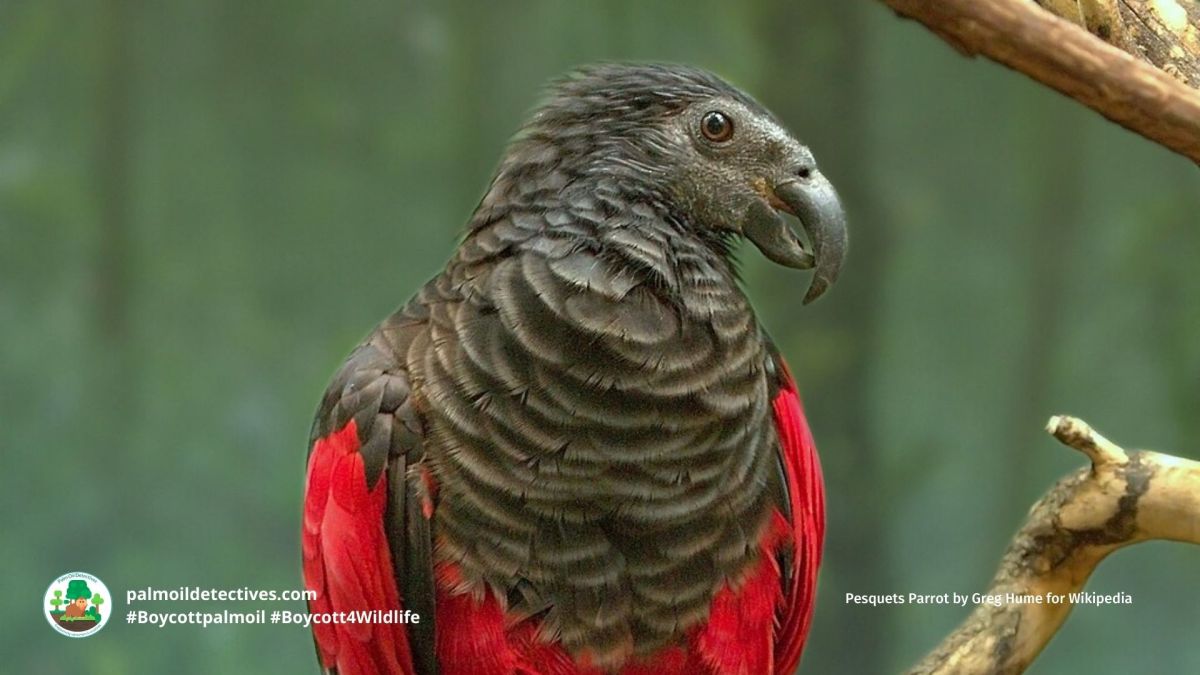
Pesquets Parrot Psittrichas fulgidus
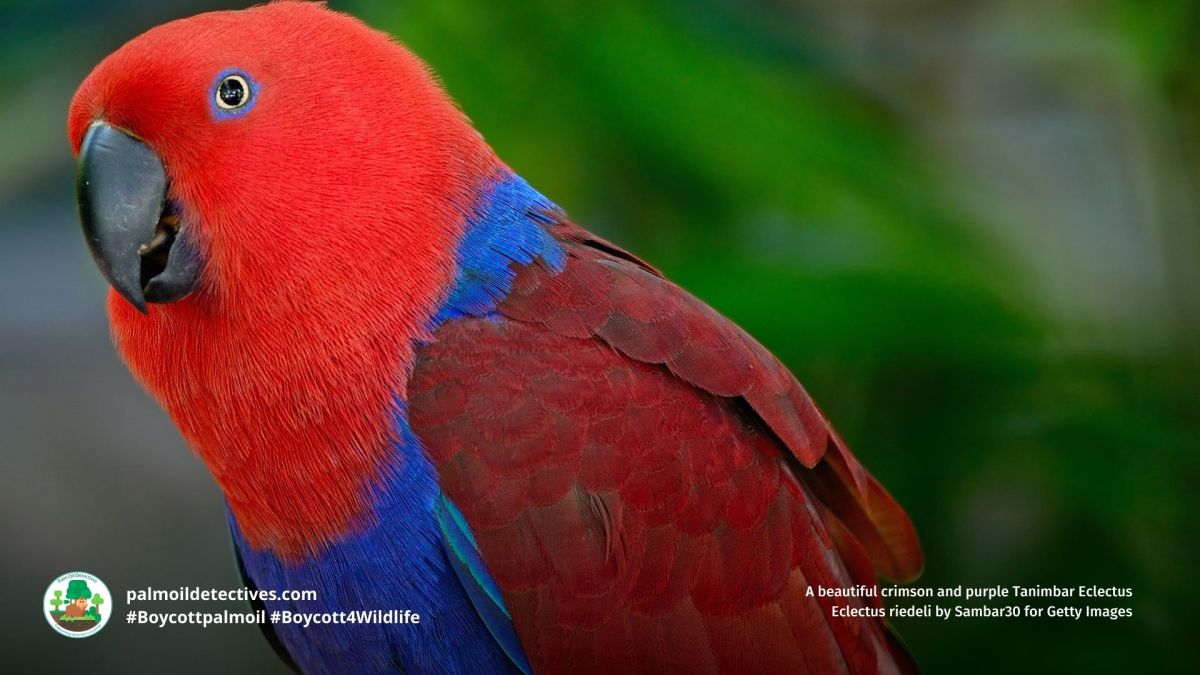
Tanimbar Eclectus Parrot Eclectus riedeli
Learn about “sustainable” palm oil greenwashing
Read more about RSPO greenwashing
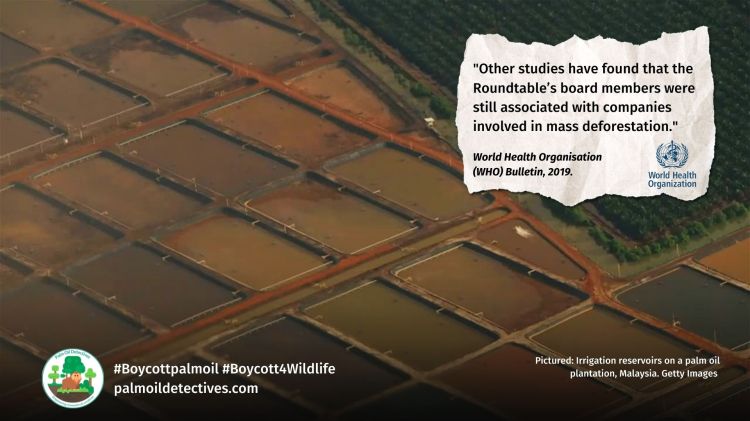
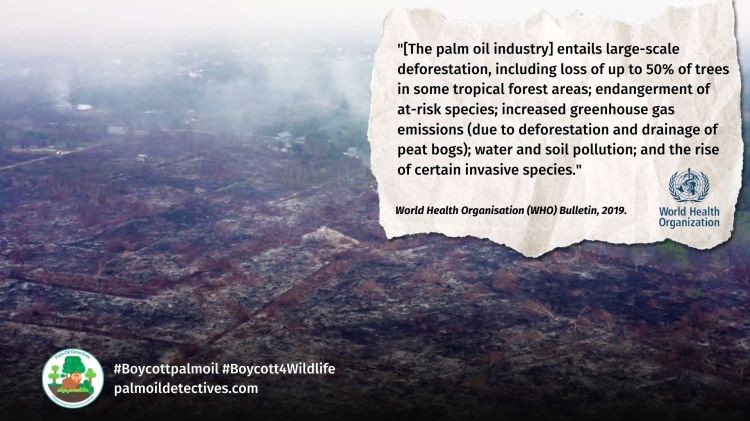
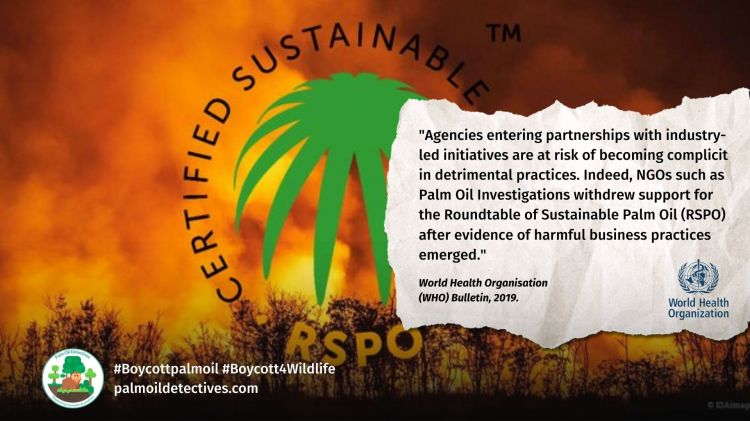
Lying Fake labelsIndigenous Land-grabbingHuman rights abusesDeforestation Human health hazardsA 2019 World Health Organisation (WHO) report into the palm oil industry and RSPO finds extensive greenwashing of palm oil deforestation and the murder of endangered animals (i.e. biodiversity loss)
Read more

Take Action in Five Ways
1. Join the #Boycott4Wildlife on social media and subscribe to stay in the loop: Share posts from this website to your own network on Twitter, Mastadon, Instagram, Facebook and Youtube using the hashtags #Boycottpalmoil #Boycott4Wildlife.
Enter your email address
Sign Up
Join 3,529 other subscribers2. Contribute stories: Academics, conservationists, scientists, indigenous rights advocates and animal rights advocates working to expose the corruption of the palm oil industry or to save animals can contribute stories to the website.
Wildlife Artist Juanchi Pérez
Mel Lumby: Dedicated Devotee to Borneo’s Living Beings
Anthropologist and Author Dr Sophie Chao
Health Physician Dr Evan Allen
The World’s Most Loved Cup: A Social, Ethical & Environmental History of Coffee by Aviary Doert
How do we stop the world’s ecosystems from going into a death spiral? A #SteadyState Economy
3. Supermarket sleuthing: Next time you’re in the supermarket, take photos of products containing palm oil. Share these to social media along with the hashtags to call out the greenwashing and ecocide of the brands who use palm oil. You can also take photos of palm oil free products and congratulate brands when they go palm oil free.
https://twitter.com/CuriousApe4/status/1526136783557529600?s=20
https://twitter.com/PhillDixon1/status/1749010345555788144?s=20
https://twitter.com/mugabe139/status/1678027567977078784?s=20
4. Take to the streets: Get in touch with Palm Oil Detectives to find out more.
5. Donate: Make a one-off or monthly donation to Palm Oil Detectives as a way of saying thank you and to help pay for ongoing running costs of the website and social media campaigns. Donate here
Pledge your support#animals #BoycottPalmOil #Boycott4wildlife #BoycottPalmOil #CriticallyEndangeredSpecies #deforestation #extinct #hunting #indigenousRights #kangaroo #Mammal #Marsupial #PalmOil #palmOilDeforestation #palmoil #PapuaNewGuinea #slavery #WestPapua #WestPapua #WondiwoiTreeKangarooDendrolagusMayri
South America: Species Endangered by Palm Oil Deforestation

Papua New Guinea & West Papua: Species Endangered by Palm Oil Deforestation
Palm Oil Lobbyists Getting Caught Lying Orangutan Land Trust and Agropalma