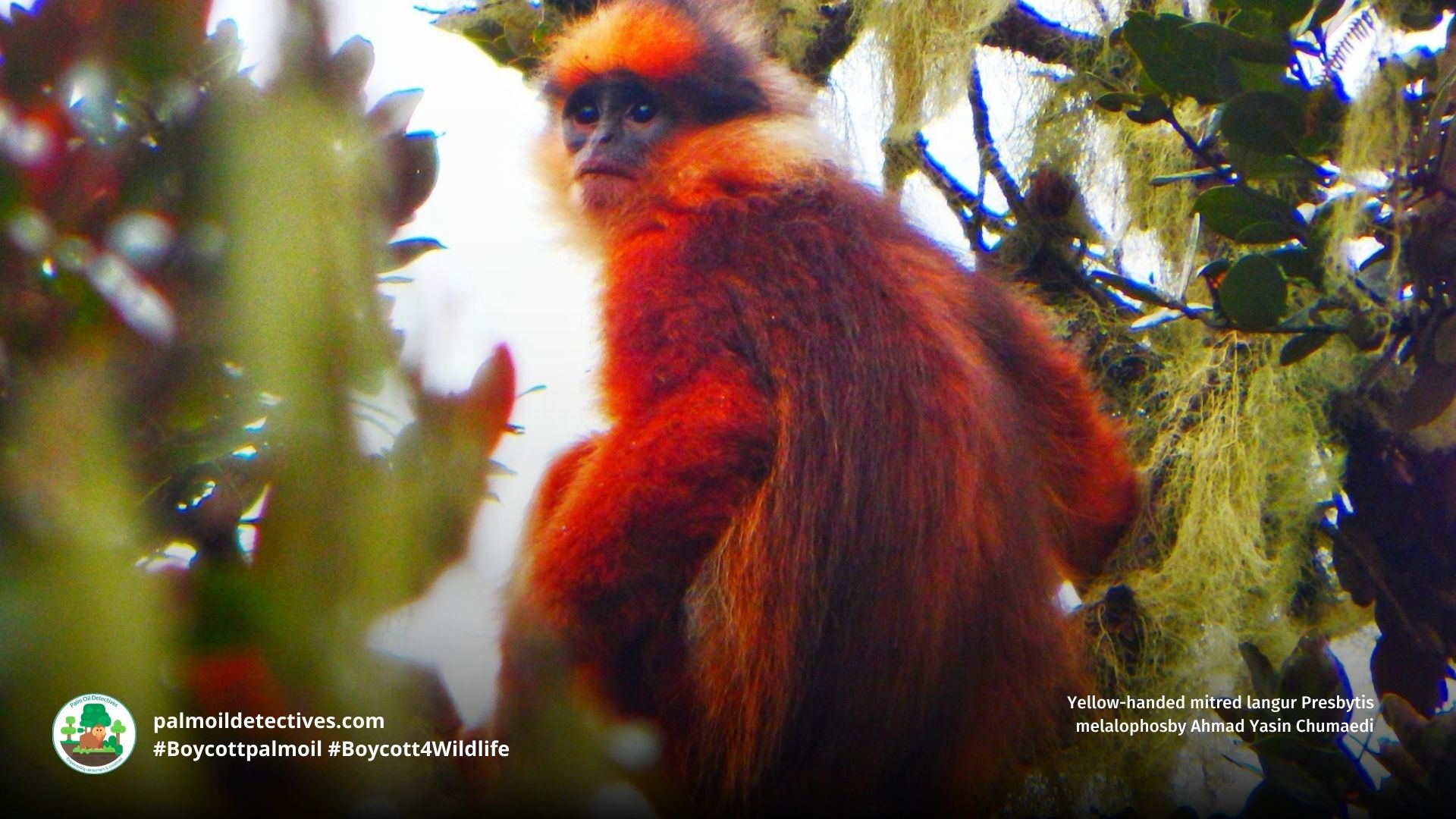
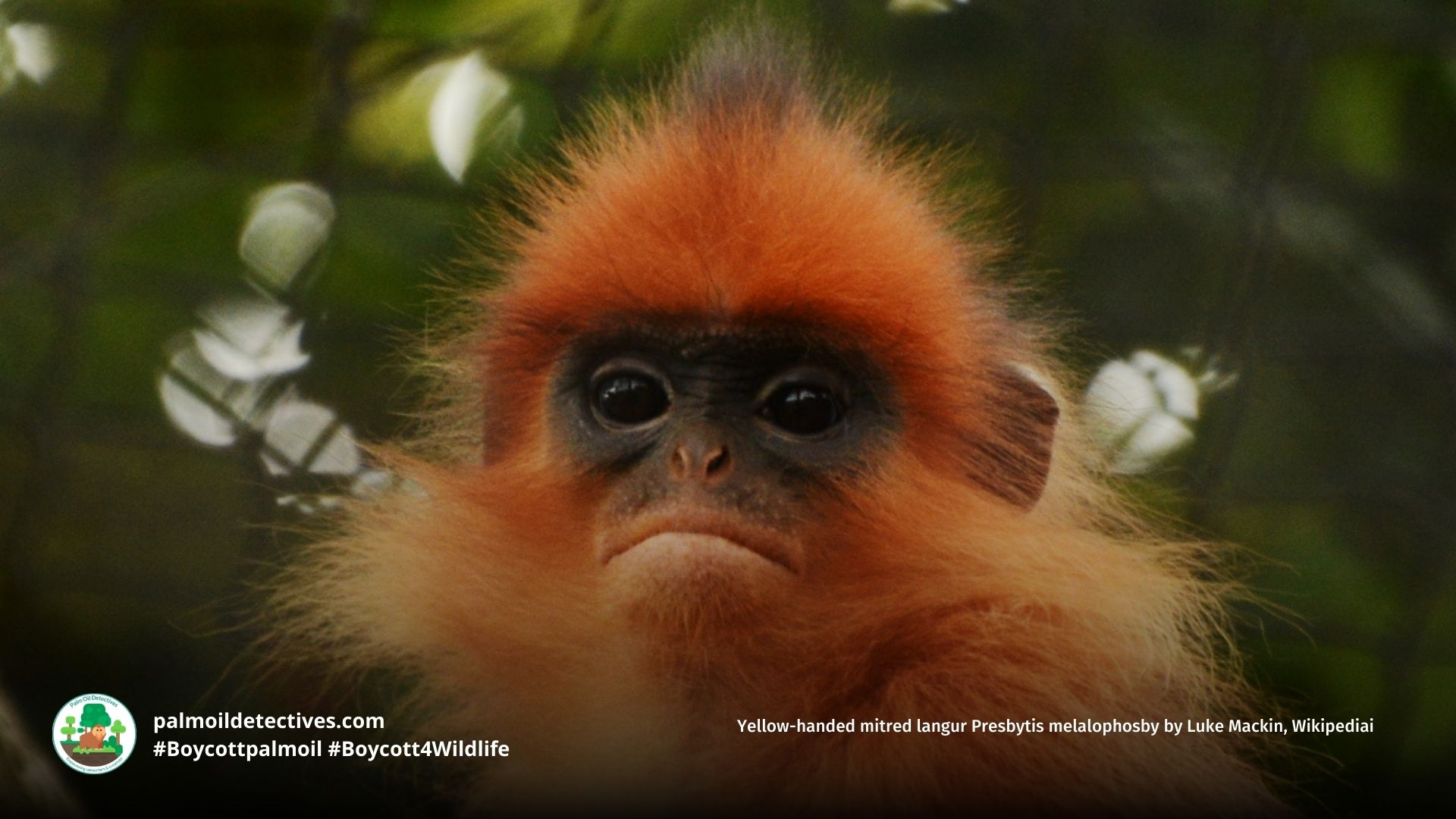
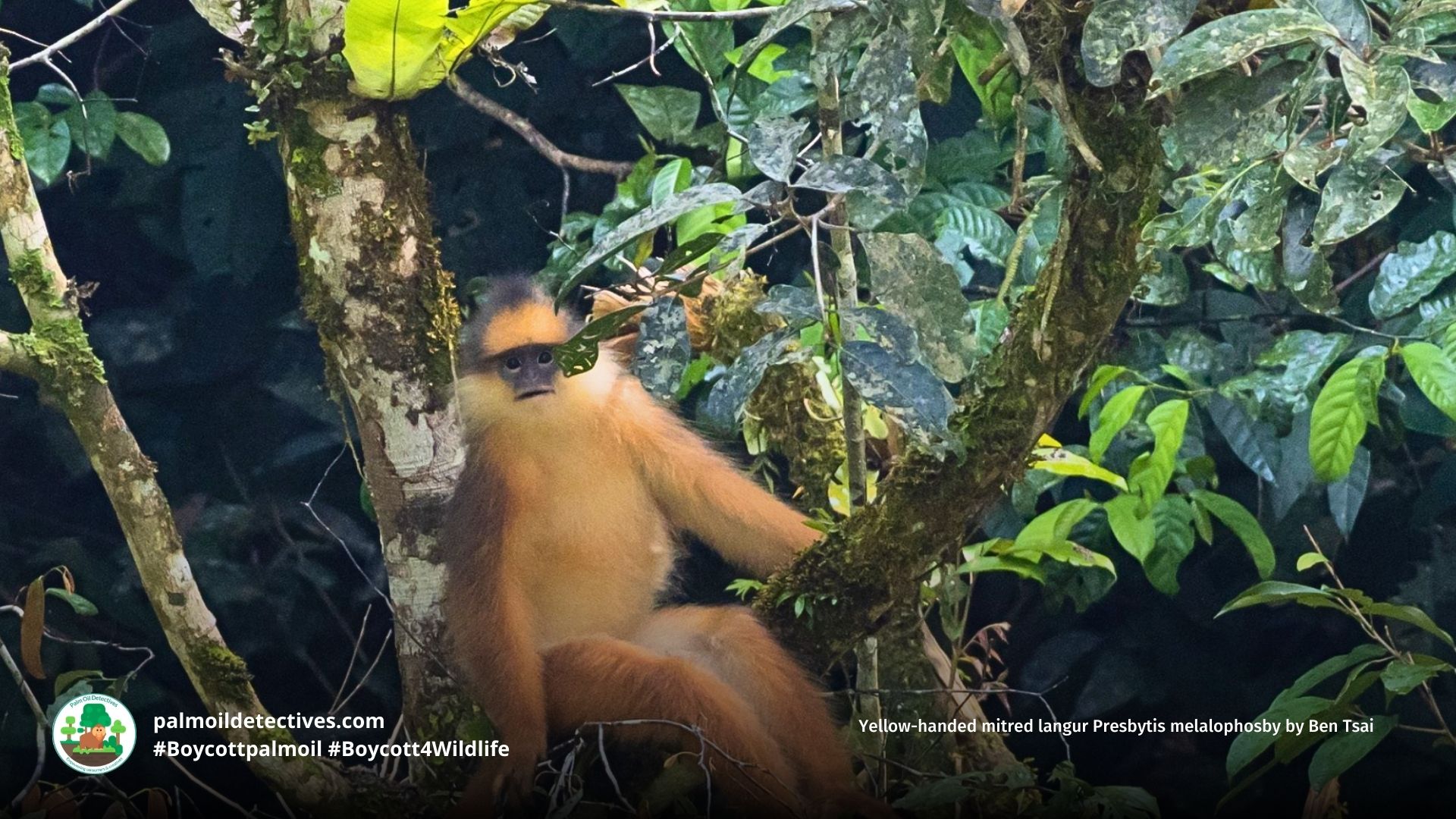
Sabah Grizzled Langur Presbytis sabana
Sabah Grizzled Langur Presbytis sabana
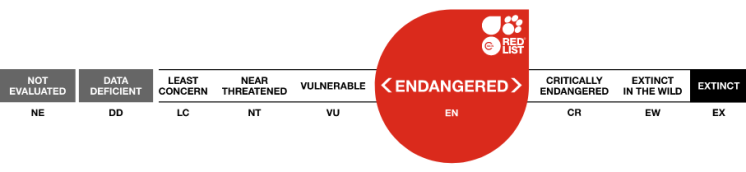
Red List Status: Endangered
Location: Malaysia (Sabah), Indonesia (North Kalimantan)
This elusive primate lives in lowland, riparian, montane, and evergreen forests of northern Borneo, including protected areas such as the Danum Valley, Tabin Reserve, and the Kinabatangan region.
The Sabah Grizzled Langur Presbytis sabana, also known as the Saban Grizzled #Langur or Crested Grizzled Langur, is a strikingly beautiful leaf #monkey found only in #Borneo. Their #Endangered status is a direct result of extensive habitat destruction caused by deforestation, out-of-control palm oil expansion, and #hunting—particularly for bezoar stones used in traditional medicine. With fragmented populations and little known about their behaviour or numbers, urgent action is needed to prevent their extinction. Use your wallet as a weapon. Avoid #palmoil when you shop and demand an end to wildlife trafficking and forest destruction. #BoycottPalmOil #Boycott4Wildlife #Vegan
Sabah Grizzled #Langurs live in the treetops of #Sabah #Malaysia 🐒🐵🇲🇾 Their main threats are #palmoil and #meat agriculture #deforestation. Help to protect these elegant monkeys when you #BoycottPalmOil 🌴🩸🔥☠️🤮🧐🙊⛔️#Boycott4Wildlife @palmoildetect https://palmoildetectives.com/2021/01/25/msaban-grizzled-langur-presbytis-sabana/
Share to BlueSkyShare to TwitterAppearance and Behaviour
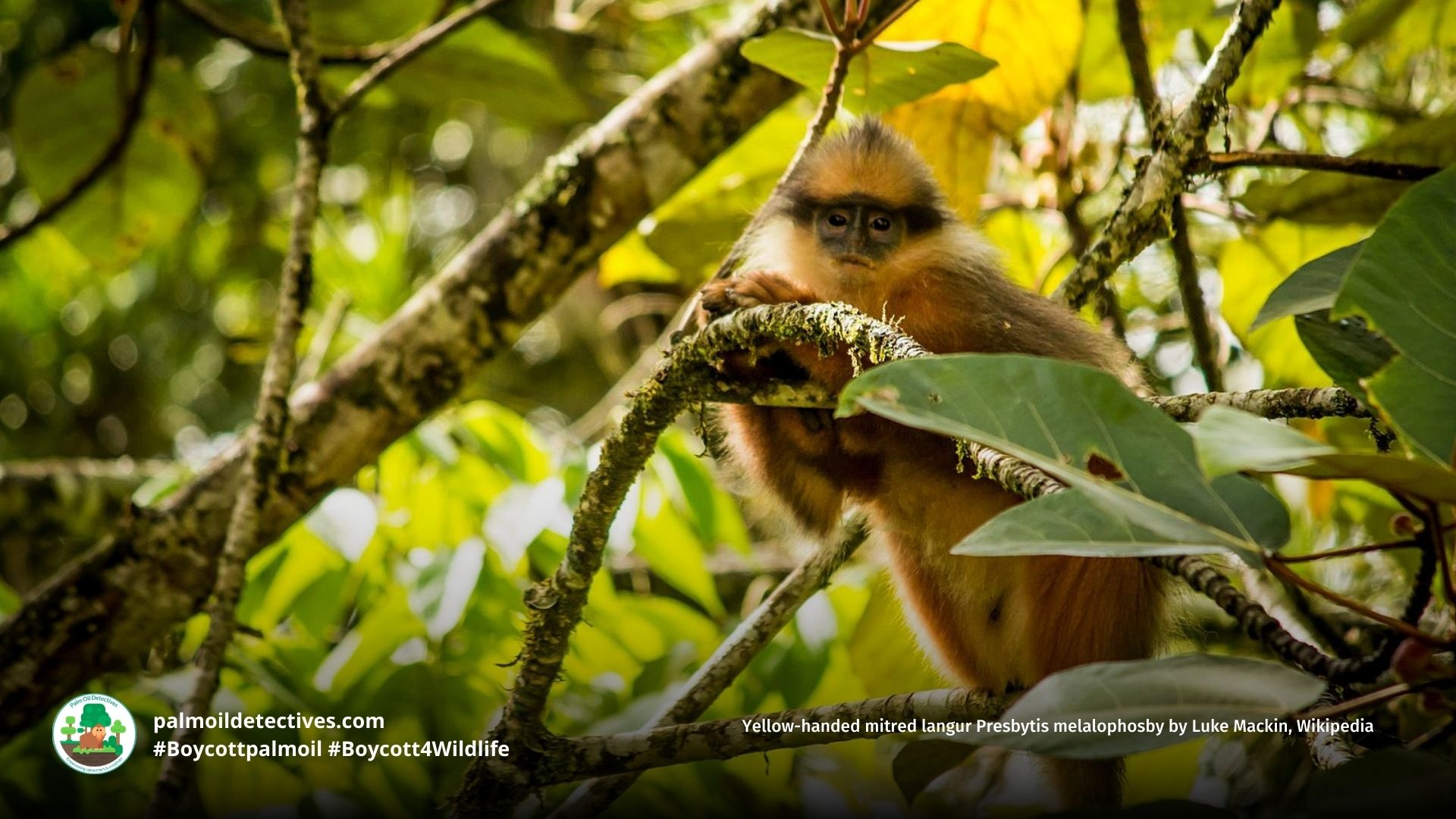
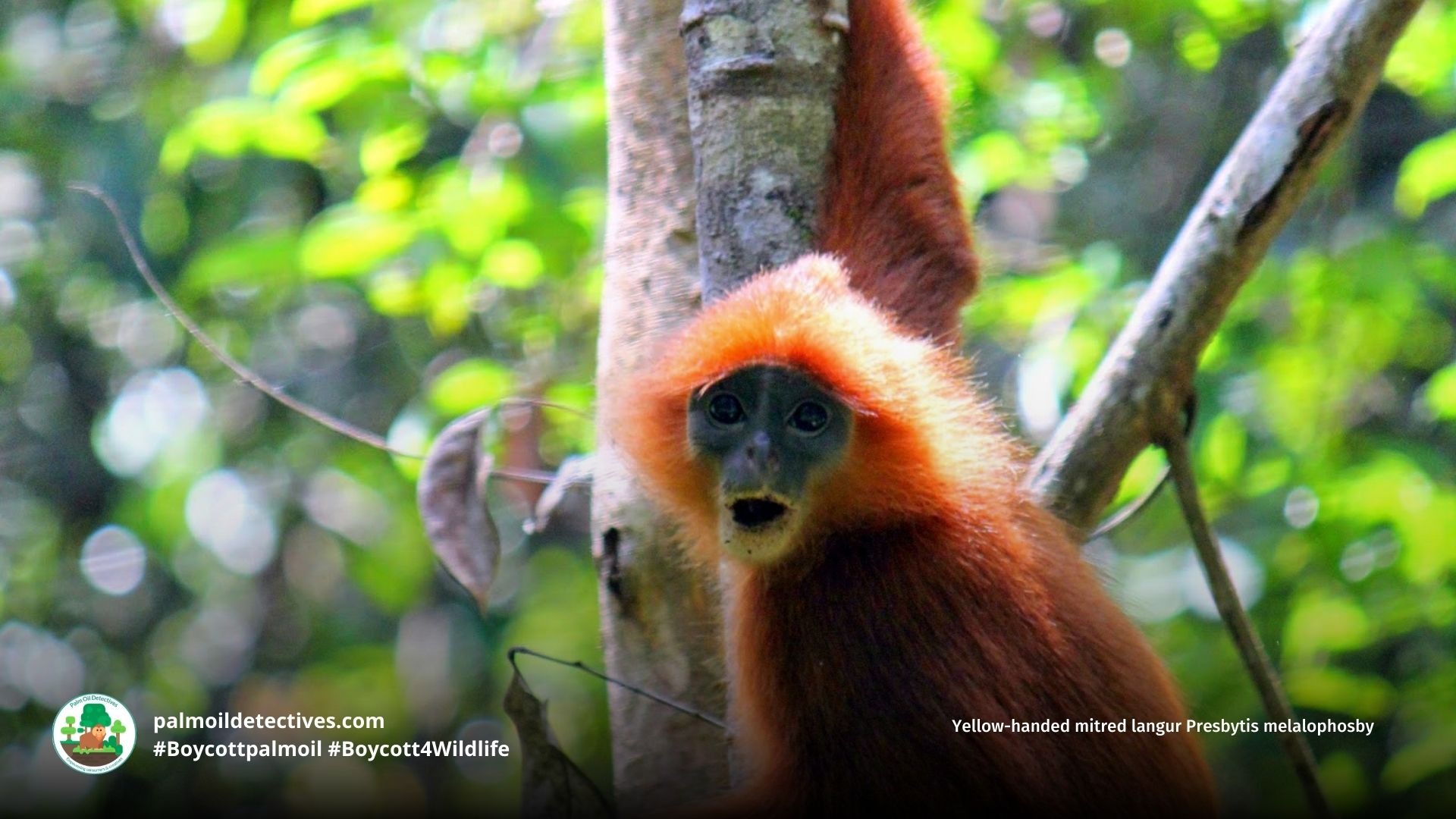
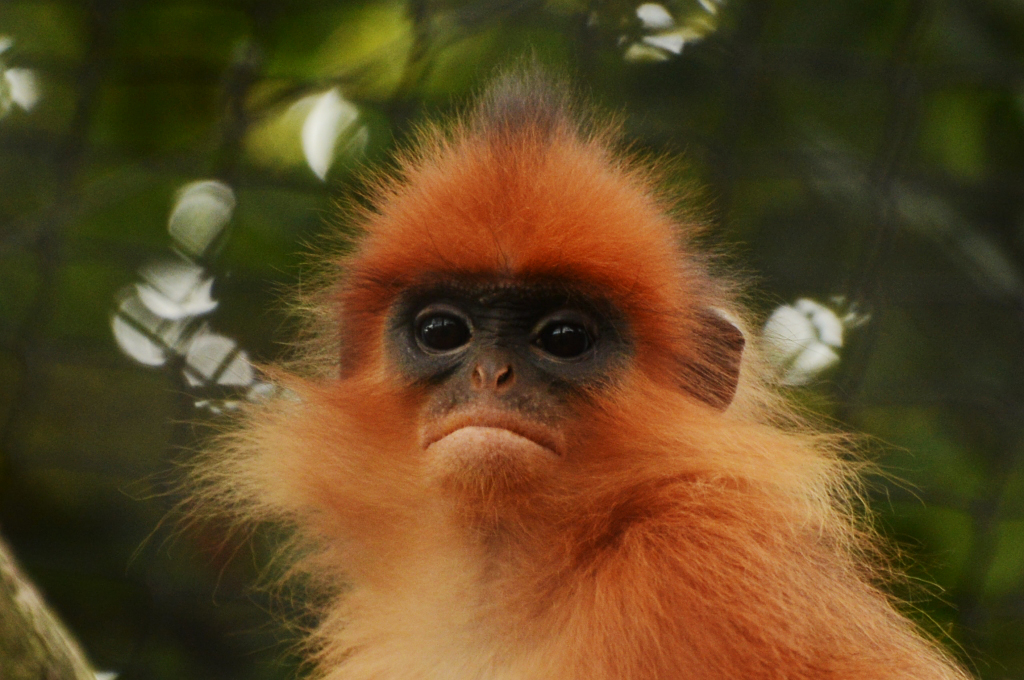
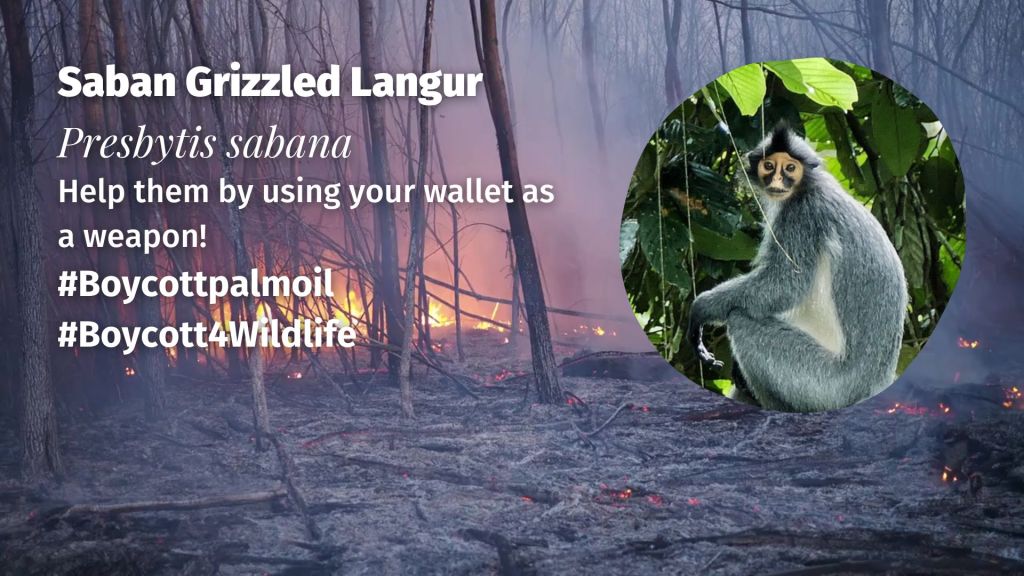
The Sabah Grizzled Langur is a captivating primate with a thick coat of grey, grizzled fur and a pale belly, sharply contrasted by black hands and feet. A pointed crown of fur rises from their head, giving them a distinct, almost regal look. Their spade-shaped, pale-pinkish faces are framed by dark rings around wide, expressive eyes—an appearance that makes them instantly memorable to anyone lucky enough to see one.
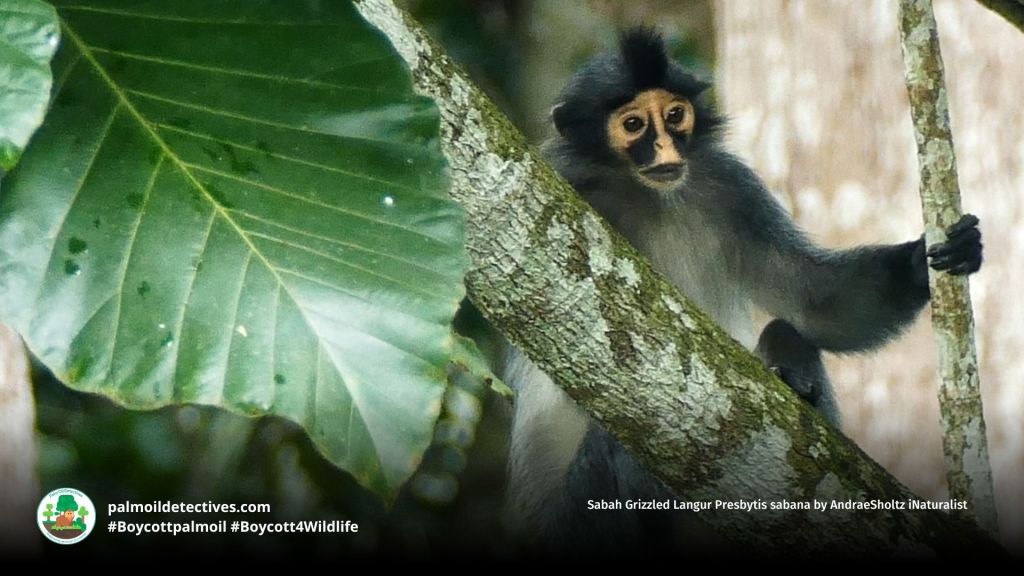
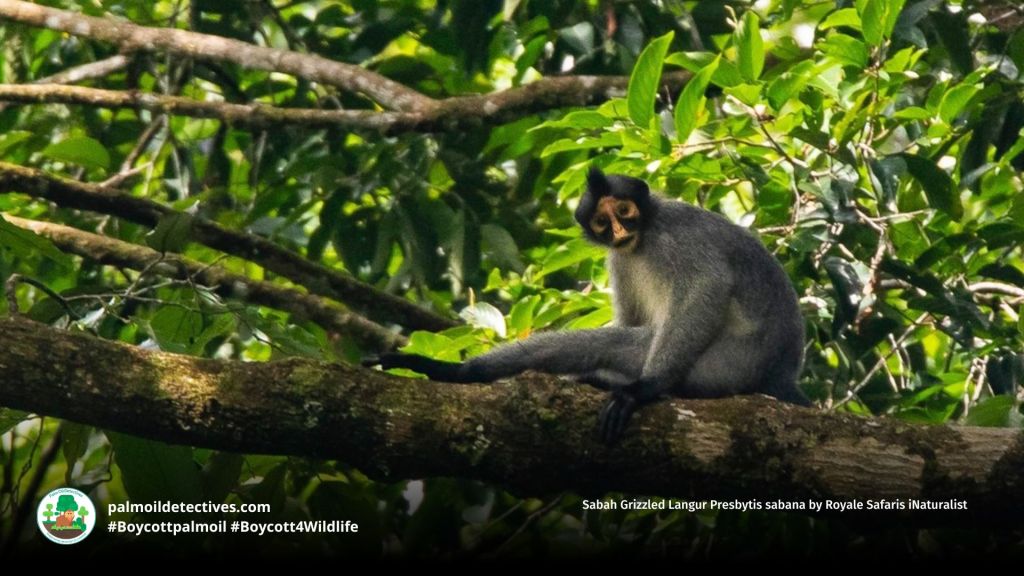
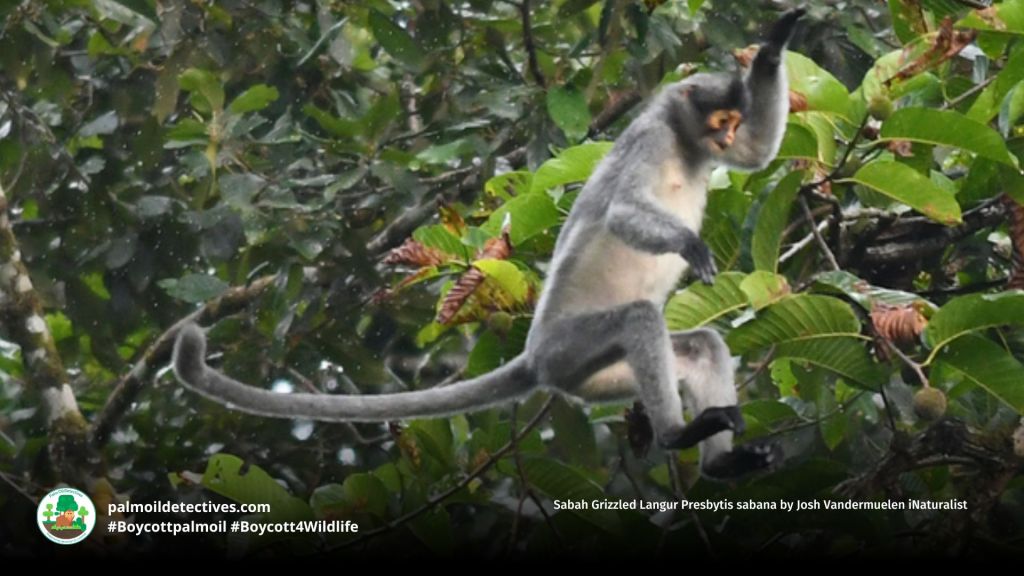
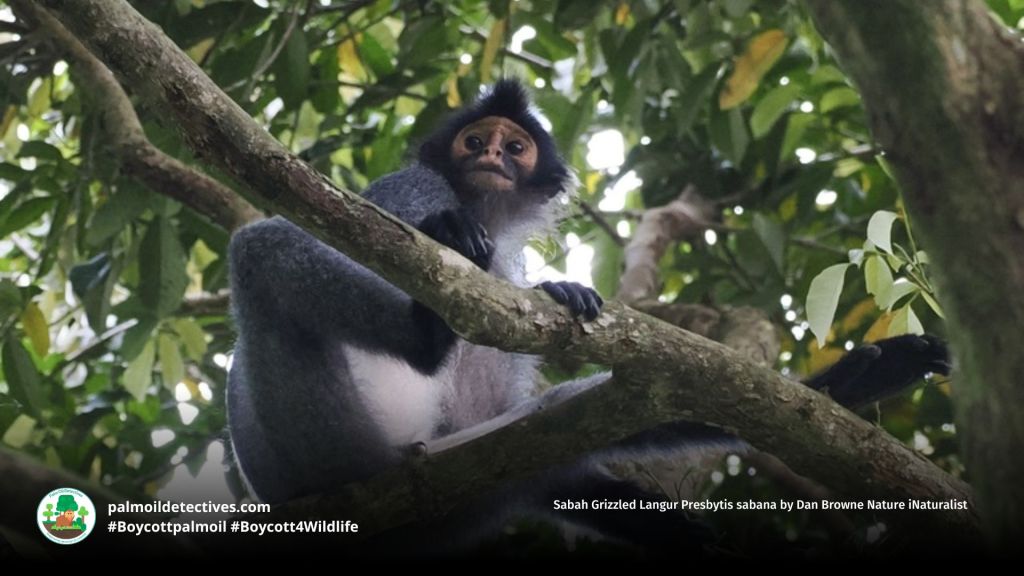
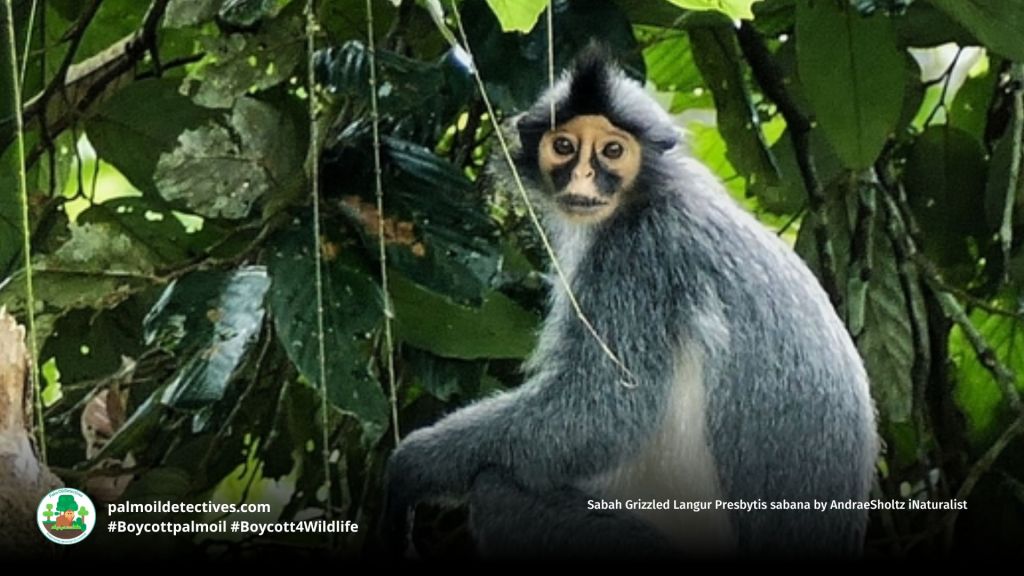

These langurs are diurnal and arboreal, spending most of their lives high in the forest canopy. At night, they retreat to the upper branches of emergent trees to sleep, likely as a defence against predators. They are nimble and versatile movers, walking on all fours, leaping, climbing, and even hanging suspended beneath branches. Their daily lives involve foraging, grooming, resting, and socialising in cohesive groups that typically consist of one dominant male and several adult females with their young.
Diet
Sabah Grizzled Langurs are primarily folivores, feeding on a wide range of leaves, young shoots, and unripe seeds. They also eat fruit, flowers, buds, insects, bird eggs, and mineral-rich mud to supplement their diet. Their complex, multi-chambered stomachs ferment leafy material efficiently, allowing them to extract maximum nutrition from tough plant matter.
The diet of the Sabah Grizzled Langur shifts based on the level of forest disturbance. In undisturbed forests, leaves dominate their intake, but in logged areas, they consume more fruit and seeds. This adaptability may be crucial to their survival in fragmented landscapes.
Reproduction and Mating
This species follows a polygynous mating system, with a single adult male having exclusive breeding access to the females in the group. Breeding appears to occur year-round, but births peak between July and October. After a gestation of five to six months, the female gives birth to a single infant.
Infants are born with paler fur that darkens over time. They are weaned at around 11 months and become subadults between 21 and 36 months. Both males and females leave their natal groups upon reaching sexual maturity at about three years of age, either joining new groups or forming their own.
Geographic Range
Sabah Grizzled Langurs are endemic to the island of Borneo and are found only in Sabah (Malaysia) and northern parts of Indonesian Kalimantan. They inhabit evergreen, lowland, montane, and riverine forests, as well as selectively logged areas and tree plantations. Though once considered a subspecies of Presbytis hosei, they are now recognised as a distinct species. Populations are scattered and fragmented, with some surviving in protected areas like Danum Valley and the Maliau Basin, but others are highly vulnerable to extinction.
Threats
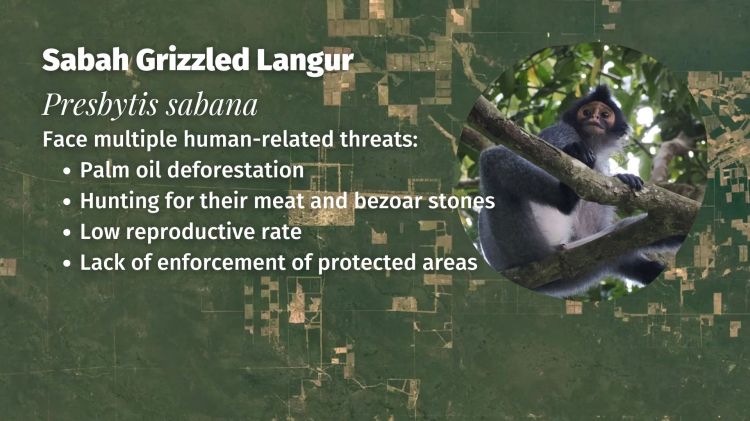
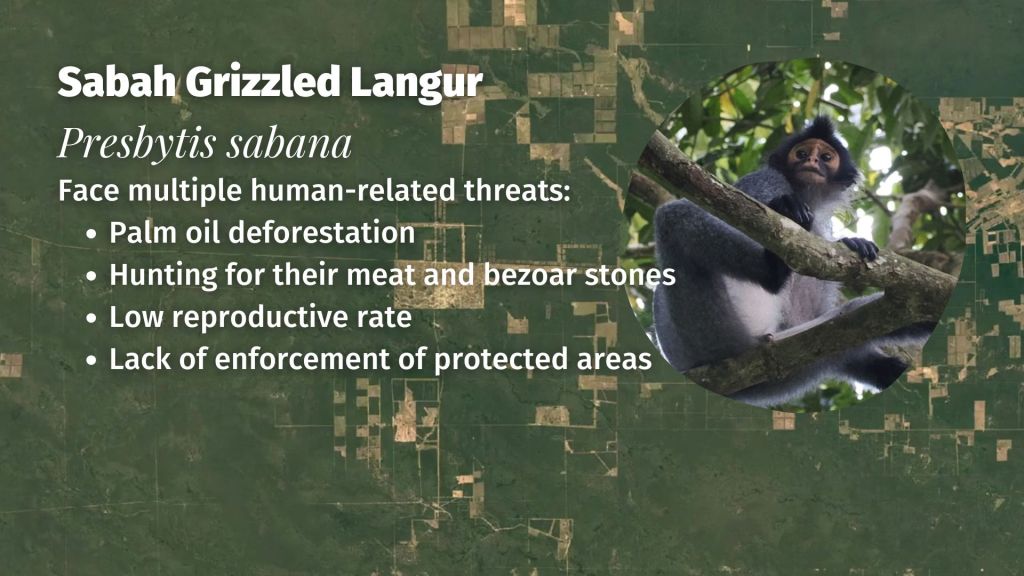
• Palm oil deforestation, monoculture expansion and habitat fragmentation
Large-scale clearing of Borneo’s forests for palm oil plantations has severely reduced the habitat of Presbytis sabana. This deforestation not only destroys the canopy cover they rely on for movement and shelter but also creates isolated forest patches that hinder gene flow and increase vulnerability to inbreeding and local extinction. Even selectively logged areas can remove critical roosting trees and food sources, leading to population collapse over time.
• Hunting for their meat and bezoar stones
Local hunting poses a grave threat to this species. Bezoar stones—calcified objects sometimes found in the gastrointestinal tracts of langurs—are falsely believed to have medicinal properties and fetch high prices in illegal markets. As a result, these langurs are hunted both for meat and for supposed curative use, putting intense pressure on already dwindling populations.
• Lack of enforcement in protected areas
While some populations live in conservation zones, many of these are inadequately protected. Illegal logging, poaching, and encroachment continue within the boundaries of national parks and reserves. Without sufficient monitoring, resources, and community involvement, these areas offer little real safety for the langurs.
• Low reproductive rate and slow population recovery
Like many primates, Sabah Grizzled Langurs have slow reproductive cycles, giving birth to a single infant every one to two years. This low birth rate means that even small increases in mortality can cause long-term population declines. Combined with hunting and habitat loss, this makes recovery especially difficult without urgent conservation action.
Take Action!
The fate of the Sabah Grizzled Langur is partially tied to our consumer choices. Avoid products that contain palm oil, especially those contributing to Bornean deforestation. Never support the exotic animal trade or products made from endangered species. Support indigenous-led conservation efforts and protect Southeast Asia’s remaining rainforests. #BoycottPalmOil #Boycott4Wildlife #Vegan #BoycottMeat
FAQs
How many Sabah Grizzled Langurs are left?
Exact population numbers are unknown due to a lack of comprehensive surveys, but the IUCN lists them as Endangered and rapidly declining. Fragmentation of their range and localised hunting make many populations highly vulnerable, and some may already be functionally extinct.
What is the lifespan of Presbytis sabana?
While the exact lifespan of Presbytis sabana is not documented, related langurs typically live around 20–25 years in the wild. Infant mortality may be high in disturbed habitats, especially where hunting pressure is intense.
Why are bezoar stones a threat?
Bezoar stones are hard masses found in the intestines of some langurs, falsely believed to have healing powers in traditional medicine. This belief drives illegal hunting, even though scientific evidence shows these stones have no proven medical value. Killing langurs for this purpose is both cruel and contributes directly to their extinction.
How are Sabah Grizzled Langurs affected by palm oil?
Palm oil plantations are a major cause of deforestation in Borneo. These plantations clear vast areas of native forest, severing the canopy corridors that langurs use to travel. Even plantations that claim to be ‘eco-friendly’ contribute to ecosystem collapse by fragmenting habitat and displacing wildlife.
Do Sabah Grizzled Langurs make good pets?
No. These langurs are not suited to captivity and have not been documented in zoos or pet markets. Their specialised diet and social needs cannot be met outside the wild. Keeping langurs as pets is illegal, unethical, and further threatens their survival.
Support the conservation of this species
This animal has no protections in place. Read about other forgotten species here. Create art to support this forgotten animal or raise awareness about them by sharing this post and using the #Boycottpalmoil #Boycott4Wildlife hashtags on social media. Also you can boycott palm oil in the supermarket.
Further Information
Nijman, V. (2017). Group composition and monandry in grizzled langurs, Presbytis comata, on Java. Folia Primatologica, 88(2), 237–254. https://doi.org/10.1159/000478695
Ramlee, H. (2013). Distribution, ecology and systematics of Presbytis hosei and other leaf monkey species in North Borneo [PhD thesis, Australian National University]. Open Research Repository. https://openresearch-repository.anu.edu.au/items/26fbc1b7-b536-427c-a8d2-62984e69b43e
Setiawan, A. & Traeholt, C. 2020. Presbytis sabana. The IUCN Red List of Threatened Species 2020: e.T39810A17987041. https://dx.doi.org/10.2305/IUCN.UK.2020-2.RLTS.T39810A17987041.en. Downloaded on 25 January 2021.
Wikipedia contributors. (n.d.). Sabah grizzled langur. Wikipedia. Retrieved from https://en.wikipedia.org/wiki/Sabah_grizzled_langur
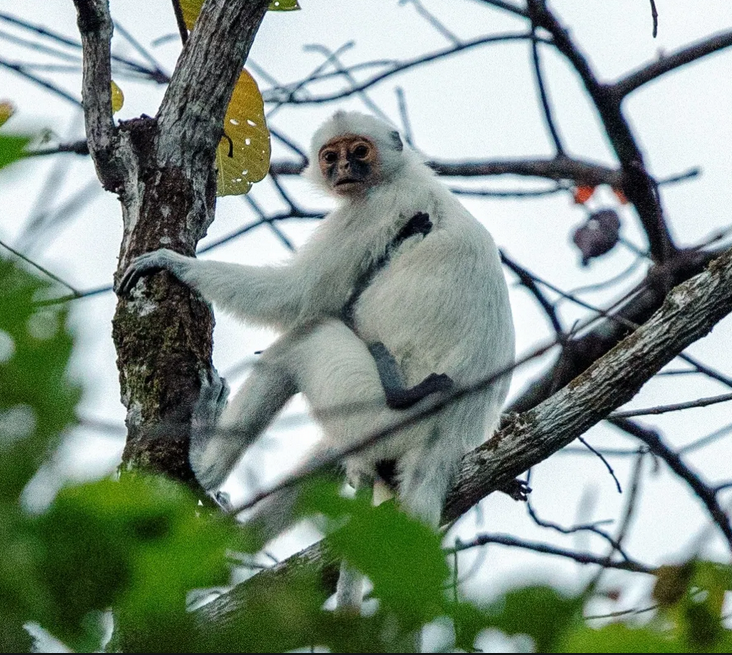
Sabah Grizzled Langur Presbytis sabana

How can I help the #Boycott4Wildlife?
Take Action in Five Ways
1. Join the #Boycott4Wildlife on social media and subscribe to stay in the loop: Share posts from this website to your own network on Twitter, Mastadon, Instagram, Facebook and Youtube using the hashtags #Boycottpalmoil #Boycott4Wildlife.
Enter your email address
Sign Up
Join 3,528 other subscribers2. Contribute stories: Academics, conservationists, scientists, indigenous rights advocates and animal rights advocates working to expose the corruption of the palm oil industry or to save animals can contribute stories to the website.
Wildlife Artist Juanchi Pérez
Mel Lumby: Dedicated Devotee to Borneo’s Living Beings
Anthropologist and Author Dr Sophie Chao

Health Physician Dr Evan Allen

The World’s Most Loved Cup: A Social, Ethical & Environmental History of Coffee by Aviary Doert

How do we stop the world’s ecosystems from going into a death spiral? A #SteadyState Economy
3. Supermarket sleuthing: Next time you’re in the supermarket, take photos of products containing palm oil. Share these to social media along with the hashtags to call out the greenwashing and ecocide of the brands who use palm oil. You can also take photos of palm oil free products and congratulate brands when they go palm oil free.
https://twitter.com/CuriousApe4/status/1526136783557529600?s=20
https://twitter.com/PhillDixon1/status/1749010345555788144?s=20
https://twitter.com/mugabe139/status/1678027567977078784?s=20
4. Take to the streets: Get in touch with Palm Oil Detectives to find out more.
5. Donate: Make a one-off or monthly donation to Palm Oil Detectives as a way of saying thank you and to help pay for ongoing running costs of the website and social media campaigns. Donate here
Pledge your support#Agriculture #Bornean #Borneo #Boycott4wildlife #BoycottMeat #BoycottPalmOil #deforestation #endangered #EndangeredSpecies #ForgottenAnimals #hunting #Indonesia #Kalimantan #langur #Langurs #Malaysia #Mammal #meat #monkey #palmoil #poachers #poaching #Primate #Sabah #SabahGrizzledLangurPresbytisSabana #SouthEastAsia #vegan
Unsupported type or deleted object
Thomas’s Langur Presbytis thomasi
Thomas’s Langur Presbytis thomasi
IUCN Status: Vulnerable (VU)
Location: Indonesia – Sumatra (Aceh Province)
Thomas’s Langur, also known as the North Sumatran Leaf #Monkey is famous for their bold facial stripes giving them a handsome profile. These monkeys are endemic to the lush forests of northern Sumatra, Indonesia. Listed as Vulnerable by the Red List, this striking species is facing serious population declines due to habitat loss, primarily driven by illegal logging and oil palm deforestation. Though not as globally known as some of its neighbours, such as the Sumatran Orangutan, Thomas’s Langur plays an equally vital role in forest regeneration and seed dispersal. You can help protect them by using your consumer power: always choose palm oil-free products.#BoycottPalmOil #Boycott4Wildlife #Vegan
The Thomas’s #Langur has striking stripes 🐵🐒🤎 They’re #vulnerable due to forest clearance for #palmoil and #timber in #Sumatra #Indonesia 🇮🇩 Protect this rare #monkey when you shop and #BoycottPalmOil 🌴🪔☠️🩸🤮🙊🚫 #Boycott4Wildlife @palmoildetect https://palmoildetectives.com/2021/01/24/thomass-langur-presbytis-thomasi/
Share to BlueSkyShare to TwitterSporting bold facial stripes, the Thomas’s #Langur is a handsome icon of #Sumatra #Indonesia 🇮🇩 Threats include #palmoil #deforestation and human persecution 🏹😿 Fight for their survival and #BoycottPalmOil 🌴🪔☠️🩸🤮🙊🚫 #Boycott4Wildlife @palmoildetect https://palmoildetectives.com/2021/01/24/thomass-langur-presbytis-thomasi/
Share to BlueSkyShare to TwitterAppearance and Behaviour
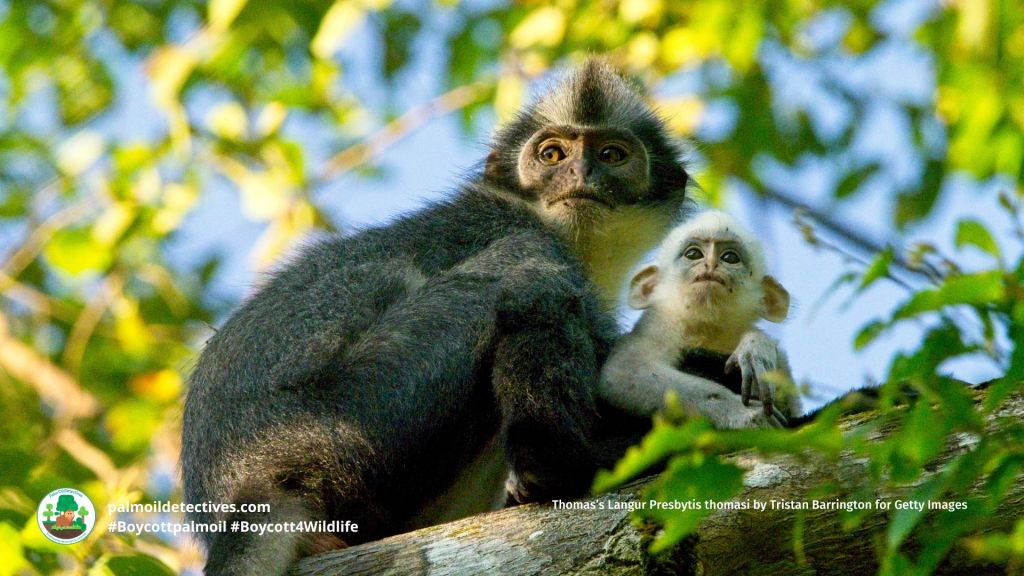
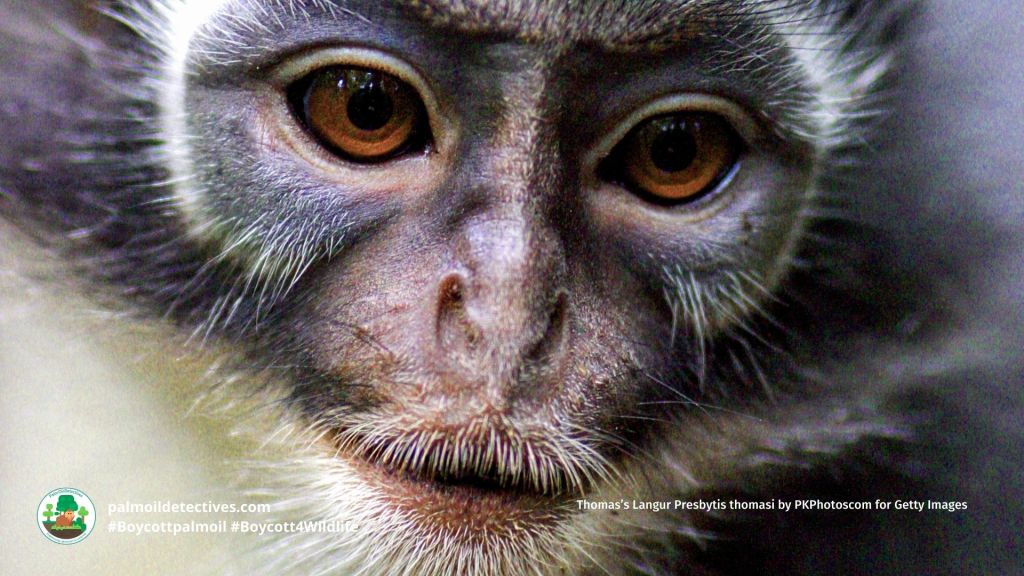
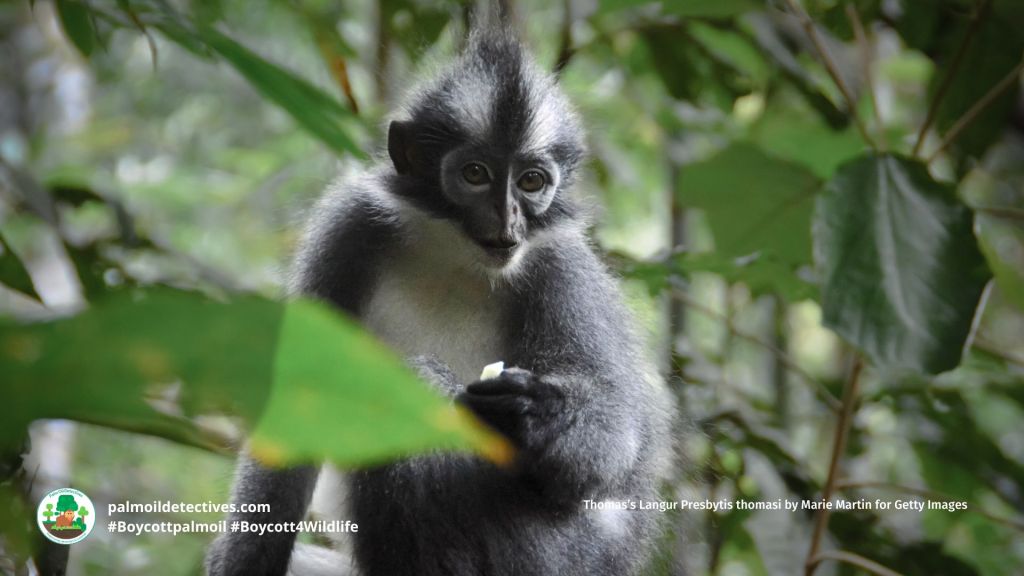
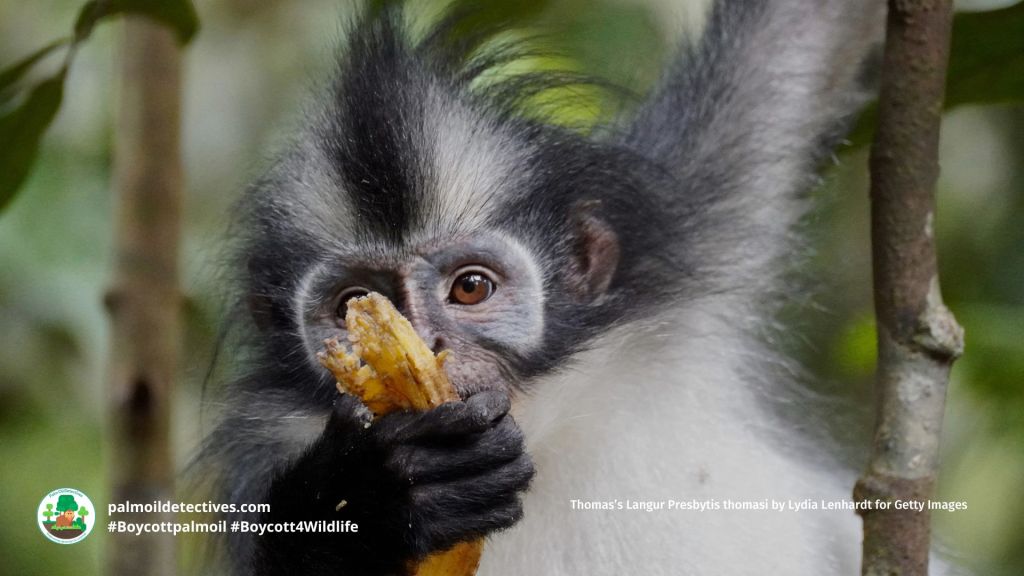
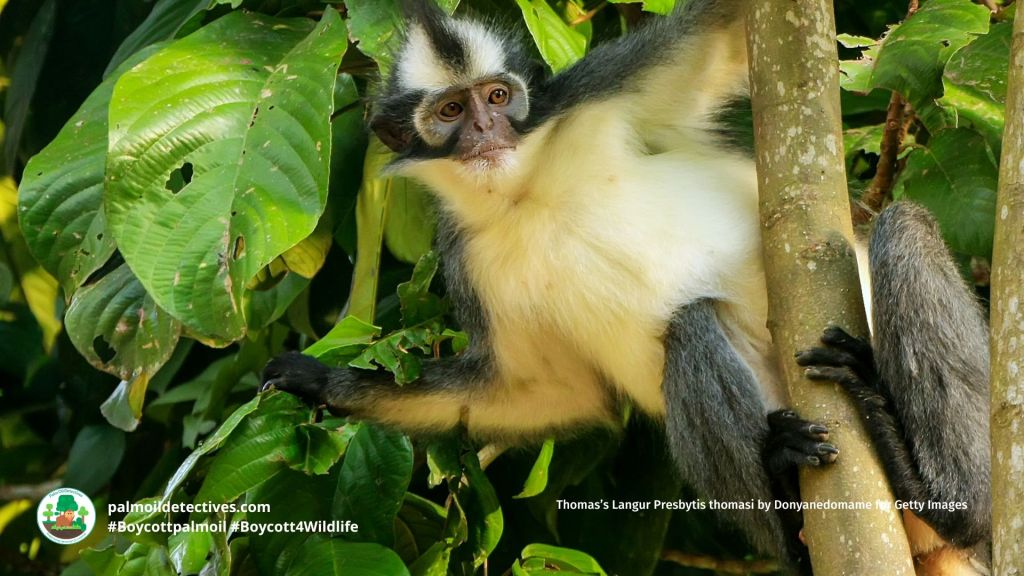
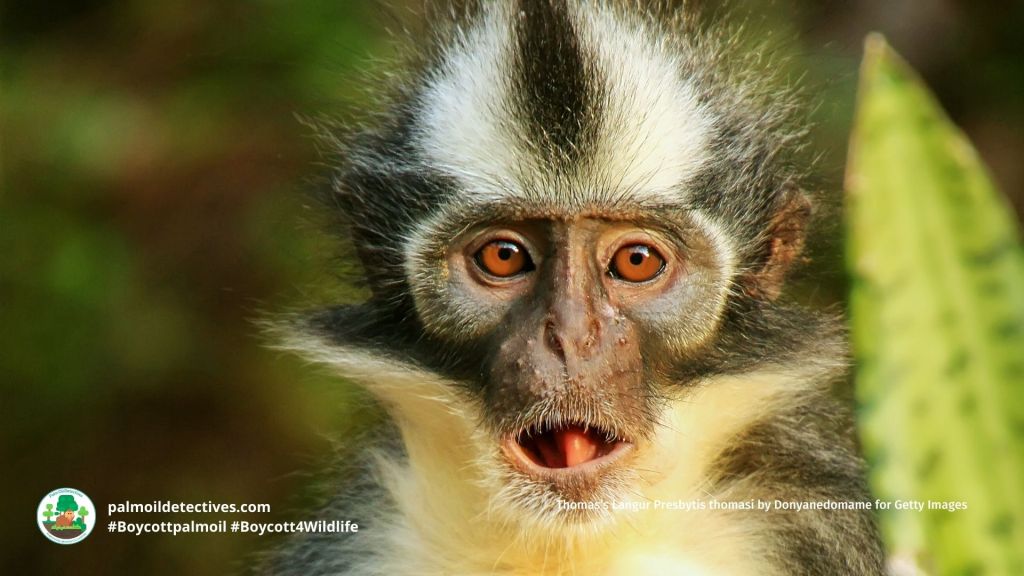
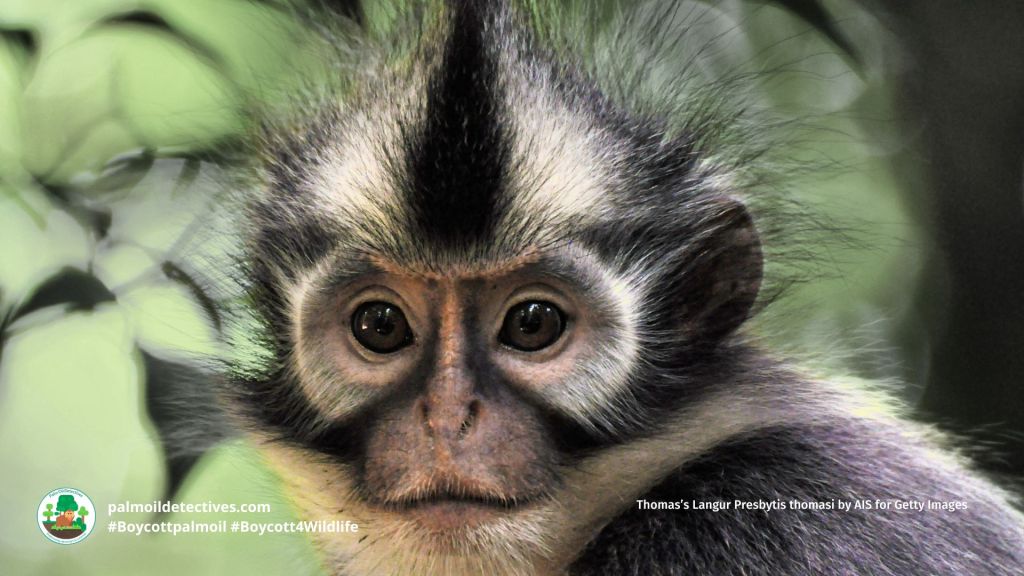
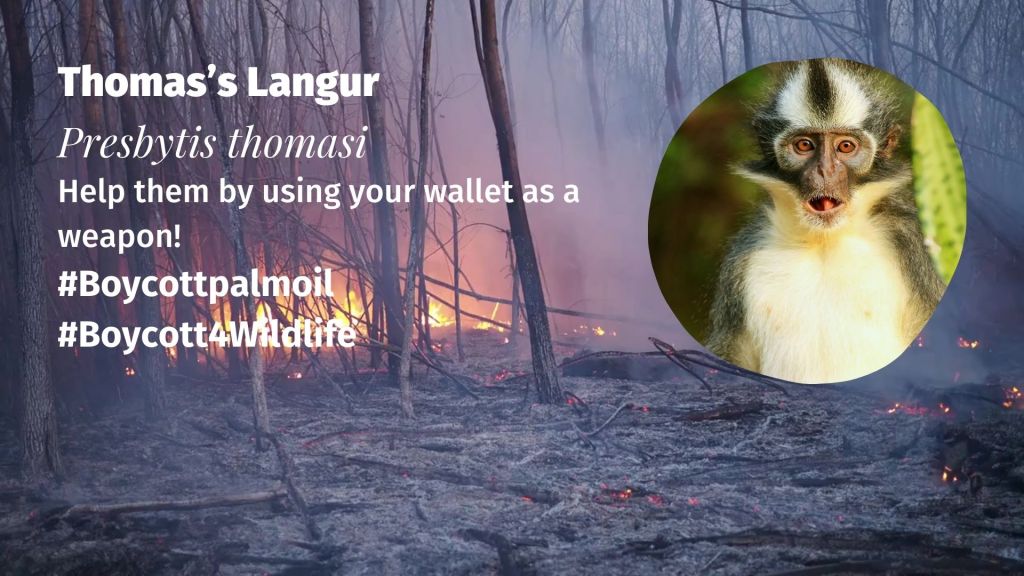
Thomas’s Langur is a small-bodied, highly distinctive primate. Their expressive amber eyes are framed by a whimsical ‘mohawk’ of fur – white at the front and dark grey along the midline – with flaring white cheek tufts giving them a perpetual look of surprise. Their back and limbs are grey, while the underparts are pure white, creating a dramatic contrast. Infants are born almost entirely white.
They live in social groups of 10–20 individuals and are arboreal, moving gracefully through the canopy. Though they are agile and peaceful, these monkeys are alert and cautious, especially in areas with higher predator or infanticide risk. They’ve been observed adjusting their vigilance levels depending on their location within the forest and the presence of neighbouring groups.

Diet
Thomas’s Langur is primarily folivorous, meaning their diet mainly consists of leaves. However, they also consume unripe fruit, flowers, toadstools, snails, and even rubber tree seeds when available. They have highly adapted digestive systems with gut microbes capable of breaking down cellulose, allowing them to extract nutrients from fibrous plant material. They tend to avoid ripe fruit, which could kill these microbes, and instead prefer high-pH, less acidic produce.
Reproduction and Mating
These langurs reach reproductive maturity around 5.4 years of age. The average interbirth interval is about 22 months, though this can vary depending on whether the previous infant survives. Females give birth to a single offspring at a time and care for them extensively. Infanticide by incoming males is a documented threat in overlapping territories, which may influence both vigilance and social dynamics within groups.
In the wild, Thomas’s Langurs live up to 20 years, with longevity extending to 29 years in captivity due to the absence of predators and reduced stress.
Geographic Range
Thomas’s Langur is restricted to northern Sumatra in Indonesia, primarily within Aceh Province. They are found north of the Alas (Simpangkiri) and Wampu Rivers, though newer records suggest they also exist just south of the Alas. Key populations reside in the Leuser Ecosystem, particularly around the Ketambe Research Station and Bukit Lawang in Gunung Leuser National Park. The species’ range is geographically fragmented by rivers and human activity.
Threats
The species is considered Vulnerable due to past and continued population declines, estimated at more that 30% over the past 40 years (three generations) due to loss of habitat, especially to logging and oil palm plantations. Due to continuing threats, it is suspected to decline at the same rate over the next one generation.
IUCN Red List
• Palm oil and timber deforestation
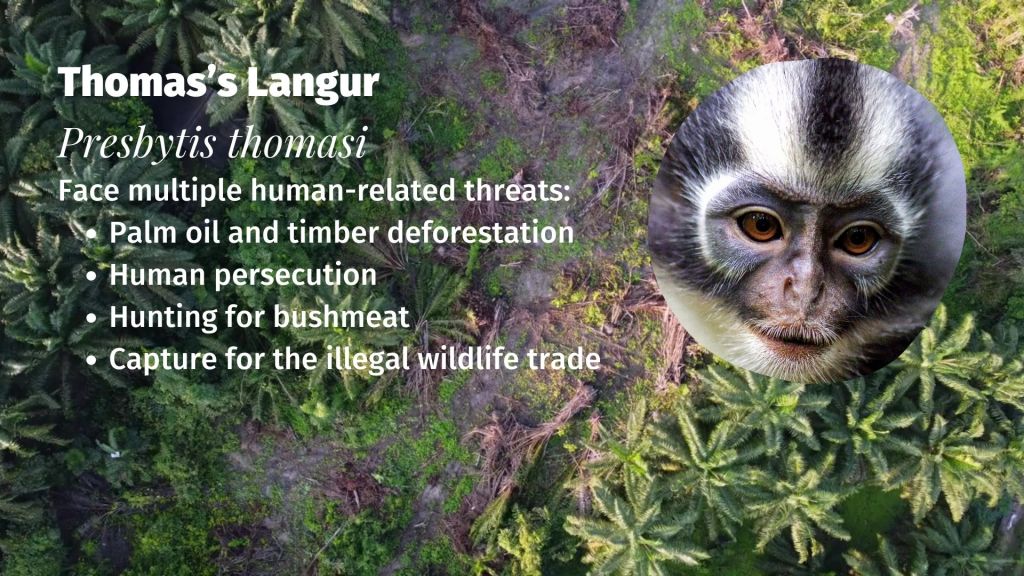
Thomas’s langur faces severe habitat loss due to widespread deforestation in northern Sumatra. Logging operations, both legal and illegal, have cleared vast tracts of primary forest, fragmenting the langurs’ habitat and forcing them into smaller, isolated patches. The conversion of forests into oil palm plantations is accelerating this destruction, leading to population declines estimated at more than 30% over the past 40 years. This fragmentation not only reduces available food sources but also isolates groups, limiting genetic diversity and increasing the risk of local extinctions.
• Hunting and human persecution
Though protected by the local Batak traditional and religious taboos, there is some ‘marginal’ hunting pressure in the other parts of their distribution. The species is sometimes killed for bushmeat or captured for traditional medicine practices. In areas where these taboos are not observed, or where poverty drives people to seek alternative food sources, hunting pressure remains a real threat. Even low levels of hunting can have significant impacts on slow-reproducing primates like Thomas’s langur.
• Illegal Pet Trade
Infant langurs are often captured and sold in wildlife markets, especially in areas close to tourism hotspots like Bukit Lawang. To obtain a baby, adult females are usually killed, which has devastating consequences for troop dynamics and survival. Captive langurs often suffer from malnutrition, stress, and poor care, and rarely survive long in the pet trade. This exploitation is driving the species further toward extinction and contributes to the destruction of wild populations.
• Human-Wildlife Conflict
As forests are cleared, Thomas’s langurs increasingly move into croplands and plantations in search of food. This brings them into direct conflict with farmers, who may perceive them as pests and shoot them to protect crops. These retaliatory killings are not only cruel but contribute to the already rapid decline in population numbers. Furthermore, such conflicts reduce public tolerance for the species and hinder conservation efforts unless addressed through community engagement and education.
Take Action!
Thomas’s Langur is a symbol of Sumatra’s disappearing biodiversity. Protecting their habitat means preserving the rich web of life in which they play an essential role. You can make a difference, every time you shop #BoycottPalmOil #Boycott4Wildlife. Advocate for indigenous-led conservation in Sumatra and campaign against the illegal wildlife trade. Support plant-based agriculture and rewilding efforts. Go #Vegan #BoycottMeat
FAQs
How many Thomas’s Langurs are left in the wild?
Exact population estimates for the Thomas’s Langur are unknown, but data suggests that their numbers have declined by more than 30% in the past 40 years (three generations). This is largely due to habitat destruction and fragmentation (Wich et al., 2007).
How long do Thomas’s Langurs live?
In the wild, they typically live around 20 years. In captivity, individuals have been known to live up to 29 years (Wich et al., 2007).
Why are Thomas’s Langurs endangered?
The main threat is deforestation from logging and conversion of land into palm oil plantations. This leads to loss of their primary rainforest habitat and forces them into closer contact with humans, where they may be shot or captured for trade (IUCN, 2021).
Do Thomas’s Langurs make good pets?
Absolutely not. Keeping Thomas’s Langurs as pets is not only unethical but illegal. The illegal pet trade contributes directly to their decline, as infants are taken from their mothers, often involving violence. Supporting this trade fuels cruelty and threatens their survival. Advocate against the exotic pet trade instead.
Further Information

Setiawan, A. & Traeholt, C. 2020. Presbytis thomasi. The IUCN Red List of Threatened Species 2020: e.T18132A17954139. https://dx.doi.org/10.2305/IUCN.UK.2020-2.RLTS.T18132A17954139.en. Downloaded on 24 January 2021.
Ecology Asia. (n.d.). Thomas’s Leaf Monkey – Presbytis thomasi. Retrieved March 25, 2025, from https://www.ecologyasia.com/verts/mammals/thomas’s-leaf-monkey.htm
Sterck, E. H. M., Willems, E. P., van Schaik, C. P., & Wich, S. A. (2005). Demography and life history of Thomas langurs (Presbytis thomasi). American Journal of Primatology, 69(6), 641–651. https://doi.org/10.1002/ajp.20386
Steenbeek, R., Piek, R. C., van Buul, M., & van Hooff, J. A. R. A. M. (1999). Vigilance in wild Thomas’s langurs (Presbytis thomasi): the importance of infanticide risk. Behavioral Ecology and Sociobiology, 45, 137–150. https://doi.org/10.1007/s002650050547
Wich, S. A., Steenbeek, R., Sterck, E. H. M., Korstjens, A. H., Willems, E. P., & van Schaik, C. P. (2007). Demography and life history of Thomas langurs (Presbytis thomasi). American Journal of Primatology, 69(6), 641–651. https://doi.org/10.1002/ajp.20386
Wich, S. A., Schel, A. M., de Vries, H., & van Schaik, C. P. (2008). Geographic variation in Thomas Langur (Presbytis thomasi) loud calls. American Journal of Primatology, 70(6), 566–574. https://onlinelibrary.wiley.com/doi/10.1002/ajp.20527
Wikipedia contributors. (n.d.). Thomas’s langur. Wikipedia. Retrieved March 25, 2025, from https://en.wikipedia.org/wiki/Thomas%27s_langur
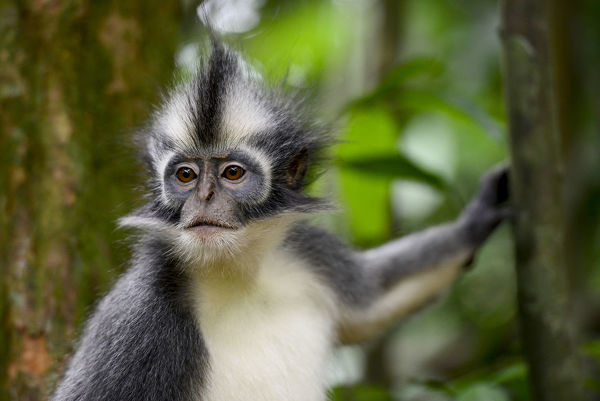
Thomas’s Langur Presbytis thomasi
How can I help the #Boycott4Wildlife?
Take Action in Five Ways
1. Join the #Boycott4Wildlife on social media and subscribe to stay in the loop: Share posts from this website to your own network on Twitter, Mastadon, Instagram, Facebook and Youtube using the hashtags #Boycottpalmoil #Boycott4Wildlife.
Enter your email address
Sign Up
Join 3,179 other subscribers2. Contribute stories: Academics, conservationists, scientists, indigenous rights advocates and animal rights advocates working to expose the corruption of the palm oil industry or to save animals can contribute stories to the website.
Wildlife Artist Juanchi Pérez
Read moreMel Lumby: Dedicated Devotee to Borneo’s Living Beings
Read moreAnthropologist and Author Dr Sophie Chao
Read moreHealth Physician Dr Evan Allen
Read moreThe World’s Most Loved Cup: A Social, Ethical & Environmental History of Coffee by Aviary Doert
Read moreHow do we stop the world’s ecosystems from going into a death spiral? A #SteadyState Economy
Read more3. Supermarket sleuthing: Next time you’re in the supermarket, take photos of products containing palm oil. Share these to social media along with the hashtags to call out the greenwashing and ecocide of the brands who use palm oil. You can also take photos of palm oil free products and congratulate brands when they go palm oil free.
https://twitter.com/CuriousApe4/status/1526136783557529600?s=20
https://twitter.com/PhillDixon1/status/1749010345555788144?s=20
https://twitter.com/mugabe139/status/1678027567977078784?s=20
4. Take to the streets: Get in touch with Palm Oil Detectives to find out more.
5. Donate: Make a one-off or monthly donation to Palm Oil Detectives as a way of saying thank you and to help pay for ongoing running costs of the website and social media campaigns. Donate here
Pledge your support #Boycott4wildlife #BoycottMeat #BoycottPalmOil #bushmeat #deforestation #humanWildlifeConflict #hunting #illegalPetTrade #indigenousMedicine #Indonesia #langur #Malaysia #Mammal #monkey #palmOilDeforestation #palmoil #Primate #SouthEastAsia #Sumatra #ThomasSLangurPresbytisThomasi #timber #vegan #vulnerable #VulnerableSpeciesVigilance in wild Thomas's langurs ( Presbytis thomasi ): the importance of infanticide risk


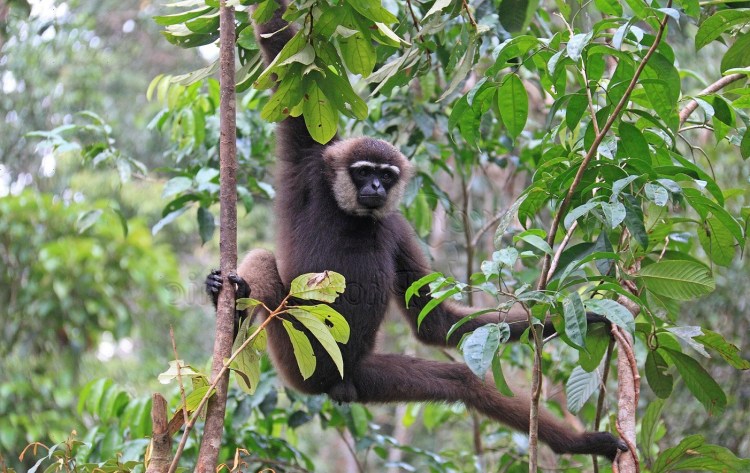

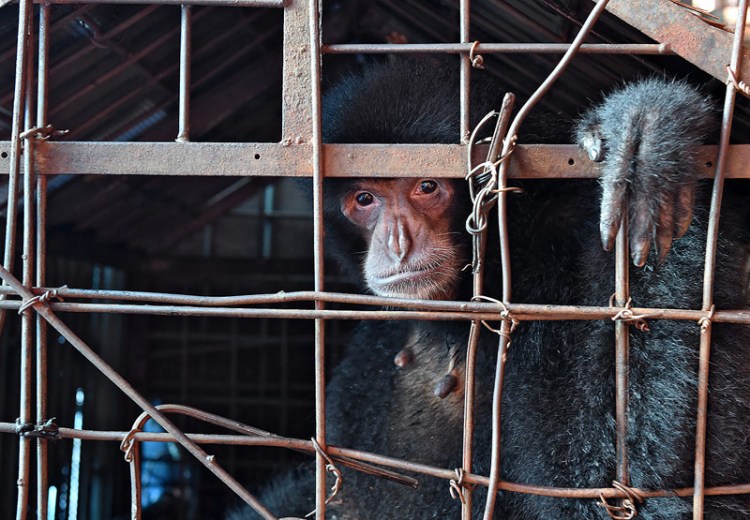
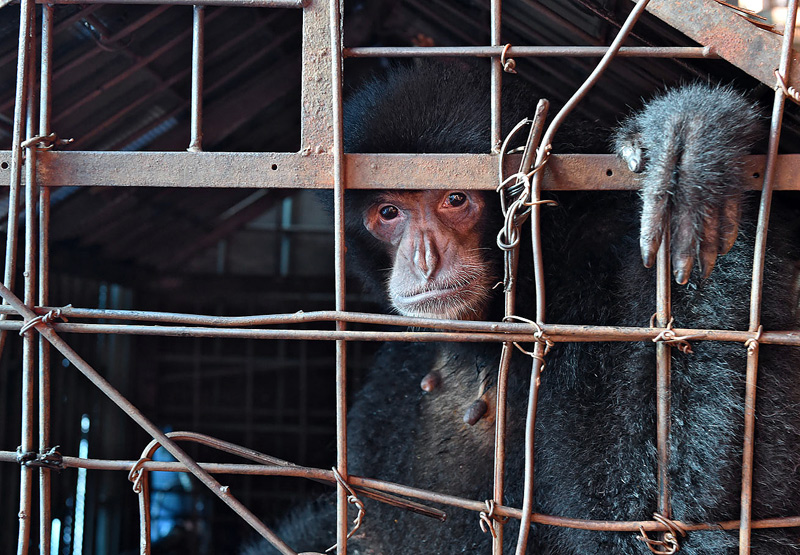 This siamang has spent her whole life in this cage, a vision that was a true nightmare. Craig Jones Wildlife Photography
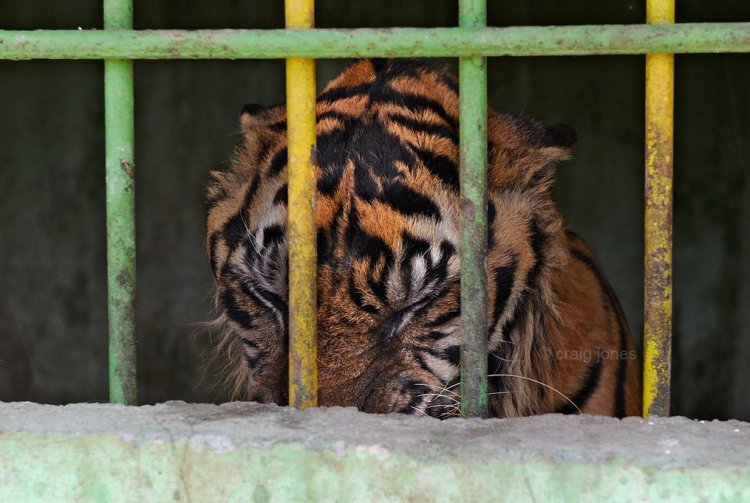
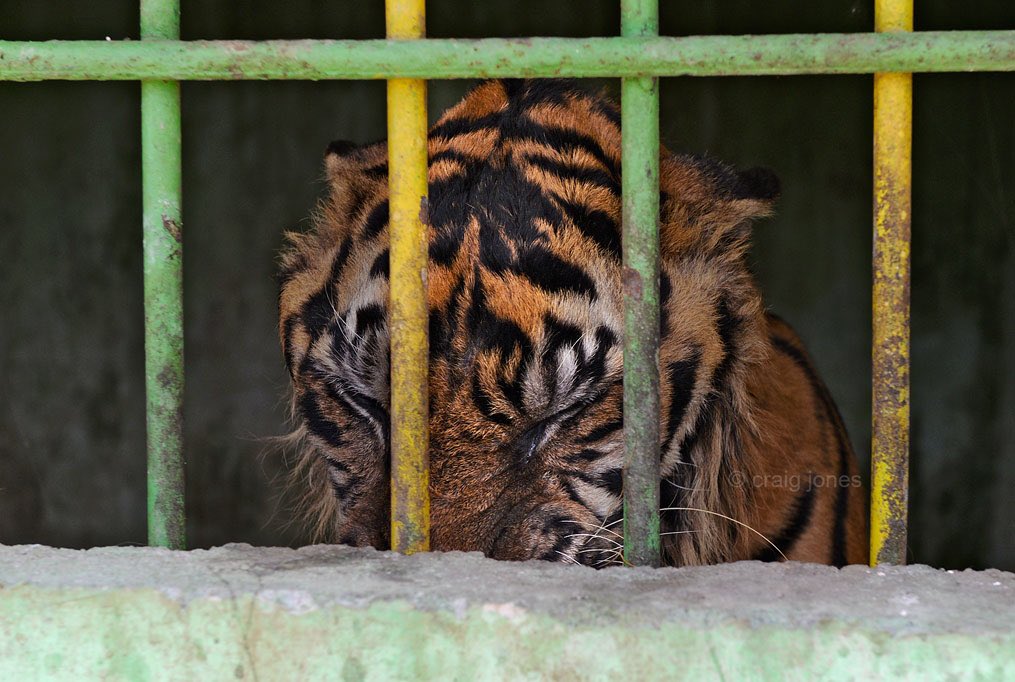 A Sumatran tiger help in a tiny cage struggles to stay alive. Craig Jones Wildlife photography A captured Siamang and a captured tiger in Indonesia.
 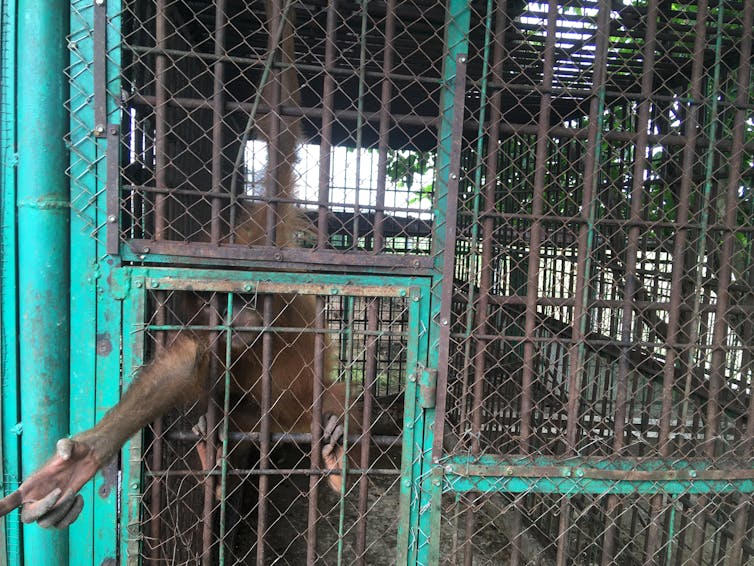 One of the orangutans in the zoo before it was confiscated in 2019. Walhi North Sumatra, Author provided
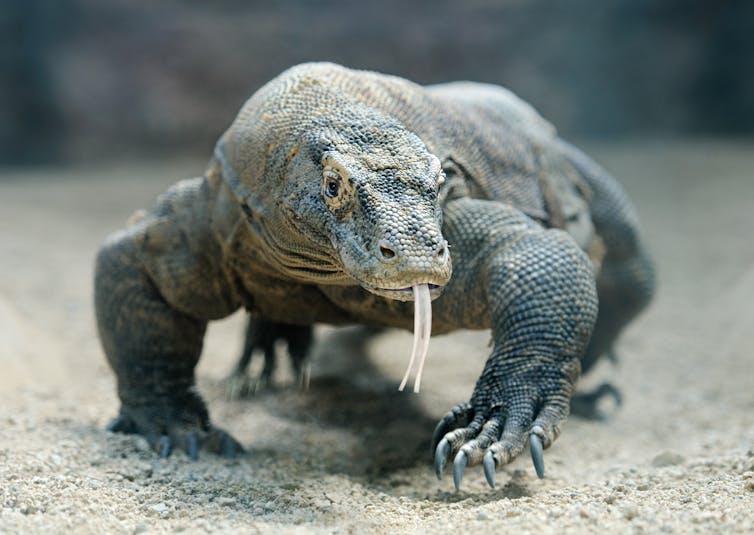 Komodo dragons were illegally exhibited at the zoo.