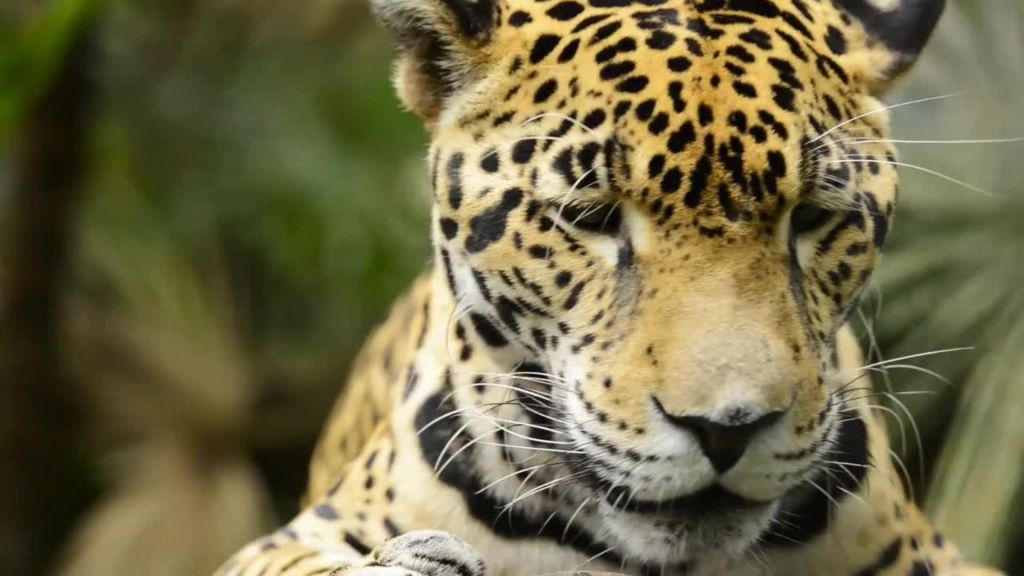
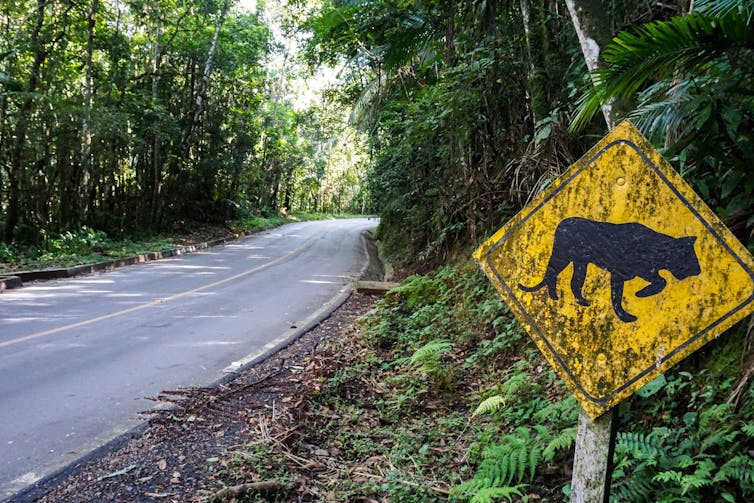
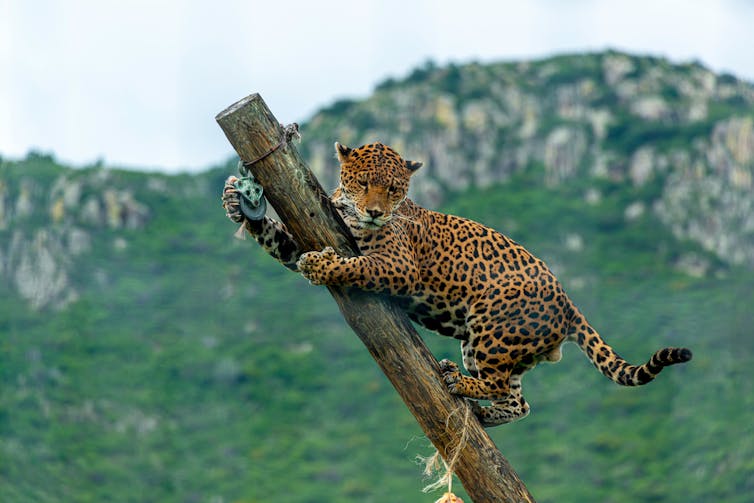
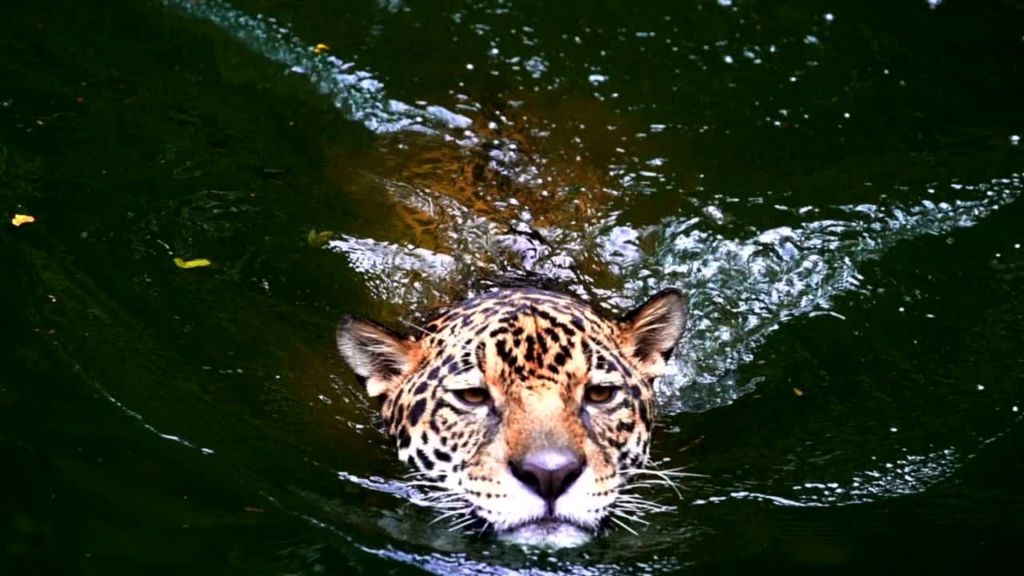
Tiger Panthera tigris

Tiger Panthera tigris

Endangered

Population: Around 3,900

Extant (resident): India, Bangladesh, Bhutan, Nepal, Myanmar, Malaysia, Indonesia, Thailand, China, Russia

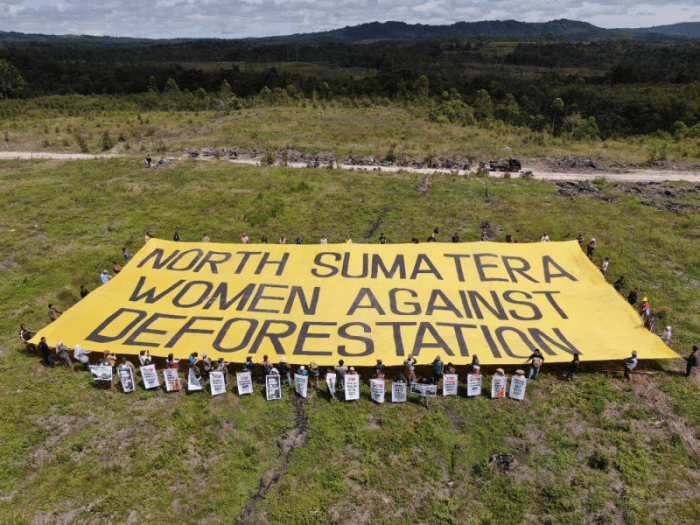
Tigers, primarily native to Asia’s tropical forests, have seen their habitats shrink dramatically over time. Notably, the Amur Tiger endures in Russia, and there have been sightings of these majestic creatures as high as 4,500 m in Bhutan. Tragically, fewer than 400 tigers remain in Indonesia, clinging to life in Sumatra’s dwindling forests. This decline is attributed to both rampant poaching and severe deforestation, especially for palm oil and pulp industries. As Asia continues to develop rapidly, the vast territories tigers need are shrinking, replaced by agriculture, commercial logging, and settlements. Moreover, tigers‘ prey faces threats from hunting and competition with domestic livestock. It’s time to act and use our wallet as a weapon: be #vegan #Boycottpalmoil #Boycott4Wildlife.

https://youtu.be/RfQDwtaIrvs

For 🇮🇩 Indonesia’s #tigers 🐅 fewer than 400 hang on to survival in rainforests of #Sumatra. Endangered by #poaching and #deforestation for #palmoil and timber. Boycott the brands sending them #extinct 😡🧐#Boycottpalmoil #Boycott4Wildlife @palmoildetect https://wp.me/pcFhgU-fT

Share to BlueSkyShare to Twitter

The mighty and majestic #tiger 🐅🐯 of #Sumatra are on the brink of #extinction from #palmoil and #mining #deforestation. Less than 400 remain alive! 😭Use your wallet as a weapon and fight for them #Boycottpalmoil #Boycott4Wildlife 🌴🔥🚫 @palmoildetect https://wp.me/pcFhgU-fT

Share to BlueSkyShare to Twitter

Tigers, the largest members of the cat family, are renowned for their majestic presence and striking orange coats with black stripes. They possess extraordinary strength and agility and maintain the balance of ecosystems as apex predators. With fewer than 4,500 remaining in the wild, tigers are classified as Endangered, facing grave threats from habitat destruction for palm oil, poaching, and human-wildlife conflict.

Their survival depends on urgent protection and animal advocacy. Protecting tigers ensures the preservation of the rich biodiversity within their habitats. Support their future by joining the #BoycottPalmOil and #Boycott4Wildlife movements.

Habitat

Tigers inhabit a wide variety of environments, including tropical rainforests, mangrove swamps, grasslands, and boreal forests. They require vast territories to hunt and breed, with males typically occupying larger ranges than females. Tigers are currently found in fragmented populations across Asia, with key strongholds in India, Sumatra, and Siberia.

These habitats are increasingly under threat due to deforestation, agricultural expansion, and infrastructure development, which have reduced their historical range by over 93%.

Diet

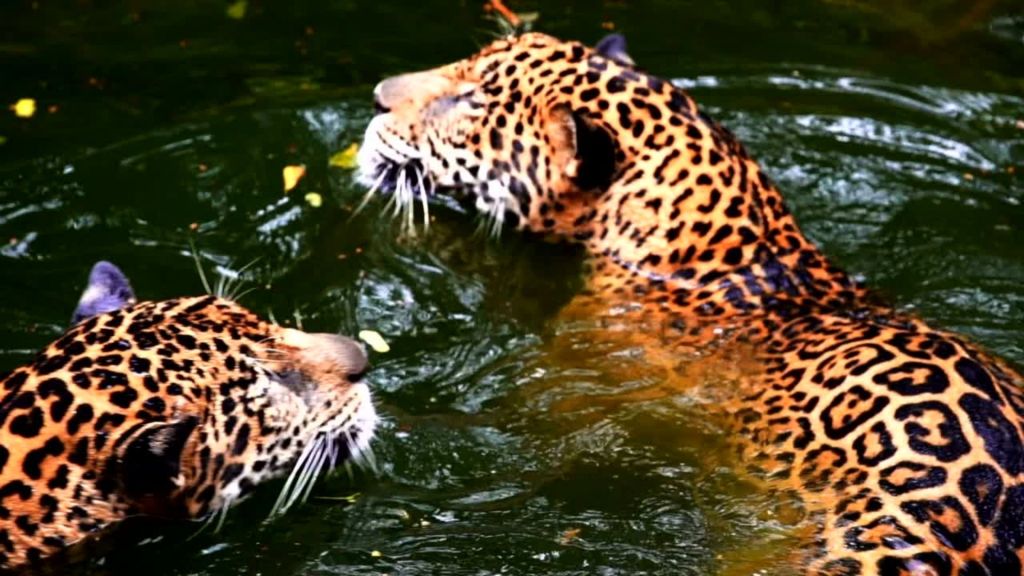
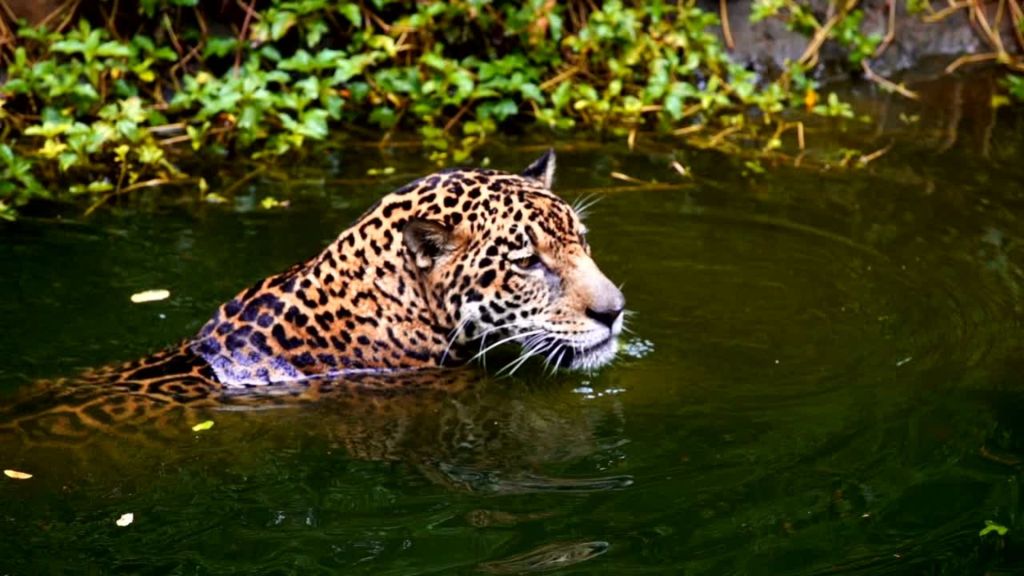
As apex predators, tigers primarily hunt large prey, such as sambar deer, wild boar, and buffalo. They are known for their stealth and strength, often ambushing their prey with a single powerful strike. Unlike other big cats, tigers can swim to catch prey, a unique skill that sets them apart.

In areas with reduced prey availability, tigers may hunt smaller mammals or livestock, which can lead to conflicts with humans.

Appearance and Behaviour

Swimming Ability: Tigers are strong swimmers, often crossing rivers and lakes to hunt or cool off—an unusual trait among big cats.

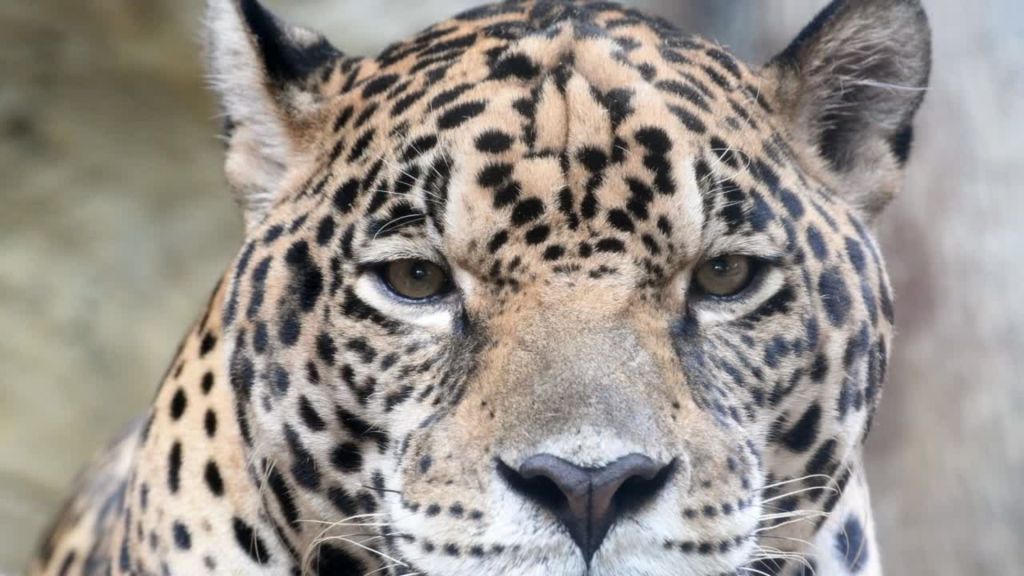
Individualised Stripes: Their stripes serve as camouflage and are unique to each tiger, making them distinguishable even in dense foliage.

Vocal Range: Tigers have a wide vocal range, including growls, roars, and chuffs, used to communicate with other tigers.

Apex Predator Status: As the top predator in their ecosystems, tigers help maintain balance by regulating prey populations.

Tigers are uniquely recognisable by their bold stripe patterns, which are as individual as fingerprints. Their muscular builds, powerful limbs, and retractable claws make them adept hunters and swimmers, setting them apart from most other big cats. Unlike lions or cheetahs, tigers are solitary by nature and fiercely territorial.

Their physical features include a robust skull, long canine teeth, and strong jaw muscles designed for gripping and tearing prey. Tigers are also among the few big cats that enjoy water, often cooling off in rivers and lakes. Their signature behaviours include scent marking, vocalisations such as roars and chuffs, and stealthy stalking of prey.

Reproduction & Mating

Tigers reach sexual maturity at around 3-4 years of age. Breeding typically occurs year-round, but more frequently during the winter months. After a gestation period of approximately 100 days, females give birth to 2-4 cubs in secluded dens.

Cubs are dependent on their mothers for the first 18 months, learning essential survival skills like hunting. Only about half of all cubs survive to adulthood, as they face threats from predators, disease, and starvation.

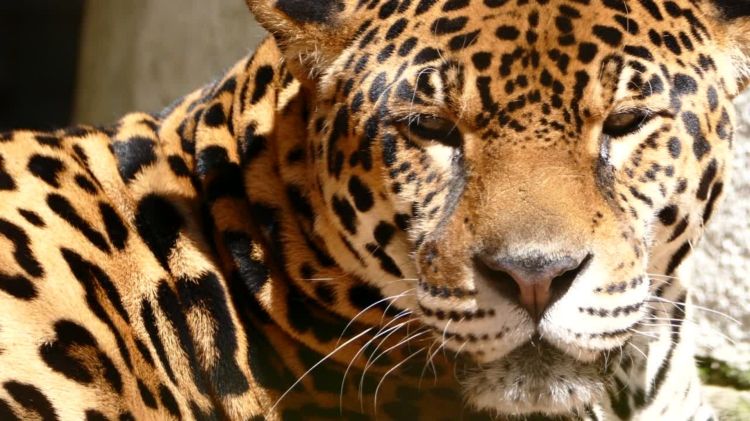
Tiger by Dalida Innes Wildlife PhotographyTiger in Bandhavgarh National Park, India. By Dalida Innes Wildlife PhotographySumatran Tiger Panthera tigris sumatrae - Asia Sumatran Tiger Panthera tigris sumatrae - Asia Sumatran Tiger Panthera tigris sumatrae - AsiaSumatran Tiger Panthera tigris sumatrae - Asia Sumatran Tiger Panthera tigris sumatrae - Asia Sumatran Tiger Panthera tigris sumatrae - Asia Sumatran Tiger Panthera tigris sumatrae - Asia

Threats

Habitat Destruction: Deforestation for palm oil agriculture, timber logging, and development fragments their habitats, isolating populations.

Poaching: Tigers are hunted for their skins, bones, and other body parts, often sold illegally for traditional medicine or as luxury items. Organisations like EIA directly combat this illegal trade.

Prey Depletion: Overhunting of herbivores reduces food availability, impacting tiger populations.

Human-Wildlife Conflict: As human settlements expand, conflicts arise, often leading to retaliation killings of tigers.

The last of Indonesia’s tigers—now fewer than 400—are holding on for survival in the remaining patches of forests on the island of Sumatra. While poaching claims most tigers each year, deforestation remains a serious threat.

Sumatra has lost more than half of its forests in the last 40 years, primarily due to conversion for palm oil and pulp plantations. Poaching for illegal trade in high-value Tiger products including skins, bones, meat and tonics is a primary threat to Tigers.

Asia is a densely populated and rapidly developing region, bringing huge pressures to bear on the large wild areas required for viable Tiger populations. Conversion of forest land to agriculture and silviculture, commercial logging, and human settlement are the main drivers of Tiger habitat loss. With their substantial dietary requirements,

Tigers require a healthy large ungulate prey base, but these species are also under heavy human subsistence hunting pressure and competition from domestic livestock.

Tigers are classified as Endangered on the IUCN Red List, with fewer than 4,500 individuals remaining in the wild. While conservation efforts have stabilised some populations, habitat loss and poaching continue to pose significant challenges. Collaborative international efforts are crucial to ensuring their survival.

The last of Indonesia’s tigers—now fewer than 400—are holding on for survival in the remaining patches of forests on the island of Sumatra. While poaching claims most tigers each year, deforestation remains a serious threat.

IUCN RED LIST

Sumatran Tiger Panthera tigris sumatrae - Asia

Tiger Panthera Tigris

Support Tiger Protection

• Boycotting palm oil and other products linked to deforestation.

• Contributing to organisations that protect tiger habitats and combat illegal poaching and animal trafficking like Traffic and EIA.

• Raise awareness about the critical importance of tigers in maintaining healthy ecosystems by joining the #BoycottPalmOil and #Boycott4Wildlife movement.

Further Information

ICUN endangered logo

Britannica. (2024). Tiger. Retrieved from https://www.britannica.com/animal/tiger

Goodrich, J., Wibisono, H., Miquelle, D., Lynam, A.J., Sanderson, E., Chapman, S., Gray, T.N.E., Chanchani, P. & Harihar, A. 2022. Panthera tigrisThe IUCN Red List of Threatened Species 2022: e.T15955A214862019. https://dx.doi.org/10.2305/IUCN.UK.2022-1.RLTS.T15955A214862019.en. Accessed on 20 December 2024.

Panthera. (2024). Tiger. Retrieved from https://panthera.org/cat/tiger

Dalida Innes Wildlife Photography


Contribute to palm oil detectives - black rhino in profile

How can I help the #Boycott4Wildlife?


Take Action in Five Ways

1. Join the #Boycott4Wildlife on social media and subscribe to stay in the loop: Share posts from this website to your own network on Twitter, Mastadon, Instagram, Facebook and Youtube using the hashtags #Boycottpalmoil #Boycott4Wildlife.

Enter your email address

Sign Up

Join 3,528 other subscribers

2. Contribute stories: Academics, conservationists, scientists, indigenous rights advocates and animal rights advocates working to expose the corruption of the palm oil industry or to save animals can contribute stories to the website.
Wildlife Artist Juanchi Pérez

Wildlife Artist Juanchi Pérez

Read more

Mel Lumby: Dedicated Devotee to Borneo’s Living Beings
Mel Lumby: Dedicated Devotee to Borneo’s Living Beings

Read more

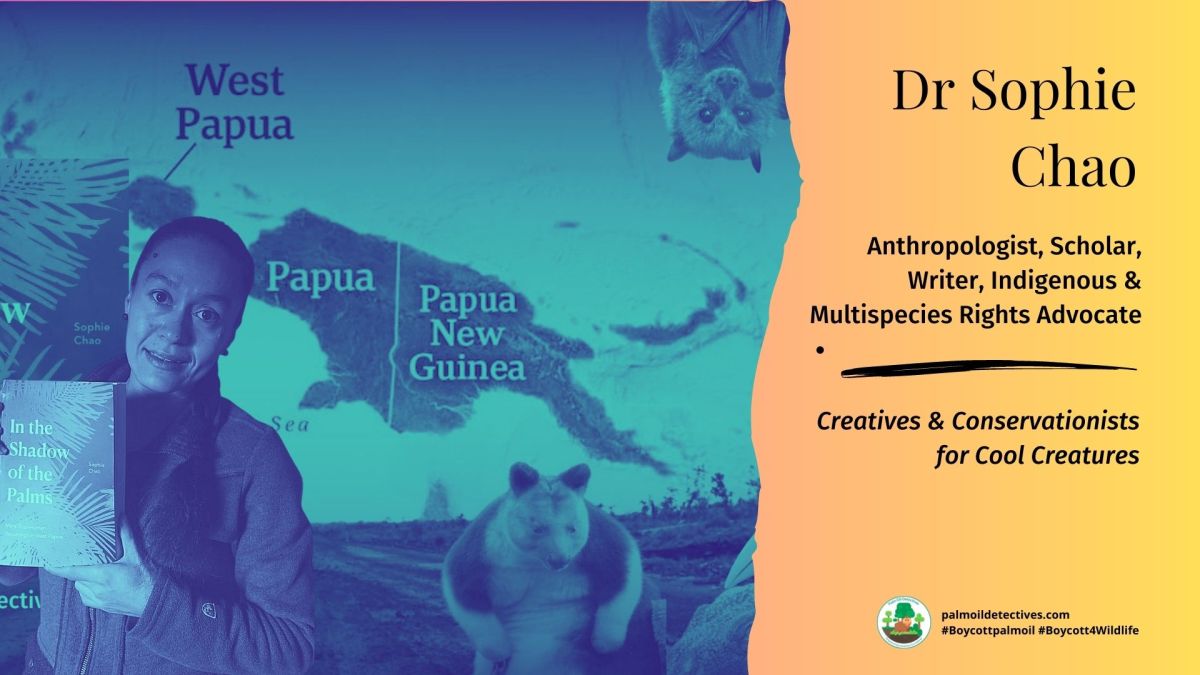
Anthropologist and Author Dr Sophie Chao

Anthropologist and Author Dr Sophie Chao

Read more

Health Physician Dr Evan Allen

Health Physician Dr Evan Allen

Read more

The World’s Most Loved Cup: A Social, Ethical & Environmental History of Coffee by Aviary Doert

The World’s Most Loved Cup: A Social, Ethical & Environmental History of Coffee by Aviary Doert

Read more

How do we stop the world’s ecosystems from going into a death spiral? A #SteadyState Economy

How do we stop the world’s ecosystems from going into a death spiral? A #SteadyState Economy

Read more

3. Supermarket sleuthing: Next time you’re in the supermarket, take photos of products containing palm oil. Share these to social media along with the hashtags to call out the greenwashing and ecocide of the brands who use palm oil. You can also take photos of palm oil free products and congratulate brands when they go palm oil free.

https://twitter.com/CuriousApe4/status/1526136783557529600?s=20

https://twitter.com/PhillDixon1/status/1749010345555788144?s=20

https://twitter.com/mugabe139/status/1678027567977078784?s=20

4. Take to the streets: Get in touch with Palm Oil Detectives to find out more.

5. Donate: Make a one-off or monthly donation to Palm Oil Detectives as a way of saying thank you and to help pay for ongoing running costs of the website and social media campaigns. Donate here

Pledge your support

#bigCat #Borneo #Boycott4wildlife #BoycottPalmOil #carnivores #deforestation #EndangeredSpecies #extinct #extinction #feline #Malaysia #mining #palmoil #poaching #predator #predators #SouthEastAsia #Sumatra #tiger #TigerPantheraTigris #tigers #vegan #wildcat

Parrot Deaths Highlight Urgent Need to Reform CITES


Three critically endangered African Grey parrots were seized in Norway in 2019 after being illegally smuggled and they were later euthanised. These intelligent birds had potentially 60 years of life to live and the massive tragedy is – they knew that they were going to die!

Generally, international wildlife trade is not forbidden. Rather, it is regulated through CITES an international treaty to prevent illegal trade in wild animals. The industry is worth billions. The treaty needs a radical overhaul writes Professor Ragnhild Sollund for 360Info.

The legal trade is largely to blame for African grey parrots becoming endangered: parrots make popular pets due to their intelligence and sociability, so they have become “over exploited”. Help fight illegal wildlife trade and #Boycott4Wildlife


The tragedy of dead African grey #parrots highlights the need to overhaul #CITES a weak treaty which facilitates rather than stops #wildlife trade #extinction by Prof Ragnild Sollund for @360info_global #Boycottpalmoil #Boycott4Wildlife via @palmoildetect https://wp.me/pcFhgU-78q

Share to Twitter

“A #ban on #wildlife #trade would be easier to enforce than the current market, where some trade is legal, some illegal, and which offers ample possibilities for #fraud #corruption Story: @360info_global #Boycottpalmoil #Boycott4Wildlife @palmoildetect https://wp.me/pcFhgU-78q

Share to Twitter

https://youtu.be/q3ghgSWBnPo

Originally published under Creative Commons by 360info™. Written by Professor Ragnhild Sollund. Read the original here.


In November 2019, three African grey parrot chicks (Psittacus erithacus) were seized at Oslo airport by customs inspectors. As endangered species, they did not have the required permits to be transported to Norway. During the month that officials contemplated what should happen to the birds, they were hand reared by veterinarians. Then the decision was made: euthanasia.

The tragic story of three dead parrots

These highly intelligent birds had a potential 60-year life ahead of them; a life that was abruptly concluded in the hands of the vet. “I have euthanised many animals, but I cried when I euthanised these birds,” she said. “They understood… [And I did] not want to work as the Norwegian environment agency’s executioner of endangered species.”

In Norway, this was the standard outcome for illegally traded animals that are listed in CITES, the United Nations Convention on International Trade in Endangered Species of Wild Fauna and Flora. On March 3, International Wildlife Day, it highlights why addressing the wildlife trade, its regulation and enforcement, is urgent.

Generally, international wildlife trade is not forbidden. Rather, it is regulated through CITES. The legal trade is largely to blame for African grey parrots becoming endangered: parrots make popular pets due to their intelligence and sociability, so they have become “over exploited”, meaning the trade endangers the survival of the species. But the concept of over exploitation fails to cover the individual suffering or death of the animals involved in the trade. In view of species justice, any exploitation may be too much.

CITES entered into force in 1975. Eighty-four parties have signed the convention, including the European Union as one party. Each country must have a management authority, and all countries are obliged to submit annual reports to the CITES secretariat.

Animals are listed on three appendices of CITES, according to how endangered they are. The African grey is listed on appendix I as threatened with extinction. It was moved from appendix II in 2016, since trade in them was no longer deemed ‘sustainable’. Currently 5,950 species of animals and 32,800 species of plants are listed across all three appendices.

CITES has been criticised for being an overly human-centred convention. It fails to take into consideration the fact that animals are sentient beings with capacity to suffer who have interest in living their lives in their natural habitats, free from human inflicted harm.

The tragic story of three dead parrots

Instead, CITES frames wildlife species, whether plants or animals, as resources that are available for humans to exploit, until exploitation reaches a level that threatens the survival of a species. According to this logic, one individual can easily be disposed of and replaced by another; an individual’s intrinsic value is not recognised.

CITES has been criticised for not functioning even within its own parameters. For example, many parties to CITES never submit the required annual reports, and much trade is never recorded. And many species become threatened and go extinct from trade without ever being listed on the CITES appendices. For example, there are 10,247 known reptile species in the world, but only 8 percent of the reptile trade is regulated through CITES. Newly discovered species can be swiftly exploited, and 79 percent of traded species are not subject to CITES regulation.

According to CITES records, a staggering 2 million mammals, 5 million birds, 41 million reptiles, half a million amphibians, and 6 million fish were traded legally between 2011-2022.

Animals are used for medicinal purposes (often with no effect), fashion, as game hunting trophies, pets and as high-status food items.

Wildlife trade is big business

Advocacy group Traffic estimates the economic value of legal wildlife trade including plants, at approximately US$323 billion. One important reason for the foundation of CITES was to secure the economic gains of wildlife trade for biodiverse, but poor countries in the global South.

Wildlife trade can be viewed as transnational, global, organised state corporate harm.

Given the general failure of CITES to protect animals from harm and species from extinction, there have been many calls to remodel the agreement. The logic behind CITES implies that the harms of wildlife trade shall continue relentlessly, with new individuals abducted, killed or in other ways exploited in a ‘sustainable’ way for human benefit.

A better CITES would be based around animal protection. Wild animals should have rights not to be exploited as pets, killed for their flesh or skin, teeth or whiskers, tusks, horns, or used for entertainment in zoos, circuses and aqua parks. CITES could rather become an instrument promoting justice both for nature, humans and animals.

One way to do this would be to transform it from a trade convention to an aid convention. The convention could be reformulated to promote species conservation and the protection of individuals’ and species’ rights.

CITES could then become an instrument to funnel economic resources from rich economies in the North to poor economies in the South, if their national budgets partly rely on wildlife trade. Aid, distributed by an accountable secretariat, could be conditional on the ways in which the recipients succeed in protecting the natural environment and its inhabitants.

This system is already in place when it comes to the protection of rainforest: Norway and Germany contribute significantly to the protection of rainforest in places such as Brazil, Colombia and Ecuador through the UN; the amount of economic resources allocated from Norway to these countries depends on how much rainforest is spared from logging and emissions reduced.

A ban on the trade in wild animals would be easier to enforce than the current murky market, in which some trade is legal, other parts illegal, and which demands significant skills by law enforcement officers and offers ample possibilities for fraud.

Ragnhild Sollund is professor at the Department of Criminology and Sociology of Law at the University of Oslo, where she has done research into the wildlife trade for 12 years. She is currently leading the research project: Criminal Justice, Wildlife Conservation and Animal Rights in the Anthropocene, which studies the implementation and enforcement of two nature conventions: CITES; and the Bern convention that protects wild animals and their habitats in Europe, in Norway, The United Kingdom, Spain and Germany. Her research is funded by Norwegian Research Council. 

Originally published under Creative Commons by 360info™. Written by Professor Ragnhild Sollund. Read the original here.

ENDS


Learn about other animals endangered by palm oil and other agriculture

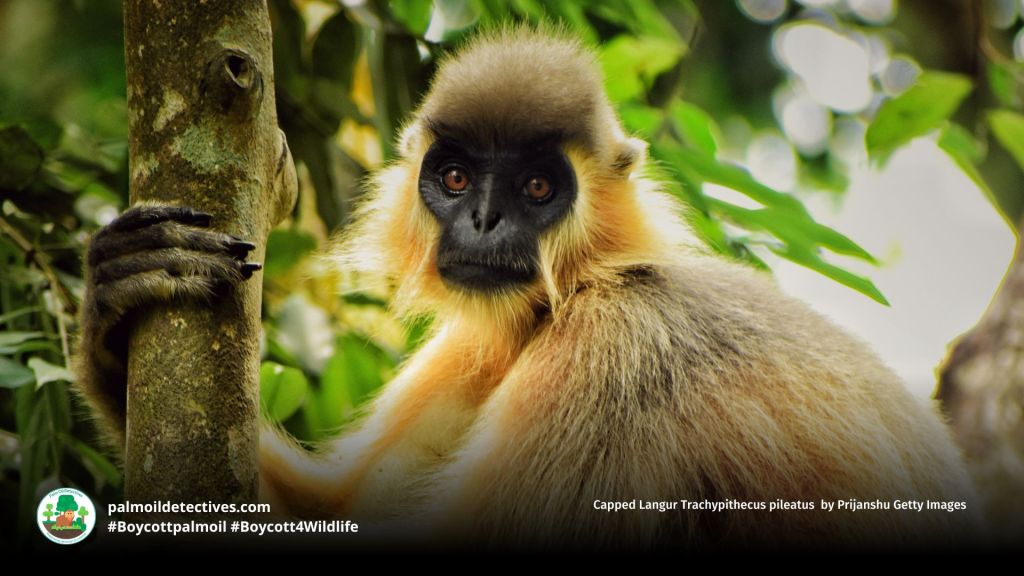
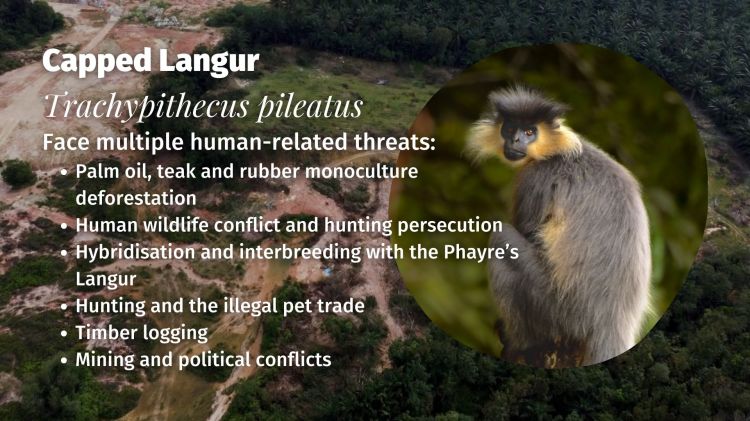
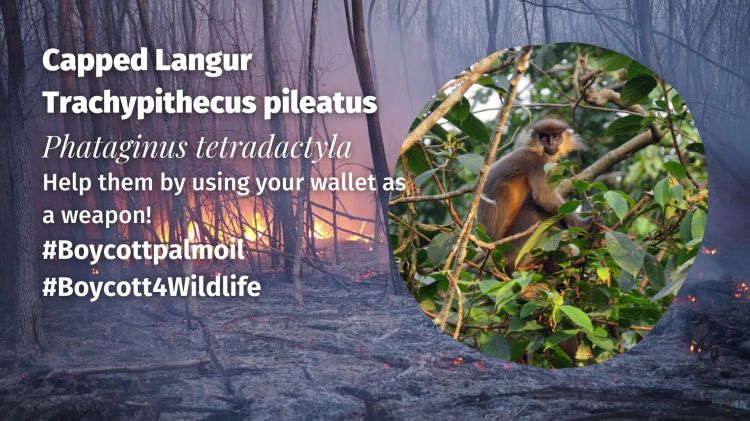
GlobalSouth America S.E. AsiaIndiaAfricaWest Papua & PNGCapped Langur Trachypithecus pileatus

Capped Langur Trachypithecus pileatus

Keep reading

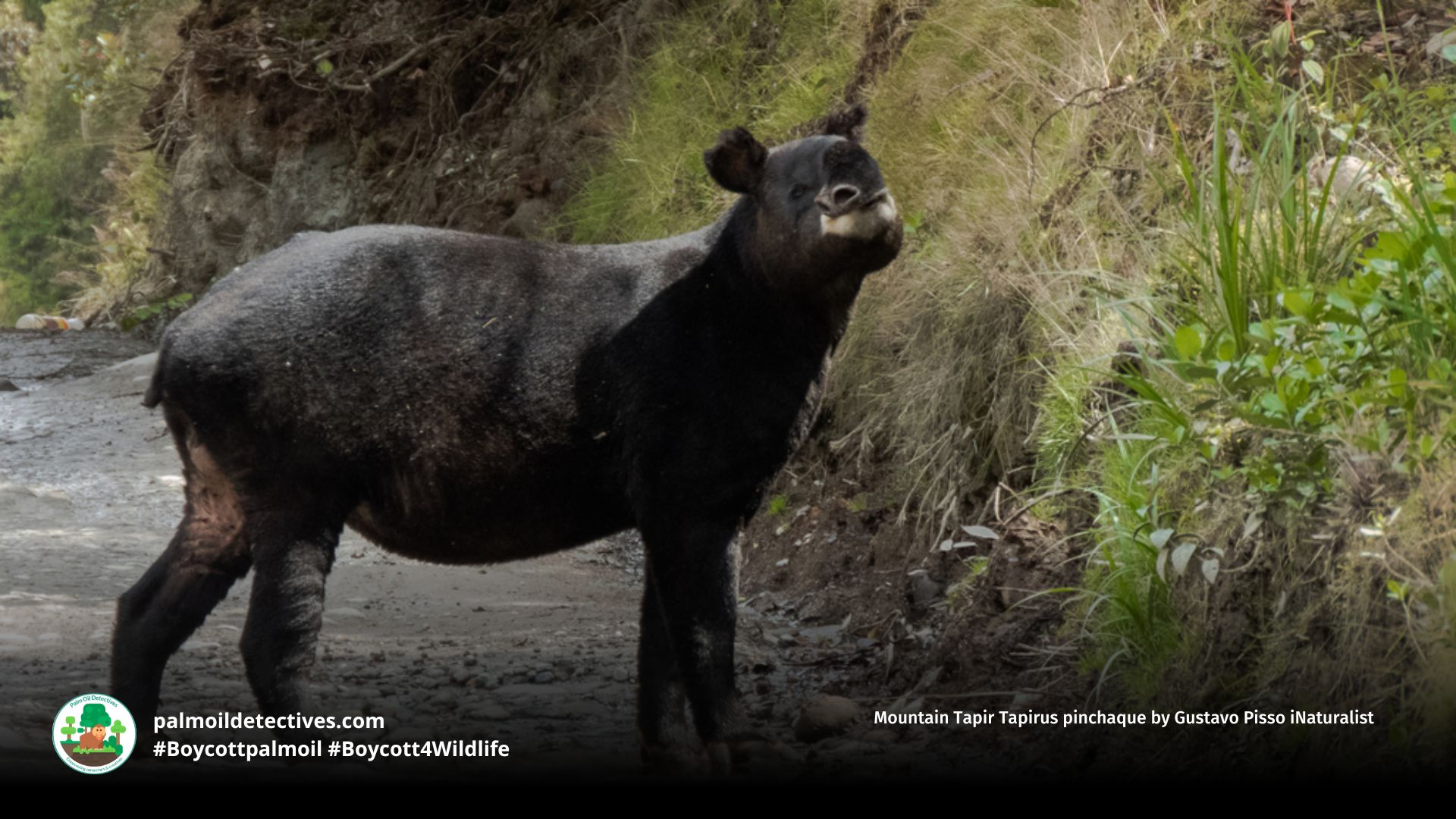
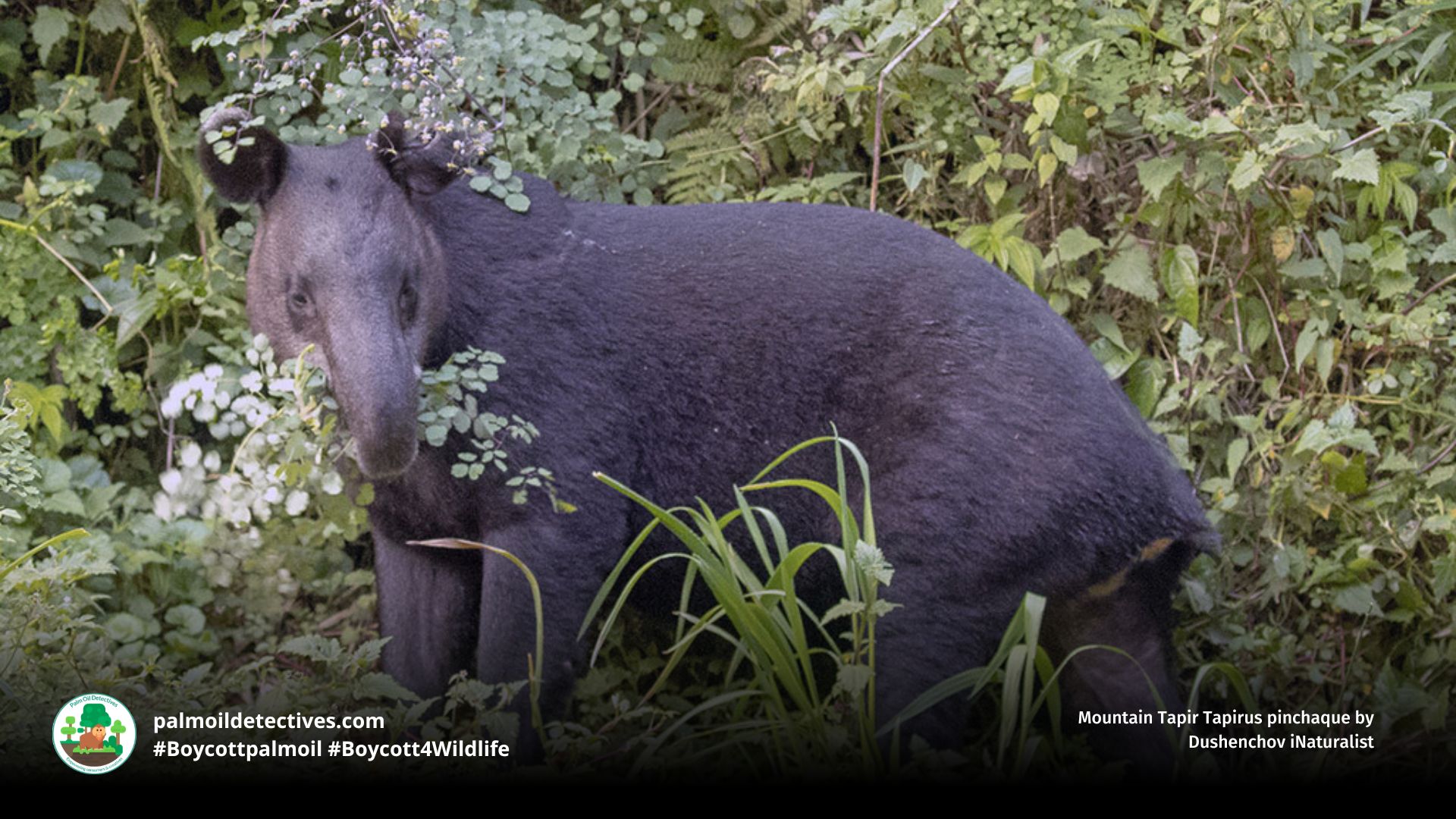
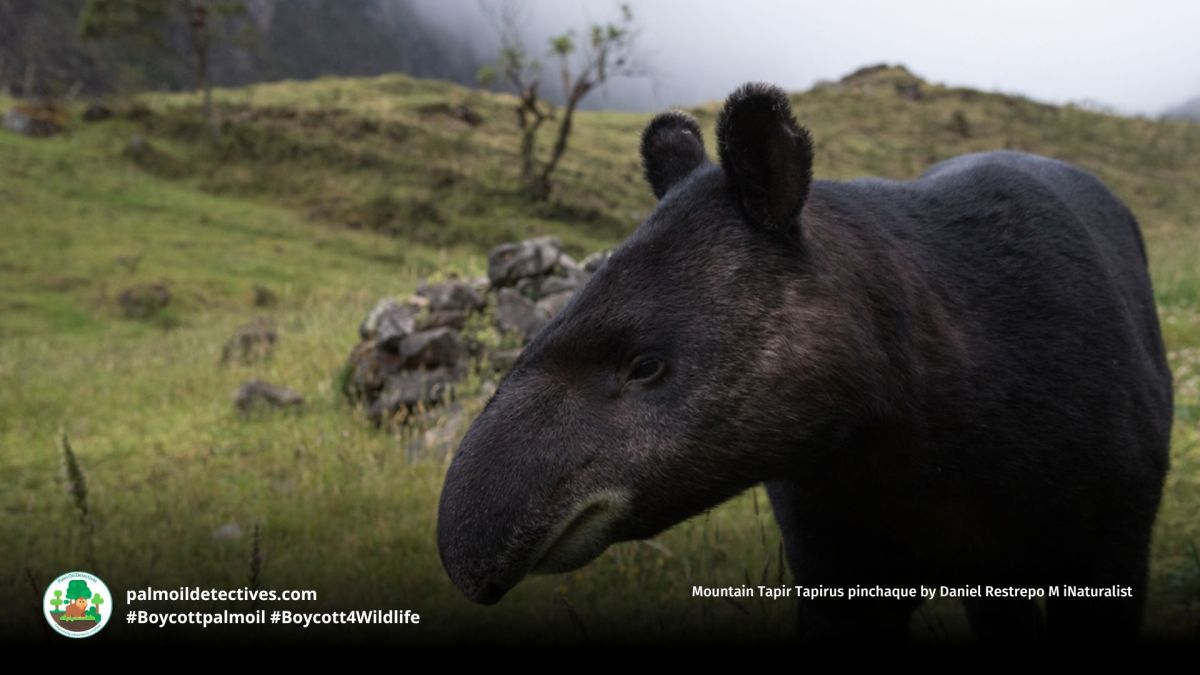
Mountain Tapir Tapirus pinchaque

Mountain Tapir Tapirus pinchaque

Keep reading

Saola Pseudoryx nghetinhensis

Saola Pseudoryx nghetinhensis

Keep reading

Tucuxi Sotalia fluviatilis

Tucuxi Sotalia fluviatilis

Keep reading

Frill-Necked Lizard Chlamydosaurus kingii

Frill-Necked Lizard Chlamydosaurus kingii

Keep reading

Grey Crowned Crane Balearica regulorum

Grey Crowned Crane Balearica regulorum

Keep reading


Learn about “sustainable” palm oil greenwashing

Read more about RSPO greenwashing

Lying Fake labelsIndigenous Land-grabbingHuman rights abusesDeforestation Human health hazards

A 2019 World Health Organisation (WHO) report into the palm oil industry and RSPO finds extensive greenwashing of palm oil deforestation and the murder of endangered animals (i.e. biodiversity loss)

Read moreWHO Bulletin on Palm Oil: Deforestation and ExtinctionWHO Bulletin on Palm Oil: Deforestation and ExtinctionWHO Bulletin on Palm Oil: Deforestation and ExtinctionWHO Bulletin on Palm Oil: Air Pollution and Health

Take Action in Five Ways

1. Join the #Boycott4Wildlife on social media and subscribe to stay in the loop: Share posts from this website to your own network on Twitter, Mastadon, Instagram, Facebook and Youtube using the hashtags #Boycottpalmoil #Boycott4Wildlife.

Enter your email address

Sign Up

Join 3,174 other subscribers

2. Contribute stories: Academics, conservationists, scientists, indigenous rights advocates and animal rights advocates working to expose the corruption of the palm oil industry or to save animals can contribute stories to the website.

Wildlife Artist Juanchi Pérez

Wildlife Artist Juanchi Pérez

Read more

Mel Lumby: Dedicated Devotee to Borneo’s Living Beings

Mel Lumby: Dedicated Devotee to Borneo’s Living Beings

Read more

Anthropologist and Author Dr Sophie Chao

Anthropologist and Author Dr Sophie Chao

Read more

Health Physician Dr Evan Allen

Health Physician Dr Evan Allen

Read more

The World’s Most Loved Cup: A Social, Ethical & Environmental History of Coffee by Aviary Doert

The World’s Most Loved Cup: A Social, Ethical & Environmental History of Coffee by Aviary Doert

Read more

How do we stop the world’s ecosystems from going into a death spiral? A #SteadyState Economy

How do we stop the world’s ecosystems from going into a death spiral? A #SteadyState Economy

Read more

3. Supermarket sleuthing: Next time you’re in the supermarket, take photos of products containing palm oil. Share these to social media along with the hashtags to call out the greenwashing and ecocide of the brands who use palm oil. You can also take photos of palm oil free products and congratulate brands when they go palm oil free.

https://twitter.com/CuriousApe4/status/1526136783557529600?s=20

https://twitter.com/PhillDixon1/status/1749010345555788144?s=20

https://twitter.com/mugabe139/status/1678027567977078784?s=20

4. Take to the streets: Get in touch with Palm Oil Detectives to find out more.

5. Donate: Make a one-off or monthly donation to Palm Oil Detectives as a way of saying thank you and to help pay for ongoing running costs of the website and social media campaigns. Donate here

Pledge your support

#AfricanGreyParrot #AnimalBiodiversityNews #animalCruelty #animalExtinction #ban #Bird #birds #BoycottPalmOil #Boycott4wildlife #BoycottPalmOil #CITES #corruption #deforestation #extinction #ForgottenAnimals #fraud #greenwashing #illegalPetTrade #Parrots #poachers #poaching #trade #wildlife

Beautiful and Doomed: Saving Bangladesh’s Langurs From Extinction


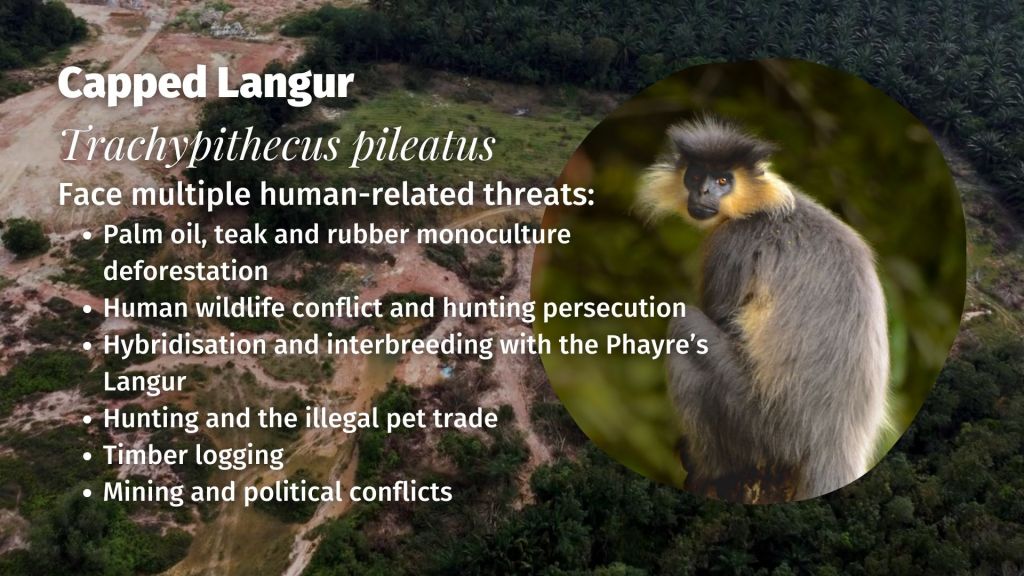
A recent study has found hybridisation (interbreeding) between critically endangered Phayre’s #langurs and endangered capped langurs in #Bangladesh, raises serious concerns about their genetic health and future survival as distinct species. Hybridisation is a serious sign of ecological disruption, and researchers point to human-related threats such as #palmoil and #timber #deforestation, habitat fragmentation, and #hunting as key drivers for them interbreeding. These pressures not only push the species to hybridise but also threaten their long-term existence in the wild, highlighting the urgent need for conservation efforts to address habitat destruction and protect these seriously endangered primates. 🌿 Help them when you shop, go #vegan and #BoycottPalmOil #Boycott4Wildlife


Beautiful Capped Langurs and Phayre’s #Langurs are interbreeding, risking both #species’ survival. Pressures of #palmoil #deforestation and #hunting are pushing the #monkeys to the edge in #Bangladesh #Boycottpalmoil #Boycott4Wildlife 🌴🚫 @palmoildetect https://wp.me/pcFhgU-9bY

Share to BlueSkyShare to Twitter

Hybridisation/interbreeding of two beautiful #langur 🐵🐒species in #Bangladesh puts both #animals in serious peril finds #research study 😭. #Palmoil #deforestation is a major threat. Fight back and #Boycottpalmoil #Boycott4Wildlife 🌴🛢️⛔ @palmoildetect.bsky.social https://wp.me/pcFhgU-9bY

Share to BlueSkyShare to Twitter

This article was originally published in Mongabay and was written by Mohammad Al-Masum Molla, read the original article. Republished under Creative Commons attribution licence. Research by Ahmed, T., Hasan, S., Nath, S., Biswas, S. … Roos, C. (2024). Mixed-Species Groups and Genetically Confirmed Hybridization Between Sympatric Phayre’s Langur (Trachypithecus phayrei) and Capped Langur (T. pileatus) in Northeast Bangladesh. International Journal of Primatology. doi:10.1007/s10764-024-00459-x


A juvenile hybrid with its Phayre’s langur father in Satchari National Park. Image by Rasel Debbarma.
  • Bangladesh is home to less than 500 Phayre’s langurs and 600 capped langurs in the rainforests in the country’s northeast.
  • A recent study has unveiled a trend of hybridisation between Phayre’s langurs and capped langurs in Bangladesh, which are listed as critically endangered and endangered, respectively, by IUCN.
  • Hybridisation is a vital indicator of ecological change, and researchers are raising serious concerns about the genetic health of the two species and their future existence in the wild.
  • The study holds human activities such as deforestation, habitat fragmentation and hunting as some of the causes responsible for increasing the risk of hybridisation cases.

A recent study revealed a troubling trend among the wild monkey population in Bangladesh’s northeastern forests. The study, conducted by the German Primate Centre, unveiled a concerning tendency of hybridisation between Phayre’s langurs (Trachypithecus phayrei) and capped langurs (Trachypithecus pileatus), listed as critically endangered and endangered, respectively, within Bangladesh by IUCN.

This hybridisation of the endangered primates, which researchers of the study say is caused by habitat loss due to deforestation and other human interferences, could push them to extinction in a few generations.

“Bangladesh’s langur populations are small and isolated, limiting gene flow. This hybridisation in restricted populations heightens their extinction risk. Furthermore, our laws primarily protect pure langurs, leaving hybrids unprotected. If hybrids persist into future generations, we’ll face tough decisions about their role in our ecosystem,” Tanvir Ahmed, the study’s lead researcher, told Mongabay.

Monirul H. Khan, a professor at Jahangirnagar University’s Zoology Department, agreed with Tanvir and said that the significance of interbreeding is that these langurs don’t survive for a long time.

“They are usually born infertile. So the population of langur will gradually decrease,” he said.

The study, published in the International Journal of Primatology, recently found that out of 98 langur groups observed, eight comprised both Phayre’s and capped langurs.

“We analysed genetic samples of the species in the lab and confirmed one case of hybridisation. This langur had a capped langur mother and a Phayre’s langur father. Another female with a hybrid appearance showed signs of motherhood, indicating that at least female hybrids are fertile and give birth to young,” Tanvir said.

“The genetic characteristics of a distinct species tend to become most threatened when their hybrid females can reproduce. Fertile hybrid females threaten to bring the two species closer together as the offsprings begin to mix characteristics. That is exactly what could be happening to them,” he said.

The research shows that the ‘spectacled’ Phayre’s langurs and the capped langurs, with their distinctive shock of black fur on their heads, are under threat of losing their distinct genetic makeup to hybridisation.

Researchers conducted the study over five years, between 2018 and 2023, in six forests in northeastern Bangladesh — Lawachara National Park, Satchari National Park, Rema-Kalenga Wildlife Sanctuary, Rajkandi Reserve Forest, Patharia Hill Reserve Forest and Atora Hill Reserve Forest.

The study involved field surveys for 92 days between March 2018 and April 2019 and from July to December 2022, employing three trained local eco-guides to monitor the mixed-species groups until October 2023.

(Left) A mixed-species group of Phayre’s and capped langurs in Satchari National Park. (Right) A male hybrid of Phayre’s and capped langurs in Rema-Kalenga Wildlife Sanctuary. Image by Auritro Sattar. Images by Rasel Debbarma and Auritro Sattar.(Left) A mixed-species group of Phayre’s and capped langurs in Satchari National Park. (Right) A male hybrid of Phayre’s and capped langurs in Rema-Kalenga Wildlife Sanctuary. Image by Auritro Sattar. Images by Rasel Debbarma and Auritro Sattar.

Why hybridisation is a concern

The study shows that, although it’s relatively rare, hybridisation among primates is an escalating concern worldwide, often driven by habitat loss and fragmentation. It serves as a stark reminder of the significant impacts of human activity on biodiversity. The situation in Bangladesh gradually becoming more common emphasizes the urgent need for strong conservation efforts.

The study mentions how hybridisation is a vital indicator of ecological change, raising serious concerns about species’ genetic health. Tanvir added that this study is groundbreaking, as it documents the first hybridisation incidents among these langurs in Bangladesh and their entire distribution range.

Hybrids being fertile could lead to the extinction of the parent species. “Additionally, mixing species can enable the spread of diseases between previously unconnected populations, posing risks to both wildlife and human health, since these animals are often hunted and traded,” said Sabit Hasan, a researcher of the study.

The study blamed human activities such as palm oil deforestation, habitat fragmentation, hunting and trapping of primates as some of the causes that can increase the risk of such hybridisation.

“The existence of fertile hybrids is particularly alarming because it suggests that gene flow between these two endangered species could irreversibly affect their future genetic composition,” Tanvir said.

The genetically confirmed hybrid with its half-sibling feeding on fruits at Satchari National Park. Image by Harish Debbarma.The genetically confirmed hybrid with its half-sibling feeding on fruits at Satchari National Park. Image by Harish Debbarma.The genetically confirmed juvenile hybrid with its capped langur mother and Phayre’s langur father at Satchari National Park. Image by Mahmudul Bari.The genetically confirmed juvenile hybrid with its capped langur mother and Phayre’s langur father at Satchari National Park. Image by Mahmudul Bari.

Primates of Bangladesh

Ten of the 121 mammal species found in Bangladesh are primates. According to the hybridisation study, Bangladesh is home to less than 500 Phayre’s langurs and 600 capped langurs.

The Phayre’s langur has a brown to grey-brown back, white fur on its belly and face, and a “spectacled” appearance due to wide white rings around its eyes. Its face and extremities are black, and it has long hair on its head that points backward. Additionally, its tail is longer than its body and has a tuft of dark hair at the tip.

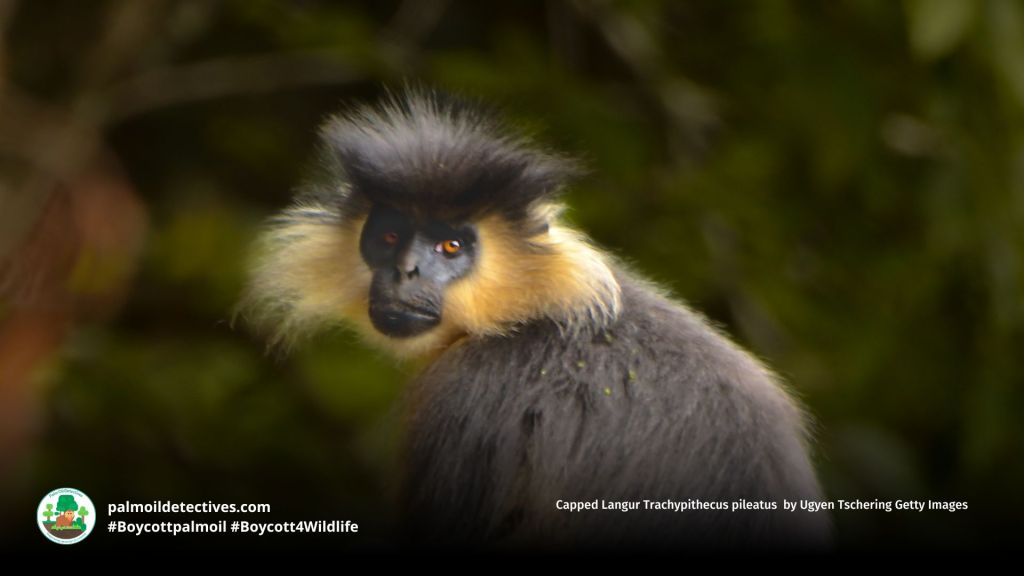
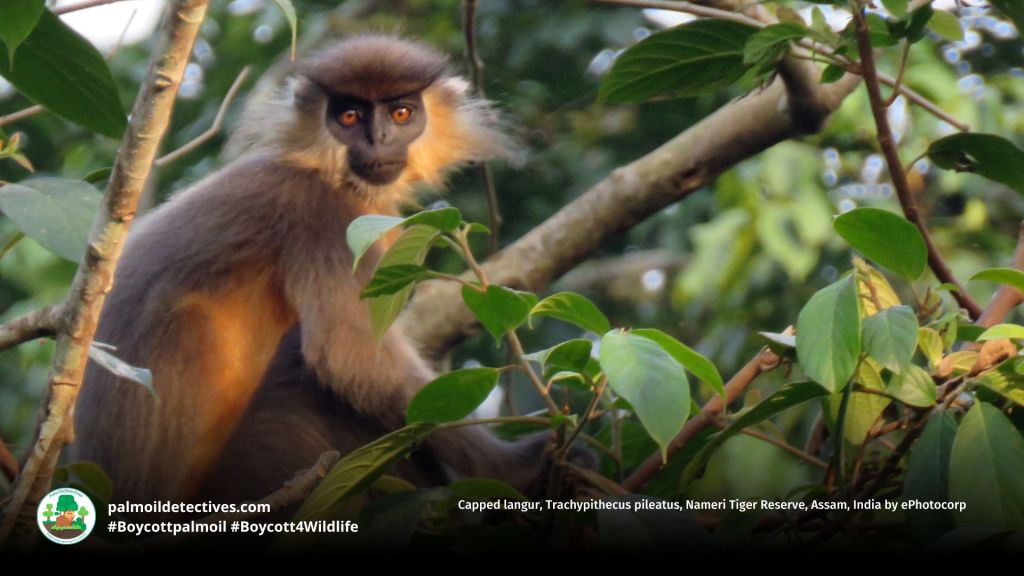
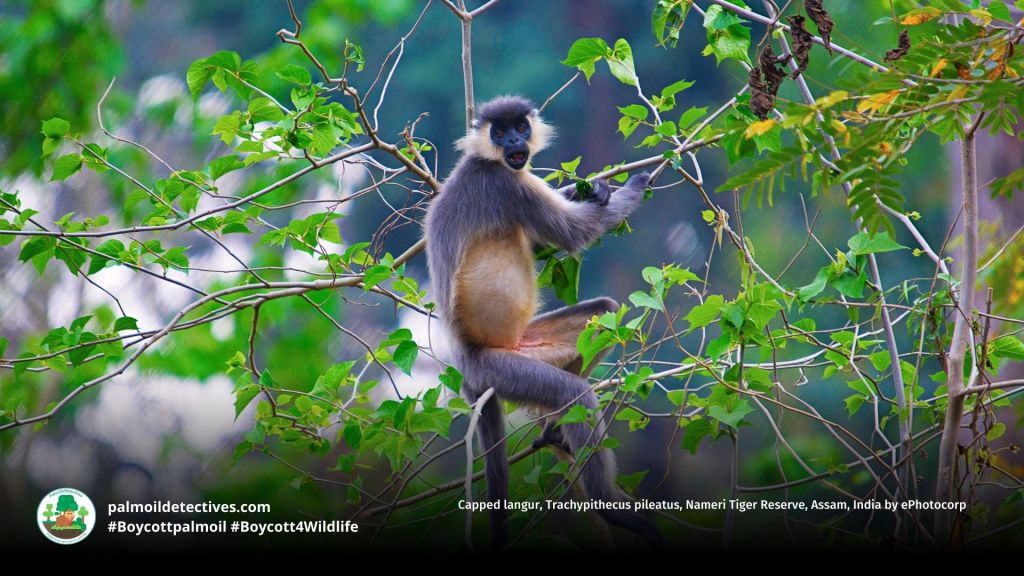
The capped langur is known for its distinctive crown of long, erect hairs on its head. It has a black face, grey to blackish-grey fur on top, and brownish-yellow or orange fur below, with the distal half of its tail being blackish.

The study suggested the government prioritize habitat preservation and create corridors to connect isolated primate populations, facilitating natural langur dispersal.

“If we don’t take action now, we risk losing not just two monkey species but also a vital part of Bangladesh’s biodiversity,” Tanvir said.

A juvenile hybrid with its Phayre’s langur father in Satchari National Park. Image by Rasel Debbarma.A juvenile hybrid with its Phayre’s langur father in Satchari National Park. Image by Rasel Debbarma.

Banner image: The genetically confirmed hybrid (right) with its capped langur mother at Satchari National Park. Image by Harish Debbarma.

This article was originally published in Mongabay and was written by Mohammad Al-Masum Molla, read the original article. Republished under Creative Commons attribution licence. Research by Ahmed, T., Hasan, S., Nath, S., Biswas, S. … Roos, C. (2024). Mixed-Species Groups and Genetically Confirmed Hybridization Between Sympatric Phayre’s Langur (Trachypithecus phayrei) and Capped Langur (T. pileatus) in Northeast Bangladesh. International Journal of Primatology. doi:10.1007/s10764-024-00459-x

ENDS


Learn about other animals endangered by palm oil and other agriculture

GlobalSouth America S.E. Asia IndiaAfricaWest Papua & PNGSunda Flying Lemur Galeopterus variegatus

Sunda Flying Lemur Galeopterus variegatus

Keep reading Western Parotia Parotia sefilata

Western Parotia Parotia sefilata

Keep reading Capped Langur Trachypithecus pileatus

Capped Langur Trachypithecus pileatus

Keep reading Mountain Tapir Tapirus pinchaque

Mountain Tapir Tapirus pinchaque

Keep reading Saola Pseudoryx nghetinhensis

Saola Pseudoryx nghetinhensis

Keep reading Tucuxi Sotalia fluviatilis

Tucuxi Sotalia fluviatilis

Keep reading

Learn about “sustainable” palm oil greenwashing

Read more about RSPO greenwashing

Lying Fake labelsIndigenous Land-grabbingHuman rights abusesDeforestation Human health hazards

A 2019 World Health Organisation (WHO) report into the palm oil industry and RSPO finds extensive greenwashing of palm oil deforestation and the murder of endangered animals (i.e. biodiversity loss)

Read moreWHO Bulletin on Palm Oil: Deforestation and ExtinctionWHO Bulletin on Palm Oil: Deforestation and ExtinctionWHO Bulletin on Palm Oil: Deforestation and ExtinctionWHO Bulletin on Palm Oil: Air Pollution and Health

Take Action in Five Ways

1. Join the #Boycott4Wildlife on social media and subscribe to stay in the loop: Share posts from this website to your own network on Twitter, Mastadon, Instagram, Facebook and Youtube using the hashtags #Boycottpalmoil #Boycott4Wildlife.

Enter your email address

Sign Up

Join 3,177 other subscribers

2. Contribute stories: Academics, conservationists, scientists, indigenous rights advocates and animal rights advocates working to expose the corruption of the palm oil industry or to save animals can contribute stories to the website.

Wildlife Artist Juanchi Pérez

Wildlife Artist Juanchi Pérez

Read more Mel Lumby: Dedicated Devotee to Borneo’s Living Beings

Mel Lumby: Dedicated Devotee to Borneo’s Living Beings

Read more Anthropologist and Author Dr Sophie Chao

Anthropologist and Author Dr Sophie Chao

Read more Health Physician Dr Evan Allen

Health Physician Dr Evan Allen

Read more The World’s Most Loved Cup: A Social, Ethical & Environmental History of Coffee by Aviary Doert

The World’s Most Loved Cup: A Social, Ethical & Environmental History of Coffee by Aviary Doert

Read more How do we stop the world’s ecosystems from going into a death spiral? A #SteadyState Economy

How do we stop the world’s ecosystems from going into a death spiral? A #SteadyState Economy

Read more

3. Supermarket sleuthing: Next time you’re in the supermarket, take photos of products containing palm oil. Share these to social media along with the hashtags to call out the greenwashing and ecocide of the brands who use palm oil. You can also take photos of palm oil free products and congratulate brands when they go palm oil free.

https://twitter.com/CuriousApe4/status/1526136783557529600?s=20

https://twitter.com/PhillDixon1/status/1749010345555788144?s=20

https://twitter.com/mugabe139/status/1678027567977078784?s=20

4. Take to the streets: Get in touch with Palm Oil Detectives to find out more.

5. Donate: Make a one-off or monthly donation to Palm Oil Detectives as a way of saying thank you and to help pay for ongoing running costs of the website and social media campaigns. Donate here

Pledge your support

#animalBehaviour #AnimalBiodiversityNews #animalExtinction #animalRights #animals #Bangladesh #biodiversity #Boycott4wildlife #BoycottPalmOil #CappedLangur #CappedLangurTrachypithecusPileatus #deforestation #hunting #India #langur #Langurs #monkey #monkeys #PalmOil #palmOilDeforestation #palmoil #PhayreSLeafMonkeyTrachypithecusPhayrei #Primate #research #species #timber #vegan

Do you love animals? Make every day #WorldWildlifeDay

This #WorldWildlifeDay, please remember the wild animals you love who are running out of time and land to live on. Research recently found that converting partly logged areas into palm oil plantations sounds the death knell for that ecosystem. Across the globe, from Indonesia to Brazil and Nigeria, vibrant rainforests and animals like reptiles and insects are under threat from palm oil, timber, and meat. This ecocide leaves majestic animals struggling to survive against chainsaws, bulldozers, pesticides and destruction for palm oil and meat agriculture. A multi-billion dollar industry has grown up around legitimising palm oil and meat ecocide, primarily through the RSPO but also other greenwashing schemes as well. Read on to discover more and how you can shine a light on the lives of elusive animals.

This #WorldWildlifeDay take action for #animals great and small 🦋🐦🐘🐒🐍 because #reptiles #insects #mammals and #birds deserve better than #palmoil ecocide and #extinction! When you shop always #Boycottpalmoil #Boycott4Wildlife @palmoildetect https://wp.me/pcFhgU-iMO

Share to BlueSkyShare to Twitter

#Palmoil and #meat #agriculture 🥩💀 are some of the biggest threats to wild #animals and farmed animals. This #WorldWildlifeDay and every single day, make sure fight for them and go #vegan 🥕🍆🍅 #BoycottPalmOil 🌴🩸☠️🧐⛔️ and #Boycott4Wildlife https://wp.me/pcFhgU-iMO

Share to BlueSkyShare to Twitter


Protecting Sumatra’s last remaining tigers

The Sumatran tiger is teetering on the brink of extinction. Recent findings underscore the urgency of protecting the last remaining populations of these majestic apex predators. Deforestation for palm oil and illegal poaching are wiping out their homes. In the Ulu Masen Ecosystem, a recent study detected only 11 tigers, highlighting severe population stress from snares and habitat loss. Without immediate action, they face the same tragic fate as the extinct Javan and Balinese tigers. Strict global rainforest laws, enforcement of anti-poaching units, and a consumer boycott of palm oil hold the key to protecting Sumatra’s last living tigers.​

https://youtu.be/0g2Nv4cfBfo

Animals of Tesso Nilo in Sumatra are vanishing

Tesso Nilo National Park in Sumatra has lost an alarming 78% of primary forest between 2009 and 2023. The primary driver of this devastation is the expansion of illegal palm oil plantations. This rampant deforestation threatens the homes of critically endangered species like tigers, orangutans, and elephants. When palm oil companies build roads, they increase accessibility for poachers, further endangering the animals who live there. Advocating for indigenous-led conservation efforts and adopting a plant-based lifestyle are vital steps to protect these ecosystems.​

https://www.youtube.com/watch?v=z7FUBg_AqjA

56% of ‘data deficient’ species on the Red List are endangered

The destruction of wild ecosystems continues to push thousands of obscure species towards extinction finds a study by Norwegian University of Science and Technology. Researchers used advanced machine learning algorithms to assess the survival probability of thousands of under-researched animals, predicts that a staggering fifty-six percent of all “data deficient” species are currently threatened with extinction. 85% of unassessed amphibians face immediate existential threats, primarily driven by anthropogenic habitat degradation such as the unchecked expansion of palm oil plantations, meat agriculture, mining and timber logging. Right now is the time to fight for all life and reject products linked to ecocide. Always remember them and share out their posts! Start here on the forgotten animals page.

These are the forgotten animals of the secretly destroyed forestsThese are the forgotten animals of the secretly destroyed forests

Sumatran elephants trapped by endless palm oil

In Indonesia’s North Aceh district, Sumatran elephants find themselves increasingly encircled by shrinking patches of forest, hemmed in all all sides by massive palm oil expansion. Just 924 to 1,360 individual Sumatran elephants remain alive. They are trapped in dead lands, surrounded by the very industry that is eradicating their food sources. Ongoing attempts by researchers to measure their populations have been hampered by the Indonesian government, which attempts to hide the truth from the media. Boycott palm oil when you shop to protect these irreplaceable beings.​

https://youtu.be/S5olrnYKT4Q

Toxic palm oil pesticides are killing baby macaques

In Peninsular Malaysia, infant southern pig-tailed macaques are dying at alarmingly high rates due to palm oil plantations. A recent study found that agricultural chemicals and pesticides cross the placental barrier of unborn macaques, impacting their development. Prolonged exposure to these toxic plantations during infancy makes baby macaques three times more likely to die. These intelligent primates face increased risks from predators, human encounters, and poisons. Take action and boycott palm oil to protect these precious infants.

Palm oil plantations increase risk of infant death for Southern Pig-tailed MacaquesPalm oil plantations increase risk of infant death for Southern Pig-tailed Macaques, primatesPalm oil plantations increase risk of infant death for Southern Pig-tailed MacaquesPalm oil plantations increase risk of infant death for Southern Pig-tailed Macaques, primatesPalm oil plantations increase risk of infant death for Southern Pig-tailed Macaques, primatesCrab-eating macaques have tiny noses by comparison. Erik Klietsch/Shutterstock

The fight for the lives of Wondiwoi tree kangaroos

The Wondiwoi tree kangaroo is the world’s most endangered kangaroo. Rediscovered in 2018 in West Papua’s lush forests, these rare animals have beautiful soulful eyes and burnt umber fur. Tragically, fewer than 50 of them remain alive. They face severe threats from hunting and palm oil deforestation. Protecting them requires urgent conservation efforts that prioritise indigenous sovereignty. You can help save these remarkable creatures by refusing to buy products with palm oil that destroy their homes.​

Encountering the World's Most Endangered Kangaroo: The Wondiwoi Tree Kangaroo | Illustration Peter Schouten

Nigeria’s forest elephants face extinction

African forest elephants in Nigeria have seen their numbers decline massively in recent years. The main cause is human activity, specifically logging, cocoa agriculture, and palm oil plantations. These industries threaten their survival by destroying their natural habitat. As a result, fragmented elephant populations are highly vulnerable to poachers and retaliatory killings by farmers. We must halt the expansion of palm oil to secure a safe future for these majestic animals.​

https://youtu.be/s584AP-BYm0

The deadly green lie of “sustainable” palm oil

For decades, the palm oil industry has misled consumers with the false promise of “sustainable” palm oil. Industry watchdogs have repeatedly exposed the RSPO’s certification as a multi-stakeholder sham. Behind this green façade lies a brutal reality of deforestation, human rights abuses, and the destruction of endangered species’ habitats. There is no such thing as sustainable palm oil. We must not fall for their corporate greenwashing.​

https://www.youtube.com/watch?v=eG8V-Cmj4Es

Take action to protect rainforest animals

By holding to account the powerful corporations that control the world, we have the power to fight back against this ecocide. Here is how you can stand up for rainforest animals, farmed animals, indigenous people, and rainforests:

Make powerful lifestyle changes

The most impactful thing you can do is go plant-based in your diet. Boycott meat, boycott palm oil, and boycott dairy. These industries are the leading causes of global deforestation and animal cruelty.​

Supermarket sleuthing

Next time you are in the supermarket, take photos of products containing palm oil. Share these on social media to call out the greenwashing and ecocide of the brands who use it. Congratulate brands when they go completely palm oil-free.​

Join the #Boycott4Wildlife movement

Follow and join the Boycott4Wildlife movement on this website and social media. Share stories on BlueSky, Mastodon, Twitter and YouTube using the hashtags #Boycottpalmoil and #Boycott4Wildlife to be part of it!

Support indigenous sovereignty and agroecology

A viable path forward is to champion indigenous-led agroecology. Indigenous peoples possess the deep ecological knowledge required to protect forests and the intricate web of life that includes insects, birds, mammals and reptiles. Stand strongly with indigenous land defenders to protect what remains of the wild.


Learn about other animals endangered by palm oil and other agriculture

GlobalSouth America S.E. AsiaIndiaAfricaWest Papua & PNGGursky’s Spectral Tarsier Tarsius spectrumgurskyae

Gursky’s Spectral Tarsier Tarsius spectrumgurskyae

Keep reading Sunda Flying Lemur Galeopterus variegatus

Sunda Flying Lemur Galeopterus variegatus

Keep reading Western Parotia Parotia sefilata

Western Parotia Parotia sefilata

Keep reading Capped Langur Trachypithecus pileatus

Capped Langur Trachypithecus pileatus

Keep reading Mountain Tapir Tapirus pinchaque

Mountain Tapir Tapirus pinchaque

Keep reading Saola Pseudoryx nghetinhensis

Saola Pseudoryx nghetinhensis

Keep reading

Learn about “sustainable” palm oil greenwashing

Read more about RSPO greenwashing

Lying Fake labelsIndigenous Land-grabbingHuman rights abusesDeforestation Human health hazards

A 2019 World Health Organisation (WHO) report into the palm oil industry and RSPO finds extensive greenwashing of palm oil deforestation and the murder of endangered animals (i.e. biodiversity loss)

Read moreWHO Bulletin on Palm Oil: Deforestation and ExtinctionWHO Bulletin on Palm Oil: Deforestation and ExtinctionWHO Bulletin on Palm Oil: Deforestation and ExtinctionWHO Bulletin on Palm Oil: Air Pollution and Health

Take Action in Five Ways

1. Join the #Boycott4Wildlife on social media and subscribe to stay in the loop: Share posts from this website to your own network on Twitter, Mastadon, Instagram, Facebook and Youtube using the hashtags #Boycottpalmoil #Boycott4Wildlife.

Enter your email address

Sign Up

Join 3,179 other subscribers

2. Contribute stories: Academics, conservationists, scientists, indigenous rights advocates and animal rights advocates working to expose the corruption of the palm oil industry or to save animals can contribute stories to the website.

Wildlife Artist Juanchi Pérez

Wildlife Artist Juanchi Pérez

Read more Mel Lumby: Dedicated Devotee to Borneo’s Living Beings

Mel Lumby: Dedicated Devotee to Borneo’s Living Beings

Read more Anthropologist and Author Dr Sophie Chao

Anthropologist and Author Dr Sophie Chao

Read more Health Physician Dr Evan Allen

Health Physician Dr Evan Allen

Read more The World’s Most Loved Cup: A Social, Ethical & Environmental History of Coffee by Aviary Doert

The World’s Most Loved Cup: A Social, Ethical & Environmental History of Coffee by Aviary Doert

Read more How do we stop the world’s ecosystems from going into a death spiral? A #SteadyState Economy

How do we stop the world’s ecosystems from going into a death spiral? A #SteadyState Economy

Read more

3. Supermarket sleuthing: Next time you’re in the supermarket, take photos of products containing palm oil. Share these to social media along with the hashtags to call out the greenwashing and ecocide of the brands who use palm oil. You can also take photos of palm oil free products and congratulate brands when they go palm oil free.

https://twitter.com/CuriousApe4/status/1526136783557529600?s=20

https://twitter.com/PhillDixon1/status/1749010345555788144?s=20

https://twitter.com/mugabe139/status/1678027567977078784?s=20

4. Take to the streets: Get in touch with Palm Oil Detectives to find out more.

5. Donate: Make a one-off or monthly donation to Palm Oil Detectives as a way of saying thank you and to help pay for ongoing running costs of the website and social media campaigns. Donate here

Pledge your support #animalBehaviour #AnimalBiodiversityNews #animalCommunication #animalCruelty #animalExtinction #animalIntelligence #animalRights #biodiversity #Boycott4wildlife #BoycottPalmOil #deforestation #PalmOil #palmOilDeforestation

Marsupials thought extinct for 6,000 years found in West Papua

In an astonishing discovery, two marsupial species believed to be extinct for 6,000 years have been rediscovered alive and well in the remote rainforests of West Papua. The pygmy long-fingered possum and the ring-tailed glider were located with the crucial assistance of local indigenous Vogelkop clans. However, their survival remains precarious as their habitats are increasingly threatened by logging and the expansion of the palm oil colonialism in West Papua. Laws and native title to protect this region is essential for indigenous land defenders. We musn’t let them disappear again #BoycottPalmOil #Boycott4Wildlife

Two #extinct #marsupials in #WestPapua found alive! The #marsupials highlight the need to protect #Papuan forests or they are gone for good! Resist for them and #BoycottPalmOil #Boycott4Wildlife when you shop 🌴🙊🔥☠️🚫 @palmoildetect #Boycott4Wildlife https://wp.me/pcFhgU-iOH

Share to BlueSkyShare to Twitter

Two #possums thought extinct for 6000 years are alive in #WestPapua! The pygmy #possum and sacred ring-tailed #glider are #nature’s battlers who deserve a break from #palmoil ecocide. Stand with #indigenous defenders against palm oil #colonialism! 🌴🚫 @palmoildetect #BoycottPalmOil https://wp.me/pcFhgU-iOH

Share to BlueSkyShare to Twitter

https://youtu.be/T1uWC5ZE4KI


Two extraordinarily rare marsupials, entirely believed to have been extinct for over six thousand years, have been discovered alive in the remote, Vogelkop mountain forests of the Bird’s Head peninsula in West Papua. This remarkable rediscovery of the pygmy long-fingered possum and the ring-tailed glider was confirmed by Australian scientist Professor Tim Flannery, alongside a team of local indigenous experts and university researchers.

“More important than finding a living thylacine in Tasmania.”

Scott Hucknull from Central Queensland University describes the magnitude of the discovery.

These species are rare examples of “Lazarus taxa”. Animals who disappear from the fossil record only to be found alive centuries later. Flannery noted that the likelihood of finding even one lost mammal was almost zero, let alone two.

A pygmy long-fingered possum. Photo by Carlos BocosThe pygmy long-fingered possum by Carlos BocosTake action - Boycott palm oil for the animals of West PapuaThe ring-tailed glider. Photo by DewaTwo new marsupials found in West Papua

“It’s unprecedented and groundbreaking, really, to find two Lazarus taxa,” Flannery says. “We’ve been able to finalise two pieces of work that are incredibly important from a biological and a conservation perspective, documenting the existence of rare marsupials in an area under threat. It’s sort of a crowning glory in my career as a biologist.”

The first of the resurrected species is the pygmy long-fingered possum, Dactylonax kambuayai. This tiny, striped marsupial possesses an extraordinary evolutionary trait: an elongated fourth finger on each hand that is double the length of other digits. Flannery explains that they use this finger to extract grubs from timber.

“They’ve got a whole lot of specialisations in their ear region as well, which seem to be related to detection of low-frequency sound. So presumably they’re listening for wood-boring beetle larvae, and they then rip open the rotting wood and use that finger to fish out the grub,” Flannery says.

The second species, the ring-tailed glider (Tous ayamaruensis), features unfurred ears and a strong, prehensile tail used for gripping branches. Flannery calls it “one of the most photogenic animals, most beautiful marsupials you’ll ever see.”

The pygmy long-fingered possum by Carlos Bocos

Crucially, the rediscovery of these elusive creatures was entirely dependent on the profound ecological knowledge of the local Tambrauw and Maybrat clans. These indigenous communities view the ring-tailed glider as deeply sacred, believing them to be manifestations of their ancestors’ spirits, and actively protect them from hunting. Rika Korain, a Maybrat woman and co-author of the research, emphasised that identifying the species relied entirely on traditional owners. “This connection has been essential,” she says.

“I’m very proud that Papuan researchers contributed to these landmark discoveries, and want to thank the people of the Misool, Maybrat and Tambrouw regions who supported us in the field,”

Dr Aksamina Yohanita of the University of Papua said.

“The Vogelkop is an ancient piece of the Australian continent that has become incorporated into the island of New Guinea. Its forests may shelter yet more hidden relics of a past Australia,”

Tim Flannery

To protect the remaining populations from the illegal wildlife trade, researchers are keeping their exact locations highly classified. Flannery delivered a stark warning to potential poachers regarding the animals’ survival in captivity: “They would be incredibly difficult to keep in captivity. because their diet is so highly specialised. Advanced warning for anyone who’s thinking of keeping one as a pet: it won’t live long,” he says.

While their rediscovery is a triumph, their future is highly uncertain. The proximity of power-hungry corporates intent on razing the rainforest for palm oil and timber casts a dark shadow over the region.

David Lindenmayer, an ecologist at the Australian National University, who was not involved in the study said “I am also hugely concerned about the extent of logging and land clearing happening in New Guinea,” he says. “It also makes me wonder what might have been lost in Australia as a result of all of the land clearing that has taken place here.”

The findings underline strong calls from scientists, environmentalists and indigenous rights advocates for Native Title legal land rights and indigenous-led protections of West Papua and its imperilled Vogelkop rainforest where these delightful marsupials are found.

Boycott palm oil for the animals of West Papua

Further information

Lam, L. (2026, March 6). Tiny possum and glider thought extinct for 6,000 years found in remote West Papua. BBC News. https://www.bbc.co.uk/news/articles/cwyg6p8g6yjo

Morton, A. (2026, March 6). Marsupials previously thought extinct for millennia discovered in New Guinea. The Guardian. https://www.theguardian.com/environment/2026/mar/05/marsupials-discovered-new-guinea

Woodford, J. (2026, March 5). Two marsupials believed extinct for 6000 years found alive. New Scientist. https://www.newscientist.com/article/2518082-two-marsupials-believed-extinct-for-6000-years-found-alive/

ENDS


Learn about other animals endangered by palm oil and other agriculture

GlobalSouth America S.E. AsiaIndiaAfricaWest Papua & PNGGursky’s Spectral Tarsier Tarsius spectrumgurskyae

Gursky’s Spectral Tarsier Tarsius spectrumgurskyae

Keep reading Sunda Flying Lemur Galeopterus variegatus

Sunda Flying Lemur Galeopterus variegatus

Keep reading Western Parotia Parotia sefilata

Western Parotia Parotia sefilata

Keep reading Capped Langur Trachypithecus pileatus

Capped Langur Trachypithecus pileatus

Keep reading Mountain Tapir Tapirus pinchaque

Mountain Tapir Tapirus pinchaque

Keep reading Saola Pseudoryx nghetinhensis

Saola Pseudoryx nghetinhensis

Keep reading

Learn about “sustainable” palm oil greenwashing

Read more about RSPO greenwashing

Lying Fake labelsIndigenous Land-grabbingHuman rights abusesDeforestation Human health hazards

A 2019 World Health Organisation (WHO) report into the palm oil industry and RSPO finds extensive greenwashing of palm oil deforestation and the murder of endangered animals (i.e. biodiversity loss)

Read moreWHO Bulletin on Palm Oil: Deforestation and ExtinctionWHO Bulletin on Palm Oil: Deforestation and ExtinctionWHO Bulletin on Palm Oil: Deforestation and ExtinctionWHO Bulletin on Palm Oil: Air Pollution and Health

Take Action in Five Ways

1. Join the #Boycott4Wildlife on social media and subscribe to stay in the loop: Share posts from this website to your own network on Twitter, Mastadon, Instagram, Facebook and Youtube using the hashtags #Boycottpalmoil #Boycott4Wildlife.

Enter your email address

Sign Up

Join 3,179 other subscribers

2. Contribute stories: Academics, conservationists, scientists, indigenous rights advocates and animal rights advocates working to expose the corruption of the palm oil industry or to save animals can contribute stories to the website.

Wildlife Artist Juanchi Pérez

Wildlife Artist Juanchi Pérez

Read more Mel Lumby: Dedicated Devotee to Borneo’s Living Beings

Mel Lumby: Dedicated Devotee to Borneo’s Living Beings

Read more Anthropologist and Author Dr Sophie Chao

Anthropologist and Author Dr Sophie Chao

Read more Health Physician Dr Evan Allen

Health Physician Dr Evan Allen

Read more The World’s Most Loved Cup: A Social, Ethical & Environmental History of Coffee by Aviary Doert

The World’s Most Loved Cup: A Social, Ethical & Environmental History of Coffee by Aviary Doert

Read more How do we stop the world’s ecosystems from going into a death spiral? A #SteadyState Economy

How do we stop the world’s ecosystems from going into a death spiral? A #SteadyState Economy

Read more

3. Supermarket sleuthing: Next time you’re in the supermarket, take photos of products containing palm oil. Share these to social media along with the hashtags to call out the greenwashing and ecocide of the brands who use palm oil. You can also take photos of palm oil free products and congratulate brands when they go palm oil free.

https://twitter.com/CuriousApe4/status/1526136783557529600?s=20

https://twitter.com/PhillDixon1/status/1749010345555788144?s=20

https://twitter.com/mugabe139/status/1678027567977078784?s=20

4. Take to the streets: Get in touch with Palm Oil Detectives to find out more.

5. Donate: Make a one-off or monthly donation to Palm Oil Detectives as a way of saying thank you and to help pay for ongoing running costs of the website and social media campaigns. Donate here

Pledge your support #animalBehaviour #AnimalBiodiversityNews #animalExtinction #animalIntelligence #animalRights #biodiversity #Boycott4wildlife #BoycottPalmOil #deforestation #ForgottenAnimals #Marsupial #marsupials #PalmOil #palmOilDeforestation #PapuaNewGuinea #PapuaNewGuineaSpeciesEndangeredByPalmOilDeforestation #possum #possums #WestPapua

Tiger Panthera tigris

Tiger Panthera tigris

Endangered

Population: Around 3,900

Extant (resident): India, Bangladesh, Bhutan, Nepal, Myanmar, Malaysia, Indonesia, Thailand, China, Russia

Tigers, primarily native to Asia’s tropical forests, have seen their habitats shrink dramatically over time. Notably, the Amur Tiger endures in Russia, and there have been sightings of these majestic creatures as high as 4,500 m in Bhutan. Tragically, fewer than 400 tigers remain in Indonesia, clinging to life in Sumatra’s dwindling forests. This decline is attributed to both rampant poaching and severe deforestation, especially for palm oil and pulp industries. As Asia continues to develop rapidly, the vast territories tigers need are shrinking, replaced by agriculture, commercial logging, and settlements. Moreover, tigers‘ prey faces threats from hunting and competition with domestic livestock. It’s time to act and use our wallet as a weapon: be #vegan #Boycottpalmoil #Boycott4Wildlife.

https://youtu.be/RfQDwtaIrvs

For 🇮🇩 Indonesia’s #tigers 🐅 fewer than 400 hang on to survival in rainforests of #Sumatra. Endangered by #poaching and #deforestation for #palmoil and timber. Boycott the brands sending them #extinct 😡🧐#Boycottpalmoil #Boycott4Wildlife @palmoildetect https://wp.me/pcFhgU-fT

Share to BlueSkyShare to Twitter

The mighty and majestic #tiger 🐅🐯 of #Sumatra are on the brink of #extinction from #palmoil and #mining #deforestation. Less than 400 remain alive! 😭Use your wallet as a weapon and fight for them #Boycottpalmoil #Boycott4Wildlife 🌴🔥🚫 @palmoildetect https://wp.me/pcFhgU-fT

Share to BlueSkyShare to Twitter

Tigers, the largest members of the cat family, are renowned for their majestic presence and striking orange coats with black stripes. They possess extraordinary strength and agility and maintain the balance of ecosystems as apex predators. With fewer than 4,500 remaining in the wild, tigers are classified as Endangered, facing grave threats from habitat destruction for palm oil, poaching, and human-wildlife conflict.

Their survival depends on urgent protection and animal advocacy. Protecting tigers ensures the preservation of the rich biodiversity within their habitats. Support their future by joining the #BoycottPalmOil and #Boycott4Wildlife movements.

Habitat

Tigers inhabit a wide variety of environments, including tropical rainforests, mangrove swamps, grasslands, and boreal forests. They require vast territories to hunt and breed, with males typically occupying larger ranges than females. Tigers are currently found in fragmented populations across Asia, with key strongholds in India, Sumatra, and Siberia.

These habitats are increasingly under threat due to deforestation, agricultural expansion, and infrastructure development, which have reduced their historical range by over 93%.

Diet

As apex predators, tigers primarily hunt large prey, such as sambar deer, wild boar, and buffalo. They are known for their stealth and strength, often ambushing their prey with a single powerful strike. Unlike other big cats, tigers can swim to catch prey, a unique skill that sets them apart.

In areas with reduced prey availability, tigers may hunt smaller mammals or livestock, which can lead to conflicts with humans.

Appearance and Behaviour

Swimming Ability: Tigers are strong swimmers, often crossing rivers and lakes to hunt or cool off—an unusual trait among big cats.

Individualised Stripes: Their stripes serve as camouflage and are unique to each tiger, making them distinguishable even in dense foliage.

Vocal Range: Tigers have a wide vocal range, including growls, roars, and chuffs, used to communicate with other tigers.

Apex Predator Status: As the top predator in their ecosystems, tigers help maintain balance by regulating prey populations.

Tigers are uniquely recognisable by their bold stripe patterns, which are as individual as fingerprints. Their muscular builds, powerful limbs, and retractable claws make them adept hunters and swimmers, setting them apart from most other big cats. Unlike lions or cheetahs, tigers are solitary by nature and fiercely territorial.

Their physical features include a robust skull, long canine teeth, and strong jaw muscles designed for gripping and tearing prey. Tigers are also among the few big cats that enjoy water, often cooling off in rivers and lakes. Their signature behaviours include scent marking, vocalisations such as roars and chuffs, and stealthy stalking of prey.

Reproduction & Mating

Tigers reach sexual maturity at around 3-4 years of age. Breeding typically occurs year-round, but more frequently during the winter months. After a gestation period of approximately 100 days, females give birth to 2-4 cubs in secluded dens.

Cubs are dependent on their mothers for the first 18 months, learning essential survival skills like hunting. Only about half of all cubs survive to adulthood, as they face threats from predators, disease, and starvation.

Tiger by Dalida Innes Wildlife PhotographyTiger in Bandhavgarh National Park, India. By Dalida Innes Wildlife PhotographySumatran Tiger Panthera tigris sumatrae - Asia Sumatran Tiger Panthera tigris sumatrae - Asia Sumatran Tiger Panthera tigris sumatrae - AsiaSumatran Tiger Panthera tigris sumatrae - Asia Sumatran Tiger Panthera tigris sumatrae - Asia Sumatran Tiger Panthera tigris sumatrae - Asia Sumatran Tiger Panthera tigris sumatrae - Asia

Threats

Habitat Destruction: Deforestation for palm oil agriculture, timber logging, and development fragments their habitats, isolating populations.

Poaching: Tigers are hunted for their skins, bones, and other body parts, often sold illegally for traditional medicine or as luxury items. Organisations like EIA directly combat this illegal trade.

Prey Depletion: Overhunting of herbivores reduces food availability, impacting tiger populations.

Human-Wildlife Conflict: As human settlements expand, conflicts arise, often leading to retaliation killings of tigers.

The last of Indonesia’s tigers—now fewer than 400—are holding on for survival in the remaining patches of forests on the island of Sumatra. While poaching claims most tigers each year, deforestation remains a serious threat.

Sumatra has lost more than half of its forests in the last 40 years, primarily due to conversion for palm oil and pulp plantations. Poaching for illegal trade in high-value Tiger products including skins, bones, meat and tonics is a primary threat to Tigers.

Asia is a densely populated and rapidly developing region, bringing huge pressures to bear on the large wild areas required for viable Tiger populations. Conversion of forest land to agriculture and silviculture, commercial logging, and human settlement are the main drivers of Tiger habitat loss. With their substantial dietary requirements,

Tigers require a healthy large ungulate prey base, but these species are also under heavy human subsistence hunting pressure and competition from domestic livestock.

Tigers are classified as Endangered on the IUCN Red List, with fewer than 4,500 individuals remaining in the wild. While conservation efforts have stabilised some populations, habitat loss and poaching continue to pose significant challenges. Collaborative international efforts are crucial to ensuring their survival.

The last of Indonesia’s tigers—now fewer than 400—are holding on for survival in the remaining patches of forests on the island of Sumatra. While poaching claims most tigers each year, deforestation remains a serious threat.

IUCN RED LIST

Sumatran Tiger Panthera tigris sumatrae - Asia

Tiger Panthera Tigris

Support Tiger Protection

• Boycotting palm oil and other products linked to deforestation.

• Contributing to organisations that protect tiger habitats and combat illegal poaching and animal trafficking like Traffic and EIA.

• Raise awareness about the critical importance of tigers in maintaining healthy ecosystems by joining the #BoycottPalmOil and #Boycott4Wildlife movement.

Further Information

ICUN endangered logo

Britannica. (2024). Tiger. Retrieved from https://www.britannica.com/animal/tiger

Goodrich, J., Wibisono, H., Miquelle, D., Lynam, A.J., Sanderson, E., Chapman, S., Gray, T.N.E., Chanchani, P. & Harihar, A. 2022. Panthera tigrisThe IUCN Red List of Threatened Species 2022: e.T15955A214862019. https://dx.doi.org/10.2305/IUCN.UK.2022-1.RLTS.T15955A214862019.en. Accessed on 20 December 2024.

Panthera. (2024). Tiger. Retrieved from https://panthera.org/cat/tiger

Dalida Innes Wildlife Photography


Contribute to palm oil detectives - black rhino in profile

How can I help the #Boycott4Wildlife?


Take Action in Five Ways

1. Join the #Boycott4Wildlife on social media and subscribe to stay in the loop: Share posts from this website to your own network on Twitter, Mastadon, Instagram, Facebook and Youtube using the hashtags #Boycottpalmoil #Boycott4Wildlife.

Enter your email address

Sign Up

Join 3,528 other subscribers

2. Contribute stories: Academics, conservationists, scientists, indigenous rights advocates and animal rights advocates working to expose the corruption of the palm oil industry or to save animals can contribute stories to the website.

Wildlife Artist Juanchi Pérez

Wildlife Artist Juanchi Pérez

Read more

Mel Lumby: Dedicated Devotee to Borneo’s Living Beings

Mel Lumby: Dedicated Devotee to Borneo’s Living Beings

Read more

Anthropologist and Author Dr Sophie Chao

Anthropologist and Author Dr Sophie Chao

Read more

Health Physician Dr Evan Allen

Health Physician Dr Evan Allen

Read more

The World’s Most Loved Cup: A Social, Ethical & Environmental History of Coffee by Aviary Doert

The World’s Most Loved Cup: A Social, Ethical & Environmental History of Coffee by Aviary Doert

Read more

How do we stop the world’s ecosystems from going into a death spiral? A #SteadyState Economy

How do we stop the world’s ecosystems from going into a death spiral? A #SteadyState Economy

Read more

3. Supermarket sleuthing: Next time you’re in the supermarket, take photos of products containing palm oil. Share these to social media along with the hashtags to call out the greenwashing and ecocide of the brands who use palm oil. You can also take photos of palm oil free products and congratulate brands when they go palm oil free.

https://twitter.com/CuriousApe4/status/1526136783557529600?s=20

https://twitter.com/PhillDixon1/status/1749010345555788144?s=20

https://twitter.com/mugabe139/status/1678027567977078784?s=20

4. Take to the streets: Get in touch with Palm Oil Detectives to find out more.

5. Donate: Make a one-off or monthly donation to Palm Oil Detectives as a way of saying thank you and to help pay for ongoing running costs of the website and social media campaigns. Donate here

Pledge your support

#bigCat #Borneo #Boycott4wildlife #BoycottPalmOil #carnivores #deforestation #EndangeredSpecies #extinct #extinction #feline #Malaysia #mining #palmoil #poaching #predator #predators #SouthEastAsia #Sumatra #tiger #TigerPantheraTigris #tigers #vegan #wildcat

Parrot Deaths Highlight Urgent Need to Reform CITES


Three critically endangered African Grey parrots were seized in Norway in 2019 after being illegally smuggled and they were later euthanised. These intelligent birds had potentially 60 years of life to live and the massive tragedy is – they knew that they were going to die!

Generally, international wildlife trade is not forbidden. Rather, it is regulated through CITES an international treaty to prevent illegal trade in wild animals. The industry is worth billions. The treaty needs a radical overhaul writes Professor Ragnhild Sollund for 360Info.

The legal trade is largely to blame for African grey parrots becoming endangered: parrots make popular pets due to their intelligence and sociability, so they have become “over exploited”. Help fight illegal wildlife trade and #Boycott4Wildlife


The tragedy of dead African grey #parrots highlights the need to overhaul #CITES a weak treaty which facilitates rather than stops #wildlife trade #extinction by Prof Ragnild Sollund for @360info_global #Boycottpalmoil #Boycott4Wildlife via @palmoildetect https://wp.me/pcFhgU-78q

Share to Twitter

“A #ban on #wildlife #trade would be easier to enforce than the current market, where some trade is legal, some illegal, and which offers ample possibilities for #fraud #corruption Story: @360info_global #Boycottpalmoil #Boycott4Wildlife @palmoildetect https://wp.me/pcFhgU-78q

Share to Twitter

https://youtu.be/q3ghgSWBnPo

Originally published under Creative Commons by 360info™. Written by Professor Ragnhild Sollund. Read the original here.


In November 2019, three African grey parrot chicks (Psittacus erithacus) were seized at Oslo airport by customs inspectors. As endangered species, they did not have the required permits to be transported to Norway. During the month that officials contemplated what should happen to the birds, they were hand reared by veterinarians. Then the decision was made: euthanasia.

The tragic story of three dead parrots

These highly intelligent birds had a potential 60-year life ahead of them; a life that was abruptly concluded in the hands of the vet. “I have euthanised many animals, but I cried when I euthanised these birds,” she said. “They understood… [And I did] not want to work as the Norwegian environment agency’s executioner of endangered species.”

In Norway, this was the standard outcome for illegally traded animals that are listed in CITES, the United Nations Convention on International Trade in Endangered Species of Wild Fauna and Flora. On March 3, International Wildlife Day, it highlights why addressing the wildlife trade, its regulation and enforcement, is urgent.

Generally, international wildlife trade is not forbidden. Rather, it is regulated through CITES. The legal trade is largely to blame for African grey parrots becoming endangered: parrots make popular pets due to their intelligence and sociability, so they have become “over exploited”, meaning the trade endangers the survival of the species. But the concept of over exploitation fails to cover the individual suffering or death of the animals involved in the trade. In view of species justice, any exploitation may be too much.

CITES entered into force in 1975. Eighty-four parties have signed the convention, including the European Union as one party. Each country must have a management authority, and all countries are obliged to submit annual reports to the CITES secretariat.

Animals are listed on three appendices of CITES, according to how endangered they are. The African grey is listed on appendix I as threatened with extinction. It was moved from appendix II in 2016, since trade in them was no longer deemed ‘sustainable’. Currently 5,950 species of animals and 32,800 species of plants are listed across all three appendices.

CITES has been criticised for being an overly human-centred convention. It fails to take into consideration the fact that animals are sentient beings with capacity to suffer who have interest in living their lives in their natural habitats, free from human inflicted harm.

The tragic story of three dead parrots

Instead, CITES frames wildlife species, whether plants or animals, as resources that are available for humans to exploit, until exploitation reaches a level that threatens the survival of a species. According to this logic, one individual can easily be disposed of and replaced by another; an individual’s intrinsic value is not recognised.

CITES has been criticised for not functioning even within its own parameters. For example, many parties to CITES never submit the required annual reports, and much trade is never recorded. And many species become threatened and go extinct from trade without ever being listed on the CITES appendices. For example, there are 10,247 known reptile species in the world, but only 8 percent of the reptile trade is regulated through CITES. Newly discovered species can be swiftly exploited, and 79 percent of traded species are not subject to CITES regulation.

According to CITES records, a staggering 2 million mammals, 5 million birds, 41 million reptiles, half a million amphibians, and 6 million fish were traded legally between 2011-2022.

Animals are used for medicinal purposes (often with no effect), fashion, as game hunting trophies, pets and as high-status food items.

Wildlife trade is big business

Advocacy group Traffic estimates the economic value of legal wildlife trade including plants, at approximately US$323 billion. One important reason for the foundation of CITES was to secure the economic gains of wildlife trade for biodiverse, but poor countries in the global South.

Wildlife trade can be viewed as transnational, global, organised state corporate harm.

Given the general failure of CITES to protect animals from harm and species from extinction, there have been many calls to remodel the agreement. The logic behind CITES implies that the harms of wildlife trade shall continue relentlessly, with new individuals abducted, killed or in other ways exploited in a ‘sustainable’ way for human benefit.

A better CITES would be based around animal protection. Wild animals should have rights not to be exploited as pets, killed for their flesh or skin, teeth or whiskers, tusks, horns, or used for entertainment in zoos, circuses and aqua parks. CITES could rather become an instrument promoting justice both for nature, humans and animals.

One way to do this would be to transform it from a trade convention to an aid convention. The convention could be reformulated to promote species conservation and the protection of individuals’ and species’ rights.

CITES could then become an instrument to funnel economic resources from rich economies in the North to poor economies in the South, if their national budgets partly rely on wildlife trade. Aid, distributed by an accountable secretariat, could be conditional on the ways in which the recipients succeed in protecting the natural environment and its inhabitants.

This system is already in place when it comes to the protection of rainforest: Norway and Germany contribute significantly to the protection of rainforest in places such as Brazil, Colombia and Ecuador through the UN; the amount of economic resources allocated from Norway to these countries depends on how much rainforest is spared from logging and emissions reduced.

A ban on the trade in wild animals would be easier to enforce than the current murky market, in which some trade is legal, other parts illegal, and which demands significant skills by law enforcement officers and offers ample possibilities for fraud.

Ragnhild Sollund is professor at the Department of Criminology and Sociology of Law at the University of Oslo, where she has done research into the wildlife trade for 12 years. She is currently leading the research project: Criminal Justice, Wildlife Conservation and Animal Rights in the Anthropocene, which studies the implementation and enforcement of two nature conventions: CITES; and the Bern convention that protects wild animals and their habitats in Europe, in Norway, The United Kingdom, Spain and Germany. Her research is funded by Norwegian Research Council. 

Originally published under Creative Commons by 360info™. Written by Professor Ragnhild Sollund. Read the original here.

ENDS


Learn about other animals endangered by palm oil and other agriculture

GlobalSouth America S.E. AsiaIndiaAfricaWest Papua & PNGCapped Langur Trachypithecus pileatus

Capped Langur Trachypithecus pileatus

Keep reading

Mountain Tapir Tapirus pinchaque

Mountain Tapir Tapirus pinchaque

Keep reading

Saola Pseudoryx nghetinhensis

Saola Pseudoryx nghetinhensis

Keep reading

Tucuxi Sotalia fluviatilis

Tucuxi Sotalia fluviatilis

Keep reading

Frill-Necked Lizard Chlamydosaurus kingii

Frill-Necked Lizard Chlamydosaurus kingii

Keep reading

Grey Crowned Crane Balearica regulorum

Grey Crowned Crane Balearica regulorum

Keep reading


Learn about “sustainable” palm oil greenwashing

Read more about RSPO greenwashing

Lying Fake labelsIndigenous Land-grabbingHuman rights abusesDeforestation Human health hazards

A 2019 World Health Organisation (WHO) report into the palm oil industry and RSPO finds extensive greenwashing of palm oil deforestation and the murder of endangered animals (i.e. biodiversity loss)

Read moreWHO Bulletin on Palm Oil: Deforestation and ExtinctionWHO Bulletin on Palm Oil: Deforestation and ExtinctionWHO Bulletin on Palm Oil: Deforestation and ExtinctionWHO Bulletin on Palm Oil: Air Pollution and Health

Take Action in Five Ways

1. Join the #Boycott4Wildlife on social media and subscribe to stay in the loop: Share posts from this website to your own network on Twitter, Mastadon, Instagram, Facebook and Youtube using the hashtags #Boycottpalmoil #Boycott4Wildlife.

Enter your email address

Sign Up

Join 3,174 other subscribers

2. Contribute stories: Academics, conservationists, scientists, indigenous rights advocates and animal rights advocates working to expose the corruption of the palm oil industry or to save animals can contribute stories to the website.

Wildlife Artist Juanchi Pérez

Wildlife Artist Juanchi Pérez

Read more

Mel Lumby: Dedicated Devotee to Borneo’s Living Beings

Mel Lumby: Dedicated Devotee to Borneo’s Living Beings

Read more

Anthropologist and Author Dr Sophie Chao

Anthropologist and Author Dr Sophie Chao

Read more

Health Physician Dr Evan Allen

Health Physician Dr Evan Allen

Read more

The World’s Most Loved Cup: A Social, Ethical & Environmental History of Coffee by Aviary Doert

The World’s Most Loved Cup: A Social, Ethical & Environmental History of Coffee by Aviary Doert

Read more

How do we stop the world’s ecosystems from going into a death spiral? A #SteadyState Economy

How do we stop the world’s ecosystems from going into a death spiral? A #SteadyState Economy

Read more

3. Supermarket sleuthing: Next time you’re in the supermarket, take photos of products containing palm oil. Share these to social media along with the hashtags to call out the greenwashing and ecocide of the brands who use palm oil. You can also take photos of palm oil free products and congratulate brands when they go palm oil free.

https://twitter.com/CuriousApe4/status/1526136783557529600?s=20

https://twitter.com/PhillDixon1/status/1749010345555788144?s=20

https://twitter.com/mugabe139/status/1678027567977078784?s=20

4. Take to the streets: Get in touch with Palm Oil Detectives to find out more.

5. Donate: Make a one-off or monthly donation to Palm Oil Detectives as a way of saying thank you and to help pay for ongoing running costs of the website and social media campaigns. Donate here

Pledge your support

#AfricanGreyParrot #AnimalBiodiversityNews #animalCruelty #animalExtinction #ban #Bird #birds #BoycottPalmOil #Boycott4wildlife #BoycottPalmOil #CITES #corruption #deforestation #extinction #ForgottenAnimals #fraud #greenwashing #illegalPetTrade #Parrots #poachers #poaching #trade #wildlife

Beautiful and Doomed: Saving Bangladesh’s Langurs From Extinction


A recent study has found hybridisation (interbreeding) between critically endangered Phayre’s #langurs and endangered capped langurs in #Bangladesh, raises serious concerns about their genetic health and future survival as distinct species. Hybridisation is a serious sign of ecological disruption, and researchers point to human-related threats such as #palmoil and #timber #deforestation, habitat fragmentation, and #hunting as key drivers for them interbreeding. These pressures not only push the species to hybridise but also threaten their long-term existence in the wild, highlighting the urgent need for conservation efforts to address habitat destruction and protect these seriously endangered primates. 🌿 Help them when you shop, go #vegan and #BoycottPalmOil #Boycott4Wildlife


Beautiful Capped Langurs and Phayre’s #Langurs are interbreeding, risking both #species’ survival. Pressures of #palmoil #deforestation and #hunting are pushing the #monkeys to the edge in #Bangladesh #Boycottpalmoil #Boycott4Wildlife 🌴🚫 @palmoildetect https://wp.me/pcFhgU-9bY

Share to BlueSkyShare to Twitter

Hybridisation/interbreeding of two beautiful #langur 🐵🐒species in #Bangladesh puts both #animals in serious peril finds #research study 😭. #Palmoil #deforestation is a major threat. Fight back and #Boycottpalmoil #Boycott4Wildlife 🌴🛢️⛔ @palmoildetect.bsky.social https://wp.me/pcFhgU-9bY

Share to BlueSkyShare to Twitter

This article was originally published in Mongabay and was written by Mohammad Al-Masum Molla, read the original article. Republished under Creative Commons attribution licence. Research by Ahmed, T., Hasan, S., Nath, S., Biswas, S. … Roos, C. (2024). Mixed-Species Groups and Genetically Confirmed Hybridization Between Sympatric Phayre’s Langur (Trachypithecus phayrei) and Capped Langur (T. pileatus) in Northeast Bangladesh. International Journal of Primatology. doi:10.1007/s10764-024-00459-x


A juvenile hybrid with its Phayre’s langur father in Satchari National Park. Image by Rasel Debbarma.
  • Bangladesh is home to less than 500 Phayre’s langurs and 600 capped langurs in the rainforests in the country’s northeast.
  • A recent study has unveiled a trend of hybridisation between Phayre’s langurs and capped langurs in Bangladesh, which are listed as critically endangered and endangered, respectively, by IUCN.
  • Hybridisation is a vital indicator of ecological change, and researchers are raising serious concerns about the genetic health of the two species and their future existence in the wild.
  • The study holds human activities such as deforestation, habitat fragmentation and hunting as some of the causes responsible for increasing the risk of hybridisation cases.

A recent study revealed a troubling trend among the wild monkey population in Bangladesh’s northeastern forests. The study, conducted by the German Primate Centre, unveiled a concerning tendency of hybridisation between Phayre’s langurs (Trachypithecus phayrei) and capped langurs (Trachypithecus pileatus), listed as critically endangered and endangered, respectively, within Bangladesh by IUCN.

This hybridisation of the endangered primates, which researchers of the study say is caused by habitat loss due to deforestation and other human interferences, could push them to extinction in a few generations.

“Bangladesh’s langur populations are small and isolated, limiting gene flow. This hybridisation in restricted populations heightens their extinction risk. Furthermore, our laws primarily protect pure langurs, leaving hybrids unprotected. If hybrids persist into future generations, we’ll face tough decisions about their role in our ecosystem,” Tanvir Ahmed, the study’s lead researcher, told Mongabay.

Monirul H. Khan, a professor at Jahangirnagar University’s Zoology Department, agreed with Tanvir and said that the significance of interbreeding is that these langurs don’t survive for a long time.

“They are usually born infertile. So the population of langur will gradually decrease,” he said.

The study, published in the International Journal of Primatology, recently found that out of 98 langur groups observed, eight comprised both Phayre’s and capped langurs.

“We analysed genetic samples of the species in the lab and confirmed one case of hybridisation. This langur had a capped langur mother and a Phayre’s langur father. Another female with a hybrid appearance showed signs of motherhood, indicating that at least female hybrids are fertile and give birth to young,” Tanvir said.

“The genetic characteristics of a distinct species tend to become most threatened when their hybrid females can reproduce. Fertile hybrid females threaten to bring the two species closer together as the offsprings begin to mix characteristics. That is exactly what could be happening to them,” he said.

The research shows that the ‘spectacled’ Phayre’s langurs and the capped langurs, with their distinctive shock of black fur on their heads, are under threat of losing their distinct genetic makeup to hybridisation.

Researchers conducted the study over five years, between 2018 and 2023, in six forests in northeastern Bangladesh — Lawachara National Park, Satchari National Park, Rema-Kalenga Wildlife Sanctuary, Rajkandi Reserve Forest, Patharia Hill Reserve Forest and Atora Hill Reserve Forest.

The study involved field surveys for 92 days between March 2018 and April 2019 and from July to December 2022, employing three trained local eco-guides to monitor the mixed-species groups until October 2023.

(Left) A mixed-species group of Phayre’s and capped langurs in Satchari National Park. (Right) A male hybrid of Phayre’s and capped langurs in Rema-Kalenga Wildlife Sanctuary. Image by Auritro Sattar. Images by Rasel Debbarma and Auritro Sattar.(Left) A mixed-species group of Phayre’s and capped langurs in Satchari National Park. (Right) A male hybrid of Phayre’s and capped langurs in Rema-Kalenga Wildlife Sanctuary. Image by Auritro Sattar. Images by Rasel Debbarma and Auritro Sattar.

Why hybridisation is a concern

The study shows that, although it’s relatively rare, hybridisation among primates is an escalating concern worldwide, often driven by habitat loss and fragmentation. It serves as a stark reminder of the significant impacts of human activity on biodiversity. The situation in Bangladesh gradually becoming more common emphasizes the urgent need for strong conservation efforts.

The study mentions how hybridisation is a vital indicator of ecological change, raising serious concerns about species’ genetic health. Tanvir added that this study is groundbreaking, as it documents the first hybridisation incidents among these langurs in Bangladesh and their entire distribution range.

Hybrids being fertile could lead to the extinction of the parent species. “Additionally, mixing species can enable the spread of diseases between previously unconnected populations, posing risks to both wildlife and human health, since these animals are often hunted and traded,” said Sabit Hasan, a researcher of the study.

The study blamed human activities such as palm oil deforestation, habitat fragmentation, hunting and trapping of primates as some of the causes that can increase the risk of such hybridisation.

“The existence of fertile hybrids is particularly alarming because it suggests that gene flow between these two endangered species could irreversibly affect their future genetic composition,” Tanvir said.

The genetically confirmed hybrid with its half-sibling feeding on fruits at Satchari National Park. Image by Harish Debbarma.The genetically confirmed hybrid with its half-sibling feeding on fruits at Satchari National Park. Image by Harish Debbarma.The genetically confirmed juvenile hybrid with its capped langur mother and Phayre’s langur father at Satchari National Park. Image by Mahmudul Bari.The genetically confirmed juvenile hybrid with its capped langur mother and Phayre’s langur father at Satchari National Park. Image by Mahmudul Bari.

Primates of Bangladesh

Ten of the 121 mammal species found in Bangladesh are primates. According to the hybridisation study, Bangladesh is home to less than 500 Phayre’s langurs and 600 capped langurs.

The Phayre’s langur has a brown to grey-brown back, white fur on its belly and face, and a “spectacled” appearance due to wide white rings around its eyes. Its face and extremities are black, and it has long hair on its head that points backward. Additionally, its tail is longer than its body and has a tuft of dark hair at the tip.

The capped langur is known for its distinctive crown of long, erect hairs on its head. It has a black face, grey to blackish-grey fur on top, and brownish-yellow or orange fur below, with the distal half of its tail being blackish.

The study suggested the government prioritize habitat preservation and create corridors to connect isolated primate populations, facilitating natural langur dispersal.

“If we don’t take action now, we risk losing not just two monkey species but also a vital part of Bangladesh’s biodiversity,” Tanvir said.

A juvenile hybrid with its Phayre’s langur father in Satchari National Park. Image by Rasel Debbarma.A juvenile hybrid with its Phayre’s langur father in Satchari National Park. Image by Rasel Debbarma.

Banner image: The genetically confirmed hybrid (right) with its capped langur mother at Satchari National Park. Image by Harish Debbarma.

This article was originally published in Mongabay and was written by Mohammad Al-Masum Molla, read the original article. Republished under Creative Commons attribution licence. Research by Ahmed, T., Hasan, S., Nath, S., Biswas, S. … Roos, C. (2024). Mixed-Species Groups and Genetically Confirmed Hybridization Between Sympatric Phayre’s Langur (Trachypithecus phayrei) and Capped Langur (T. pileatus) in Northeast Bangladesh. International Journal of Primatology. doi:10.1007/s10764-024-00459-x

ENDS


Learn about other animals endangered by palm oil and other agriculture

GlobalSouth America S.E. Asia IndiaAfricaWest Papua & PNGSunda Flying Lemur Galeopterus variegatus

Sunda Flying Lemur Galeopterus variegatus

Keep reading Western Parotia Parotia sefilata

Western Parotia Parotia sefilata

Keep reading Capped Langur Trachypithecus pileatus

Capped Langur Trachypithecus pileatus

Keep reading Mountain Tapir Tapirus pinchaque

Mountain Tapir Tapirus pinchaque

Keep reading Saola Pseudoryx nghetinhensis

Saola Pseudoryx nghetinhensis

Keep reading Tucuxi Sotalia fluviatilis

Tucuxi Sotalia fluviatilis

Keep reading

Learn about “sustainable” palm oil greenwashing

Read more about RSPO greenwashing

Lying Fake labelsIndigenous Land-grabbingHuman rights abusesDeforestation Human health hazards

A 2019 World Health Organisation (WHO) report into the palm oil industry and RSPO finds extensive greenwashing of palm oil deforestation and the murder of endangered animals (i.e. biodiversity loss)

Read moreWHO Bulletin on Palm Oil: Deforestation and ExtinctionWHO Bulletin on Palm Oil: Deforestation and ExtinctionWHO Bulletin on Palm Oil: Deforestation and ExtinctionWHO Bulletin on Palm Oil: Air Pollution and Health

Take Action in Five Ways

1. Join the #Boycott4Wildlife on social media and subscribe to stay in the loop: Share posts from this website to your own network on Twitter, Mastadon, Instagram, Facebook and Youtube using the hashtags #Boycottpalmoil #Boycott4Wildlife.

Enter your email address

Sign Up

Join 3,177 other subscribers

2. Contribute stories: Academics, conservationists, scientists, indigenous rights advocates and animal rights advocates working to expose the corruption of the palm oil industry or to save animals can contribute stories to the website.

Wildlife Artist Juanchi Pérez

Wildlife Artist Juanchi Pérez

Read more Mel Lumby: Dedicated Devotee to Borneo’s Living Beings

Mel Lumby: Dedicated Devotee to Borneo’s Living Beings

Read more Anthropologist and Author Dr Sophie Chao

Anthropologist and Author Dr Sophie Chao

Read more Health Physician Dr Evan Allen

Health Physician Dr Evan Allen

Read more The World’s Most Loved Cup: A Social, Ethical & Environmental History of Coffee by Aviary Doert

The World’s Most Loved Cup: A Social, Ethical & Environmental History of Coffee by Aviary Doert

Read more How do we stop the world’s ecosystems from going into a death spiral? A #SteadyState Economy

How do we stop the world’s ecosystems from going into a death spiral? A #SteadyState Economy

Read more

3. Supermarket sleuthing: Next time you’re in the supermarket, take photos of products containing palm oil. Share these to social media along with the hashtags to call out the greenwashing and ecocide of the brands who use palm oil. You can also take photos of palm oil free products and congratulate brands when they go palm oil free.

https://twitter.com/CuriousApe4/status/1526136783557529600?s=20

https://twitter.com/PhillDixon1/status/1749010345555788144?s=20

https://twitter.com/mugabe139/status/1678027567977078784?s=20

4. Take to the streets: Get in touch with Palm Oil Detectives to find out more.

5. Donate: Make a one-off or monthly donation to Palm Oil Detectives as a way of saying thank you and to help pay for ongoing running costs of the website and social media campaigns. Donate here

Pledge your support

#animalBehaviour #AnimalBiodiversityNews #animalExtinction #animalRights #animals #Bangladesh #biodiversity #Boycott4wildlife #BoycottPalmOil #CappedLangur #CappedLangurTrachypithecusPileatus #deforestation #hunting #India #langur #Langurs #monkey #monkeys #PalmOil #palmOilDeforestation #palmoil #PhayreSLeafMonkeyTrachypithecusPhayrei #Primate #research #species #timber #vegan

Do you love animals? Make every day #WorldWildlifeDay

This #WorldWildlifeDay, please remember the wild animals you love who are running out of time and land to live on. Research recently found that converting partly logged areas into palm oil plantations sounds the death knell for that ecosystem. Across the globe, from Indonesia to Brazil and Nigeria, vibrant rainforests and animals like reptiles and insects are under threat from palm oil, timber, and meat. This ecocide leaves majestic animals struggling to survive against chainsaws, bulldozers, pesticides and destruction for palm oil and meat agriculture. A multi-billion dollar industry has grown up around legitimising palm oil and meat ecocide, primarily through the RSPO but also other greenwashing schemes as well. Read on to discover more and how you can shine a light on the lives of elusive animals.

This #WorldWildlifeDay take action for #animals great and small 🦋🐦🐘🐒🐍 because #reptiles #insects #mammals and #birds deserve better than #palmoil ecocide and #extinction! When you shop always #Boycottpalmoil #Boycott4Wildlife @palmoildetect https://wp.me/pcFhgU-iMO

Share to BlueSkyShare to Twitter

#Palmoil and #meat #agriculture 🥩💀 are some of the biggest threats to wild #animals and farmed animals. This #WorldWildlifeDay and every single day, make sure fight for them and go #vegan 🥕🍆🍅 #BoycottPalmOil 🌴🩸☠️🧐⛔️ and #Boycott4Wildlife https://wp.me/pcFhgU-iMO

Share to BlueSkyShare to Twitter


Protecting Sumatra’s last remaining tigers

The Sumatran tiger is teetering on the brink of extinction. Recent findings underscore the urgency of protecting the last remaining populations of these majestic apex predators. Deforestation for palm oil and illegal poaching are wiping out their homes. In the Ulu Masen Ecosystem, a recent study detected only 11 tigers, highlighting severe population stress from snares and habitat loss. Without immediate action, they face the same tragic fate as the extinct Javan and Balinese tigers. Strict global rainforest laws, enforcement of anti-poaching units, and a consumer boycott of palm oil hold the key to protecting Sumatra’s last living tigers.​

https://youtu.be/0g2Nv4cfBfo

Animals of Tesso Nilo in Sumatra are vanishing

Tesso Nilo National Park in Sumatra has lost an alarming 78% of primary forest between 2009 and 2023. The primary driver of this devastation is the expansion of illegal palm oil plantations. This rampant deforestation threatens the homes of critically endangered species like tigers, orangutans, and elephants. When palm oil companies build roads, they increase accessibility for poachers, further endangering the animals who live there. Advocating for indigenous-led conservation efforts and adopting a plant-based lifestyle are vital steps to protect these ecosystems.​

https://www.youtube.com/watch?v=z7FUBg_AqjA

56% of ‘data deficient’ species on the Red List are endangered

The destruction of wild ecosystems continues to push thousands of obscure species towards extinction finds a study by Norwegian University of Science and Technology. Researchers used advanced machine learning algorithms to assess the survival probability of thousands of under-researched animals, predicts that a staggering fifty-six percent of all “data deficient” species are currently threatened with extinction. 85% of unassessed amphibians face immediate existential threats, primarily driven by anthropogenic habitat degradation such as the unchecked expansion of palm oil plantations, meat agriculture, mining and timber logging. Right now is the time to fight for all life and reject products linked to ecocide. Always remember them and share out their posts! Start here on the forgotten animals page.

These are the forgotten animals of the secretly destroyed forestsThese are the forgotten animals of the secretly destroyed forests

Sumatran elephants trapped by endless palm oil

In Indonesia’s North Aceh district, Sumatran elephants find themselves increasingly encircled by shrinking patches of forest, hemmed in all all sides by massive palm oil expansion. Just 924 to 1,360 individual Sumatran elephants remain alive. They are trapped in dead lands, surrounded by the very industry that is eradicating their food sources. Ongoing attempts by researchers to measure their populations have been hampered by the Indonesian government, which attempts to hide the truth from the media. Boycott palm oil when you shop to protect these irreplaceable beings.​

https://youtu.be/S5olrnYKT4Q

Toxic palm oil pesticides are killing baby macaques

In Peninsular Malaysia, infant southern pig-tailed macaques are dying at alarmingly high rates due to palm oil plantations. A recent study found that agricultural chemicals and pesticides cross the placental barrier of unborn macaques, impacting their development. Prolonged exposure to these toxic plantations during infancy makes baby macaques three times more likely to die. These intelligent primates face increased risks from predators, human encounters, and poisons. Take action and boycott palm oil to protect these precious infants.

Palm oil plantations increase risk of infant death for Southern Pig-tailed MacaquesPalm oil plantations increase risk of infant death for Southern Pig-tailed Macaques, primatesPalm oil plantations increase risk of infant death for Southern Pig-tailed MacaquesPalm oil plantations increase risk of infant death for Southern Pig-tailed Macaques, primatesPalm oil plantations increase risk of infant death for Southern Pig-tailed Macaques, primatesCrab-eating macaques have tiny noses by comparison. Erik Klietsch/Shutterstock

The fight for the lives of Wondiwoi tree kangaroos

The Wondiwoi tree kangaroo is the world’s most endangered kangaroo. Rediscovered in 2018 in West Papua’s lush forests, these rare animals have beautiful soulful eyes and burnt umber fur. Tragically, fewer than 50 of them remain alive. They face severe threats from hunting and palm oil deforestation. Protecting them requires urgent conservation efforts that prioritise indigenous sovereignty. You can help save these remarkable creatures by refusing to buy products with palm oil that destroy their homes.​

Encountering the World's Most Endangered Kangaroo: The Wondiwoi Tree Kangaroo | Illustration Peter Schouten

Nigeria’s forest elephants face extinction

African forest elephants in Nigeria have seen their numbers decline massively in recent years. The main cause is human activity, specifically logging, cocoa agriculture, and palm oil plantations. These industries threaten their survival by destroying their natural habitat. As a result, fragmented elephant populations are highly vulnerable to poachers and retaliatory killings by farmers. We must halt the expansion of palm oil to secure a safe future for these majestic animals.​

https://youtu.be/s584AP-BYm0

The deadly green lie of “sustainable” palm oil

For decades, the palm oil industry has misled consumers with the false promise of “sustainable” palm oil. Industry watchdogs have repeatedly exposed the RSPO’s certification as a multi-stakeholder sham. Behind this green façade lies a brutal reality of deforestation, human rights abuses, and the destruction of endangered species’ habitats. There is no such thing as sustainable palm oil. We must not fall for their corporate greenwashing.​

https://www.youtube.com/watch?v=eG8V-Cmj4Es

Take action to protect rainforest animals

By holding to account the powerful corporations that control the world, we have the power to fight back against this ecocide. Here is how you can stand up for rainforest animals, farmed animals, indigenous people, and rainforests:

Make powerful lifestyle changes

The most impactful thing you can do is go plant-based in your diet. Boycott meat, boycott palm oil, and boycott dairy. These industries are the leading causes of global deforestation and animal cruelty.​

Supermarket sleuthing

Next time you are in the supermarket, take photos of products containing palm oil. Share these on social media to call out the greenwashing and ecocide of the brands who use it. Congratulate brands when they go completely palm oil-free.​

Join the #Boycott4Wildlife movement

Follow and join the Boycott4Wildlife movement on this website and social media. Share stories on BlueSky, Mastodon, Twitter and YouTube using the hashtags #Boycottpalmoil and #Boycott4Wildlife to be part of it!

Support indigenous sovereignty and agroecology

A viable path forward is to champion indigenous-led agroecology. Indigenous peoples possess the deep ecological knowledge required to protect forests and the intricate web of life that includes insects, birds, mammals and reptiles. Stand strongly with indigenous land defenders to protect what remains of the wild.


Learn about other animals endangered by palm oil and other agriculture

GlobalSouth America S.E. AsiaIndiaAfricaWest Papua & PNGGursky’s Spectral Tarsier Tarsius spectrumgurskyae

Gursky’s Spectral Tarsier Tarsius spectrumgurskyae

Keep reading Sunda Flying Lemur Galeopterus variegatus

Sunda Flying Lemur Galeopterus variegatus

Keep reading Western Parotia Parotia sefilata

Western Parotia Parotia sefilata

Keep reading Capped Langur Trachypithecus pileatus

Capped Langur Trachypithecus pileatus

Keep reading Mountain Tapir Tapirus pinchaque

Mountain Tapir Tapirus pinchaque

Keep reading Saola Pseudoryx nghetinhensis

Saola Pseudoryx nghetinhensis

Keep reading

Learn about “sustainable” palm oil greenwashing

Read more about RSPO greenwashing

Lying Fake labelsIndigenous Land-grabbingHuman rights abusesDeforestation Human health hazards

A 2019 World Health Organisation (WHO) report into the palm oil industry and RSPO finds extensive greenwashing of palm oil deforestation and the murder of endangered animals (i.e. biodiversity loss)

Read moreWHO Bulletin on Palm Oil: Deforestation and ExtinctionWHO Bulletin on Palm Oil: Deforestation and ExtinctionWHO Bulletin on Palm Oil: Deforestation and ExtinctionWHO Bulletin on Palm Oil: Air Pollution and Health

Take Action in Five Ways

1. Join the #Boycott4Wildlife on social media and subscribe to stay in the loop: Share posts from this website to your own network on Twitter, Mastadon, Instagram, Facebook and Youtube using the hashtags #Boycottpalmoil #Boycott4Wildlife.

Enter your email address

Sign Up

Join 3,179 other subscribers

2. Contribute stories: Academics, conservationists, scientists, indigenous rights advocates and animal rights advocates working to expose the corruption of the palm oil industry or to save animals can contribute stories to the website.

Wildlife Artist Juanchi Pérez

Wildlife Artist Juanchi Pérez

Read more Mel Lumby: Dedicated Devotee to Borneo’s Living Beings

Mel Lumby: Dedicated Devotee to Borneo’s Living Beings

Read more Anthropologist and Author Dr Sophie Chao

Anthropologist and Author Dr Sophie Chao

Read more Health Physician Dr Evan Allen

Health Physician Dr Evan Allen

Read more The World’s Most Loved Cup: A Social, Ethical & Environmental History of Coffee by Aviary Doert

The World’s Most Loved Cup: A Social, Ethical & Environmental History of Coffee by Aviary Doert

Read more How do we stop the world’s ecosystems from going into a death spiral? A #SteadyState Economy

How do we stop the world’s ecosystems from going into a death spiral? A #SteadyState Economy

Read more

3. Supermarket sleuthing: Next time you’re in the supermarket, take photos of products containing palm oil. Share these to social media along with the hashtags to call out the greenwashing and ecocide of the brands who use palm oil. You can also take photos of palm oil free products and congratulate brands when they go palm oil free.

https://twitter.com/CuriousApe4/status/1526136783557529600?s=20

https://twitter.com/PhillDixon1/status/1749010345555788144?s=20

https://twitter.com/mugabe139/status/1678027567977078784?s=20

4. Take to the streets: Get in touch with Palm Oil Detectives to find out more.

5. Donate: Make a one-off or monthly donation to Palm Oil Detectives as a way of saying thank you and to help pay for ongoing running costs of the website and social media campaigns. Donate here

Pledge your support #animalBehaviour #AnimalBiodiversityNews #animalCommunication #animalCruelty #animalExtinction #animalIntelligence #animalRights #biodiversity #Boycott4wildlife #BoycottPalmOil #deforestation #PalmOil #palmOilDeforestation

Marsupials thought extinct for 6,000 years found in West Papua

In an astonishing discovery, two marsupial species believed to be extinct for 6,000 years have been rediscovered alive and well in the remote rainforests of West Papua. The pygmy long-fingered possum and the ring-tailed glider were located with the crucial assistance of local indigenous Vogelkop clans. However, their survival remains precarious as their habitats are increasingly threatened by logging and the expansion of the palm oil colonialism in West Papua. Laws and native title to protect this region is essential for indigenous land defenders. We musn’t let them disappear again #BoycottPalmOil #Boycott4Wildlife

Two #extinct #marsupials in #WestPapua found alive! The #marsupials highlight the need to protect #Papuan forests or they are gone for good! Resist for them and #BoycottPalmOil #Boycott4Wildlife when you shop 🌴🙊🔥☠️🚫 @palmoildetect #Boycott4Wildlife https://wp.me/pcFhgU-iOH

Share to BlueSkyShare to Twitter

Two #possums thought extinct for 6000 years are alive in #WestPapua! The pygmy #possum and sacred ring-tailed #glider are #nature’s battlers who deserve a break from #palmoil ecocide. Stand with #indigenous defenders against palm oil #colonialism! 🌴🚫 @palmoildetect #BoycottPalmOil https://wp.me/pcFhgU-iOH

Share to BlueSkyShare to Twitter

https://youtu.be/T1uWC5ZE4KI


Two extraordinarily rare marsupials, entirely believed to have been extinct for over six thousand years, have been discovered alive in the remote, Vogelkop mountain forests of the Bird’s Head peninsula in West Papua. This remarkable rediscovery of the pygmy long-fingered possum and the ring-tailed glider was confirmed by Australian scientist Professor Tim Flannery, alongside a team of local indigenous experts and university researchers.

“More important than finding a living thylacine in Tasmania.”

Scott Hucknull from Central Queensland University describes the magnitude of the discovery.

These species are rare examples of “Lazarus taxa”. Animals who disappear from the fossil record only to be found alive centuries later. Flannery noted that the likelihood of finding even one lost mammal was almost zero, let alone two.

A pygmy long-fingered possum. Photo by Carlos BocosThe pygmy long-fingered possum by Carlos BocosTake action - Boycott palm oil for the animals of West PapuaThe ring-tailed glider. Photo by DewaTwo new marsupials found in West Papua

“It’s unprecedented and groundbreaking, really, to find two Lazarus taxa,” Flannery says. “We’ve been able to finalise two pieces of work that are incredibly important from a biological and a conservation perspective, documenting the existence of rare marsupials in an area under threat. It’s sort of a crowning glory in my career as a biologist.”

The first of the resurrected species is the pygmy long-fingered possum, Dactylonax kambuayai. This tiny, striped marsupial possesses an extraordinary evolutionary trait: an elongated fourth finger on each hand that is double the length of other digits. Flannery explains that they use this finger to extract grubs from timber.

“They’ve got a whole lot of specialisations in their ear region as well, which seem to be related to detection of low-frequency sound. So presumably they’re listening for wood-boring beetle larvae, and they then rip open the rotting wood and use that finger to fish out the grub,” Flannery says.

The second species, the ring-tailed glider (Tous ayamaruensis), features unfurred ears and a strong, prehensile tail used for gripping branches. Flannery calls it “one of the most photogenic animals, most beautiful marsupials you’ll ever see.”

The pygmy long-fingered possum by Carlos Bocos

Crucially, the rediscovery of these elusive creatures was entirely dependent on the profound ecological knowledge of the local Tambrauw and Maybrat clans. These indigenous communities view the ring-tailed glider as deeply sacred, believing them to be manifestations of their ancestors’ spirits, and actively protect them from hunting. Rika Korain, a Maybrat woman and co-author of the research, emphasised that identifying the species relied entirely on traditional owners. “This connection has been essential,” she says.

“I’m very proud that Papuan researchers contributed to these landmark discoveries, and want to thank the people of the Misool, Maybrat and Tambrouw regions who supported us in the field,”

Dr Aksamina Yohanita of the University of Papua said.

“The Vogelkop is an ancient piece of the Australian continent that has become incorporated into the island of New Guinea. Its forests may shelter yet more hidden relics of a past Australia,”

Tim Flannery

To protect the remaining populations from the illegal wildlife trade, researchers are keeping their exact locations highly classified. Flannery delivered a stark warning to potential poachers regarding the animals’ survival in captivity: “They would be incredibly difficult to keep in captivity. because their diet is so highly specialised. Advanced warning for anyone who’s thinking of keeping one as a pet: it won’t live long,” he says.

While their rediscovery is a triumph, their future is highly uncertain. The proximity of power-hungry corporates intent on razing the rainforest for palm oil and timber casts a dark shadow over the region.

David Lindenmayer, an ecologist at the Australian National University, who was not involved in the study said “I am also hugely concerned about the extent of logging and land clearing happening in New Guinea,” he says. “It also makes me wonder what might have been lost in Australia as a result of all of the land clearing that has taken place here.”

The findings underline strong calls from scientists, environmentalists and indigenous rights advocates for Native Title legal land rights and indigenous-led protections of West Papua and its imperilled Vogelkop rainforest where these delightful marsupials are found.

Boycott palm oil for the animals of West Papua

Further information

Lam, L. (2026, March 6). Tiny possum and glider thought extinct for 6,000 years found in remote West Papua. BBC News. https://www.bbc.co.uk/news/articles/cwyg6p8g6yjo

Morton, A. (2026, March 6). Marsupials previously thought extinct for millennia discovered in New Guinea. The Guardian. https://www.theguardian.com/environment/2026/mar/05/marsupials-discovered-new-guinea

Woodford, J. (2026, March 5). Two marsupials believed extinct for 6000 years found alive. New Scientist. https://www.newscientist.com/article/2518082-two-marsupials-believed-extinct-for-6000-years-found-alive/

ENDS


Learn about other animals endangered by palm oil and other agriculture

GlobalSouth America S.E. AsiaIndiaAfricaWest Papua & PNGGursky’s Spectral Tarsier Tarsius spectrumgurskyae

Gursky’s Spectral Tarsier Tarsius spectrumgurskyae

Keep reading Sunda Flying Lemur Galeopterus variegatus

Sunda Flying Lemur Galeopterus variegatus

Keep reading Western Parotia Parotia sefilata

Western Parotia Parotia sefilata

Keep reading Capped Langur Trachypithecus pileatus

Capped Langur Trachypithecus pileatus

Keep reading Mountain Tapir Tapirus pinchaque

Mountain Tapir Tapirus pinchaque

Keep reading Saola Pseudoryx nghetinhensis

Saola Pseudoryx nghetinhensis

Keep reading

Learn about “sustainable” palm oil greenwashing

Read more about RSPO greenwashing

Lying Fake labelsIndigenous Land-grabbingHuman rights abusesDeforestation Human health hazards

A 2019 World Health Organisation (WHO) report into the palm oil industry and RSPO finds extensive greenwashing of palm oil deforestation and the murder of endangered animals (i.e. biodiversity loss)

Read moreWHO Bulletin on Palm Oil: Deforestation and ExtinctionWHO Bulletin on Palm Oil: Deforestation and ExtinctionWHO Bulletin on Palm Oil: Deforestation and ExtinctionWHO Bulletin on Palm Oil: Air Pollution and Health

Take Action in Five Ways

1. Join the #Boycott4Wildlife on social media and subscribe to stay in the loop: Share posts from this website to your own network on Twitter, Mastadon, Instagram, Facebook and Youtube using the hashtags #Boycottpalmoil #Boycott4Wildlife.

Enter your email address

Sign Up

Join 3,179 other subscribers

2. Contribute stories: Academics, conservationists, scientists, indigenous rights advocates and animal rights advocates working to expose the corruption of the palm oil industry or to save animals can contribute stories to the website.

Wildlife Artist Juanchi Pérez

Wildlife Artist Juanchi Pérez

Read more Mel Lumby: Dedicated Devotee to Borneo’s Living Beings

Mel Lumby: Dedicated Devotee to Borneo’s Living Beings

Read more Anthropologist and Author Dr Sophie Chao

Anthropologist and Author Dr Sophie Chao

Read more Health Physician Dr Evan Allen

Health Physician Dr Evan Allen

Read more The World’s Most Loved Cup: A Social, Ethical & Environmental History of Coffee by Aviary Doert

The World’s Most Loved Cup: A Social, Ethical & Environmental History of Coffee by Aviary Doert

Read more How do we stop the world’s ecosystems from going into a death spiral? A #SteadyState Economy

How do we stop the world’s ecosystems from going into a death spiral? A #SteadyState Economy

Read more

3. Supermarket sleuthing: Next time you’re in the supermarket, take photos of products containing palm oil. Share these to social media along with the hashtags to call out the greenwashing and ecocide of the brands who use palm oil. You can also take photos of palm oil free products and congratulate brands when they go palm oil free.

https://twitter.com/CuriousApe4/status/1526136783557529600?s=20

https://twitter.com/PhillDixon1/status/1749010345555788144?s=20

https://twitter.com/mugabe139/status/1678027567977078784?s=20

4. Take to the streets: Get in touch with Palm Oil Detectives to find out more.

5. Donate: Make a one-off or monthly donation to Palm Oil Detectives as a way of saying thank you and to help pay for ongoing running costs of the website and social media campaigns. Donate here

Pledge your support #animalBehaviour #AnimalBiodiversityNews #animalExtinction #animalIntelligence #animalRights #biodiversity #Boycott4wildlife #BoycottPalmOil #deforestation #ForgottenAnimals #Marsupial #marsupials #PalmOil #palmOilDeforestation #PapuaNewGuinea #PapuaNewGuineaSpeciesEndangeredByPalmOilDeforestation #possum #possums #WestPapua

Maned Wolf Chrysocyon brachyurus

Maned Wolf Chrysocyon brachyurus

Near Threatened

Extant (resident)

Brazil, Argentina, Paraguay, Peru and Bolivia. Now extinct in Uruguay.


The Maned Wolf Chrysocyon brachyurus is a captivating wild dog species known for their “foxes on stilts” appearance and distinctive cannabis-smelling urine odour. Their long legs allow them to peer over the tall grass in their South American grassland habitat. Solitary and enigmatic, they communicate through “roar-barks” while marking territory with their unique scent. Despite their fascinating quirks, this species faces significant threats. Deforestation due to palm oil, meat and soy agriculture, gold mining, and commodity crop plantations (like palm oil and soy) has fragmented their habitat, leaving them vulnerable to road mortality, disease transmission from domestic dogs, and poaching. These threats, coupled with habitat destruction, endanger their future. You can make a difference by fighting for their survival every time you shop. Use your wallet as a weapon and boycott palm oil and boycott gold to protect them #BoycottPalmOil #Boycott4Wildlife


The unusual look of Maned #Wolves have earned them the nickname ‘Foxes on Stilts’, they are solitary hunters in #Brazil #Peru and #Bolivia. Help them to survive when you #BoycottGold #Boycottpalmoil #Boycott4Wildlife @palmoildetect https://wp.me/pcFhgU-7Pv

Share to BlueSkyShare to Twitter

Maned Wolves are #SouthAmerica’s tallest canids with long slender legs to help them navigate grasslands. Now ‘Near Threatened’ by #palmoil #meat and #mining #deforestation, Fight for them and #Boycottpalmoil #BoycottGold #Boycott4Wildlife @palmoildetect https://wp.me/pcFhgU-7Pv

Share to BlueSkyShare to Twitter

https://youtu.be/6j1RVGlfjas

Appearance & Behaviour


The maned wolf (Chrysocyon brachyurus), known as South America’s tallest canid, stands at nearly a meter high and sports long, slender legs adapted to spotting prey over the tall grasses of their native habitat. Their reddish-brown fur, black legs, and signature mane give them a striking and unmistakable appearance. Despite resembling foxes and wolves, they’re neither and instead represent a unique branch of the canid family. They are solitary, often shy, and communicate through distinctive “roar-barks” while marking their territory with cannabis-like scented urine.

  • Foxes on Stilts: Their long legs earned them this nickname as it helps them peer above the grass for prey.
  • Solitary Wanderers: Unlike most canids, they are solitary hunters, patrolling vast territories alone.
  • Cannabis-Like Odour: Their urine contains a compound that smells remarkably like cannabis, giving them the nickname “skunk wolf.”
  • Vital Seed Dispersers: Feeding on native fruits, they help disperse seeds throughout the ecosystem, playing a crucial role in plant biodiversity.

To protect this species, consumers can join the movement by avoiding and boycotting commodities associated with the destruction of their home. Help them to survive by being vegan and avoiding meat, #BoycottGold and #BoycottPalmOil #Boycott4Wildlife.

Maned Wolf Chrysocyon brachyurusManed Wolf Chrysocyon brachyurusManed Wolf Chrysocyon brachyurusManed Wolf Chrysocyon brachyurusManed Wolf Chrysocyon brachyurusManed Wolf Chrysocyon brachyurusManed Wolf Chrysocyon brachyurusManed Wolf Chrysocyon brachyurus

Threats

  • Habitat Reduction: Deforestation and conversion of rainforest for palm oil, soy and meat agriculture are reducing their habitat.
  • Road Mortality: Increasing road networks lead to death or injury from vehicle collisions.
  • Disease Transmission: Domestic dogs pose a significant threat due to passing on diseases.
  • Poaching: Illegal hunting of Maned Wolves continues to pose a danger.

Conservationists and local communities are working together to safeguard the Maned Wolf’s future. By boycotting palm oil, and advocating for wildlife-friendly policies, you can be a strong force for change and fight for their survival. Remember to #BoycottPalmOil #Boycott4Wildlife in the supermarket!

Maned Wolf Chrysocyon brachyurusManed Wolf Chrysocyon brachyurusManed Wolf Chrysocyon brachyurus

Habitat

Maned Wolves are found in South America’s grasslands, savannahs, and forests across Brazil, Argentina, Paraguay, Bolivia, and Peru. They favour grasslands with scattered trees and bush lands in higher altitudes but are known to adapt to plantations and even agricultural landscapes.

Diet

The maned wolf is omnivorous, feasting on a variety of foods. Their diet includes small mammals, birds, eggs, and insects, but they also love fruits and plants. They especially favour “wolf apple,” a fruit that provides both sustenance and protection from parasites.

Mating and breeding

Monogamous pairs share large territories but often interact only during mating season, which ranges from November to April. Females give birth to litters of 2-6 pups after a gestation period of 60-65 days. While the pups are primarily cared for by their mother, the father also plays a role.

Support Maned Wolves by going vegan and boycotting palm oil in the supermarket, it’s the #Boycott4Wildlife

Support the conservation of this species

This animal has no protections in place. Read about other forgotten species here. Create art to support this forgotten animal or raise awareness about them by sharing this post and using the #Boycottpalmoil #Boycott4Wildlife hashtags on social media. Also you can boycott palm oil in the supermarket.

Further Information

Animalia. (n.d.). Maned wolf. https://animalia.bio/maned-wolf

Paula, R. C., & DeMatteo, K. (2015). Chrysocyon brachyurus (errata version published in 2016). The IUCN Red List of Threatened Species 2015: e.T4819A88135664. https://dx.doi.org/10.2305/IUCN.UK.2015-4.RLTS.T4819A82316878.en

Spanner, H. (2023, November 6). The maned wolf: All you need to know about the long-legged star of BBC’s Planet Earth III. https://www.sciencefocus.com/nature/maned-wolf

Wikipedia. (n.d.). Maned wolf. https://en.wikipedia.org/wiki/Maned_wolf

Maned Wolf Chrysocyon brachyurus
Contribute to palm oil detectives - black rhino in profile

How can I help the #Boycott4Wildlife?


Take Action in Five Ways

1. Join the #Boycott4Wildlife on social media and subscribe to stay in the loop: Share posts from this website to your own network on Twitter, Mastadon, Instagram, Facebook and Youtube using the hashtags #Boycottpalmoil #Boycott4Wildlife.

Enter your email address

Sign Up

Join 3,179 other subscribers

2. Contribute stories: Academics, conservationists, scientists, indigenous rights advocates and animal rights advocates working to expose the corruption of the palm oil industry or to save animals can contribute stories to the website.

Wildlife Artist Juanchi Pérez

Wildlife Artist Juanchi Pérez

Read more Mel Lumby: Dedicated Devotee to Borneo’s Living Beings

Mel Lumby: Dedicated Devotee to Borneo’s Living Beings

Read more Anthropologist and Author Dr Sophie Chao

Anthropologist and Author Dr Sophie Chao

Read more Health Physician Dr Evan Allen

Health Physician Dr Evan Allen

Read more The World’s Most Loved Cup: A Social, Ethical & Environmental History of Coffee by Aviary Doert

The World’s Most Loved Cup: A Social, Ethical & Environmental History of Coffee by Aviary Doert

Read more How do we stop the world’s ecosystems from going into a death spiral? A #SteadyState Economy

How do we stop the world’s ecosystems from going into a death spiral? A #SteadyState Economy

Read more

3. Supermarket sleuthing: Next time you’re in the supermarket, take photos of products containing palm oil. Share these to social media along with the hashtags to call out the greenwashing and ecocide of the brands who use palm oil. You can also take photos of palm oil free products and congratulate brands when they go palm oil free.

https://twitter.com/CuriousApe4/status/1526136783557529600?s=20

https://twitter.com/PhillDixon1/status/1749010345555788144?s=20

https://twitter.com/mugabe139/status/1678027567977078784?s=20

4. Take to the streets: Get in touch with Palm Oil Detectives to find out more.

5. Donate: Make a one-off or monthly donation to Palm Oil Detectives as a way of saying thank you and to help pay for ongoing running costs of the website and social media campaigns. Donate here

Pledge your support


Learn about other animals endangered by palm oil and other agriculture

GlobalSouth America S.E. AsiaIndiaAfricaWest Papua & PNGMarsupials thought extinct for 6,000 years found in West Papua

Marsupials thought extinct for 6,000 years found in West Papua

Keep reading Gursky’s Spectral Tarsier Tarsius spectrumgurskyae

Gursky’s Spectral Tarsier Tarsius spectrumgurskyae

Keep reading Sunda Flying Lemur Galeopterus variegatus

Sunda Flying Lemur Galeopterus variegatus

Keep reading Western Parotia Parotia sefilata

Western Parotia Parotia sefilata

Keep reading Capped Langur Trachypithecus pileatus

Capped Langur Trachypithecus pileatus

Keep reading Mountain Tapir Tapirus pinchaque

Mountain Tapir Tapirus pinchaque

Keep reading

Learn about “sustainable” palm oil greenwashing

Read more about RSPO greenwashing

Lying Fake labelsIndigenous Land-grabbingHuman rights abusesDeforestation Human health hazards

A 2019 World Health Organisation (WHO) report into the palm oil industry and RSPO finds extensive greenwashing of palm oil deforestation and the murder of endangered animals (i.e. biodiversity loss)

Read moreWHO Bulletin on Palm Oil: Deforestation and ExtinctionWHO Bulletin on Palm Oil: Deforestation and ExtinctionWHO Bulletin on Palm Oil: Deforestation and ExtinctionWHO Bulletin on Palm Oil: Air Pollution and Health

#animals #argentina #Bolivia #Boycott4wildlife #BoycottGold #BoycottPalmOil #Brazil #canine #carnivores #deforestation #dog #Dogs #ForgottenAnimals #hunting #Mammal #ManedWolfChrysocyonBrachyurus #meat #mining #NearThreatenedSpecies #PalmOil #palmOilDeforestation #palmoil #Peru #poaching #predator #predators #scavenger #SouthAmericaSpeciesEndangeredByPalmOilDeforestation #SouthAmerica #VulnerableSpecies #wilddog #wilddogs #Wolves

Mountain Tapir Tapirus pinchaque

Mountain Tapir Tapirus pinchaque

IUCN Red List Status: Endangered

Location: Colombia, Ecuador, northern Peru

Mountain Tapirs inhabit the high Andean cloud forests and páramos above 2,000 metres in the northern Andes. They are found in Colombia’s Central and Eastern Cordilleras, throughout Ecuador including Sangay and Podocarpus National Parks, and into northern Peru, notably in Cajamarca and Lambayeque.

The Mountain Tapir Tapirus pinchaque is one of the most threatened large mammals in the northern Andes, currently listed as Endangered. Their populations have declined by over 50% in the past three decades due to habitat loss, illegal hunting, climate change, and rampant mining. With fewer than 2,500 mature individuals remaining, they are quietly disappearing from their mist-shrouded mountain homes. Human encroachment, infrastructure development, and cattle grazing now invade their last strongholds. Without urgent action, they may vanish forever. Use your wallet as a weapon and fight back when you shop #BoycottPalmOil #Boycott4Wildlife and be #BoycottGold

https://youtu.be/2hqFZVgMZAA

Sweet-natured Mountain #Tapirs of #Ecuador 🇪🇨 #Peru 🇵🇪 and #Colombia 🇨🇴 face serious threats incl. illegal crops, #gold #mining, #palmoil #deforestation and hunting. Help them survive #BoycottPalmOil 🌴⛔️#BoycottGold 🥇⛔️ #Boycott4Wildlife @palmoildetect https://palmoildetectives.com/2025/12/28/mountain-tapir-tapirus-pinchaque/

Share to BlueSky Share to Twitter

The Wooly #Tapir AKA Mountain Tapir gives birth to one calf at a time 🩷😻 They’re #endangered due to a many threats: #climatechange and #pollution from #gold mining. Resist for them! #BoycottPalmOil #BoycottGold 🥇☠️❌ #Boycott4Wildlife @palmoildetect https://palmoildetectives.com/2025/12/28/mountain-tapir-tapirus-pinchaque/

Share to BlueSky Share to Twitter

Appearance & Behaviour

Also known as the woolly tapir for their thick, dark, shaggy coat, Mountain Tapirs are built to survive in the cold, damp cloud forests and páramo grasslands. Their dense fur, white lips, and prehensile snout give them an almost prehistoric appearance. These solitary and elusive mammals are primarily nocturnal and crepuscular, navigating dense foliage with ease. Once thought to be loners, long-term studies in Ecuador have revealed that they form small, close-knit family groups, with calves gradually dispersing over several years (Castellanos et al., 2022).

Mountain Tapir Tapirus pinchaque threats (2)Mountain Tapir Tapirus pinchaque by Daniel Restrepo M iNaturalistMountain Tapir Tapirus pinchaque by Robert Gowan iNaturalistMountain Tapir Tapirus pinchaque by Robert Gowan iNaturalist (2)Mountain Tapir Tapirus pinchaque by Heather Alvis Getty ImagesMountain Tapir Tapirus pinchaque by Gustavo Pisso iNaturalistMountain Tapir Tapirus pinchaque by Dushenchov iNaturalistMountain Tapir Tapirus pinchaque threats

Threats

Deforestation for palm oil, meat agriculture and illicit opium/coca cultivation

Large swathes of Andean cloud forest and páramo are being cleared to make way for palm oil agricultural expansion, cattle grazing, and opium or coca cultivation. These activities are not only destroying core habitat but also breaking up previously connected populations, leaving tapirs isolated and vulnerable to local extinctions. The introduction of cattle into remote tapir refuges has become increasingly common, even inside designated national parks such as Sangay in Ecuador. This leads to trampling of sensitive vegetation, direct competition for food, and destruction of the unique montane ecosystems that Mountain Tapirs rely on for survival.

Mountain Tapir Tapirus pinchaque threats

Illegal hunting for meat, traditional medicine, and cultural uses

Although hunting pressure has declined slightly in Ecuador due to greater public awareness, it remains severe in Colombia and Peru. Tapirs are killed for their meat, and their skins are used to make traditional tools, horse gear, carpets, and bed covers. Additionally, body parts are sold in local markets or prescribed by shamans for use in traditional medicine. In many remote areas, Mountain Tapirs are still being actively poached, and it is now rare to find populations that are not affected by some form of overhunting.

Gold mining and illegal mining causing deforestation and poisoning of ecosystems

Gold mining projects in the northern Peruvian Andes and central Colombia are rapidly destroying the last cloud forest headwaters and páramo ecosystems where tapirs persist. Both legal and illegal mining operations contaminate streams and watersheds with heavy metals and toxic runoff, which has severe consequences for both tapirs and the human communities downstream. Mining also brings roads, noise, and human settlements into previously inaccessible areas, increasing hunting pressure and reducing available habitat. In some parts of Peru, nearly 30% of the Mountain Tapir’s current range now overlaps with active or planned gold mining concessions (More et al., 2022).

Climate change pushing tapirs further uphill into shrinking habitat

As global temperatures rise, the high-elevation ecosystems where Mountain Tapirs live are shrinking. Suitable climate zones are shifting higher up the mountains, but because mountains have limited space at the top, this forces tapirs into ever smaller areas with fewer food resources. This phenomenon, known as “the escalator to extinction,” is especially dangerous for highland species like the Mountain Tapir, who cannot move downward into warmer zones. Climate change also alters rainfall patterns and vegetation cycles, further straining the species’ delicate habitat requirements.

Road construction and vehicle collisions within protected areas

Infrastructure development is rapidly cutting through mountainous areas, including roads that bisect national parks and reserves. This not only fragments tapir habitat but also leads to direct deaths through vehicle collisions. Once roads are completed, traffic speeds increase and tapirs crossing roads—especially at dawn and dusk—become highly vulnerable. Roads also make previously remote areas more accessible to poachers, settlers, and resource extractors, while local governments often lack sufficient ranger staff to monitor and protect these newly exposed areas.

Fumigation campaigns using toxic chemicals to eradicate drug crops

In Colombia, the government authorises aerial fumigation of coca and poppy fields using glyphosate-based herbicides like Round-Up. These chemicals are sprayed over wide areas, including forests and National Parks, contaminating soil, plants, and water sources. Mountain Tapirs can absorb these toxins through skin contact or ingestion, potentially leading to illness, reproductive failure, or death. Fumigation also destroys native plants that tapirs rely on for food, further decreasing habitat quality in affected areas.

Widespread introduction of cattle and the threat of disease transmission

Domestic cattle are increasingly being introduced into mountain tapir habitat, especially within protected areas where enforcement is weak. These animals not only compete with tapirs for forage but also carry diseases such as bovine tuberculosis and foot-and-mouth disease. Disease outbreaks have already been documented among tapirs in other parts of Latin America and pose a serious threat to small, isolated populations. In the Andes, cattle often form feral herds that reproduce and spread deep into cloud forests, further eroding habitat integrity and increasing the risk of tapir extinction.

Weak enforcement of environmental laws and lack of large protected areas in Peru

Although some Mountain Tapir habitat falls within designated protected areas, law enforcement in Peru is generally under-resourced and poorly coordinated. Rangers are too few to patrol vast mountainous regions effectively, and illegal activities such as mining, logging, and hunting continue within protected boundaries. Furthermore, most reserves are too small or fragmented to support viable tapir populations over the long term. Without stronger policies, larger protected zones, and meaningful binational cooperation with Ecuador and Colombia, tapirs in Peru face an uncertain future.

Low reproductive rate and slow population recovery

Mountain Tapirs have a long gestation period of around 13 months and typically produce only one calf at a time, meaning population growth is inherently slow. When combined with high mortality from hunting, roadkill, and disease, their populations cannot recover quickly from losses. Calves stay with their mothers for extended periods, further limiting reproductive output. This slow life cycle makes the species particularly vulnerable to sudden or sustained threats across their fragmented range.

Geographic Range

This species is found in the high Andes of Colombia, Ecuador, and northernmost Peru. In Colombia, they are present in the Central and Eastern Cordilleras but are absent from the Western Cordillera and Sierra Nevada de Santa Marta. In Ecuador, they range from the central Andes down through Sangay National Park to Podocarpus, with new records emerging from previously unconnected areas in the western Andes. In Peru, they occur north and south of the Huancabamba River in Cajamarca and Lambayeque (More et al., 2022). The total range in Peru is estimated at 183,000 hectares, but mining concessions cover nearly 30% of this habitat.

Diet

Mountain Tapirs are browsers, feeding on a wide variety of vegetation including leaves, shoots, fruits, and bromeliads. Their diet varies depending on the availability of plants within their high-altitude habitats, playing an important role as seed dispersers within these fragile ecosystems.

Mating and Reproduction

Mountain Tapirs have a slow reproductive rate, with a gestation period of approximately 13 months. Females typically give birth to a single calf, which stays with them for several months or even years before dispersing. Calves are born with white stripes and spots that fade as they mature. Their slow breeding cycle makes it difficult for populations to recover from hunting and habitat loss.

FAQs

How many Mountain Tapirs are left in the wild?

Fewer than 2,500 mature individuals remain in the wild, and the population is continuing to decline by at least 20% every two decades due to ongoing threats like habitat destruction, hunting, and climate change (IUCN, 2015).

What is the average lifespan of a Mountain Tapir?

In the wild, Mountain Tapirs may live up to 25 years, though this is significantly affected by environmental threats. Captive individuals can live slightly longer under safe and controlled conditions.

What are the biggest challenges to conserving Mountain Tapirs?

Major challenges include habitat fragmentation due to road construction, agriculture, and mining; the presence of armed conflict zones that hinder research and protection; and the slow reproduction rate of the species, which makes population recovery difficult (Guzmán-Valencia et al., 2024; More et al., 2022).

Do Mountain Tapirs make good pets?

No. Keeping a Mountain Tapir as a pet is unethical and illegal. These intelligent, solitary animals require large, wild habitats to survive. Capturing and trading them causes immense suffering and drives the species further toward extinction. Advocating against the exotic pet trade is vital to their survival.

Take Action!

Boycott palm oil and products linked to Andean deforestation. Support indigenous-led conservation and agroecology initiatives in the Andes. Call for stronger protections against mining and deforestation in Colombia, Ecuador, and Peru. Refuse to buy exotic animal products, including those used in folk medicine. #BoycottPalmOil #Boycott4Wildlife #Vegan #BoycottMeat

Support Mountain Tapirs by going vegan and boycotting palm oil in the supermarket, it’s the #Boycott4Wildlife

Support the conservation of this species

This animal has no protections in place. Read about other forgotten species here. Create art to support this forgotten animal or raise awareness about them by sharing this post and using the #Boycottpalmoil #Boycott4Wildlife hashtags on social media. Also you can boycott palm oil in the supermarket.

Further Information

Castellanos, A., Dadone, L., Ascanta, M., & Pukazhenthi, B. (2022). Andean tapir (Tapirus pinchaque) social groups and calf dispersal patterns in Ecuador. Boletín Técnico, Serie Zoológica, 17, 9–14. Retrieved from https://journal.espe.edu.ec/ojs/index.php/revista-serie-zoologica/article/view/2858

Delborgo Abra, F., Medici, P., Brenes-Mora, E., & Castelhanos, A. (2024). The Impact of Roads and Traffic on Tapir Species. In Tapirs of the World (pp. 157–165). Springer. https://doi.org/10.1007/978-3-031-65311-7_10

Guzmán-Valencia, C., Castrillón, L., Roncancio Duque, N., & Márquez, R. (2024). Co-Occurrence, Occupancy and Habitat Use of the Andean Bear and Mountain Tapir: Insights for Conservation Management in the Colombian Andes. SSRN. https://doi.org/10.2139/ssrn.5061561

Lizcano, D.J., Amanzo, J., Castellanos, A., Tapia, A. & Lopez-Malaga, C.M. 2016. Tapirus pinchaqueThe IUCN Red List of Threatened Species 2016: e.T21473A45173922. https://dx.doi.org/10.2305/IUCN.UK.2016-1.RLTS.T21473A45173922.en. Accessed on 06 April 2025.

More, A., Devenish, C., Carrillo-Tavara, K., Piana, R. P., Lopez-Malaga, C., Vega-Guarderas, Z., & Nuñez-Cortez, E. (2022). Distribution and conservation status of the mountain tapir (Tapirus pinchaque) in Peru. Journal for Nature Conservation, 66, 126130. https://doi.org/10.1016/j.jnc.2022.126130

Mountain Tapir Tapirus pinchaque threats (2)
Contribute to palm oil detectives - black rhino in profile

How can I help the #Boycott4Wildlife?


Take Action in Five Ways

1. Join the #Boycott4Wildlife on social media and subscribe to stay in the loop: Share posts from this website to your own network on Twitter, Mastadon, Instagram, Facebook and Youtube using the hashtags #Boycottpalmoil #Boycott4Wildlife.

Enter your email address

Sign Up

Join 3,174 other subscribers

2. Contribute stories: Academics, conservationists, scientists, indigenous rights advocates and animal rights advocates working to expose the corruption of the palm oil industry or to save animals can contribute stories to the website.

Wildlife Artist Juanchi Pérez

Wildlife Artist Juanchi Pérez

Read more

Mel Lumby: Dedicated Devotee to Borneo’s Living Beings

Mel Lumby: Dedicated Devotee to Borneo’s Living Beings

Read more

Anthropologist and Author Dr Sophie Chao

Anthropologist and Author Dr Sophie Chao

Read more

Health Physician Dr Evan Allen

Health Physician Dr Evan Allen

Read more

The World’s Most Loved Cup: A Social, Ethical & Environmental History of Coffee by Aviary Doert

The World’s Most Loved Cup: A Social, Ethical & Environmental History of Coffee by Aviary Doert

Read more

How do we stop the world’s ecosystems from going into a death spiral? A #SteadyState Economy

How do we stop the world’s ecosystems from going into a death spiral? A #SteadyState Economy

Read more

3. Supermarket sleuthing: Next time you’re in the supermarket, take photos of products containing palm oil. Share these to social media along with the hashtags to call out the greenwashing and ecocide of the brands who use palm oil. You can also take photos of palm oil free products and congratulate brands when they go palm oil free.

https://twitter.com/CuriousApe4/status/1526136783557529600?s=20

https://twitter.com/PhillDixon1/status/1749010345555788144?s=20

https://twitter.com/mugabe139/status/1678027567977078784?s=20

4. Take to the streets: Get in touch with Palm Oil Detectives to find out more.

5. Donate: Make a one-off or monthly donation to Palm Oil Detectives as a way of saying thank you and to help pay for ongoing running costs of the website and social media campaigns. Donate here

Pledge your support

Learn about other animals endangered by palm oil and other agriculture

GlobalSouth America S.E. AsiaIndiaAfricaWest Papua & PNGSaola Pseudoryx nghetinhensis

Saola Pseudoryx nghetinhensis

Keep reading

Tucuxi Sotalia fluviatilis

Tucuxi Sotalia fluviatilis

Keep reading

Frill-Necked Lizard Chlamydosaurus kingii

Frill-Necked Lizard Chlamydosaurus kingii

Keep reading

Grey Crowned Crane Balearica regulorum

Grey Crowned Crane Balearica regulorum

Keep reading

Ecuadorean Viscacha Lagidium ahuacaense

Ecuadorean Viscacha Lagidium ahuacaense

Keep reading

Southern Pudu Pudu puda

Southern Pudu Pudu puda

Keep reading


Learn about “sustainable” palm oil greenwashing

Read more about RSPO greenwashing

Lying Fake labelsIndigenous Land-grabbingHuman rights abusesDeforestation Human health hazards

A 2019 World Health Organisation (WHO) report into the palm oil industry and RSPO finds extensive greenwashing of palm oil deforestation and the murder of endangered animals (i.e. biodiversity loss)

Read moreWHO Bulletin on Palm Oil: Deforestation and ExtinctionWHO Bulletin on Palm Oil: Deforestation and ExtinctionWHO Bulletin on Palm Oil: Deforestation and ExtinctionWHO Bulletin on Palm Oil: Air Pollution and Health

#animals #Bantrophyhunting #Boycott4wildlife #BoycottGold #BoycottMeat #BoycottPalmOil #cattle #climateChange #climatechange #Colombia #deforestation #Ecuador #endangered #EndangeredSpecies #ForgottenAnimals #gold #herbivore #herbivores #hunting #infrastructure #lowlandTapir #Mammal #mammals #mining #PalmOil #palmOilDeforestation #palmoil #Peru #poaching #pollution #Tapir #Tapirs #ungulate #ungulates #vegan

Capped Langur Trachypithecus pileatus

Capped Langur Trachypithecus pileatus

IUCN Red List Status: Vulnerable

Location: India, Bhutan, Bangladesh, Myanmar

This species inhabits subtropical and tropical dry forests, primarily in the foothills and highlands south of the Brahmaputra River and across fragmented patches in northeastern South Asia.

The capped #langur (Trachypithecus pileatus) is a graceful and beautiful leaf #monkey found across northeastern #India, #Bhutan, #Bangladesh, and #Myanmar. Sadly, they are listed as # Vulnerable on the IUCN Red List due to rapid population declines from #deforestation, logging, agriculture, and the devastating impacts of #palmoil plantations. Once widespread, their numbers have nearly halved in some regions like Assam due to the accelerating loss of native forest cover. Directly threatened by palm oil and monoculture expansion, this species is now confined to small, isolated forest fragments. Take action every time you shop and #BoycottPalmOil #Boycott4Wildlife

https://youtu.be/NhpTmfZuNV4

In the forests of #Bangladesh 🇧🇩 and northern #India 🇮🇳 lives a remarkable #primate with soulful hazel eyes 🐵🐒 on the verge of #extinction from #palmoil #deforestation. Help the Capped #Langur and #Boycottpalmoil 🌴🔥🚫 #Boycott4Wildlife @palmoildetect https://palmoildetectives.com/2026/01/11/capped-langur-trachypithecus-pileatus/

Share to BlueSky Share to Twitter

The intelligent and social Capped #Langur 🙉🐒🐵 is under pressure from #palmoil #deforestation and hunting in #India 🇮🇳 Troops are interbreeding with Phayre’s #langurs to survive. Fight for them and #Boycottpalmoil 🌴☠️❌ #Boycott4Wildlife @palmoildetect https://palmoildetectives.com/2026/01/11/capped-langur-trachypithecus-pileatus/

Share to BlueSky Share to Twitter

Appearance & Behaviour

With their black-tufted crown, pale fur, and soulful eyes, capped langurs are among the most visually distinctive primates in the Eastern Himalayas. Their fur ranges from silver-grey to golden orange, with darker limbs and a black cap that gives them their name. They move gracefully through the canopy, rarely descending to the forest floor except for play or social grooming.

Capped langurs live in unimale, multifemale groups with sizes ranging from 8 to 15 individuals. They spend most of their time feeding (up to 67%) or resting (up to 40%), engaging in complex social grooming and vocal communication. Daily movements range from 320–800 metres across fragmented habitats of 21–64 hectares. Grooming is an important social activity, with females often taking turns in allomothering behaviour.

Capped Langur Trachypithecus pileatus by Prijanshu Getty ImagesCapped Langur Trachypithecus pileatus by Ugyen Tschering Getty ImagesCapped Langur Trachypithecus pileatus boycottCapped langur, Trachypithecus pileatus, Nameri Tiger Reserve, Assam, India by ePhotocorp (2)Capped langur, Trachypithecus pileatus, Nameri Tiger Reserve, Assam, India by ePhotocorp (3)Capped langur, Trachypithecus pileatus, Nameri Tiger Reserve, Assam, India by ePhotocorpCapped langur, Trachypithecus pileatus, Nameri Tiger Reserve, Assam, India by ePhotocorp (4)Capped Langur Trachypithecus pileatus threatsYoung Capped Langur Trachypithecus pileatus by Ugyen Tschering Getty Images

Threats

Palm oil, teak and rubber monoculture plantations

The spread of oil palm and other monoculture crops such as teak and rubber is destroying the capped langur’s native forests at an alarming rate. These industrial plantations eliminate the diverse tree species that capped langurs rely on for food and shelter, leaving them with little to survive on. Once a landscape is cleared and replaced with palm oil or other single crops, it becomes a green desert devoid of biodiversity, pushing the species closer to extinction. In regions like Assam and Bangladesh, palm oil is a major driver of habitat fragmentation and degradation, especially in forest corridors that once connected populations.

Capped Langur Trachypithecus pileatus threats

Timber deforestation

Widespread illegal logging, often fuelled by demand for timber and firewood, is rapidly eroding the capped langur’s habitat. Fruiting and lodging trees that are vital to their survival are cut down, leaving forests patchy and disconnected. As their home ranges shrink, capped langur groups are forced into smaller fragments, increasing their vulnerability to predators, food shortages, and inbreeding. In some areas, this pressure has led to local extinctions or the collapse of entire populations.

Slash-and-burn agriculture

Slash-and-burn agriculture destroys habitat for capped langurs and often brings them into closer contact with human settlements, increasing conflict and risk of hunting or roadkill. Forest recovery from this can take decades—time the capped langur simply doesn’t have.

Hunting and the illegal pet trade

Capped langurs are hunted for their meat, pelts, and for sale in the illegal pet trade. In many tribal and rural areas of Assam, Arunachal Pradesh, and Manipur, they are still targeted despite legal protections. Their pelts are used to make traditional knife sheaths, and infants are often captured after killing their mothers, then sold as pets. This exploitation causes severe suffering and has a devastating impact on group structures, leading to long-term population decline.

Roads cut into rainforests for mines and tea plantations

As forests are cut into smaller patches for roads, mining, tea plantations, and settlements, capped langur populations become increasingly isolated. Small, disconnected populations face higher risks of inbreeding, loss of genetic diversity, and eventual extinction. In some regions, such as Tinsukia and Sonitpur, populations have already disappeared due to this fragmentation. The collapse of corridors also disrupts daily movement, feeding patterns, and access to mates—placing enormous stress on surviving individuals.

Hybridisation with other species

Due to the rapid degradation of natural habitats, capped langurs are increasingly forming mixed-species groups with the closely related Phayre’s langur (Trachypithecus phayrei). Recent studies in northeast Bangladesh confirm genetically that hybridisation is occurring, which could result in the eventual cyto-nuclear extinction of the capped langur lineage. Although hybridisation can happen naturally, in this case it is being driven by human-induced fragmentation, forcing species into overlapping territories with fewer options for mates. This phenomenon is both a symptom and a driver of their decline, complicating conservation efforts.

Mining, infrastructure, and political conflict

Open-cast coal mining, limestone extraction, and petroleum exploration have all contributed to the destruction of capped langur habitat across Assam and Nagaland. Infrastructure projects, such as highways and border fences, not only destroy habitat directly but also block animal movements and isolate populations. In border regions, armed conflict and territorial skirmishes have already extirpated capped langurs from several reserves, such as the Nambhur and Rengma forests. Weak law enforcement allows habitat destruction to continue unchecked in many regions.

Geographic Range

Capped langurs are found in northeastern India (Arunachal Pradesh, Assam, Meghalaya, Nagaland, Manipur, Mizoram, and Tripura), Bhutan, northwestern Myanmar, and northeastern and central Bangladesh. They occur at elevations from 10 to 3,000 metres across hill forests, riverine reserves, and protected areas. However, their range is now severely fragmented by human development, with some populations disappearing from former strongholds due to mining, conflict, and agricultural encroachment.

Diet

Primarily folivorous, the capped langur’s diet includes mature and young leaves, petioles, seeds, flowers, bamboo shoots, bark, and occasionally caterpillars. They forage on more than 43 plant species, with favourites including banyan (Ficus benghalensis), sacred fig (Ficus religiosa), Terminalia bellerica, and Mallotus philippensis. Seasonal availability influences their feeding patterns, but they consistently prefer fruiting and flowering trees.

Mating and Reproduction

Breeding usually occurs in the dry season, with birthing concentrated between late December and May. The gestation period lasts about 200 days, and the interbirth interval is approximately two years. Only parous females participate in allomothering, allowing new mothers time to forage and recover, a behaviour rare among langurs and considered a form of altruism.

FAQs

How many capped langurs are left in the wild?

Exact numbers are uncertain, but estimates suggest the population in Assam has declined from 39,000 in 1989 to approximately 18,600 between 2008 and 2014 (Choudhury, 2014). This halving reflects habitat loss and increasing fragmentation, particularly in Upper Assam and the Barak Valley.

What is the average lifespan of a capped langur?

While data is limited, langurs of this genus generally live 20–25 years in the wild. Captive lifespans may extend slightly due to the absence of predators and constant food supply, though such conditions often lead to stress.

Why are capped langurs under threat?

Their decline is due to relentless deforestation, palm oil and monoculture plantations, illegal logging, and road-building. Slash-and-burn agriculture and mining also play a major role. Capped langurs are hunted in some regions for meat, pelts, and as pets, particularly in Assam, Arunachal Pradesh, and Nagaland.

Do capped langurs make good pets?

Absolutely not. Capped langurs are intelligent, social beings that rely on complex forest habitats and close-knit family groups. Removing them from the wild fuels extinction and causes immense trauma. Many die during illegal capture and transport. Keeping them as pets is a selfish act that destroys lives. If you care about capped langurs, never support the exotic pet trade!

What are the major conservation challenges for capped langurs?

The biggest issues are hybridisation with other primate species, habitat fragmentation, palm oil expansion, and human-wildlife conflict. The 2018 study in Satchari National Park found that local attitudes toward conservation vary by occupation, education, and gender, which means education and outreach are crucial. A big challenge is the rise in hybridisation with sympatric Phayre’s langurs, driven by habitat degradation—this poses long-term genetic risks (Ahmed et al., 2024).

Take Action!

Capped langurs are vanishing before our eyes, driven to the brink by out-of-control palm oil expansion, deforestation, and development. You can help save them.

Refuse to buy products made with palm oil. Support indigenous-led conservation in northeast India and the Eastern Himalayas. Demand governments halt the destruction of old-growth forests and restore wildlife corridors. Spread awareness and challenge the illegal wildlife trade. #BoycottPalmOil #Boycott4Wildlife #Vegan #BoycottMeat

Support the Capped Langur by going vegan and boycotting palm oil in the supermarket, it’s the #Boycott4Wildlife

Support the conservation of this species

This animal has no protections in place. Read about other forgotten species here. Create art to support this forgotten animal or raise awareness about them by sharing this post and using the #Boycottpalmoil #Boycott4Wildlife hashtags on social media. Also you can boycott palm oil in the supermarket.

Further Information

Ahmed, T., Hasan, S., Nath, S., Biswas, S., et al. (2024). Mixed-Species Groups and Genetically Confirmed Hybridization Between Sympatric Phayre’s Langur (Trachypithecus phayrei) and Capped Langur (T. pileatus) in Northeast Bangladesh. International Journal of Primatology, 46(1), 210–228. https://doi.org/10.1007/s10764-024-00459-x

Das, J., Chetry, D., Choudhury, A.U., & Bleisch, W. (2020). Trachypithecus pileatus (errata version published in 2021). The IUCN Red List of Threatened Species 2020: e.T22041A196580469. https://dx.doi.org/10.2305/IUCN.UK.2020-3.RLTS.T22041A196580469.en

Hasan, M.A.U., & Neha, S.A. (2018). Group size, composition and conservation challenges of capped langur (Trachypithecus pileatus) in Satchari National Park, Bangladesh. Retrieved from https://www.researchgate.net/publication/339550399

Wikipedia. (n.d.). Capped langur. Retrieved April 6, 2025, from https://en.wikipedia.org/wiki/Capped_langur

Capped Langur Trachypithecus pileatus boycott
Contribute to palm oil detectives - black rhino in profile

How can I help the #Boycott4Wildlife?


Take Action in Five Ways

1. Join the #Boycott4Wildlife on social media and subscribe to stay in the loop: Share posts from this website to your own network on Twitter, Mastadon, Instagram, Facebook and Youtube using the hashtags #Boycottpalmoil #Boycott4Wildlife.

Enter your email address

Sign Up

Join 3,173 other subscribers

2. Contribute stories: Academics, conservationists, scientists, indigenous rights advocates and animal rights advocates working to expose the corruption of the palm oil industry or to save animals can contribute stories to the website.

Wildlife Artist Juanchi Pérez

Wildlife Artist Juanchi Pérez

Read more

Mel Lumby: Dedicated Devotee to Borneo’s Living Beings

Mel Lumby: Dedicated Devotee to Borneo’s Living Beings

Read more

Anthropologist and Author Dr Sophie Chao

Anthropologist and Author Dr Sophie Chao

Read more

Health Physician Dr Evan Allen

Health Physician Dr Evan Allen

Read more

The World’s Most Loved Cup: A Social, Ethical & Environmental History of Coffee by Aviary Doert

The World’s Most Loved Cup: A Social, Ethical & Environmental History of Coffee by Aviary Doert

Read more

How do we stop the world’s ecosystems from going into a death spiral? A #SteadyState Economy

How do we stop the world’s ecosystems from going into a death spiral? A #SteadyState Economy

Read more

3. Supermarket sleuthing: Next time you’re in the supermarket, take photos of products containing palm oil. Share these to social media along with the hashtags to call out the greenwashing and ecocide of the brands who use palm oil. You can also take photos of palm oil free products and congratulate brands when they go palm oil free.

https://twitter.com/CuriousApe4/status/1526136783557529600?s=20

https://twitter.com/PhillDixon1/status/1749010345555788144?s=20

https://twitter.com/mugabe139/status/1678027567977078784?s=20

4. Take to the streets: Get in touch with Palm Oil Detectives to find out more.

5. Donate: Make a one-off or monthly donation to Palm Oil Detectives as a way of saying thank you and to help pay for ongoing running costs of the website and social media campaigns. Donate here

Pledge your support

Learn about other animals endangered by palm oil and other agriculture

GlobalSouth America S.E. Asia IndiaAfricaWest Papua & PNGMountain Tapir Tapirus pinchaque

Mountain Tapir Tapirus pinchaque

Keep reading

Saola Pseudoryx nghetinhensis

Saola Pseudoryx nghetinhensis

Keep reading

Tucuxi Sotalia fluviatilis

Tucuxi Sotalia fluviatilis

Keep reading

Frill-Necked Lizard Chlamydosaurus kingii

Frill-Necked Lizard Chlamydosaurus kingii

Keep reading

Grey Crowned Crane Balearica regulorum

Grey Crowned Crane Balearica regulorum

Keep reading

Ecuadorean Viscacha Lagidium ahuacaense

Ecuadorean Viscacha Lagidium ahuacaense

Keep reading


Learn about “sustainable” palm oil greenwashing

Read more about RSPO greenwashing

Lying Fake labelsIndigenous Land-grabbingHuman rights abusesDeforestation Human health hazards

A 2019 World Health Organisation (WHO) report into the palm oil industry and RSPO finds extensive greenwashing of palm oil deforestation and the murder of endangered animals (i.e. biodiversity loss)

Read moreWHO Bulletin on Palm Oil: Deforestation and ExtinctionWHO Bulletin on Palm Oil: Deforestation and ExtinctionWHO Bulletin on Palm Oil: Deforestation and ExtinctionWHO Bulletin on Palm Oil: Air Pollution and Health

#animals #Assam #Bangladesh #Bantrophyhunting #Bhutan #Boycott4wildlife #BoycottMeat #BoycottPalmOil #CappedLangurTrachypithecusPileatus #deforestation #extinction #ForgottenAnimals #humanWildlifeConflict #hunting #illegalPetTrade #India #langur #Langurs #mining #monkey #monkeys #Myanmar #PalmOil #palmOilDeforestation #palmoil #PhayreSLeafMonkeyTrachypithecusPhayrei #poaching #Primate #vegan #vulnerable #VulnerableSpecies

Western Parotia Parotia sefilata

Western Parotia Parotia sefilata

Location: West Papua (Illegally occupied by Indonesia)

Found exclusively in the montane forests of the Vogelkop Peninsula and Wandammen Mountains in Indonesian-occupied West Papua, this species is confined to isolated pockets of ancient, cloud-draped rainforest.

The Western Parotia Parotia sefilata, also called the Arfak Parotia, is a stunning bird-of-paradise of #WestPapua known for their mesmerising, ballerina-like courtship dance. Male #birds fan their iridescent flank plumes into a skirt and dazzle females with precise steps and shimmering throat shields. Although listed as Least Concern in 2016, this designation is dangerously outdated. The forests these rare birds call home have suffered catastrophic #deforestation in recent years due to the explosion of #palmoil plantations. These once-pristine regions are now fragmented and rapidly vanishing. Immediate action is needed to protect the Western Parotia from becoming the next victim of extinction.#BoycottPalmOil #Boycott4Wildlife

https://youtu.be/nNqV1BfSsZY

Unusual behaviours like mounting reveal complexity to the lives of Western #Parotia, thrilling #birds of paradise in #WestPapua. #Palmoil is a major threat. Fight for them and indigenous peoples #Boycottpalmoil #Boycott4Wildlife @palmoildetect https://palmoildetectives.com/2026/01/25/western-parotia-parotia-sefilata/

Share to BlueSky Share to Twitter

With jet black plumage 🖤 and bright green 💚 wattles, male Western Parotia #birds 🐦🦜🦚 of paradise gleam like scaly armour when they dance 🎶 Resist against their #extinction in #WestPapua when you #Boycottpalmoil 🌴🚫 #Boycott4Wildlife @palmoildetect https://palmoildetectives.com/2026/01/25/western-parotia-parotia-sefilata/

Share to BlueSky Share to Twitter

Appearance & Behaviour

Male Western Parotias are instantly recognisable by their jet-black plumage, metallic green wattles that gleam like scaled armour, and three distinctive wire-like head plumes that curl outward from each side of the crown—features that inspired the species name, derived from the Latin sex filum, meaning ‘six threads.’ A dazzling inverted silver triangle on their head flashes during display, perfectly offset by their elegant black flank plumes which form a flared skirt in courtship. Females are more subdued, clad in streaky brown feathers, allowing them to blend into the forest understorey.

This species of bird-of-paradise is polygynous. Males gather in exploded leks—loosely spaced display grounds—where they clear leaf-littered forest floors to create courts. On these makeshift stages, they perform intricate displays to attract females, combining pirouettes, head bobs, feather shimmers, and rapid shakes. A 2024 behavioural study also observed rare alternative mating tactics, including homosexual mounting and sneak copulation attempts by female-plumaged birds, suggesting untapped behavioural complexity (MacGillavry et al., 2024).

Western Parotia Parotia sefilata boycott palm oilWestern Parotia Parotia sefilata by Ben Tsai iNaturalist (2)Western Parotia Parotia sefilataWestern Parotia Parotia sefilata by Ben Tsai iNaturalistWestern Parotia Parotia sefilata by JJ Harrison (2)Western Parotia Parotia sefilata by JJ Harrison (3)Western Parotia Parotia sefilata by JJ HarrisonWestern Parotia Parotia sefilata threats

Threats

The Western Parotia is officially listed as Least Concern, but this 2016 classification dangerously underrepresents their current reality. Since that assessment, massive deforestation for timber and palm oil has devastated much of their limited range, particularly across the Vogelkop Peninsula and Wandammen Mountains. The threats are mounting and accelerating due to the following drivers:

Western Parotia Parotia sefilata threats

Palm oil deforestation

Large-scale clearing of primary rainforest to make way for industrial palm oil plantations is now rampant across the Bird’s Head (Vogelkop) Peninsula. Even remote montane forests where Western Parotias lek and nest are not safe, as new roads are cut to expand plantation frontiers.

Timber deforestation

Commercial timber extraction is removing centuries-old forest giants that the Western Parotia depends on for fruit, foraging and nesting. Logging roads also fragment habitat, increase fire risk, and provide access to previously undisturbed ecosystems.

Deforestation for mining, rubber and infrastructure projects

Government-backed agribusiness schemes are encouraging monocultures such as oil palm and rubber, which completely erase the forest understory and tree canopy vital for the Parotia’s food and shelter.

Mining concessions in West Papua—often enforced with military support—are rapidly opening up forests in the Wandammen Mountains, overlapping with the Parotia’s habitat. Road construction to access mines and plantations is fragmenting the landscape irreparably.

Climate change-induced extreme weather

The species is restricted to highland forest. As temperatures rise and human pressures encroach from below, their montane habitat may shrink to mountaintop fragments, leaving no room for retreat.

Colonial exploitation, military conflict and suppression of Indigenous land rights:

Indigenous Melanesians have stewarded Papuan forests for millennia. Today, state and corporate projects continue to override Indigenous consent, leading to ecological destruction and social injustice hand-in-hand.

These combined threats pose a serious and immediate danger to the survival of the Western Parotia. Without urgent action to halt deforestation and recognise Indigenous land sovereignty, the species could slide rapidly toward extinction unnoticed.

Geographic Range

Western Parotias are found exclusively in the montane and submontane rainforests of the Vogelkop Peninsula and the Wandammen Mountains in West Papua. They are forest specialists, requiring old-growth rainforest to support their complex courtship behaviour and nesting needs. Since their last assessment in 2016, widespread forest loss has occurred across these regions, particularly from illegal logging and palm oil expansion, putting their long-term survival in serious jeopardy.

Diet

Western Parotias primarily feed on fruits—especially figs—and supplement their diet with arthropods. Their foraging occurs at various forest levels, but they prefer mid-canopy and understorey, where fruiting trees and insect-rich foliage are abundant.

Mating and Reproduction

Courtship and nesting behaviour are marked by sexual division of labour. Only the female builds the nest and raises the chick. Nests are often camouflaged in dense foliage. Although the precise breeding season remains unclear, it is believed to vary by elevation and fruiting cycles. Male courtship is heavily influenced by evolutionary modularity in display traits, which have diverged over time, giving rise to the extravagant variety seen across the Parotia genus (Scholes, 2008).

FAQs

How many Western Parotias are left in the wild?

There are no exact population estimates for the Western Parotia. The IUCN has classified them as Least Concern, but this was based on assessments from 2016. Since then, vast tracts of their habitat have been lost. Without a recent survey, the current population trend is unknown, but it is likely decreasing due to ongoing deforestation (BirdLife International, 2016).

How long do Western Parotias live?

In the wild, birds-of-paradise often live between 5 to 10 years, though lifespan data for this species is limited. In captivity, related species have reached over 15 years, but no long-term studies exist for Parotia sefilata specifically.

What challenges do conservationists face protecting this species?

Conservation of the Western Parotia is complicated by a lack of recent data and the remoteness of their habitat. The Vogelkop and Wandammen regions are undergoing rapid transformation due to illegal logging and palm oil expansion, often facilitated by state-backed infrastructure projects. These forests also fall within contested indigenous lands, and conservation solutions must be rooted in indigenous sovereignty to be effective.

Is the Western Parotia affected by the exotic pet trade?

Unlike parrots and smaller songbirds, Western Parotias are not commonly targeted for the exotic pet trade, likely due to their remote habitat and specialised diet. However, increased accessibility due to road construction could change this. It is essential to remain vigilant and oppose any wildlife trafficking.

Take Action!

Use your wallet as a weapon to stop extinction by boycotting palm oil. Always choose products that are 100% palm oil-free to avoid contributing to the deforestation that is pushing the Western Parotia closer to extinction. Support indigenous-led conservation efforts in West Papua and call for greater transparency around the spread of monoculture plantations. Protect the mesmerising courtship rituals of these remarkable birds by fighting to keep their forests standing. #BoycottPalmOil #Boycott4Wildlife #Vegan #BoycottMeat

Support the Western Parotia by going vegan and boycotting palm oil in the supermarket, it’s the #Boycott4Wildlife

Support the conservation of this species

This animal has no protections in place. Read about other forgotten species here. Create art to support this forgotten animal or raise awareness about them by sharing this post and using the #Boycottpalmoil #Boycott4Wildlife hashtags on social media. Also you can boycott palm oil in the supermarket.

Further Information

BirdLife International. (2016). Parotia sefilata. The IUCN Red List of Threatened Species 2016: e.T22706181A93913206. Retrieved 6 April 2025, from https://www.iucnredlist.org/species/22706181/93913206

MacGillavry, T., Janiczek, C., & Fusani, L. (2024). Video evidence of mountings by female-plumaged birds of paradise (Aves: Paradisaeidae) in the wild: Is there evidence of alternative mating tactics? Ethology. https://doi.org/10.1111/eth.13451

Scholes, E. (2008). Evolution of the courtship phenotype in the bird of paradise genus Parotia (Aves: Paradisaeidae): homology, phylogeny, and modularity. Biological Journal of the Linnean Society, 94(3), 491–504. https://doi.org/10.1111/j.1095-8312.2008.01012.x

Wikipedia contributors. (n.d.). Western parotia. Wikipedia. Retrieved 6 April 2025, from https://en.wikipedia.org/wiki/Western_parotia

Western Parotia Parotia sefilata boycott palm oil
Contribute to palm oil detectives - black rhino in profile

How can I help the #Boycott4Wildlife?


Take Action in Five Ways

1. Join the #Boycott4Wildlife on social media and subscribe to stay in the loop: Share posts from this website to your own network on Twitter, Mastadon, Instagram, Facebook and Youtube using the hashtags #Boycottpalmoil #Boycott4Wildlife.

Enter your email address

Sign Up

Join 3,176 other subscribers

2. Contribute stories: Academics, conservationists, scientists, indigenous rights advocates and animal rights advocates working to expose the corruption of the palm oil industry or to save animals can contribute stories to the website.

Wildlife Artist Juanchi Pérez

Wildlife Artist Juanchi Pérez

Read more

Mel Lumby: Dedicated Devotee to Borneo’s Living Beings

Mel Lumby: Dedicated Devotee to Borneo’s Living Beings

Read more

Anthropologist and Author Dr Sophie Chao

Anthropologist and Author Dr Sophie Chao

Read more

Health Physician Dr Evan Allen

Health Physician Dr Evan Allen

Read more

The World’s Most Loved Cup: A Social, Ethical & Environmental History of Coffee by Aviary Doert

The World’s Most Loved Cup: A Social, Ethical & Environmental History of Coffee by Aviary Doert

Read more

How do we stop the world’s ecosystems from going into a death spiral? A #SteadyState Economy

How do we stop the world’s ecosystems from going into a death spiral? A #SteadyState Economy

Read more

3. Supermarket sleuthing: Next time you’re in the supermarket, take photos of products containing palm oil. Share these to social media along with the hashtags to call out the greenwashing and ecocide of the brands who use palm oil. You can also take photos of palm oil free products and congratulate brands when they go palm oil free.

https://twitter.com/CuriousApe4/status/1526136783557529600?s=20

https://twitter.com/PhillDixon1/status/1749010345555788144?s=20

https://twitter.com/mugabe139/status/1678027567977078784?s=20

4. Take to the streets: Get in touch with Palm Oil Detectives to find out more.

5. Donate: Make a one-off or monthly donation to Palm Oil Detectives as a way of saying thank you and to help pay for ongoing running costs of the website and social media campaigns. Donate here

Pledge your support


Learn about other animals endangered by palm oil and other agriculture

GlobalSouth America S.E. AsiaIndiaAfricaWest Papua & PNGCapped Langur Trachypithecus pileatus
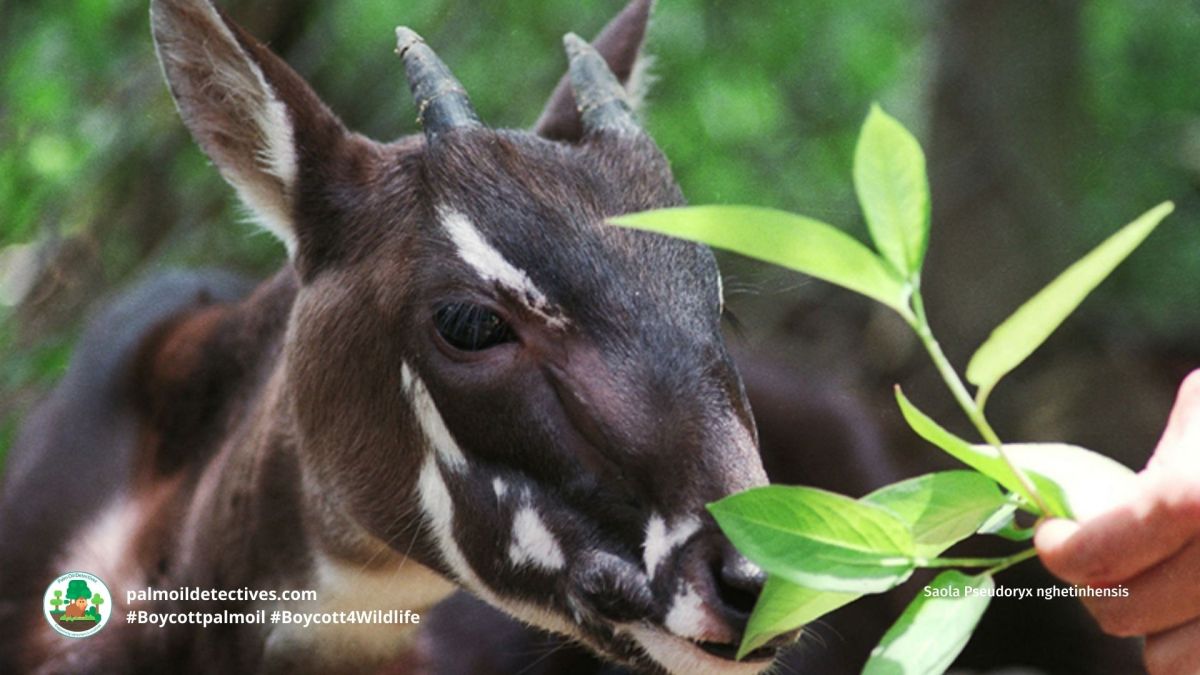
Capped Langur Trachypithecus pileatus

Keep reading

Mountain Tapir Tapirus pinchaque

Mountain Tapir Tapirus pinchaque

Keep reading

Saola Pseudoryx nghetinhensis

Saola Pseudoryx nghetinhensis

Keep reading

Tucuxi Sotalia fluviatilis

Tucuxi Sotalia fluviatilis

Keep reading

Frill-Necked Lizard Chlamydosaurus kingii

Frill-Necked Lizard Chlamydosaurus kingii

Keep reading

Grey Crowned Crane Balearica regulorum

Grey Crowned Crane Balearica regulorum

Keep reading


Learn about “sustainable” palm oil greenwashing

Read more about RSPO greenwashing

Lying Fake labelsIndigenous Land-grabbingHuman rights abusesDeforestation Human health hazards

A 2019 World Health Organisation (WHO) report into the palm oil industry and RSPO finds extensive greenwashing of palm oil deforestation and the murder of endangered animals (i.e. biodiversity loss)

Read moreWHO Bulletin on Palm Oil: Deforestation and ExtinctionWHO Bulletin on Palm Oil: Deforestation and ExtinctionWHO Bulletin on Palm Oil: Deforestation and ExtinctionWHO Bulletin on Palm Oil: Air Pollution and Health

#animals #Bird #birds #Birdsong #Boycott4wildlife #BoycottMeat #BoycottPalmOil #deforestation #EndSongbirdTrade #extinction #ForgottenAnimals #FreeWestPapua #gold #goldMining #hunting #indigenous #military #PalmOil #palmOilDeforestation #palmoil #Parotia #poaching #songbird #songbirds #vegan #vulnerable #VulnerableSpecies #WestPapua #WesternParotiaParotiaSefilata #WestPapua

Sunda Flying Lemur Galeopterus variegatus

Sunda Flying Lemur Galeopterus variegatus

Locations: Thailand, Cambodia, Vietnam, Laos, Myanmar, Peninsular Malaysia, Singapore, Brunei, Indonesia ( Java, Sumatra, Kalimantan, Bali), and Borneo

The Sunda flying lemur, also known as the Malayan flying lemur or Malayan #colugo, silently glides through the tropical forests of Southeast Asia, relying on ancient forests to survive. Despite their name, they are not true lemurs, nor do they fly—they are gliders, and among the most skilful in the world. This species is experiencing population declines in several parts of their range. They are threatened by #deforestation from #timber, #palmoil plantations, and #hunting by local communities. Forest loss, particularly in #Java, #Vietnam, and #Thailand, is fragmenting their populations and endangering their survival. Use your wallet as a weapon every time you shop and protect these sensitive creatures #BoycottPalmOil #Boycott4Wildlife

https://youtu.be/NUukaAK4YSI

The elegant #Sunda flying #lemur AKA #Colugo can glide 100m through trees 🪽🕊️ in #Sumatra #Kalimantan and #Borneo. Totally reliant on trees, #palmoil is a major threat to them 😿 Fight back and🌴🩸🔥☠️🧐🚫 #Boycottpalmoil #Boycott4Wildlife @palmoildetect https://palmoildetectives.com/2026/02/08/sunda-flying-lemur-galeopterus-variegatus/

Share to BlueSky Share to Twitter

Hauntingly beautiful gliding #mammal, the Malayan #Colugo/ Sunda Flying #Lemur uses a cape-like skin membrane to slide 100’s of metres through the #rainforests of SE #Asia. Fight for them and #Boycottpalmoil 🌴🙊🤮🚜🔥❌ #Boycott4Wildlife @palmoildetect https://palmoildetectives.com/2026/02/08/sunda-flying-lemur-galeopterus-variegatus/

Share to BlueSky Share to Twitter

Appearance & Behaviour

Sunda flying lemurs are hauntingly beautiful gliding mammals, with their large, forward-facing eyes adapted for night vision and a delicate, kite-shaped membrane of skin called a patagium stretching from their neck to their fingertips, tail, and toes. This structure allows them to glide over 100 metres through the forest canopy, losing as little as 10 metres in elevation. On the ground, they are nearly helpless, but in the trees, they move with astonishing agility. These quiet, nocturnal mammals spend their days curled up in tree hollows or nestled in the dense fronds of coconut trees, becoming active at dusk when they begin foraging.

Sunda Flying Lemur Galeopterus variegatus by Phototrip for Getty ImagesSunda Flying Lemur Galeopterus variegatus boycott palm oilSunda Flying Lemur Galeopterus variegatus by Phototrip for Getty Images (2)Sunda Flying Lemur Galeopterus variegatus by Wichyanan Limparungpatthanakij from Getty ImagesSunda Flying Lemur Galeopterus variegatus by Phototrip for Getty Images (3)Sunda Flying Lemur Galeopterus variegatus by Phototrip for Getty Images (4)Sunda Flying Lemur Galeopterus variegatus by Phototrip for Getty Images (5)Sunda Flying Lemur Galeopterus variegatus threatsSunda Flying Lemur Galeopterus variegatus by Phototrip for Getty Images (6)

Threats

Palm oil deforestation

The widespread clearing of tropical rainforest to establish palm oil plantations is one of the greatest threats to the Sunda flying lemur. These gliders rely heavily on continuous tree canopy for movement, foraging, and breeding. When forests are fragmented or entirely removed for palm oil, flying lemurs become stranded, exposed to predators, and unable to access food or shelter. This process has caused severe habitat degradation across Peninsular Malaysia, Sumatra, and Borneo.

Sunda Flying Lemur Galeopterus variegatus threats

Human persecution and hunting

In Java and some other regions, Sunda flying lemurs are hunted by local communities, including the Baduy Tribe, who increase hunting activity every four years as part of cultural practices. Though the species yields little meat, they are still killed for consumption or perceived nuisance. Hunting disrupts already fragile populations, particularly in areas where habitat loss has already reduced numbers and isolated groups.

Logging and forest fragmentation for timber

Commercial and illegal logging contribute to the rapid degradation of forests across Southeast Asia. Even selective logging can cause fragmentation, which limits the flying lemur’s ability to glide and forces them to descend to the ground—where they are highly vulnerable to predators and human threats. Logging roads also increase human access to remote forests, further accelerating hunting and forest conversion.

Competition with invasive species

In degraded habitats and plantations, Sunda flying lemurs face increased competition for food and nesting sites from invasive and generalist species such as the Plantain Squirrel (Callosciurus notatus). These squirrels are more adaptable and can dominate food sources, leaving less for the more specialised colugo. Competition like this puts additional stress on the already fragile populations of flying lemurs, especially in fragmented or edge habitats.

Urban expansion and infrastructure development

Rapid urbanisation across Southeast Asia has resulted in the encroachment of cities and towns into previously forested areas. Roads, buildings, hydroelectric dams and agricultural expansion sever vital canopy corridors and isolate populations, making gliding impossible in many urban landscapes. As a result, Sunda flying lemurs are forced to navigate unsuitable environments, increasing their risk of vehicle collisions, electrocution from power lines, and conflict with humans.

Weak protections and lack of enforcement

Although the Sunda flying lemur is legally protected in several countries, enforcement is often weak or inconsistent. In areas like Sarawak and Java, data on current populations is outdated or incomplete, making it difficult to assess trends or plan effective conservation strategies. Without strong protections and ongoing monitoring, habitat loss and hunting will continue to drive the species toward future vulnerability or extinction.

Geographic Range

Sunda flying lemurs are found across Southeast Asia, including Thailand, Cambodia, Vietnam, Laos, southern Myanmar, Peninsular Malaysia, Singapore, Brunei, and Indonesia ( Java, Bali, Sumatra, Kalimantan, and Borneo). They are patchily distributed, with population declines noted in Java and possibly Sarawak. They occur in both primary and secondary forests, and are sometimes seen in plantations and gardens—but dense forest canopy is critical for their survival. Populations in disturbed habitats are less viable due to limited gliding space and reduced food availability.

Diet

The Sunda flying lemur feeds primarily on young leaves, buds, shoots, flowers, and fruits of a wide variety of forest trees. In Bako National Park, Sarawak, they have been observed feeding on over 12 tree species, with Buchanania arborescens making up over 50% of their diet. They also consume tree sap and have even been seen licking bark for water and minerals. Interestingly, they have been recorded feeding on ants (Paratrechina longicornis) in rare cases, highlighting their adaptability in changing environments.

Sunda Flying Lemur Galeopterus variegatus by Phototrip for Getty Images (3)

Mating and Reproduction

After a gestation period of about 60 days, females give birth to a single young, which clings to the mother’s belly and is cradled within the folds of the patagium. The mother’s gliding membrane acts like a living pouch, offering warmth and protection as she climbs and glides through the treetops. Not much else is known about their mating systems or breeding intervals, but juveniles stay with their mothers until they are old enough to glide on their own.

FAQs

How many Sunda flying lemurs are left in the wild?

Exact population numbers are unknown, but the species is believed to be in slow decline. Localised extinctions are suspected in parts of Java and mainland Southeast Asia due to hunting and habitat fragmentation. While still widespread, their dependence on intact forests makes them vulnerable to ongoing deforestation (Boeadi & Steinmetz, 2008).

How long do Sunda flying lemurs live?

In the wild, their lifespan is estimated to be around 10–15 years, though this can vary depending on threats and environmental conditions. Data from wild populations are limited due to their elusive, nocturnal habits (Wikipedia, n.d.).

Why are they threatened by palm oil?

Palm oil plantations destroy the lowland tropical forests that flying lemurs depend on. Unlike other adaptable mammals, colugos require dense canopy cover for safe gliding, resting, and breeding. When forests are cleared, these gliders lose their ability to navigate safely, exposing them to predators and starvation. The conversion of rainforest into monoculture plantations has led to significant declines in habitat quality across their range (Lim et al., 2013; Nasir & Abdullah, 2009).

Do Sunda flying lemurs make good pets?

Absolutely not. Sunda flying lemurs are wild animals with specialised needs. They are not domesticated, and keeping them as pets leads to extreme stress, injury, or death. Capturing these animals for trade disrupts family groups and contributes to their extinction. If you care about flying lemurs, advocate against the exotic pet trade and never support it.

What conservation efforts are underway?

National laws protect the Sunda flying lemur in many range countries, and studies have been conducted in places like Bako National Park and Singapore. However, much stronger protection is needed, particularly in habitat protection and indigenous-led conservation. Conservationists recommend protecting forest patches, especially those with >95% canopy cover, to ensure their survival (Lim et al., 2013).

Take Action!

Protect the Sunda flying lemur by choosing only products that are 100% palm oil-free. Avoiding palm oil directly combats deforestation and preserves vital canopy corridors these animals depend on. Support indigenous-led agroecology and forest protection movements. Never support the exotic pet trade or keep wild animals in captivity. Every purchase you make has the power to either destroy or safeguard their rainforest homes. #BoycottPalmOil #Boycott4Wildlife

Support Sunda Flying Lemurs by going vegan and boycotting palm oil in the supermarket, it’s the #Boycott4Wildlife

Support the conservation of this species

This animal has no protections in place. Read about other forgotten species here. Create art to support this forgotten animal or raise awareness about them by sharing this post and using the #Boycottpalmoil #Boycott4Wildlife hashtags on social media. Also you can boycott palm oil in the supermarket.

Further Information

Boeadi & Steinmetz, R. 2008. Galeopterus variegatusThe IUCN Red List of Threatened Species 2008: e.T41502A10479343. https://dx.doi.org/10.2305/IUCN.UK.2008.RLTS.T41502A10479343.en. Accessed on 06 April 2025.

Lim, N. T-L., Giam, X., Byrnes, G., & Clements, G. R. (2013). Occurrence of the Sunda colugo (Galeopterus variegatus) in the tropical forests of Singapore: A Bayesian approach. Mammalian Biology, 78(1), 63–67. https://doi.org/10.1016/j.mambio.2012.06.008

Nasir, D., & Abdullah, M. T. (2009). Foraging ecology of the Sunda colugo (Galeopterus variegatus) in Bako National Park, Sarawak, Malaysia. Malayan Nature Journal, 61(4), 285–294. https://www.researchgate.net/publication/290610443_Foraging_ecology_of_the_sunda_colugo_galeopterus_variegatus_in_bako_national_park_sarawak_malaysia

Wikipedia. (n.d.). Sunda flying lemur. Retrieved April 6, 2025, from https://en.wikipedia.org/wiki/Sunda_flying_lemur

Sunda Flying Lemur Galeopterus variegatus boycott palm oil
Contribute to palm oil detectives - black rhino in profile

How can I help the #Boycott4Wildlife?


Take Action in Five Ways

1. Join the #Boycott4Wildlife on social media and subscribe to stay in the loop: Share posts from this website to your own network on Twitter, Mastadon, Instagram, Facebook and Youtube using the hashtags #Boycottpalmoil #Boycott4Wildlife.

Enter your email address

Sign Up

Join 3,174 other subscribers

2. Contribute stories: Academics, conservationists, scientists, indigenous rights advocates and animal rights advocates working to expose the corruption of the palm oil industry or to save animals can contribute stories to the website.

Wildlife Artist Juanchi Pérez

Wildlife Artist Juanchi Pérez

Read more Mel Lumby: Dedicated Devotee to Borneo’s Living Beings

Mel Lumby: Dedicated Devotee to Borneo’s Living Beings

Read more Anthropologist and Author Dr Sophie Chao

Anthropologist and Author Dr Sophie Chao

Read more Health Physician Dr Evan Allen

Health Physician Dr Evan Allen

Read more The World’s Most Loved Cup: A Social, Ethical & Environmental History of Coffee by Aviary Doert

The World’s Most Loved Cup: A Social, Ethical & Environmental History of Coffee by Aviary Doert

Read more How do we stop the world’s ecosystems from going into a death spiral? A #SteadyState Economy

How do we stop the world’s ecosystems from going into a death spiral? A #SteadyState Economy

Read more

3. Supermarket sleuthing: Next time you’re in the supermarket, take photos of products containing palm oil. Share these to social media along with the hashtags to call out the greenwashing and ecocide of the brands who use palm oil. You can also take photos of palm oil free products and congratulate brands when they go palm oil free.

https://twitter.com/CuriousApe4/status/1526136783557529600?s=20

https://twitter.com/PhillDixon1/status/1749010345555788144?s=20

https://twitter.com/mugabe139/status/1678027567977078784?s=20

4. Take to the streets: Get in touch with Palm Oil Detectives to find out more.

5. Donate: Make a one-off or monthly donation to Palm Oil Detectives as a way of saying thank you and to help pay for ongoing running costs of the website and social media campaigns. Donate here

Pledge your support


Learn about other animals endangered by palm oil and other agriculture

GlobalSouth America S.E. AsiaIndiaAfricaWest Papua & PNGWestern Parotia Parotia sefilata
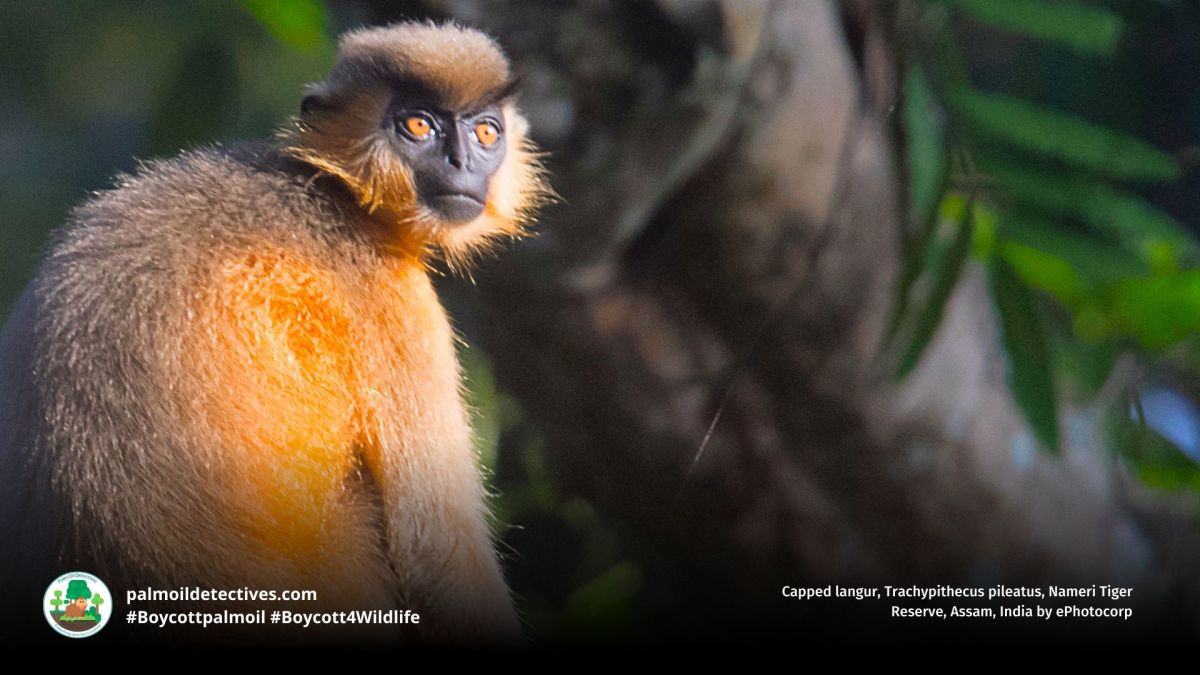
Western Parotia Parotia sefilata

Keep reading Capped Langur Trachypithecus pileatus

Capped Langur Trachypithecus pileatus

Keep reading Mountain Tapir Tapirus pinchaque

Mountain Tapir Tapirus pinchaque

Keep reading Saola Pseudoryx nghetinhensis

Saola Pseudoryx nghetinhensis

Keep reading Tucuxi Sotalia fluviatilis

Tucuxi Sotalia fluviatilis

Keep reading Frill-Necked Lizard Chlamydosaurus kingii

Frill-Necked Lizard Chlamydosaurus kingii

Keep reading

Learn about “sustainable” palm oil greenwashing

Read more about RSPO greenwashing

Lying Fake labelsIndigenous Land-grabbingHuman rights abusesDeforestation Human health hazards

A 2019 World Health Organisation (WHO) report into the palm oil industry and RSPO finds extensive greenwashing of palm oil deforestation and the murder of endangered animals (i.e. biodiversity loss)

Read moreWHO Bulletin on Palm Oil: Deforestation and ExtinctionWHO Bulletin on Palm Oil: Deforestation and ExtinctionWHO Bulletin on Palm Oil: Deforestation and ExtinctionWHO Bulletin on Palm Oil: Air Pollution and Health

#animals #Asia #Borneo #Boycott4wildlife #BoycottMeat #BoycottPalmOil #Brunei #Cambodia #colugo #dams #deforestation #ForgottenAnimals #glidingMammal #humanWildlifeConflict #hunting #hydroelectric #Indonesia #Java #Kalimantan #Laos #lemur #Malaysia #Mammal #Myanmar #nocturnal #PalmOil #palmOilDeforestation #palmoil #poaching #rainforests #Sumatra #Sunda #SundaFlyingLemurGaleopterusVariegatus #Thailand #timber #Vietnam #VulnerableSpecies

Gursky’s Spectral Tarsier Tarsius spectrumgurskyae

Gursky’s Spectral Tarsier Tarsius spectrumgurskyae

IUCN Red List Status: Vulnerable

Location: Indonesia ( Sulawesi)

Found across the northern peninsula of Sulawesi in Indonesia, including from the northern tip to the Isthmus of Gorontalo, in primary forest, mangroves, and disturbed habitats with dense cover.

The Gursky’s spectral tarsier Tarsius spectrumgurskyae, also known locally as Wusing, is a recently recognised species of tarsier from northern Sulawesi. Listed as Vulnerable by the IUCN, they have lost more than 30% of their habitat in the past two decades. #Deforestation for #palmoil and #timber, agricultural encroachment, illegal logging, and the #pettrade all threaten their fragile populations. Their survival depends on wild spaces thick with shrubby undergrowth—the very places being rapidly erased. If you love unique #primates like the spectral #tarsier, use your voice and wallet to protect their forest home. #BoycottPalmOil #Boycott4Wildlife

https://youtu.be/FqrauXhLBcY

Known locally as ‘Wusing’, Gursky’s Spectral #Tarsiers have enormous moon-like eyes to help them see in dark forests 🌛👀😽 #Palmoil and the #pet trade are serious threats. Help them survive when you #Boycottpalmoil 🌴🚜❌ #Boycott4Wildlife @palmoildetect https://palmoildetectives.com/2026/02/22/gurskys-spectral-tarsier-tarsius-spectrumgurskyae/

Share to BlueSky Share to Twitter

Found in tree hollows of #Sulawesi #Indonesia, tiny #primates 🐵🧐 Gursky’s Spectral #Tarsiers are #carnivores with their food, #insects 🪲🦗 being poisoned by #palmoil and #pesticides ☠️ Fight for them! #Boycottpalmoil #Boycott4Wildlife @palmoildetect https://palmoildetectives.com/2026/02/22/gurskys-spectral-tarsier-tarsius-spectrumgurskyae/

Share to BlueSky Share to Twitter

Appearance & Behaviour

Gursky’s spectral tarsiers also known locally as ‘Wusing’ are hauntingly beautiful tiny #primates with enormous, forward-facing eyes that shine like twin moons in the night. These tiny nocturnal primates have a soft, greyish pelage and elongated fingers adapted for gripping tree branches. They are famed for their extreme leaping ability, known as vertical clinging and leaping (VCL), allowing them to spring through the forest canopy with precision and grace.

Highly social and vocal, they live in monogamous or polygamous groups of 2–11 individuals. At dawn, their eerie territorial duets echo through the forest just before they return to their sleeping sites in dense foliage or tree cavities. They are shy, elusive, and deeply dependent on forest structure to hide, hunt, and sleep.

Gursky's spectral tarsier Tarsius spectrumgurskyae by AndraeSholtz iNaturalist (2)Gursky's spectral tarsier Tarsius spectrumgurskyae boycott palm oilGursky's spectral tarsier Tarsius spectrumgurskyae by AndraeSholtz iNaturalist (3)Gursky's spectral tarsier Tarsius spectrumgurskyae threatsGursky's spectral tarsier Tarsius spectrumgurskyae by AndraeSholtz iNaturalistGursky's spectral tarsier Tarsius spectrumgurskyae by AndraeSholtz iNaturalist (4)

Threats

Habitat Loss from Illegal Logging

The primary threat to Gursky’s spectral tarsier is the ongoing destruction of Sulawesi’s forests due to illegal logging. These small nocturnal primates depend on dense understorey vegetation and tree cavities for shelter and foraging. When forests are cleared, their sleeping sites vanish and prey becomes scarce, forcing them into smaller, fragmented patches of habitat. Even moderate disturbance causes a sharp drop in population density—from over 150 individuals/km² to as few as 45 in degraded areas (Merker, 2003).

Agricultural Expansion and Palm Oil Plantations

Much of the Gursky’s Spectral Tarsier’s lowland habitat has already been converted to palm oil and timber agriculture, and expansion continues. Between 1990 and 2000, 15.26% of Sulawesi’s forests were cleared for crops, with at least 10% more lost since then (Salim, pers. comm. in IUCN, 2020). Palm oil plantations are one of the main drivers of this forest conversion. Although the species can survive in agroforestry and disturbed areas, their numbers drastically decline when natural vegetation is replaced with monocultures.

Gursky's spectral tarsier Tarsius spectrumgurskyae threats

Pesticide Exposure from Nearby Farms

Chemical pesticides used in adjacent agricultural zones contaminate the tarsiers’ insect prey, leading to bioaccumulation and poisoning. Tarsiers consume a diet entirely composed of live animal prey, mostly insects, which makes them highly vulnerable to pesticide residues. Ingestion of contaminated insects can lead to neurological damage, reproductive failure, or death, further weakening populations in edge habitats near farmlands.

Predation by Domestic Animals

Domestic dogs and cats introduced into forested areas pose a significant predation risk to tarsiers. These animals often accompany humans into disturbed or agricultural areas, where they hunt or scavenge. Tarsiers are small-bodied, slow on the ground, and often descend to low levels of the forest, making them easy targets. Predation by pets fragments already-vulnerable populations and disrupts group dynamics.

Illegal Capture for the Pet Trade

Although not widespread, the illegal pet trade is an emerging threat. Gursky’s spectral tarsiers are occasionally taken from the wild to be sold in local markets or online. These sensitive, nocturnal animals suffer tremendously in captivity, often dying due to stress, malnutrition, or improper care. Removing them from the wild also breaks apart family groups and contributes to long-term population decline.

Geographic Range

Gursky’s spectral tarsier is endemic to Indonesia, restricted to northern Sulawesi, from the northern tip of the peninsula to the Isthmus of Gorontalo. Their habitat includes lowland primary forests, secondary growth, mangroves, and areas with some human disturbance, such as agroforestry and selectively logged landscapes. However, their density drops dramatically as habitat degradation increases.

Diet

Their diet is 100% carnivorous, consisting entirely of live animal prey. They primarily consume insects such as moths and crickets but also hunt small vertebrates like frogs and lizards. Their night-time hunting is punctuated by bursts of movement and quiet observation as they stalk their prey through the understorey.

Mating and Reproduction

Although detailed reproductive data are scarce for this species, Gursky’s spectral tarsiers likely follow similar breeding patterns to other tarsiers. They are known to breed throughout the year, producing one offspring at a time after a gestation period of about six months. The young are born furred and open-eyed, clinging to their parent as they learn to navigate the trees.

FAQs

How many Gursky’s spectral tarsiers are left in the wild?

Precise population numbers of these tarsiers are not known, but density estimates suggest that in pristine habitats, up to 156 individuals per km² may exist (Gursky, 1997). However, in heavily degraded areas, this number can plummet to as low as 45 individuals per km² (Merker, 2003). Their fragmented range and habitat loss make accurate counts difficult, but population declines are expected to continue if deforestation is not halted.

What is their lifespan in the wild?

While specific data for Tarsius spectrumgurskyae is not available, other tarsier species can live between 8–12 years in the wild. In captivity, where threats like predation are removed, their lifespan may be slightly longer. However, these animals do not thrive in captivity and should never be kept as pets.

What challenges do they face in conservation?

One major challenge is habitat degradation due to logging, agriculture, and the spread of palm oil plantations. Though they can tolerate some disturbance, their population density drops significantly with increasing habitat destruction. Additionally, their small size and elusive nature make them difficult to monitor, and they are sometimes misidentified as other tarsier species, complicating conservation strategies.

Do Gursky’s spectral tarsiers make good pets?

No. These sensitive and social primates should never be kept as pets. Capturing them from the wild is cruel and contributes directly to population collapse. It destroys their family groups, causes immense suffering, and feeds into illegal wildlife trade networks. If you care about their survival, never buy a wild animal and advocate against exotic pet ownership.

Take Action!

The future of the Gursky’s spectral tarsier hangs by a thread. Forests are falling at an alarming rate, replaced with monocultures and poisoned with pesticides. Speak up. Refuse to fund deforestation-driven industries. Boycott palm oil. Protect what’s left of Sulawesi’s dwindling forests and support indigenous-led conservation efforts. Never buy wildlife as pets. #BoycottPalmOil #Boycott4Wildlife #Vegan #BoycottMeat

Support Gursky’s Tarsiers by going vegan and boycotting palm oil in the supermarket, it’s the #Boycott4Wildlife

Support the conservation of this species

This animal has no protections in place. Read about other forgotten species here. Create art to support this forgotten animal or raise awareness about them by sharing this post and using the #Boycottpalmoil #Boycott4Wildlife hashtags on social media. Also you can boycott palm oil in the supermarket.

Further Information

Shekelle, M., Groves, C. P., Maryanto, I., & Mittermeier, R. A. (2017). Two new tarsier species (Tarsiidae, Primates) and the biogeography of Sulawesi, Indonesia. Primate Conservation, 31, 37–56. https://researchportalplus.anu.edu.au/en/publications/two-new-tarsier-species-tarsiidae-primates-and-the-biogeography-o

Shekelle, M. 2020. Tarsius spectrumgurskyaeThe IUCN Red List of Threatened Species 2020: e.T162336422A162336580. https://dx.doi.org/10.2305/IUCN.UK.2020-3.RLTS.T162336422A162336580.en. Accessed on 06 April 2025.

Wikipedia. (n.d.). Gursky’s spectral tarsier. Retrieved April 6, 2025, from https://en.wikipedia.org/wiki/Gursky%27s_spectral_tarsier

Gursky's spectral tarsier Tarsius spectrumgurskyae boycott palm oil
Contribute to palm oil detectives - black rhino in profile

How can I help the #Boycott4Wildlife?


Take Action in Five Ways

1. Join the #Boycott4Wildlife on social media and subscribe to stay in the loop: Share posts from this website to your own network on Twitter, Mastadon, Instagram, Facebook and Youtube using the hashtags #Boycottpalmoil #Boycott4Wildlife.

Enter your email address

Sign Up

Join 3,179 other subscribers

2. Contribute stories: Academics, conservationists, scientists, indigenous rights advocates and animal rights advocates working to expose the corruption of the palm oil industry or to save animals can contribute stories to the website.

Wildlife Artist Juanchi Pérez

Wildlife Artist Juanchi Pérez

Read more Mel Lumby: Dedicated Devotee to Borneo’s Living Beings

Mel Lumby: Dedicated Devotee to Borneo’s Living Beings

Read more Anthropologist and Author Dr Sophie Chao

Anthropologist and Author Dr Sophie Chao

Read more Health Physician Dr Evan Allen

Health Physician Dr Evan Allen

Read more The World’s Most Loved Cup: A Social, Ethical & Environmental History of Coffee by Aviary Doert

The World’s Most Loved Cup: A Social, Ethical & Environmental History of Coffee by Aviary Doert

Read more How do we stop the world’s ecosystems from going into a death spiral? A #SteadyState Economy

How do we stop the world’s ecosystems from going into a death spiral? A #SteadyState Economy

Read more

3. Supermarket sleuthing: Next time you’re in the supermarket, take photos of products containing palm oil. Share these to social media along with the hashtags to call out the greenwashing and ecocide of the brands who use palm oil. You can also take photos of palm oil free products and congratulate brands when they go palm oil free.

https://twitter.com/CuriousApe4/status/1526136783557529600?s=20

https://twitter.com/PhillDixon1/status/1749010345555788144?s=20

https://twitter.com/mugabe139/status/1678027567977078784?s=20

4. Take to the streets: Get in touch with Palm Oil Detectives to find out more.

5. Donate: Make a one-off or monthly donation to Palm Oil Detectives as a way of saying thank you and to help pay for ongoing running costs of the website and social media campaigns. Donate here

Pledge your support


Learn about other animals endangered by palm oil and other agriculture

GlobalSouth America S.E. AsiaIndiaAfricaWest Papua & PNGSunda Flying Lemur Galeopterus variegatus

Sunda Flying Lemur Galeopterus variegatus

Keep reading Western Parotia Parotia sefilata

Western Parotia Parotia sefilata

Keep reading Capped Langur Trachypithecus pileatus

Capped Langur Trachypithecus pileatus

Keep reading Mountain Tapir Tapirus pinchaque

Mountain Tapir Tapirus pinchaque

Keep reading Saola Pseudoryx nghetinhensis

Saola Pseudoryx nghetinhensis

Keep reading Tucuxi Sotalia fluviatilis

Tucuxi Sotalia fluviatilis

Keep reading

Learn about “sustainable” palm oil greenwashing

Read more about RSPO greenwashing

Lying Fake labelsIndigenous Land-grabbingHuman rights abusesDeforestation Human health hazards

A 2019 World Health Organisation (WHO) report into the palm oil industry and RSPO finds extensive greenwashing of palm oil deforestation and the murder of endangered animals (i.e. biodiversity loss)

Read moreWHO Bulletin on Palm Oil: Deforestation and ExtinctionWHO Bulletin on Palm Oil: Deforestation and ExtinctionWHO Bulletin on Palm Oil: Deforestation and ExtinctionWHO Bulletin on Palm Oil: Air Pollution and Health

#animals #Boycott4wildlife #BoycottMeat #BoycottPalmOil #BoycottPesticides #carnivores #deforestation #ForgottenAnimals #GurskySSpectralTarsierTarsiusSpectrumgurskyae #hunting #illegalPetTrade #Indonesia #insects #nocturnal #PalmOil #palmOilDeforestation #palmoil #pesticide #pesticides #pet #petTrade #pettrade #poaching #Primate #primates #primatology #Sulawesi #tarsier #tarsiers #timber #vegan #vulnerable #VulnerableSpecies

Marsupials thought extinct for 6,000 years found in West Papua

In an astonishing discovery, two marsupial species believed to be extinct for 6,000 years have been rediscovered alive and well in the remote rainforests of West Papua. The pygmy long-fingered possum and the ring-tailed glider were located with the crucial assistance of local indigenous Vogelkop clans. However, their survival remains precarious as their habitats are increasingly threatened by logging and the expansion of the palm oil colonialism in West Papua. Laws and native title to protect this region is essential for indigenous land defenders. We musn’t let them disappear again #BoycottPalmOil #Boycott4Wildlife

Two #extinct #marsupials in #WestPapua found alive! The #marsupials highlight the need to protect #Papuan forests or they are gone for good! Resist for them and #BoycottPalmOil #Boycott4Wildlife when you shop 🌴🙊🔥☠️🚫 @palmoildetect #Boycott4Wildlife https://wp.me/pcFhgU-iOH

Share to BlueSkyShare to Twitter

Two #possums thought extinct for 6000 years are alive in #WestPapua! The pygmy #possum and sacred ring-tailed #glider are #nature’s battlers who deserve a break from #palmoil ecocide. Stand with #indigenous defenders against palm oil #colonialism! 🌴🚫 @palmoildetect #BoycottPalmOil https://wp.me/pcFhgU-iOH

Share to BlueSkyShare to Twitter

https://youtu.be/T1uWC5ZE4KI


Two extraordinarily rare marsupials, entirely believed to have been extinct for over six thousand years, have been discovered alive in the remote, Vogelkop mountain forests of the Bird’s Head peninsula in West Papua. This remarkable rediscovery of the pygmy long-fingered possum and the ring-tailed glider was confirmed by Australian scientist Professor Tim Flannery, alongside a team of local indigenous experts and university researchers.

“More important than finding a living thylacine in Tasmania.”

Scott Hucknull from Central Queensland University describes the magnitude of the discovery.

These species are rare examples of “Lazarus taxa”. Animals who disappear from the fossil record only to be found alive centuries later. Flannery noted that the likelihood of finding even one lost mammal was almost zero, let alone two.

A pygmy long-fingered possum. Photo by Carlos BocosThe pygmy long-fingered possum by Carlos BocosTake action - Boycott palm oil for the animals of West PapuaThe ring-tailed glider. Photo by DewaTwo new marsupials found in West Papua

“It’s unprecedented and groundbreaking, really, to find two Lazarus taxa,” Flannery says. “We’ve been able to finalise two pieces of work that are incredibly important from a biological and a conservation perspective, documenting the existence of rare marsupials in an area under threat. It’s sort of a crowning glory in my career as a biologist.”

The first of the resurrected species is the pygmy long-fingered possum, Dactylonax kambuayai. This tiny, striped marsupial possesses an extraordinary evolutionary trait: an elongated fourth finger on each hand that is double the length of other digits. Flannery explains that they use this finger to extract grubs from timber.

“They’ve got a whole lot of specialisations in their ear region as well, which seem to be related to detection of low-frequency sound. So presumably they’re listening for wood-boring beetle larvae, and they then rip open the rotting wood and use that finger to fish out the grub,” Flannery says.

The second species, the ring-tailed glider (Tous ayamaruensis), features unfurred ears and a strong, prehensile tail used for gripping branches. Flannery calls it “one of the most photogenic animals, most beautiful marsupials you’ll ever see.”

The pygmy long-fingered possum by Carlos Bocos

Crucially, the rediscovery of these elusive creatures was entirely dependent on the profound ecological knowledge of the local Tambrauw and Maybrat clans. These indigenous communities view the ring-tailed glider as deeply sacred, believing them to be manifestations of their ancestors’ spirits, and actively protect them from hunting. Rika Korain, a Maybrat woman and co-author of the research, emphasised that identifying the species relied entirely on traditional owners. “This connection has been essential,” she says.

“I’m very proud that Papuan researchers contributed to these landmark discoveries, and want to thank the people of the Misool, Maybrat and Tambrouw regions who supported us in the field,”

Dr Aksamina Yohanita of the University of Papua said.

“The Vogelkop is an ancient piece of the Australian continent that has become incorporated into the island of New Guinea. Its forests may shelter yet more hidden relics of a past Australia,”

Tim Flannery

To protect the remaining populations from the illegal wildlife trade, researchers are keeping their exact locations highly classified. Flannery delivered a stark warning to potential poachers regarding the animals’ survival in captivity: “They would be incredibly difficult to keep in captivity. because their diet is so highly specialised. Advanced warning for anyone who’s thinking of keeping one as a pet: it won’t live long,” he says.

While their rediscovery is a triumph, their future is highly uncertain. The proximity of power-hungry corporates intent on razing the rainforest for palm oil and timber casts a dark shadow over the region.

David Lindenmayer, an ecologist at the Australian National University, who was not involved in the study said “I am also hugely concerned about the extent of logging and land clearing happening in New Guinea,” he says. “It also makes me wonder what might have been lost in Australia as a result of all of the land clearing that has taken place here.”

The findings underline strong calls from scientists, environmentalists and indigenous rights advocates for Native Title legal land rights and indigenous-led protections of West Papua and its imperilled Vogelkop rainforest where these delightful marsupials are found.

Boycott palm oil for the animals of West Papua

Further information

Lam, L. (2026, March 6). Tiny possum and glider thought extinct for 6,000 years found in remote West Papua. BBC News. https://www.bbc.co.uk/news/articles/cwyg6p8g6yjo

Morton, A. (2026, March 6). Marsupials previously thought extinct for millennia discovered in New Guinea. The Guardian. https://www.theguardian.com/environment/2026/mar/05/marsupials-discovered-new-guinea

Woodford, J. (2026, March 5). Two marsupials believed extinct for 6000 years found alive. New Scientist. https://www.newscientist.com/article/2518082-two-marsupials-believed-extinct-for-6000-years-found-alive/

ENDS


Learn about other animals endangered by palm oil and other agriculture

GlobalSouth America S.E. AsiaIndiaAfricaWest Papua & PNGGursky’s Spectral Tarsier Tarsius spectrumgurskyae

Gursky’s Spectral Tarsier Tarsius spectrumgurskyae

Keep reading Sunda Flying Lemur Galeopterus variegatus

Sunda Flying Lemur Galeopterus variegatus

Keep reading Western Parotia Parotia sefilata

Western Parotia Parotia sefilata

Keep reading Capped Langur Trachypithecus pileatus

Capped Langur Trachypithecus pileatus

Keep reading Mountain Tapir Tapirus pinchaque

Mountain Tapir Tapirus pinchaque

Keep reading Saola Pseudoryx nghetinhensis

Saola Pseudoryx nghetinhensis

Keep reading

Learn about “sustainable” palm oil greenwashing

Read more about RSPO greenwashing

Lying Fake labelsIndigenous Land-grabbingHuman rights abusesDeforestation Human health hazards

A 2019 World Health Organisation (WHO) report into the palm oil industry and RSPO finds extensive greenwashing of palm oil deforestation and the murder of endangered animals (i.e. biodiversity loss)

Read moreWHO Bulletin on Palm Oil: Deforestation and ExtinctionWHO Bulletin on Palm Oil: Deforestation and ExtinctionWHO Bulletin on Palm Oil: Deforestation and ExtinctionWHO Bulletin on Palm Oil: Air Pollution and Health

Take Action in Five Ways

1. Join the #Boycott4Wildlife on social media and subscribe to stay in the loop: Share posts from this website to your own network on Twitter, Mastadon, Instagram, Facebook and Youtube using the hashtags #Boycottpalmoil #Boycott4Wildlife.

Enter your email address

Sign Up

Join 3,179 other subscribers

2. Contribute stories: Academics, conservationists, scientists, indigenous rights advocates and animal rights advocates working to expose the corruption of the palm oil industry or to save animals can contribute stories to the website.

Wildlife Artist Juanchi Pérez

Wildlife Artist Juanchi Pérez

Read more Mel Lumby: Dedicated Devotee to Borneo’s Living Beings

Mel Lumby: Dedicated Devotee to Borneo’s Living Beings

Read more Anthropologist and Author Dr Sophie Chao

Anthropologist and Author Dr Sophie Chao

Read more Health Physician Dr Evan Allen

Health Physician Dr Evan Allen

Read more The World’s Most Loved Cup: A Social, Ethical & Environmental History of Coffee by Aviary Doert

The World’s Most Loved Cup: A Social, Ethical & Environmental History of Coffee by Aviary Doert

Read more How do we stop the world’s ecosystems from going into a death spiral? A #SteadyState Economy

How do we stop the world’s ecosystems from going into a death spiral? A #SteadyState Economy

Read more

3. Supermarket sleuthing: Next time you’re in the supermarket, take photos of products containing palm oil. Share these to social media along with the hashtags to call out the greenwashing and ecocide of the brands who use palm oil. You can also take photos of palm oil free products and congratulate brands when they go palm oil free.

https://twitter.com/CuriousApe4/status/1526136783557529600?s=20

https://twitter.com/PhillDixon1/status/1749010345555788144?s=20

https://twitter.com/mugabe139/status/1678027567977078784?s=20

4. Take to the streets: Get in touch with Palm Oil Detectives to find out more.

5. Donate: Make a one-off or monthly donation to Palm Oil Detectives as a way of saying thank you and to help pay for ongoing running costs of the website and social media campaigns. Donate here

Pledge your support #animalBehaviour #AnimalBiodiversityNews #animalExtinction #animalIntelligence #animalRights #biodiversity #Boycott4wildlife #BoycottPalmOil #deforestation #ForgottenAnimals #Marsupial #marsupials #PalmOil #palmOilDeforestation #PapuaNewGuinea #PapuaNewGuineaSpeciesEndangeredByPalmOilDeforestation #possum #possums #WestPapua

Palm Oil Detectives | Auckland

Palm Oil Detectives | Auckland

More protein and good for the planet: 9 reasons we should be eating microalgae

As the climate change advances and deforestation continues at pace, the land we use for growing energy-intensive crops such as wheat corn, soy and palm oil is becoming less productive. We need to find ways to feed the earth’s growing population that isn’t so burdensome on the environment.

One potential solution is to cultivate microalgae – microscopic aquatic organisms that are packed with nutrients. Microalgae are single-celled organisms that look like tiny pills and taste a bit like grass.

#Research: Using #algae 🌱🥬 as a replacement for #palmoil has many benefits. It can be grown in wastewater all year round, is #crueltyfree, #vegan and has more protein than other plant-based foods 🤯💚 #Boycottpalmoil #Boycott4Wildlife @palmoildetect https://palmoildetectives.com/2022/04/10/more-protein-and-good-for-the-planet-9-reasons-we-should-be-eating-microalgae/

Share to BlueSkyShare to Twitter

They are relatively easy to cultivate and have several advantages over animal and plant protein.

1. Less environmental impact

Algae don’t require pesticides to sustain their productivity. Algae can also be grown in wastewaters (water that has been used in the home or in some industrial process), taking up nutrients and other dissolved substances into their biomass. This results in fewer contaminants being released into the environment and less pollution in our waterways.

CSIRO

2. It can be grown year-round

High growth and reproduction rates mean microalgae can double their biomass in as little as one to three days, depending on the time of the year. While their growth rate is slower in winter, they are not limited to a growing season, such as plants, or a long maturation period, such as animals.

This means microalgae produce more biomass on a given area of land per year, than animals or plants.

High growth rates also mean frequent harvesting. This makes microalgal cultures more resilient to sudden or extreme weather events, where production losses may be only several days of growth rather than the entire annual crop.

More protein and good for the planet: 9 reasons we should be eating microalgaeMore protein and good for the planet: 9 reasons we should be eating microalgae

3. It has more protein

Algae produce more protein than plant-based foods, including soybean and pulse legumes. While algae produce 3.5-13 tonnes of protein per hectare per year, soybean and pulse legumes produce 0.5-1.8 tonnes of protein per hectare per year.

The higher growth rate of microalgae and ability to produce their own food from the sun, means microalgal protein yields are more than 100 times greater than animal-based proteins, including beef, eggs and dairy (0.01 – 0.23 tonnes per hectare per year).

Microalgal protein yields are much greater than animal-based proteins such as eggs, beef and dairy. Dave Hunt/AAP

4. Farms can be built anywhere

Algae production systems don’t require arable land. They comprise either open ponds or closed vessels with a light source, known as photobioreactors. The systems can be built almost anywhere, including non-productive land or in the sea.

Open ponds are shallow (between 10 and 50 cm deep), and the algae culture is gently circulated by a paddlewheel. Closed photobioreactors consist of an array of tubes or flat panels, through which algae is circulated. Both types of production systems can be modified to suit the environment.

5. It doesn’t require fresh water

Thousands of marine and estuarine microalgal species grow best in seawater rather than freshwater. This would reduce our reliance on fresh water for food production.

Widespread adoption of microalgae as a food source would reduce pressure on freshwater systems. Dean Lewin/AAP

6. It’s nutritious

Algae have long been recognised for their nutritional properties, forming a vital food source in human diets since as early as 14,000 BC. Over the last few decades, microalgae have been used in vitamin supplements and health food products, including protein bars and powders, green smoothies and Omega-3 capsules.

Microalgae contain proteins, fats, carbohydrates and other nutritional components that have wide potential application in the food industry. For example, algae have a broad array of amino acids that support human growth and development; some are comparable with the levels in egg, soy and wheat protein.

To date, microalgae have successfully been incorporated into a range of edible products to increase their nutritional value, including yoghurts, biscuits, bread and pasta. Manufacturers have been able to swap plant for algal-protein by simply introducing it as a powder into production streams.

Apart from adding nutrients, microalgae have other properties that facilitate their incorporation into foods, including emulsifying, foaming, gelation, and absorption of fat and water.

Using microalgae in emulsions allows for a decrease in the percentage of oil, showing promise for their potential use in low-fat products. When added to desserts as colouring agents, the cell structure in microalgae protects pigments from thermal degradation during processing, enabling foods to maintain their vibrancy.

7. It’s cruelty-free

Algae can be harvested by sedimentation, flotation or filtration, with not an abattoir or live exporter in sight.

Microalgae as a food source would reduce demand for meat from livestock. TREVOR COLLENS/AAP

8. It can be used in sustainable products

Microalgae are increasingly being used as sustainable components of other products, including cosmetics, nutraceuticals, industrial enzymes and bioplastics, and as a biofuel to replace fossil fuels in niche markets.

Many microalgae have high levels of palmitic acid. This acid is also the principal component of palm oil – a widely used oil in food production which drives mass deforestation and loss of animal habitat. Replacing palm oil with microalgae would reduce reliance on this unsustainable industry.

9. An opportunity for developing regions

The low-tech, basic infrastructure needed for microalgal farming could provide economic opportunities for developing regions. For example, research has shown a number of African nations have suitable land, labor and climatic conditions to grow microalgae as a source of bioenergy.

Where to now?

Microalgae are being produced commercially in Australia, including at Hutt Lagoon in Western Australia, the world’s largest microalgae production plant. There, the alga Dunaliella salina is grown to produce beta-carotene, a food pigment and source of vitamin A.

Microalgae is commercially produced at Hutt Lagoon in Western Australia. Wikimedia Commons

Elsewhere in Australia, microalgae is grown to produce Spirulina, which is marketed as a health food. Researchers are developing the use of microalgae further, including as a feed supplement for beef cattle.

But the current range of microalgae products grown in Australia is limited. The nation has a suitable climate and the technology; now it needs growers and manufacturers.

Government support is required to enable the agricultural and manufacturing sectors to create algae-based products – current stimulus spending provides such an opportunity. This would not only create new jobs, but enable Australian businesses to become more resilient into the future.

Martina Doblin, Senior Research Fellow, Plant Functional Biology & Climate Change, University of Technology Sydney; Donna Sutherland, Research Fellow, University of Technology Sydney, and Peter Ralph, University of Technology Sydney

This article is republished from The Conversation under a Creative Commons license. Read the original article.

Learn about other Reasons to Hope

Songbirds Socialise Mid-Flight During Migration

Songbirds Socialise Mid-Flight During Migration

Keep reading

Why Pangolins Are So Special

Why Pangolins Are So Special

Keep reading

Protecting Peru’s Grasslands Vital for Spectacled Bears

Protecting Peru’s Grasslands Vital for Spectacled Bears

Keep reading

Javan Rhinos Not Safe from Poachers

Javan Rhinos Not Safe from Poachers

Keep reading

Beef, Palm Oil and Timber: How Wealthy Nations Fuel Deforestation

Beef, Palm Oil and Timber: How Wealthy Nations Fuel Deforestation

Keep reading

Around 25% of Africa’s Land is Damaged: This is How We Fix It!

Around 25% of Africa’s Land is Damaged: This is How We Fix It!

Keep reading

Load more posts

Something went wrong. Please refresh the page and/or try again.

#algae #biotechnology #BoycottPalmOil #Boycott4wildlife #BoycottPalmOil #conservation #consumerRights #consumerism #crueltyfree #diet #health #PalmOil #palmoil #plantBasedDiet #research #vegan

Land-grabbing for palm oil and the climate crisis


A corporate monopoly for control over land and resources for palm oil must be dismantled immediately to give humanity, animals and our natural world a fighting chance for survival and to reverse the climate crisis. In Asia, many indigenous peoples are now joining forces and rising up to resist this corruption and ecocide. Help them to fight back and #BoycottPalmOil #Boycott4Wildlife


Corporate monopolies 💰🔥👿 drive #landgrabbing for #palmoil. To give #indigenous peoples, animals and #nature a fighting chance, we must resist. “Sustainable” palm oil is #greenwashing! #Boycottpalmoil #Boycott4Wildlife @palmoildetect 🌴🪔🧐🙊⛔️ https://palmoildetectives.com/2022/11/20/land-grabbing-and-the-climate-crisis-are-strongly-linked-to-palm-oil/

Share to BlueSkyShare to Twitter

#Report by @FAO 📜 finds 90% of #deforestation is for BIG-AG by #Cargill, #Wilmar and #SimeDarby. Their monopoly drives #indigenous #landgrabbing for #palmoil 🌴💰 Take action! 🌴🪔💀🤢🚫 #Boycottpalmoil #Boycott4Wildlife @palmoildetect https://palmoildetectives.com/2022/11/20/land-grabbing-and-the-climate-crisis-are-strongly-linked-to-palm-oil/

Share to BlueSkyShare to Twitter

Originally written by Arnold Padilla for Bulatlat.com as ‘Land Monopoly and Climate Crisis: A Look at Asia’. Read the original article. Published November 17, 2022. Arnold Padilla is the coordinator of the Food Sovereignty Program of PAN Asia Pacific (PANAP) and its “No Land, No Life” campaign against land grabbing.

Some closely following the UN Framework Convention on Climate Change (UNFCCC) say that the 27th session of its Conference of the Parties (COP27) puts more attention on food and agriculture than in previous years.

For instance, the International Panel of Experts on Sustainable Food Systems (IPES) noted that the climate gathering in Egypt features four pavilions and about 200 events on food and farming. But these are still outside official negotiations, where states do the actual policymaking and commitments.

No meaningful focus at COP27 on accountability of industrial farming

It is apparent in the discussions that matter in the COP process that there is no meaningful focus on the role and accountability of corporate farming in warming the planet.

The industrial food system (i.e., agriculture and land use/land-use change activities plus supply chain activities like retail, transport, consumption, fuel production, waste management, industrial processes and packaging) contributes about 34% to global greenhouse gas (GHG) emissions, with an estimated environmental cost of US$ 3 trillion annually.

Yet, addressing and reversing the climate impacts of corporate farming through radical food systems transformation is not a priority among the COP27 negotiators.

6 out of 10 of the worst affected countries for climate change are in Asia

  • For Asia, the urgency of the climate crisis cannot be overemphasised. Six of the ten worst affected countries by climate change in the past two decades are in Asia (i.e., Myanmar, Philippines, Bangladesh, Pakistan, Thailand, and Nepal).
  • This year alone, heavy monsoon rains caused unprecedented flooding in Pakistan, affecting 33 million people and inflicting over US$ 30 billion in damages and economic losses.
  • Consecutive typhoons – Noru and Nalgae – hit the Philippines in the two months leading to COP27.
  • These disasters affected more than four million people, displaced more than 241,000, left more than 150 dead, and caused more than US$50 million in damages to agriculture alone.

Land monopoly: an indispensable requirement of corporate farming

Land monopoly, an indispensable requirement of corporate farming, creates favorable conditions for the climate crisis to persist and worsen. Corporate monoculture plantations, one of the most visible expressions of land monopoly since colonial times, are among the significant contributors to the existential crisis that the world faces today.

Deforestation in the Amazon is often caused by palm oil, gold mining and meat deforestation.

Food and Agriculture Organisation (FAO): 90% of global deforestation is driven by agriculture

Big agribusiness firms are cutting down massive swathes of forests for conversion into industrial plantations and livestock grazing. The Food and Agriculture Organization (FAO) reported that agricultural expansion drove almost 90 percent of global deforestation in the past two decades.

In Asia, nearly 80 percent of deforestation during the same period is due to conversion into croplands, mainly by corporate plantations, based on the UN body’s study.

Independent studies affirm this, such as the data compiled and analysed by the Land Matrix (a collaboration of civil society, farmers’ groups, and academic research institutions) on large-scale land acquisitions.

These refer to lands in low and middle-income countries acquired by foreign and local investors through purchase, lease or concession for agricultural production, timber extraction, carbon trading, industry, renewable energy production, conservation, and tourism. Their 2021 report noted that 964 land deals caused the deforestation of almost two million hectares between 2000 and 2019.

In East Asia and the Pacific, the Land Matrix reported that about 74 percent of the areas around the locations of land deals were still forested in 2000. By 2019, that number declined to 58 percent, mainly due to oil palm expansions in Malaysia and Indonesia and new agricultural frontiers in Cambodia, China, Laos, and Vietnam.

Clearing forests releases CO2 and contributes to rising temperatures

Clearing the forests releases the carbon dioxide (CO2) they store into the atmosphere, contributing to rising global temperatures.

According to one study, deforestation – which has already claimed 420 million hectares of forests in the last 30 years – can also affect temperatures through its effect on various physical processes of nature. For example, cutting down trees eliminates the forests’ ability to absorb water from the soil and release it into the air as moisture and cool the atmosphere.

Perpetuating plunder

At COP27, the world’s largest transnational food companies led by Cargill, Bunge, and Archer Daniels Midland, among others, launched a roadmap to eliminate deforestation from their supply chains for soy, beef, and palm oil by 2025.

However, these companies, which have already made similar pledges in the past only to fall short, continue to be implicated in the massive destruction of forests, like Cargill in the Amazon.

Related: New research: Indirect sourcing of up to 90% of palm oil from Cargill, Wilmar, Musim Mas cannot be traced and is linked to deforestation

research opaque palm oil sourcing 2022Read more: New research: Indirect sourcing of up to 90% of palm oil from Cargill, Wilmar, Musim Mas cannot be traced and is linked to deforestation

Even worse, they use the climate crisis to legitimise and perpetuate resource grabbing, plunder, and land monopoly. One of the supposed climate solutions that big corporations tend to rally around is planting “new forests”.

However, the problem is that these large-scale tree-planting efforts are often a pretext to promote corporate plantations.

Based on another estimate, 45% of oil palm plantations were built in forest areas in Southeast Asia, considered the global hotspot of palm-driven deforestation.

Palm oil is considered the fastest-growing commodity crop worldwide, requiring an ever-expanding mass of arable lands and forests. FAO data shows that the size of land devoted to oil palm plantations in the past four decades ballooned by more than 571 percent – from 4.28 million hectares in 1980 to 28.74 million in 2020.

Wilmar responsible for palm oil deforestation despite supposedly using "sustainable" palm oil.Wilmar responsible for palm oil deforestation despite supposedly using “sustainable” palm oil.

Climate justice vs. land monopoly

Corporate plantations – motivated by profits for their investors that include the world’s wealthiest people and largest investment firms from mostly the industrialised countries – produce commodities dictated by the global market’s needs, not by the food security requirements and overall development agenda of mostly the underdeveloped countries and local communities where they are built often in violent ways. These big capitalists and finance oligarchs are oblivious to their operations’ harsh socioeconomic and environmental impacts.

Friends of the Earth Africa- RSPO greenwashing human rights

Aside from degrading or destroying the forests to establish monoculture, export-oriented industrial farms, corporate land monopolies also perpetuate the use of massive amounts of climate-warming fossil fuels by promoting harmful agrochemicals like synthetic fertilizers and pesticides and encouraging long supply chains. It is not a coincidence that as corporate plantations, agrochemicals such as pesticides have also soared by 80 percent in the past three decades.

Agroecological, localised, and diversified food systems offer sustainable and climate-friendly alternatives, as much evidence suggests, but ultimately, decisions on how to use and manage the world’s forests and farmlands for the benefit of the greatest majority without harming the people and planet rest on the question of who effectively controls these resources.

From colonialism to modern imperialism today, such control has been taken away from the indigenous and peasant communities, grabbed and monopolised by and for commercial interests.

The people rising for climate justice necessitates the struggle to dismantle this corporate monopoly control over land and resources and give humanity a fighting chance to survive and reverse the climate crisis.

Read more stories about human rights and land-grabbing in the palm oil industry and other extractive industries

Pictured: Mushrooms on the forest floor by Wooter Penning for Pexels

Indigenous Peoples Fight Climate Change

Boycott

Indigenous Peoples Fight Climate Change

Read more

SOCFIN’s African Empire of Colonial Oppression: Billionaires Profit from Palm Oil and Rubber Exploitation

Boycott

SOCFIN’s African Empire of Colonial Oppression: Billionaires Profit from Palm Oil and Rubber Exploitation

Read more

Palm Oil Threatens Ancient Noken Weaving in West Papua

Boycott

Palm Oil Threatens Ancient Noken Weaving in West Papua

Read more

Family Ties Expose Deforestation and Rights Violations in Indonesian Palm Oil

Boycott

Family Ties Expose Deforestation and Rights Violations in Indonesian Palm Oil

Read more

West Papuan Indigenous Women Fight Land Seizures

Boycott

West Papuan Indigenous Women Fight Land Seizures

Read more

Greasing the Wheels of Colonialism: Palm Oil Industry in West Papua 

Boycott

Greasing the Wheels of Colonialism: Palm Oil Industry in West Papua 

Read more

Palm Oil Practices Resemble Colonial Exploitation

Boycott

Palm Oil Practices Resemble Colonial Exploitation

Read more

Papua’s ‘Empty Lands’: A Dangerous Myth Displacing Indigenous Peoples

Boycott

Papua’s ‘Empty Lands’: A Dangerous Myth Displacing Indigenous Peoples

Read more

Indigenous Empowerment to Reverse Amazonia’s Mineral Demand

Boycott

Indigenous Empowerment to Reverse Amazonia’s Mineral Demand

Read more

Load more posts

Something went wrong. Please refresh the page and/or try again.

An aerial view of a burning deforested piece of land next to a strip of rainforestForests are still being bulldozed to make way for agricultural land for palm oil and beef production. Richard Whitcombe/Shutterstock

Written by Arnold Padilla for Bulatlat.com as ‘Land Monopoly and Climate Crisis: A Look at Asia’. Read the original article. Published November 17, 2022. Arnold Padilla is the coordinator of the Food Sovereignty Program of PAN Asia Pacific (PANAP) and its “No Land, No Life” campaign against land grabbing.

ENDS


Here are some other ways you can help by using your wallet as a weapon and joining the #Boycott4Wildlife

What is greenwashing?

What is greenwashing?

Read more

Why join the #Boycott4Wildlife?

Why join the #Boycott4Wildlife?

Read more

Greenwashing Tactic #4: Fake Labels

Greenwashing Tactic #4: Fake Labels

Read more

The Counterpunch: Consumer Solutions To Fight Extinction

The Counterpunch: Consumer Solutions To Fight Extinction

Read more

Contribute to my Ko-Fi

Did you enjoy visiting this website?

Contribute to my kofi

Palm Oil Detectives is 100% self-funded

Palm Oil Detectives is completely self-funded by its creator. All hosting and website fees and investigations into brands are self-funded by the creator of this online movement. If you like what I am doing, you and would like me to help meet costs, please send Palm Oil Detectives a thanks on Ko-Fi.

Say thanks on Ko-Fi Dorias Tree Kangaroo Dendrolagus dorianusGiant Ground Pangolin Manis giganteaBorneo Pygmy Elephant Elephas maximus borneensisBornean Peacock-pheasant Polyplectron schleiermacheri

#Boycott4wildlife #BoycottPalmOil #Cargill #corporateSocialResponsiblity #deforestation #greenwashing #humanRights #indigenous #IndigenousActivism #indigenousRights #landRights #landgrabbing #nature #PalmOil #palmOilDeforestation #palmoil #report #SimeDarby #SouthEastAsia #tropicalRainforest #Wilmar

Air Pollution from Palm Oil: A Human Rights Issue


Forest-fire haze drifting from Indonesia to neighbouring countries every dry season has eluded efforts to curb it.

Land clearing by burning is prohibited in Indonesia and Malaysia. However, penalising foreign companies for palm oil and timber deforestation has been hampered by cronyism and corruption.

Under-explored legal avenues may provide new solutions to the decades-old problem. 


Everybody in the world deserves to breath in #cleanair. #Palmoil air #pollution is a global problem. Domestic and international laws could combat it together and provide solutions. #TheAirWeShare Story via @360info_global #Boycottpalmoil @palmoildetect https://palmoildetectives.com/2024/03/03/air-pollution-from-palm-oil-deforestation-is-a-human-rights-issue-affecting-everyone-in-s-e-asia/

Share to BlueSky Share to Twitter

Penalising foreign companies for #palmoil and #timber #deforestation in #Indonesia and #Malaysia has been hampered by #cronyism and #corruption at the highest levels of government. Story: @360info_global #TheAirWeShare #Boycottpalmoil #Boycott4Wildlife https://palmoildetectives.com/2024/03/03/air-pollution-from-palm-oil-deforestation-is-a-human-rights-issue-affecting-everyone-in-s-e-asia/

Share to BlueSkyShare to Twitter

Written by Cecep Aminudin, a PhD candidate in environmental law at Padjadjaran University, Indonesia. Originally published as ‘Laying down the law on air pollution’ by 360info.org and republished under Creative Commons License.

Air pollution from palm oil deforestation is a human rights issue affecting everyone in Asia

Forest and land fires in Indonesia have attracted global attention since the great fires in 1982–83 and 1997–98. Large haze events occurred again in 20072012 and 2015, causing international alarm and cross-border pollution throughout Southeast Asia. Smoke from these sorts of fires is the biggest source of air pollution in Indonesia after transportation and energy emissions.

Companies – mostly oil-palm producers – have used fire as a tool to clear forests and peatland areas for agriculture, even though Indonesia and Malaysia are well aware of the need to strictly enforce bans on the practice. 

  • Indonesian and Malaysian laws since the 1997 haze event have not prevented local burning.
  • And penalising foreign companies for their actions in Indonesia and Malaysia has been hampered by cronyism and corruption, lack of awareness and education, weaknesses in the institutional framework and lack of political will.
  • Also, the penalties are too low to deter further pollution.
  • In recent years Indonesia’s environment ministry has brought more land- and forest-fire cases to court. Civil laws holding businesses accountable for the fires they cause have had some effect, according to a ministry report.
WHO Bulletin on Palm Oil: Air Pollution and Health

The ministry filed 21 cases between January 2015 and September 2020, and of these 10 were successful and 11 are still pending. Businesses have been ordered to pay compensation and restoration costs totalling almost US$1.38 billion.

These outcomes are related to the application of the precautionary principle in decision-making by Indonesian civil courts, as is common in environmental cases that involve scientific evidence.

According to this principle, lack of full scientific certainty shall not be used to make a decision regarding environmental protectionIndonesian courts applied the precautionary principle in the determining liable party and judging evidence even when there was scientific uncertainty.

Providing sufficient evidence in forest- and land-fire cases is often very difficult

Scientific evidence in the form of studies and expert opinion plays a crucial role in proving illegal fires have occurred, who started them, and how much environmental damage and loss they have caused.

Laboratory test reports can also be used as evidence in civil environmental-justice cases. Entirely at the judge’s discretion, these reports can be treated as expert testimony. Their relevance, which includes validity and reliability, and support from other expert testimonies, is a critical point in a judge’s decision to admit them as compelling legal evidence.

External regulation could complement and support the legal framework in each Southeast Asian country to ensure the activities of transnational companies meet environmental standards and the Association of Southeast Asian Nations (ASEAN) notion of cooperation.

Holding palm oil companies to account for air pollution under international law

A legitimate legislative framework could impose and enforce international environmental standards recognised under human rights obligations. In this way, palm oil plantation companies could be held accountable under international law for the pollution they cause elsewhere.

The victims of transboundary pollution and other environmental destruction are the people whose health will suffer, either in the short or the long term. Many countries have also suffered economic loss from direct damage and loss of economic activity. 

WHO Bulletin on Palm Oil: Air Pollution and Health

Holding polluters accountable will not just uphold domestic laws but also demonstrate political willingness to recognise air pollution as a human rights issue.

Cecep Aminudin is a PhD candidate in environmental law at Padjadjaran University, Bandung, Indonesia. He is the Chairman of ECOTAS, a research institute on sustainability. Apart from pursuing his doctoral degree, Aminudin conducts research, delivers training and consults on environmental law. He declares no conflict of interest in relation to this article and does not receive special funds in any form.

Originally published under Creative Commons by 360info™.

Written by Cecep Aminudin, a PhD candidate in environmental law at Padjadjaran University, Indonesia. Originally published as ‘Laying down the law on air pollution’ by 360info.org and republished under Creative Commons License.

ENDS


A 2019 World Health Organisation (WHO) report into the palm oil industry finds extensive greenwashing of human rights abuses, deforestation, air pollution and human health impacts

Read reportWHO Bulletin on Palm Oil: Deforestation and ExtinctionWHO Bulletin on Palm Oil: Air Pollution and Health

Big brands using “sustainable” RSPO palm oil yet still causing deforestation (there are many others)

Nestlé

Nestlé

Nestlé is destroying rainforests, releasing mega-tonnes of carbon into the atmosphere, and killing hundreds of endangered species. Once these animals are gone – they are gone for good. See Nestlé’s full list of…

Read more

Palm Oil Detectives's avatarby Palm Oil DetectivesFebruary 9, 2021March 2, 2025

Colgate-Palmolive

Colgate-Palmolive

Despite global retail giant Colgate-Palmolive forming a coalition with other brands in 2020, virtue-signalling that they will stop all deforestation, they continue to do this – destroying rainforest and releasing mega-tonnes of carbon…

Read more

Palm Oil Detectives's avatarby Palm Oil DetectivesFebruary 9, 2021March 2, 2025

Mondelēz

Mondelēz

Mondelez destroys rainforests, sending animals extinct and release mega-tonnes of carbon into air for so-called “sustainable” palm oil. Boycott them!

Read more

Palm Oil Detectives's avatarby Palm Oil DetectivesFebruary 9, 2021October 15, 2025

Unilever

Unilever

In 2020, global retail giant Unilever unveiled a deforestation-free supply chain promise. By 2023 they would be deforestation free. This has been and gone and they are still causing deforestation. This brand has…

Read more

Palm Oil Detectives's avatarby Palm Oil DetectivesFebruary 9, 2021March 2, 2025

Danone

Danone

Savvy consumers have been pressuring French Dairy multinational Danone for decades to cease using deforestation palm oil. Yet they actually haven’t stopped this. From their website: ‘Danone is committed to eliminating deforestation from…

Read more

Palm Oil Detectives's avatarby Palm Oil DetectivesMarch 6, 2021March 2, 2025

PepsiCo

PepsiCo

Despite decades of promises to end deforestation for palm oil PepsiCo (owner of crisp brands Frito-Lay, Cheetos and Doritos along with hundreds of other snack food brands) have continued sourcing palm oil that…

Read more

Palm Oil Detectives's avatarby Palm Oil DetectivesJune 9, 2022March 2, 2025

Procter & Gamble

Procter & Gamble

Despite decades of promises to end deforestation for palm oil Procter & Gamble or (P&G as they are also known) have continued sourcing palm oil that causes ecocide, indigenous landgrabbing, and the habitat…

Read more

Palm Oil Detectives's avatarby Palm Oil DetectivesJune 3, 2022March 2, 2025

Kelloggs/Kellanova

Kelloggs/Kellanova

In late 2023, Kelloggs became Kellanova for their US arm. Savvy consumers have been pressuring Kelloggs for decades to cease using deforestation palm oil. Yet they actually haven’t stopped this. From their website:…

Read more

Palm Oil Detectives's avatarby Palm Oil DetectivesFebruary 9, 2021March 2, 2025

Johnson & Johnson

Johnson & Johnson

Global mega-brand Johnson & Johnson have issued a position statement on palm oil in 2020. ‘At Johnson & Johnson, we are committed to doing our part to address the unsustainable rate of global…

Read more

Palm Oil Detectives's avatarby Palm Oil DetectivesFebruary 9, 2021July 13, 2025

PZ Cussons

PZ Cussons

PZ Cussons is a British-owned global retail giant. They own well-known supermarket brands in personal care, cleaning, household goods and toiletries categories, such as Imperial Leather, Morning Fresh, Carex, Radiant laundry powder and…

Read more

Palm Oil Detectives's avatarby Palm Oil DetectivesMarch 10, 2021March 2, 2025


Take Action in Five Ways

1. Join the #Boycott4Wildlife on social media and subscribe to stay in the loop: Share posts from this website to your own network on Twitter, Mastadon, Instagram, Facebook and Youtube using the hashtags #Boycottpalmoil #Boycott4Wildlife.

Enter your email address

Sign Up

Join 3,526 other subscribers

2. Contribute stories: Academics, conservationists, scientists, indigenous rights advocates and animal rights advocates working to expose the corruption of the palm oil industry or to save animals can contribute stories to the website.

Wildlife Artist Juanchi Pérez

Wildlife Artist Juanchi Pérez

Read more

Mel Lumby: Dedicated Devotee to Borneo’s Living Beings

Mel Lumby: Dedicated Devotee to Borneo’s Living Beings

Read more

Anthropologist and Author Dr Sophie Chao

Anthropologist and Author Dr Sophie Chao

Read more

Health Physician Dr Evan Allen

Health Physician Dr Evan Allen

Read more

The World’s Most Loved Cup: A Social, Ethical & Environmental History of Coffee by Aviary Doert

The World’s Most Loved Cup: A Social, Ethical & Environmental History of Coffee by Aviary Doert

Read more

How do we stop the world’s ecosystems from going into a death spiral? A #SteadyState Economy

How do we stop the world’s ecosystems from going into a death spiral? A #SteadyState Economy

Read more

3. Supermarket sleuthing: Next time you’re in the supermarket, take photos of products containing palm oil. Share these to social media along with the hashtags to call out the greenwashing and ecocide of the brands who use palm oil. You can also take photos of palm oil free products and congratulate brands when they go palm oil free.

https://twitter.com/CuriousApe4/status/1526136783557529600?s=20

https://twitter.com/PhillDixon1/status/1749010345555788144?s=20

https://twitter.com/mugabe139/status/1678027567977078784?s=20

4. Take to the streets: Get in touch with Palm Oil Detectives to find out more.

5. Donate: Make a one-off or monthly donation to Palm Oil Detectives as a way of saying thank you and to help pay for ongoing running costs of the website and social media campaigns. Donate here

Pledge your support

#360infoOrg #airPollution #BoycottPalmOil #Boycott4wildlife #BoycottPalmOil #carbonemissions #cleanair #corruption #cronyism #deforestation #fire #fossilFuels #fossilfuel #fossilfuels #greenwashing #humanHealth #Indonesia #Malaysia #PalmOil #palmOilDeforestation #palmoil #pollution #SouthEastAsia #TheAirWeShare #timber

Sabah Grizzled Langur Presbytis sabana

Sabah Grizzled Langur Presbytis sabana

Red List Status: Endangered

Location: Malaysia (Sabah), Indonesia (North Kalimantan)

This elusive primate lives in lowland, riparian, montane, and evergreen forests of northern Borneo, including protected areas such as the Danum Valley, Tabin Reserve, and the Kinabatangan region.

The Sabah Grizzled Langur Presbytis sabana, also known as the Saban Grizzled #Langur or Crested Grizzled Langur, is a strikingly beautiful leaf #monkey found only in #Borneo. Their #Endangered status is a direct result of extensive habitat destruction caused by deforestation, out-of-control palm oil expansion, and #hunting—particularly for bezoar stones used in traditional medicine. With fragmented populations and little known about their behaviour or numbers, urgent action is needed to prevent their extinction. Use your wallet as a weapon. Avoid #palmoil when you shop and demand an end to wildlife trafficking and forest destruction. #BoycottPalmOil #Boycott4Wildlife #Vegan

Sabah Grizzled #Langurs live in the treetops of #Sabah #Malaysia 🐒🐵🇲🇾 Their main threats are #palmoil and #meat agriculture #deforestation. Help to protect these elegant monkeys when you #BoycottPalmOil 🌴🩸🔥☠️🤮🧐🙊⛔️#Boycott4Wildlife @palmoildetect https://palmoildetectives.com/2021/01/25/msaban-grizzled-langur-presbytis-sabana/

Share to BlueSkyShare to Twitter

Appearance and Behaviour

The Sabah Grizzled Langur is a captivating primate with a thick coat of grey, grizzled fur and a pale belly, sharply contrasted by black hands and feet. A pointed crown of fur rises from their head, giving them a distinct, almost regal look. Their spade-shaped, pale-pinkish faces are framed by dark rings around wide, expressive eyes—an appearance that makes them instantly memorable to anyone lucky enough to see one.

Sabah Grizzled Langur Presbytis sabana by AndraeSholtz iNaturalist (2)Sabah Grizzled Langur Presbytis sabana by Royale Safaris iNaturalistSaban Grizzled Langur Presbytis sabana threatsSabah Grizzled Langur Presbytis sabana by Josh Vandermuelen iNaturalistSabah Grizzled Langur Presbytis sabana by Dan Browne Nature iNaturalistSabah Grizzled Langur Presbytis sabana by AndraeSholtz iNaturalistSabah Grizzled Langur Presbytis sabana by AndraeSholtz iNaturalist (3)Saban Grizzled Langur Presbytis sabana boycott

These langurs are diurnal and arboreal, spending most of their lives high in the forest canopy. At night, they retreat to the upper branches of emergent trees to sleep, likely as a defence against predators. They are nimble and versatile movers, walking on all fours, leaping, climbing, and even hanging suspended beneath branches. Their daily lives involve foraging, grooming, resting, and socialising in cohesive groups that typically consist of one dominant male and several adult females with their young.

Diet

Sabah Grizzled Langurs are primarily folivores, feeding on a wide range of leaves, young shoots, and unripe seeds. They also eat fruit, flowers, buds, insects, bird eggs, and mineral-rich mud to supplement their diet. Their complex, multi-chambered stomachs ferment leafy material efficiently, allowing them to extract maximum nutrition from tough plant matter.

The diet of the Sabah Grizzled Langur shifts based on the level of forest disturbance. In undisturbed forests, leaves dominate their intake, but in logged areas, they consume more fruit and seeds. This adaptability may be crucial to their survival in fragmented landscapes.

Reproduction and Mating

This species follows a polygynous mating system, with a single adult male having exclusive breeding access to the females in the group. Breeding appears to occur year-round, but births peak between July and October. After a gestation of five to six months, the female gives birth to a single infant.

Infants are born with paler fur that darkens over time. They are weaned at around 11 months and become subadults between 21 and 36 months. Both males and females leave their natal groups upon reaching sexual maturity at about three years of age, either joining new groups or forming their own.

Geographic Range

Sabah Grizzled Langurs are endemic to the island of Borneo and are found only in Sabah (Malaysia) and northern parts of Indonesian Kalimantan. They inhabit evergreen, lowland, montane, and riverine forests, as well as selectively logged areas and tree plantations. Though once considered a subspecies of Presbytis hosei, they are now recognised as a distinct species. Populations are scattered and fragmented, with some surviving in protected areas like Danum Valley and the Maliau Basin, but others are highly vulnerable to extinction.

Threats

Saban Grizzled Langur Presbytis sabana threats

• Palm oil deforestation, monoculture expansion and habitat fragmentation

Large-scale clearing of Borneo’s forests for palm oil plantations has severely reduced the habitat of Presbytis sabana. This deforestation not only destroys the canopy cover they rely on for movement and shelter but also creates isolated forest patches that hinder gene flow and increase vulnerability to inbreeding and local extinction. Even selectively logged areas can remove critical roosting trees and food sources, leading to population collapse over time.

• Hunting for their meat and bezoar stones

Local hunting poses a grave threat to this species. Bezoar stones—calcified objects sometimes found in the gastrointestinal tracts of langurs—are falsely believed to have medicinal properties and fetch high prices in illegal markets. As a result, these langurs are hunted both for meat and for supposed curative use, putting intense pressure on already dwindling populations.

• Lack of enforcement in protected areas

While some populations live in conservation zones, many of these are inadequately protected. Illegal logging, poaching, and encroachment continue within the boundaries of national parks and reserves. Without sufficient monitoring, resources, and community involvement, these areas offer little real safety for the langurs.

• Low reproductive rate and slow population recovery

Like many primates, Sabah Grizzled Langurs have slow reproductive cycles, giving birth to a single infant every one to two years. This low birth rate means that even small increases in mortality can cause long-term population declines. Combined with hunting and habitat loss, this makes recovery especially difficult without urgent conservation action.

Take Action!

The fate of the Sabah Grizzled Langur is partially tied to our consumer choices. Avoid products that contain palm oil, especially those contributing to Bornean deforestation. Never support the exotic animal trade or products made from endangered species. Support indigenous-led conservation efforts and protect Southeast Asia’s remaining rainforests. #BoycottPalmOil #Boycott4Wildlife #Vegan #BoycottMeat

FAQs

How many Sabah Grizzled Langurs are left?

Exact population numbers are unknown due to a lack of comprehensive surveys, but the IUCN lists them as Endangered and rapidly declining. Fragmentation of their range and localised hunting make many populations highly vulnerable, and some may already be functionally extinct.

What is the lifespan of Presbytis sabana?

While the exact lifespan of Presbytis sabana is not documented, related langurs typically live around 20–25 years in the wild. Infant mortality may be high in disturbed habitats, especially where hunting pressure is intense.

Why are bezoar stones a threat?

Bezoar stones are hard masses found in the intestines of some langurs, falsely believed to have healing powers in traditional medicine. This belief drives illegal hunting, even though scientific evidence shows these stones have no proven medical value. Killing langurs for this purpose is both cruel and contributes directly to their extinction.

How are Sabah Grizzled Langurs affected by palm oil?

Palm oil plantations are a major cause of deforestation in Borneo. These plantations clear vast areas of native forest, severing the canopy corridors that langurs use to travel. Even plantations that claim to be ‘eco-friendly’ contribute to ecosystem collapse by fragmenting habitat and displacing wildlife.

Do Sabah Grizzled Langurs make good pets?

No. These langurs are not suited to captivity and have not been documented in zoos or pet markets. Their specialised diet and social needs cannot be met outside the wild. Keeping langurs as pets is illegal, unethical, and further threatens their survival.

Saban Grizzled Langur Presbytis sabana boycott

Support the conservation of this species

This animal has no protections in place. Read about other forgotten species here. Create art to support this forgotten animal or raise awareness about them by sharing this post and using the #Boycottpalmoil #Boycott4Wildlife hashtags on social media. Also you can boycott palm oil in the supermarket.

Further Information

ICUN endangered logo

Nijman, V. (2017). Group composition and monandry in grizzled langurs, Presbytis comata, on Java. Folia Primatologica, 88(2), 237–254. https://doi.org/10.1159/000478695

Ramlee, H. (2013). Distribution, ecology and systematics of Presbytis hosei and other leaf monkey species in North Borneo [PhD thesis, Australian National University]. Open Research Repository. https://openresearch-repository.anu.edu.au/items/26fbc1b7-b536-427c-a8d2-62984e69b43e

Setiawan, A. & Traeholt, C. 2020. Presbytis sabana. The IUCN Red List of Threatened Species 2020: e.T39810A17987041. https://dx.doi.org/10.2305/IUCN.UK.2020-2.RLTS.T39810A17987041.en. Downloaded on 25 January 2021.

Wikipedia contributors. (n.d.). Sabah grizzled langur. Wikipedia. Retrieved from https://en.wikipedia.org/wiki/Sabah_grizzled_langur

Sabah Grizzled Langur Presbytis sabana


Contribute to palm oil detectives - black rhino in profile

How can I help the #Boycott4Wildlife?


Take Action in Five Ways

1. Join the #Boycott4Wildlife on social media and subscribe to stay in the loop: Share posts from this website to your own network on Twitter, Mastadon, Instagram, Facebook and Youtube using the hashtags #Boycottpalmoil #Boycott4Wildlife.

Enter your email address

Sign Up

Join 3,528 other subscribers

2. Contribute stories: Academics, conservationists, scientists, indigenous rights advocates and animal rights advocates working to expose the corruption of the palm oil industry or to save animals can contribute stories to the website.

Wildlife Artist Juanchi Pérez

Wildlife Artist Juanchi Pérez

Read more

Mel Lumby: Dedicated Devotee to Borneo’s Living Beings

Mel Lumby: Dedicated Devotee to Borneo’s Living Beings

Read more

Anthropologist and Author Dr Sophie Chao

Anthropologist and Author Dr Sophie Chao

Read more

Health Physician Dr Evan Allen

Health Physician Dr Evan Allen

Read more

The World’s Most Loved Cup: A Social, Ethical & Environmental History of Coffee by Aviary Doert

The World’s Most Loved Cup: A Social, Ethical & Environmental History of Coffee by Aviary Doert

Read more

How do we stop the world’s ecosystems from going into a death spiral? A #SteadyState Economy

How do we stop the world’s ecosystems from going into a death spiral? A #SteadyState Economy

Read more

3. Supermarket sleuthing: Next time you’re in the supermarket, take photos of products containing palm oil. Share these to social media along with the hashtags to call out the greenwashing and ecocide of the brands who use palm oil. You can also take photos of palm oil free products and congratulate brands when they go palm oil free.

https://twitter.com/CuriousApe4/status/1526136783557529600?s=20

https://twitter.com/PhillDixon1/status/1749010345555788144?s=20

https://twitter.com/mugabe139/status/1678027567977078784?s=20

4. Take to the streets: Get in touch with Palm Oil Detectives to find out more.

5. Donate: Make a one-off or monthly donation to Palm Oil Detectives as a way of saying thank you and to help pay for ongoing running costs of the website and social media campaigns. Donate here

Pledge your support

#Agriculture #Bornean #Borneo #Boycott4wildlife #BoycottMeat #BoycottPalmOil #deforestation #endangered #EndangeredSpecies #ForgottenAnimals #hunting #Indonesia #Kalimantan #langur #Langurs #Malaysia #Mammal #meat #monkey #palmoil #poachers #poaching #Primate #Sabah #SabahGrizzledLangurPresbytisSabana #SouthEastAsia #vegan

Deadly Harvest: How Demand for Palm Oil Fuels Corruption in Honduras


Latin America is the fastest-growing producer of palm oil, but at what price for the environment and its defenders? Park rangers in Honduras tell harrowing tales of daily threats to their lives and real dangers they face in the long-term fight for protect Honduran rainforests, indigenous peoples and animals from annihilation #BoycottPalmOil #Boycott4Wildlife


🌿 #LatinAmerica’s #Honduras is rapidly increasing #palmoil production – at HUGE cost. Rangers face daily death threats 💀 while defending #rainforests 🌳 #indigenous peoples and #wildlife. 💔 Fight back! #BoycottPalmOil #Boycott4Wildlife @palmoildetect https://wp.me/pcFhgU-8YV

Share to BlueSky Share to Twitter

💀 Park rangers in #Honduras 🇭🇳 #SouthAmerica risk their lives every day to protect animals 🐒 #indigenous peoples and #rainforests from #palmoil plantations. Their fight is real. Resist when u shop! 💪 #BoycottPalmOil #Boycott4Wildlife @palmoildetect https://wp.me/pcFhgU-8YV

Share to BlueSkyShare to Twitter

Words and photography by Fritz Pinnow in Tela, Honduras. Originally published in The Guardian, 27 November, 2023 and republished via the Guardian’s open license agreement, read original article.


Park ranger Adonias Cruz was out monitoring illegal oil palm crops in Blanca Jeannette Kawas national park, on the north coast of Honduras, on 10 September, when an unknown armed man came to his flat and rang the bell. When the stranger realised Cruz was out, he left him a death threat.

Oil palm fields growing at the edges of the national park in Honduras. Photography: Fritz Pinnow.Oil palm fields growing at the edges of the national park in Honduras. Photography: Fritz Pinnow.

“I had already received death threats from people in the community for leading a team to eradicate a new oil palm plantation in the central zone of the park,” says Cruz. “It was frightening to know they were in my flat and that everything could have ended differently if I had been home that day.”

Cruz, 28, is one of four park rangers dedicated to protecting national parks and monitoring illegal oil palm crops in Honduras. It is a high-risk job: groups linked to the exploitation of palm oil in environmental reserves and drug trafficking have made it clear they are ready to kill if they think the agents interfere too much in their business.

“Most people see us as their enemy. We can have friendly conversations with everyone here, but you never know who will be behind the next assassination attempt,” says Cruz.

Park ranger Adonias Cruz and colleagues patrol a mangrove lagoon in Blanca Jeannette Kawas national park looking for signs of illegal oil palm. Photo: Fritz Pinnow.Park ranger Adonias Cruz and colleagues patrol a mangrove lagoon in Blanca Jeannette Kawas national park looking for signs of illegal oil palm. Photo: Fritz Pinnow.

Fellow park ranger Cesar Ortega, 22, adds that the team’s work is monitored by the criminals. “From when we leave the office, they know exactly where we are and where we are heading. They have people at every intersection calling in our position and asking if we are with soldiers,” he says.

Cruz and Ortega are two of the many rangers who have been threatened while fighting against the rapid spread of oil palm plantations. Palm oil, especially from the oil palm’s fruit, has become an essential export business in Honduras, used in the food industry, in beauty products and as a biofuel. Its low production costs make it a cheap substitute for most oils, such as sunflower and olive, significantly lowering manufacturing costs in global markets.

Palm oil accounts for about 40% of global demand for vegetable oil as food, animal feed and fuel – about 210m tonnes. Between 1995 and 2015, annual production quadrupled, from 15.2m tonnes to 62.6m tonnes, and it is expected to quadruple once more in 2050. Latin America, the fastest-growing producer, accounts for almost 7% of global palm oil production.

Park ranger Cesar Ortega points out newly planted oil palm: “When the oil palm is still so young, it is critical to remove itPark ranger Cesar Ortega points out newly planted oil palm: “When the oil palm is still so young, it is critical to remove it

In Honduras, oil palm gained traction as a crop in 2014, when the former president Juan Orlando Hernández invested almost $72m (£57m) in loans and grants to incentivise its cultivation. “All one needed was the willingness to plant oil palm, and the rest was served on a plate,” says Pablo Flores Velásquez, professor of environmental investigations at the National Autonomous University of Honduras (UNAH).

For the traffickers, oil palm crops are a way of legitimising their presence in the territory and securing physical control over the land.

Frances Thomson, Latin America specialist

The problem is that the extensive cultivation of oil palm has not only proved to be lucrative, but also poses a risk to the environment. “The oil palm presents a serious threat to the biodiversity of the wetlands and the water quality communities depend on,” says Velásquez. “As a monoculture, the installation and establishment of the crop necessitates the complete eradication of the biodiverse area, paralysing the ecosystem completely and permanently.”

In Honduras, these crops – whose harmful effects on the soil can create “green deserts” – account for almost 4% of all exports, mostly going to the Netherlands, the US, Italy and Switzerland, with a value of $334m in 2021. Six large companies control the production, and two claim more than half of all exports.

Nevertheless, 60% of the production in Honduras is in the hands of smallholders, who sell to corporations for refinement and export. Palm oil is highly lucrative for the farmers and provides an income every 15 days. The regional price of palm oil fruit varies greatly, from about 2,400 lempiras (£77) a tonne during low season to double that in summer.

Cesar Ortega looks at an area deforested for oil palm plantations. “They have stopped because of flooding, but as soon as they can access this area again this will all become palma,” he saysCesar Ortega looks at an area deforested for oil palm plantations. “They have stopped because of flooding, but as soon as they can access this area again this will all become palma,” he says

Read the remaining article on The Guardian’s website.

Words and photography by Fritz Pinnow in Tela, Honduras. Originally published in The Guardian, 27 November, 2023 and republished under Guardian’s open license agreement, read original article.

ENDS


Read more about deforestation and ecocide in the palm oil industry

Ecuadorean Viscacha Lagidium ahuacaense

Ecuadorean Viscacha Lagidium ahuacaense

Ecuadorean Viscachas are plump and fluffy rodents with sage-like long whiskers, only a handful of them remain alive. Take action for them and boycott4wildlife!

Read more

Climate Change Driving Mass Bird Deaths in the Amazon

Climate Change Driving Mass Bird Deaths in the Amazon

A recent #study has revealed that even in the most isolated parts of the #Amazon, bird #populations are collapsing due to #climatechange. Research published in Science Advances found that a 1°C increase in…

Read more

Declining primate numbers are threatening Brazil’s Atlantic forest

Declining primate numbers are threatening Brazil’s Atlantic forest

#Brazil’s Atlantic Forest, one of the most biodiverse ecosystems in the world, is facing severe threats due to deforestation and habitat fragmentation. This has led to a sharp decline in primate species, including…

Read more

Southern Pudu Pudu puda

Southern Pudu Pudu puda

Darting around and hiding on the forest floor, the Southern Pudu, known as püdü or püdu in Mapudungun (the language of the indigenous Mapuche people), is the world’s second-smallest #deer species. Weighing just…

Read more

The Indigenous Malaysian concept of ‘Badi’: respecting the land and wildlife

The Indigenous Malaysian concept of ‘Badi’: respecting the land and wildlife

The Indigenous Semai #indigenous people of #Malaysia can teach us a lot about how to protect people, planet and biodiversity. The Indigenous concept of #badi is not superstition or taboo, it’s about respecting…

Read more

Load more posts

Something went wrong. Please refresh the page and/or try again.


Take Action in Five Ways

1. Join the #Boycott4Wildlife on social media and subscribe to stay in the loop: Share posts from this website to your own network on Twitter, Mastadon, Instagram, Facebook and Youtube using the hashtags #Boycottpalmoil #Boycott4Wildlife.

Enter your email address

Sign Up

Join 3,528 other subscribers

2. Contribute stories: Academics, conservationists, scientists, indigenous rights advocates and animal rights advocates working to expose the corruption of the palm oil industry or to save animals can contribute stories to the website.

Wildlife Artist Juanchi Pérez

Wildlife Artist Juanchi Pérez

Read more

Mel Lumby: Dedicated Devotee to Borneo’s Living Beings

Mel Lumby: Dedicated Devotee to Borneo’s Living Beings

Read more

Anthropologist and Author Dr Sophie Chao

Anthropologist and Author Dr Sophie Chao

Read more

Health Physician Dr Evan Allen

Health Physician Dr Evan Allen

Read more

The World’s Most Loved Cup: A Social, Ethical & Environmental History of Coffee by Aviary Doert

The World’s Most Loved Cup: A Social, Ethical & Environmental History of Coffee by Aviary Doert

Read more

How do we stop the world’s ecosystems from going into a death spiral? A #SteadyState Economy

How do we stop the world’s ecosystems from going into a death spiral? A #SteadyState Economy

Read more

3. Supermarket sleuthing: Next time you’re in the supermarket, take photos of products containing palm oil. Share these to social media along with the hashtags to call out the greenwashing and ecocide of the brands who use palm oil. You can also take photos of palm oil free products and congratulate brands when they go palm oil free.

https://twitter.com/CuriousApe4/status/1526136783557529600?s=20

https://twitter.com/PhillDixon1/status/1749010345555788144?s=20

https://twitter.com/mugabe139/status/1678027567977078784?s=20

4. Take to the streets: Get in touch with Palm Oil Detectives to find out more.

5. Donate: Make a one-off or monthly donation to Palm Oil Detectives as a way of saying thank you and to help pay for ongoing running costs of the website and social media campaigns. Donate here

Pledge your support

#BoycottPalmOil #Boycott4wildlife #BoycottPalmOil #corrupt #corruption #deforestation #Honduras #humanRights #indigenous #indigenousRights #landgrabbing #LatinAmerica #PalmOil #palmOilBiofuel #palmOilDeforestation #palmoil #rainforests #SouthAmerica #violence #wildlife #workersRights #WorkersRights

Johnson & Johnson

Global mega-brand Johnson & Johnson have issued a position statement on palm oil in 2020.

‘At Johnson & Johnson, we are committed to doing our part to address the unsustainable rate of global deforestation, particularly in precious rain forests.’

~ Johnson & Johnson

However, despite this virtue signalling, the brand’s supply chain continues to slash and burn forests and release mega-tonnes of carbon into the atmosphere, and killing hundreds of endangered species. Once these animals are gone – they are gone for good. See research on Johnson & Johnson’s palm oil sources.

JohnsonAndJohnson @JNJNews use “sustainable” #palmoil yet they continue with mass #deforestation #extinction 🦏🐘🦧 for #palmoil ☠️🌴🪔⛔️. Say no to their #greed and #greenwashing! When you shop #BoycottPalmOil #Boycott4Wildlife @palmoildetect https://palmoildetectives.com/2021/02/09/johnson-johnson/

Share to BlueSkyShare to Twitter

Do u use JohnsonAndJohnson #soap and #cleaning products? “Sustainable” #palmoil they use is far from “clean”. It’s linked to #deforestation 🦏🐘🦧, all for a dirty ingredient nobody even wants! ☠️🌴🪔⛔️.#BoycottPalmOil #Boycott4Wildlife @palmoildetect https://palmoildetectives.com/2021/02/09/johnson-johnson/

Share to BlueSkyShare to Twitter

View Johnson & Johnson’s recent palm oil deforestation

Data courtesy of Palm Watch, a multidisciplinary research initiative by the University of Chicago.

Look Up Johnson & Johnson on PalmWatchIn a new oil-palm plantation near Sungaihantu, in South Kalimantan, the skeleton of a tree is the last relic of the rainforest that once was.

Johnson & Johnson makes claims of sustainability including a ‘promise’ to stop deforestation. Promises mean nothing – action is what matters.
Johnson & Johnson has a high ranking on the WWF Scorecard and an RSPO certification. However this high ranking is greenwashing and this mega-brand is purchasing huge amounts of palm oil from two mills that are responsible for deforestation: Peputra Group and Jhonlin.

Source: chain reaction research
Boycott Johnson and Johnson 2025

Johnson & Johnson own a vast global stable of consumer health, personal care and pharmaceutical products….

Johnson & Johnson sub-brands See more at Drug Report

Consumer health products

  • Tylenol
  • Motrin
  • Zyrtec
  • Benadryl
  • Benylin
  • BENGAY
  • Zarbee’s
  • Imodium
  • Rhinocort
  • Nicorette
  • Pepcid
  • Sudafed
  • Listerine
  • Band-Aid
  • Neosporin
  • Polysporin
  • Caladryl
  • Johnson’s (including Baby Powder)
  • Desitin
  • Penaten
  • Maui Moisture
  • Carefree
  • Stayfree
  • Compeed
  • Rembrandt
  • Mylanta
  • Tucks

Medical devices

  • Acclarent
  • Biosense Webster
  • Cerenovus
  • DePuy Synthes
  • Ethicon
  • Mentor

Pharmaceutical subsidiaries

  • Janssen
  • Actelion
  • Cilag
  • Crucell
  • Novira

Food Products

  • Splenda
  • Lactaid
  • Benecol

Personal care and skincare

  • Clean & Clear
  • C&C By Clean & Clear
  • OGX
  • Neutrogena
  • Aveeno
  • Aveeno Baby
  • Dr.Ci:Labo
  • Neostrata
  • Exuviance
  • Dabao
  • bebe
  • Genomer
  • Sundown
  • Rogaine
  • Women’s Rogaine
  • Regaine
  • Labo Labo
  • Lubriderm
  • PizBuin
  • Le Petit Marseillais

Vision and optical

  • Acuvue
  • Abbott Medical Optics
  • Tear Science
  • Visine

More Information

The Chain: Repeat Offenders Continue to Clear Forests for Oil Palm in Southeast Asia

Wikipedia

The Drug Report

#Boycott4wildlife #BoycottPalmOil #brandMarketing #cleaning #deforestation #extinction #greed #greenwashing #healthProducts #JohnsonJohnson #PalmOil #palmoil #pharmaceutical #productMarketing #skincare #soap

Kelloggs/Kellanova

In late 2023, Kelloggs became Kellanova for their US arm. Savvy consumers have been pressuring Kelloggs for decades to cease using deforestation palm oil. Yet they actually haven’t stopped this. From their website:

‘All of the palm oil that is used in our products is sourced from a combination of the Roundtable of Sustainable Palm Oil (RSPO) Certified Segregated supply chain, RSPO Mass Balance mixed-source supply and the purchase of Green Palm certificates.’

Read more: Kelloggs website

This phrasing above means absolutely nothing. In reality, Kelloggs’ supply chain continues to slash and burn thousands of hectares of forests and release mega-tonnes of carbon into the atmosphere. Kellogg’s is therefore involved in the killing thousands of endangered species. Once these animals are gone – they are gone for good. See research on Kelloggs’s palm oil sources including a PDF of their palm oil mills.

Boycott Kelloggs because their products contain palm oil linked to deforestation and species extinction

View Kelloggs/Kellanova’s recent palm oil deforestation

Data courtesy of Palm Watch, a multidisciplinary research initiative by the University of Chicago.

Look Up Kelloggs on PalmWatch

#Kelloggs/Kellanova uses so-called “sustainable” #palmoil yet still causes #deforestation and child slavery for #palmoil in their child-friendly #cereal 🥣 Fight back when you #Boycottpalmoil #Boycott4Wildlife @palmoildetect 🌴⛔️🧐🔥https://palmoildetectives.com/2021/02/09/kelloggs/

Share to BlueSkyShare to Twitter

#Palmoil used by #Kelloggs’s brands is so-called “sustainable” yet it still causes #deforestation #ecocide #extinction and #indigenous landgrabbing. Fight back against the greenwash ☠️🧐🌴🤮⛔️ and #BoycottPalmOIl #Boycott4Wildlife @palmoildetect https://palmoildetectives.com/2021/02/09/kelloggs/

Share to BlueSkyShare to Twitter

Global Witness October 2021 Report: Violence and death for palm oil connected to household supermarket brands (RSPO members)

“One palm oil firm, Rimbunan Hijau, [Papua New Guinea] negligently ignored repeated and avoidable worker deaths and injuries on palm oil plantations, with at least 11 workers and the child of one worker losing their lives over an eight-year period.

The True Price of Palm Oil - Global Witness Report, Papua New Guinea deaths, violence and slavery linked to RSPO members Kelloggs, Nestle, Hersheys, DanoneThe True Price of Palm Oil - Global Witness Report, Papua New Guinea deaths, violence and slavery linked to RSPO members Kelloggs, Nestle, Hersheys, DanoneThe True Price of Palm Oil - Global Witness Report, Papua New Guinea deaths, violence and slavery linked to RSPO members Kelloggs, Nestle, Hersheys, DanoneThe True Price of Palm Oil - Global Witness Report, Papua New Guinea deaths, violence and slavery linked to RSPO members Kelloggs, Nestle, Hersheys, DanonePapua New Guinea -landgrabbing for palm oil

“Tainted palm oil from Papua New Guinea plantations was sold to household name brands, all of them RSPO members including Kellogg’s, Nestlé, Colgate, Danone, Hershey’s and PZ Cussons and Reckitt Benckiser”

The true price of palm oil: How global finance funds deforestation, violence and human rights abuses in Papua New Guinea – Global Witness, 2021

Read reportKelloggs brands with deforestation palm oil

Kelloggs makes claims of sustainability for palm oil on their website. However these claims do not match what is happening on the ground. This is pure greenwashing.
The brand has a high ranking on the WWF Scorecard and has an RSPO certification. However this high ranking is greenwashing and this mega-brand is purchasing huge amounts of palm oil from four mills that are responsible for 44% of all deforestation: Jhonlin, Mulia Sawit, Tunas Baru Lampung and Peputra Group

Source: chain reaction research

Palm Oil Detectives thinks it is wise to boycott all Kelloggs sub-brands until it has been independently verified that they have stopped 100% of their deforestation activities throughout the world.

Kelloggs brands with deforestation palm oil

Sign a petition telling Kelloggs to stop deforestation!

Sign petition

Kelloggs own a vast global empire of cereal and food brands…

The most updated list of their stable of brands from their website includes:

All-Bran®
Apple Jacks®
Austin®
Bear Naked®
Carr’s®
Cheez-It®
Club®
Corn Pops®
Cracklin’ Oat Bran®
Crispix®
Eggo®
Froot Loops®
Frosted Mini-Wheats®
Gardenburger®
Honey Smacks®
Incogmeato™

Joybol
Jumbo Snax
Kashi®
Kellogg’s Frosted Flakes®
Kellogg’s Limited Edition
Kellogg’s Corn Flakes®
Kellogg’s Raisin Bran®
Krave®
MorningStar Farms®
Mueslix®
Nutri-Grain®
Pop-Tarts®
Pringles®
Pure Organic
Rice Krispies®
Smart Start®
Special K®
Toasteds®
Town House®
Zesta®

More Information

The Chain: Repeat Offenders Continue to Clear Forests for Oil Palm in Southeast Asia

Wikipedia

Kelloggs

Research: Palm Oil deforestation and its connection to retail brands

#Boycott4wildlife #BoycottPalmOil #brandMarketing #breakfastFoods #cereal #Cereals #deforestation #ecocide #extinction #Fightgreenwashing #illegal #indigenous #Kelloggs #landgrabbing #PalmOil #palmoil #productMarketing #snackFoods #supplyChain

Crested Capuchin Sapajus robustus

Crested Capuchin Sapajus robustus

IUCN Status: Endangered

Location: Brazil (southern Bahia, eastern Minas Gerais, Espírito Santo). In Brazil’s Atlantic Forest, where morning mist clings to ancient trees, the crested capuchin moves through their shrinking world with quiet intelligence.

The crested capuchin stands as one of Brazil’s most endangered primates. Their distinctive scarlet crests catch filtered sunlight as they navigate forest fragments between the Jequitinhonha and Doce rivers. With only 14,400 individuals remaining, these intelligent tool-users face extinction as palm oil plantations, soy agriculture, and urban sprawl devour their ancestral homes. #BoycottPalmOil #Boycott4Wildlife every time you shop and be #Vegan to help their survival.

https://youtu.be/tu9-T8Aapg8

Cheeky Crested #Capuchins are gregarious tool-using #monkeys, #endangered in #Brazil 🇧🇷 from #palmoil 🌴⛔️ meat 🥩🐮⛔️ and soy #deforestation and the illegal #pettrade 🏹 Help save them, when you shop #BoycottPalmOil #Boycott4Wildlife @palmoildetect https://palmoildetectives.com/2021/06/12/crested-capuchin-sapajus-robustus/

Share to BlueSkyShare to Twitter

Main threats to Crested Capuchins are agriculture, urban sprawl, deforestation, increasing energy matrix, increasing road matrix habitat fragmentation, habitat reduction, hunting, harvesting and extensive areas of monoculture eucalyptus and pine.

IUCN red list

Appearance and Behaviour

The Crested Capuchin’s most striking feature blazes against the Atlantic forest canopy —a conical crest of brilliant scarlet adorned with a black spot. Their crests may extend around their faces, creating elegant black beards. Their robust bodies measure 33-57 centimetres with tails reaching 40-47 centimetres. Males weigh up to 3.8 kilograms.

These remarkable and gregarious primates reveal intelligence through sophisticated tool use. They employ eleven distinct actions including hammering, probing, and sponging. The social structure of Crested Capuchins features linear hierarchies spanning both sexes, with dominant males commanding respect from highest-ranking females.

Crested Capuchin Sapajus robustus threatsCrested Capuchin Sapajus robustus by Leonardo Prest Mercon Ro from Getty ImagesCrested Capuchin Sapajus robustusTwo cheeky smiling Crested Capuchin Sapajus robustusCrested Capuchin Sapajus robustus close-up of primate's face while smiling, a burning Amazon backgroundCrested Capuchin Sapajus robustus boycott4wildlifeCrested Capuchin Sapajus robustus by Leonardo Prest Mercon Ro from Getty ImagesCrested Capuchin Sapajus robustus by Leonardo Prest Mercon Ro from Getty ImagesCrested Capuchin Sapajus robustusCrested Capuchin Sapajus robustusCrested Capuchin Sapajus robustus

Diet

Crested capuchins are master foragers. As frugivore-insectivores, they feast on fruits from 56 native species, protein-rich arthropods, tender shoots and leaves, and occasionally small mammals. Their nimble little hands extract seeds from tough-shelled fruits with craftsperson precision. Crested capuchins maintain preferences for wild forest fruits even when exotic options become available, allowing them to maintain home ranges of approximately 120 hectares.

Reproduction and Mating

Groups of capuchins ranging from 12 to 27 individuals create dynamic communities. Males typically disperse from natal groups seeking new territories. Females remain within birth communities, creating matrilineal bonds spanning generations. Dominant males secure priority access to females during breeding seasons. Mothers teach essential foraging skills and social behaviours determining offspring survival prospects.

Geographic Range

Once ranging broadly between the Doce and Jequitinhonha rivers across Espírito Santo, Minas Gerais, and Bahia, crested capuchins now survive primarily in forest fragments. Climate projections predict significant habitat deterioration by 2070. Their extent of occurrence spans greater than 119,000 square kilometres, yet actual occupancy remains unknown as habitat fragments into smaller islands.

Threats

Crested Capuchin Sapajus robustus threats

Cattle ranching, timber, palm oil and soy deforestation

Palm oil plantations strip away multilayered canopy, replacing complex ecosystems with sterile monocultures. Soy cultivation and cattle ranching carve geometric scars across landscapes. Roads slice through forest fragments, creating barriers preventing genetic exchange. Energy infrastructure fragments habitat further. Urban sprawl consumes forest edges with relentless appetite. Pine and eucalyptus plantations replace native forest with fast-growing exotic trees providing neither food nor shelter.

Hunting and illegal wildlife trade

Hunters target crested capuchins for bushmeat near human settlements. The illegal pet trade tears infants from mothers’ arms, condemning them to stress, loneliness, and early death. Young capuchins suffer psychological trauma often proving fatal. Local communities facing economic hardship may turn to hunting as protein sources. Law enforcement struggles to patrol vast fragmented areas.

Climate change

Rising temperatures and shifting weather patterns disrupt seasonal rhythms. Prolonged droughts stress fruit trees, reducing food source abundance. Earlier or delayed fruiting seasons create mismatches between peak food availability and energy demand periods. Extreme weather events caused by climate change destroy habitat and force populations of crested capuchins into marginal areas.

Take Action!

Use your wallet as a weapon and #BoycottPalmOil #Boycott4Wildlife every time you shop. Reject soy-fed meat and adopt a vegan lifestyle protecting wild and farmed animals. Support indigenous-led protection and agroecology. Refuse products containing palm oil and meat, which is driving Atlantic Forest deforestation. #BoycottPalmOil #Boycott4Wildlife and go plant-based every time you shop.

FAQs

What is the current population of crested capuchins?

The total remaining population of Crested Capuchins is estimated at 14,400 individual monkeys based on census data in protected areas. Population densities range from 2.47 sightings per 10 kilometres in protected areas to 0.22 groups per 10 square kilometres in degraded habitats. Groups of capuchins typically consist of 12-15 individuals, though larger assemblages of up to 27 individuals show remarkable fluidity. The species faces ongoing population decline of at least 50% over three generations due to continuing habitat loss.

How long do crested capuchins live?

Related capuchin species typically live 15-25 years in the wild and potentially longer in captivity. Their longevity depends heavily on habitat quality, food availability, and human disturbance levels. Dominant individuals may enjoy better access to resources and greater longevity. However, ongoing deforestation and declining food availability may be reducing average lifespans of Crested Capuchins as individuals face increased stress and greater exposure to human-related mortality factors.

What are the main conservation challenges facing crested capuchins?

The primary challenge is relentless destruction of their Atlantic Forest habitat, with less than 12% of original forest remaining in small, isolated fragments. Palm oil plantations, soy cultivation for livestock feed, and cattle ranching continue converting forest into monocultures. Climate change compounds pressures by altering rainfall patterns, potentially making suitable habitat uninhabitable by 2070. Hunting for bushmeat and illegal pet trade further reduce numbers while disrupting social structures. Their restricted range makes them particularly vulnerable to local extinctions.

What are some interesting and unusual facts about crested capuchins?

Crested capuchins display remarkable intelligence through sophisticated tool use, employing eleven distinct actions including hammering, probing, and sponging. They modify tools for specific tasks and learn from watching companions. Their most distinctive feature is the brilliant scarlet conical crest adorned with a black spot. They show remarkable dietary flexibility, maintaining preferences for wild forest fruits even when exotic cultivated options become available. Their social groups can reach up to 27 individuals with remarkable fluidity, sometimes forming temporary subgroups.

Do crested capuchins make good pets?

Absolutely not. Crested capuchins suffer extreme stress, loneliness, and early death in captivity. These highly social primates have complex needs that cannot be met domestically. The illegal pet trade rips infants from mothers’ arms, causing severe trauma while removing breeding individuals from critically endangered populations. They require sophisticated social interactions, diverse natural foods, and extensive territories. Legal ownership is prohibited under Brazilian law, making possession illegal and unethical.

Further Information

Chiarello, A. G. (1999). Effects of fragmentation of the Atlantic forest on mammal communities in south-eastern Brazil. Biological Conservation, 89(1), 71-82. https://doi.org/10.1016/S0006-3207(98)00130-X

Fragaszy, D. M., Izar, P., Visalberghi, E., Ottoni, E. B., & de Oliveira, M. G. (2004). Wild capuchin monkeys (Cebus libidinosus) use anvils and stone pounding tools. American Journal of Primatology, 64(4), 359-366. https://doi.org/10.1002/ajp.20085

Martins, W. P., de Melo, F. R., Kierulff, M. C. M., Mittermeier, R. A., Lynch Alfaro, J. W., & Jerusalinsky, L. (2021). Sapajus robustus (amended version of 2019 assessment). The IUCN Red List of Threatened Species 2021: e.T42697A192592444. https://dx.doi.org/10.2305/IUCN.UK.2021-1.RLTS.T42697A192592444.en

Santos, P. M., Bocchiglieri, A., & Chiarello, A. G. (2023). Impacts of climate change and habitat loss on the distribution of the endangered crested capuchin monkey (Sapajus robustus). American Journal of Primatology, 85(11), e23548. https://doi.org/10.1002/ajp.23548

Steinberg, D. L., Lynch, J. W., & Cartmill, E. A. (2022). A robust tool kit: First report of tool use in captive crested capuchin monkeys (Sapajus robustus). American Journal of Primatology, 84(11), e23428. https://doi.org/10.1002/ajp.23428

Crested Capuchin Sapajus robustus boycott4wildlife

You can support this beautiful animal

There are no known conservation activities for this animal. Share out this post to social media and join the #BoycottPalmOil #Boycott4Wildlife on social media to raise awareness

Further Information

Donate to help orphaned capuchins that are rescued from traffickers. At Merazonia Wildlife Sanctuary

ICUN endangered logo

Martins, W.P., de Melo, F.R., Kierulff, M.C.M., Mittermeier, R.A., Lynch Alfaro, J.W. & Jerusalinsky, L. 2021. Sapajus robustus (amended version of 2019 assessment). The IUCN Red List of Threatened Species 2021: e.T42697A192592444. https://dx.doi.org/10.2305/IUCN.UK.2021-1.RLTS.T42697A192592444.en. Downloaded on 06 June 2021.

Wikipedia

Reduced range of the endangered crested capuchin monkey (Sapajus robustus) and a possible hybrid zone with Sapajus nigritus

Crested Capuchin Sapajus robustus


Contribute to palm oil detectives - black rhino in profile

How can I help the #Boycott4Wildlife?


Take Action in Five Ways

1. Join the #Boycott4Wildlife on social media and subscribe to stay in the loop: Share posts from this website to your own network on Twitter, Mastadon, Instagram, Facebook and Youtube using the hashtags #Boycottpalmoil #Boycott4Wildlife.

Enter your email address

Sign Up

Join 3,529 other subscribers

2. Contribute stories: Academics, conservationists, scientists, indigenous rights advocates and animal rights advocates working to expose the corruption of the palm oil industry or to save animals can contribute stories to the website.

Wildlife Artist Juanchi Pérez

Wildlife Artist Juanchi Pérez

Read more

Mel Lumby: Dedicated Devotee to Borneo’s Living Beings

Mel Lumby: Dedicated Devotee to Borneo’s Living Beings

Read more

Anthropologist and Author Dr Sophie Chao

Anthropologist and Author Dr Sophie Chao

Read more

Health Physician Dr Evan Allen

Health Physician Dr Evan Allen

Read more

The World’s Most Loved Cup: A Social, Ethical & Environmental History of Coffee by Aviary Doert

The World’s Most Loved Cup: A Social, Ethical & Environmental History of Coffee by Aviary Doert

Read more

How do we stop the world’s ecosystems from going into a death spiral? A #SteadyState Economy

How do we stop the world’s ecosystems from going into a death spiral? A #SteadyState Economy

Read more

3. Supermarket sleuthing: Next time you’re in the supermarket, take photos of products containing palm oil. Share these to social media along with the hashtags to call out the greenwashing and ecocide of the brands who use palm oil. You can also take photos of palm oil free products and congratulate brands when they go palm oil free.

https://twitter.com/CuriousApe4/status/1526136783557529600?s=20

https://twitter.com/PhillDixon1/status/1749010345555788144?s=20

https://twitter.com/mugabe139/status/1678027567977078784?s=20

4. Take to the streets: Get in touch with Palm Oil Detectives to find out more.

5. Donate: Make a one-off or monthly donation to Palm Oil Detectives as a way of saying thank you and to help pay for ongoing running costs of the website and social media campaigns. Donate here

Pledge your support

#Boycott4wildlife #BoycottPalmOil #Brazil #bushmeat #capuchin #Capuchins #climateChange #climatechange #CrestedCapuchinSapajusRobustus #deforestation #endangered #EndangeredSpecies #hunting #illegalPetTrade #insectivore #meatAgriculture #meatAndSoyDeforestationInBrazil #monkey #monkeys #palmoil #petTrade #pettrade #Primate #primates #SouthAmericaSpeciesEndangeredByPalmOilDeforestation #vegan

Stop Gambling Our Future for Meat Deforestation

Renowned animal rights ethicist philosopher Peter Singer asserts that our dietary choices, particularly our consumption of meat and dairy, are jeopardising the Earth’s future. These industries contribute significantly to environmental degradation, deforestation, and greenhouse gas emissions, intensifying the impacts of climate change. By indulging in hamburgers and other meat-based products, we are not only compromising our health but also the wellbeing of our planet. For a more sustainable and compassionate future, consider boycotting meat and dairy. Choose to be vegan for the animals and to save our planet #Boycottmeat be #vegan #Boycott4Wildlife

https://youtu.be/ge4S2oHF5oY

Eating #meat 🥩 and #dairy 🥛is jeopardising the earth’s future says renowned #animalrights advocate Peter Singer. If you want to fight #climatechange 💚🌳🙏 be #vegan for the #animals 🐵 🦏 and planet 🌏 #Boycottmeat #Boycott4Wildlife @palmoildetect https://palmoildetectives.com/2024/05/05/peter-singer-we-are-gambling-with-the-future-of-our-planet-for-the-sake-of-hamburgers/

Share to BlueSky Share to Twitter

Famous #animalrights ethicist Peter Singer links eating of #dairy and #meat to carbon emissions. If you want to fight #climatechange you should be #vegan! #Boycottmeat and dairy for the #animals 🐷🐍🐘💚 #Boycott4Wildlife @palmoildetect https://palmoildetectives.com/2024/05/05/peter-singer-we-are-gambling-with-the-future-of-our-planet-for-the-sake-of-hamburgers/

Share to BlueSkyShare to Twitter

Originally published by The Conversation June 15, 2023 and republished here under the Creative Commons Licence, read original.


Peter Singer, Princeton University

I wasn’t aware of climate change until the 1980s — hardly anyone was — and even when we recognised the dire threat that burning fossil fuels posed, it took time for the role of animal production in warming the planet to be understood.

Today, though, the fact that eating plants will reduce your greenhouse gas emissions is one of the most important and influential reasons for cutting down on animal products and, for those willing to go all the way, becoming vegan.

Singer - We are gambling with the future of our planet for hamburgers

A few years ago, eating locally — eating only food produced within a defined radius of your home — became the thing for environmentally conscious people to do, to such an extent that “locavore” became the Oxford English Dictionary’s “word of the year” for 2007.

If you enjoy getting to know and support your local farmers, of course, eating locally makes sense. But if your aim is, as many local eaters said, to reduce greenhouse gas emissions, you would do much better by thinking about what you are eating, rather than where it comes from. That’s because transport makes up only a tiny share of the greenhouse gas emissions from the production and distribution of food.

With beef, for example, transport is only 0.5% of total emissions. So if you eat local beef you will still be responsible for 99.5% of the greenhouse gas emissions your food would have caused if you had eaten beef transported a long distance. On the other hand, if you choose peas you will be responsible for only about 2% of the greenhouse gas emissions from producing a similar quantity of local beef.

And although beef is the worst food for emitting greenhouse gases, a broader study of the carbon footprints of food across the European Union showed that meat, dairy and eggs accounted for 83% of emissions, and transport for only 6%.

More generally, plant foods typically have far lower greenhouse gas emissions than any animal foods, whether we are comparing equivalent quantities of calories or of protein. Beef, for example, emits 192 times as much carbon dioxide equivalent per gram of protein as nuts, and while these are at the extremes of the protein foods, eggs, the animal food with the lowest emissions per gram of protein, still has, per gram of protein, more than twice the emissions of tofu.

Singer - We are gambling with the future of our planet for hamburgers

Animal foods do even more poorly when compared with plant foods in terms of calories produced. Beef emits 520 times as much per calorie as nuts, and eggs, again the best-performing animal product, emit five times as much per calorie as potatoes.

Favourable as these figures are to plant foods, they leave out something that tilts the balance even more strongly against animal foods in the effort to avoid catastrophic climate change: the “carbon opportunity cost” of the vast area of land used for grazing animals and the smaller, but still very large, area used to grow crops that are then fed — wastefully, as we have seen — to confined animals.

Because we use this land for animals we eat, it cannot be used to restore native ecosystems, including forests, which would safely remove huge amounts of carbon from the atmosphere. One study has found that a shift to plant-based eating would free up so much land for this purpose that seizing the opportunity would give us a 66% probability of achieving something that most observers believe we have missed our chance of achieving: limiting warming to 1.5℃.

Singer - We are gambling with the future of our planet for hamburgers

Another study has suggested that a rapid phaseout of animal agriculture would enable us to stabilise greenhouse gases for the next 30 years and offset more than two-thirds of all carbon dioxide emissions this century. According to the authors of this study:

The magnitude and rapidity of these potential effects should place the reduction or elimination of animal agriculture at the forefront of strategies for averting disastrous climate change.

Climate change is undoubtedly the biggest environmental issue facing us today, but it is not the only one. If we look at environmental issues more broadly, we find further reasons for preferring a plant-based diet.

Smoky landscape photo, fire consumed land recently deforested by cattle farmers near Novo Progresso, Para state, Brazil.Fires in the Amazon and linked to cattle ranching. Andre Penner/AP Photo

The clearing and burning of the Amazon rainforest means not only the release of carbon from the trees and other vegetation into the atmosphere, but also the likely extinction of many plant and animal species that are still unrecorded.

This destruction is driven largely by the prodigious appetite of the affluent nations for meat, which makes it more profitable to clear the forest than to preserve it for the indigenous people living there, establish an ecotourism industry, protect the area’s biodiversity, or keep the carbon locked up in the forest. We are, quite literally, gambling with the future of our planet for the sake of hamburgers.

Joseph Poore, of the University of Oxford, led a study that consolidated a huge amount of environmental data on 38,700 farms and 1,600 food processors in 119 countries and covered 40 different food products. Poore summarised the upshot of all this research thus:

A vegan diet is probably the single biggest way to reduce your impact on planet Earth, not just greenhouse gases, but global acidification, eutrophication, land use and water use. It is far bigger than cutting down on your flights or buying an electric car, as these only cut greenhouse gas emissions.

Poore doesn’t see “sustainable” animal agriculture as the solution:

Really it is animal products that are responsible for so much of this. Avoiding consumption of animal products delivers far better environmental benefits than trying to purchase sustainable meat and dairy.

Those who claim to care about the wellbeing of human beings and the preservation of our climate and our environment should become vegans for those reasons alone.

Doing so would reduce greenhouse gas emissions and other forms of pollution, save water and energy, free vast tracts of land for reforestation, and eliminate the most significant incentive for clearing the Amazon and other forests.


This is an edited extract from Animal Liberation Now by Peter Singer (Penguin Random House).

Peter Singer, Professor of Bioethics in the Center for Human Values, Princeton University

This article is republished from The Conversation under a Creative Commons license. Read the original article.

Originally published by The Conversation June 15, 2023 and republished here under the Creative Commons Licence, read original.

ENDS


Read more about human health, veganism, nutrition and why you should #Boycottpalmoil, #Boycottmeat for your own and the planet’s health

Climate Change Driving Mass Bird Deaths in the Amazon

Climate Change Driving Mass Bird Deaths in the Amazon

A recent #study has revealed that even in the most isolated parts of the #Amazon, bird #populations are collapsing due to #climatechange. Research published in Science Advances found that a 1°C increase in…

Read more

Declining primate numbers are threatening Brazil’s Atlantic forest

Declining primate numbers are threatening Brazil’s Atlantic forest

#Brazil’s Atlantic Forest, one of the most biodiverse ecosystems in the world, is facing severe threats due to deforestation and habitat fragmentation. This has led to a sharp decline in primate species, including…

Read more

Blue-streaked Lory Eos reticulata

Blue-streaked Lory Eos reticulata

Brilliantly coloured and full of energy, the Blue-streaked Lory (Eos reticulata) is a striking and unique #parrot living in the forests of the Banda Sea Islands, #Indonesia. Their scarlet plumage is decorated with…

Read more

Blonde Capuchin Sapajus flavius

Blonde Capuchin Sapajus flavius

The blonde #capuchin (Sapajus flavius) is an enigmatic and critically endangered #primate found in the northeastern forests of Brazil. With their striking golden-yellow fur and intelligent, expressive faces, these capuchins are among the…

Read more

Deforestation Devastates Tesso Nilo National Park’s Endangered Creatures

Deforestation Devastates Tesso Nilo National Park’s Endangered Creatures

Tesso Nilo National Park in #Sumatra, #Indonesia, has lost 78% of its primary forest between 2009 and 2023, primarily due to #palmoil plantations. This #deforestation threatens the habitat of critically endangered species like…

Read more

Load more posts

Something went wrong. Please refresh the page and/or try again.


Take Action in Five Ways

1. Join the #Boycott4Wildlife on social media and subscribe to stay in the loop: Share posts from this website to your own network on Twitter, Mastadon, Instagram, Facebook and Youtube using the hashtags #Boycottpalmoil #Boycott4Wildlife.

Enter your email address

Sign Up

Join 3,529 other subscribers

2. Contribute stories: Academics, conservationists, scientists, indigenous rights advocates and animal rights advocates working to expose the corruption of the palm oil industry or to save animals can contribute stories to the website.

Wildlife Artist Juanchi Pérez

Wildlife Artist Juanchi Pérez

Read more

Mel Lumby: Dedicated Devotee to Borneo’s Living Beings

Mel Lumby: Dedicated Devotee to Borneo’s Living Beings

Read more

Anthropologist and Author Dr Sophie Chao

Anthropologist and Author Dr Sophie Chao

Read more

Health Physician Dr Evan Allen

Health Physician Dr Evan Allen

Read more

The World’s Most Loved Cup: A Social, Ethical & Environmental History of Coffee by Aviary Doert

The World’s Most Loved Cup: A Social, Ethical & Environmental History of Coffee by Aviary Doert

Read more

How do we stop the world’s ecosystems from going into a death spiral? A #SteadyState Economy

How do we stop the world’s ecosystems from going into a death spiral? A #SteadyState Economy

Read more

3. Supermarket sleuthing: Next time you’re in the supermarket, take photos of products containing palm oil. Share these to social media along with the hashtags to call out the greenwashing and ecocide of the brands who use palm oil. You can also take photos of palm oil free products and congratulate brands when they go palm oil free.

https://twitter.com/CuriousApe4/status/1526136783557529600?s=20

https://twitter.com/PhillDixon1/status/1749010345555788144?s=20

https://twitter.com/mugabe139/status/1678027567977078784?s=20

4. Take to the streets: Get in touch with Palm Oil Detectives to find out more.

5. Donate: Make a one-off or monthly donation to Palm Oil Detectives as a way of saying thank you and to help pay for ongoing running costs of the website and social media campaigns. Donate here

Pledge your support

#animalRights #animalrights #animals #BoycottMeat #BoycottPalmOil #Boycott4wildlife #BoycottMeat #BoycottPalmOil #climateChange #climatechange #dairy #deforestation #diet #ethics #meat #nutrition #PalmOil #palmOilDeforestation #PeterSinger #plantBasedDiet #saturatedFats #vegan #veganism

View (PDF)