PepsiCo
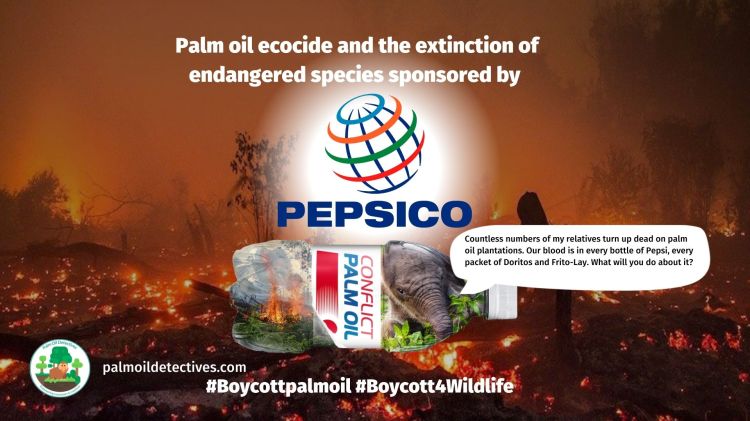
Despite decades of promises to end deforestation for palm oil PepsiCo (owner of crisp brands Frito-Lay, Cheetos and Doritos along with hundreds of other snack food brands) have continued sourcing palm oil that strongly linked to ecocide, indigenous landgrabbing, and the habitat destruction of the rarest animals on earth.
All of these animals are on a knife-edge of survival. It is for this reason, we boycott PepsiCo and its sub-brands. Find out about their forest destroying activities below and what you can do to stop them by using your wallet as a weapon. it’s the #Boycott4Wildlife
Take action
2. See PepsiCo’s palm oil deforestation from the past year
3. Boycott sub-brands of PepsiCo
5. Sign a petition about PepsiCo and palm oil
6. Boycott other brands using so-called “sustainable” palm oil
Take Action: Share to BlueSky & Twitter
Crisp and drink giant #Pepsi runs quirky ad campaigns enticing zoomers and millennials into a lifetime of #obesity and #diabetes. Yet few people know PepsiCo are linked to #indigenous #landgrabbing for #palmoil Take action! #Boycottpalmoil @palmoildetect https://wp.me/scFhgU-pepsico
Share to BlueSkyShare to TwitterNext time you snack AVOID #Cheetos #Doritos #Lays crisps and #MountainDew 🍟🥤 because violence against #indigenous people for #palmoil comes as an unwanted freebie in snacks owned by #Pepsi. Take action! #BoycottPalmOil #Boycott4Wildlife @palmoildetect https://wp.me/scFhgU-pepsico
Share to BlueSkyShare to TwitterView PepsiCo’s palm oil deforestation for the past year
Data courtesy of Palm Watch, a multidisciplinary research initiative by the University of Chicago.
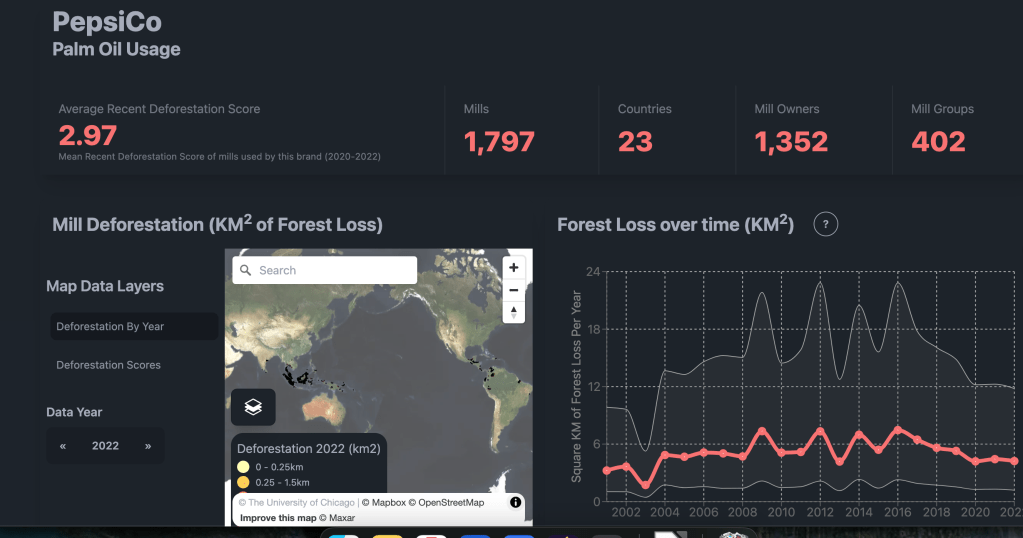 Look Up PepsiCo on PalmWatch
Take Action: Boycott These PepsiCo Sub-Brands

- Pepsi
- Lays
- Mountain Dew
- Doritos
- Gatorade
- Tropicana
- Quaker Oats
- Lipton
- Starbucks
- Aquafina
- Ruffles
- Cheetos
- Brisk
- Tostitos
- Frittos
- Diet Pepsi
- Diet Mountain Dew
- Sierra Mist
- 7Up
- Mirinda
- Walkers
- Pepsi Black
- Pure Leaf
- Bubly
- Naked
- Soda Stream
- Kevita
- Lifewtr
- Sierra Mist
- Stubborn Soda
- Rold Gold
- Miss Vickie’s
- Red Rock Deli
- Cracker Jack
- Nut Harvest
- Life
- Matador
- Quaker Chewy Granola Bars
- Santitas
- Funyuns
- Cap’n Crunch
- Rice-a-Roni and Pasta
- Roni Quaker Rice Crisps & Rice Cakes
- Maui Style
- Sabritones
- Munchies
- Munchos
- Grandma’s
- Aunt Jemima
- Izze Propel
- O.N.E
- Sobe Elixirs & Teas
- Mug Root Bear
- Stacy’s
- Bare Snacks
- Sabra
- Smart50
- Fritos
- Near East
- Sun Chips
- Smartfood
- Off the Eaten Path
- Simply
Take Action: Read Reports About PepsiCo
2021 report by Pusaka and others

Report by Pusaka, Walhi, and Forest Peoples Programme finds that household names including Nestlé, PepsiCo, Wilmar and Unilever and associated global financial institutions and investors continue to ‘turn a blind eye’ to human rights abuses in their palm oil supply chains.
Despite these very serious, long term and well documented human rights abuses and environmental damage, on the ground, major downstream companies continue to invest in, or source products from these plantations.
Read report2021 BBC Investigation
A 2021 joint BBC/Gecko Project and Mongabay Investigation found that Nestlé, Kellogg’s, Unilever, Johnson & Johnson, and PepsiCo have sourced palm oil from Indonesian companies linked to human rights abuses and have failed to pass on millions in profits to smallholder ‘plasma’ farmers.
Read more2021 Chain Reaction report
A Chain Reaction Report from 2021 showed that they have caused 100,000ha of deforestation in their palm oil supply chain since 2016.
Read morehttps://twitter.com/RAN/status/928326415098851328?s=20&t=de1q2YEmTjbSg2f_cJh83w
https://twitter.com/SumOfUs/status/1343240455664885763?s=20&t=ob6lQlwrIBkYsAjtaQG5iw
PepsiCo: Ties to illegal deforestation
Read full reportSign petition: Tell PepsiCo stop destroying rainforests for palm oil!
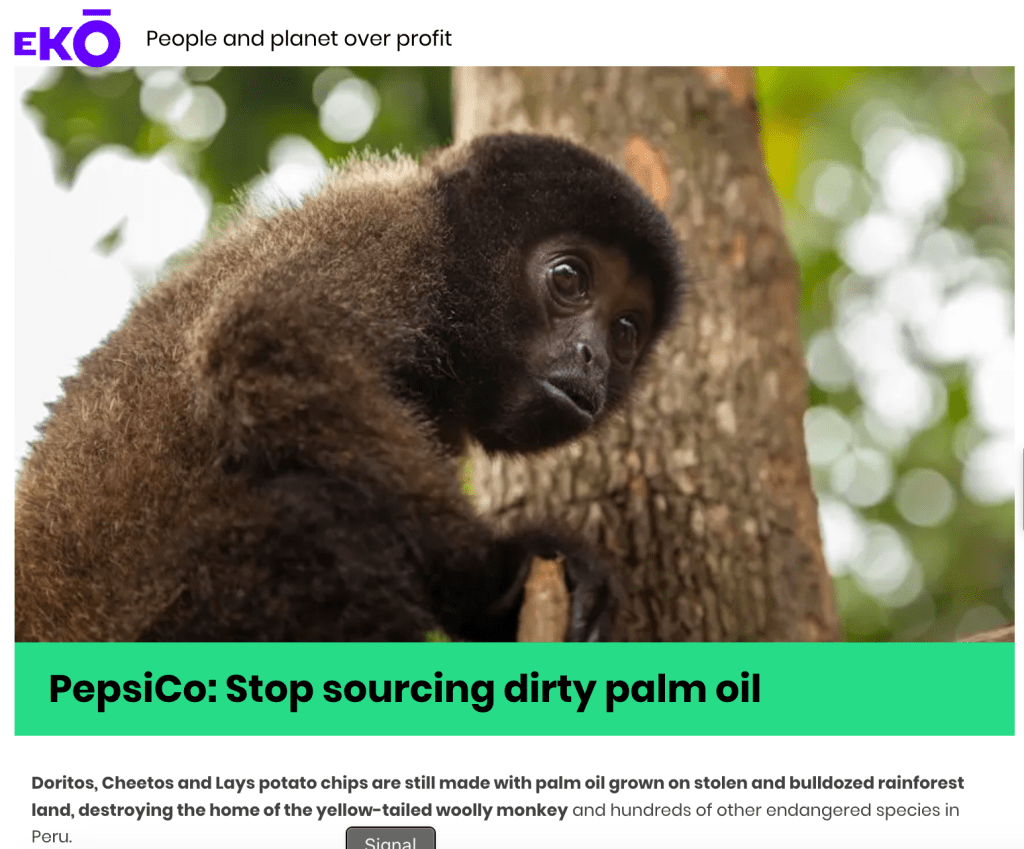
PepsiCo’s profit-first palm oil policy is still destroying rainforests.
Meanwhile, PepsiCo keeps on promising that it’s working towards a truly sustainable palm oil policy, making commitments to human rights and zero deforestation. But this new report leaves no doubt: this whole time, PepsiCo’s palm oil promises have been nothing but smoke and mirrors.
Sign the Eko petitionTake Action: Boycott Other Brands
 Brands
Kelloggs/Kellanova
 Brands
Nestlé
 Brands
PZ Cussons
 Brands
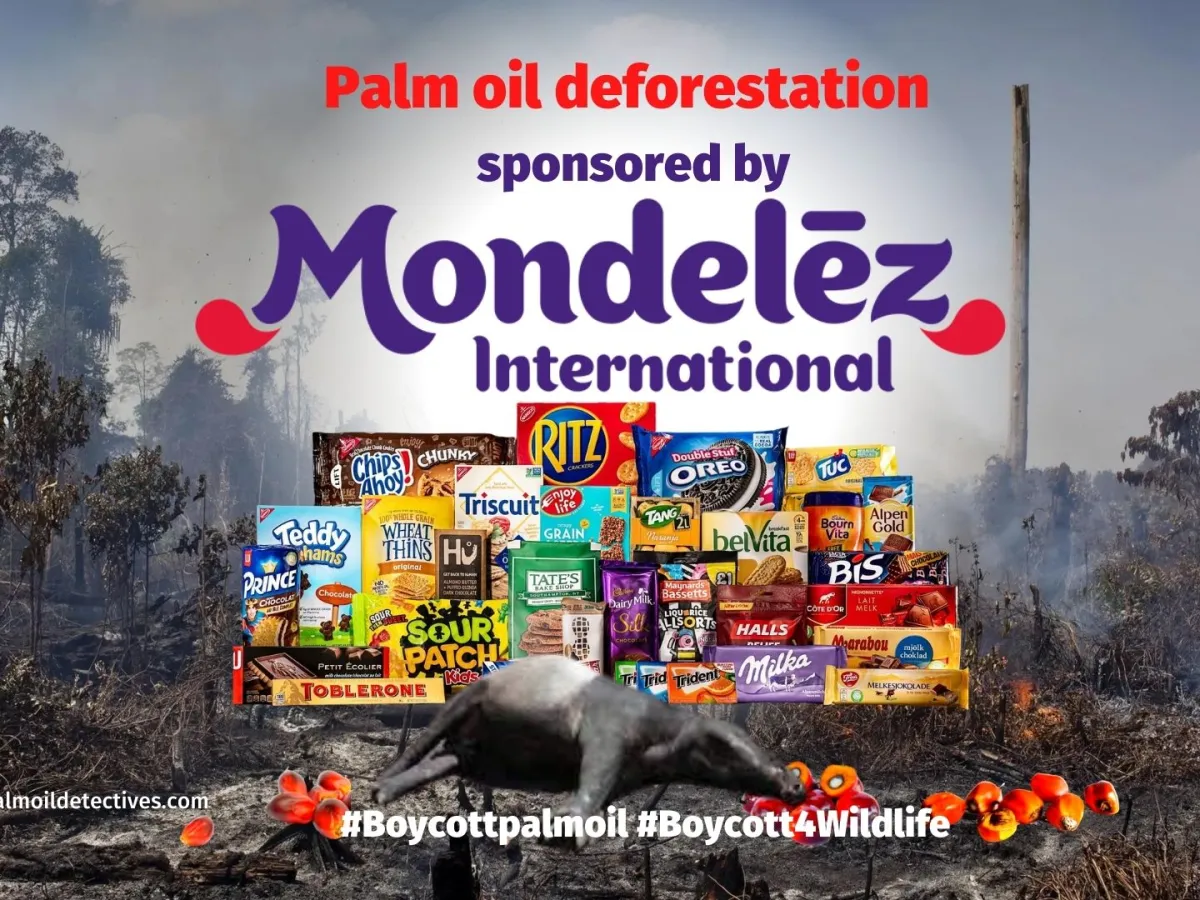
Mondelēz
 Brands
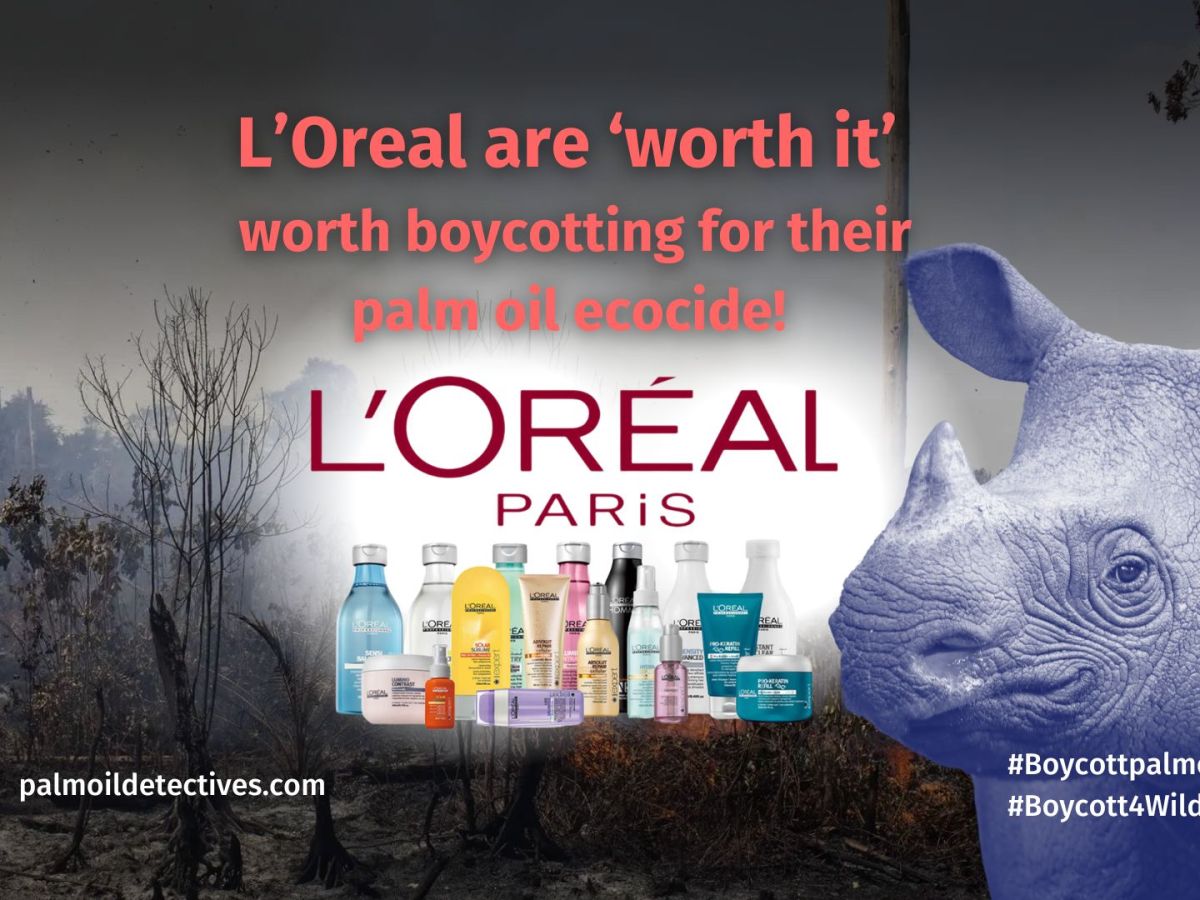
L’Oreal
 Brands
Danone
 Brands
Johnson & Johnson
 Brands
Colgate-Palmolive
 Brands
Unilever
Here are some other ways you can help by using your wallet as a weapon and joining the #Boycott4Wildlife

What is greenwashing?
Why join the #Boycott4Wildlife?
Greenwashing Tactic #4: Fake Labels
The Counterpunch: Consumer Solutions To Fight Extinction
Palm Oil Detectives is 100% self-funded
Palm Oil Detectives is completely self-funded by its creator. All hosting and website fees and investigations into brands are self-funded by the creator of this online movement. If you like what I am doing, you and would like me to help meet costs, please send Palm Oil Detectives a thanks on Ko-Fi.
Say thanks on Ko-Fi



#Borneo #Boycott4wildlife #BoycottPalmOil #brandBoycotts #Cheetos #deforestation #diabetes #Doritos #greenwashing #indigenous #landgrabbing #Lays #Malaysia #MountainDew #News #obesity #PalmOil #palmOilBiofuel #palmOilDeforestation #palmoil #Pepsi #PepsiCo #RSPOGreenwashing
Snack giant PepsiCo allegedly sourced “sustainable” palm oil from razed Indigenous land in Peru
PepsiCo‘s supply chain is allegedly linked to environmental and human rights violations in Peru, involving Amazon deforestation and Indigenous land invasion. For three years, palm oil from deforested Shipibo-Konibo territory has been used in products like Gatorade, Mountain Dew, Cheetos, Doritos and more. PepsiCo sources oil from Ocho Sur, a company notorious for environmental crimes and forest loss. The palm oil industry in Peru, which doubled production in a decade, is allegedly responsible for significant illegal deforestation, violent indigenous landgrabbing, animal extinction and human rights abuses. Take action every time you shop and #Boycottpalmoil for wildlife and Indigenous people.
Corrupt so-called “sustainable” #palmoil is never far from your own fridge. Food #giant #PepsiCo, maker of snack favs #Cheetos #Gatorade gets #palmoil 🤮at the expense of Shipibo-Konibo people of #Peru 🇵🇪 Fight back and #BoycottPalmOil 🪔🚫 @palmoildetect https://wp.me/pcFhgU-8EG
Share to BlueSky Share to TwitterDYK the #palmoil in #food like #Doritos 🤒🤮 and #Gatorade 🫗 is linked to #indigenous #landgrabbing and violence in #Peru? 🇵🇪 It’s what the ads leave out that’s most important. Learn more about how you can #BoycottPalmOil 🧐 via @palmoildetect https://wp.me/pcFhgU-8EG
Share to BlueSky Share to Twitterhttps://www.youtube.com/watch?v=72e5HYiY7N8
The article below was originally published on April 18 2024 by Ojo Público and MongaBay. Written By Elisângela Mendonça , Aramís Castro , Andrew Wasley. Photography: David Díaz, Illustration by Claudia Calderón. This investigation was produced with support from the Pulitzer Center’s Rainforest Investigations Network. Read more
Sign petition: Tell PepsiCo stop destroying rainforests for palm oil!
PepsiCo’s profit-first palm oil policy is still destroying rainforests.
Meanwhile, PepsiCo keeps on promising that it’s working towards a truly sustainable palm oil policy, making commitments to human rights and zero deforestation. But this new report leaves no doubt: this whole time, PepsiCo’s palm oil promises have been nothing but smoke and mirrors.
Sign the Eko petitionPeruvian palm oil linked to environmental and human rights violations ended up in the supply chain for the makers of Gatorade and Cheetos
The US food and drink giant PepsiCo has been linked through its supply chain to Amazon deforestation and the invasion of Indigenous lands in Peru, the Bureau of Investigative Journalism (TBIJ), Mongabay and Peruvian outlet Ojo Público can reveal.
For at least three years, PepsiCo’s Peruvian suppliers have been sourcing palm oil from deforested territory claimed by the Shipibo-Konibo people in Ucayali, eastern Peru.
The company, which manufactures snacks including Cheetos and Gatorade, runs a factory in Mexico that buys Peruvian palm oil after it has been processed at a Mexican refinery. That refinery buys from a Peruvian consortium, Sol de Palma, that shares storage facilities with Ocho Sur, a notorious US-funded business accused of repeated environmental and human rights violations.
The storage facilities mix the various batches of palm oil, meaning PepsiCo products likely contain Ocho Sur oil despite no longer buying directly from the company.
Ocho Sur is linked to 155 sq km of forest loss in the past decade – both within its own property and through its direct suppliers. While some of the forest loss took place under other companies, satellite analyses by the Center for Climate Crime Analysis (CCCA) and TBIJ show clear deforestation on Ocho Sur’s land in the past three years.
Palm oil production in Peru has more than doubled in the past decade and Ucayali, a hotspot for cultivation on the border with Brazil, now has the country’s second-highest rate of forest loss. It’s estimated that about 30% of the country’s palm plantations are on illegally deforested land. Half of the oil is sent to international markets.
Today, Ocho Sur is the second-largest palm oil company in Peru. It was created in 2016 after acquiring the assets of two other controversial companies active in the region since 2012.
“Before 2012, the deforestation rates were pretty low,” said Tom Younger, an anthropologist working with the Forest Peoples’s Programme, an NGO. The arrival of palm oil plantations, he said, “set into motion some dynamics of land invasion and deforestation”.
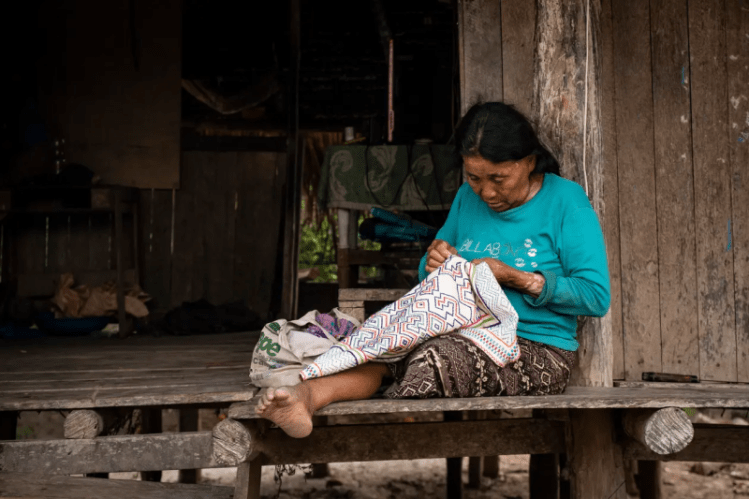
Some of the forest loss on company-run oil palm plantations occurred on land claimed by the Santa Clara de Uchunya community of Shipibo-Konibo Indigenous people. They have endured a long and often hostile battle for recognition, and only a tiny portion of the 200 sq km of land the community claims has been formally titled.
In 2020, the Inter-American Commission on Human Rights, a regional legal body, ordered the Peruvian state to protect the Santa Clara de Uchunya community against threats and land invasions.
Luisa Mori Gonzáles, president of the community’s defence front, says the arrival of the palm oil industry has affected their food supply and sown division.
“We use that territory to feed ourselves or to hunt,” she told TBIJ and Ojo-Público. “The company put it in their [other community members’] heads that they are going to have money and wealth – but that is a lie.”
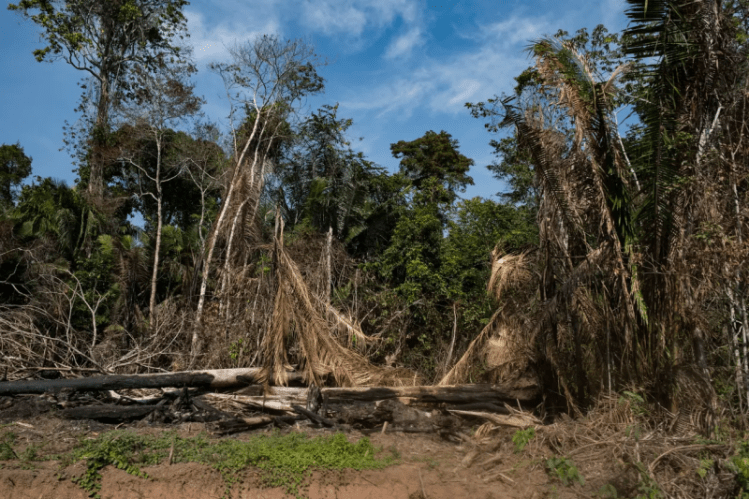
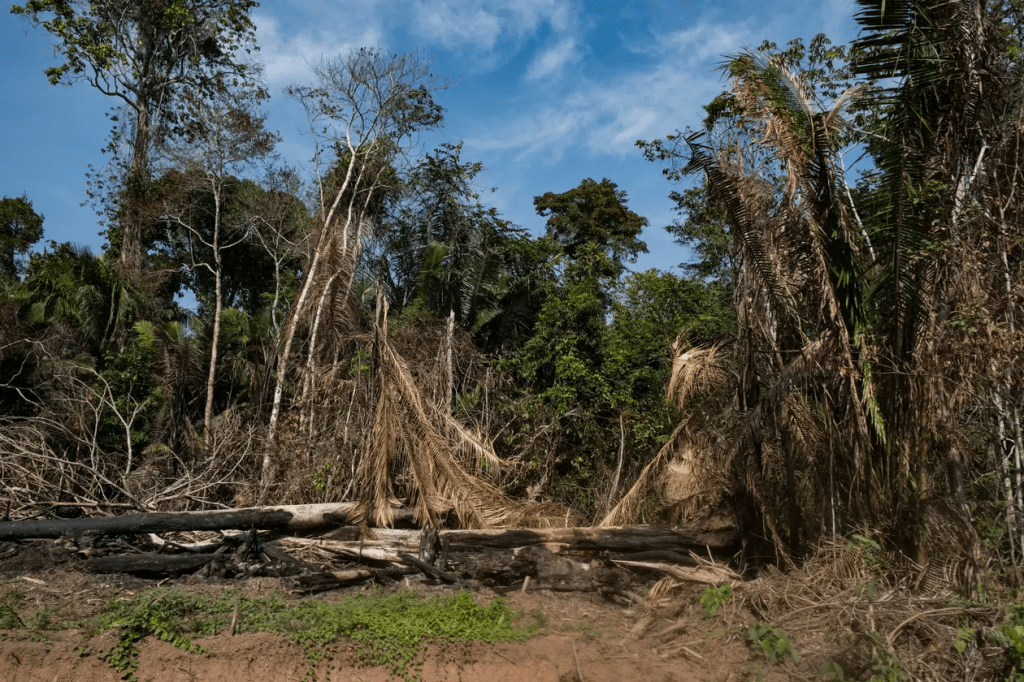 Deforestation near the Santa Clara de Uchunya communityDavid Díaz/OjoPúblico
Neither Ocho Sur nor the liquidated companies whose assets it acquired had obtained the necessary environmental permit for their plantations. The Peruvian Agriculture Ministry sanctioned and fined the dissolved company Plantaciones de Ucayali in 2015 for failing to comply with an order to stop its activities. Ocho Sur eventually paid these fines in 2022, but by 2018 the companies had failed to conserve the legally required 30% of forest, the non-profit Environmental Investigation Agency (EIA) has found. It is unclear whether the majority of the deforestation took place under Plantaciones de Ucayali or Ocho Sur.
Impunity for environmental crimes such as illegal deforestation is a major problem, according to Julia Urrunaga of the EIA, which recently published a report linking Peruvian palm oil to other well-known food and cosmetics companies.
“The authorities have the responsibility of guaranteeing that what is sold has a legal origin,” said Urrunaga.“If a product is being marketed that is being grown and produced in illegally deforested areas without a production permit, that should be an illegal product.”
Experts attribute the growth of palm oil in Latin America, today the second largest producing region for the industry outside south-east Asia – and the fastest growing – in part to its weaker regulation.
Earlier this year, Peru’s Congress approved a new amendment to its forest and wildlife law, loosening requirements for deforestation in “agriculture exclusion areas” and forgiving historic offences.
Robert Heilmayr, an environmental economist teaching at the University of California Santa Barbara, told TBIJ that while private-sector commitments have brought some positive advances in transparency in countries like Indonesia, the industry’s complexity makes full traceability a challenge.
He said: “It gets a little bit hard to know exactly where the fresh fruit bunches are coming from and there’s no third-party auditing of those supply lists.”
According to CCCA’s analysis, PepsiCo manufactures at least 15 products that contain Peruvian palm oil refined in Mexico – among them Doritos, Cheetos and Gatorade. It has pledged to make 100% of its palm oil supply deforestation-free by the end of 2022 and for its operation to be net zero by 2040.
Concerns about the legal origins of palm oil have also given rise to international initiatives like the Roundtable on Sustainable Palm Oil (RSPO), the industry’s most widely used sustainability certification scheme.
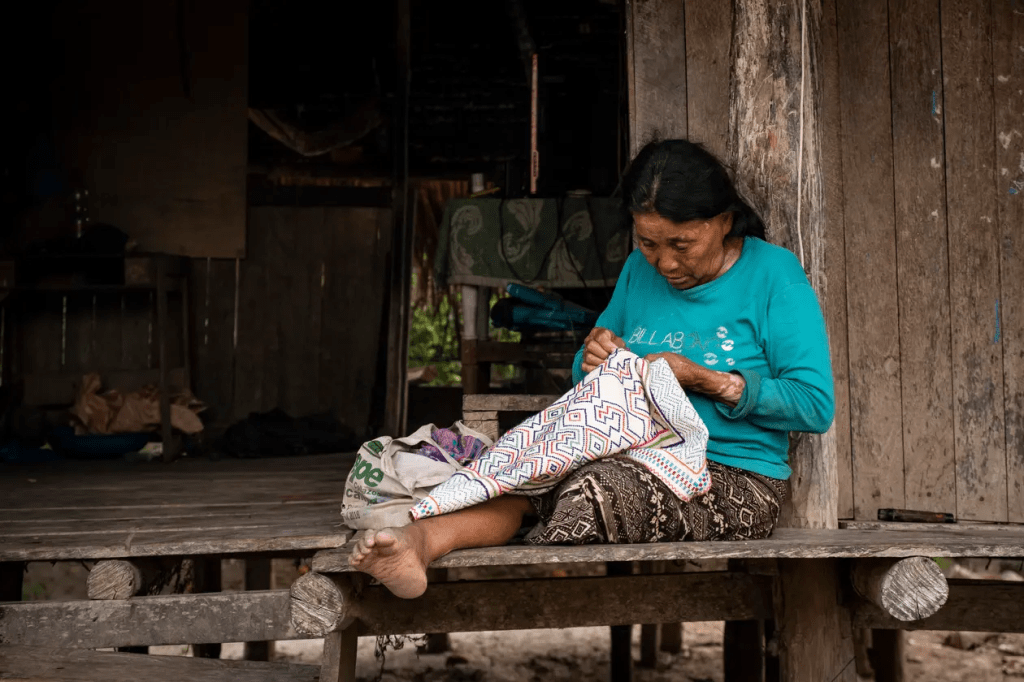 The Santa Clara de Uchunya community of Shipibo-Konibo Indigenous people have only been officially granted a fraction of their claimed territory. Photo: David Díaz/OjoPúblico
Peru has ten RSPO members. Ocho Sur is not a member and only one of the companies in Sol de Palma’s consortium is.
PepsiCo said: “We take all inquiries like this seriously and have initiated an investigation through our established grievance process to assess whether any action on our part is required.” The company stressed that Ocho Sur is not a direct supplier and said it has engaged its direct suppliers to better understand their ties to Ocho Sur and ensure they take corrective actions if needed.
Ocho Sur said that it could not be held responsible for the actions of the companies whose assets it had taken over. It referred TBIJ to a document submitted to the UN in December 2023 that repeatedly states that it has no financial or legal links to one of those businesses. In the document it also strenuously denied sowing division in local communities and said that since its founding, the company had made special efforts “to forge a friendly, fruitful and mutually respectful relationship” with Indigenous and other groups. It said that it fully complies with all obligations with respect to Indigenous peoples’ rights and the environment and does not allow deforestation in its supply chain.
On the subject of environmental permits, Ocho Sur added: “The certification has been requested for a long time and [Midagri, the agriculture ministry] has failed to make a statement on the matter, granting it, as it should, or providing reasonable arguments to justify its refusal.”
Oleomex, owner of the Mexican refinery that supplies PepsiCo’s factory, said: “The oil we supply to our customer meets all sustainability standards as it is RSPO-certified oil.” However, it added that supply contracts with Ocho Sur were negotiated through a third party and that it has agreed to suspend them until the complaints raised in the investigation are resolved.
Sol de Palma did not comment.
Peruvian judges are yet to rule on whether Ocho Sur can be held responsible for past incursions into the Santa Clara de Uchunya community.
While the community awaits that ruling, Mori Gonzáles has vowed to continue protecting the territory: “We’re going to fight for as long as we can.”
The article below was originally published on April 18 2024 by OjoPúblico and MongaBay. Written By Elisângela Mendonça , Aramís Castro , Andrew Wasley. Photography: David Díaz, Illustration by Claudia Calderón. This investigation was produced with support from the Pulitzer Center’s Rainforest Investigations Network.
ENDS
Read more about human rights abuses and child slavery in the palm oil and gold mining industries
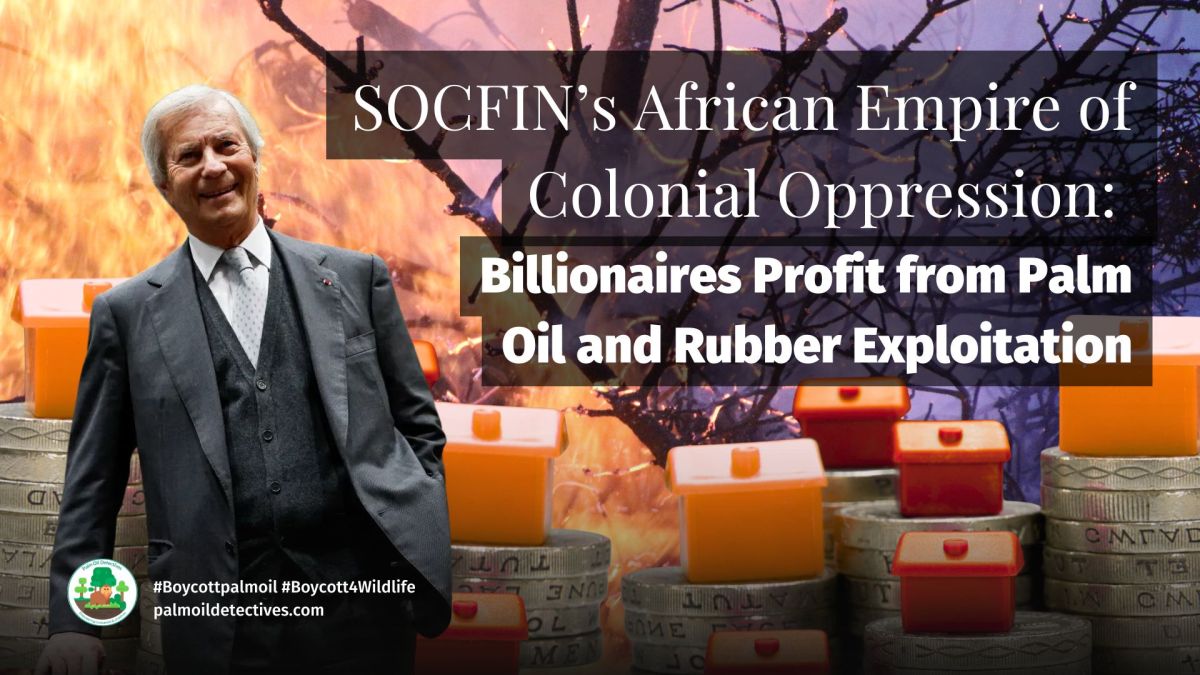
SOCFIN’s African Empire of Colonial Oppression: Billionaires Profit from Palm Oil and Rubber Exploitation
Investigation by Bloomberg exposes that despite being RSPO members, #SOCFIN plantations in #WestAfrica are the epicentre of #humanrights abuses, sexual coercion, environmental destruction, and #landgrabbing. Operating in #Liberia, #Ghana, #Nigeria, and beyond, SOCFIN’s…
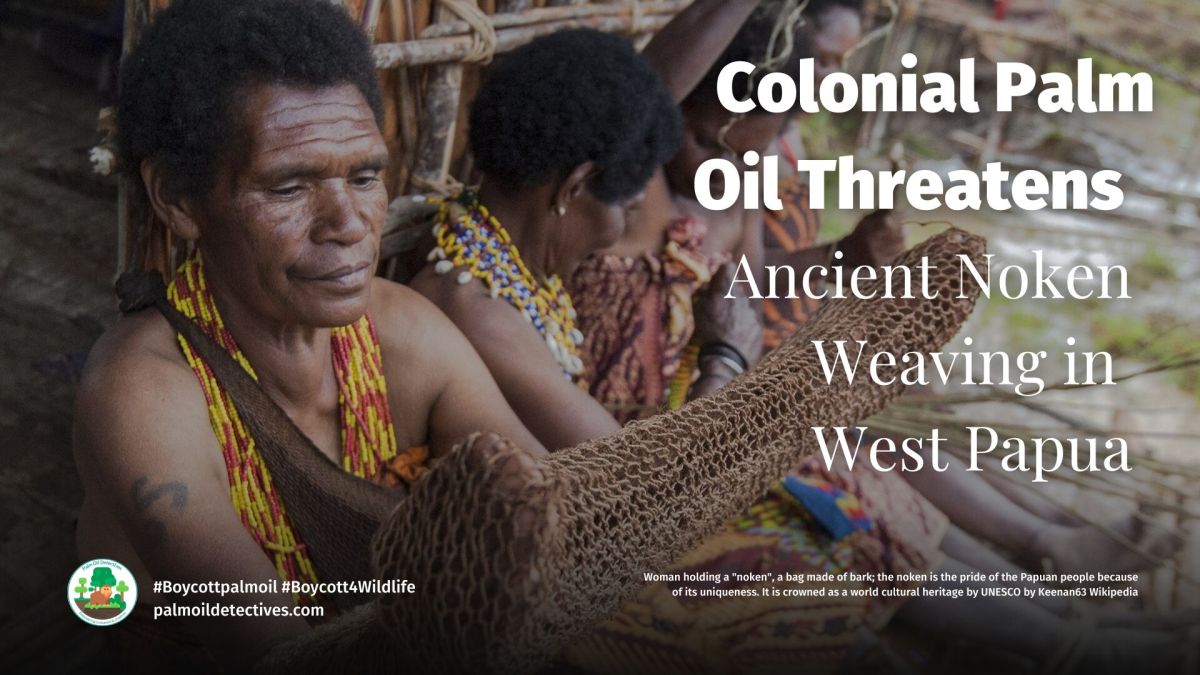
Palm Oil Threatens Ancient Noken Weaving in West Papua
Colonial palm oil and sugarcane causing the loss of West Papuans’ cultural identity. Land grabs force communities from forests, threatening Noken weaving
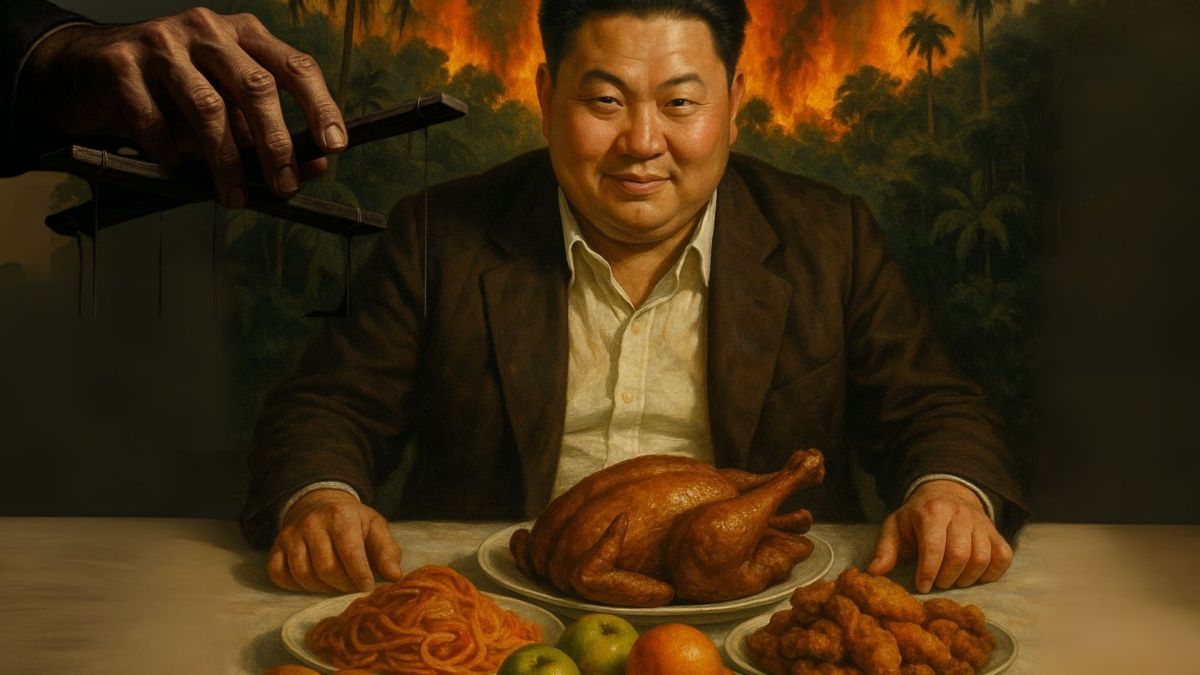
Family Ties Expose Deforestation and Rights Violations in Indonesian Palm Oil
An explosive report by the Environment Investigation Agency (EIA) details how Indonesia’s Fangiono family, through a wide corporate web, is linked to ongoing #deforestation, #corruption, and #indigenousrights abuses for #palmoil. Calls mount for…
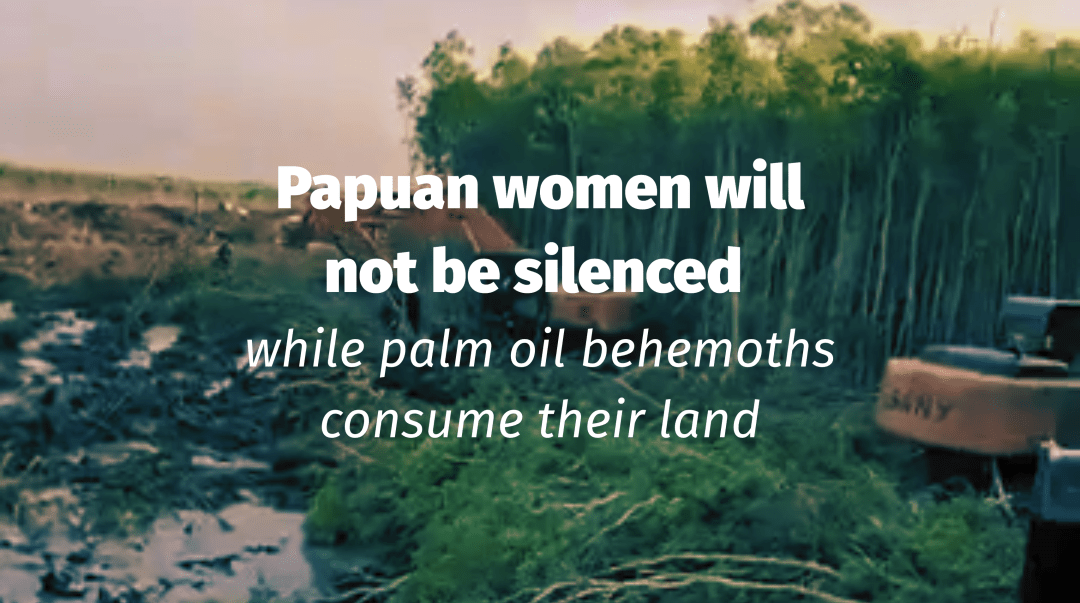
West Papuan Indigenous Women Fight Land Seizures
Indigenous Melanesian women in West Papua fight land seizures for palm oil and sugar plantations, protecting their ancestral rights. Join #BoycottPalmOil
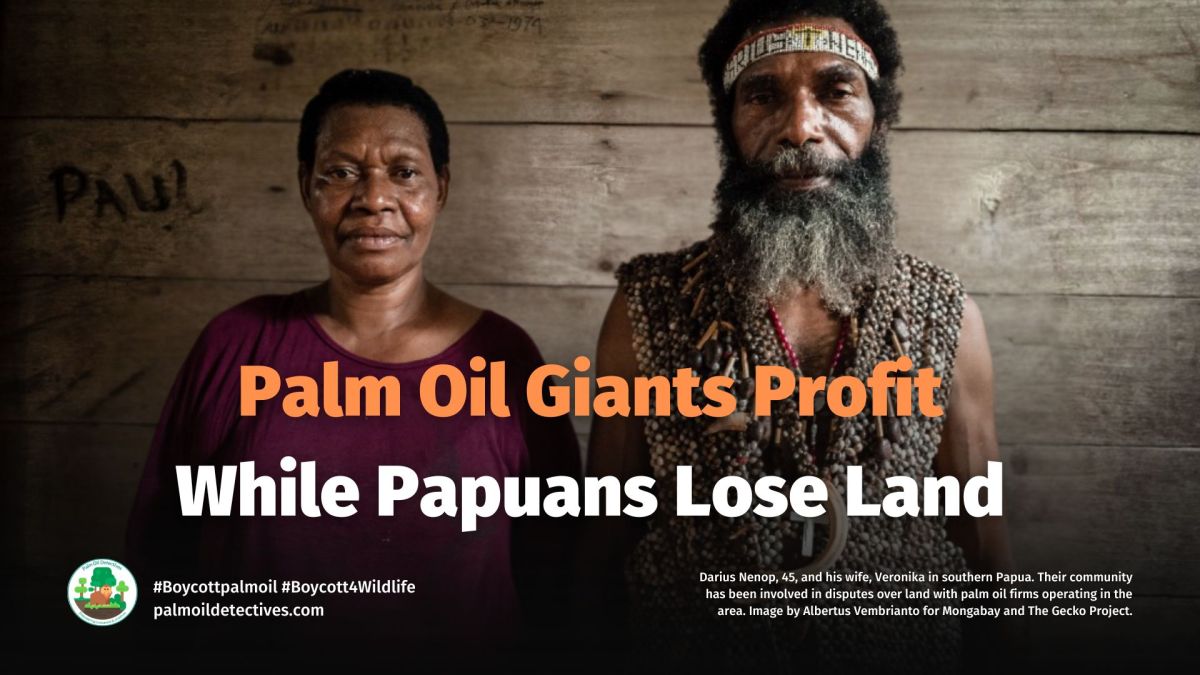
Greasing the Wheels of Colonialism: Palm Oil Industry in West Papua
A landmark study published in Global Studies Quarterly in April 2025 has revealed that the rapid expansion of the #palmoil industry in #WestPapua is not only fuelling #deforestation, #ecocide and environmental destruction but…
Load more posts
Something went wrong. Please refresh the page and/or try again.
Take Action in Five Ways
1. Join the #Boycott4Wildlife on social media and subscribe to stay in the loop: Share posts from this website to your own network on Twitter, Mastadon, Instagram, Facebook and Youtube using the hashtags #Boycottpalmoil #Boycott4Wildlife.
Enter your email address
Sign Up
Join 3,174 other subscribers2. Contribute stories: Academics, conservationists, scientists, indigenous rights advocates and animal rights advocates working to expose the corruption of the palm oil industry or to save animals can contribute stories to the website.
Wildlife Artist Juanchi Pérez
Mel Lumby: Dedicated Devotee to Borneo’s Living Beings
Anthropologist and Author Dr Sophie Chao
Health Physician Dr Evan Allen

The World’s Most Loved Cup: A Social, Ethical & Environmental History of Coffee by Aviary Doert

How do we stop the world’s ecosystems from going into a death spiral? A #SteadyState Economy
3. Supermarket sleuthing: Next time you’re in the supermarket, take photos of products containing palm oil. Share these to social media along with the hashtags to call out the greenwashing and ecocide of the brands who use palm oil. You can also take photos of palm oil free products and congratulate brands when they go palm oil free.
https://twitter.com/CuriousApe4/status/1526136783557529600?s=20
https://twitter.com/PhillDixon1/status/1749010345555788144?s=20
https://twitter.com/mugabe139/status/1678027567977078784?s=20
4. Take to the streets: Get in touch with Palm Oil Detectives to find out more.
5. Donate: Make a one-off or monthly donation to Palm Oil Detectives as a way of saying thank you and to help pay for ongoing running costs of the website and social media campaigns. Donate here
Pledge your support#BoycottPalmOil #BoycottPalmOil #Cheetos #childLabour #childSlavery #Doritos #food #Gatorade #giant #humanRights #indigenous #indigenousRights #landRights #landgrabbing #OchoSur #PalmOil #palmoil #PepsiCo #Peru #poverty #slavery