Discussion
Loading...

#Tag

  • About
  • Code of conduct
  • Privacy
  • About Bonfire
Media Revolution Channel
Media Revolution Channel boosted
abolitionmedia
@abolitionmedia@abolitionmedia.noblogs.org  ·  activity timestamp 19 hours ago

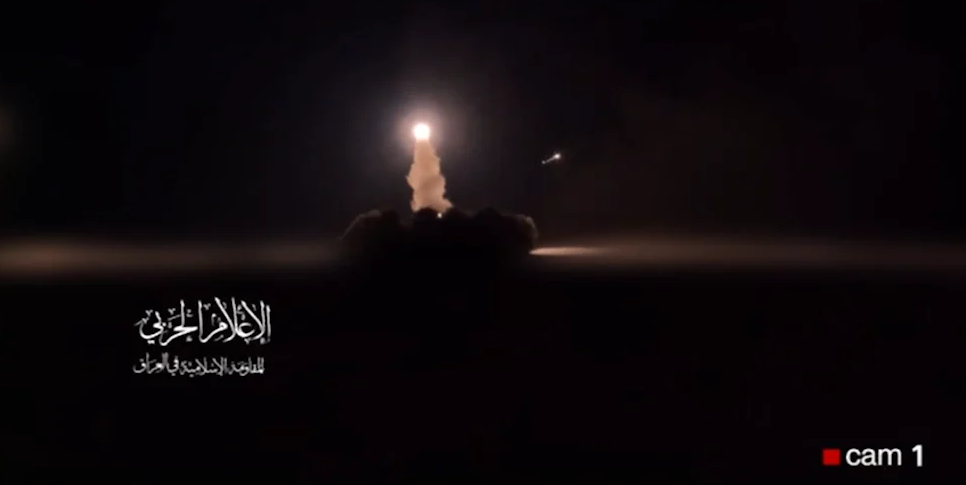
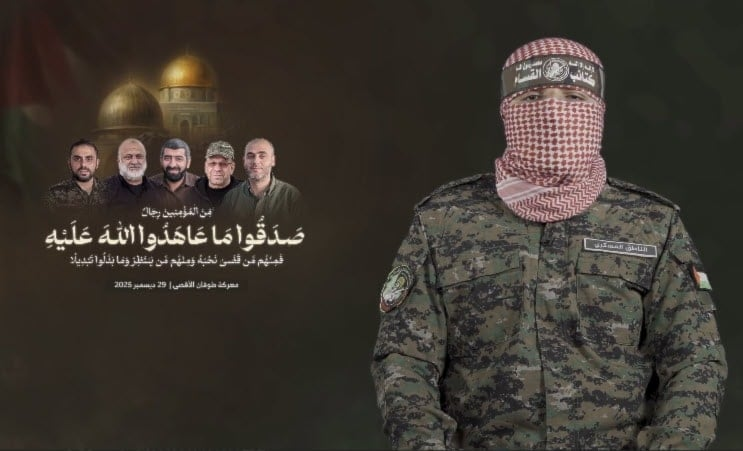
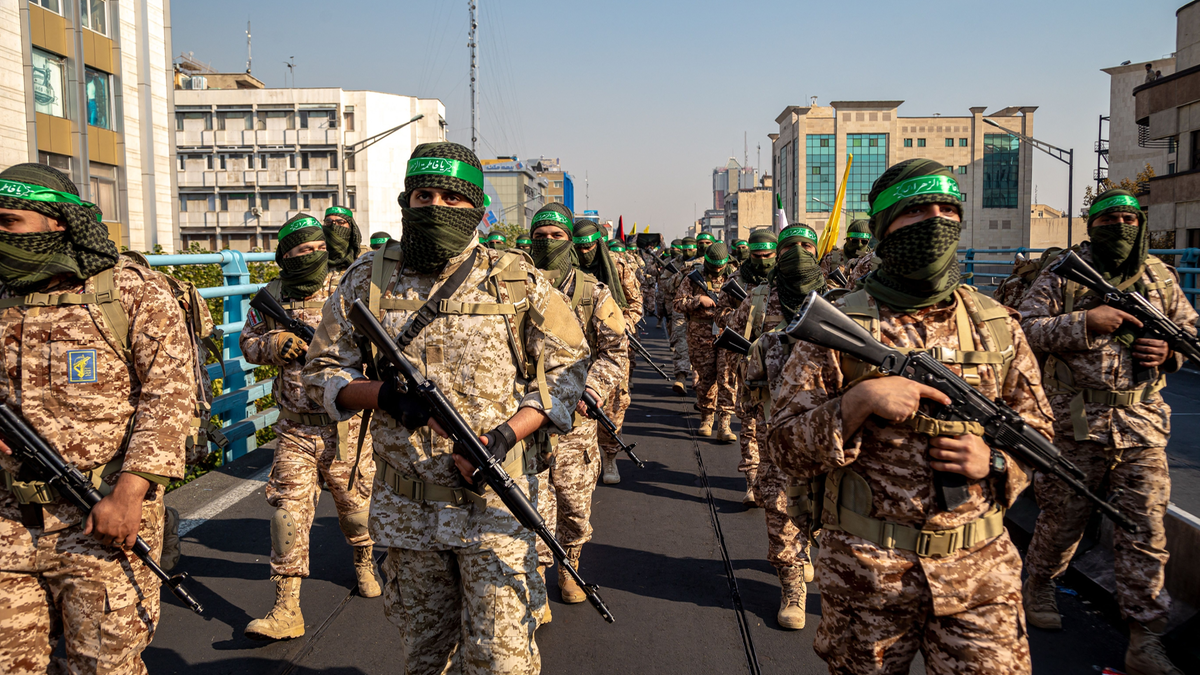
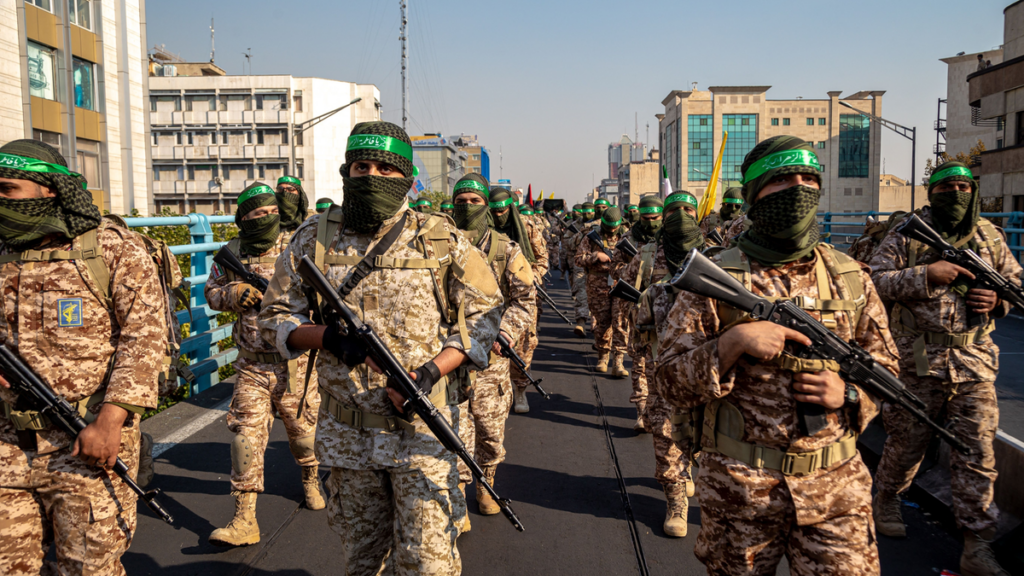
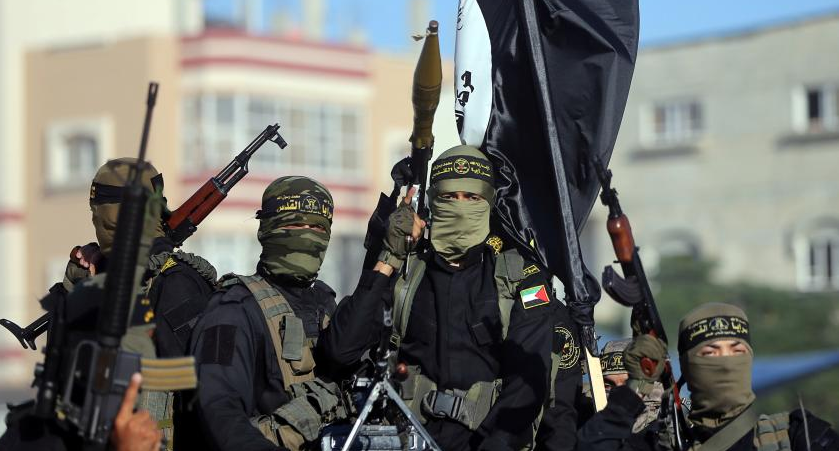
Kataib Hezbollah Leader Calls for Preparedness for Comprehensive, Worldwide War

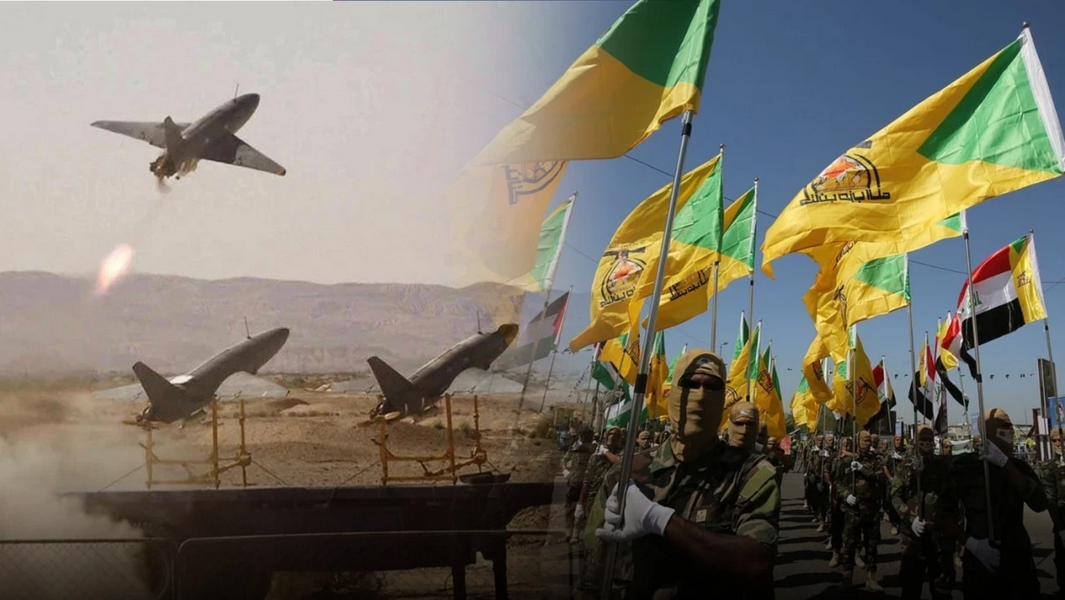
The secretary-general of Kataib Hezbollah called on fighters across the world to prepare for what he described as a “comprehensive war” in support of the Islamic Republic of Iran and in response to an unprecedented aggression by US and Zionist forces, according to a statement released on Sunday.

Addressing what he described as “mujahideen in the east and west,” the Kataib Hezbollah leader urged readiness to support Iran, portraying it as a central pillar for Resistance in the region and stressing that it has stood for decades alongside oppressed peoples regardless of sect, ethnicity, or race.

He said, “Zionists and their allies” were now mobilizing to confront Iran, warning that any war against the Islamic Republic would not be easy. The statement asserted that such a conflict would extend across the region and carry severe consequences for Iran’s adversaries.

The secretary-general also called on fighters to prepare operationally and psychologically, urging them to brace for what he described as all possible outcomes should religious authorities declare jihad in support of Iran. He said this could include expanded forms of armed action in defense of what he termed Islamic causes.

The statement further said if a comprehensive war is declared “brothers in the eastern and western parts of the earth” must prepare. If this declaration is announced it may even call for “martyrdom operations” against the colonial forces of arrogance. Media in West Asia declared that the statement is unprecedented and marks a huge departure from the norm.

The head of the Iranian Journalists’ Association and member of the Government Media Council, Masha’Allah Shams al-Wa’izin, warned on Friday that US President Donald Trump is “walking on the edge of the abyss,” amid escalating tensions in the region.

Shams al-Wa’izin said that Washington has communicated through a third party that Iran’s facilities could face attacks and that Tehran is expected to endure any such strikes “without a severe response.”

He emphasized, however, that for Iran, any limited strike would be considered a full-scale war, significantly raising the cost for any potential aggressor. Shams al-Wa’izin further asserted that the United States and the Zionist regime had planned recent events involving armed riots in the country, following the failure of the 12-day war on Iran. He dismissed conflated and false reports spread by opposition forces on alleged developments in Iran as “originating from the armed opposition based in Tel Aviv [and] Paris.”

“The United States wants Iran to surrender,” Shams al-Wa’izin said, stressing that no self-respecting nation could accept such threats. He noted that American military mobilizations in the region are political signaling by Trump to the Iranian leadership, but stressed that Tehran possesses multiple power cards to respond to any pressure.

Shams al-Wa’izin’s remarks on US messaging to Tehran follow statements made by a senior Iranian official who spoke to Reuters.

The senior official, who spoke on the condition of anonymity, said that any attack would be regarded “as an all-out war against us.”

“This military buildup, we hope it is not intended for real confrontation, but our military is ready for the worst-case scenario,” the official said in regard to the US military buildup in the region, including the repositioning of two aircraft carriers.

The official stressed that this time around, Iran would treat limited, unlimited, surgical, and kinetic American attacks as “an all-out war”.

“We will respond in the hardest way possible to settle this,” the official said.

https://abolitionmedia.noblogs.org/?p=27568 #alAqsaFlood #colonialism #imperialism #iran #iraq #lebanon #palestine #westAsia
Sorry, no caption provided by author
  • Copy link
  • Flag this post
  • Block
abolitionmedia
@abolitionmedia@abolitionmedia.noblogs.org  ·  activity timestamp 19 hours ago

Kataib Hezbollah Leader Calls for Preparedness for Comprehensive, Worldwide War

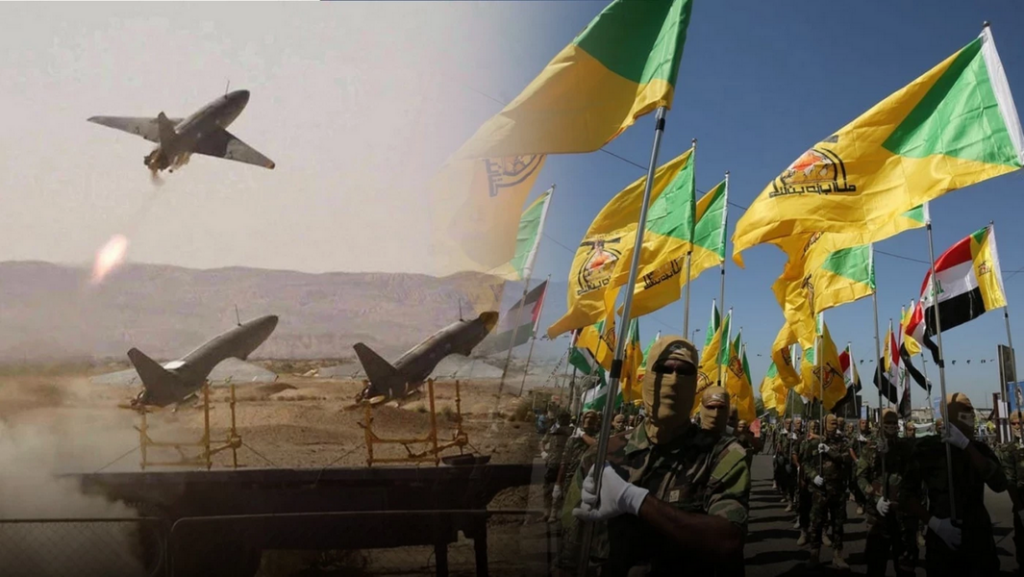
The secretary-general of Kataib Hezbollah called on fighters across the world to prepare for what he described as a “comprehensive war” in support of the Islamic Republic of Iran and in response to an unprecedented aggression by US and Zionist forces, according to a statement released on Sunday.

Addressing what he described as “mujahideen in the east and west,” the Kataib Hezbollah leader urged readiness to support Iran, portraying it as a central pillar for Resistance in the region and stressing that it has stood for decades alongside oppressed peoples regardless of sect, ethnicity, or race.

He said, “Zionists and their allies” were now mobilizing to confront Iran, warning that any war against the Islamic Republic would not be easy. The statement asserted that such a conflict would extend across the region and carry severe consequences for Iran’s adversaries.

The secretary-general also called on fighters to prepare operationally and psychologically, urging them to brace for what he described as all possible outcomes should religious authorities declare jihad in support of Iran. He said this could include expanded forms of armed action in defense of what he termed Islamic causes.

The statement further said if a comprehensive war is declared “brothers in the eastern and western parts of the earth” must prepare. If this declaration is announced it may even call for “martyrdom operations” against the colonial forces of arrogance. Media in West Asia declared that the statement is unprecedented and marks a huge departure from the norm.

The head of the Iranian Journalists’ Association and member of the Government Media Council, Masha’Allah Shams al-Wa’izin, warned on Friday that US President Donald Trump is “walking on the edge of the abyss,” amid escalating tensions in the region.

Shams al-Wa’izin said that Washington has communicated through a third party that Iran’s facilities could face attacks and that Tehran is expected to endure any such strikes “without a severe response.”

He emphasized, however, that for Iran, any limited strike would be considered a full-scale war, significantly raising the cost for any potential aggressor. Shams al-Wa’izin further asserted that the United States and the Zionist regime had planned recent events involving armed riots in the country, following the failure of the 12-day war on Iran. He dismissed conflated and false reports spread by opposition forces on alleged developments in Iran as “originating from the armed opposition based in Tel Aviv [and] Paris.”

“The United States wants Iran to surrender,” Shams al-Wa’izin said, stressing that no self-respecting nation could accept such threats. He noted that American military mobilizations in the region are political signaling by Trump to the Iranian leadership, but stressed that Tehran possesses multiple power cards to respond to any pressure.

Shams al-Wa’izin’s remarks on US messaging to Tehran follow statements made by a senior Iranian official who spoke to Reuters.

The senior official, who spoke on the condition of anonymity, said that any attack would be regarded “as an all-out war against us.”

“This military buildup, we hope it is not intended for real confrontation, but our military is ready for the worst-case scenario,” the official said in regard to the US military buildup in the region, including the repositioning of two aircraft carriers.

The official stressed that this time around, Iran would treat limited, unlimited, surgical, and kinetic American attacks as “an all-out war”.

“We will respond in the hardest way possible to settle this,” the official said.

https://abolitionmedia.noblogs.org/?p=27568 #alAqsaFlood #colonialism #imperialism #iran #iraq #lebanon #palestine #westAsia
Sorry, no caption provided by author
  • Copy link
  • Flag this post
  • Block
Media Revolution Channel
Media Revolution Channel boosted
abolitionmedia
@abolitionmedia@abolitionmedia.noblogs.org  ·  activity timestamp 4 days ago

Palestinian Resistance Ambushes Collaborators, Denounce “Peace” Council

A senior source in the Palestinian Deterrent force released an urgent statement today in regards to the security situation in Gaza. The statement read, “During a well-planned security operation, we lured members of the collaborator gangs into a pre-prepared ambush. The operation resulted in the killing of one collaborator and the injury of two others, before they fled towards the areas controlled by the occupation. We confirm our continued pursuit, tracking, and dismantling of the collaborator gangs supported by the occupation, and our zero tolerance for any threat to the security of our people.” The Palestinian Resistance has consistently been targeting collaborators who helped the occupation in its genocide.

The Palestinian Information Center, in other news, has documented 27 acts of resistance across the occupied West Bank within a 48-hour period, ranging from confrontations with Zionist occupation forces to efforts repelling settler attacks.

This comes as Zionist minister Itamar Ben-Gvir has approved the extension of personal firearm permits to settlers across 18 additional illegal settlements in the occupied West Bank, further encouraging violence against Palestinians and advancing plots for settler militarization.

Ben-Gvir’s expansion of gun access, including to unauthorized settlers, began in late 2023 with the start of the genocide in Gaza. Although the policy was condemned following reports of growing civilian casualties, including among settlers, it was never stopped.

Since October 2023, armed settler attacks on Palestinian communities have surged, often accompanied by occupation forces. These coordinated assaults have destroyed property, including the burning of homes and vehicles, and caused dozens of injuries.

According to the report, the incidents included clashes in 15 areas, 8 confrontations with settlers, damage to 3 settler vehicles, and the use of stones, Molotov cocktails, and firecrackers, resulting in injuries to two settlers.

In al-Quds, confrontations erupted in the Qalandia refugee camp, where residents hurled stones and firecrackers at occupation forces.

In the Ramallah governorate, clashes were reported in Turmus Ayya and Al-Mughayyir, with local residents responding to settler incursions near the illegal “Ofra” settlement. Several settler vehicles were damaged in the confrontations.

The Nablus area saw widespread resistance in Qusra, Yatma, Burqa, and Jalud, where settlers attempted to storm Palestinian villages. Residents responded with stones and firecrackers, damaging vehicles used in the attacks.

In Salfit, settlers attacked the town of Kafr al-Dik, resulting in injuries to two settlers, while in Haris, locals responded to similar settler aggression.

In Beit Lahm, youth clashed with the occupiers in Husan. In Jenin, confrontations broke out near the illegal “Homesh” settlement and in surrounding neighborhoods.

In Ariha, resistance was documented in the Al-Auja area, targeting settler vehicles.

In al-Khalil, residents of Beit Ummar confronted occupation forces and settlers in renewed clashes.

These incidents underscore the ongoing atmosphere of confrontation and resistance across the occupied territories in response to settler violence and Zionist military operations.

In international news Hamas has condemned the inclusion of Benjamin Netanyahu in the so-called “Peace Council” for Gaza, calling it a dangerous sign that undermines justice and accountability.

In an official statement issued Thursday, Hamas said, “We strongly condemn the inclusion of war criminal Netanyahu, who is wanted by the International Criminal Court, in the Peace Council for Gaza.”

The movement stated that Netanyahu’s participation contradicts the very principles such a council should represent. It warned that “the war criminal Netanyahu continues to obstruct a ceasefire agreement in Gaza and carries out the most heinous violations by targeting unarmed civilians.”

Hamas stressed that “the first step toward stability lies in ending the occupation’s violations and holding all those responsible for genocide and starvation accountable.”

The statement came after US President Donald Trump and several international leaders signed a decree on Thursday establishing the “Peace Council” concerning the Gaza Strip. The signing took place during the World Economic Forum in Davos, Switzerland.

https://abolitionmedia.noblogs.org/?p=27432 #alAqsaFlood #gaza #hamas #palestine #pij #resistance #westAsia #westBank
Sorry, no caption provided by author
  • Copy link
  • Flag this post
  • Block
abolitionmedia
@abolitionmedia@abolitionmedia.noblogs.org  ·  activity timestamp 4 days ago

Palestinian Resistance Ambushes Collaborators, Denounce “Peace” Council

A senior source in the Palestinian Deterrent force released an urgent statement today in regards to the security situation in Gaza. The statement read, “During a well-planned security operation, we lured members of the collaborator gangs into a pre-prepared ambush. The operation resulted in the killing of one collaborator and the injury of two others, before they fled towards the areas controlled by the occupation. We confirm our continued pursuit, tracking, and dismantling of the collaborator gangs supported by the occupation, and our zero tolerance for any threat to the security of our people.” The Palestinian Resistance has consistently been targeting collaborators who helped the occupation in its genocide.

The Palestinian Information Center, in other news, has documented 27 acts of resistance across the occupied West Bank within a 48-hour period, ranging from confrontations with Zionist occupation forces to efforts repelling settler attacks.

This comes as Zionist minister Itamar Ben-Gvir has approved the extension of personal firearm permits to settlers across 18 additional illegal settlements in the occupied West Bank, further encouraging violence against Palestinians and advancing plots for settler militarization.

Ben-Gvir’s expansion of gun access, including to unauthorized settlers, began in late 2023 with the start of the genocide in Gaza. Although the policy was condemned following reports of growing civilian casualties, including among settlers, it was never stopped.

Since October 2023, armed settler attacks on Palestinian communities have surged, often accompanied by occupation forces. These coordinated assaults have destroyed property, including the burning of homes and vehicles, and caused dozens of injuries.

According to the report, the incidents included clashes in 15 areas, 8 confrontations with settlers, damage to 3 settler vehicles, and the use of stones, Molotov cocktails, and firecrackers, resulting in injuries to two settlers.

In al-Quds, confrontations erupted in the Qalandia refugee camp, where residents hurled stones and firecrackers at occupation forces.

In the Ramallah governorate, clashes were reported in Turmus Ayya and Al-Mughayyir, with local residents responding to settler incursions near the illegal “Ofra” settlement. Several settler vehicles were damaged in the confrontations.

The Nablus area saw widespread resistance in Qusra, Yatma, Burqa, and Jalud, where settlers attempted to storm Palestinian villages. Residents responded with stones and firecrackers, damaging vehicles used in the attacks.

In Salfit, settlers attacked the town of Kafr al-Dik, resulting in injuries to two settlers, while in Haris, locals responded to similar settler aggression.

In Beit Lahm, youth clashed with the occupiers in Husan. In Jenin, confrontations broke out near the illegal “Homesh” settlement and in surrounding neighborhoods.

In Ariha, resistance was documented in the Al-Auja area, targeting settler vehicles.

In al-Khalil, residents of Beit Ummar confronted occupation forces and settlers in renewed clashes.

These incidents underscore the ongoing atmosphere of confrontation and resistance across the occupied territories in response to settler violence and Zionist military operations.

In international news Hamas has condemned the inclusion of Benjamin Netanyahu in the so-called “Peace Council” for Gaza, calling it a dangerous sign that undermines justice and accountability.

In an official statement issued Thursday, Hamas said, “We strongly condemn the inclusion of war criminal Netanyahu, who is wanted by the International Criminal Court, in the Peace Council for Gaza.”

The movement stated that Netanyahu’s participation contradicts the very principles such a council should represent. It warned that “the war criminal Netanyahu continues to obstruct a ceasefire agreement in Gaza and carries out the most heinous violations by targeting unarmed civilians.”

Hamas stressed that “the first step toward stability lies in ending the occupation’s violations and holding all those responsible for genocide and starvation accountable.”

The statement came after US President Donald Trump and several international leaders signed a decree on Thursday establishing the “Peace Council” concerning the Gaza Strip. The signing took place during the World Economic Forum in Davos, Switzerland.

https://abolitionmedia.noblogs.org/?p=27432 #alAqsaFlood #gaza #hamas #palestine #pij #resistance #westAsia #westBank
Sorry, no caption provided by author
  • Copy link
  • Flag this post
  • Block
Media Revolution Channel
Media Revolution Channel boosted
abolitionmedia
@abolitionmedia@abolitionmedia.noblogs.org  ·  activity timestamp 5 days ago

The Sun Sets on the Syrian Kurdish Rebellion

The agreement that terminated the Syrian Kurdish enclave was presented by its signatories as a pragmatic settlement. But, in fact, the deal is a major political defeat for the Syrian Kurdish political formations. Certainly, the rapid advance of the Syrian armed groups loyal to President Ahmad al-Sharaa broke the resistance of the Syrian Democratic Forces (SDF), the largely Kurdish group, but this advance can only be understood by the total backing given by the United States to the Syrian government against the SDF. The SDF was outgunned and had no air support, which is what they had benefitted from in their war against the Islamic State. The SDF’s Mazlum Abdi signed the effective surrender on behalf of his party and their army. US Ambassador Tom Barrack’s tweet (despite its hyperbole) suggested the end of the Syrian Kurdish experiment called Rojava (the Kurdish word for where the sun sets, or the western part of the Kurdish lands.

The deal formalized what months of military pressure had already made clear. Syrian state institutions returned to the northeast not as partners but as authorities keen on a strong central state loyal to al-Sharaa. Over the course of the past year, border crossings that had been in the hands of various groups returned to central government control and oil revenues began to be collected for Damascus. The Syrian Democratic Forces, one of the last remaining independent military challenges to al-Sharaa after the rout of the Syrian Arab Army, agreed to be subordinated to the military’s central command but did not want its units dismantled; in other words, the SDF wanted to retain its own structures within the Syrian armed forces. This was the agreement that Abdi and others in the Kurdish leadership, such as Ilham Ahmed (former co-chair of the SDF), favored, but they were outflanked by sections of the Syrian Kurdish leadership that did not want to lose the autonomy of the Kurdish enclave. But now Kurdish political offices have begun to close, flags are being removed, and the language of autonomy has been erased from official documents.

Al-Sharaa came to the presidency of Syria through his politicization in al-Qaeda’s Syrian fronts. While he has left behind his turban for a suit, there are indications that his own followers are comfortable with the ideology of and links with al-Qaeda and the Islamic State and that they welcome an alliance with both the United States and Israel. In the days leading up to this ceasefire and deal, SDF officials reported that the Syrian armed forces focused their attention on the prisons that held Islamic State fighters who had been captured by the SDF; heavy fighting had indeed been reported near Shaddadi prison (Hasaka) and al-Aqtan prison (Raqqa). These attacks, the SDF said, were a “highly dangerous development” since they suggested that the government forces wanted to free the Islamic State fighters from the prisons and put them back on the battlefield against groups such as the SDF. Now the state has control over these prisons and could do what it wants with these prisoners.


The dawn of Rojava

In 2012, the government of Bashar al-Assad withdrew its military from the northeast so that it could defend the southwest from a cycle of rebellions. This withdrawal provided an opportunity for the Syrian Kurds, who had been fighting for either an independent Kurdistan or autonomy within Syria for decades. The leader of the Democratic Union Party (PYD) Salih Muslim told me in 2013 that the Kurdish political and military forces filled a vacuum. “We organized our society so that chaos would not prevail.” The PYD’s Muslim made three points: Syria must remain united, Syria must belong to all those who live in it, and Syria must be decentralized. The government in Damascus accepted these three points and a tacit understanding was reached between the Syrian Kurdish political forces, other minorities in Syria, and al-Assad’s government. This was the opportunity that allowed for the birth of Rojava.

Over the decade since 2012, the Rojava enclave came under serious attack by the Islamic State (in 2014-15) and the Turkish armed forces (2018) as well as sustained attacks by various smaller groups. In this decade, the army of the SDF, the People’s Defense Units (YPG), the Kurdish Peshmerga (from Iraq), and the armed forces of the Kurdish Workers’ Party (PKK from Turkey) defended this enclave, most dramatically from the advance of the Islamic State. When the Islamic State took Sinjar and began to ethnically cleanse the area of Yazidis in August 2014, it was the YPG and its allies that began a long siege of the area that was only won by them in November 2015 at a great cost. US air support began to assist the YPG and the SDF in their quest to defeat the Islamic State and to exist as an independent enclave from Damascus. Neither Salih Muslim nor other leaders of the Syrian Kurdish groups pinned their faith wholeheartedly on the United States, although the balance of forces set in motion an alliance that was always going to lead to betrayal.

Statements from Salih Muslim and Mazlum Abdi that silence about the Turkish invasion of Afrin in 2018 would “cost Syria its unity” or that the YPG was the only “barrier against Turkish occupation” did not count for much. Assad was not going to enrage the Turkish government at this time (in fact, it was in this period that Russia’s President Vladimir Putin and Turkey’s President Recep Tayyip Erdoğan signed a deal to demilitarize Idlib and allow the al-Qaeda inheritors, including al-Sharaa’s Hay’at Tahrir al’Sham or HTS to build their strength in peace and wait a turn of fortunes). Perhaps if Assad were a better chess player, he would have provoked Turkey by defending the Syrian Kurds, thereby preventing a deal and forcing his Russian allies to provide air support while the Syrian Arab Army entered Idlib to fight the remainder of the HTS and its allies. But Assad began to allow the Russians to do his strategic thinking and therefore conceded a point of strength in the hope that the Turkish government would cease its attempt to overthrow his government.

Turkey’s Erdoğan refused to see the Syrian Kurdish rebellion as anything other than an extension of the fight of the Turkish PKK. In 2020, he told his party cadre at a meeting, “Turkey will never allow the establishment of a terror state right beside its borders. We will do whatever is necessary and drain this swamp of terrorism.” This should have been clear to both Assad and the Syrian Kurds that there was going to be no support from Turkey and no end to the attempt at destabilization by Turkey’s NATO partner, the United States. Over the past five years, Erdoğan leaned on the political leadership of the PKK to withdraw its rebellion and to effectively capitulate. In 2025, from his Turkish cell, PKK leader Abdullah Öcalan announced “the end of the method of armed struggle”. The Syrian Kurdish project, linked with the PKK, lost its broader strategic depth. Pressure mounted from the Turkish side for the Syrian Kurds to end their project of “armed autonomy”, as Turkish officials said. Turkish military pressure continued with reduced international condemnation or even consideration and diminished Kurdish legitimacy.

The mysterious role of Israel in this entire fiasco has yet to be properly written.


The fall of Assad

With the full weight of Israeli and US air strikes, the forces of Hay’at Tahrir al’Sham led by Ahmad al-Sharaa dashed into Damascus. This victory marked a decisive rupture for the Syrian Kurds. Al-Sharaa, the new president, said that his government would reclaim the northern lands (but he said nothing about Israel’s occupation of the Golan Heights and nothing about the hundreds of square kilometres of the UN buffer zone seized by Israel after al-Sharaa took Damascus). Statements coming from Damascus sent a warning to the Kurds, although the Kurdish leadership hoped against any logic that the United States would protect them (in December 2024, Abdi said that the Syrian Kurds were in ‘continuous communication with our American friends, who support our efforts to stop the escalation and guarantee the rights of all Syrian components, including the rights of the Kurds within the framework of a unified state’). The United States began a withdrawal, and the Syrian Kurds began to voice their hopelessness. One SDF official told me that their forces had fought ISIS and had taken huge casualties but now were, in her words, ”nothing at all”. Syrian forces flooded the north. “Syria does not need experiments imposed by force,” said al-Sharaa. Rojava was in his crosshairs. It did not take long to finish the job. “We are determined to protect the achievements of the revolution,” said Abdi, but this seems more like wishful thinking.

The example of Syria has sent a cold breeze across the border to the Kurdish autonomous region in northern Iraq. Iraqi leader Muqtada al-Sadr posted a message on X with a warning that what happened in Syria “should not be taken naïvely”. “The danger is imminent”, he wrote, “and terrorism is supported by global arrogance”. With the change of strategy of the Turkish PKK and the defeat of the Syrian Kurds, any faith in Irbil (Iraq) that the Kurdish autonomous region is eternal will now fade. Al-Sadr suggested unity in the face of external aggression. It is a suggestion that would be hard to reject in these times.

The collapse of Rojava was not merely the failure of a local revolt to be sustained. It was the defeat of a political wager: that decentralization and armed self-defense could rely upon the support of the United States. The language of democracy and dignity might have appealed to an occasional US diplomat, but it meant nothing in Washington. “We built Rojava on a swamp,” said a Syrian Kurdish official to me a few hours after the deal.

Vijay Prashad
This article was originally pulished by Globetrotter.

https://abolitionmedia.noblogs.org/?p=27368 #counterRevolution #kurdistan #pkk #rojava #sdf #syria #westAsia #ypg
X (formerly Twitter)
View
rudaw.net

SDF chief says determined to protect Kurdish gains in Syria

ERBIL, Kurdistan Region – Mazloum Abdi, commander-in-chief of the Kurdish-led Syrian Democratic Forces (SDF), said on Sunday that the group remains determined to protect the 'achievements' of the Kurdish region in northeast Syria despite a recent withdrawal from oil-rich areas. He stressed...
X (formerly Twitter)
View
Sorry, no caption provided by author
  • Copy link
  • Flag this post
  • Block
Media Revolution Channel
Media Revolution Channel boosted
abolitionmedia
@abolitionmedia@abolitionmedia.noblogs.org  ·  activity timestamp 5 days ago

Iran’s Unrest: The Confrontation That Failed to Ignite

What began as economic protests in Tehran’s Grand Bazaar was quickly exploited and transformed into something far more dangerous. Within six days, international actors received communications from Iranian Kurdish separatist groups requesting logistical support. This included field hospitals and medical and emergency supplies.

Iranian President Masoud Pezeshkian attempted to contain the unrest through dialogue and economic changes. Yet, intelligence reports reflected an organized, multi-layered protest map unfolding. Bazaar protest leaders soon recognized that the street had slipped into chaos. They formally withdrew and informed authorities that they bore no responsibility for the events. Reformist opposition figures further highlighted that the country was being driven into a trap.

Israeli intelligence operating inside Iran and from Iraqi Kurdistan informed Washington that Tehran was regaining control rapidly and that the protest infrastructure was collapsing.

The state moved quickly against rebellious groups in cities and provinces. Armed groups operating inside urban centers were confronted directly. Calm during daylight hours under heavy deployment was followed by intensive night operations. Police units flooded major intersections and residential quarters, backed by undercover teams and rapid-response forces. Any act of arson, armed attack, or sabotage triggered immediate pursuit and arrest.

In parallel, authorities launched a comprehensive cyber operation to track the networks distributing footage across domestic and international platforms. They then imposed a near-total communications blackout. Internet access was restricted to a narrow group of authorized users. Anyone broadcasting from inside Iran without clearance was treated as part of a foreign information operation.

The turning point came in Kermanshah. Iranian security services detected suspicious activity along the country’s western borders. They uncovered an activated plan combining mass protests with armed assaults on state institutions. Police stations, civil administration offices, and emergency services were targeted. The objective was to create a high level of chaos and then seize control of the province’s civil and security administration centers.

Washington could not calculate Tehran’s response to any military attack. The risk was a regional fire.

Authorities classified the operation as a foreign-backed military rebellion. US President Donald Trump publicly called on protesters to escalate and seize government centers. When he said that “help is on its way,” he was not speaking rhetorically. The plan on the table was a combined military operation — air and ground — focused on Kermanshah. Its purpose was to dismantle Iran’s command structure in the province, impose an aerial blockade, and allow insurgent forces to consolidate control.

Money were used to mobilize citizens. Teenagers received between $3 and $5 to burn pictures of Supreme Leader Ali Khamenei, while elderly men were paid similar amounts to overturn and set fire to garbage bins. Authorities noted the participation of female operatives in violent acts, including surprise shootings, before disappearing into alleyways. Other groups prepared and threw Molotov cocktails at vehicles and shops. Large quantities of weapons were later seized, including pistols and hunting rifles used in attacks on security forces.

As the containment campaign in Kermanshah intensified, authorities showed little tolerance toward other protest hotspots in different cities. They used special technologies to jam satellite transmissions, prompting insurgent leaders to appeal for foreign intervention. Israeli intelligence operating inside Iran and from Iraqi Kurdistan informed Washington that Tehran was regaining control rapidly and that the protest infrastructure was collapsing.

With no clear military pathway and no certainty over Tehran’s response, Washington was left with few viable options. The war was not abandoned; it was postponed.

This is where the war stalled. By that stage, the United States was not prepared for a full-scale confrontation. At best, limited strikes were considered to provide cover for insurgent advances. But Iran’s internal containment neutralized that option. More importantly, Washington could not calculate Tehran’s response to any military attack. The risk was a regional fire.

Saudi Arabia, Qatar, the UAE, and Turkey entered emergency consultations with the US administration, warning that the confrontation could spiral beyond control. All four countries refused to allow their territory, airspace, or bases to be used in any attack on Iran. Their message reflected a genuine political position, even if Trump was not formally bound by it. These countries knew they would be first in the line of fire. This forced the US administration to search for alternatives to any potential military campaign. With no clear military pathway and no certainty over Tehran’s response, Washington was left with few viable options. The war was not abandoned; it was postponed.

Ibrahim Al-Amine
Source: Al Akhbar

https://abolitionmedia.noblogs.org/?p=27364 #aggression #colonialism #imperialism #iran #westAsia
Al-Akhbar English

Iran’s Unrest: The Confrontation That Failed to Ignite

What began as economic protests in Tehran’s Grand Bazaar was quickly exploited and transformed into something far more dangerous.
Sorry, no caption provided by author
  • Copy link
  • Flag this post
  • Block
abolitionmedia
@abolitionmedia@abolitionmedia.noblogs.org  ·  activity timestamp 5 days ago

The Sun Sets on the Syrian Kurdish Rebellion

The agreement that terminated the Syrian Kurdish enclave was presented by its signatories as a pragmatic settlement. But, in fact, the deal is a major political defeat for the Syrian Kurdish political formations. Certainly, the rapid advance of the Syrian armed groups loyal to President Ahmad al-Sharaa broke the resistance of the Syrian Democratic Forces (SDF), the largely Kurdish group, but this advance can only be understood by the total backing given by the United States to the Syrian government against the SDF. The SDF was outgunned and had no air support, which is what they had benefitted from in their war against the Islamic State. The SDF’s Mazlum Abdi signed the effective surrender on behalf of his party and their army. US Ambassador Tom Barrack’s tweet (despite its hyperbole) suggested the end of the Syrian Kurdish experiment called Rojava (the Kurdish word for where the sun sets, or the western part of the Kurdish lands.

The deal formalized what months of military pressure had already made clear. Syrian state institutions returned to the northeast not as partners but as authorities keen on a strong central state loyal to al-Sharaa. Over the course of the past year, border crossings that had been in the hands of various groups returned to central government control and oil revenues began to be collected for Damascus. The Syrian Democratic Forces, one of the last remaining independent military challenges to al-Sharaa after the rout of the Syrian Arab Army, agreed to be subordinated to the military’s central command but did not want its units dismantled; in other words, the SDF wanted to retain its own structures within the Syrian armed forces. This was the agreement that Abdi and others in the Kurdish leadership, such as Ilham Ahmed (former co-chair of the SDF), favored, but they were outflanked by sections of the Syrian Kurdish leadership that did not want to lose the autonomy of the Kurdish enclave. But now Kurdish political offices have begun to close, flags are being removed, and the language of autonomy has been erased from official documents.

Al-Sharaa came to the presidency of Syria through his politicization in al-Qaeda’s Syrian fronts. While he has left behind his turban for a suit, there are indications that his own followers are comfortable with the ideology of and links with al-Qaeda and the Islamic State and that they welcome an alliance with both the United States and Israel. In the days leading up to this ceasefire and deal, SDF officials reported that the Syrian armed forces focused their attention on the prisons that held Islamic State fighters who had been captured by the SDF; heavy fighting had indeed been reported near Shaddadi prison (Hasaka) and al-Aqtan prison (Raqqa). These attacks, the SDF said, were a “highly dangerous development” since they suggested that the government forces wanted to free the Islamic State fighters from the prisons and put them back on the battlefield against groups such as the SDF. Now the state has control over these prisons and could do what it wants with these prisoners.


The dawn of Rojava

In 2012, the government of Bashar al-Assad withdrew its military from the northeast so that it could defend the southwest from a cycle of rebellions. This withdrawal provided an opportunity for the Syrian Kurds, who had been fighting for either an independent Kurdistan or autonomy within Syria for decades. The leader of the Democratic Union Party (PYD) Salih Muslim told me in 2013 that the Kurdish political and military forces filled a vacuum. “We organized our society so that chaos would not prevail.” The PYD’s Muslim made three points: Syria must remain united, Syria must belong to all those who live in it, and Syria must be decentralized. The government in Damascus accepted these three points and a tacit understanding was reached between the Syrian Kurdish political forces, other minorities in Syria, and al-Assad’s government. This was the opportunity that allowed for the birth of Rojava.

Over the decade since 2012, the Rojava enclave came under serious attack by the Islamic State (in 2014-15) and the Turkish armed forces (2018) as well as sustained attacks by various smaller groups. In this decade, the army of the SDF, the People’s Defense Units (YPG), the Kurdish Peshmerga (from Iraq), and the armed forces of the Kurdish Workers’ Party (PKK from Turkey) defended this enclave, most dramatically from the advance of the Islamic State. When the Islamic State took Sinjar and began to ethnically cleanse the area of Yazidis in August 2014, it was the YPG and its allies that began a long siege of the area that was only won by them in November 2015 at a great cost. US air support began to assist the YPG and the SDF in their quest to defeat the Islamic State and to exist as an independent enclave from Damascus. Neither Salih Muslim nor other leaders of the Syrian Kurdish groups pinned their faith wholeheartedly on the United States, although the balance of forces set in motion an alliance that was always going to lead to betrayal.

Statements from Salih Muslim and Mazlum Abdi that silence about the Turkish invasion of Afrin in 2018 would “cost Syria its unity” or that the YPG was the only “barrier against Turkish occupation” did not count for much. Assad was not going to enrage the Turkish government at this time (in fact, it was in this period that Russia’s President Vladimir Putin and Turkey’s President Recep Tayyip Erdoğan signed a deal to demilitarize Idlib and allow the al-Qaeda inheritors, including al-Sharaa’s Hay’at Tahrir al’Sham or HTS to build their strength in peace and wait a turn of fortunes). Perhaps if Assad were a better chess player, he would have provoked Turkey by defending the Syrian Kurds, thereby preventing a deal and forcing his Russian allies to provide air support while the Syrian Arab Army entered Idlib to fight the remainder of the HTS and its allies. But Assad began to allow the Russians to do his strategic thinking and therefore conceded a point of strength in the hope that the Turkish government would cease its attempt to overthrow his government.

Turkey’s Erdoğan refused to see the Syrian Kurdish rebellion as anything other than an extension of the fight of the Turkish PKK. In 2020, he told his party cadre at a meeting, “Turkey will never allow the establishment of a terror state right beside its borders. We will do whatever is necessary and drain this swamp of terrorism.” This should have been clear to both Assad and the Syrian Kurds that there was going to be no support from Turkey and no end to the attempt at destabilization by Turkey’s NATO partner, the United States. Over the past five years, Erdoğan leaned on the political leadership of the PKK to withdraw its rebellion and to effectively capitulate. In 2025, from his Turkish cell, PKK leader Abdullah Öcalan announced “the end of the method of armed struggle”. The Syrian Kurdish project, linked with the PKK, lost its broader strategic depth. Pressure mounted from the Turkish side for the Syrian Kurds to end their project of “armed autonomy”, as Turkish officials said. Turkish military pressure continued with reduced international condemnation or even consideration and diminished Kurdish legitimacy.

The mysterious role of Israel in this entire fiasco has yet to be properly written.


The fall of Assad

With the full weight of Israeli and US air strikes, the forces of Hay’at Tahrir al’Sham led by Ahmad al-Sharaa dashed into Damascus. This victory marked a decisive rupture for the Syrian Kurds. Al-Sharaa, the new president, said that his government would reclaim the northern lands (but he said nothing about Israel’s occupation of the Golan Heights and nothing about the hundreds of square kilometres of the UN buffer zone seized by Israel after al-Sharaa took Damascus). Statements coming from Damascus sent a warning to the Kurds, although the Kurdish leadership hoped against any logic that the United States would protect them (in December 2024, Abdi said that the Syrian Kurds were in ‘continuous communication with our American friends, who support our efforts to stop the escalation and guarantee the rights of all Syrian components, including the rights of the Kurds within the framework of a unified state’). The United States began a withdrawal, and the Syrian Kurds began to voice their hopelessness. One SDF official told me that their forces had fought ISIS and had taken huge casualties but now were, in her words, ”nothing at all”. Syrian forces flooded the north. “Syria does not need experiments imposed by force,” said al-Sharaa. Rojava was in his crosshairs. It did not take long to finish the job. “We are determined to protect the achievements of the revolution,” said Abdi, but this seems more like wishful thinking.

The example of Syria has sent a cold breeze across the border to the Kurdish autonomous region in northern Iraq. Iraqi leader Muqtada al-Sadr posted a message on X with a warning that what happened in Syria “should not be taken naïvely”. “The danger is imminent”, he wrote, “and terrorism is supported by global arrogance”. With the change of strategy of the Turkish PKK and the defeat of the Syrian Kurds, any faith in Irbil (Iraq) that the Kurdish autonomous region is eternal will now fade. Al-Sadr suggested unity in the face of external aggression. It is a suggestion that would be hard to reject in these times.

The collapse of Rojava was not merely the failure of a local revolt to be sustained. It was the defeat of a political wager: that decentralization and armed self-defense could rely upon the support of the United States. The language of democracy and dignity might have appealed to an occasional US diplomat, but it meant nothing in Washington. “We built Rojava on a swamp,” said a Syrian Kurdish official to me a few hours after the deal.

Vijay Prashad
This article was originally pulished by Globetrotter.

https://abolitionmedia.noblogs.org/?p=27368 #counterRevolution #kurdistan #pkk #rojava #sdf #syria #westAsia #ypg
X (formerly Twitter)
View
rudaw.net

SDF chief says determined to protect Kurdish gains in Syria

ERBIL, Kurdistan Region – Mazloum Abdi, commander-in-chief of the Kurdish-led Syrian Democratic Forces (SDF), said on Sunday that the group remains determined to protect the 'achievements' of the Kurdish region in northeast Syria despite a recent withdrawal from oil-rich areas. He stressed...
X (formerly Twitter)
View
Sorry, no caption provided by author
  • Copy link
  • Flag this post
  • Block
abolitionmedia
@abolitionmedia@abolitionmedia.noblogs.org  ·  activity timestamp 5 days ago

Iran’s Unrest: The Confrontation That Failed to Ignite

What began as economic protests in Tehran’s Grand Bazaar was quickly exploited and transformed into something far more dangerous. Within six days, international actors received communications from Iranian Kurdish separatist groups requesting logistical support. This included field hospitals and medical and emergency supplies.

Iranian President Masoud Pezeshkian attempted to contain the unrest through dialogue and economic changes. Yet, intelligence reports reflected an organized, multi-layered protest map unfolding. Bazaar protest leaders soon recognized that the street had slipped into chaos. They formally withdrew and informed authorities that they bore no responsibility for the events. Reformist opposition figures further highlighted that the country was being driven into a trap.

Israeli intelligence operating inside Iran and from Iraqi Kurdistan informed Washington that Tehran was regaining control rapidly and that the protest infrastructure was collapsing.

The state moved quickly against rebellious groups in cities and provinces. Armed groups operating inside urban centers were confronted directly. Calm during daylight hours under heavy deployment was followed by intensive night operations. Police units flooded major intersections and residential quarters, backed by undercover teams and rapid-response forces. Any act of arson, armed attack, or sabotage triggered immediate pursuit and arrest.

In parallel, authorities launched a comprehensive cyber operation to track the networks distributing footage across domestic and international platforms. They then imposed a near-total communications blackout. Internet access was restricted to a narrow group of authorized users. Anyone broadcasting from inside Iran without clearance was treated as part of a foreign information operation.

The turning point came in Kermanshah. Iranian security services detected suspicious activity along the country’s western borders. They uncovered an activated plan combining mass protests with armed assaults on state institutions. Police stations, civil administration offices, and emergency services were targeted. The objective was to create a high level of chaos and then seize control of the province’s civil and security administration centers.

Washington could not calculate Tehran’s response to any military attack. The risk was a regional fire.

Authorities classified the operation as a foreign-backed military rebellion. US President Donald Trump publicly called on protesters to escalate and seize government centers. When he said that “help is on its way,” he was not speaking rhetorically. The plan on the table was a combined military operation — air and ground — focused on Kermanshah. Its purpose was to dismantle Iran’s command structure in the province, impose an aerial blockade, and allow insurgent forces to consolidate control.

Money were used to mobilize citizens. Teenagers received between $3 and $5 to burn pictures of Supreme Leader Ali Khamenei, while elderly men were paid similar amounts to overturn and set fire to garbage bins. Authorities noted the participation of female operatives in violent acts, including surprise shootings, before disappearing into alleyways. Other groups prepared and threw Molotov cocktails at vehicles and shops. Large quantities of weapons were later seized, including pistols and hunting rifles used in attacks on security forces.

As the containment campaign in Kermanshah intensified, authorities showed little tolerance toward other protest hotspots in different cities. They used special technologies to jam satellite transmissions, prompting insurgent leaders to appeal for foreign intervention. Israeli intelligence operating inside Iran and from Iraqi Kurdistan informed Washington that Tehran was regaining control rapidly and that the protest infrastructure was collapsing.

With no clear military pathway and no certainty over Tehran’s response, Washington was left with few viable options. The war was not abandoned; it was postponed.

This is where the war stalled. By that stage, the United States was not prepared for a full-scale confrontation. At best, limited strikes were considered to provide cover for insurgent advances. But Iran’s internal containment neutralized that option. More importantly, Washington could not calculate Tehran’s response to any military attack. The risk was a regional fire.

Saudi Arabia, Qatar, the UAE, and Turkey entered emergency consultations with the US administration, warning that the confrontation could spiral beyond control. All four countries refused to allow their territory, airspace, or bases to be used in any attack on Iran. Their message reflected a genuine political position, even if Trump was not formally bound by it. These countries knew they would be first in the line of fire. This forced the US administration to search for alternatives to any potential military campaign. With no clear military pathway and no certainty over Tehran’s response, Washington was left with few viable options. The war was not abandoned; it was postponed.

Ibrahim Al-Amine
Source: Al Akhbar

https://abolitionmedia.noblogs.org/?p=27364 #aggression #colonialism #imperialism #iran #westAsia
Al-Akhbar English

Iran’s Unrest: The Confrontation That Failed to Ignite

What began as economic protests in Tehran’s Grand Bazaar was quickly exploited and transformed into something far more dangerous.
Sorry, no caption provided by author
  • Copy link
  • Flag this post
  • Block
Log in

Encryptr.net Social

This is a forward thinking server running the Bonfire social media platform.

LGBTQA+ and BPOC friendly.

Encryptr.net Social: About · Code of conduct · Privacy ·
Encryptr.net social · 1.0.0-rc.3.6 no JS en
Automatic federation enabled
  • Explore
  • About
  • Code of Conduct
Home
Login