Discussion
Loading...

#Tag

  • About
  • Code of conduct
  • Privacy
  • About Bonfire
Media Revolution Channel
Media Revolution Channel boosted
abolitionmedia
@abolitionmedia@abolitionmedia.noblogs.org  ·  activity timestamp 4 days ago

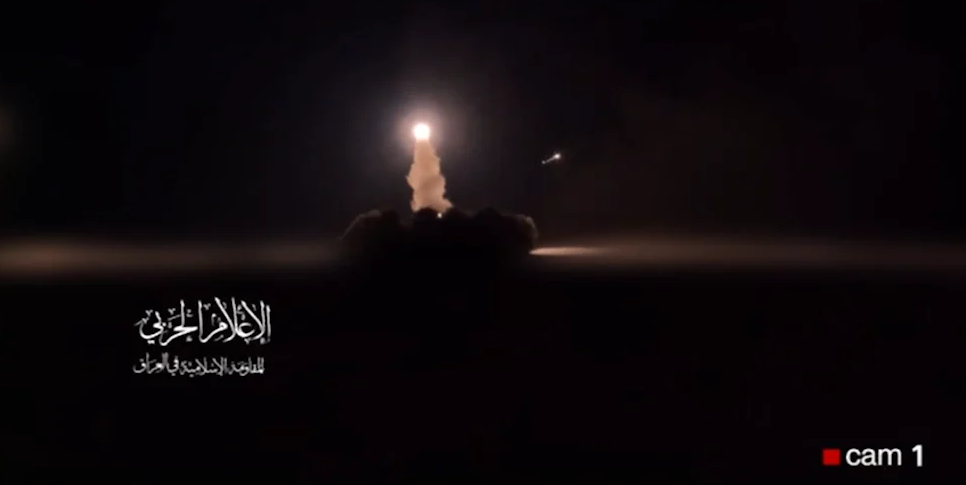
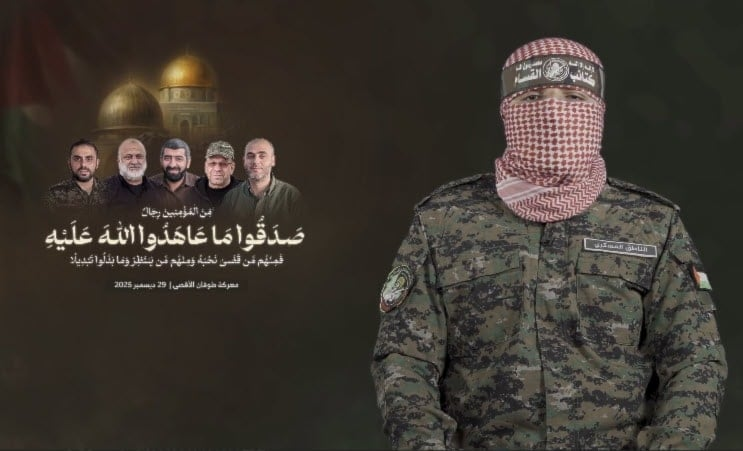
Palestinian Resistance Ambushes Collaborators, Denounce “Peace” Council

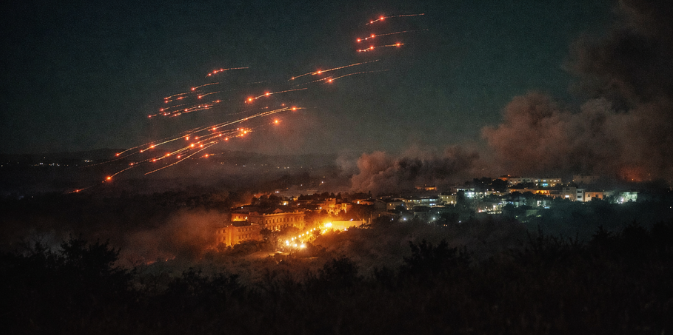
A senior source in the Palestinian Deterrent force released an urgent statement today in regards to the security situation in Gaza. The statement read, “During a well-planned security operation, we lured members of the collaborator gangs into a pre-prepared ambush. The operation resulted in the killing of one collaborator and the injury of two others, before they fled towards the areas controlled by the occupation. We confirm our continued pursuit, tracking, and dismantling of the collaborator gangs supported by the occupation, and our zero tolerance for any threat to the security of our people.” The Palestinian Resistance has consistently been targeting collaborators who helped the occupation in its genocide.

The Palestinian Information Center, in other news, has documented 27 acts of resistance across the occupied West Bank within a 48-hour period, ranging from confrontations with Zionist occupation forces to efforts repelling settler attacks.

This comes as Zionist minister Itamar Ben-Gvir has approved the extension of personal firearm permits to settlers across 18 additional illegal settlements in the occupied West Bank, further encouraging violence against Palestinians and advancing plots for settler militarization.

Ben-Gvir’s expansion of gun access, including to unauthorized settlers, began in late 2023 with the start of the genocide in Gaza. Although the policy was condemned following reports of growing civilian casualties, including among settlers, it was never stopped.

Since October 2023, armed settler attacks on Palestinian communities have surged, often accompanied by occupation forces. These coordinated assaults have destroyed property, including the burning of homes and vehicles, and caused dozens of injuries.

According to the report, the incidents included clashes in 15 areas, 8 confrontations with settlers, damage to 3 settler vehicles, and the use of stones, Molotov cocktails, and firecrackers, resulting in injuries to two settlers.

In al-Quds, confrontations erupted in the Qalandia refugee camp, where residents hurled stones and firecrackers at occupation forces.

In the Ramallah governorate, clashes were reported in Turmus Ayya and Al-Mughayyir, with local residents responding to settler incursions near the illegal “Ofra” settlement. Several settler vehicles were damaged in the confrontations.

The Nablus area saw widespread resistance in Qusra, Yatma, Burqa, and Jalud, where settlers attempted to storm Palestinian villages. Residents responded with stones and firecrackers, damaging vehicles used in the attacks.

In Salfit, settlers attacked the town of Kafr al-Dik, resulting in injuries to two settlers, while in Haris, locals responded to similar settler aggression.

In Beit Lahm, youth clashed with the occupiers in Husan. In Jenin, confrontations broke out near the illegal “Homesh” settlement and in surrounding neighborhoods.

In Ariha, resistance was documented in the Al-Auja area, targeting settler vehicles.

In al-Khalil, residents of Beit Ummar confronted occupation forces and settlers in renewed clashes.

These incidents underscore the ongoing atmosphere of confrontation and resistance across the occupied territories in response to settler violence and Zionist military operations.

In international news Hamas has condemned the inclusion of Benjamin Netanyahu in the so-called “Peace Council” for Gaza, calling it a dangerous sign that undermines justice and accountability.

In an official statement issued Thursday, Hamas said, “We strongly condemn the inclusion of war criminal Netanyahu, who is wanted by the International Criminal Court, in the Peace Council for Gaza.”

The movement stated that Netanyahu’s participation contradicts the very principles such a council should represent. It warned that “the war criminal Netanyahu continues to obstruct a ceasefire agreement in Gaza and carries out the most heinous violations by targeting unarmed civilians.”

Hamas stressed that “the first step toward stability lies in ending the occupation’s violations and holding all those responsible for genocide and starvation accountable.”

The statement came after US President Donald Trump and several international leaders signed a decree on Thursday establishing the “Peace Council” concerning the Gaza Strip. The signing took place during the World Economic Forum in Davos, Switzerland.

https://abolitionmedia.noblogs.org/?p=27432 #alAqsaFlood #gaza #hamas #palestine #pij #resistance #westAsia #westBank
Sorry, no caption provided by author
  • Copy link
  • Flag this post
  • Block
Media Revolution Channel
Media Revolution Channel boosted
abolitionmedia
@abolitionmedia@abolitionmedia.noblogs.org  ·  activity timestamp 4 days ago

Pal Action Prisoner Umer Khalid Refuses Water in Escalating Hunger Strike

Umer Khalid, a Palestine Action activist on hunger strike plans to start refusing fluids as well as food, tstating that he hopes his “drastic action” pressures the government into engaging with his protest demands.

Khalid stopped eating 13 days ago. He is currently receiving fluids with electrolytes, sugars and salts but said he will stop drinking altogether from Saturday.

While the body can survive for weeks without food, dehydration is certain to have fatal consequences in a far shorter time.

The escalation comes days after three other hunger-striking remand prisoners affiliated with Palestine Action ended their protests, claiming victory.

“The only thing that seems to have any impact, whether that is positive or negative, is drastic action,” Khalid, 22, told bourgeios media from prison via an intermediary. “The strike reflects the severity of this imprisonment. Being in this prison is not living life. Our lives have been paused. The world spins, and we sit in a concrete room. This strike reflects the severity of my demands.”

Khalid is calling for immediate bail; an end to alleged censorship in prison – authorities have been accused of withholding mail, calls and books and denying visitation rights; an inquiry into British involvement in Zionist military operations in Gaza; and the release of surveillance footage from Royal Air Force (RAF) spy flights that flew over Gaza on April 1, 2024, when British aid workers were killed in a Zionist fascist attack.

Khalid is among five activists accused of breaking into the United Kingdom’s largest airbase, RAF Brize Norton, in Oxfordshire in June and spray-painting two Voyager refuelling and transport planes. The incident, which was claimed by Palestine Action, caused millions of pounds worth of damage, according to the British government, which later absurdly proscribed the protest group as a “terrorist” organisation.

Critics have condemned the ban as illiberal overreach, given that Palestine Action’s stated objective is to use nonviolent means to counter the Zionist genocidal war against Palestinians and what it says is British complicity in it.

Khalid denies the charges against him of conspiracy to commit criminal damage and conspiracy to enter a prohibited place for purposes prejudicial to the safety or interests of the UK.

He is part of a collective of eight remand prisoners linked to Palestine Action that began a rolling hunger strike in November. Last week, three of them – two of whom were on the brink of death – ended their protests. Khalid is the only one still refusing food.

Eight remand prisoners accused of incidents claimed by Palestine Action have joined the rolling hunger strike since November. Top row from left: Amu Gib, Heba Muraisi, Jon Cink and Kamran Ahmed. Bottom row from left: Qesser Zuhrah, Lewie Chiaramello, Teuta Hoxha and Umer Khalid [Courtesy of Prisoners for Palestine]

Those now refeeding said improved prison rights signalled a concession. The UK’s reported denial of a defence contract to Elbit, Israel’s largest weapons manufacturer, is also being interpreted by them as a win.

Throughout the hunger strike, the British government said it has no power over the issue of bail because it is a matter for the judiciary to decide. The government also insisted that prison welfare procedures are being followed.

As for Khalid’s other demands, last year, the opposition Labour Party blocked a bill tabled by the left-wing lawmaker Jeremy Corbyn backing an official inquiry into Britain’s involvement in the war on Gaza.

And in April, the Ministry of Defence told The Times newspaper that it had video footage from an RAF surveillance plane that had flown over Gaza on the day of the Zionist strike that killed the aid workers but could not disclose any further details, citing national security.

Britain has said it flew spy planes over Gaza during the occupation’s onslaught to locate missing captives, but critics have raised questions about possible intelligence sharing with the Zionist entity.

Asim Qureshi, research director at the campaign group Cage, told Al Jazeera that the government’s refusal to meet with Khalid to negotiate on his demands “indicates their lack of concern for the life of this man, who is acting based on his principles within the context of a genocide”.

https://abolitionmedia.noblogs.org/?p=27424 #hungerStrike #palAction #palestine #resistance #uk #umerKhalid
Sorry, no caption provided by author
  • Copy link
  • Flag this post
  • Block
abolitionmedia
@abolitionmedia@abolitionmedia.noblogs.org  ·  activity timestamp 4 days ago

Palestinian Resistance Ambushes Collaborators, Denounce “Peace” Council

A senior source in the Palestinian Deterrent force released an urgent statement today in regards to the security situation in Gaza. The statement read, “During a well-planned security operation, we lured members of the collaborator gangs into a pre-prepared ambush. The operation resulted in the killing of one collaborator and the injury of two others, before they fled towards the areas controlled by the occupation. We confirm our continued pursuit, tracking, and dismantling of the collaborator gangs supported by the occupation, and our zero tolerance for any threat to the security of our people.” The Palestinian Resistance has consistently been targeting collaborators who helped the occupation in its genocide.

The Palestinian Information Center, in other news, has documented 27 acts of resistance across the occupied West Bank within a 48-hour period, ranging from confrontations with Zionist occupation forces to efforts repelling settler attacks.

This comes as Zionist minister Itamar Ben-Gvir has approved the extension of personal firearm permits to settlers across 18 additional illegal settlements in the occupied West Bank, further encouraging violence against Palestinians and advancing plots for settler militarization.

Ben-Gvir’s expansion of gun access, including to unauthorized settlers, began in late 2023 with the start of the genocide in Gaza. Although the policy was condemned following reports of growing civilian casualties, including among settlers, it was never stopped.

Since October 2023, armed settler attacks on Palestinian communities have surged, often accompanied by occupation forces. These coordinated assaults have destroyed property, including the burning of homes and vehicles, and caused dozens of injuries.

According to the report, the incidents included clashes in 15 areas, 8 confrontations with settlers, damage to 3 settler vehicles, and the use of stones, Molotov cocktails, and firecrackers, resulting in injuries to two settlers.

In al-Quds, confrontations erupted in the Qalandia refugee camp, where residents hurled stones and firecrackers at occupation forces.

In the Ramallah governorate, clashes were reported in Turmus Ayya and Al-Mughayyir, with local residents responding to settler incursions near the illegal “Ofra” settlement. Several settler vehicles were damaged in the confrontations.

The Nablus area saw widespread resistance in Qusra, Yatma, Burqa, and Jalud, where settlers attempted to storm Palestinian villages. Residents responded with stones and firecrackers, damaging vehicles used in the attacks.

In Salfit, settlers attacked the town of Kafr al-Dik, resulting in injuries to two settlers, while in Haris, locals responded to similar settler aggression.

In Beit Lahm, youth clashed with the occupiers in Husan. In Jenin, confrontations broke out near the illegal “Homesh” settlement and in surrounding neighborhoods.

In Ariha, resistance was documented in the Al-Auja area, targeting settler vehicles.

In al-Khalil, residents of Beit Ummar confronted occupation forces and settlers in renewed clashes.

These incidents underscore the ongoing atmosphere of confrontation and resistance across the occupied territories in response to settler violence and Zionist military operations.

In international news Hamas has condemned the inclusion of Benjamin Netanyahu in the so-called “Peace Council” for Gaza, calling it a dangerous sign that undermines justice and accountability.

In an official statement issued Thursday, Hamas said, “We strongly condemn the inclusion of war criminal Netanyahu, who is wanted by the International Criminal Court, in the Peace Council for Gaza.”

The movement stated that Netanyahu’s participation contradicts the very principles such a council should represent. It warned that “the war criminal Netanyahu continues to obstruct a ceasefire agreement in Gaza and carries out the most heinous violations by targeting unarmed civilians.”

Hamas stressed that “the first step toward stability lies in ending the occupation’s violations and holding all those responsible for genocide and starvation accountable.”

The statement came after US President Donald Trump and several international leaders signed a decree on Thursday establishing the “Peace Council” concerning the Gaza Strip. The signing took place during the World Economic Forum in Davos, Switzerland.

https://abolitionmedia.noblogs.org/?p=27432 #alAqsaFlood #gaza #hamas #palestine #pij #resistance #westAsia #westBank
Sorry, no caption provided by author
  • Copy link
  • Flag this post
  • Block
abolitionmedia
@abolitionmedia@abolitionmedia.noblogs.org  ·  activity timestamp 4 days ago

Pal Action Prisoner Umer Khalid Refuses Water in Escalating Hunger Strike

Umer Khalid, a Palestine Action activist on hunger strike plans to start refusing fluids as well as food, tstating that he hopes his “drastic action” pressures the government into engaging with his protest demands.

Khalid stopped eating 13 days ago. He is currently receiving fluids with electrolytes, sugars and salts but said he will stop drinking altogether from Saturday.

While the body can survive for weeks without food, dehydration is certain to have fatal consequences in a far shorter time.

The escalation comes days after three other hunger-striking remand prisoners affiliated with Palestine Action ended their protests, claiming victory.

“The only thing that seems to have any impact, whether that is positive or negative, is drastic action,” Khalid, 22, told bourgeios media from prison via an intermediary. “The strike reflects the severity of this imprisonment. Being in this prison is not living life. Our lives have been paused. The world spins, and we sit in a concrete room. This strike reflects the severity of my demands.”

Khalid is calling for immediate bail; an end to alleged censorship in prison – authorities have been accused of withholding mail, calls and books and denying visitation rights; an inquiry into British involvement in Zionist military operations in Gaza; and the release of surveillance footage from Royal Air Force (RAF) spy flights that flew over Gaza on April 1, 2024, when British aid workers were killed in a Zionist fascist attack.

Khalid is among five activists accused of breaking into the United Kingdom’s largest airbase, RAF Brize Norton, in Oxfordshire in June and spray-painting two Voyager refuelling and transport planes. The incident, which was claimed by Palestine Action, caused millions of pounds worth of damage, according to the British government, which later absurdly proscribed the protest group as a “terrorist” organisation.

Critics have condemned the ban as illiberal overreach, given that Palestine Action’s stated objective is to use nonviolent means to counter the Zionist genocidal war against Palestinians and what it says is British complicity in it.

Khalid denies the charges against him of conspiracy to commit criminal damage and conspiracy to enter a prohibited place for purposes prejudicial to the safety or interests of the UK.

He is part of a collective of eight remand prisoners linked to Palestine Action that began a rolling hunger strike in November. Last week, three of them – two of whom were on the brink of death – ended their protests. Khalid is the only one still refusing food.

Eight remand prisoners accused of incidents claimed by Palestine Action have joined the rolling hunger strike since November. Top row from left: Amu Gib, Heba Muraisi, Jon Cink and Kamran Ahmed. Bottom row from left: Qesser Zuhrah, Lewie Chiaramello, Teuta Hoxha and Umer Khalid [Courtesy of Prisoners for Palestine]

Those now refeeding said improved prison rights signalled a concession. The UK’s reported denial of a defence contract to Elbit, Israel’s largest weapons manufacturer, is also being interpreted by them as a win.

Throughout the hunger strike, the British government said it has no power over the issue of bail because it is a matter for the judiciary to decide. The government also insisted that prison welfare procedures are being followed.

As for Khalid’s other demands, last year, the opposition Labour Party blocked a bill tabled by the left-wing lawmaker Jeremy Corbyn backing an official inquiry into Britain’s involvement in the war on Gaza.

And in April, the Ministry of Defence told The Times newspaper that it had video footage from an RAF surveillance plane that had flown over Gaza on the day of the Zionist strike that killed the aid workers but could not disclose any further details, citing national security.

Britain has said it flew spy planes over Gaza during the occupation’s onslaught to locate missing captives, but critics have raised questions about possible intelligence sharing with the Zionist entity.

Asim Qureshi, research director at the campaign group Cage, told Al Jazeera that the government’s refusal to meet with Khalid to negotiate on his demands “indicates their lack of concern for the life of this man, who is acting based on his principles within the context of a genocide”.

https://abolitionmedia.noblogs.org/?p=27424 #hungerStrike #palAction #palestine #resistance #uk #umerKhalid
Sorry, no caption provided by author
  • Copy link
  • Flag this post
  • Block
Media Revolution Channel
Media Revolution Channel boosted
abolitionmedia
@abolitionmedia@abolitionmedia.noblogs.org  ·  activity timestamp 5 days ago

US Regime Intends to Execute Pro Palestinian Revolutionary Elias Rodriguez

The Attorney General for the US criminal regime, Pam Bondi, opened a Friday address to the Zionist-American Council (IAC) National Summit by recalling the May 2025 revolutionary action assassinating two Zionist, genocidal employees in Washington DC.

The action was notable for its militancy and it represented a rare instance where the genocidal countries — the settler-colonial US regime and its client the Zionist colony — received a small dose of the violence it unleashed on Palestine and the rest of the colonized world.

Bondi told the audience that federal prosecutors are pursuing capital punishment in the case, framing the action as “anti-semetic.”

The US regime and its puppet Zionist state use this framing to hide their genocidal behavior and to attempt to distort the reality of the situation from their own publics perception.

Genocidal states and those complicit in their crimes are judged harshly by history, and often judged worse when they perpetrate the actions.

Rodriguez has not be convicted and may likely be innocent of the accusation, but the two states making the accusation have no place to judge anyone.

https://abolitionmedia.noblogs.org/?p=27372 #alAqsaFlood #eliasRodriguez #fascism #northAmerica #palestine #repression #resistance
Sorry, no caption provided by author
  • Copy link
  • Flag this post
  • Block
abolitionmedia
@abolitionmedia@abolitionmedia.noblogs.org  ·  activity timestamp 5 days ago

US Regime Intends to Execute Pro Palestinian Revolutionary Elias Rodriguez

The Attorney General for the US criminal regime, Pam Bondi, opened a Friday address to the Zionist-American Council (IAC) National Summit by recalling the May 2025 revolutionary action assassinating two Zionist, genocidal employees in Washington DC.

The action was notable for its militancy and it represented a rare instance where the genocidal countries — the settler-colonial US regime and its client the Zionist colony — received a small dose of the violence it unleashed on Palestine and the rest of the colonized world.

Bondi told the audience that federal prosecutors are pursuing capital punishment in the case, framing the action as “anti-semetic.”

The US regime and its puppet Zionist state use this framing to hide their genocidal behavior and to attempt to distort the reality of the situation from their own publics perception.

Genocidal states and those complicit in their crimes are judged harshly by history, and often judged worse when they perpetrate the actions.

Rodriguez has not be convicted and may likely be innocent of the accusation, but the two states making the accusation have no place to judge anyone.

https://abolitionmedia.noblogs.org/?p=27372 #alAqsaFlood #eliasRodriguez #fascism #northAmerica #palestine #repression #resistance
Sorry, no caption provided by author
  • Copy link
  • Flag this post
  • Block
Media Revolution Channel
Media Revolution Channel boosted
abolitionmedia
@abolitionmedia@abolitionmedia.noblogs.org  ·  activity timestamp 5 days ago

“The Yankee Empire is in Irreversible Decline”: Cubans Respond to Trump’s Threats

Three weeks later, the ramifications of the unprecedented US attack on Venezuela continue to reverberate. The military action in itself provoked nearly unanimous condemnation among experts in international diplomacy and law and has been also been a tremendous source of pain for the families of the more than 100 people killed in the nearly two-hour operation on South American territory.

The illegal operation also sparked concerns about the consequences that such a unilateral measure taken by Washington will have on the region and on global geopolitics.

After the attack, several journalists asked Donald Trump directly if the next target would be Cuba, which his administration has been targeting by exacerbating the economic blockade and seizing Venezuelan tankers bound for the island. They repeated threats made by his own Secretary of State, Marco Rubio, a declared opponent of the revolutionary government.

Trump’s ambiguous response to reporters sparked much speculation, until the US president himself wrote on Truth Social: “Cuba lived, for many years, on large amounts of oil and money from Venezuela. In return, Cuba provided “Security Services” for the last two Venezuelan dictators, BUT NOT ANYMORE! Most of those Cubans are DEAD from last week’s U.S.A. attack, and Venezuela doesn’t need protection anymore from the thugs and extortionists who held them hostage for so many years. Venezuela now has the United States of America, the most powerful military in the World (by far!), to protect them, and protect them we will. THERE WILL BE NO MORE OIL OR MONEY GOING TO CUBA – ZERO! I strongly suggest they make a deal, BEFORE IT IS TOO LATE.”

Despite threats, a massive march of nearly 500,000 people paraded through the streets of Havana to honor the 32 Cuban combatants who were killed in Venezuela. During the march, the country’s top leaders promised that they would not surrender in the face of renewed imperialist aggression.

Abel Prieto, Cuban writer and the president of Casa de las Américas, and Dr. José R. Cabañas, the director of the Center for International Policy Research and former Cuban ambassador to the United States, spoke to Peoples Dispatch to share their perspectives on the threats lodged by Trump and how the attack on Venezuela has transformed the region.

Regarding the regional impact of the US military action that resulted, among other things, in the capture of Venezuelan President Nicolás Maduro and his wife Cilia Flores, Abel Prieto asserts that this is an act of extreme right-wing aggression that broke the most basic rules of international law and opens a new and dark chapter in the history of the Americas.

“What the Trump administration did in Venezuela was an act of fascist barbarism, completely illegal, against all norms of civilized coexistence between nations,” he said. “It represents the beginning of a sinister era where, as Ivan Karamazov said, ‘everything is permitted’ for the most powerful. It has been a blow to the Venezuelan people, to the Cuban people, and to all Latin American peoples.”

“However,” Prieto says, the attack has also turned the tide among the progressive movement, “I believe it has strengthened anti-imperialism and anti-fascism in all decent people, whether they are on the left or not. The Yankee Empire is in irreversible decline, and this makes it more violent and rabid.”

Dr. José R. Cabañas, for his part, affirms that the United States’ act of ignoring and destroying international law reveals a geopolitical purpose that cannot be hidden: “The full application of the Monroe Doctrine attempts to dominate the region’s natural resources, prevent countries such as Russia or China, but also the European Union as a whole, from developing preferential economic ties with Latin American and Caribbean nations. The actions of January 3 against Caracas and other subsequent actions have caused fear among certain political forces in the region, but at the same time have reinforced the independent national agenda of several governments that have demanded that the US develop bilateral relations based on greater equality and respect.”

An emboldened empire will be met with steadfast resistance

Regarding the growing danger facing Cuba following Washington’s more aggressive stance, Prieto states: “This supposed ‘victory’ [in Venezuela] has emboldened [the United States]. That is why there are threats against Cuba.”

We feel a mixture of pain and pride [for the 32 Cuban combatants killed on January 3]. Pain, obviously, because 32 Cuban families have been brutally torn apart. Pride, because we know that they faced an enemy that was vastly superior in numbers and military technology, and that they fell with courage and honor, doing their duty. They are our heroes, and they will inspire us in the face of any new aggression.”

Dr. Cabañas agrees that the killing of the 32 Cuban soldiers in combat is already an act of aggression against Cuba: “At the moment, the most significant impact on Cuba has been the loss of our 32 heroes who fell defending the same ideals as our internationalists in Africa, Grenada, or other regions of the world. The imperial forces do not understand the ties between Venezuela and Cuba, which long predate the revolutionary processes of both nations. Their roots go back to the independence movements against the European colonial powers.”

In this regard, Prieto added that the defense of the Cuban Revolution will be carried out to the bitter end: “I don’t know how far these fascists, full of hatred and lacking in morals, will go to hurt Cuba. Our people are not afraid. They will defend their Revolution in the worst circumstances, without ever giving up.”

A long history of aggression and resistance

Perhaps that is why Cuba is the country that has known the most in the history of the entire continent about US hostility and boycotts against a sovereign government. Dr. Cabañas recalls: “Over the last 67 years, the United States has used every weapon possible to destroy the Cuban Revolution. In the 1960s, there were more than 100 CIA-armed gangs in the country that caused hundreds of deaths among the civilian population; there were several terrorist actions, from the invasion of Playa Girón to the persecution of Cuban ships on the high seas.”

The former diplomat recalled that this year marks the 50th anniversary of one of the worst CIA-backed terrorist attacks against Cuba “which claimed dozens of civilian victims. In the 1970s, strains of animal and human diseases were introduced into the country, causing great losses.”

He also recalled that the economic and commercial blockade is a US strategy of attrition that the Cuban people know better than anyone: “The blockade against Cuba was originally established in 1962, but it was updated in legislative bodies that were approved in 1992 and 1996. Not to mention the barrage of negative information against the country, trying to isolate it from the rest of the international community and cause frustration among the local population.”

In this regard, Dr. Cabañas recalls that for six decades, despite facing diverse and persistent attacks, the Cuban Revolution has creatively resisted and continued building a society that centers people’s needs and defies US interests for the region. “They have tried to use all means to destroy us and have failed in their essential purpose. Cuba faced the COVID-19 pandemic with its own resources and had five times fewer victims than the United States, which supposedly had all the resources to prevent thousands of deaths.”

Now, Dr. Cabañas says, Cuba faces the effects of an even stronger economic, commercial, and financial blockade, “But even under these circumstances, Cuba repeats the same question: how would the country progress if it were not the victim of that hostile policy, which is much older and much more complex than the recent events we are referring to now?”

Perhaps that is why Cuba has also been the country that has most vigorously rejected US intervention in Venezuela, not only through diplomatic communiqués, but also through the mobilization of masses who rejected an aggression that seems to loom as a possibility on its borders. Dr. Cabañas states: “Havana was perhaps the capital that, in a matter of hours, mobilized its population for a mass demonstration condemning the crimes committed against Venezuela. These demonstrations have spread throughout the country… Our government has repeatedly expressed Cuba’s historic position both in terms of solidarity with our Latin American and Caribbean brothers and sisters, and in terms of the respectful and equal relationship that the United States is obliged to have with its neighbors and with the international community as a whole.”

source: People’s Dispatch

https://abolitionmedia.noblogs.org/?p=27356 #antiColonialism #antiImperialism #cuba #havana #resistance #venezuela
Peoples Dispatch

"The Yankee Empire is in irreversible decline": Cubans respond to Trump's threats : Peoples Dispatch

In the wake of the unilateral US attack on Venezuela, an emboldened empire has sought to intimidate and threaten other nations which threaten its total hegemony.
Peoples Dispatch

“To die for the freedom of a brother people is the highest form of living”: Cuba honors 32 killed in Venezuela : Peoples Dispatch

During the commemoration of the combatants who fell on January 3, several Cuban leaders responded to Washington's threats and affirmed that they will not surrender in the face of adversity.
Peoples Dispatch

Trump intensifies threats against Cuba : Peoples Dispatch

The US president warned Cuban authorities that if they do not engage in dialogue, it will soon be “too late.” Cuban authorities have announced that Cuba is a sovereign country that is being punished for following a path different from that desired by Washington.
Sorry, no caption provided by author
  • Copy link
  • Flag this post
  • Block
abolitionmedia
@abolitionmedia@abolitionmedia.noblogs.org  ·  activity timestamp 5 days ago

“The Yankee Empire is in Irreversible Decline”: Cubans Respond to Trump’s Threats

Three weeks later, the ramifications of the unprecedented US attack on Venezuela continue to reverberate. The military action in itself provoked nearly unanimous condemnation among experts in international diplomacy and law and has been also been a tremendous source of pain for the families of the more than 100 people killed in the nearly two-hour operation on South American territory.

The illegal operation also sparked concerns about the consequences that such a unilateral measure taken by Washington will have on the region and on global geopolitics.

After the attack, several journalists asked Donald Trump directly if the next target would be Cuba, which his administration has been targeting by exacerbating the economic blockade and seizing Venezuelan tankers bound for the island. They repeated threats made by his own Secretary of State, Marco Rubio, a declared opponent of the revolutionary government.

Trump’s ambiguous response to reporters sparked much speculation, until the US president himself wrote on Truth Social: “Cuba lived, for many years, on large amounts of oil and money from Venezuela. In return, Cuba provided “Security Services” for the last two Venezuelan dictators, BUT NOT ANYMORE! Most of those Cubans are DEAD from last week’s U.S.A. attack, and Venezuela doesn’t need protection anymore from the thugs and extortionists who held them hostage for so many years. Venezuela now has the United States of America, the most powerful military in the World (by far!), to protect them, and protect them we will. THERE WILL BE NO MORE OIL OR MONEY GOING TO CUBA – ZERO! I strongly suggest they make a deal, BEFORE IT IS TOO LATE.”

Despite threats, a massive march of nearly 500,000 people paraded through the streets of Havana to honor the 32 Cuban combatants who were killed in Venezuela. During the march, the country’s top leaders promised that they would not surrender in the face of renewed imperialist aggression.

Abel Prieto, Cuban writer and the president of Casa de las Américas, and Dr. José R. Cabañas, the director of the Center for International Policy Research and former Cuban ambassador to the United States, spoke to Peoples Dispatch to share their perspectives on the threats lodged by Trump and how the attack on Venezuela has transformed the region.

Regarding the regional impact of the US military action that resulted, among other things, in the capture of Venezuelan President Nicolás Maduro and his wife Cilia Flores, Abel Prieto asserts that this is an act of extreme right-wing aggression that broke the most basic rules of international law and opens a new and dark chapter in the history of the Americas.

“What the Trump administration did in Venezuela was an act of fascist barbarism, completely illegal, against all norms of civilized coexistence between nations,” he said. “It represents the beginning of a sinister era where, as Ivan Karamazov said, ‘everything is permitted’ for the most powerful. It has been a blow to the Venezuelan people, to the Cuban people, and to all Latin American peoples.”

“However,” Prieto says, the attack has also turned the tide among the progressive movement, “I believe it has strengthened anti-imperialism and anti-fascism in all decent people, whether they are on the left or not. The Yankee Empire is in irreversible decline, and this makes it more violent and rabid.”

Dr. José R. Cabañas, for his part, affirms that the United States’ act of ignoring and destroying international law reveals a geopolitical purpose that cannot be hidden: “The full application of the Monroe Doctrine attempts to dominate the region’s natural resources, prevent countries such as Russia or China, but also the European Union as a whole, from developing preferential economic ties with Latin American and Caribbean nations. The actions of January 3 against Caracas and other subsequent actions have caused fear among certain political forces in the region, but at the same time have reinforced the independent national agenda of several governments that have demanded that the US develop bilateral relations based on greater equality and respect.”

An emboldened empire will be met with steadfast resistance

Regarding the growing danger facing Cuba following Washington’s more aggressive stance, Prieto states: “This supposed ‘victory’ [in Venezuela] has emboldened [the United States]. That is why there are threats against Cuba.”

We feel a mixture of pain and pride [for the 32 Cuban combatants killed on January 3]. Pain, obviously, because 32 Cuban families have been brutally torn apart. Pride, because we know that they faced an enemy that was vastly superior in numbers and military technology, and that they fell with courage and honor, doing their duty. They are our heroes, and they will inspire us in the face of any new aggression.”

Dr. Cabañas agrees that the killing of the 32 Cuban soldiers in combat is already an act of aggression against Cuba: “At the moment, the most significant impact on Cuba has been the loss of our 32 heroes who fell defending the same ideals as our internationalists in Africa, Grenada, or other regions of the world. The imperial forces do not understand the ties between Venezuela and Cuba, which long predate the revolutionary processes of both nations. Their roots go back to the independence movements against the European colonial powers.”

In this regard, Prieto added that the defense of the Cuban Revolution will be carried out to the bitter end: “I don’t know how far these fascists, full of hatred and lacking in morals, will go to hurt Cuba. Our people are not afraid. They will defend their Revolution in the worst circumstances, without ever giving up.”

A long history of aggression and resistance

Perhaps that is why Cuba is the country that has known the most in the history of the entire continent about US hostility and boycotts against a sovereign government. Dr. Cabañas recalls: “Over the last 67 years, the United States has used every weapon possible to destroy the Cuban Revolution. In the 1960s, there were more than 100 CIA-armed gangs in the country that caused hundreds of deaths among the civilian population; there were several terrorist actions, from the invasion of Playa Girón to the persecution of Cuban ships on the high seas.”

The former diplomat recalled that this year marks the 50th anniversary of one of the worst CIA-backed terrorist attacks against Cuba “which claimed dozens of civilian victims. In the 1970s, strains of animal and human diseases were introduced into the country, causing great losses.”

He also recalled that the economic and commercial blockade is a US strategy of attrition that the Cuban people know better than anyone: “The blockade against Cuba was originally established in 1962, but it was updated in legislative bodies that were approved in 1992 and 1996. Not to mention the barrage of negative information against the country, trying to isolate it from the rest of the international community and cause frustration among the local population.”

In this regard, Dr. Cabañas recalls that for six decades, despite facing diverse and persistent attacks, the Cuban Revolution has creatively resisted and continued building a society that centers people’s needs and defies US interests for the region. “They have tried to use all means to destroy us and have failed in their essential purpose. Cuba faced the COVID-19 pandemic with its own resources and had five times fewer victims than the United States, which supposedly had all the resources to prevent thousands of deaths.”

Now, Dr. Cabañas says, Cuba faces the effects of an even stronger economic, commercial, and financial blockade, “But even under these circumstances, Cuba repeats the same question: how would the country progress if it were not the victim of that hostile policy, which is much older and much more complex than the recent events we are referring to now?”

Perhaps that is why Cuba has also been the country that has most vigorously rejected US intervention in Venezuela, not only through diplomatic communiqués, but also through the mobilization of masses who rejected an aggression that seems to loom as a possibility on its borders. Dr. Cabañas states: “Havana was perhaps the capital that, in a matter of hours, mobilized its population for a mass demonstration condemning the crimes committed against Venezuela. These demonstrations have spread throughout the country… Our government has repeatedly expressed Cuba’s historic position both in terms of solidarity with our Latin American and Caribbean brothers and sisters, and in terms of the respectful and equal relationship that the United States is obliged to have with its neighbors and with the international community as a whole.”

source: People’s Dispatch

https://abolitionmedia.noblogs.org/?p=27356 #antiColonialism #antiImperialism #cuba #havana #resistance #venezuela
Peoples Dispatch

"The Yankee Empire is in irreversible decline": Cubans respond to Trump's threats : Peoples Dispatch

In the wake of the unilateral US attack on Venezuela, an emboldened empire has sought to intimidate and threaten other nations which threaten its total hegemony.
Peoples Dispatch

“To die for the freedom of a brother people is the highest form of living”: Cuba honors 32 killed in Venezuela : Peoples Dispatch

During the commemoration of the combatants who fell on January 3, several Cuban leaders responded to Washington's threats and affirmed that they will not surrender in the face of adversity.
Peoples Dispatch

Trump intensifies threats against Cuba : Peoples Dispatch

The US president warned Cuban authorities that if they do not engage in dialogue, it will soon be “too late.” Cuban authorities have announced that Cuba is a sovereign country that is being punished for following a path different from that desired by Washington.
Sorry, no caption provided by author
  • Copy link
  • Flag this post
  • Block
Media Revolution Channel
Media Revolution Channel boosted
abolitionmedia
@abolitionmedia@abolitionmedia.noblogs.org  ·  activity timestamp 6 days ago

Effective Organizing Requires Understanding Theory. That’s Not A Hypothesis

There is widespread disunity and a lack of clarity among the masses about who we are fighting, why, and how we can defeat them. There is no common struggle for common goals because we are not clear on who our common enemies are, why they are at war with us, and how they carry out that war. This fractured reality in the U.S. is largely due to the lack of importance placed on understanding revolutionary theory.

Some mistakenly believe that studying theory is a pointless academic exercise that movement leaders use to intimidate or control young organizers. Or others believe that it is something that out-of-touch and old movement veterans who are no longer engaged in the real work of organizing focus on, or that those who do not actually want to do any real work obsess over, rather than the work that needs to be done.

However, reading and understanding theory is key to organizing. It is the backbone that makes the work strategic, effective, and sustainable. Without understanding theory and the history that shaped it, there is no fundamental understanding of what is to be done. But this is not clear because people may misunderstand what theory itself is.

Theory is not an educated guess or a hypothesis that precipitates tests to prove or disprove it, as in scientific theory. Theory is a set of ideas and principles that comes when one observes and analyzes facts and then seeks to answer the questions: “Why, how, and who causes this to happen?” Theory helps determine potential actions or outcomes by identifying cause and effect through observing patterns in material realities, providing a lens for interpreting the world and making informed decisions.

So, in science, the Theory of Evolution is not a guess about how evolution happens, but an explanation of how evolution happens based on observations and the study of data. Marxist Theory is the analysis of class conflict in the context of social economics. Critical Race Theory analyzes the way systemic racism is institutionalized through laws, policies, and practices. None of these theories are guesses about these topics, but the outcome of analysing them.

Theory helps us name exactly what we are fighting. It is what allows us to move beyond general concerns about poverty to understanding what causes and maintains poverty, which are capitalism, classism, white supremacy, patriarchy, and imperialism. This helps us focus on these dynamics that create poverty, rather than putting a band-aid on the problem and leaving the cause untouched.

Without theory, reform policies are usually identified as the answer to problems. For example, in the case of concerns about poverty, the reform might be to campaign for a higher federal minimum wage, which is undoubtedly necessary, considering it has been a paltry $7.25 an hour since 2009, while the cost of living has increased at a much higher rate. But with theory, people understand that raising the federal minimum wage alone is not enough to solve poverty, because they are fighting against the exploitative class dynamics of capitalism itself, not just the lack of an adequate minimum wage. Theory does not rule out the need for reforms to provide immediate relief or correction in some cases. Instead, it helps explain why reforms are insufficient to address conditions.

Additionally, theory helps identify the key structures of power, how they are connected, who the primary decision-makers/players are within, how they are organized, and where they are most vulnerable. This is the map of organizing for social change that theory helps to chart. From this map come the strategy and tactics that move spontaneous or individual outrage into organized, calculated, strategic action to challenge the system that produces these conditions.

Analyzing the problems we face through the lens of theory helps a group of people from different backgrounds, life experiences, and even social statuses develop a shared framework and vocabulary to understand and communicate complex ideas efficiently and build a cohesive strategy. Through this approach, clear goals are developed, along with the strategies and tactics to achieve them. When a movement’s goals are not clearly defined by a deep analysis of the real problem, they are easily co-opted. Demands are watered down into insufficient reforms that leave the core system intact. A solid theoretical foundation helps the movement hold its line, distinguish allies from adversaries, and remain focused on its long-term goals.

Theory also connects today’s work with the history of people’s struggles, helping today’s organizers learn from the past because theory is the condensed lessons of past struggles. The analysis of the systemic issues of the past and people’s responses to them is an integral part of the analysis of the problems being addressed today. There is no way to conduct an accurate analysis of the present issues without understanding the history that preceded and contributed to them.

By studying the theories that emerged from the Haitian Revolution, the Paris Commune, the Russian Revolution, the Chinese Revolution, Black liberation movements, and other anti-colonial struggles, organizers learn what tactics worked, what tactics did not, how movements were betrayed, how hierarchies re-emerged, and other questions that give insight into how to build more resilient structures. We cannot fully and effectively answer the question, “What Is To Be Done?” about today’s issues, without understanding the history of revolutionary theory. Without it, organizers today spend valuable time reinventing the wheel, repeating past mistakes that previous organizers documented so we would not repeat them, building structures with little protection from both external infiltration and internal division and collapse, and ultimately tilting at windmills with no direction, strategy, or real goal.

The reactionary response, as in only being in a position to respond to an impetus rather than implement forward-thinking plans to grow the movement and advance the struggle, creates an environment where everything is treated as an emergency when there are regular internal and external fires to put out, and organizers become quickly susceptible to burnout. All of their energy is focused on addressing problems and crises that their lack of theoretical clarity made space for. So the utility of theory in the crucible of revolutionary organizing today is that it helps us understand that struggle is long and cyclical, with periods of advance and retreat, and not something one does only on one Saturday when people gather for a protest. Theory helps organizers maintain a long-term perspective, protecting against disillusionment that comes from expecting immediate victory from every effort. In a microwave-like, instant-gratification-focused, attention-span-truncated society like the U.S., understanding the long dureé of revolutionary struggle is vital for people to be prepared for it.

Understanding theory also helps organizers learn that the state and the ruling class have their own “theories” and playbooks for maintaining control. Theory teaches the methods of co-optation, divide-and-rule, repression, information control, and manipulation they use to discredit, weaken, and ultimately destroy people’s movements being waged against their oppressive, exploitative, imperialist power. Studying historical revolutionary theory helps organizers anticipate and identify these moves and develop counter-strategies against them.

Studying and being clear on theory also informs organizers that their mandate is not just to destroy the old, unjust, and unequal world, but to build a new one that is beneficial and supportive for all. Theory helps develop a vision of what that new society/world should look like. Revolutionary organizers must answer the questions for a future society about how decisions will be made, who will make them, how will the people participate in the process, how will resources be allocated, what will the social contract between the state and the people be, what will the relationship with other states, groups, peoples be? Theory helps us grapple with these questions to arrive at answers that meet the needs of the people, helping organizers create a vision for the next phase in the struggle. Without this vision, a movement can win an isolated, one-issue battle but have no idea what to do with its victory, often leading to a restoration of the old order or something worse.

In today’s A.I.-driven, meme-delivered, social media-encased information marketplace, where far too many people receive all their information, differentiating between truth and lies, fact and fiction, A.I.-slop and real information is important for everyone. But for organizers and others among the masses who may not think of themselves as such but are concerned about the current crises and want to “do something about them,” learning theory is an indispensable part of intentional, focused, long-term, and effective organizing.

Theory is not just for professional intellectuals and scientists. Academic and scientific theory exists and can be pretty esoteric for laypeople.. But revolutionary theory is meant to be a tool for the people. It should be studied collectively, debated openly in accessible language, and grounded in the material conditions of the people affected. The goal of studying theory is not to create an elite class of revolutionary theorists, but to equip every organizer with the power of analysis. Which is also important for protecting organizations from being neutralized by the state, taking out the leader(s) in some way. When all members of an organization are steeped in accurate theoretical analysis and clarity, the organization is not crippled by the absence of a single or small group of leaders.

And for those who insist that rather than focus on theory, the current crises are so urgent that we only have time for action, theory itself reveals that action without strategy, direction, and focused organization is easily sidetracked, co-opted, and crushed. But theory without action is also useless, so the relationship between the two is inseparable. They must continually inform and reinforce one another in a dialectical process. In effective organizing, there is no theory without practice, and there is no practice without theory.

If you are asking yourself in this historical moment whether you should be against fighting a single corrupt politician or fighting the political system that produces them; providing charity or building mutual aid as a challenge to the system’s lack of provision; reacting to the latest crisis or executing a long-term plan to dismantle the source of the crises; or, some combination of all of this, then studying theory will not only help answer those questions, but will also provide insight into what strategies have worked in the past and which have not, the most beneficial alliances to make and those to avoid, and the discipline required to stay committed through the peaks and valleys of the struggle.

Studying theory is not about replacing action with book clubs, as those who refuse to study theory may claim.

It is about arming yourself for a long and difficult war for our liberation. Soldiers with no training cannot fight a war, let alone win it.

Jacqueline Luqman is a radical activist based in Washington, D.C.; as well as co-founder of Luqman Nation, an independent Black media outlet that can be found on YouTube (here and here) and Facebook.

source: Black Agenda Report

https://abolitionmedia.noblogs.org/?p=27316 #organizing #resistance #theory
Black Agenda Report

Effective Organizing Requires Understanding Theory. That's Not A Hypothesis | Black Agenda Report

To dismiss revolutionary theory is to choose permanent defeat, reducing the movement to a hamster wheel of reaction and co-opted rage.
YouTube

Luqman Nation

Luqman Nation provides analysis of politics, social issues, current events, media, and entertainment that is directed toward the pursuit of revolutionary solidarity and liberation of Africans and other working class, poor & oppressed peoples domestically and around the world.
YouTube

Luqman Nation

Luqman Nation consists of Abdushshahid and Jacqueline Luqman, DC-based podcasters, activists, and writers bringing information to the neglected masses of the...
Patreon

Get more from Luqman Nation on Patreon

creating Revolutionary Educational, Political & Social Content

Luqman Nation

Luqman Nation
Sorry, no caption provided by author
  • Copy link
  • Flag this post
  • Block
abolitionmedia
@abolitionmedia@abolitionmedia.noblogs.org  ·  activity timestamp 6 days ago

Effective Organizing Requires Understanding Theory. That’s Not A Hypothesis

There is widespread disunity and a lack of clarity among the masses about who we are fighting, why, and how we can defeat them. There is no common struggle for common goals because we are not clear on who our common enemies are, why they are at war with us, and how they carry out that war. This fractured reality in the U.S. is largely due to the lack of importance placed on understanding revolutionary theory.

Some mistakenly believe that studying theory is a pointless academic exercise that movement leaders use to intimidate or control young organizers. Or others believe that it is something that out-of-touch and old movement veterans who are no longer engaged in the real work of organizing focus on, or that those who do not actually want to do any real work obsess over, rather than the work that needs to be done.

However, reading and understanding theory is key to organizing. It is the backbone that makes the work strategic, effective, and sustainable. Without understanding theory and the history that shaped it, there is no fundamental understanding of what is to be done. But this is not clear because people may misunderstand what theory itself is.

Theory is not an educated guess or a hypothesis that precipitates tests to prove or disprove it, as in scientific theory. Theory is a set of ideas and principles that comes when one observes and analyzes facts and then seeks to answer the questions: “Why, how, and who causes this to happen?” Theory helps determine potential actions or outcomes by identifying cause and effect through observing patterns in material realities, providing a lens for interpreting the world and making informed decisions.

So, in science, the Theory of Evolution is not a guess about how evolution happens, but an explanation of how evolution happens based on observations and the study of data. Marxist Theory is the analysis of class conflict in the context of social economics. Critical Race Theory analyzes the way systemic racism is institutionalized through laws, policies, and practices. None of these theories are guesses about these topics, but the outcome of analysing them.

Theory helps us name exactly what we are fighting. It is what allows us to move beyond general concerns about poverty to understanding what causes and maintains poverty, which are capitalism, classism, white supremacy, patriarchy, and imperialism. This helps us focus on these dynamics that create poverty, rather than putting a band-aid on the problem and leaving the cause untouched.

Without theory, reform policies are usually identified as the answer to problems. For example, in the case of concerns about poverty, the reform might be to campaign for a higher federal minimum wage, which is undoubtedly necessary, considering it has been a paltry $7.25 an hour since 2009, while the cost of living has increased at a much higher rate. But with theory, people understand that raising the federal minimum wage alone is not enough to solve poverty, because they are fighting against the exploitative class dynamics of capitalism itself, not just the lack of an adequate minimum wage. Theory does not rule out the need for reforms to provide immediate relief or correction in some cases. Instead, it helps explain why reforms are insufficient to address conditions.

Additionally, theory helps identify the key structures of power, how they are connected, who the primary decision-makers/players are within, how they are organized, and where they are most vulnerable. This is the map of organizing for social change that theory helps to chart. From this map come the strategy and tactics that move spontaneous or individual outrage into organized, calculated, strategic action to challenge the system that produces these conditions.

Analyzing the problems we face through the lens of theory helps a group of people from different backgrounds, life experiences, and even social statuses develop a shared framework and vocabulary to understand and communicate complex ideas efficiently and build a cohesive strategy. Through this approach, clear goals are developed, along with the strategies and tactics to achieve them. When a movement’s goals are not clearly defined by a deep analysis of the real problem, they are easily co-opted. Demands are watered down into insufficient reforms that leave the core system intact. A solid theoretical foundation helps the movement hold its line, distinguish allies from adversaries, and remain focused on its long-term goals.

Theory also connects today’s work with the history of people’s struggles, helping today’s organizers learn from the past because theory is the condensed lessons of past struggles. The analysis of the systemic issues of the past and people’s responses to them is an integral part of the analysis of the problems being addressed today. There is no way to conduct an accurate analysis of the present issues without understanding the history that preceded and contributed to them.

By studying the theories that emerged from the Haitian Revolution, the Paris Commune, the Russian Revolution, the Chinese Revolution, Black liberation movements, and other anti-colonial struggles, organizers learn what tactics worked, what tactics did not, how movements were betrayed, how hierarchies re-emerged, and other questions that give insight into how to build more resilient structures. We cannot fully and effectively answer the question, “What Is To Be Done?” about today’s issues, without understanding the history of revolutionary theory. Without it, organizers today spend valuable time reinventing the wheel, repeating past mistakes that previous organizers documented so we would not repeat them, building structures with little protection from both external infiltration and internal division and collapse, and ultimately tilting at windmills with no direction, strategy, or real goal.

The reactionary response, as in only being in a position to respond to an impetus rather than implement forward-thinking plans to grow the movement and advance the struggle, creates an environment where everything is treated as an emergency when there are regular internal and external fires to put out, and organizers become quickly susceptible to burnout. All of their energy is focused on addressing problems and crises that their lack of theoretical clarity made space for. So the utility of theory in the crucible of revolutionary organizing today is that it helps us understand that struggle is long and cyclical, with periods of advance and retreat, and not something one does only on one Saturday when people gather for a protest. Theory helps organizers maintain a long-term perspective, protecting against disillusionment that comes from expecting immediate victory from every effort. In a microwave-like, instant-gratification-focused, attention-span-truncated society like the U.S., understanding the long dureé of revolutionary struggle is vital for people to be prepared for it.

Understanding theory also helps organizers learn that the state and the ruling class have their own “theories” and playbooks for maintaining control. Theory teaches the methods of co-optation, divide-and-rule, repression, information control, and manipulation they use to discredit, weaken, and ultimately destroy people’s movements being waged against their oppressive, exploitative, imperialist power. Studying historical revolutionary theory helps organizers anticipate and identify these moves and develop counter-strategies against them.

Studying and being clear on theory also informs organizers that their mandate is not just to destroy the old, unjust, and unequal world, but to build a new one that is beneficial and supportive for all. Theory helps develop a vision of what that new society/world should look like. Revolutionary organizers must answer the questions for a future society about how decisions will be made, who will make them, how will the people participate in the process, how will resources be allocated, what will the social contract between the state and the people be, what will the relationship with other states, groups, peoples be? Theory helps us grapple with these questions to arrive at answers that meet the needs of the people, helping organizers create a vision for the next phase in the struggle. Without this vision, a movement can win an isolated, one-issue battle but have no idea what to do with its victory, often leading to a restoration of the old order or something worse.

In today’s A.I.-driven, meme-delivered, social media-encased information marketplace, where far too many people receive all their information, differentiating between truth and lies, fact and fiction, A.I.-slop and real information is important for everyone. But for organizers and others among the masses who may not think of themselves as such but are concerned about the current crises and want to “do something about them,” learning theory is an indispensable part of intentional, focused, long-term, and effective organizing.

Theory is not just for professional intellectuals and scientists. Academic and scientific theory exists and can be pretty esoteric for laypeople.. But revolutionary theory is meant to be a tool for the people. It should be studied collectively, debated openly in accessible language, and grounded in the material conditions of the people affected. The goal of studying theory is not to create an elite class of revolutionary theorists, but to equip every organizer with the power of analysis. Which is also important for protecting organizations from being neutralized by the state, taking out the leader(s) in some way. When all members of an organization are steeped in accurate theoretical analysis and clarity, the organization is not crippled by the absence of a single or small group of leaders.

And for those who insist that rather than focus on theory, the current crises are so urgent that we only have time for action, theory itself reveals that action without strategy, direction, and focused organization is easily sidetracked, co-opted, and crushed. But theory without action is also useless, so the relationship between the two is inseparable. They must continually inform and reinforce one another in a dialectical process. In effective organizing, there is no theory without practice, and there is no practice without theory.

If you are asking yourself in this historical moment whether you should be against fighting a single corrupt politician or fighting the political system that produces them; providing charity or building mutual aid as a challenge to the system’s lack of provision; reacting to the latest crisis or executing a long-term plan to dismantle the source of the crises; or, some combination of all of this, then studying theory will not only help answer those questions, but will also provide insight into what strategies have worked in the past and which have not, the most beneficial alliances to make and those to avoid, and the discipline required to stay committed through the peaks and valleys of the struggle.

Studying theory is not about replacing action with book clubs, as those who refuse to study theory may claim.

It is about arming yourself for a long and difficult war for our liberation. Soldiers with no training cannot fight a war, let alone win it.

Jacqueline Luqman is a radical activist based in Washington, D.C.; as well as co-founder of Luqman Nation, an independent Black media outlet that can be found on YouTube (here and here) and Facebook.

source: Black Agenda Report

https://abolitionmedia.noblogs.org/?p=27316 #organizing #resistance #theory
Black Agenda Report

Effective Organizing Requires Understanding Theory. That's Not A Hypothesis | Black Agenda Report

To dismiss revolutionary theory is to choose permanent defeat, reducing the movement to a hamster wheel of reaction and co-opted rage.
YouTube

Luqman Nation

Luqman Nation provides analysis of politics, social issues, current events, media, and entertainment that is directed toward the pursuit of revolutionary solidarity and liberation of Africans and other working class, poor & oppressed peoples domestically and around the world.
YouTube

Luqman Nation

Luqman Nation consists of Abdushshahid and Jacqueline Luqman, DC-based podcasters, activists, and writers bringing information to the neglected masses of the...
Patreon

Get more from Luqman Nation on Patreon

creating Revolutionary Educational, Political & Social Content

Luqman Nation

Luqman Nation
Sorry, no caption provided by author
  • Copy link
  • Flag this post
  • Block
Log in

Encryptr.net Social

This is a forward thinking server running the Bonfire social media platform.

LGBTQA+ and BPOC friendly.

Encryptr.net Social: About · Code of conduct · Privacy ·
Encryptr.net social · 1.0.0-rc.3.6 no JS en
Automatic federation enabled
  • Explore
  • About
  • Code of Conduct
Home
Login