Air Pollution from Palm Oil: A Human Rights Issue
Forest-fire haze drifting from Indonesia to neighbouring countries every dry season has eluded efforts to curb it.
Land clearing by burning is prohibited in Indonesia and Malaysia. However, penalising foreign companies for palm oil and timber deforestation has been hampered by cronyism and corruption.
Under-explored legal avenues may provide new solutions to the decades-old problem.
Everybody in the world deserves to breath in #cleanair. #Palmoil air #pollution is a global problem. Domestic and international laws could combat it together and provide solutions. #TheAirWeShare Story via @360info_global #Boycottpalmoil @palmoildetect https://palmoildetectives.com/2024/03/03/air-pollution-from-palm-oil-deforestation-is-a-human-rights-issue-affecting-everyone-in-s-e-asia/
Share to BlueSky Share to TwitterPenalising foreign companies for #palmoil and #timber #deforestation in #Indonesia and #Malaysia has been hampered by #cronyism and #corruption at the highest levels of government. Story: @360info_global #TheAirWeShare #Boycottpalmoil #Boycott4Wildlife https://palmoildetectives.com/2024/03/03/air-pollution-from-palm-oil-deforestation-is-a-human-rights-issue-affecting-everyone-in-s-e-asia/
Share to BlueSkyShare to TwitterWritten by Cecep Aminudin, a PhD candidate in environmental law at Padjadjaran University, Indonesia. Originally published as ‘Laying down the law on air pollution’ by 360info.org and republished under Creative Commons License.

Forest and land fires in Indonesia have attracted global attention since the great fires in 1982–83 and 1997–98. Large haze events occurred again in 2007, 2012 and 2015, causing international alarm and cross-border pollution throughout Southeast Asia. Smoke from these sorts of fires is the biggest source of air pollution in Indonesia after transportation and energy emissions.
Companies – mostly oil-palm producers – have used fire as a tool to clear forests and peatland areas for agriculture, even though Indonesia and Malaysia are well aware of the need to strictly enforce bans on the practice.
- Indonesian and Malaysian laws since the 1997 haze event have not prevented local burning.
- And penalising foreign companies for their actions in Indonesia and Malaysia has been hampered by cronyism and corruption, lack of awareness and education, weaknesses in the institutional framework and lack of political will.
- Also, the penalties are too low to deter further pollution.
- In recent years Indonesia’s environment ministry has brought more land- and forest-fire cases to court. Civil laws holding businesses accountable for the fires they cause have had some effect, according to a ministry report.

The ministry filed 21 cases between January 2015 and September 2020, and of these 10 were successful and 11 are still pending. Businesses have been ordered to pay compensation and restoration costs totalling almost US$1.38 billion.
These outcomes are related to the application of the precautionary principle in decision-making by Indonesian civil courts, as is common in environmental cases that involve scientific evidence.
According to this principle, lack of full scientific certainty shall not be used to make a decision regarding environmental protection. Indonesian courts applied the precautionary principle in the determining liable party and judging evidence even when there was scientific uncertainty.
Providing sufficient evidence in forest- and land-fire cases is often very difficult
Scientific evidence in the form of studies and expert opinion plays a crucial role in proving illegal fires have occurred, who started them, and how much environmental damage and loss they have caused.
Laboratory test reports can also be used as evidence in civil environmental-justice cases. Entirely at the judge’s discretion, these reports can be treated as expert testimony. Their relevance, which includes validity and reliability, and support from other expert testimonies, is a critical point in a judge’s decision to admit them as compelling legal evidence.
External regulation could complement and support the legal framework in each Southeast Asian country to ensure the activities of transnational companies meet environmental standards and the Association of Southeast Asian Nations (ASEAN) notion of cooperation.
Holding palm oil companies to account for air pollution under international law
A legitimate legislative framework could impose and enforce international environmental standards recognised under human rights obligations. In this way, palm oil plantation companies could be held accountable under international law for the pollution they cause elsewhere.
The victims of transboundary pollution and other environmental destruction are the people whose health will suffer, either in the short or the long term. Many countries have also suffered economic loss from direct damage and loss of economic activity.

Holding polluters accountable will not just uphold domestic laws but also demonstrate political willingness to recognise air pollution as a human rights issue.
Cecep Aminudin is a PhD candidate in environmental law at Padjadjaran University, Bandung, Indonesia. He is the Chairman of ECOTAS, a research institute on sustainability. Apart from pursuing his doctoral degree, Aminudin conducts research, delivers training and consults on environmental law. He declares no conflict of interest in relation to this article and does not receive special funds in any form.
Originally published under Creative Commons by 360info™.
Written by Cecep Aminudin, a PhD candidate in environmental law at Padjadjaran University, Indonesia. Originally published as ‘Laying down the law on air pollution’ by 360info.org and republished under Creative Commons License.
ENDS
A 2019 World Health Organisation (WHO) report into the palm oil industry finds extensive greenwashing of human rights abuses, deforestation, air pollution and human health impacts
Read report


Big brands using “sustainable” RSPO palm oil yet still causing deforestation (there are many others)

Nestlé
Nestlé is destroying rainforests, releasing mega-tonnes of carbon into the atmosphere, and killing hundreds of endangered species. Once these animals are gone – they are gone for good. See Nestlé’s full list of…
 by Palm Oil DetectivesFebruary 9, 2021March 2, 2025
Colgate-Palmolive
Despite global retail giant Colgate-Palmolive forming a coalition with other brands in 2020, virtue-signalling that they will stop all deforestation, they continue to do this – destroying rainforest and releasing mega-tonnes of carbon…
 by Palm Oil DetectivesFebruary 9, 2021March 2, 2025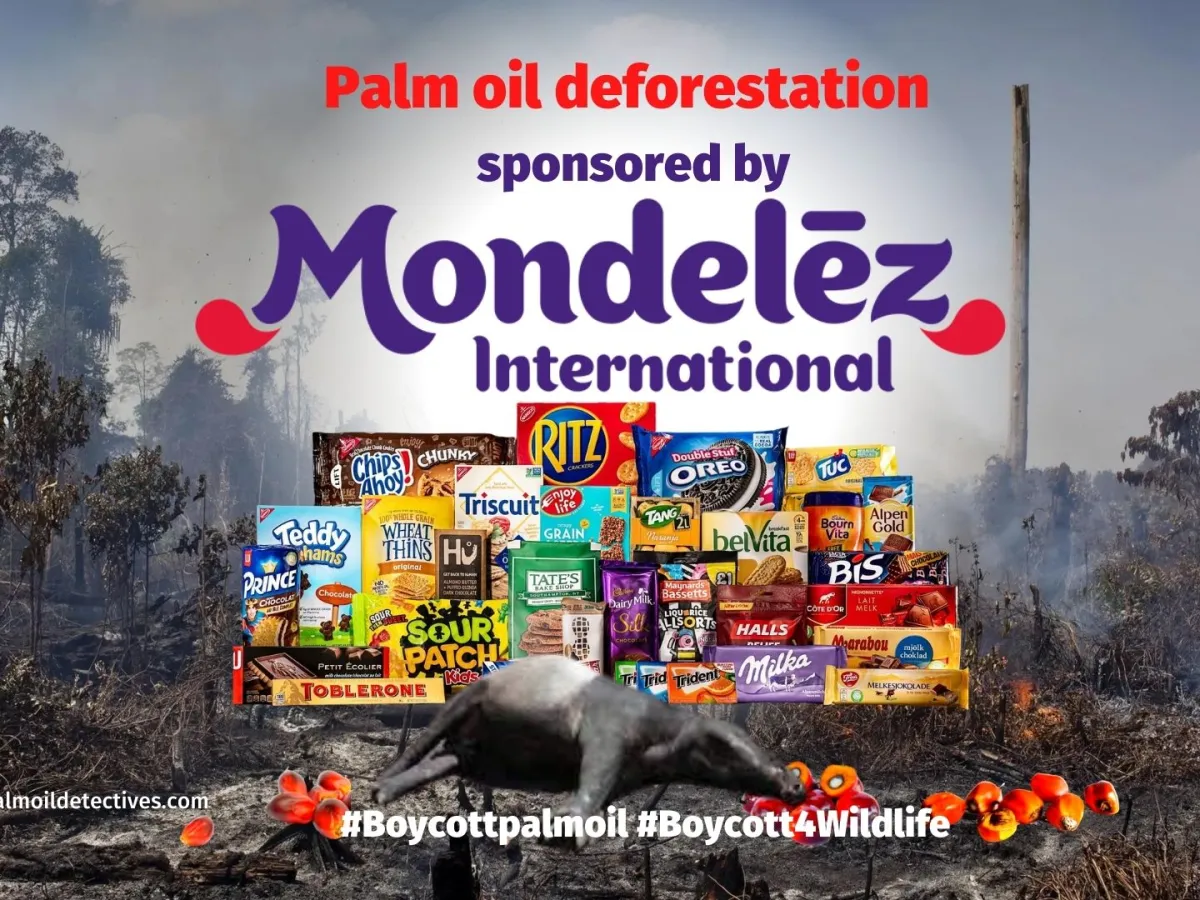
Mondelēz
Mondelez destroys rainforests, sending animals extinct and release mega-tonnes of carbon into air for so-called “sustainable” palm oil. Boycott them!
by Palm Oil DetectivesFebruary 9, 2021October 15, 2025
Unilever
In 2020, global retail giant Unilever unveiled a deforestation-free supply chain promise. By 2023 they would be deforestation free. This has been and gone and they are still causing deforestation. This brand has…
by Palm Oil DetectivesFebruary 9, 2021March 2, 2025
Danone
Savvy consumers have been pressuring French Dairy multinational Danone for decades to cease using deforestation palm oil. Yet they actually haven’t stopped this. From their website: ‘Danone is committed to eliminating deforestation from…
by Palm Oil DetectivesMarch 6, 2021March 2, 2025
PepsiCo
Despite decades of promises to end deforestation for palm oil PepsiCo (owner of crisp brands Frito-Lay, Cheetos and Doritos along with hundreds of other snack food brands) have continued sourcing palm oil that…
by Palm Oil DetectivesJune 9, 2022March 2, 2025
Procter & Gamble
Despite decades of promises to end deforestation for palm oil Procter & Gamble or (P&G as they are also known) have continued sourcing palm oil that causes ecocide, indigenous landgrabbing, and the habitat…
by Palm Oil DetectivesJune 3, 2022March 2, 2025
Kelloggs/Kellanova
In late 2023, Kelloggs became Kellanova for their US arm. Savvy consumers have been pressuring Kelloggs for decades to cease using deforestation palm oil. Yet they actually haven’t stopped this. From their website:…
by Palm Oil DetectivesFebruary 9, 2021March 2, 2025
Johnson & Johnson
Global mega-brand Johnson & Johnson have issued a position statement on palm oil in 2020. ‘At Johnson & Johnson, we are committed to doing our part to address the unsustainable rate of global…
by Palm Oil DetectivesFebruary 9, 2021July 13, 2025
PZ Cussons
PZ Cussons is a British-owned global retail giant. They own well-known supermarket brands in personal care, cleaning, household goods and toiletries categories, such as Imperial Leather, Morning Fresh, Carex, Radiant laundry powder and…
by Palm Oil DetectivesMarch 10, 2021March 2, 2025Take Action in Five Ways
1. Join the #Boycott4Wildlife on social media and subscribe to stay in the loop: Share posts from this website to your own network on Twitter, Mastadon, Instagram, Facebook and Youtube using the hashtags #Boycottpalmoil #Boycott4Wildlife.
Enter your email address
Sign Up
Join 3,526 other subscribers2. Contribute stories: Academics, conservationists, scientists, indigenous rights advocates and animal rights advocates working to expose the corruption of the palm oil industry or to save animals can contribute stories to the website.
Wildlife Artist Juanchi Pérez
Mel Lumby: Dedicated Devotee to Borneo’s Living Beings
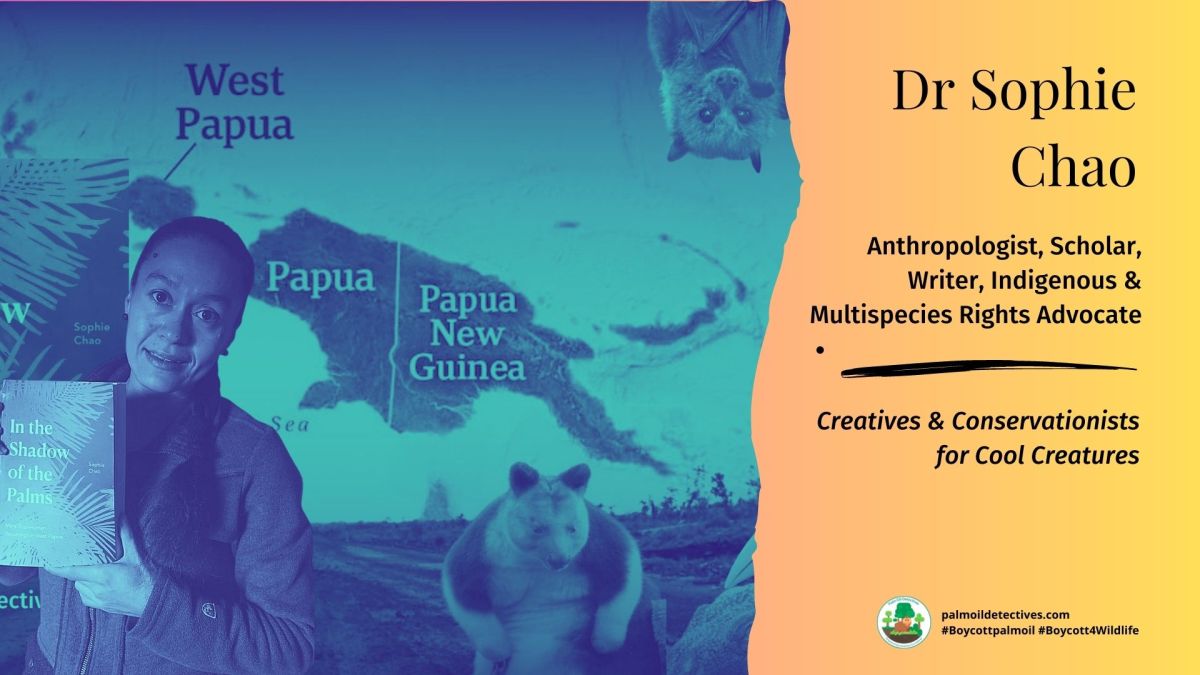
Anthropologist and Author Dr Sophie Chao

Health Physician Dr Evan Allen

The World’s Most Loved Cup: A Social, Ethical & Environmental History of Coffee by Aviary Doert

How do we stop the world’s ecosystems from going into a death spiral? A #SteadyState Economy
3. Supermarket sleuthing: Next time you’re in the supermarket, take photos of products containing palm oil. Share these to social media along with the hashtags to call out the greenwashing and ecocide of the brands who use palm oil. You can also take photos of palm oil free products and congratulate brands when they go palm oil free.
https://twitter.com/CuriousApe4/status/1526136783557529600?s=20
https://twitter.com/PhillDixon1/status/1749010345555788144?s=20
https://twitter.com/mugabe139/status/1678027567977078784?s=20
4. Take to the streets: Get in touch with Palm Oil Detectives to find out more.
5. Donate: Make a one-off or monthly donation to Palm Oil Detectives as a way of saying thank you and to help pay for ongoing running costs of the website and social media campaigns. Donate here
Pledge your support#360infoOrg #airPollution #BoycottPalmOil #Boycott4wildlife #BoycottPalmOil #carbonemissions #cleanair #corruption #cronyism #deforestation #fire #fossilFuels #fossilfuel #fossilfuels #greenwashing #humanHealth #Indonesia #Malaysia #PalmOil #palmOilDeforestation #palmoil #pollution #SouthEastAsia #TheAirWeShare #timber
Unsupported type or deleted object
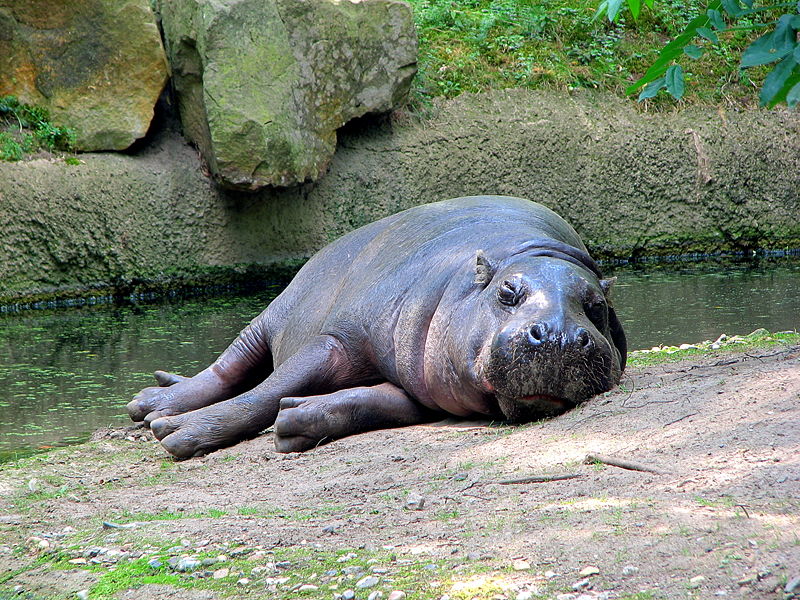
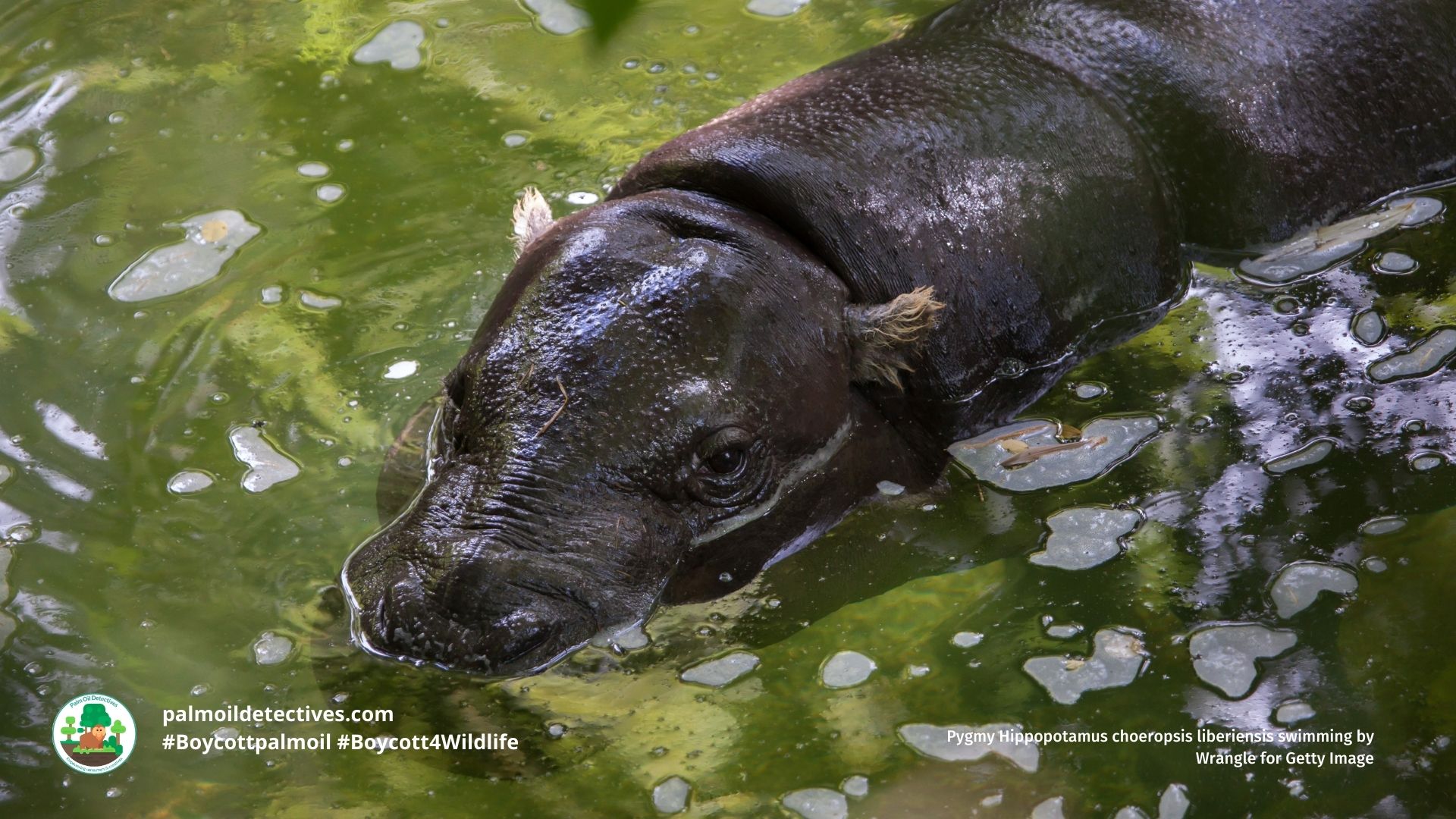
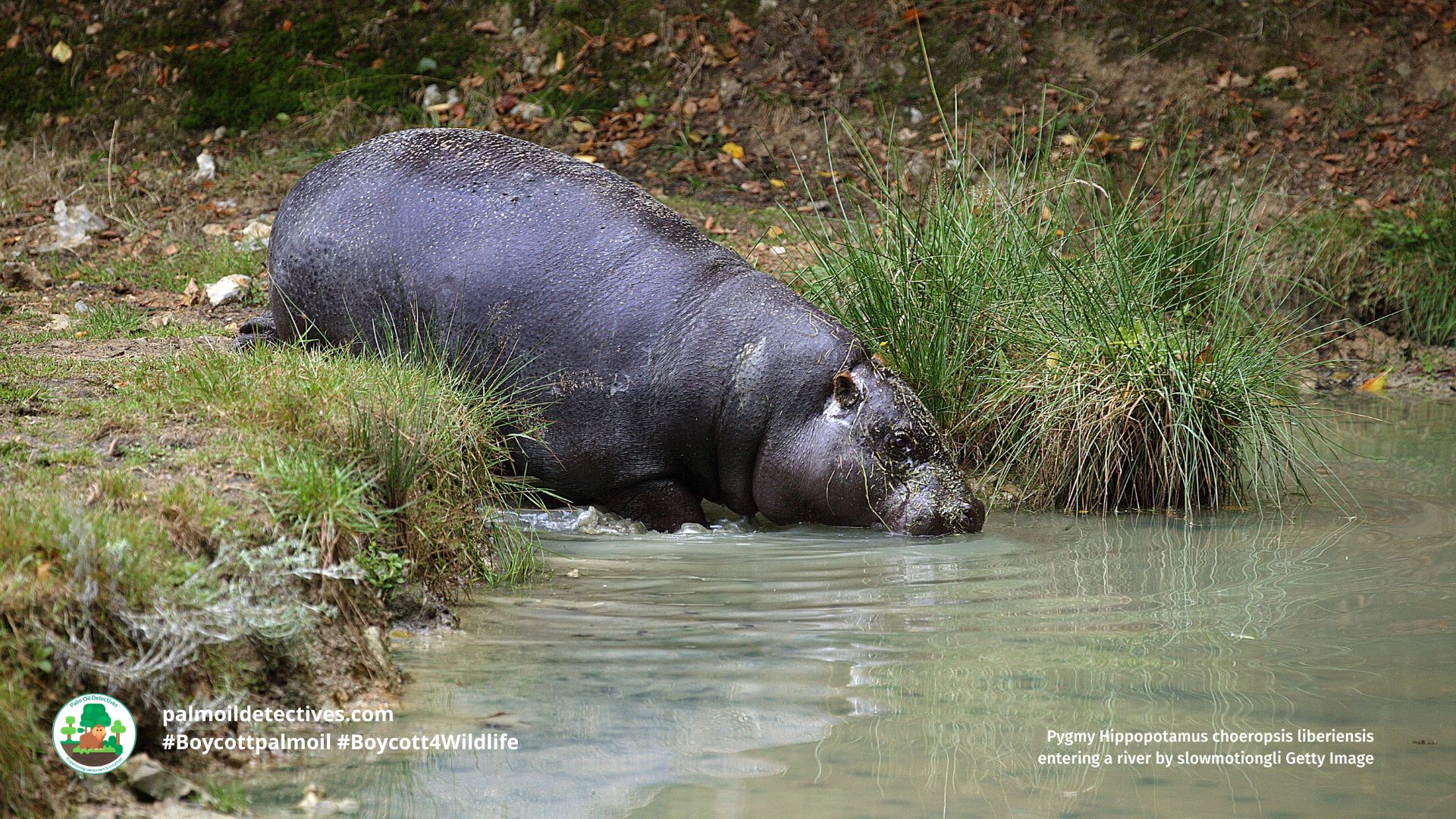
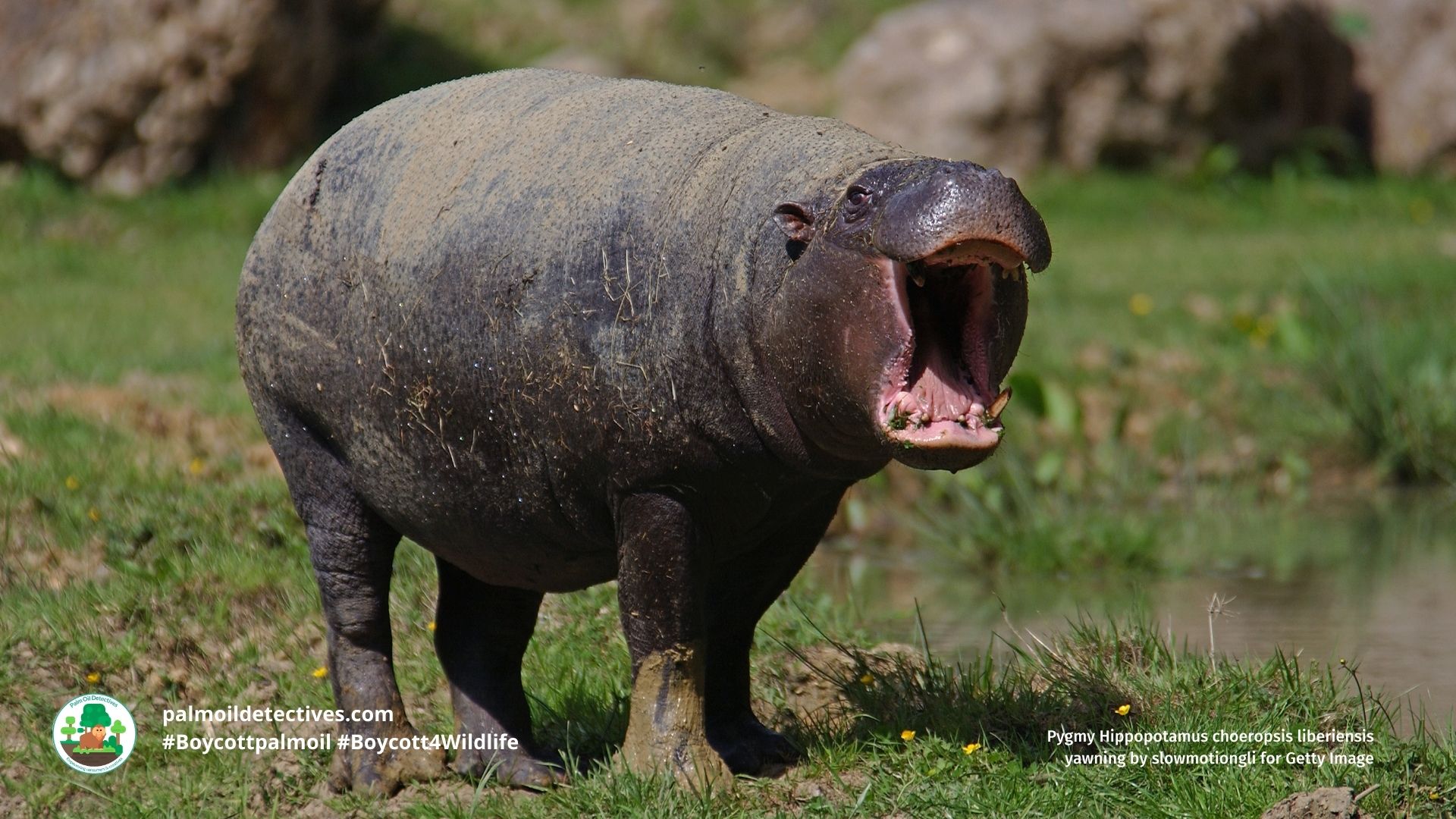
Pygmy Hippopotamus Choeropsis liberiensis
Pygmy Hippopotamus Choeropsis liberiensis
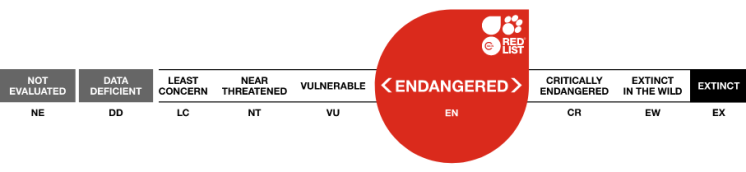
IUCN Status: Endangered
Location: The Pygmy Hippopotamus (Choeropsis liberiensis) is found in the dense forests, swamps, and riverbanks of West Africa, primarily in Liberia, Côte d’Ivoire, Sierra Leone, and Guinea. They rely on the remaining fragments of lowland rainforest, particularly near freshwater sources, where they navigate through dense undergrowth using well-worn trails.
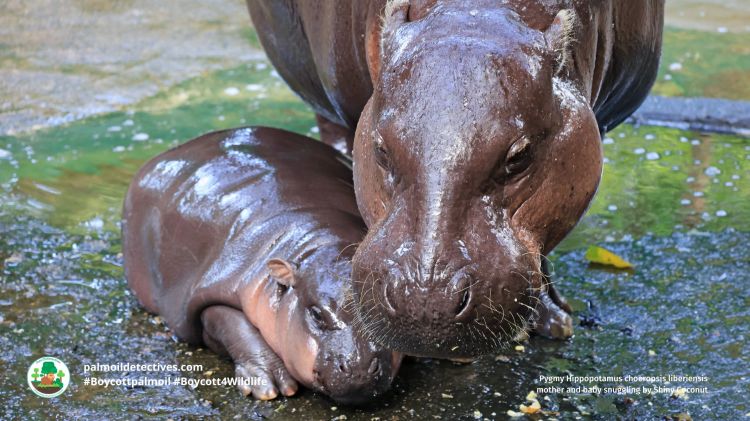
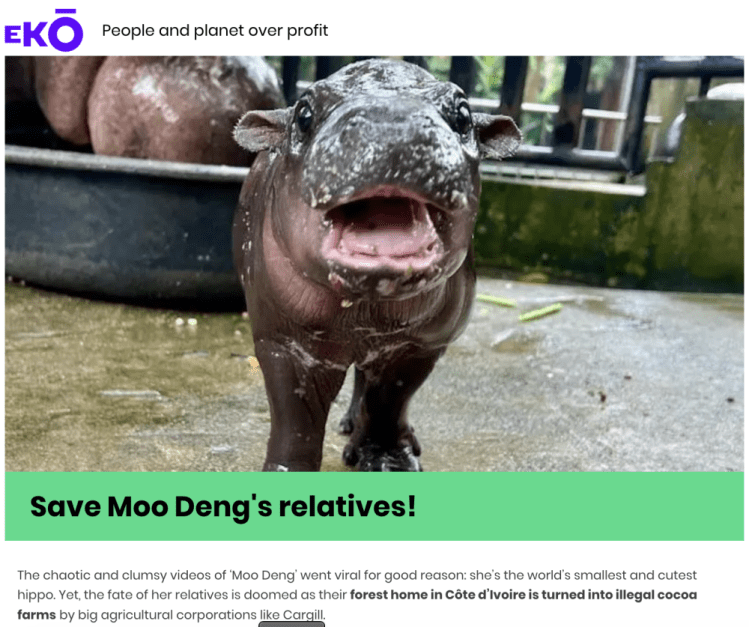
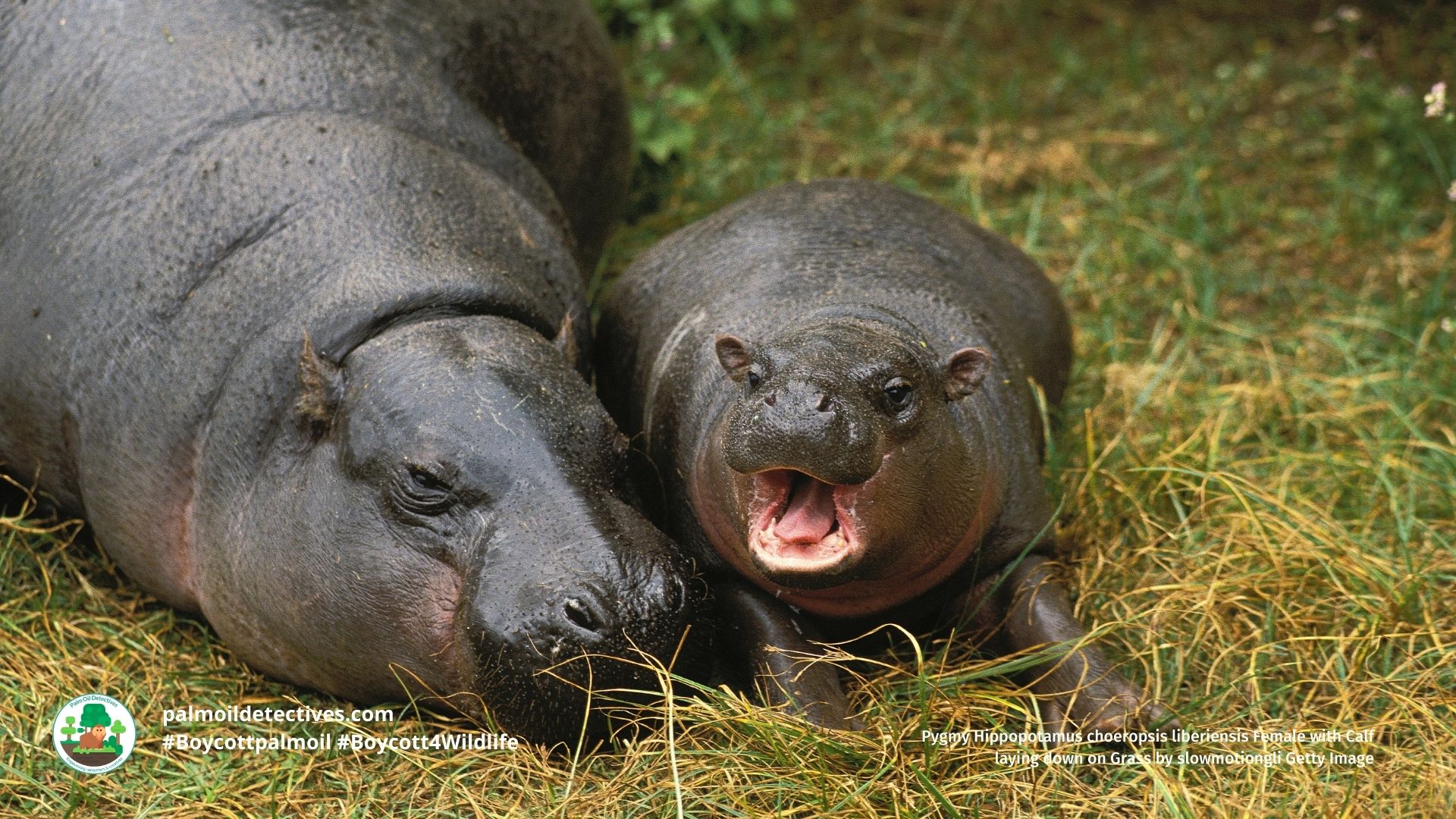
In the dwindling rainforests of West Africa, a rare and secretive #hippo clings to survival. The Pygmy #Hippopotamus (Choeropsis liberiensis) is a shy, nocturnal #mammal dwelling in rivers, distinct from its larger, more familiar relative, the Common Hippopotamus (Hippopotamus amphibius). Long before chubby #MooDeng 🦛💔 the baby pygmy hippo chonk became a social media sensation, the forest habitat of the beautiful pygmy #Hippo 🦛of #Guinea #Liberia 🇱🇷 #Africa was being razed for #palmoil, #cocoa and other crops. Unlike their river-dwelling cousins, Pygmy Hippos are primarily solitary, roaming through dense tropical forests in search of food. Their populations have been devastated by relentless deforestation, hunting, and habitat fragmentation, leaving them teetering on the brink of extinction. They now endangered. Such beautiful creatures deserve to be saved! There are now fewer than 2,500 individuals remaining in the wild. Fight back and #BoycottPalmOil 🌴🪔🚫 #Boycott4Wildlife every time you shop!
The forest habitat of the beautiful pygmy #Hippo 🦛of #Guinea #Liberia 🇱🇷 #Africa is being razed for #palmoil and other crops. They now endangered. Such a beautiful creature deserves to be saved! Fight back and #BoycottPalmOil 🌴🪔🚫 #Boycott4Wildlife https://wp.me/pcFhgU-Qp
Share to BlueSkyShare to TwitterLong before chubby #MooDeng 🦛💔 the baby pygmy #hippo chonk became an #socialmedia sensation, #Liberia’s #forests were being pulped for #palmoil #cocoa and #tobacco #agriculture 😡 Help her and 1000s of others to survive! Be #Vegan and #Boycott4Wildlife https://wp.me/pcFhgU-Qp
Share to BlueSkyShare to TwitterShare to Twitter and BlueSky!
If chubby and cute pygmy #hippo 🦛named #MooDeng could talk, she’d tell us all to stop staring at her online and instead to take action to save her home! Sign the #petition, be #Vegan and🍓🌱 #Boycottpalmoil #Boycott4Wildlife 🌴🪔🚫 @palmoildetect https://wp.me/pcFhgU-97b
Share to BlueSkyShare to TwitterSign petition
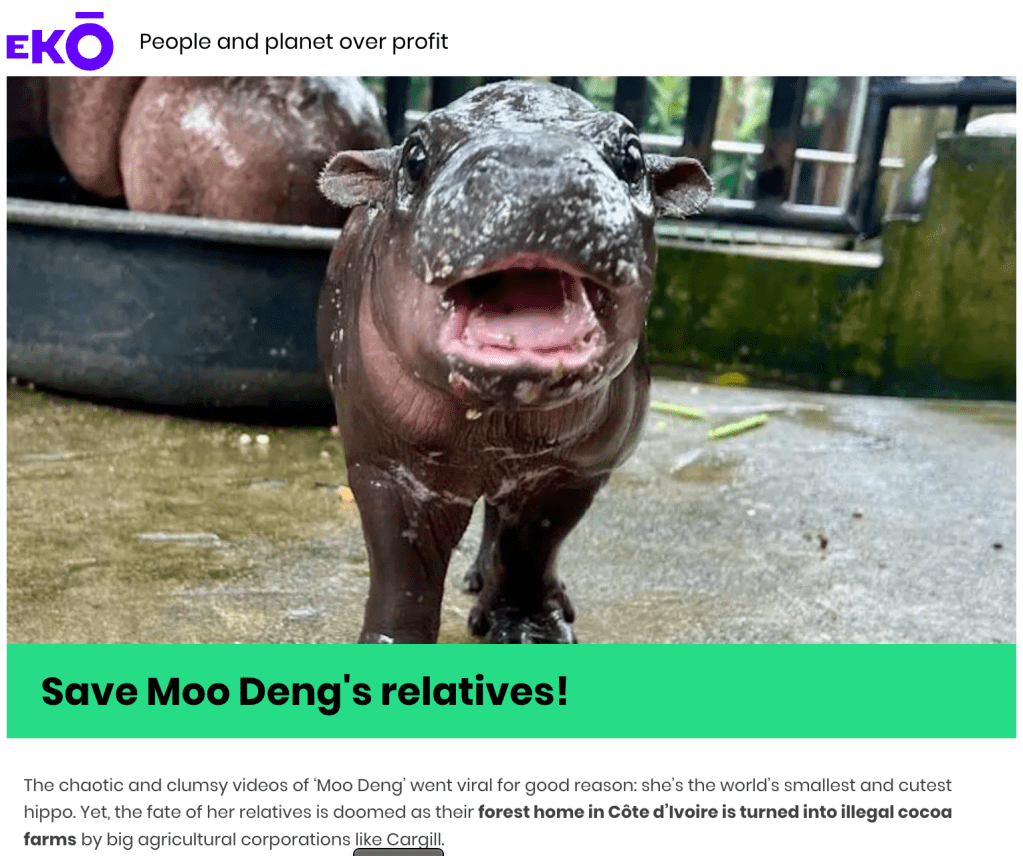 Sign Petition




Appearance and Behaviour
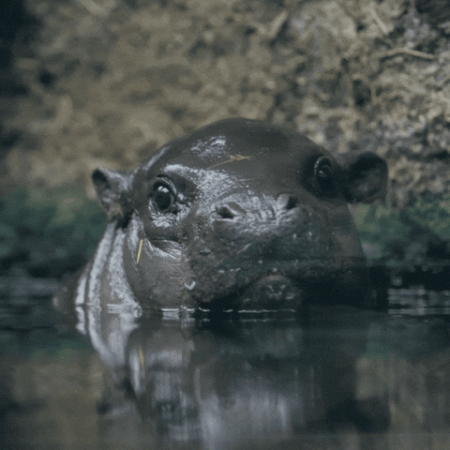
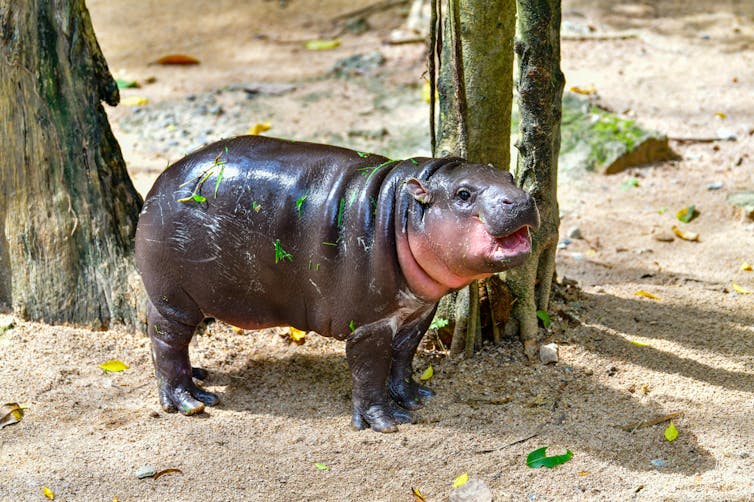
The Pygmy Hippopotamus is rarely seen because of their secretive, nocturnal habits and consequently not much is known of their ecology. This diminutive hippopotamus mainly inhabits lowland primary and secondary forests, close to rivers, streams and Raphia palm tree swamps sometimes being found along gallery forests extending into Transitional Woodland and the southern Guinea savanna.
Pygmy Hippos are significantly smaller than Common Hippos, standing only 70–80 cm tall at the shoulder and weighing between 180–270 kg (Saidu et al., 2022). Their compact bodies are adapted for navigating dense forests rather than open waterways. They possess smooth, hairless skin that secretes a natural mucus, acting as a protective barrier against dehydration and infection. This secretion has an unusual reddish tint, earning it the nickname “blood sweat,” though it has no connection to actual blood.
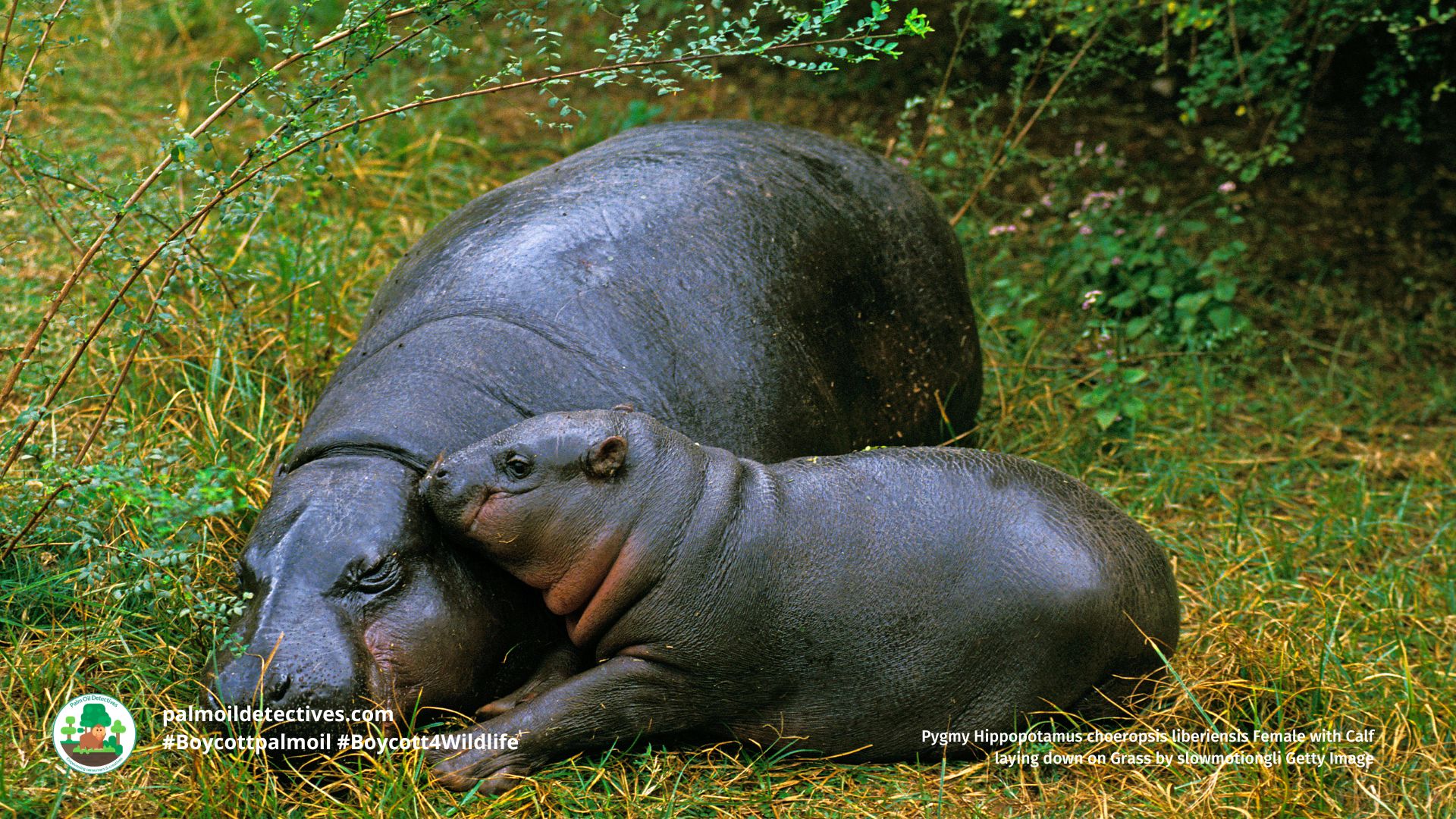
Unlike their gregarious relatives, Pygmy Hippos are solitary or found in pairs, with mothers keeping their calves hidden in secluded pools for extended periods. They are highly elusive and primarily active during twilight and nighttime hours. Camera traps in Liberia and Sierra Leone have shown that they move cautiously through forested wetlands, following well-worn trails that they mark with dung, a behaviour similar to that of their larger relatives.
Large areas of the original forest habitat, especially in Côte d’Ivoire, have been destroyed or degraded by commercial plantations of oil palm and other products, shifting cultivation, mining and logging, and hunting for bushmeat is increasing throughout the range (Mallon et al. 2011, FFI and FDA 2013).
IUCN Red List
Ecosystem Role
Pygmy Hippos play a crucial role in maintaining the health of forest ecosystems. By foraging on vegetation and dispersing seeds, they contribute to forest regeneration and seed dispersal. Their movements create pathways through dense undergrowth, benefiting other species by increasing habitat accessibility. However, their shrinking populations threaten these ecological functions, highlighting the importance of conservation efforts.
Predators
Few natural predators pose a significant threat to adult Pygmy Hippos, though young individuals are vulnerable to Leopards Panthera pardus, African Rock Pythons (Python sebae), and Nile Crocodiles Crocodylus niloticus. Camera trap evidence has also captured predation by African Golden Cats Caracal aurata and African Civet in some regions. However, human activity remains their greatest existential threat.
Threats
The Pygmy Hippopotamus Choeropsis liberiensis is facing a severe population decline due to habitat destruction, hunting, and increasing human pressures. Their remaining forested habitats are rapidly disappearing, leaving isolated populations vulnerable to extinction.
1. Deforestation and Habitat Loss
West Africa’s rainforests have been devastated by large-scale deforestation, with over 90% of the Upper Guinea Forest already lost. Shifting agriculture is the primary driver, with forests cleared at an accelerating rate to make way for crops and livestock. Expanding commercial plantations, particularly oil palm, rubber, and coffee, continue to erode remaining habitat. Mining operations, road construction, and infrastructure development have further fragmented the landscape, even encroaching into protected areas like Taï and Sapo National Parks. As human settlements expand, Pygmy Hippos are forced into smaller and more fragmented patches of forest, increasing their vulnerability.
2. Hunting and the Bushmeat Trade
Pygmy Hippos are increasingly being hunted, both opportunistically and for commercial sale. While not traditionally a primary target, they are killed for bushmeat in rural areas where alternative protein sources are scarce. Reports indicate that in some regions, commercial bushmeat markets have placed additional pressure on their populations. Their skulls, bones, and other body parts are sometimes used in traditional African medicine and spiritual practices. Additionally, free-ranging domestic dogs are known to attack and kill Pygmy Hippos, particularly young or weakened individuals.
3. Habitat Fragmentation and Isolation
The destruction of forest corridors has left Pygmy Hippo populations increasingly isolated, reducing genetic diversity and increasing the risk of local extinction. As forested areas continue to shrink, the lack of connectivity between populations means that even those in protected areas face long-term viability challenges. Habitat fragmentation also makes Pygmy Hippos more vulnerable to hunting, as roads and human settlements provide easier access to once-remote areas.
4. Competition with Humans and Livestock
With human populations in their range doubling every 20–30 years, there is ever-increasing pressure on natural resources. Domestic cattle increasingly compete with Pygmy Hippos for access to water sources, particularly during dry seasons. In many areas, pastoralists illegally graze their livestock inside national parks and reserves, further degrading critical Pygmy Hippo habitat. This competition not only depletes available resources but also increases human-wildlife conflict, often leading to retaliatory killings of Pygmy Hippos.
5. Climate Change and Environmental Pressures
Rising temperatures and prolonged dry seasons are altering the Pygmy Hippo’s habitat, reducing wetland areas essential for their survival. Changes in vegetation due to shifting rainfall patterns may further limit the availability of preferred food sources, forcing Pygmy Hippos to travel greater distances in search of sustenance. As forests become drier, wildfires pose an additional threat, accelerating habitat destruction and making remaining populations even more vulnerable.
Diet
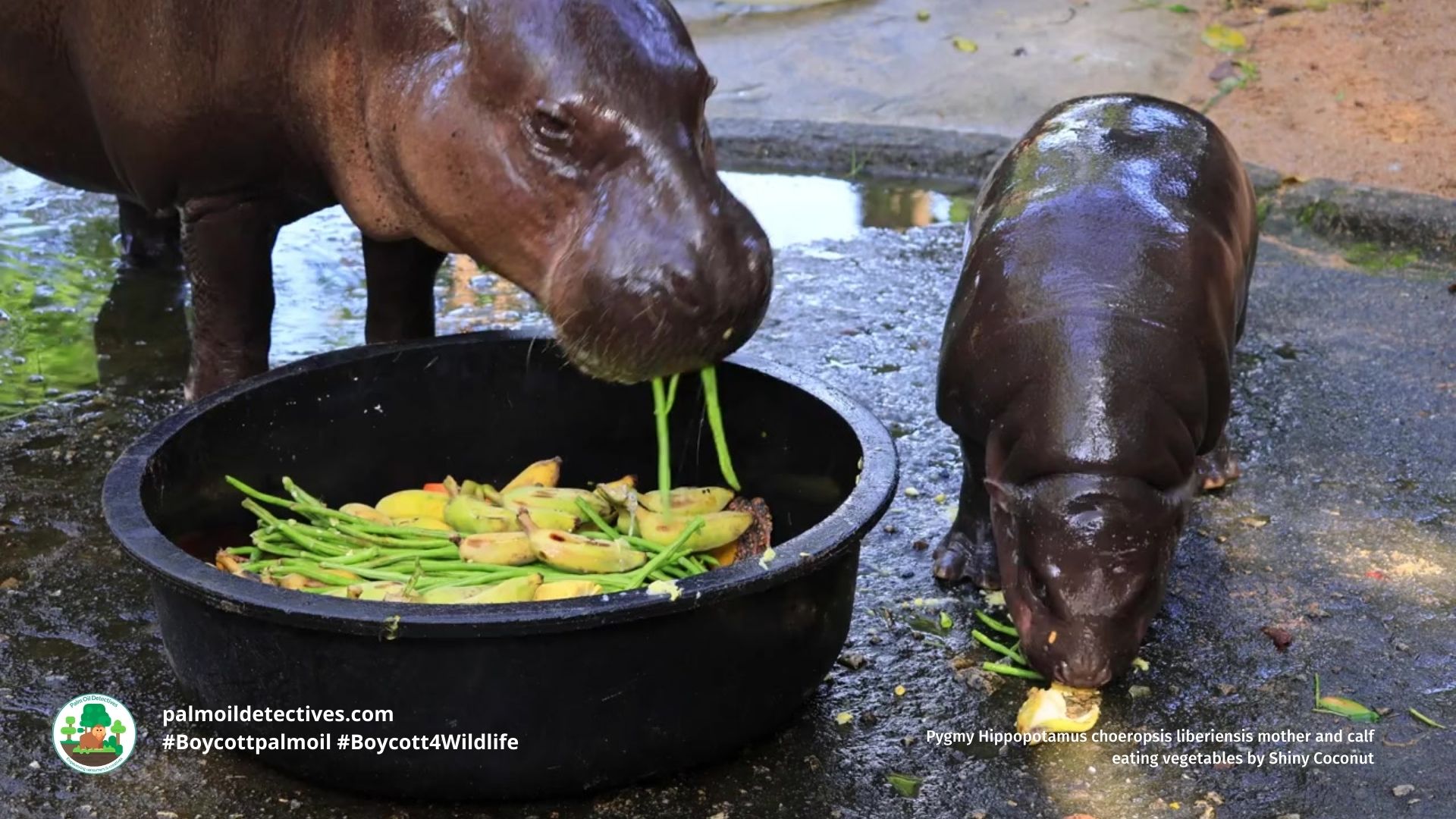
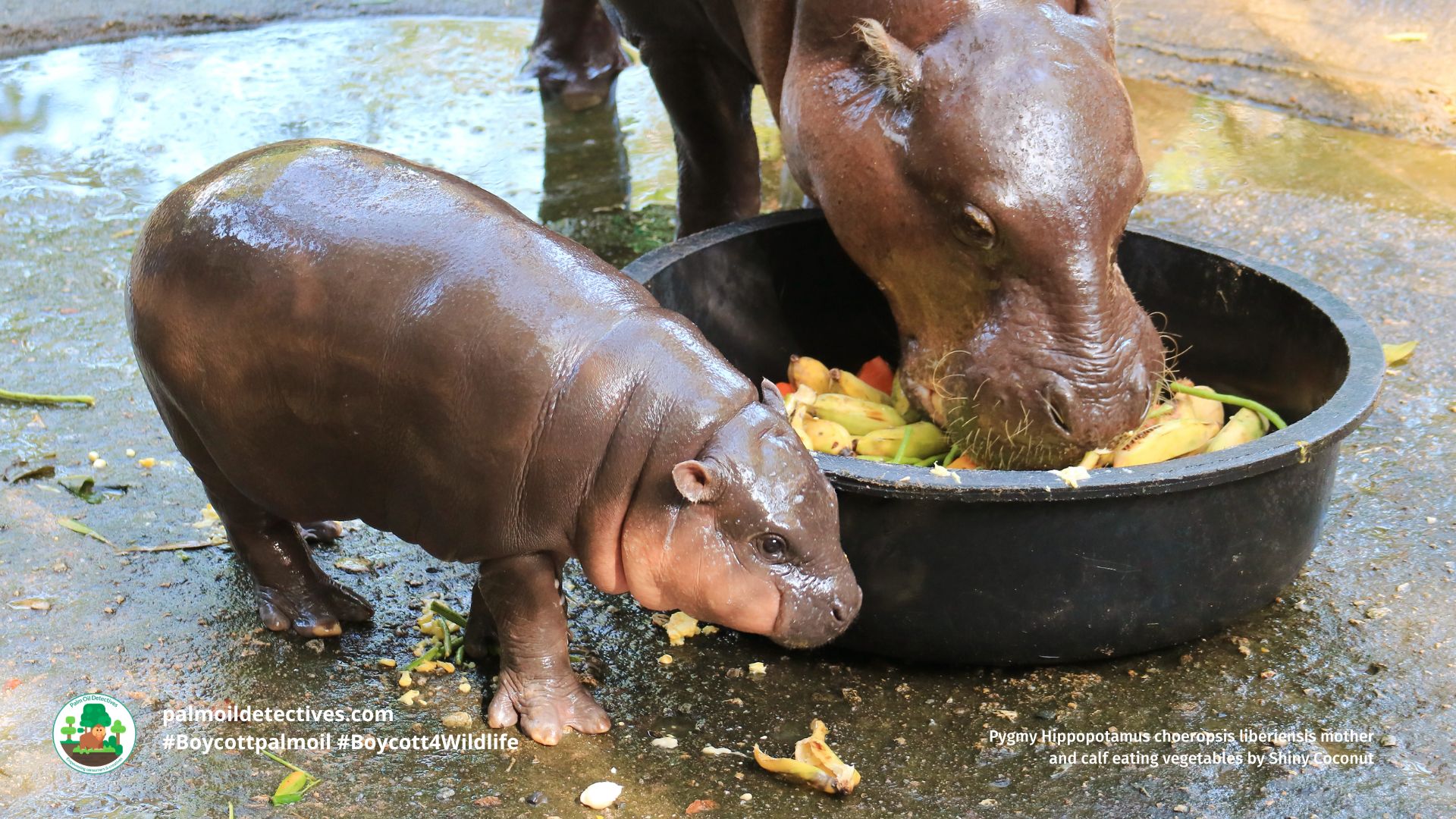
Pygmy Hippos are herbivorous, feeding primarily on forest vegetation. They consume ferns, tender roots, leaves, and fruit from various trees and plants. Research from Tiwai Island, Sierra Leone, identified key food sources, including sweet potato leaves (Ipomoea batatas), cacao (Theobroma cacao), okra (Hibiscus esculentus), and creeping vines such as Geophila obvallata. Unlike Common Hippos, they are less dependent on aquatic vegetation and do not graze extensively on grasses.
Reproduction and Mating
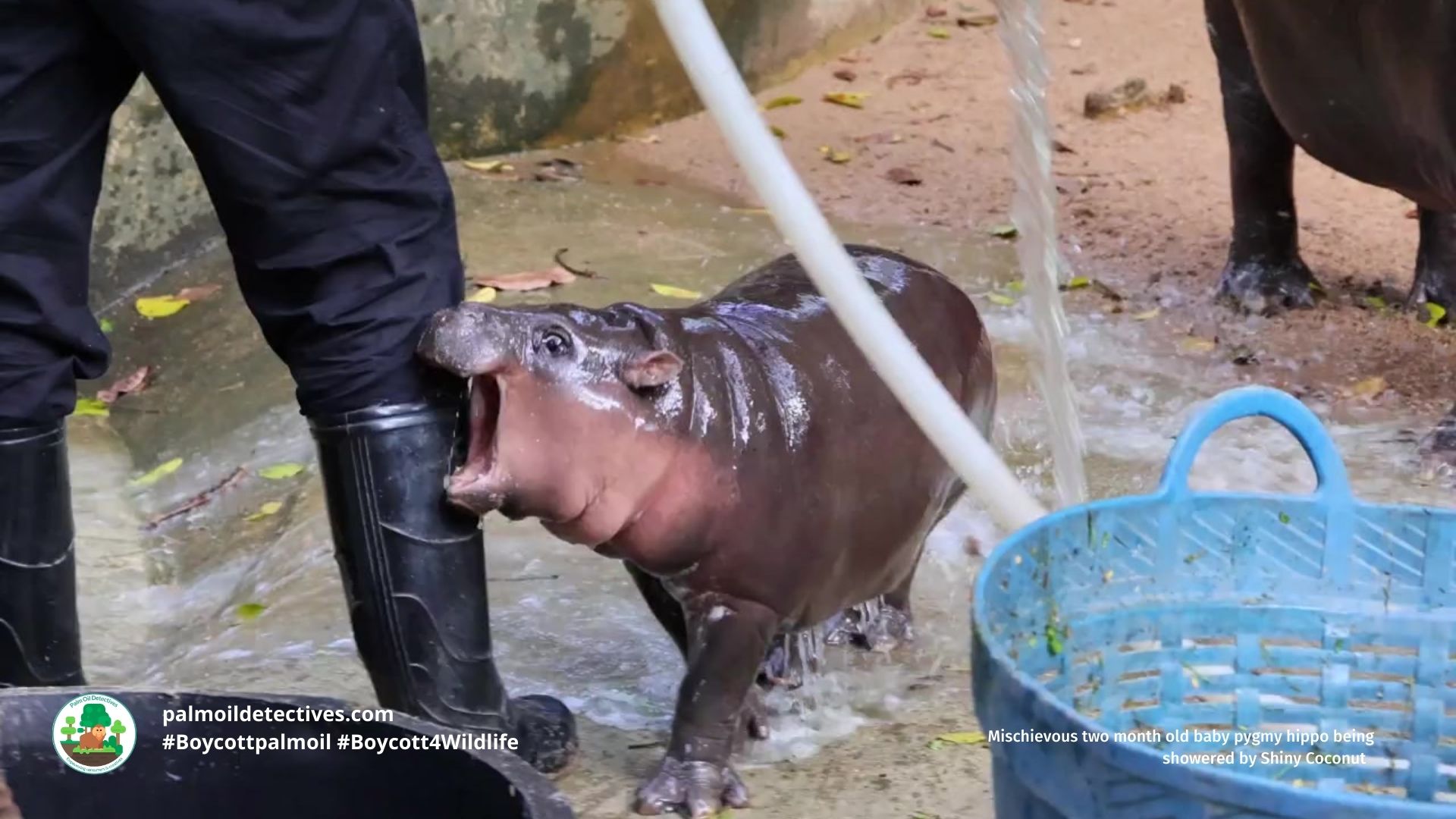
Little is known about the reproductive behaviour of Pygmy Hippos in the wild. Captive studies indicate that they reach sexual maturity at around 4–5 years, with a gestation period of approximately 188 days (Lang, 1975; Tobler, 1991). Females typically give birth to a single calf, weighing between 4.5–6.2 kg. Unlike Common Hippos, Pygmy Hippos give birth on land, and calves are left hidden in secluded pools while their mothers forage (Galat-Luong, 1981).
Geographic Range
Historically, Pygmy Hippos ranged widely across West Africa, but their distribution has dramatically contracted. Today, they are found in fragmented populations in Liberia, Côte d’Ivoire, Sierra Leone, and Guinea, primarily within protected areas such as Taï National Park and Sapo National Park (Ransom, Robinson & Collen, 2015). They prefer lowland tropical forests near rivers and swamps, where dense vegetation provides cover.
FAQs
1. How many Pygmy Hippopotamuses are left in the wild?
The exact population size of the Pygmy Hippopotamus is unknown due to their elusive nature and dense forest habitat, but estimates suggest fewer than 2,500 individuals remain in the wild. Their numbers are rapidly declining due to habitat loss, hunting, and human encroachment.
2. Why are Pygmy Hippos endangered?
Pygmy Hippos are endangered primarily due to deforestation, which has destroyed over 90% of the Upper Guinea Forest, their primary habitat. Additional threats include hunting for bushmeat, competition with livestock for water, and climate change, which is altering their wetland habitats.
3. How do Pygmy Hippos differ from Common Hippos?
Unlike their larger relatives, Pygmy Hippos are more terrestrial, reclusive, and nocturnal. They are about half the size of Common Hippos, lack the same level of aggression, and are adapted to life in dense forests rather than open rivers and lakes.
4. What do Pygmy Hippos eat?
Pygmy Hippos are herbivores, feeding on a variety of plants, ferns, fruits, and aquatic vegetation. Their diet consists of tender roots, leaves, fallen fruit, and occasionally cultivated crops like sweet potatoes, okra, and cassava.
5. Do Pygmy Hippos live in groups?
No, Pygmy Hippos are mostly solitary animals. They only come together for mating or when a mother is raising her calf. Unlike Common Hippos, they do not form large social groups.
6. Where can you find Pygmy Hippos?
They are found in the forests and swamps of West Africa, specifically in Liberia, Côte d’Ivoire, Sierra Leone, and Guinea. Small, scattered populations may exist in protected areas like Taï National Park and Sapo National Park.
7. How do Pygmy Hippos mark their territory?
Pygmy Hippos use a unique method of territory marking by vigorously wagging their tail while defecating. This spreads their dung across trails and vegetation, signaling their presence to other individuals.
8. How long do Pygmy Hippos live?
In the wild, their lifespan is estimated to be around 30 years, while in captivity, they can live up to 40 years due to the absence of predators and consistent food availability.
9. Do Pygmy Hippos have predators?
Adult Pygmy Hippos have few natural predators due to their size, but young individuals are vulnerable to leopards, nile crocodiles, and African rock pythons. However, their greatest threat comes from human activities, including illegal poaching and habitat destruction.
10. Can Pygmy Hippos swim?
Yes, Pygmy Hippos are excellent swimmers and rely on water for hydration, temperature regulation, and protection from predators. However, they spend more time on land than Common Hippos and are well adapted to moving through dense forests.
11. Do Pygmy Hippos make sounds?
Pygmy Hippos communicate using a variety of sounds, including grunts, bellows, and squeaks. These vocalisations are used for warning others, mating calls, and communication between mothers and calves.
12. Are Pygmy Hippos aggressive?
Pygmy Hippos are not as aggressive as Common Hippos, but they are highly territorial and can be defensive if threatened. Their reclusive nature makes human encounters rare.
13. Are Pygmy Hippos good parents?
Yes, female Pygmy Hippos are very protective of their young. They hide their calves in dense vegetation or secluded pools while they forage, returning regularly to nurse them.
14. How do Pygmy Hippos reproduce?
Pygmy Hippos reach sexual maturity at around 3–5 years old. They have a gestation period of about six months, typically giving birth to a single calf. Twins are very rare.
15. How can we help save Pygmy Hippos?
The best way to help protect Pygmy Hippos is by supporting conservation efforts that focus on preserving their remaining rainforest habitat. Avoiding products linked to deforestation, such as palm oil, and supporting organisations working to stop illegal hunting and deforestation are crucial. Always choose products that are 100% palm oil-free to avoid contributing to biodiversity loss.
Take Action
The survival of Pygmy Hippos depends on urgent conservation action. Their habitat continues to vanish due to deforestation, mining, and agriculture. Individuals and organisations can help by:
• Boycotting palm oil to reduce habitat destruction.
• Supporting wildlife conservation efforts in West Africa, particularly initiatives that focus on habitat restoration and anti-poaching measures.
• Advocating for stronger enforcement of hunting bans and protection of remaining forest areas.
• Educating local communities on the importance of conserving Pygmy Hippos and providing alternative livelihoods to reduce hunting pressure.
Always choose products that are 100% palm oil-free to avoid contributing to deforestation and biodiversity loss.
Support the conservation of this species
Further Information
Avedik, A., & Clauss, M. (2023). Chewing, dentition and tooth wear in Hippopotamidae (Hippopotamus amphibius and Choeropsis liberiensis). PLOS ONE, 18(10), e0291825. https://doi.org/10.1371/journal.pone.0291825
Eltringham, S. K. (1999). The Hippos: Natural History and Conservation. Academic Press. https://books.google.com.au/books/about/The_Hippos.html
Erazo-Mera, E., Younes, N., Horwood, P. F., Paris, D., Paris, M., & Murray, N. (2023). Forest loss during 2000–2019 in pygmy hippopotamus (Choeropsis liberiensis) habitats was driven by shifting agriculture. Environmental Conservation, 51(1), 55-63. https://doi.org/10.1017/S0376892923000310
Ransom, C, Robinson, P.T. & Collen, B. 2015. Choeropsis liberiensis. The IUCN Red List of Threatened Species 2015: e.T10032A18567171. https://dx.doi.org/10.2305/IUCN.UK.2015-2.RLTS.T10032A18567171.en. Downloaded on 15 February 2021
Saidu, J. B., Adewumi, A. A., Lameed, G. A., & Udo, A. J. (2022). Food preference of pygmy hippopotamus (Choeropsis liberiensis) in the Tiwai Island edge communities, South-Eastern Sierra Leone. Environtropica, 17, 014-026. https://www.researchgate.net/publication/386552939
Pygmy Hippopotamus Choeropsis liberiensis

How can I help the #Boycott4Wildlife?
Take Action in Five Ways
1. Join the #Boycott4Wildlife on social media and subscribe to stay in the loop: Share posts from this website to your own network on Twitter, Mastadon, Instagram, Facebook and Youtube using the hashtags #Boycottpalmoil #Boycott4Wildlife.
Enter your email address
Sign Up
Join 3,526 other subscribers2. Contribute stories: Academics, conservationists, scientists, indigenous rights advocates and animal rights advocates working to expose the corruption of the palm oil industry or to save animals can contribute stories to the website.
Wildlife Artist Juanchi Pérez
Mel Lumby: Dedicated Devotee to Borneo’s Living Beings
Anthropologist and Author Dr Sophie Chao
Health Physician Dr Evan Allen
The World’s Most Loved Cup: A Social, Ethical & Environmental History of Coffee by Aviary Doert
How do we stop the world’s ecosystems from going into a death spiral? A #SteadyState Economy
3. Supermarket sleuthing: Next time you’re in the supermarket, take photos of products containing palm oil. Share these to social media along with the hashtags to call out the greenwashing and ecocide of the brands who use palm oil. You can also take photos of palm oil free products and congratulate brands when they go palm oil free.
https://twitter.com/CuriousApe4/status/1526136783557529600?s=20
https://twitter.com/PhillDixon1/status/1749010345555788144?s=20
https://twitter.com/mugabe139/status/1678027567977078784?s=20
4. Take to the streets: Get in touch with Palm Oil Detectives to find out more.
5. Donate: Make a one-off or monthly donation to Palm Oil Detectives as a way of saying thank you and to help pay for ongoing running costs of the website and social media campaigns. Donate here
Pledge your support#Africa #Agriculture #Boycott4wildlife #BoycottPalmOil #cocoa #CoteDIvoire #EndangeredSpecies #forests #Guinea #hippo #hippopotamus #IvoryCoast #Liberia #Mammal #MooDeng #palmoil #petition #pollination #pollinator #PygmyHippopotamusChoeropsisLiberiensis #SeedDispersers #SierraLeone #socialmedia #tobacco #vegan #WestAfrica