Thailand Leaf-nosed Bat Hipposideros halophyllus
Thailand Leaf-nosed Bat Hipposideros halophyllus
IUCN Red List Status: Vulnerable
Location: Thailand (Chiang Mai, Lop Buri, Sara Buri, Sa Kaeo), Northern Peninsular Malaysia (Perlis)
Habitat: Limestone caves in lowland forests between sea level and 480 metres
The Thailand leaf-nosed #bat (Hipposideros halophyllus) is a #Vulnerable and elusive bat species confined to the limestone cave systems of # Thailand and northern Peninsular # Malaysia. With fewer than 10,000 individuals remaining, and many local populations under threat from limestone #mining, #palmoil and #timber deforestation, and #pesticide use, this cave-dwelling species is projected to decline by at least 15% over the next 15 years. Found only in isolated forest patches, these #bats are easily disturbed and highly sensitive to habitat change. Protecting them begins with rejecting destructive industries. Help them when you shop and #BoycottPalmOil #Boycott4Wildlife and adopt a #Vegan lifestyle.
Bats are absolutely essential to forest eco-systems. They pollinate plants and make the forest grow and also control insect populations. The Thailand Leaf-nosed Bat is species of Indonesian bat that is vulnerable and experiencing rapid loss of their limestone habitat in the area due to limestone mining (S. Bumrungsri pers. comm).
Thailand Leaf-nosed #Bats 🦇🖤🦇 are ecosystem guardians dispersing seeds in #rainforests of #Thailand 🇹🇭 and #Malaysia 🇲🇾 Hunting and rampant #deforestation are ravaging their numbers. Help flying #mammals, be #vegan 🥦 #Boycott4Wildlife @palmoildetect https://palmoildetectives.com/2021/01/24/thailand-leaf-nosed-bat-hipposideros-halophyllus/
Share to BlueSkyShare to Twitter
Appearance and Behaviour
The Thailand leaf-nosed bat is a small, insectivorous mammal characterised by a distinct horseshoe-shaped noseleaf that assists in echolocation. Though morphologically similar to its relatives in the Hipposideros bicolor group, H. halophyllus can be distinguished by its echolocation calls and skull shape. These bats roost communally in dark limestone caves, often choosing locations with narrow entrances and minimal light exposure. They are most active at dusk and dawn, remaining close to their roost, usually within a 2 km radius, to forage for insects.
Diet
Like many hipposiderid bats, the Thailand leaf-nosed bat is an insectivore. They use sophisticated echolocation to locate flying insects at night, including moths, beetles, and other small arthropods. Their foraging radius is limited, which makes intact, nearby forest habitat crucial to their survival.
Reproduction and Mating
Very little is known about their reproductive cycle. However, similar species in the Hipposideros genus tend to breed once a year, with females giving birth to a single pup. Maternity roosts are likely to be highly sensitive to disturbance, and young bats rely on secure cave environments for their early development.
Geographic Range
The species is found from northern Thailand (Chiang Mai, Lop Buri, Sa Kaeo, and Sara Buri) to northern Peninsular Malaysia (Perlis). Its range is severely fragmented, with key populations found in Khao Samor Khon and Pha Daeng Cave. Most known populations are small, isolated, and surrounded by agriculture and urban development, limiting gene flow and recolonisation opportunities.
Threats

Known localities are severely fragmented and surrounded by urban areas or rice fields where pesticide use is high. The bats were reported being hunted by local hunters at Khao Samor Khon (Lop Buri) and disturbed by tourist activities in Ton Chan Cave (Sara Buri) and Khao Yoi Cave (Petcha Buri) (Douangboubpha et al. 2010). This species is assessed as Vulnerable because the population is estimated to be less than 10,000 individuals, and they are expected to decline by 15% in the next 15 years (three generations).
In addition most known populations are outside protected areas and the forest habitat is highly disturbed due to livestock and deforestation (S. Bumrungsri pers. comm).
IUCN red list
- Limestone mining: Destruction of cave systems, especially outside protected areas
- Deforestation: Loss of surrounding forest for logging and agriculture
- Palm oil plantations: Expansion into forested areas reduces foraging grounds
- Tourism: Disturbance in caves such as Ton Chan and Khao Yoi
- Pesticides: High levels of pesticide use in adjacent rice fields impact insect prey and bat health
- Hunting: Local hunting at some roost sites (e.g. Khao Samor Khon)
Take Action!
Protecting the Thailand leaf-nosed bat means defending what remains of Southeast Asia’s ancient limestone ecosystems. Reject products that fuel deforestation and cave destruction, including palm oil. Support bans on limestone mining in biodiversity-rich zones and demand action against pesticide pollution. #BoycottPalmOil #Boycott4Wildlife #Vegan #BoycottMeat
FAQs
How many Thailand leaf-nosed bats are left?
The global population is estimated at fewer than 10,000 individuals, with most colonies extremely small and fragmented. The largest known group—at Khao Samor Khon in Thailand—is estimated to host only 1,000–1,400 bats (Waengsothorn et al., 2006). Many other sites have fewer than 200 bats, and no connectivity exists between populations.
Why are limestone caves so important for these bats?
Hipposideros halophyllus requires specific cave conditions: low elevation, limestone rock formations, small underground entrances, and stable humidity. These habitats provide protection from predators and climate extremes. Once a cave is mined, the bats cannot relocate easily, making habitat loss devastating (Douangboubpha et al., 2010).
Do palm oil plantations threaten bats?
Yes. Forest clearing for palm oil destroys the vegetation buffer around bat caves and reduces insect availability. The bats rarely travel far from their roosts, so losing surrounding forest can starve colonies and make them vulnerable to predators and heat stress.
Do Thailand leaf-nosed bats live in protected areas?
Most known populations are outside protected areas and vulnerable to mining, tourism, or hunting. The lack of formal protection makes conservation efforts difficult, and habitat degradation continues largely unchecked (IUCN, 2021).

What can we do to help protect them?
Support bans on mining in karst landscapes, avoid products with palm oil, and advocate for more protected areas in Thailand and Malaysia. Raising awareness and funding for bat surveys is also essential, as these bats are rarely monitored.
Further Information

Douangboubpha , B. & Soisook, P. 2016. Hipposideros halophyllus. The IUCN Red List of Threatened Species 2016: e.T10137A22092544. https://dx.doi.org/10.2305/IUCN.UK.2016-2.RLTS.T10137A22092544.en. Downloaded on 24 January 2021.
Douangboubpha, B., Bumrungsri, S., Soisook, P., Murray, S. W., Puechmaille, S. J., Satasook, C., Hla Bu, S. S., Harrison, D. L., & Bates, P. J. J. (2010). A taxonomic review of Hipposideros halophyllus, with additional information on H. ater and H. cineraceus (Chiroptera: Hipposideridae) from Thailand and Myanmar. Acta Chiropterologica, 12(1), 29–50. https://doi.org/10.3161/150811010X504572
Douangboubpha , B. & Soisook, P. 2016. Hipposideros halophyllus. The IUCN Red List of Threatened Species 2016: e.T10137A22092544. https://dx.doi.org/10.2305/IUCN.UK.2016-2.RLTS.T10137A22092544.en. Accessed on 18 April 2025.

Thailand Leaf-nosed Bat Hipposideros halophyllus

How can I help the #Boycott4Wildlife?
Take Action in Five Ways
1. Join the #Boycott4Wildlife on social media and subscribe to stay in the loop: Share posts from this website to your own network on Twitter, Mastadon, Instagram, Facebook and Youtube using the hashtags #Boycottpalmoil #Boycott4Wildlife.
Enter your email address
Sign Up
Join 3,529 other subscribers2. Contribute stories: Academics, conservationists, scientists, indigenous rights advocates and animal rights advocates working to expose the corruption of the palm oil industry or to save animals can contribute stories to the website.
Wildlife Artist Juanchi Pérez

Mel Lumby: Dedicated Devotee to Borneo’s Living Beings
Anthropologist and Author Dr Sophie Chao

Health Physician Dr Evan Allen

The World’s Most Loved Cup: A Social, Ethical & Environmental History of Coffee by Aviary Doert

How do we stop the world’s ecosystems from going into a death spiral? A #SteadyState Economy
3. Supermarket sleuthing: Next time you’re in the supermarket, take photos of products containing palm oil. Share these to social media along with the hashtags to call out the greenwashing and ecocide of the brands who use palm oil. You can also take photos of palm oil free products and congratulate brands when they go palm oil free.
https://twitter.com/CuriousApe4/status/1526136783557529600?s=20
https://twitter.com/PhillDixon1/status/1749010345555788144?s=20
https://twitter.com/mugabe139/status/1678027567977078784?s=20
4. Take to the streets: Get in touch with Palm Oil Detectives to find out more.
5. Donate: Make a one-off or monthly donation to Palm Oil Detectives as a way of saying thank you and to help pay for ongoing running costs of the website and social media campaigns. Donate here
Pledge your support#Agriculture #Bat #bats #Boycott4wildlife #BoycottMeat #BoycottPalmOil #deforestation #hunting #Malaysia #Mammal #mammals #mines #mining #palmoil #Paraquat #pesticide #pesticides #pollination #pollinator #rainforests #SouthEastAsia #Thailand #ThailandLeafNosedBatHipposiderosHalophyllus #timber #tourism #vegan #vulnerable #VulnerableSpecies
Unsupported type or deleted object
Thomas’s Big-eared Bat Pharotis imogene
Thomas’s Big-eared Bat Pharotis imogene
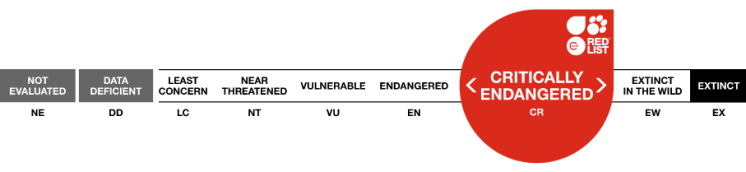
Status: Critically Endangered (IUCN 2016)
Location: Papua New Guinea – Central Province (Kamali District), lowland forests and coastal woodland regions
Thomas’s Big-eared #Bat Pharotis imogene, also known as the #NewGuinea Big-eared Bat, is one of the world’s rarest and most elusive #mammals- they are critically endangered by #PapuaNewGuinea. Thought to be #extinct for over a century, they were rediscovered in 2012 in Central Province, Papua New Guinea, in an area heavily impacted by palm oil deforestation, firewood collection, and land clearing for timber, mines and palm oil. Despite their rediscovery, habitat destruction due to palm oil expansion, logging, mining and human encroachment which continues to threaten their survival. Without urgent intervention, they may disappear again—this time, permanently. Help them every time you shop and #BoycottPalmOil #Boycott4Wildlife
Thomas’s Big Eared #Bats 🦇🖤 have trumpet like ears for ultra sensitive hunting of insects in #PapuaNewGuinea, Only a handful remain alive. #PalmOil and #mining are major threats. #BoycottGold #BoycottPalmOil 🌴🤮☠️⛔ #Boycott4Wildlife @palmoildetect.bsky.social https://palmoildetectives.com/2021/01/26/thomass-big-eared-bat-pharotis-imogene/
Share to BlueSkyShare to TwitterThis bat species is threatened by loss of woodland and forest habitat in general, especially in lowland regions near the coast.
IUCN Red List
Appearance and behaviour
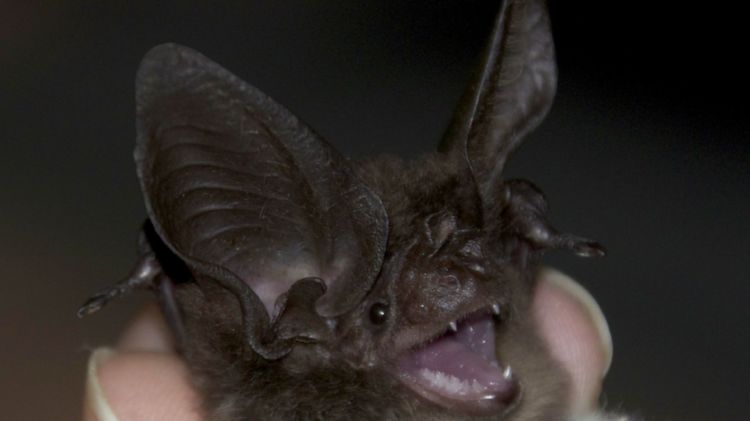
Thomas’s Big-eared Bat is a small, insectivorous bat with large ears that likely help them detect prey in dense undergrowth. Unlike other New Guinea bat species, they have a distinctively short, broad muzzle and a paler brownish-grey fur coat. Their large ears may also assist in echolocation, a vital adaptation for hunting in lowland tropical forests. Because they have been recorded in coastal and woodland regions, they are believed to rely on dense vegetation for roosting and foraging, though little is known about their social behaviours.
Threats
Palm oil and agricultural expansion
One of the biggest threats to Thomas’s Big-eared Bat is the expansion of palm oil plantations across Papua New Guinea. These industrial monocultures replace biodiverse forests with barren land, depriving them of the habitat they need to forage and roost. The use of pesticides in palm oil agriculture further contaminates soil and water sources, impacting the entire ecosystem.
Logging and habitat destruction
Widespread commercial logging operations, including the deliberate targeting of protected areas, have devastated much of the lowland and coastal forests where they once thrived. Even in areas where trees remain, habitat fragmentation makes it difficult for small, isolated populations to survive.
Firewood collection and human encroachment
The Kamali District, where Thomas’s Big-eared Bat was rediscovered, is experiencing increasing pressure from local human populations. Firewood collection, land clearing, and small-scale agriculture are rapidly reducing available roosting sites, forcing them into smaller and more vulnerable habitats.
Climate change and extreme weather
The lowland forests of Papua New Guinea are particularly vulnerable to the effects of climate change. Rising temperatures, increased droughts, and extreme weather events such as cyclones threaten to disrupt the delicate ecosystem that they depend on for survival.
Diet
Like other members of the Vespertilionidae family, Thomas’s Big-eared Bat is believed to be insectivorous. Their large ears and likely use of echolocation suggest that they prey on moths, beetles, and other nocturnal insects found in the undergrowth of forests. Because they are so rare, there is still much to learn about their specific feeding habits.
Reproduction and mating
Little is known about the reproductive behaviour of Thomas’s Big-eared Bat. Given what is understood about similar species, it is likely that females give birth to one or two offspring at a time, with newborns being highly dependent on their mothers for warmth and nutrition. Their breeding season and specific mating behaviours remain unknown due to a lack of field observations.
Geographic range
Thomas’s Big-eared Bat has only been recorded in Papua New Guinea’s Central Province, particularly in the Kamali District. Their habitat consists of lowland tropical forests and coastal woodlands, which have been increasingly degraded by human activity. They may have once been more widespread, but habitat destruction has likely reduced their range significantly.
FAQs
Are Thomas’s Big-eared Bats extinct?
No, but they were believed to be extinct for over a century until their rediscovery in 2012. However, their population is critically endangered due to severe habitat loss.
Where do Thomas’s Big-eared Bats live?
They are currently only known from Papua New Guinea’s Central Province, specifically in the Kamali District. They inhabit lowland forests and coastal woodlands.
What do Thomas’s Big-eared Bats eat?
They primarily feed on insects, including moths, beetles, and other small nocturnal prey. Their large ears and echolocation abilities help them locate food in dense forests.
Why are Thomas’s Big-eared Bats endangered?
Their biggest threats include habitat destruction caused by palm oil deforestation, logging, firewood collection, palm oil agricultural expansion, and climate change.
Can Thomas’s Big-eared Bats be kept as pets?
Absolutely not. Keeping wild bats as pets is both cruel and illegal. Thomas’s Big-eared Bat is a critically endangered species that belongs in the wild. They have specific ecological needs that cannot be met in captivity.
Take Action!
Every time you shop, you can help protect Thomas’s Big-eared Bat by choosing products that are palm oil free. The expansion of palm oil plantations is one of the biggest drivers of deforestation in Papua New Guinea, pushing species like Thomas’s Big-eared Bat closer to extinction. Support indigenous-led conservation efforts, avoid products that contribute to habitat destruction, and advocate for stronger protections for Papua New Guinea’s forests. Use your voice and wallet to make a difference. #BoycottPalmOil #Boycott4Wildlife
Further Information
Armstrong, K.D., Aplin, K. & Broken-brow, J. 2020. Pharotis imogene. The IUCN Red List of Threatened Species 2020: e.T16887A22114175. https://dx.doi.org/10.2305/IUCN.UK.2020-2.RLTS.T16887A22114175.en. Downloaded on 26 January 2021.
BirdLife International. (2016). Pharotis imogene. The IUCN Red List of Threatened Species 2016: e.T16887A22114175. https://www.iucnredlist.org/species/16887/22114175
Hamilton, S. (2014). Rediscovery of the New Guinea Big-eared Bat Pharotis imogene from Central Province, Papua New Guinea. Records of the Australian Museum, 66(4), 225–232. https://doi.org/10.3853/j.2201-4349.66.2014.1632
Wikipedia Contributors. (n.d.). New Guinea Big-eared Bat. Wikipedia, The Free Encyclopedia. Retrieved from https://en.wikipedia.org/wiki/New_Guinea_big-eared_bat
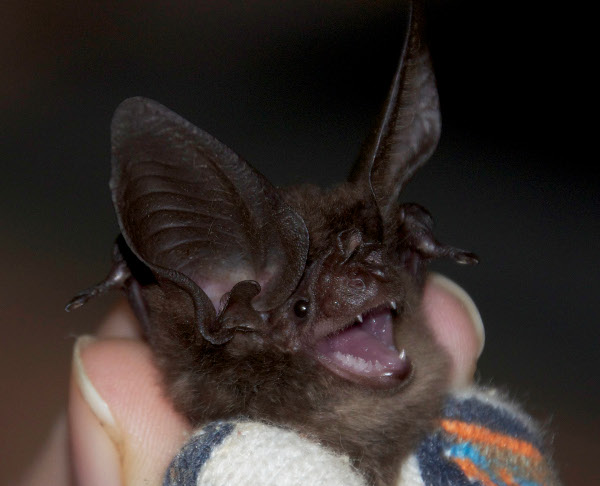
Thomas’s Big-eared Bat Pharotis imogene
How can I help the #Boycott4Wildlife?
Take Action in Five Ways
1. Join the #Boycott4Wildlife on social media and subscribe to stay in the loop: Share posts from this website to your own network on Twitter, Mastadon, Instagram, Facebook and Youtube using the hashtags #Boycottpalmoil #Boycott4Wildlife.
Enter your email address
Sign Up
Join 3,179 other subscribers2. Contribute stories: Academics, conservationists, scientists, indigenous rights advocates and animal rights advocates working to expose the corruption of the palm oil industry or to save animals can contribute stories to the website.
Wildlife Artist Juanchi Pérez
Read moreMel Lumby: Dedicated Devotee to Borneo’s Living Beings
Read moreAnthropologist and Author Dr Sophie Chao
Read moreHealth Physician Dr Evan Allen
Read moreThe World’s Most Loved Cup: A Social, Ethical & Environmental History of Coffee by Aviary Doert
Read moreHow do we stop the world’s ecosystems from going into a death spiral? A #SteadyState Economy
Read more3. Supermarket sleuthing: Next time you’re in the supermarket, take photos of products containing palm oil. Share these to social media along with the hashtags to call out the greenwashing and ecocide of the brands who use palm oil. You can also take photos of palm oil free products and congratulate brands when they go palm oil free.
https://twitter.com/CuriousApe4/status/1526136783557529600?s=20
https://twitter.com/PhillDixon1/status/1749010345555788144?s=20
https://twitter.com/mugabe139/status/1678027567977078784?s=20
4. Take to the streets: Get in touch with Palm Oil Detectives to find out more.
5. Donate: Make a one-off or monthly donation to Palm Oil Detectives as a way of saying thank you and to help pay for ongoing running costs of the website and social media campaigns. Donate here
Pledge your support #Bat #bats #BoycottPalmOil #Boycott4wildlife #BoycottGold #BoycottPalmOil #CriticallyEndangeredSpecies #deforestation #endangered #extinct #Indonesia #Mammal #mammals #mining #NewGuinea #palmoil #PapuaNewGuineaSpeciesEndangeredByPalmOilDeforestation #PapuaNewGuinea #pollination #pollinator #rainforests #ThomasSBigEaredBatPharotisImogenePapua New Guinea & West Papua: Species Endangered by Palm Oil Deforestation


