Unsupported type or deleted object
Conservation activists suing Indonesian zoo could inspire global action on endangered species trade
In a court in rural #Indonesia, an environmental group recently filed a lawsuit of global importance. Their case is against a zoo in North #Sumatra that it’s alleged illegally exhibited threatened species, including Komodo dragons and critically endangered Sumatran #orangutans. The illegal wildlife trade is a multibillion-dollar industry that threatens species globally, from #elephants to orchids. Plants, animals and fungi are harvested from the wild and sold to customers around the world as attractions in zoos, as pets, for food, as souvenirs or as medicine. Help animals and #BoycottWildlifeTrade #Boycott4Wildlife
People caught trafficking wildlife are typically tried in criminal law cases, in which courts impose fines or prison sentences that punish the responsible parties in order to deter would-be criminals. But in this recent case, rather than seek punishment against the Indonesian zoo, the activists brought a civil lawsuit ordering the zoo to remedy the harm it allegedly caused by exhibiting these species illegally.
Lawsuit by activists against #zoo in #Indonesia for harm caused by illegally exhibiting endangered #species was successful. It’s a new way to protect #wildlife from illegal and cruel #trafficking #Boycottpalmoil #Boycott4Wildlife Images @CraigJones17 https://palmoildetectives.com/2022/04/03/conservation-activists-suing-indonesian-zoo-could-inspire-global-action-on-endangered-species-trade/
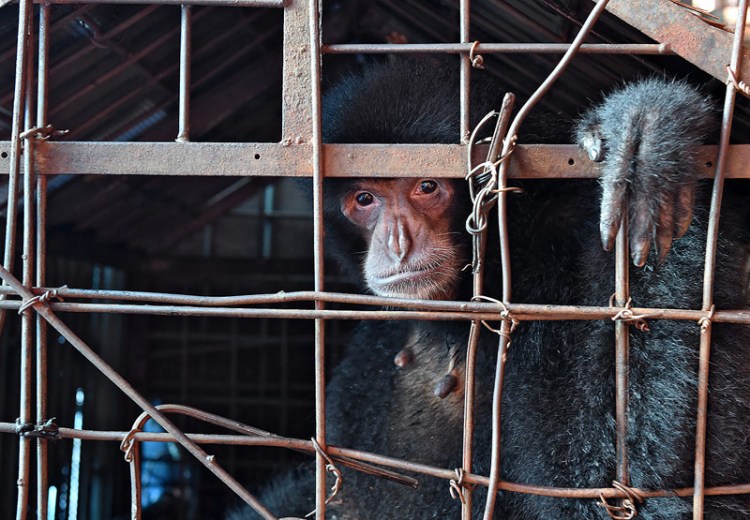
Share to BlueSkyShare to Twitter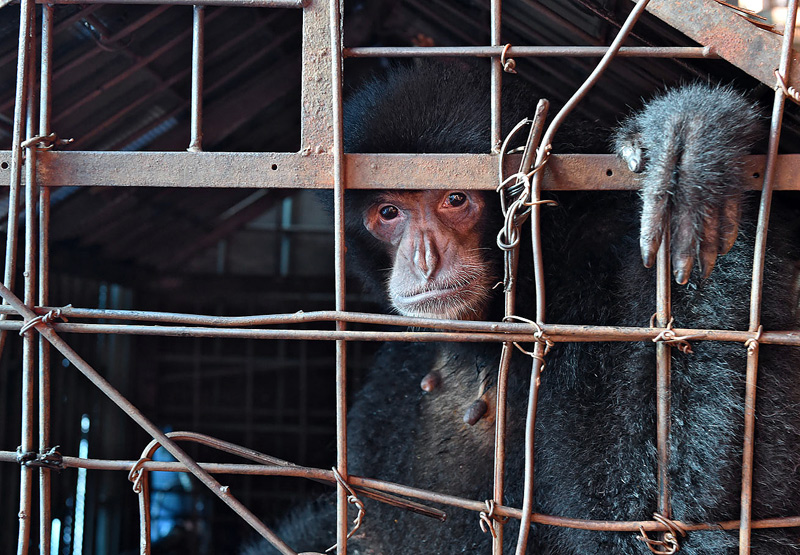 This siamang has spent her whole life in this cage, a vision that was a true nightmare. Craig Jones Wildlife Photography
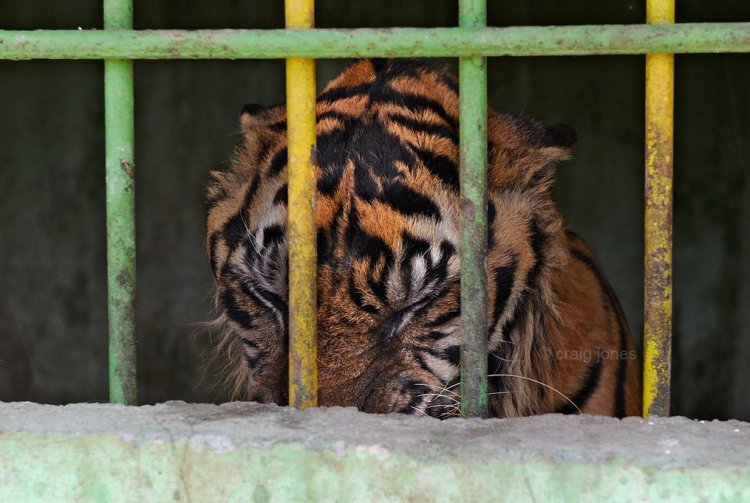
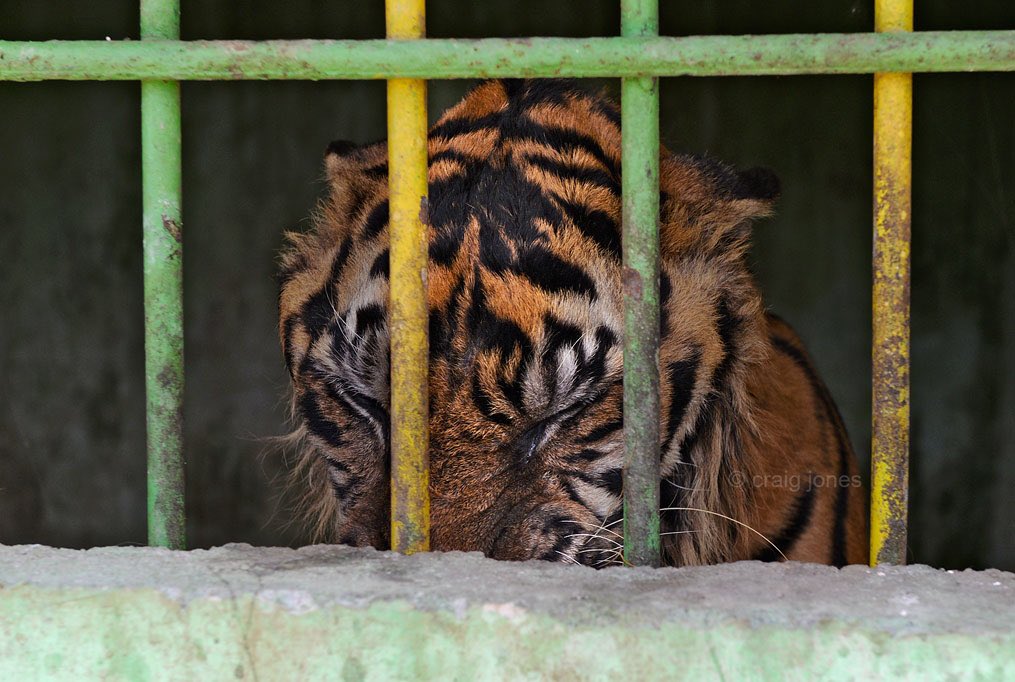 A Sumatran tiger help in a tiny cage struggles to stay alive. Craig Jones Wildlife photography A captured Siamang and a captured tiger in Indonesia. Photos by Craig Jones Wildlife Photography
 In the press release announcing the lawsuit, the North Sumatra Chapter of the Indonesian Forum for the Environment (Walhi Sumut) and Medan Legal Aid Institute said they were suing to cover the costs of care for one Sumatran orangutan confiscated from the zoo, and to fund monitoring of orangutan habitat to aid the recovery of their wild population. The resulting bill exceeds US$70,000 (£49,438). The typical criminal sanction for wildlife crime in Indonesia is around US$3,500.
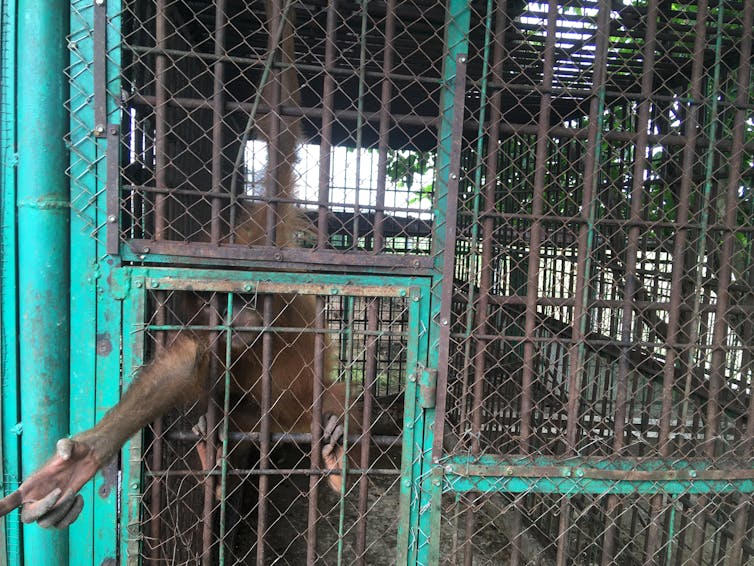 One of the orangutans in the zoo before it was confiscated in 2019. Walhi North Sumatra, Author provided
The activists are also asking the zoo to publicly apologise and to create educational exhibits that explain how the illegal trade and use of wildlife harms nature and society. Surprisingly, these types of legal strategies that aim to repair harm – rather than punish perpetrators – have been largely overlooked by conservationists in many countries. The Indonesian zoo lawsuit could demonstrate the value of a new legal approach for protecting threatened wildlife.
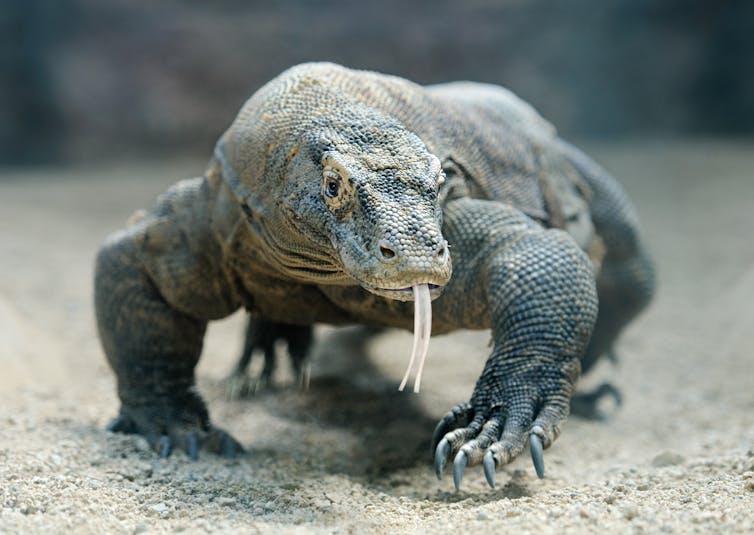 Komodo dragons were illegally exhibited at the zoo. Anna Kucherova/Shutterstock
Historical precedents
The zoo lawsuit parallels landmark pollution cases, such as the Exxon Valdez and Deepwater Horizon oil spills, where the responsible parties (in these cases, oil companies) were sued by government agencies and citizens and required to clean up pollution, compensate victims and restore affected habitats. It is also similar to innovative climate change lawsuits that have argued for the world’s largest oil and gas companies to pay for building protective sea walls, and other measures which help mitigate the effects of global warming.
Similar legal approaches haven’t been a major part of enforcing conservation laws. But through our work in Conservation Litigation – a project led by conservationists and lawyers – colleagues and I are working to bring such lawsuits against offenders globally.
Many countries already have laws that would allow these lawsuits, including in biodiversity hotspots such as Mexico, Democratic Republic of Congo and Indonesia. The 1992 UN Rio Convention called on states to “develop national law[s] regarding liability compensation for the victims of pollution and other environmental damage”. Although laws that oblige offenders to remedy environmental harm have been established already, the Indonesian zoo case is unique as one of the first times such a law has been applied to address wildlife crime. https://player.vimeo.com/video/510514912
The case could serve to influence public views and policies around biodiversity. This has been an important benefit of litigation in other areas, such as in cases against tobacco companies and opioid manufacturers.
Over the years, these lawsuits have secured compensation for healthcare costs, public admissions of guilt from executives and corrective adversiting to clarify earlier misinformation. These cases have not only benefited individual victims, but helped shift attitudes and reform public health policies and company practices.
The zoo lawsuit could achieve something similar by holding the zoo liable for downstream harms caused by its involvement in the illegal wildlife trade. By requesting public apologies and support for educational programmes, the lawsuit would not only seek to remedy harm to individual animals and species, but to help shape public perceptions and policy.
It’s also significant that this case is being brought by a non-governmental organisation (NGO). Governments can bring criminal cases against offenders, while the NGOs cannot. But in many countries, citizens and civil society groups are permitted to launch civil lawsuits in response to environmental harm, expanding the potential for public conservation action.
These types of lawsuits are often hindered by difficulties paying lawyers, corruption in legal systems and the intimidation of activists. With more than one million species potentially facing extinction, it’s important to recognise and support these rare cases which are testing new ways to protect the planet’s most threatened forms of life.
Jacob Phelps, Senior Lecturer in Conservation Governance, Lancaster University
This article is republished from The Conversation under a Creative Commons license. Read the original article.
How can I help the #Boycott4Wildlife?
1. Join the #Boycott4Wildlife: Share posts from this website to your own network on Twitter, Instagram and Facebook using the hashtags #Boycottpalmoil #Boycott4Wildlife.
2. Contribute stories: Academics, conservationists, scientists, indigenous rights advocates and animal rights advocates working to expose the corruption of the palm oil industry or to save animals can contribute stories to the website.
3. Supermarket sleuthing: Next time you’re in the supermarket, take photos of products containing palm oil. Share these to social media along with the hashtags to call out the greenwashing and ecocide of the brands who use palm oil. You can also take photos of palm oil free products and congratulate brands when they go palm oil free.
4. Take to the streets: Get in touch with Palm Oil Detectives to find out more.
5. Donate: Make a one-off or monthly donation to Palm Oil Detectives as a way of saying thank you or to help pay for ongoing running costs.
ContributeEnter your email address
Sign Up
Join 3,528 other subscribersShare palm oil free purchases online and shame companies still using dirty palm oil!
Don’t forget to tag in #BoycottPalmOil #Boycott4Wildlife to get shared
https://twitter.com/ECOWARRIORSS/status/1625103083175923713
https://twitter.com/MAPICC2021/status/1643269215929999360
https://twitter.com/netzfrauen/status/1806059662703222960
https://twitter.com/JosieAllan4/status/1716432333698392163
https://twitter.com/ChiweenieT14381/status/1872709841040687385
#animalBehaviour #animalCruelty #animalExtinction #animalRights #AnimalCruelty #animalrights #Boycott4wildlife #BoycottPalmOil #BoycottWildlifeTrade #corruption #crime #deforestation #ecocide #elephants #illegalPetTrade #Indonesia #orangutans #petTrade #species #Sumatra #SumatranOrangutanPongoAbelii #trafficking #wildlife #wildlifeActivism #wildlifetrade #Zoo

 Okapi Okapia johnstoni