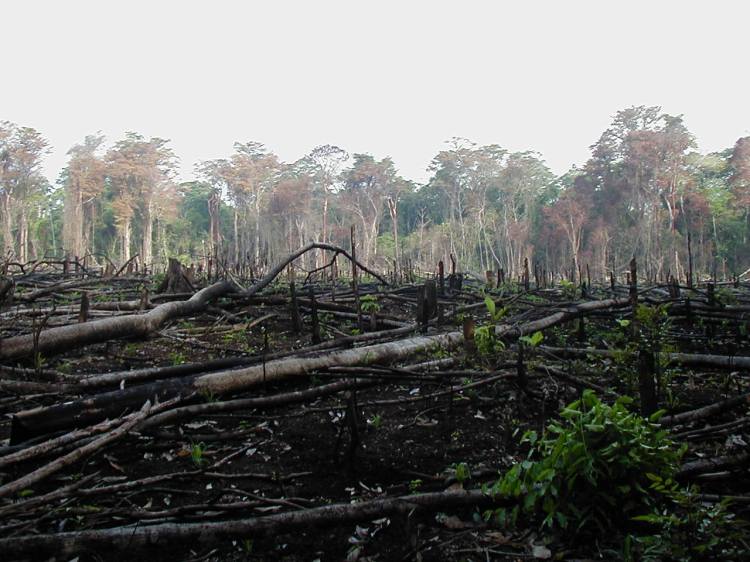
Deadly Harvest: How Demand for Palm Oil Fuels Corruption in Honduras


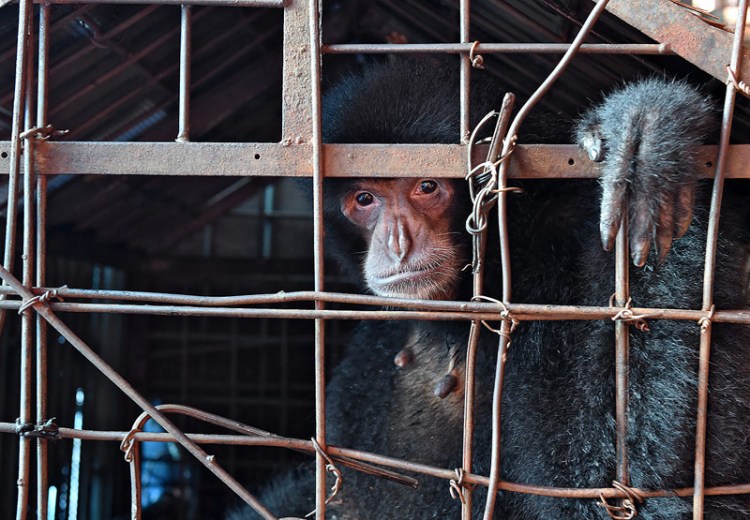
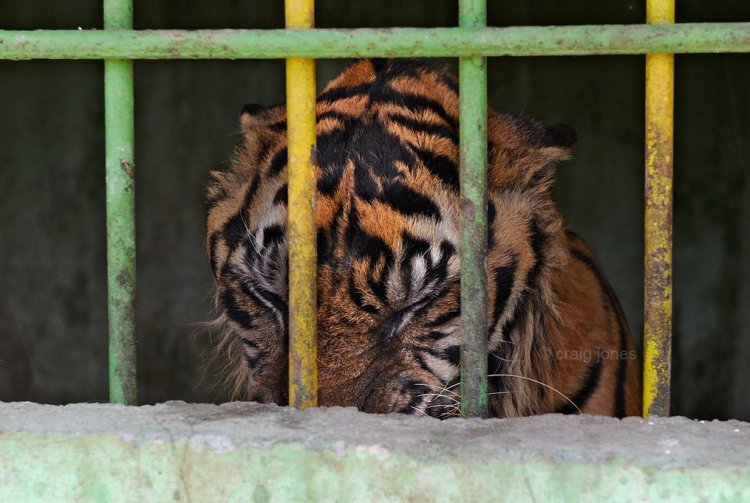
Latin America is the fastest-growing producer of palm oil, but at what price for the environment and its defenders? Park rangers in Honduras tell harrowing tales of daily threats to their lives and real dangers they face in the long-term fight for protect Honduran rainforests, indigenous peoples and animals from annihilation #BoycottPalmOil #Boycott4Wildlife


🌿 #LatinAmerica’s #Honduras is rapidly increasing #palmoil production – at HUGE cost. Rangers face daily death threats 💀 while defending #rainforests 🌳 #indigenous peoples and #wildlife. 💔 Fight back! #BoycottPalmOil #Boycott4Wildlife @palmoildetect https://wp.me/pcFhgU-8YV

Share to BlueSky Share to Twitter

💀 Park rangers in #Honduras 🇭🇳 #SouthAmerica risk their lives every day to protect animals 🐒 #indigenous peoples and #rainforests from #palmoil plantations. Their fight is real. Resist when u shop! 💪 #BoycottPalmOil #Boycott4Wildlife @palmoildetect https://wp.me/pcFhgU-8YV

Share to BlueSkyShare to Twitter

Words and photography by Fritz Pinnow in Tela, Honduras. Originally published in The Guardian, 27 November, 2023 and republished via the Guardian’s open license agreement, read original article.


Park ranger Adonias Cruz was out monitoring illegal oil palm crops in Blanca Jeannette Kawas national park, on the north coast of Honduras, on 10 September, when an unknown armed man came to his flat and rang the bell. When the stranger realised Cruz was out, he left him a death threat.

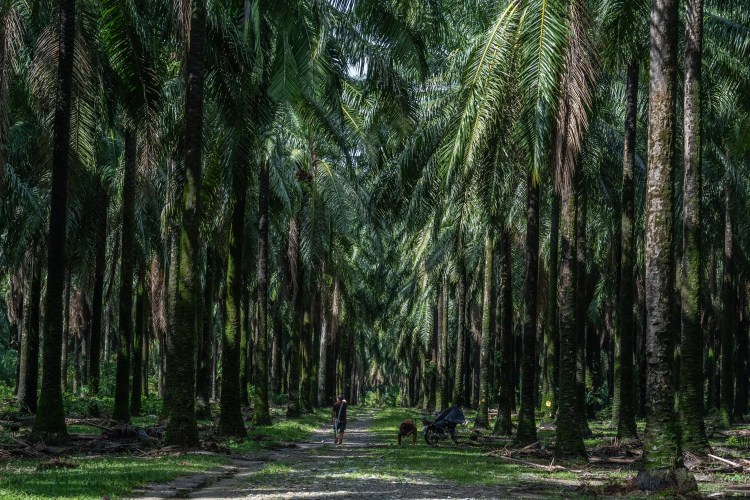
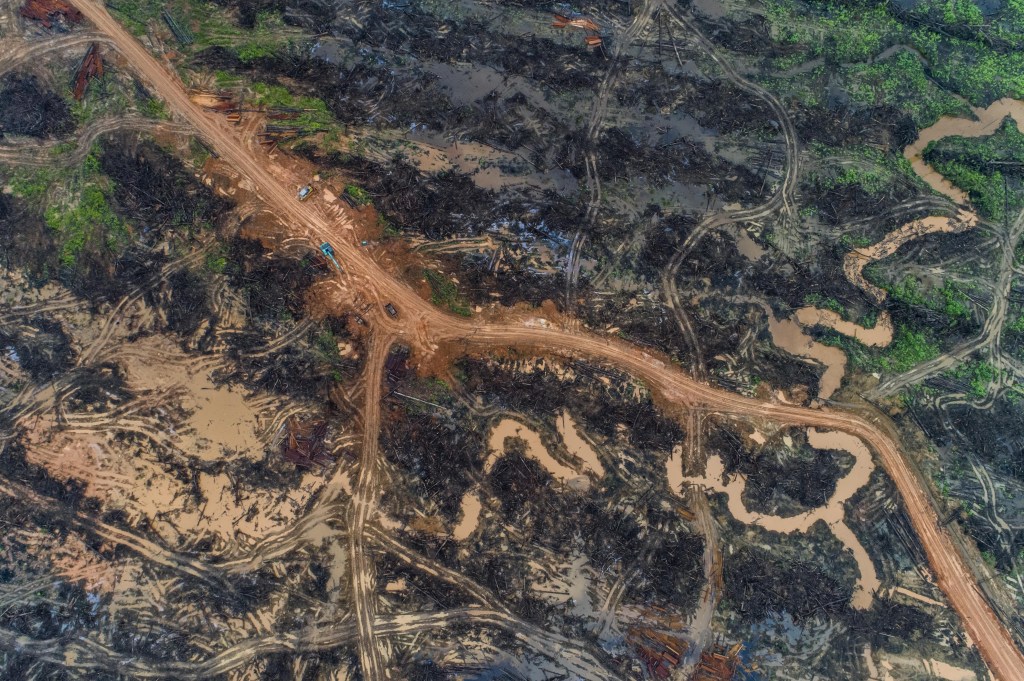
Oil palm fields growing at the edges of the national park in Honduras. Photography: Fritz Pinnow.Oil palm fields growing at the edges of the national park in Honduras. Photography: Fritz Pinnow.

“I had already received death threats from people in the community for leading a team to eradicate a new oil palm plantation in the central zone of the park,” says Cruz. “It was frightening to know they were in my flat and that everything could have ended differently if I had been home that day.”

Cruz, 28, is one of four park rangers dedicated to protecting national parks and monitoring illegal oil palm crops in Honduras. It is a high-risk job: groups linked to the exploitation of palm oil in environmental reserves and drug trafficking have made it clear they are ready to kill if they think the agents interfere too much in their business.

“Most people see us as their enemy. We can have friendly conversations with everyone here, but you never know who will be behind the next assassination attempt,” says Cruz.

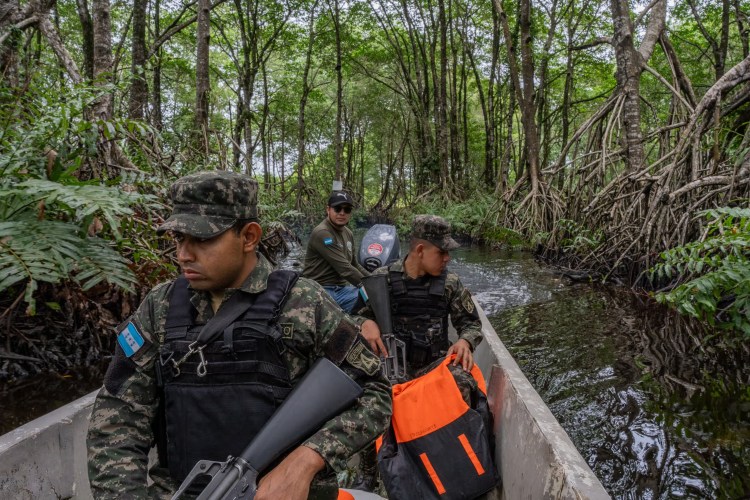
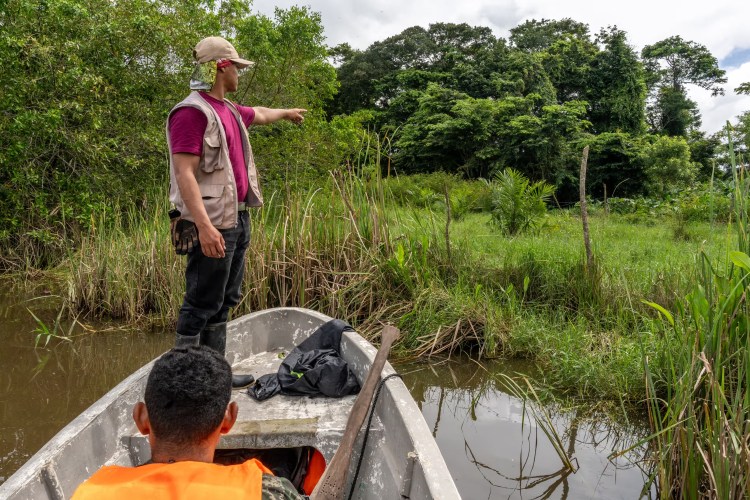
Park ranger Adonias Cruz and colleagues patrol a mangrove lagoon in Blanca Jeannette Kawas national park looking for signs of illegal oil palm. Photo: Fritz Pinnow.Park ranger Adonias Cruz and colleagues patrol a mangrove lagoon in Blanca Jeannette Kawas national park looking for signs of illegal oil palm. Photo: Fritz Pinnow.

Fellow park ranger Cesar Ortega, 22, adds that the team’s work is monitored by the criminals. “From when we leave the office, they know exactly where we are and where we are heading. They have people at every intersection calling in our position and asking if we are with soldiers,” he says.

Cruz and Ortega are two of the many rangers who have been threatened while fighting against the rapid spread of oil palm plantations. Palm oil, especially from the oil palm’s fruit, has become an essential export business in Honduras, used in the food industry, in beauty products and as a biofuel. Its low production costs make it a cheap substitute for most oils, such as sunflower and olive, significantly lowering manufacturing costs in global markets.

Palm oil accounts for about 40% of global demand for vegetable oil as food, animal feed and fuel – about 210m tonnes. Between 1995 and 2015, annual production quadrupled, from 15.2m tonnes to 62.6m tonnes, and it is expected to quadruple once more in 2050. Latin America, the fastest-growing producer, accounts for almost 7% of global palm oil production.

Park ranger Cesar Ortega points out newly planted oil palm: “When the oil palm is still so young, it is critical to remove itPark ranger Cesar Ortega points out newly planted oil palm: “When the oil palm is still so young, it is critical to remove it

In Honduras, oil palm gained traction as a crop in 2014, when the former president Juan Orlando Hernández invested almost $72m (£57m) in loans and grants to incentivise its cultivation. “All one needed was the willingness to plant oil palm, and the rest was served on a plate,” says Pablo Flores Velásquez, professor of environmental investigations at the National Autonomous University of Honduras (UNAH).

For the traffickers, oil palm crops are a way of legitimising their presence in the territory and securing physical control over the land.

Frances Thomson, Latin America specialist

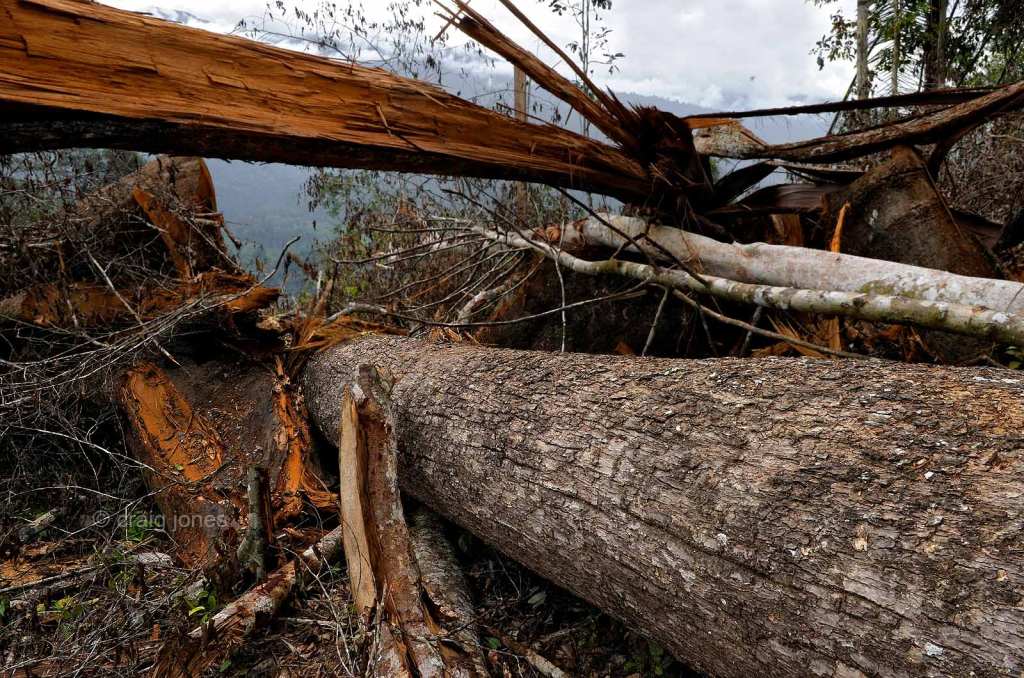
The problem is that the extensive cultivation of oil palm has not only proved to be lucrative, but also poses a risk to the environment. “The oil palm presents a serious threat to the biodiversity of the wetlands and the water quality communities depend on,” says Velásquez. “As a monoculture, the installation and establishment of the crop necessitates the complete eradication of the biodiverse area, paralysing the ecosystem completely and permanently.”

In Honduras, these crops – whose harmful effects on the soil can create “green deserts” – account for almost 4% of all exports, mostly going to the Netherlands, the US, Italy and Switzerland, with a value of $334m in 2021. Six large companies control the production, and two claim more than half of all exports.

Nevertheless, 60% of the production in Honduras is in the hands of smallholders, who sell to corporations for refinement and export. Palm oil is highly lucrative for the farmers and provides an income every 15 days. The regional price of palm oil fruit varies greatly, from about 2,400 lempiras (£77) a tonne during low season to double that in summer.

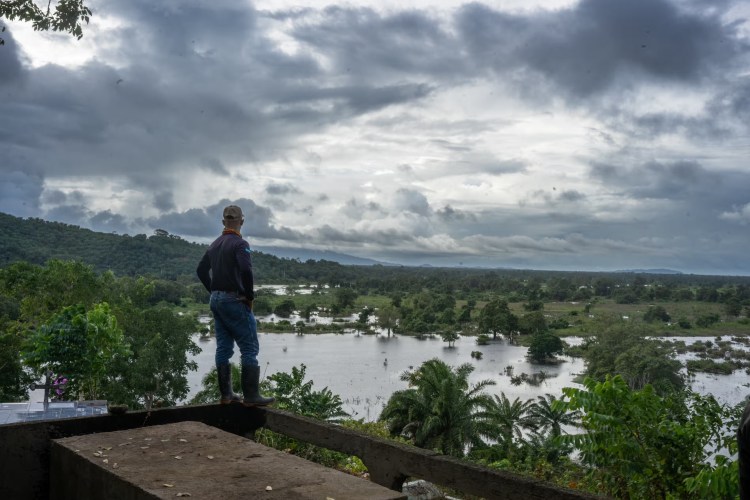
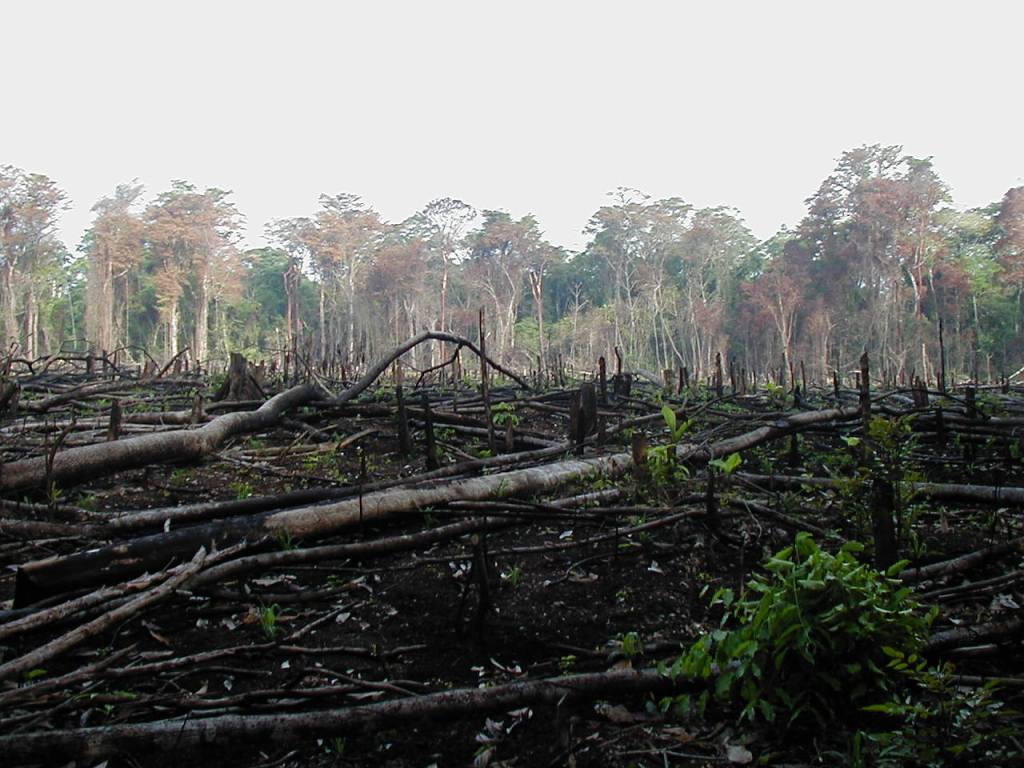
Cesar Ortega looks at an area deforested for oil palm plantations. “They have stopped because of flooding, but as soon as they can access this area again this will all become palma,” he saysCesar Ortega looks at an area deforested for oil palm plantations. “They have stopped because of flooding, but as soon as they can access this area again this will all become palma,” he says

Read the remaining article on The Guardian’s website.

Words and photography by Fritz Pinnow in Tela, Honduras. Originally published in The Guardian, 27 November, 2023 and republished under Guardian’s open license agreement, read original article.

ENDS


Read more about deforestation and ecocide in the palm oil industry

Ecuadorean Viscacha Lagidium ahuacaense

Ecuadorean Viscacha Lagidium ahuacaense

Ecuadorean Viscachas are plump and fluffy rodents with sage-like long whiskers, only a handful of them remain alive. Take action for them and boycott4wildlife!

Read more

Climate Change Driving Mass Bird Deaths in the Amazon

Climate Change Driving Mass Bird Deaths in the Amazon

A recent #study has revealed that even in the most isolated parts of the #Amazon, bird #populations are collapsing due to #climatechange. Research published in Science Advances found that a 1°C increase in…

Read more

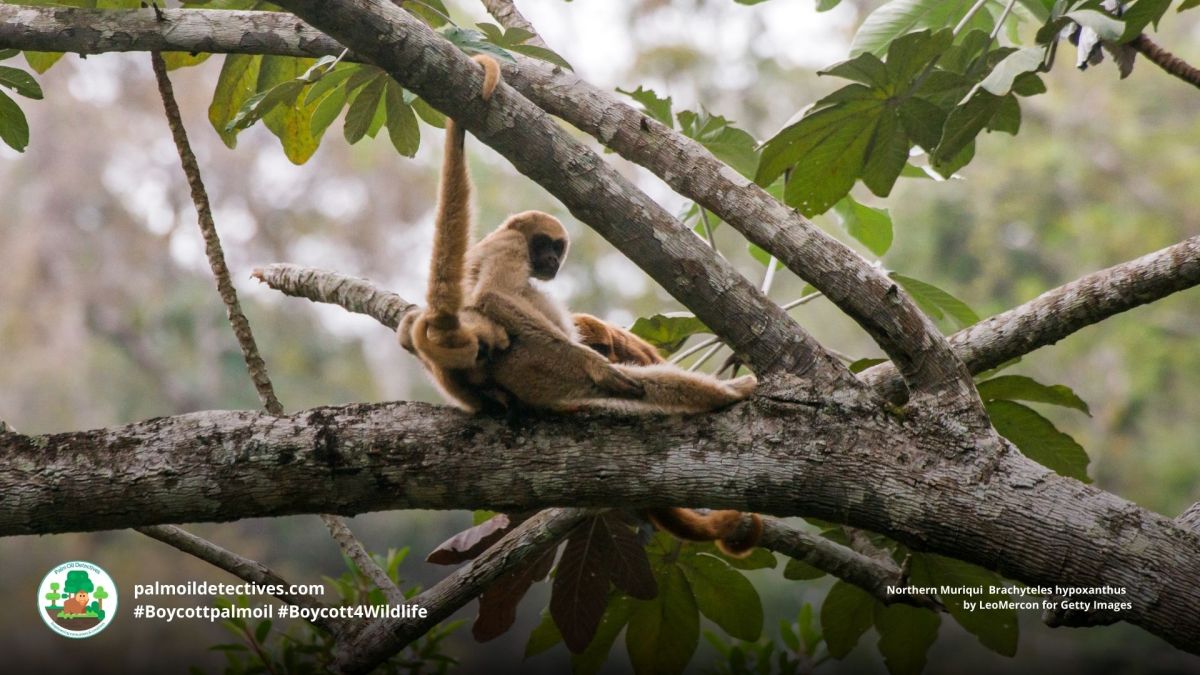
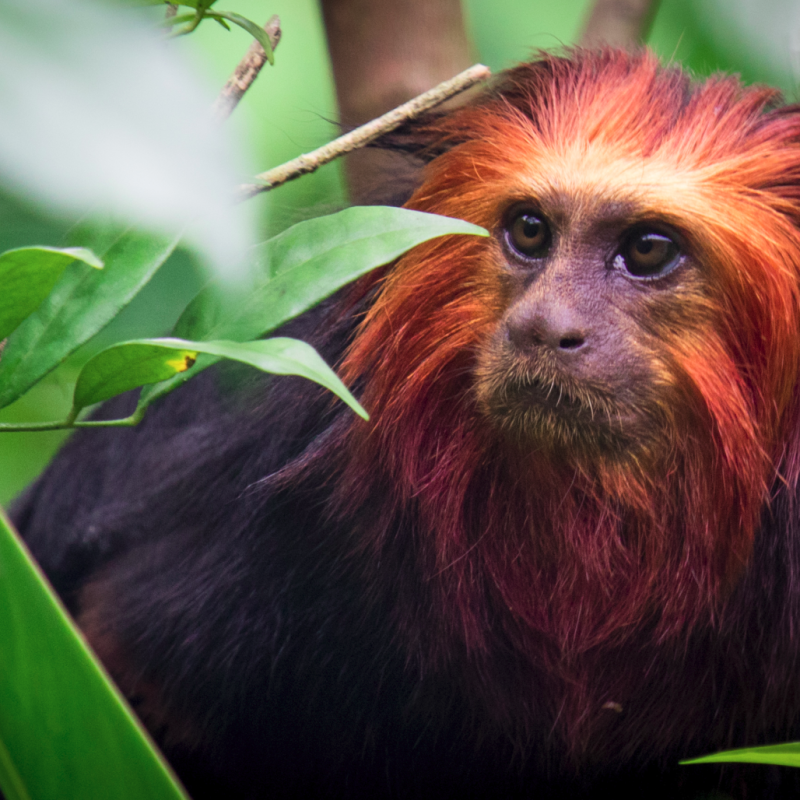
Declining primate numbers are threatening Brazil’s Atlantic forest

Declining primate numbers are threatening Brazil’s Atlantic forest

#Brazil’s Atlantic Forest, one of the most biodiverse ecosystems in the world, is facing severe threats due to deforestation and habitat fragmentation. This has led to a sharp decline in primate species, including…

Read more

Southern Pudu Pudu puda

Southern Pudu Pudu puda

Darting around and hiding on the forest floor, the Southern Pudu, known as püdü or püdu in Mapudungun (the language of the indigenous Mapuche people), is the world’s second-smallest #deer species. Weighing just…

Read more

The Indigenous Malaysian concept of ‘Badi’: respecting the land and wildlife

The Indigenous Malaysian concept of ‘Badi’: respecting the land and wildlife

The Indigenous Semai #indigenous people of #Malaysia can teach us a lot about how to protect people, planet and biodiversity. The Indigenous concept of #badi is not superstition or taboo, it’s about respecting…

Read more

Load more posts

Something went wrong. Please refresh the page and/or try again.


Take Action in Five Ways

1. Join the #Boycott4Wildlife on social media and subscribe to stay in the loop: Share posts from this website to your own network on Twitter, Mastadon, Instagram, Facebook and Youtube using the hashtags #Boycottpalmoil #Boycott4Wildlife.

Enter your email address

Sign Up

Join 3,528 other subscribers

2. Contribute stories: Academics, conservationists, scientists, indigenous rights advocates and animal rights advocates working to expose the corruption of the palm oil industry or to save animals can contribute stories to the website.

Wildlife Artist Juanchi Pérez

Wildlife Artist Juanchi Pérez

Read more

Mel Lumby: Dedicated Devotee to Borneo’s Living Beings

Mel Lumby: Dedicated Devotee to Borneo’s Living Beings

Read more

Anthropologist and Author Dr Sophie Chao

Anthropologist and Author Dr Sophie Chao

Read more

Health Physician Dr Evan Allen

Health Physician Dr Evan Allen

Read more

The World’s Most Loved Cup: A Social, Ethical & Environmental History of Coffee by Aviary Doert

The World’s Most Loved Cup: A Social, Ethical & Environmental History of Coffee by Aviary Doert

Read more

How do we stop the world’s ecosystems from going into a death spiral? A #SteadyState Economy

How do we stop the world’s ecosystems from going into a death spiral? A #SteadyState Economy

Read more

3. Supermarket sleuthing: Next time you’re in the supermarket, take photos of products containing palm oil. Share these to social media along with the hashtags to call out the greenwashing and ecocide of the brands who use palm oil. You can also take photos of palm oil free products and congratulate brands when they go palm oil free.

https://twitter.com/CuriousApe4/status/1526136783557529600?s=20

https://twitter.com/PhillDixon1/status/1749010345555788144?s=20

https://twitter.com/mugabe139/status/1678027567977078784?s=20

4. Take to the streets: Get in touch with Palm Oil Detectives to find out more.

5. Donate: Make a one-off or monthly donation to Palm Oil Detectives as a way of saying thank you and to help pay for ongoing running costs of the website and social media campaigns. Donate here

Pledge your support

#BoycottPalmOil #Boycott4wildlife #BoycottPalmOil #corrupt #corruption #deforestation #Honduras #humanRights #indigenous #indigenousRights #landgrabbing #LatinAmerica #PalmOil #palmOilBiofuel #palmOilDeforestation #palmoil #rainforests #SouthAmerica #violence #wildlife #workersRights #WorkersRights

Food Without Agriculture


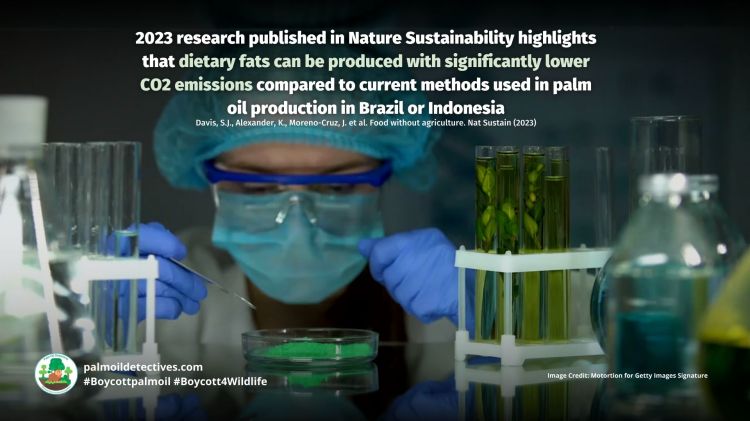
In an article published in Nature Sustainability, researchers write that food production can be more sustainable by focusing less on traditional agriculture and more on alternative methods, like chemical and biological processes.

The article highlights a specific example where dietary fats can be produced with significantly lower CO2 emissions compared to current methods used in palm oil production in Brazil or Indonesia. While acknowledging challenges like potential impacts on agricultural economies and the need for consumer acceptance, the abstract suggests that these new methods could greatly reduce the environmental impact of agriculture, especially in terms of greenhouse gas emissions, land, and water use in the next decade.

Davis, S.J., Alexander, K., Moreno-Cruz, J. et al. Food without agriculture. Nat Sustain (2023). https://doi.org/10.1038/s41893-023-01241-2


#Research paper in @Nature Sustainability: Dietary #fats can be produced in a lab with significantly lower #CO2 emissions/#climate impact compared to current #palmoil production in #Brazil and #Indonesia #Boycottpalmoil #Boycott4Wildlife @palmoildetect https://palmoildetectives.com/2024/01/21/food-without-agriculture/

Share to BlueSkyShare to Twitter

#Research in @Nature finds switching to lab-produced #palmoil has enormous potential to reduce #GHG emissions, #deforestation, water use. Reducing the climate impact of #agriculture over the decades #Boycottpalmoil 🌴🚫 #Boycott4Wildlife @palmoildetect https://palmoildetectives.com/2024/01/21/food-without-agriculture/

Share to BlueSkyShare to Twitter

https://youtu.be/M1sArNV-ENM

Davis, S.J., Alexander, K., Moreno-Cruz, J. et al. Food without agriculture. Nat Sustain (2023). https://doi.org/10.1038/s41893-023-01241-2


Abstract

Efforts to make food systems more sustainable have emphasized reducing adverse environmental impacts of agriculture. In contrast, chemical and biological processes that could produce food without agriculture have received comparatively little attention or resources. Although there is a possibility that someday a wide array of attractive foods could be produced chemosynthetically, here we show that dietary fats could be synthesized with <0.8 g CO2-eq kcal−1, which is much less than the >1.5 g CO2-eq kcal−1 now emitted to produce palm oil in Brazil or Indonesia. Although scaling up such synthesis could disrupt agricultural economies and depend on consumer acceptance, the enormous potential reductions in greenhouse gas emissions as well as in land and water use represent a realistic possibility for mitigating the environmental footprint of agriculture over the coming decade. Read original

Food without agriculture research

Plain English Summary of Results

Proteins, fats, and carbohydrates can be made without traditional agriculture by using different carbon sources and a variety of chemical and biological methods. This article compares how much energy each process uses, with some details still uncertain. The processes vary in their continuous or batched nature. The article also discusses the challenge chemical methods face in distinguishing between molecular forms, unlike bioenzymatic methods which are more precise but limited to conditions suitable for life. The focus is on fats because they are simpler to make, have been produced at scale in the past, are a basic calorie source in many foods, and the production of oil crops like soy and palm has a huge environmental impact.

Synthesizing fats from natural gas or air-captured carbon using renewable energy could greatly reduce greenhouse gas emissions compared to traditional agriculture. Finally, the potential environmental benefits of synthetic fats are highlighted, showing that replacing a portion of soy and palm oil with synthetic alternatives could significantly reduce greenhouse gas emissions and land use, particularly in countries where these crops are intensively farmed.

Plain English Summary of Discussion Notes

Producing macronutrients without traditional agriculture can significantly reduce greenhouse gas emissions and land use, especially for dietary fats. Even using coal-based electricity for production can be more climate-friendly than some current agricultural methods. Beyond environmental benefits, such as reduced water use and pollution, synthetic foods can improve food security and lessen the need for labor-intensive farming jobs. This opens up possibilities for reforestation and biodiversity improvements.

However, there are challenges. The estimates are based on data that might not capture all relevant factors, and more detailed analysis is needed. The cost of synthetic foods could be higher than agricultural products, and social acceptance is a major hurdle, given the public’s skepticism about synthetic foods and potential unforeseen environmental impacts. The shift to synthetic foods could also impact the global labor force, especially smallholder farmers in the global South, as agriculture employs a significant portion of the world’s workforce.

Synthetic food production could lead to a smaller environmental footprint for agriculture, requiring much less water and can be produced anywhere with the right resources. This could make food systems more resilient but might also create new dependencies. Sustainable synthetic food production would ideally use renewable energy and atmospheric carbon.

Finally, the move towards synthesized foods prompts a reevaluation of humanity’s relationship with nature. The domestication of plants and the Haber-Bosch process for nitrogen fixation were pivotal in human history. Now, with the majority of habitable land and water used for agriculture, synthetic food offers a path to reduce the environmental burdens of agriculture and align food security with ecosystem restoration.

Read original

Davis, S.J., Alexander, K., Moreno-Cruz, J. et al. Food without agriculture. Nat Sustain (2023). https://doi.org/10.1038/s41893-023-01241-2

ENDS


Food without agriculture research

Read more about deforestation and ecocide in the palm oil industry

The Indigenous Malaysian concept of ‘Badi’: respecting the land and wildlife

The Indigenous Malaysian concept of ‘Badi’: respecting the land and wildlife

The Indigenous Semai #indigenous people of #Malaysia can teach us a lot about how to protect people, planet and biodiversity. The Indigenous concept of #badi is not superstition or taboo, it’s about respecting…

Read more

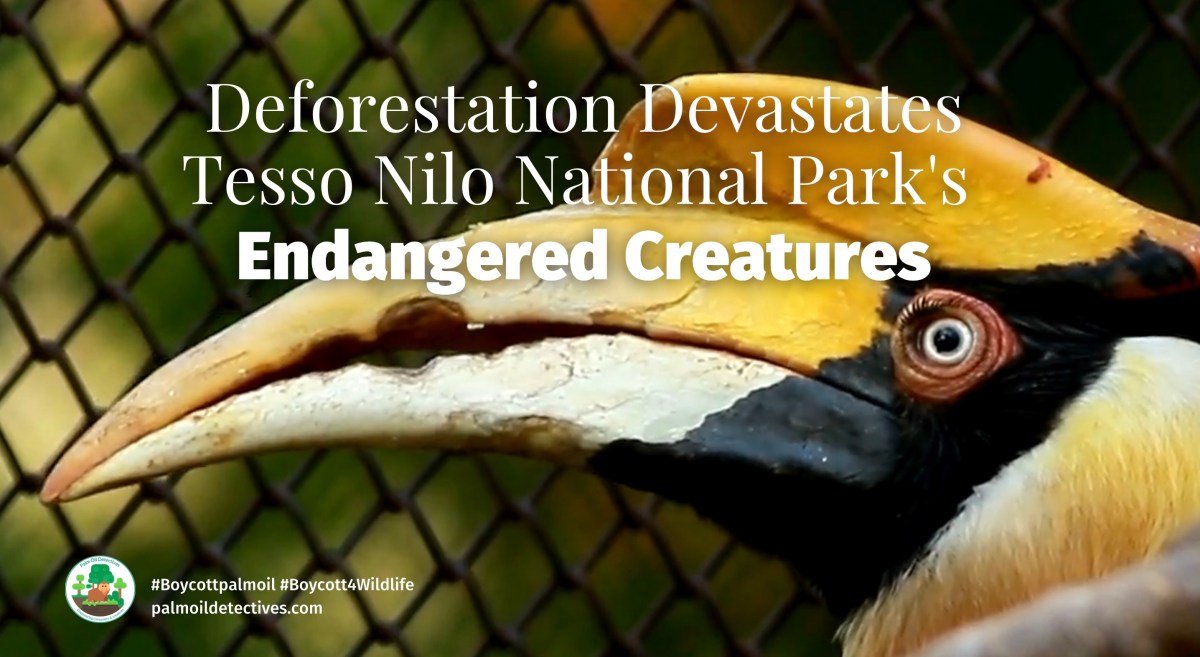
Deforestation Devastates Tesso Nilo National Park’s Endangered Creatures

Deforestation Devastates Tesso Nilo National Park’s Endangered Creatures

Act now to save Tesso Nilo Park. This vital Indonesian park has lost 78% of its primary forest, threatening the habitat of Sumatran tigers and elephants

Read more

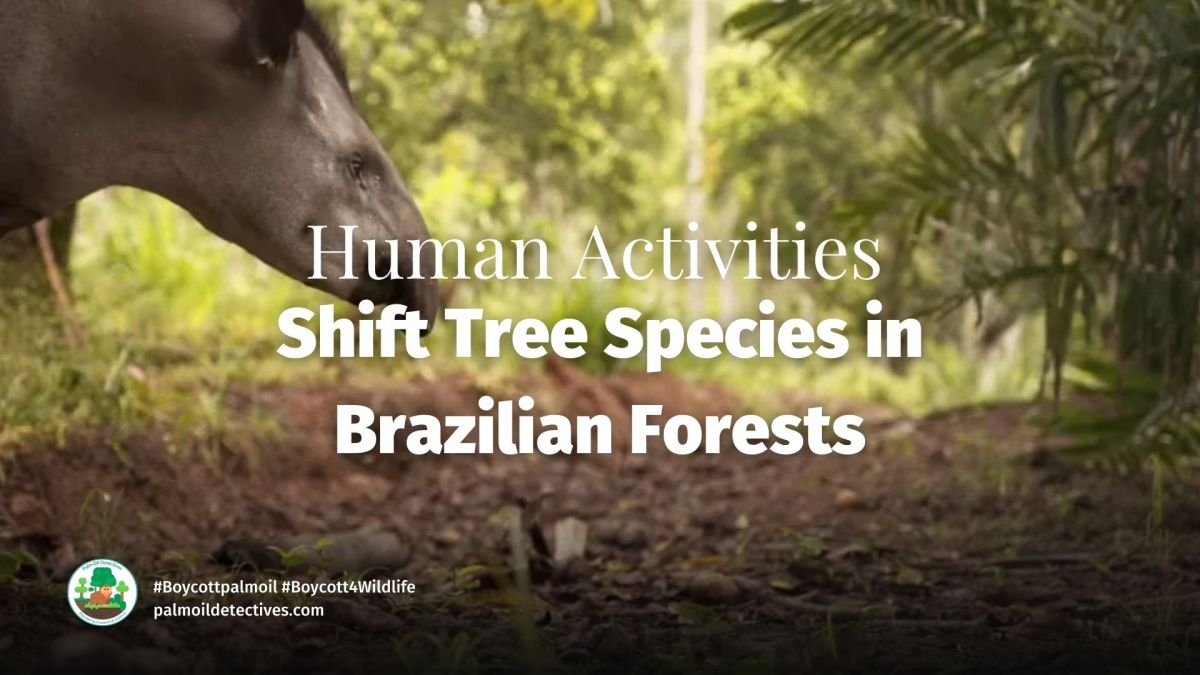
Deforestation Shifts Tree Species in Brazilian Forests

Deforestation Shifts Tree Species in Brazilian Forests

Deforestation in Brazilian forests causes shift towards fast-growing, small-seeded trees, threatening biodiversity, carbon storage. Take action!

Read more

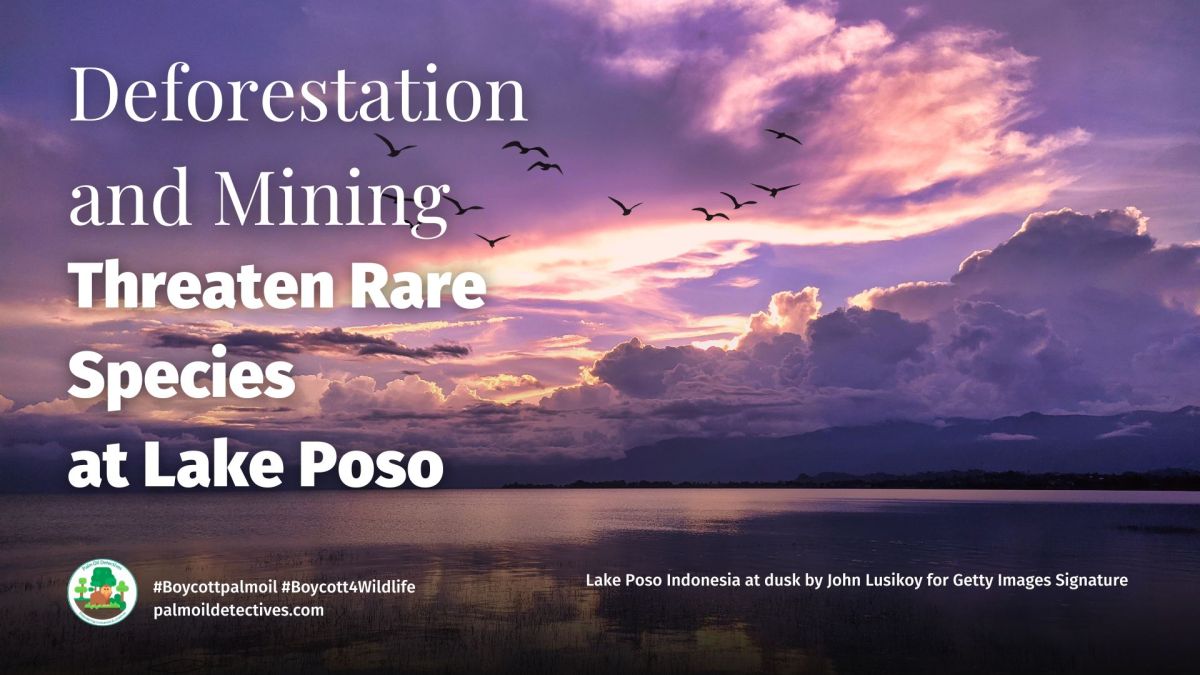
Deforestation and Mining Threaten Rare Species at Lake Poso

Deforestation and Mining Threaten Rare Species at Lake Poso

Deforestation, mining, and palm oil expansion are pushing rare endemic species at Indonesia’s Lake Poso to the brink. Urgent action needed, boycott palm oil!

Read more

Palm Oil Workers Exposed to Hazardous Pesticides

Palm Oil Workers Exposed to Hazardous Pesticides

Palm oil workers in Colombia, Ghana, and Indonesia are regularly exposed to hazardous EU-banned pesticides like Paraquat for palm oil. Take action!

Read more

Load more posts

Something went wrong. Please refresh the page and/or try again.


Take Action in Five Ways

1. Join the #Boycott4Wildlife on social media and subscribe to stay in the loop: Share posts from this website to your own network on Twitter, Mastadon, Instagram, Facebook and Youtube using the hashtags #Boycottpalmoil #Boycott4Wildlife.

Enter your email address

Sign Up

Join 3,526 other subscribers

2. Contribute stories: Academics, conservationists, scientists, indigenous rights advocates and animal rights advocates working to expose the corruption of the palm oil industry or to save animals can contribute stories to the website.

Wildlife Artist Juanchi Pérez

Wildlife Artist Juanchi Pérez

Read more

Mel Lumby: Dedicated Devotee to Borneo’s Living Beings

Mel Lumby: Dedicated Devotee to Borneo’s Living Beings

Read more

Anthropologist and Author Dr Sophie Chao

Anthropologist and Author Dr Sophie Chao

Read more

Health Physician Dr Evan Allen

Health Physician Dr Evan Allen

Read more

The World’s Most Loved Cup: A Social, Ethical & Environmental History of Coffee by Aviary Doert

The World’s Most Loved Cup: A Social, Ethical & Environmental History of Coffee by Aviary Doert

Read more

How do we stop the world’s ecosystems from going into a death spiral? A #SteadyState Economy

How do we stop the world’s ecosystems from going into a death spiral? A #SteadyState Economy

Read more

3. Supermarket sleuthing: Next time you’re in the supermarket, take photos of products containing palm oil. Share these to social media along with the hashtags to call out the greenwashing and ecocide of the brands who use palm oil. You can also take photos of palm oil free products and congratulate brands when they go palm oil free.

https://twitter.com/CuriousApe4/status/1526136783557529600?s=20

https://twitter.com/PhillDixon1/status/1749010345555788144?s=20

https://twitter.com/mugabe139/status/1678027567977078784?s=20

4. Take to the streets: Get in touch with Palm Oil Detectives to find out more.

5. Donate: Make a one-off or monthly donation to Palm Oil Detectives as a way of saying thank you and to help pay for ongoing running costs of the website and social media campaigns. Donate here

Pledge your support

#Agriculture #biotechnology #BoycottPalmOil #Boycott4wildlife #BoycottPalmOil #Brazil #Climate #climateChange #CO2 #deforestation #fats #food #GHG #Indonesia #industrialAgriculture #PalmOil #palmOilDeforestation #palmoil #ReasonsToBeHopeful #research

Javan Rhinos Not Safe from Poachers


Recent testimony by arrested illegal poachers in #Indonesia finds 26 of the estimated remaining 72 living Javan #Rhinos were slaughtered for their horns over the past five years. In the so-called “protected” Ujung Kulon National Park in the western tip of the island of Java. This must spark a national emergency to protect these beings before they are gone for good! End the wildlife trade and #BoycottPalmOil #Boycott4Wildlife


Shocking news: 26 of the 72 remaining #Javan #Rhinos 🦏 were poached recently from Ujung Kulon National Park, #Indonesia making their protection even more serious. End disgusting #poaching! Help them survive when you #Boycott4Wildlife @palmoildetect https://wp.me/pcFhgU-91C

Share to BlueSky Share to Twitter

Testimony by arrested #poachers in #Indonesia finds 26 of the remaining 72 #Javan #Rhino 🦏 are still alive 😭 We must scramble to protect these beautiful and unique #animals urgently! #Boycottmeat #BoycottPalmOil #Boycott4Wildlife @palmoildetect https://wp.me/pcFhgU-91C

Share to BlueSkyShare to Twitter

Written by Jason Gilchrist, Lecturer in the School of Applied Sciences, Edinburgh Napier University. This article is republished from The Conversation under a Creative Commons license. Read the original article.


Javan Rhino close up Tobias Nolan for Getty Images

26 of the estimated maximum 72 Javan rhino have been poached by two gangs in the last five years. Absolutely shocking news!

I am an ecologist, and I have been lucky to work with white rhino in Africa. This work has involved capturing rhino, dehorning and moving them – methods used to try to save rhino from poachers.

Poachers target these large, plant-eating mammals for the illegal trade in rhino horn, fuelled by demand from Asia, principally China and Vietnam, where the horn is perceived as a status symbol, a cure for illness and an aphrodisiac.

Poaching is the main threat to the African rhino, but it was not considered a risk for the critically endangered Javan rhino in Asia. So rare and difficult to detect are Javan rhino, which live in dense jungle, that it was thought poachers would not be able to find them.

However, recent testimony from poachers arrested in Indonesia has indicated that 26 of the estimated maximum 72 Javan rhino have been poached by two gangs in the last five years. That is shocking news.

This revelation turns a worrying situation into an emergency – and demands increased efforts to save the Javan rhino from extinction.

How many Javan rhino are there?

Indonesian police arrested 13 members of two poaching gangs who revealed the otherwise undetected loss of rhino from Ujung Kulon National Park, the home of the world’s only remaining Javan rhino population, on the island of Java in the Indonesian archipelago.

Javan rhino were once widespread in southeast Asia. The last one outside of Indonesia was poached in Vietnam in 2010.

The actual number of rhino killed by the poaching gangs cannot be verified. It’s possible that sources within the government or conservation teams are passing information to poachers.

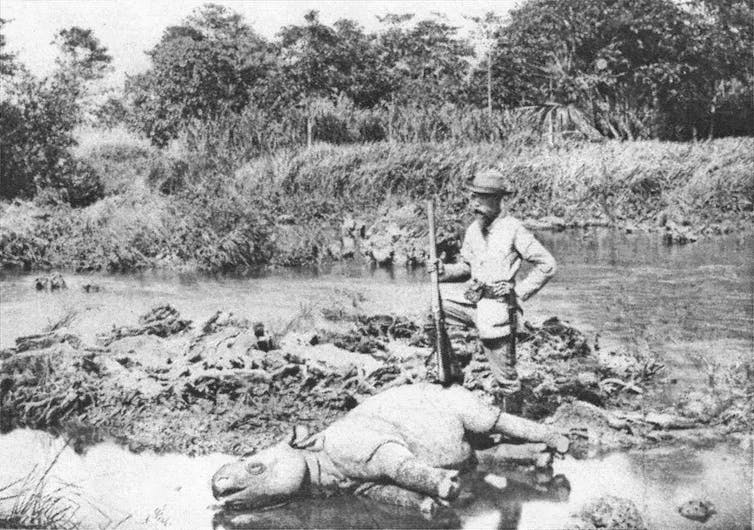
A Dutch hunter with a slain Javan rhino in Ujung Kulon, 1895. Charles te Mechelen/Rhino Resource CenterA Dutch hunter with a slain Javan rhino in Ujung Kulon, 1895. Charles te Mechelen/Rhino Resource Center

Indonesia’s forests are home to 10-15% of the planet’s plants, birds and mammals. While Indonesia harbours the greatest amount of rainforest in Asia, over 74 million hectares (three times the land area of the UK) have been lost in the past 50 years to palm oil extraction and paper mills.

Indonesia’s forest cover has fallen from 80% to less than 50% amid one of the fastest deforestation rates in the world. Pandeglang, the Javan region containing the national park, has lost nearly 10% of its rainforest since 2000.

All scientists know about the abundance of Javan rhino is gleaned from camera traps, remote cameras that are triggered to take photos by passing animals. The last government population estimate was released in 2019.

A report published in 2023 criticised this estimate because 18 of the rhino counted had not been detected by a camera trap for three years, and three of the rhino counted were known to be dead.

Saving the Javan rhino from extinction

Indonesian conservationists have focused on habitat loss as the leading threat to Javan rhino, as it deprives the species of breeding opportunities. Scattered across separate fragments of jungle, rhino are unlikely to find each other during the brief window when females are receptive to mating.

There is also evidence of inbreeding, exacerbated by there being more adult males than females. Some biologists have called for Javan rhino to be taken into captive breeding programmes.

With just 46 Javan rhino in the wild (perhaps even less), poaching could wipe out the species or reduce it to such a low number that low breeding success deals the final blow.

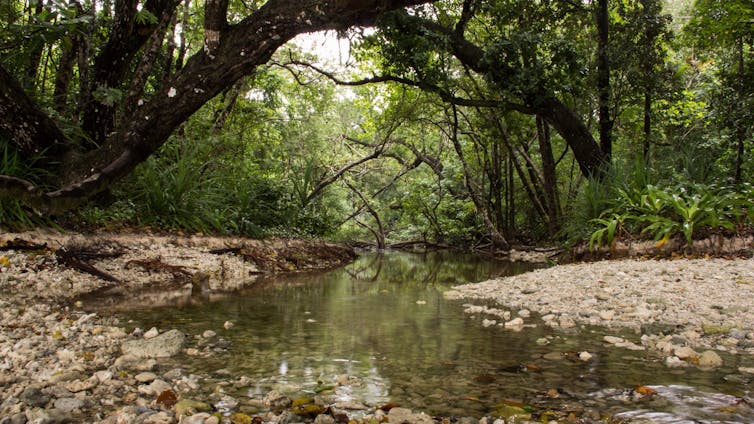
Ujung Kulon National Park is located on the western tip of Java. Achmad Soerio Hutomo/Flickr, CC BYUjung Kulon National Park is located on the western tip of Java. Achmad Soerio Hutomo/Flickr, CC BY

So, what now? It is likely that the Javan rhino cannot afford to lose any further animals to poaching, and vital that further poaching is prevented. The Indonesian government has now increased security in the national park with police and military combining forces.

Allowing forests to naturally regenerate and planting corridors of trees between jungle patches will help the remaining rhino find suitable habitat and each other. Conservationists have also called for cutting down trees in some locations to allow fresh, young trees with more accessible leaves to grow.

Research has also shown that removing an invasive palm boosts the availability of rhino food plants. Livestock must be excluded from the park too, as domestic cattle can transmit disease.

As far back as 1986, conservationists called for some rhino to be moved out of the park (perhaps to the neighbouring island of Sumatra). Splitting an already limited population is risky, but not establishing the safety net of at least one other population elsewhere is riskier still.

What if a tsunami hit the park? And the park may already be near capacity, as it is estimated to be able to support only 68 rhino.

Bringing Javan rhino into captivity and using reproductive technologies on stored eggs and sperm (techniques in development for the more common white rhino) may also need to be considered. Although, it is still possible that captive breeding may not be required: camera traps have photographed newborn Javan rhino, as well as adults, as recently as March 2024.

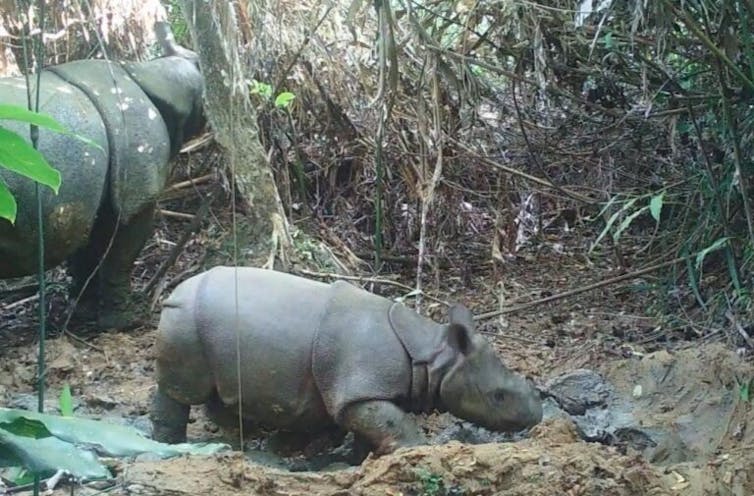
A female Javan rhino calf with its mother, photographed by a camera trap in Ujung Kulon national park. Indonesian Ministry of Environment and ForestryA female Javan rhino calf with its mother, photographed by a camera trap in Ujung Kulon national park. Indonesian Ministry of Environment and Forestry

Scientists don’t know much about Javan rhino biology. There have been few studies of wild rhino and only 22 have ever been kept in captivity, the last of which died more than 100 years ago. More research is needed to understand as much as possible about Javan rhino ecology and reproduction – in the wild and from museum specimens.

More effective habitat and wildlife conservation across Indonesia will benefit other Indonesian species, including the Sumatran tiger, Sumatran elephant, all three species of orangutan, and the Sumatran rhino (estimated population of 24-47, making it the world’s most endangered rhino).

If effective conservation action is not taken now, the remaining Javan rhino population will go the same way as that in Vietnam.

Written by Jason Gilchrist, Lecturer in the School of Applied Sciences, Edinburgh Napier University. This article is republished from The Conversation under a Creative Commons license. Read the original article.

ENDS


Learn about other animals endangered by palm oil and other agriculture

GlobalSouth America S.E. AsiaIndiaAfricaWest Papua & PNGFrill-Necked Lizard Chlamydosaurus kingii

Frill-Necked Lizard Chlamydosaurus kingii

Keep reading

Grey Crowned Crane Balearica regulorum

Grey Crowned Crane Balearica regulorum

Keep reading

Ecuadorean Viscacha Lagidium ahuacaense

Ecuadorean Viscacha Lagidium ahuacaense

Keep reading

Southern Pudu Pudu puda

Southern Pudu Pudu puda

Keep reading

Blue-streaked Lory Eos reticulata

Blue-streaked Lory Eos reticulata

Keep reading

Blonde Capuchin Sapajus flavius

Blonde Capuchin Sapajus flavius

Keep reading


Learn about “sustainable” palm oil greenwashing

Read more about RSPO greenwashing

Lying Fake labelsIndigenous Land-grabbingHuman rights abusesDeforestation Human health hazards

A 2019 World Health Organisation (WHO) report into the palm oil industry and RSPO finds extensive greenwashing of palm oil deforestation and the murder of endangered animals (i.e. biodiversity loss)

Read moreWHO Bulletin on Palm Oil: Deforestation and ExtinctionWHO Bulletin on Palm Oil: Deforestation and ExtinctionWHO Bulletin on Palm Oil: Deforestation and ExtinctionWHO Bulletin on Palm Oil: Air Pollution and Health

Take Action in Five Ways

1. Join the #Boycott4Wildlife on social media and subscribe to stay in the loop: Share posts from this website to your own network on Twitter, Mastadon, Instagram, Facebook and Youtube using the hashtags #Boycottpalmoil #Boycott4Wildlife.

Enter your email address

Sign Up

Join 3,174 other subscribers

2. Contribute stories: Academics, conservationists, scientists, indigenous rights advocates and animal rights advocates working to expose the corruption of the palm oil industry or to save animals can contribute stories to the website.

Wildlife Artist Juanchi Pérez

Wildlife Artist Juanchi Pérez

Read more

Mel Lumby: Dedicated Devotee to Borneo’s Living Beings

Mel Lumby: Dedicated Devotee to Borneo’s Living Beings

Read more

Anthropologist and Author Dr Sophie Chao

Anthropologist and Author Dr Sophie Chao

Read more

Health Physician Dr Evan Allen

Health Physician Dr Evan Allen

Read more

The World’s Most Loved Cup: A Social, Ethical & Environmental History of Coffee by Aviary Doert

The World’s Most Loved Cup: A Social, Ethical & Environmental History of Coffee by Aviary Doert

Read more

How do we stop the world’s ecosystems from going into a death spiral? A #SteadyState Economy

How do we stop the world’s ecosystems from going into a death spiral? A #SteadyState Economy

Read more

3. Supermarket sleuthing: Next time you’re in the supermarket, take photos of products containing palm oil. Share these to social media along with the hashtags to call out the greenwashing and ecocide of the brands who use palm oil. You can also take photos of palm oil free products and congratulate brands when they go palm oil free.

https://twitter.com/CuriousApe4/status/1526136783557529600?s=20

https://twitter.com/PhillDixon1/status/1749010345555788144?s=20

https://twitter.com/mugabe139/status/1678027567977078784?s=20

4. Take to the streets: Get in touch with Palm Oil Detectives to find out more.

5. Donate: Make a one-off or monthly donation to Palm Oil Detectives as a way of saying thank you and to help pay for ongoing running costs of the website and social media campaigns. Donate here

Pledge your support

#animalBehaviour #AnimalBiodiversityNews #animalCommunication #animalCruelty #animalExtinction #animalIntelligence #animalRights #animals #biodiversity #Boycott4wildlife #BoycottMeat #BoycottPalmOil #deforestation #Indonesia #Javan #PalmOil #palmOilDeforestation #poachers #poaching #Rhino #Rhinos

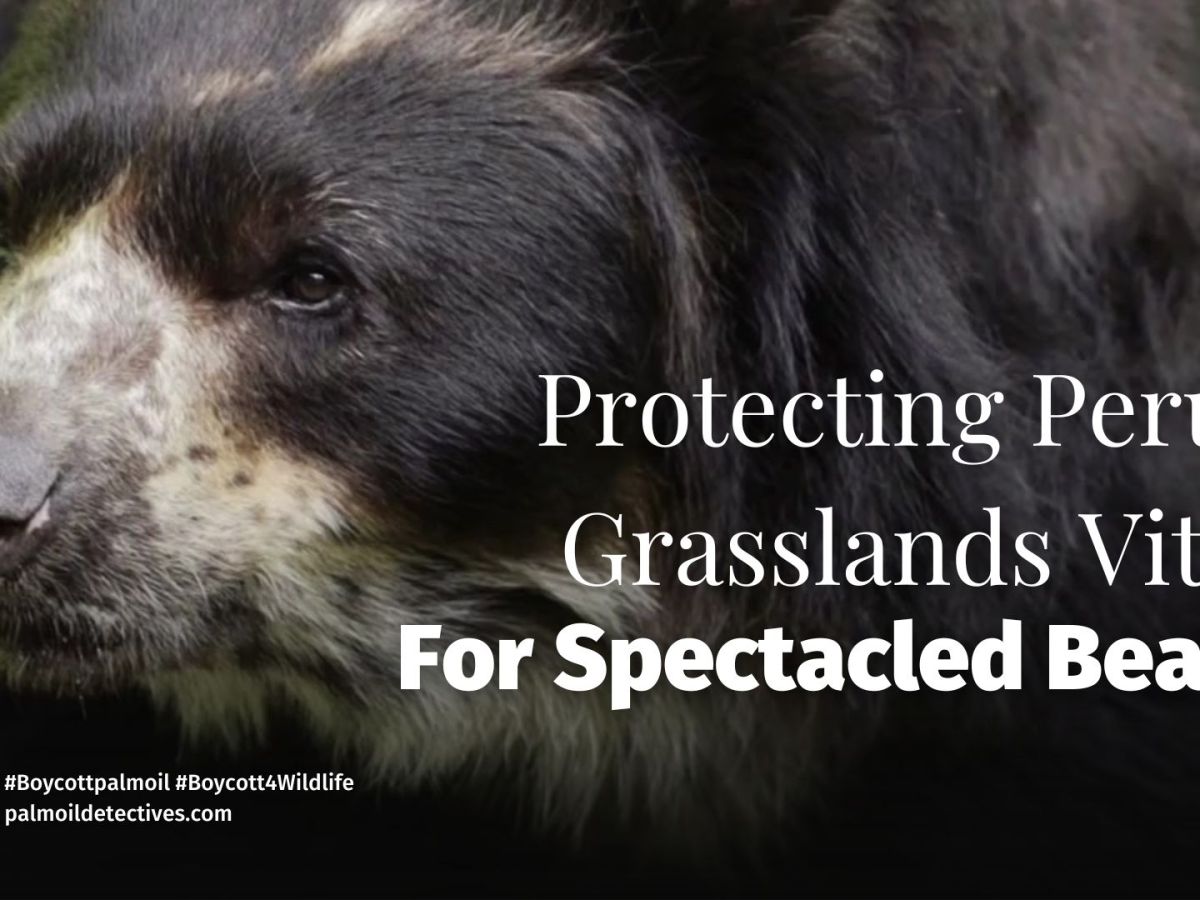
Protecting Peru’s Grasslands Vital for Spectacled Bears


Protecting Peru’s Grasslands Vital for Spectacled Bears | A recent study highlights the importance of conserving Peru’s high-altitude puna grasslands to support the foraging habits of the vulnerable Andean bear AKA Spectacled Bear. The research reveals that these bears prefer young bromeliad plants in specific grassland areas and tend to avoid regions impacted by livestock. Conservation efforts focusing on these habitats could enhance the bears’ survival prospects.


https://youtu.be/Bt72GFvO05c

#News: 🐻🌿 Protecting #Peru’s grasslands vital for #vulnerable Spectacled #bear. #Research finds bears prefer foraging areas with negative impact of #meat #soy and #palmoil agriculture. #BoycottMeat #BoycottPalmOil 🌴🥩⛔️ #Boycott4Wildlife @palmoildetect https://wp.me/pcFhgU-9OQ

Share to BlueSkyShare to Twitter

PLOS. (2024, December 18). Conserving high-elevation grasslands in Peru is key to protect Andean bears. ScienceDaily. Retrieved from https://www.sciencedaily.com/releases/2024/12/241218174935.htm


The Andean bear, also known as the spectacled bear due to distinctive facial markings, is native to the Andes Mountains and currently classified as vulnerable by the International Union for Conservation of Nature (IUCN). A study published on December 18, 2024, in PLOS ONE emphasizes the critical role of high-elevation puna grasslands in Peru for the species’ foraging activities.

Researchers conducted extensive surveys in and around Manu National Park, focusing on two bromeliad species: Puya leptostachya and Puya membranacea. They observed that Andean bears selectively foraged in approximately 16.7% of available bromeliad patches, showing a preference for young plants located on east-facing, steep slopes at the forest’s edge. Notably, the bears avoided areas with active livestock grazing but were found in regions where livestock had been absent for several decades, indicating a potential for habitat recovery and reoccupation by the bears.

The study suggests that the cessation of livestock grazing can lead to the restoration of puna grasslands, making them more suitable for Andean bears in a relatively short timeframe. This finding underscores the need for targeted conservation strategies that mitigate human disturbances, particularly livestock grazing, to preserve these essential habitats.

Lead author Nicholas Pilfold from the San Diego Zoo Wildlife Alliance stated, “Using the largest collection ever of field data on the feeding behavior of Andean bears in high elevation grasslands, we found that the bears actively selected for specific food resources within the grasslands, indicating that these areas are of nutritional importance to the bears.”

The findings advocate for conservation managers to prioritize the protection and restoration of high-altitude grasslands bordering cloud forests, considering the adverse impacts of livestock on these ecosystems. Implementing such measures is vital for the sustenance and recovery of Andean bear populations in Peru.

PLOS. (2024, December 18). Conserving high-elevation grasslands in Peru is key to protect Andean bears. ScienceDaily. Retrieved from https://www.sciencedaily.com/releases/2024/12/241218174935.htm

ENDS


Learn about other animals endangered by palm oil and other agriculture

GlobalSouth America S.E. AsiaIndiaAfricaWest Papua & PNGFrill-Necked Lizard Chlamydosaurus kingii

Frill-Necked Lizard Chlamydosaurus kingii

Keep reading

Grey Crowned Crane Balearica regulorum

Grey Crowned Crane Balearica regulorum

Keep reading

Ecuadorean Viscacha Lagidium ahuacaense

Ecuadorean Viscacha Lagidium ahuacaense

Keep reading

Southern Pudu Pudu puda

Southern Pudu Pudu puda

Keep reading

Blue-streaked Lory Eos reticulata

Blue-streaked Lory Eos reticulata

Keep reading

Blonde Capuchin Sapajus flavius

Blonde Capuchin Sapajus flavius

Keep reading


Learn about “sustainable” palm oil greenwashing

Read more about RSPO greenwashing

Lying Fake labelsIndigenous Land-grabbingHuman rights abusesDeforestation Human health hazards

A 2019 World Health Organisation (WHO) report into the palm oil industry and RSPO finds extensive greenwashing of palm oil deforestation and the murder of endangered animals (i.e. biodiversity loss)

Read moreWHO Bulletin on Palm Oil: Deforestation and ExtinctionWHO Bulletin on Palm Oil: Deforestation and ExtinctionWHO Bulletin on Palm Oil: Deforestation and ExtinctionWHO Bulletin on Palm Oil: Air Pollution and Health

Take Action in Five Ways

1. Join the #Boycott4Wildlife on social media and subscribe to stay in the loop: Share posts from this website to your own network on Twitter, Mastadon, Instagram, Facebook and Youtube using the hashtags #Boycottpalmoil #Boycott4Wildlife.

Enter your email address

Sign Up

Join 3,174 other subscribers

2. Contribute stories: Academics, conservationists, scientists, indigenous rights advocates and animal rights advocates working to expose the corruption of the palm oil industry or to save animals can contribute stories to the website.

Wildlife Artist Juanchi Pérez

Wildlife Artist Juanchi Pérez

Read more

Mel Lumby: Dedicated Devotee to Borneo’s Living Beings

Mel Lumby: Dedicated Devotee to Borneo’s Living Beings

Read more

Anthropologist and Author Dr Sophie Chao

Anthropologist and Author Dr Sophie Chao

Read more

Health Physician Dr Evan Allen

Health Physician Dr Evan Allen

Read more

The World’s Most Loved Cup: A Social, Ethical & Environmental History of Coffee by Aviary Doert

The World’s Most Loved Cup: A Social, Ethical & Environmental History of Coffee by Aviary Doert

Read more

How do we stop the world’s ecosystems from going into a death spiral? A #SteadyState Economy

How do we stop the world’s ecosystems from going into a death spiral? A #SteadyState Economy

Read more

3. Supermarket sleuthing: Next time you’re in the supermarket, take photos of products containing palm oil. Share these to social media along with the hashtags to call out the greenwashing and ecocide of the brands who use palm oil. You can also take photos of palm oil free products and congratulate brands when they go palm oil free.

https://twitter.com/CuriousApe4/status/1526136783557529600?s=20

https://twitter.com/PhillDixon1/status/1749010345555788144?s=20

https://twitter.com/mugabe139/status/1678027567977078784?s=20

4. Take to the streets: Get in touch with Palm Oil Detectives to find out more.

5. Donate: Make a one-off or monthly donation to Palm Oil Detectives as a way of saying thank you and to help pay for ongoing running costs of the website and social media campaigns. Donate here

Pledge your support

#Andes #animalBehaviour #AnimalBiodiversityNews #animalCommunication #animalCruelty #animalExtinction #animalIntelligence #animalRights #Bear #biodiversity #Boycott4wildlife #BoycottMeat #BoycottPalmOil #deforestation #meat #News #PalmOil #palmOilDeforestation #palmoil #Peru #research #soy #SpectacledBearTremarctosOrnatus #vulnerable

Why Pangolins Are So Special


#Pangolins of #Africa and Asia are the world’s most trafficked animal. Tragically they are disappearing due to illegal poaching as well as habitat loss for agribusiness like #palmoil. They get their name from the Malay word pengguling, which translates to “rolling up” in reference to their balled-up protective pose when threatened. Pangolins play an essential part in ecosystem health, keeping insects in check with their highly sensitive tongues and sense of smell. These remarkable and critically endangered animals deserve a break from savage and cruel #poaching and palm oil #deforestation. Help them when you #BoycottPalmOil #Boycott4Wildlife


The remarkable #pangolin is named ‘pengguling’ in Malay. Looking like a #pokemon or a scaly #dragon 🐉 they rid ecosystems in #Africa and #Asia of excess insects. Help them survive, be #vegan and #Boycottpalmoil 🌴🚫 #Boycott4Wildlife @palmoildetect https://wp.me/pcFhgU-92l

Share to BlueSkyShare to Twitter

Written by Olajumoke Morenikeji, Professor Department of Zoology, University of Ibadan. This article is republished from The Conversation under a Creative Commons license. Read the original article.


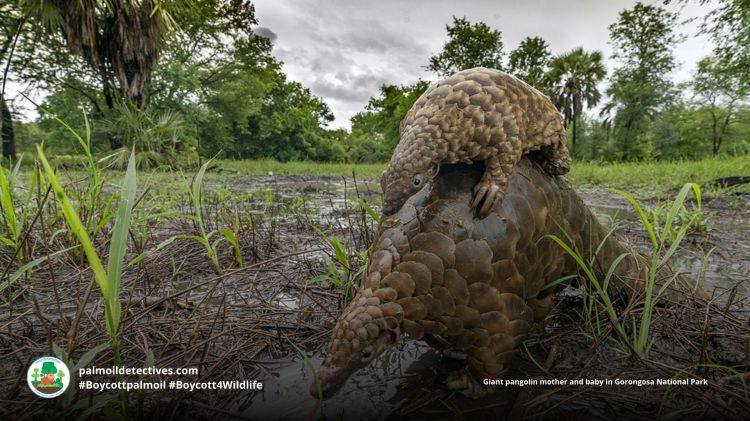
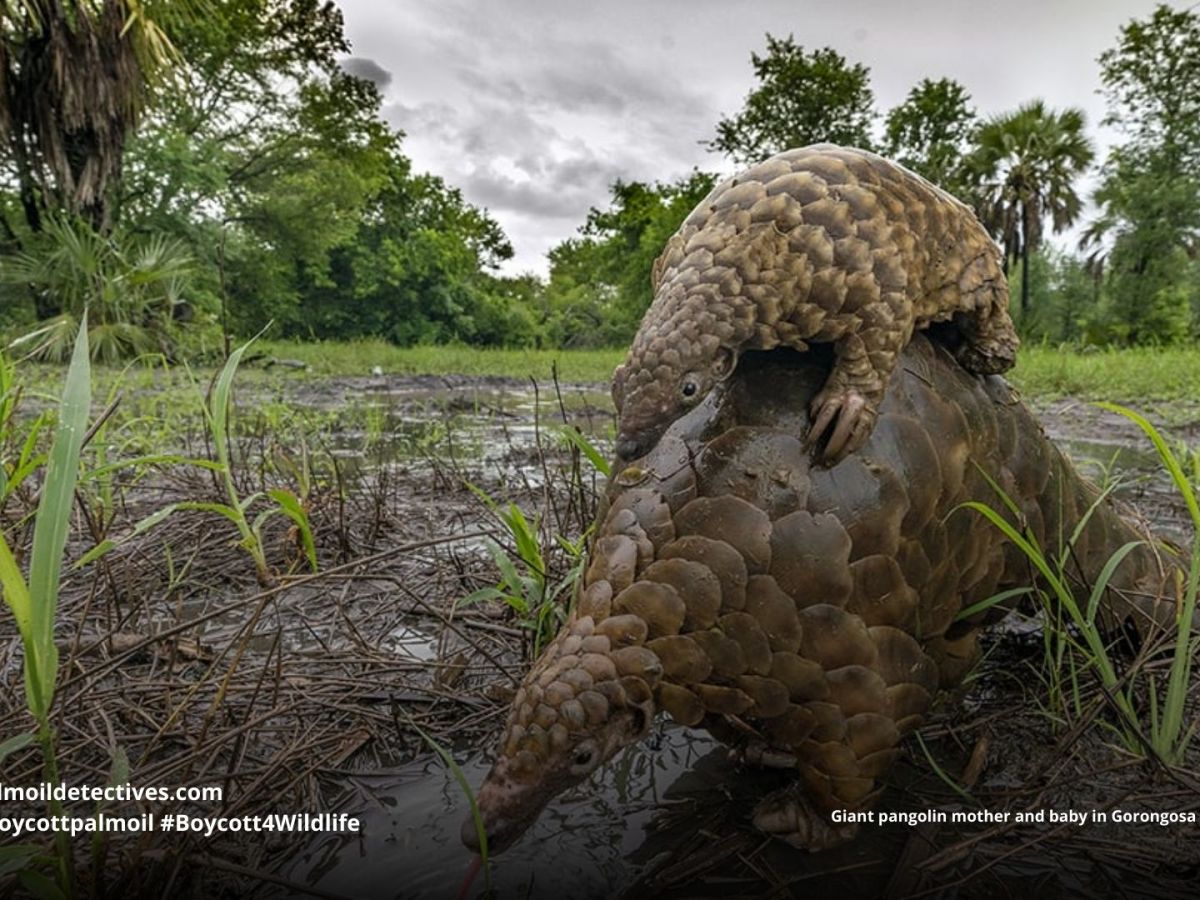
Giant Pangolin Smutsia gigantea - Africa

Pangolins play a vital role in ecosystems by controlling insect populations, particularly ants and termites, which helps maintain ecological balance.

Pangolins are fascinating creatures known for their unique appearance and distinctive scales. They are mammals belonging to the order Pholidota and are native to Africa and Asia. Due to their primary diet of ants and termites, pangolins are often referred to as “scaly anteaters”.

The African pangolin species are dispersed throughout southern, western, central and east Africa.

Pangolins face rapid declines across Asia and Africa, with all eight species classified as vulnerable, endangered, or critically endangered. They are threatened by poaching and habitat loss, driven by the demand for their meat and scales.

Pangolins are the most trafficked wild mammal in the world. Their meat is considered a delicacy in Asia while their scales are also used in traditional medicines, fetching huge sums on the black market. As many as 8.5 million pangolins are estimated to have been removed from the wild in west and central Africa for the illegal trade between 2014 and 2021.

The trade route analysis of pangolin trafficking points to Lagos as the main connection point both domestically and worldwide, including south-east Asian countries. Malaysia, Laos and Singapore also serve as key transit countries for pangolin-scale shipments from Nigeria.

China and Vietnam are the main destinations for these illegal shipments.

I am a zoologist who’s passionate about the environment and biodiversity conservation. I am also the founder and chair of Pangolin Conservation Guild Nigeria. In my view, effective protection, law enforcement and changes in consumer behaviour are necessary to address the complex drivers of poaching and trafficking.

What makes pangolins special

Pangolins are interesting for a number of reasons.

Scales: Unlike any other mammals, they are covered with keratin scales. This adaptation is a defence against predators. The scales, made of the same material as human fingernails, provide armour-like protection as they curl into a ball when threatened, shielding their vulnerable underbelly. The scales can account for up to 20% of a pangolin’s total body weight. A pangolin’s scales are a reminder of the incredible diversity of adaptations in the natural world.

Giant Pangolin Smutsia gigantea - Africa

Habitats: Pangolins, as a group, are also adaptable to different environmental conditions. Their habitats include tropical forests, dry woodlands and savannahs. Some pangolin species, like the white-bellied, are adept climbers and spend much of their time in the canopy, foraging for insects among the branches. These arboreal habits provide them with both food and shelter, as well as protection from ground-dwelling predators. Other pangolin species, such as the ground pangolins, live on the forest floor or in grasslands. They may dig burrows underground where they retreat for rest and safety, particularly during the heat of the day or to escape potential threats.

Defence: The name “pangolin” originates from the Malay word pengguling, which translates to “rolling up”. They tuck in their head and limbs and curl into a tight ball when faced with danger, wrapping their body in a protective layer of overlapping scales. This has helped pangolins survive predators such as big cats, hyenas and humans.

Diet: Pangolins primarily feed on ants and termites, making them essential players in controlling insect populations within their ecosystems. They find the insects using their keen sense of smell and their tongues – which are often longer than their bodies. These long tongues are coated with sticky saliva, allowing them to probe deep into ant and termite nests to extract their prey. Their strong claws are also well-suited for tearing open insect nests and breaking through hard soil to uncover hidden prey. Pangolins’ diets play a crucial role in maintaining the health and stability of their environments.

Pangolins in Africa

In west and central Africa, the giant pangolin is distributed in a variety of habitats, including primary and secondary forests, swamp forests and wooded savannahs. Temminck’s pangolin (Smutsia temminckii) is the most widely distributed African pangolin, occurring mainly in southern and east Africa. The black-bellied pangolin (Phataginus tetradactyla) is an arboreal pangolin species, and occurs in west and central Africa. The white-bellied pangolin (Phataginus tricuspis) is the most frequently encountered pangolin in Africa. The white-bellied pangolin is found in north-central and south-western Nigeria.

White-bellied Pangolin Phataginus tricuspisWhite-bellied Pangolin Phataginus tricuspis

In Nigeria, pangolins are found in various habitats, including forests, savannahs and grasslands. Their distribution and abundance in Nigeria are uncertain, highlighting the need for further research and conservation efforts.

Lagos, Nigeria’s commercial capital, serves as a hub for the illegal trade of pangolins. It is a transit route to Cameroon and is involved in shipments of pangolins from sub-Saharan Africa to Asia. Cameroon is at the centre of wildlife trafficking in central Africa. It is both a source country of animal products as well as a transit route for contraband from neighbouring Republic of Congo, the Democratic Republic of Congo and the Central African Republic.

In 2022, Nigerian customs officials seized 1,613 tonnes of pangolin scales and arrested 14 people. In October 2023, Nigeria burned four tonnes of seized pangolin scales, valued at US$1.4 million. Officials said this was the first time they had publicly destroyed seized wildlife products to discourage illegal trafficking.

Why pangolin conservation is important

Pangolin conservation is crucial for several reasons.

Firstly, pangolins play a vital role in ecosystems by controlling insect populations, particularly ants and termites, which helps maintain ecological balance.

They also contribute to soil health through their digging behaviour, which aerates the soil and promotes nutrient cycling.

Moreover, pangolins are indicators of ecosystem health. Their presence or absence can reflect the overall well-being of their habitats. Protecting pangolins helps safeguard biodiversity and the integrity of their ecosystems.

They also have cultural and economic value in many regions, contributing to ecotourism.

Written by Olajumoke Morenikeji, Professor Department of Zoology, University of Ibadan. This article is republished from The Conversation under a Creative Commons license. Read the original article.

ENDS

Giant Pangolin Smutsia gigantea

Giant Pangolin Smutsia gigantea

The Giant Pangolin is are the largest and heaviest of the pangolin species weighing up to 35 kilos. These majestic creature are cloaked in keratin armour and embark on nightly quests…

Keep reading

Palm Oil Detectives's avatarby Palm Oil DetectivesOctober 27, 2024March 23, 2025

Sunda Pangolin Manis javanica

Sunda Pangolin Manis javanica

Sunda pangolins AKA Javan pangolins are capable swimmers and curl protective balls, palm oil and hunting exploitation are major threats, boycott palm oil!

Keep reading

Palm Oil Detectives's avatarby Palm Oil DetectivesJuly 16, 2023October 12, 2025

Back from extinction: a world first effort to return threatened pangolins to the wild

Back from extinction: a world first effort to return threatened pangolins to the wild

Pangolins are one of the most illegally trafficked animals on the planet and are suspected to be linked to the current coronavirus pandemic. Pangolins are also one of the world’s most…

Keep reading

Palm Oil Detectives's avatarby Palm Oil DetectivesJuly 12, 2022July 30, 2025

Load more posts

Something went wrong. Please refresh the page and/or try again.


Learn about other animals endangered by palm oil and other agriculture

GlobalSouth America S.E. AsiaIndiaAfricaWest Papua & PNGTucuxi Sotalia fluviatilis

Tucuxi Sotalia fluviatilis

Keep reading

Frill-Necked Lizard Chlamydosaurus kingii

Frill-Necked Lizard Chlamydosaurus kingii

Keep reading

Grey Crowned Crane Balearica regulorum

Grey Crowned Crane Balearica regulorum

Keep reading

Ecuadorean Viscacha Lagidium ahuacaense

Ecuadorean Viscacha Lagidium ahuacaense

Keep reading

Southern Pudu Pudu puda

Southern Pudu Pudu puda

Keep reading

Blue-streaked Lory Eos reticulata

Blue-streaked Lory Eos reticulata

Keep reading


Learn about “sustainable” palm oil greenwashing

Read more about RSPO greenwashing

Lying Fake labelsIndigenous Land-grabbingHuman rights abusesDeforestation Human health hazards

A 2019 World Health Organisation (WHO) report into the palm oil industry and RSPO finds extensive greenwashing of palm oil deforestation and the murder of endangered animals (i.e. biodiversity loss)

Read moreWHO Bulletin on Palm Oil: Deforestation and ExtinctionWHO Bulletin on Palm Oil: Deforestation and ExtinctionWHO Bulletin on Palm Oil: Deforestation and ExtinctionWHO Bulletin on Palm Oil: Air Pollution and Health

Take Action in Five Ways

1. Join the #Boycott4Wildlife on social media and subscribe to stay in the loop: Share posts from this website to your own network on Twitter, Mastadon, Instagram, Facebook and Youtube using the hashtags #Boycottpalmoil #Boycott4Wildlife.

Enter your email address

Sign Up

Join 3,172 other subscribers

2. Contribute stories: Academics, conservationists, scientists, indigenous rights advocates and animal rights advocates working to expose the corruption of the palm oil industry or to save animals can contribute stories to the website.

Wildlife Artist Juanchi Pérez

Wildlife Artist Juanchi Pérez

Read more

Mel Lumby: Dedicated Devotee to Borneo’s Living Beings

Mel Lumby: Dedicated Devotee to Borneo’s Living Beings

Read more

Anthropologist and Author Dr Sophie Chao

Anthropologist and Author Dr Sophie Chao

Read more

Health Physician Dr Evan Allen

Health Physician Dr Evan Allen

Read more

The World’s Most Loved Cup: A Social, Ethical & Environmental History of Coffee by Aviary Doert

The World’s Most Loved Cup: A Social, Ethical & Environmental History of Coffee by Aviary Doert

Read more

How do we stop the world’s ecosystems from going into a death spiral? A #SteadyState Economy

How do we stop the world’s ecosystems from going into a death spiral? A #SteadyState Economy

Read more

3. Supermarket sleuthing: Next time you’re in the supermarket, take photos of products containing palm oil. Share these to social media along with the hashtags to call out the greenwashing and ecocide of the brands who use palm oil. You can also take photos of palm oil free products and congratulate brands when they go palm oil free.

https://twitter.com/CuriousApe4/status/1526136783557529600?s=20

https://twitter.com/PhillDixon1/status/1749010345555788144?s=20

https://twitter.com/mugabe139/status/1678027567977078784?s=20

4. Take to the streets: Get in touch with Palm Oil Detectives to find out more.

5. Donate: Make a one-off or monthly donation to Palm Oil Detectives as a way of saying thank you and to help pay for ongoing running costs of the website and social media campaigns. Donate here

Pledge your support

#africa #animalBehaviour #animalBiodiversityNews #animalCruelty #animalExtinction #animalIntelligence #animalRights #asia #biodiversity #boycott4wildlife #boycottpalmoil #deforestation #dragon #giantPangolinSmutsiaGigantea #palmOil #palmOilDeforestation #palmoil #pangolin #pangolins #poaching #pokemon #sundaPangolinManisJavanica #temmincksPangolinSmutsiaTemminckii #vegan #whiteBelliedPangolinPhataginusTricuspis

Songbirds Socialise Mid-Flight During Migration


Songbirds Socialise Mid-Flight During Migration | A study from the University of Illinois reveals that migrating songbirds communicate with different species during nocturnal flights, potentially sharing vital information about navigation and stopover habitats. This challenges the traditional view of solitary migration, highlighting the importance of social interactions in avian journeys. Help them to survive and #BoycottPalmOil #Boycott4Wildlife


🕊️ #News: Fascinating #research finds #song #birds 🦉🦅🐦 communicate mid-flight with other species, possibly sharing navigation tips. This challenges the view of solitary migration. #Bird #communication #Animals #Migration #Avian Protect them and #BoycottPalmOil 🌴💩🔥❌ @palmoildetect https://wp.me/pcFhgU-9OK

Share to BlueSkyShare to Twitter

University of Illinois College of Agricultural, Consumer and Environmental Sciences. (2025, January 15). Songbirds socialize on the wing during migration. ScienceDaily. Retrieved January 17, 2025, from https://www.sciencedaily.com/releases/2025/01/250115125116.htm

https://youtu.be/ZNIUITfUHlc


Migrating Songbirds Engage in Mid-Flight Social Communication

Recent research led by the University of Illinois Urbana-Champaign has uncovered that migrating songbirds engage in vocal interactions with other species during their nocturnal flights. Analysing over 18,300 hours of recorded flight calls, the study suggests that these birds may form social connections and possibly exchange critical information about their migratory routes.

Traditionally, songbird migration has been viewed as a solitary endeavour, guided primarily by innate behaviours. However, this study challenges that notion, proposing that social cues play a significant role even during night-time flights. Lead author Benjamin Van Doren, assistant professor in the Department of Natural Resources and Environmental Sciences, stated, “We can’t be sure what they’re saying, but birds might broadcast calls during flight to signal their species, age, and sex. And we can certainly speculate that these flight calls could relate to navigation or finding suitable stopover habitat.”

The research team utilised acoustic recordings from 26 sites over three years in eastern North America. Employing machine learning tools, they detected the flight calls of 27 species, including 25 well-sampled songbirds. The analysis revealed stronger-than-expected associations between different species’ calls, indicating interspecies communication during flight.

Birds of a Feather Do Indeed Flock Together!

Further examination showed that species with similar wing lengths and call similarities were more likely to associate. Van Doren explains:

“Species with similar wing sizes were more likely to associate, and wing length is directly linked to flight speed. If you imagine two species flying at similar speeds because they have similar wings, then it’s much easier for them to stick together.”

This study opens new avenues for understanding the complexities of avian migration, emphasising the potential for social interactions to influence migratory success. The findings suggest that conservation efforts should consider the social dynamics of migratory birds to better protect these species during their extensive journeys.

For more detailed information, read the full study on ScienceDaily.

University of Illinois College of Agricultural, Consumer and Environmental Sciences. (2025, January 15). Songbirds socialize on the wing during migration. ScienceDaily. Retrieved January 17, 2025, from https://www.sciencedaily.com/releases/2025/01/250115125116.htm

ENDS


Learn about other animals endangered by palm oil and other agriculture

GlobalSouth America S.E. AsiaIndiaAfricaWest Papua & PNGTucuxi Sotalia fluviatilis

Tucuxi Sotalia fluviatilis

Keep reading

Frill-Necked Lizard Chlamydosaurus kingii

Frill-Necked Lizard Chlamydosaurus kingii

Keep reading

Grey Crowned Crane Balearica regulorum

Grey Crowned Crane Balearica regulorum

Keep reading

Ecuadorean Viscacha Lagidium ahuacaense

Ecuadorean Viscacha Lagidium ahuacaense

Keep reading

Southern Pudu Pudu puda

Southern Pudu Pudu puda

Keep reading

Blue-streaked Lory Eos reticulata

Blue-streaked Lory Eos reticulata

Keep reading


Learn about “sustainable” palm oil greenwashing

Read more about RSPO greenwashing

Lying Fake labelsIndigenous Land-grabbingHuman rights abusesDeforestation Human health hazards

A 2019 World Health Organisation (WHO) report into the palm oil industry and RSPO finds extensive greenwashing of palm oil deforestation and the murder of endangered animals (i.e. biodiversity loss)

Read moreWHO Bulletin on Palm Oil: Deforestation and ExtinctionWHO Bulletin on Palm Oil: Deforestation and ExtinctionWHO Bulletin on Palm Oil: Deforestation and ExtinctionWHO Bulletin on Palm Oil: Air Pollution and Health

Take Action in Five Ways

1. Join the #Boycott4Wildlife on social media and subscribe to stay in the loop: Share posts from this website to your own network on Twitter, Mastadon, Instagram, Facebook and Youtube using the hashtags #Boycottpalmoil #Boycott4Wildlife.

Enter your email address

Sign Up

Join 3,171 other subscribers

2. Contribute stories: Academics, conservationists, scientists, indigenous rights advocates and animal rights advocates working to expose the corruption of the palm oil industry or to save animals can contribute stories to the website.

Wildlife Artist Juanchi Pérez

Wildlife Artist Juanchi Pérez

Read more

Mel Lumby: Dedicated Devotee to Borneo’s Living Beings

Mel Lumby: Dedicated Devotee to Borneo’s Living Beings

Read more

Anthropologist and Author Dr Sophie Chao

Anthropologist and Author Dr Sophie Chao

Read more

Health Physician Dr Evan Allen

Health Physician Dr Evan Allen

Read more

The World’s Most Loved Cup: A Social, Ethical & Environmental History of Coffee by Aviary Doert

The World’s Most Loved Cup: A Social, Ethical & Environmental History of Coffee by Aviary Doert

Read more

How do we stop the world’s ecosystems from going into a death spiral? A #SteadyState Economy

How do we stop the world’s ecosystems from going into a death spiral? A #SteadyState Economy

Read more

3. Supermarket sleuthing: Next time you’re in the supermarket, take photos of products containing palm oil. Share these to social media along with the hashtags to call out the greenwashing and ecocide of the brands who use palm oil. You can also take photos of palm oil free products and congratulate brands when they go palm oil free.

https://twitter.com/CuriousApe4/status/1526136783557529600?s=20

https://twitter.com/PhillDixon1/status/1749010345555788144?s=20

https://twitter.com/mugabe139/status/1678027567977078784?s=20

4. Take to the streets: Get in touch with Palm Oil Detectives to find out more.

5. Donate: Make a one-off or monthly donation to Palm Oil Detectives as a way of saying thank you and to help pay for ongoing running costs of the website and social media campaigns. Donate here

Pledge your support

#animal #animalBehaviour #animalBiodiversityNews #animalCommunication #animalCruelty #animalExtinction #animalIntelligence #animalRights #animals #avian #biodiversity #bird #birdOfParadise #birds #birdsong #boycott4wildlife #boycottpalmoil #communication #deforestation #endsongbirdtrade #migration #news #palmOil #palmOilDeforestation #research #song #songbirds

Insect decline in the Anthropocene: Death by a thousand cuts

Although conservation efforts have historically focused attention on protecting rare, charismatic, and endangered species, the “insect apocalypse” presents a different challenge. In addition to the loss of rare taxa, many reports mention sweeping declines of formerly abundant insects [e.g., Warren et al. (29)], raising concerns about ecosystem function.

#Insects 🪰🦋🪳🪲🐞🐛💌😻🌿 are the incredible engine room of the planet ensuring ecosystems work. They’re under siege by human-caused #climatechange #deforestation #pollution. Report via @PNASnews. #BoycottPalmOil 🌴⛔️ #Boycott4Wildlife @palmoildetect https://palmoildetectives.com/2022/06/23/insect-decline-in-the-anthropocene-death-by-a-thousand-cuts/

Share to BlueSkyShare to Twitter

This report was originally published in PNAS

Insect decline in the Anthropocene: Death by a thousand cuts David L. Wagner, Eliza M. Grames, Matthew L. Forister, May R. Berenbaum, and David Stopak. January 11, 2021
118 (2) e2023989118 https://doi.org/10.1073/pnas.2023989118

Nature is under siege

In the last 10,000 years the human population has grown from 1 million to 7.8 billion. Much of Earth’s arable lands are already in agriculture (1), millions of acres of tropical forest are cleared each year (23), atmospheric CO2 levels are at their highest concentrations in more than 3 million y (4), and climates are erratically and steadily changing from pole to pole, triggering unprecedented droughts, fires, and floods across continents.

Indeed, most biologists agree that the world has entered its sixth mass extinction event, the first since the end of the Cretaceous Period 66 million y ago, when more than 80% of all species, including the nonavian dinosaurs, perished.

Ongoing losses have been clearly demonstrated for better-studied groups of organisms. Terrestrial vertebrate population sizes and ranges have contracted by one-third, and many mammals have experienced range declines of at least 80% over the last century (5).

A 2019 assessment suggests that half of all amphibians are imperiled (2.5% of which have recently gone extinct) (6). Bird numbers across North America have fallen by 2.9 billion since 1970 (7). Prospects for the world’s coral reefs, beyond the middle of this century, could scarcely be more dire (8). A 2020 United Nations report estimated that more than a million species are in danger of extinction over the next few decades (9), but also see the more bridled assessments in refs. 10 and 11.

Loss of Abundant Species

Insects comprise much of the animal biomass linking primary producers and consumers, as well as higher-level consumers in freshwater and terrestrial food webs. Situated at the nexus of many trophic links, many numerically abundant insects provide ecosystem services upon which humans depend: the pollination of fruits, vegetables, and nuts; the biological control of weeds, agricultural pests, disease vectors, and other organisms that compete with humans or threaten their quality of life; and the macrodecomposition of leaves and wood and removal of dung and carrion, which contribute to nutrient cycling, soil formation, and water purification. Clearly, severe insect declines can potentially have global ecological and economic consequences.

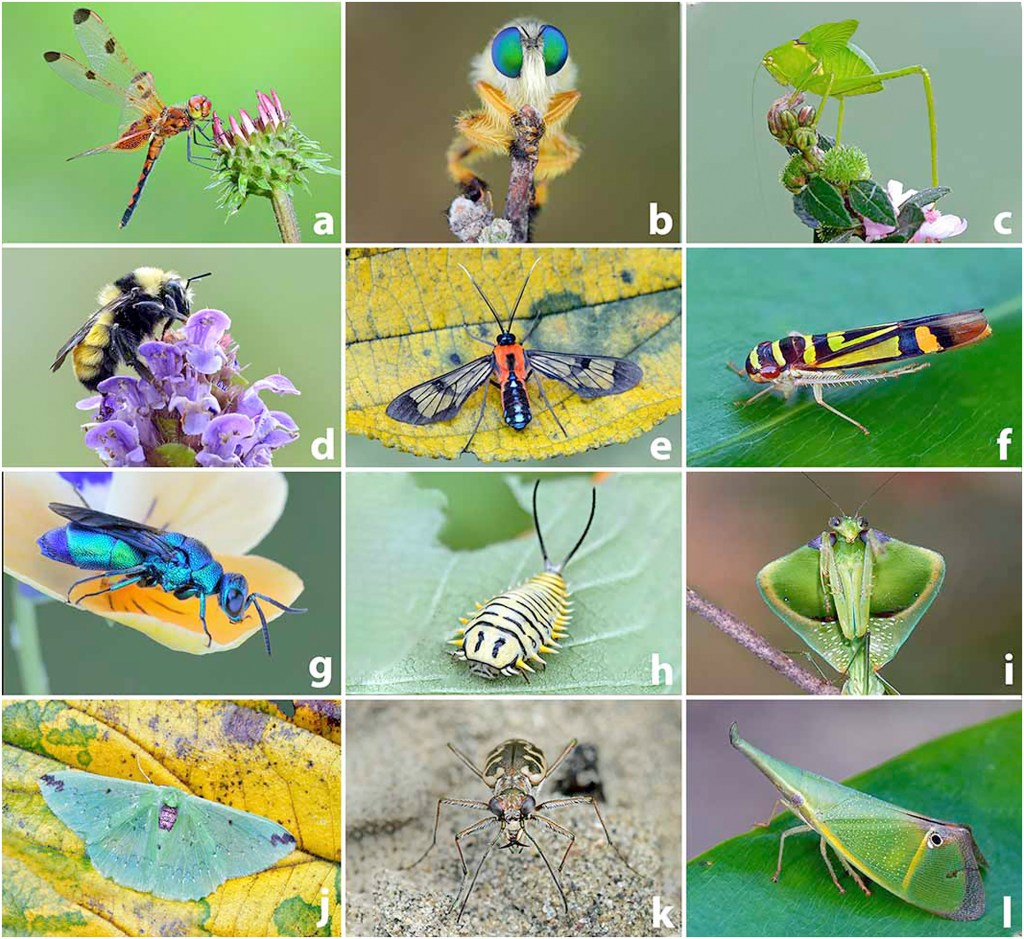
Insect diversity

  • (A) Pennants (Libellulidae): Dragonflies are among the most familiar and popular insects, renowned for their appetite for mosquitoes.
  • (B) Robber flies (Asilidae): These sit-and-wait predators often perch on twigs that allow them to ambush passing prey; accordingly they have enormous eyes.
  • (C) Katydids (Tettigoniidae): This individual is one molt away from having wings long enough to fly (that also will be used to produce its mating song).
  • (D) Bumble bees (Apidae): Important pollinators in temperate, montane, and subpolar regions especially of heaths (including blueberries and cranberries).
  • (E) Wasp moths (Erebidae): Compelling mimics that are hyperdiverse in tropical forests; many are toxic and unpalatable to vertebrates.
  • (F) Leafhoppers (Cicadellidae): A diverse family with 20,000 species, some of which are important plant pests; many communicate with each other by vibrating their messages through a shared substrate.
  • (G) Cuckoo wasps (Chrysididae): Striking armored wasps that enter nests of other bees—virtually impermeable to stings—to lay their eggs in brood cells of a host bee.
  • (H) Tortoise beetles (Chrysomelidae): Mostly tropical plant feeders; this larva is advertising its unpalatability with bold yellow, black, and cream colors.
  • (I) Mantises (Mantidae): These voracious sit-and-wait predators have acute eyesight and rapid predatory strikes; prey are instantly impaled and held in place by the sharp foreleg spines.
  • (J) Emerald moths (Geometridae): Diverse family of primarily forest insects; their caterpillars include the familiar inchworms.
  • (K) Tiger beetles (Cicindelidae): “Tigers” use acute vision and long legs to run down their prey, which are dispatched with their huge jaws.
  • (L) Planthoppers (Fulgoridae): Tropical family of splendid insects, whose snouts are curiously varied and, in a few lineages, account for half the body mass. Images credit: Michael Thomas (photographer).

The Stressors

Abundant evidence demonstrates that the principal stressors—land-use change (especially deforestation), climate change, agriculture, introduced species, nitrification, and pollution—underlying insect declines are those also affecting other organisms.

Locally and regionally, insects are challenged by additional stressors, such as insecticides, herbicides, urbanization, and light pollution. In areas of high human activity, where insect declines are most conspicuous, multiple stressors occur simultaneously.

Considerable uncertainty remains about the relative importance of these stressors, their interactions, and the temporal and spatial variations in their intensity. Hallmann et al. (13), in their review of the dramatic losses of flying insects from the Krefeld region, noted that no simple cause had emerged and that “weather, land use, and [changed] habitat characteristics cannot explain this overall decline…”

When asked about his group’s early findings of downward population trends in insects (12), Dirzo summed up his thinking by stating that the falling numbers were likely due to a

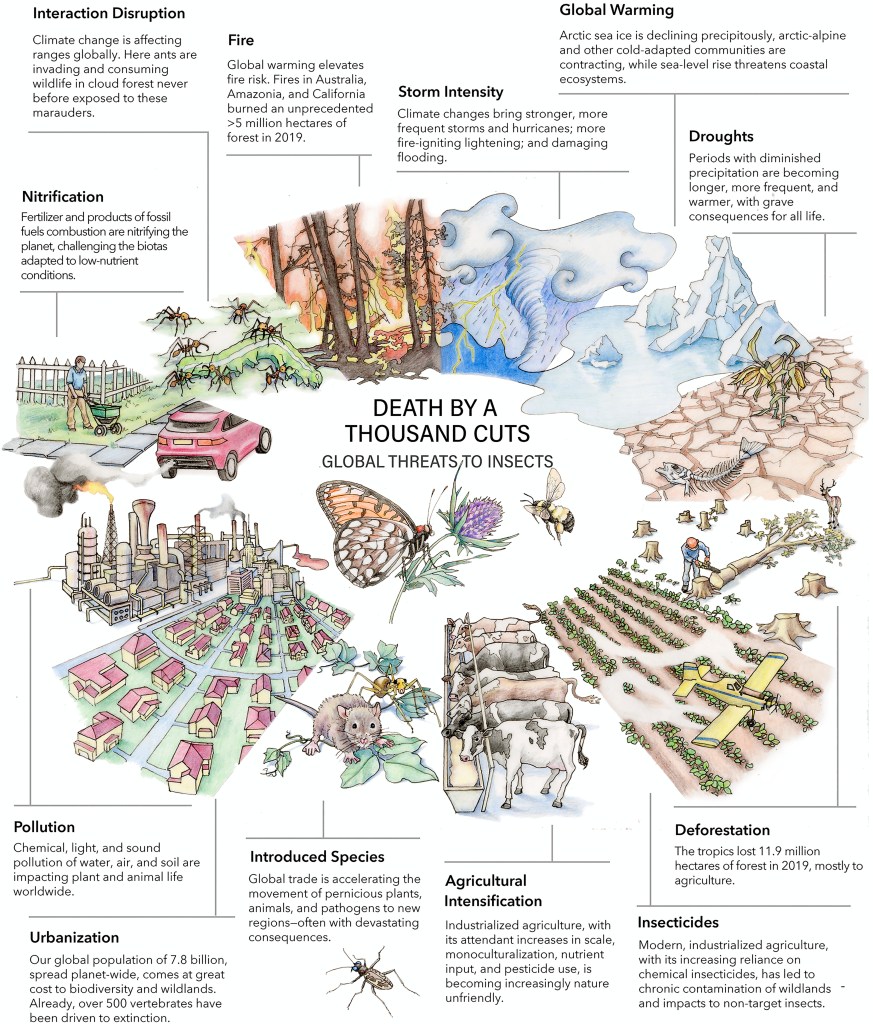
“multiplicity of factors, most likely with habitat destruction, deforestation, fragmentation, urbanization, and agricultural conversion being among the leading factors” (40). His assessment seems to capture the essence of the problem: Insects are suffering from “death by a thousand cuts” (Fig. 1).

Taking the domesticated honey bee as an example, its declines in the United States have been linked to (introduced) mites, viral infections, microsporidian parasites, poisoning by neonicotinoid and other pesticides, habitat loss, overuse of artificial foods to maintain hives, and inbreeding; and yet, after 14+ y of research it is still unclear which of these, a combination thereof, or as yet unidentified factors are most detrimental to bee health.

Death by a thousand cuts: Global threats to insect diversity. Stressors from 10 o’clock to 3 o’clock anchor to climate change.

Featured insects:

  • Regal fritillary (Speyeria idalia) (Center)
  • Rusty patched bumble bee (Bombus affinis) (Center Right)
  • Puritan tiger beetle (Cicindela puritana) (Bottom).

Each is an imperiled insect that represents a larger lineage that includes many International Union for Conservation of Nature “red list” species (i.e., globally extinct, endangered, and threatened species). Illustration: Virginia R. Wagner (artist).

Here are some other ways you can help by using your wallet as a weapon and joining the #Boycott4Wildlife

What is greenwashing?

What is greenwashing?

Read more

Why join the #Boycott4Wildlife?

Why join the #Boycott4Wildlife?

Read more

Greenwashing Tactic #4: Fake Labels

Greenwashing Tactic #4: Fake Labels

Read more

The Counterpunch: Consumer Solutions To Fight Extinction

The Counterpunch: Consumer Solutions To Fight Extinction

Read more

Contribute to my Ko-Fi

Did you enjoy visiting this website?

Contribute to my kofi

Palm Oil Detectives is 100% self-funded

Palm Oil Detectives is completely self-funded by its creator. All hosting and website fees and investigations into brands are self-funded by the creator of this online movement. If you like what I am doing, you and would like me to help meet costs, please send Palm Oil Detectives a thanks on Ko-Fi.

Say thanks on Ko-Fi Dorias Tree Kangaroo Dendrolagus dorianusGiant Ground Pangolin Manis giganteaBorneo Pygmy Elephant Elephas maximus borneensisBornean Peacock-pheasant Polyplectron schleiermacheri

Palm Oil Detectives is 100% self-funded

Palm Oil Detectives is completely self-funded by its creator. All hosting and website fees and investigations into brands are self-funded by the creator of this online movement. If you like what I am doing, you and would like me to help meet costs, please send Palm Oil Detectives a thanks on Ko-Fi.

Say thanks on Ko-Fi Dorias Tree Kangaroo Dendrolagus dorianusGiant Ground Pangolin Manis giganteaBorneo Pygmy Elephant Elephas maximus borneensisBornean Peacock-pheasant Polyplectron schleiermacheri

#animalBiodiversityNews #animalExtinction #anthropocene #boycott4wildlife #boycottpalmoil #climate #climateChange #climatechange #deforestation #extinct #extinction #industrialAgriculture #insects #meatAgriculture #meatDeforestation #pesticides #pollination #pollinator #pollution #tippingPoint #tippingpoint

Research: Certifying Palm Oil as “Sustainable” Is No Panacea


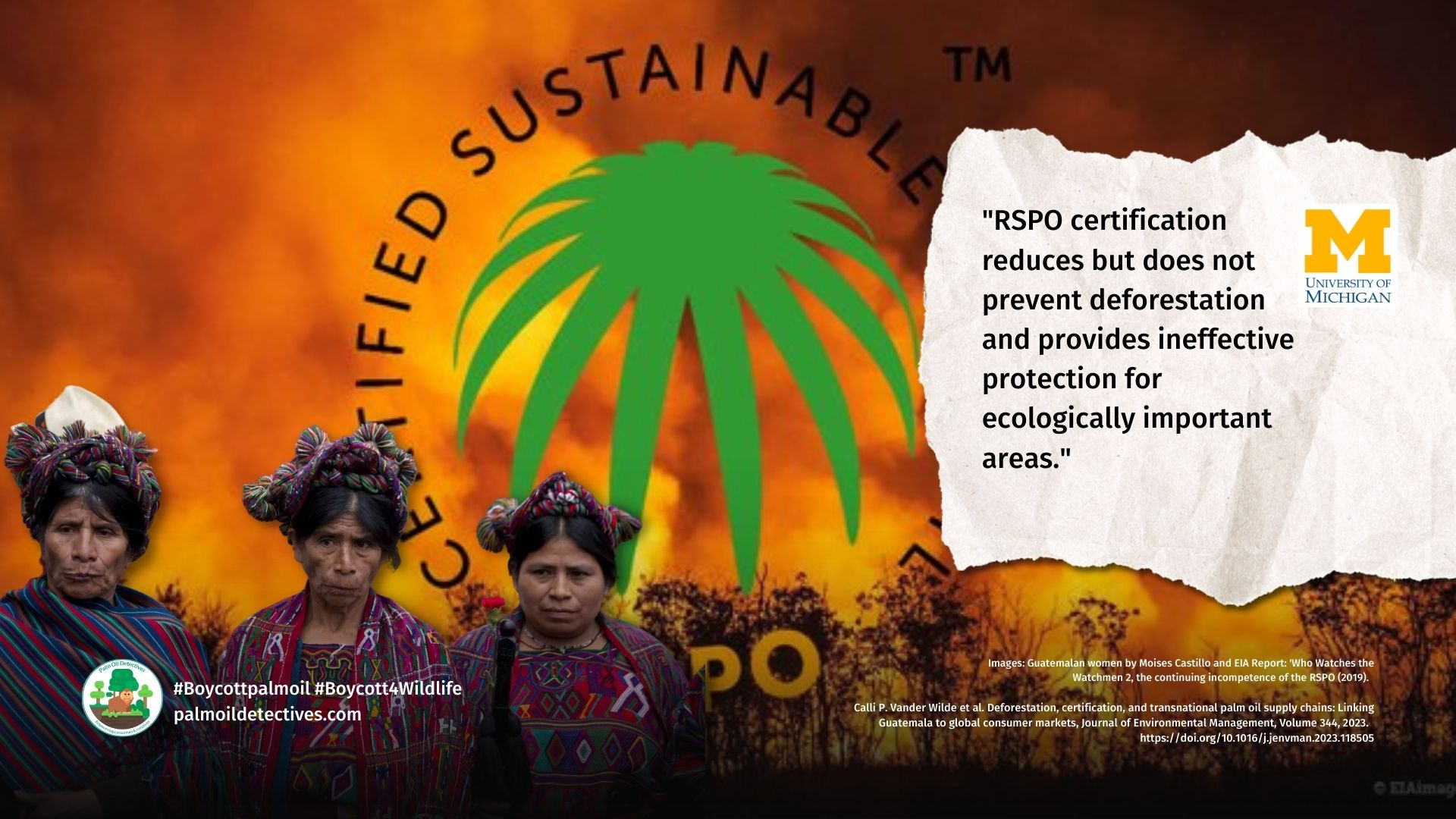
Newly published research led by the University of Michigan reveals that despite the Roundtable on Sustainable Palm Oil (RSPO) certification system being influential, its effectiveness in reducing deforestation has so far for decades, been an illusion. The study used remote sensing to analyse deforestation caused by oil palm plantations in Guatemala, a major palm oil supplier to global markets.

The results of the paper show that these plantations were responsible for 28% of the region’s deforestation, and RSPO-certified plantations did not significantly reduce deforestation. The study links this deforestation to the supply chains of major brands: Pepsico, Mondelēz International, and Grupo Bimbo, who rely on RSPO-certified palm oil supplies.

As a consumer you can make a difference every time you shop, use your wallet as a weapon and #Boycottpalmoil #Boycott4Wildlife


@UMich #research finds “sustainable” #RSPO #palmoil sourced in #Guatemala 🇬🇹 NOT sustainable, yet it’s sold this way to consumers, despite links to #humanrights abuses 🧺🩸 #deforestation. Fight back! #Boycottpalmoil 🌴⛔️ #Boycottpalmoil @palmoildetect https://palmoildetectives.com/2023/07/26/palm-oil-deforestation-in-guatemala-certifying-products-as-sustainable-is-no-panacea-university-of-michigan/

Share to BlueSkyShare to Twitter

So-called “sustainable” #palmoil certified by #RSPO originating in #Guatemala 🇬🇹 is strongly connected to #deforestation and #ecocide finds @UMich study. Help #rainforests and fight #extinction #Boycottpalmoil #Boycott4Wildlife 🌴🪔🔥☠️🚫 @palmoildetect https://palmoildetectives.com/2023/07/26/palm-oil-deforestation-in-guatemala-certifying-products-as-sustainable-is-no-panacea-university-of-michigan/

Share to BlueSkyShare to Twitter

This media release entitled “Palm oil plantations and deforestation in Guatemala: Certifying products as ‘sustainable’ is no panacea” was issued by The University of Michigan on July 20, 2023. The study on which it is based is available to read here

https://youtu.be/eG8V-Cmj4Es


Cheap, versatile and easy to grow, palm oil is the world’s most consumed vegetable oil and is found in roughly half of all packaged supermarket products, from bread and margarine to shampoo and toothpaste.

But producing palm oil has caused deforestation and biodiversity loss across Southeast Asia and elsewhere, including Central America. Efforts to curtail the damage have largely focused on voluntary environmental certification programs that label qualifying palm-oil sources as “sustainable.”

However, those certification programs have been criticised by environmental groups as greenwashing tools that enable multinational corporations to claim fully “sustainable” palm oil, while continuing to sell products that fall far short of the deforestation-free goal.

Findings from a new University of Michigan-led study, published online in the Journal of Environmental Management, support some of the critics’ claims—and go much further.

“Environmental certification does not effectively mitigate deforestation risk, and firms cannot rely on—or be allowed to rely on—certification to achieve deforestation-free supply chains,”

Study senior author Joshua Newell, a geographer and a professor at the School for Environment and Sustainability.
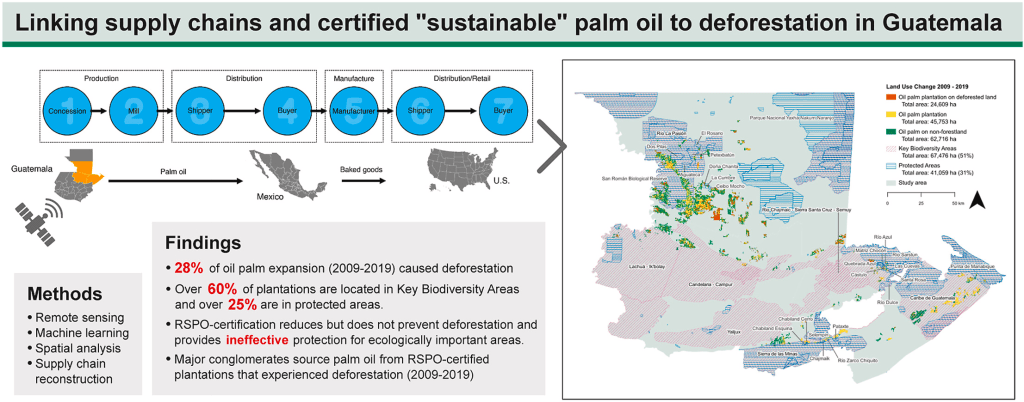
Key findings

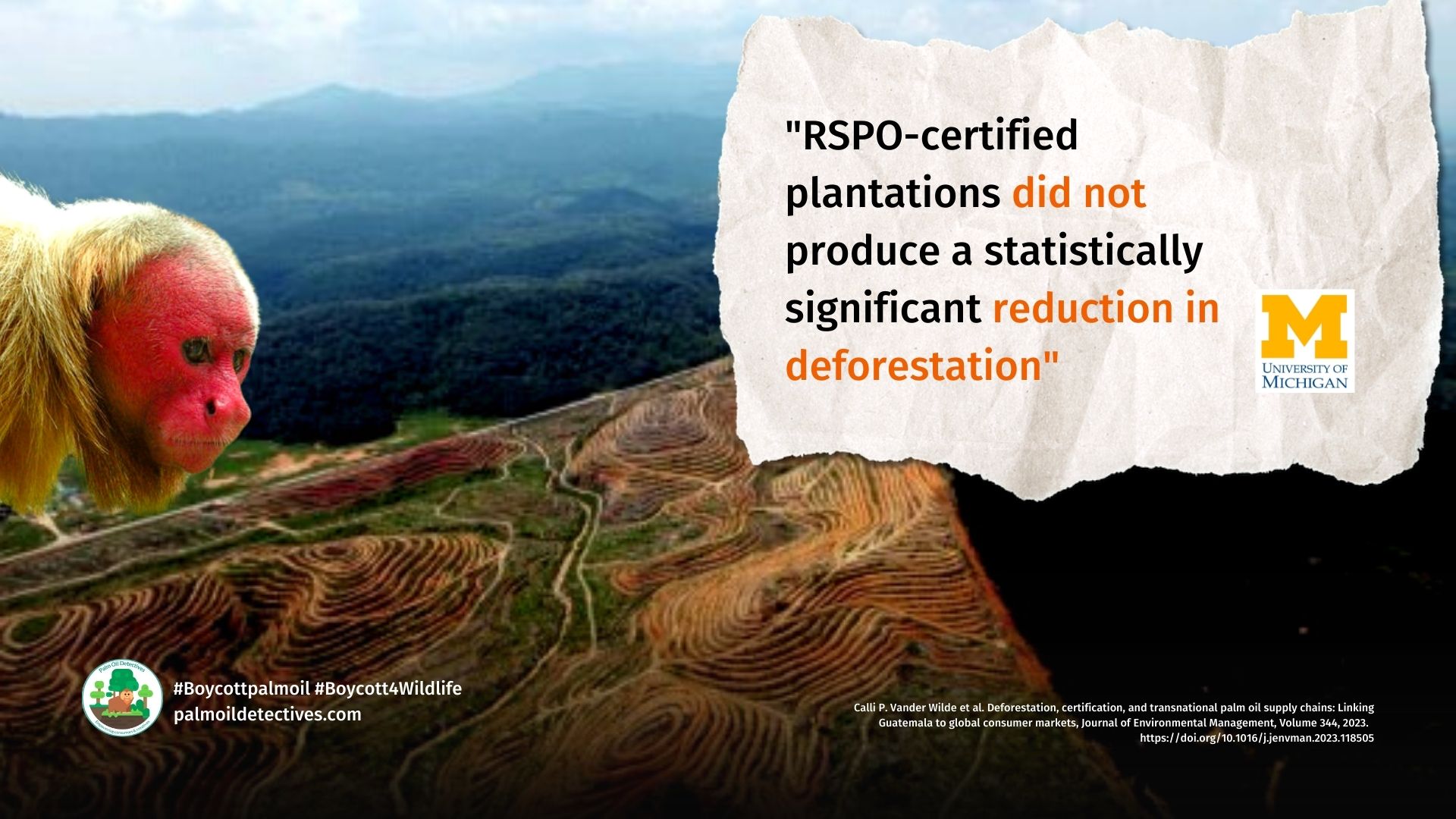
  • RSPO-certified plantations, comprising 63% of the total cultivated area assessed, did not produce a statistically significant reduction in deforestation and appear to be ineffective at reducing encroachment into ecologically sensitive areas in Guatemala.
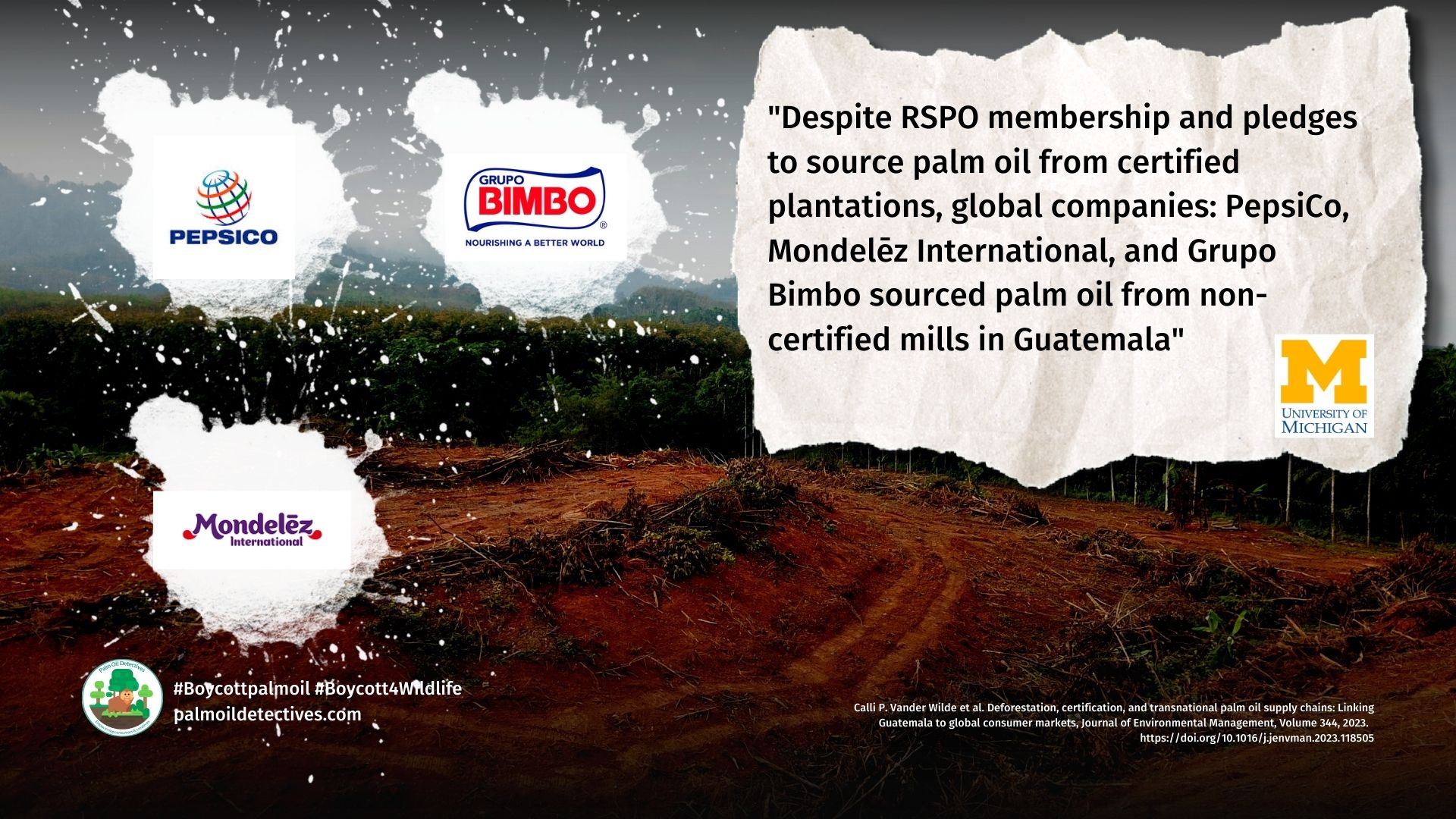
  • Despite their RSPO membership and pledges to source palm oil from certified plantations, several multinational corporations predominantly sourced palm oil from noncertified mills in Guatemala.
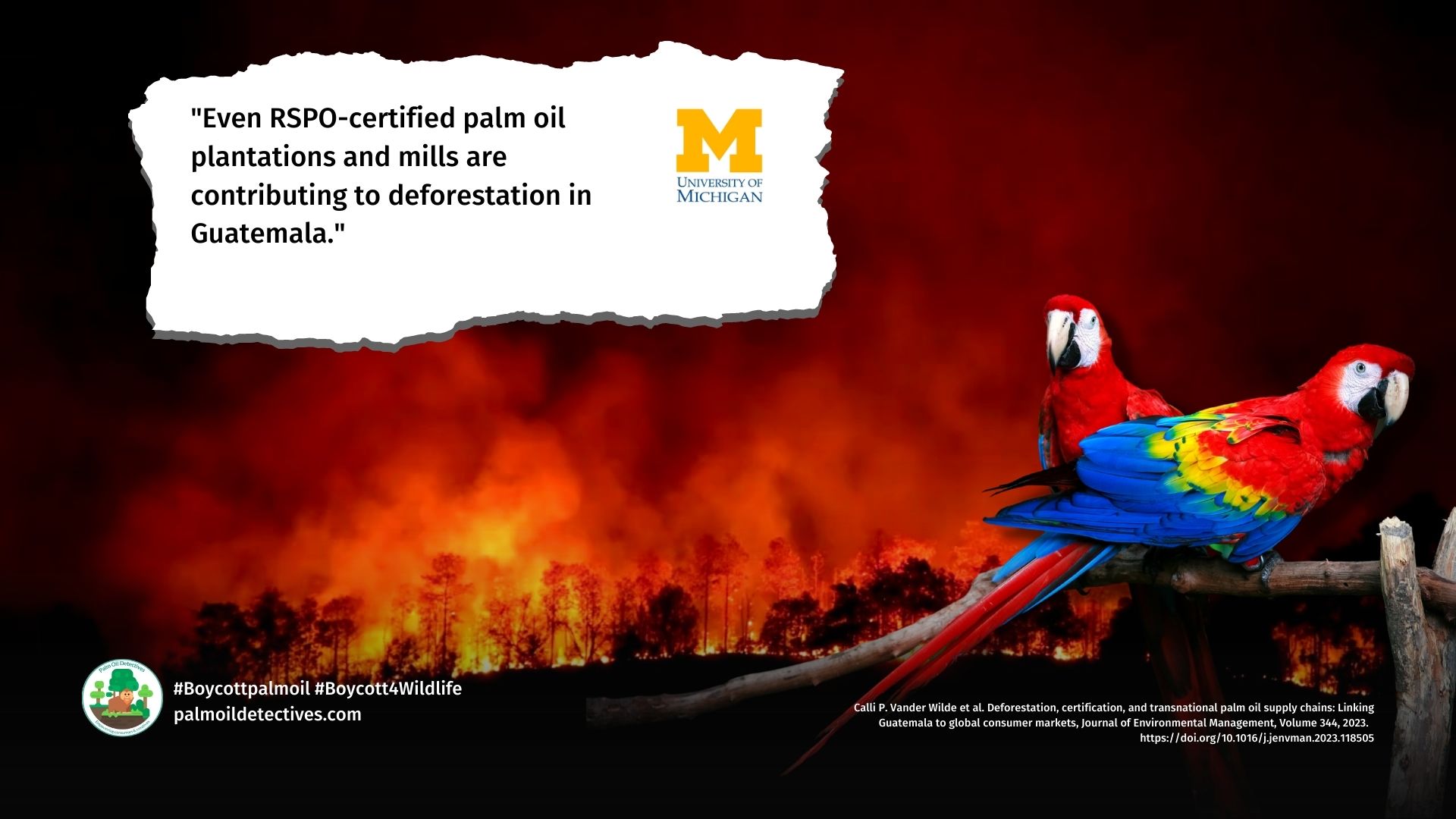
  • Even RSPO-certified palm oil plantations and mills are contributing to deforestation in Guatemala.

Certifying products as sustainable is no panacea - Uni Michigan 2023 (2)University of Michigan study finds 60% of palm oil plantations in Guatemala were located in key biodiverse areasUniversity of Michigan study finds that RSPO certification does not prevent palm oil deforestationGlobal brands using RSPO certified palm oil such as Nestle, Mondelez, Grupo Bimbo and Pepsi continue to cause palm oil deforestation in GuatemalaGlobal brands using RSPO certified palm oil such as Nestle, Mondelez, Grupo Bimbo and Pepsi continue to cause palm oil deforestation in GuatemalaRSPO certified palm oil did not reduce deforestation found a study by the University of MichiganCertifying products as sustainable is no panacea - Uni Michigan 2023 - take action by boycotting palm oil!

The U-M case study focuses on Guatemala, which is projected to become the world’s third-largest palm-oil producer by 2030 after Indonesia and Malaysia, and an influential environmental certification system called the Roundtable on Sustainable Palm Oil, or RSPO.

“Our results indicate the supply chains of transnational conglomerates drove deforestation and ecological encroachment in Guatemala to support U.S. palm oil consumption,” said study lead author Calli VanderWilde, a doctoral student at the U-M School for Environment and Sustainability who did the work for her dissertation.

“In addition, we found no evidence to suggest that RSPO certification effectively protects against deforestation or ecological encroachment. Given that oil palm expansion is predicted to increase significantly in the coming years, this pattern is likely to continue without changes to governance, both institutionally and to supply chains.”

The U-M-led research team tracked palm oil sourced from former forestland, and other ecologically critical areas in Guatemala, by several large transnational conglomerates that sell food products made from the oil in the United States. The corporations are members of the Roundtable on Sustainable Palm Oil and have RSPO commitments and sourcing policies in place to ensure the sustainability of their palm oil supplies.

The study used satellite imagery and machine learning to quantify deforestation attributable to palm oil plantation expansion in Guatemala over a decade, 2009-2019. In addition, the researchers used shipment records and other data sources to reconstruct corporate supply chains and to link transnational conglomerates to palm oil-driven deforestation.

The study found that:

  • Guatemalan palm oil plantations expanded an estimated 215,785 acres during the study period, with 28% of the new cropland replacing forests.
  • As of 2019, more than 60% of the palm oil plantations in the study area were in Key Biodiversity Areas. KBAs are sites that contribute significantly to the global persistence of biodiversity in terrestrial, freshwater and marine ecosystems.
  • RSPO-certified plantations, comprising 63% of the total cultivated area assessed, did not produce a statistically significant reduction in deforestation and appear to be ineffective at reducing encroachment into ecologically sensitive areas in Guatemala.
  • Despite their RSPO membership and pledges to source palm oil from certified plantations, several multinational corporations predominantly sourced palm oil from noncertified mills in Guatemala.
  • Even RSPO-certified palm oil plantations and mills are contributing to deforestation in Guatemala.

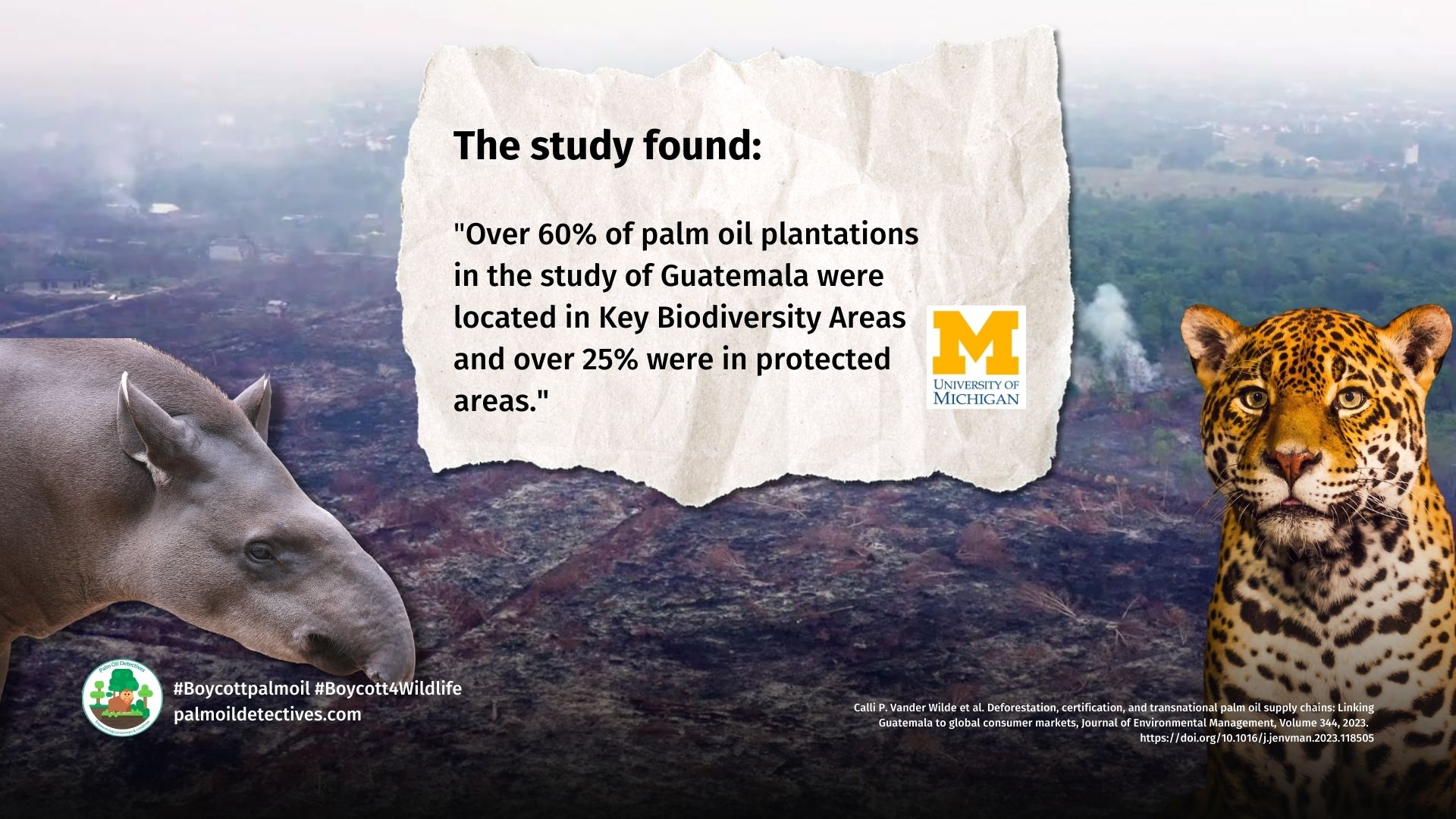
Guatemala is divided into 22 administrative districts called departamentos. The study focused on a 20,850-square-mile region in the three departamentos (Alta Verapaz, Izabal and the lower half of Petén) responsible for 75% of Guatemala’s palm oil production.

The researchers used high-resolution satellite imagery to assess land-use change between 2009 and 2019, and a machine learning algorithm enabled them to distinguish between forests and monoculture plantations.

They found that oil palm expansion is encroaching on, and causing deforestation in, seven Key Biodiversity Areas and 23 protected areas.

Among the areas impacted, the Key Biodiversity Areas with the largest palm extent include the Río La Pasión, Caribe de Guatemala and Sierra de las Minas Biosphere Reserve. The Río La Pasión is an especially rich area for endemic fish species, making it an important area for conservation.

Oil palm encroachment on the Sierra de las Minas Biosphere Reserve threatens animals such as the quetzal, Guatemala’s national bird. Known as the jewel of Guatemala, the reserve is an irreplaceable gene bank for tropical reforestation and agroforestry and supports the livelihoods of more than 400,000 people.

The researchers identified 119 RSPO-certified plantations and 82 non-RSPO plantations. During the study period, 9% of the RSPO-certified plantation expansion resulted in, or contributed to, forest loss, compared to 25% of the noncertified plantation expansion.

“Environmental certification does not effectively mitigate deforestation risk, and firms cannot rely on—or be allowed to rely on—certification to achieve deforestation-free supply chains,”

Study senior author Joshua Newell, a geographer and a professor at the School for Environment and Sustainability.

By reconstructing the supply chains of the three conglomerates, the researchers revealed connections to palm oil-driven deforestation. Of the 60,810 acres of palm oil-driven deforestation across the study period, more than 99% was traced to plantations supplying palm and palm-kernel oil to mills used by two multinational conglomerates. Seventy-two percent of the palm and palm-kernel oil was linked to the subset of plantations supplying a third corporation’s mills.
  • Greenwashing ecocide - Agropalma & Orangutan Land TrustGreenwashing ecocide – Agropalma & Orangutan Land Trust
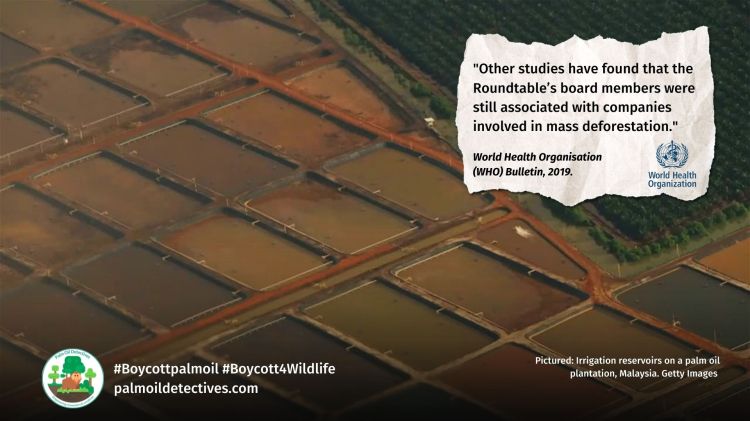
  • WHO Bulletin Report: Greenwashing and lobbying by the RSPO and RSPO members
  • 8. Certification provides opportunities for greenwashing and increases vested interests in and corporate power over natural resources.8. Certification provides opportunities for greenwashing and increases vested interests in and corporate power over natural resources.
  • 100 NGOS sign a public statement denouncing the RSPO and "sustainable" palm oil as a fake solution that does not stop deforestation100 NGOS sign a public statement denouncing the RSPO and “sustainable” palm oil as a fake solution that does not stop deforestation
  • Spoiled Fruit: landgrabbing, violence and slavery for "sustainable" palm oilSpoiled Fruit: landgrabbing, violence and slavery for “sustainable” palm oil
  • 10 Tactics of Sustainable Palm Oil Greenwashing - Summary10 Tactics of Sustainable Palm Oil Greenwashing – Summary
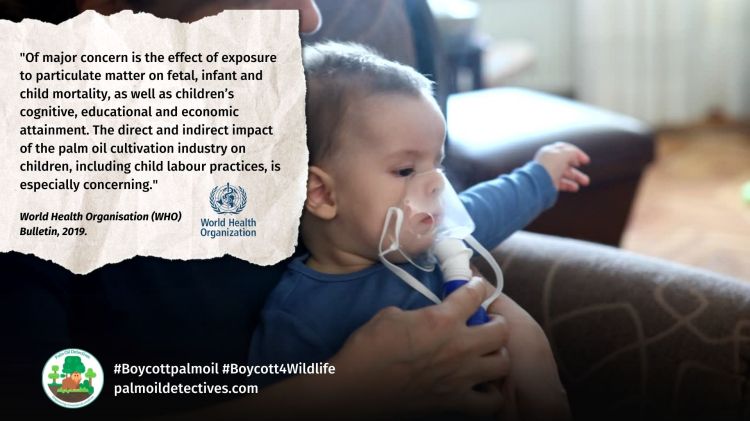
  • WHO Bulletin on Palm Oil: Air Pollution and Health
  • WHO Bulletin on Palm Oil: Deforestation and Extinction

“Palm oil has attracted attention for its ties to widespread forest and biodiversity loss across Southeast Asia. However, the literature has paid minimal attention to newer spaces of production and issues of corporate supply-chain traceability,” VanderWilde said.

“As it stands, environmental certification makes unjustified claims of ‘sustainability’ and fails to serve as a reliable tool for fulfilling emerging zero-deforestation requirements.”

The authors recommend reforms to RSPO policies and practices, robust corporate tracking of supply chains, and the strengthening of forest governance in Guatemala.

In addition to VanderWilde and Newell, authors of the study are Dimitrios Gounaridis of the U-M School for Environment and Sustainability and Benjamin Goldstein of McGill University. Funding for the study was provided by U-M’s Rackham Predoctoral Fellowship Program.

Calli P. VanderWilde, Joshua P. Newell, Dimitrios Gounaridis, Benjamin P. Goldstein,
Deforestation, certification, and transnational palm oil supply chains: Linking Guatemala to global consumer markets, Journal of Environmental Management,
Volume 344, 2023. https://doi.org/10.1016/j.jenvman.2023.118505


Deforestation, certification, and transnational palm oil supply chains: Linking Guatemala to global consumer markets

Abstract

Although causal links between tropical deforestation and palm oil are well established, linking this land use change to where the palm oil is actually consumed remains a distinct challenge and research gap. Supply chains are notoriously difficult to track back to their origin (i.e., the ‘first-mile’). This poses a conundrum for corporations and governments alike as they commit to deforestation-free sourcing and turn to instruments like certification to increase supply chain transparency and sustainability. The Roundtable on Sustainable Palm Oil (RSPO) offers the most influential certification system in the sector, but whether it actually reduces deforestation is still unclear. This study used remote sensing and spatial analysis to assess the deforestation (2009–2019) caused by oil palm plantation expansion in Guatemala, a major palm oil source for international consumer markets. Our results reveal that plantations are responsible for 28% of deforestation in the region and that more than 60% of these plantations encroach on Key Biodiversity Areas. RSPO-certified plantations, comprising 63% of the total cultivated area assessed, did not produce a statistically significant reduction in deforestation. Using trade statistics, the study linked this deforestation to the palm oil supply chains of three transnational conglomerates – Pepsico, Mondelēz International, and Grupo Bimbo – all of whom rely on RSPO-certified supplies. Addressing this deforestation and supply chain sustainability challenge hinges on three measures: 1) reform of RSPO policies and practices; 2) robust corporate tracking of supply chains; and 3) strengthening forest governance in Guatemala. This study offers a replicable methodology for a wide-range of investigations that seek to understand the transnational linkages between environmental change (e.g. deforestation) and consumption.

This media release entitled “Palm oil plantations and deforestation in Guatemala: Certifying products as ‘sustainable’ is no panacea” was issued by The University of Michigan on July 20, 2023. The study on which it is based is available to read here

ENDS


Read more about deforestation and greenwashing associated with “sustainable” palm oil

Family Ties Expose Deforestation and Rights Violations in Indonesian Palm Oil

Family Ties Expose Deforestation and Rights Violations in Indonesian Palm Oil

An explosive report by the Environment Investigation Agency (EIA) details how Indonesia’s Fangiono family, through a wide corporate web, is linked to ongoing #deforestation, #corruption, and #indigenousrights abuses for #palmoil. Calls mount for…

Read more
Corporate Control of Food Harms Us All

Corporate Control of Food Harms Us All

Around 800 million people in our world go hungry each day. Yet around the globe we have enough food to go around. So why the discrepancy? Market concentration and corporate monopoly of our…

Read more
MSC and RSPO Absolutely Untrustworthy, Greenpeace Report

MSC and RSPO Absolutely Untrustworthy, Greenpeace Report

Greenpeace report reveals severe failures of ecolabel RSPO certifying palm oil and FSC certifying seafood. Consumers are being greenwashed. Boycott palm oil!

Read more

Guaranteeing Ecocide: The Green Lie of Palm Oil Certification

Guaranteeing Ecocide: The Green Lie of Palm Oil Certification

For decades, the palm oil industry, backed by the RSPO, has misled consumers with the false promise of “sustainable” palm oil. Behind this green façade lies a brutal reality of deforestation, human rights…

Read more
How Brands Exploit “Green” Certification

How Brands Exploit “Green” Certification

Brands and businesses may be tempted to exploit “green” certifications to garner a larger market share at the expense of integrity.

Read more
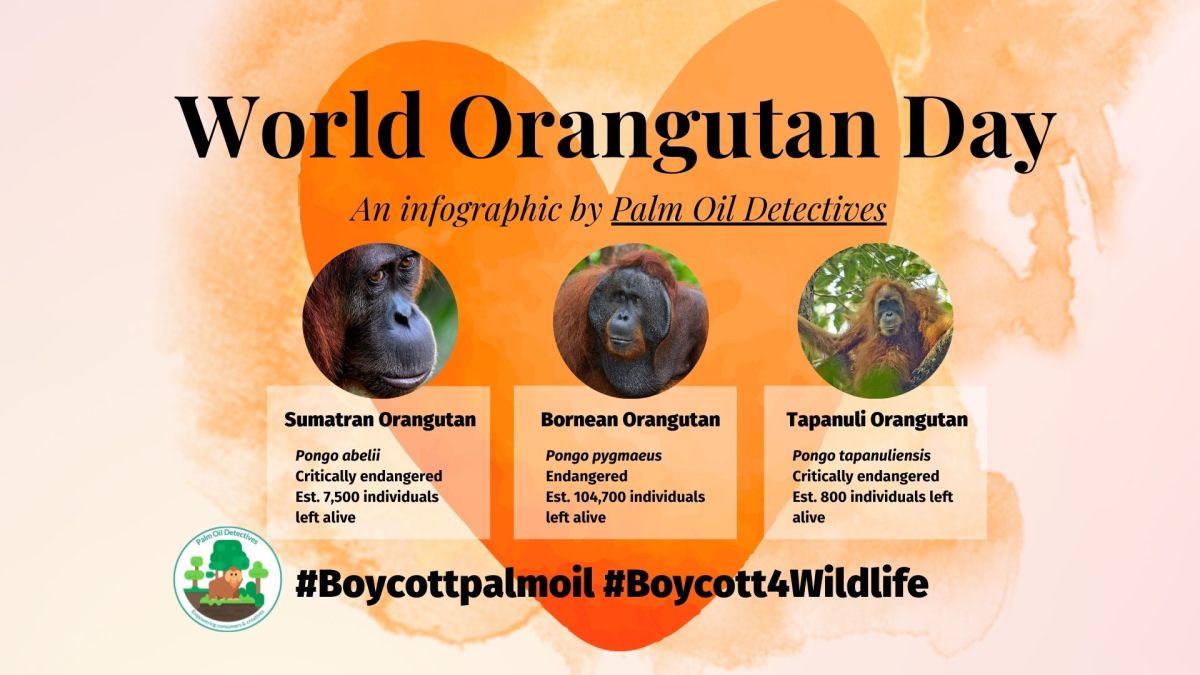
August 19th is #WorldOrangutanDay

August 19th is #WorldOrangutanDay

Although #WorldOrangutanDay falls on the 19th of August, every day deserves to be World Orangutan Day! So here is an infographic that you can download, print and share however you please. All three…

Read more
Palm Oil Greenwashing Poised to Destroy Protected Biosphere in Chiapas, Mexico

Palm Oil Greenwashing Poised to Destroy Protected Biosphere in Chiapas, Mexico

Situated on Mexico’s lush and biodiverse Pacific coast is La Encrucijada Biosphere Reserve – One of Mexico’s most spectacular natural treasures. Now the government and palm oil businesses are trying to sieze vast…

Read more
PalmWatch: A Tool to Hold Palm Oil Greenwashers to Account

PalmWatch: A Tool to Hold Palm Oil Greenwashers to Account

A groundbreaking open-source tool by the University of Chicago called PalmWatch, shines a light on the darkest parts of the palm oil industry.

PalmWatch is a free web-based tool that reveals links between…

Read more
Air Pollution from Palm Oil: A Human Rights Issue

Air Pollution from Palm Oil: A Human Rights Issue

Forest-fire haze from Indonesian palm oil deforestation is a crisis! Learn how toxic air pollution is a human rights issue affecting all of Southeast Asia

Read more
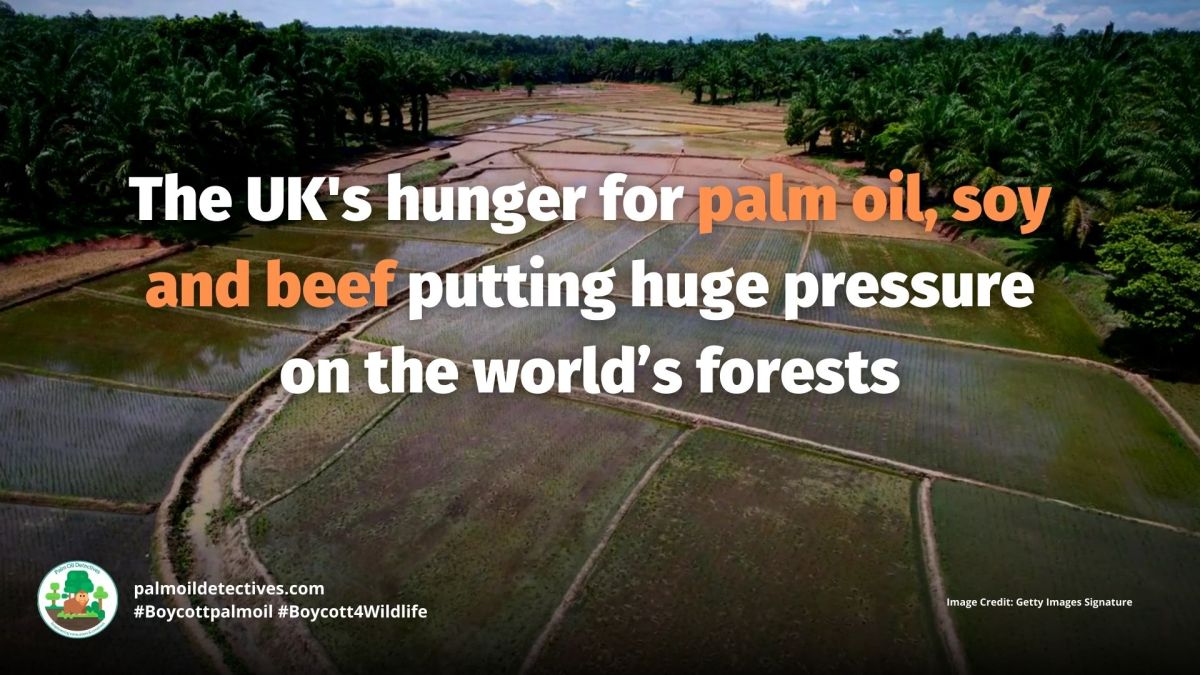
UK Pressuring Forests For Palm Oil and Beef

UK Pressuring Forests For Palm Oil and Beef

Urgent call to action! 🌍 #UK’s heavy use of #palmoil #soy & #beef fuels global #deforestation. Demand stricter regulations & transparency. Make every purchase count and #Boycottmeat #BoycottPalmOil #Boycott4Wildlife, learn more: https://wp.me/pcFhgU-78V

Read more

Load more posts

Something went wrong. Please refresh the page and/or try again.


Take Action in Five Ways

1. Join the #Boycott4Wildlife on social media and subscribe to stay in the loop: Share posts from this website to your own network on Twitter, Mastadon, Instagram, Facebook and Youtube using the hashtags #Boycottpalmoil #Boycott4Wildlife.

Enter your email address

Sign Up

Join 3,526 other subscribers

2. Contribute stories: Academics, conservationists, scientists, indigenous rights advocates and animal rights advocates working to expose the corruption of the palm oil industry or to save animals can contribute stories to the website.
Wildlife Artist Juanchi Pérez

Wildlife Artist Juanchi Pérez

Read more

Mel Lumby: Dedicated Devotee to Borneo’s Living Beings

Mel Lumby: Dedicated Devotee to Borneo’s Living Beings

Read more

Anthropologist and Author Dr Sophie Chao

Anthropologist and Author Dr Sophie Chao

Read more

Health Physician Dr Evan Allen

Health Physician Dr Evan Allen

Read more

The World’s Most Loved Cup: A Social, Ethical & Environmental History of Coffee by Aviary Doert

The World’s Most Loved Cup: A Social, Ethical & Environmental History of Coffee by Aviary Doert

Read more

How do we stop the world’s ecosystems from going into a death spiral? A #SteadyState Economy

How do we stop the world’s ecosystems from going into a death spiral? A #SteadyState Economy

Read more

3. Supermarket sleuthing: Next time you’re in the supermarket, take photos of products containing palm oil. Share these to social media along with the hashtags to call out the greenwashing and ecocide of the brands who use palm oil. You can also take photos of palm oil free products and congratulate brands when they go palm oil free.

https://twitter.com/CuriousApe4/status/1526136783557529600?s=20

https://twitter.com/PhillDixon1/status/1749010345555788144?s=20

https://twitter.com/mugabe139/status/1678027567977078784?s=20

4. Take to the streets: Get in touch with Palm Oil Detectives to find out more.

5. Donate: Make a one-off or monthly donation to Palm Oil Detectives as a way of saying thank you and to help pay for ongoing running costs of the website and social media campaigns. Donate here

Pledge your support

#BoycottPalmOil #Boycott4wildlife #BoycottPalmOil #deforestation #ecocide #Environmental #EnvironmentalJustice #extinction #greenwashing #Guatamala #Guatemala #HumanRights #PalmOil #palmOilDeforestation #palmoil #rainforests #research #RSPO #RSPOGreenwashing

Air Pollution from Palm Oil: A Human Rights Issue


Forest-fire haze drifting from Indonesia to neighbouring countries every dry season has eluded efforts to curb it.

Land clearing by burning is prohibited in Indonesia and Malaysia. However, penalising foreign companies for palm oil and timber deforestation has been hampered by cronyism and corruption.

Under-explored legal avenues may provide new solutions to the decades-old problem. 


Everybody in the world deserves to breath in #cleanair. #Palmoil air #pollution is a global problem. Domestic and international laws could combat it together and provide solutions. #TheAirWeShare Story via @360info_global #Boycottpalmoil @palmoildetect https://palmoildetectives.com/2024/03/03/air-pollution-from-palm-oil-deforestation-is-a-human-rights-issue-affecting-everyone-in-s-e-asia/

Share to BlueSky Share to Twitter

Penalising foreign companies for #palmoil and #timber #deforestation in #Indonesia and #Malaysia has been hampered by #cronyism and #corruption at the highest levels of government. Story: @360info_global #TheAirWeShare #Boycottpalmoil #Boycott4Wildlife https://palmoildetectives.com/2024/03/03/air-pollution-from-palm-oil-deforestation-is-a-human-rights-issue-affecting-everyone-in-s-e-asia/
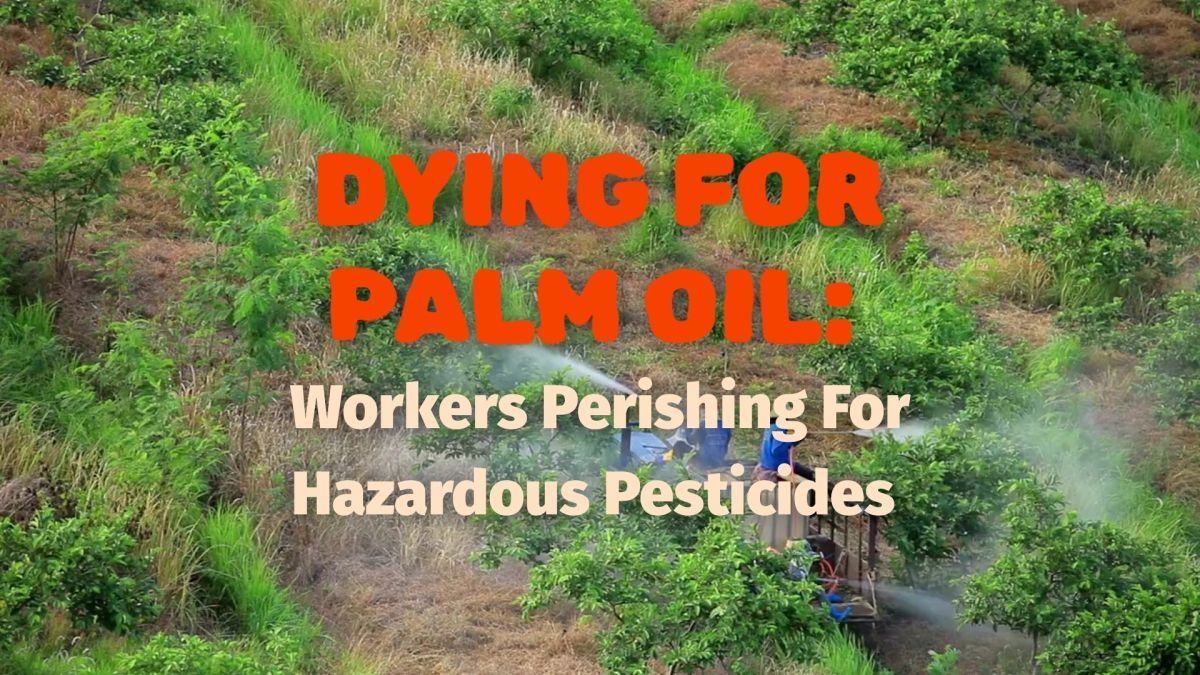
Share to BlueSkyShare to Twitter

Written by Cecep Aminudin, a PhD candidate in environmental law at Padjadjaran University, Indonesia. Originally published as ‘Laying down the law on air pollution’ by 360info.org and republished under Creative Commons License.

Air pollution from palm oil deforestation is a human rights issue affecting everyone in Asia

Forest and land fires in Indonesia have attracted global attention since the great fires in 1982–83 and 1997–98. Large haze events occurred again in 20072012 and 2015, causing international alarm and cross-border pollution throughout Southeast Asia. Smoke from these sorts of fires is the biggest source of air pollution in Indonesia after transportation and energy emissions.

Companies – mostly oil-palm producers – have used fire as a tool to clear forests and peatland areas for agriculture, even though Indonesia and Malaysia are well aware of the need to strictly enforce bans on the practice. 

  • Indonesian and Malaysian laws since the 1997 haze event have not prevented local burning.
  • And penalising foreign companies for their actions in Indonesia and Malaysia has been hampered by cronyism and corruption, lack of awareness and education, weaknesses in the institutional framework and lack of political will.
  • Also, the penalties are too low to deter further pollution.
  • In recent years Indonesia’s environment ministry has brought more land- and forest-fire cases to court. Civil laws holding businesses accountable for the fires they cause have had some effect, according to a ministry report.
WHO Bulletin on Palm Oil: Air Pollution and Health

The ministry filed 21 cases between January 2015 and September 2020, and of these 10 were successful and 11 are still pending. Businesses have been ordered to pay compensation and restoration costs totalling almost US$1.38 billion.

These outcomes are related to the application of the precautionary principle in decision-making by Indonesian civil courts, as is common in environmental cases that involve scientific evidence.

According to this principle, lack of full scientific certainty shall not be used to make a decision regarding environmental protectionIndonesian courts applied the precautionary principle in the determining liable party and judging evidence even when there was scientific uncertainty.

Providing sufficient evidence in forest- and land-fire cases is often very difficult

Scientific evidence in the form of studies and expert opinion plays a crucial role in proving illegal fires have occurred, who started them, and how much environmental damage and loss they have caused.

Laboratory test reports can also be used as evidence in civil environmental-justice cases. Entirely at the judge’s discretion, these reports can be treated as expert testimony. Their relevance, which includes validity and reliability, and support from other expert testimonies, is a critical point in a judge’s decision to admit them as compelling legal evidence.

External regulation could complement and support the legal framework in each Southeast Asian country to ensure the activities of transnational companies meet environmental standards and the Association of Southeast Asian Nations (ASEAN) notion of cooperation.

Holding palm oil companies to account for air pollution under international law

A legitimate legislative framework could impose and enforce international environmental standards recognised under human rights obligations. In this way, palm oil plantation companies could be held accountable under international law for the pollution they cause elsewhere.

The victims of transboundary pollution and other environmental destruction are the people whose health will suffer, either in the short or the long term. Many countries have also suffered economic loss from direct damage and loss of economic activity. 

WHO Bulletin on Palm Oil: Air Pollution and Health

Holding polluters accountable will not just uphold domestic laws but also demonstrate political willingness to recognise air pollution as a human rights issue.

Cecep Aminudin is a PhD candidate in environmental law at Padjadjaran University, Bandung, Indonesia. He is the Chairman of ECOTAS, a research institute on sustainability. Apart from pursuing his doctoral degree, Aminudin conducts research, delivers training and consults on environmental law. He declares no conflict of interest in relation to this article and does not receive special funds in any form.

Originally published under Creative Commons by 360info™.

Written by Cecep Aminudin, a PhD candidate in environmental law at Padjadjaran University, Indonesia. Originally published as ‘Laying down the law on air pollution’ by 360info.org and republished under Creative Commons License.

ENDS


A 2019 World Health Organisation (WHO) report into the palm oil industry finds extensive greenwashing of human rights abuses, deforestation, air pollution and human health impacts

Read reportWHO Bulletin on Palm Oil: Deforestation and ExtinctionWHO Bulletin on Palm Oil: Air Pollution and Health

Big brands using “sustainable” RSPO palm oil yet still causing deforestation (there are many others)

Nestlé

Nestlé

Nestlé is destroying rainforests, releasing mega-tonnes of carbon into the atmosphere, and killing hundreds of endangered species. Once these animals are gone – they are gone for good. See Nestlé’s full list of…

Read more

Palm Oil Detectives's avatarby Palm Oil DetectivesFebruary 9, 2021March 2, 2025

Colgate-Palmolive

Colgate-Palmolive

Despite global retail giant Colgate-Palmolive forming a coalition with other brands in 2020, virtue-signalling that they will stop all deforestation, they continue to do this – destroying rainforest and releasing mega-tonnes of carbon…

Read more

Palm Oil Detectives's avatarby Palm Oil DetectivesFebruary 9, 2021March 2, 2025

Mondelēz

Mondelēz

Mondelez destroys rainforests, sending animals extinct and release mega-tonnes of carbon into air for so-called “sustainable” palm oil. Boycott them!

Read more

Palm Oil Detectives's avatarby Palm Oil DetectivesFebruary 9, 2021October 15, 2025

Unilever

Unilever

In 2020, global retail giant Unilever unveiled a deforestation-free supply chain promise. By 2023 they would be deforestation free. This has been and gone and they are still causing deforestation. This brand has…

Read more

Palm Oil Detectives's avatarby Palm Oil DetectivesFebruary 9, 2021March 2, 2025

Danone

Danone

Savvy consumers have been pressuring French Dairy multinational Danone for decades to cease using deforestation palm oil. Yet they actually haven’t stopped this. From their website: ‘Danone is committed to eliminating deforestation from…

Read more

Palm Oil Detectives's avatarby Palm Oil DetectivesMarch 6, 2021March 2, 2025

PepsiCo

PepsiCo

Despite decades of promises to end deforestation for palm oil PepsiCo (owner of crisp brands Frito-Lay, Cheetos and Doritos along with hundreds of other snack food brands) have continued sourcing palm oil that…

Read more

Palm Oil Detectives's avatarby Palm Oil DetectivesJune 9, 2022March 2, 2025

Procter & Gamble

Procter & Gamble

Despite decades of promises to end deforestation for palm oil Procter & Gamble or (P&G as they are also known) have continued sourcing palm oil that causes ecocide, indigenous landgrabbing, and the habitat…

Read more

Palm Oil Detectives's avatarby Palm Oil DetectivesJune 3, 2022March 2, 2025

Kelloggs/Kellanova

Kelloggs/Kellanova

In late 2023, Kelloggs became Kellanova for their US arm. Savvy consumers have been pressuring Kelloggs for decades to cease using deforestation palm oil. Yet they actually haven’t stopped this. From their website:…

Read more

Palm Oil Detectives's avatarby Palm Oil DetectivesFebruary 9, 2021March 2, 2025

Johnson & Johnson

Johnson & Johnson

Global mega-brand Johnson & Johnson have issued a position statement on palm oil in 2020. ‘At Johnson & Johnson, we are committed to doing our part to address the unsustainable rate of global…

Read more

Palm Oil Detectives's avatarby Palm Oil DetectivesFebruary 9, 2021July 13, 2025

PZ Cussons

PZ Cussons

PZ Cussons is a British-owned global retail giant. They own well-known supermarket brands in personal care, cleaning, household goods and toiletries categories, such as Imperial Leather, Morning Fresh, Carex, Radiant laundry powder and…

Read more

Palm Oil Detectives's avatarby Palm Oil DetectivesMarch 10, 2021March 2, 2025


Take Action in Five Ways

1. Join the #Boycott4Wildlife on social media and subscribe to stay in the loop: Share posts from this website to your own network on Twitter, Mastadon, Instagram, Facebook and Youtube using the hashtags #Boycottpalmoil #Boycott4Wildlife.
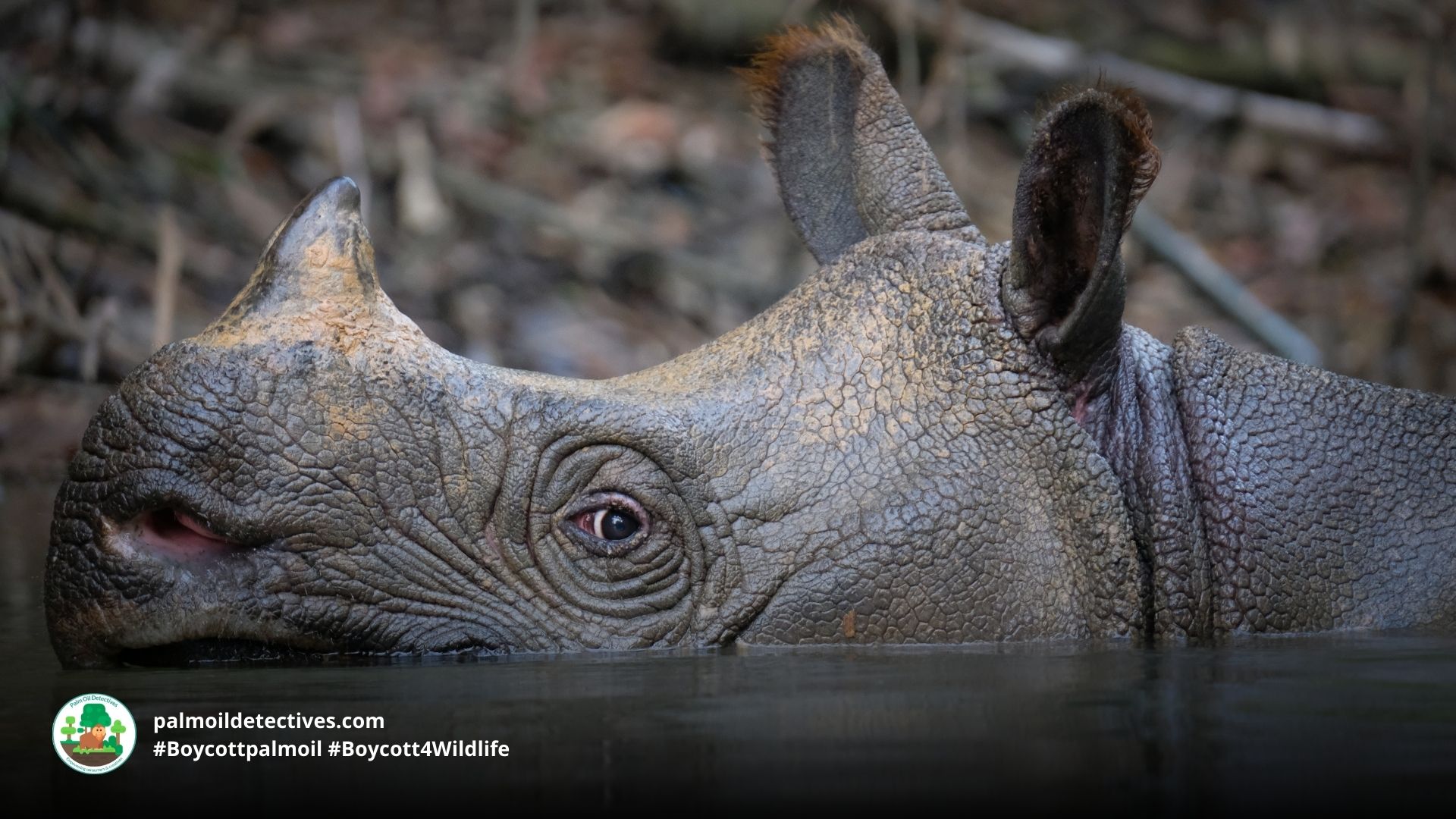
Enter your email address

Sign Up

Join 3,526 other subscribers

2. Contribute stories: Academics, conservationists, scientists, indigenous rights advocates and animal rights advocates working to expose the corruption of the palm oil industry or to save animals can contribute stories to the website.

Wildlife Artist Juanchi Pérez

Wildlife Artist Juanchi Pérez

Read more

Mel Lumby: Dedicated Devotee to Borneo’s Living Beings

Mel Lumby: Dedicated Devotee to Borneo’s Living Beings

Read more

Anthropologist and Author Dr Sophie Chao

Anthropologist and Author Dr Sophie Chao

Read more

Health Physician Dr Evan Allen

Health Physician Dr Evan Allen

Read more

The World’s Most Loved Cup: A Social, Ethical & Environmental History of Coffee by Aviary Doert

The World’s Most Loved Cup: A Social, Ethical & Environmental History of Coffee by Aviary Doert

Read more

How do we stop the world’s ecosystems from going into a death spiral? A #SteadyState Economy

How do we stop the world’s ecosystems from going into a death spiral? A #SteadyState Economy

Read more

3. Supermarket sleuthing: Next time you’re in the supermarket, take photos of products containing palm oil. Share these to social media along with the hashtags to call out the greenwashing and ecocide of the brands who use palm oil. You can also take photos of palm oil free products and congratulate brands when they go palm oil free.

https://twitter.com/CuriousApe4/status/1526136783557529600?s=20

https://twitter.com/PhillDixon1/status/1749010345555788144?s=20

https://twitter.com/mugabe139/status/1678027567977078784?s=20

4. Take to the streets: Get in touch with Palm Oil Detectives to find out more.

5. Donate: Make a one-off or monthly donation to Palm Oil Detectives as a way of saying thank you and to help pay for ongoing running costs of the website and social media campaigns. Donate here

Pledge your support

#360infoOrg #airPollution #BoycottPalmOil #Boycott4wildlife #BoycottPalmOil #carbonemissions #cleanair #corruption #cronyism #deforestation #fire #fossilFuels #fossilfuel #fossilfuels #greenwashing #humanHealth #Indonesia #Malaysia #PalmOil #palmOilDeforestation #palmoil #pollution #SouthEastAsia #TheAirWeShare #timber