Deforestation Shifts Tree Species in Brazilian Forests
Human Activities Shift Tree Species in Brazilian #Forests | Research by Lancaster University reveals that human-induced deforestation and degradation in Brazilian forests are causing a shift towards fast-growing, small-seeded tree species. These changes threaten biodiversity and reduce carbon storage capacity. Supporting indigenous-led conservation efforts is crucial to protect these ecosystems. #BoycottPalmOil #Boycott4Wildlife
#News: Human-driven #deforestation 🌳🔥😿 in #Brazil 🇧🇷is shifting #forests towards fast-growing trees, reducing #biodiversity and #carbon storage. Boycott brands destroying the world! #BoycottPalmOil be #vegan 🌴🥩🤮⛔️ @palmoildetect #Boycott4Wildlife https://wp.me/pcFhgU-9P8
Share to BlueSkyShare to TwitterLancaster University. (2024, December 10). Human disruption is driving ‘winner’ and ‘loser’ tree species shifts across Brazilian forests. ScienceDaily. Retrieved from https://www.sciencedaily.com/releases/2024/12/241210115438.htm
Recent research out of Lancaster University reveals that human activities, including deforestation and forest degradation, are altering the composition of tree species in Brazilian forests. The study, published in Nature Ecology and Evolution, indicates a dominance of fast-growing, small-seeded tree species in areas with significant human disturbance.
These “winning” species, characterised by rapid growth and shorter lifespans, are replacing slow-growing, large-seeded trees with denser wood. This shift has serious implications for ecosystem services, notably reducing the forests’ ability to absorb and store carbon. Additionally, wildlife species that rely on large seeds for food and dispersal are adversely affected.
The international research team analyzed data from over 1,200 tropical tree species across more than 270 forest plots in the Brazilian Amazon and Atlantic forests. They identified that landscapes with high forest cover are dominated by dense-wooded, large-seeded trees, primarily dispersed by medium to large-bodied animals. In contrast, heavily deforested areas are increasingly populated by opportunistic species with softer wood and smaller seeds, dispersed by small, mobile birds and bats adapted to disturbed environments.
Lead author Bruno X. Pinho emphasizes the need for conservation and restoration efforts to preserve these vital ecosystems. Senior Investigator Professor Jos Barlow highlights the importance of addressing not only deforestation but also forest disturbances such as selective logging and fires.
Tropical forests are crucial reservoirs of biodiversity and play a significant role in mitigating climate change by absorbing greenhouse gases. The ongoing shifts in tree species composition due to human disruption underscore the urgent need for indigenous-led conservation initiatives to protect and restore these ecosystems.
For more detailed information, read more.
Lancaster University. (2024, December 10). Human disruption is driving ‘winner’ and ‘loser’ tree species shifts across Brazilian forests. ScienceDaily. Retrieved from https://www.sciencedaily.com/releases/2024/12/241210115438.htm
ENDS
Read more about deforestation and ecocide in the palm oil industry

Ecuadorean Viscacha Lagidium ahuacaense
Ecuadorean Viscachas are plump and fluffy rodents with sage-like long whiskers, only a handful of them remain alive. Take action for them and boycott4wildlife!
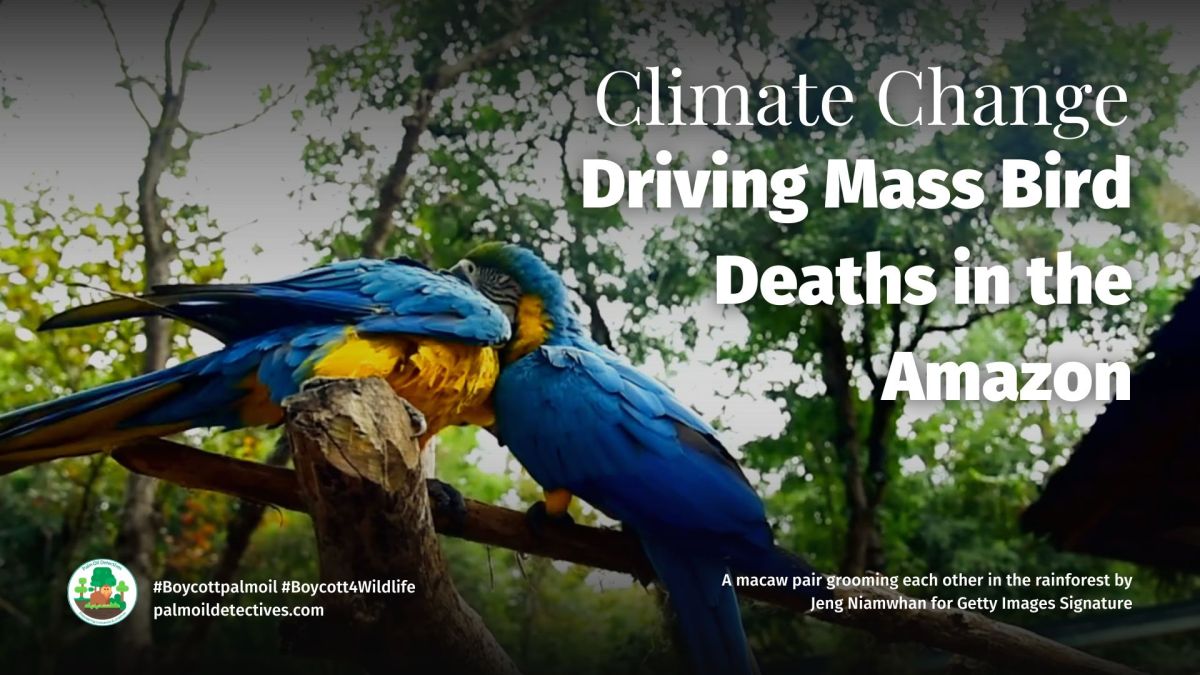
Climate Change Driving Mass Bird Deaths in the Amazon
A recent #study has revealed that even in the most isolated parts of the #Amazon, bird #populations are collapsing due to #climatechange. Research published in Science Advances found that a 1°C increase in…
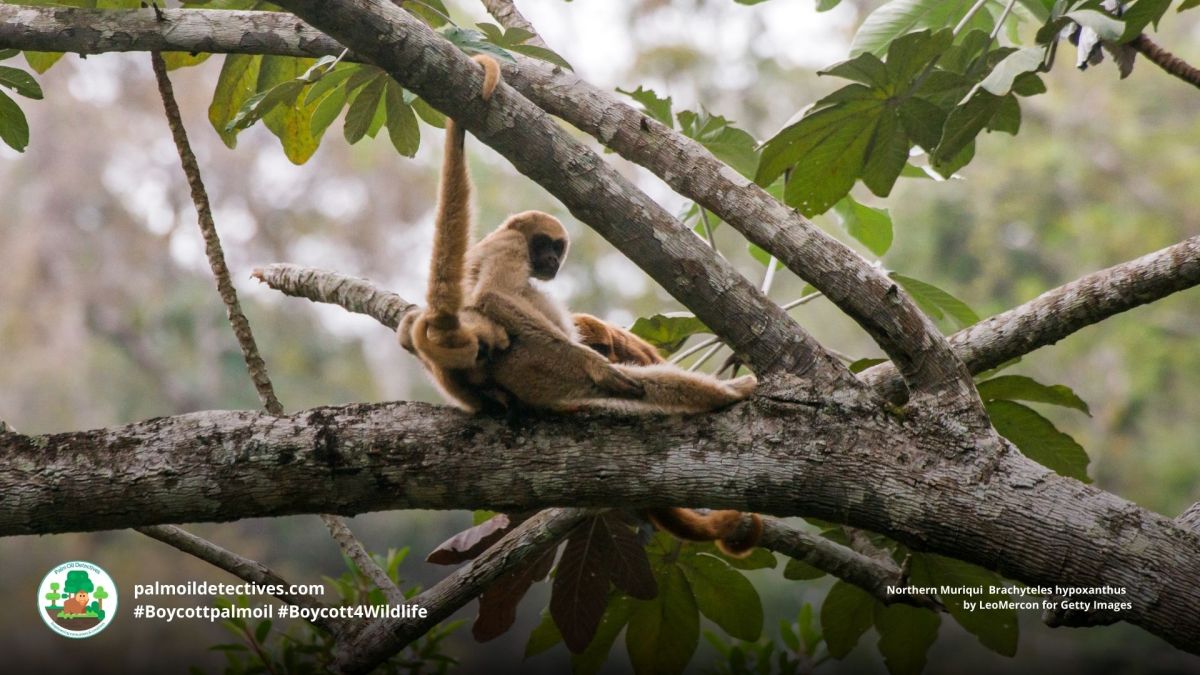
Declining primate numbers are threatening Brazil’s Atlantic forest
#Brazil’s Atlantic Forest, one of the most biodiverse ecosystems in the world, is facing severe threats due to deforestation and habitat fragmentation. This has led to a sharp decline in primate species, including…

Southern Pudu Pudu puda
Darting around and hiding on the forest floor, the Southern Pudu, known as püdü or püdu in Mapudungun (the language of the indigenous Mapuche people), is the world’s second-smallest #deer species. Weighing just…
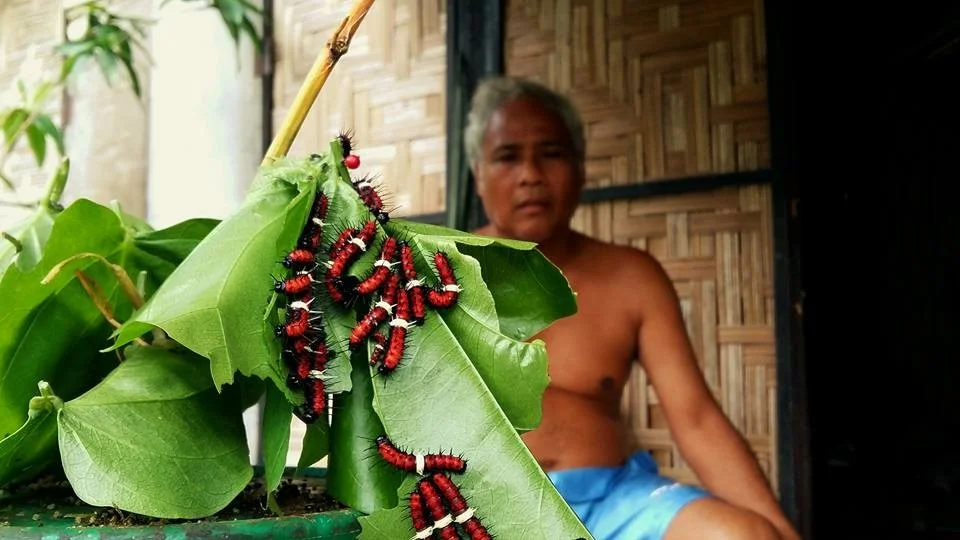
The Indigenous Malaysian concept of ‘Badi’: respecting the land and wildlife
The Indigenous Semai #indigenous people of #Malaysia can teach us a lot about how to protect people, planet and biodiversity. The Indigenous concept of #badi is not superstition or taboo, it’s about respecting…
Load more posts
Something went wrong. Please refresh the page and/or try again.
Take Action in Five Ways
1. Join the #Boycott4Wildlife on social media and subscribe to stay in the loop: Share posts from this website to your own network on Twitter, Mastadon, Instagram, Facebook and Youtube using the hashtags #Boycottpalmoil #Boycott4Wildlife.
Enter your email address
Sign Up
Join 3,526 other subscribers2. Contribute stories: Academics, conservationists, scientists, indigenous rights advocates and animal rights advocates working to expose the corruption of the palm oil industry or to save animals can contribute stories to the website.

Wildlife Artist Juanchi Pérez
Mel Lumby: Dedicated Devotee to Borneo’s Living Beings
Anthropologist and Author Dr Sophie Chao

Health Physician Dr Evan Allen

The World’s Most Loved Cup: A Social, Ethical & Environmental History of Coffee by Aviary Doert

How do we stop the world’s ecosystems from going into a death spiral? A #SteadyState Economy
3. Supermarket sleuthing: Next time you’re in the supermarket, take photos of products containing palm oil. Share these to social media along with the hashtags to call out the greenwashing and ecocide of the brands who use palm oil. You can also take photos of palm oil free products and congratulate brands when they go palm oil free.
https://twitter.com/CuriousApe4/status/1526136783557529600?s=20
https://twitter.com/PhillDixon1/status/1749010345555788144?s=20
https://twitter.com/mugabe139/status/1678027567977078784?s=20
4. Take to the streets: Get in touch with Palm Oil Detectives to find out more.
5. Donate: Make a one-off or monthly donation to Palm Oil Detectives as a way of saying thank you and to help pay for ongoing running costs of the website and social media campaigns. Donate here
Pledge your support#biodiversity #BoycottPalmOil #Boycott4wildlife #BoycottPalmOil #Brazil #carbon #corruption #deforestation #forests #News #PalmOil #palmOilBiofuel #palmOilDeforestation #vegan
Unsupported type or deleted object
Finance giants fuel $8.9 trillion deforestation economy
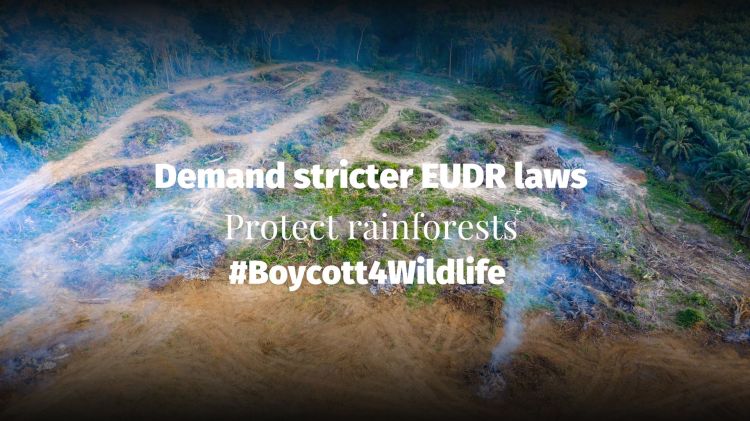
Global Canopy’s Forest 500 report reveals that 150 of the world’s largest financial institutions invested nearly $9 trillion in deforestation-linked industries during 2024, with six out of ten firms lacking any public deforestation policies. The analysis tracked $8.9 trillion in direct and indirect financial support for 500 companies exposed to forest-risk commodities including palm oil, soy, beef, cocoa, and timber, with $864 billion going to businesses making no public commitments against deforestation. Financial titans Vanguard, BlackRock and JPMorgan Chase alone accounted for more than one-fifth of total funding at $1.6 trillion. The EU’s upcoming Deforestation Regulation #EUDR will ban imports of products linked to forest destruction from December 30, potentially locking out companies without robust policies. Urgent action needed to redirect finance away from forest destruction and toward Indigenous-led forest protection. Support a strong and strict EUDR to safeguard forests, be vegan and #BoycottPalmOil #Boycott4Wildlife
💰☠️ $8.9 TRILLION funds deforestation! BlackRock, Vanguard, JPMorgan lead with $1.6T funding #palmoil, #soy and #meat #deforestation 🌴🔥 Support the #EUDR ban Dec 30 ⛔️ #BoycottPalmOil #Boycott4Wildlife @palmoildetect https://palmoildetectives.com/2025/12/17/finance-giants-fuel-8-9-trillion-deforestation-economy/
Share to BlueSkyShare to TwitterSustainable Times. (2024). Global finance giants under fire for fueling an $8.9 trillion ‘deforestation economy’ in 2024. Sustainable Times. https://www.sustainabletimes.co.uk/post/global-finance-giants-under-fire-for-fueling-an-8-9-trillion-deforestation-economy-in-2024
The world’s largest financial institutions Vanguard, BlackRock, and JPMorgan Chase are bankrolling a massive $8.9 trillion deforestation economy whilst offering minimal safeguards against forest destruction, according to explosive new research that exposes the banking sector’s complicity in global environmental destruction.
Global Canopy’s comprehensive Forest 500 report tracked investments from 150 of the planet’s biggest financial institutions throughout 2024, revealing systematic funding of industries driving tropical rainforest annihilation across palm oil, soy, beef and timber sectors. The scale of financial exposure proves staggering, with institutions providing $8.9 trillion in direct and indirect support for 500 companies engaged in forest-risk commodities.
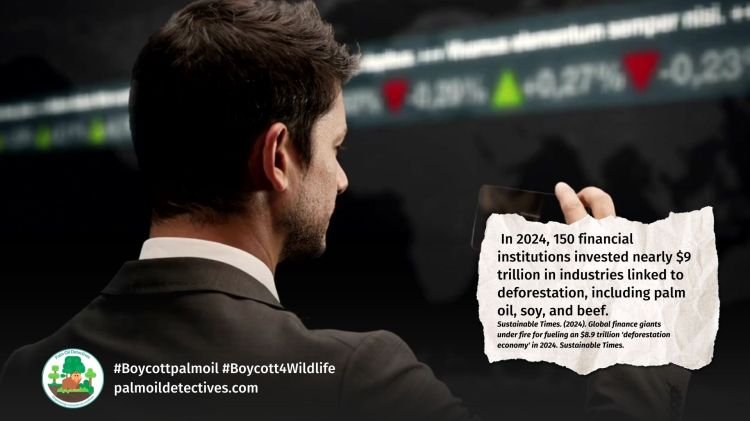
The research exposed catastrophic policy failures across the financial sector. Six out of ten institutions reviewed maintain no publicly stated deforestation policies whatsoever, representing only marginal improvement from the previous year when two-thirds lacked such protections. Even more alarming, fewer than four in ten financial giants openly acknowledge that deforestation poses business risks to their portfolios.
Three financial behemoths dominate the destruction economy. Vanguard, BlackRock, and JPMorgan Chase “alone were responsible for more than one-fifth of the total” funding, collectively channelling $1.6 trillion toward forest-risk industries. Their enormous market influence means policy changes from these titans “could trigger rapid change across the global financial system,” according to Global Canopy analysts.
The geographic concentration of destruction finance reveals systematic patterns. Beyond the United States, “China and France also emerged as central hubs of financial flows into deforestation-linked industries.” This concentration demonstrates how relatively few financial centres drive global forest destruction through investment decisions.
Perhaps most damning, nearly $864 billion flowed directly to companies making zero public commitments against deforestation. This represents “almost one in every ten dollars” of total financing going to businesses with no safeguards protecting tropical forests from destruction for palm oil plantations, cattle ranches, or soy cultivation.
Global Canopy researchers emphasised the sector’s transformative potential, stating: “Unless financial institutions engage portfolio companies to act on deforestation risk – for instance, through strong stewardship of investee companies – their financing activities will undermine the positive impact of any transition finance they provide.” However, they noted these “financial heavyweights could use their investment strategies to drive better practice and transform commodity supply chains for the better.”
The European Union’s new Deforestation Regulation dramatically increases pressure on financial institutions to implement robust policies. Beginning December 30, the EU “will ban large businesses from importing beef, cocoa, coffee, palm oil, natural rubber, soy, or wood if these products are linked to deforestation.” The ban will eventually extend to smaller businesses, creating comprehensive market exclusions for forest-destructive products.
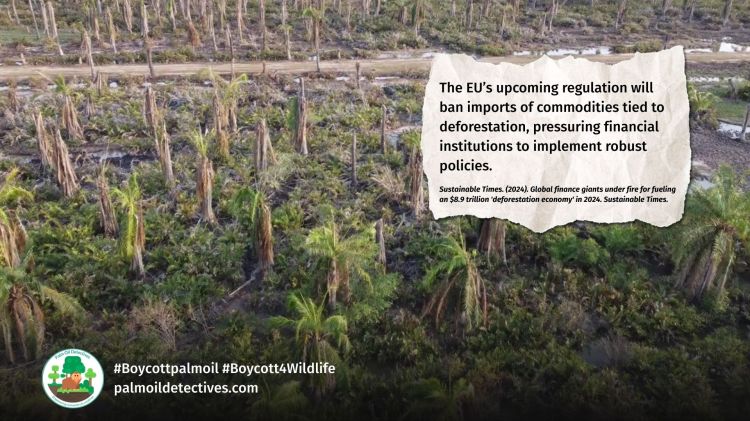
This regulatory shift creates urgent risks for financial institutions backing non-compliant companies. “Without robust policies, they will find themselves backing companies that are locked out of key markets,” the report warns. Financial institutions face the prospect of massive portfolio devaluations as their investee companies lose access to lucrative European markets.
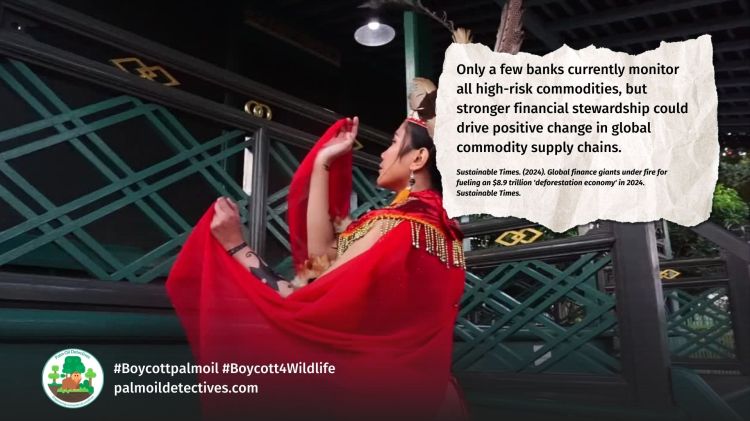
A handful of progressive institutions demonstrate viable alternatives. Banco Bilbao Vizcaya Argentaria, Deutsche Bank, and Lloyds Banking Group represent “the only institutions shown to be screening and monitoring all the highest-risk commodities.” Their comprehensive approaches “provide a blueprint for others to follow” in developing effective deforestation policies.
Global Canopy outlined essential components for credible deforestation policies extending “well beyond a vague pledge.” Effective policies require “clear standards for screening clients and portfolio holdings, active engagement to bring non-compliant firms into line, and strict deadlines for divestment if companies fail to improve.” Additionally, institutions must maintain “transparent reporting of progress and commitments to human rights safeguards.”
The analysis examined nine critical forest-risk commodities: “beef, cocoa, coffee, leather, palm oil, pulp and paper, soy, rubber, and timber.” Each sector drives habitat destruction threatening wildlife populations whilst displacing Indigenous communities dependent on intact forests for survival.
The report concludes that financial institutions possess “immense influence over whether deforestation is curbed or allowed to spiral further out of control.” Current investment patterns tell “a troubling story, but with the right commitments, banks and investment firms could become powerful drivers of change” toward forest protection rather than destruction.
Sustainable Times. (2024). Global finance giants under fire for fueling an $8.9 trillion ‘deforestation economy’ in 2024. Sustainable Times. https://www.sustainabletimes.co.uk/post/global-finance-giants-under-fire-for-fueling-an-8-9-trillion-deforestation-economy-in-2024
ENDS
Read more about deforestation and ecocide in the palm oil industry
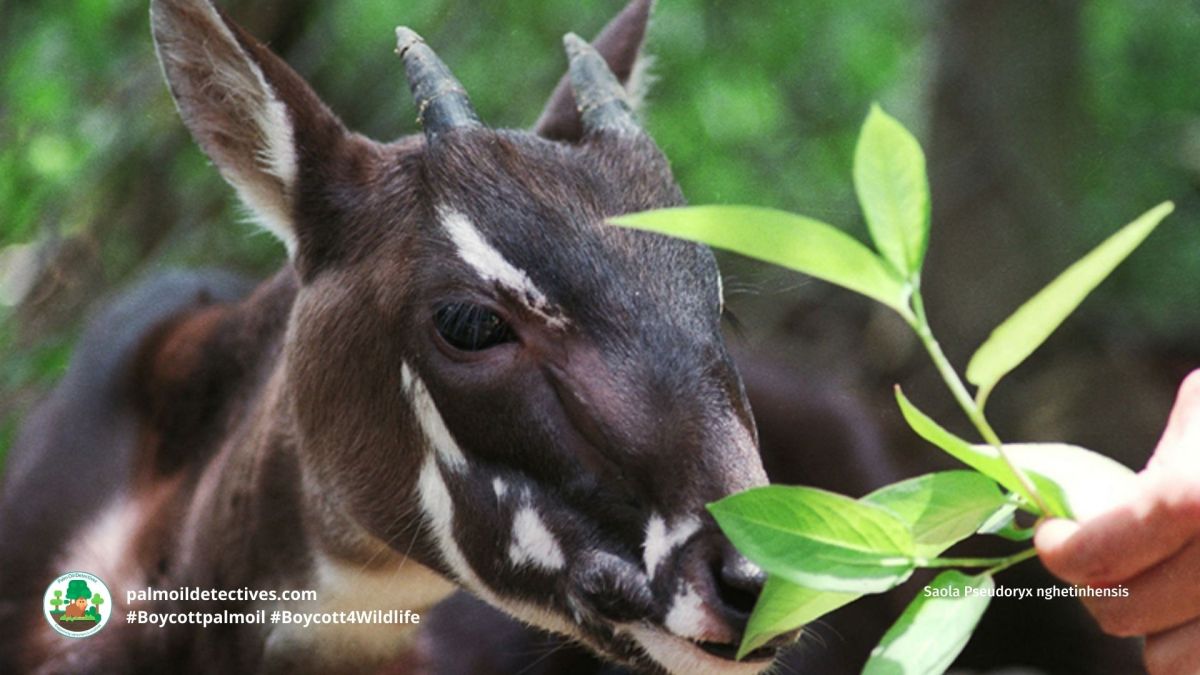
Saola Pseudoryx nghetinhensis
Saolas are rare and considered Southeast Asia’s ‘unicorns’, this Critically Endangered antelope is facing imminent extinction due to hunting and deforestation
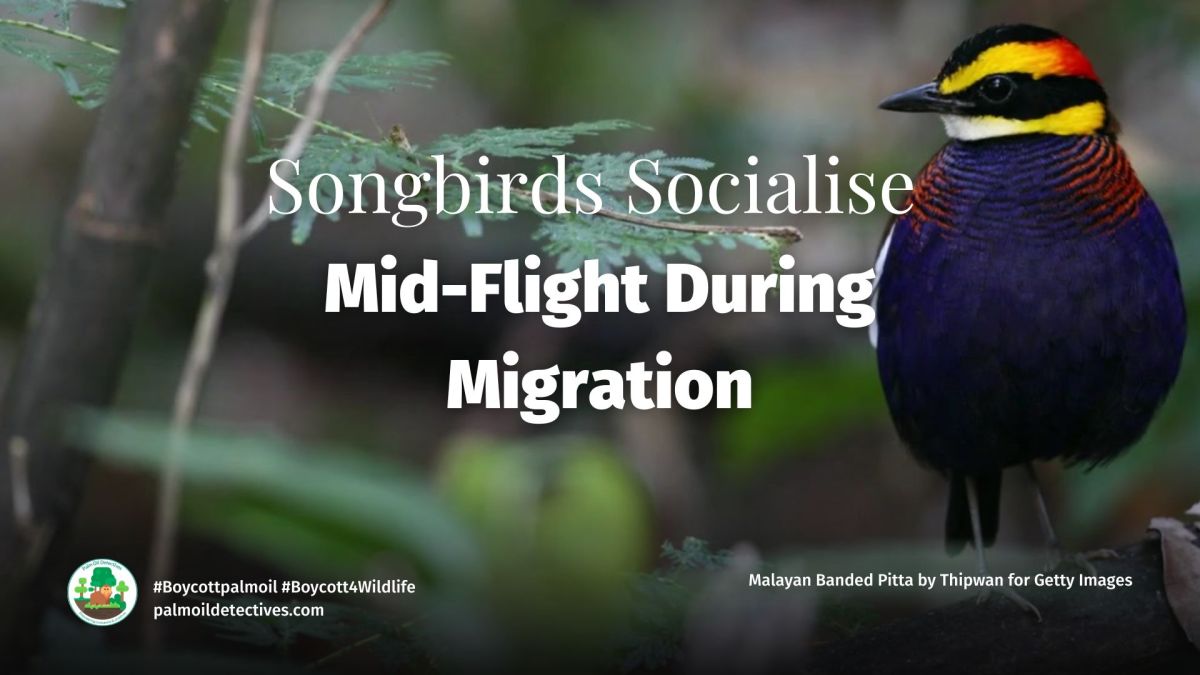
Songbirds Socialise Mid-Flight During Migration
Songbirds communicate with different species during nocturnal flights sharing vital info about navigation and stopover habitats. Save their fascinating world!

Why Pangolins Are So Special
Pangolins get their name from the Malay ‘pengguling’ meaning rolling up. These special critically endangered animals deserve a break from savage poaching

Tucuxi Sotalia fluviatilis
Tucuxi, small freshwater dolphins of Peru Ecuador Colombia and Brazil are Endangered due to fishing nets, deforestation, mercury poisoning from gold mining.
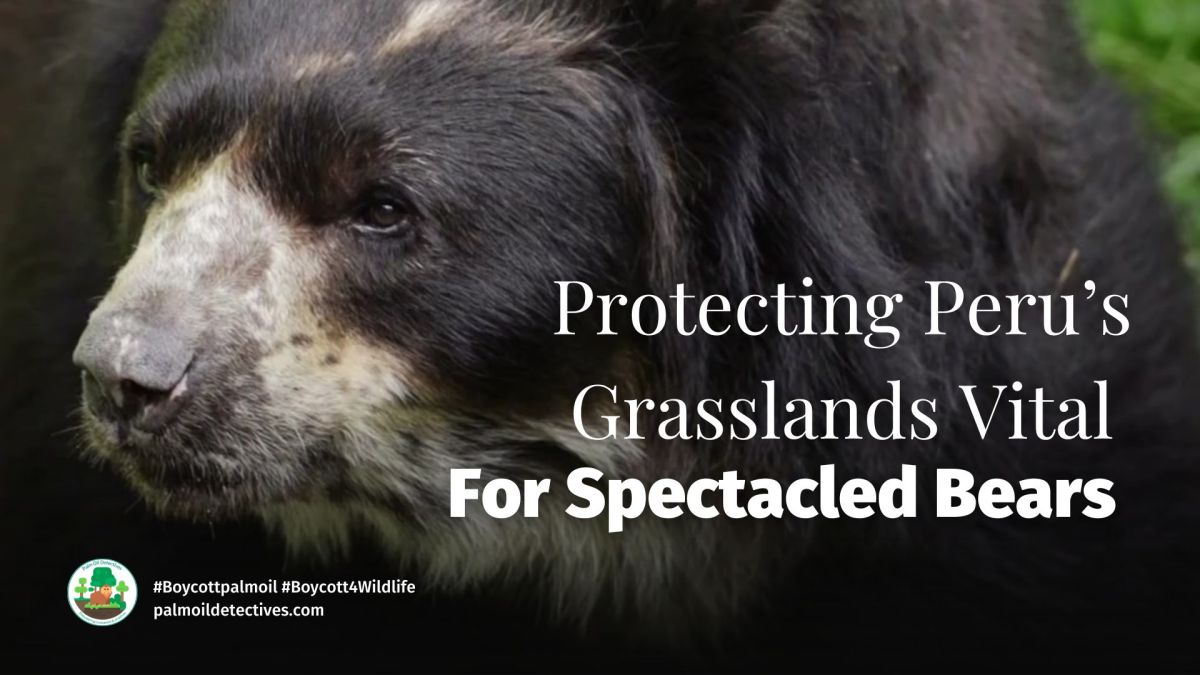
Protecting Peru’s Grasslands Vital for Spectacled Bears
Peru’s alpine puna grasslands supports foraging of vulnerable Andean bears AKA Spectacled Bears. They prefer young bromeliad plants, Take action for them!
Load more posts
Something went wrong. Please refresh the page and/or try again.
Take Action in Five Ways
1. Join the #Boycott4Wildlife on social media and subscribe to stay in the loop: Share posts from this website to your own network on Twitter, Mastadon, Instagram, Facebook and Youtube using the hashtags #Boycottpalmoil #Boycott4Wildlife.
Enter your email address
Sign Up
Join 3,172 other subscribers2. Contribute stories: Academics, conservationists, scientists, indigenous rights advocates and animal rights advocates working to expose the corruption of the palm oil industry or to save animals can contribute stories to the website.
Wildlife Artist Juanchi Pérez
Mel Lumby: Dedicated Devotee to Borneo’s Living Beings
Anthropologist and Author Dr Sophie Chao
Health Physician Dr Evan Allen
The World’s Most Loved Cup: A Social, Ethical & Environmental History of Coffee by Aviary Doert
How do we stop the world’s ecosystems from going into a death spiral? A #SteadyState Economy
3. Supermarket sleuthing: Next time you’re in the supermarket, take photos of products containing palm oil. Share these to social media along with the hashtags to call out the greenwashing and ecocide of the brands who use palm oil. You can also take photos of palm oil free products and congratulate brands when they go palm oil free.
https://twitter.com/CuriousApe4/status/1526136783557529600?s=20
https://twitter.com/PhillDixon1/status/1749010345555788144?s=20
https://twitter.com/mugabe139/status/1678027567977078784?s=20
4. Take to the streets: Get in touch with Palm Oil Detectives to find out more.
5. Donate: Make a one-off or monthly donation to Palm Oil Detectives as a way of saying thank you and to help pay for ongoing running costs of the website and social media campaigns. Donate here
Pledge your support#BoycottPalmOil #Boycott4wildlife #BoycottPalmOil #corruption #crime #deforestation #ecocide #ecolabel #EUDR #greenwashing #meat #meatAgriculture #meatAndSoyDeforestationInBrazil #News #PalmOil #palmOilDeforestation #palmoil #soy
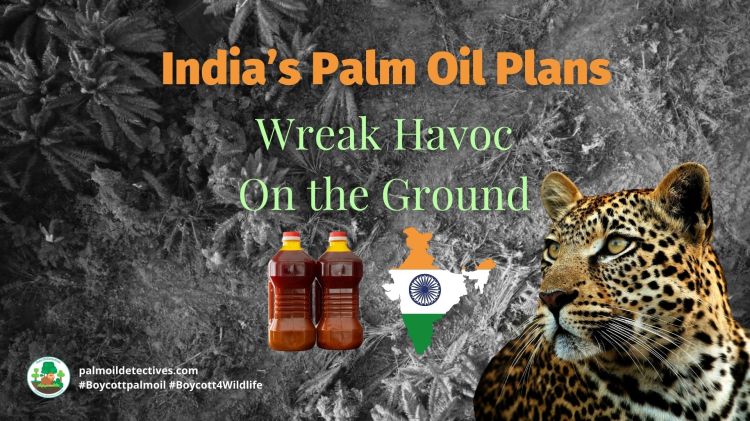
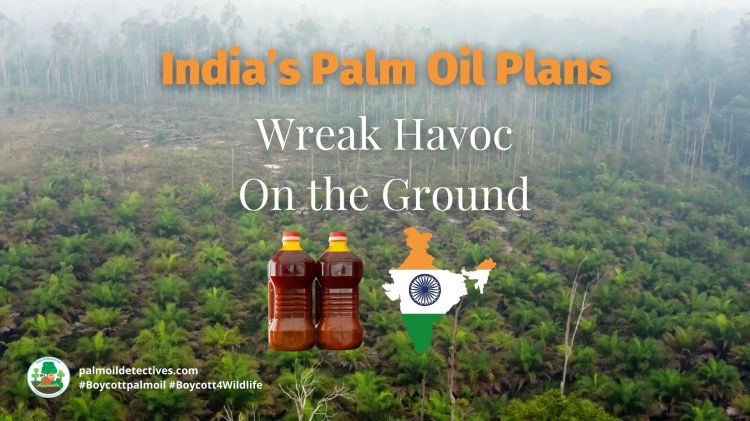
India’s Palm Oil Plans Wreak Havoc On The Ground
#India’s aggressive push for #palmoil plantations in #Nagaland, #Assam and #Mizoram is wreaking havoc on both the environment and local communities. The government plans to ramp up oil palm cultivation in the northeast, locking away land that could be used for diverse food production for decades. Palm oil monoculture threatens soil health, drains precious water resources, and marginalises indigenous communities. Farmers in the north east of India are facing dire challenges, from delayed subsidies to inadequate payments for their crops, leaving them questioning the viability of oil palm farming. A rethink is necessary to protect India’s ecosystems, animals and people. To help raise awareness and empower change, make sure that you #BoycottPalmOil #Boycott4Wildlife every time you shop.
In #Nagaland and #Mizoram, #India 🇮🇳 an ongoing battle is raging for #farmers’ rights to feed their families and not suffer penniless for #palmoil in a barren wasteland #Boycottpalmoil 🌴🪔🚫 #Boycott4Wildlife #humanrights @palmoildetect https://palmoildetectives.com/2024/10/06/indias-palm-oil-plans-wreak-havoc-on-the-ground/
Share to BlueSky Share to TwitterIn lush North East #India 🇮🇳🪷 a battle is being waged, between sowing native seeds versus industrial #palmoil #monoculture 🌴🔥 that threatens rare #ecosystems #animals and an ancient way of life. #ecology #Boycottpalmoil #Boycott4Wildlife @palmoildetect https://palmoildetectives.com/2024/10/06/indias-palm-oil-plans-wreak-havoc-on-the-ground/
Share to BlueSky Share to TwitterOriginally published under Creative Commons by 360info on August 12, 2024. Written by Dr Ravi Chellam is a wildlife biologist and conservation scientist based in Bengaluru along with senior journalist Rupa Chinai and Robert Solo is a member of the Naga civil society organisation, Kezekevi Thehou Ba (KTB) which works with communities, the government and the civil society in Nagaland. Read the original article.
The push for large-scale monoculture plantations like palm oil in India is taking a heavy toll on the environment and on people’s economic and social security.
Oil palm plantations lock in precious land resources for a long time, from a 4-5 year gestation period to 25 years for production, a problem in a densely populated country like India.
In late July, an unusual newspaper headline did the rounds: “If India gives land, we will work together to produce palm oil here, says visiting Malaysian Minister.”
Foreign politicians do not often ask the country they are visiting to give land, in particular for cultivating a plant which produces oil seeds.
In this case, the seeds refer to the oil palm, a species native to West Africa and now widely cultivated, especially in Southeast Asia. Oil palm is seen as the world’s most important oil crop, supplying approximately 40 percent of global demand for vegetable oil.
Clearly, the pressure is building on big palm oil-producing countries such as Malaysia and Indonesia to clean up their act.
The European Union has taken a strong stance on cleaning up supply chains to prevent deforestation, environmental degradation and negative impacts on local communities.
India is the world’s largest importer of edible oils but this was not always the case.
Indians have traditionally used a wide variety of edible oils, a reflection of India’s rich agro-ecological heritage and cultural diversity. In the early 1990s, India was self-sufficient in edible oils but thanks to changes in government policies, that situation has reversed.
Palm oil now dominates India’s edible oil imports, representing more than half of all edible oil imports. In 2021, palm oil import was valued at approximately $US8.63 billion.
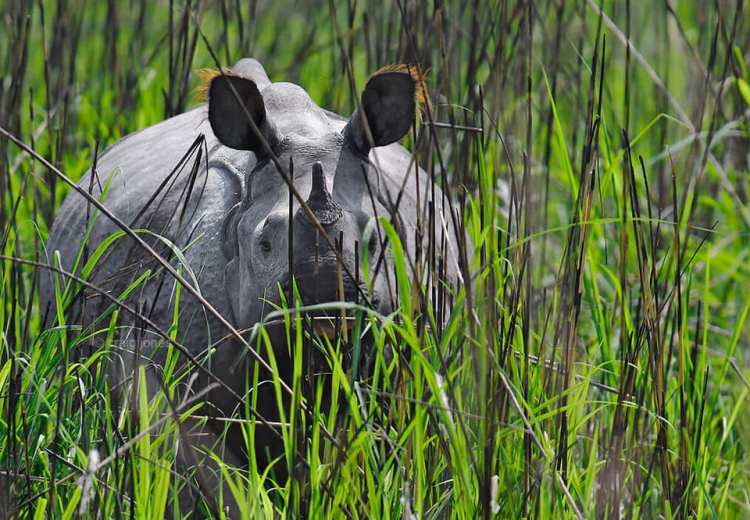 Indian Rhino in Assam, India by Craig Jones Wildlife Photography
Due to this significant dependence on imports, there has been a strong push by the Indian government to rapidly increase the cultivation of oil palm, especially in India’s northeast, through the National Mission on Edible Oils — Oil Palm.
It has set ambitious goals to increase the area of oil palm cultivation in India to one million hectares by 2025-26 from 350,000ha in 2019-20.
However, the government’s efforts in promoting oil palm plantations in the northeast, which are strengthened by substantial subsidies, are playing havoc with tribal society.
Land is a scarce resource in the northeast and existing land, often community-owned and managed, has traditionally been used for subsistence farming with an eye on food security. This is changing and creating social disruption.
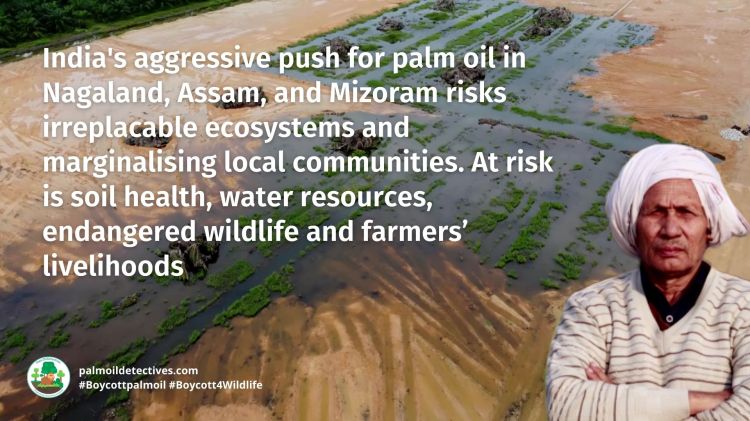
Challenges of growing oil palm
More than 50 percent of the proposed increase in the area of cultivation, 328,000ha, is planned in the northeastern states, as identified in an assessment by the Indian Institute of Oil Palm Research in 2020.
The plan is also to increase the production of crude palm oil from 27,000 tonnes in 2019-20 to 1.12 million tonnes by 2025-26.
While the ambition and goals of the oil palm mission are lofty, the on-the-ground situation in the northeast tells a completely different story.
Mizoram was the first state to start planting oil palm in the northeast. Plantations were established in seven districts of the state and at least some of these date back to 2005.
Over the last two decades, oil palm plantations have invariably resulted in setbacks and failures for everyone involved.
Given their intrinsically high requirements of water and nutrients, oil palm plantations have devastated soil health and the quality and availability of groundwater in the state.
Animals and Ecosystems at Risk in India
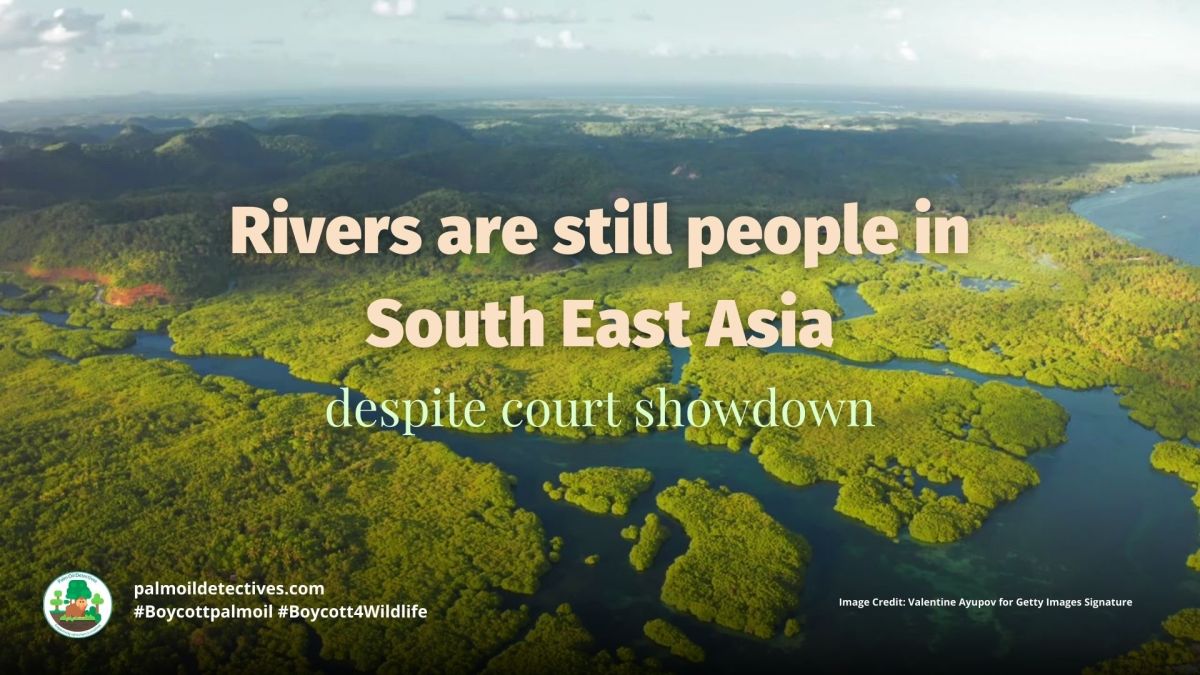
Rivers are still people in South East Asia despite court showdown
Healthy rivers are essential for community wellbeing. India and Bangladesh legally recognise rivers as natural persons with rights and powers. Take action!
 by Palm Oil Detectives
Protecting India’s Tigers Saves One Million Tonnes of CO2
#India’s fifty year long Project #Tiger has been a successful conservation project. A new research study finds that protecting tigers and their rainforest home has additional benefits to #carbonemissions, saving 1 million tonnes of CO2 from being spewed into the atmosphere. Conserving tigers as an iconic and legendary species is deeply ingrained into the world’s…
by Palm Oil Detectives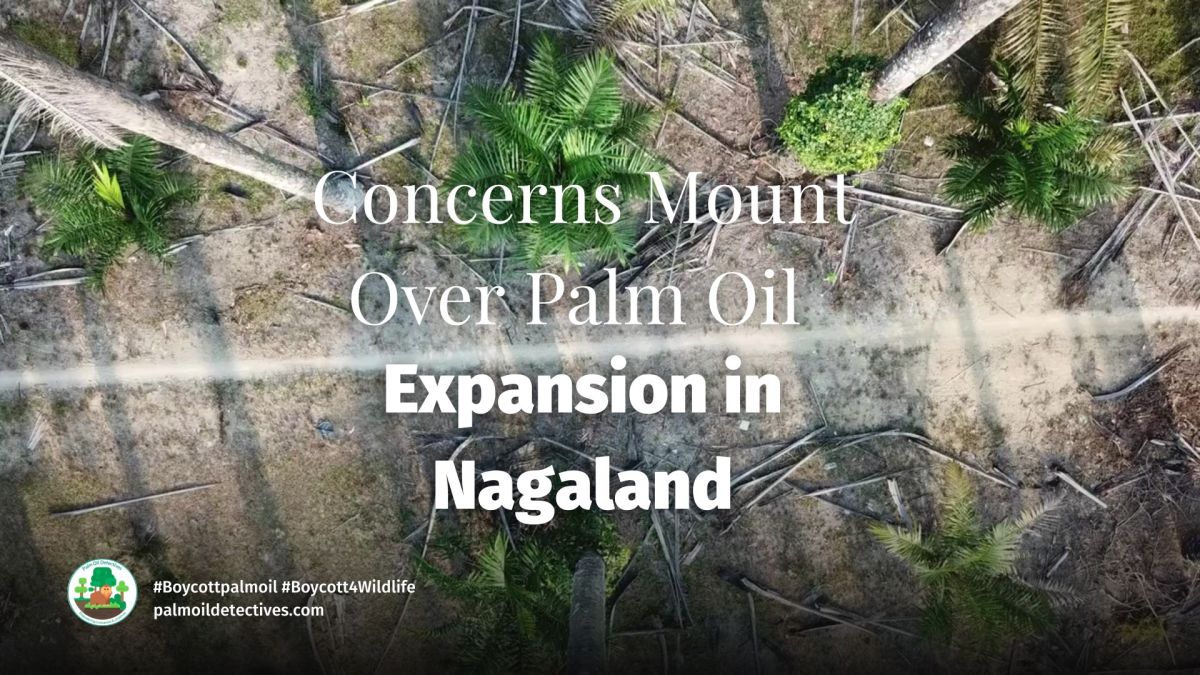
Concerns Mount Over Palm Oil Expansion in Nagaland
The NCCAF raises grave concerns over palm oil expansion in Nagaland, India with threats to deforestation, biodiversity, livelihoods. Take action!
by Palm Oil DetectivesLoad more posts
Something went wrong. Please refresh the page and/or try again.
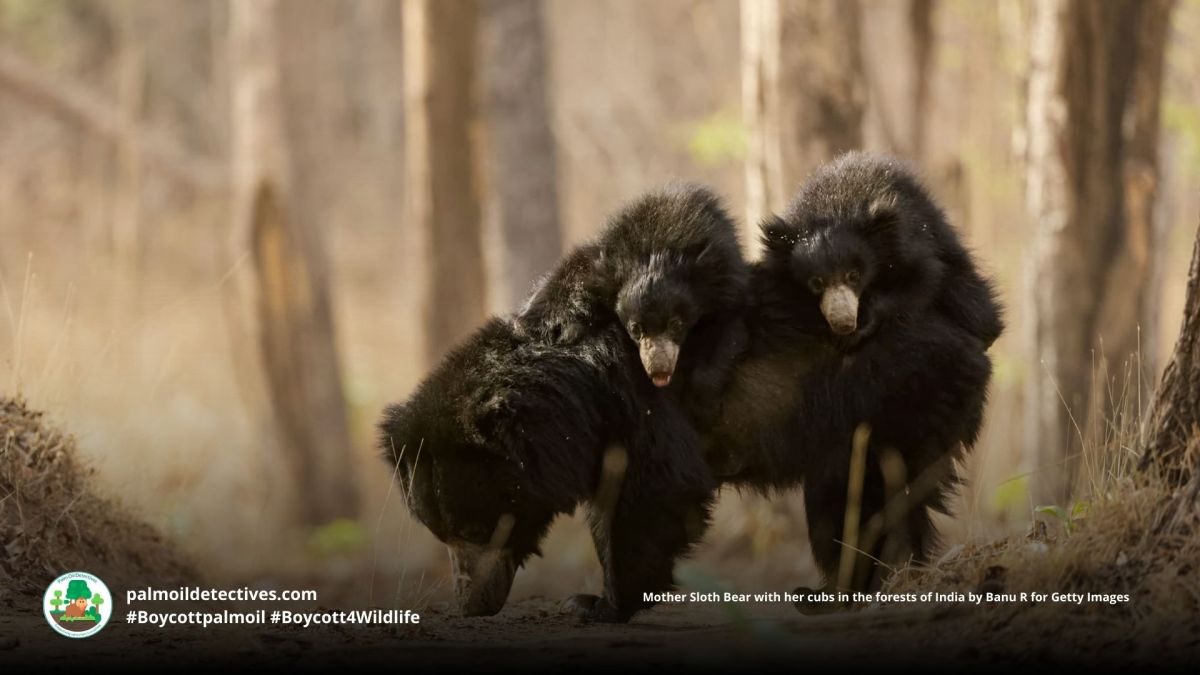
Sloth Bear Melursus ursinus
The sloth bear (Melursus ursinus), with their distinctive “Y” or “V” shaped chest patch and shaggy fur, are unique bears native to the Indian subcontinent. Once exploited as ‘dancing bears’ by the Kalandar tribe, this phase of history is thankfully now over. They now roam across tropical forests and savannahs while snuffling through termite mounds…
by Palm Oil Detectives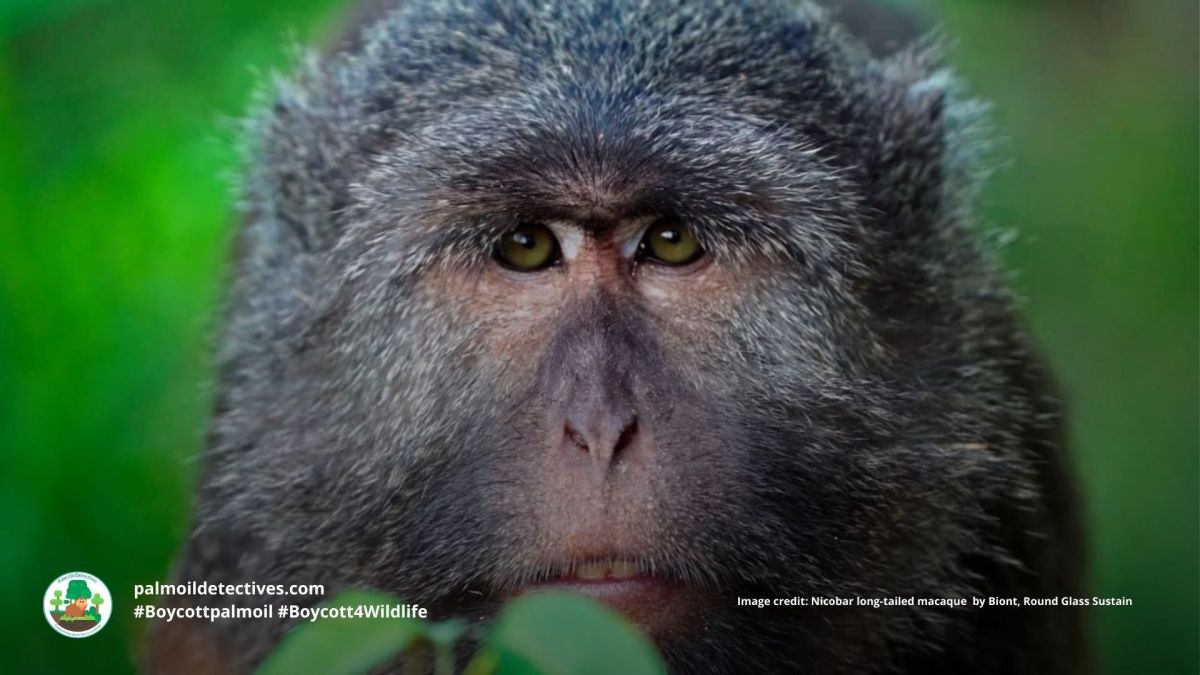
Nicobar Long-Tailed Macaque Macaca fascicularis umbrosa
Discover the intriguing Nicobar long-tailed macaque, intelligent and highly social survivors on India’s islands, help them to survive and boycott palm oil!
by Palm Oil Detectives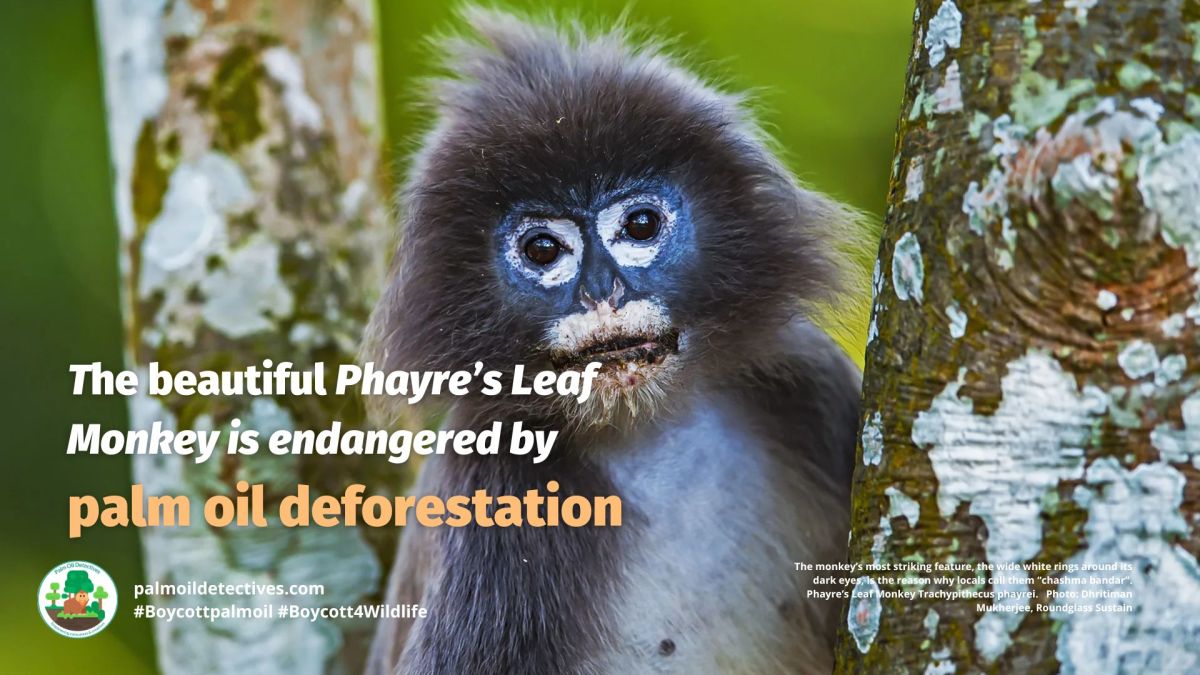
Phayre’s Leaf Monkey Trachypithecus phayrei
Phayre’s leaf monkey, also known as Phayre’s langur, are remarkable Old World monkeys distinguished by large, white-rimmed eyes that lend them a “spectacled” appearance. Known locally as ‘Chasma bandor’ they live mostly in the lush forests of India, Bangladesh and Myanmar. Major threats to their survival include habitat destruction from palm oil and rubber plantations,…
by Palm Oil DetectivesLoad more posts
Something went wrong. Please refresh the page and/or try again.

Irrawaddy Dolphin Orcaella brevirostris
Intelligent and social Irrawaddy dolphins, also known as the Mahakam River dolphins or Ayeyarwady river #dolphins have endearing faces. Only 90 to 300 are estimated to be left living in the wild. Their rounded and expressive looking noses liken them to a baby beluga whale or the Snubfin dolphin of Australia. These shy #cetaceans are…
by Palm Oil Detectives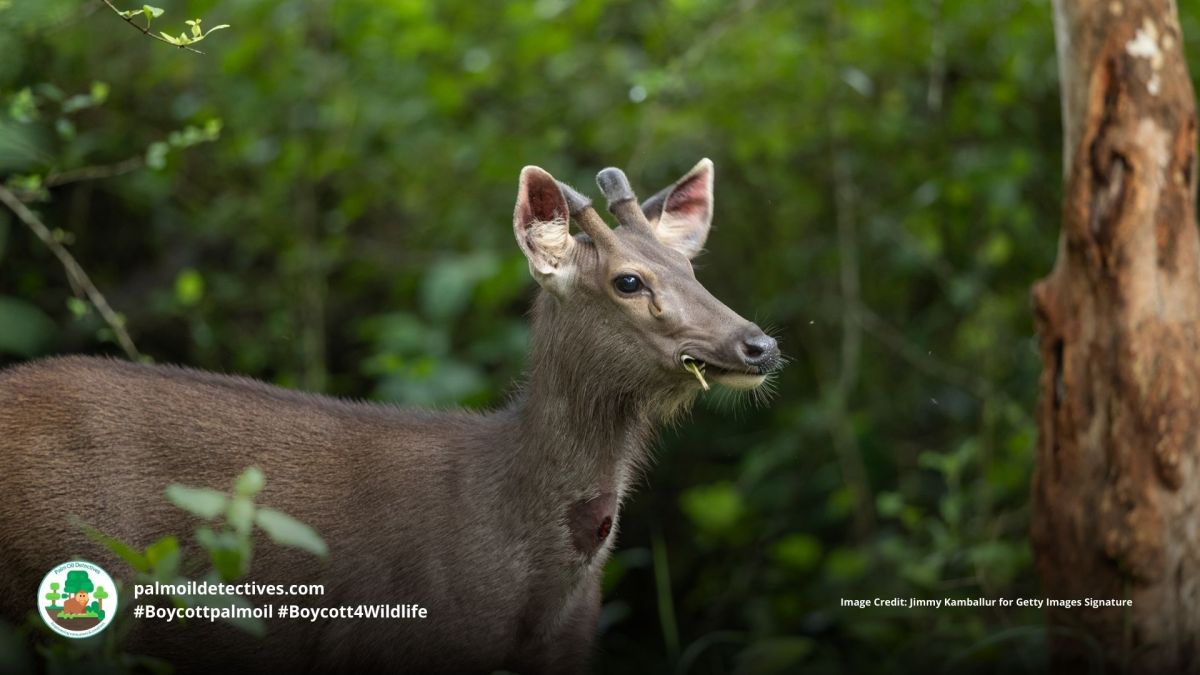
Sambar deer Rusa unicolor
The majestic Sambar deer, cloaked in hues ranging from light brown to dark gray, are distinguished by their rugged antlers and uniquely long tails. Adorned with a coat of coarse hair and marked by a distinctive, blood-red glandular spot on their throats, these deer embody the beauty of the wild. Their adaptability is evident in…
by Palm Oil Detectives
Lion-tailed Macaque Macaca silenus
Lion-tailed macaques hold the title of one of the smallest macaque species in the world and sport a majestic lion-esque mane of hair. They exclusively call the Western Ghats in India their home. This area has been decimated in recent years for palm oil. Prior to palm oil’s arrival in the Western Ghats, populations of…
by Palm Oil DetectivesLoad more posts
Something went wrong. Please refresh the page and/or try again.
Another issue is the long gestation period of the crop. The oil palm takes at least four to five years before it starts producing fruit, followed by a productive period of 20 to 25 years.
This adds up to 25 to 30 years, a long time to lock in precious land resources, especially in a densely populated country such as India.
The challenges with environmental sustainability, productivity, transport, failings of the government and corporate behaviour have meant that both farmers and the companies have had to deal with large-scale failures and heavy losses.
The rugged terrain and remote location of the plantations, coupled with the relatively poor road network and the absence of oil mills close to many of the plantations poses severe challenges to the farmers.
The nuts have to be processed within 48 hours, which currently is a logistical nightmare, especially for many small-scale farmers.
Many companies haven’t honoured their commitments to farmers be it on purchase price or timely payments. Government subsidies have also been often delayed.
The land question
Land is the central issue for the palm oil enterprise.
Be it terrain, with hilly terrain not being suitable for oil palm plantations; rapidly depleting soil fertility or reduced access to land owned by small landholders because of the three decade lock-in period.
In several cases, people have had to sell their land due to the extensive financial losses they’ve suffered while cultivating oil palm.
The capture of common lands for planting oil palm by the elite of the society is a large-scale problem, especially in Arunachal Pradesh, another northeastern state.
The fear is that more and more of community land will get converted into at least de facto private property when planted with oil palm due to the decades-long lock-in period.
This dispossession is likely to result in further marginalisation of the poorer sections of society and could potentially lead to social turmoil and conflict.
The problems are many and widespread.
Farmers across the northeast are not readily taking up planting of oil palm as they have started to realise the environmental costs, the meagre and very often delayed economic returns and the three-decade-long lock-in period of their land.
Sikkim and Meghalaya have decided to stay away from planting oil palm.
A recent report seems to indicate that at least some farmers in Arunachal Pradesh are starting to gain benefits from their oil palm plantations. These are still very early days to reach any definite conclusion about the situation in Arunachal, unlike the much longer Mizoram experience.
Since January 2023, researchers have engaged with tribal elders and civil society members in Nagaland which has provided them a close view of how things are playing out for oil palm in the state.
Nagaland seems to be following a similar path to Arunachal Pradesh, with the wealthy consolidating landholdings to establish plantations, resulting in small landholders losing out.
It is clear that oil palm is a capital-intensive and very long-term crop. Deep pockets are required to survive and succeed.
Almost everyone researchers interacted with expressed their disappointment at the delays, reduction or even complete stoppage of payment of the committed government subsidies.
Farmer frustrations
Farmers’ experiences in dealing with private companies that had committed to buy oil palm fruit has been an even greater disappointment.
The purchase price for these bunches is much lower than what was initially indicated and payments are unduly delayed.
Even the picking up of fresh fruit bunches, a perishable commodity which has to be processed within 24 to 48 hours post-harvesting, is poorly coordinated and there is a lack of reliable information and guidance for farmers.
The environmental and social issues associated with oil palm plantations are also playing out in Nagaland, including depleting soils, water shortages, the increasing use of hazardous agro-chemicals, rapidly increasing labour costs, women losing out on employment opportunities and shifts in land tenure and ownership.
Recent fieldwork in Nagaland through meetings and conversations with farmers presents a mixed picture.
Several farmers confirmed their fresh fruit bunches have not been picked up by companies. They believe it might have something to do with the company’s assessment of the quality of the fruit.
This is not in line with the commitment that was made to these farmers and is resulting in tremendous losses for them.
A few others are receiving the government subsidies and their fresh fruit bunches have also been picked up by the companies and they have been paid Rs13 a kilogram, approximately $USD 0.16.
Course correction
The longer-term experience with oil palm hasn’t been good for farmers in India’s northeast both from financial and social perspectives.
When also considering the environmental impacts, it is clear that the push for large-scale cultivation of oil palm in the region is taking a toll on the environment as well on people’s economic and social security.
Government policy would benefit from encouraging local and ecologically-appropriate oil-bearing crops rather than massively supporting oil palm.
Even the government’s own estimates do not predict India gaining self-sufficiency in edible oil by cultivating oil palm in India.
Rethinking this policy may be required so that India can regain self-sufficiency in edible oils, a position we enjoyed not so long ago.
Originally published under Creative Commons by 360info on August 12, 2024. Written by Dr Ravi Chellam is a wildlife biologist and conservation scientist based in Bengaluru along with senior journalist Rupa Chinai and Robert Solo is a member of the Naga civil society organisation, Kezekevi Thehou Ba (KTB) which works with communities, the government and the civil society in Nagaland. Read the original article.
ENDS
Read more about deforestation and ecocide in the palm oil industry
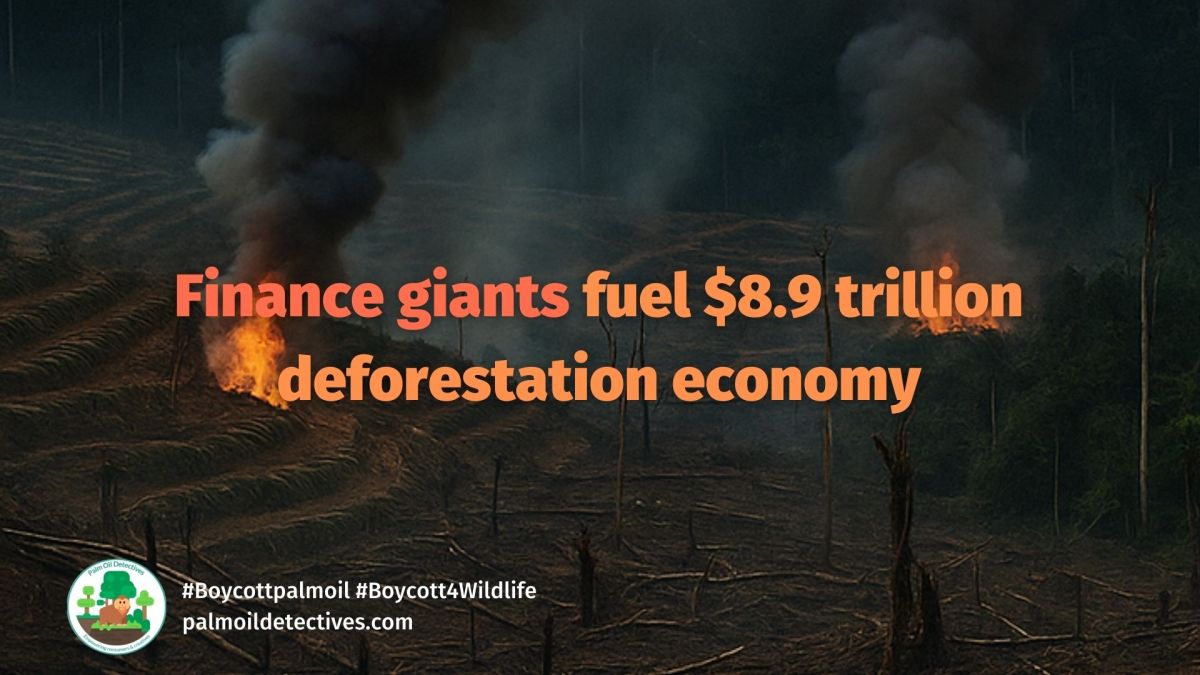
Finance giants fuel $8.9 trillion deforestation economy
Forest 500 report shows 150 of the world’s largest financial institutions invested nearly $9 trillion in deforestation-linked industries. Support EUDR!
The Indigenous Malaysian concept of ‘Badi’: respecting the land and wildlife
The Indigenous Semai #indigenous people of #Malaysia can teach us a lot about how to protect people, planet and biodiversity. The Indigenous concept of #badi is not superstition or taboo, it’s about respecting…
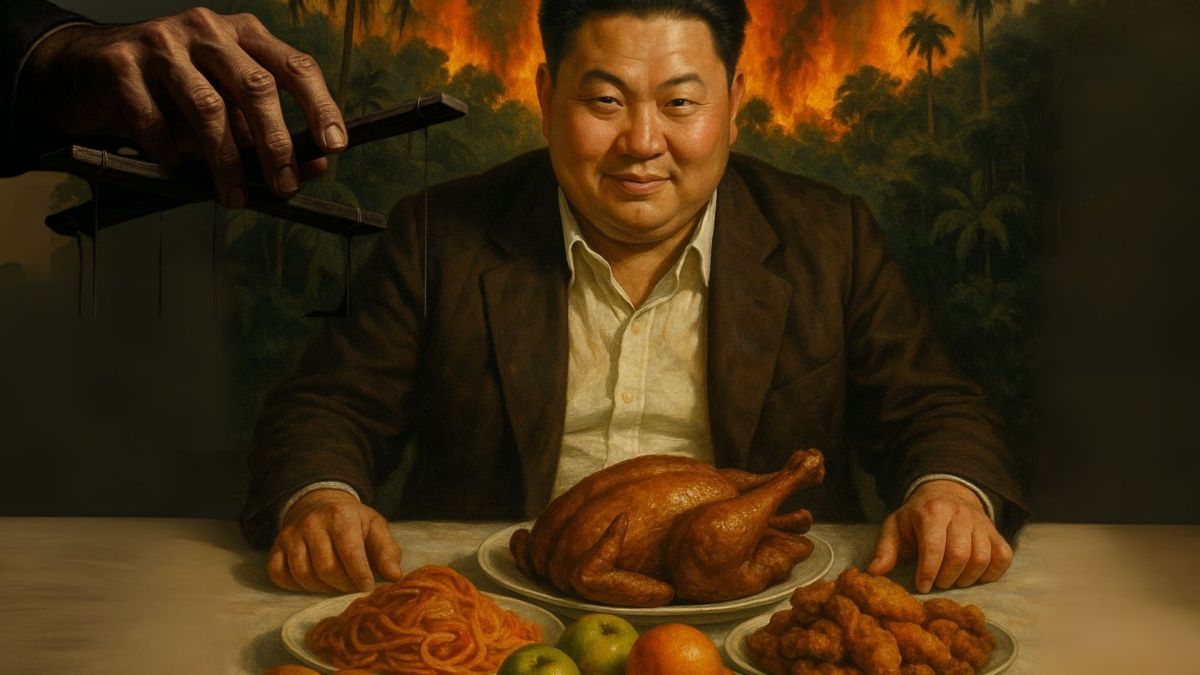
Family Ties Expose Deforestation and Rights Violations in Indonesian Palm Oil
An explosive report by the Environment Investigation Agency (EIA) details how Indonesia’s Fangiono family, through a wide corporate web, is linked to ongoing #deforestation, #corruption, and #indigenousrights abuses for #palmoil. Calls mount for…
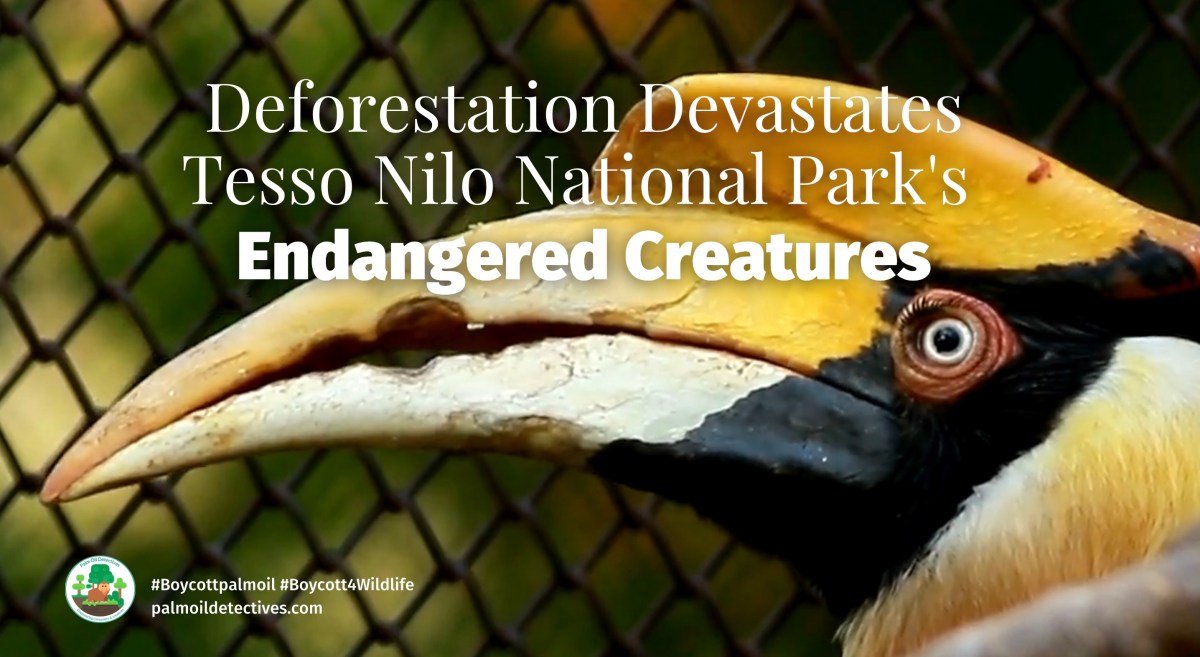
Deforestation Devastates Tesso Nilo National Park’s Endangered Creatures
Act now to save Tesso Nilo Park. This vital Indonesian park has lost 78% of its primary forest, threatening the habitat of Sumatran tigers and elephants
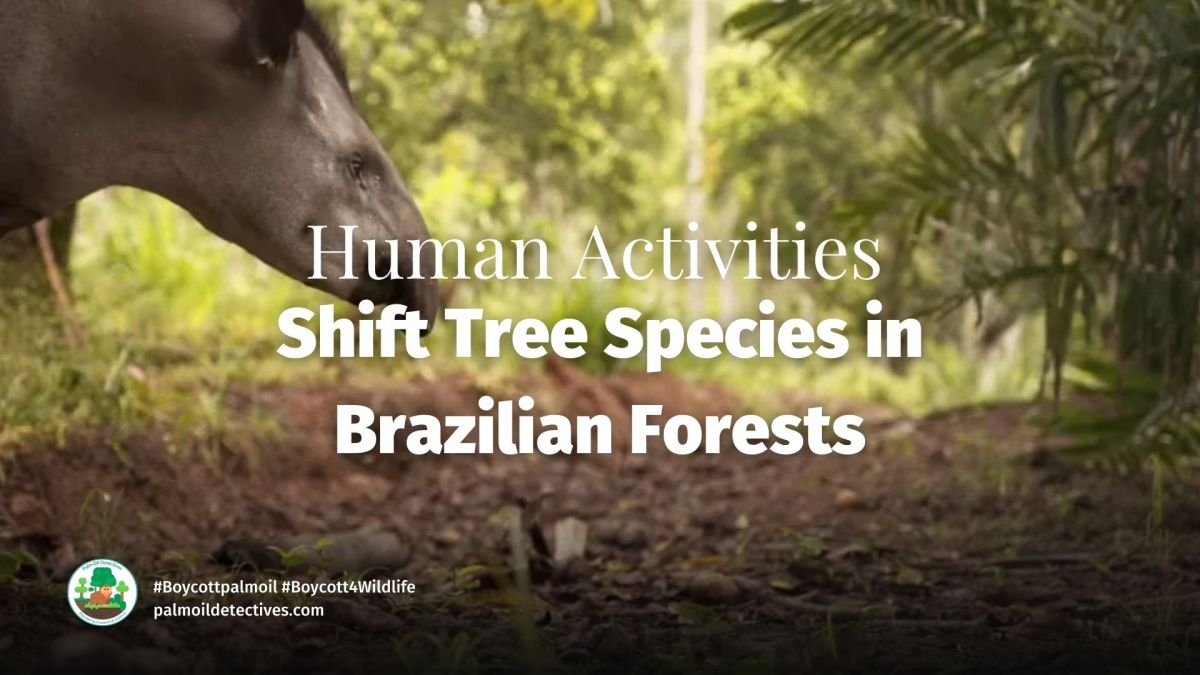
Deforestation Shifts Tree Species in Brazilian Forests
Deforestation in Brazilian forests causes shift towards fast-growing, small-seeded trees, threatening biodiversity, carbon storage. Take action!
Load more posts
Something went wrong. Please refresh the page and/or try again.
Take Action in Five Ways
1. Join the #Boycott4Wildlife on social media and subscribe to stay in the loop: Share posts from this website to your own network on Twitter, Mastadon, Instagram, Facebook and Youtube using the hashtags #Boycottpalmoil #Boycott4Wildlife.
Enter your email address
Sign Up
Join 3,172 other subscribers2. Contribute stories: Academics, conservationists, scientists, indigenous rights advocates and animal rights advocates working to expose the corruption of the palm oil industry or to save animals can contribute stories to the website.
Wildlife Artist Juanchi Pérez
Mel Lumby: Dedicated Devotee to Borneo’s Living Beings
Anthropologist and Author Dr Sophie Chao
Health Physician Dr Evan Allen
The World’s Most Loved Cup: A Social, Ethical & Environmental History of Coffee by Aviary Doert
How do we stop the world’s ecosystems from going into a death spiral? A #SteadyState Economy
3. Supermarket sleuthing: Next time you’re in the supermarket, take photos of products containing palm oil. Share these to social media along with the hashtags to call out the greenwashing and ecocide of the brands who use palm oil. You can also take photos of palm oil free products and congratulate brands when they go palm oil free.
https://twitter.com/CuriousApe4/status/1526136783557529600?s=20
https://twitter.com/PhillDixon1/status/1749010345555788144?s=20
https://twitter.com/mugabe139/status/1678027567977078784?s=20
4. Take to the streets: Get in touch with Palm Oil Detectives to find out more.
5. Donate: Make a one-off or monthly donation to Palm Oil Detectives as a way of saying thank you and to help pay for ongoing running costs of the website and social media campaigns. Donate here
Pledge your support#animals #Assam #BoycottPalmOil #Boycott4wildlife #BoycottPalmOil #corruption #deforestation #ecology #ecosystems #farmers #humanRights #HumanRights #hunger #India #Mizoram #monoculture #Nagaland #PalmOil #palmOilDeforestation #palmoil #poverty #workersRights #WorkersRights