Apple-feed
boosted

Apple-feed
boosted

Apple now makes about 25% of iPhones in India after China pivot. Production rose by 53%, with a quarter of all iPhones now assembled in the country. This strategic shift aims to bypass tariffs on China. Apple is deepening local supplier partnerships and expanding its market presence in India. https://economictimes.indiatimes.com/tech/technology/apple-now-makes-about-25-of-iphones-in-india-after-china-pivot/articleshow/129379747.cms #India #Tech #Manufacturing #Apple

Apple now makes about 25% of iPhones in India after China pivot. Production rose by 53%, with a quarter of all iPhones now assembled in the country. This strategic shift aims to bypass tariffs on China. Apple is deepening local supplier partnerships and expanding its market presence in India. https://economictimes.indiatimes.com/tech/technology/apple-now-makes-about-25-of-iphones-in-india-after-china-pivot/articleshow/129379747.cms #India #Tech #Manufacturing #Apple
Media Revolution Channel
boosted
Deadly Harvest: How Demand for Palm Oil Fuels Corruption in Honduras
Latin America is the fastest-growing producer of palm oil, but at what price for the environment and its defenders? Park rangers in Honduras tell harrowing tales of daily threats to their lives and real dangers they face in the long-term fight for protect Honduran rainforests, indigenous peoples and animals from annihilation #BoycottPalmOil #Boycott4Wildlife
🌿 #LatinAmerica’s #Honduras is rapidly increasing #palmoil production – at HUGE cost. Rangers face daily death threats 💀 while defending #rainforests 🌳 #indigenous peoples and #wildlife. 💔 Fight back! #BoycottPalmOil #Boycott4Wildlife @palmoildetect https://wp.me/pcFhgU-8YV
Share to BlueSky Share to Twitter💀 Park rangers in #Honduras 🇭🇳 #SouthAmerica risk their lives every day to protect animals 🐒 #indigenous peoples and #rainforests from #palmoil plantations. Their fight is real. Resist when u shop! 💪 #BoycottPalmOil #Boycott4Wildlife @palmoildetect https://wp.me/pcFhgU-8YV
Share to BlueSkyShare to TwitterWords and photography by Fritz Pinnow in Tela, Honduras. Originally published in The Guardian, 27 November, 2023 and republished via the Guardian’s open license agreement, read original article.
Park ranger Adonias Cruz was out monitoring illegal oil palm crops in Blanca Jeannette Kawas national park, on the north coast of Honduras, on 10 September, when an unknown armed man came to his flat and rang the bell. When the stranger realised Cruz was out, he left him a death threat.
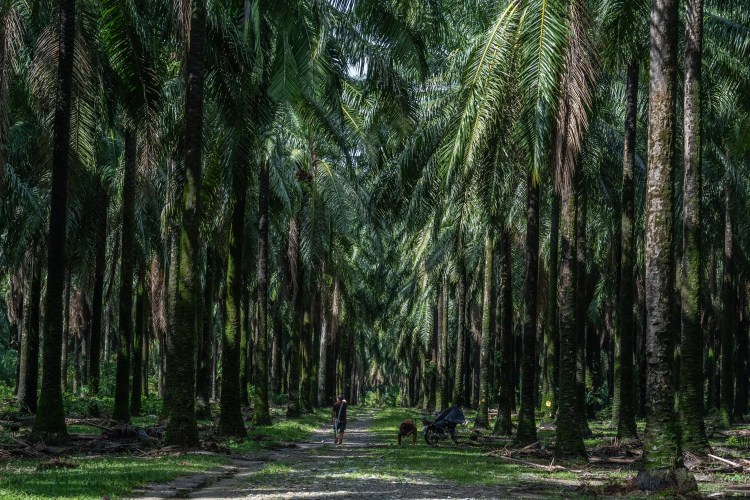 Oil palm fields growing at the edges of the national park in Honduras. Photography: Fritz Pinnow.
“I had already received death threats from people in the community for leading a team to eradicate a new oil palm plantation in the central zone of the park,” says Cruz. “It was frightening to know they were in my flat and that everything could have ended differently if I had been home that day.”
Cruz, 28, is one of four park rangers dedicated to protecting national parks and monitoring illegal oil palm crops in Honduras. It is a high-risk job: groups linked to the exploitation of palm oil in environmental reserves and drug trafficking have made it clear they are ready to kill if they think the agents interfere too much in their business.
“Most people see us as their enemy. We can have friendly conversations with everyone here, but you never know who will be behind the next assassination attempt,” says Cruz.
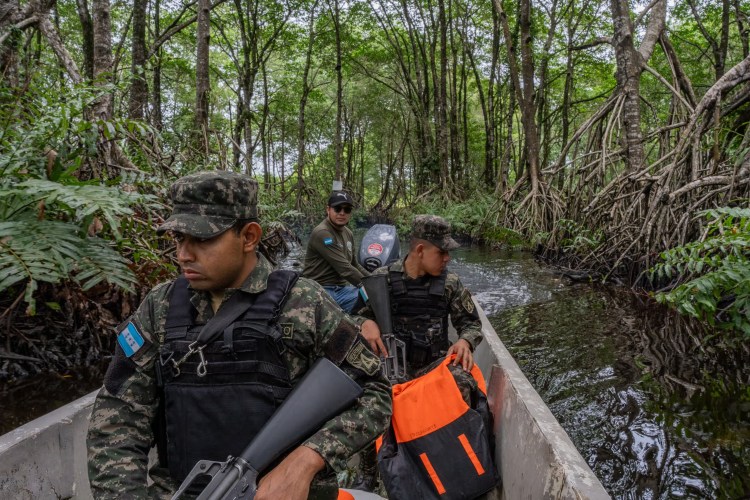 Park ranger Adonias Cruz and colleagues patrol a mangrove lagoon in Blanca Jeannette Kawas national park looking for signs of illegal oil palm. Photo: Fritz Pinnow.
Fellow park ranger Cesar Ortega, 22, adds that the team’s work is monitored by the criminals. “From when we leave the office, they know exactly where we are and where we are heading. They have people at every intersection calling in our position and asking if we are with soldiers,” he says.
Cruz and Ortega are two of the many rangers who have been threatened while fighting against the rapid spread of oil palm plantations. Palm oil, especially from the oil palm’s fruit, has become an essential export business in Honduras, used in the food industry, in beauty products and as a biofuel. Its low production costs make it a cheap substitute for most oils, such as sunflower and olive, significantly lowering manufacturing costs in global markets.
Palm oil accounts for about 40% of global demand for vegetable oil as food, animal feed and fuel – about 210m tonnes. Between 1995 and 2015, annual production quadrupled, from 15.2m tonnes to 62.6m tonnes, and it is expected to quadruple once more in 2050. Latin America, the fastest-growing producer, accounts for almost 7% of global palm oil production.
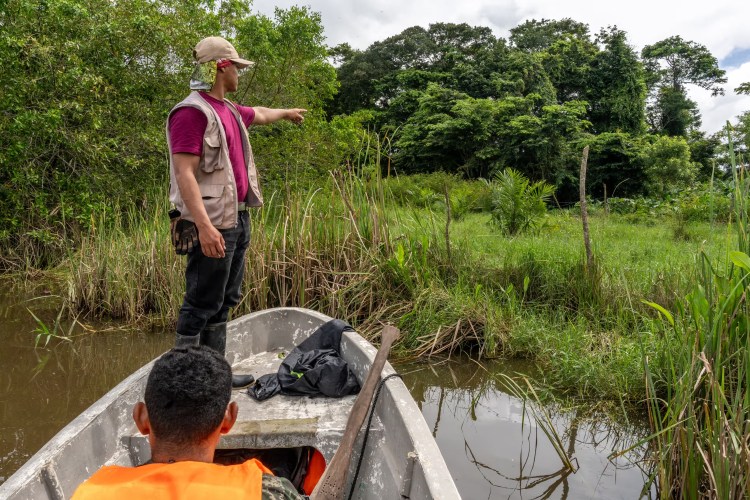 Park ranger Cesar Ortega points out newly planted oil palm: “When the oil palm is still so young, it is critical to remove it
In Honduras, oil palm gained traction as a crop in 2014, when the former president Juan Orlando Hernández invested almost $72m (£57m) in loans and grants to incentivise its cultivation. “All one needed was the willingness to plant oil palm, and the rest was served on a plate,” says Pablo Flores Velásquez, professor of environmental investigations at the National Autonomous University of Honduras (UNAH).
For the traffickers, oil palm crops are a way of legitimising their presence in the territory and securing physical control over the land.
Frances Thomson, Latin America specialist
The problem is that the extensive cultivation of oil palm has not only proved to be lucrative, but also poses a risk to the environment. “The oil palm presents a serious threat to the biodiversity of the wetlands and the water quality communities depend on,” says Velásquez. “As a monoculture, the installation and establishment of the crop necessitates the complete eradication of the biodiverse area, paralysing the ecosystem completely and permanently.”
In Honduras, these crops – whose harmful effects on the soil can create “green deserts” – account for almost 4% of all exports, mostly going to the Netherlands, the US, Italy and Switzerland, with a value of $334m in 2021. Six large companies control the production, and two claim more than half of all exports.
Nevertheless, 60% of the production in Honduras is in the hands of smallholders, who sell to corporations for refinement and export. Palm oil is highly lucrative for the farmers and provides an income every 15 days. The regional price of palm oil fruit varies greatly, from about 2,400 lempiras (£77) a tonne during low season to double that in summer.
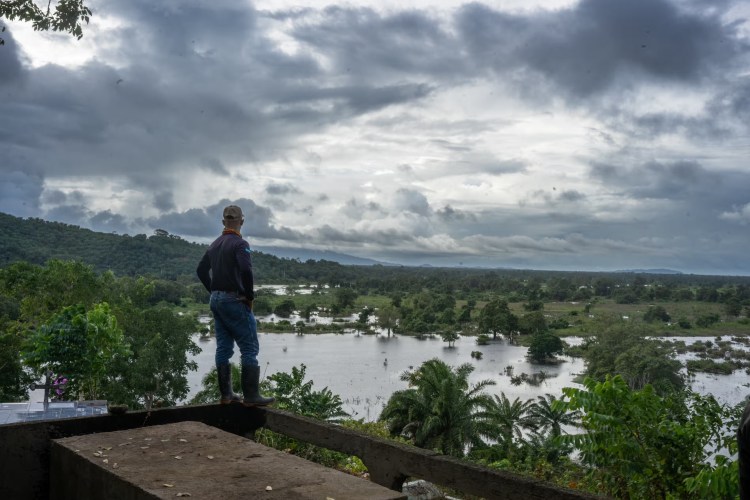 Cesar Ortega looks at an area deforested for oil palm plantations. “They have stopped because of flooding, but as soon as they can access this area again this will all become palma,” he says
Read the remaining article on The Guardian’s website.
Words and photography by Fritz Pinnow in Tela, Honduras. Originally published in The Guardian, 27 November, 2023 and republished under Guardian’s open license agreement, read original article.
ENDS
Read more about deforestation and ecocide in the palm oil industry

Ecuadorean Viscacha Lagidium ahuacaense
Ecuadorean Viscachas are plump and fluffy rodents with sage-like long whiskers, only a handful of them remain alive. Take action for them and boycott4wildlife!
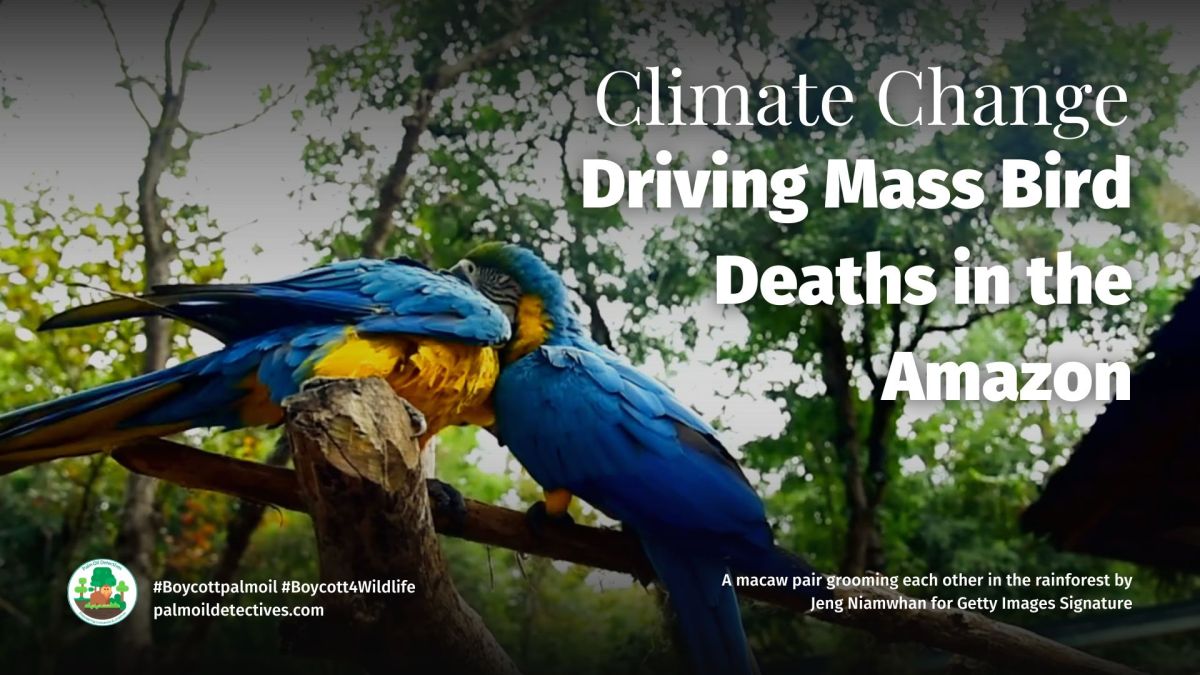
Climate Change Driving Mass Bird Deaths in the Amazon
A recent #study has revealed that even in the most isolated parts of the #Amazon, bird #populations are collapsing due to #climatechange. Research published in Science Advances found that a 1°C increase in…
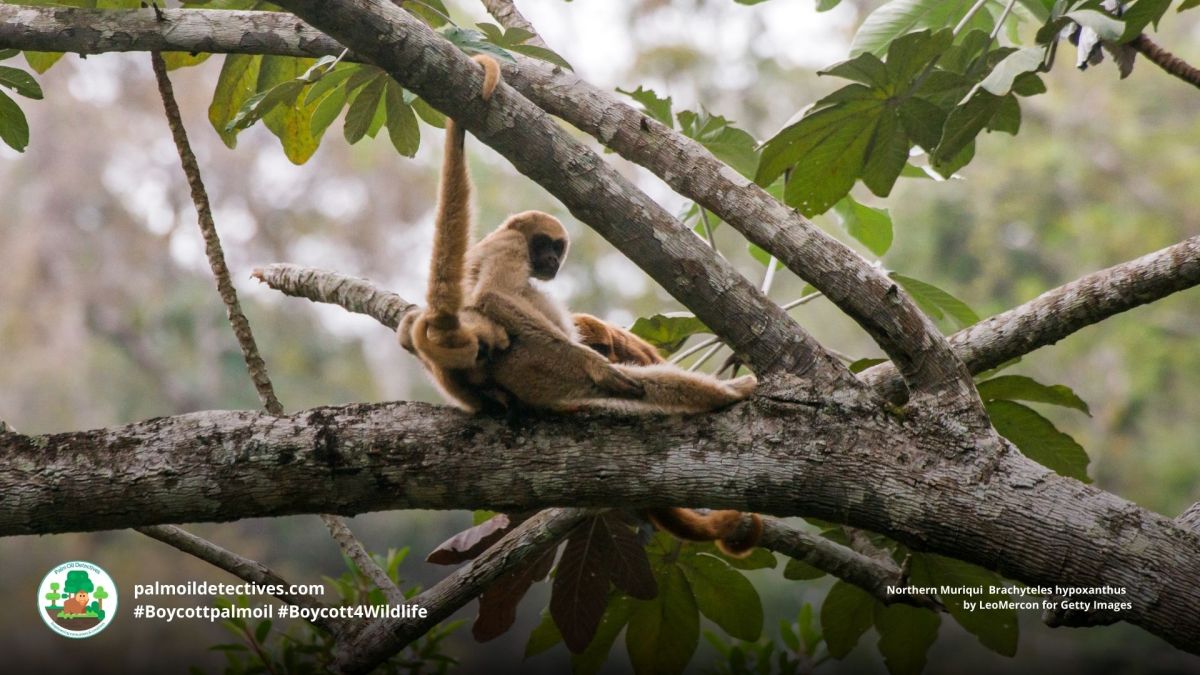
Declining primate numbers are threatening Brazil’s Atlantic forest
#Brazil’s Atlantic Forest, one of the most biodiverse ecosystems in the world, is facing severe threats due to deforestation and habitat fragmentation. This has led to a sharp decline in primate species, including…

Southern Pudu Pudu puda
Darting around and hiding on the forest floor, the Southern Pudu, known as püdü or püdu in Mapudungun (the language of the indigenous Mapuche people), is the world’s second-smallest #deer species. Weighing just…
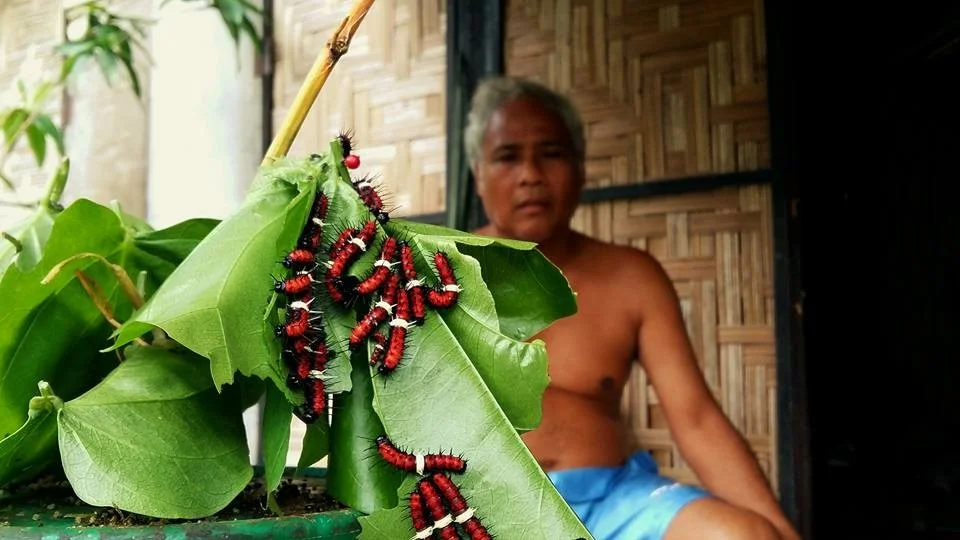
The Indigenous Malaysian concept of ‘Badi’: respecting the land and wildlife
The Indigenous Semai #indigenous people of #Malaysia can teach us a lot about how to protect people, planet and biodiversity. The Indigenous concept of #badi is not superstition or taboo, it’s about respecting…
Load more posts
Something went wrong. Please refresh the page and/or try again.
Take Action in Five Ways
1. Join the #Boycott4Wildlife on social media and subscribe to stay in the loop: Share posts from this website to your own network on Twitter, Mastadon, Instagram, Facebook and Youtube using the hashtags #Boycottpalmoil #Boycott4Wildlife.
Enter your email address
Sign Up
Join 3,528 other subscribers2. Contribute stories: Academics, conservationists, scientists, indigenous rights advocates and animal rights advocates working to expose the corruption of the palm oil industry or to save animals can contribute stories to the website.
Wildlife Artist Juanchi Pérez
Mel Lumby: Dedicated Devotee to Borneo’s Living Beings
Anthropologist and Author Dr Sophie Chao

Health Physician Dr Evan Allen

The World’s Most Loved Cup: A Social, Ethical & Environmental History of Coffee by Aviary Doert

How do we stop the world’s ecosystems from going into a death spiral? A #SteadyState Economy
3. Supermarket sleuthing: Next time you’re in the supermarket, take photos of products containing palm oil. Share these to social media along with the hashtags to call out the greenwashing and ecocide of the brands who use palm oil. You can also take photos of palm oil free products and congratulate brands when they go palm oil free.
https://twitter.com/CuriousApe4/status/1526136783557529600?s=20
https://twitter.com/PhillDixon1/status/1749010345555788144?s=20
https://twitter.com/mugabe139/status/1678027567977078784?s=20
4. Take to the streets: Get in touch with Palm Oil Detectives to find out more.
5. Donate: Make a one-off or monthly donation to Palm Oil Detectives as a way of saying thank you and to help pay for ongoing running costs of the website and social media campaigns. Donate here
Pledge your support#BoycottPalmOil #Boycott4wildlife #BoycottPalmOil #corrupt #corruption #deforestation #Honduras #humanRights #indigenous #indigenousRights #landgrabbing #LatinAmerica #PalmOil #palmOilBiofuel #palmOilDeforestation #palmoil #rainforests #SouthAmerica #violence #wildlife #workersRights #WorkersRights
Peer:
Unsupported type or deleted object
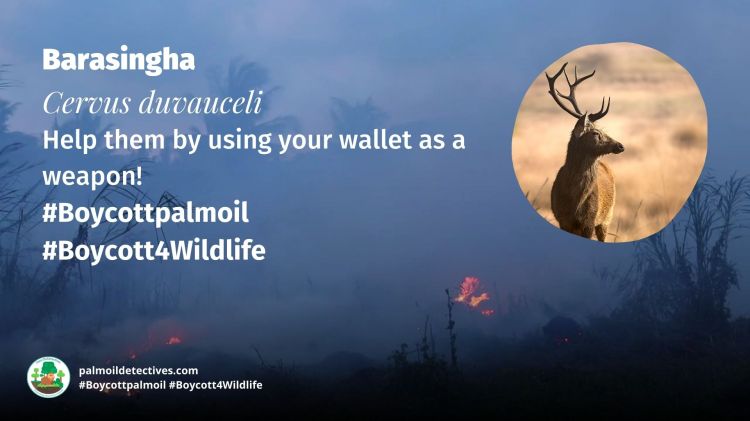
Barasingha Cervus duvauceli
Barasingha (Swamp Deer) Cervus duvauceli
Red List Status: Vulnerable
Extant (resident): India; Nepal
Extinct: Bangladesh; Pakistan
Presence Uncertain: Bhutan
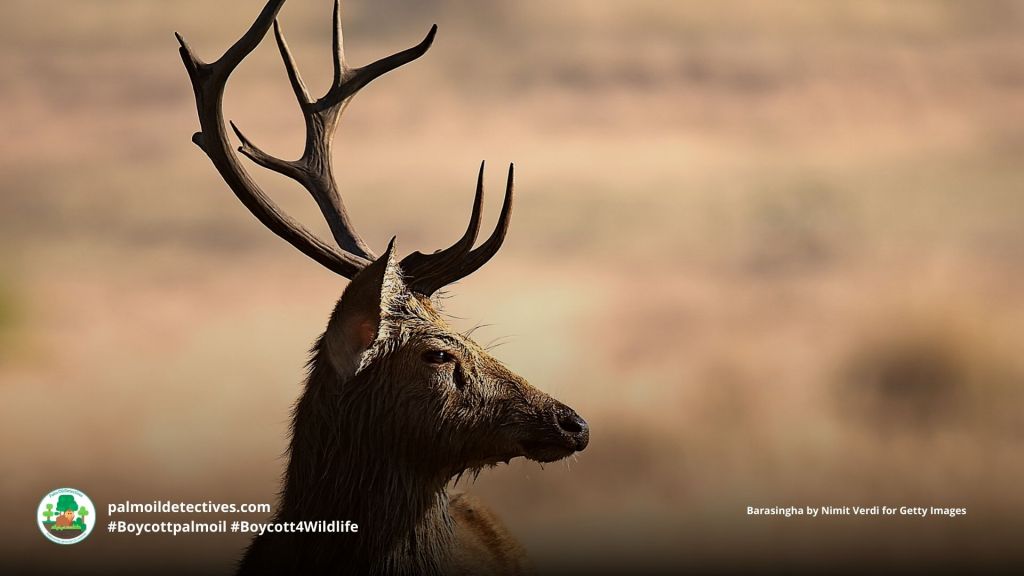
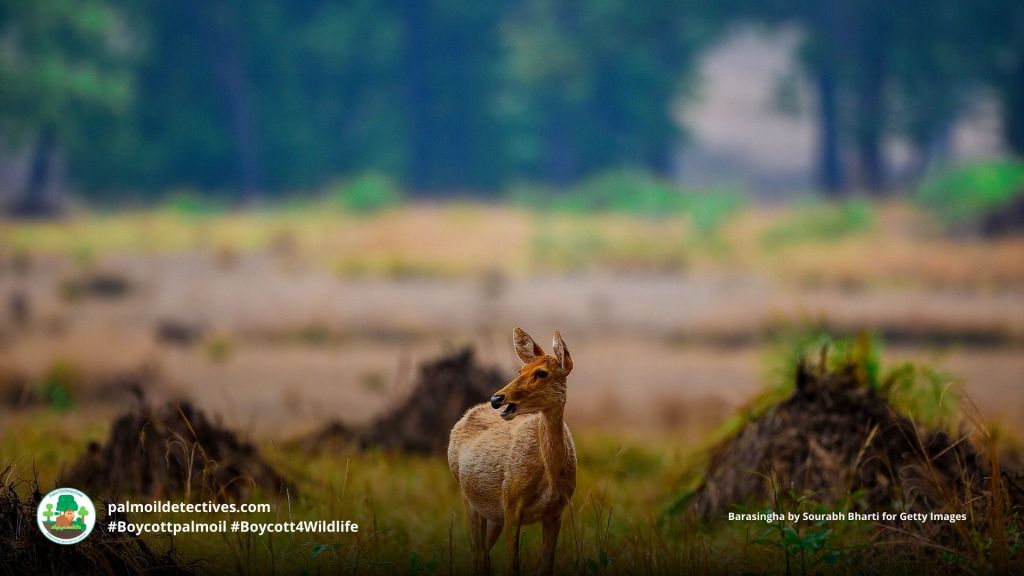
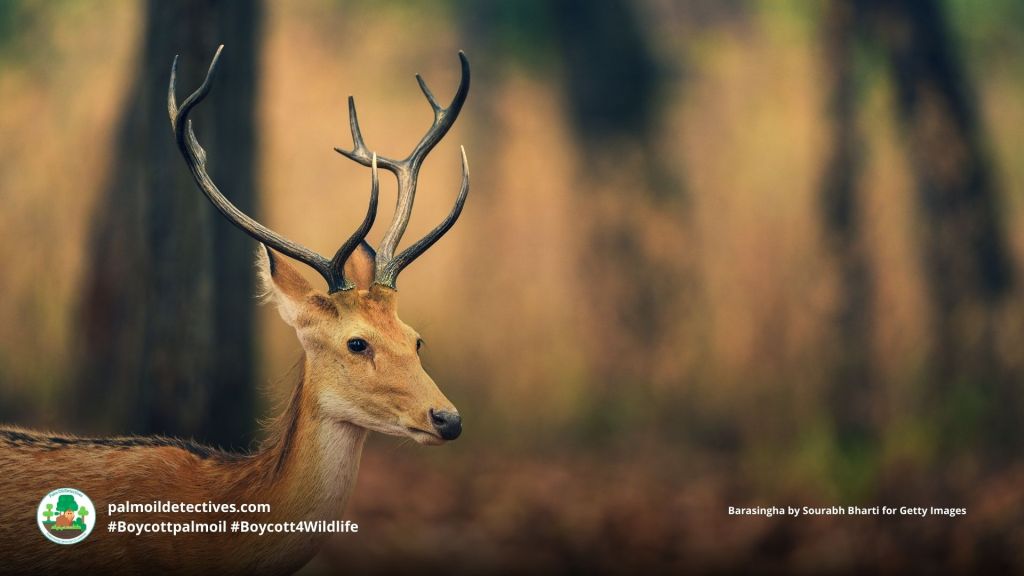
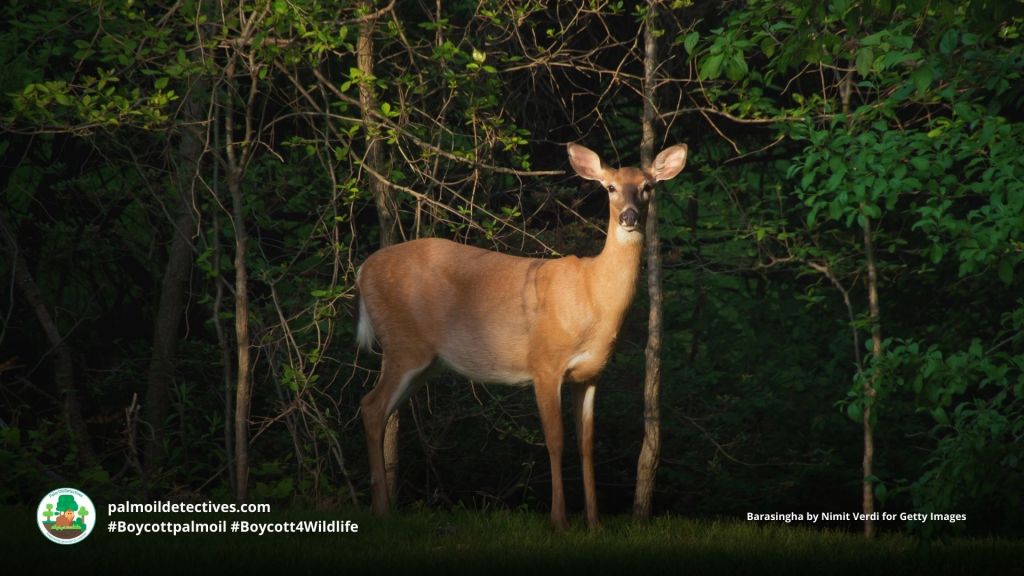
Barasinghas Cervus duvauceli also known as Swamp Deers, are instantly recognisable for their enormous handsome antlers. They can have as many as 12 antlers and their namesake Barasinghas means ’12 antlered deer’ in Hindi. They are now one of the most endangered deer species in the world due to habitat fragmentation for palm oil and beef, along with human persecution and hunting. The only remaining population live in protected sanctuaries in India and Nepal. The herd will be led by a single female and then followed by other females in a procession and then the males follow along at the rear of the group. Despite this, females are not dominant over the herd. These resilient, tough and majestic deer species are classified vulnerable on IUCN Red List. If you want to help them, adopt a #Vegan lifestyle and #BoycottPalmOil #Boycott4Wildlife in the supermarket!
Handsome #Barasinghas of #India 🇮🇳 #Nepal 🇳🇵 have huge antlers 🦌😻 They are one of the most endangered #deer species in the 🌎 due to #hunting and #palmoil #deforestation. Help save them! 🌴🪔🩸🚜🔥🧐🚫 #Boycottpalmoil #Boycott4Wildlife @palmoildetect https://palmoildetectives.com/2023/06/25/barasingha-cervus-duvauceli/
Share to BlueSkyShare to Twitter#Barasingha mean “12 Antlered #Deer” in #Hindi 🦌🤎 Major threats include #meat and #palmoil #ecocide in #India 🇮🇳 and #Nepal 🇳🇵 along with #poaching 🏹 Take action for them and be #vegan 🥦🍅 #Boycottpalmoil 🌴🩸🙊⛔️ #Boycott4Wildlife @palmoildetect https://palmoildetectives.com/2023/06/25/barasingha-cervus-duvauceli/
Share to BlueSkyShare to TwitterAppearance & Behaviour
Barasinghas are a highly social and strongly matriarchal deer species. They typically gather in herds of 10-2o individual deers.
Herds are mostly made up of deer of similar age. Although herds may sometimes be mixed in age and gender. The herd will be led by a single female and then followed by other females in a procession and then the males follow along at the rear of the group. Despite this, females are not dominant over other members of the herd. Males are known to move between herds, whereas females are more loyal to their own herd. Like many other deer species, males are generally referred to as ‘bucks’ and dominant males a ‘stags’.
They are naturally diurnal and active throughout the day. They will typically rest during the heat of midday and spend the dawn and dusk grazing.
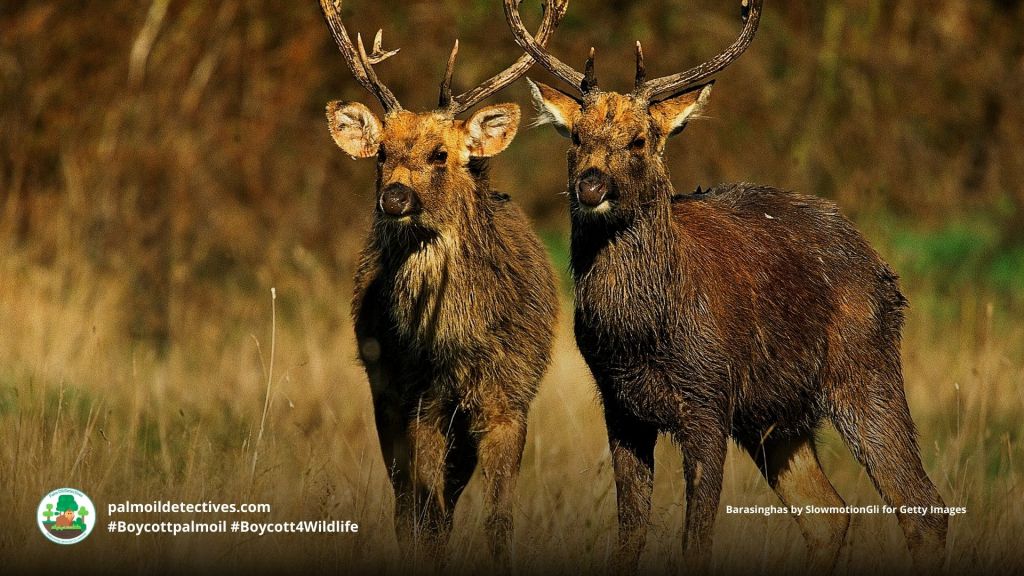
Juvenile males will sport smaller antlers that are an extension to their bones and have blood vessels inside of them. This coating of blood vessels or ‘felt’ is lost over time, as the young deers will rub the antlers against trees to toughen the antlers up.
 Young male Barasinghas with fuzzy antlers by SlowmotionGli for Getty Images
Threats
There are three sub-species of Barasinghas and in total IUCN Red List estimates that there are only 3,500 to 5,100 left alive. They are classified as Vulnerable. Only a small number of Barasinghas live in protected zones, including:
- 350-500 animals in Kaziranga National Park
- 300-350 animals in Kanha National Park
Barasinghas face multiple human-related threats:
- Palm oil deforestation: A significant part of their range is being destroyed for palm oil. They rely on mangroves and swamps and these are drained and destroyed to make way for palm oil.
- Hunting: Hunters often deliberately seek out these deer for their extraordinary antlers.
- Livestock deforestation: Livestock grazing and other agricultural expansion.
- Competition with other animals for food in a shrinking range.
- Diseases: passed on from domestic cattle to the deer.
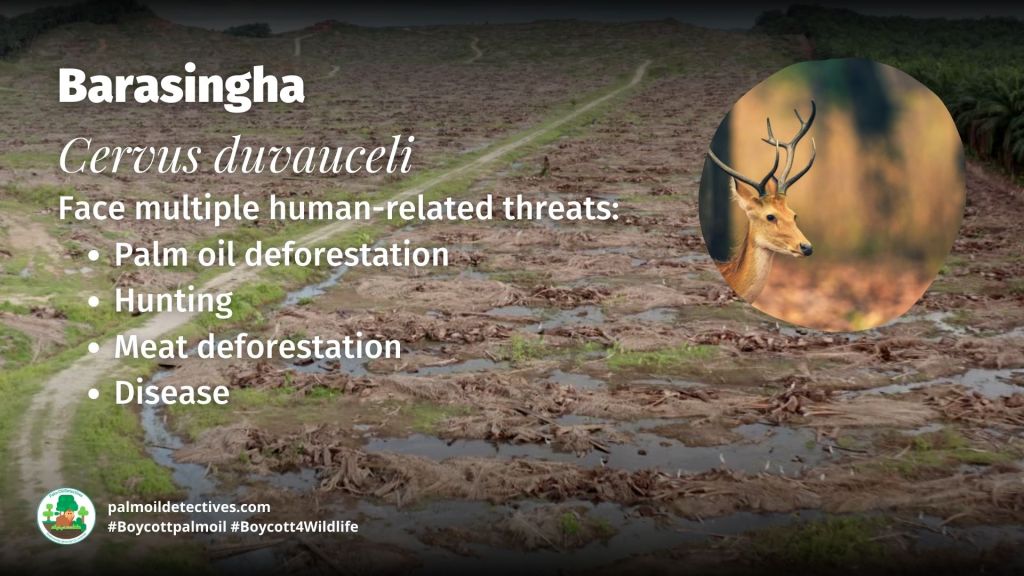 Barasingha Cervus duvauceli – India – Asia – threats
 Barasingha Cervus duvauceli – India – Asia – #Boycott4Wildlife
Habitat
The Barasingha is faces multiple anthropogenic threats which has heavily fragmented their range in north and central India and south west Nepal. They prefer riparian and riverine habitats close to floodplains, wetlands, mangroves and swamps as well as riversides. They are also fund in woodlands and deciduous forests.
Diet
Barasinghas are herbivorous mammals and they provide a vital ecosystem service by ensuring that plants are kept under control with their grazing habits. They generally stick with a diet of foliage, leaves and grass. Some Barasinghas living in wetlands will supplement this diet with algae and aquatic vegetation.
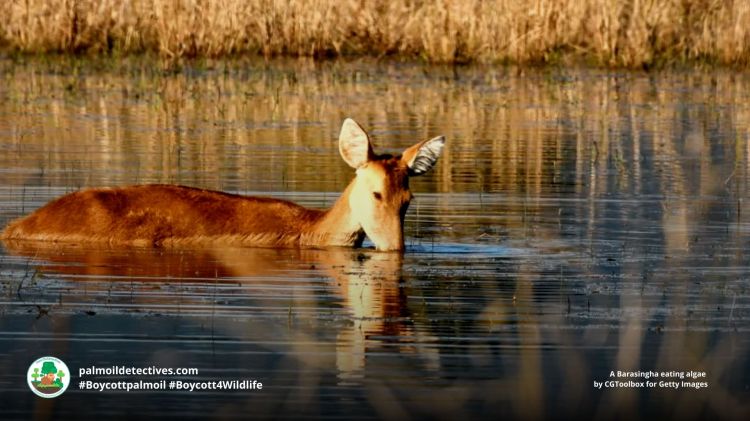 A Barasingha eating algae
by CGToolbox for Getty Images
A Barasingha eating algae
by CGToolbox for Getty ImagesMating and breeding
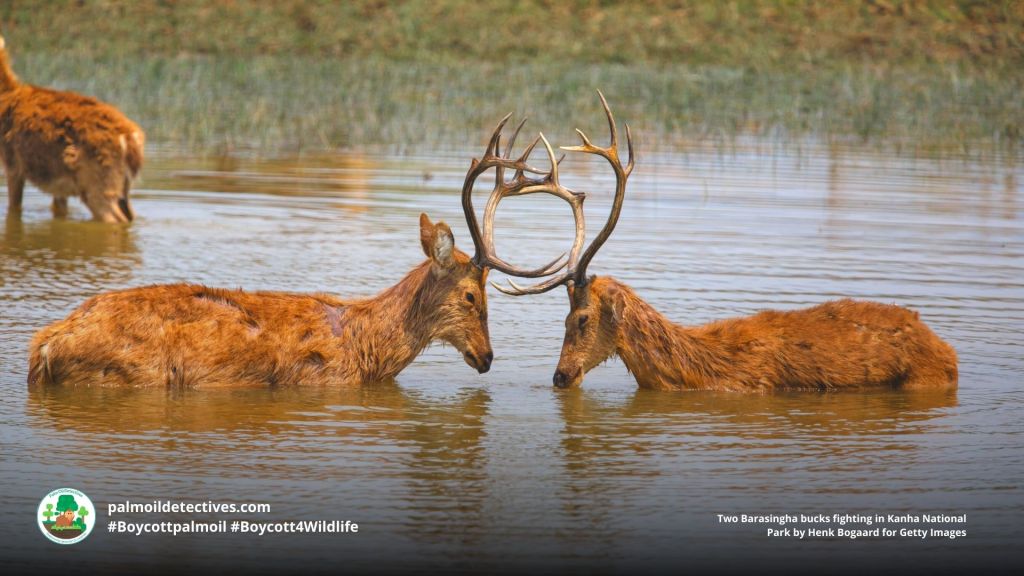
Dominant males in herds will mate with a group of females known as a harem. Males in herds will engage in bloody and violent conflicts with each other for mating rights during the rutting season. Male ‘bucks’ call for female ‘does’ using a series of bugling and barking sounds to indicate their readiness to mate. Mating season is between October and February.
Females give birth typically to only one fawn after around eight months of pregnancy. Occasionally twins occur. The fawn is weaned by six to eight months, and after two years, young females reach sexual maturity.
Support Barasinghas by going vegan and boycotting palm oil in the supermarket, it’s the #Boycott4Wildlife
Support the conservation of this species
This animal has no protections in place. Read about other forgotten species here. Create art to support this forgotten animal or raise awareness about them by sharing this post and using the #Boycottpalmoil #Boycott4Wildlife hashtags on social media. Also you can boycott palm oil in the supermarket.
Further Information
Duckworth, J.W., Kumar, N.S., Pokharel, C.P., Sagar Baral, H. & Timmins, R. 2015. Rucervus duvaucelii. The IUCN Red List of Threatened Species 2015: e.T4257A22167675. https://dx.doi.org/10.2305/IUCN.UK.2015-4.RLTS.T4257A22167675.en. Accessed on 12 November 2022.
Barasingha Cervus duvauceli on Wikipedia
 Barasingha Cervus duvauceli – India – Asia – #Boycott4Wildlife
How can I help the #Boycott4Wildlife?
Take Action in Five Ways
1. Join the #Boycott4Wildlife on social media and subscribe to stay in the loop: Share posts from this website to your own network on Twitter, Mastadon, Instagram, Facebook and Youtube using the hashtags #Boycottpalmoil #Boycott4Wildlife.
Enter your email address
Sign Up
Join 3,179 other subscribers2. Contribute stories: Academics, conservationists, scientists, indigenous rights advocates and animal rights advocates working to expose the corruption of the palm oil industry or to save animals can contribute stories to the website.
Wildlife Artist Juanchi Pérez
Read moreMel Lumby: Dedicated Devotee to Borneo’s Living Beings
Read moreAnthropologist and Author Dr Sophie Chao
Read moreHealth Physician Dr Evan Allen
Read moreThe World’s Most Loved Cup: A Social, Ethical & Environmental History of Coffee by Aviary Doert
Read moreHow do we stop the world’s ecosystems from going into a death spiral? A #SteadyState Economy
Read more3. Supermarket sleuthing: Next time you’re in the supermarket, take photos of products containing palm oil. Share these to social media along with the hashtags to call out the greenwashing and ecocide of the brands who use palm oil. You can also take photos of palm oil free products and congratulate brands when they go palm oil free.
https://twitter.com/CuriousApe4/status/1526136783557529600?s=20
https://twitter.com/PhillDixon1/status/1749010345555788144?s=20
https://twitter.com/mugabe139/status/1678027567977078784?s=20
4. Take to the streets: Get in touch with Palm Oil Detectives to find out more.
5. Donate: Make a one-off or monthly donation to Palm Oil Detectives as a way of saying thank you and to help pay for ongoing running costs of the website and social media campaigns. Donate here
Pledge your support #animals #Bangladesh #Barasingha #BarasinghaCervusDuvauceli #Barasinghas #beef #Bhutan #Boycott4wildlife #BoycottPalmOil #deer #deforestation #ecocide #ForgottenAnimals #Hindi #humanWildlifeConflict #hunting #India #Mammal #meat #Nepal #Pakistan #PalmOil #palmOilDeforestation #palmoil #poaching #ungulate #vegan #VulnerableSpecies

Barasingha by Sourabh Bharti for Getty Images

Barasingha by Nimit Verdi for Getty Images

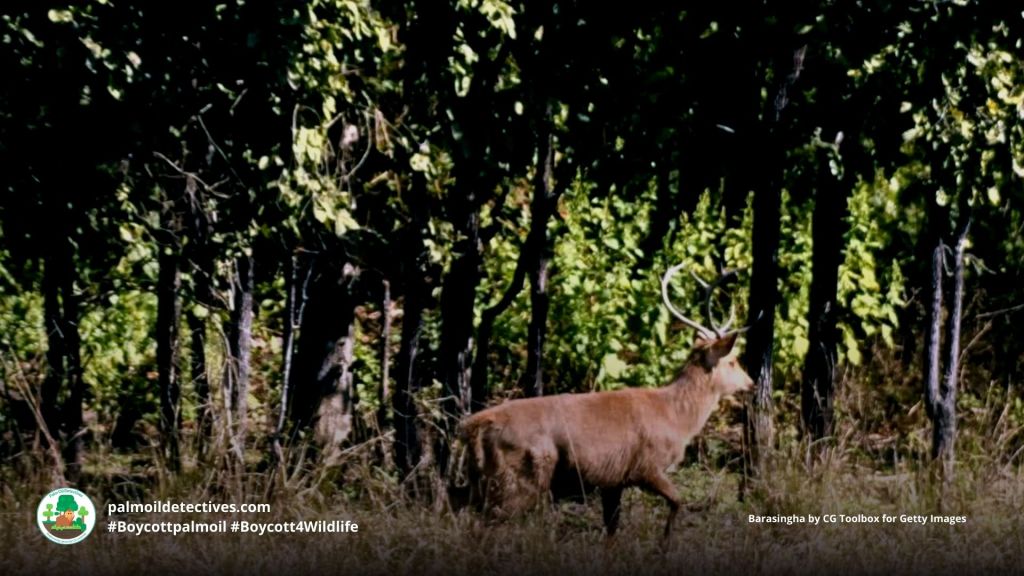
Barasingha by CG Toolbox for Getty Images

Barasinghas by SlowmotionGli for Getty Images
Media Revolution Channel
boosted
Peer:
Unsupported type or deleted object
Parrot Deaths Highlight Urgent Need to Reform CITES
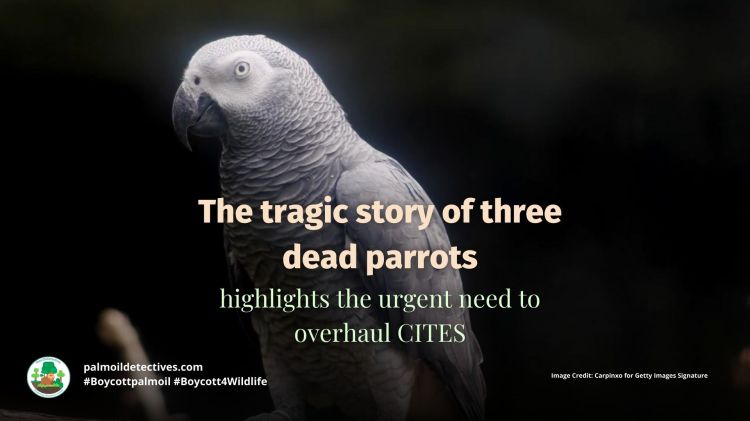
Three critically endangered African Grey parrots were seized in Norway in 2019 after being illegally smuggled and they were later euthanised. These intelligent birds had potentially 60 years of life to live and the massive tragedy is – they knew that they were going to die!
Generally, international wildlife trade is not forbidden. Rather, it is regulated through CITES an international treaty to prevent illegal trade in wild animals. The industry is worth billions. The treaty needs a radical overhaul writes Professor Ragnhild Sollund for 360Info.
The legal trade is largely to blame for African grey parrots becoming endangered: parrots make popular pets due to their intelligence and sociability, so they have become “over exploited”. Help fight illegal wildlife trade and #Boycott4Wildlife
The tragedy of dead African grey #parrots highlights the need to overhaul #CITES a weak treaty which facilitates rather than stops #wildlife trade #extinction by Prof Ragnild Sollund for @360info_global #Boycottpalmoil #Boycott4Wildlife via @palmoildetect https://wp.me/pcFhgU-78q
Share to Twitter“A #ban on #wildlife #trade would be easier to enforce than the current market, where some trade is legal, some illegal, and which offers ample possibilities for #fraud #corruption Story: @360info_global #Boycottpalmoil #Boycott4Wildlife @palmoildetect https://wp.me/pcFhgU-78q
Share to TwitterOriginally published under Creative Commons by 360info™. Written by Professor Ragnhild Sollund. Read the original here.
In November 2019, three African grey parrot chicks (Psittacus erithacus) were seized at Oslo airport by customs inspectors. As endangered species, they did not have the required permits to be transported to Norway. During the month that officials contemplated what should happen to the birds, they were hand reared by veterinarians. Then the decision was made: euthanasia.
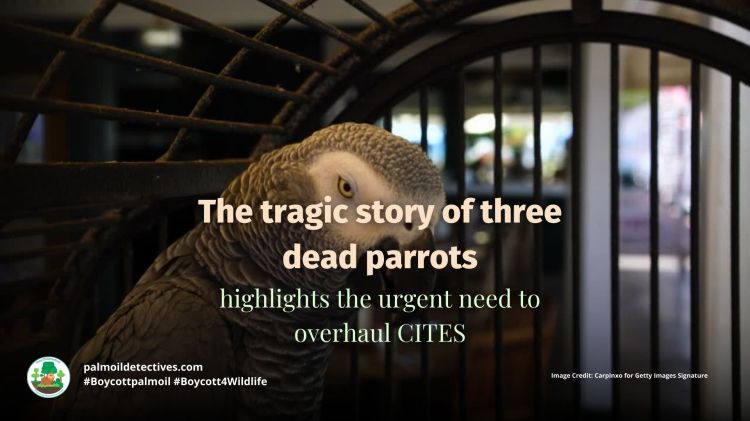
These highly intelligent birds had a potential 60-year life ahead of them; a life that was abruptly concluded in the hands of the vet. “I have euthanised many animals, but I cried when I euthanised these birds,” she said. “They understood… [And I did] not want to work as the Norwegian environment agency’s executioner of endangered species.”
In Norway, this was the standard outcome for illegally traded animals that are listed in CITES, the United Nations Convention on International Trade in Endangered Species of Wild Fauna and Flora. On March 3, International Wildlife Day, it highlights why addressing the wildlife trade, its regulation and enforcement, is urgent.
Generally, international wildlife trade is not forbidden. Rather, it is regulated through CITES. The legal trade is largely to blame for African grey parrots becoming endangered: parrots make popular pets due to their intelligence and sociability, so they have become “over exploited”, meaning the trade endangers the survival of the species. But the concept of over exploitation fails to cover the individual suffering or death of the animals involved in the trade. In view of species justice, any exploitation may be too much.
CITES entered into force in 1975. Eighty-four parties have signed the convention, including the European Union as one party. Each country must have a management authority, and all countries are obliged to submit annual reports to the CITES secretariat.
Animals are listed on three appendices of CITES, according to how endangered they are. The African grey is listed on appendix I as threatened with extinction. It was moved from appendix II in 2016, since trade in them was no longer deemed ‘sustainable’. Currently 5,950 species of animals and 32,800 species of plants are listed across all three appendices.
CITES has been criticised for being an overly human-centred convention. It fails to take into consideration the fact that animals are sentient beings with capacity to suffer who have interest in living their lives in their natural habitats, free from human inflicted harm.
Instead, CITES frames wildlife species, whether plants or animals, as resources that are available for humans to exploit, until exploitation reaches a level that threatens the survival of a species. According to this logic, one individual can easily be disposed of and replaced by another; an individual’s intrinsic value is not recognised.
CITES has been criticised for not functioning even within its own parameters. For example, many parties to CITES never submit the required annual reports, and much trade is never recorded. And many species become threatened and go extinct from trade without ever being listed on the CITES appendices. For example, there are 10,247 known reptile species in the world, but only 8 percent of the reptile trade is regulated through CITES. Newly discovered species can be swiftly exploited, and 79 percent of traded species are not subject to CITES regulation.
According to CITES records, a staggering 2 million mammals, 5 million birds, 41 million reptiles, half a million amphibians, and 6 million fish were traded legally between 2011-2022.
Animals are used for medicinal purposes (often with no effect), fashion, as game hunting trophies, pets and as high-status food items.
Wildlife trade is big business
Advocacy group Traffic estimates the economic value of legal wildlife trade including plants, at approximately US$323 billion. One important reason for the foundation of CITES was to secure the economic gains of wildlife trade for biodiverse, but poor countries in the global South.
Wildlife trade can be viewed as transnational, global, organised state corporate harm.
Given the general failure of CITES to protect animals from harm and species from extinction, there have been many calls to remodel the agreement. The logic behind CITES implies that the harms of wildlife trade shall continue relentlessly, with new individuals abducted, killed or in other ways exploited in a ‘sustainable’ way for human benefit.
A better CITES would be based around animal protection. Wild animals should have rights not to be exploited as pets, killed for their flesh or skin, teeth or whiskers, tusks, horns, or used for entertainment in zoos, circuses and aqua parks. CITES could rather become an instrument promoting justice both for nature, humans and animals.
One way to do this would be to transform it from a trade convention to an aid convention. The convention could be reformulated to promote species conservation and the protection of individuals’ and species’ rights.
CITES could then become an instrument to funnel economic resources from rich economies in the North to poor economies in the South, if their national budgets partly rely on wildlife trade. Aid, distributed by an accountable secretariat, could be conditional on the ways in which the recipients succeed in protecting the natural environment and its inhabitants.
This system is already in place when it comes to the protection of rainforest: Norway and Germany contribute significantly to the protection of rainforest in places such as Brazil, Colombia and Ecuador through the UN; the amount of economic resources allocated from Norway to these countries depends on how much rainforest is spared from logging and emissions reduced.
A ban on the trade in wild animals would be easier to enforce than the current murky market, in which some trade is legal, other parts illegal, and which demands significant skills by law enforcement officers and offers ample possibilities for fraud.
Ragnhild Sollund is professor at the Department of Criminology and Sociology of Law at the University of Oslo, where she has done research into the wildlife trade for 12 years. She is currently leading the research project: Criminal Justice, Wildlife Conservation and Animal Rights in the Anthropocene, which studies the implementation and enforcement of two nature conventions: CITES; and the Bern convention that protects wild animals and their habitats in Europe, in Norway, The United Kingdom, Spain and Germany. Her research is funded by Norwegian Research Council.
Originally published under Creative Commons by 360info™. Written by Professor Ragnhild Sollund. Read the original here.
ENDS
Learn about other animals endangered by palm oil and other agriculture
GlobalSouth America S.E. AsiaIndiaAfricaWest Papua & PNG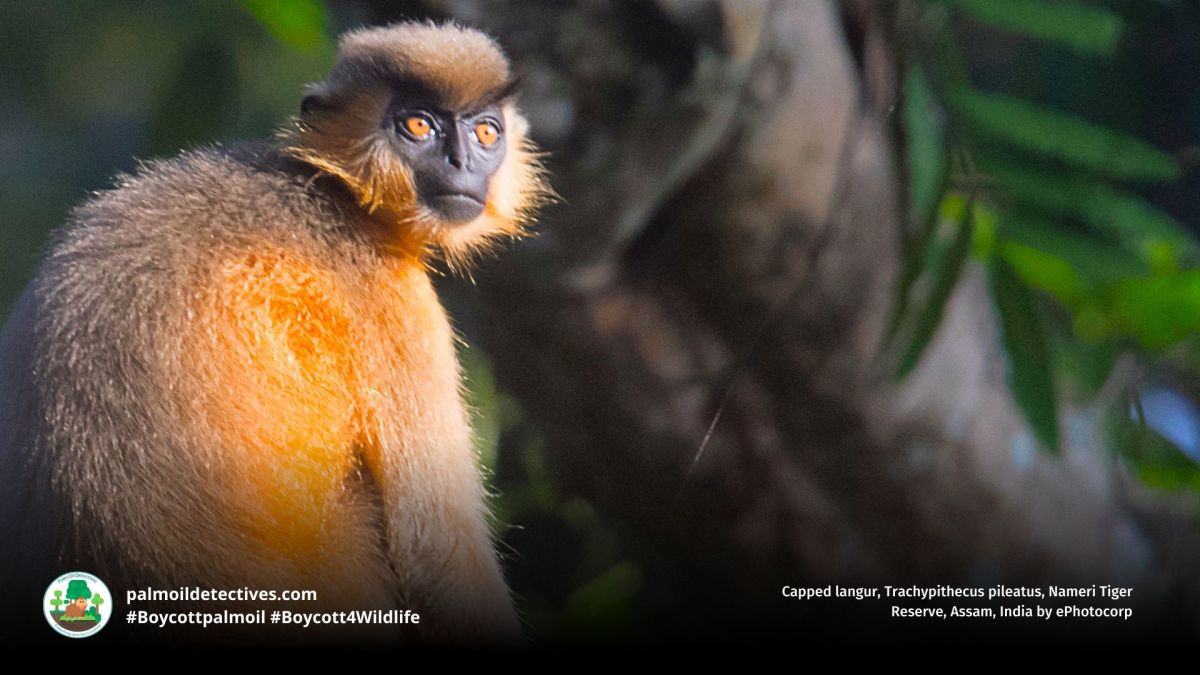
Capped Langur Trachypithecus pileatus
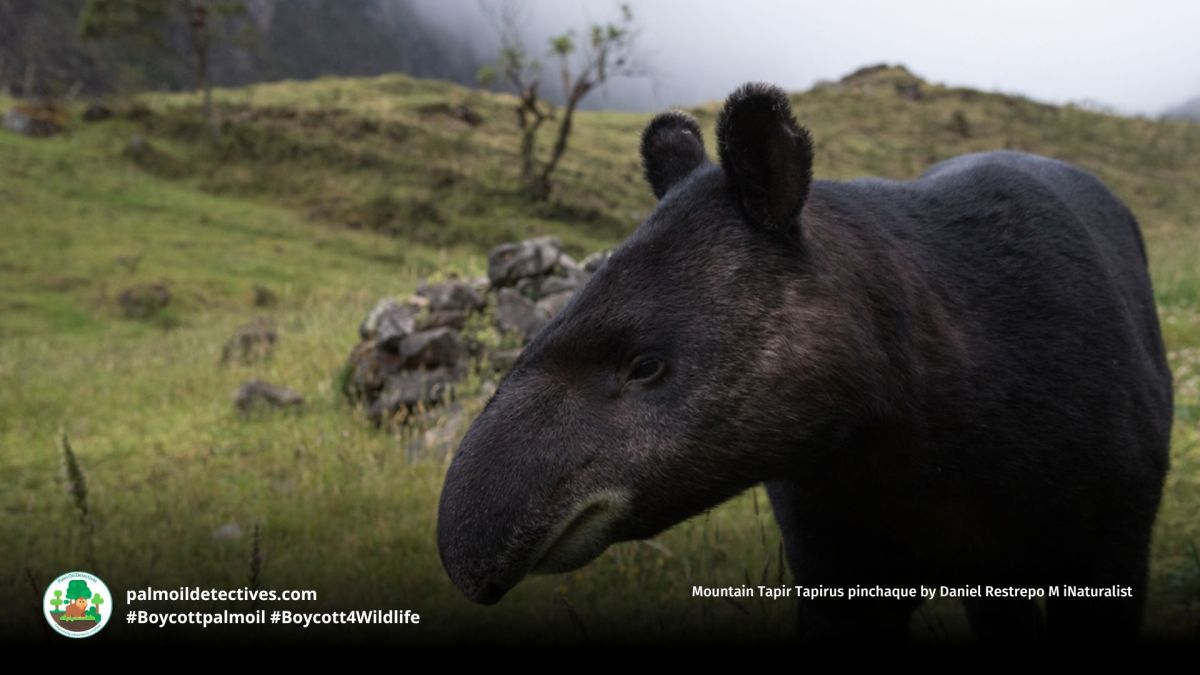
Mountain Tapir Tapirus pinchaque
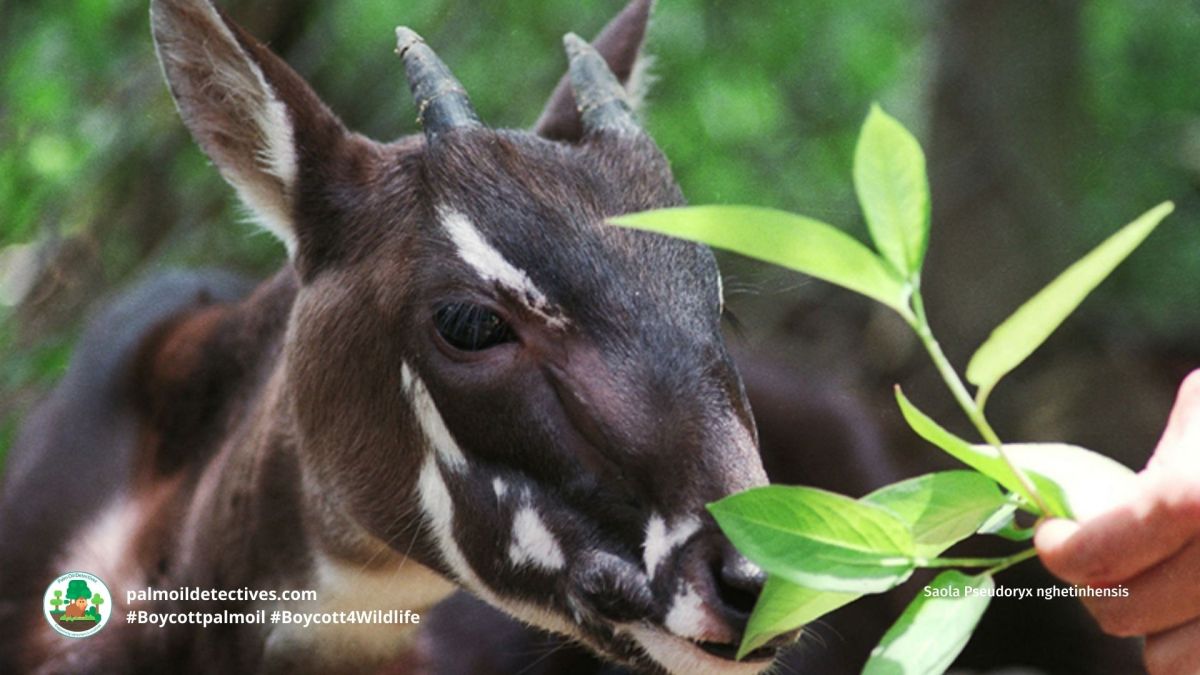
Saola Pseudoryx nghetinhensis

Tucuxi Sotalia fluviatilis

Frill-Necked Lizard Chlamydosaurus kingii

Grey Crowned Crane Balearica regulorum
Learn about “sustainable” palm oil greenwashing
Read more about RSPO greenwashing
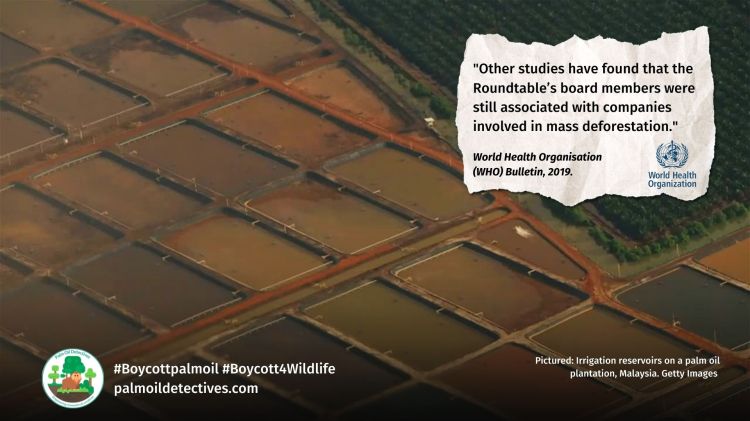
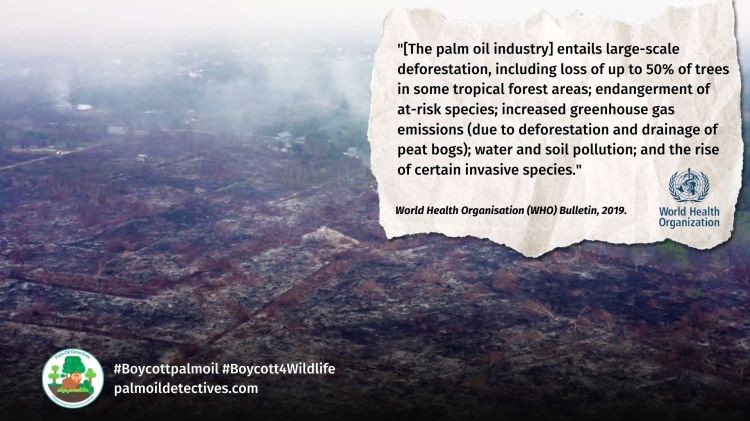
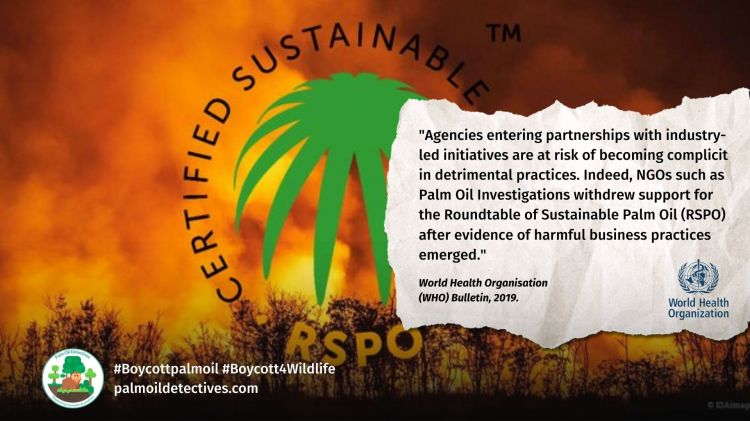
Lying Fake labelsIndigenous Land-grabbingHuman rights abusesDeforestation Human health hazardsA 2019 World Health Organisation (WHO) report into the palm oil industry and RSPO finds extensive greenwashing of palm oil deforestation and the murder of endangered animals (i.e. biodiversity loss)
Read more

Take Action in Five Ways
1. Join the #Boycott4Wildlife on social media and subscribe to stay in the loop: Share posts from this website to your own network on Twitter, Mastadon, Instagram, Facebook and Youtube using the hashtags #Boycottpalmoil #Boycott4Wildlife.
Enter your email address
Sign Up
Join 3,174 other subscribers2. Contribute stories: Academics, conservationists, scientists, indigenous rights advocates and animal rights advocates working to expose the corruption of the palm oil industry or to save animals can contribute stories to the website.
Wildlife Artist Juanchi Pérez
Mel Lumby: Dedicated Devotee to Borneo’s Living Beings
Anthropologist and Author Dr Sophie Chao
Health Physician Dr Evan Allen
The World’s Most Loved Cup: A Social, Ethical & Environmental History of Coffee by Aviary Doert
How do we stop the world’s ecosystems from going into a death spiral? A #SteadyState Economy
3. Supermarket sleuthing: Next time you’re in the supermarket, take photos of products containing palm oil. Share these to social media along with the hashtags to call out the greenwashing and ecocide of the brands who use palm oil. You can also take photos of palm oil free products and congratulate brands when they go palm oil free.
https://twitter.com/CuriousApe4/status/1526136783557529600?s=20
https://twitter.com/PhillDixon1/status/1749010345555788144?s=20
https://twitter.com/mugabe139/status/1678027567977078784?s=20
4. Take to the streets: Get in touch with Palm Oil Detectives to find out more.
5. Donate: Make a one-off or monthly donation to Palm Oil Detectives as a way of saying thank you and to help pay for ongoing running costs of the website and social media campaigns. Donate here
Pledge your support#AfricanGreyParrot #AnimalBiodiversityNews #animalCruelty #animalExtinction #ban #Bird #birds #BoycottPalmOil #Boycott4wildlife #BoycottPalmOil #CITES #corruption #deforestation #extinction #ForgottenAnimals #fraud #greenwashing #illegalPetTrade #Parrots #poachers #poaching #trade #wildlife
Western Parotia Parotia sefilata
Western Parotia Parotia sefilata
Location: West Papua (Illegally occupied by Indonesia)
Found exclusively in the montane forests of the Vogelkop Peninsula and Wandammen Mountains in Indonesian-occupied West Papua, this species is confined to isolated pockets of ancient, cloud-draped rainforest.
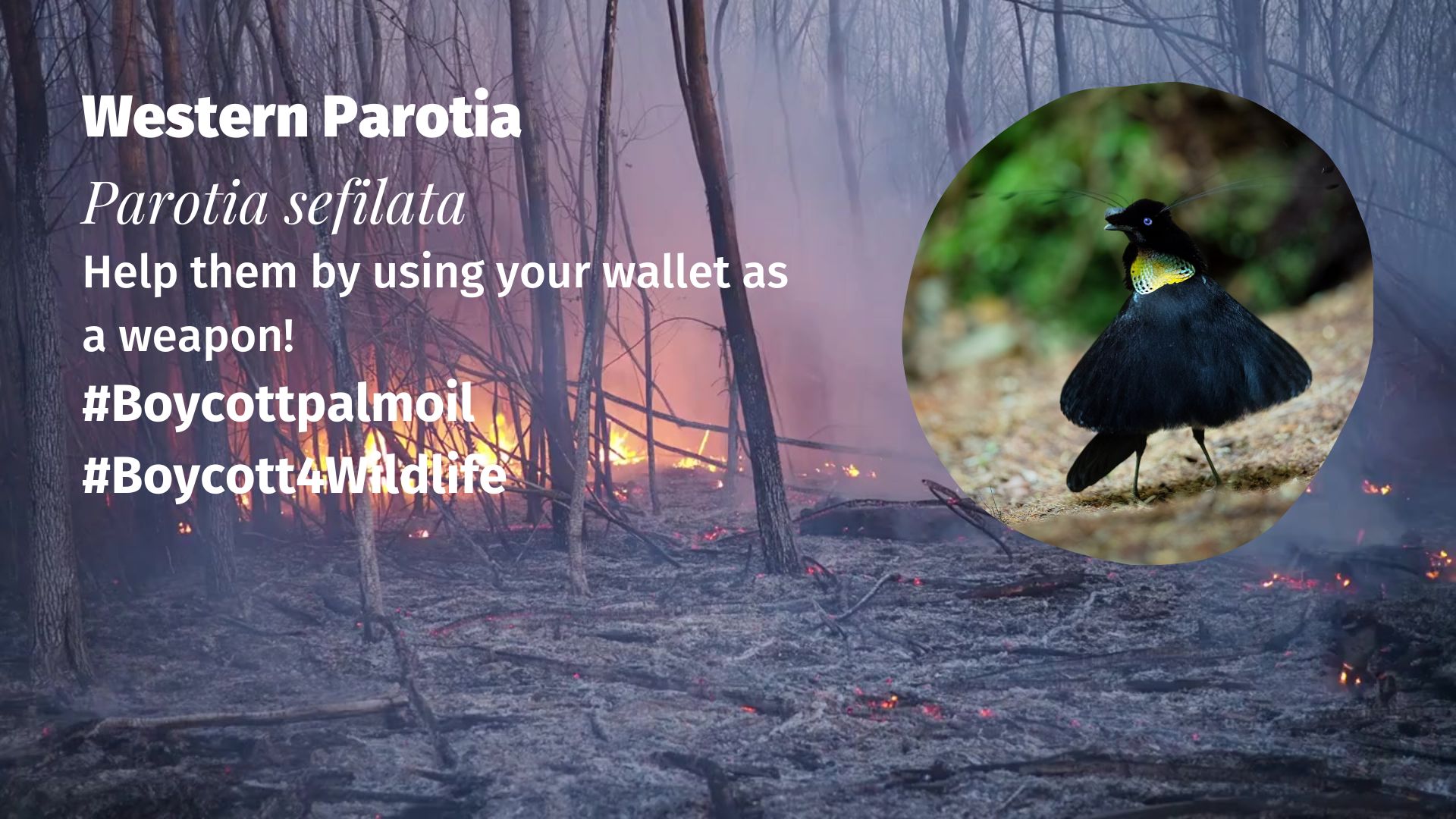
The Western Parotia Parotia sefilata, also called the Arfak Parotia, is a stunning bird-of-paradise of #WestPapua known for their mesmerising, ballerina-like courtship dance. Male #birds fan their iridescent flank plumes into a skirt and dazzle females with precise steps and shimmering throat shields. Although listed as Least Concern in 2016, this designation is dangerously outdated. The forests these rare birds call home have suffered catastrophic #deforestation in recent years due to the explosion of #palmoil plantations. These once-pristine regions are now fragmented and rapidly vanishing. Immediate action is needed to protect the Western Parotia from becoming the next victim of extinction.#BoycottPalmOil #Boycott4Wildlife
Unusual behaviours like mounting reveal complexity to the lives of Western #Parotia, thrilling #birds of paradise in #WestPapua. #Palmoil is a major threat. Fight for them and indigenous peoples #Boycottpalmoil #Boycott4Wildlife @palmoildetect https://palmoildetectives.com/2026/01/25/western-parotia-parotia-sefilata/
Share to BlueSky Share to TwitterWith jet black plumage 🖤 and bright green 💚 wattles, male Western Parotia #birds 🐦🦜🦚 of paradise gleam like scaly armour when they dance 🎶 Resist against their #extinction in #WestPapua when you #Boycottpalmoil 🌴🚫 #Boycott4Wildlife @palmoildetect https://palmoildetectives.com/2026/01/25/western-parotia-parotia-sefilata/
Share to BlueSky Share to TwitterAppearance & Behaviour
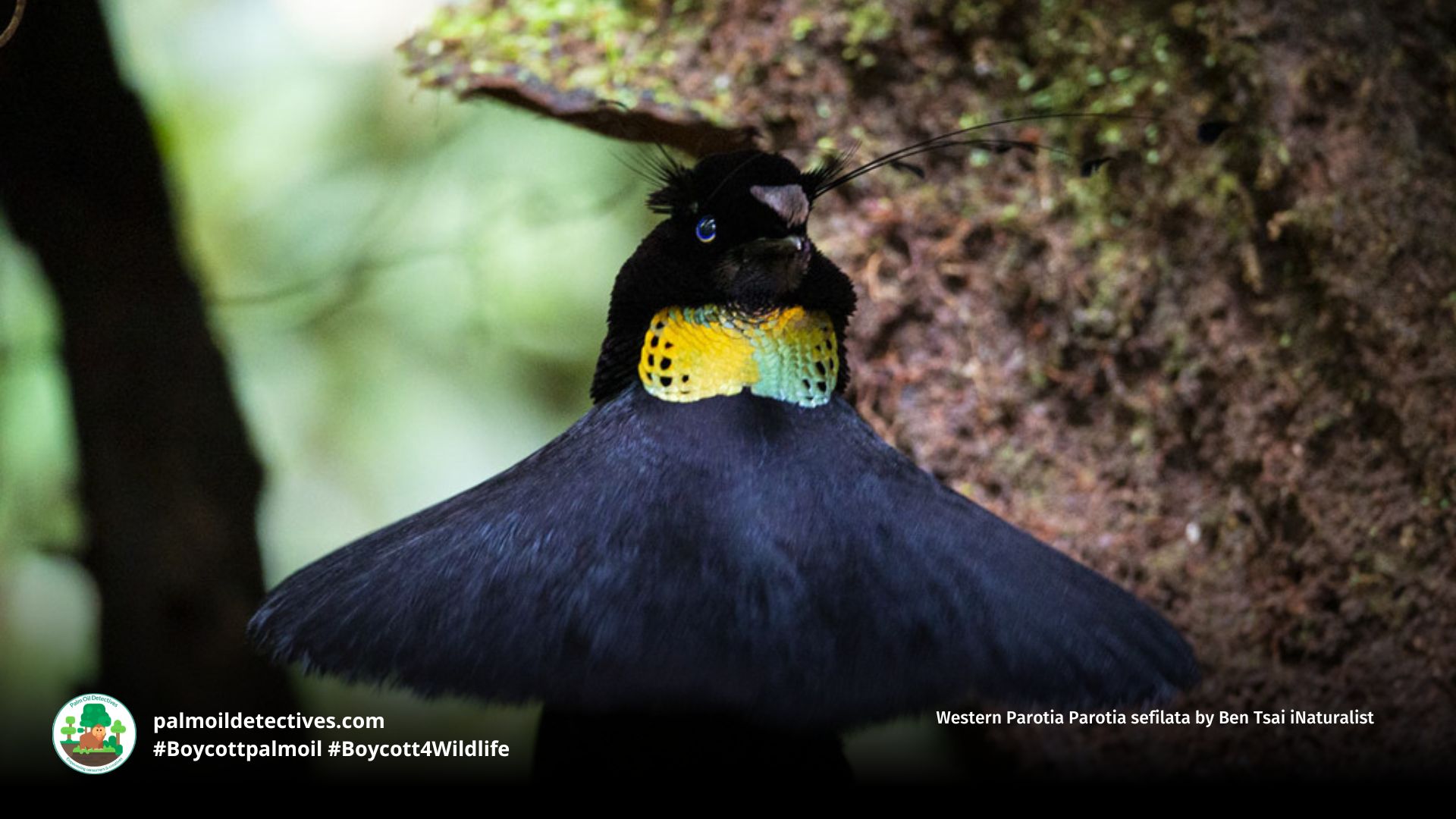
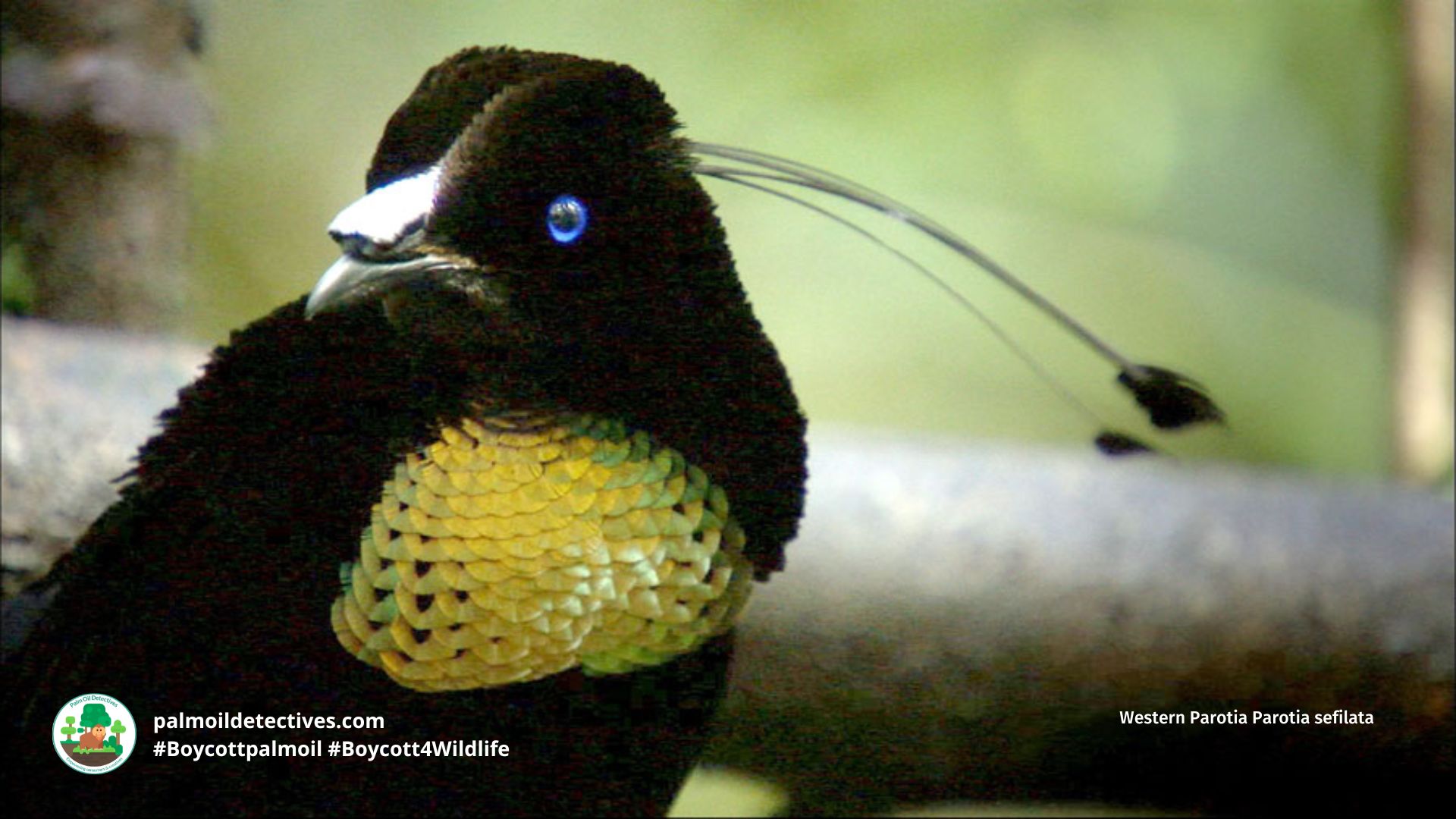
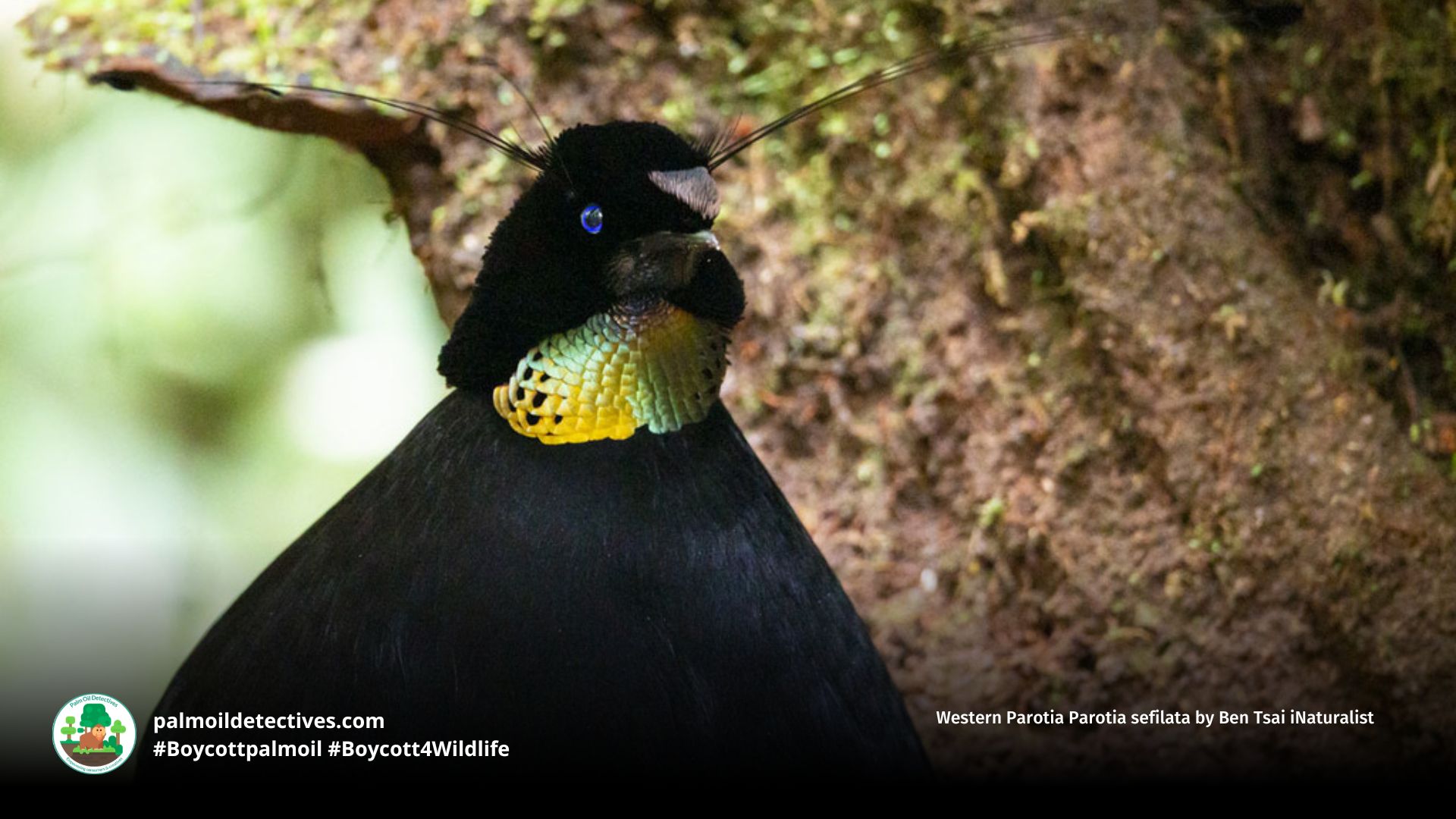
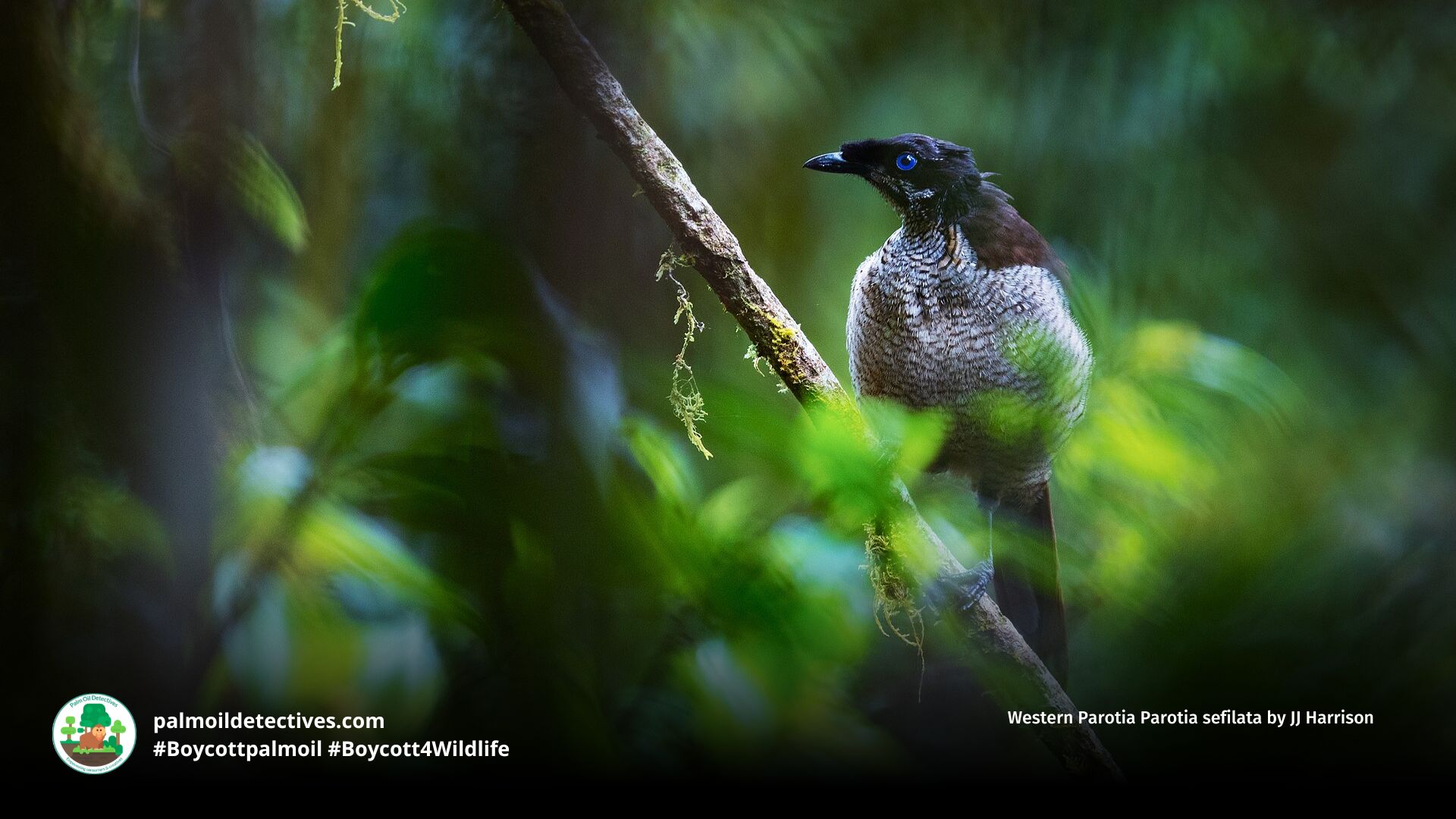
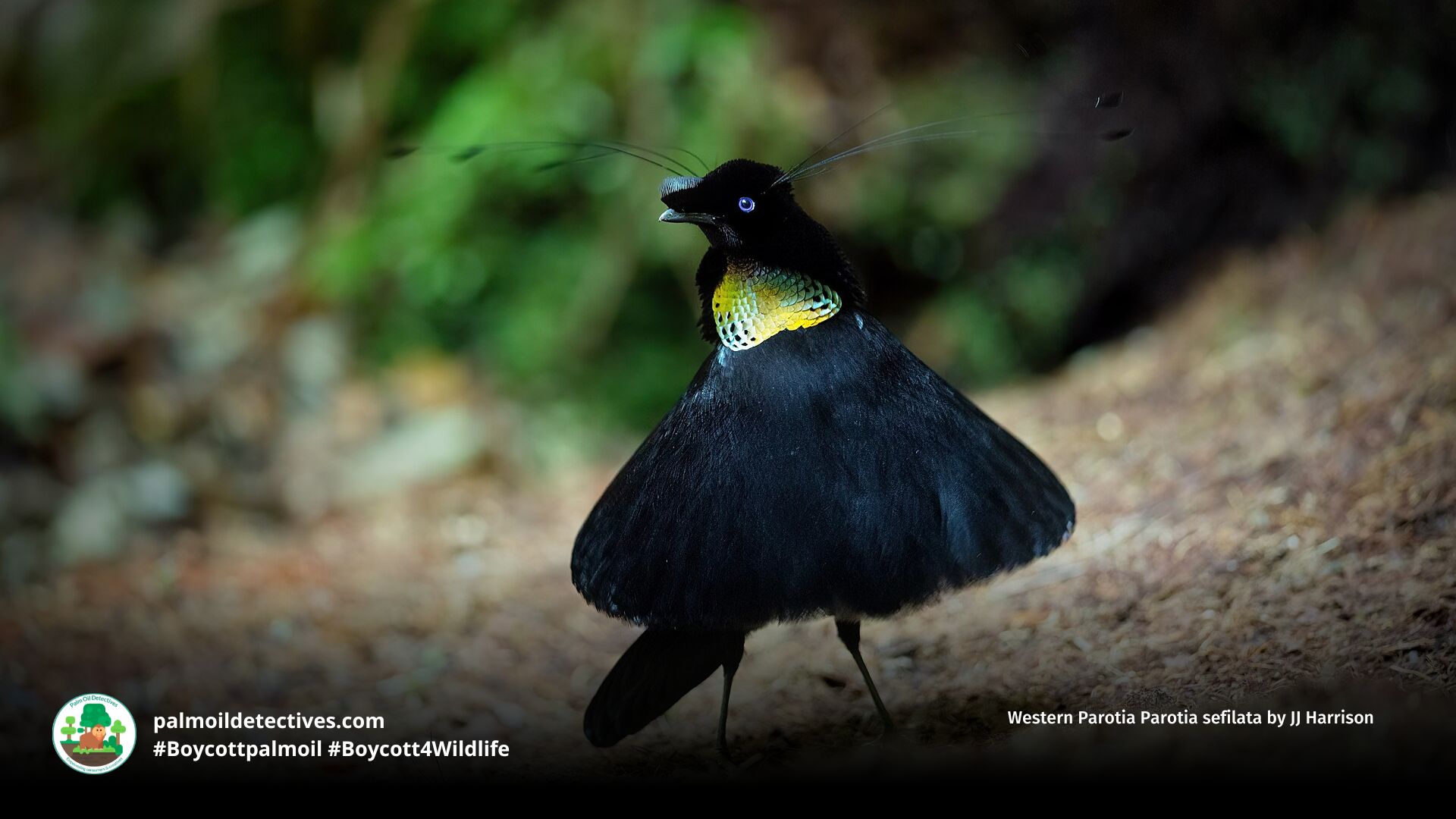
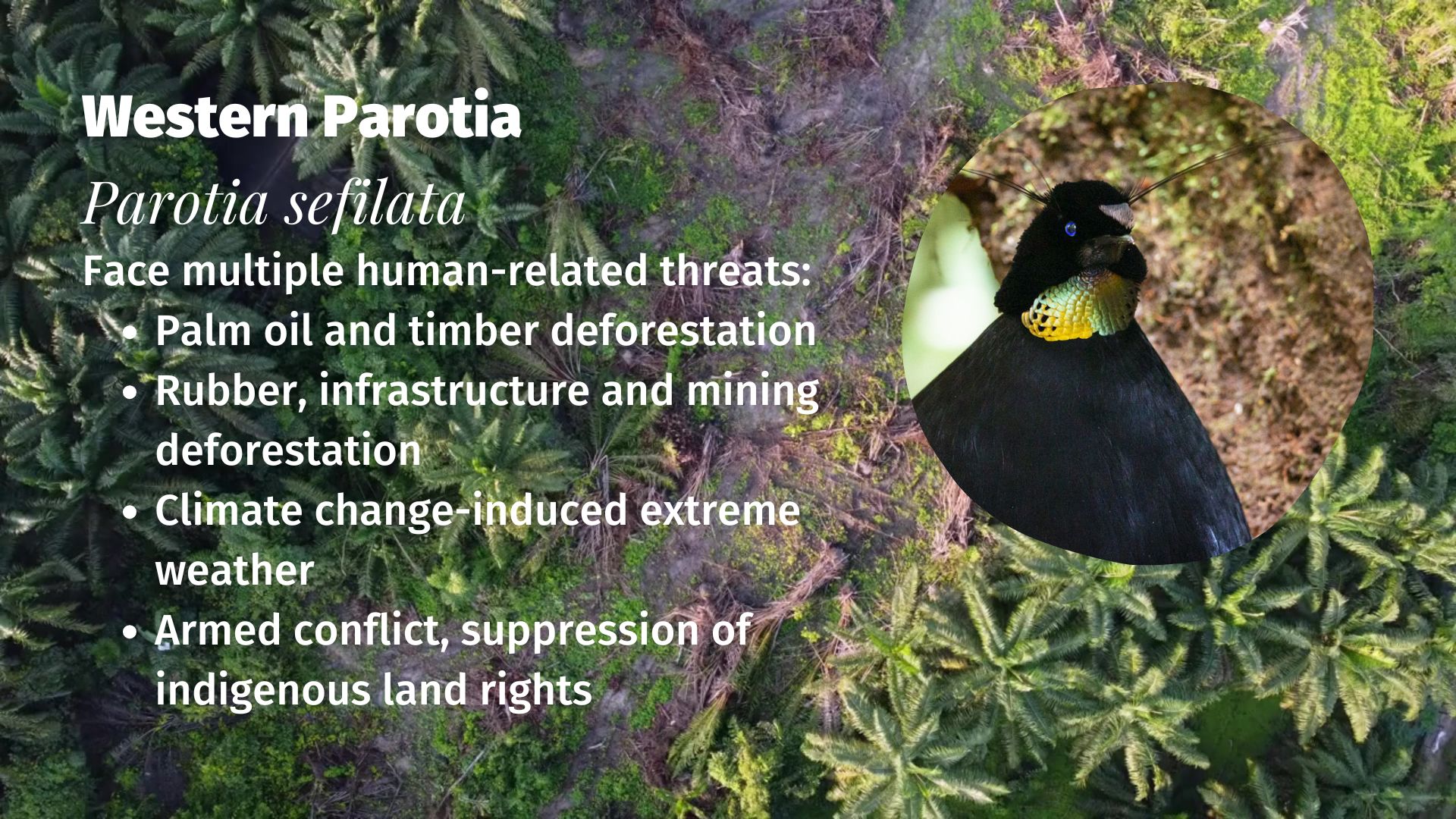
Male Western Parotias are instantly recognisable by their jet-black plumage, metallic green wattles that gleam like scaled armour, and three distinctive wire-like head plumes that curl outward from each side of the crown—features that inspired the species name, derived from the Latin sex filum, meaning ‘six threads.’ A dazzling inverted silver triangle on their head flashes during display, perfectly offset by their elegant black flank plumes which form a flared skirt in courtship. Females are more subdued, clad in streaky brown feathers, allowing them to blend into the forest understorey.
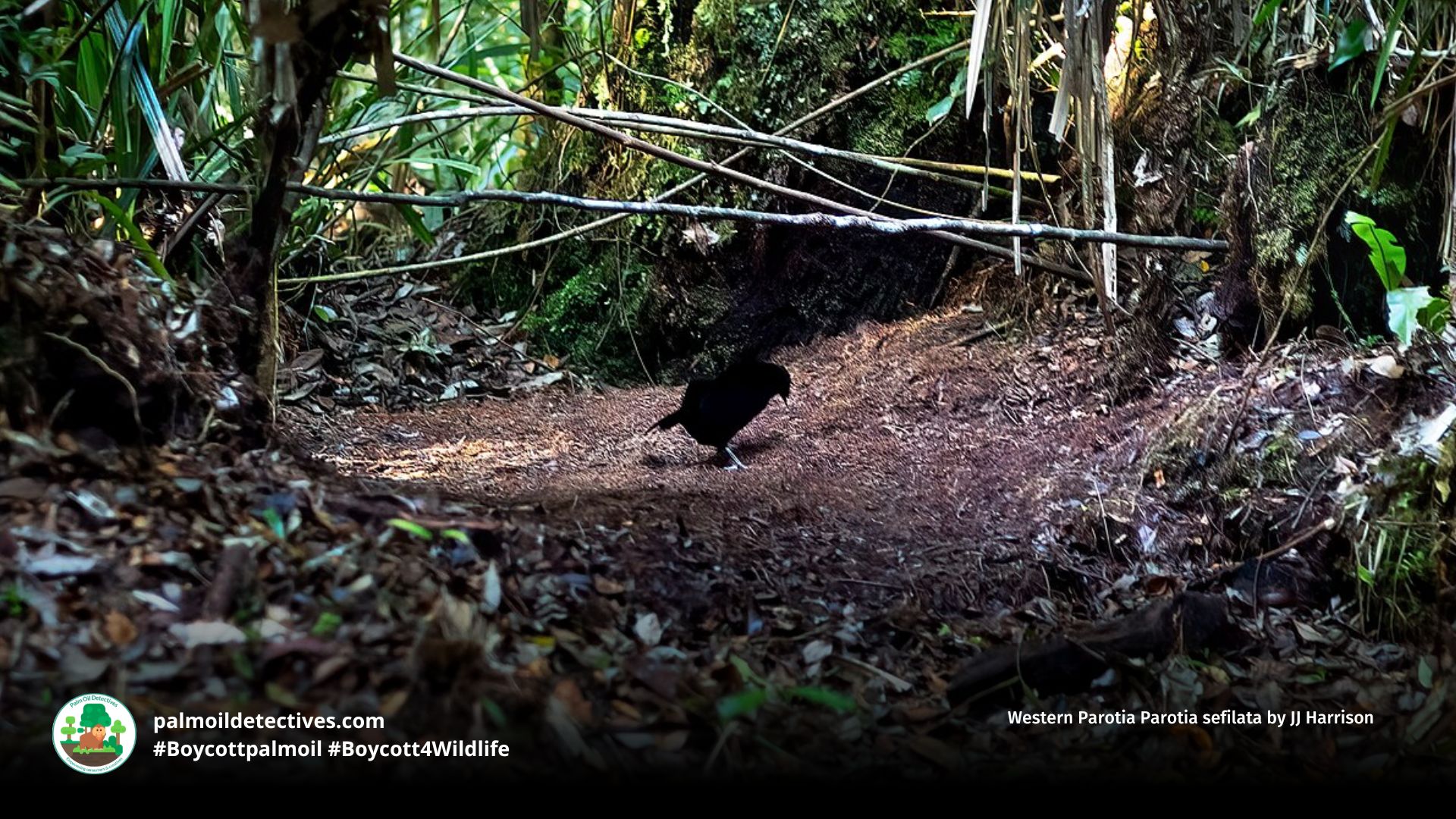
This species of bird-of-paradise is polygynous. Males gather in exploded leks—loosely spaced display grounds—where they clear leaf-littered forest floors to create courts. On these makeshift stages, they perform intricate displays to attract females, combining pirouettes, head bobs, feather shimmers, and rapid shakes. A 2024 behavioural study also observed rare alternative mating tactics, including homosexual mounting and sneak copulation attempts by female-plumaged birds, suggesting untapped behavioural complexity (MacGillavry et al., 2024).
Threats
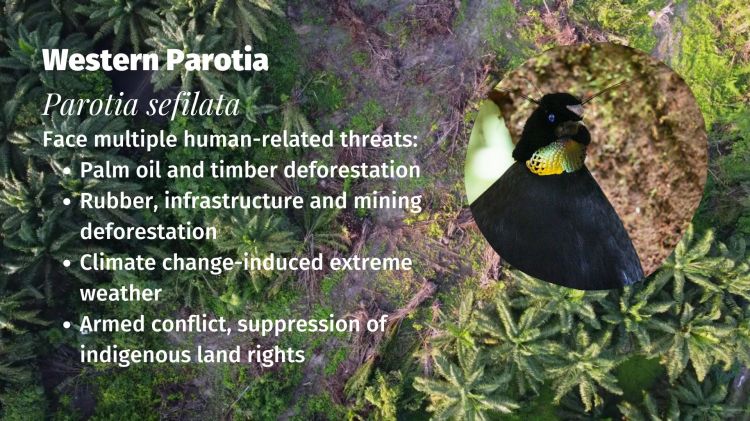
The Western Parotia is officially listed as Least Concern, but this 2016 classification dangerously underrepresents their current reality. Since that assessment, massive deforestation for timber and palm oil has devastated much of their limited range, particularly across the Vogelkop Peninsula and Wandammen Mountains. The threats are mounting and accelerating due to the following drivers:
Palm oil deforestation
Large-scale clearing of primary rainforest to make way for industrial palm oil plantations is now rampant across the Bird’s Head (Vogelkop) Peninsula. Even remote montane forests where Western Parotias lek and nest are not safe, as new roads are cut to expand plantation frontiers.
Timber deforestation
Commercial timber extraction is removing centuries-old forest giants that the Western Parotia depends on for fruit, foraging and nesting. Logging roads also fragment habitat, increase fire risk, and provide access to previously undisturbed ecosystems.
Deforestation for mining, rubber and infrastructure projects
Government-backed agribusiness schemes are encouraging monocultures such as oil palm and rubber, which completely erase the forest understory and tree canopy vital for the Parotia’s food and shelter.
Mining concessions in West Papua—often enforced with military support—are rapidly opening up forests in the Wandammen Mountains, overlapping with the Parotia’s habitat. Road construction to access mines and plantations is fragmenting the landscape irreparably.
Climate change-induced extreme weather
The species is restricted to highland forest. As temperatures rise and human pressures encroach from below, their montane habitat may shrink to mountaintop fragments, leaving no room for retreat.
Colonial exploitation, military conflict and suppression of Indigenous land rights:
Indigenous Melanesians have stewarded Papuan forests for millennia. Today, state and corporate projects continue to override Indigenous consent, leading to ecological destruction and social injustice hand-in-hand.
These combined threats pose a serious and immediate danger to the survival of the Western Parotia. Without urgent action to halt deforestation and recognise Indigenous land sovereignty, the species could slide rapidly toward extinction unnoticed.
Geographic Range
Western Parotias are found exclusively in the montane and submontane rainforests of the Vogelkop Peninsula and the Wandammen Mountains in West Papua. They are forest specialists, requiring old-growth rainforest to support their complex courtship behaviour and nesting needs. Since their last assessment in 2016, widespread forest loss has occurred across these regions, particularly from illegal logging and palm oil expansion, putting their long-term survival in serious jeopardy.
Diet
Western Parotias primarily feed on fruits—especially figs—and supplement their diet with arthropods. Their foraging occurs at various forest levels, but they prefer mid-canopy and understorey, where fruiting trees and insect-rich foliage are abundant.
Mating and Reproduction
Courtship and nesting behaviour are marked by sexual division of labour. Only the female builds the nest and raises the chick. Nests are often camouflaged in dense foliage. Although the precise breeding season remains unclear, it is believed to vary by elevation and fruiting cycles. Male courtship is heavily influenced by evolutionary modularity in display traits, which have diverged over time, giving rise to the extravagant variety seen across the Parotia genus (Scholes, 2008).
FAQs
How many Western Parotias are left in the wild?
There are no exact population estimates for the Western Parotia. The IUCN has classified them as Least Concern, but this was based on assessments from 2016. Since then, vast tracts of their habitat have been lost. Without a recent survey, the current population trend is unknown, but it is likely decreasing due to ongoing deforestation (BirdLife International, 2016).
How long do Western Parotias live?
In the wild, birds-of-paradise often live between 5 to 10 years, though lifespan data for this species is limited. In captivity, related species have reached over 15 years, but no long-term studies exist for Parotia sefilata specifically.
What challenges do conservationists face protecting this species?
Conservation of the Western Parotia is complicated by a lack of recent data and the remoteness of their habitat. The Vogelkop and Wandammen regions are undergoing rapid transformation due to illegal logging and palm oil expansion, often facilitated by state-backed infrastructure projects. These forests also fall within contested indigenous lands, and conservation solutions must be rooted in indigenous sovereignty to be effective.
Is the Western Parotia affected by the exotic pet trade?
Unlike parrots and smaller songbirds, Western Parotias are not commonly targeted for the exotic pet trade, likely due to their remote habitat and specialised diet. However, increased accessibility due to road construction could change this. It is essential to remain vigilant and oppose any wildlife trafficking.
Take Action!
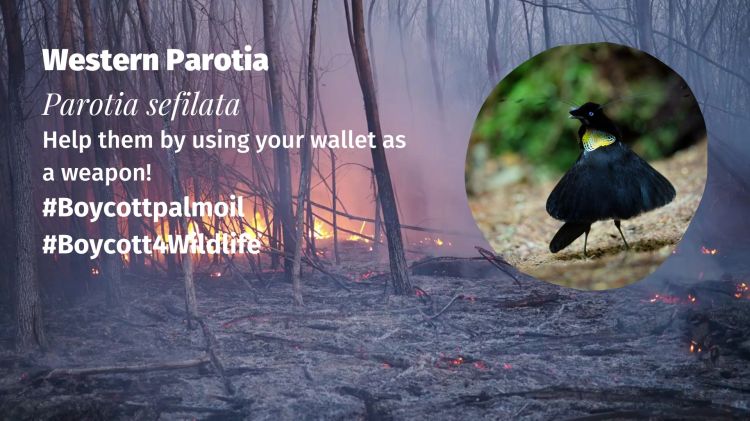
Use your wallet as a weapon to stop extinction by boycotting palm oil. Always choose products that are 100% palm oil-free to avoid contributing to the deforestation that is pushing the Western Parotia closer to extinction. Support indigenous-led conservation efforts in West Papua and call for greater transparency around the spread of monoculture plantations. Protect the mesmerising courtship rituals of these remarkable birds by fighting to keep their forests standing. #BoycottPalmOil #Boycott4Wildlife #Vegan #BoycottMeat
Support the Western Parotia by going vegan and boycotting palm oil in the supermarket, it’s the #Boycott4Wildlife
Support the conservation of this species
This animal has no protections in place. Read about other forgotten species here. Create art to support this forgotten animal or raise awareness about them by sharing this post and using the #Boycottpalmoil #Boycott4Wildlife hashtags on social media. Also you can boycott palm oil in the supermarket.
Further Information
BirdLife International. (2016). Parotia sefilata. The IUCN Red List of Threatened Species 2016: e.T22706181A93913206. Retrieved 6 April 2025, from https://www.iucnredlist.org/species/22706181/93913206
MacGillavry, T., Janiczek, C., & Fusani, L. (2024). Video evidence of mountings by female-plumaged birds of paradise (Aves: Paradisaeidae) in the wild: Is there evidence of alternative mating tactics? Ethology. https://doi.org/10.1111/eth.13451
Scholes, E. (2008). Evolution of the courtship phenotype in the bird of paradise genus Parotia (Aves: Paradisaeidae): homology, phylogeny, and modularity. Biological Journal of the Linnean Society, 94(3), 491–504. https://doi.org/10.1111/j.1095-8312.2008.01012.x
Wikipedia contributors. (n.d.). Western parotia. Wikipedia. Retrieved 6 April 2025, from https://en.wikipedia.org/wiki/Western_parotia
How can I help the #Boycott4Wildlife?
Take Action in Five Ways
1. Join the #Boycott4Wildlife on social media and subscribe to stay in the loop: Share posts from this website to your own network on Twitter, Mastadon, Instagram, Facebook and Youtube using the hashtags #Boycottpalmoil #Boycott4Wildlife.
Enter your email address
Sign Up
Join 3,176 other subscribers2. Contribute stories: Academics, conservationists, scientists, indigenous rights advocates and animal rights advocates working to expose the corruption of the palm oil industry or to save animals can contribute stories to the website.
Wildlife Artist Juanchi Pérez
Mel Lumby: Dedicated Devotee to Borneo’s Living Beings
Anthropologist and Author Dr Sophie Chao
Health Physician Dr Evan Allen
The World’s Most Loved Cup: A Social, Ethical & Environmental History of Coffee by Aviary Doert
How do we stop the world’s ecosystems from going into a death spiral? A #SteadyState Economy
3. Supermarket sleuthing: Next time you’re in the supermarket, take photos of products containing palm oil. Share these to social media along with the hashtags to call out the greenwashing and ecocide of the brands who use palm oil. You can also take photos of palm oil free products and congratulate brands when they go palm oil free.
https://twitter.com/CuriousApe4/status/1526136783557529600?s=20
https://twitter.com/PhillDixon1/status/1749010345555788144?s=20
https://twitter.com/mugabe139/status/1678027567977078784?s=20
4. Take to the streets: Get in touch with Palm Oil Detectives to find out more.
5. Donate: Make a one-off or monthly donation to Palm Oil Detectives as a way of saying thank you and to help pay for ongoing running costs of the website and social media campaigns. Donate here
Pledge your supportLearn about other animals endangered by palm oil and other agriculture
GlobalSouth America S.E. AsiaIndiaAfricaWest Papua & PNGCapped Langur Trachypithecus pileatus
Mountain Tapir Tapirus pinchaque
Saola Pseudoryx nghetinhensis
Tucuxi Sotalia fluviatilis
Frill-Necked Lizard Chlamydosaurus kingii
Grey Crowned Crane Balearica regulorum
Learn about “sustainable” palm oil greenwashing
Read more about RSPO greenwashing
Lying Fake labelsIndigenous Land-grabbingHuman rights abusesDeforestation Human health hazardsA 2019 World Health Organisation (WHO) report into the palm oil industry and RSPO finds extensive greenwashing of palm oil deforestation and the murder of endangered animals (i.e. biodiversity loss)
Read more#animals #Bird #birds #Birdsong #Boycott4wildlife #BoycottMeat #BoycottPalmOil #deforestation #EndSongbirdTrade #extinction #ForgottenAnimals #FreeWestPapua #gold #goldMining #hunting #indigenous #military #PalmOil #palmOilDeforestation #palmoil #Parotia #poaching #songbird #songbirds #vegan #vulnerable #VulnerableSpecies #WestPapua #WesternParotiaParotiaSefilata #WestPapua
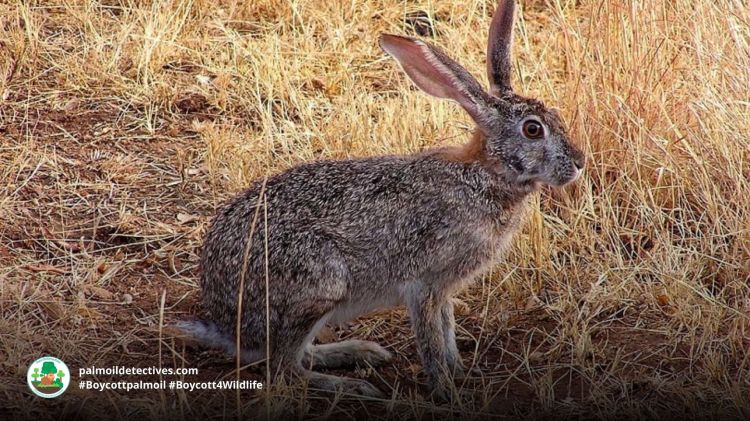
Assam Rabbit (Hispid Hare) Caprolagus hispidus
Assam Rabbit (Hispid Hare) Caprolagus hispidus
Red List Status: Endangered
Locations: Bhutan; India (West Bengal, Uttar Pradesh, Assam); Nepal. Presence Uncertain: Bangladesh; India (Madhya Pradesh, Bihar)
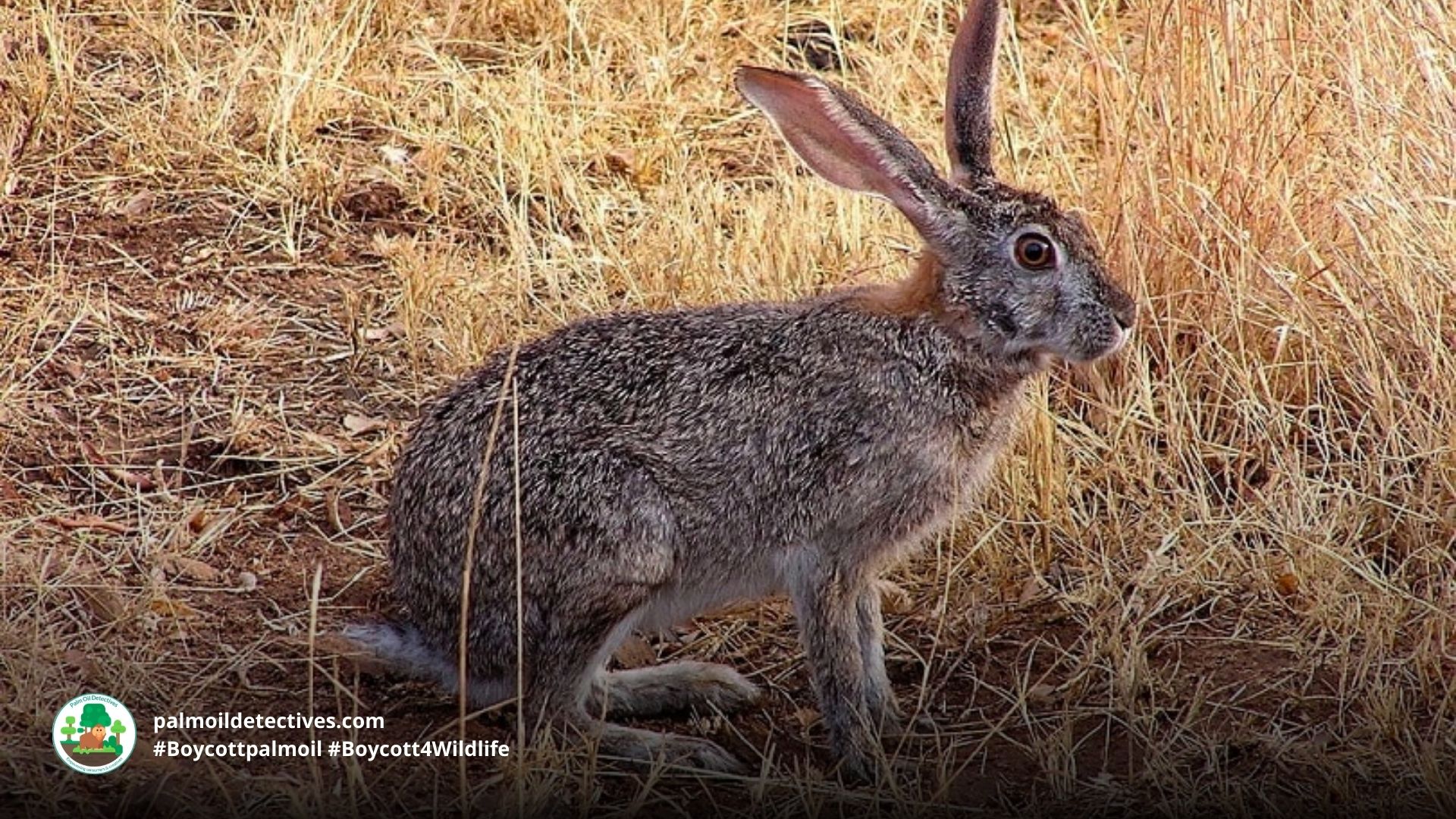
Shy, solitary and wary Hispid hares are most active during dawn and dusk. They often take shelter from predation in tall grasses and the burrows of other animals. They are endangered by multiple human-related threats including palm oil deforestation in the #Assam region of #India and they also hold to survival in #Bhutan and #Nepal. Help them to survive and #BoycottPalmOil #Boycott4Wildlife
#Assam Rabbits 🐰🐇 AKA Hispid Hares are regal and rare, they’re endangered by many threats incl. #palmoil #deforestation in #Assam, #India 🇮🇳🪷 Help them and #Boycottpalmoil 🌴🚜🔥🧐🙊⛔️ #Boycott4Wildlife in the supermarket @palmoildetect https://palmoildetectives.com/2023/05/21/assam-rabbit-hispid-hare-caprolagus-hispidus/
Share to BlueSkyShare to TwitterHispid #Hares 🐇🐰🩶 hang on to survival, facing multiple human-related threats including #palmoil expansion in #Assam #India 🇮🇳 Fight for their survival and #Boycottpalmoil 🌴🪔🤮☠️❌ #Boycott4Wildlife @palmoildetect https://palmoildetectives.com/2023/05/21/assam-rabbit-hispid-hare-caprolagus-hispidus/
Share to BlueSkyShare to TwitterAppearance & Behaviour
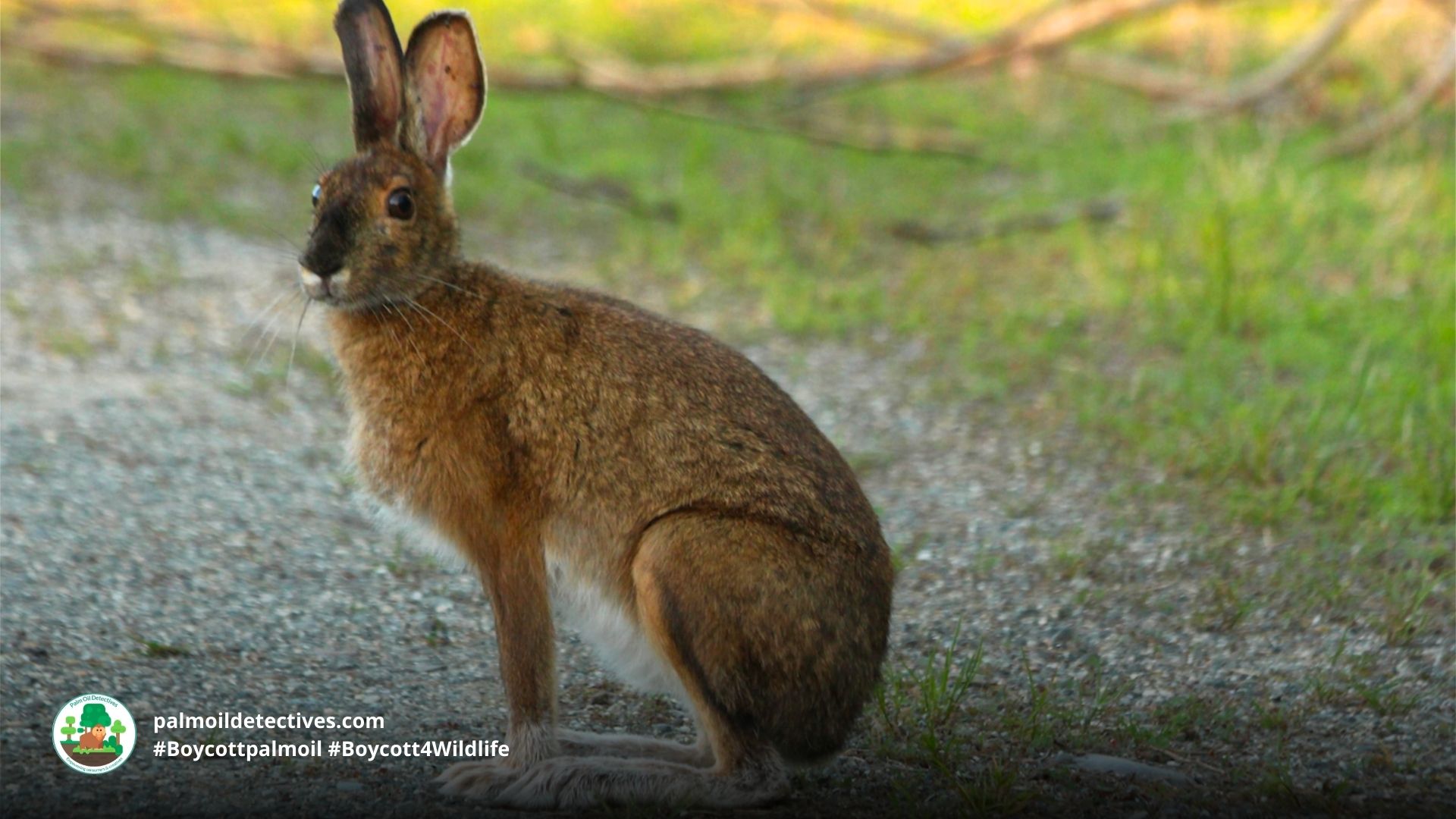
A medium-sized hare, they are typically 47 cm in height, with males being slightly smaller than females. Females weigh an average of 2.5kg, with pregnant females weighing an average of 3.2kg. They possess a bristly haired coat with a dark brown and black back and a creamy white abdomen. This enables them ample camouflage in a grassland environment.

Threats
The primary threat to Hispid Hare populations is habitat loss, caused by encroaching agriculture, logging, summer flooding, and human development (Bell et al. 1990).
IUCN RED LIST
The Indian Hare faces multiple anthropogenic threats including:
- Palm oil expansion: A significant part of their range is earmarked for destruction for palm oil.
- Climate change: extreme weather, fire and flooding as a result of climate change
- Livestock grazing and other agricultural expansion.
- Competition with other animals for food in a shrinking range.
- Human persecution.
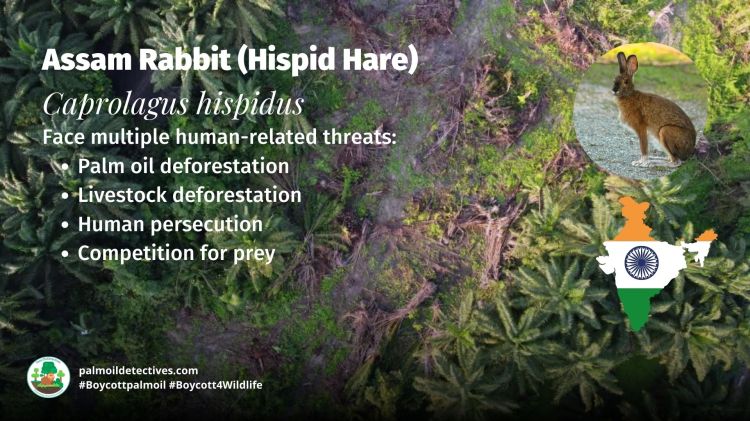 Assam Rabbit (Hispid Hare) hispidus – threats
Habitat
Hispid hares are found infrequently in Bangladesh, India, Nepal, and possibly Bhutan. They live in tall grasslands and during the dry season. These areas are vulnerable to extreme weather events like fires and floods which are exacerbated by climate change. When these areas are under threat, the Hispid hare retreats to marshes and areas close to riverbanks.
Diet
Hispid hares are herbivores feeding mainly on roots of grasses, shoots, bark, and occasionally crops.
Mating and breeding
More research is needed to understand the mating and reproductive behaviour of these hares. From limited research, it is understood that they have a small litter size and that they are crepuscular, preferring both dawn and twlight for hunting.
Support Assam Rabbit by going vegan and boycotting palm oil in the supermarket, it’s the #Boycott4Wildlife
You can support this beautiful animal
Support the conservation of this species
This animal has no protections in place. Read about other forgotten species here. Create art to support this forgotten animal or raise awareness about them by sharing this post and using the #Boycottpalmoil #Boycott4Wildlife hashtags on social media. Also you can boycott palm oil in the supermarket.
Further Information
Aryal, A. & Yadav, B. 2019. Caprolagus hispidus. The IUCN Red List of Threatened Species 2019: e.T3833A45176688. https://dx.doi.org/10.2305/IUCN.UK.2019-1.RLTS.T3833A45176688.en. Accessed on 11 November 2022.
Hispid Hare or Indian Hare on Animalia.bio
Hispid Hare/ Indian Hare/ Assam Rabbit on Wikipedia
Assam Rabbit (Hindi translation)
संकटग्रस्त
अस्तित्व में (स्थायी निवासी)
भूटान; भारत (पश्चिम बंगाल, उत्तर प्रदेश, असम); नेपाल
उपस्थिति अनिश्चित
बांग्लादेश; भारत (मध्य प्रदेश, बिहार)
दिखावट और व्यवहार
एक मध्यम आकार का खरगोश, जो सामान्यतः 47 सेमी ऊँचा होता है, जिसमें नर मादा से थोड़े छोटे होते हैं। मादाओं का वजन औसतन 2.5 किग्रा होता है, जबकि गर्भवती मादाओं का वजन औसतन 3.2 किग्रा होता है। इनके पास एक कड़े बालों वाला कोट होता है जिसमें पीठ गहरे भूरे और काले रंग की होती है और पेट क्रीमी सफेद रंग का होता है। यह उन्हें घास के मैदान के वातावरण में पर्याप्त छद्मावरण प्रदान करता है।
असम खरगोश (हिस्पिड हेयर) Caprolagus hispidus #Boycott4Wildlife
खतरे
हिस्पिड हेयर की आबादी के लिए प्राथमिक खतरा आवास की हानि है, जो कृषि के फैलाव, लकड़ी काटने, ग्रीष्मकालीन बाढ़ और मानव विकास (Bell et al. 1990) के कारण होती है।
IUCN रेड लिस्ट
भारतीय खरगोश कई मानवजनित खतरों का सामना कर रहे हैं, जिनमें शामिल हैं:
- पाम तेल का विस्तार: उनके आवास का एक बड़ा हिस्सा पाम तेल के लिए नष्ट किया जा रहा है।
- जलवायु परिवर्तन: जलवायु परिवर्तन के परिणामस्वरूप चरम मौसम, आग और बाढ़।
- पशुधन चराई और अन्य कृषि विस्तार।
- घटते आवास में भोजन के लिए अन्य जानवरों के साथ प्रतिस्पर्धा।
- मानव उत्पीड़न।
आवास
हिस्पिड हेयर बांग्लादेश, भारत, नेपाल और संभवतः भूटान में कम ही पाए जाते हैं। ये लंबे घास के मैदानों में रहते हैं और शुष्क मौसम के दौरान। ये क्षेत्र आग और बाढ़ जैसी चरम मौसम की घटनाओं के लिए असुरक्षित हैं, जो जलवायु परिवर्तन से बढ़ रही हैं। जब ये क्षेत्र खतरे में होते हैं, तो हिस्पिड हेयर दलदल और नदी किनारे के क्षेत्रों में शरण लेते हैं।
आहार
हिस्पिड हेयर शाकाहारी होते हैं और मुख्यतः घास की जड़ों, अंकुर, छाल और कभी-कभी फसलों पर निर्भर रहते हैं।
प्रजनन और संतति
इन खरगोशों के प्रजनन और प्रजनन व्यवहार को समझने के लिए और अधिक शोध की आवश्यकता है। सीमित शोध से यह समझा गया है कि उनके पास छोटे कूड़े का आकार होता है और वे क्रेपसकुलर होते हैं, जो शिकार के लिए सुबह और शाम को प्राथमिकता देते हैं।
असम खरगोश का समर्थन करें
शाकाहारी बनकर और सुपरमार्केट में पाम तेल का बहिष्कार करके असम खरगोश का समर्थन करें, यह है #Boycott4Wildlife। आप इस खूबसूरत जानवर का समर्थन कर सकते हैं। इस प्रजाति के संरक्षण का समर्थन करें। इस जानवर की कोई सुरक्षा व्यवस्था नहीं है। अन्य भूले हुए प्रजातियों के बारे में यहाँ पढ़ें। इस भूले हुए जानवर का समर्थन करने के लिए कला बनाएं या इस पोस्ट को साझा करके और सोशल मीडिया पर #Boycottpalmoil #Boycott4Wildlife हैशटैग का उपयोग करके उनके बारे में जागरूकता बढ़ाएं। आप सुपरमार्केट में पाम तेल का बहिष्कार भी कर सकते हैं।
आगे की जानकारी
- Aryal, A. & Yadav, B. 2019. Caprolagus hispidus. The IUCN Red List of Threatened Species 2019: e.T3833A45176688. https://dx.doi.org/10.2305/IUCN.UK.2019-1.RLTS.T3833A45176688.en. Accessed on 11 November 2022.
- Animalia.bio पर हिस्पिड हेयर या भारतीय खरगोश
- विकिपीडिया पर हिस्पिड हेयर/भारतीय खरगोश/असम खरगोश
Assam Rabbit (Hispid Hare) hispidus – threatsHow can I help the #Boycott4Wildlife?
Take Action in Five Ways
1. Join the #Boycott4Wildlife on social media and subscribe to stay in the loop: Share posts from this website to your own network on Twitter, Mastadon, Instagram, Facebook and Youtube using the hashtags #Boycottpalmoil #Boycott4Wildlife.
Enter your email address
Sign Up
Join 3,179 other subscribers2. Contribute stories: Academics, conservationists, scientists, indigenous rights advocates and animal rights advocates working to expose the corruption of the palm oil industry or to save animals can contribute stories to the website.
Wildlife Artist Juanchi Pérez
Read moreMel Lumby: Dedicated Devotee to Borneo’s Living Beings
Read moreAnthropologist and Author Dr Sophie Chao
Read moreHealth Physician Dr Evan Allen
Read moreThe World’s Most Loved Cup: A Social, Ethical & Environmental History of Coffee by Aviary Doert
Read moreHow do we stop the world’s ecosystems from going into a death spiral? A #SteadyState Economy
Read more3. Supermarket sleuthing: Next time you’re in the supermarket, take photos of products containing palm oil. Share these to social media along with the hashtags to call out the greenwashing and ecocide of the brands who use palm oil. You can also take photos of palm oil free products and congratulate brands when they go palm oil free.
https://twitter.com/CuriousApe4/status/1526136783557529600?s=20
https://twitter.com/PhillDixon1/status/1749010345555788144?s=20
https://twitter.com/mugabe139/status/1678027567977078784?s=20
4. Take to the streets: Get in touch with Palm Oil Detectives to find out more.
5. Donate: Make a one-off or monthly donation to Palm Oil Detectives as a way of saying thank you and to help pay for ongoing running costs of the website and social media campaigns. Donate here
Pledge your supportForgotten Species on Palm Oil Detectives
These species have no known conservation actions in place and are silently disappearing before we can save them. Do something about it by boycotting supermarket brands linked to tropical deforestation. Join the #Boycott4Wildlife
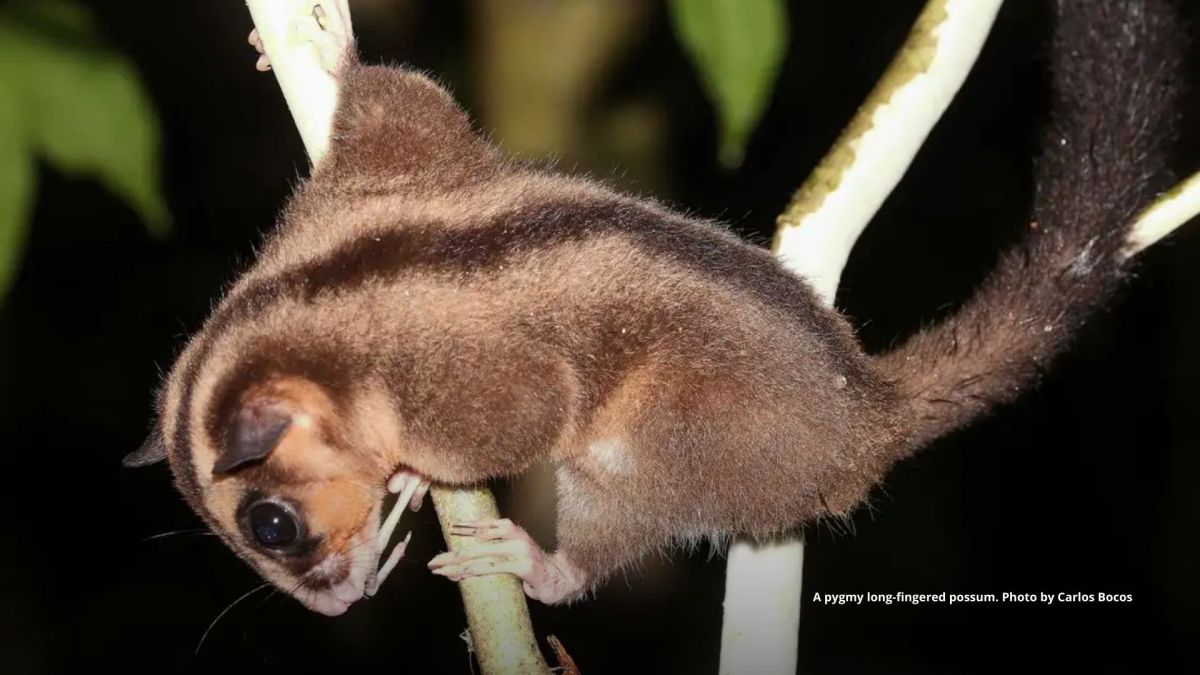
Marsupials thought extinct for 6,000 years found in West Papua
Read more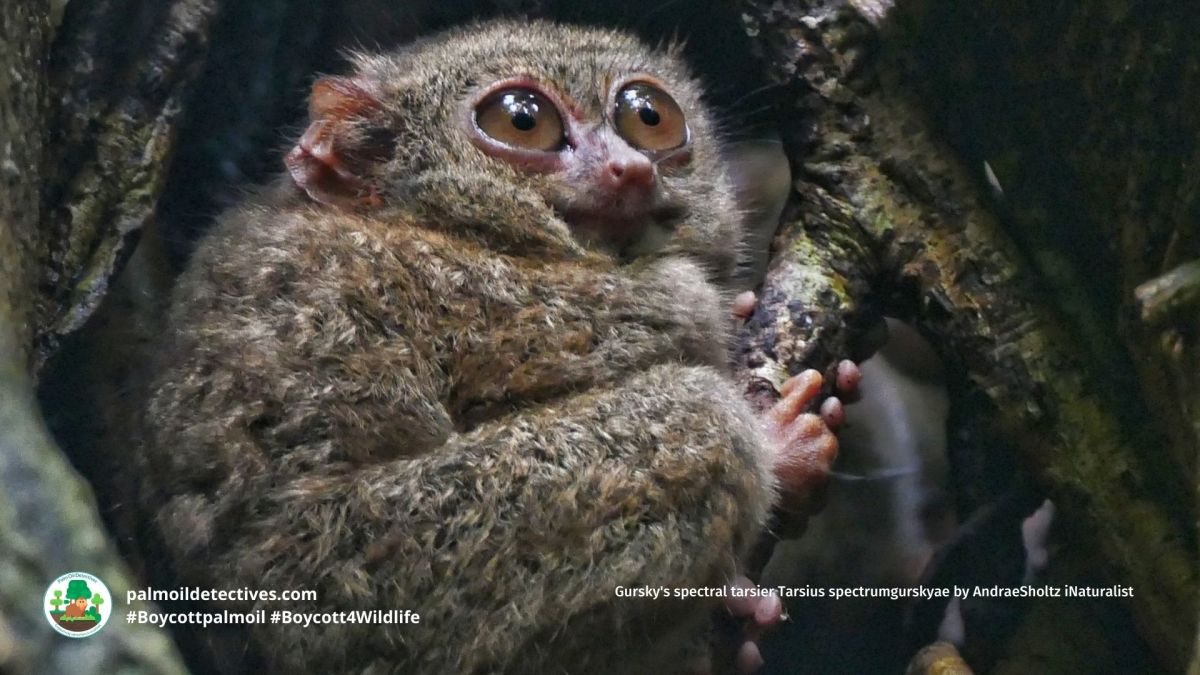
Gursky’s Spectral Tarsier Tarsius spectrumgurskyae
Read more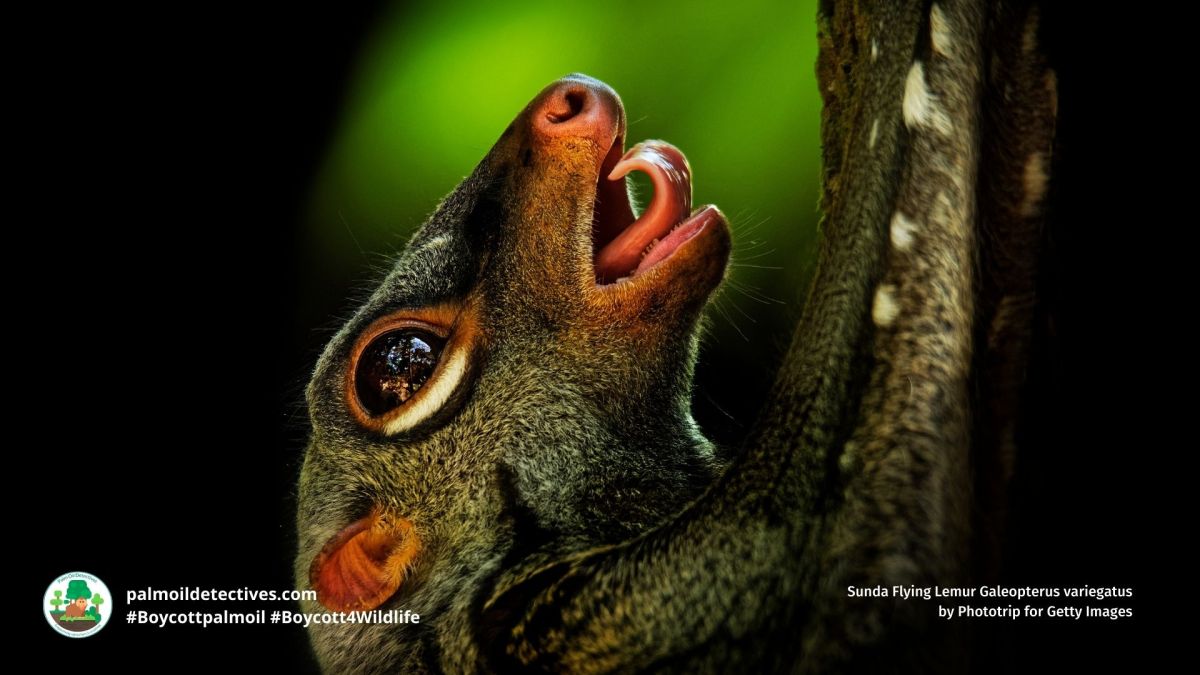
Sunda Flying Lemur Galeopterus variegatus
Read more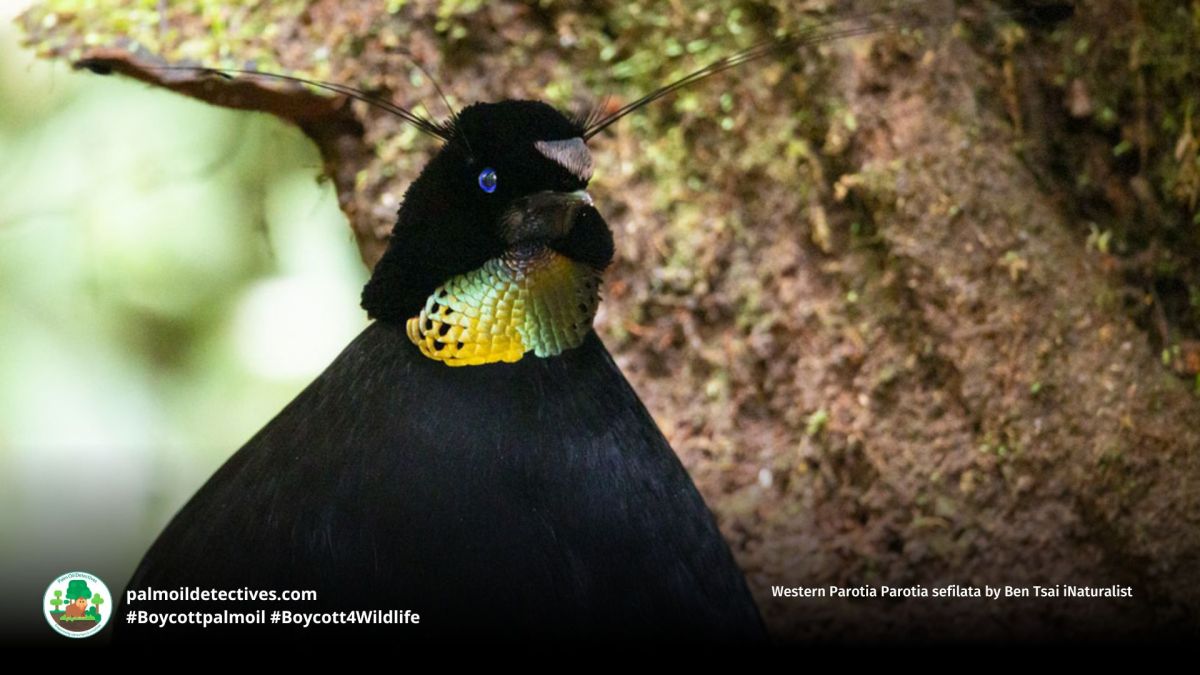
Western Parotia Parotia sefilata
Read more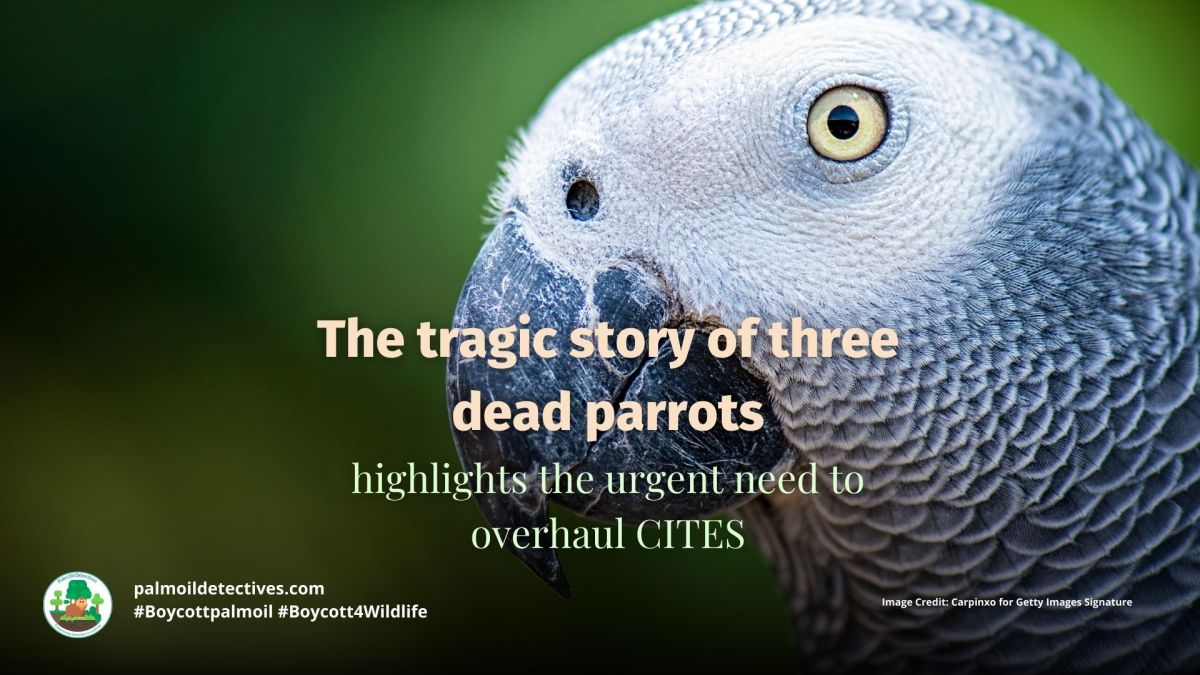
Parrot Deaths Highlight Urgent Need to Reform CITES
Read moreCapped Langur Trachypithecus pileatus
Read more Load more postsSomething went wrong. Please refresh the page and/or try again.
#animals #Assam #AssamRabbitHispidHareCaprolagusHispidus #Bangladesh #Bhutan #Boycott4wildlife #BoycottPalmOil #deforestation #EndangeredSpecies #ForgottenAnimals #Hares #herbivore #herbivores #India #Mammal #Nepal #PalmOil #palmOilDeforestation #palmoil
Assam Rabbit (Hispid Hare) hispidus - threats
Assam Rabbit (Hispid Hare) Caprolagus hispidus
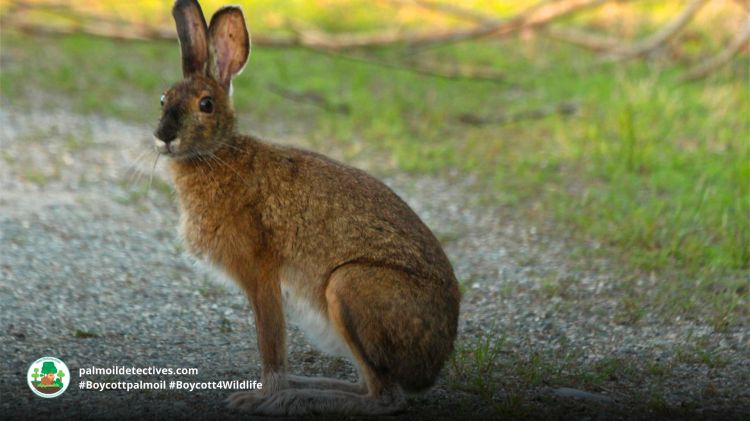
Assam Rabbit (Hispid Hare) Caprolagus hispidus
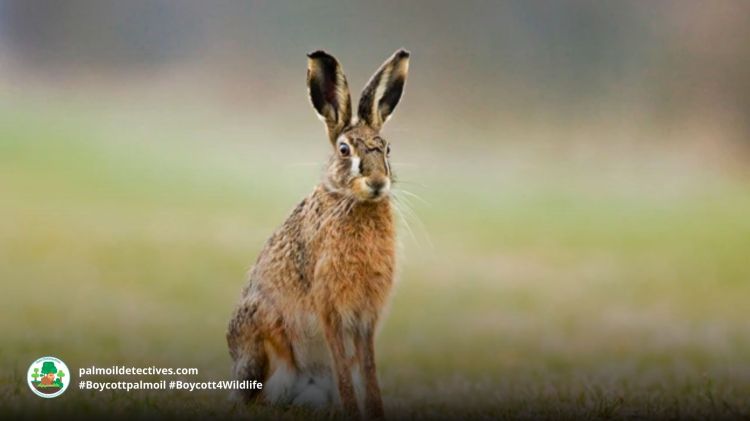
Assam Rabbit (Hispid Hare) Caprolagus hispidus #Boycott4Wildlife