Certification Schemes Fail to Stop Palm Oil Deforestation
In 2022, 71 environmental and #humanrights groups from around the world wrote to the EU Commission to warn that certification schemes and ecolabels were not sufficient to prevent human rights abuses and deforestation from entering the European Union. Although fast forward to 2025 and lobbyists have again watered down the #EUDR and #CSDDD, what the future holds is anybody’s guess!
In the UK, industry lobbyists including Ferrero and serial greenwashing outfit Orangutan Land Trust watered down the UK’s commitment to not importing deforestation into the UK. The new trade deal with #Malaysia paves the way for mass importation of palm oil ecocide.
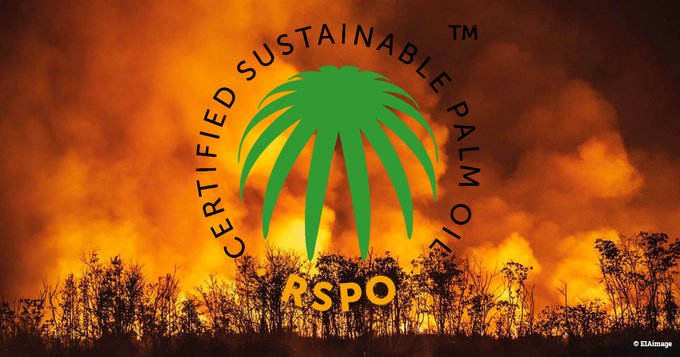
#RSPO and #FSC have been shown for decades to be ineffective and corrupt. They have failed in preventing #corruption, human rights abuses, illegal #landgrabbing, #violence, #deforestation, #ecocide and species #extinction.
So here are 10 reasons why the world should not rely on weak and ineffective certification schemes like MSC, RSPO and FSC to enforce their own zero deforestation mandate. Originally published by GRAIN
#Ecolabels eg. #RSPO #FSC do not prevent #deforestation. They have failed for decades and instead are only weak #greenwashing tools! Help rainforests, rainforest animals and rainforest peoples. #Boycottpalmoil 🌴🩸🚜🤮🚫 #Boycott4Wildlife @palmoildetect https://palmoildetectives.com/2022/06/18/10-reasons-why-ecolabels-commodity-certification-are-not-a-solution-to-stop-the-eu-importing-tropical-deforestation/
Share to BlueSkyShare to Twitter@EU_Commission should not trust #ecolabels: e.g. @RSPOtweets @FSC_IC to prevent #deforestation. Decades of failure to stop #humanrights abuses #deforestation shows their deep systemic weaknesses #Boycottpalmoil 🌴☠️🧐🚫 #Boycott4Wildlife @palmoildetect https://palmoildetectives.com/2022/06/18/10-reasons-why-ecolabels-commodity-certification-are-not-a-solution-to-stop-the-eu-importing-tropical-deforestation/
Share to BlueSkyShare to TwitterJump to section
- 1. Certification is not designed to achieve the main objective of the regulation – preventing deforestation and other harms
- 2. Certification does not provide the information needed to comply with the EU regulation
- 3. Certification does not provide guarantees for the legality of the product
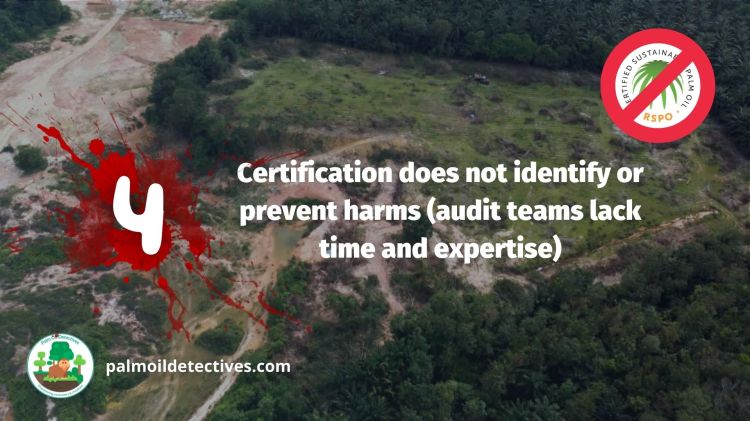
- 4. Certification does not identify or prevent harms. Audit teams lack time and expertise
- 5. Certification bodies and their auditors are not independent from the company they certify
- 6. Prevention of environmental and social harm cannot be outsourced.
- 7. Certification cannot guarantee Free, Prior and Informed Consent or prevent land grabbing of indigenous land
- 8. Certification provides opportunities for greenwashing and increases vested interests in and corporate power over natural resources.
- 9. Certification promotes the expansion of industrial agriculture and thereby prevents the transition needed to halt deforestation
- 10. Certification directs resources towards a million-dollar certification industry
- Signatories: 71 environmental and human rights NGOs

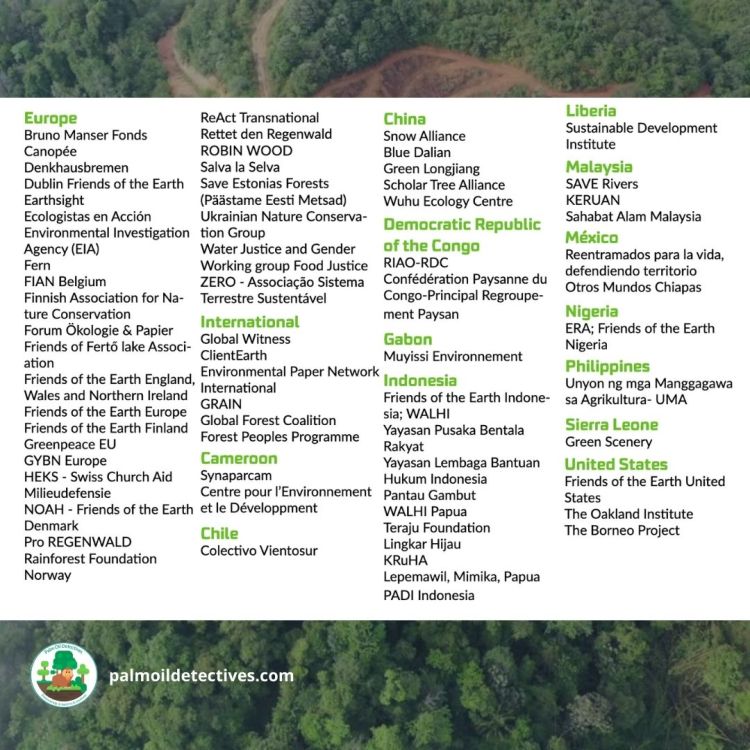 Signatories: 71 environmental and human rights NGOs
Considering the shortcomings of certification schemes that the European Commission itself has documented, we are deeply troubled by the current arguments coming from industry players advocating for a stronger role for certification in the regulation, including a way for companies to use these systems as proof of compliance with binding EU rules. Below are ten reasons why this should not happen.
1. Certification is not designed to achieve the main objective of the regulation – preventing deforestation and other harms
The EC’s own Commission Staff Working Document Impact Assessment (hereafter EC Impact Assessment) concludes that “the consensus is that [voluntary certification] schemes on their own have not been able to provide the changes needed to prevent deforestation”. This is the position defended by the European Parliament and by most NGOs. Certification schemes do not have a deforestation standard, or the standard does not meet the deforestation definition as proposed in the anti-deforestation regulation. For example, because companies are allowed to clear forests to establish plantations and remediate or compensate with conservation elsewhere.
 1. Certification is not designed to achieve the main objective of the regulation – preventing deforestation and other harms
Numerous studies conducted by WWF, FSCWatch, and Greenpeace and academic studies on Indonesia, have additionally concluded that certification on its own has not helped companies meet their commitments to exclude deforestation from their supply chains.
This led some actors such as WWF to lose faith in certification scheme Roundtable of Responsible Soy (RTRS), not only due to limited uptake, but more specifically, because in biomes where soy is produced, zero-deforestation commitments have so far failed to reduce deforestation. In support of this finding, the Dutch supermarket industry representative (CBL) stated that RTRS “has not appeared to be sufficient to halt [deforestation and conversion] developments and accelerate the transition to a sustainable soy chain”.
“Certification (or verification) schemes may, in some cases, contribute to achieving compliance with the due diligence requirement, however the use of certification does not automatically imply compliance with due diligence obligations. There is abundant literature on certification schemes shortcomings in terms of governance, transparency, clarity of standards, and reliability of monitoring systems”.

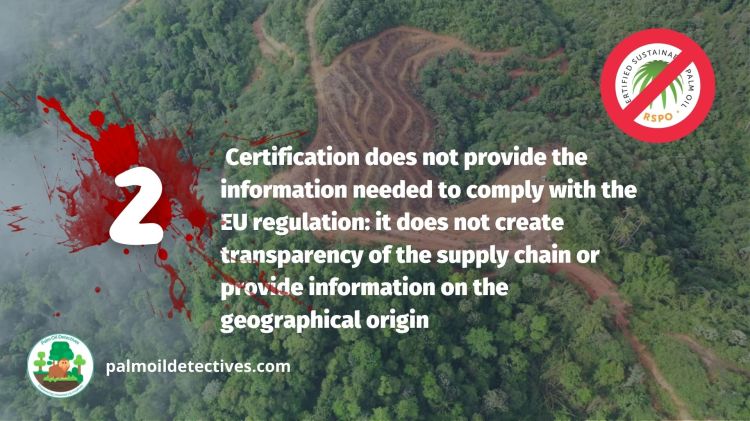
2. Certification does not provide the information needed to comply with the EU regulation
It does not create transparency of the supply chain or provide information on the geographical origin
As indicated in Article 8 of the Proposal, “because deforestation is linked to land-use change, monitoring requires a precise link between the commodity or product placed on or exported from the EU market and the plot of land where it was grown or raised.” Most certification schemes, however, require only a minimal level of traceability and transparency.
 2. Certification does not provide the information needed to comply with the EU regulation
As indicated in the EC’s Study On Certification And Verification Schemes In The Forest Sector, schemes make use of Chain of Custody (CoC) models, but very few apply a traceability system, making it difficult to track the claims of certification, from the forest to the end buyer. One of the most common CoC models used is Mass Balance. This model allows uncertified and untraceable supplies to be physically mixed with certified supplies and end up in EU supply chains. For the most part, certification schemes do not include the systematic ability to verify transactions of volumes, species, and qualities between entities, thus leaving the systems vulnerable to manipulation and fraud.

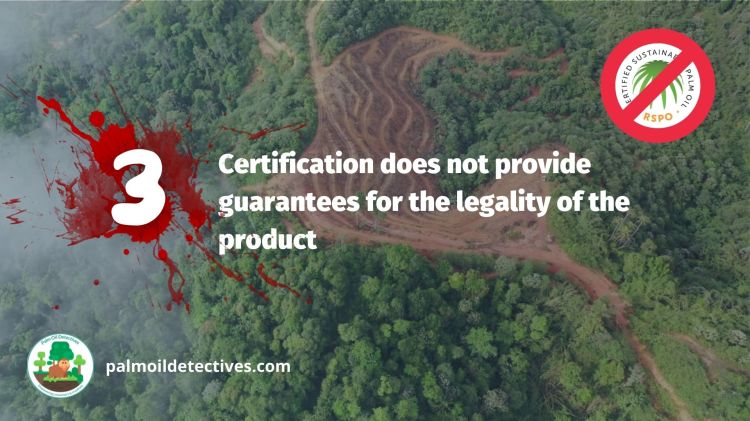
3. Certification does not provide guarantees for the legality of the product
Certification schemes do not have the authority to confirm or enforce compliance with national laws precisely because they are voluntary.
Article 3 in the proposed anti-deforestation regulation states that products
are prohibited on the European market if they are not “produced in accordance with the relevant legislation of the country of production”.
 3. Certification does not provide guarantees for the legality of the product
However, the Roundtable on Sustainable Palm Oil (RSPO), for example, has explicitly stated its standards are voluntary and “do not extend to enforcing or confirming the legal standing of a company’s use of land (which is a mandate only held by the national authority)”.
4. Certification does not identify or prevent harms. Audit teams lack time and expertise
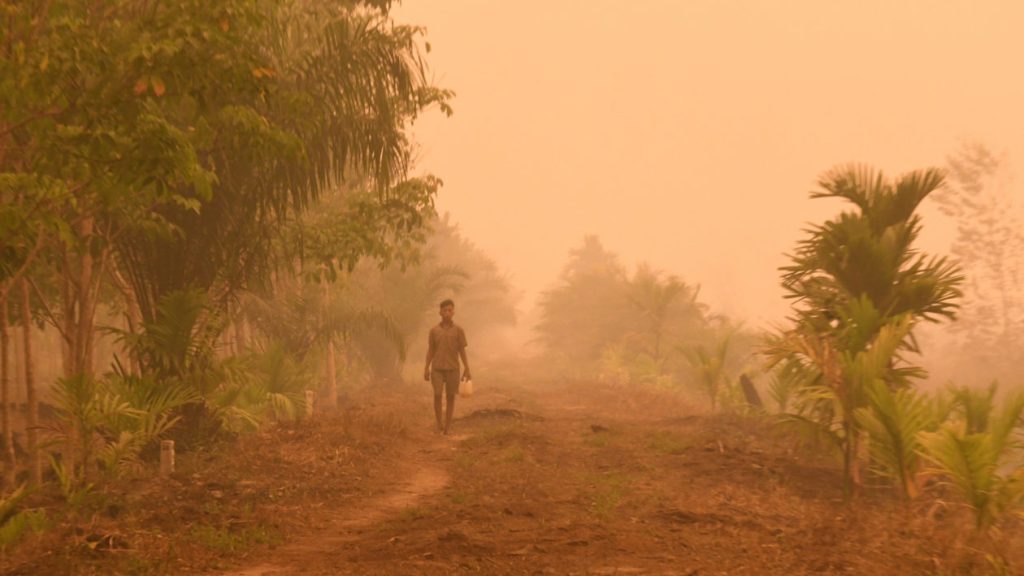
According to the EC “labour, environmental and human rights laws will need to be taken into account when assessing compliance” and identifying harms. However, multiple reports by Friends of the Earth Netherlands, the Environmental Investigation Agency, and ECCHR, reveal that auditing firms responsible for checking compliance are fundamentally failing to identify and mitigate unsustainable practices within certification schemes due to lack of time and lack of expertise. Proper audits on social and human rights issues require extensive consultation to gain full community perspectives on land use, conflicts, or environmental harm. Certification Body (CB) procedures do not allow for this (due to financial resources).
RSPO’s own analysis reads that “the credibility of the RSPO certification scheme has been consistently undermined by documentation of poor practice, and concerns of the extent to which the Assurance System is being implemented”.
Oppressed and stretched NGO groups and communities in the global South spend time and resources on these consultation processes. They face backlash for speaking out during consultations without any guarantee that their input is included in the certification assessment. The EU should not become complicit in exploitation of rightsholders and stakeholders in their monitoring role.
5. Certification bodies and their auditors are not independent from the company they certify
The lack of independent audits, considered to be key in ensuring the robustness of certification, was highlighted in the EC Impact Assessment as a key weakness of private certification schemes.
If clients (businesses) hire, supervise, and pay audit firms, they are exposed to a structural risk of conflict of interest, which may lead to a lower level of control.
Previous studies by Friends of the Earth, IUCN, RAN, and Environmental Investigation Agency have shown that, for example in the palm oil industry, when auditors and certification companies are directly hired by an audited company, independence is inhibited and the risk of violations increases.
 5. Certification bodies and their auditors are not independent from the company they certify
Also, auditor dependence on company services such as transport and accommodation is problematic. The EC adds to this that these systems are sensitive to fraud given that certified companies may easily mislead their auditors even if the audit is conducted with the greatest care and according to all procedures.
“For example, a company may be selling products containing a volume of “certified” timber material that exceeds the volume of certified raw material that they are buying.”
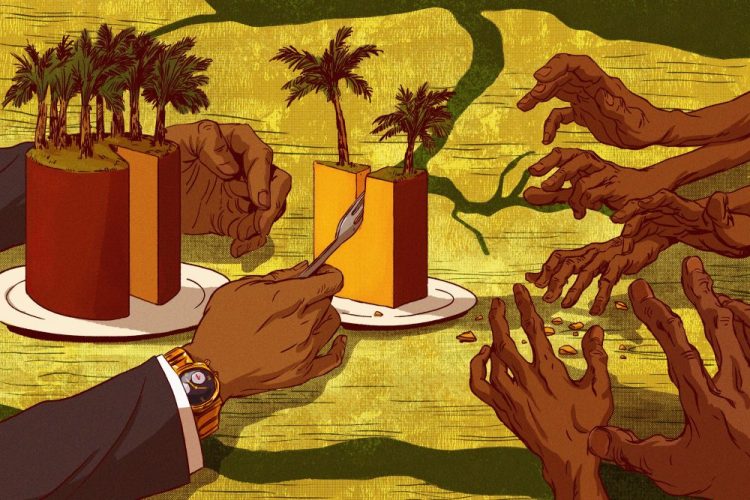
6. Prevention of environmental and social harm cannot be outsourced, particularly because certification bodies are not liable for harms in the plantations they certify
The EU anti-deforestation regulation requires that operators shall exercise due diligence prior to placing relevant commodities on the Union market. Private certification may, in some cases, facilitate compliance with this requirement.
However, as reiterated by German human rights law firm ECCHR the control of compliance is outsourced to private certification bodies, in an unregulated audit and certification market, where CBs are not liable for potential harm.
This leads to inability to distinguish unreliable audits from reliable ones and to competition without rules, setting in motion a ‘race to the bottom’. Certification initiatives have increasingly received complaints for lack of proper due diligence.
For instance, the UK OECD National Contact Point has recently found that Bonsucro breached the Guidelines in relation to due diligence and leverage when reaccepting MPG-T as a member, and the Netherlands NCP handled a complaint about ING’s due diligence policies and practices regarding palm oil.
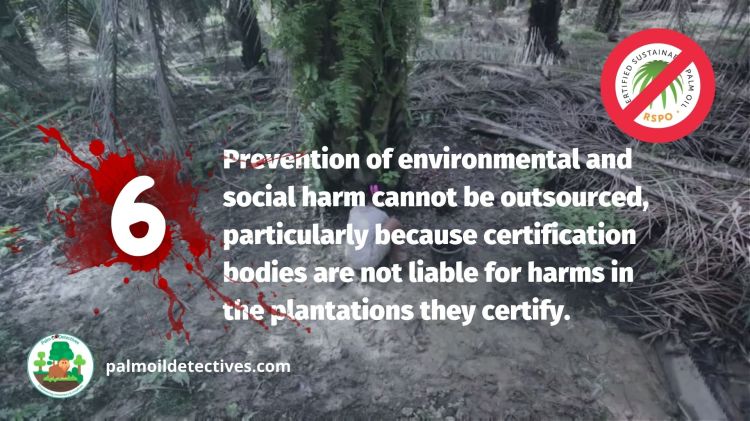 6. Prevention of environmental and social harm cannot be outsourced, particularly because certification bodies are not liable for harms in the plantations they certify
The OECD guidelines confirm that certification is not a proxy for due diligence, as well as various governments. As echoed by the EC Impact Assessment, “maintaining operators’ responsibility for correctly implementing due diligence obligations when they use certification, aims at ensuring that authorities remain empowered to monitor and sanction incompliant behaviour, as the reliability of those [certification] systems has repeatedly been challenged by evidence on the ground.”
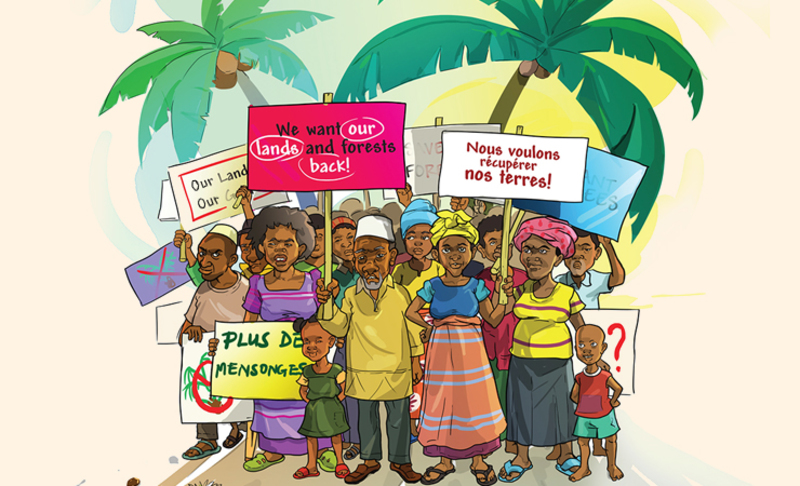
7. Certification cannot guarantee Free, Prior and Informed Consent or prevent land grabbing of indigenous land
Indigenous Peoples and local communities have a recognised role in preserving the lands they own and manage, but insecure land tenure is a major driver of deforestation and forest degradation.
Certification bodies commit to investigating whether lands are subject to customary rights of indigenous peoples and whether land transfers have been developed with Free Prior and Informed Consent (FPIC).
However, assessing whether land user rights and consultation rights were respected needs to consider the historical context, a multi-actor perspective and deep understanding of local conflicts. Considering the apparent low level of knowledge of auditors on human rights and legal issues, assessing prior land use and conflicts is an impossible task for a team of international auditors with limited time.
 7. Certification cannot guarantee Free, Prior and Informed Consent or prevent land grabbing of indigenous land
In Malaysia communities are often not consulted before the issuance of the logging licences. MTCS certified concessions encroach on indigenous territories while the judiciary recognised indigenous customary land rights are a form of property rights protected by the Federal Constitution.
Additionally, certification schemes failed on numerous occasions to address complaints by communities whose land was taken by palm oil companies, including the case of oil palm giant Sime Darby in Indonesia and Socfin in Cameroon, Ivory Coast, Nigeria, and Sierra Leone. Certification will not lead to redress or resolution of problems linked to EU operators.
 10 Tactics of Sustainable Palm Oil Greenwashing
Greenwashing Tactic #4: Fake Labels
Claiming a brand or commodity is green based on unreliable, ineffective endorsements or eco-labels such as the RSPO, Forest Stewardship Council (FSC) or FairTrade coffee and cocoa. Greenwashing: Fake Labels and fake certifications Ecolabels are…

8. Certification provides opportunities for greenwashing and increases vested interests in and corporate power over natural resources.
Critics have argued that improving the image of forest and ecosystem risk commodities stimulates demand. Certification risks enabling destructive businesses to continue operating as usual and expand their practices, thereby increasing the harm.
“If certification on its own is unable to guarantee that commodity production
is entirely free of deforestation or human rights abuses, there is little to suggest that using certification as a tool for proving compliance with legal requirements could solve the issues in supply chains and fulfil the legislation’s objectives.
 8. Certification provides opportunities for greenwashing and increases vested interests in and corporate power over natural resources.
In this context, recognising a particular certification scheme as a proof of compliance removes any incentive to improve the scheme or to replace it with a more reliable alternative, effectively contributing to the institutionalisation of greenwashing.”
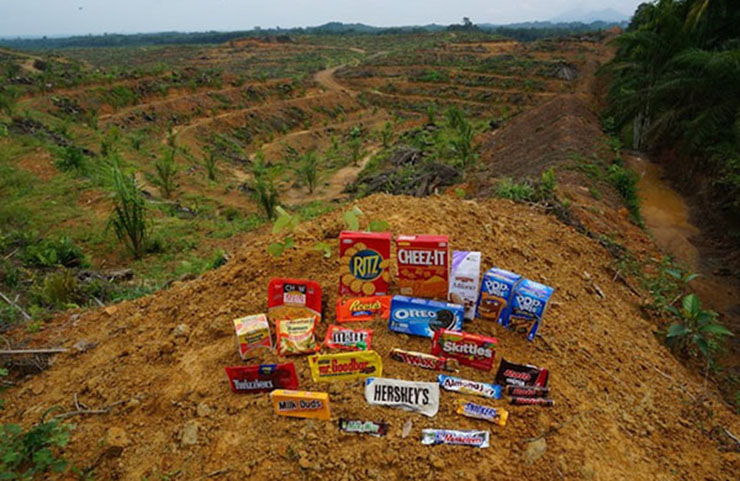
For example, a number of recent logging industry scandals suggest that the Forest Stewardship Council label has at times served merely to “greenwash” or “launder” trafficking in illegal timber, compelling NGOs to demand systemic change. The difference between certified and non-certified plantations in South East Asia was not significant.
9. Certification promotes the expansion of industrial agriculture and thereby prevents the transition needed to halt deforestation
This prevents the transition towards community-based forest management and agro-ecology, with food sovereignty as a leading principle
There are multiple drivers of deforestation, but the evidence is clear in pointing to industrial agricultural expansion as one of the most important. Ultimately, certification initiatives fail to challenge the ideology underpinning the continuation of industrial commodity crop production, and can instead serve to greenwash
further agro-commodity expansion.
Corporations, along with their certifications, continue to seek legitimacy through a ‘feed the world’ narrative.
 9. Certification promotes the expansion of industrial agriculture and thereby prevents the transition needed to halt deforestation
The “expansion is the only way”argument has long since been discredited by international institutions such as FAO; we produce enough to feed the projected world populations, much of this coming from small-scale peasant producers using a fraction of the resources. Moreover, as smallholders are directly impacted by deforestation and often depend on large operators and are hereby
forced to expand agricultural land and degrading their direct environment, they are therefore an essential part of the solution.
10. Certification directs resources towards a million-dollar certification industry
While community and smallholder forest and agriculture management are extremely underfunded.
As explained by the EC Impact Assessment, private certification can be a costly process and resources spent to certify operations and to support the various schemes’ managerial structures could be used for other ends. Considering that smallholders represent a large share of producers in the relevant sectors, they also represent a crucial part of the solution to deforestation.
The EU should stop financing and promoting improvements in a certification system, benefiting industrial forest and plantation companies, that has been proven to fail.
It would be a more effective use of public and private resources to pay smallholders adequately for their products and adhere to their calls if they seek technical or financial support.
 10. Certification directs resources towards a million-dollar certification industry
To conclude, building on these arguments, we foresee that if decision makers give in to the lobby from industry and certification’s role is reconsidered or promoted in the current proposal, the EU anti-deforestation regulation will not deliver, as it will not only lose its potential to provide information needed to comply with the regulation but lose its ability to curb deforestation and forest degradation all together.
Signatories: 71 environmental and human rights NGOs
Signatories: 71 environmental and human rights NGOsInternational
Global Witness
ClientEarth
Environmental Paper Network
International
GRAIN
Global Forest Coalition
Forest Peoples Programme
Indonesia
Friends of the Earth Indonesia; WALHI
Yayasan Pusaka Bentala Rakyat
Yayasan Lembaga Bantuan
Hukum Indonesia
Pantau Gambut
WALHI Papua
Teraju Foundation
Lingkar Hijau
KRuHA
Lepemawil, Mimika, Papua
PADI Indonesia
Cameroon
Synaparcam
Centre pour l’Environnement
et le Développment Chile
Colectivo Vientosur
Democratic Republic of the Congo
RIAO-RDC
Confédération Paysanne du
Congo-Principal Regroupement Paysan
Gabon
Muyissi Environnement
China
Snow Alliance
Blue Dalian
Green Longjiang
Scholar Tree Alliance
Wuhu Ecology Centre
Malaysia
SAVE Rivers
KERUAN
Sahabat Alam Malaysia
Liberia
Sustainable Development Institute
Nigeria
ERA; Friends of the Earth Nigeria
Mexico
Reentramados para la vida, defendiendo territorio
Otros Mundos Chiapas
Philippines
Unyon ng mga Manggagawa sa Agrikultura- UMA
Sierra Leone
United States
Friends of the Earth United States
The Oakland Institute
The Borneo Project
Europe
Bruno Manser Fonds
Canopée
Denkhausbremen
Dublin Friends of the Earth
Earthsight
Ecologistas en Acción
Environmental Investigation
Agency (EIA)
Fern
FIAN Belgium
Finnish Association for Nature Conservation
Forum Ökologie & Papier
Friends of Fertő lake Association
Friends of the Earth England,
Wales and Northern Ireland
Friends of the Earth Europe
Friends of the Earth Finland
Greenpeace EU
GYBN Europe
HEKS – Swiss Church Aid
Milieudefensie
NOAH – Friends of the Earth Denmark
Pro REGENWALD
Rainforest Foundation Norway
ReAct Transnational
Rettet den Regenwald
ROBIN WOOD
Salva la Selva
Save Estonias Forests (Päästame Eesti Metsad)
Ukrainian Nature Conservation Group
Water Justice and Gender
Working group Food Justice
ZERO – Associação Sistema
Terrestre Sustentável
Here are some other ways you can help by using your wallet as a weapon and joining the #Boycott4Wildlife

What is greenwashing?

Why join the #Boycott4Wildlife?
Greenwashing Tactic #4: Fake Labels
The Counterpunch: Consumer Solutions To Fight Extinction
Contribute to my Ko-Fi
Did you enjoy visiting this website?

Palm Oil Detectives is 100% self-funded
Palm Oil Detectives is completely self-funded by its creator. All hosting and website fees and investigations into brands are self-funded by the creator of this online movement. If you like what I am doing, you and would like me to help meet costs, please send Palm Oil Detectives a thanks on Ko-Fi.
Say thanks on Ko-Fi

Palm Oil Detectives is 100% self-funded
Palm Oil Detectives is completely self-funded by its creator. All hosting and website fees and investigations into brands are self-funded by the creator of this online movement. If you like what I am doing, you and would like me to help meet costs, please send Palm Oil Detectives a thanks on Ko-Fi.
Say thanks on Ko-Fi#animalExtinction #BoycottPalmOil #Boycott4wildlife #BoycottPalmOil #consumerBoycott #corruption #CSDDD #deforestation #ecocide #ecolabels #ethicalConsumerism #EUDR #extinction #FSC #greenwashing #humanRights #HumanRights #landgrabbing #Malaysia #MSC #PalmOil #palmOilDeforestation #RSPO #RSPOGreenwashing #violence
Unsupported type or deleted object
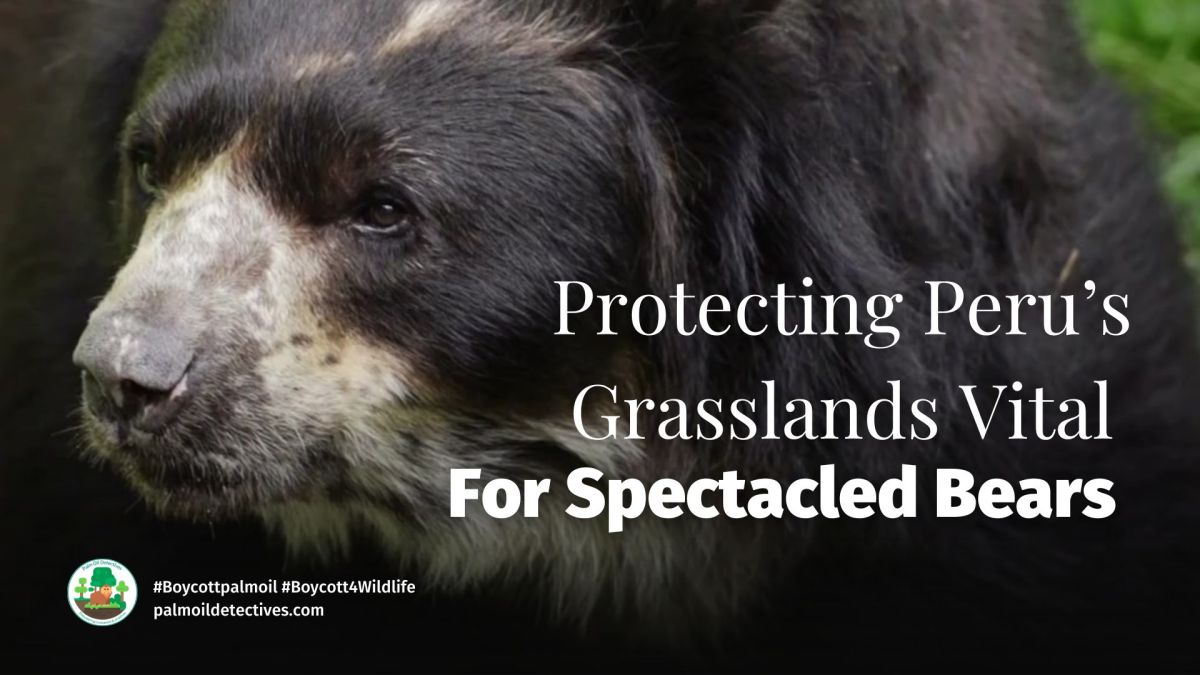
Protecting Peru’s Grasslands Vital for Spectacled Bears
Protecting Peru’s Grasslands Vital for Spectacled Bears | A recent study highlights the importance of conserving Peru’s high-altitude puna grasslands to support the foraging habits of the vulnerable Andean bear AKA Spectacled Bear. The research reveals that these bears prefer young bromeliad plants in specific grassland areas and tend to avoid regions impacted by livestock. Conservation efforts focusing on these habitats could enhance the bears’ survival prospects.
#News: 🐻🌿 Protecting #Peru’s grasslands vital for #vulnerable Spectacled #bear. #Research finds bears prefer foraging areas with negative impact of #meat #soy and #palmoil agriculture. #BoycottMeat #BoycottPalmOil 🌴🥩⛔️ #Boycott4Wildlife @palmoildetect https://wp.me/pcFhgU-9OQ
Share to BlueSkyShare to TwitterPLOS. (2024, December 18). Conserving high-elevation grasslands in Peru is key to protect Andean bears. ScienceDaily. Retrieved from https://www.sciencedaily.com/releases/2024/12/241218174935.htm
The Andean bear, also known as the spectacled bear due to distinctive facial markings, is native to the Andes Mountains and currently classified as vulnerable by the International Union for Conservation of Nature (IUCN). A study published on December 18, 2024, in PLOS ONE emphasizes the critical role of high-elevation puna grasslands in Peru for the species’ foraging activities.
Researchers conducted extensive surveys in and around Manu National Park, focusing on two bromeliad species: Puya leptostachya and Puya membranacea. They observed that Andean bears selectively foraged in approximately 16.7% of available bromeliad patches, showing a preference for young plants located on east-facing, steep slopes at the forest’s edge. Notably, the bears avoided areas with active livestock grazing but were found in regions where livestock had been absent for several decades, indicating a potential for habitat recovery and reoccupation by the bears.
The study suggests that the cessation of livestock grazing can lead to the restoration of puna grasslands, making them more suitable for Andean bears in a relatively short timeframe. This finding underscores the need for targeted conservation strategies that mitigate human disturbances, particularly livestock grazing, to preserve these essential habitats.
Lead author Nicholas Pilfold from the San Diego Zoo Wildlife Alliance stated, “Using the largest collection ever of field data on the feeding behavior of Andean bears in high elevation grasslands, we found that the bears actively selected for specific food resources within the grasslands, indicating that these areas are of nutritional importance to the bears.”
The findings advocate for conservation managers to prioritize the protection and restoration of high-altitude grasslands bordering cloud forests, considering the adverse impacts of livestock on these ecosystems. Implementing such measures is vital for the sustenance and recovery of Andean bear populations in Peru.
PLOS. (2024, December 18). Conserving high-elevation grasslands in Peru is key to protect Andean bears. ScienceDaily. Retrieved from https://www.sciencedaily.com/releases/2024/12/241218174935.htm
ENDS
Learn about other animals endangered by palm oil and other agriculture
GlobalSouth America S.E. AsiaIndiaAfricaWest Papua & PNG
Frill-Necked Lizard Chlamydosaurus kingii

Grey Crowned Crane Balearica regulorum

Ecuadorean Viscacha Lagidium ahuacaense

Southern Pudu Pudu puda

Blue-streaked Lory Eos reticulata

Blonde Capuchin Sapajus flavius
Learn about “sustainable” palm oil greenwashing
Read more about RSPO greenwashing
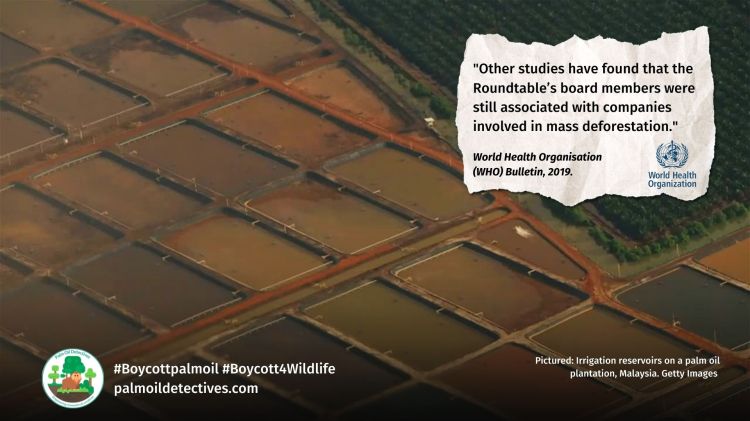
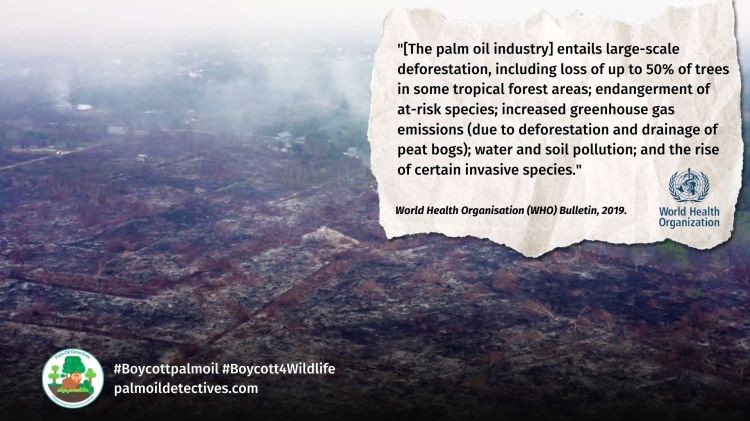
Lying Fake labelsIndigenous Land-grabbingHuman rights abusesDeforestation Human health hazardsA 2019 World Health Organisation (WHO) report into the palm oil industry and RSPO finds extensive greenwashing of palm oil deforestation and the murder of endangered animals (i.e. biodiversity loss)
Read more

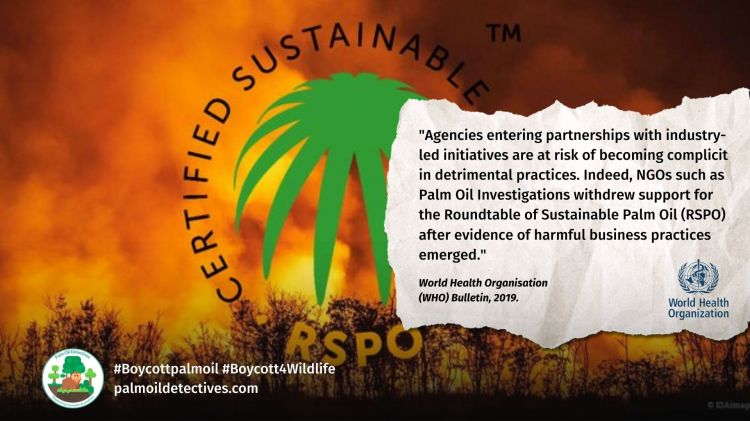
Take Action in Five Ways
1. Join the #Boycott4Wildlife on social media and subscribe to stay in the loop: Share posts from this website to your own network on Twitter, Mastadon, Instagram, Facebook and Youtube using the hashtags #Boycottpalmoil #Boycott4Wildlife.
Enter your email address
Sign Up
Join 3,174 other subscribers2. Contribute stories: Academics, conservationists, scientists, indigenous rights advocates and animal rights advocates working to expose the corruption of the palm oil industry or to save animals can contribute stories to the website.
Wildlife Artist Juanchi Pérez
Mel Lumby: Dedicated Devotee to Borneo’s Living Beings
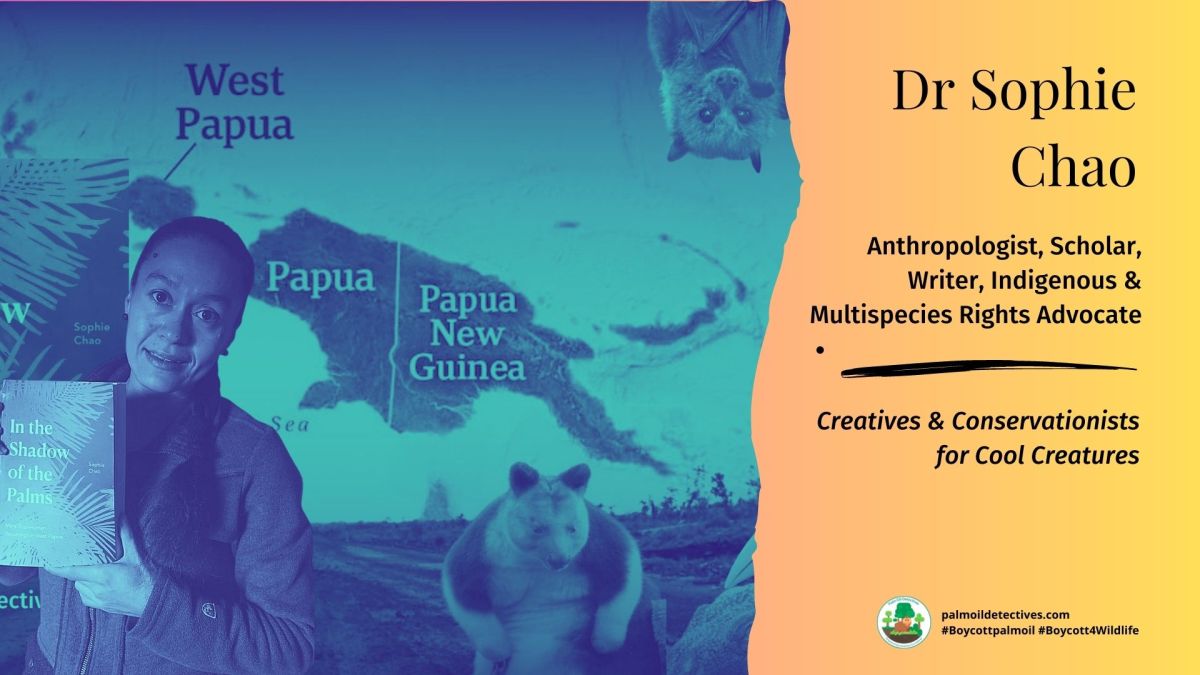
Anthropologist and Author Dr Sophie Chao

Health Physician Dr Evan Allen

The World’s Most Loved Cup: A Social, Ethical & Environmental History of Coffee by Aviary Doert

How do we stop the world’s ecosystems from going into a death spiral? A #SteadyState Economy
3. Supermarket sleuthing: Next time you’re in the supermarket, take photos of products containing palm oil. Share these to social media along with the hashtags to call out the greenwashing and ecocide of the brands who use palm oil. You can also take photos of palm oil free products and congratulate brands when they go palm oil free.
https://twitter.com/CuriousApe4/status/1526136783557529600?s=20
https://twitter.com/PhillDixon1/status/1749010345555788144?s=20
https://twitter.com/mugabe139/status/1678027567977078784?s=20
4. Take to the streets: Get in touch with Palm Oil Detectives to find out more.
5. Donate: Make a one-off or monthly donation to Palm Oil Detectives as a way of saying thank you and to help pay for ongoing running costs of the website and social media campaigns. Donate here
Pledge your support#Andes #animalBehaviour #AnimalBiodiversityNews #animalCommunication #animalCruelty #animalExtinction #animalIntelligence #animalRights #Bear #biodiversity #Boycott4wildlife #BoycottMeat #BoycottPalmOil #deforestation #meat #News #PalmOil #palmOilDeforestation #palmoil #Peru #research #soy #SpectacledBearTremarctosOrnatus #vulnerable
Tucuxi Sotalia fluviatilis
Tucuxi Sotalia fluviatilis
IUCN Red List Status: Endangered
Location: #Brazil, #Peru, #Colombia, #Ecuador
Found throughout the #Amazon and Solimões River systems, including major tributaries and large lakes. Their range spans lowland rainforest areas of Brazil, southeastern Colombia, eastern Ecuador, and southern Peru.
The #Tucuxi, a small freshwater #dolphin of #Peru, #Ecuador, #Colombia and #Brazil now faces a dire future. Once common throughout the Amazon River system, they are now listed as #Endangered due to accelerating population declines. Threats include drowning in fishing nets, deforestation, mercury poisoning from gold mining, #palmoil run-off, oil drilling, and dam construction. A shocking 97% decline was recorded over 23 years in a single Amazon reserve. Without urgent action, this elegant and playful river dolphin could vanish from South America’s waterways. Use your wallet as a weapon against extinction. Choose palm oil-free, and #BoycottGold #BoycottPalmOil #Boycott4Wildlife
Playful and intelligent #Tucuxi are small #dolphins 🐬 of #Amazonian rivers in #Peru 🇵🇪 #Brazil 🇧🇷 #Ecuador 🇪🇨 and #Colombia 🇨🇴. #PalmOil and #GoldMining are major threats 😿 Fight for them! #BoycottGold #BoycottPalmOil #Boycott4Wildlife @palmoildetect https://palmoildetectives.com/2025/11/23/tucuxi-sotalia-fluviatilis/
Share to BlueSky Share to TwitterClever and joyful #Tucuxi are #dolphins 🐬💙 endangered by #hunting #gold #mining and contamination of the Amazon river 🇧🇷 for #PalmOil #agriculture ☠️ Use your wallet as a weapon and #BoycottGold 🥇🚫 #BoycottPalmOil 🌴🚫 #Boycott4Wildlife @palmoildetect https://palmoildetectives.com/2025/11/23/tucuxi-sotalia-fluviatilis/
Share to BlueSky Share to TwitterAppearance & Behaviour
Tucuxis are often mistaken for their oceanic dolphin cousins due to their streamlined bodies, short beaks, and smooth, pale-to-dark grey skin. But these freshwater dolphins are wholly unique—adapted to life in winding river systems where water levels rise and fall dramatically with the seasons.
What sets them apart is their remarkable intelligence and tightly knit social groups. Tucuxis are playful and curious by nature. They leap from the water in graceful arcs, sometimes spinning mid-air.


The Tucuxi, sometimes called the ‘grey dolphin’ due to their uniform colouring, resembles a smaller oceanic dolphin, with a streamlined body and slender beak. Their colour varies from pale grey on the belly to darker grey or bluish-grey along the back.
They travel in small groups of two to six, displaying coordinated swimming patterns. In rare cases, they may form groups up to 26 individuals, particularly at river confluences. Known for their agility, they leap and spin in the water with a grace that belies their size. Tucuxis are particularly drawn to dynamic habitats like river junctions, where waters mix and fish gather.
Threats


- Widespread deforestation from palm oil plantations Palm oil plantations are rapidly expanding across the Amazon, clearing vast tracts of forest that stabilise riverbanks and filter water. This deforestation leads to increased sedimentation in rivers, altering flow patterns and reducing water clarity—conditions that directly disrupt the Tucuxi’s feeding and movement. Run-off from fertilisers and pesticides used in palm oil monocultures also poisons aquatic ecosystems, harming Tucuxis other Amazonian dolphin species and the fish they rely on.
- Toxic mercury pollution from gold mining Artisanal and illegal gold mining in the Amazon releases massive quantities of mercury into the water, contaminating fish and other aquatic organisms. Tucuxis, as top predators, ingest this mercury through their prey, which accumulates in their tissues and causes neurological damage, weakened immunity, and reproductive failure. Mercury exposure is one of the most insidious threats, as it persists in ecosystems long after mining has ceased.
- Incidental drowning in fishing nets Tucuxis are frequently caught and killed in gillnets and other fishing gear as bycatch. Tucuxis and other Amazonian dolphins often inhabit the same confluence zones and productive fishing grounds targeted by local communities, making entanglement almost inevitable. Many carcasses are never recovered, having either been discarded by fishers or lost to river currents, meaning actual mortality rates are likely far higher than reported.
- Deliberate hunting for use as fish bait Though illegal, Tucuxis continue to be targeted and killed in parts of Brazil, especially near the Mamirauá and Amana Reserves, where they are used as bait in the piracatinga (catfish) fishery. This brutal practice involves harpooning or netting dolphins and using their flesh to lure fish, often alongside the killing of Botos. Despite a national ban, weak enforcement and ongoing demand mean this threat persists in remote and lawless regions.
- Illegal fishing with explosives and toxins In certain areas, particularly in Brazil and Peru, fishers use home-made explosives and poisoned bait to stun or kill fish en masse. These destructive methods harm or kill Tucuxis who are attracted by the sudden appearance of dead or stunned prey. The concussive force of explosions and the ingestion of poisoned prey result in slow, agonising deaths for affected dolphins.
- Construction of hydroelectric dams Dams fragment Tucuxi populations by blocking their movement along river corridors, reducing access to feeding and breeding grounds. These projects alter seasonal water flow, raise water temperatures, and flood critical habitats—conditions that significantly disrupt dolphin ecology. Brazil alone has 74 operational dams in the Amazon basin, with over 400 more planned, posing a long-term existential threat to freshwater cetaceans.
- Run-off and contamination from palm oil, soy and meat agriculture In addition to habitat loss, palm oil and soy plantations along with cattle ranching generates enormous volumes of chemical-laden waste, which enters waterways and poisons aquatic life. This pollution affects Tucuxis both directly and indirectly—exposing them to harmful substances and killing off sensitive fish species. As plantations replace biodiverse forests, the ecosystem becomes less resilient, accelerating the decline of species like the Tucuxi.
- Bioaccumulation of heavy metals and industrial pollutants Tucuxis, like many river dolphins, suffer from exposure to persistent organic pollutants such as PCBs, DDT, and flame retardants, as well as heavy metals like lead and cadmium. These toxins accumulate in dolphin tissues over time, weakening their immune systems, interfering with reproduction, and making them more vulnerable to disease. Contaminants originate from industrial waste, agriculture, and mining, and are now widespread across the Amazon basin.
- Habitat fragmentation from infrastructure and oil development Roads, oil pipelines, and shipping corridors criss-cross many parts of the Tucuxi’s range, slicing through their habitat and increasing the risk of collisions with boats. These developments also bring noise pollution, which can interfere with echolocation and communication. Fragmentation leads to isolated subpopulations, reducing genetic diversity and making recovery more difficult.
Geographic Range
The Tucuxi inhabits the Amazon River basin, spanning: Brazil, Peru, Colombia, Ecuador These river dolphins occur as far west as southern Peru and eastern Ecuador, and as far north as southeastern Colombia. They are notably absent from Bolivia’s Beni/Mamoré system, the Orinoco basin, and upper reaches above major waterfalls or rapids.
Their range includes wide, deep rivers and lakes, avoiding turbulent rapids and shallow areas. Despite overlapping with the Amazon River Dolphin (Inia geoffrensis), Tucuxis do not enter flooded forest habitats and stay closer to main river channels.
Diet
Tucuxis feed on more than 28 species of small, schooling freshwater fish, including members of the characid, sciaenid, and siluriform families. During the dry season, fish are concentrated in shrinking waterways, making them easier to catch. In contrast, flooding season disperses prey into forested areas, beyond the Tucuxi’s reach. They prefer to feed at river junctions and along confluences, where nutrient-rich waters concentrate fish populations.
Mating and Reproduction
Little is known about their mating behaviours. However, individuals appear to remain within familiar ranges for many years, and females likely give birth to a single calf after a long gestation. Calves are dependent for an extended period, learning complex navigation and foraging skills in rapidly changing river systems. The estimated generation length is 15.6 years.
FAQs
How many Tucuxis are left in the wild?
There is no comprehensive global population estimate. However, surveys from 1994–2017 in Brazil’s Mamirauá Reserve show a 7.4% annual decline—amounting to a 97% drop over three generations (da Silva et al., 2020). If this trend reflects the wider Amazon basin, the species could be on the brink of collapse.
How long do Tucuxis live?
Exact lifespans are unknown, but based on reproductive data and life history modelling, their generation length is around 15.6 years (Taylor et al., 2007), suggesting natural lifespans of 30–40 years.
How are palm oil and gold mining affecting Tucuxis?
Out-of-control palm oil expansion results in massive deforestation and run-off, clogging rivers with sediment and toxic agrochemicals. Gold mining adds mercury into aquatic ecosystems, where it bioaccumulates in fish—Tucuxis’ main food source. These pollutants cause reproductive harm, neurological damage, and immune system failure in dolphins.
Do Tucuxis make good pets and should they be kept in zoos?
Absolutely not. Tucuxis are intelligent, wild animals. Keeping them in captivity is deeply cruel and has no conservation benefit. Wild capture destroys families and can devastate local populations. If you care about these dolphins, say no to the exotic pet trade and the cruel zoo trade.
What habitats do they prefer?
Research in Peru’s Pacaya-Samiria Reserve shows that Tucuxis prefer river confluences and wide channels, particularly during the dry season when fish density is higher (Belanger et al., 2022). Feeding activity is especially concentrated in areas where whitewater rivers meet blackwater tributaries, creating nutrient-rich hotspots.
Take Action!
The Tucuxi is vanishing before our eyes. To protect them:
• Boycott palm oil and gold products linked to Amazon destruction.
• Choose fish-free and vegan products to reduce pressure on river ecosystems.
• Support indigenous-led conservation across the Amazon.
• Campaign for a ban on destructive dams, and the end of illegal fishing.
#BoycottPalmOil #Boycott4Wildlife #Vegan #BoycottMeat
Support the Tucuxi by going vegan and boycotting palm oil in the supermarket, it’s the #Boycott4Wildlife
Support the conservation of this species
This animal has no protections in place. Read about other forgotten species here. Create art to support this forgotten animal or raise awareness about them by sharing this post and using the #Boycottpalmoil #Boycott4Wildlife hashtags on social media. Also you can boycott palm oil in the supermarket.
Further Information
Belanger, A., Wright, A., Gomez, C., Shutt, J.D., Chota, K., & Bodmer, R. (2022). River dolphins (Inia geoffrensis and Sotalia fluviatilis) in the Peruvian Amazon: habitat preferences and feeding behaviour. Latin American Journal of Aquatic Mammals, 17(1). https://doi.org/10.5597/lajam00268
da Silva, V., Martin, A., Fettuccia, D., Bivaqua, L. & Trujillo, F. 2020. Sotalia fluviatilis. The IUCN Red List of Threatened Species 2020: e.T190871A50386457. https://dx.doi.org/10.2305/IUCN.UK.2020-3.RLTS.T190871A50386457.en. Accessed on 06 April 2025.
Monteiro-Neto, C., Itavo, R. V., & Moraes, L. E. S. (2003). Concentrations of heavy metals in Sotalia fluviatilis (Cetacea: Delphinidae) off the coast of Ceará, northeast Brazil. Environmental Pollution, 123(2), 319–324. https://doi.org/10.1016/S0269-7491(02)00371-8


How can I help the #Boycott4Wildlife?
Take Action in Five Ways
1. Join the #Boycott4Wildlife on social media and subscribe to stay in the loop: Share posts from this website to your own network on Twitter, Mastadon, Instagram, Facebook and Youtube using the hashtags #Boycottpalmoil #Boycott4Wildlife.
Enter your email address
Sign Up
Join 3,172 other subscribers2. Contribute stories: Academics, conservationists, scientists, indigenous rights advocates and animal rights advocates working to expose the corruption of the palm oil industry or to save animals can contribute stories to the website.
Wildlife Artist Juanchi Pérez
Mel Lumby: Dedicated Devotee to Borneo’s Living Beings
Anthropologist and Author Dr Sophie Chao
Health Physician Dr Evan Allen
The World’s Most Loved Cup: A Social, Ethical & Environmental History of Coffee by Aviary Doert
How do we stop the world’s ecosystems from going into a death spiral? A #SteadyState Economy
3. Supermarket sleuthing: Next time you’re in the supermarket, take photos of products containing palm oil. Share these to social media along with the hashtags to call out the greenwashing and ecocide of the brands who use palm oil. You can also take photos of palm oil free products and congratulate brands when they go palm oil free.
https://twitter.com/CuriousApe4/status/1526136783557529600?s=20
https://twitter.com/PhillDixon1/status/1749010345555788144?s=20
https://twitter.com/mugabe139/status/1678027567977078784?s=20
4. Take to the streets: Get in touch with Palm Oil Detectives to find out more.
5. Donate: Make a one-off or monthly donation to Palm Oil Detectives as a way of saying thank you and to help pay for ongoing running costs of the website and social media campaigns. Donate here
Pledge your supportLearn about other animals endangered by palm oil and other agriculture
GlobalSouth America S.E. AsiaIndiaAfricaWest Papua & PNGFrill-Necked Lizard Chlamydosaurus kingii
Grey Crowned Crane Balearica regulorum
Ecuadorean Viscacha Lagidium ahuacaense
Southern Pudu Pudu puda
Blue-streaked Lory Eos reticulata
Blonde Capuchin Sapajus flavius
Learn about “sustainable” palm oil greenwashing
Read more about RSPO greenwashing
Lying Fake labelsIndigenous Land-grabbingHuman rights abusesDeforestation Human health hazardsA 2019 World Health Organisation (WHO) report into the palm oil industry and RSPO finds extensive greenwashing of palm oil deforestation and the murder of endangered animals (i.e. biodiversity loss)
Read more#agriculture #amazon #amazonRainforest #amazonia #amazonian #animalCruelty #animals #boycott4wildlife #boycottgold #boycottmeat #boycottpalmoil #brazil #colombia #dams #deforestation #dolphin #dolphins #ecuador #endangered #endangeredSpecies #forgottenAnimals #gold #goldMining #goldmining #humanWildlifeConflict #hunting #hydroelectric #mammal #mining #palmOil #palmOilDeforestation #palmoil #peru #poaching #saynotogold #tucuxi #tucuxiSotaliaFluviatilis #vegan
Why Pangolins Are So Special
#Pangolins of #Africa and Asia are the world’s most trafficked animal. Tragically they are disappearing due to illegal poaching as well as habitat loss for agribusiness like #palmoil. They get their name from the Malay word pengguling, which translates to “rolling up” in reference to their balled-up protective pose when threatened. Pangolins play an essential part in ecosystem health, keeping insects in check with their highly sensitive tongues and sense of smell. These remarkable and critically endangered animals deserve a break from savage and cruel #poaching and palm oil #deforestation. Help them when you #BoycottPalmOil #Boycott4Wildlife
The remarkable #pangolin is named ‘pengguling’ in Malay. Looking like a #pokemon or a scaly #dragon 🐉 they rid ecosystems in #Africa and #Asia of excess insects. Help them survive, be #vegan and #Boycottpalmoil 🌴🚫 #Boycott4Wildlife @palmoildetect https://wp.me/pcFhgU-92l
Share to BlueSkyShare to TwitterWritten by Olajumoke Morenikeji, Professor Department of Zoology, University of Ibadan. This article is republished from The Conversation under a Creative Commons license. Read the original article.

Pangolins play a vital role in ecosystems by controlling insect populations, particularly ants and termites, which helps maintain ecological balance.
Pangolins are fascinating creatures known for their unique appearance and distinctive scales. They are mammals belonging to the order Pholidota and are native to Africa and Asia. Due to their primary diet of ants and termites, pangolins are often referred to as “scaly anteaters”.
The African pangolin species are dispersed throughout southern, western, central and east Africa.
Pangolins face rapid declines across Asia and Africa, with all eight species classified as vulnerable, endangered, or critically endangered. They are threatened by poaching and habitat loss, driven by the demand for their meat and scales.
Pangolins are the most trafficked wild mammal in the world. Their meat is considered a delicacy in Asia while their scales are also used in traditional medicines, fetching huge sums on the black market. As many as 8.5 million pangolins are estimated to have been removed from the wild in west and central Africa for the illegal trade between 2014 and 2021.
The trade route analysis of pangolin trafficking points to Lagos as the main connection point both domestically and worldwide, including south-east Asian countries. Malaysia, Laos and Singapore also serve as key transit countries for pangolin-scale shipments from Nigeria.
China and Vietnam are the main destinations for these illegal shipments.
I am a zoologist who’s passionate about the environment and biodiversity conservation. I am also the founder and chair of Pangolin Conservation Guild Nigeria. In my view, effective protection, law enforcement and changes in consumer behaviour are necessary to address the complex drivers of poaching and trafficking.
What makes pangolins special
Pangolins are interesting for a number of reasons.
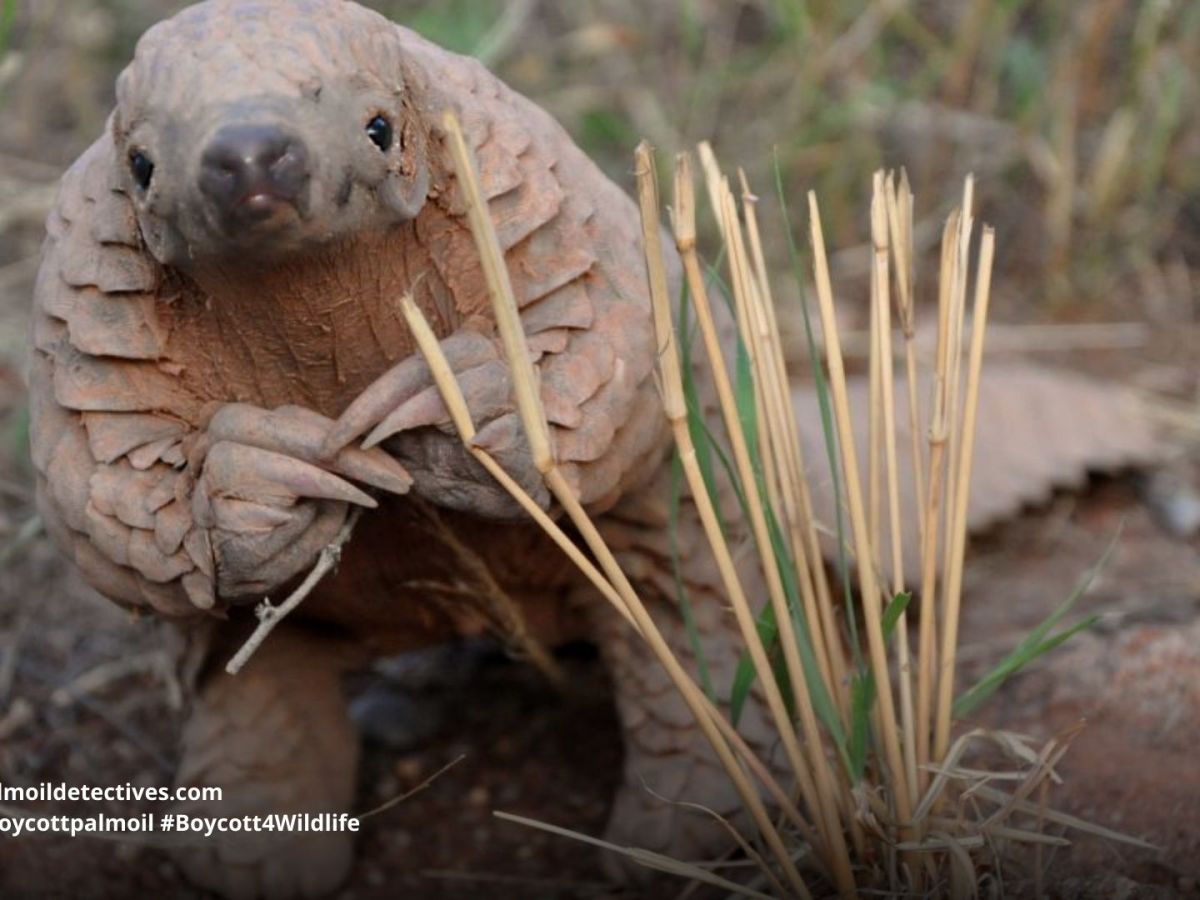
Scales: Unlike any other mammals, they are covered with keratin scales. This adaptation is a defence against predators. The scales, made of the same material as human fingernails, provide armour-like protection as they curl into a ball when threatened, shielding their vulnerable underbelly. The scales can account for up to 20% of a pangolin’s total body weight. A pangolin’s scales are a reminder of the incredible diversity of adaptations in the natural world.
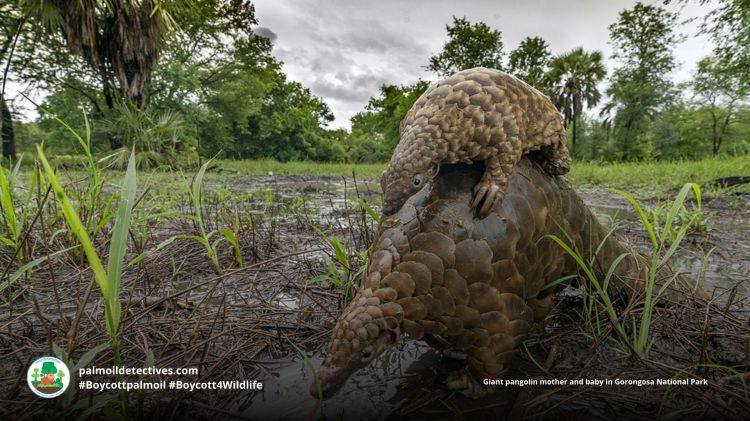
Habitats: Pangolins, as a group, are also adaptable to different environmental conditions. Their habitats include tropical forests, dry woodlands and savannahs. Some pangolin species, like the white-bellied, are adept climbers and spend much of their time in the canopy, foraging for insects among the branches. These arboreal habits provide them with both food and shelter, as well as protection from ground-dwelling predators. Other pangolin species, such as the ground pangolins, live on the forest floor or in grasslands. They may dig burrows underground where they retreat for rest and safety, particularly during the heat of the day or to escape potential threats.
Defence: The name “pangolin” originates from the Malay word pengguling, which translates to “rolling up”. They tuck in their head and limbs and curl into a tight ball when faced with danger, wrapping their body in a protective layer of overlapping scales. This has helped pangolins survive predators such as big cats, hyenas and humans.
Diet: Pangolins primarily feed on ants and termites, making them essential players in controlling insect populations within their ecosystems. They find the insects using their keen sense of smell and their tongues – which are often longer than their bodies. These long tongues are coated with sticky saliva, allowing them to probe deep into ant and termite nests to extract their prey. Their strong claws are also well-suited for tearing open insect nests and breaking through hard soil to uncover hidden prey. Pangolins’ diets play a crucial role in maintaining the health and stability of their environments.
Pangolins in Africa
In west and central Africa, the giant pangolin is distributed in a variety of habitats, including primary and secondary forests, swamp forests and wooded savannahs. Temminck’s pangolin (Smutsia temminckii) is the most widely distributed African pangolin, occurring mainly in southern and east Africa. The black-bellied pangolin (Phataginus tetradactyla) is an arboreal pangolin species, and occurs in west and central Africa. The white-bellied pangolin (Phataginus tricuspis) is the most frequently encountered pangolin in Africa. The white-bellied pangolin is found in north-central and south-western Nigeria.
 White-bellied Pangolin Phataginus tricuspis
In Nigeria, pangolins are found in various habitats, including forests, savannahs and grasslands. Their distribution and abundance in Nigeria are uncertain, highlighting the need for further research and conservation efforts.
Lagos, Nigeria’s commercial capital, serves as a hub for the illegal trade of pangolins. It is a transit route to Cameroon and is involved in shipments of pangolins from sub-Saharan Africa to Asia. Cameroon is at the centre of wildlife trafficking in central Africa. It is both a source country of animal products as well as a transit route for contraband from neighbouring Republic of Congo, the Democratic Republic of Congo and the Central African Republic.
In 2022, Nigerian customs officials seized 1,613 tonnes of pangolin scales and arrested 14 people. In October 2023, Nigeria burned four tonnes of seized pangolin scales, valued at US$1.4 million. Officials said this was the first time they had publicly destroyed seized wildlife products to discourage illegal trafficking.
Why pangolin conservation is important
Pangolin conservation is crucial for several reasons.
Firstly, pangolins play a vital role in ecosystems by controlling insect populations, particularly ants and termites, which helps maintain ecological balance.
They also contribute to soil health through their digging behaviour, which aerates the soil and promotes nutrient cycling.
Moreover, pangolins are indicators of ecosystem health. Their presence or absence can reflect the overall well-being of their habitats. Protecting pangolins helps safeguard biodiversity and the integrity of their ecosystems.
They also have cultural and economic value in many regions, contributing to ecotourism.
Written by Olajumoke Morenikeji, Professor Department of Zoology, University of Ibadan. This article is republished from The Conversation under a Creative Commons license. Read the original article.
ENDS
Giant Pangolin Smutsia gigantea
The Giant Pangolin is are the largest and heaviest of the pangolin species weighing up to 35 kilos. These majestic creature are cloaked in keratin armour and embark on nightly quests…
 by Palm Oil DetectivesOctober 27, 2024March 23, 2025
Sunda Pangolin Manis javanica
Sunda pangolins AKA Javan pangolins are capable swimmers and curl protective balls, palm oil and hunting exploitation are major threats, boycott palm oil!
 by Palm Oil DetectivesJuly 16, 2023October 12, 2025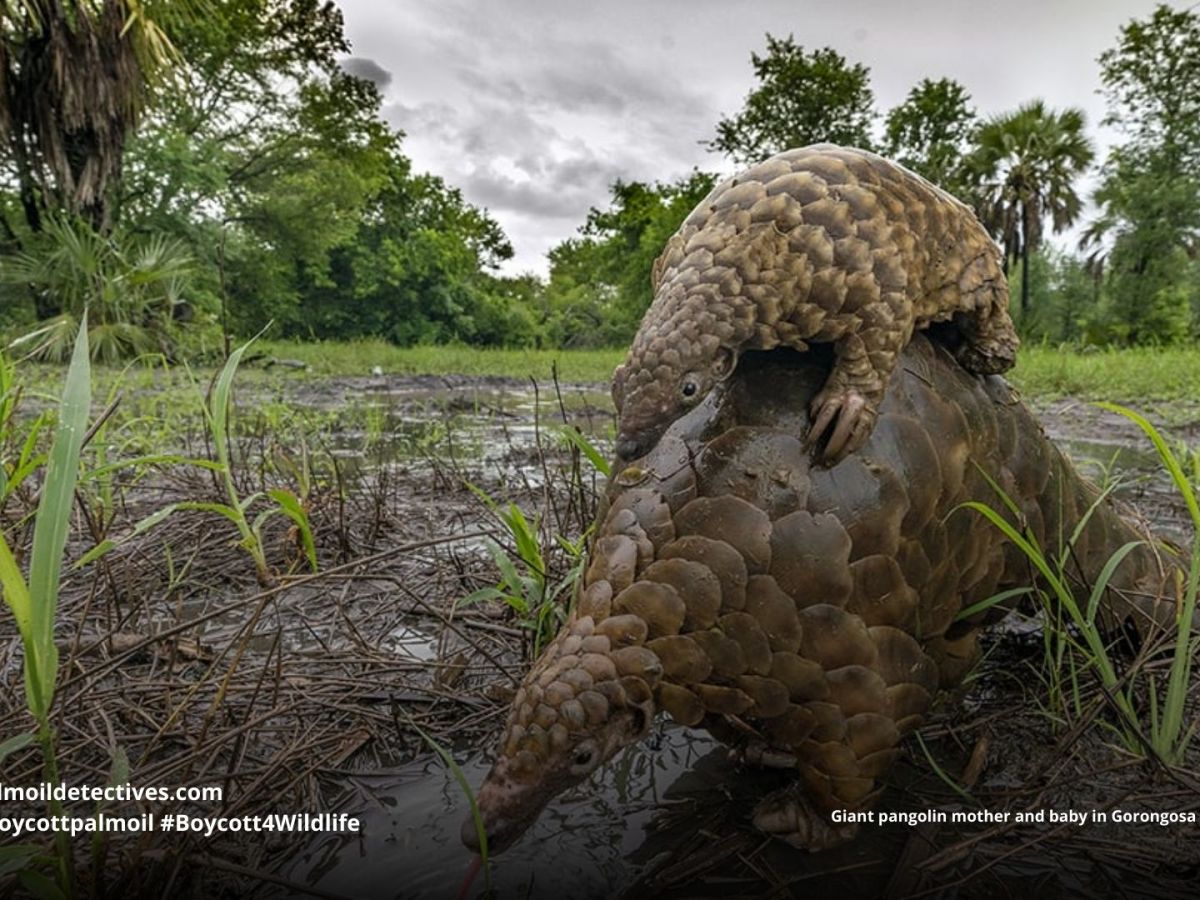
Back from extinction: a world first effort to return threatened pangolins to the wild
Pangolins are one of the most illegally trafficked animals on the planet and are suspected to be linked to the current coronavirus pandemic. Pangolins are also one of the world’s most…
by Palm Oil DetectivesJuly 12, 2022July 30, 2025Load more posts
Something went wrong. Please refresh the page and/or try again.
Learn about other animals endangered by palm oil and other agriculture
GlobalSouth America S.E. AsiaIndiaAfricaWest Papua & PNG
Tucuxi Sotalia fluviatilis
Frill-Necked Lizard Chlamydosaurus kingii
Grey Crowned Crane Balearica regulorum
Ecuadorean Viscacha Lagidium ahuacaense
Southern Pudu Pudu puda
Blue-streaked Lory Eos reticulata
Learn about “sustainable” palm oil greenwashing
Read more about RSPO greenwashing
Lying Fake labelsIndigenous Land-grabbingHuman rights abusesDeforestation Human health hazardsA 2019 World Health Organisation (WHO) report into the palm oil industry and RSPO finds extensive greenwashing of palm oil deforestation and the murder of endangered animals (i.e. biodiversity loss)
Read moreTake Action in Five Ways
1. Join the #Boycott4Wildlife on social media and subscribe to stay in the loop: Share posts from this website to your own network on Twitter, Mastadon, Instagram, Facebook and Youtube using the hashtags #Boycottpalmoil #Boycott4Wildlife.
Enter your email address
Sign Up
Join 3,172 other subscribers2. Contribute stories: Academics, conservationists, scientists, indigenous rights advocates and animal rights advocates working to expose the corruption of the palm oil industry or to save animals can contribute stories to the website.
Wildlife Artist Juanchi Pérez
Mel Lumby: Dedicated Devotee to Borneo’s Living Beings
Anthropologist and Author Dr Sophie Chao
Health Physician Dr Evan Allen
The World’s Most Loved Cup: A Social, Ethical & Environmental History of Coffee by Aviary Doert
How do we stop the world’s ecosystems from going into a death spiral? A #SteadyState Economy
3. Supermarket sleuthing: Next time you’re in the supermarket, take photos of products containing palm oil. Share these to social media along with the hashtags to call out the greenwashing and ecocide of the brands who use palm oil. You can also take photos of palm oil free products and congratulate brands when they go palm oil free.
https://twitter.com/CuriousApe4/status/1526136783557529600?s=20
https://twitter.com/PhillDixon1/status/1749010345555788144?s=20
https://twitter.com/mugabe139/status/1678027567977078784?s=20
4. Take to the streets: Get in touch with Palm Oil Detectives to find out more.
5. Donate: Make a one-off or monthly donation to Palm Oil Detectives as a way of saying thank you and to help pay for ongoing running costs of the website and social media campaigns. Donate here
Pledge your support#africa #animalBehaviour #animalBiodiversityNews #animalCruelty #animalExtinction #animalIntelligence #animalRights #asia #biodiversity #boycott4wildlife #boycottpalmoil #deforestation #dragon #giantPangolinSmutsiaGigantea #palmOil #palmOilDeforestation #palmoil #pangolin #pangolins #poaching #pokemon #sundaPangolinManisJavanica #temmincksPangolinSmutsiaTemminckii #vegan #whiteBelliedPangolinPhataginusTricuspis
Songbirds Socialise Mid-Flight During Migration
Songbirds Socialise Mid-Flight During Migration | A study from the University of Illinois reveals that migrating songbirds communicate with different species during nocturnal flights, potentially sharing vital information about navigation and stopover habitats. This challenges the traditional view of solitary migration, highlighting the importance of social interactions in avian journeys. Help them to survive and #BoycottPalmOil #Boycott4Wildlife
🕊️ #News: Fascinating #research finds #song #birds 🦉🦅🐦 communicate mid-flight with other species, possibly sharing navigation tips. This challenges the view of solitary migration. #Bird #communication #Animals #Migration #Avian Protect them and #BoycottPalmOil 🌴💩🔥❌ @palmoildetect https://wp.me/pcFhgU-9OK
Share to BlueSkyShare to TwitterUniversity of Illinois College of Agricultural, Consumer and Environmental Sciences. (2025, January 15). Songbirds socialize on the wing during migration. ScienceDaily. Retrieved January 17, 2025, from https://www.sciencedaily.com/releases/2025/01/250115125116.htm
Migrating Songbirds Engage in Mid-Flight Social Communication
Recent research led by the University of Illinois Urbana-Champaign has uncovered that migrating songbirds engage in vocal interactions with other species during their nocturnal flights. Analysing over 18,300 hours of recorded flight calls, the study suggests that these birds may form social connections and possibly exchange critical information about their migratory routes.
Traditionally, songbird migration has been viewed as a solitary endeavour, guided primarily by innate behaviours. However, this study challenges that notion, proposing that social cues play a significant role even during night-time flights. Lead author Benjamin Van Doren, assistant professor in the Department of Natural Resources and Environmental Sciences, stated, “We can’t be sure what they’re saying, but birds might broadcast calls during flight to signal their species, age, and sex. And we can certainly speculate that these flight calls could relate to navigation or finding suitable stopover habitat.”
The research team utilised acoustic recordings from 26 sites over three years in eastern North America. Employing machine learning tools, they detected the flight calls of 27 species, including 25 well-sampled songbirds. The analysis revealed stronger-than-expected associations between different species’ calls, indicating interspecies communication during flight.
Birds of a Feather Do Indeed Flock Together!
Further examination showed that species with similar wing lengths and call similarities were more likely to associate. Van Doren explains:
“Species with similar wing sizes were more likely to associate, and wing length is directly linked to flight speed. If you imagine two species flying at similar speeds because they have similar wings, then it’s much easier for them to stick together.”
This study opens new avenues for understanding the complexities of avian migration, emphasising the potential for social interactions to influence migratory success. The findings suggest that conservation efforts should consider the social dynamics of migratory birds to better protect these species during their extensive journeys.
For more detailed information, read the full study on ScienceDaily.
University of Illinois College of Agricultural, Consumer and Environmental Sciences. (2025, January 15). Songbirds socialize on the wing during migration. ScienceDaily. Retrieved January 17, 2025, from https://www.sciencedaily.com/releases/2025/01/250115125116.htm
ENDS
Learn about other animals endangered by palm oil and other agriculture
GlobalSouth America S.E. AsiaIndiaAfricaWest Papua & PNGTucuxi Sotalia fluviatilis
Frill-Necked Lizard Chlamydosaurus kingii
Grey Crowned Crane Balearica regulorum
Ecuadorean Viscacha Lagidium ahuacaense
Southern Pudu Pudu puda
Blue-streaked Lory Eos reticulata
Learn about “sustainable” palm oil greenwashing
Read more about RSPO greenwashing
Lying Fake labelsIndigenous Land-grabbingHuman rights abusesDeforestation Human health hazardsA 2019 World Health Organisation (WHO) report into the palm oil industry and RSPO finds extensive greenwashing of palm oil deforestation and the murder of endangered animals (i.e. biodiversity loss)
Read moreTake Action in Five Ways
1. Join the #Boycott4Wildlife on social media and subscribe to stay in the loop: Share posts from this website to your own network on Twitter, Mastadon, Instagram, Facebook and Youtube using the hashtags #Boycottpalmoil #Boycott4Wildlife.
Enter your email address
Sign Up
Join 3,171 other subscribers2. Contribute stories: Academics, conservationists, scientists, indigenous rights advocates and animal rights advocates working to expose the corruption of the palm oil industry or to save animals can contribute stories to the website.
Wildlife Artist Juanchi Pérez
Mel Lumby: Dedicated Devotee to Borneo’s Living Beings
Anthropologist and Author Dr Sophie Chao
Health Physician Dr Evan Allen
The World’s Most Loved Cup: A Social, Ethical & Environmental History of Coffee by Aviary Doert
How do we stop the world’s ecosystems from going into a death spiral? A #SteadyState Economy
3. Supermarket sleuthing: Next time you’re in the supermarket, take photos of products containing palm oil. Share these to social media along with the hashtags to call out the greenwashing and ecocide of the brands who use palm oil. You can also take photos of palm oil free products and congratulate brands when they go palm oil free.
https://twitter.com/CuriousApe4/status/1526136783557529600?s=20
https://twitter.com/PhillDixon1/status/1749010345555788144?s=20
https://twitter.com/mugabe139/status/1678027567977078784?s=20
4. Take to the streets: Get in touch with Palm Oil Detectives to find out more.
5. Donate: Make a one-off or monthly donation to Palm Oil Detectives as a way of saying thank you and to help pay for ongoing running costs of the website and social media campaigns. Donate here
Pledge your support#animal #animalBehaviour #animalBiodiversityNews #animalCommunication #animalCruelty #animalExtinction #animalIntelligence #animalRights #animals #avian #biodiversity #bird #birdOfParadise #birds #birdsong #boycott4wildlife #boycottpalmoil #communication #deforestation #endsongbirdtrade #migration #news #palmOil #palmOilDeforestation #research #song #songbirds
Finance giants fuel $8.9 trillion deforestation economy
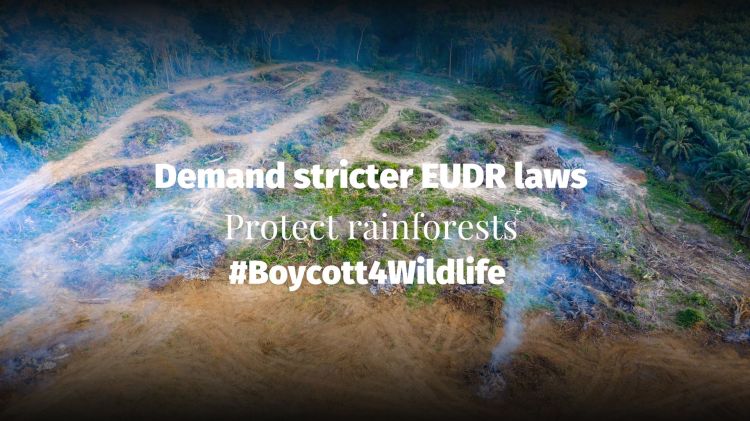
Global Canopy’s Forest 500 report reveals that 150 of the world’s largest financial institutions invested nearly $9 trillion in deforestation-linked industries during 2024, with six out of ten firms lacking any public deforestation policies. The analysis tracked $8.9 trillion in direct and indirect financial support for 500 companies exposed to forest-risk commodities including palm oil, soy, beef, cocoa, and timber, with $864 billion going to businesses making no public commitments against deforestation. Financial titans Vanguard, BlackRock and JPMorgan Chase alone accounted for more than one-fifth of total funding at $1.6 trillion. The EU’s upcoming Deforestation Regulation #EUDR will ban imports of products linked to forest destruction from December 30, potentially locking out companies without robust policies. Urgent action needed to redirect finance away from forest destruction and toward Indigenous-led forest protection. Support a strong and strict EUDR to safeguard forests, be vegan and #BoycottPalmOil #Boycott4Wildlife
💰☠️ $8.9 TRILLION funds deforestation! BlackRock, Vanguard, JPMorgan lead with $1.6T funding #palmoil, #soy and #meat #deforestation 🌴🔥 Support the #EUDR ban Dec 30 ⛔️ #BoycottPalmOil #Boycott4Wildlife @palmoildetect https://palmoildetectives.com/2025/12/17/finance-giants-fuel-8-9-trillion-deforestation-economy/
Share to BlueSkyShare to TwitterSustainable Times. (2024). Global finance giants under fire for fueling an $8.9 trillion ‘deforestation economy’ in 2024. Sustainable Times. https://www.sustainabletimes.co.uk/post/global-finance-giants-under-fire-for-fueling-an-8-9-trillion-deforestation-economy-in-2024
The world’s largest financial institutions Vanguard, BlackRock, and JPMorgan Chase are bankrolling a massive $8.9 trillion deforestation economy whilst offering minimal safeguards against forest destruction, according to explosive new research that exposes the banking sector’s complicity in global environmental destruction.
Global Canopy’s comprehensive Forest 500 report tracked investments from 150 of the planet’s biggest financial institutions throughout 2024, revealing systematic funding of industries driving tropical rainforest annihilation across palm oil, soy, beef and timber sectors. The scale of financial exposure proves staggering, with institutions providing $8.9 trillion in direct and indirect support for 500 companies engaged in forest-risk commodities.

The research exposed catastrophic policy failures across the financial sector. Six out of ten institutions reviewed maintain no publicly stated deforestation policies whatsoever, representing only marginal improvement from the previous year when two-thirds lacked such protections. Even more alarming, fewer than four in ten financial giants openly acknowledge that deforestation poses business risks to their portfolios.
Three financial behemoths dominate the destruction economy. Vanguard, BlackRock, and JPMorgan Chase “alone were responsible for more than one-fifth of the total” funding, collectively channelling $1.6 trillion toward forest-risk industries. Their enormous market influence means policy changes from these titans “could trigger rapid change across the global financial system,” according to Global Canopy analysts.
The geographic concentration of destruction finance reveals systematic patterns. Beyond the United States, “China and France also emerged as central hubs of financial flows into deforestation-linked industries.” This concentration demonstrates how relatively few financial centres drive global forest destruction through investment decisions.
Perhaps most damning, nearly $864 billion flowed directly to companies making zero public commitments against deforestation. This represents “almost one in every ten dollars” of total financing going to businesses with no safeguards protecting tropical forests from destruction for palm oil plantations, cattle ranches, or soy cultivation.

Global Canopy researchers emphasised the sector’s transformative potential, stating: “Unless financial institutions engage portfolio companies to act on deforestation risk – for instance, through strong stewardship of investee companies – their financing activities will undermine the positive impact of any transition finance they provide.” However, they noted these “financial heavyweights could use their investment strategies to drive better practice and transform commodity supply chains for the better.”
The European Union’s new Deforestation Regulation dramatically increases pressure on financial institutions to implement robust policies. Beginning December 30, the EU “will ban large businesses from importing beef, cocoa, coffee, palm oil, natural rubber, soy, or wood if these products are linked to deforestation.” The ban will eventually extend to smaller businesses, creating comprehensive market exclusions for forest-destructive products.
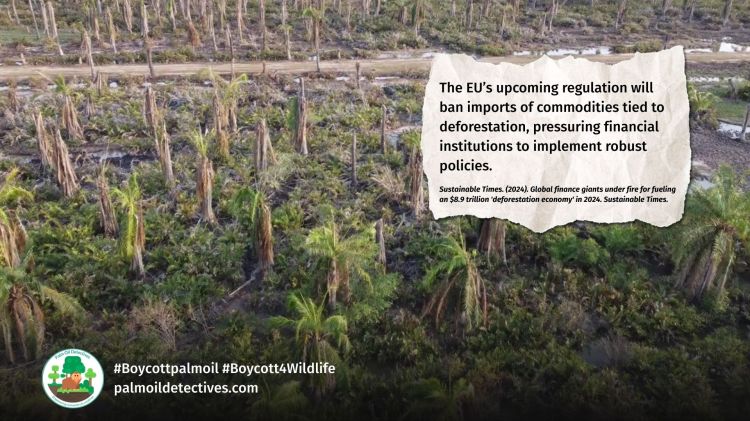
This regulatory shift creates urgent risks for financial institutions backing non-compliant companies. “Without robust policies, they will find themselves backing companies that are locked out of key markets,” the report warns. Financial institutions face the prospect of massive portfolio devaluations as their investee companies lose access to lucrative European markets.
A handful of progressive institutions demonstrate viable alternatives. Banco Bilbao Vizcaya Argentaria, Deutsche Bank, and Lloyds Banking Group represent “the only institutions shown to be screening and monitoring all the highest-risk commodities.” Their comprehensive approaches “provide a blueprint for others to follow” in developing effective deforestation policies.
Global Canopy outlined essential components for credible deforestation policies extending “well beyond a vague pledge.” Effective policies require “clear standards for screening clients and portfolio holdings, active engagement to bring non-compliant firms into line, and strict deadlines for divestment if companies fail to improve.” Additionally, institutions must maintain “transparent reporting of progress and commitments to human rights safeguards.”
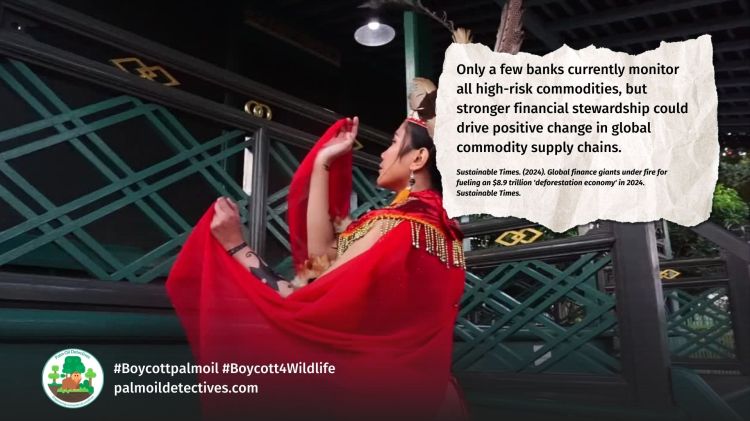
The analysis examined nine critical forest-risk commodities: “beef, cocoa, coffee, leather, palm oil, pulp and paper, soy, rubber, and timber.” Each sector drives habitat destruction threatening wildlife populations whilst displacing Indigenous communities dependent on intact forests for survival.
The report concludes that financial institutions possess “immense influence over whether deforestation is curbed or allowed to spiral further out of control.” Current investment patterns tell “a troubling story, but with the right commitments, banks and investment firms could become powerful drivers of change” toward forest protection rather than destruction.
Sustainable Times. (2024). Global finance giants under fire for fueling an $8.9 trillion ‘deforestation economy’ in 2024. Sustainable Times. https://www.sustainabletimes.co.uk/post/global-finance-giants-under-fire-for-fueling-an-8-9-trillion-deforestation-economy-in-2024
ENDS
Read more about deforestation and ecocide in the palm oil industry
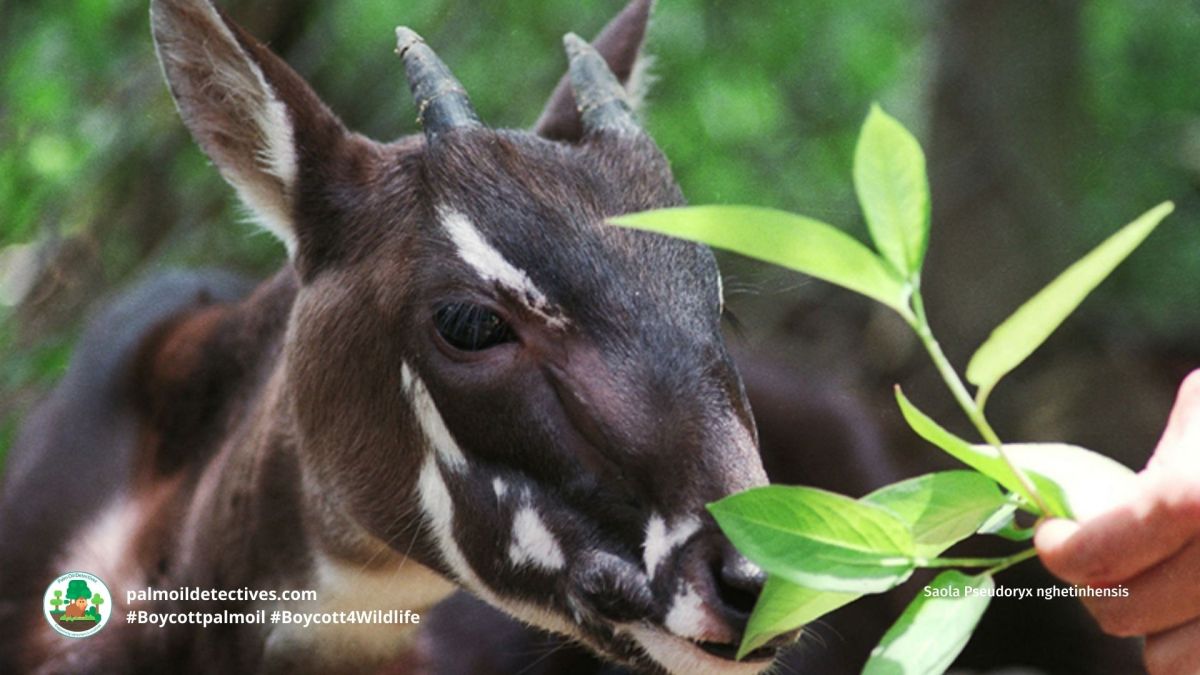
Saola Pseudoryx nghetinhensis
Saolas are rare and considered Southeast Asia’s ‘unicorns’, this Critically Endangered antelope is facing imminent extinction due to hunting and deforestation
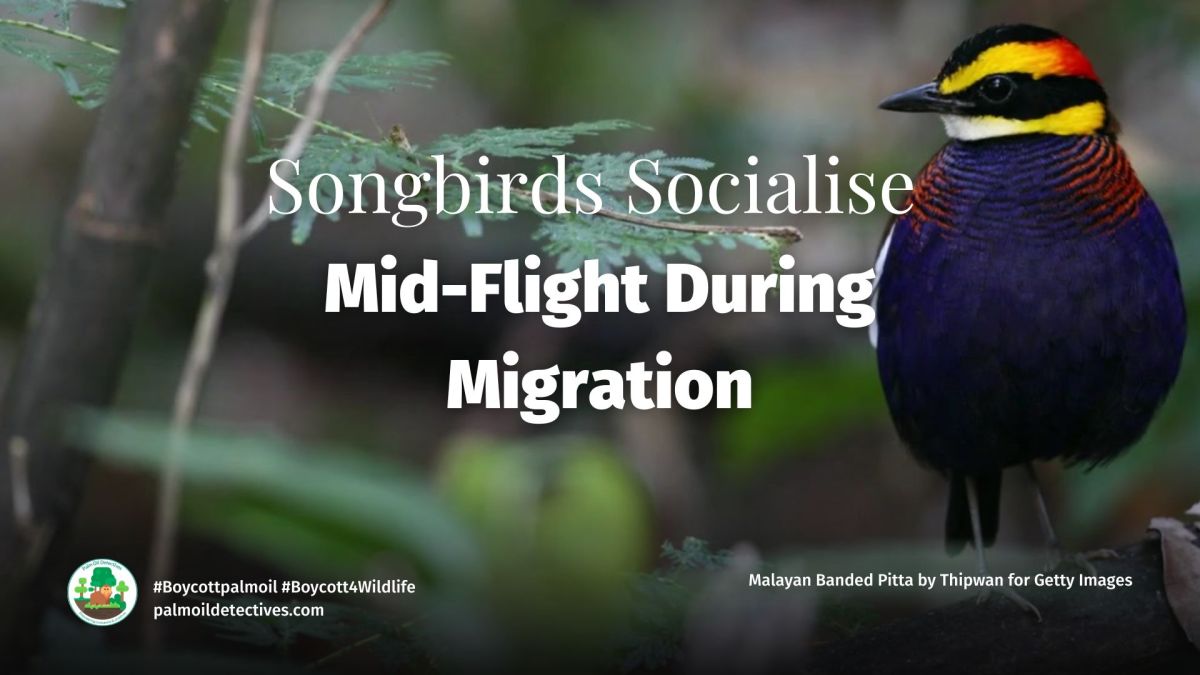
Songbirds Socialise Mid-Flight During Migration
Songbirds communicate with different species during nocturnal flights sharing vital info about navigation and stopover habitats. Save their fascinating world!

Why Pangolins Are So Special
Pangolins get their name from the Malay ‘pengguling’ meaning rolling up. These special critically endangered animals deserve a break from savage poaching
Tucuxi Sotalia fluviatilis
Tucuxi, small freshwater dolphins of Peru Ecuador Colombia and Brazil are Endangered due to fishing nets, deforestation, mercury poisoning from gold mining.
Protecting Peru’s Grasslands Vital for Spectacled Bears
Peru’s alpine puna grasslands supports foraging of vulnerable Andean bears AKA Spectacled Bears. They prefer young bromeliad plants, Take action for them!
Load more posts
Something went wrong. Please refresh the page and/or try again.
Take Action in Five Ways
1. Join the #Boycott4Wildlife on social media and subscribe to stay in the loop: Share posts from this website to your own network on Twitter, Mastadon, Instagram, Facebook and Youtube using the hashtags #Boycottpalmoil #Boycott4Wildlife.
Enter your email address
Sign Up
Join 3,172 other subscribers2. Contribute stories: Academics, conservationists, scientists, indigenous rights advocates and animal rights advocates working to expose the corruption of the palm oil industry or to save animals can contribute stories to the website.
Wildlife Artist Juanchi Pérez
Mel Lumby: Dedicated Devotee to Borneo’s Living Beings
Anthropologist and Author Dr Sophie Chao
Health Physician Dr Evan Allen
The World’s Most Loved Cup: A Social, Ethical & Environmental History of Coffee by Aviary Doert
How do we stop the world’s ecosystems from going into a death spiral? A #SteadyState Economy
3. Supermarket sleuthing: Next time you’re in the supermarket, take photos of products containing palm oil. Share these to social media along with the hashtags to call out the greenwashing and ecocide of the brands who use palm oil. You can also take photos of palm oil free products and congratulate brands when they go palm oil free.
https://twitter.com/CuriousApe4/status/1526136783557529600?s=20
https://twitter.com/PhillDixon1/status/1749010345555788144?s=20
https://twitter.com/mugabe139/status/1678027567977078784?s=20
4. Take to the streets: Get in touch with Palm Oil Detectives to find out more.
5. Donate: Make a one-off or monthly donation to Palm Oil Detectives as a way of saying thank you and to help pay for ongoing running costs of the website and social media campaigns. Donate here
Pledge your support#BoycottPalmOil #Boycott4wildlife #BoycottPalmOil #corruption #crime #deforestation #ecocide #ecolabel #EUDR #greenwashing #meat #meatAgriculture #meatAndSoyDeforestationInBrazil #News #PalmOil #palmOilDeforestation #palmoil #soy