#Raccoons solve mechanical puzzles driven by intrinsic #curiosity and information-seeking, continuing to unlock mechanisms even when no additional food rewards are provided.
#BehavioralScience #Ecology #Zoology #sflorg
https://www.sflorg.com/2026/03/bs03092601.html
#Raccoons solve mechanical puzzles driven by intrinsic #curiosity and information-seeking, continuing to unlock mechanisms even when no additional food rewards are provided.
#BehavioralScience #Ecology #Zoology #sflorg
https://www.sflorg.com/2026/03/bs03092601.html
African Forest Elephants Help Fight Climate Change
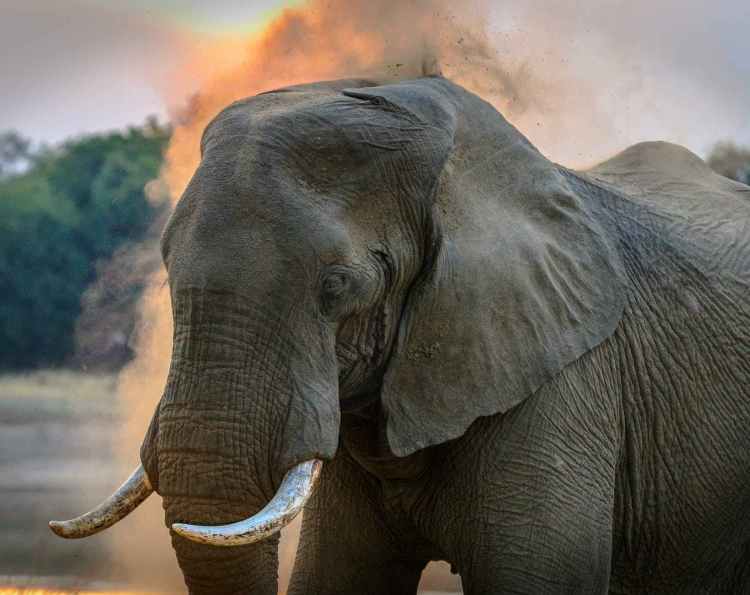
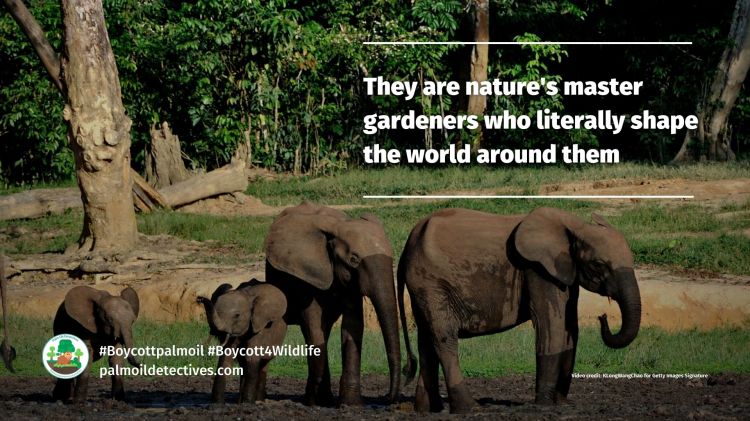
Discover the awe-inspiring role of African forest #elephants in the Congo Basin—nature’s master gardeners who literally shape the world around them! These gentle giants roam through muddy, mineral-rich paradises called baïs, fostering the growth of carbon-absorbing trees that make our planet healthier. By tending to these unique landscapes, they are the unsung heroes in the fight against climate change. Want to ensure these ecological architects keep doing their vital work? Join the movement to protect their habitat—say no to palm oil and adopt a vegan lifestyle! 🐘🌳#BoycottPalmOil #BeVegan #Boycott4Wildlife
https://youtu.be/s584AP-BYm0?si=Zrwc5CFFjAxAqmas
Take action by sharing this!
African forest #elephants 🐘 in #Congo 🇨🇩 are essential to fighting #climatechange 🌳💚 by capturing #carbon and dispersing seeds in the rainforest. Help them every time you shop, be #vegan #Boycottpalmoil #Boycott4Wildlife @palmoildetect https://palmoildetectives.com/2024/04/28/african-forest-elephants-unsung-heroes-helping-congo-fight-climate-change/
Share to BlueSky Share to TwitterGentle giant pachyderms #African forest #elephants 🐘🐘 are the unsung heroes helping #climatechange. They capture #carbon in the #DRC’s 🇨🇩🌳rainforest! Help them survive with your supermarket choices #Boycottpalmoil #Boycott4Wildlife @palmoildetect https://palmoildetectives.com/2024/04/28/african-forest-elephants-unsung-heroes-helping-congo-fight-climate-change/
Share to BlueSkyShare to TwitterThis story was written by Leonie Joubert and originally published by Mongabay on August 15, 2023 and was republished under a Creative Commons licence.
The approach to the “village of elephants” in the Sangha Rainforest in the Central African Republic must be made in complete silence. Not even the faintest rustle of backpack on rain jacket should break the soundscape as visitors wade through the sometimes waist-deep swamp at the forest’s edge. The Indigenous Ba’aka guides must be able to listen for any signs of nearby elephants, so they can steer the visitors clear and avoid a close encounter with these giants. When a few pachyderms saunter out of the dense greenery, the Ba’aka shoo them away calmly.
The thick vegetation gives way suddenly to a baï. This is no mere watering hole. The sandy clearing stretches for half a kilometer, more than a quarter of a mile, in the otherwise unbroken canopy of the world’s second-largest tropical forest.
A handful of researchers camp out on a timber observation platform, overlooking a place that has drawn generations of elephants to its mineral- and salt-laden sand and muddy water. They document how the animals use their trunks or tusks to dig into the sand, eavesdrop on the animals’ conversations, and count the many other species that congregate here.
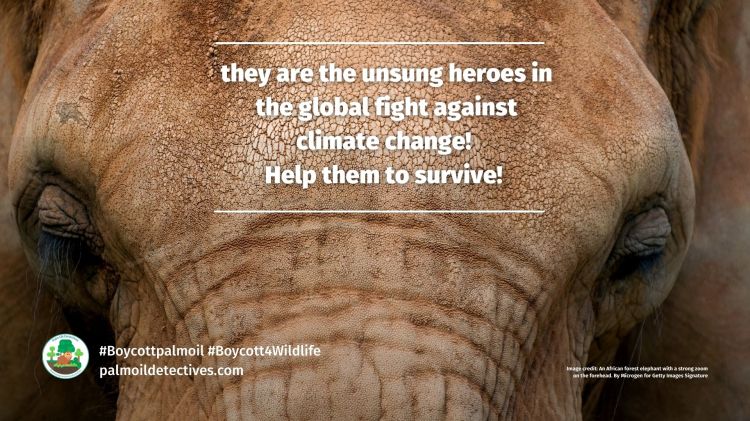
This is Dzanga baï, a meeting place for critically endangered African forest elephants (Loxodonta cyclotis) in the Dzanga-Sangha Complex of Protected Areas where these animals come together in huge numbers to dig for nutrients they can’t get from the otherwise abundant forests.
Baïs are unique to the Congo Basin’s forests, and new research is underway to understand the role these mineral-rich pockets play as a supplement to the elephants’ diet, how this sustains the animals’ population, and how they therefore contribute to the carbon-capture function of the forest.
Unlike the Amazon, the Congo Basin’s forests still have their original megafauna, elephants in particular. And they have these salt-rich clearings. Conservationists are beginning to understand the importance of elephants as forest gardeners here, and how their taste for certain trees and fruits has sculpted a forest that absorbs more carbon per hectare than the Amazon.
The Global Carbon Budget project estimated Africa’s total greenhouse gas emissions for 2021 at 1.45 billion metric tons. Every year, the Congo Basin’s forests soak up 1.1 billion metric tons of atmospheric carbon, storing it in trees and soil; in 2020 carbon credit prices, this service would be worth $55 billion.
Forest elephants, smaller than their better-known savanna cousins or even Asian elephants, prefer certain lower-growing, tasty trees. This picky browsing pressure creates gaps in the canopy that allow other, less palatable but carbon-dense species to reach tremendous heights. Elephants’ appetite for the fruit of these bigger trees then means they spread their seeds far and wide.
A 2019 study from the Ndoki Forest in the Republic of Congo (ROC) and LuiKotale in the Democratic Republic of Congo (DRC) estimated that if elephants were removed from these sites, the loss of their forest-shaping food preferences would reduce the forest’s carbon capture by 7%.
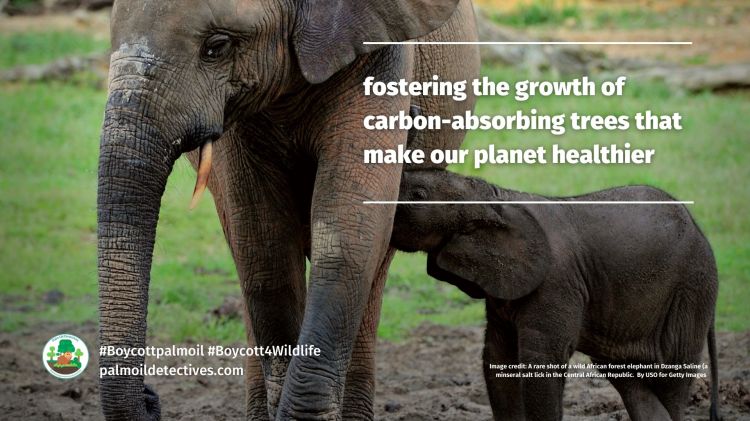
This finding makes a case not only to stop deforestation in the Congo Basin, but to protect the elephants too, as a way to slow climate breakdown, the study authors wrote.
Mouangi baï, a vast watering hole in the Republic of Congo’s Odzala-Kokoua National Park, is nicknamed Capitale because of the vast number of elephants drawn to its mineral-laden water, mud, and sand. Image courtesy Gwilli Gibbon/African Parks.Salt licks for elephants, gardeners of the forest
Mouangi baï is only about 250 km (155 mi) from Dzanga baï as the crow flies, but it takes a day or two to travel by road and river to get from one to the other.
Researchers with the conservation organization African Parks and Harvard University’s Department of Organismic and Evolutionary Biology are zeroing in on Mouangi and other baïs in Odzala-Kokoua National Park in the ROC, to clarify the link between baïs, elephants and the forest’s tree species composition.
Nicknamed Capitale by the locals, Mouangi baï in Odzala draws hundreds, maybe even thousands, of elephants, according to Gwili Gibbon, research and monitoring head at African Parks, which manages the park along with the ROC government.
“Mouangi is one of our largest and most renowned baïs,” Gibbon says.
At the intersection of two rivers, Mouangi is more than 1 km (0.6 mi) across and spans 91 hectares (225 acres). It’s the largest of a dozen of Odzala’s baïs that the African Parks and Harvard research collaboration is focusing on.
Odzala-Kokoua National Park extends across 1.35 million hectares (3.34 million acres), and while it has a few thousand baïs, often occurring in clusters within the forest, this ecosystem makes up only about 0.2% of the park’s footprint. Nevertheless, these clearings may be integral to the shape of the forest itself, which is why Harvard assistant professor Andrew Davies and doctoral researcher Evan Hockridge are teaming up with African Parks to understand the importance of the salty watering holes in supporting elephant populations, which then shape the forest mosaic.
The baïs are clearly a hotspot that elephants seek out for their rare minerals in an ecosystem rooted in the nutrient-poor soils typical of the region.
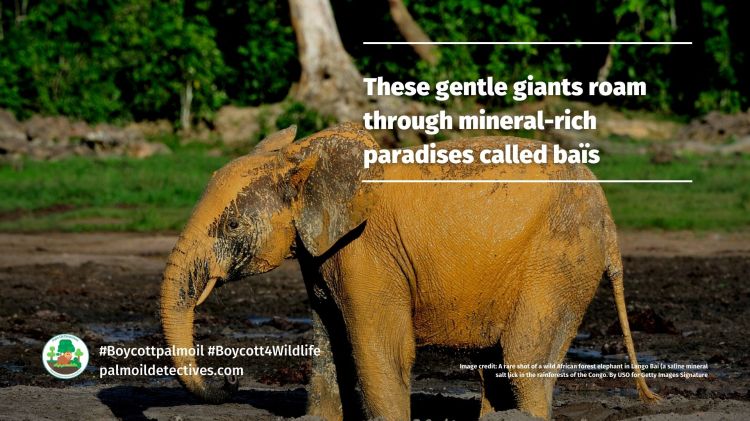
“The elephants use their tusks to scrape topsoil off in specific areas, and eat the finer dust on the surface,” says Hockridge, a landscape ecologist. “They also dig large mining sites or wells, as much as a meter [3 feet] deep.”
The animals’ excavations go even deeper at times, down to where water carries the salt in a more accessible form. The need to ingest the mineral-rich dust, mud and water keeps the animals returning to these sites.
An elephant digging for salt-rich mud in the Dzanga baï in the Sangha Rainforest in the Central African Republic. Image courtesy Jan Teede.But how the baïs formed in the first place — they’re present in the Congo Basin, but not in the Amazon — and why they remain clear of forest encroachment are still a mystery.
Hockridge says no one has tried to establish if the now-extinct megafauna of the Amazon once made similar clearings there, or if baï size correlates to the size of the animals visiting them.
“One hypothesis is that megafauna effectively create large, nutrient-rich, lick-like clearings. But it hasn’t been quantified that baïs are manufactured or maintained by megafauna,” he says.
The researchers say they hope to answer this puzzle: Do large mammals like elephants maintain and stabilize the baïs?
Anecdotes from the DRC might give the first glimpse of an answer, according to Harvard’s Davies.
“Baïs may be closing in the DRC, and it could be because the elephants are in a war zone, so they don’t have the big bulldozer effect,” he says.
The hypothesis is that if fewer elephants visit and maintain these clearings, the baïs will be swallowed up by the forest.
Gibbon’s African Parks team has set up experimental plots in the Odzala, where they’ve buried salt in the sand at a similar depth to which elephants excavate. Researchers are monitoring these sites to see if more animals will congregate around the plots, whether this impacts the vegetation cover in and around the baïs, and whether there’s a shift in the carbon-capture potential of the surrounding forests.
This study is centered in Odzala, although the researchers say they hope to expand the work into the Ndoki region of the Dzanga-Sangha Complex of Protected Areas.
Baïs have a busy social scene
It isn’t just elephants that congregate at the baïs. These watering holes have a bustling social scene.
Gibbon describes the flocks of African green pigeons (Treron calvus) that gather at Capitale at dawn and dusk; buffalo and several bird species that visit during daylight hours; and the hyenas that can be heard calling after dark as the elephants mine for salt.
Wildlife refuges like these in the Congo Basin are also home to the critically endangered western lowland gorilla (Gorilla gorilla gorilla), two unusual forest and swamp-dwelling antelope — the bongo (Tragelaphus eurycerus) and sitatunga (Tragelaphus spekii) — as well as central chimpanzees (Pan troglodytes troglodytes), bonobos (Pan pansicus), and the endangered gray parrot (Psittacus erithacus).
The forests of Gabon, southern Cameroon and southern Central African Republic also have a high number of baïs, and the findings from these studies could eventually be extrapolated to give an idea of the implications for the Congo Basin more widely.
“The area that baïs’ cover is tiny, but they sustain the elephant population,” Davies says. “If our hypothesis is correct, without the baïs you’d have no elephants; without elephants there’s be no big trees with high carbon density, so carbon storage would go down.”
If the forest loses the baïs, it could lose more than just the elephants or see a change in its carbon-capturing treescape. The baïs would no longer draw the many other animals that thrive in these mineral-dense watering holes, and the tourists and environmental researchers drawn to them too.
Citation:
Berzaghi, F., Longo, M., Ciais, P., Blake, S., Bretagnolle, F., Vieira, S., … Doughty, C. E. (2019). Carbon stocks in central African forests enhanced by elephant disturbance. Nature Geoscience, 12(9), 725-729. doi:10.1038/s41561-019-0395-6
Banner image: Elephants dig for salt-rich mud in the Dzanga baï in the Sangha Rainforest in the Central African Republic. Image courtesy Jan Teede.
This story was written by Leonie Joubert and originally published by Mongabay on August 15, 2023 and was republished under a Creative Commons licence.
ENDS
Learn about other animals endangered by palm oil and other agriculture
GlobalSouth America S.E. AsiaIndiaAfricaWest Papua & PNG

Tucuxi Sotalia fluviatilis

Frill-Necked Lizard Chlamydosaurus kingii

Grey Crowned Crane Balearica regulorum

Ecuadorean Viscacha Lagidium ahuacaense

Southern Pudu Pudu puda

Blue-streaked Lory Eos reticulata
Learn about “sustainable” palm oil greenwashing
Read more about RSPO greenwashing
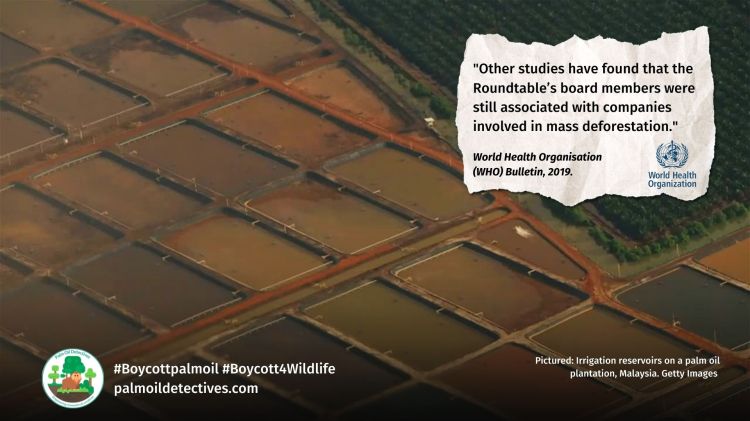
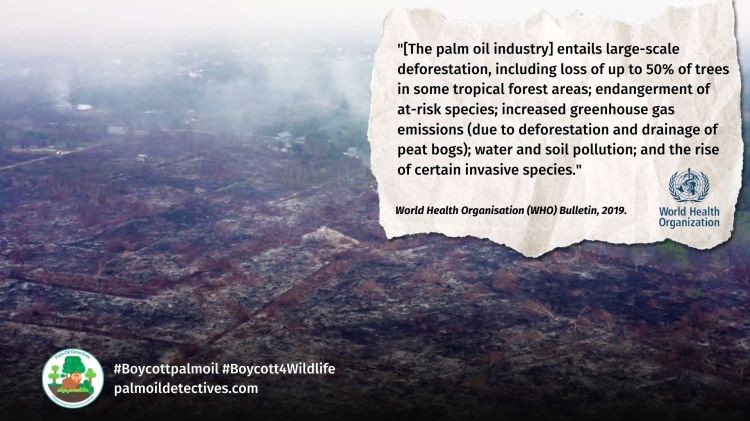
Lying Fake labelsIndigenous Land-grabbingHuman rights abusesDeforestation Human health hazardsA 2019 World Health Organisation (WHO) report into the palm oil industry and RSPO finds extensive greenwashing of palm oil deforestation and the murder of endangered animals (i.e. biodiversity loss)
Read more


Take Action in Five Ways
1. Join the #Boycott4Wildlife on social media and subscribe to stay in the loop: Share posts from this website to your own network on Twitter, Mastadon, Instagram, Facebook and Youtube using the hashtags #Boycottpalmoil #Boycott4Wildlife.
Enter your email address
Sign Up
Join 3,172 other subscribers2. Contribute stories: Academics, conservationists, scientists, indigenous rights advocates and animal rights advocates working to expose the corruption of the palm oil industry or to save animals can contribute stories to the website.
Wildlife Artist Juanchi Pérez

Mel Lumby: Dedicated Devotee to Borneo’s Living Beings

Anthropologist and Author Dr Sophie Chao

Health Physician Dr Evan Allen

The World’s Most Loved Cup: A Social, Ethical & Environmental History of Coffee by Aviary Doert

How do we stop the world’s ecosystems from going into a death spiral? A #SteadyState Economy
3. Supermarket sleuthing: Next time you’re in the supermarket, take photos of products containing palm oil. Share these to social media along with the hashtags to call out the greenwashing and ecocide of the brands who use palm oil. You can also take photos of palm oil free products and congratulate brands when they go palm oil free.
https://twitter.com/CuriousApe4/status/1526136783557529600?s=20
https://twitter.com/PhillDixon1/status/1749010345555788144?s=20
https://twitter.com/mugabe139/status/1678027567977078784?s=20
4. Take to the streets: Get in touch with Palm Oil Detectives to find out more.
5. Donate: Make a one-off or monthly donation to Palm Oil Detectives as a way of saying thank you and to help pay for ongoing running costs of the website and social media campaigns. Donate here
Pledge your support#african #africanForestElephantLoxodontaCyclotis #amazingAnimals #animalBehaviour #animalCommunication #animalIntelligence #bantrophyhunting #bevegan #biodiversity #boycottPalmOil #boycott4wildlife #boycottpalmoil #carbon #climatechange #congo #deforestation #democracticRepublicOfCongo #drc #elephant #elephants #forgottenAnimals #mammal #pachyderm #pachyderms #palmOil #palmOilDeforestation #theDemocraticRepublicOfCongo #vegan
Ecuadorean Viscacha Lagidium ahuacaense
IUCN Status: Critically Endangered
Location: Ecuador’s Cerro El Ahuaca
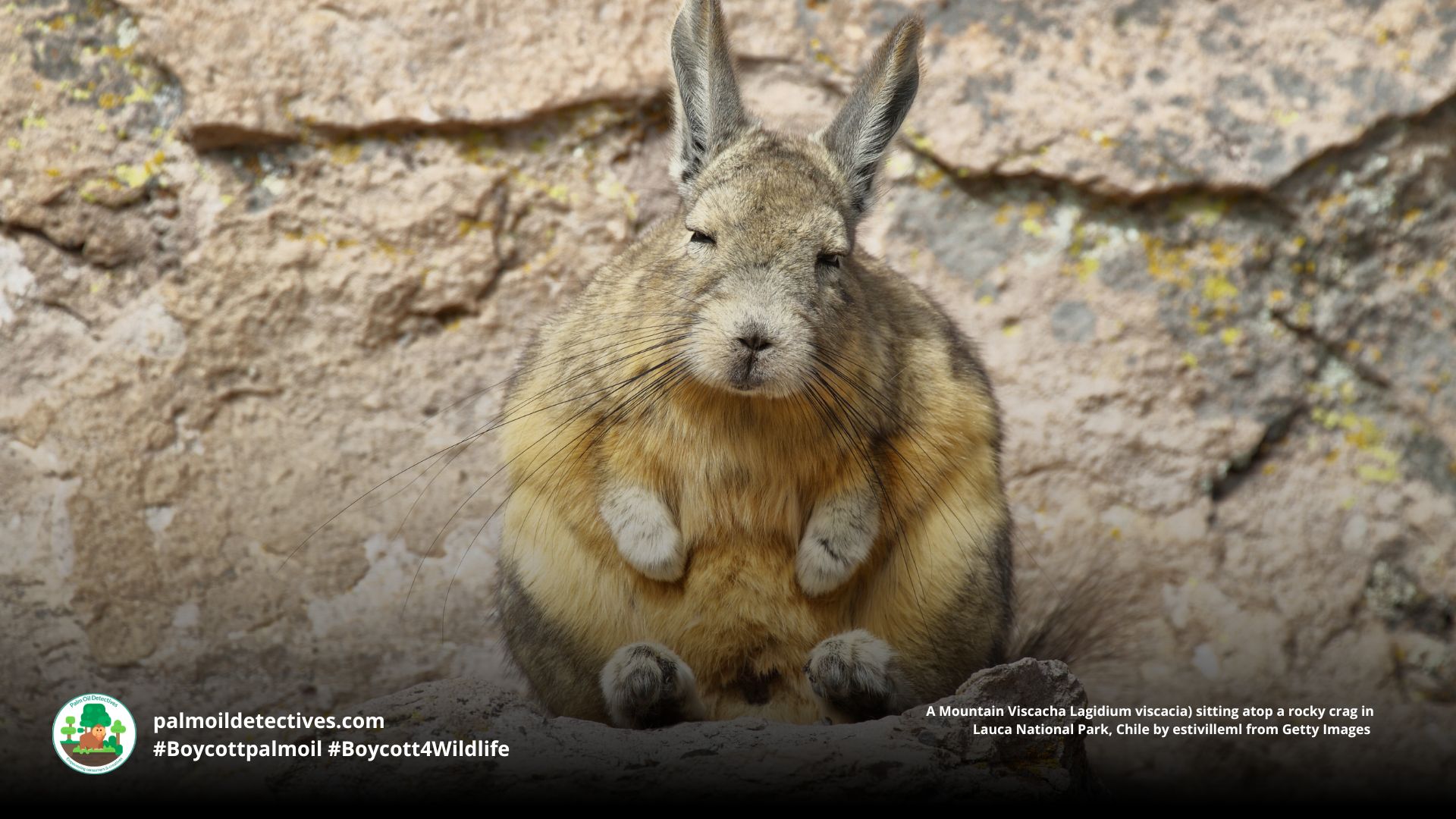
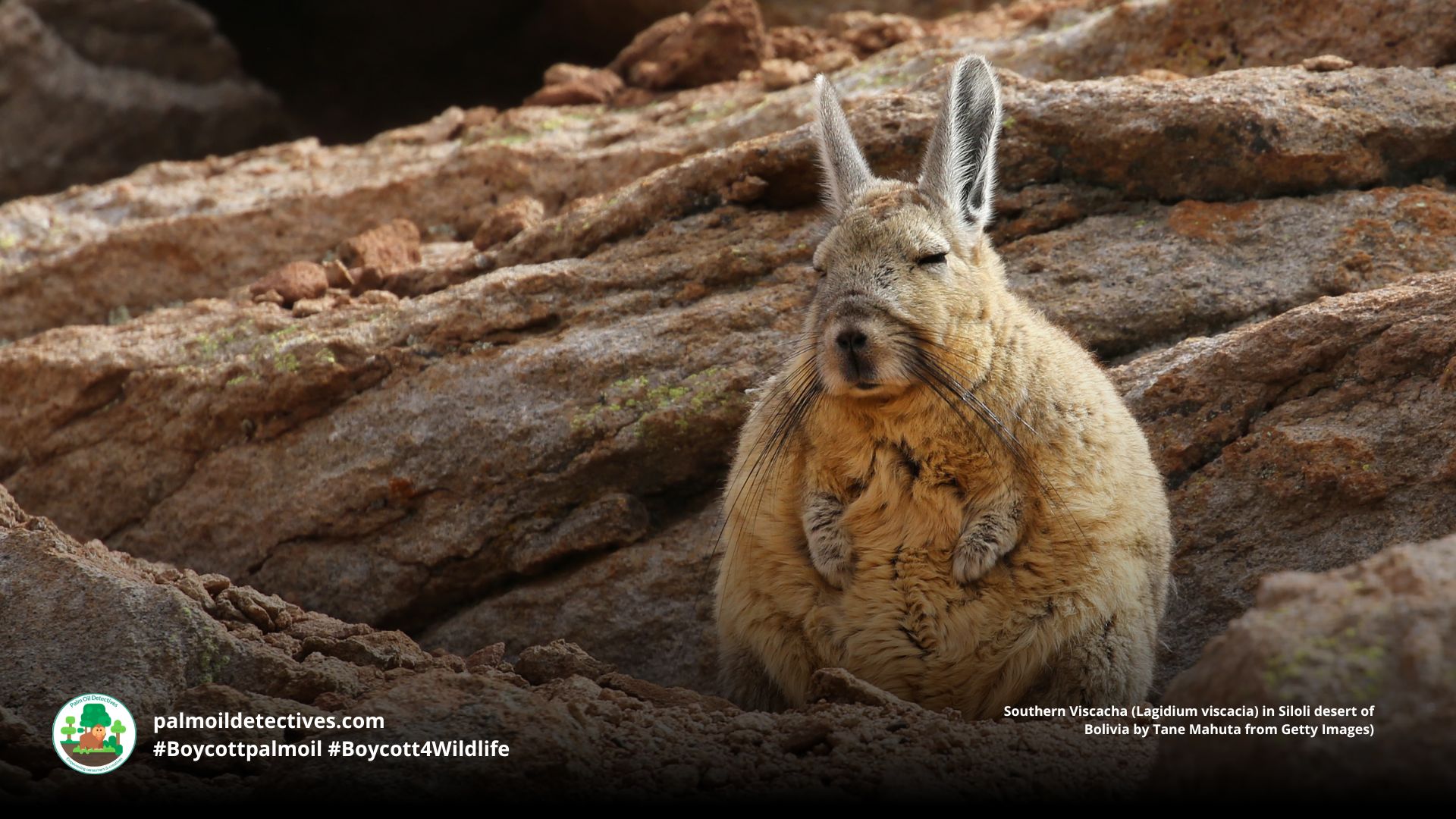
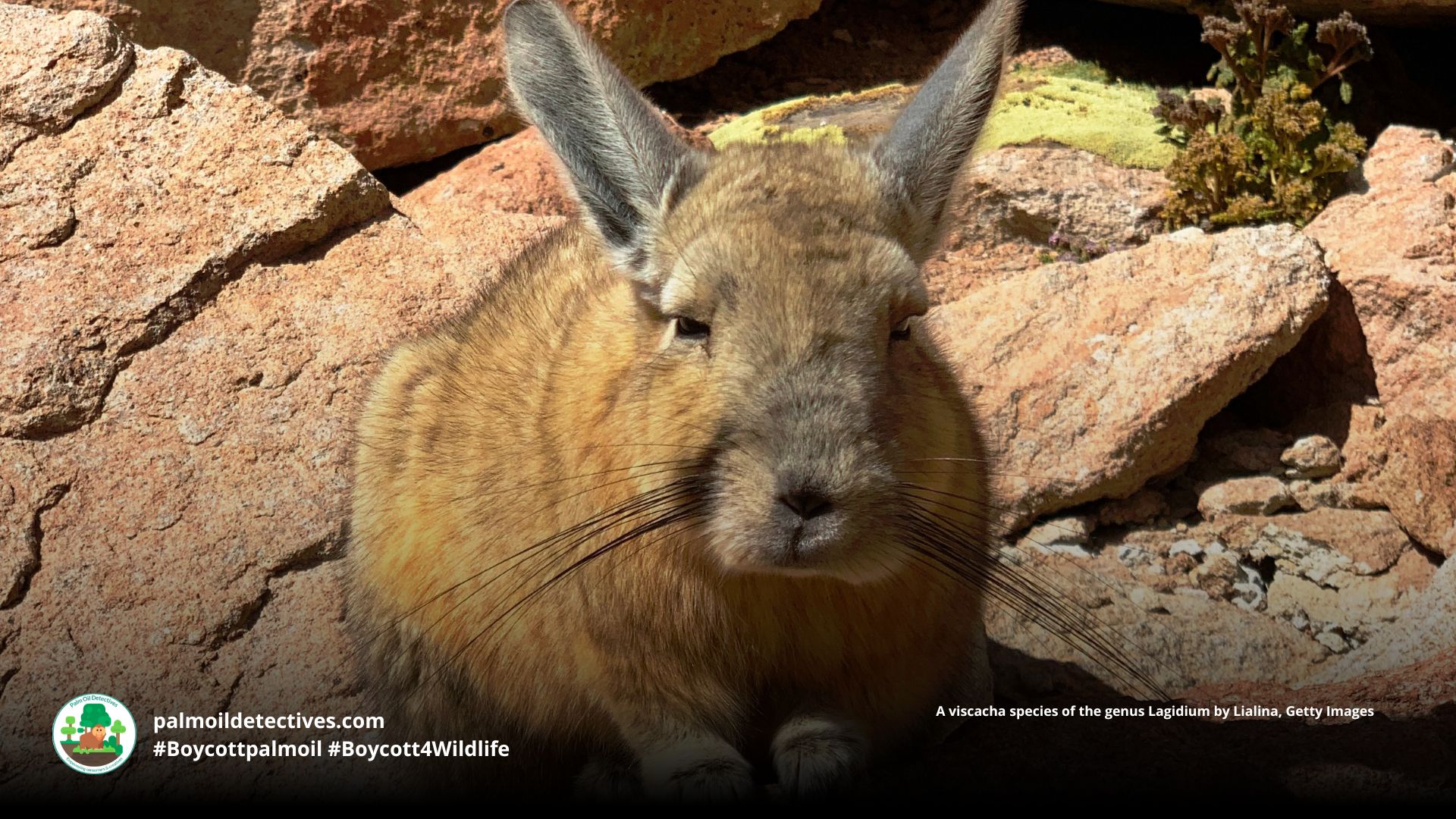
High in the remote granite outcrops of Cerro El Ahuaca, #Ecuador the Ecuadorean #Viscacha Lagidium ahuacaense is plump and fluffy #rodent sporting sage-like long whiskers. From their high perch they look down upon the world below with a permanent expression of what could interpreted as disappointment. Ecuadorean Viscachas were first spotted in 2005 and formally described in 2009, these mountain-dwelling large #rodents are the northernmost member of the Lagidium genus, marooned over 500 kilometres from their closest relatives in #Peru. Few creatures are as elusive or fascinating— tragically, only a handful of them remain alive.
Fires, #beef agriculture, and #deforestation for monoculture are carving away at their already fragile existence, pushing them ever closer to the brink of #extinction. Help them by sharing their story to social media. Join the #Boycott4Wildlife.
High in the mountains of #Ecuador 🇪🇨 lives a sage-like fluffy #rodent, the Ecuadorean #Viscacha, a critically endangered alpine wonder. Few remain alive due to #climatechange and #meat #agriculture 🥩🔥. Be #vegan for them #Boycott4Wildlife @palmoildetect https://wp.me/pcFhgU-aoV
Share to BlueSky Share to TwitterThe Ecuadorean #Viscacha is a fluffy epic #rodent of #Ecuador’s high mountains with long and wise whiskers and a bushy tail. These tenacious creatures are critically #endangered 😭😿 Help them to survive, be #vegan #Boycott4Wildlife 🥩🔥⛔️ @palmoildetect https://wp.me/pcFhgU-aoV
Share to BlueSky Share to TwitterAppearance & Behaviour
Built for survival in one of Ecuador’s harshest landscapes, the Ecuadorean Viscacha is a sturdy and big rodent with a compact body covered in thick, grey-brown fur. Their dense, woolly fur shields them from the biting Andean winds, while their long, silvery tails provide balance as they scale sheer rock faces. Their large, dark eyes scan the terrain for danger, and their long, sensitive whiskers twitch as they pick up the faintest vibrations in the wind.
Long and distinguished whiskers provide them with sensitive and deep understanding of their environment. A black dorsal stripe runs the length of their back, this disappears into the dense coat that keeps them warm against the mountain’s chill.
Most active at dawn and dusk, their every movement is deliberate. They bound effortlessly between jagged outcrops, using their powerful hind legs to launch themselves across treacherous gaps. Unlike burrowing rodents, they take refuge in narrow rock crevices, where they remain hidden from predators.


Threats
Once secure in their isolated stronghold, the Ecuadorean Viscacha now faces a gauntlet of human-driven threats. Their already tiny population is being squeezed into an ever-smaller fragment of land, where survival is becoming increasingly precarious.
Deforestation for eucalyptus and pine monoculture plantations
For generations, wildfires have been used to clear land for agriculture and livestock grazing, but in recent decades, these fires have intensified, spreading further into the Viscacha’s habitat. Each blaze devours critical vegetation, stripping away the food sources they rely on and forcing them into ever-smaller pockets of surviving habitat.
Farmed Animal Agriculture
Grazing cattle have become an unrelenting force in the region, trampling vegetation and outcompeting the Viscacha for food. Their presence has disrupted the delicate balance of this fragile ecosystem, leaving fewer resources for native wildlife.
Climate Change-related Environmental Shifts
With their entire known population confined to a single mountain, the Ecuadorean Viscacha is especially vulnerable to even the smallest environmental shifts. Changing rainfall patterns, prolonged droughts, and temperature fluctuations could alter the availability of food and water, placing further stress on their already limited numbers.
Population Fragmentation and Isolation
Trapped within a tiny range with no known neighbouring populations, the Viscacha is cut off from potential mates and genetic diversity. Without intervention, this isolation could lead to inbreeding, weakening the species’ ability to adapt and survive.


Geographic Range
The Ecuadorean Viscacha is found only in a single location—Cerro El Ahuaca, a rugged granite mountain in southern Ecuador. They inhabit steep, rocky surfaces at elevations between 1,950 and 2,480 metres, a world of exposed rock faces and sparse vegetation. No other known populations exist, making them one of the most geographically restricted mammals on the planet.
Though their habitat once stretched further, fires and deforestation have steadily chipped away at the fringes of their territory. Today, their entire known range spans just 120 hectares—an area smaller than many urban parks—leaving them with little room to escape the pressures of a changing world.
Diet
These high-altitude specialists are herbivores, feeding primarily on native grasses, shrubs, and small herbs that cling to the mountainside. Signs of their feeding are visible throughout their habitat—freshly grazed plants and stripped vegetation mark the places where they have foraged. Their diet is shaped by scarcity, forcing them to survive on whatever plant life they can find in their isolated, rocky home. Their close relatives Mountain Viscacha of Peru are preyed upon by Andean Mountain Cats.
Mating and Reproduction
Little is known about the reproductive habits of the Ecuadorean Viscacha, but they likely follow a pattern similar to their relatives in the Lagidium genus. Mountain Viscachas generally give birth to a single offspring after a long gestation period, ensuring that each newborn has a better chance of survival in the unforgiving terrain. Born with fur and open eyes, young Viscachas are relatively well-developed, an adaptation that allows them to quickly learn the skills needed to navigate their hazardous mountain environment.
FAQs
Are Ecuadorean Viscachas related to rabbits or chinchillas?
Despite their rabbit-like appearance, Ecuadorean Viscachas belong to the Chinchillidae family, making them closer relatives of chinchillas than rabbits. Their long whiskers, dense fur, and powerful hind legs are adaptations seen in other members of this family, allowing them to thrive in rocky, high-altitude environments.
How are Ecuadorean Viscachas different from other Mountain Viscachas?
Ecuadorean Viscachas are the northernmost species of the Lagidium genus, separated by more than 500 kilometres from their closest relatives in Peru. Genetic studies show that they diverged significantly from other Mountain Viscachas, with at least 7.9% DNA sequence differences. Morphologically, they have a more compact body, a distinct black dorsal stripe, and a tail that shifts in colour from grey-brown to reddish-brown. Their isolation and unique adaptations to the Cerro El Ahuaca environment make them a distinct species.
How do Ecuadorean Viscachas survive in their rocky habitat?
Perfectly adapted to life among sheer cliffs and granite outcrops, Ecuadorean Viscachas use their powerful hind legs to leap between rocks, navigating the treacherous terrain with ease. Their thick, woolly fur provides insulation against the cold, and instead of burrowing, they take refuge in rock crevices where they remain hidden from predators.
What do Ecuadorean Viscachas eat?
These herbivores feed on native shrubs, grasses, and small herbs found in their mountainous habitat. They leave behind distinct feeding traces, such as grazed vegetation and stripped plants, which provide insight into their foraging habits. Their diet is dictated by the limited plant life available in their isolated environment.
How many Ecuadorean Viscachas are left in the wild?
The total known population is alarmingly small, possibly consisting of only a few dozen individuals confined to a 120-hectare area on Cerro El Ahuaca. No other populations have been discovered, making them one of the most critically endangered rodents in the world.
What are the biggest threats to the Ecuadorean Viscacha?
Their biggest threats include:
• Habitat destruction – Uncontrolled fires and land clearing for eucalyptus and pine monoculture and cattle grazing are steadily erasing their already limited habitat.
• Livestock competition – Grazing cattle trample vegetation and outcompete Viscachas for food.
• Climate change – Shifting rainfall patterns and temperature fluctuations could further disrupt their delicate ecosystem.
• Genetic isolation – With only a single known population, they face the risk of inbreeding, which could weaken their resilience.
Why are they only found in one place?
Ecuadorean Viscachas are highly specialised mountain dwellers, perfectly suited to the rocky terrain of Cerro El Ahuaca. They may have once had a wider range, but habitat destruction and fragmentation have left them stranded in this isolated stronghold. Unlike more adaptable rodents, they cannot easily move to new areas due to their specific habitat needs.
Are Ecuadorean Viscachas protected?
The Ecuadorean Vischaca was only recently discovered and are considered a forgotten species. However conservation efforts have begun, there is no targeted species-wide protection in place. However, local conservation initiatives have helped establish protected areas that include their habitat. Researchers continue to push for stronger conservation measures to ensure their survival.
How can I help save the Ecuadorean Viscacha?
You can make a difference by:
• Supporting conservation organisations working to protect their habitat.
• Raising awareness about the threats they face by sharing this post and joining the #Boycott4Wildlife
• Advocating for stronger environmental policies in Ecuador to prevent further deforestation and habitat loss.
Without immediate action, these rare and remarkable mountain survivors could disappear forever.
Take Action!
The Ecuadorean Viscacha is teetering on the edge of extinction, but there is still time to act. Conservationists have already taken steps to protect their habitat, securing key areas under municipal conservation agreements. However, long-term survival depends on preventing further destruction of their fragile mountain refuge.
You can help by:
• Supporting organisations working to protect Ecuador’s high-altitude ecosystems.
• Spreading awareness about the threats facing the Ecuadorean Viscacha and the urgent need for conservation.
• Demanding stronger environmental protections to prevent further habitat loss in Loja Province.
Every effort counts. Without immediate action, these extraordinary mountain survivors could disappear forever.
Support Ecuadorean Viscacha by going vegan and boycotting palm oil in the supermarket, it’s the #Boycott4Wildlife
Support the conservation of this species
This animal has no protections in place. Read about other forgotten species here. Create art to support this forgotten animal or raise awareness about them by sharing this post and using the #Boycottpalmoil #Boycott4Wildlife hashtags on social media. Also you can boycott palm oil in the supermarket.
Further Information
Nature and Culture International. (2022). Ecuadorian Viscacha Conservation Project. Retrieved from https://www.natureandculture.org/directory/ecuadorian-vizcacha-conservation-project/
Roach, N. 2016. Lagidium ahuacaense. The IUCN Red List of Threatened Species 2016: e.T48295808A48295811. https://dx.doi.org/10.2305/IUCN.UK.2016-2.RLTS.T48295808A48295811.en. Accessed on 27 February 2025.
Werner, F. A., Ledesma, K. J., & Hidalgo B., R. (2006). Mountain vizcacha (Lagidium cf. peruanum) in Ecuador – first record of Chinchillidae from the northern Andes. Mastozoología Neotropical, 13(2), 271–274.
Wikipedia Contributors. (n.d.). Lagidium ahuacaense. Wikipedia, The Free Encyclopedia. Retrieved from https://en.wikipedia.org/wiki/Lagidium_ahuacaense


How can I help the #Boycott4Wildlife?
Take Action in Five Ways
1. Join the #Boycott4Wildlife on social media and subscribe to stay in the loop: Share posts from this website to your own network on Twitter, Mastadon, Instagram, Facebook and Youtube using the hashtags #Boycottpalmoil #Boycott4Wildlife.
Enter your email address
Sign Up
Join 3,529 other subscribers2. Contribute stories: Academics, conservationists, scientists, indigenous rights advocates and animal rights advocates working to expose the corruption of the palm oil industry or to save animals can contribute stories to the website.

Wildlife Artist Juanchi Pérez

Mel Lumby: Dedicated Devotee to Borneo’s Living Beings

Anthropologist and Author Dr Sophie Chao

Health Physician Dr Evan Allen

The World’s Most Loved Cup: A Social, Ethical & Environmental History of Coffee by Aviary Doert

How do we stop the world’s ecosystems from going into a death spiral? A #SteadyState Economy
3. Supermarket sleuthing: Next time you’re in the supermarket, take photos of products containing palm oil. Share these to social media along with the hashtags to call out the greenwashing and ecocide of the brands who use palm oil. You can also take photos of palm oil free products and congratulate brands when they go palm oil free.
https://twitter.com/CuriousApe4/status/1526136783557529600?s=20
https://twitter.com/PhillDixon1/status/1749010345555788144?s=20
https://twitter.com/mugabe139/status/1678027567977078784?s=20
4. Take to the streets: Get in touch with Palm Oil Detectives to find out more.
5. Donate: Make a one-off or monthly donation to Palm Oil Detectives as a way of saying thank you and to help pay for ongoing running costs of the website and social media campaigns. Donate here
Pledge your supportLearn about other animals endangered by palm oil and other agriculture
GlobalSouth America S.E. AsiaIndiaAfricaWest Papua & PNG
Southern Pudu Pudu puda

Blue-streaked Lory Eos reticulata

Blonde Capuchin Sapajus flavius

Savage’s Glass Frog Centrolene savagei

Pesquets Parrot Psittrichas fulgidus

Tanimbar Eclectus Parrot Eclectus riedeli
Learn about “sustainable” palm oil greenwashing
Read more about RSPO greenwashing
Lying Fake labelsIndigenous Land-grabbingHuman rights abusesDeforestation Human health hazardsA 2019 World Health Organisation (WHO) report into the palm oil industry and RSPO finds extensive greenwashing of palm oil deforestation and the murder of endangered animals (i.e. biodiversity loss)
Read more


#Agriculture #animals #beef #Boycott4wildlife #BoycottPalmOil #climatechange #CriticallyEndangeredSpecies #criticallyendangered #deforestation #Ecuador #EcuadoreanViscachaLagidiumAhuacaense #endangered #extinction #ForgottenAnimals #hunting #meat #meatDeforestation_ #PalmOil #palmOilDeforestation #Peru #poaching #rodent #rodents #SouthAmericaSpeciesEndangeredByPalmOilDeforestation #vegan #Viscacha
Tucuxi Sotalia fluviatilis
IUCN Red List Status: Endangered
Location: #Brazil, #Peru, #Colombia, #Ecuador
Found throughout the #Amazon and Solimões River systems, including major tributaries and large lakes. Their range spans lowland rainforest areas of Brazil, southeastern Colombia, eastern Ecuador, and southern Peru.
The #Tucuxi, a small freshwater #dolphin of #Peru, #Ecuador, #Colombia and #Brazil now faces a dire future. Once common throughout the Amazon River system, they are now listed as #Endangered due to accelerating population declines. Threats include drowning in fishing nets, deforestation, mercury poisoning from gold mining, #palmoil run-off, oil drilling, and dam construction. A shocking 97% decline was recorded over 23 years in a single Amazon reserve. Without urgent action, this elegant and playful river dolphin could vanish from South America’s waterways. Use your wallet as a weapon against extinction. Choose palm oil-free, and #BoycottGold #BoycottPalmOil #Boycott4Wildlife
Playful and intelligent #Tucuxi are small #dolphins 🐬 of #Amazonian rivers in #Peru 🇵🇪 #Brazil 🇧🇷 #Ecuador 🇪🇨 and #Colombia 🇨🇴. #PalmOil and #GoldMining are major threats 😿 Fight for them! #BoycottGold #BoycottPalmOil #Boycott4Wildlife @palmoildetect https://palmoildetectives.com/2025/11/23/tucuxi-sotalia-fluviatilis/
Share to BlueSky Share to TwitterClever and joyful #Tucuxi are #dolphins 🐬💙 endangered by #hunting #gold #mining and contamination of the Amazon river 🇧🇷 for #PalmOil #agriculture ☠️ Use your wallet as a weapon and #BoycottGold 🥇🚫 #BoycottPalmOil 🌴🚫 #Boycott4Wildlife @palmoildetect https://palmoildetectives.com/2025/11/23/tucuxi-sotalia-fluviatilis/
Share to BlueSky Share to TwitterAppearance & Behaviour
Tucuxis are often mistaken for their oceanic dolphin cousins due to their streamlined bodies, short beaks, and smooth, pale-to-dark grey skin. But these freshwater dolphins are wholly unique—adapted to life in winding river systems where water levels rise and fall dramatically with the seasons.
What sets them apart is their remarkable intelligence and tightly knit social groups. Tucuxis are playful and curious by nature. They leap from the water in graceful arcs, sometimes spinning mid-air.


The Tucuxi, sometimes called the ‘grey dolphin’ due to their uniform colouring, resembles a smaller oceanic dolphin, with a streamlined body and slender beak. Their colour varies from pale grey on the belly to darker grey or bluish-grey along the back.
They travel in small groups of two to six, displaying coordinated swimming patterns. In rare cases, they may form groups up to 26 individuals, particularly at river confluences. Known for their agility, they leap and spin in the water with a grace that belies their size. Tucuxis are particularly drawn to dynamic habitats like river junctions, where waters mix and fish gather.
Threats


- Widespread deforestation from palm oil plantations Palm oil plantations are rapidly expanding across the Amazon, clearing vast tracts of forest that stabilise riverbanks and filter water. This deforestation leads to increased sedimentation in rivers, altering flow patterns and reducing water clarity—conditions that directly disrupt the Tucuxi’s feeding and movement. Run-off from fertilisers and pesticides used in palm oil monocultures also poisons aquatic ecosystems, harming Tucuxis other Amazonian dolphin species and the fish they rely on.
- Toxic mercury pollution from gold mining Artisanal and illegal gold mining in the Amazon releases massive quantities of mercury into the water, contaminating fish and other aquatic organisms. Tucuxis, as top predators, ingest this mercury through their prey, which accumulates in their tissues and causes neurological damage, weakened immunity, and reproductive failure. Mercury exposure is one of the most insidious threats, as it persists in ecosystems long after mining has ceased.
- Incidental drowning in fishing nets Tucuxis are frequently caught and killed in gillnets and other fishing gear as bycatch. Tucuxis and other Amazonian dolphins often inhabit the same confluence zones and productive fishing grounds targeted by local communities, making entanglement almost inevitable. Many carcasses are never recovered, having either been discarded by fishers or lost to river currents, meaning actual mortality rates are likely far higher than reported.
- Deliberate hunting for use as fish bait Though illegal, Tucuxis continue to be targeted and killed in parts of Brazil, especially near the Mamirauá and Amana Reserves, where they are used as bait in the piracatinga (catfish) fishery. This brutal practice involves harpooning or netting dolphins and using their flesh to lure fish, often alongside the killing of Botos. Despite a national ban, weak enforcement and ongoing demand mean this threat persists in remote and lawless regions.
- Illegal fishing with explosives and toxins In certain areas, particularly in Brazil and Peru, fishers use home-made explosives and poisoned bait to stun or kill fish en masse. These destructive methods harm or kill Tucuxis who are attracted by the sudden appearance of dead or stunned prey. The concussive force of explosions and the ingestion of poisoned prey result in slow, agonising deaths for affected dolphins.
- Construction of hydroelectric dams Dams fragment Tucuxi populations by blocking their movement along river corridors, reducing access to feeding and breeding grounds. These projects alter seasonal water flow, raise water temperatures, and flood critical habitats—conditions that significantly disrupt dolphin ecology. Brazil alone has 74 operational dams in the Amazon basin, with over 400 more planned, posing a long-term existential threat to freshwater cetaceans.
- Run-off and contamination from palm oil, soy and meat agriculture In addition to habitat loss, palm oil and soy plantations along with cattle ranching generates enormous volumes of chemical-laden waste, which enters waterways and poisons aquatic life. This pollution affects Tucuxis both directly and indirectly—exposing them to harmful substances and killing off sensitive fish species. As plantations replace biodiverse forests, the ecosystem becomes less resilient, accelerating the decline of species like the Tucuxi.
- Bioaccumulation of heavy metals and industrial pollutants Tucuxis, like many river dolphins, suffer from exposure to persistent organic pollutants such as PCBs, DDT, and flame retardants, as well as heavy metals like lead and cadmium. These toxins accumulate in dolphin tissues over time, weakening their immune systems, interfering with reproduction, and making them more vulnerable to disease. Contaminants originate from industrial waste, agriculture, and mining, and are now widespread across the Amazon basin.
- Habitat fragmentation from infrastructure and oil development Roads, oil pipelines, and shipping corridors criss-cross many parts of the Tucuxi’s range, slicing through their habitat and increasing the risk of collisions with boats. These developments also bring noise pollution, which can interfere with echolocation and communication. Fragmentation leads to isolated subpopulations, reducing genetic diversity and making recovery more difficult.
Geographic Range
The Tucuxi inhabits the Amazon River basin, spanning: Brazil, Peru, Colombia, Ecuador These river dolphins occur as far west as southern Peru and eastern Ecuador, and as far north as southeastern Colombia. They are notably absent from Bolivia’s Beni/Mamoré system, the Orinoco basin, and upper reaches above major waterfalls or rapids.
Their range includes wide, deep rivers and lakes, avoiding turbulent rapids and shallow areas. Despite overlapping with the Amazon River Dolphin (Inia geoffrensis), Tucuxis do not enter flooded forest habitats and stay closer to main river channels.
Diet
Tucuxis feed on more than 28 species of small, schooling freshwater fish, including members of the characid, sciaenid, and siluriform families. During the dry season, fish are concentrated in shrinking waterways, making them easier to catch. In contrast, flooding season disperses prey into forested areas, beyond the Tucuxi’s reach. They prefer to feed at river junctions and along confluences, where nutrient-rich waters concentrate fish populations.
Mating and Reproduction
Little is known about their mating behaviours. However, individuals appear to remain within familiar ranges for many years, and females likely give birth to a single calf after a long gestation. Calves are dependent for an extended period, learning complex navigation and foraging skills in rapidly changing river systems. The estimated generation length is 15.6 years.
FAQs
How many Tucuxis are left in the wild?
There is no comprehensive global population estimate. However, surveys from 1994–2017 in Brazil’s Mamirauá Reserve show a 7.4% annual decline—amounting to a 97% drop over three generations (da Silva et al., 2020). If this trend reflects the wider Amazon basin, the species could be on the brink of collapse.
How long do Tucuxis live?
Exact lifespans are unknown, but based on reproductive data and life history modelling, their generation length is around 15.6 years (Taylor et al., 2007), suggesting natural lifespans of 30–40 years.
How are palm oil and gold mining affecting Tucuxis?
Out-of-control palm oil expansion results in massive deforestation and run-off, clogging rivers with sediment and toxic agrochemicals. Gold mining adds mercury into aquatic ecosystems, where it bioaccumulates in fish—Tucuxis’ main food source. These pollutants cause reproductive harm, neurological damage, and immune system failure in dolphins.
Do Tucuxis make good pets and should they be kept in zoos?
Absolutely not. Tucuxis are intelligent, wild animals. Keeping them in captivity is deeply cruel and has no conservation benefit. Wild capture destroys families and can devastate local populations. If you care about these dolphins, say no to the exotic pet trade and the cruel zoo trade.
What habitats do they prefer?
Research in Peru’s Pacaya-Samiria Reserve shows that Tucuxis prefer river confluences and wide channels, particularly during the dry season when fish density is higher (Belanger et al., 2022). Feeding activity is especially concentrated in areas where whitewater rivers meet blackwater tributaries, creating nutrient-rich hotspots.
Take Action!
The Tucuxi is vanishing before our eyes. To protect them:
• Boycott palm oil and gold products linked to Amazon destruction.
• Choose fish-free and vegan products to reduce pressure on river ecosystems.
• Support indigenous-led conservation across the Amazon.
• Campaign for a ban on destructive dams, and the end of illegal fishing.
#BoycottPalmOil #Boycott4Wildlife #Vegan #BoycottMeat
Support the Tucuxi by going vegan and boycotting palm oil in the supermarket, it’s the #Boycott4Wildlife
Support the conservation of this species
This animal has no protections in place. Read about other forgotten species here. Create art to support this forgotten animal or raise awareness about them by sharing this post and using the #Boycottpalmoil #Boycott4Wildlife hashtags on social media. Also you can boycott palm oil in the supermarket.
Further Information
Belanger, A., Wright, A., Gomez, C., Shutt, J.D., Chota, K., & Bodmer, R. (2022). River dolphins (Inia geoffrensis and Sotalia fluviatilis) in the Peruvian Amazon: habitat preferences and feeding behaviour. Latin American Journal of Aquatic Mammals, 17(1). https://doi.org/10.5597/lajam00268
da Silva, V., Martin, A., Fettuccia, D., Bivaqua, L. & Trujillo, F. 2020. Sotalia fluviatilis. The IUCN Red List of Threatened Species 2020: e.T190871A50386457. https://dx.doi.org/10.2305/IUCN.UK.2020-3.RLTS.T190871A50386457.en. Accessed on 06 April 2025.
Monteiro-Neto, C., Itavo, R. V., & Moraes, L. E. S. (2003). Concentrations of heavy metals in Sotalia fluviatilis (Cetacea: Delphinidae) off the coast of Ceará, northeast Brazil. Environmental Pollution, 123(2), 319–324. https://doi.org/10.1016/S0269-7491(02)00371-8


How can I help the #Boycott4Wildlife?
Take Action in Five Ways
1. Join the #Boycott4Wildlife on social media and subscribe to stay in the loop: Share posts from this website to your own network on Twitter, Mastadon, Instagram, Facebook and Youtube using the hashtags #Boycottpalmoil #Boycott4Wildlife.
Enter your email address
Sign Up
Join 3,172 other subscribers2. Contribute stories: Academics, conservationists, scientists, indigenous rights advocates and animal rights advocates working to expose the corruption of the palm oil industry or to save animals can contribute stories to the website.

Wildlife Artist Juanchi Pérez

Mel Lumby: Dedicated Devotee to Borneo’s Living Beings

Anthropologist and Author Dr Sophie Chao

Health Physician Dr Evan Allen

The World’s Most Loved Cup: A Social, Ethical & Environmental History of Coffee by Aviary Doert

How do we stop the world’s ecosystems from going into a death spiral? A #SteadyState Economy
3. Supermarket sleuthing: Next time you’re in the supermarket, take photos of products containing palm oil. Share these to social media along with the hashtags to call out the greenwashing and ecocide of the brands who use palm oil. You can also take photos of palm oil free products and congratulate brands when they go palm oil free.
https://twitter.com/CuriousApe4/status/1526136783557529600?s=20
https://twitter.com/PhillDixon1/status/1749010345555788144?s=20
https://twitter.com/mugabe139/status/1678027567977078784?s=20
4. Take to the streets: Get in touch with Palm Oil Detectives to find out more.
5. Donate: Make a one-off or monthly donation to Palm Oil Detectives as a way of saying thank you and to help pay for ongoing running costs of the website and social media campaigns. Donate here
Pledge your supportLearn about other animals endangered by palm oil and other agriculture
GlobalSouth America S.E. AsiaIndiaAfricaWest Papua & PNG
Frill-Necked Lizard Chlamydosaurus kingii

Grey Crowned Crane Balearica regulorum

Ecuadorean Viscacha Lagidium ahuacaense

Southern Pudu Pudu puda

Blue-streaked Lory Eos reticulata

Blonde Capuchin Sapajus flavius
Learn about “sustainable” palm oil greenwashing
Read more about RSPO greenwashing
Lying Fake labelsIndigenous Land-grabbingHuman rights abusesDeforestation Human health hazardsA 2019 World Health Organisation (WHO) report into the palm oil industry and RSPO finds extensive greenwashing of palm oil deforestation and the murder of endangered animals (i.e. biodiversity loss)
Read more


#agriculture #amazon #amazonRainforest #amazonia #amazonian #animalCruelty #animals #boycott4wildlife #boycottgold #boycottmeat #boycottpalmoil #brazil #colombia #dams #deforestation #dolphin #dolphins #ecuador #endangered #endangeredSpecies #forgottenAnimals #gold #goldMining #goldmining #humanWildlifeConflict #hunting #hydroelectric #mammal #mining #palmOil #palmOilDeforestation #palmoil #peru #poaching #saynotogold #tucuxi #tucuxiSotaliaFluviatilis #vegan
Large herbivores such as elephants contribute to tree diversity
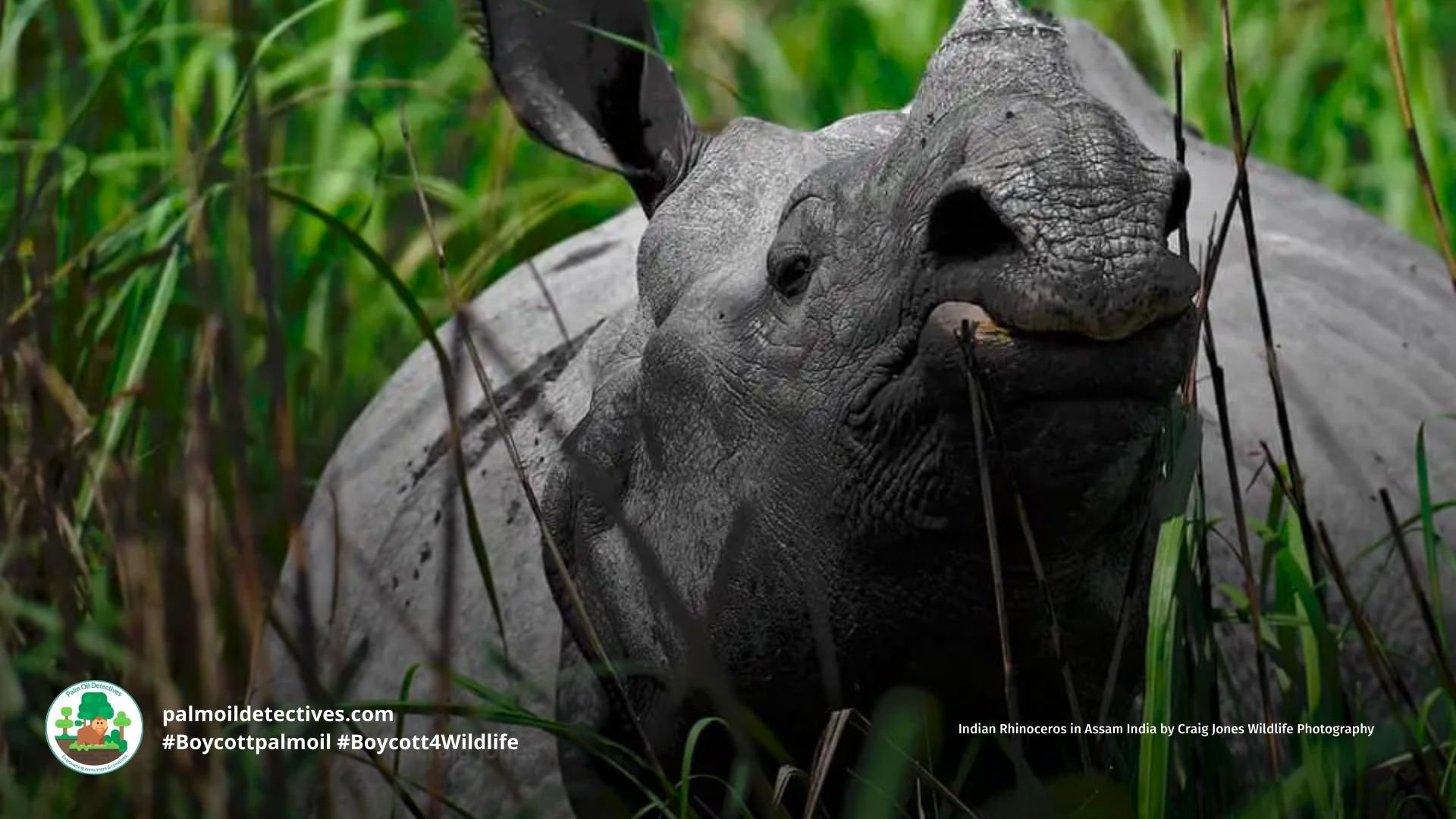
A recent study using satellite data has highlighted the critical role that large herbivores play in promoting tree diversity in forest ecosystems. The research showed that areas with abundant large herbivores like elephants had more varied tree cover and more tree diversity. This finding underscores the importance of large herbivores in many ecosystems and that they should have primary importance in conservation strategies, particularly in the context of global efforts to combat climate change and extinction. Help big herbivores every time you shop and #Boycottpalmoil and #Boycott4Wildlife in the supermarket!
Recent #research finds that lots of large #herbivores like #elephants 🦏🐘help plant #biodiversity in rainforests! Help big plant eaters and #plants to survive! 🐘🩶#Boycottpalmoil #Boycott4Wildlife 🧐🪔⛔️ @palmoildetect.bsky.social https://wp.me/pcFhgU-7dB
Share to BlueSkyShare to TwitterSoulful #elephants 🐘💗 are not only intelligent, they add more tree cover and #tree diversity, finds this landmark #study. All #elephant species are threatened by #palmoil #deforestation and #poaching for ivory. #BoycottPalmOil #Boycott4Wildlife 🌴🔥⛔ @palmoildetect.bsky.social https://wp.me/pcFhgU-7dB
Share to BlueSkyShare to TwitterCover image credit: A Sumatran elephant enjoys a playful river dip, by Craig Jones Wildlife Photography
Lanhui Wang, Joris P.G.M. Cromsigt, Robert Buitenwerf, Erick J. Lundgren, Wang Li, Elisabeth S. Bakker, Jens-Christian Svenning. Tree cover and its heterogeneity in natural ecosystems is linked to large herbivore biomass globally. One Earth, 2023; DOI: 10.1016/j.oneear.2023.10.007 Media release from Lund University. “Large herbivores such as elephants, bison and moose contribute to tree diversity.” ScienceDaily, 3 November 2023.
Maintaining species-rich and resilient ecosystems is key to preserving biodiversity and mitigating climate change. Here, megafauna — the part of the animal population in an area that is made up of the largest animals — plays an important role. In a new study published in the scientific journal One Earth, an international research team, of which Lund University is a part, has investigated the intricate interplay between the number of voracious herbivores like elephants and the diversity of trees in the world’s protected areas.


“Our findings reveal a fascinating and complex story of how large herbivorous animals shape the world’s natural landscapes. The tree cover in these areas is sparser, but the diversity of the tree cover is much higher than in areas without large herbivores,” says Lanhui Wang, a researcher in physical geography and ecosystem science at Lund University.
“In our global analysis, we find a substantial association between the biomass of large herbivores and varied tree cover in protected areas, notably for browsers and mixed-feeders such as elephants, bison and moose and in non-extreme climates,” explains the study’s senior author, Jens-Christian Svenning, professor at Aarhus University.
Hereby, the study supports that large wild herbivores promote a diverse vegetation structure, creating a rich habitat for many other species. This is due to the animals’ consumption of vegetation as well as physical disturbances.
According to Lanhui Wang, these new research findings highlight the need to integrate large herbivores into restoration and conservation strategies. Not only for the sake of the animals themselves but also for the vital role they play in shaping landscapes and influencing biodiversity. The researchers argue that this aspect is not sufficiently considered within the framework of sustainable land management and ecosystem restoration.
“At a time when global initiatives are intensely focused on combating climate change and biodiversity loss, our findings highlight the need for a broader and more nuanced discussion about ecosystem management and conservation measures. It is of utmost importance to integrate understanding of the ecological impact of megafauna into this,” says Lanhui Wang.
The UN has declared the 2020s as the decade of ecosystem restoration. In total, 115 countries have agreed to restore up to 100,000 square kilometres of nature in total. To achieve this, more wild-living large herbivores are needed worldwide, says Lanhui Wang.
“I believe that we will need to protect and conserve large herbivores to achieve the UN goals. Megafauna are crucial for tree cover, which in turn promotes carbon sequestration and a diversity of habitats,” says Lanhui Wang.
Lanhui Wang, Joris P.G.M. Cromsigt, Robert Buitenwerf, Erick J. Lundgren, Wang Li, Elisabeth S. Bakker, Jens-Christian Svenning. Tree cover and its heterogeneity in natural ecosystems is linked to large herbivore biomass globally. One Earth, 2023; DOI: 10.1016/j.oneear.2023.10.007 Media release from Lund University. “Large herbivores such as elephants, bison and moose contribute to tree diversity.” ScienceDaily, 3 November 2023.
ENDS
Learn about other animals endangered by palm oil and other agriculture
GlobalSouth America S.E. AsiaIndiaAfricaWest Papua & PNG
Tucuxi Sotalia fluviatilis

Frill-Necked Lizard Chlamydosaurus kingii

Grey Crowned Crane Balearica regulorum

Ecuadorean Viscacha Lagidium ahuacaense

Southern Pudu Pudu puda

Blue-streaked Lory Eos reticulata
Learn about “sustainable” palm oil greenwashing
Read more about RSPO greenwashing
Lying Fake labelsIndigenous Land-grabbingHuman rights abusesDeforestation Human health hazardsA 2019 World Health Organisation (WHO) report into the palm oil industry and RSPO finds extensive greenwashing of palm oil deforestation and the murder of endangered animals (i.e. biodiversity loss)
Read more


Take Action in Five Ways
1. Join the #Boycott4Wildlife on social media and subscribe to stay in the loop: Share posts from this website to your own network on Twitter, Mastadon, Instagram, Facebook and Youtube using the hashtags #Boycottpalmoil #Boycott4Wildlife.
Enter your email address
Sign Up
Join 3,171 other subscribers2. Contribute stories: Academics, conservationists, scientists, indigenous rights advocates and animal rights advocates working to expose the corruption of the palm oil industry or to save animals can contribute stories to the website.

Wildlife Artist Juanchi Pérez

Mel Lumby: Dedicated Devotee to Borneo’s Living Beings

Anthropologist and Author Dr Sophie Chao

Health Physician Dr Evan Allen

The World’s Most Loved Cup: A Social, Ethical & Environmental History of Coffee by Aviary Doert

How do we stop the world’s ecosystems from going into a death spiral? A #SteadyState Economy
3. Supermarket sleuthing: Next time you’re in the supermarket, take photos of products containing palm oil. Share these to social media along with the hashtags to call out the greenwashing and ecocide of the brands who use palm oil. You can also take photos of palm oil free products and congratulate brands when they go palm oil free.
https://twitter.com/CuriousApe4/status/1526136783557529600?s=20
https://twitter.com/PhillDixon1/status/1749010345555788144?s=20
https://twitter.com/mugabe139/status/1678027567977078784?s=20
4. Take to the streets: Get in touch with Palm Oil Detectives to find out more.
5. Donate: Make a one-off or monthly donation to Palm Oil Detectives as a way of saying thank you and to help pay for ongoing running costs of the website and social media campaigns. Donate here
Pledge your support#africanElephant #bantrophyhunting #biodiversity #borneanPygmyElephantElephasMaximusBorneensis #boycott4wildlife #boycottpalmoil #deforestation #ecology #elephant #elephants #endangeredSpecies #herbivores #pachyderm #pachyderms #palmOilDeforestation #palmoil #plants #poaching #research #study #sumatranElephantElephasMaximusSumatranus #tree #worldElephantDay
South America: Species Endangered by Palm Oil Deforestation
Papua New Guinea & West Papua: Species Endangered by Palm Oil Deforestation
Palm Oil Lobbyists Getting Caught Lying Orangutan Land Trust and Agropalma