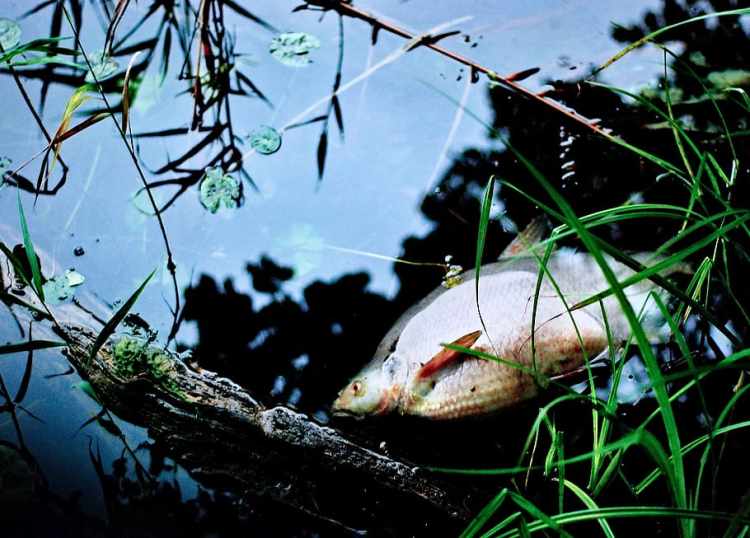
I feel like we are failing the easiest possible trolley problem, where the entire world and all of its inhabitants are tied to one set of railroad tracks, and if we decide to pull a lever the train will just run over a small pile of money instead.
I'm no artist, but hopefully this gets the point across. A comic in three panels.
RE: https://dair-community.social/@emilymbender/116199410939940179
That's how AI is going to solve climate for us ... 🤣
I'm no artist, but hopefully this gets the point across. A comic in three panels.
RE: https://dair-community.social/@emilymbender/116199410939940179
That's how AI is going to solve climate for us ... 🤣
Deforestation-driven Climate Change Intensifies Natural Disasters in Indonesia
Deforestation in Indonesia is worsening the impact of severe weather events such as floods and landslides, as seen in West Sumatra in March 2024. Environmental groups cite deforestation and environmental degradation as key factors in intensifying natural disasters. Indonesia’s rainforests, crucial for biodiversity and indigenous livelihoods, have been heavily logged for palm oil, paper, and mining. Despite government efforts to slow deforestation, including a palm oil permit freeze, illegal logging and large-scale developments continue to threaten forest areas. Experts warn that more equable land planning is needed to mitigate future disasters. #BoycottPalmOil #Boycott4Wildlife
#Palmoil 🌴 #nickel 🧺 and #paper 📰 #deforestation in #Indonesia 🇮🇩 has accelerated the frequency and severity of extreme weather: #floods and #landslides as seen in #Sumatra. Fight back and #BoycottPalmOil 🌴🔥⛔️ #Boycott4Wildlife @palmoildetect https://palmoildetectives.com/2024/11/27/deforestation-driven-climate-change-intensifies-natural-disasters-in-indonesia/
Share to BlueSkyShare to Twitter#Climatechange ⛈️ and #deforestation 🔥🔥 in #Indonesia 🇮🇩 is being driven to a point of no return say experts, citing massive #forest loss for #palmoil 🌴⛔️ and #nickel #mining. Take action when you #BoycottPalmOil #Boycott4Wildlife @palmoildetect https://palmoildetectives.com/2024/11/27/deforestation-driven-climate-change-intensifies-natural-disasters-in-indonesia/
Share to BlueSkyShare to TwitterWritten by Victoria Milko. Originally published by Associated Press, 30 March, 2024. Original title: ‘In Indonesia, deforestation is intensifying disasters from severe weather and climate change’. Excerpt published, read the original article.
The shelves in supermarkets and stores are full of certified products. The packaging displays different labels indicating products were made with “sustainable” paper or wood, food or cosmetic products made with “sustainable” palm oil, “responsible” soybeans and so on and so forth.
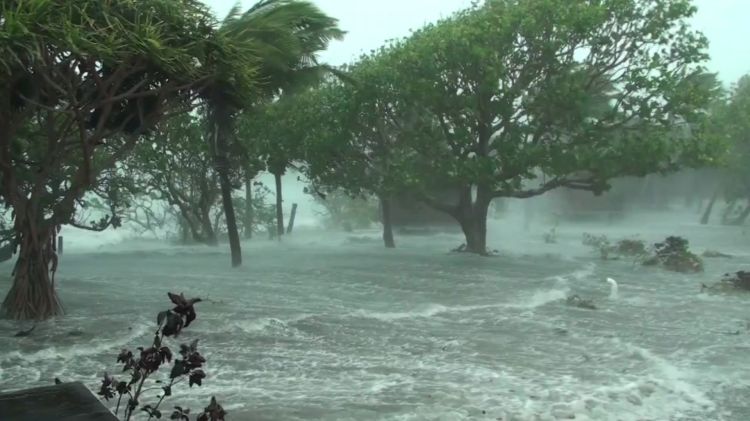
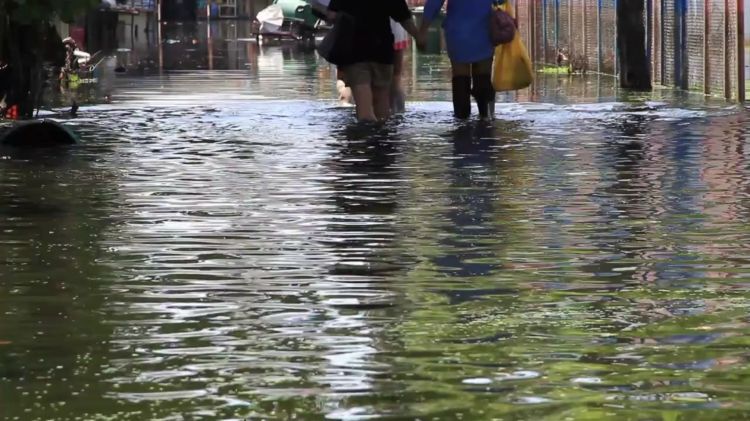
In Jakarta Indonesia, roads turned to murky brown rivers, homes were swept away by strong currents and bodies were pulled from mud during deadly flash floods and landslides after torrential rains hit West Sumatra in early March, marking one of the latest deadly natural disasters in Indonesia.

Government officials blamed the floods on heavy rainfall, but environmental groups have cited the disaster as the latest example of deforestation and environmental degradation intensifying the effects of severe weather across Indonesia.
“This disaster occurred not only because of extreme weather factors, but because of the ecological crisis,” Indonesian environmental rights group Indonesian Forum for the Environment wrote in a statement. “If the environment continues to be ignored, then we will continue to reap ecological disasters.”

A vast tropical archipelago stretching across the equator, Indonesia is home to the world’s third-largest rainforest, with a variety of endangered wildlife and plants, including orangutans, elephants, giant and blooming forest flowers. Some live nowhere else.
For generations the forests have also provided livelihoods, food, and medicine while playing a central role in cultural practices for millions of Indigenous residents in Indonesia.
Since 1950, more than 74 million hectares (285,715 square miles) of Indonesian rainforest — an area twice the size of Germany — have been logged, burned or degraded for development of palm oil, paper and rubber plantations, mining and other commodities according to Global Forest Watch.
Indonesia is the biggest producer of palm oil, one of the largest exporters of coal and a top producer of pulp for paper. It also exports oil and gas, rubber, tin and other resources. And it also has the world’s largest reserves of nickel — a critical material for electric vehicles, solar panels and other goods needed for the green energy transition.

Indonesia has consistently ranked as one of the largest global emitters of plant-warming greenhouse gases, with its emissions stemming from the burning of fossil fuels, deforestation and peatland fires, according to the Global Carbon Project.
Read the remainder of the article on AP
Written by Victoria Milko. Originally published by Associated Press, 30 March, 2024. Original title: ‘In Indonesia, deforestation is intensifying disasters from severe weather and climate change’. Excerpt published, read the original article.
ENDS
Read more about human rights abuses and child slavery in the palm oil industry

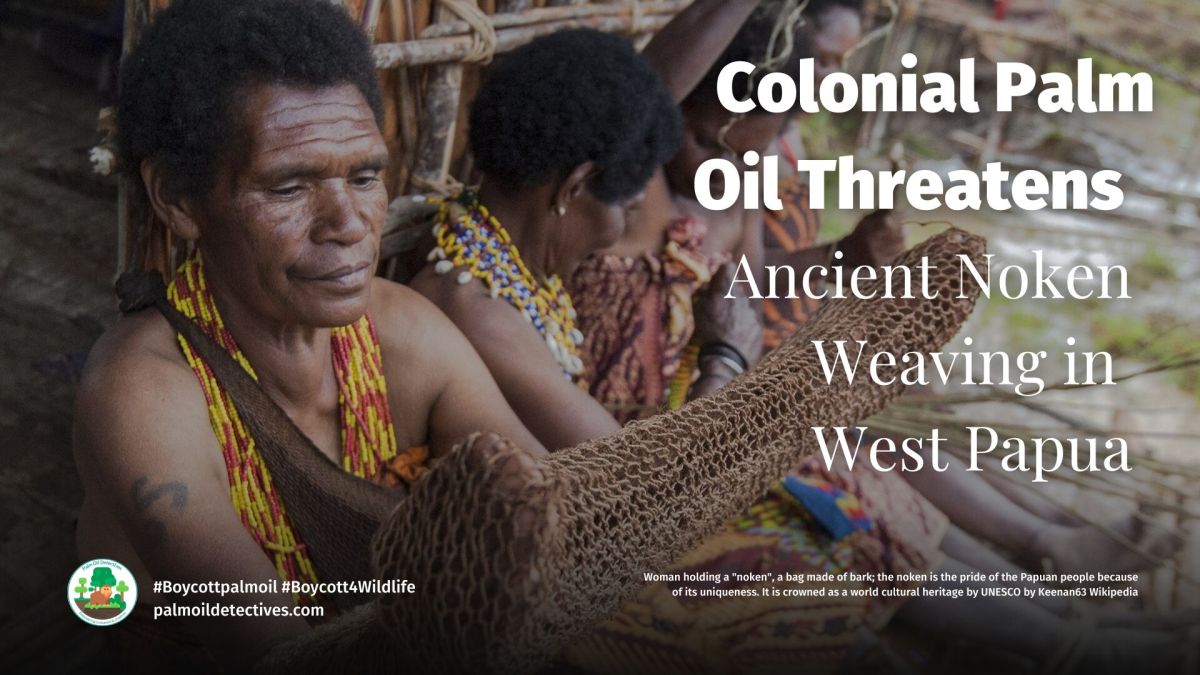
Colonial Palm Oil Threatens Ancient Noken Weaving in West Papua
A powerful new indigenous art exhibition has highlighted the tragic loss of #WestPapua’s cultural identity due to #deforestation for #palmoil and #sugarcane monoculture plantations. A situation perpetuated by the illegal Indonesian colonisation of…

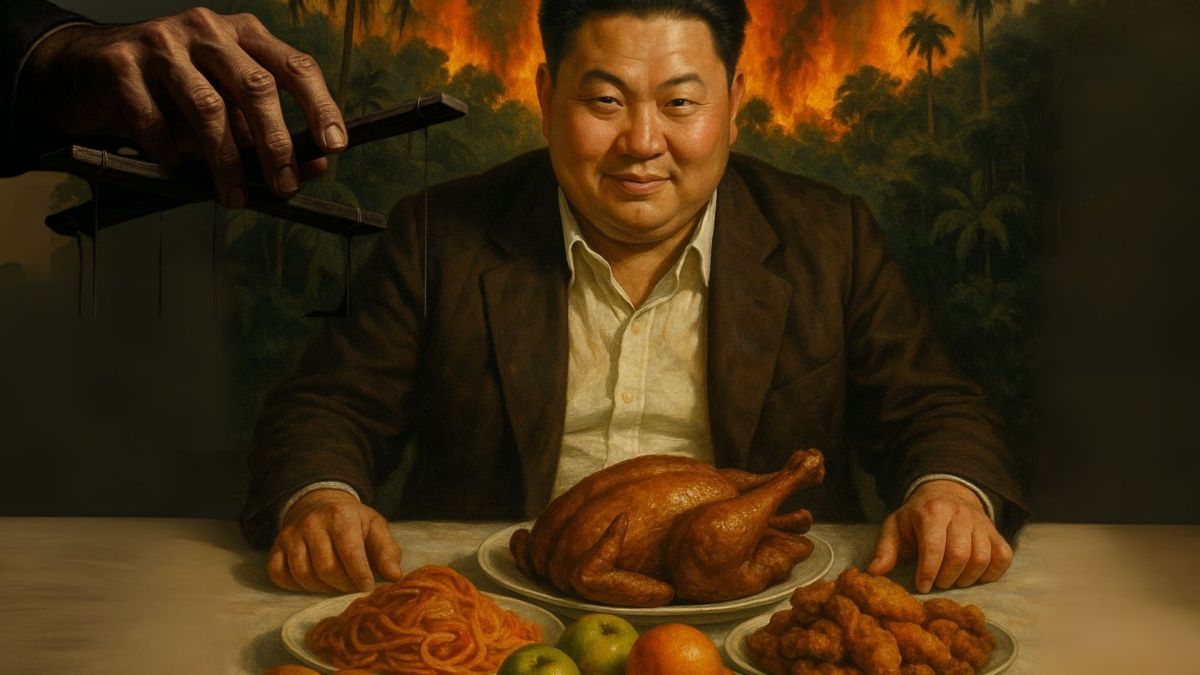
Family Ties Expose Deforestation and Rights Violations in Indonesian Palm Oil
An explosive report by the Environment Investigation Agency (EIA) details how Indonesia’s Fangiono family, through a wide corporate web, is linked to ongoing #deforestation, #corruption, and #indigenousrights abuses for #palmoil. Calls mount for…

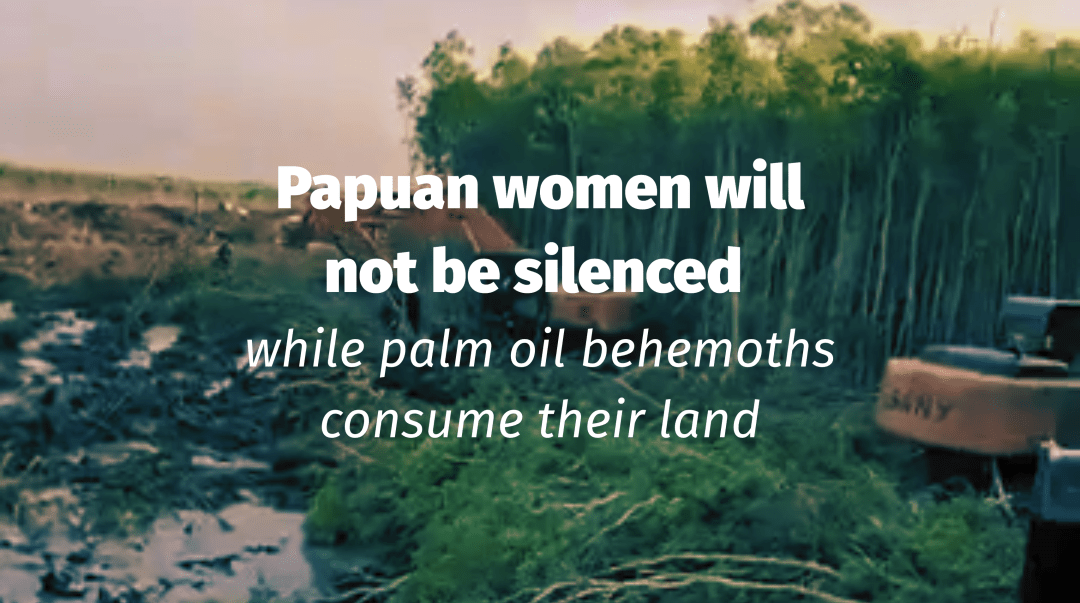
West Papuan Indigenous Women Fight Land Seizures
Indigenous Melanesian women in West Papua fight land seizures for palm oil and sugar plantations, protecting their ancestral rights. Join #BoycottPalmOil

Greasing the Wheels of Colonialism: Palm Oil Industry in West Papua
A landmark study published in Global Studies Quarterly in April 2025 has revealed that the rapid expansion of the #palmoil industry in #WestPapua is not only fuelling #deforestation, #ecocide and environmental destruction but…

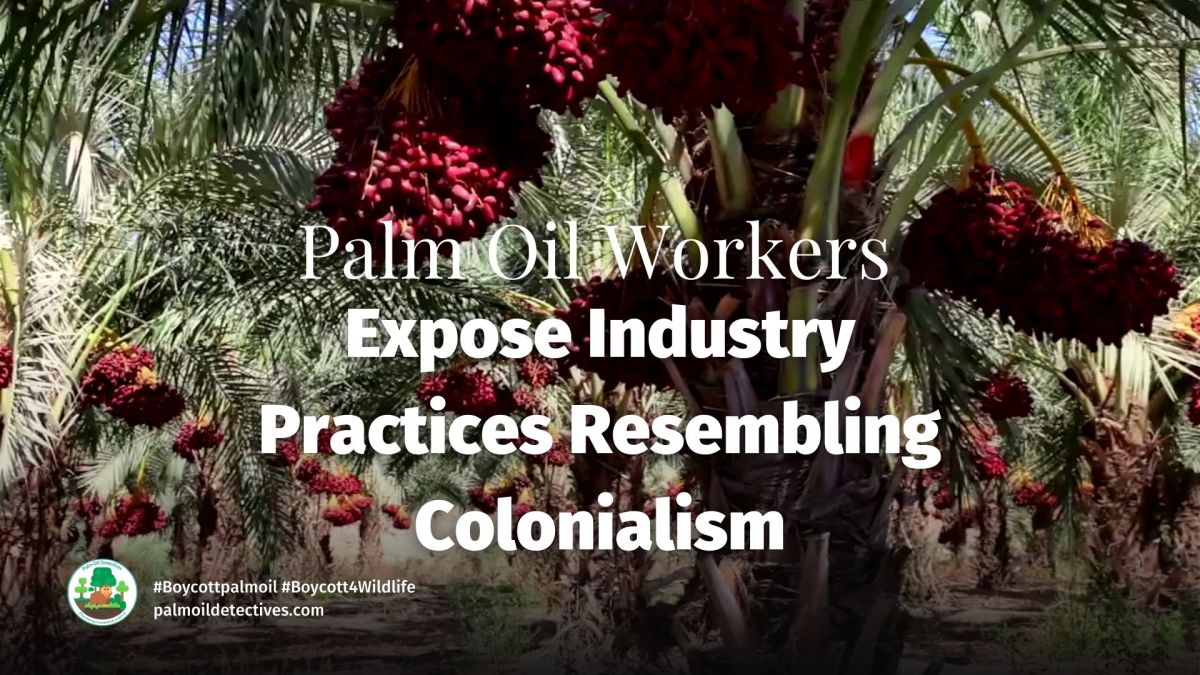
Palm Oil Workers Expose Industry Practices Resembling Colonialism
Palm Oil Workers Expose Industry Practices Resembling Colonialism | A coalition of palm oil workers in Indonesia has unveiled industry practices that mirror colonial exploitation, including land grabbing, poor working conditions, and environmental…
Load more posts
Something went wrong. Please refresh the page and/or try again.
Take Action in Five Ways
1. Join the #Boycott4Wildlife on social media and subscribe to stay in the loop: Share posts from this website to your own network on Twitter, Mastadon, Instagram, Facebook and Youtube using the hashtags #Boycottpalmoil #Boycott4Wildlife.
Enter your email address
Sign Up
Join 3,529 other subscribers2. Contribute stories: Academics, conservationists, scientists, indigenous rights advocates and animal rights advocates working to expose the corruption of the palm oil industry or to save animals can contribute stories to the website.

Wildlife Artist Juanchi Pérez

Mel Lumby: Dedicated Devotee to Borneo’s Living Beings

Anthropologist and Author Dr Sophie Chao

Health Physician Dr Evan Allen

The World’s Most Loved Cup: A Social, Ethical & Environmental History of Coffee by Aviary Doert

How do we stop the world’s ecosystems from going into a death spiral? A #SteadyState Economy
3. Supermarket sleuthing: Next time you’re in the supermarket, take photos of products containing palm oil. Share these to social media along with the hashtags to call out the greenwashing and ecocide of the brands who use palm oil. You can also take photos of palm oil free products and congratulate brands when they go palm oil free.
https://twitter.com/CuriousApe4/status/1526136783557529600?s=20
https://twitter.com/PhillDixon1/status/1749010345555788144?s=20
https://twitter.com/mugabe139/status/1678027567977078784?s=20
4. Take to the streets: Get in touch with Palm Oil Detectives to find out more.
5. Donate: Make a one-off or monthly donation to Palm Oil Detectives as a way of saying thank you and to help pay for ongoing running costs of the website and social media campaigns. Donate here
Pledge your support#Boycott4wildlife #BoycottPalmOil #climateChange #ClimateAction #climatechange #climatecrisis #ClimateEmergency #deforestation #floods #Forest #Indonesia #landslides #mining #nickel #palmoil #paper #Sumatra
Unsupported type or deleted object
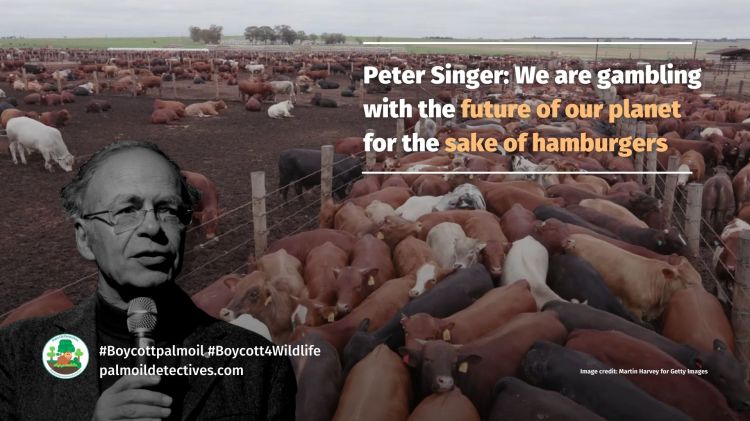
Stop Gambling Our Future for Meat Deforestation
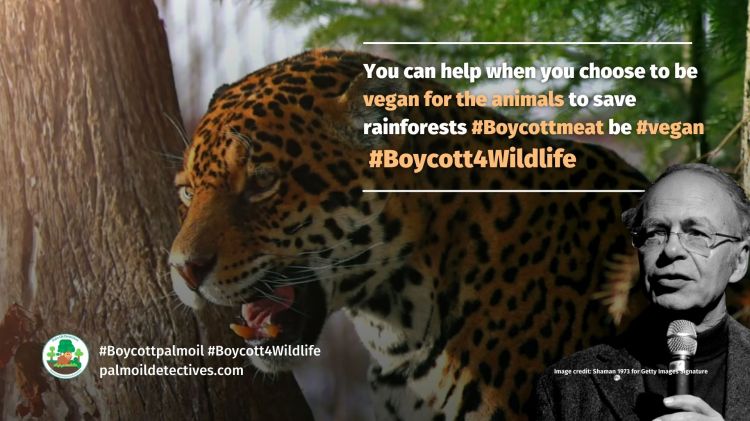
Renowned animal rights ethicist philosopher Peter Singer asserts that our dietary choices, particularly our consumption of meat and dairy, are jeopardising the Earth’s future. These industries contribute significantly to environmental degradation, deforestation, and greenhouse gas emissions, intensifying the impacts of climate change. By indulging in hamburgers and other meat-based products, we are not only compromising our health but also the wellbeing of our planet. For a more sustainable and compassionate future, consider boycotting meat and dairy. Choose to be vegan for the animals and to save our planet #Boycottmeat be #vegan #Boycott4Wildlife
Eating #meat 🥩 and #dairy 🥛is jeopardising the earth’s future says renowned #animalrights advocate Peter Singer. If you want to fight #climatechange 💚🌳🙏 be #vegan for the #animals 🐵 🦏 and planet 🌏 #Boycottmeat #Boycott4Wildlife @palmoildetect https://palmoildetectives.com/2024/05/05/peter-singer-we-are-gambling-with-the-future-of-our-planet-for-the-sake-of-hamburgers/
Share to BlueSky Share to TwitterFamous #animalrights ethicist Peter Singer links eating of #dairy and #meat to carbon emissions. If you want to fight #climatechange you should be #vegan! #Boycottmeat and dairy for the #animals 🐷🐍🐘💚 #Boycott4Wildlife @palmoildetect https://palmoildetectives.com/2024/05/05/peter-singer-we-are-gambling-with-the-future-of-our-planet-for-the-sake-of-hamburgers/
Share to BlueSkyShare to TwitterOriginally published by The Conversation June 15, 2023 and republished here under the Creative Commons Licence, read original.
Peter Singer, Princeton University
I wasn’t aware of climate change until the 1980s — hardly anyone was — and even when we recognised the dire threat that burning fossil fuels posed, it took time for the role of animal production in warming the planet to be understood.
Today, though, the fact that eating plants will reduce your greenhouse gas emissions is one of the most important and influential reasons for cutting down on animal products and, for those willing to go all the way, becoming vegan.

A few years ago, eating locally — eating only food produced within a defined radius of your home — became the thing for environmentally conscious people to do, to such an extent that “locavore” became the Oxford English Dictionary’s “word of the year” for 2007.

If you enjoy getting to know and support your local farmers, of course, eating locally makes sense. But if your aim is, as many local eaters said, to reduce greenhouse gas emissions, you would do much better by thinking about what you are eating, rather than where it comes from. That’s because transport makes up only a tiny share of the greenhouse gas emissions from the production and distribution of food.
With beef, for example, transport is only 0.5% of total emissions. So if you eat local beef you will still be responsible for 99.5% of the greenhouse gas emissions your food would have caused if you had eaten beef transported a long distance. On the other hand, if you choose peas you will be responsible for only about 2% of the greenhouse gas emissions from producing a similar quantity of local beef.
And although beef is the worst food for emitting greenhouse gases, a broader study of the carbon footprints of food across the European Union showed that meat, dairy and eggs accounted for 83% of emissions, and transport for only 6%.
More generally, plant foods typically have far lower greenhouse gas emissions than any animal foods, whether we are comparing equivalent quantities of calories or of protein. Beef, for example, emits 192 times as much carbon dioxide equivalent per gram of protein as nuts, and while these are at the extremes of the protein foods, eggs, the animal food with the lowest emissions per gram of protein, still has, per gram of protein, more than twice the emissions of tofu.

Animal foods do even more poorly when compared with plant foods in terms of calories produced. Beef emits 520 times as much per calorie as nuts, and eggs, again the best-performing animal product, emit five times as much per calorie as potatoes.
Favourable as these figures are to plant foods, they leave out something that tilts the balance even more strongly against animal foods in the effort to avoid catastrophic climate change: the “carbon opportunity cost” of the vast area of land used for grazing animals and the smaller, but still very large, area used to grow crops that are then fed — wastefully, as we have seen — to confined animals.
Because we use this land for animals we eat, it cannot be used to restore native ecosystems, including forests, which would safely remove huge amounts of carbon from the atmosphere. One study has found that a shift to plant-based eating would free up so much land for this purpose that seizing the opportunity would give us a 66% probability of achieving something that most observers believe we have missed our chance of achieving: limiting warming to 1.5℃.

Another study has suggested that a rapid phaseout of animal agriculture would enable us to stabilise greenhouse gases for the next 30 years and offset more than two-thirds of all carbon dioxide emissions this century. According to the authors of this study:
The magnitude and rapidity of these potential effects should place the reduction or elimination of animal agriculture at the forefront of strategies for averting disastrous climate change.
Climate change is undoubtedly the biggest environmental issue facing us today, but it is not the only one. If we look at environmental issues more broadly, we find further reasons for preferring a plant-based diet.
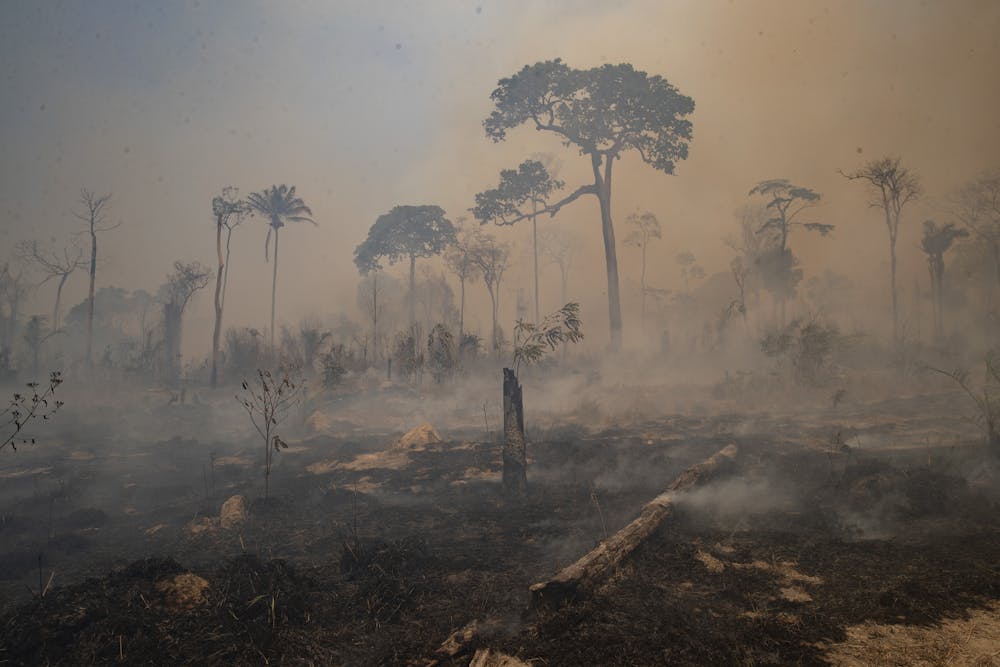
Fires in the Amazon and linked to cattle ranching. Andre Penner/AP PhotoThe clearing and burning of the Amazon rainforest means not only the release of carbon from the trees and other vegetation into the atmosphere, but also the likely extinction of many plant and animal species that are still unrecorded.
This destruction is driven largely by the prodigious appetite of the affluent nations for meat, which makes it more profitable to clear the forest than to preserve it for the indigenous people living there, establish an ecotourism industry, protect the area’s biodiversity, or keep the carbon locked up in the forest. We are, quite literally, gambling with the future of our planet for the sake of hamburgers.
Joseph Poore, of the University of Oxford, led a study that consolidated a huge amount of environmental data on 38,700 farms and 1,600 food processors in 119 countries and covered 40 different food products. Poore summarised the upshot of all this research thus:
A vegan diet is probably the single biggest way to reduce your impact on planet Earth, not just greenhouse gases, but global acidification, eutrophication, land use and water use. It is far bigger than cutting down on your flights or buying an electric car, as these only cut greenhouse gas emissions.
Poore doesn’t see “sustainable” animal agriculture as the solution:
Really it is animal products that are responsible for so much of this. Avoiding consumption of animal products delivers far better environmental benefits than trying to purchase sustainable meat and dairy.
Those who claim to care about the wellbeing of human beings and the preservation of our climate and our environment should become vegans for those reasons alone.
Doing so would reduce greenhouse gas emissions and other forms of pollution, save water and energy, free vast tracts of land for reforestation, and eliminate the most significant incentive for clearing the Amazon and other forests.
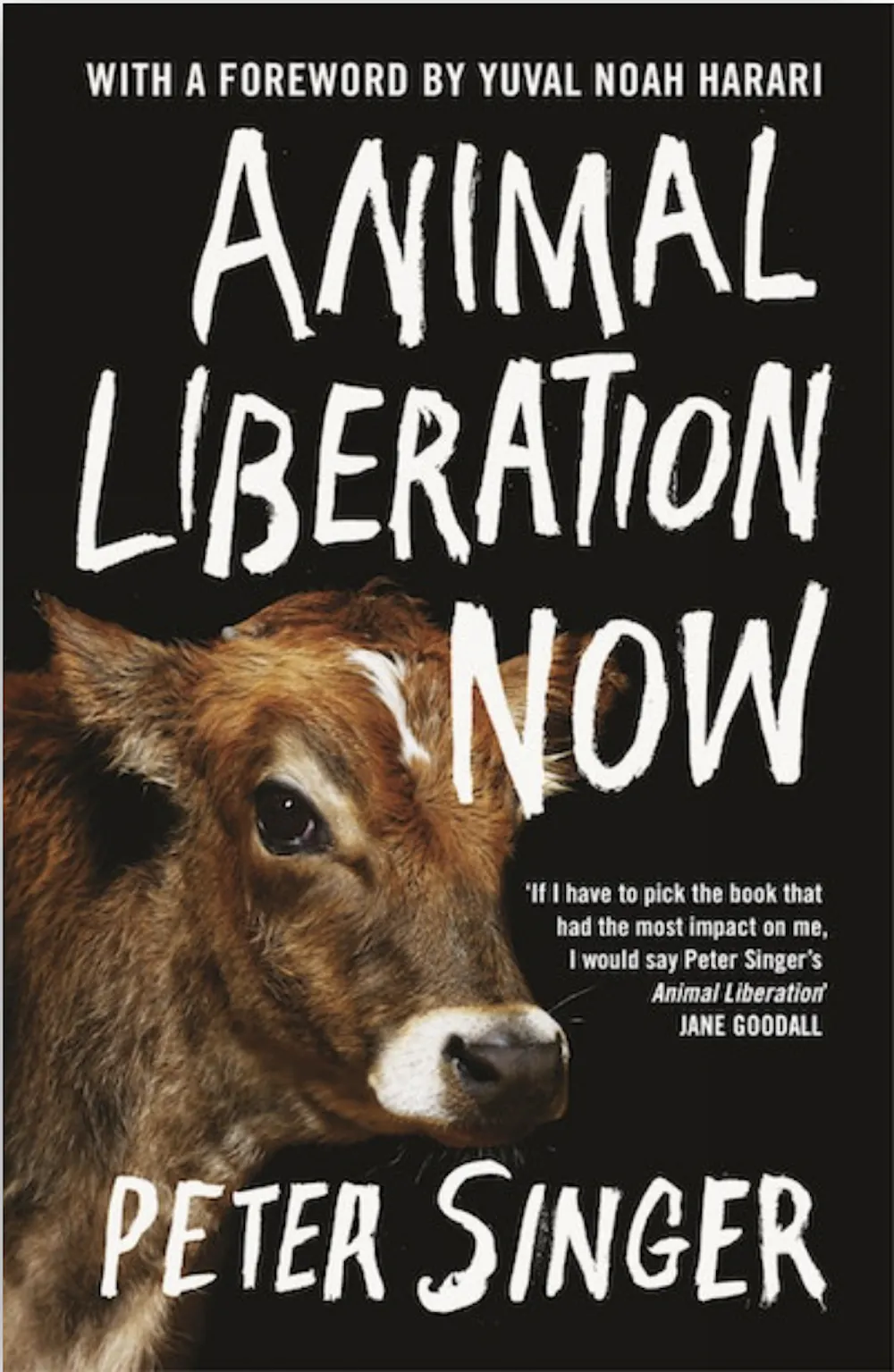
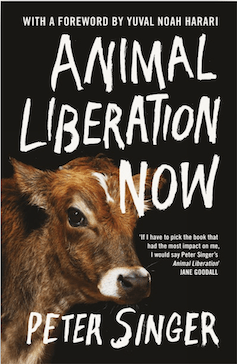
This is an edited extract from Animal Liberation Now by Peter Singer (Penguin Random House).
Peter Singer, Professor of Bioethics in the Center for Human Values, Princeton University
This article is republished from The Conversation under a Creative Commons license. Read the original article.
Originally published by The Conversation June 15, 2023 and republished here under the Creative Commons Licence, read original.
ENDS
Read more about human health, veganism, nutrition and why you should #Boycottpalmoil, #Boycottmeat for your own and the planet’s health

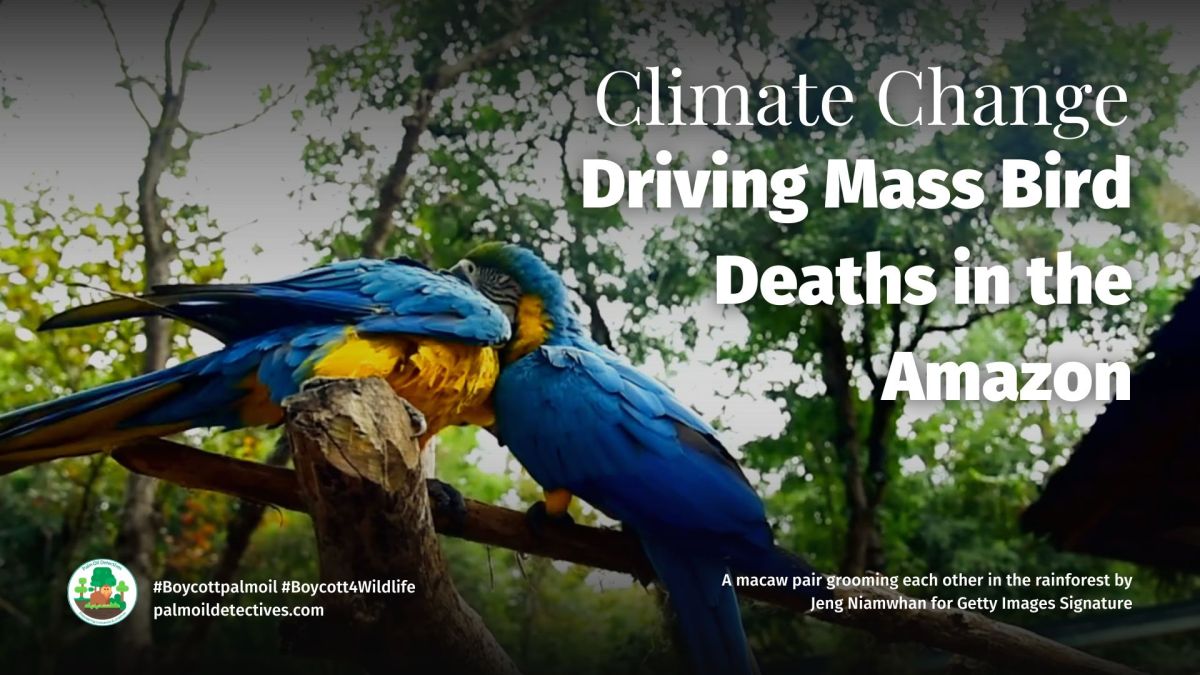
Climate Change Driving Mass Bird Deaths in the Amazon
A recent #study has revealed that even in the most isolated parts of the #Amazon, bird #populations are collapsing due to #climatechange. Research published in Science Advances found that a 1°C increase in…

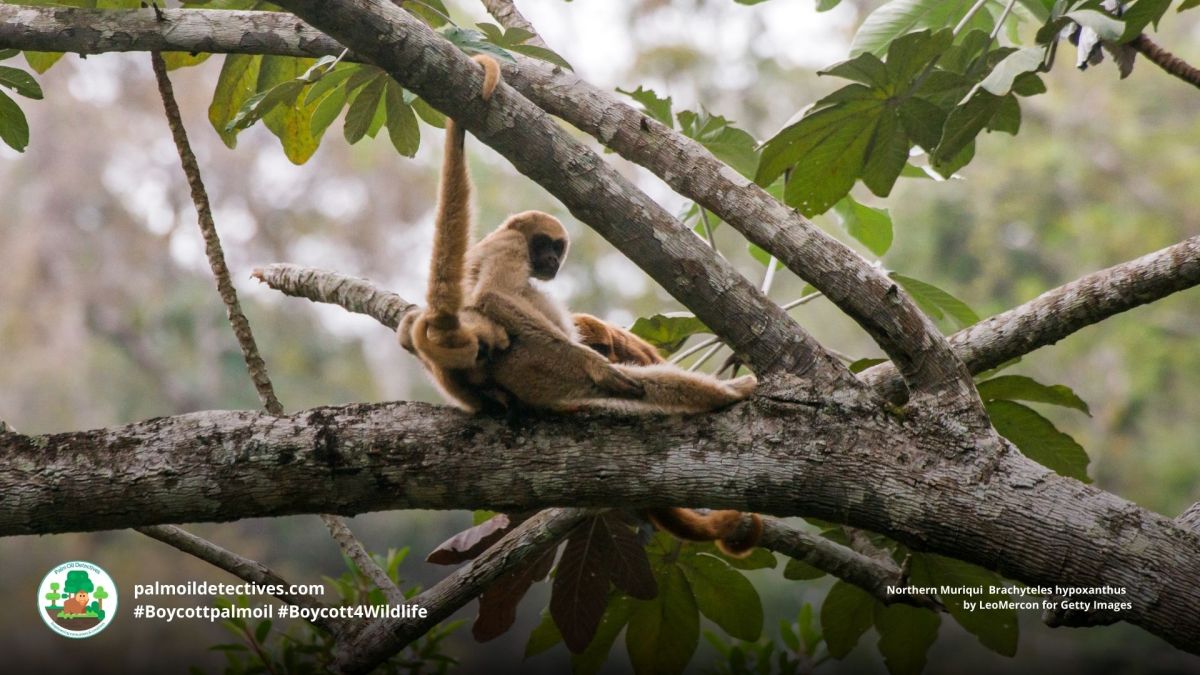
Declining primate numbers are threatening Brazil’s Atlantic forest
#Brazil’s Atlantic Forest, one of the most biodiverse ecosystems in the world, is facing severe threats due to deforestation and habitat fragmentation. This has led to a sharp decline in primate species, including…

Blue-streaked Lory Eos reticulata
Brilliantly coloured and full of energy, the Blue-streaked Lory (Eos reticulata) is a striking and unique #parrot living in the forests of the Banda Sea Islands, #Indonesia. Their scarlet plumage is decorated with…

Blonde Capuchin Sapajus flavius
The blonde #capuchin (Sapajus flavius) is an enigmatic and critically endangered #primate found in the northeastern forests of Brazil. With their striking golden-yellow fur and intelligent, expressive faces, these capuchins are among the…

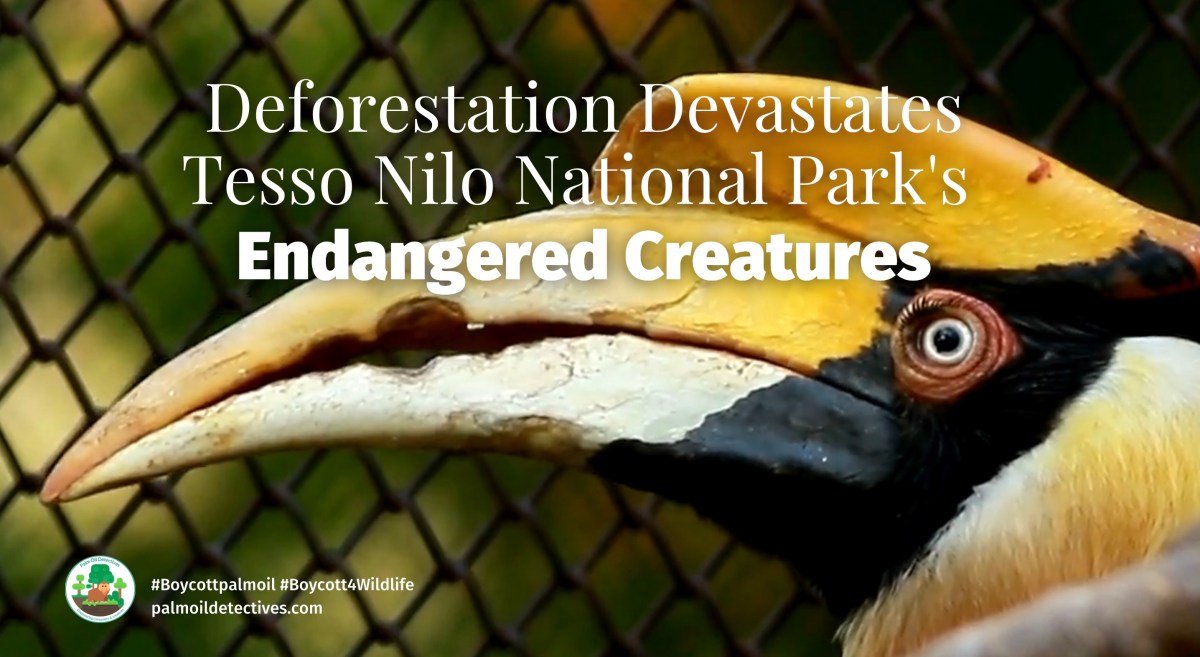
Deforestation Devastates Tesso Nilo National Park’s Endangered Creatures
Tesso Nilo National Park in #Sumatra, #Indonesia, has lost 78% of its primary forest between 2009 and 2023, primarily due to #palmoil plantations. This #deforestation threatens the habitat of critically endangered species like…
Load more posts
Something went wrong. Please refresh the page and/or try again.
Take Action in Five Ways
1. Join the #Boycott4Wildlife on social media and subscribe to stay in the loop: Share posts from this website to your own network on Twitter, Mastadon, Instagram, Facebook and Youtube using the hashtags #Boycottpalmoil #Boycott4Wildlife.
Enter your email address
Sign Up
Join 3,529 other subscribers2. Contribute stories: Academics, conservationists, scientists, indigenous rights advocates and animal rights advocates working to expose the corruption of the palm oil industry or to save animals can contribute stories to the website.

Wildlife Artist Juanchi Pérez

Mel Lumby: Dedicated Devotee to Borneo’s Living Beings

Anthropologist and Author Dr Sophie Chao

Health Physician Dr Evan Allen

The World’s Most Loved Cup: A Social, Ethical & Environmental History of Coffee by Aviary Doert

How do we stop the world’s ecosystems from going into a death spiral? A #SteadyState Economy
3. Supermarket sleuthing: Next time you’re in the supermarket, take photos of products containing palm oil. Share these to social media along with the hashtags to call out the greenwashing and ecocide of the brands who use palm oil. You can also take photos of palm oil free products and congratulate brands when they go palm oil free.
https://twitter.com/CuriousApe4/status/1526136783557529600?s=20
https://twitter.com/PhillDixon1/status/1749010345555788144?s=20
https://twitter.com/mugabe139/status/1678027567977078784?s=20
4. Take to the streets: Get in touch with Palm Oil Detectives to find out more.
5. Donate: Make a one-off or monthly donation to Palm Oil Detectives as a way of saying thank you and to help pay for ongoing running costs of the website and social media campaigns. Donate here
Pledge your support#animalRights #animalrights #animals #BoycottMeat #BoycottPalmOil #Boycott4wildlife #BoycottMeat #BoycottPalmOil #climateChange #climatechange #dairy #deforestation #diet #ethics #meat #nutrition #PalmOil #palmOilDeforestation #PeterSinger #plantBasedDiet #saturatedFats #vegan #veganism
African Forest Elephants Help Fight Climate Change
Discover the awe-inspiring role of African forest #elephants in the Congo Basin—nature’s master gardeners who literally shape the world around them! These gentle giants roam through muddy, mineral-rich paradises called baïs, fostering the growth of carbon-absorbing trees that make our planet healthier. By tending to these unique landscapes, they are the unsung heroes in the fight against climate change. Want to ensure these ecological architects keep doing their vital work? Join the movement to protect their habitat—say no to palm oil and adopt a vegan lifestyle! 🐘🌳#BoycottPalmOil #BeVegan #Boycott4Wildlife
https://youtu.be/s584AP-BYm0?si=Zrwc5CFFjAxAqmas
Take action by sharing this!
African forest #elephants 🐘 in #Congo 🇨🇩 are essential to fighting #climatechange 🌳💚 by capturing #carbon and dispersing seeds in the rainforest. Help them every time you shop, be #vegan #Boycottpalmoil #Boycott4Wildlife @palmoildetect https://palmoildetectives.com/2024/04/28/african-forest-elephants-unsung-heroes-helping-congo-fight-climate-change/
Share to BlueSky Share to TwitterGentle giant pachyderms #African forest #elephants 🐘🐘 are the unsung heroes helping #climatechange. They capture #carbon in the #DRC’s 🇨🇩🌳rainforest! Help them survive with your supermarket choices #Boycottpalmoil #Boycott4Wildlife @palmoildetect https://palmoildetectives.com/2024/04/28/african-forest-elephants-unsung-heroes-helping-congo-fight-climate-change/
Share to BlueSkyShare to TwitterThis story was written by Leonie Joubert and originally published by Mongabay on August 15, 2023 and was republished under a Creative Commons licence.
The approach to the “village of elephants” in the Sangha Rainforest in the Central African Republic must be made in complete silence. Not even the faintest rustle of backpack on rain jacket should break the soundscape as visitors wade through the sometimes waist-deep swamp at the forest’s edge. The Indigenous Ba’aka guides must be able to listen for any signs of nearby elephants, so they can steer the visitors clear and avoid a close encounter with these giants. When a few pachyderms saunter out of the dense greenery, the Ba’aka shoo them away calmly.
The thick vegetation gives way suddenly to a baï. This is no mere watering hole. The sandy clearing stretches for half a kilometer, more than a quarter of a mile, in the otherwise unbroken canopy of the world’s second-largest tropical forest.
A handful of researchers camp out on a timber observation platform, overlooking a place that has drawn generations of elephants to its mineral- and salt-laden sand and muddy water. They document how the animals use their trunks or tusks to dig into the sand, eavesdrop on the animals’ conversations, and count the many other species that congregate here.
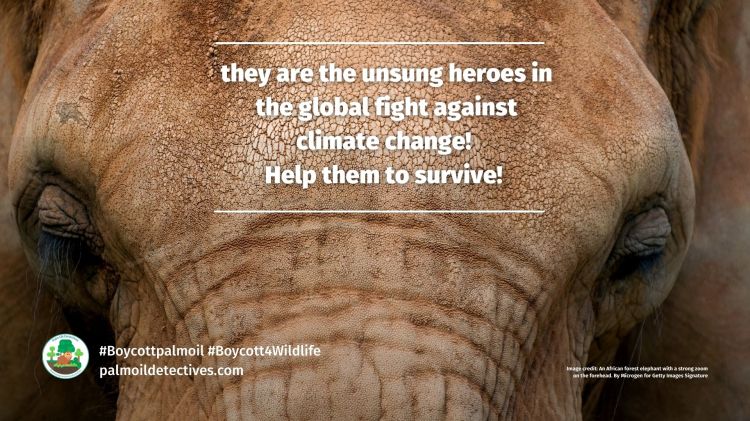
This is Dzanga baï, a meeting place for critically endangered African forest elephants (Loxodonta cyclotis) in the Dzanga-Sangha Complex of Protected Areas where these animals come together in huge numbers to dig for nutrients they can’t get from the otherwise abundant forests.
Baïs are unique to the Congo Basin’s forests, and new research is underway to understand the role these mineral-rich pockets play as a supplement to the elephants’ diet, how this sustains the animals’ population, and how they therefore contribute to the carbon-capture function of the forest.
Unlike the Amazon, the Congo Basin’s forests still have their original megafauna, elephants in particular. And they have these salt-rich clearings. Conservationists are beginning to understand the importance of elephants as forest gardeners here, and how their taste for certain trees and fruits has sculpted a forest that absorbs more carbon per hectare than the Amazon.
The Global Carbon Budget project estimated Africa’s total greenhouse gas emissions for 2021 at 1.45 billion metric tons. Every year, the Congo Basin’s forests soak up 1.1 billion metric tons of atmospheric carbon, storing it in trees and soil; in 2020 carbon credit prices, this service would be worth $55 billion.
Forest elephants, smaller than their better-known savanna cousins or even Asian elephants, prefer certain lower-growing, tasty trees. This picky browsing pressure creates gaps in the canopy that allow other, less palatable but carbon-dense species to reach tremendous heights. Elephants’ appetite for the fruit of these bigger trees then means they spread their seeds far and wide.
A 2019 study from the Ndoki Forest in the Republic of Congo (ROC) and LuiKotale in the Democratic Republic of Congo (DRC) estimated that if elephants were removed from these sites, the loss of their forest-shaping food preferences would reduce the forest’s carbon capture by 7%.
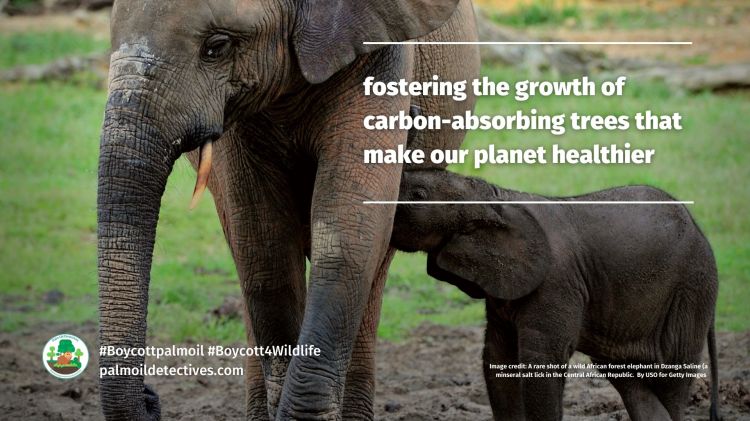
This finding makes a case not only to stop deforestation in the Congo Basin, but to protect the elephants too, as a way to slow climate breakdown, the study authors wrote.
Mouangi baï, a vast watering hole in the Republic of Congo’s Odzala-Kokoua National Park, is nicknamed Capitale because of the vast number of elephants drawn to its mineral-laden water, mud, and sand. Image courtesy Gwilli Gibbon/African Parks.Salt licks for elephants, gardeners of the forest
Mouangi baï is only about 250 km (155 mi) from Dzanga baï as the crow flies, but it takes a day or two to travel by road and river to get from one to the other.
Researchers with the conservation organization African Parks and Harvard University’s Department of Organismic and Evolutionary Biology are zeroing in on Mouangi and other baïs in Odzala-Kokoua National Park in the ROC, to clarify the link between baïs, elephants and the forest’s tree species composition.
Nicknamed Capitale by the locals, Mouangi baï in Odzala draws hundreds, maybe even thousands, of elephants, according to Gwili Gibbon, research and monitoring head at African Parks, which manages the park along with the ROC government.
“Mouangi is one of our largest and most renowned baïs,” Gibbon says.
At the intersection of two rivers, Mouangi is more than 1 km (0.6 mi) across and spans 91 hectares (225 acres). It’s the largest of a dozen of Odzala’s baïs that the African Parks and Harvard research collaboration is focusing on.
Odzala-Kokoua National Park extends across 1.35 million hectares (3.34 million acres), and while it has a few thousand baïs, often occurring in clusters within the forest, this ecosystem makes up only about 0.2% of the park’s footprint. Nevertheless, these clearings may be integral to the shape of the forest itself, which is why Harvard assistant professor Andrew Davies and doctoral researcher Evan Hockridge are teaming up with African Parks to understand the importance of the salty watering holes in supporting elephant populations, which then shape the forest mosaic.
The baïs are clearly a hotspot that elephants seek out for their rare minerals in an ecosystem rooted in the nutrient-poor soils typical of the region.
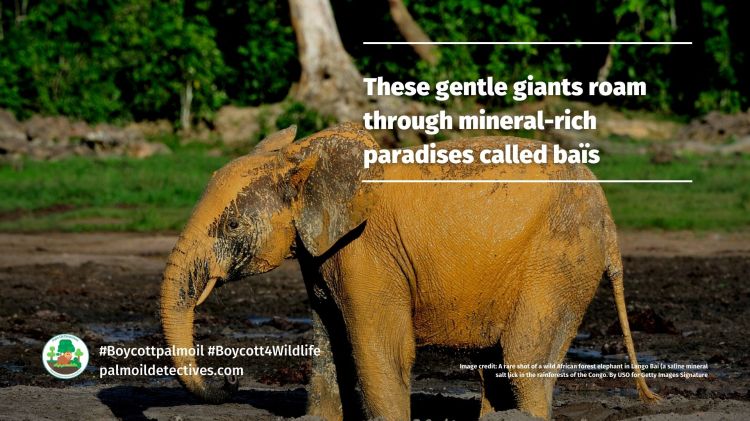
“The elephants use their tusks to scrape topsoil off in specific areas, and eat the finer dust on the surface,” says Hockridge, a landscape ecologist. “They also dig large mining sites or wells, as much as a meter [3 feet] deep.”
The animals’ excavations go even deeper at times, down to where water carries the salt in a more accessible form. The need to ingest the mineral-rich dust, mud and water keeps the animals returning to these sites.
An elephant digging for salt-rich mud in the Dzanga baï in the Sangha Rainforest in the Central African Republic. Image courtesy Jan Teede.But how the baïs formed in the first place — they’re present in the Congo Basin, but not in the Amazon — and why they remain clear of forest encroachment are still a mystery.
Hockridge says no one has tried to establish if the now-extinct megafauna of the Amazon once made similar clearings there, or if baï size correlates to the size of the animals visiting them.
“One hypothesis is that megafauna effectively create large, nutrient-rich, lick-like clearings. But it hasn’t been quantified that baïs are manufactured or maintained by megafauna,” he says.
The researchers say they hope to answer this puzzle: Do large mammals like elephants maintain and stabilize the baïs?
Anecdotes from the DRC might give the first glimpse of an answer, according to Harvard’s Davies.
“Baïs may be closing in the DRC, and it could be because the elephants are in a war zone, so they don’t have the big bulldozer effect,” he says.
The hypothesis is that if fewer elephants visit and maintain these clearings, the baïs will be swallowed up by the forest.
Gibbon’s African Parks team has set up experimental plots in the Odzala, where they’ve buried salt in the sand at a similar depth to which elephants excavate. Researchers are monitoring these sites to see if more animals will congregate around the plots, whether this impacts the vegetation cover in and around the baïs, and whether there’s a shift in the carbon-capture potential of the surrounding forests.
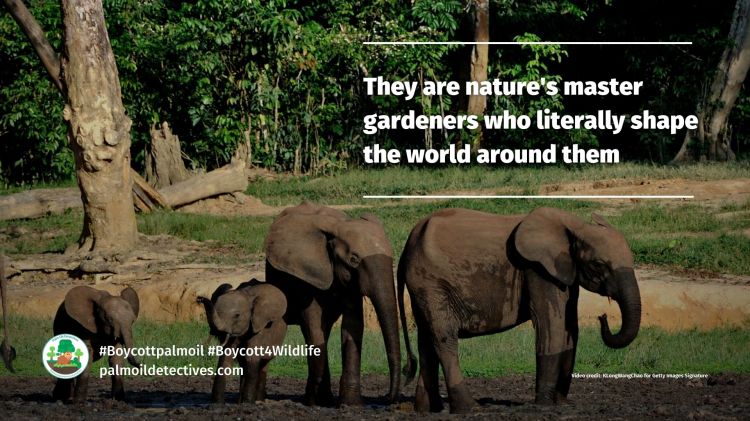
This study is centered in Odzala, although the researchers say they hope to expand the work into the Ndoki region of the Dzanga-Sangha Complex of Protected Areas.
Baïs have a busy social scene
It isn’t just elephants that congregate at the baïs. These watering holes have a bustling social scene.
Gibbon describes the flocks of African green pigeons (Treron calvus) that gather at Capitale at dawn and dusk; buffalo and several bird species that visit during daylight hours; and the hyenas that can be heard calling after dark as the elephants mine for salt.
Wildlife refuges like these in the Congo Basin are also home to the critically endangered western lowland gorilla (Gorilla gorilla gorilla), two unusual forest and swamp-dwelling antelope — the bongo (Tragelaphus eurycerus) and sitatunga (Tragelaphus spekii) — as well as central chimpanzees (Pan troglodytes troglodytes), bonobos (Pan pansicus), and the endangered gray parrot (Psittacus erithacus).
The forests of Gabon, southern Cameroon and southern Central African Republic also have a high number of baïs, and the findings from these studies could eventually be extrapolated to give an idea of the implications for the Congo Basin more widely.
“The area that baïs’ cover is tiny, but they sustain the elephant population,” Davies says. “If our hypothesis is correct, without the baïs you’d have no elephants; without elephants there’s be no big trees with high carbon density, so carbon storage would go down.”
If the forest loses the baïs, it could lose more than just the elephants or see a change in its carbon-capturing treescape. The baïs would no longer draw the many other animals that thrive in these mineral-dense watering holes, and the tourists and environmental researchers drawn to them too.
Citation:
Berzaghi, F., Longo, M., Ciais, P., Blake, S., Bretagnolle, F., Vieira, S., … Doughty, C. E. (2019). Carbon stocks in central African forests enhanced by elephant disturbance. Nature Geoscience, 12(9), 725-729. doi:10.1038/s41561-019-0395-6
Banner image: Elephants dig for salt-rich mud in the Dzanga baï in the Sangha Rainforest in the Central African Republic. Image courtesy Jan Teede.
This story was written by Leonie Joubert and originally published by Mongabay on August 15, 2023 and was republished under a Creative Commons licence.
ENDS
Learn about other animals endangered by palm oil and other agriculture
GlobalSouth America S.E. AsiaIndiaAfricaWest Papua & PNG

Tucuxi Sotalia fluviatilis

Frill-Necked Lizard Chlamydosaurus kingii

Grey Crowned Crane Balearica regulorum

Ecuadorean Viscacha Lagidium ahuacaense

Southern Pudu Pudu puda

Blue-streaked Lory Eos reticulata
Learn about “sustainable” palm oil greenwashing
Read more about RSPO greenwashing
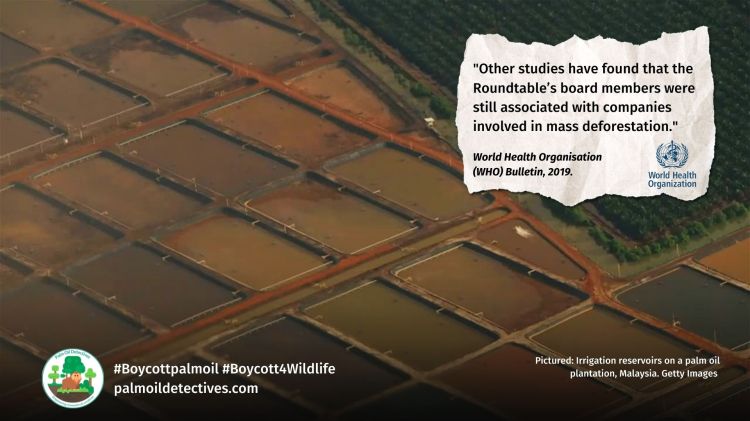
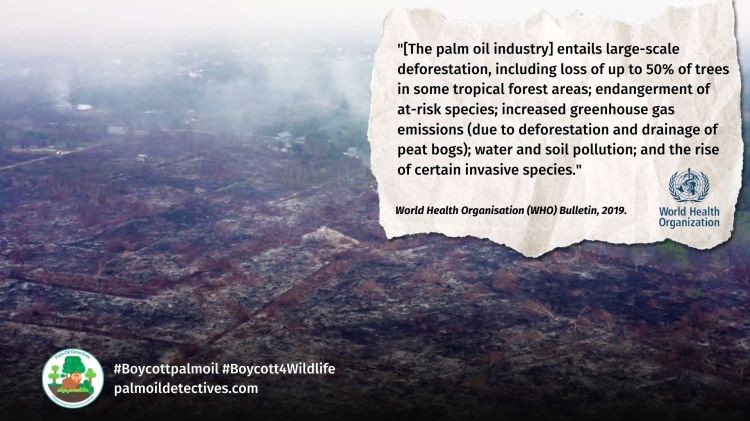
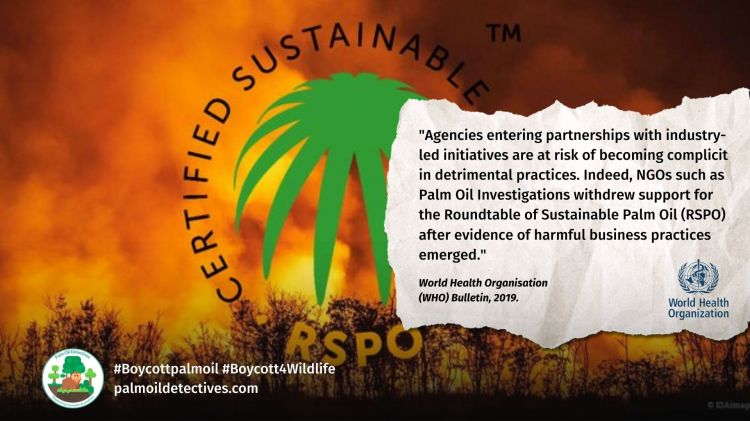
Lying Fake labelsIndigenous Land-grabbingHuman rights abusesDeforestation Human health hazardsA 2019 World Health Organisation (WHO) report into the palm oil industry and RSPO finds extensive greenwashing of palm oil deforestation and the murder of endangered animals (i.e. biodiversity loss)
Read more

Take Action in Five Ways
1. Join the #Boycott4Wildlife on social media and subscribe to stay in the loop: Share posts from this website to your own network on Twitter, Mastadon, Instagram, Facebook and Youtube using the hashtags #Boycottpalmoil #Boycott4Wildlife.
Enter your email address
Sign Up
Join 3,172 other subscribers2. Contribute stories: Academics, conservationists, scientists, indigenous rights advocates and animal rights advocates working to expose the corruption of the palm oil industry or to save animals can contribute stories to the website.
Wildlife Artist Juanchi Pérez

Mel Lumby: Dedicated Devotee to Borneo’s Living Beings

Anthropologist and Author Dr Sophie Chao

Health Physician Dr Evan Allen

The World’s Most Loved Cup: A Social, Ethical & Environmental History of Coffee by Aviary Doert

How do we stop the world’s ecosystems from going into a death spiral? A #SteadyState Economy
3. Supermarket sleuthing: Next time you’re in the supermarket, take photos of products containing palm oil. Share these to social media along with the hashtags to call out the greenwashing and ecocide of the brands who use palm oil. You can also take photos of palm oil free products and congratulate brands when they go palm oil free.
https://twitter.com/CuriousApe4/status/1526136783557529600?s=20
https://twitter.com/PhillDixon1/status/1749010345555788144?s=20
https://twitter.com/mugabe139/status/1678027567977078784?s=20
4. Take to the streets: Get in touch with Palm Oil Detectives to find out more.
5. Donate: Make a one-off or monthly donation to Palm Oil Detectives as a way of saying thank you and to help pay for ongoing running costs of the website and social media campaigns. Donate here
Pledge your support#african #africanForestElephantLoxodontaCyclotis #amazingAnimals #animalBehaviour #animalCommunication #animalIntelligence #bantrophyhunting #bevegan #biodiversity #boycottPalmOil #boycott4wildlife #boycottpalmoil #carbon #climatechange #congo #deforestation #democracticRepublicOfCongo #drc #elephant #elephants #forgottenAnimals #mammal #pachyderm #pachyderms #palmOil #palmOilDeforestation #theDemocraticRepublicOfCongo #vegan
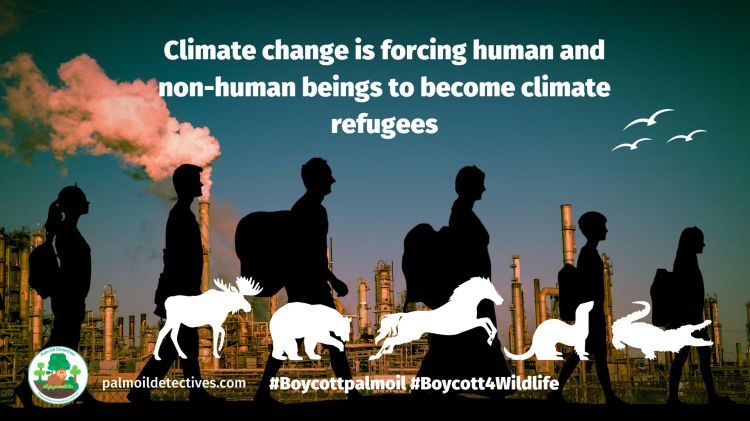
Climate change is forcing human and non-human beings to become climate refugees
Climate change. Climate denial. Global warming. Call it what you will, the planet is shouting at us. We have ignored the warning signs for decades, but we can no longer ignore what is happening right now.
Decade old muted warnings have now become loud alarms. We need #ClimateActionNow to prevent human and non-human beings becoming #climatechange refugees. By @RStacilee #Boycott4Wildlife https://palmoildetectives.com/2022/07/31/climate-change-is-forcing-human-and-non-human-beings-to-become-climate-refugees/ via @palmoildetect
Share to BlueSkyShare to TwitterThe definition of refugee or displaced person is someone fleeing a life-threatening crisis. The emerging refugees of this century are fleeing unliveable environmental conditions brought about by climate change and other complex interrelated factors including conflict, disease and famine. Humans and non-human beings alike are becoming climate change refugees. The choices are stark and clear – move and live or stay where you are and perish.
What started out decades ago as muted warnings about the future have now turned into blaring bull horns. Politicians waste time spinning whatever tales fit their agenda but we are out of time if we don’t want to go down with the sinking ship called Earth.
The damage we have done to the planet’s natural resources can never be undone. Equally damaging is the lack of political will to pivot to more sustainable less damaging forms of energy or food production. None of this happened in a bubble nor did it happen overnight.
According to the Internal Displacement Migration Centre (IDMC)’s 2022 GRID report, from the total of 38 million new internal displacements registered in 2021, 23.7 million were triggered by disasters. At the end of 2021, at least 5.9 million people in 84 countries and territories were living in displacement as a result of disasters that happened not only in 2021, but also in previous years (IDMC, 2022).
As far back as the 1970s and 80s we knew much of the damage we were doing. One can only blow up so many mountains or release so many chemicals into the air and water before our fragile ecosystems become damaged beyond repair.
We humans attribute the term refugee (or displaced person) only to other humans. However, the reality is that any living creature who is forced to leave their native home in order to survive is a climate refugee or a climate displaced being.
For non-human beings, the extreme impacts of climate change mean either dying or quickly adapting and moving on. In many cases, adaptation is not a realistic or feasible choice.
For humans living at sea level on the coast – they too will face having to migrate to higher ground and risk losing their homes to coastal erosion and rising tides. These changes are already occurring in different parts of the world.


What the oceans tell us
We’ve all heard the news stories with dire warnings about a warming ocean, rising tides and ocean acidification. This is having a devastating effect on marine animals, as they rely on shells for protection. Acid in the water is thinning the delicate shells of these crustaceans and putting species survival in jeopardy.
Rising tides have already caused erosion for many coastal dwellers. For many small island nations that means many residents will be forced to emigrate or (if possible) move inland. In wealthy nations, waterfront property that was once highly prized will become harder to sell. As buyers will weigh up the likelihood of the property being flooded.
Climate Change by Sean Weston https://seanweston.co.uk

Bio: Staci-Lee Sherwood
Staci-Lee Sherwood is a courageous writer and passionate animal advocate based in the US who highlights the plight of frequently forgotten species on the brink of extinction, as well as persecuted species, such as wild horses and wolves in her home country. She started Reality Checks with Staci-Lee as a way of providing helpful information to concerned animal lovers about what is really happening to wild animals in America. She does not shy away from naming and shaming individuals, corporations and government agencies responsible for this immense cruelty. In addition to her website Reality Checks with Staci-Lee, she often publishes companion videos on Youtube. She is a part of the #Boycott4Wildlife collective of activists and she is deeply concerned about the threat of palm oil agriculture, deforestation, poaching and other threats on rare rainforest animals.
Her work has been published in Scubaverse, Emagazine, Wild World magazine, Sea Speak Sphere, DiscoverScience 2020, Pagosa Daily Post, Daily Kos, The Good Men Project, Straight from the Horse’s Heart, Spirit Change and her poetry has been published in Fevers of the mind.
Follow Staci-Lee Sherwood
Boycott the brands causing deforestation for palm oil, soy and meat by joining the #Boycott4Wildlife
Join the #Boycott4Wildlife
#animalBehaviour #AnimalBiodiversityNews #animalExtinction #animalRights #Bird #Boycott4wildlife #Climate #climateChange #ClimateActionNow #climatechange #deforestation #extinction #ForgottenAnimals #humanRights #Migration #refugees #StaciLeeSherwood #USA