Food Without Agriculture
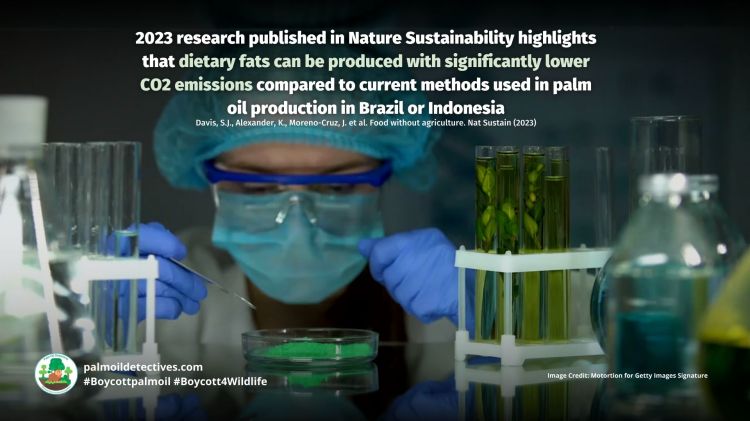
In an article published in Nature Sustainability, researchers write that food production can be more sustainable by focusing less on traditional agriculture and more on alternative methods, like chemical and biological processes.
The article highlights a specific example where dietary fats can be produced with significantly lower CO2 emissions compared to current methods used in palm oil production in Brazil or Indonesia. While acknowledging challenges like potential impacts on agricultural economies and the need for consumer acceptance, the abstract suggests that these new methods could greatly reduce the environmental impact of agriculture, especially in terms of greenhouse gas emissions, land, and water use in the next decade.
Davis, S.J., Alexander, K., Moreno-Cruz, J. et al. Food without agriculture. Nat Sustain (2023). https://doi.org/10.1038/s41893-023-01241-2
#Research paper in @Nature Sustainability: Dietary #fats can be produced in a lab with significantly lower #CO2 emissions/#climate impact compared to current #palmoil production in #Brazil and #Indonesia #Boycottpalmoil #Boycott4Wildlife @palmoildetect https://palmoildetectives.com/2024/01/21/food-without-agriculture/
Share to BlueSkyShare to Twitter#Research in @Nature finds switching to lab-produced #palmoil has enormous potential to reduce #GHG emissions, #deforestation, water use. Reducing the climate impact of #agriculture over the decades #Boycottpalmoil 🌴🚫 #Boycott4Wildlife @palmoildetect https://palmoildetectives.com/2024/01/21/food-without-agriculture/
Share to BlueSkyShare to TwitterDavis, S.J., Alexander, K., Moreno-Cruz, J. et al. Food without agriculture. Nat Sustain (2023). https://doi.org/10.1038/s41893-023-01241-2
Abstract
Efforts to make food systems more sustainable have emphasized reducing adverse environmental impacts of agriculture. In contrast, chemical and biological processes that could produce food without agriculture have received comparatively little attention or resources. Although there is a possibility that someday a wide array of attractive foods could be produced chemosynthetically, here we show that dietary fats could be synthesized with <0.8 g CO2-eq kcal−1, which is much less than the >1.5 g CO2-eq kcal−1 now emitted to produce palm oil in Brazil or Indonesia. Although scaling up such synthesis could disrupt agricultural economies and depend on consumer acceptance, the enormous potential reductions in greenhouse gas emissions as well as in land and water use represent a realistic possibility for mitigating the environmental footprint of agriculture over the coming decade. Read original
Plain English Summary of Results
Proteins, fats, and carbohydrates can be made without traditional agriculture by using different carbon sources and a variety of chemical and biological methods. This article compares how much energy each process uses, with some details still uncertain. The processes vary in their continuous or batched nature. The article also discusses the challenge chemical methods face in distinguishing between molecular forms, unlike bioenzymatic methods which are more precise but limited to conditions suitable for life. The focus is on fats because they are simpler to make, have been produced at scale in the past, are a basic calorie source in many foods, and the production of oil crops like soy and palm has a huge environmental impact.
Synthesizing fats from natural gas or air-captured carbon using renewable energy could greatly reduce greenhouse gas emissions compared to traditional agriculture. Finally, the potential environmental benefits of synthetic fats are highlighted, showing that replacing a portion of soy and palm oil with synthetic alternatives could significantly reduce greenhouse gas emissions and land use, particularly in countries where these crops are intensively farmed.
Plain English Summary of Discussion Notes
Producing macronutrients without traditional agriculture can significantly reduce greenhouse gas emissions and land use, especially for dietary fats. Even using coal-based electricity for production can be more climate-friendly than some current agricultural methods. Beyond environmental benefits, such as reduced water use and pollution, synthetic foods can improve food security and lessen the need for labor-intensive farming jobs. This opens up possibilities for reforestation and biodiversity improvements.
However, there are challenges. The estimates are based on data that might not capture all relevant factors, and more detailed analysis is needed. The cost of synthetic foods could be higher than agricultural products, and social acceptance is a major hurdle, given the public’s skepticism about synthetic foods and potential unforeseen environmental impacts. The shift to synthetic foods could also impact the global labor force, especially smallholder farmers in the global South, as agriculture employs a significant portion of the world’s workforce.
Synthetic food production could lead to a smaller environmental footprint for agriculture, requiring much less water and can be produced anywhere with the right resources. This could make food systems more resilient but might also create new dependencies. Sustainable synthetic food production would ideally use renewable energy and atmospheric carbon.
Finally, the move towards synthesized foods prompts a reevaluation of humanity’s relationship with nature. The domestication of plants and the Haber-Bosch process for nitrogen fixation were pivotal in human history. Now, with the majority of habitable land and water used for agriculture, synthetic food offers a path to reduce the environmental burdens of agriculture and align food security with ecosystem restoration.
Read original
Davis, S.J., Alexander, K., Moreno-Cruz, J. et al. Food without agriculture. Nat Sustain (2023). https://doi.org/10.1038/s41893-023-01241-2
ENDS
Read more about deforestation and ecocide in the palm oil industry
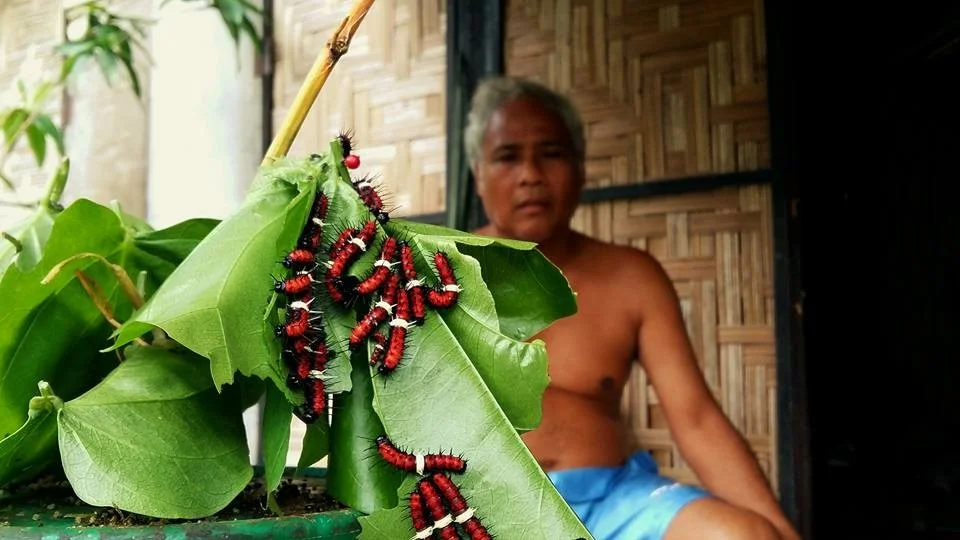
The Indigenous Malaysian concept of ‘Badi’: respecting the land and wildlife
The Indigenous Semai #indigenous people of #Malaysia can teach us a lot about how to protect people, planet and biodiversity. The Indigenous concept of #badi is not superstition or taboo, it’s about respecting…
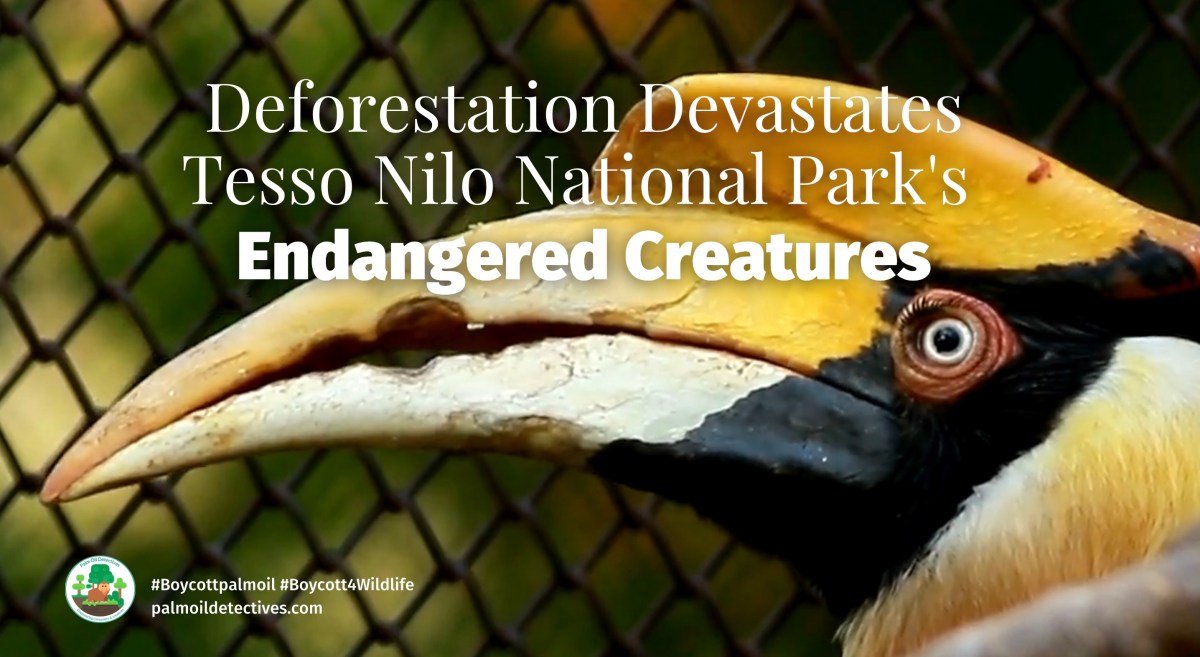
Deforestation Devastates Tesso Nilo National Park’s Endangered Creatures
Act now to save Tesso Nilo Park. This vital Indonesian park has lost 78% of its primary forest, threatening the habitat of Sumatran tigers and elephants
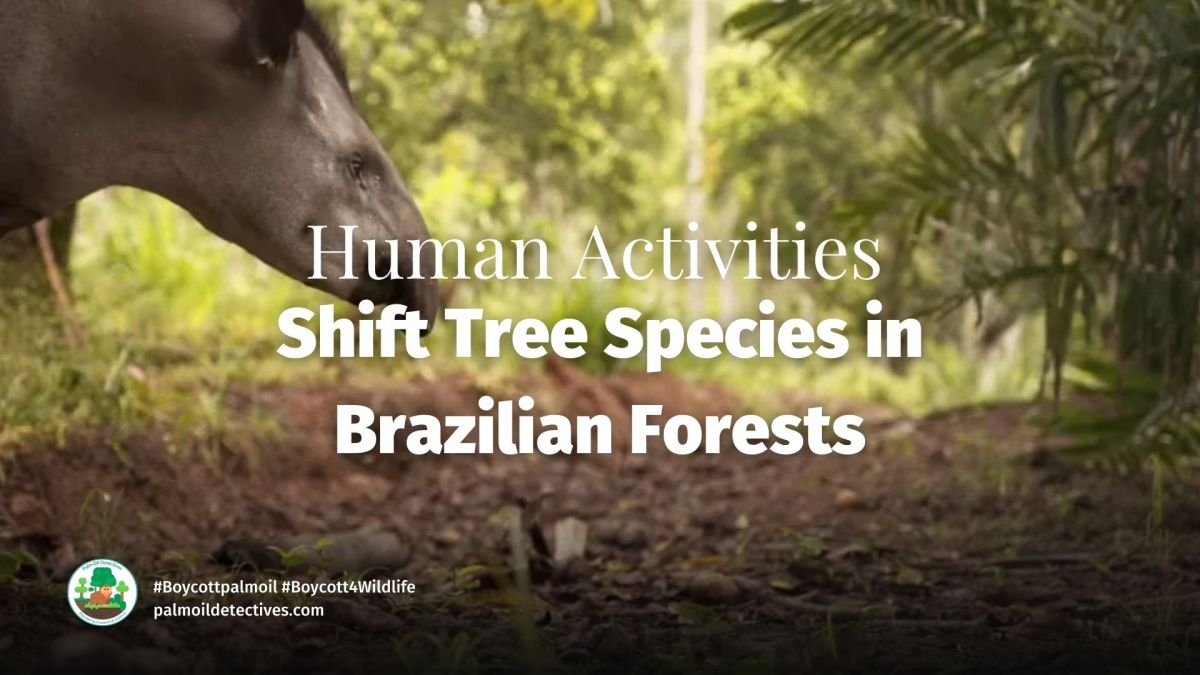
Deforestation Shifts Tree Species in Brazilian Forests
Deforestation in Brazilian forests causes shift towards fast-growing, small-seeded trees, threatening biodiversity, carbon storage. Take action!
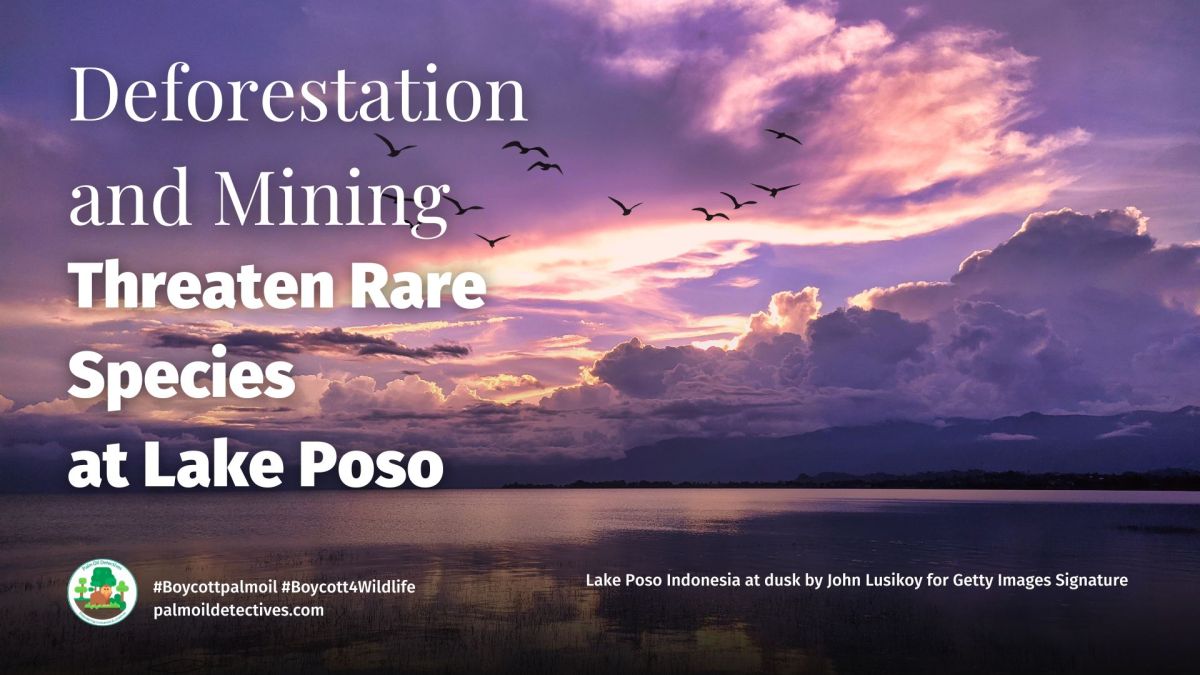
Deforestation and Mining Threaten Rare Species at Lake Poso
Deforestation, mining, and palm oil expansion are pushing rare endemic species at Indonesia’s Lake Poso to the brink. Urgent action needed, boycott palm oil!
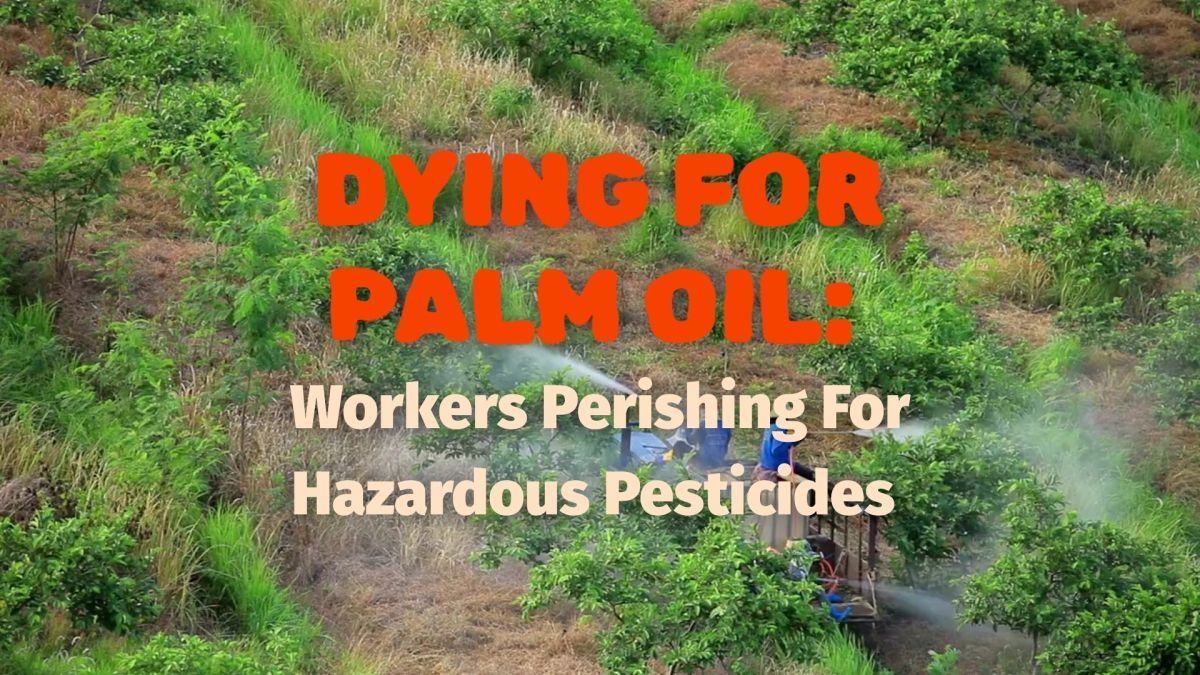
Palm Oil Workers Exposed to Hazardous Pesticides
Palm oil workers in Colombia, Ghana, and Indonesia are regularly exposed to hazardous EU-banned pesticides like Paraquat for palm oil. Take action!
Load more posts
Something went wrong. Please refresh the page and/or try again.
Take Action in Five Ways
1. Join the #Boycott4Wildlife on social media and subscribe to stay in the loop: Share posts from this website to your own network on Twitter, Mastadon, Instagram, Facebook and Youtube using the hashtags #Boycottpalmoil #Boycott4Wildlife.
Enter your email address
Sign Up
Join 3,526 other subscribers2. Contribute stories: Academics, conservationists, scientists, indigenous rights advocates and animal rights advocates working to expose the corruption of the palm oil industry or to save animals can contribute stories to the website.

Wildlife Artist Juanchi Pérez

Mel Lumby: Dedicated Devotee to Borneo’s Living Beings

Anthropologist and Author Dr Sophie Chao

Health Physician Dr Evan Allen

The World’s Most Loved Cup: A Social, Ethical & Environmental History of Coffee by Aviary Doert

How do we stop the world’s ecosystems from going into a death spiral? A #SteadyState Economy
3. Supermarket sleuthing: Next time you’re in the supermarket, take photos of products containing palm oil. Share these to social media along with the hashtags to call out the greenwashing and ecocide of the brands who use palm oil. You can also take photos of palm oil free products and congratulate brands when they go palm oil free.
https://twitter.com/CuriousApe4/status/1526136783557529600?s=20
https://twitter.com/PhillDixon1/status/1749010345555788144?s=20
https://twitter.com/mugabe139/status/1678027567977078784?s=20
4. Take to the streets: Get in touch with Palm Oil Detectives to find out more.
5. Donate: Make a one-off or monthly donation to Palm Oil Detectives as a way of saying thank you and to help pay for ongoing running costs of the website and social media campaigns. Donate here
Pledge your support#Agriculture #biotechnology #BoycottPalmOil #Boycott4wildlife #BoycottPalmOil #Brazil #Climate #climateChange #CO2 #deforestation #fats #food #GHG #Indonesia #industrialAgriculture #PalmOil #palmOilDeforestation #palmoil #ReasonsToBeHopeful #research
Unsupported type or deleted object
Around 25% of Africa’s Land is Damaged: This is How We Fix It!
Almost 25% of all land in Africa has been damaged. Land degradation is worrying issue across the continent of Africa. This is being driven by climate change and deforestation for extractive industries like rare mineral mining and monocultures like palm oil and cocoa. Other big drivers includes invasive species and environmental pollutants and toxins. Mlungele Nsikani is a land restoration specialist and environmental scientist. He explains how ecological restoration and agroecology is a great way to reverse land degradation so that people, plants and animals can thrive. Another powerful way to make an impact is through boycotting industries destroying the world like gold mining, palm oil and the meat industry. #BoycottPalmOil #Boycott4Wildlife
25% of #land in #Africa is damaged by #climatechange #mining and #palmoil #deforestation. Yet strong policies for #agroecology would restore land for people, plants and animals to thrive #BoycottPalmOil #ClimateActionNow #Boycott4Wildlife @palmoildetect https://wp.me/pcFhgU-90N
Share to BlueSkyShare to TwitterWritten by Mlungele M. Nsikani, Senior scientist, South African National Biodiversity Institute. This article is republished from The Conversation under a Creative Commons license. Read the original article.







What’s driving land degradation on the continent?
Africa is one of the most degraded continents in the world. About 23% of the surface of Africa, or over 700 million hectares of land, is already degraded. Another three million hectares is being further degraded annually.
Degraded land is land that has lost some of its natural productivity through processes caused by humans. It’s estimated that up to 40% of the planet’s land is degraded.
The “big five” drivers of land degradation globally and in Africa are:
- biological invasions, where plant species have spread outside their indigenous area and disrupted the services provided by ecosystems
- climate change driven events, such as intense droughts and severe fires
- extractive activities, such as mining and over-harvesting
- habitat transformation or fragmentation, including deforestation and poor agricultural practices
- pollutants such as sulphur dioxide, and eutrophication – where algae and other plants take over plant life.
Factors that have made the situation worse in Africa include: development demands; a high dependency on natural resources at the household level (such as the use of firewood for cooking); agricultural practices (including clearing indigenous plants to grow cash crops); weak governance; insecure land tenure; pervasive poverty; and population growth.
What is ecological restoration?
Ecological restoration is the process of assisting the recovery of an ecosystem that has been degraded, damaged or destroyed. Removing invasive plants and reintroducing indigenous species is one way to reverse damage. Ecological restoration is about helping to create conditions in which plants, animals and microorganisms can carry out the work of recovery themselves.
Assisting recovery can be as complex as altering landforms (intentionally changing aspects of the landscape), planting vegetation, changing the hydrology (water flow), and reintroducing wildlife. It can also be as simple as removing an invasive species or reintroducing a lost plant species to the land.
For example more than 8,750 plant species have found their way to South Africa. Over 785 species have made the country their permanent home on a significant scale and have had negative impacts. These include at least 14 Australian Acacia tree species which are invasive across South Africa. These cover about 554,000 hectares of the country.
They use up water resources and reduce grazing land. They also change soil microbial community structure, diversity and function. Invasive Acacia trees have established extensive woodlands that compete against native species, leaving little room for native plants and trees to grow. This costs more than R4 billion annually (about US$214 million) – the combined cost of clearing invasive species and the value of reduced ecosystem services in invaded areas.
The fynbos biome, which covers large parts of South Africa’s Western Cape province, has been the most affected. Since 1995, the publicly funded Working for Water programme has cleared invasive species, leaving ecosystems to recover naturally. The Greater Cape Town Water Fund has also funded the removal of thousands of thirsty invasive trees in mountain areas in a bid to save water and restore indigenous fynbos. This is known as passive restoration.
Planting native vegetation (often done through seed) – active restoration – has also helped the land recover. However, it has been applied at a smaller scale than passive restoration because it is more expensive. Planting native vegetation after clearing invasive species is often a more effective way to help native species recover in the restoration site, particularly if the native soil seedbanks have been depleted by the long duration of invasion.
How can people help?
Anyone can contribute to the restoration of ecosystems. The first thing is to advocate for and actively engage in the conservation of intact ecosystems. As the old adage goes, prevention is better than cure.
Ecological restoration is a great tool to tackle land degradation. But it’s not a quick fix. It’s still necessary to protect and conserve natural ecosystems.
Secondly, everyone should get involved in ecological restoration efforts, no matter how small. We can help remove invasive species or plant native species where we live. We can donate or be part of organisations that are involved in ecological restoration.
Above all, we should continue to spread the ecological restoration message and show that we are #GenerationRestoration!
The need for ecological restoration on the continent is great. Only functioning landscapes can provide affordable food, water and energy. These are the cornerstones of economic development. Ecological restoration can protect and enhance environmental assets and natural resources, provide employment, and help national development, security and social stability.
Written by Mlungele M. Nsikani, Senior scientist, South African National Biodiversity Institute. This article is republished from The Conversation under a Creative Commons license. Read the original article.
ENDS
Read more about conservation and reasons to be hopeful

Protecting India’s Tigers Saves One Million Tonnes of CO2
#India’s fifty year long Project #Tiger has been a successful conservation project. A new research study finds that protecting tigers and their rainforest home has additional benefits to #carbonemissions, saving 1 million tonnes…

Dung Beetles Are Rainforests’ Diligent Regrowth Soldiers
The dung beetle may eat and nest in poop, but their role in nature is anything but humble. These hardshelled scarabs live on every continent except Antarctica, recycling feces and suppressing parasites that…
Protect Nature to Avoid Future Pandemics
Research from University of Queensland and published in The Lancet: Planetary Health finds that the COVID-19 pandemic is linked to the decline of ecosystems and biodiversity, creating a cycle that could lead to…
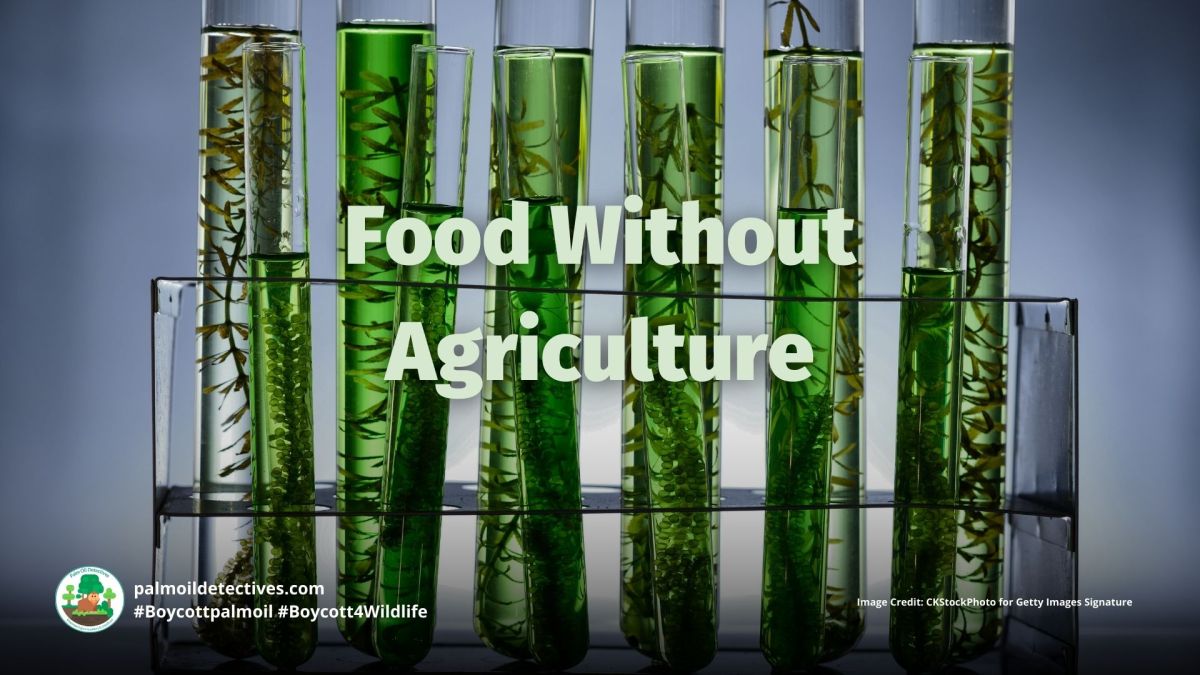
Food Without Agriculture
Researchers argue food can be made without destroying rainforests, using alternative energy sources like microbes, yeast and CO2, saving animals and emissions
Indigenous Farming: Science, Not Superstition
What does it mean when you encounter snakes slithering along paths or find a bird nest with eggs? For Indigenous peoples in Malaysia, these are tell-tale signs passed down by their ancestors discouraging…
Load more posts
Something went wrong. Please refresh the page and/or try again.
Take Action in Five Ways
1. Join the #Boycott4Wildlife on social media and subscribe to stay in the loop: Share posts from this website to your own network on Twitter, Mastadon, Instagram, Facebook and Youtube using the hashtags #Boycottpalmoil #Boycott4Wildlife.
Enter your email address
Sign Up
Join 3,521 other subscribers2. Contribute stories: Academics, conservationists, scientists, indigenous rights advocates and animal rights advocates working to expose the corruption of the palm oil industry or to save animals can contribute stories to the website.
Wildlife Artist Juanchi Pérez
Mel Lumby: Dedicated Devotee to Borneo’s Living Beings
Anthropologist and Author Dr Sophie Chao
Health Physician Dr Evan Allen
The World’s Most Loved Cup: A Social, Ethical & Environmental History of Coffee by Aviary Doert
How do we stop the world’s ecosystems from going into a death spiral? A #SteadyState Economy
3. Supermarket sleuthing: Next time you’re in the supermarket, take photos of products containing palm oil. Share these to social media along with the hashtags to call out the greenwashing and ecocide of the brands who use palm oil. You can also take photos of palm oil free products and congratulate brands when they go palm oil free.
https://twitter.com/CuriousApe4/status/1526136783557529600?s=20
https://twitter.com/PhillDixon1/status/1749010345555788144?s=20
https://twitter.com/mugabe139/status/1678027567977078784?s=20
4. Take to the streets: Get in touch with Palm Oil Detectives to find out more.
5. Donate: Make a one-off or monthly donation to Palm Oil Detectives as a way of saying thank you and to help pay for ongoing running costs of the website and social media campaigns. Donate here
Pledge your support#Africa #agroecology #agroforestry #Boycott4wildlife #BoycottPalmOil #ClimateActionNow #climatechange #conservation #deforestation #environment #GenerationRestoration #land #mining #PalmOil #palmOilDeforestation #palmoil #ReasonsToBeHopeful