Wildlife Vet Dr Richard K Ssuna
Dr Richard K Ssuna: In His Own Words
Wildlife and Domestic Animal Vet, Conservationist, Animal Advocate
Bio: Dr Richard K. Ssuna
Dr Richard K. Ssuna has been caring for (wild and domesticated) animals as a Veterinarian for over 20 years. In the past he’s worked for the Uganda Society for the Protection and Care of Animals (USPCA), the Jane Goodall Institute and Chimpanzee Sanctuary, Wildlife Conservation Trust on Ngamba Island Chimpanzee Sanctuary and the Lilongwe Wildlife Centre. Dr Ssuna also established the Lilongwe Society and Protection of Animals (LSPCA) and also worked as the technical advisor for the Second Chance Chimpanzee Refuge in Liberia. He is currently the Founder of All Creatures Animal Welfare Trust in Malawi, Lesotho and Uganda.
Over the years, Dr Ssuna has received many awards for animal welfare, and veterinary practice including:
- The William Wilberforce Award in 2012.
- The Africa Animal Advocate Award by Humane Society International (HSI) in 2014.
- Special Recognition for Outstanding Leadership for Ngamba Island in 2018.
- World Animal Day Ambassador for Malawi.
Along with a veterinary degree, Dr Ssuna holds a Masters of Science in Wild Animal Health (Royal Veterinary College, University of London) and a Masters of International Animal Welfare Ethics & Law (Royal School of Veterinary Studies, University of Edinburgh).
Dr Ssuna is an absolute inspiration to animal lovers and conservationists all over the world. It is an honour to showcase his work and stories on Palm Oil Detectives.
Respected #wildlife and #pet #vet @RichardSsuna talks about @africacreatures saving #animals in #Uganda #Lesotho #Malawi and also #palmoil #landgrabbing #animalrights and the #Boycott4Wildlife #Africa
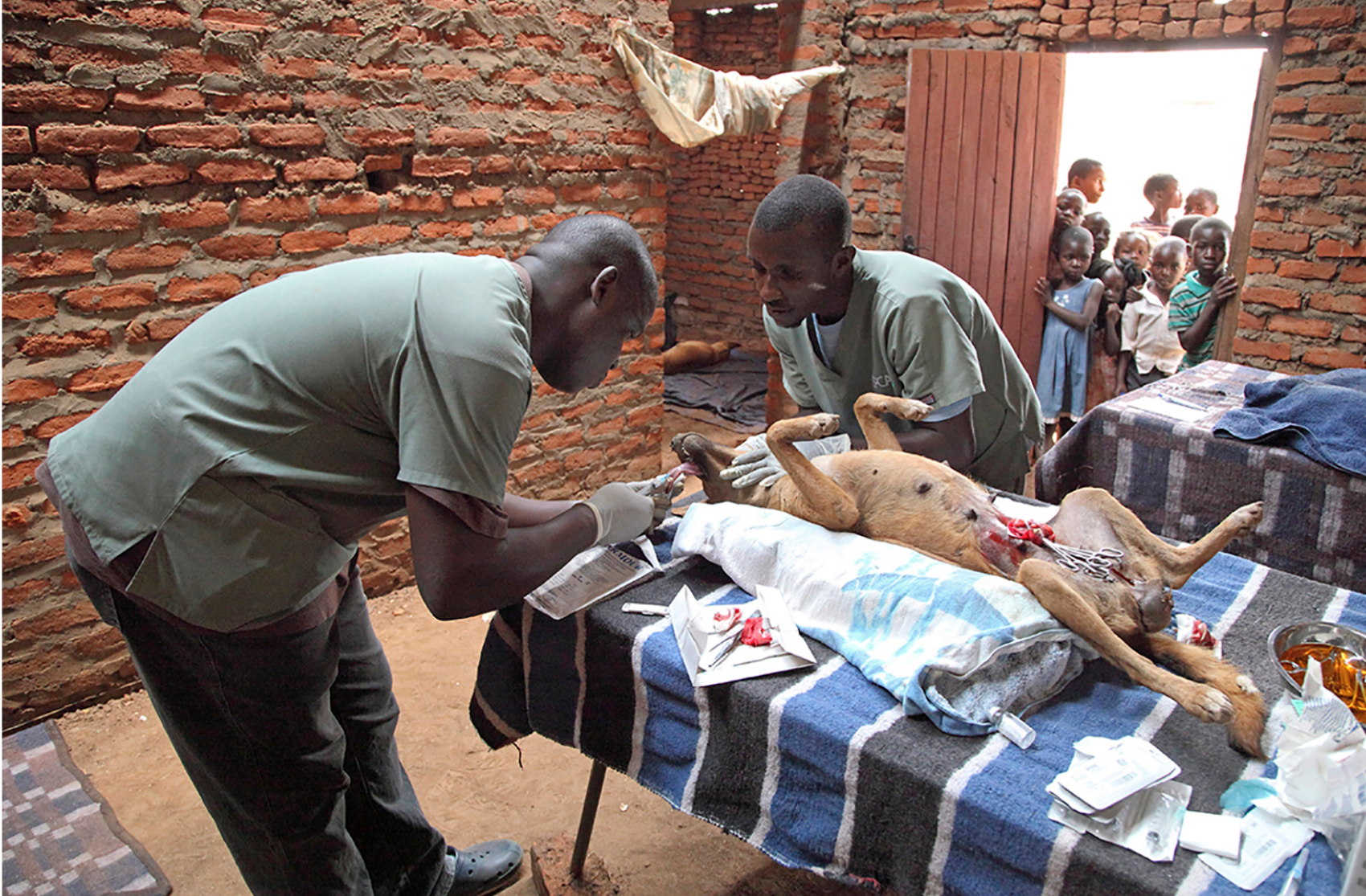
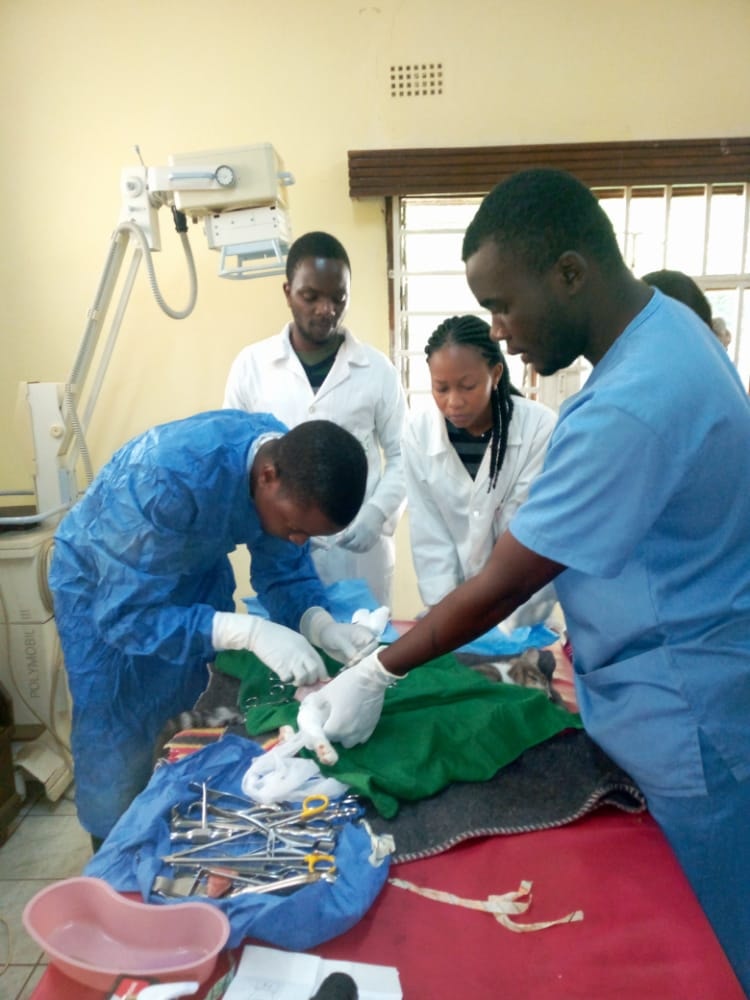
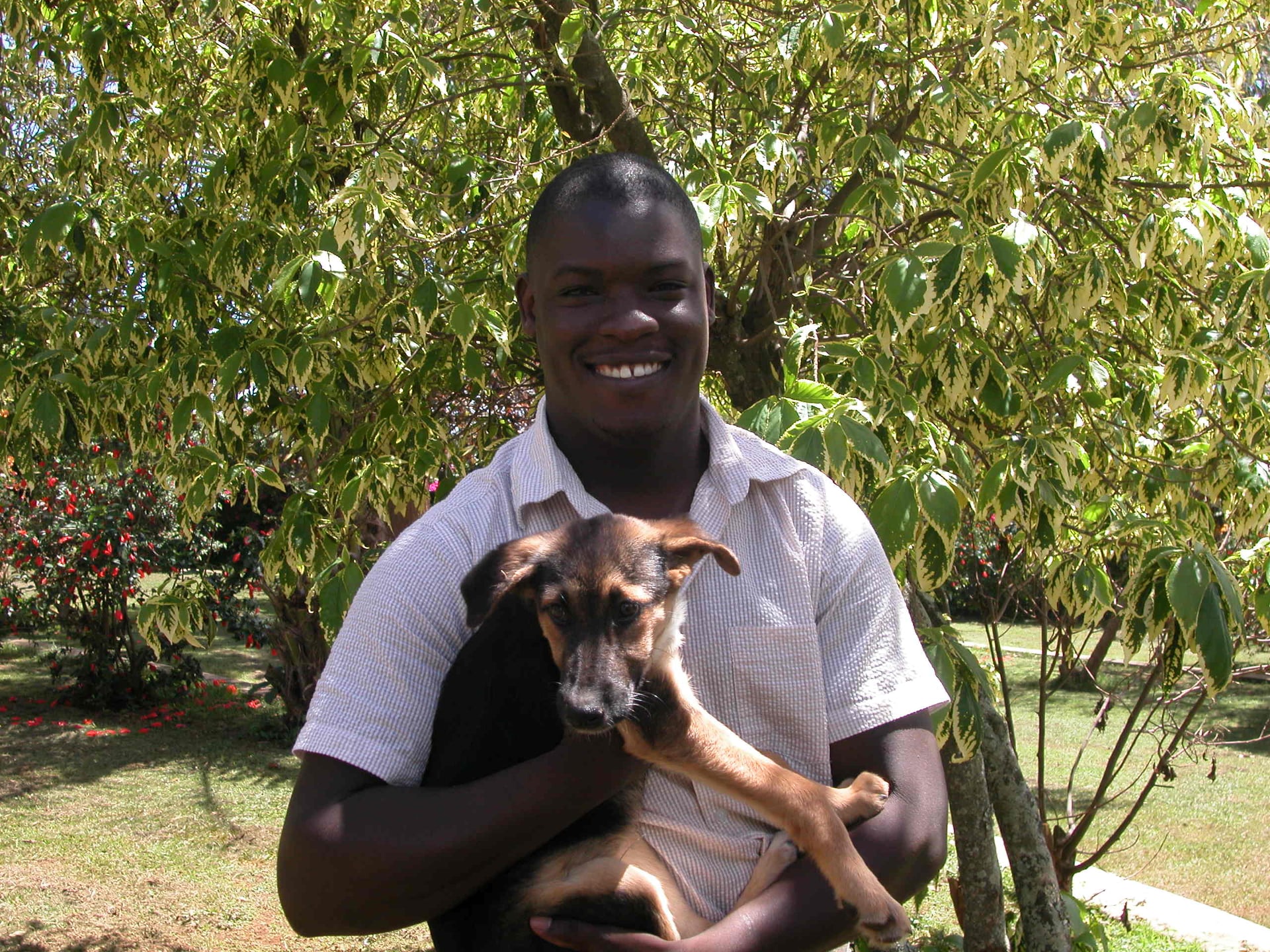





Respected #wildlife and #pet #vet @RichardSsuna talks about @africacreatures saving #animals in #Uganda #Lesotho #Malawi and also #palmoil #landgrabbing #animalrights and the #Boycott4Wildlife #Africa
‘Foreign #palmoil companies (RSPO members) have claimed the Kalangala Islands, Uganda for #palmoil. The locals have lost their food sources. I support the #Boycottpalmoil #Boycott4Wildlife’ #Wildlife and #Pet Vet @RichardSsuna
“In my view product certifications like @RSPOtweets when their operations adversely affect people, they are designed to cover-up an already messed-up industry.” #Wildlife #vet @RichardSsuna #Boycottpalmoil #Boycott4Wildlife
The public has been hoodwinked into believing that @RSPOtweets #palmoil #certification equates to a sustainable product and as result, companies fetch even more cash for it” #Wildlife #vet @RichardSsuna #Boycottpalmoil #Boycott4Wildlife
‘Please support All Creatures Animal Welfare Trust so we can help domestic and wild animals’ #wildlife and #pet #vet @RichardSsuna of @africacreatures #Boycott4Wildlife
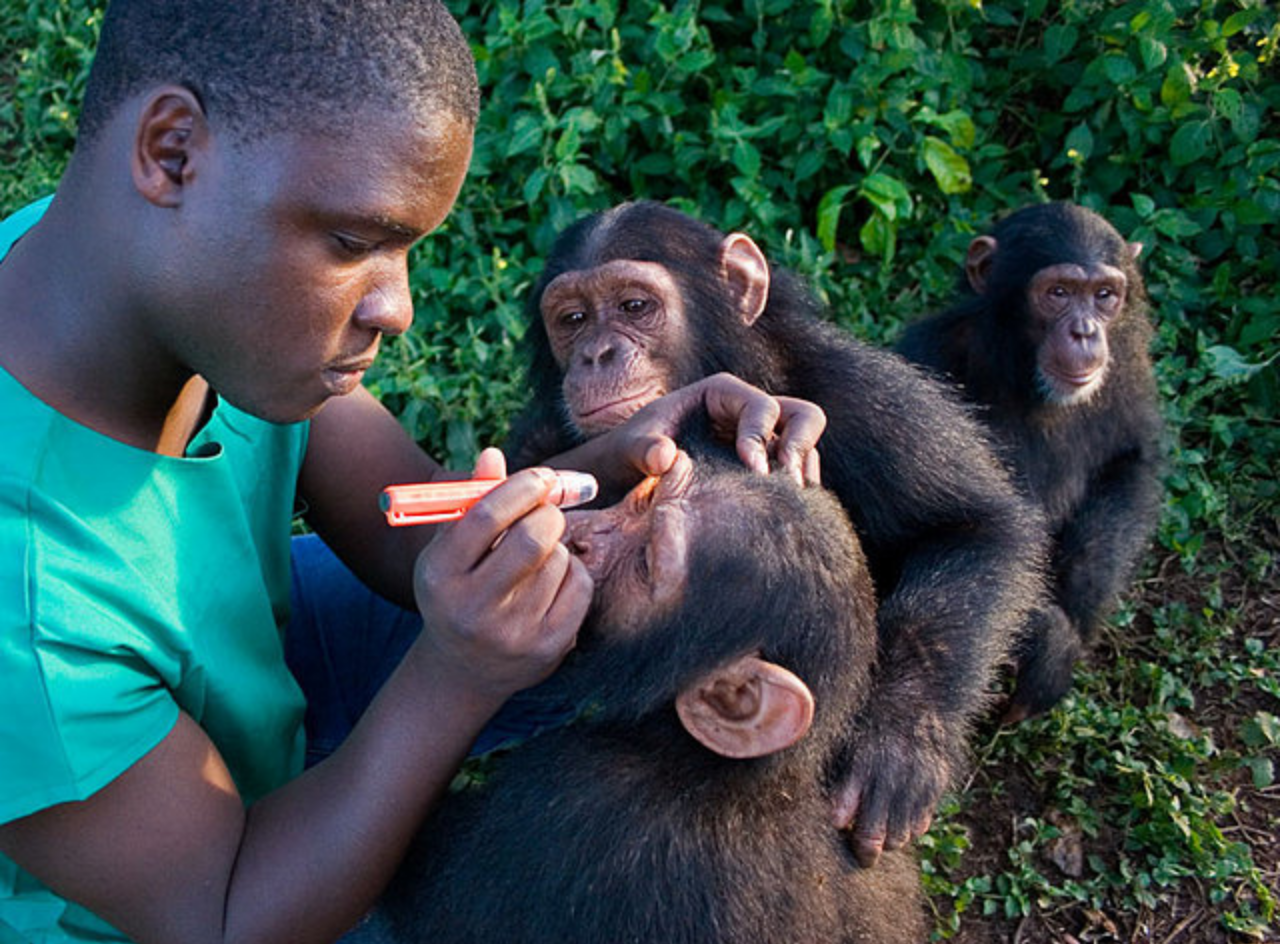
Chimps are very curious and they pay attention to detail
This is how it all started many years ago! Here I am examining one of the baby chimps at a sanctuary. Did you know that chimps appreciate veterinary care? Via Dr Richard Ssuna on Twitter
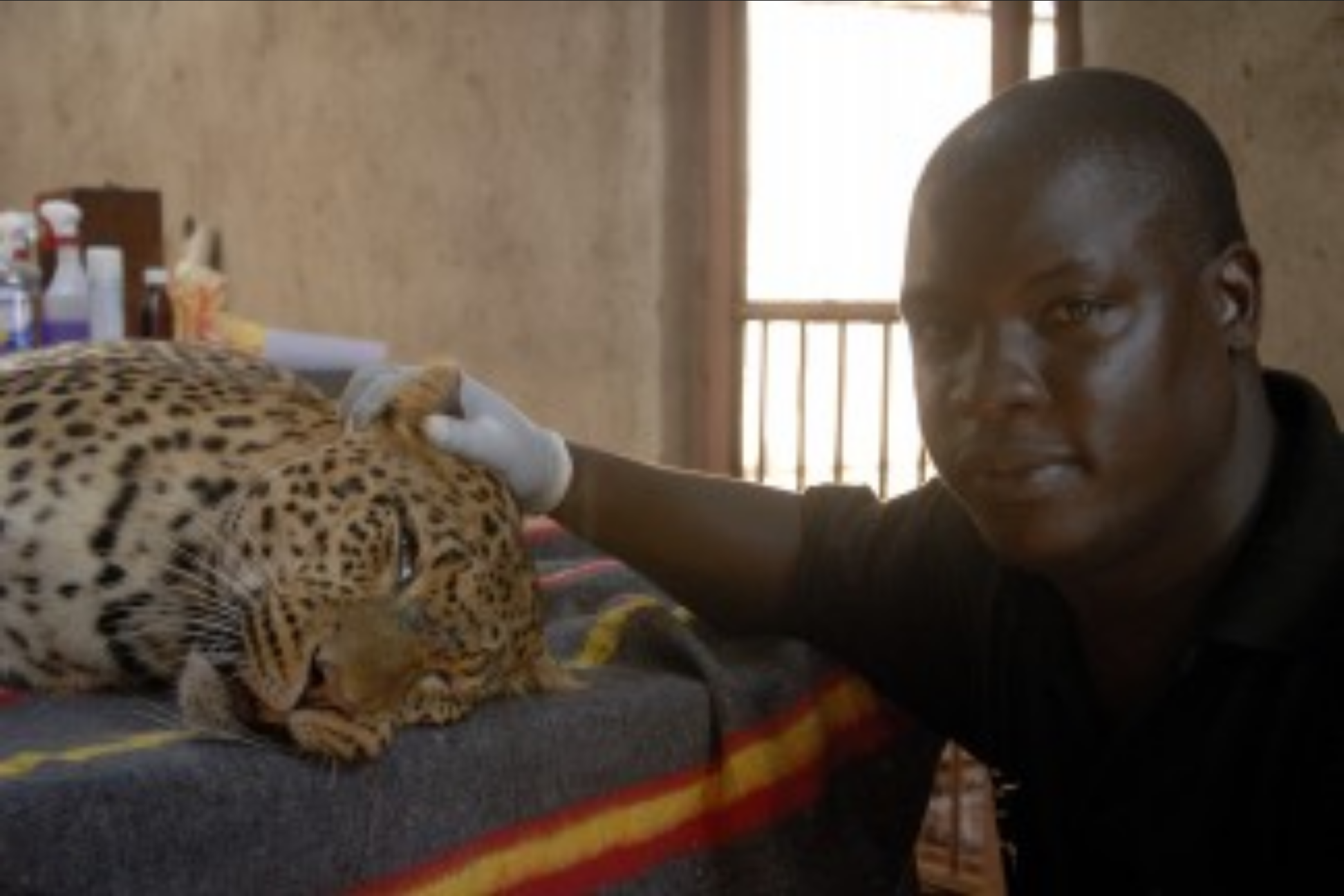
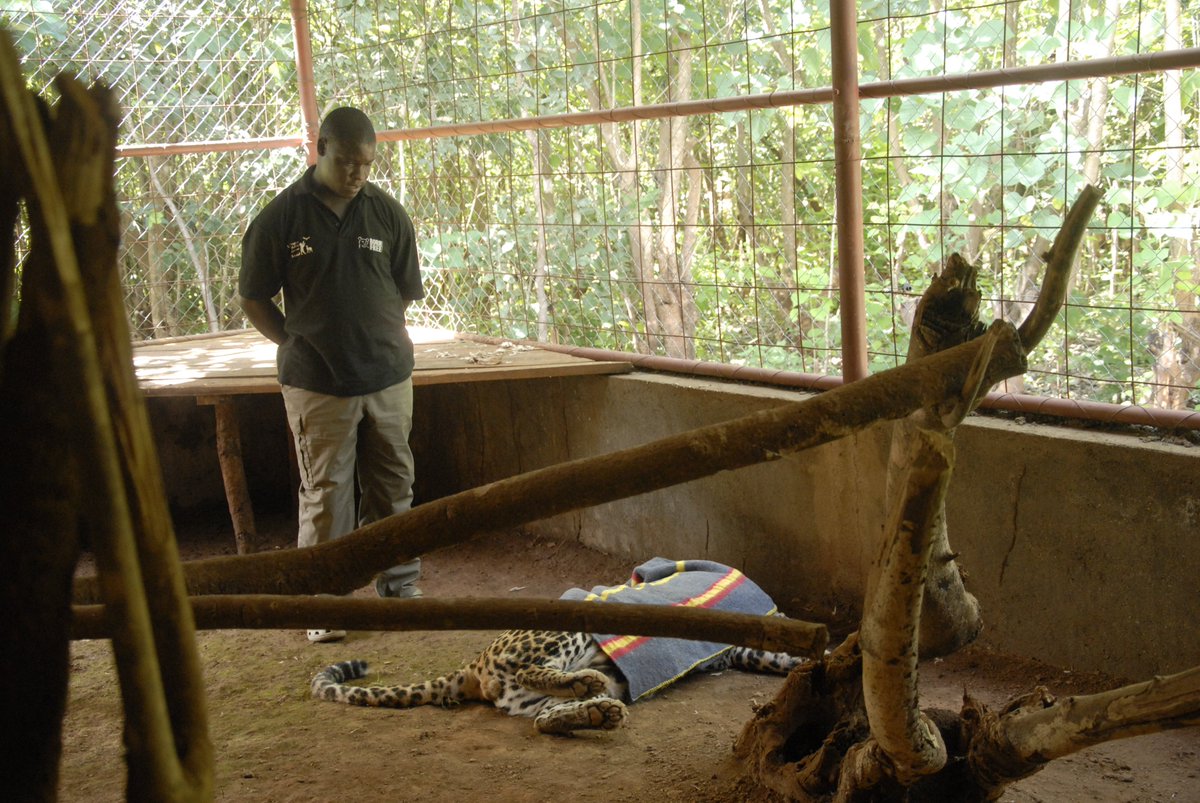
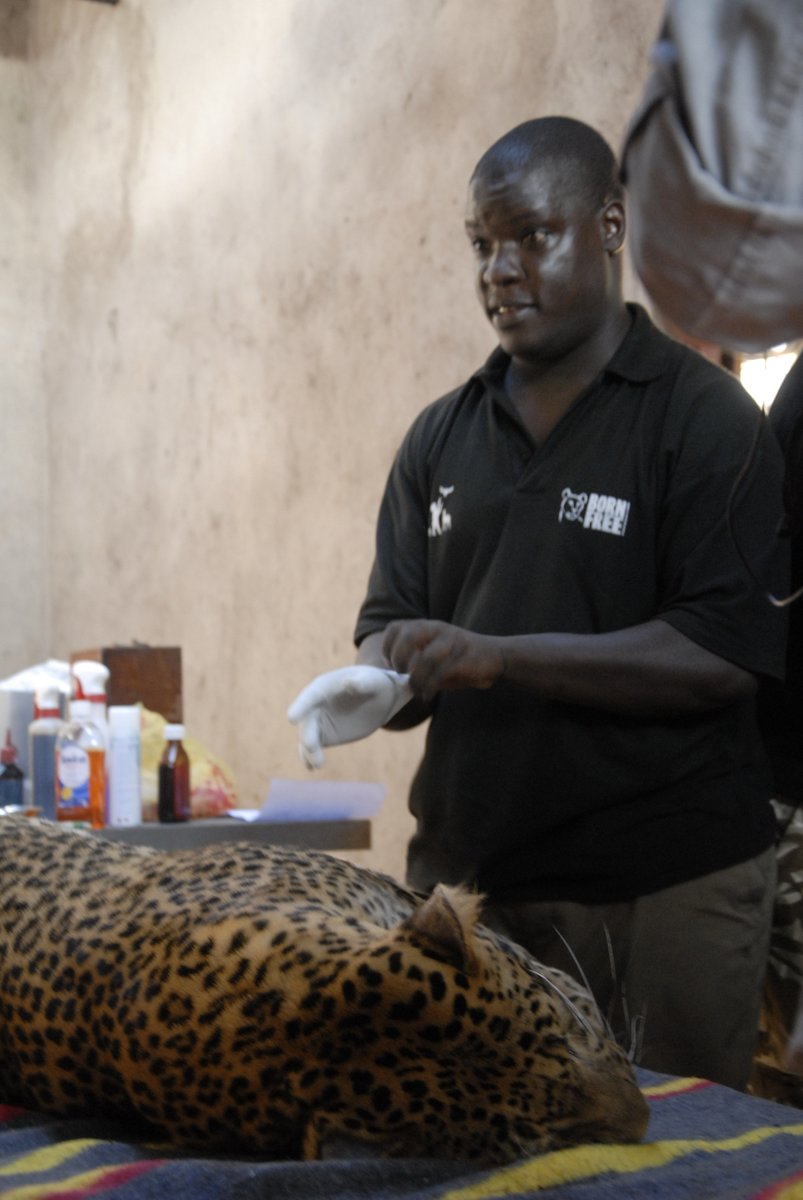
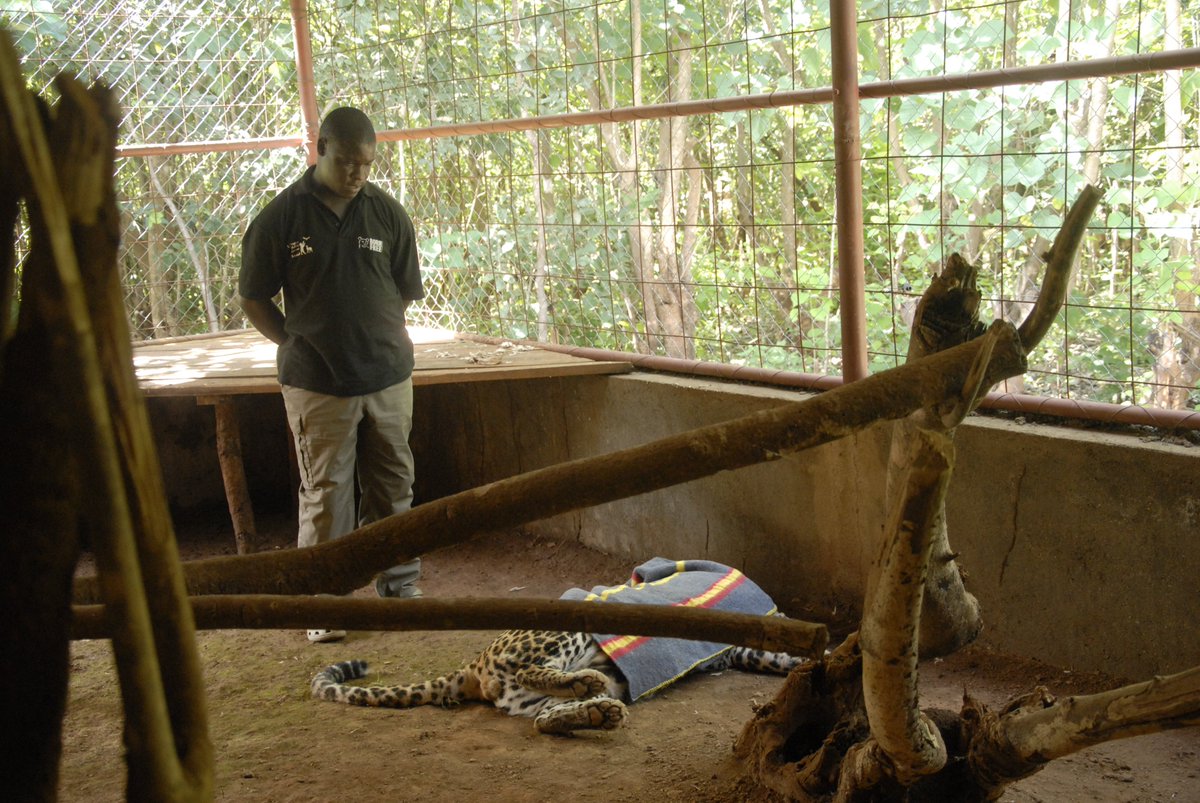
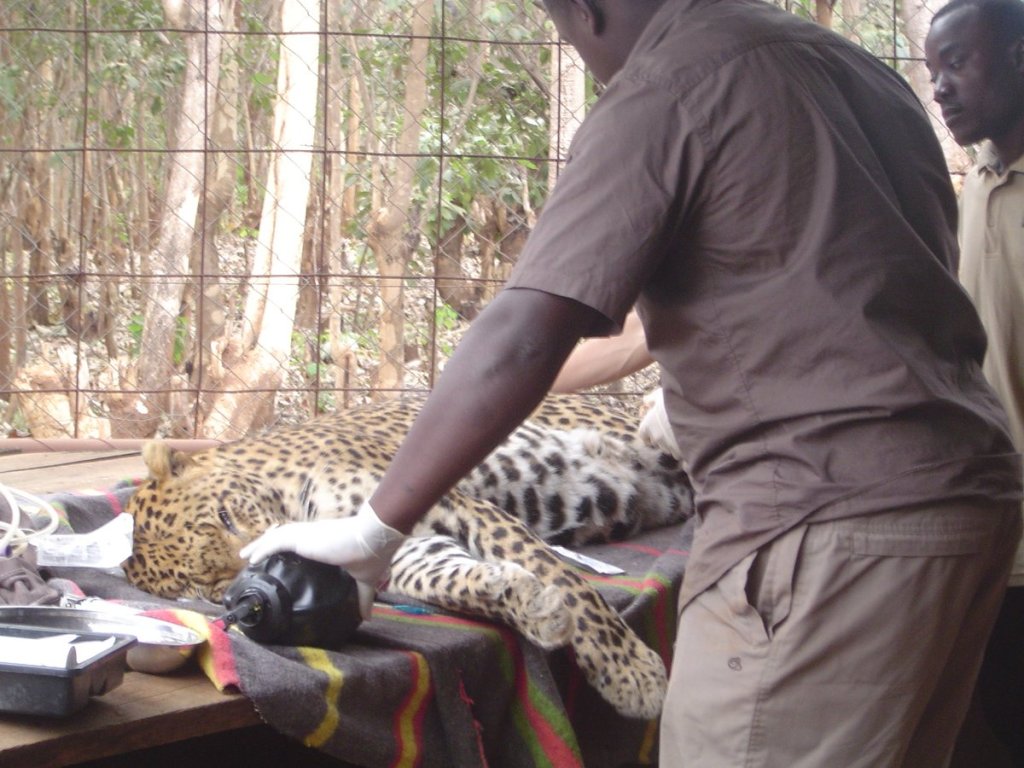
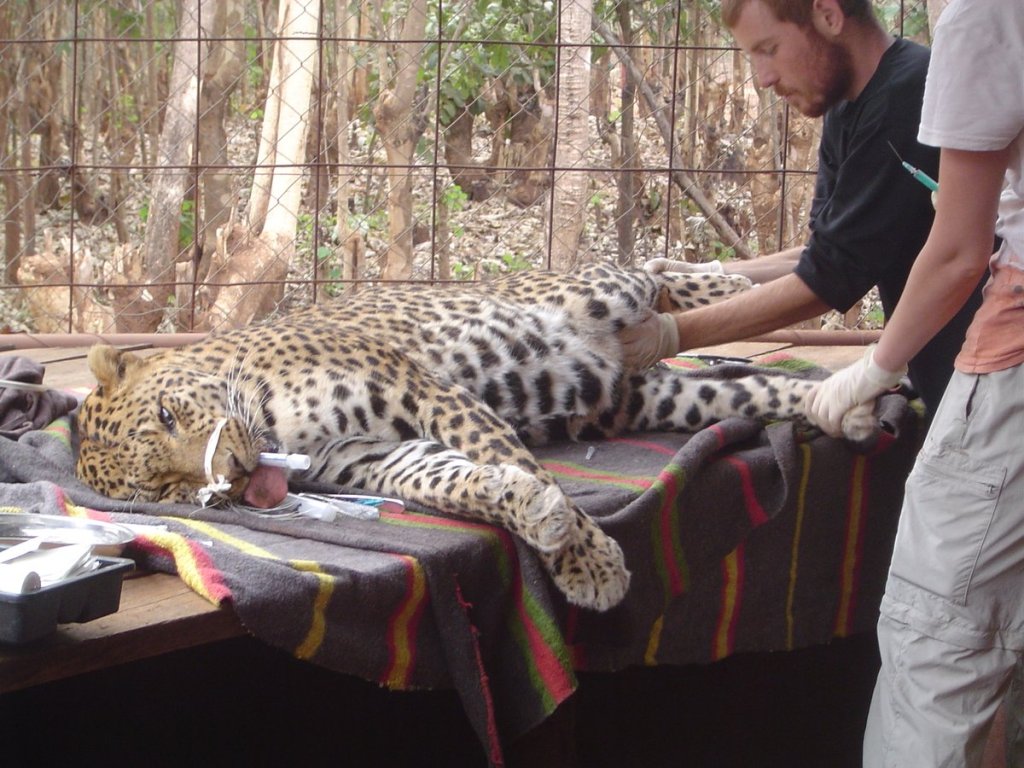
The beauty with being a wildlife-vet, is that you get to treat all sorts of animals
This leopard developed arthritis from a previous injury. This was her annual general health check. #Wildlife #Animals #AnimalWelfare #Africa @TheWildlifeHost @bigcatscom @Lupita_Nyongo
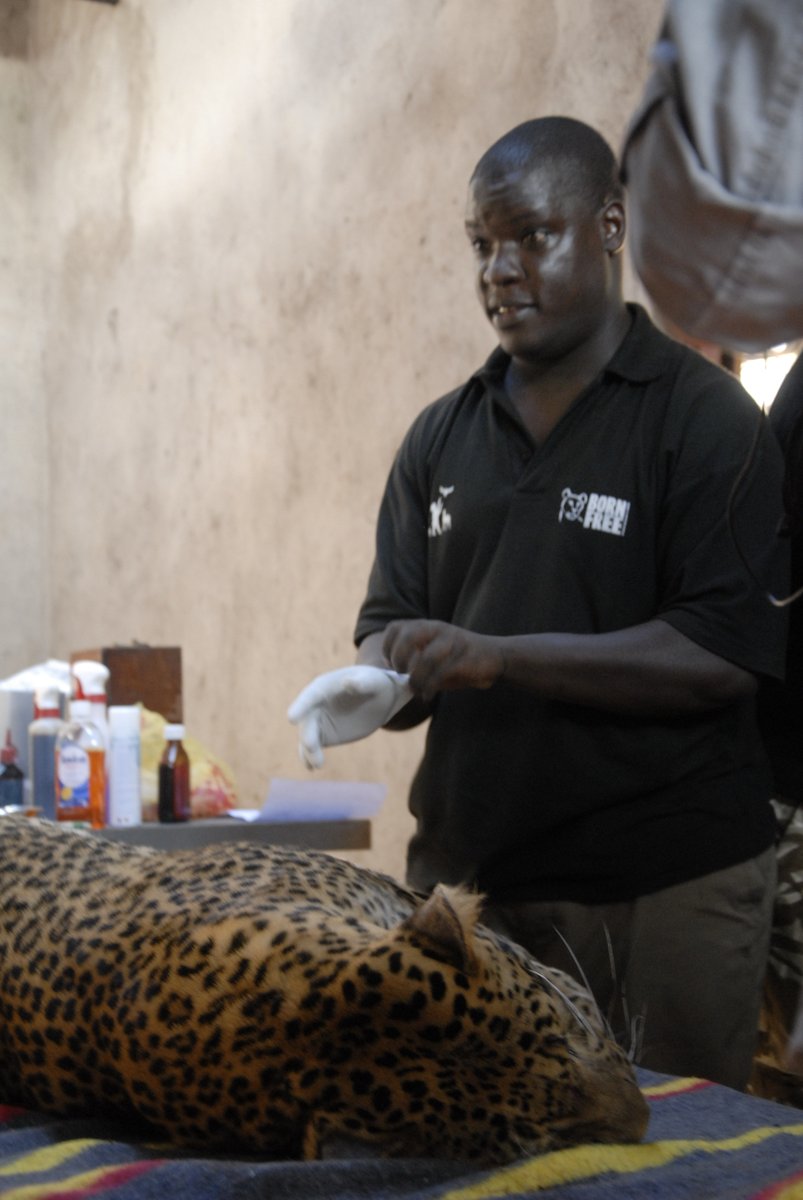
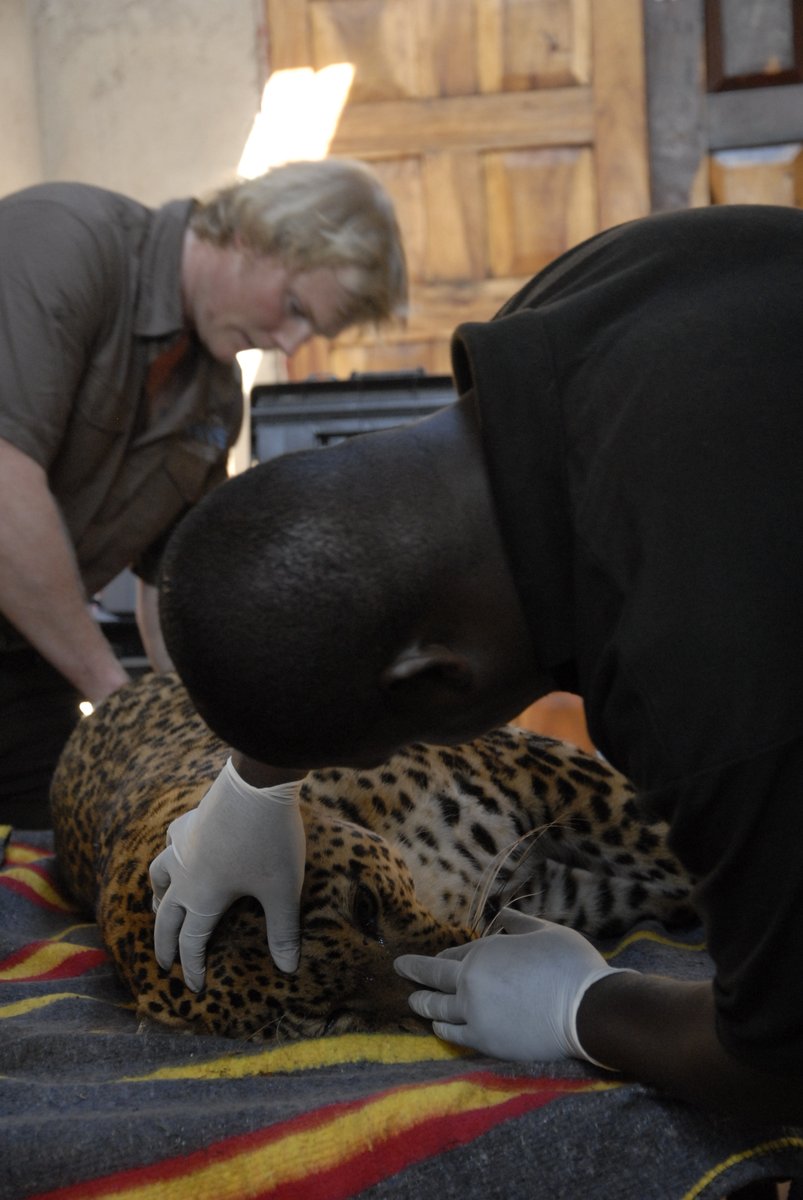
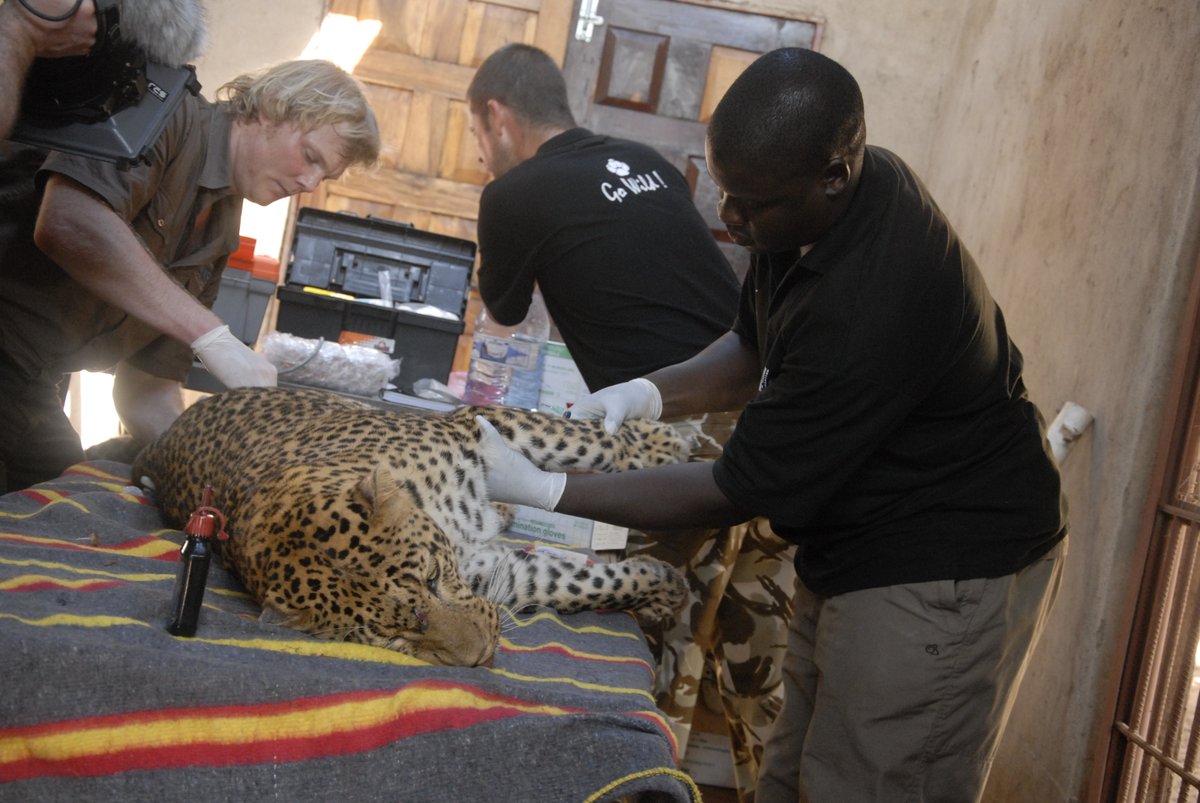
Originally tweeted by Richard Ssuna (@RichardSsuna) on August 16, 2021.
I used to be the Field Programs Officer and Veterinarian for the Jane Goodall Institute
This project was located in the richly forested areas of Bushenyi (Kalinzu) Hoima (Bulindi, Kitooba, Kaisotonya), Masindi and Kibaale (Kanyanchu).
dr richard ssuna
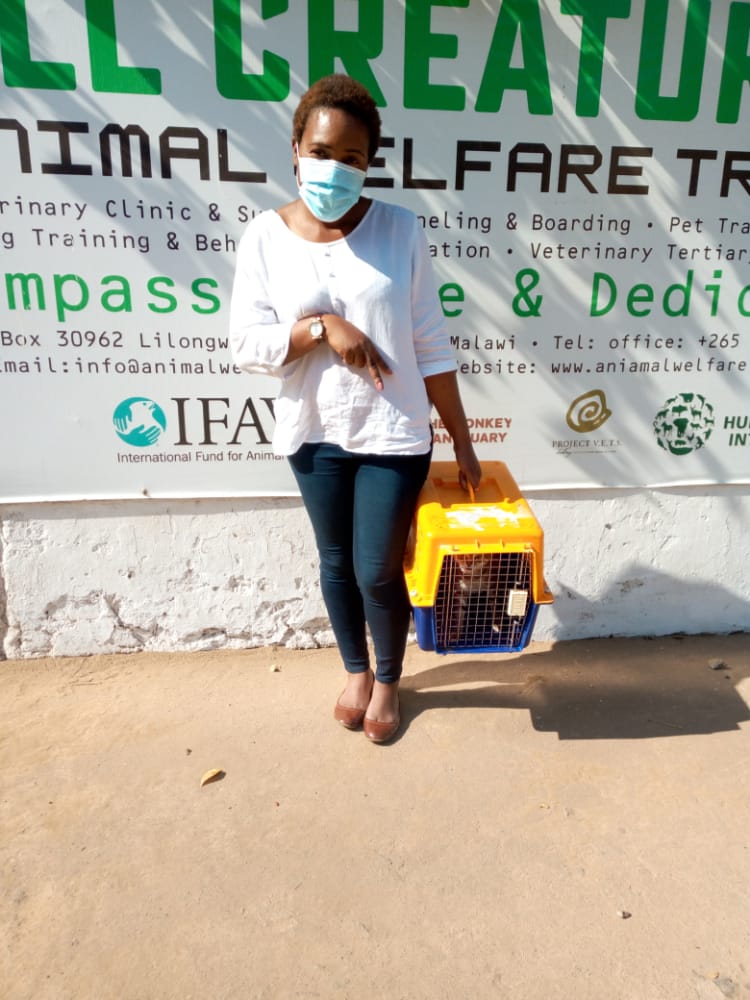
My organisation All Creatures Animal Welfare helps to keep animals and communities safe…
All Creatures was initially set up in Lilongwe in Malawi in 2016, we now have new sites in Lesotho and Uganda
We specialise in:
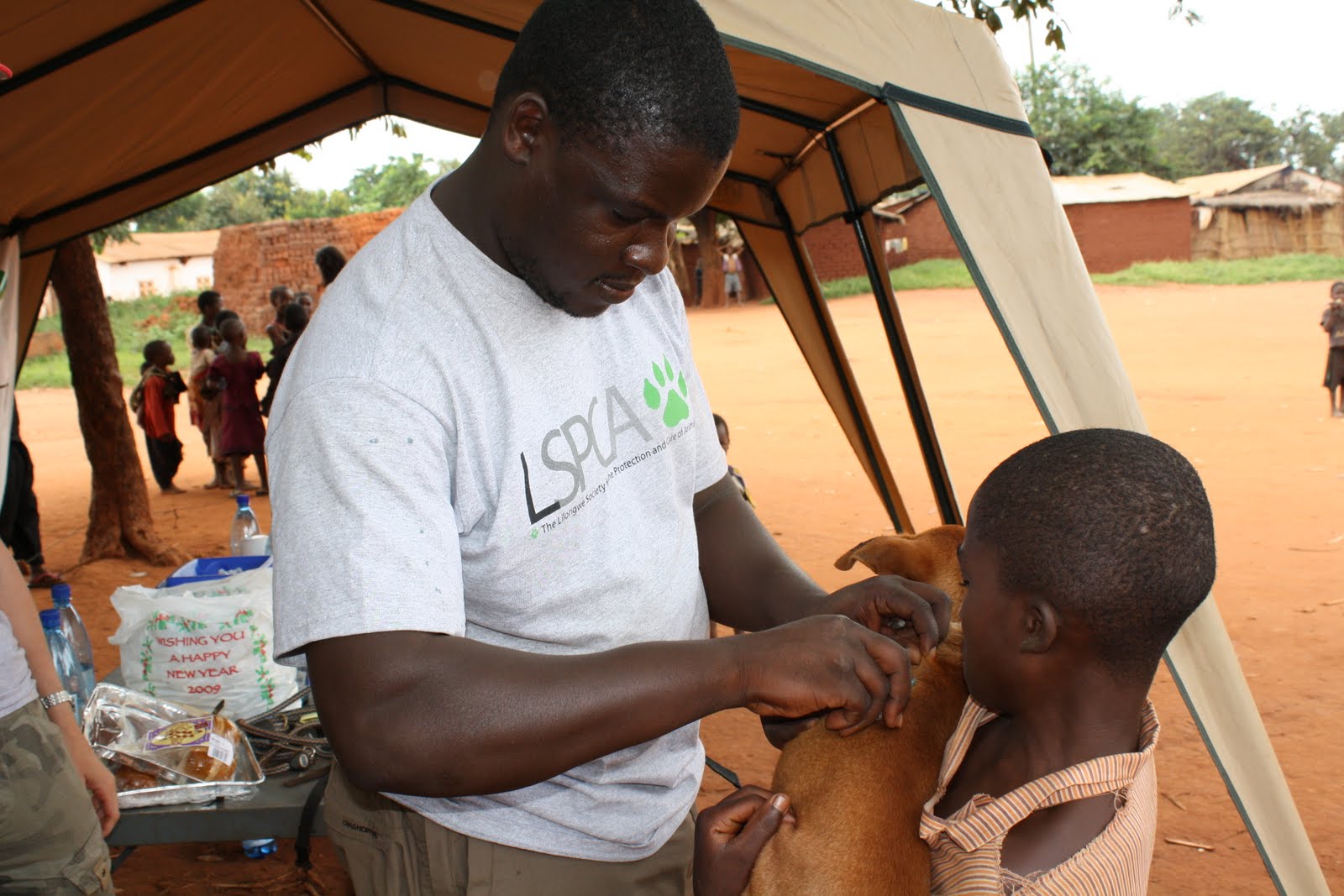
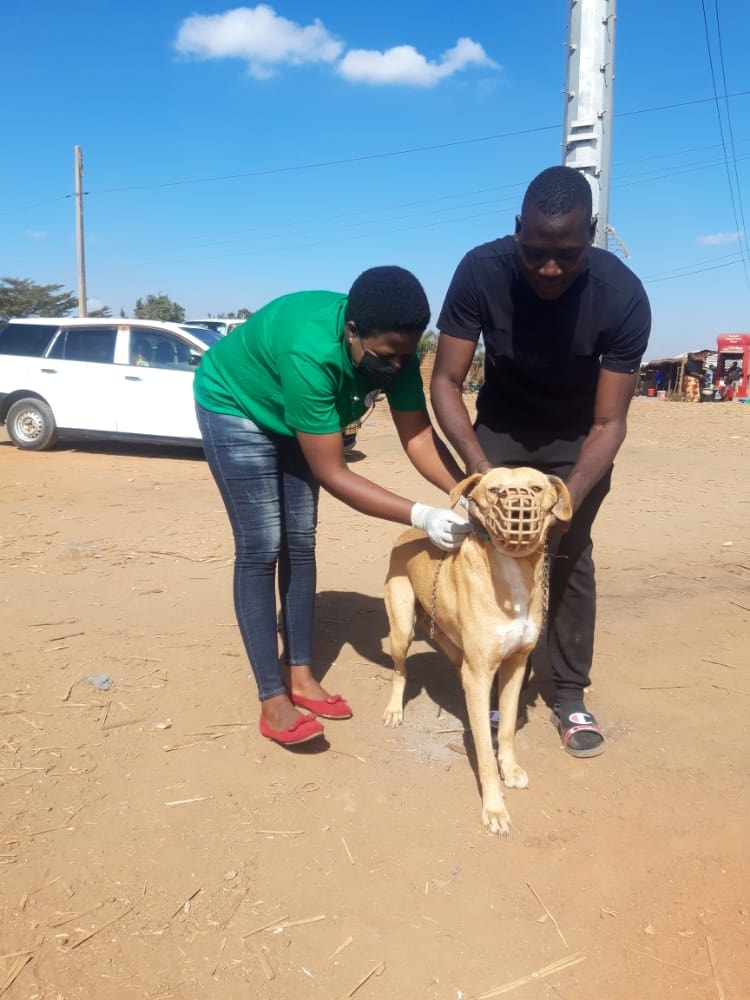
- Mass rabies vaccinations: Rabies is a critical public health concern in Africa and has severe animal welfare and human health consequences.
- Animal kindness education: We teach in schools and communities about the connection between animal welfare, environmental protection and human wellbeing.
- Community Veterinary Services: Our free vet services including spaying and neutering, surgery and wildlife interventions.
- Saving animals from disasters: Animals are often forgotten in natural disasters and pandemics and we are well equipped to save distressed and abandoned animals.
- Animal Rescue Centre: We have a shelter in Lilongwe and care for abandoned and neglected dogs and other animals.
“We have successfully vaccinated 75% of all dogs against rabies in Mzuzu, and vaccinated and sterilised more than 80% dogs in Chintenche, Northern Malawi.”
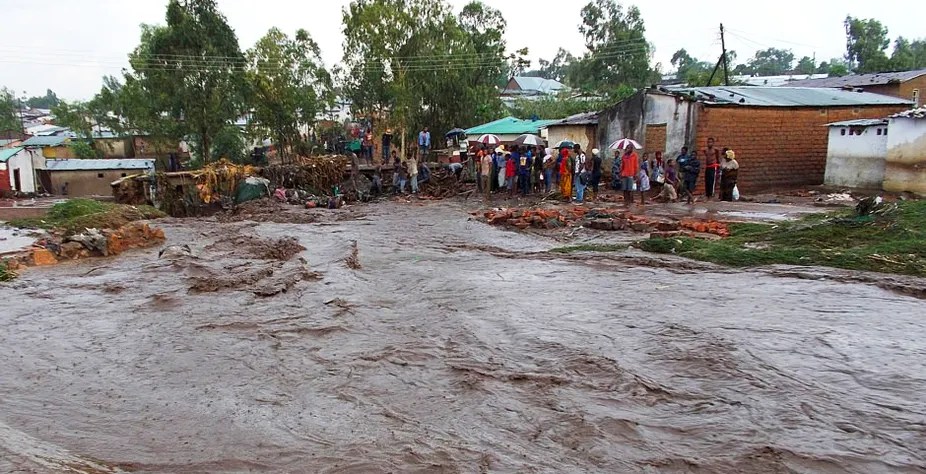
When Malawi was hit with floods in 2019, we rescued, treated and vaccinated many animals
Photo: The Conversation Arjan van de Merwe/UNDP/Flickr
“We have rescued and treated many different species wildlife, for example: Vervet Monkeys, Bush Babies, Common Duikers and Olive Baboons.”
 Dr Ssuna helping an injured bush baby.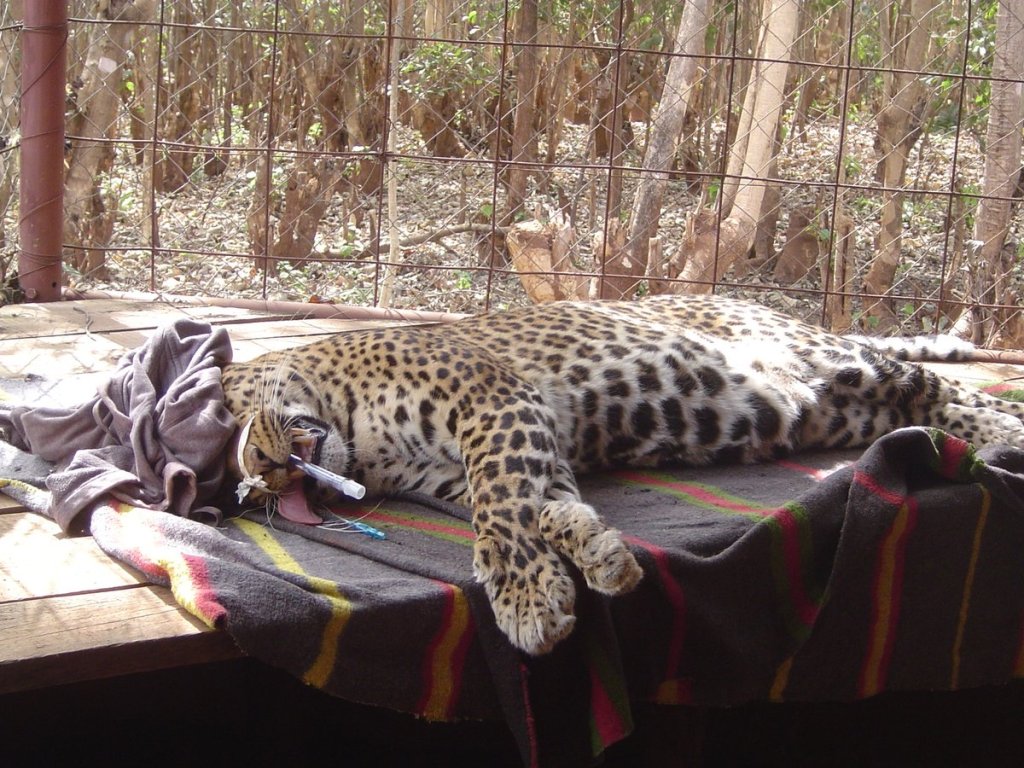
All Creatures Animal Welfare Trust was set up to care not only for domestic pets, but wildlife too…
This has unfortunately been difficult to implement due to funding and the insurmountable challenges of animal welfare issues for domestic animals. You can help us to help more animals by donating…
Donate via PaypalPhoto by Dalida Innes Wildlife Photography
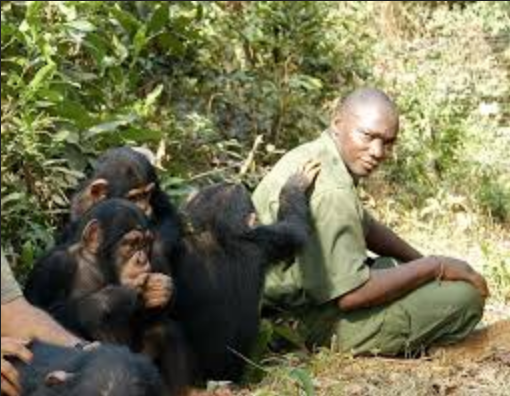
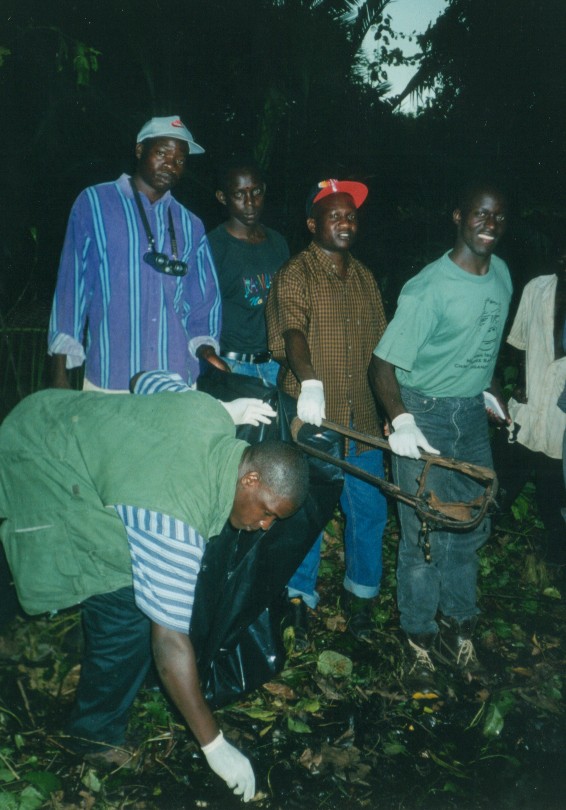
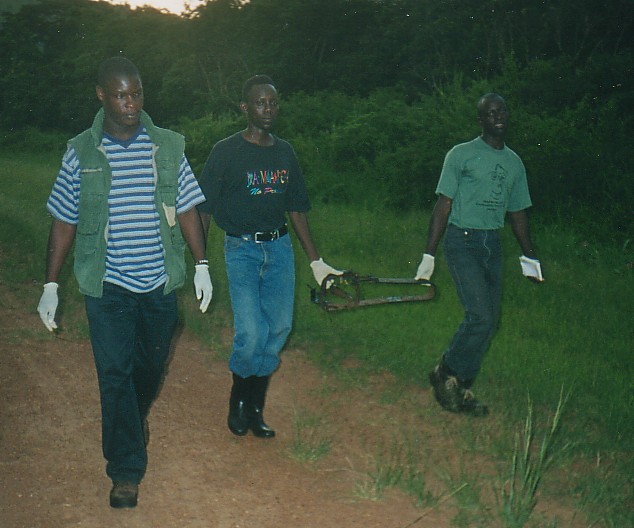
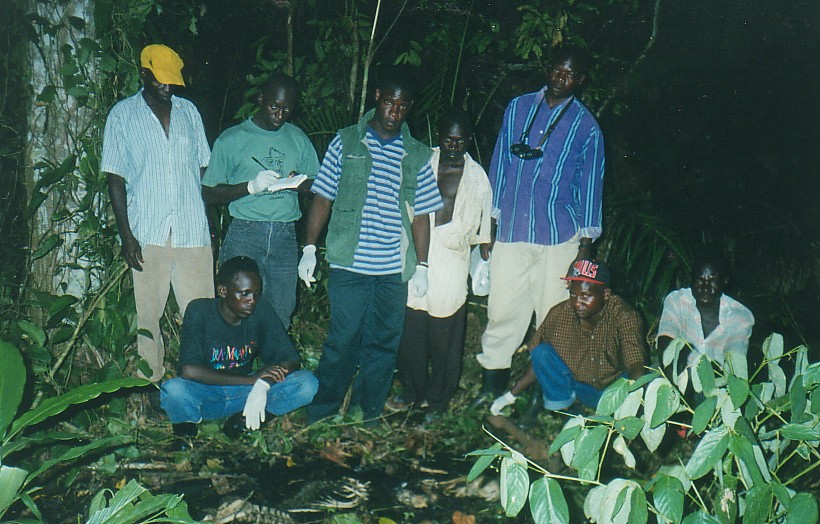
I helped to rescue baby chimps who have lost their mothers to traps laid by cocoa farmers in Kitooba
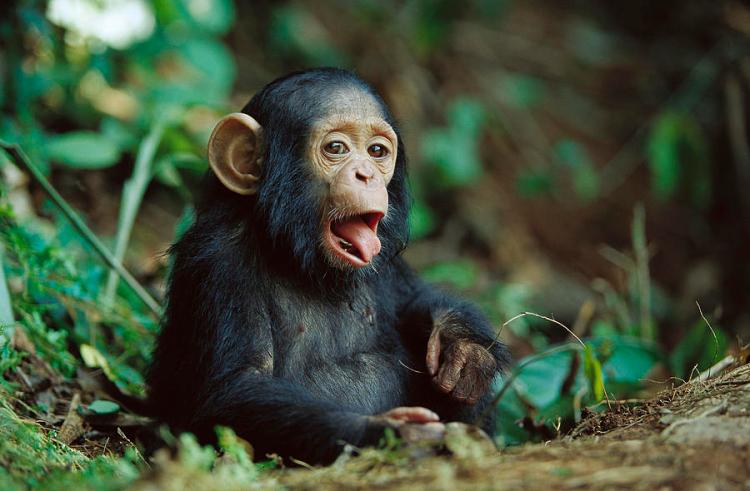 Chimpanzee Pan troglodytesDr Ssuna helps some chimp orphans
 I’ve seen first-hand the poaching of baby chimps and the destruction of chimp habitat for cocoa while I was working at The Jane Goodall Institute
~ Dr Richard Ssuna
Indiscriminate traps were usually intended for bush pigs and yellow baboons and laid by local farmers. They are a common affliction to wild chimp populations in West Uganda. The chimps use private forest patches as movement corridors to access their natural habitats. This below was Masindi, 20 years ago!
Originally tweeted by Richard Ssuna (@RichardSsuna) on August 12, 2021.
The other culprit was British American Tobacco
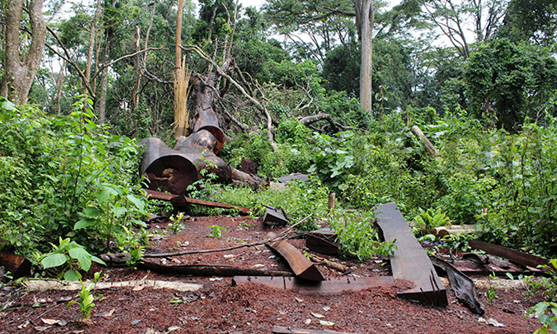
They invested heavily in communities and tobacco farmers planted on deforested forest patches! Both activities adversely affected chimps, as their travel routes through community forests were cut off and some small unviable groups were isolated in small forest fragments.
Globally, deforestation of equatorial forests for palm oil has affected carbon sinks and has resulted in more global warming
~ Dr Richard Ssuna
Kalangala Islands, Uganda
“Foreign companies and RSPO members have claimed the land for palm oil. The local inhabitants of the island suffered from the brute destruction of the island’s forests and their loss of livelihood and food sources.
“This can easily be extrapolated to inform similar misdeeds elsewhere on the African continent. This also affected peoples livelihoods and many of these people became landless.”
The Kalangala Islands are a renowned birders destination. Now, with forest destruction, this pristine bird-haven has been adversely affected and destabilised. All in the interest of a few greedy businessmen!
~ Dr Richard Ssuna
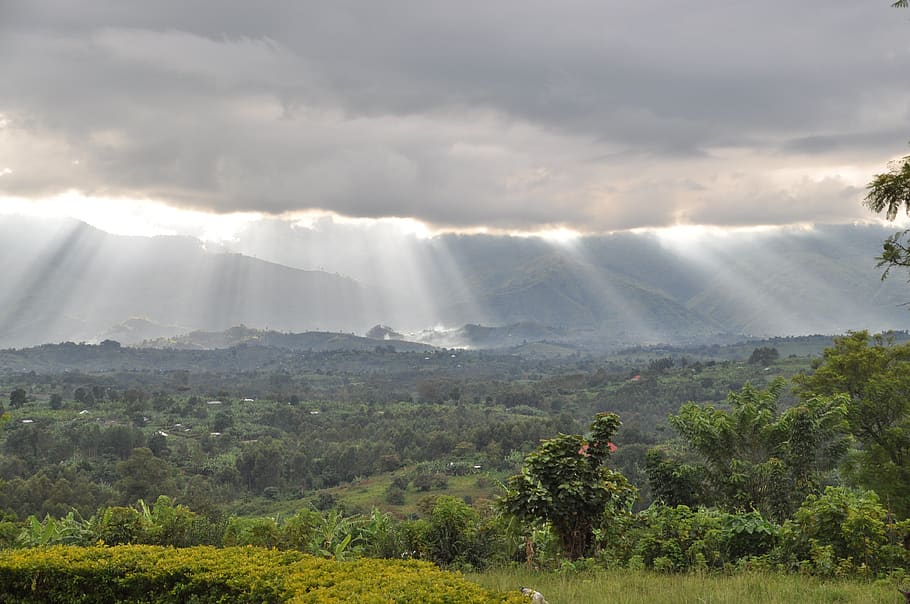
 [Before] Forested area in Uganda, PxFuel. [After] Fire on a palm oil plantation, Greenpeace.
 The global impact of palm oil on various facets of our lives is immoral
Palm oil is driven primarily by greed and profit at the expense of both mankind, the animal kingdom and our planet.
https://twitter.com/RichardSsuna/status/1427171099595390978?s=20
https://twitter.com/RichardSsuna/status/1426669428977160195?s=20
https://twitter.com/RichardSsuna/status/1427365295249772577?s=20
https://twitter.com/RichardSsuna/status/1424973222454382592?s=20
https://twitter.com/RichardSsuna/status/1385716733340758020?s=20
Excerpt, The Guardian UK: Ugandan farmers take on palm oil giant Wilmar over land grab claims
Before the bulldozers came, Magdalena Nakamya harvested coffee, cassava, avocado and jackfruit on her three-hectare (seven-acre) plot on Kalangala, an island in Lake Victoria.
But on a July morning in 2011, Nakamya, 64, awoke to find yellow machines churning up her land and razing the crops she had grown in a bid to make way for palm oil plantations.
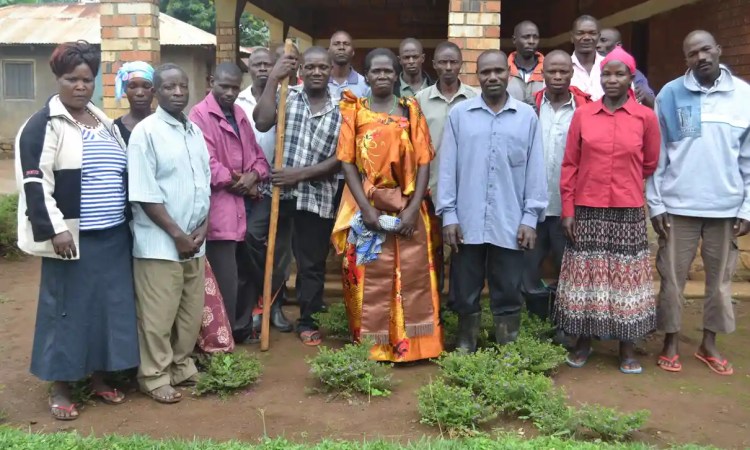
“No one came to talk to me before they destroyed my crops,” says Nakamya. “I heard that some people were given money, but I didn’t receive anything.”
Read more: The Guardian UK
https://twitter.com/nbstv/status/1523006629280874496?s=20&t=Q5GqJQOdD1hOEnS_0rNR2g
https://twitter.com/DvOijen/status/1513496609514045448?s=20&t=bqpCdBf0IQ6JeOo3MBnfIw
Landgrabbing for palm oil in Uganda by ‘If Not Us Then Who?’
https://www.youtube.com/watch?v=Wm3FW1nTRMs
In my view all or most product certifications especially whose operations adversely affect people, are designed to cover-up an already messed-up palm oil industry.
Dr Richard Ssuna
“In my view product certifications like @RSPOtweets when their operations adversely affect people, they are designed to cover-up an already messed-up industry.” #Wildlife #vet @RichardSsuna #Boycottpalmoil #Boycott4Wildlife
Read more: Friends of the Earth and ‘If Not Us, Then Who?’
I think the real hope sits with governments
The political will of governments – provided they are not compromised by kickbacks or other financial interests from global brands, provides the best opportunity to address this problem of deforestation for food, at least on a national level.
“In a real sense, the public has been hoodwinked into believing that a palm oil certification equates to a more sustainable product and as result, companies fetch even more cash for it”
~ Dr Richard Ssuna
The public has been hoodwinked into believing that @RSPOtweets #palmoil #certification equates to a sustainable product and as result, companies fetch even more cash for it” #Wildlife #vet @RichardSsuna #Boycottpalmoil #Boycott4Wildlife
In ten years there will be no more African animals. All gone. Extinct. The window for transformation of our food system is closing rapidly!
Four things consumers can do to stop deforestation for food ingredients…
1. Raise awareness of brands that are using greenwashing to sell products and are destroying the environment and causing tropical deforestation or emptying our oceans.
2. Consume alternative products, made locally and not coming from deforestation.
3. Publicly condemn these brands causing deforestation, whenever and wherever there is a platform, with family and friends and even on social media.
4. Make reference to this issue and to the #Boycott4Wildlife movement, whenever any adverse climatic changes are suffered as a result of deforestation for food.


Please support All Creatures Animal Welfare Trust so we can help domestic and wild animals
We have faced insurmountable challenges in recent years. Your donation will support us to help more animals
Donate via Paypal
Join the #Boycott4Wildlife on supermarket brands causing palm oil deforestation
Find out more#Africa #animalrights #animals #AnimalWelfare #Boycott4wildlife #BoycottPalmOil #certification #ChimpanzeePanTroglodytes #conservation #CreativesForCoolCreatures #DrRichardSsuna #investigativeJournalism #journalism #landgrabbing #Lesotho #Malawi #PalmOil #palmoil #pet #Uganda #vet #wildlife #wildlifeVet
Stop Gambling Our Future for Meat Deforestation
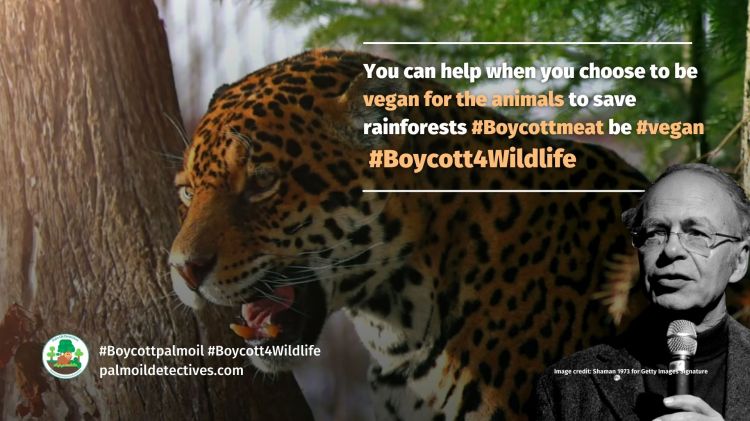
Renowned animal rights ethicist philosopher Peter Singer asserts that our dietary choices, particularly our consumption of meat and dairy, are jeopardising the Earth’s future. These industries contribute significantly to environmental degradation, deforestation, and greenhouse gas emissions, intensifying the impacts of climate change. By indulging in hamburgers and other meat-based products, we are not only compromising our health but also the wellbeing of our planet. For a more sustainable and compassionate future, consider boycotting meat and dairy. Choose to be vegan for the animals and to save our planet #Boycottmeat be #vegan #Boycott4Wildlife
Eating #meat 🥩 and #dairy 🥛is jeopardising the earth’s future says renowned #animalrights advocate Peter Singer. If you want to fight #climatechange 💚🌳🙏 be #vegan for the #animals 🐵 🦏 and planet 🌏 #Boycottmeat #Boycott4Wildlife @palmoildetect https://palmoildetectives.com/2024/05/05/peter-singer-we-are-gambling-with-the-future-of-our-planet-for-the-sake-of-hamburgers/
Share to BlueSky Share to TwitterFamous #animalrights ethicist Peter Singer links eating of #dairy and #meat to carbon emissions. If you want to fight #climatechange you should be #vegan! #Boycottmeat and dairy for the #animals 🐷🐍🐘💚 #Boycott4Wildlife @palmoildetect https://palmoildetectives.com/2024/05/05/peter-singer-we-are-gambling-with-the-future-of-our-planet-for-the-sake-of-hamburgers/
Share to BlueSkyShare to TwitterOriginally published by The Conversation June 15, 2023 and republished here under the Creative Commons Licence, read original.
Peter Singer, Princeton University
I wasn’t aware of climate change until the 1980s — hardly anyone was — and even when we recognised the dire threat that burning fossil fuels posed, it took time for the role of animal production in warming the planet to be understood.
Today, though, the fact that eating plants will reduce your greenhouse gas emissions is one of the most important and influential reasons for cutting down on animal products and, for those willing to go all the way, becoming vegan.

A few years ago, eating locally — eating only food produced within a defined radius of your home — became the thing for environmentally conscious people to do, to such an extent that “locavore” became the Oxford English Dictionary’s “word of the year” for 2007.
If you enjoy getting to know and support your local farmers, of course, eating locally makes sense. But if your aim is, as many local eaters said, to reduce greenhouse gas emissions, you would do much better by thinking about what you are eating, rather than where it comes from. That’s because transport makes up only a tiny share of the greenhouse gas emissions from the production and distribution of food.
With beef, for example, transport is only 0.5% of total emissions. So if you eat local beef you will still be responsible for 99.5% of the greenhouse gas emissions your food would have caused if you had eaten beef transported a long distance. On the other hand, if you choose peas you will be responsible for only about 2% of the greenhouse gas emissions from producing a similar quantity of local beef.
And although beef is the worst food for emitting greenhouse gases, a broader study of the carbon footprints of food across the European Union showed that meat, dairy and eggs accounted for 83% of emissions, and transport for only 6%.
More generally, plant foods typically have far lower greenhouse gas emissions than any animal foods, whether we are comparing equivalent quantities of calories or of protein. Beef, for example, emits 192 times as much carbon dioxide equivalent per gram of protein as nuts, and while these are at the extremes of the protein foods, eggs, the animal food with the lowest emissions per gram of protein, still has, per gram of protein, more than twice the emissions of tofu.

Animal foods do even more poorly when compared with plant foods in terms of calories produced. Beef emits 520 times as much per calorie as nuts, and eggs, again the best-performing animal product, emit five times as much per calorie as potatoes.
Favourable as these figures are to plant foods, they leave out something that tilts the balance even more strongly against animal foods in the effort to avoid catastrophic climate change: the “carbon opportunity cost” of the vast area of land used for grazing animals and the smaller, but still very large, area used to grow crops that are then fed — wastefully, as we have seen — to confined animals.
Because we use this land for animals we eat, it cannot be used to restore native ecosystems, including forests, which would safely remove huge amounts of carbon from the atmosphere. One study has found that a shift to plant-based eating would free up so much land for this purpose that seizing the opportunity would give us a 66% probability of achieving something that most observers believe we have missed our chance of achieving: limiting warming to 1.5℃.
Another study has suggested that a rapid phaseout of animal agriculture would enable us to stabilise greenhouse gases for the next 30 years and offset more than two-thirds of all carbon dioxide emissions this century. According to the authors of this study:
The magnitude and rapidity of these potential effects should place the reduction or elimination of animal agriculture at the forefront of strategies for averting disastrous climate change.
Climate change is undoubtedly the biggest environmental issue facing us today, but it is not the only one. If we look at environmental issues more broadly, we find further reasons for preferring a plant-based diet.
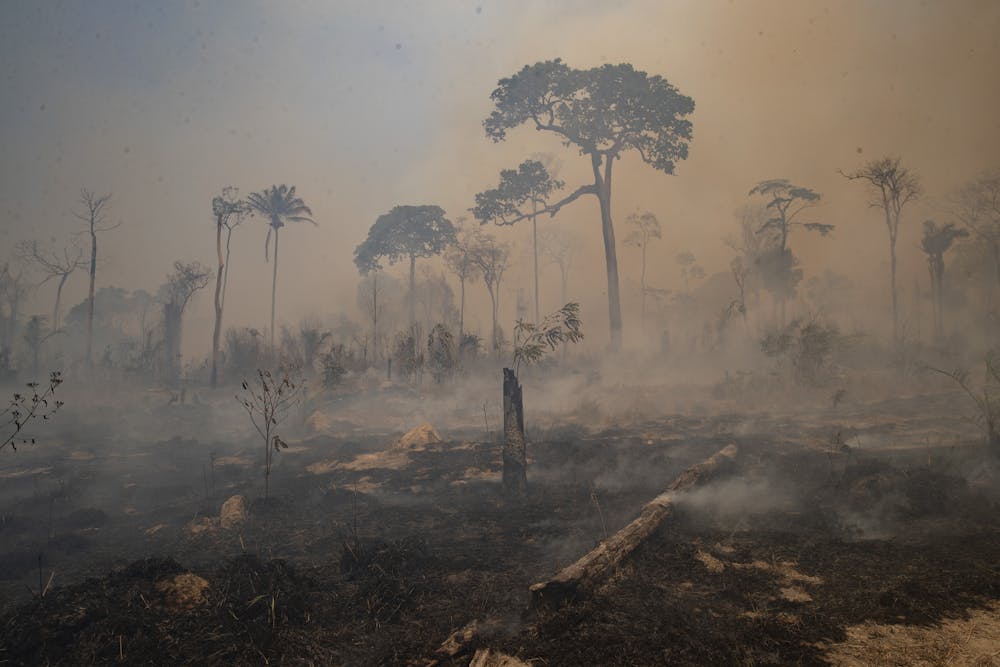 Fires in the Amazon and linked to cattle ranching. Andre Penner/AP Photo
The clearing and burning of the Amazon rainforest means not only the release of carbon from the trees and other vegetation into the atmosphere, but also the likely extinction of many plant and animal species that are still unrecorded.
This destruction is driven largely by the prodigious appetite of the affluent nations for meat, which makes it more profitable to clear the forest than to preserve it for the indigenous people living there, establish an ecotourism industry, protect the area’s biodiversity, or keep the carbon locked up in the forest. We are, quite literally, gambling with the future of our planet for the sake of hamburgers.
Joseph Poore, of the University of Oxford, led a study that consolidated a huge amount of environmental data on 38,700 farms and 1,600 food processors in 119 countries and covered 40 different food products. Poore summarised the upshot of all this research thus:
A vegan diet is probably the single biggest way to reduce your impact on planet Earth, not just greenhouse gases, but global acidification, eutrophication, land use and water use. It is far bigger than cutting down on your flights or buying an electric car, as these only cut greenhouse gas emissions.
Poore doesn’t see “sustainable” animal agriculture as the solution:
Really it is animal products that are responsible for so much of this. Avoiding consumption of animal products delivers far better environmental benefits than trying to purchase sustainable meat and dairy.
Those who claim to care about the wellbeing of human beings and the preservation of our climate and our environment should become vegans for those reasons alone.
Doing so would reduce greenhouse gas emissions and other forms of pollution, save water and energy, free vast tracts of land for reforestation, and eliminate the most significant incentive for clearing the Amazon and other forests.
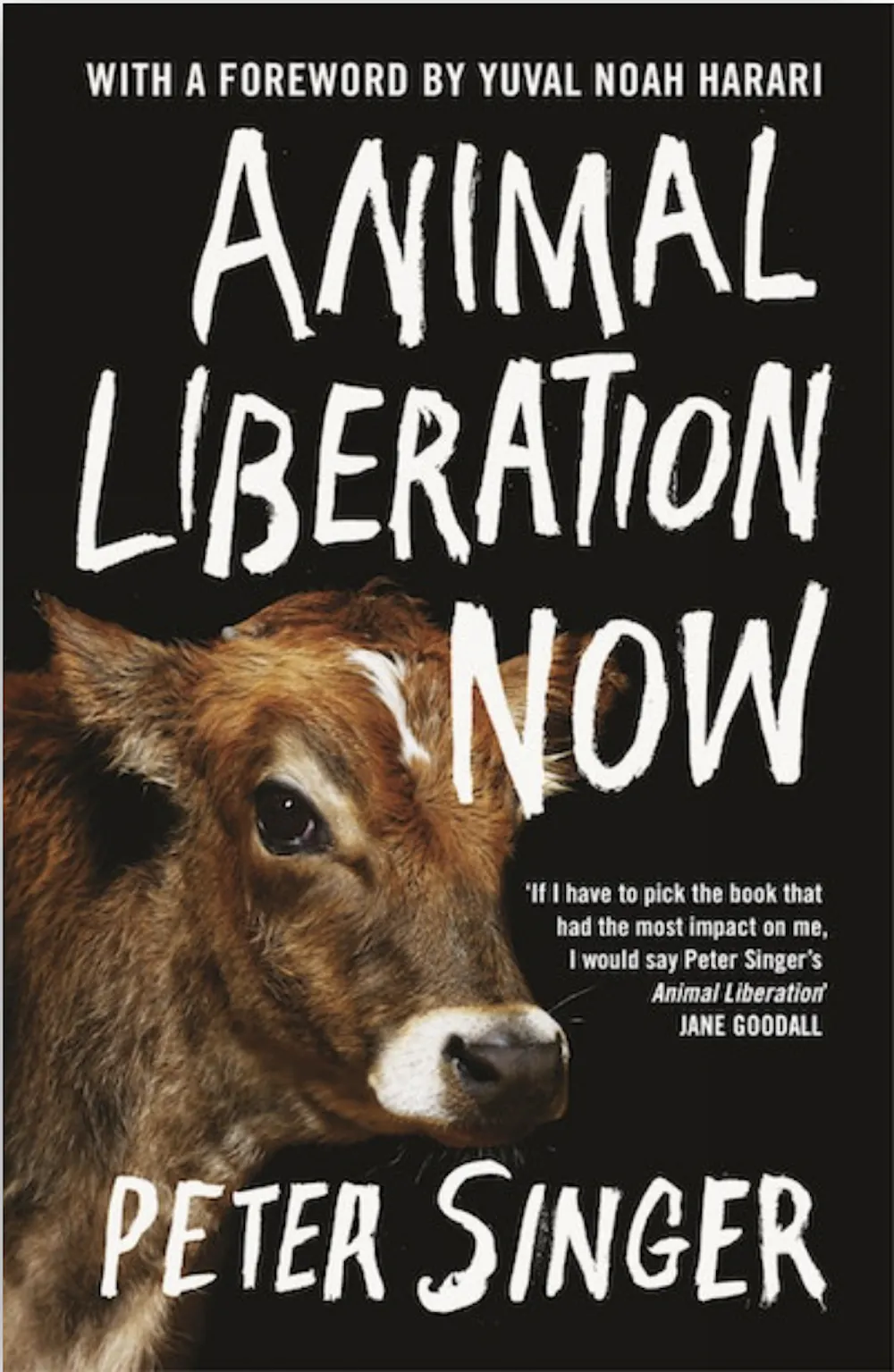
This is an edited extract from Animal Liberation Now by Peter Singer (Penguin Random House).
Peter Singer, Professor of Bioethics in the Center for Human Values, Princeton University
This article is republished from The Conversation under a Creative Commons license. Read the original article.
Originally published by The Conversation June 15, 2023 and republished here under the Creative Commons Licence, read original.
ENDS
Read more about human health, veganism, nutrition and why you should #Boycottpalmoil, #Boycottmeat for your own and the planet’s health
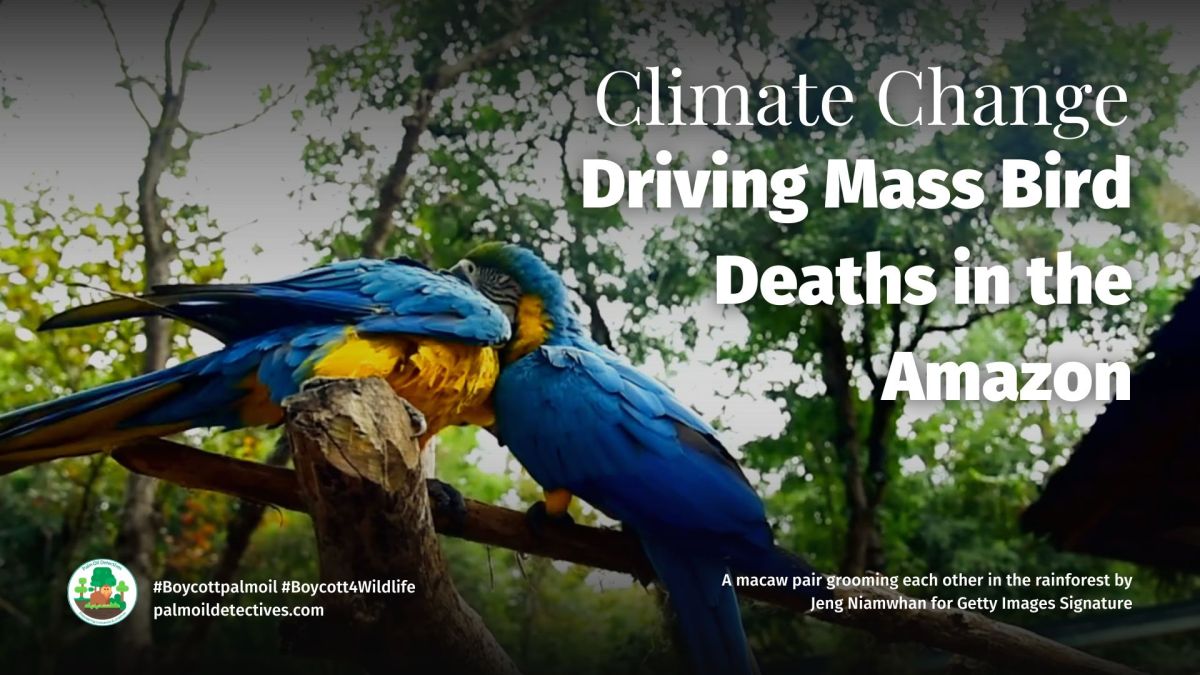
Climate Change Driving Mass Bird Deaths in the Amazon
A recent #study has revealed that even in the most isolated parts of the #Amazon, bird #populations are collapsing due to #climatechange. Research published in Science Advances found that a 1°C increase in…
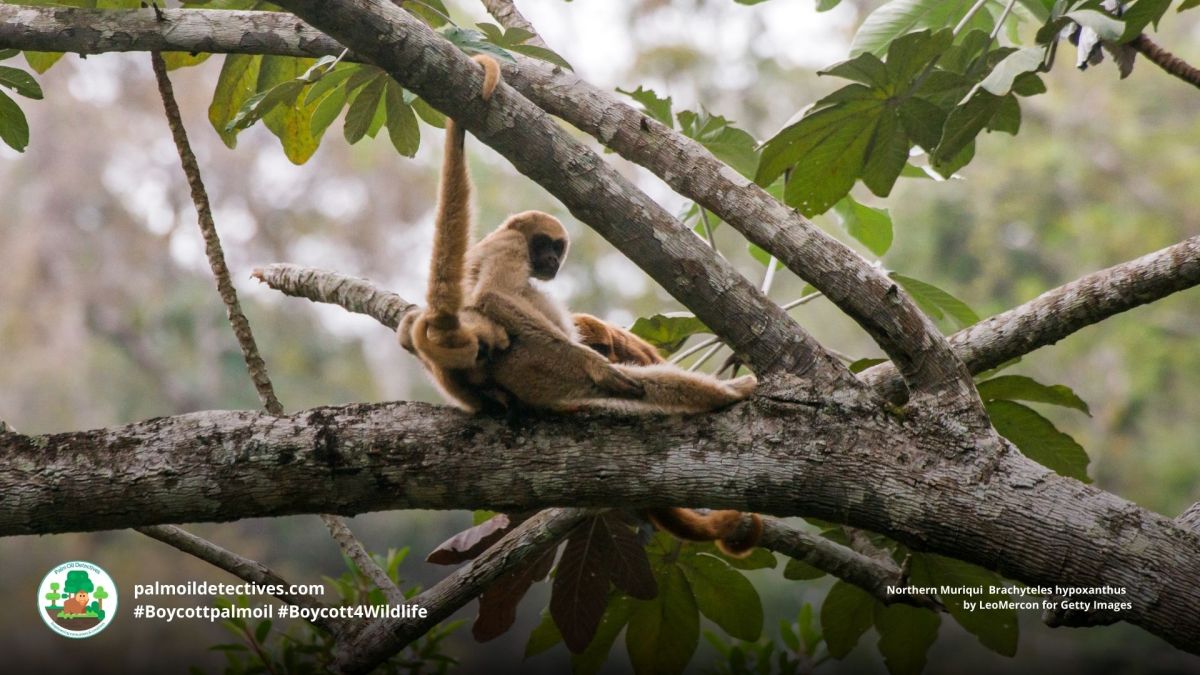
Declining primate numbers are threatening Brazil’s Atlantic forest
#Brazil’s Atlantic Forest, one of the most biodiverse ecosystems in the world, is facing severe threats due to deforestation and habitat fragmentation. This has led to a sharp decline in primate species, including…

Blue-streaked Lory Eos reticulata
Brilliantly coloured and full of energy, the Blue-streaked Lory (Eos reticulata) is a striking and unique #parrot living in the forests of the Banda Sea Islands, #Indonesia. Their scarlet plumage is decorated with…

Blonde Capuchin Sapajus flavius
The blonde #capuchin (Sapajus flavius) is an enigmatic and critically endangered #primate found in the northeastern forests of Brazil. With their striking golden-yellow fur and intelligent, expressive faces, these capuchins are among the…
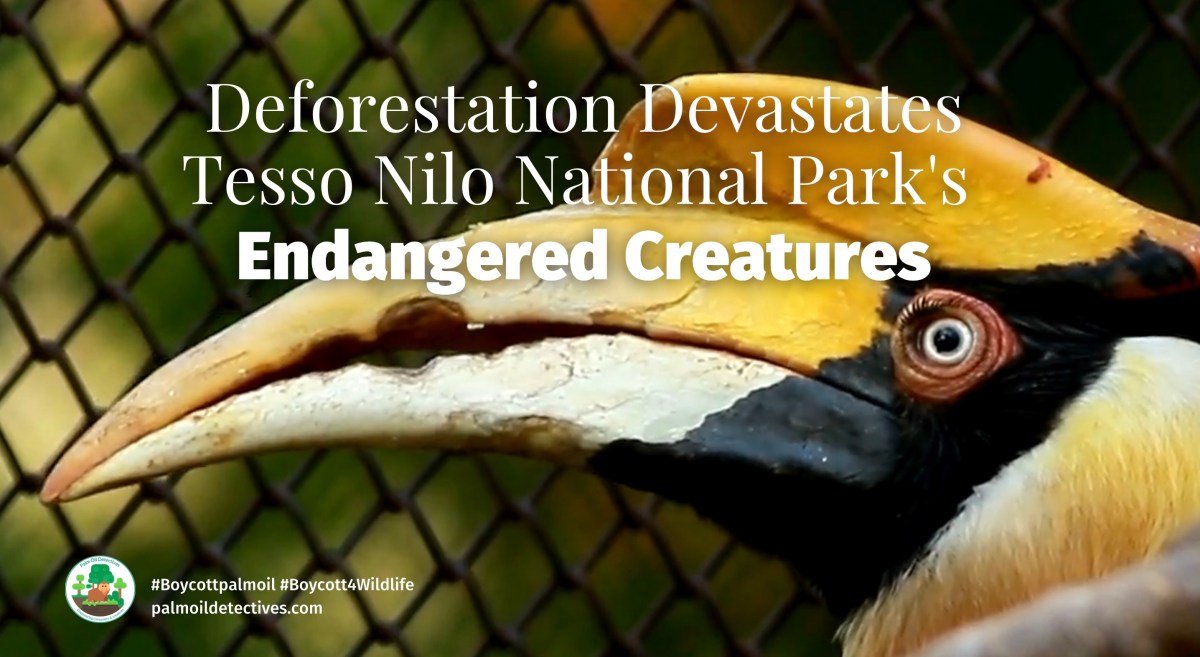
Deforestation Devastates Tesso Nilo National Park’s Endangered Creatures
Tesso Nilo National Park in #Sumatra, #Indonesia, has lost 78% of its primary forest between 2009 and 2023, primarily due to #palmoil plantations. This #deforestation threatens the habitat of critically endangered species like…
Load more posts
Something went wrong. Please refresh the page and/or try again.
Take Action in Five Ways
1. Join the #Boycott4Wildlife on social media and subscribe to stay in the loop: Share posts from this website to your own network on Twitter, Mastadon, Instagram, Facebook and Youtube using the hashtags #Boycottpalmoil #Boycott4Wildlife.
Enter your email address
Sign Up
Join 3,529 other subscribers2. Contribute stories: Academics, conservationists, scientists, indigenous rights advocates and animal rights advocates working to expose the corruption of the palm oil industry or to save animals can contribute stories to the website.
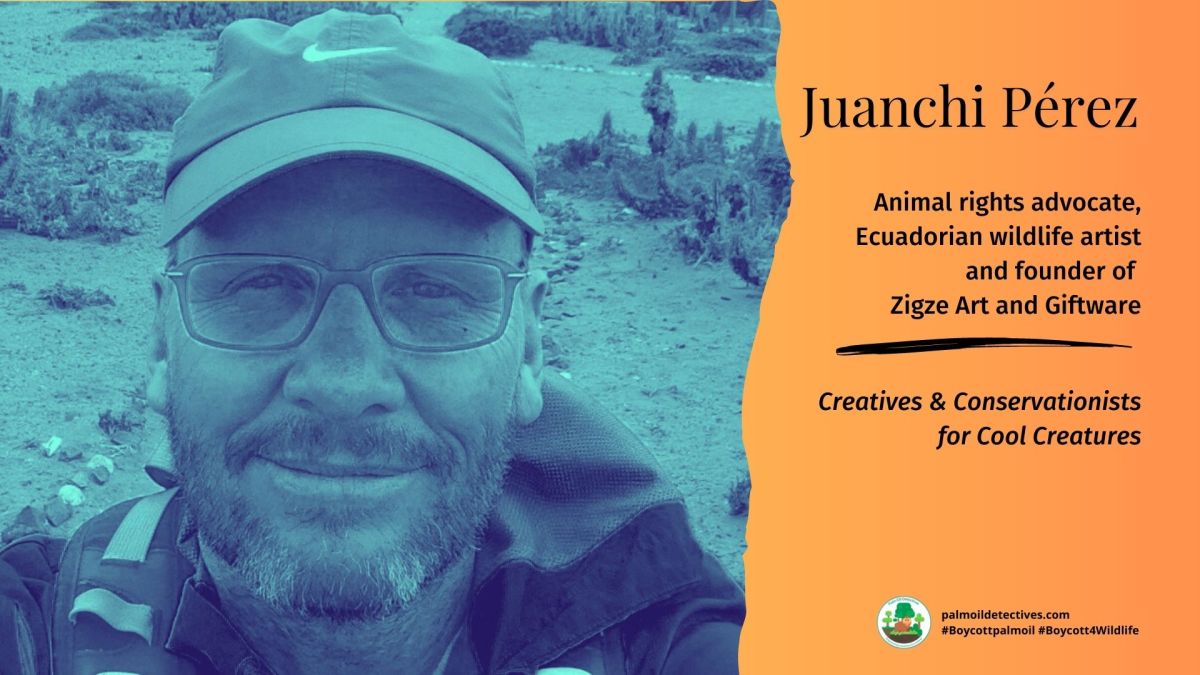
Wildlife Artist Juanchi Pérez
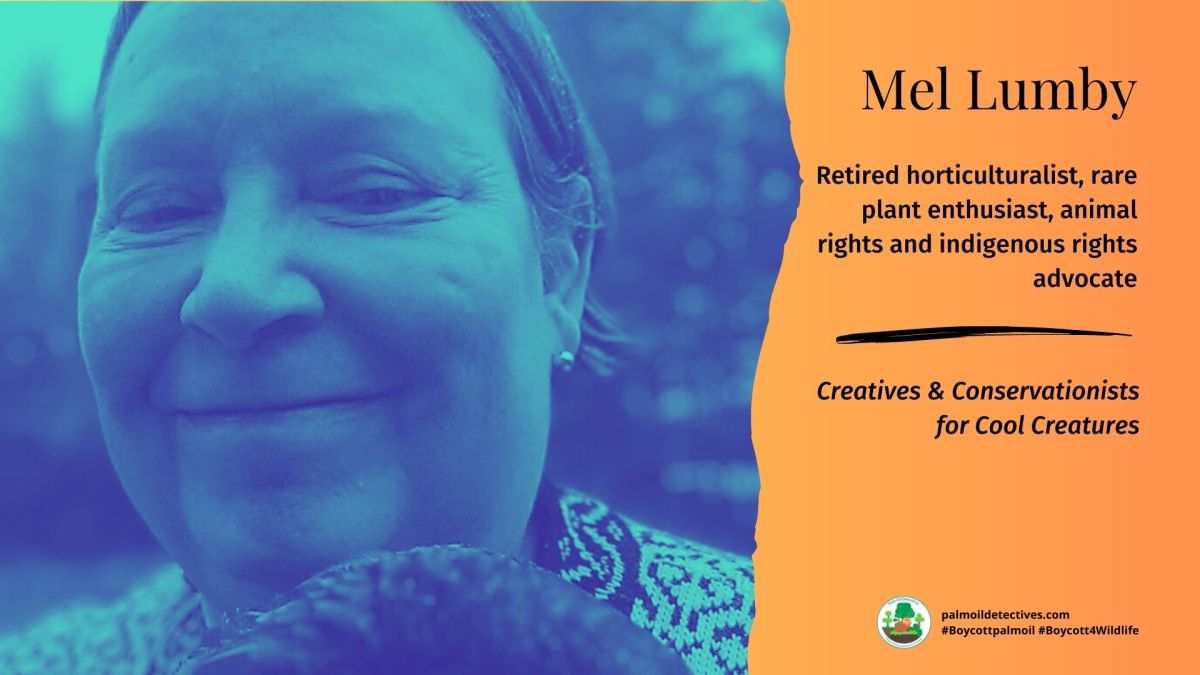
Mel Lumby: Dedicated Devotee to Borneo’s Living Beings
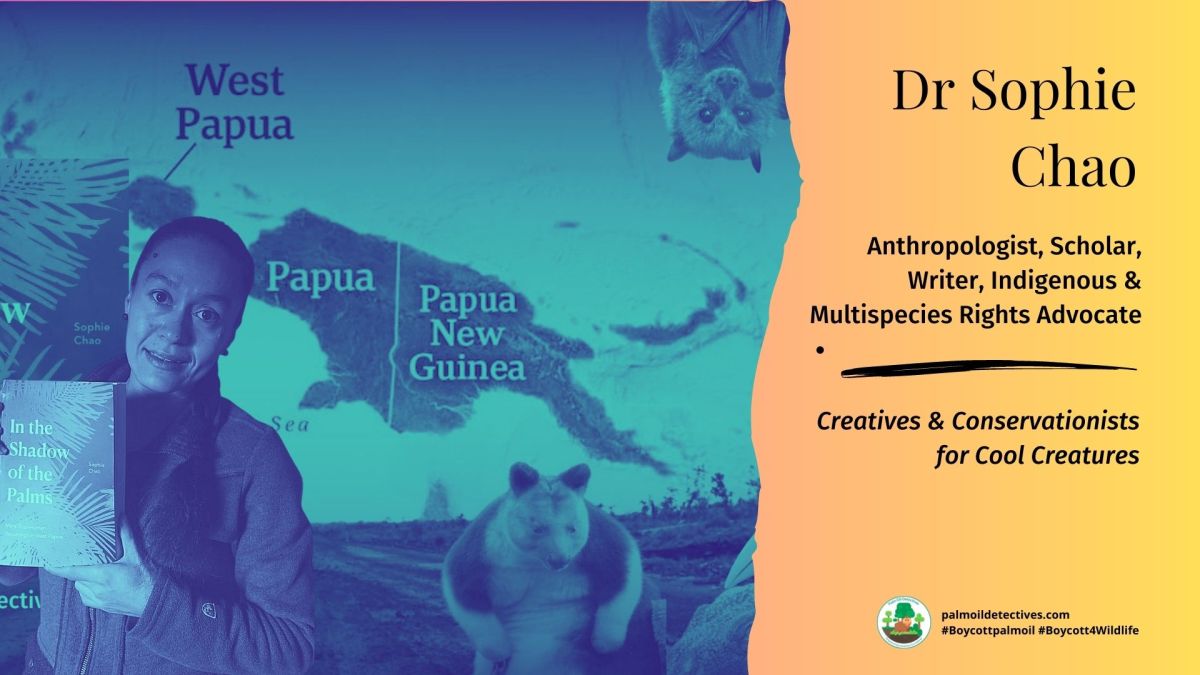
Anthropologist and Author Dr Sophie Chao
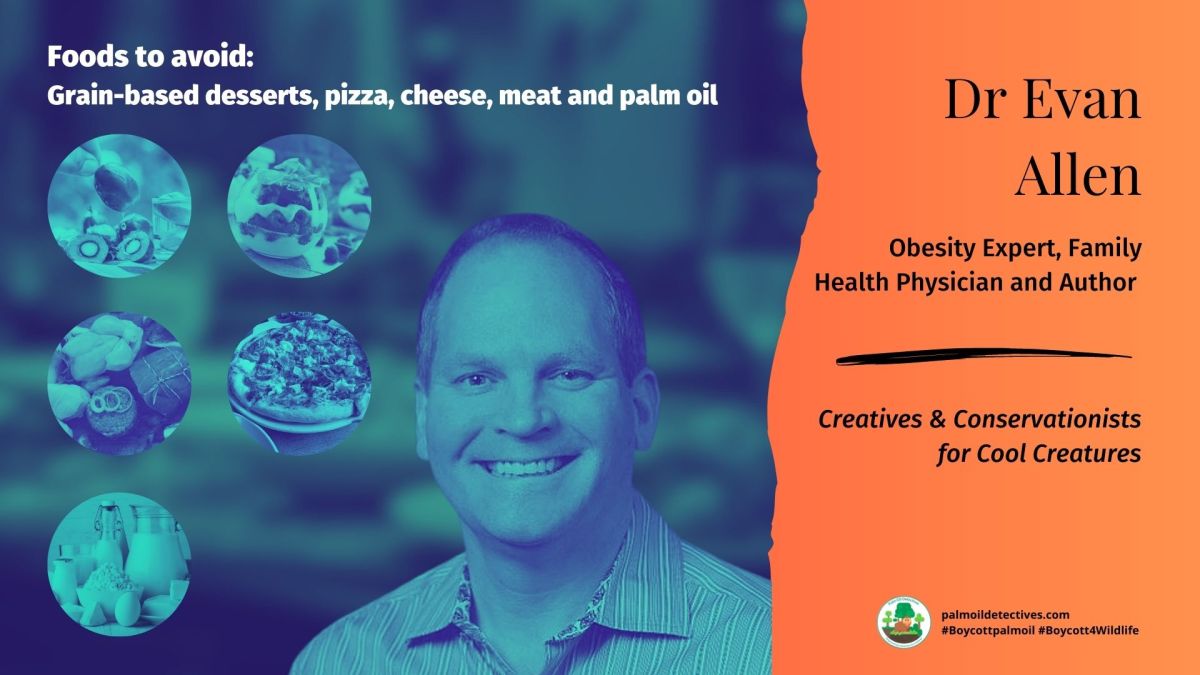
Health Physician Dr Evan Allen

The World’s Most Loved Cup: A Social, Ethical & Environmental History of Coffee by Aviary Doert

How do we stop the world’s ecosystems from going into a death spiral? A #SteadyState Economy
3. Supermarket sleuthing: Next time you’re in the supermarket, take photos of products containing palm oil. Share these to social media along with the hashtags to call out the greenwashing and ecocide of the brands who use palm oil. You can also take photos of palm oil free products and congratulate brands when they go palm oil free.
https://twitter.com/CuriousApe4/status/1526136783557529600?s=20
https://twitter.com/PhillDixon1/status/1749010345555788144?s=20
https://twitter.com/mugabe139/status/1678027567977078784?s=20
4. Take to the streets: Get in touch with Palm Oil Detectives to find out more.
5. Donate: Make a one-off or monthly donation to Palm Oil Detectives as a way of saying thank you and to help pay for ongoing running costs of the website and social media campaigns. Donate here
Pledge your support#animalRights #animalrights #animals #BoycottMeat #BoycottPalmOil #Boycott4wildlife #BoycottMeat #BoycottPalmOil #climateChange #climatechange #dairy #deforestation #diet #ethics #meat #nutrition #PalmOil #palmOilDeforestation #PeterSinger #plantBasedDiet #saturatedFats #vegan #veganism
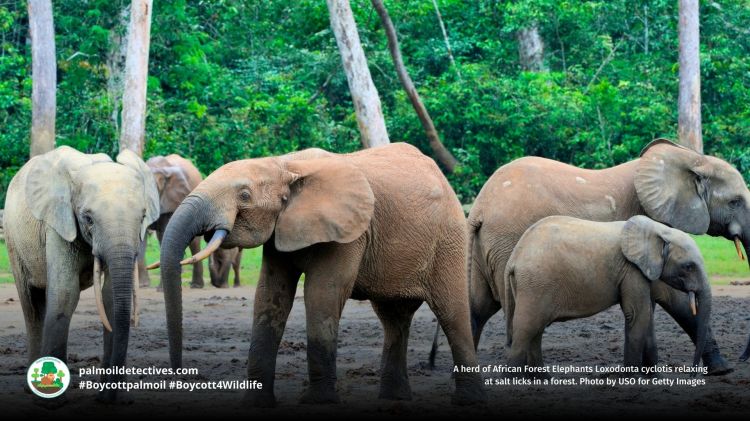
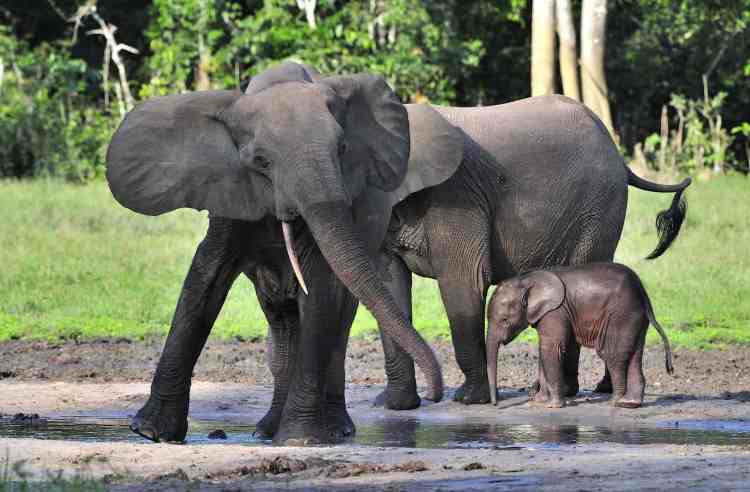
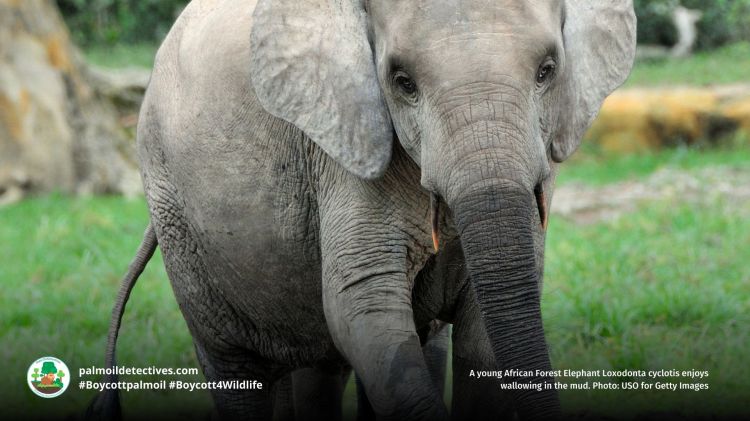
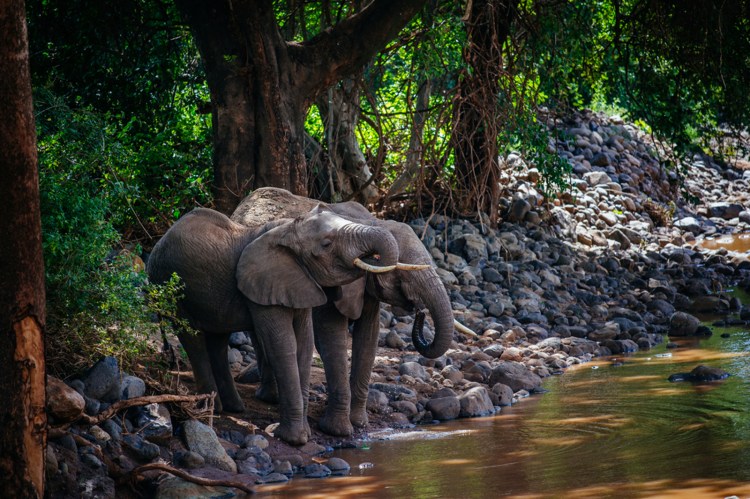
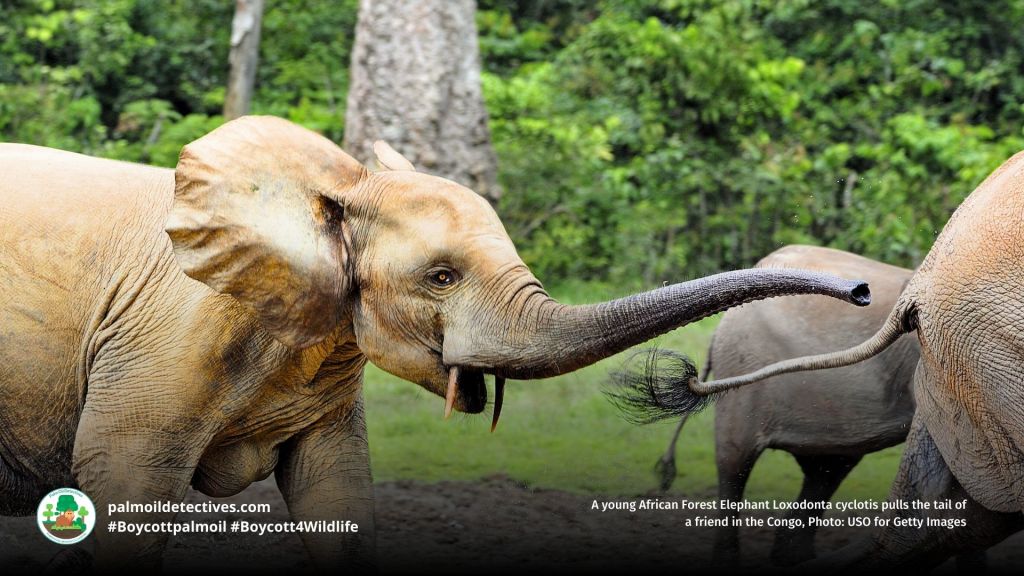
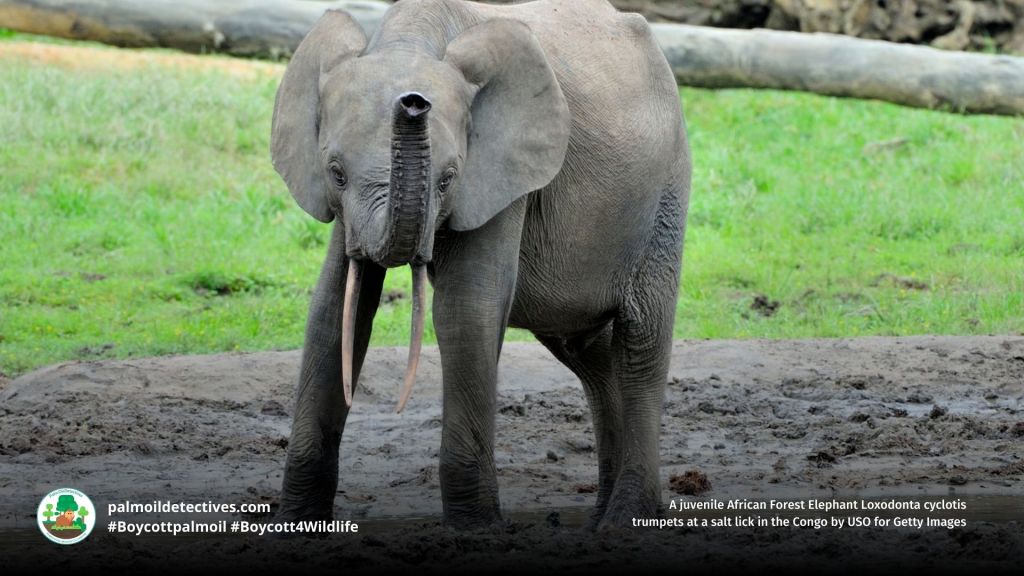
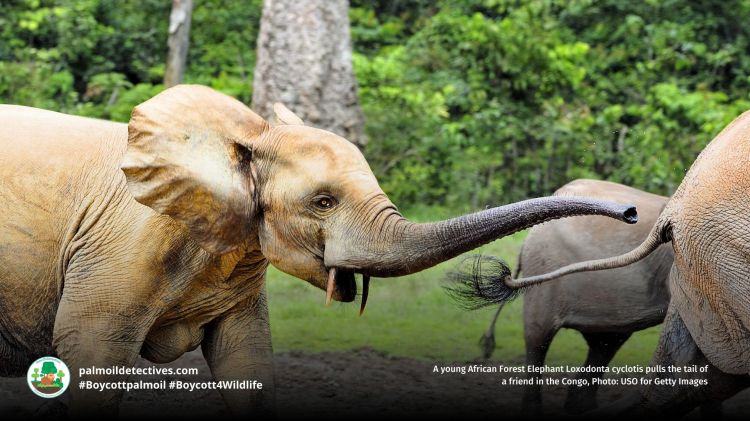
African Forest Elephant Loxodonta cyclotis
African Forest Elephant Loxodonta cyclotis
Location: Central and West Africa – Guineo-Congolian tropical forests, including Cameroon, Gabon, Republic of Congo, Democratic Republic of Congo, and surrounding regions.
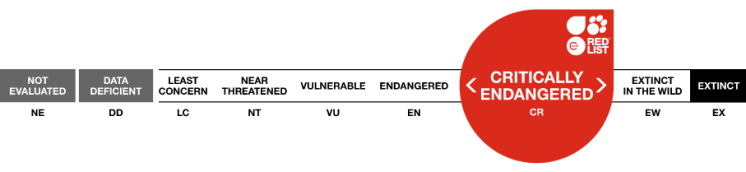
IUCN Status: Critically Endangered
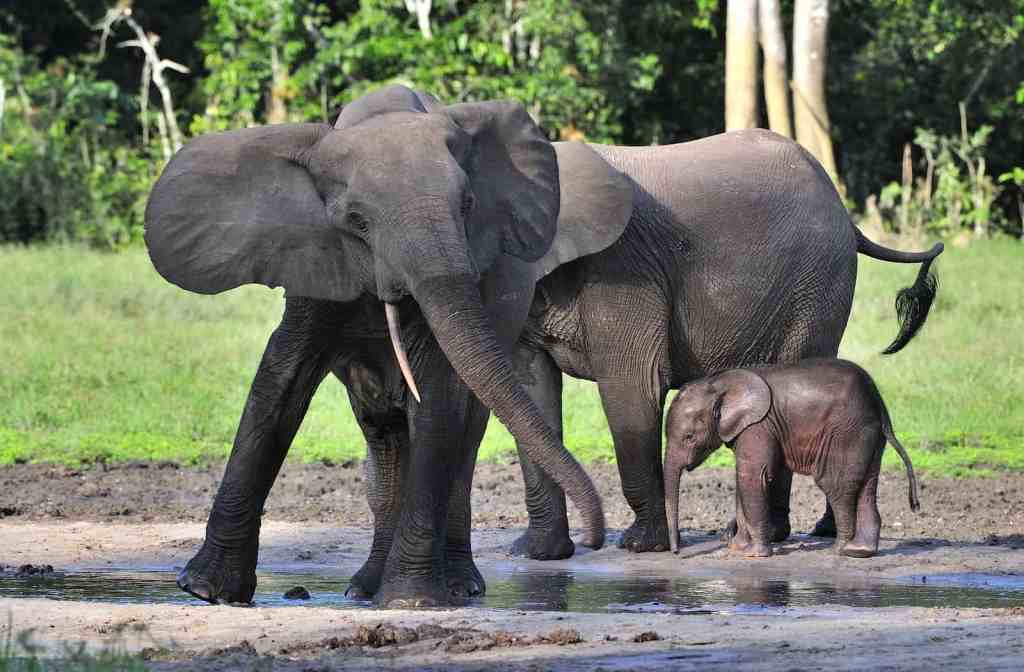
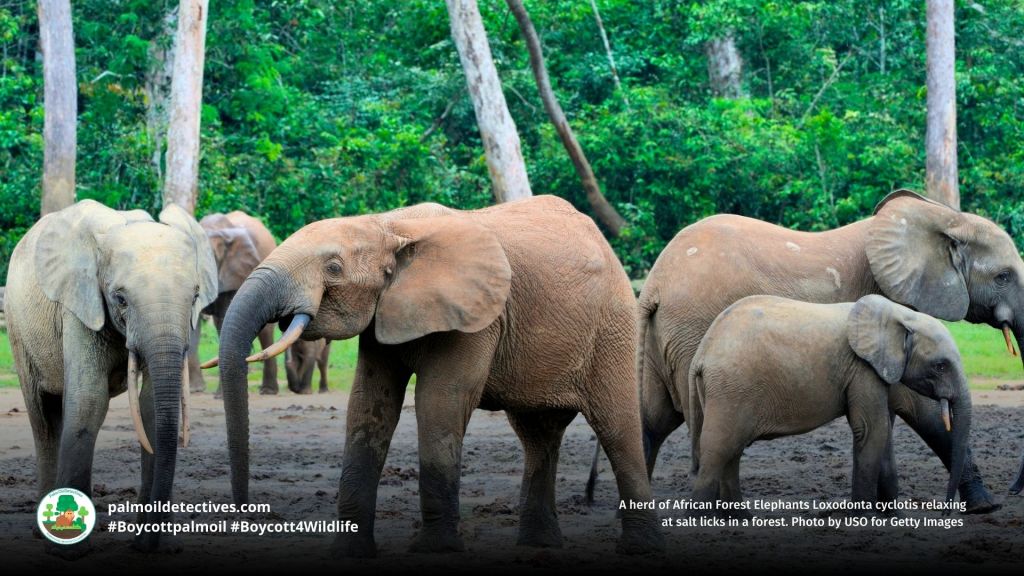
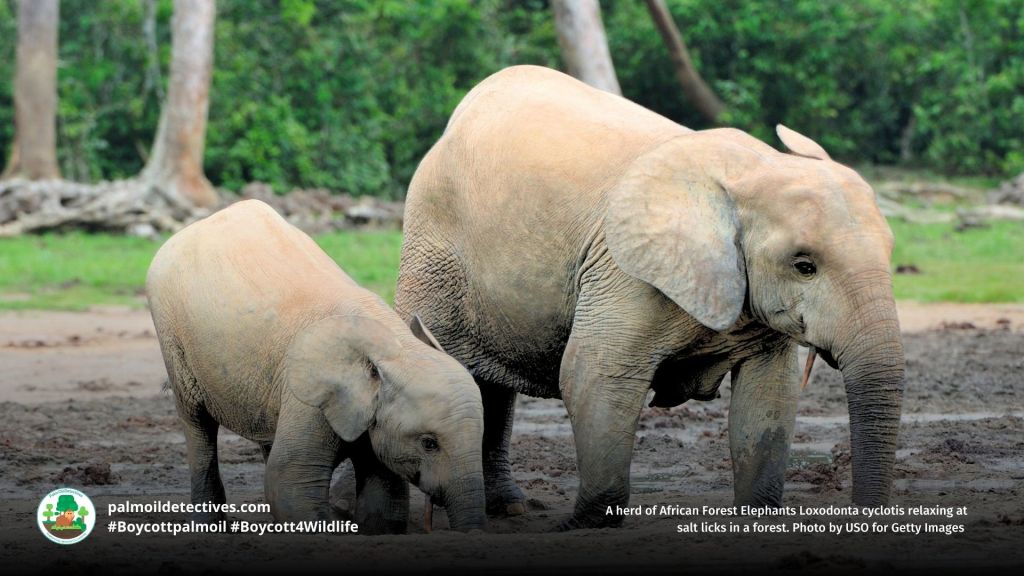
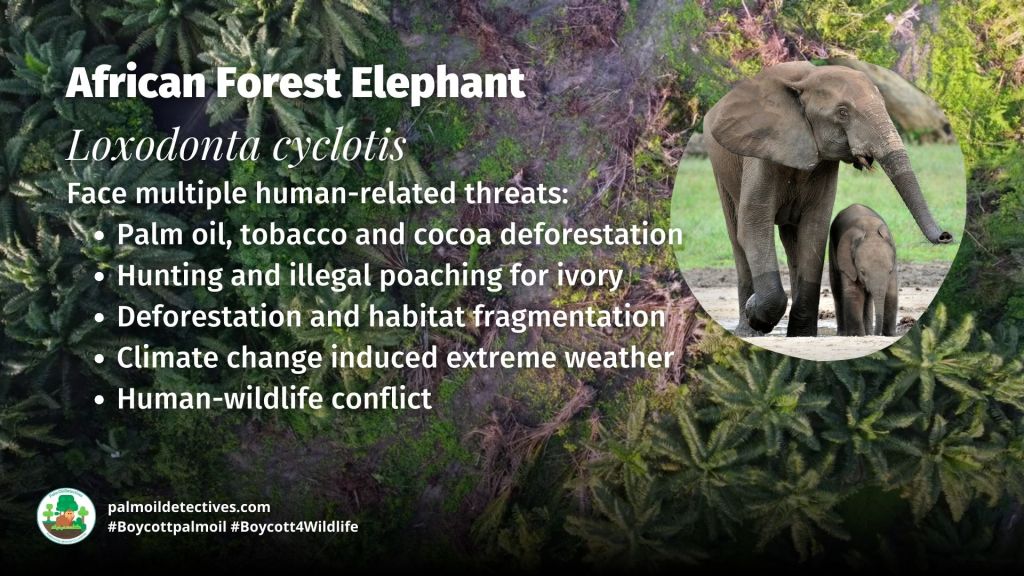
The African Forest #Elephant is a Critically Endangered species found in the dense #rainforests of Central and #WestAfrica. They are smaller than their savanna relatives, with straighter tusks and rounder ears, uniquely adapted to their forested habitat. As ecosystem engineers, these elephants play a crucial role in maintaining Afrotropical forests by dispersing seeds and mitigating against climate change by shaping forest composition. However, relentless #poaching for ivory, habitat destruction due to #palmoil, #cocoa and #tobacco agriculture, and human-elephant conflict have decimated their population. Recent studies have shown that African Forest Elephants’ movement patterns vary significantly between individuals, with some elephants exploring vast distances while others remain in small home ranges. This variation poses unique challenges for conservation efforts. Resist and fight for their survival each time you shop, be #vegan and #BoycottPalmOil #Boycott4Wildlife.
African Forest #Elephants are ecosystem engineers fighting #ClimateChange in #WestAfrica. Yet #poaching and #palmoil #deforestation have rendered them critically endangered 😿🐘 Help them and be #vegan #BoycottPalmOil 🌴⛔️ #Boycott4Wildlife @palmoildetect https://palmoildetectives.com/2021/09/11/african-forest-elephant-loxodonta-cyclotis/
Share to BlueSkyShare to TwitterSupremely intelligent and sensitive African Forest #Elephants 🐘🩶 face several grave threats, incl. #PalmOil #Deforestation and #poaching in #Gabon 🇬🇦 #Congo 🇨🇩 #WestAfrica. Fight for them when you #BoycottPalmOil 🌴🔥🧐⛔️ #Boycott4Wildlife @palmoildetect https://palmoildetectives.com/2021/09/11/african-forest-elephant-loxodonta-cyclotis/
Share to BlueSkyShare to TwitterRapid land use change, including palm oil plantations across their range is driving the direct loss and fragmentation of habitat, is an increasing threat to African elephants across their range.
IUCN red list







Appearance and Behaviour
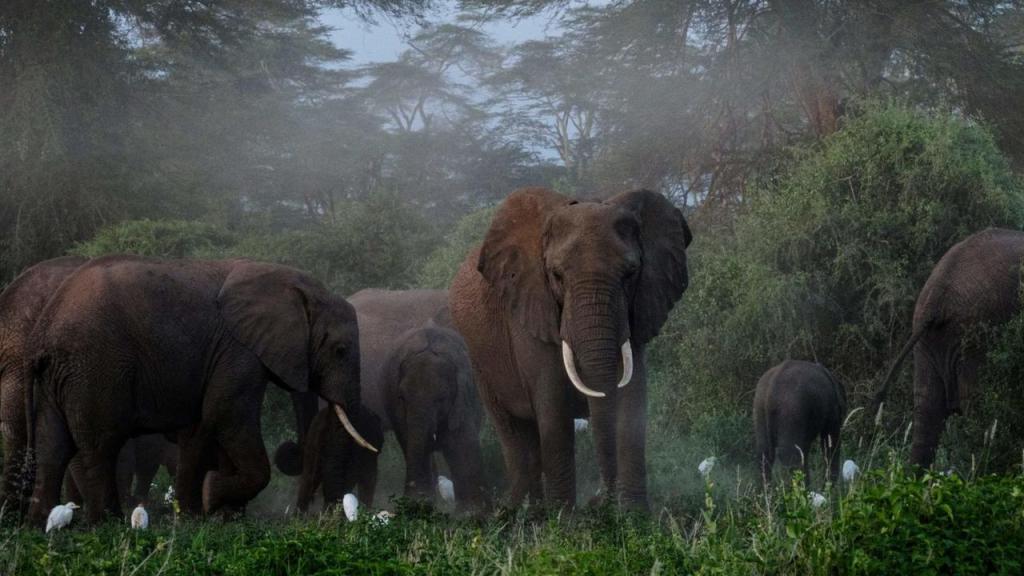
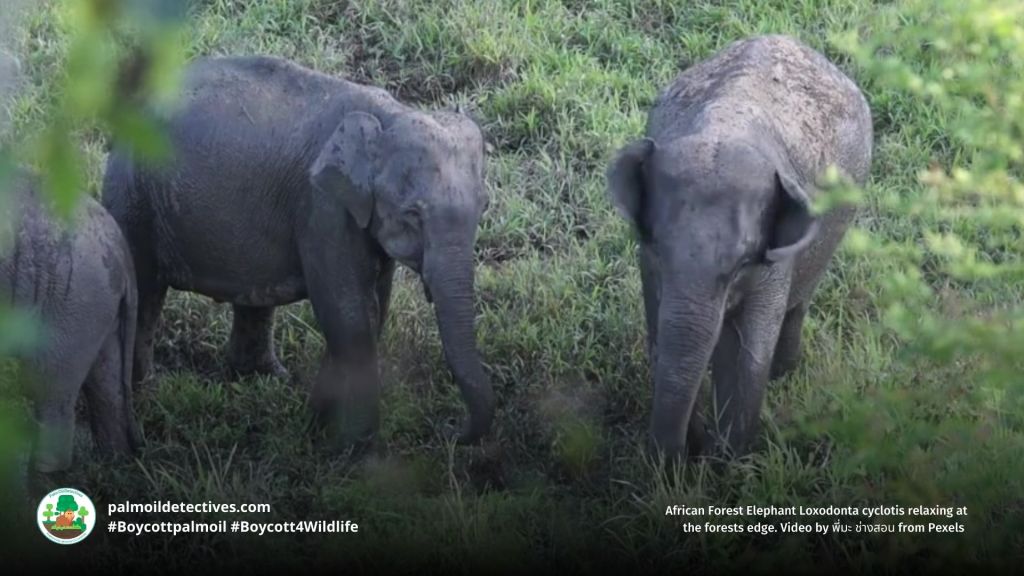
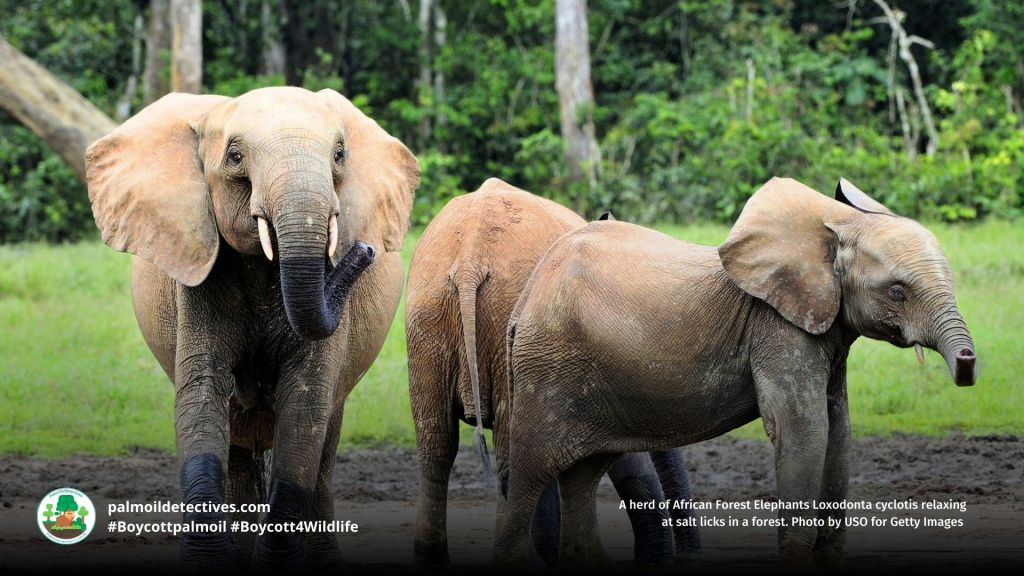
African Forest Elephants are smaller than their savanna counterparts, with a shoulder height of 2 to 3 metres. They have a more compact build, rounded ears, and long, narrow tusks that point downward, (Gobush et al., 2021). Their grey skin is often darker due to the humid rainforest environment. They live in small, matriarchal family groups and display remarkable individual variation in movement behaviours. Some elephants, known as “explorers,” travel vast distances, while others, the “idlers,” remain within confined home ranges. These behavioural differences complicate conservation efforts, as strategies must account for their diverse space-use needs.
These elephants are highly intelligent and social, living in small, matriarchal family groups that navigate the rainforest together. Their deep infrasonic rumbles travel through the ground, allowing communication over vast distances, even in the thickest jungle. Recent research has revealed that their vocalisations have a structure akin to human syntax—complex combinations of calls used to convey intricate meanings (Hedwig & Kohlberg, 2024).
Other research has found that the foraging, seed dispersal and exploration of African Forest Elephants helps to mitigate African forests against climate change. A 2019 study from the Ndoki Forest in the Republic of Congo (ROC) and LuiKotale in the Democratic Republic of Congo (DRC) estimated that if elephants were removed from these sites, the loss of their forest-shaping food preferences would reduce the forest’s carbon capture by 7%.
Diet
Forest Elephants are frugivorous and play an irreplaceable role as seed dispersers, particularly for large fruiting trees. They are responsible for spreading the seeds of over 41 timber species, including Bobgunnia fistuloides (pao rosa), a tree prized for its high-value wood (Blake et al., 2009; Campos-Arceiz & Blake, 2011). Without these elephants, the rainforest’s ability to regenerate and store carbon would be drastically diminished.
Reproduction and Mating
With a gestation period of 22 months—the longest of any land mammal—female African Forest elephants give birth only once every four to six years (Gobush et al., 2021). Due to their slow reproductive rate, population recovery is incredibly difficult, making conservation efforts even more urgent. Calves remain under their mother’s care for over a decade, learning crucial survival skills in the rainforest.
Geographic Range
African Forest Elephants roam vast home ranges, some spanning over 2,000 km² (Beirne et al., 2021). Their movements are largely dictated by fruiting cycles, water availability, and human encroachment. A recent study found that they exhibit remarkable individual variation in movement patterns—some acting as ‘explorers,’ roaming far and wide, while others remain within familiar territories (Beirne et al., 2021). Roads and logging concessions disrupt these traditional routes, forcing elephants into human settlements and escalating conflict.
Threats
- Illegal Wildlife Trade and Poaching: The illegal and criminal trade in elephant ivory continues to drive rampant poaching. Despite international bans, demand remains high in black markets (Wittemyer et al., 2014; Maisels et al., 2013).
- Palm Oil Agriculture Expansion: Forests are being obliterated for palm oil, cocoa, tobacco and rubber plantations, erasing habitat at an alarming rate (Scalbert et al., 2022).
- Logging, Mining, and Infrastructure Expansion: The development of roads and infrastructure for timber and mining grants poachers greater access to once-inaccessible forest areas (Beirne et al., 2021).
- Human-Elephant Conflict: Shrinking forests push elephants into farmland, leading to fatal clashes with farmers trying to protect their crops (Ngama et al., 2016).
- Climate Change: Disruptions in rainfall patterns and fruiting cycles impact the food supply of African Forest Elephants, forcing them into riskier migration routes where they can come into contact with poachers or conflict with farmers.
- Slow Reproduction Rate: African Forest Elephants have a long gestation periods and high calf mortality, their populations cannot recover quickly from losses.
Elephants and Language: Call Combinations and Syntax
Groundbreaking research has revealed that African Forest Elephants use complex call combinations, akin to human syntax, to communicate in high-stakes situations (Hedwig & Kohlberg, 2024). Their vocal repertoire includes:
- Low-frequency rumbles: Used to coordinate movements and social interactions. These deep sounds can travel several kilometres through dense rainforest.
- Broadband roars: Express distress, urgency, or aggression, particularly in response to predators or conflict.
- Combined calls: When rumbles and roars are merged, they create new meanings. These combinations are more frequently used in competitive situations, suggesting that elephants alter their vocal signals to convey specific messages in dangerous or high-emotion contexts.
The ability to combine calls strategically may help elephants navigate social disputes, secure access to resources, or reunite with separated family members. This discovery sheds light on the cognitive abilities of these animals and their sophisticated social lives.
Large herbivores such as elephants contribute to tree diversity
A recent study using satellite data has highlighted the critical role that large herbivores play in promoting tree diversity in forest ecosystems. The…

Echoes of the Ancients: The Wisdom and Power of Elephants
World Elephant Day, celebrated on August 12th, honours the gentle and nurturing giants of Asia and Africa, who are revered for their deep…

African Forest Elephants Help Fight Climate Change
Discover the awe-inspiring role of African forest elephants in the Congo Basin—nature’s master gardeners who literally shape the world around them! These gentle…
African Forest Elephants and Timber Concessions
Timber and palm oil concessions now cover vast portions of forest elephant habitat, with little understanding of how these logging operations impact elephant populations (Scalbert et al., 2022). While elephants can persist in selectively logged forests, they require large, undisturbed areas to sustain viable populations. Key findings include:
- African Forest Elephants regenerate forests: By dispersing seeds of high-carbon tree species, they facilitate the regrowth of timber species, making their role essential for maintaining the economic value of these forests.
- Logging alters movement patterns: While some elephants adapt to fragmented landscapes, others are displaced, forced into human-dominated areas where they are at greater risk of poaching and conflict.
- Forest loss drives ecological collapse: Without elephants maintaining seed dispersal, many commercially valuable trees may struggle to regenerate, ultimately degrading the timber industry’s long-term viability.
You can support this beautiful animal
Africa Conservation Foundation
Further Information
Beirne, C., Houslay, T. M., Morkel, P., Clark, C. J., Fay, M., Okouyi, J., White, L. J. T., & Poulsen, J. R. (2021). African forest elephant movements depend on time scale and individual behavior. Scientific Reports, 11, 12634. https://www.nature.com/articles/s41598-021-91627-z
Gobush, K.S., Edwards, C.T.T, Maisels, F., Wittemyer, G., Balfour, D. & Taylor, R.D. 2021. Loxodonta cyclotis. The IUCN Red List of Threatened Species 2021: e.T181007989A181019888. https://dx.doi.org/10.2305/IUCN.UK.2021-1.RLTS.T181007989A181019888.en. Downloaded on 08 June 2021.
Hedwig, D., & Kohlberg, A. (2024). Call combination in African forest elephants Loxodonta cyclotis. PLOS ONE. https://doi.org/10.1371/journal.pone.0299656
Scalbert, M., Vermeulen, C., Breuer, T., & Doucet, J. L. (2022). The challenging coexistence of forest elephants Loxodonta cyclotis and timber concessions in central Africa. Mammal Review, 52(3), 501–518. https://doi.org/10.1111/mam.12305
African Forest Elephant Loxodonta cyclotis

How can I help the #Boycott4Wildlife?
Take Action in Five Ways
1. Join the #Boycott4Wildlife on social media and subscribe to stay in the loop: Share posts from this website to your own network on Twitter, Mastadon, Instagram, Facebook and Youtube using the hashtags #Boycottpalmoil #Boycott4Wildlife.
Enter your email address
Sign Up
Join 3,529 other subscribers2. Contribute stories: Academics, conservationists, scientists, indigenous rights advocates and animal rights advocates working to expose the corruption of the palm oil industry or to save animals can contribute stories to the website.
Wildlife Artist Juanchi Pérez
Mel Lumby: Dedicated Devotee to Borneo’s Living Beings
Anthropologist and Author Dr Sophie Chao
Health Physician Dr Evan Allen
The World’s Most Loved Cup: A Social, Ethical & Environmental History of Coffee by Aviary Doert
How do we stop the world’s ecosystems from going into a death spiral? A #SteadyState Economy
3. Supermarket sleuthing: Next time you’re in the supermarket, take photos of products containing palm oil. Share these to social media along with the hashtags to call out the greenwashing and ecocide of the brands who use palm oil. You can also take photos of palm oil free products and congratulate brands when they go palm oil free.
https://twitter.com/CuriousApe4/status/1526136783557529600?s=20
https://twitter.com/PhillDixon1/status/1749010345555788144?s=20
https://twitter.com/mugabe139/status/1678027567977078784?s=20
4. Take to the streets: Get in touch with Palm Oil Detectives to find out more.
5. Donate: Make a one-off or monthly donation to Palm Oil Detectives as a way of saying thank you and to help pay for ongoing running costs of the website and social media campaigns. Donate here
Pledge your support#Africa #African #AfricanForestElephantLoxodontaCyclotis #Angola #Bantrophyhunting #Benin #Boycott4wildlife #BoycottPalmOil #BurkinaFaso #Cameroon #CentralAfricanRepublic #climatechange #cocoa #Congo #CriticallyEndangeredSpecies #deforestation #DemocracticRepublicOfCongo #elephant #elephants #Forest #Gabon #Guinea #ivory #Mammal #Nigeria #Pachyderm #pachyderms #palmoil #poaching #pollination #pollinator #rainforests #SeedDispersers #SierraLeone #timber #tobacco #vegan #WestAfrica
The challenging coexistence of forest elephants Loxodonta cyclotis and timber concessions in central Africa