Deforestation-driven Climate Change Intensifies Natural Disasters in Indonesia
Deforestation in Indonesia is worsening the impact of severe weather events such as floods and landslides, as seen in West Sumatra in March 2024. Environmental groups cite deforestation and environmental degradation as key factors in intensifying natural disasters. Indonesia’s rainforests, crucial for biodiversity and indigenous livelihoods, have been heavily logged for palm oil, paper, and mining. Despite government efforts to slow deforestation, including a palm oil permit freeze, illegal logging and large-scale developments continue to threaten forest areas. Experts warn that more equable land planning is needed to mitigate future disasters. #BoycottPalmOil #Boycott4Wildlife
#Palmoil 🌴 #nickel 🧺 and #paper 📰 #deforestation in #Indonesia 🇮🇩 has accelerated the frequency and severity of extreme weather: #floods and #landslides as seen in #Sumatra. Fight back and #BoycottPalmOil 🌴🔥⛔️ #Boycott4Wildlife @palmoildetect https://palmoildetectives.com/2024/11/27/deforestation-driven-climate-change-intensifies-natural-disasters-in-indonesia/
Share to BlueSkyShare to Twitter#Climatechange ⛈️ and #deforestation 🔥🔥 in #Indonesia 🇮🇩 is being driven to a point of no return say experts, citing massive #forest loss for #palmoil 🌴⛔️ and #nickel #mining. Take action when you #BoycottPalmOil #Boycott4Wildlife @palmoildetect https://palmoildetectives.com/2024/11/27/deforestation-driven-climate-change-intensifies-natural-disasters-in-indonesia/
Share to BlueSkyShare to TwitterWritten by Victoria Milko. Originally published by Associated Press, 30 March, 2024. Original title: ‘In Indonesia, deforestation is intensifying disasters from severe weather and climate change’. Excerpt published, read the original article.
The shelves in supermarkets and stores are full of certified products. The packaging displays different labels indicating products were made with “sustainable” paper or wood, food or cosmetic products made with “sustainable” palm oil, “responsible” soybeans and so on and so forth.
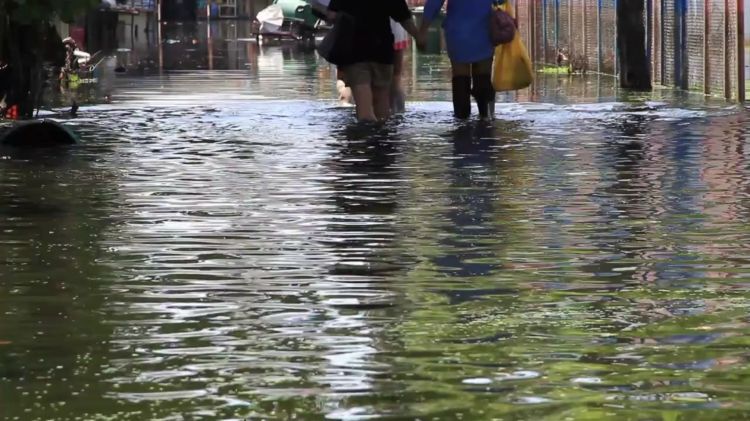
In Jakarta Indonesia, roads turned to murky brown rivers, homes were swept away by strong currents and bodies were pulled from mud during deadly flash floods and landslides after torrential rains hit West Sumatra in early March, marking one of the latest deadly natural disasters in Indonesia.
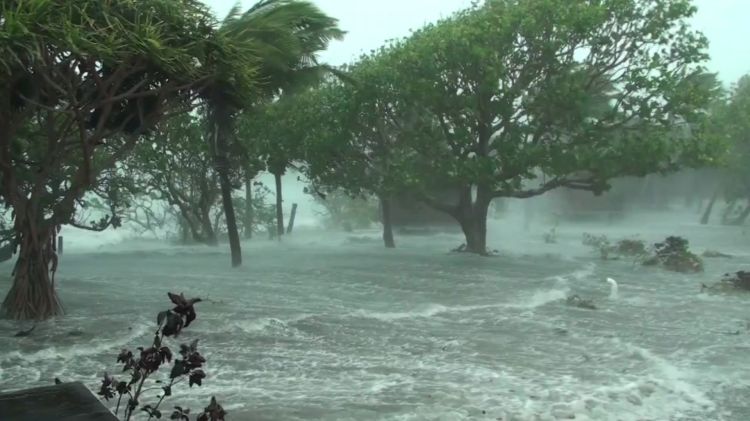
Government officials blamed the floods on heavy rainfall, but environmental groups have cited the disaster as the latest example of deforestation and environmental degradation intensifying the effects of severe weather across Indonesia.
“This disaster occurred not only because of extreme weather factors, but because of the ecological crisis,” Indonesian environmental rights group Indonesian Forum for the Environment wrote in a statement. “If the environment continues to be ignored, then we will continue to reap ecological disasters.”
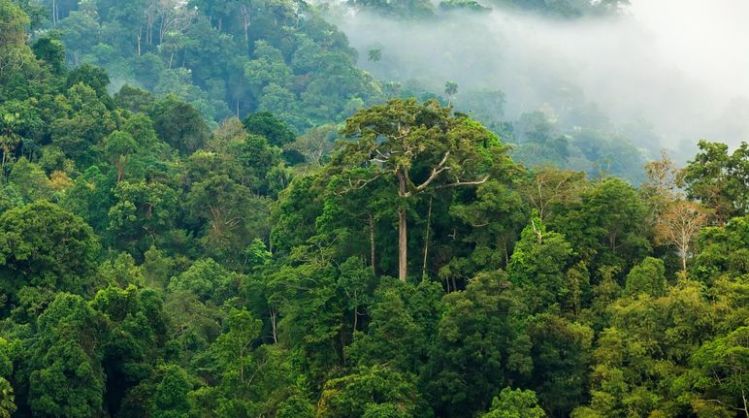
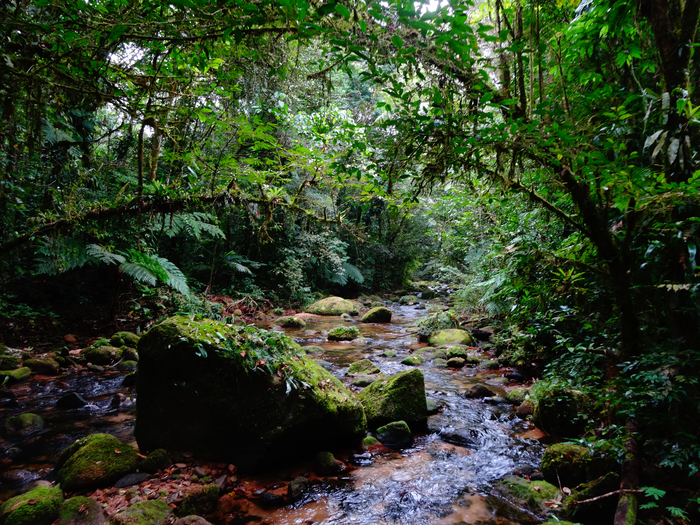
A vast tropical archipelago stretching across the equator, Indonesia is home to the world’s third-largest rainforest, with a variety of endangered wildlife and plants, including orangutans, elephants, giant and blooming forest flowers. Some live nowhere else.
For generations the forests have also provided livelihoods, food, and medicine while playing a central role in cultural practices for millions of Indigenous residents in Indonesia.
Since 1950, more than 74 million hectares (285,715 square miles) of Indonesian rainforest — an area twice the size of Germany — have been logged, burned or degraded for development of palm oil, paper and rubber plantations, mining and other commodities according to Global Forest Watch.
Indonesia is the biggest producer of palm oil, one of the largest exporters of coal and a top producer of pulp for paper. It also exports oil and gas, rubber, tin and other resources. And it also has the world’s largest reserves of nickel — a critical material for electric vehicles, solar panels and other goods needed for the green energy transition.

Indonesia has consistently ranked as one of the largest global emitters of plant-warming greenhouse gases, with its emissions stemming from the burning of fossil fuels, deforestation and peatland fires, according to the Global Carbon Project.
Read the remainder of the article on AP
Written by Victoria Milko. Originally published by Associated Press, 30 March, 2024. Original title: ‘In Indonesia, deforestation is intensifying disasters from severe weather and climate change’. Excerpt published, read the original article.
ENDS
Read more about human rights abuses and child slavery in the palm oil industry
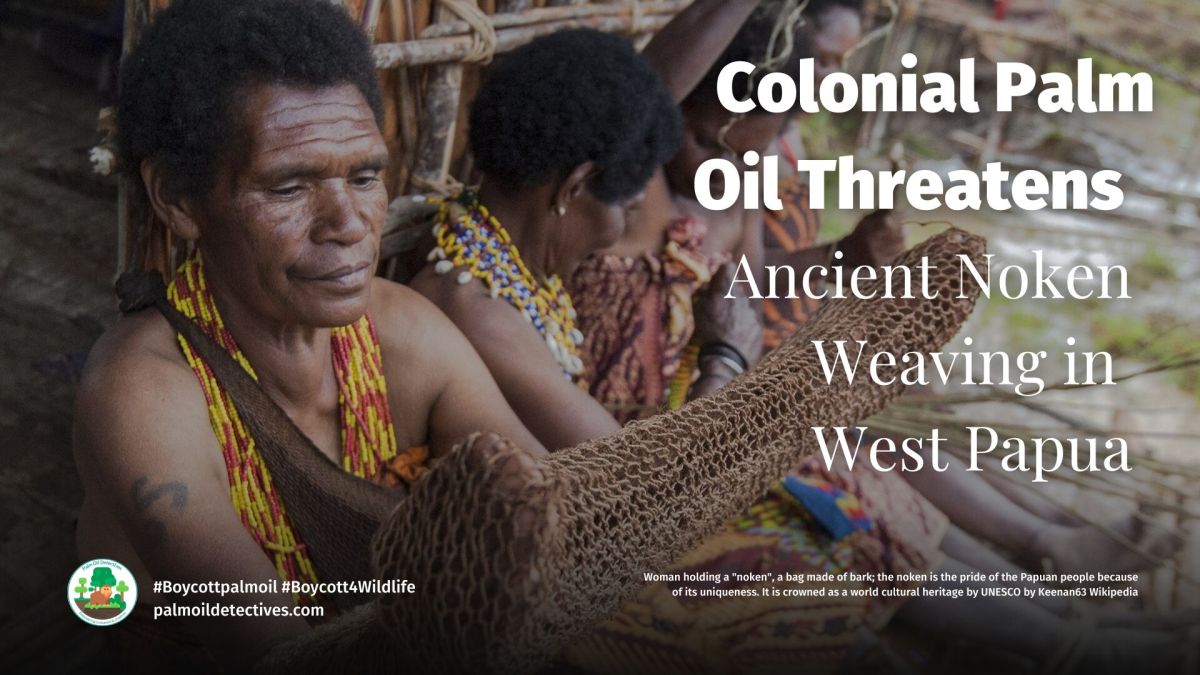
Colonial Palm Oil Threatens Ancient Noken Weaving in West Papua
A powerful new indigenous art exhibition has highlighted the tragic loss of #WestPapua’s cultural identity due to #deforestation for #palmoil and #sugarcane monoculture plantations. A situation perpetuated by the illegal Indonesian colonisation of…

Family Ties Expose Deforestation and Rights Violations in Indonesian Palm Oil
An explosive report by the Environment Investigation Agency (EIA) details how Indonesia’s Fangiono family, through a wide corporate web, is linked to ongoing #deforestation, #corruption, and #indigenousrights abuses for #palmoil. Calls mount for…
West Papuan Indigenous Women Fight Land Seizures
Indigenous Melanesian women in West Papua fight land seizures for palm oil and sugar plantations, protecting their ancestral rights. Join #BoycottPalmOil
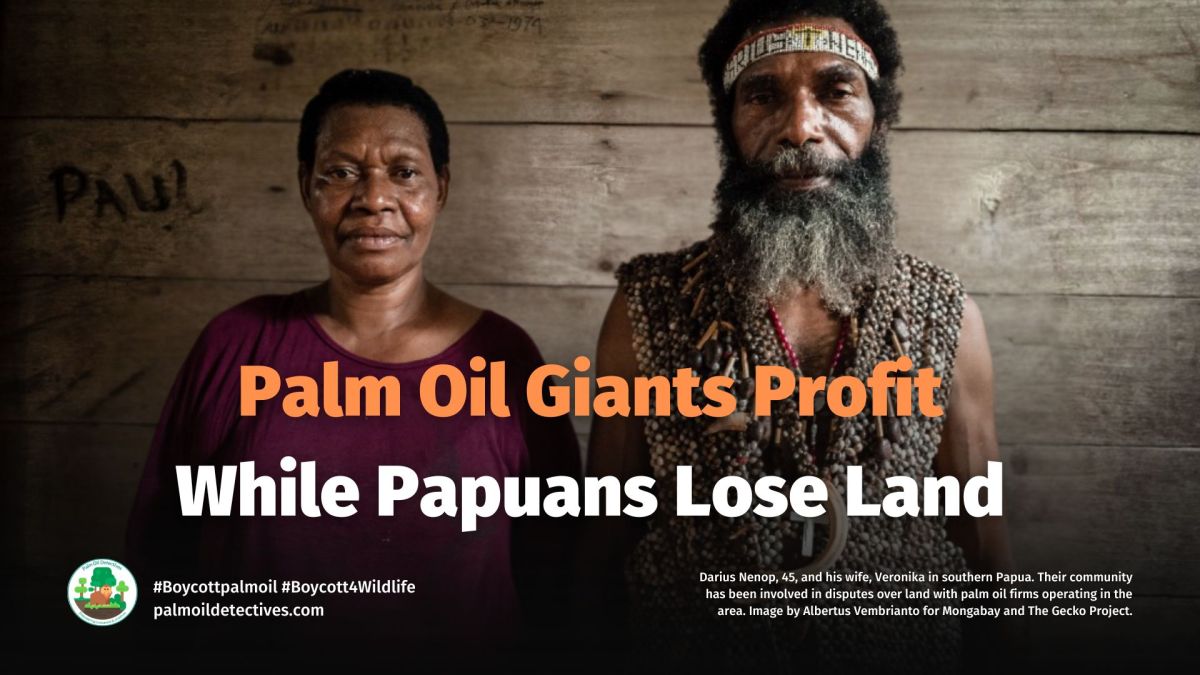
Greasing the Wheels of Colonialism: Palm Oil Industry in West Papua
A landmark study published in Global Studies Quarterly in April 2025 has revealed that the rapid expansion of the #palmoil industry in #WestPapua is not only fuelling #deforestation, #ecocide and environmental destruction but…
Palm Oil Workers Expose Industry Practices Resembling Colonialism
Palm Oil Workers Expose Industry Practices Resembling Colonialism | A coalition of palm oil workers in Indonesia has unveiled industry practices that mirror colonial exploitation, including land grabbing, poor working conditions, and environmental…
Load more posts
Something went wrong. Please refresh the page and/or try again.
Take Action in Five Ways
1. Join the #Boycott4Wildlife on social media and subscribe to stay in the loop: Share posts from this website to your own network on Twitter, Mastadon, Instagram, Facebook and Youtube using the hashtags #Boycottpalmoil #Boycott4Wildlife.
Enter your email address
Sign Up
Join 3,529 other subscribers2. Contribute stories: Academics, conservationists, scientists, indigenous rights advocates and animal rights advocates working to expose the corruption of the palm oil industry or to save animals can contribute stories to the website.

Wildlife Artist Juanchi Pérez
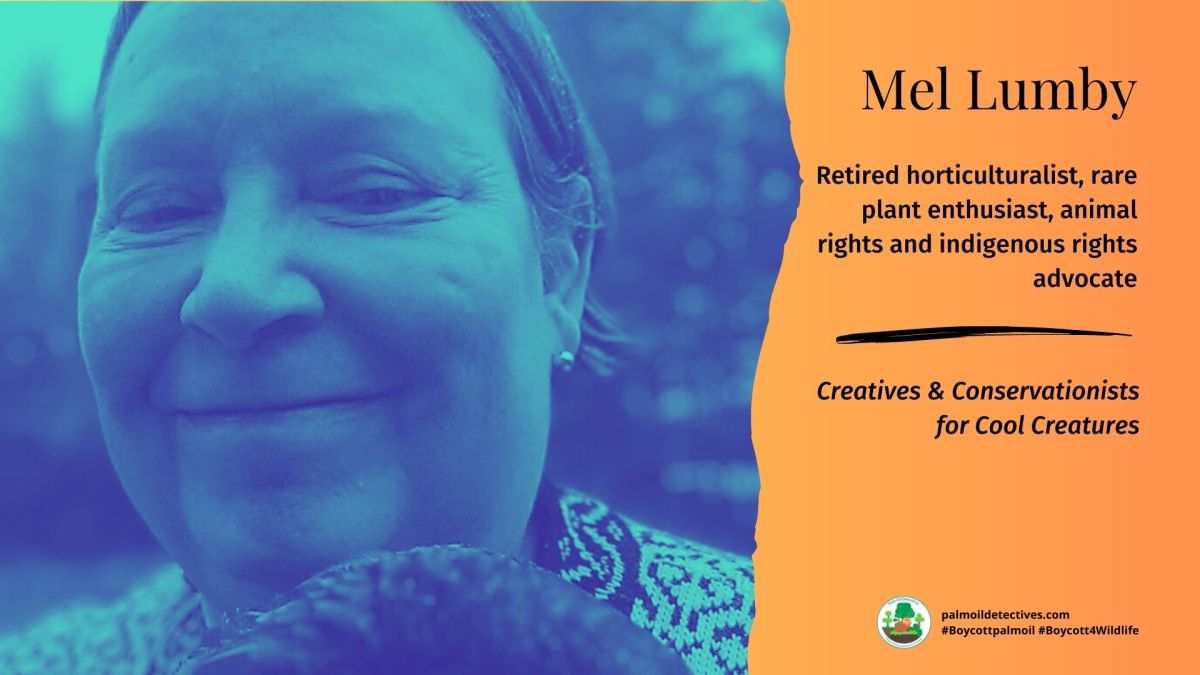
Mel Lumby: Dedicated Devotee to Borneo’s Living Beings
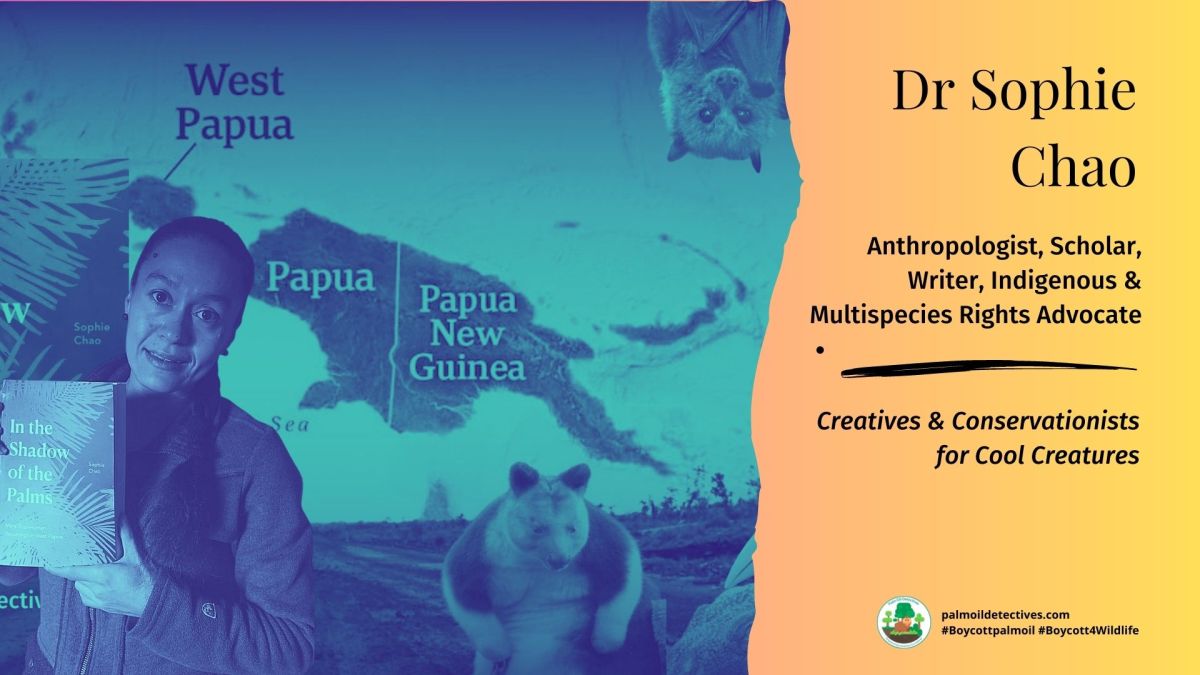
Anthropologist and Author Dr Sophie Chao

Health Physician Dr Evan Allen

The World’s Most Loved Cup: A Social, Ethical & Environmental History of Coffee by Aviary Doert

How do we stop the world’s ecosystems from going into a death spiral? A #SteadyState Economy
3. Supermarket sleuthing: Next time you’re in the supermarket, take photos of products containing palm oil. Share these to social media along with the hashtags to call out the greenwashing and ecocide of the brands who use palm oil. You can also take photos of palm oil free products and congratulate brands when they go palm oil free.
https://twitter.com/CuriousApe4/status/1526136783557529600?s=20
https://twitter.com/PhillDixon1/status/1749010345555788144?s=20
https://twitter.com/mugabe139/status/1678027567977078784?s=20
4. Take to the streets: Get in touch with Palm Oil Detectives to find out more.
5. Donate: Make a one-off or monthly donation to Palm Oil Detectives as a way of saying thank you and to help pay for ongoing running costs of the website and social media campaigns. Donate here
Pledge your support#Boycott4wildlife #BoycottPalmOil #climateChange #ClimateAction #climatechange #climatecrisis #ClimateEmergency #deforestation #floods #Forest #Indonesia #landslides #mining #nickel #palmoil #paper #Sumatra
Without Tropical Forests, The World Would Be 1°c Warmer
#Research reveals the most comprehensive and detailed evidence to date that #forests are more important to the #climate (globally and locally) than we think due to the way in which they physically transform the atmosphere. The first-ever research to pinpoint the local, regional and global non-carbon dioxide benefits of specific forest zones worldwide finds that the entire world gains the most benefits from the band of tropical rainforests spanning Latin America, Central Africa and Southeast Asia. Help #rainforests, rainforest animals and indigenous peoples every time you shop, make sure you #BoycottPalmOil #BoycottGold #Boycott4Wildlife
#Forests cool the planet, like natural #aircon. What happens when you cut them down? #Deforestation heats areas up to 4.5℃! Keep forests standing for #people and animals! #Boycottpalmoil 🌴🪔🧐🙊⛔️ #BoycottGold 🥇🪙🧐🙊🚫 #Boycott4Wildlife @palmoildetect https://palmoildetectives.com/2022/08/14/without-tropical-forests-global-temperatures-would-be-1c-warmer/
Share to BlueSky Share to TwitterIt finds that, together, forests keep the planet at least half of a degree Celsius cooler when we account for the understudied biophysical effects—from chemical compounds to turbulence and the reflection of light. These effects in the tropics alone deliver planetary cooling of one-third of a degree Celsius; when combined with the carbon dioxide, the cooling effect is over 1 degree Celsius.
“All forests are precious. Increasingly, we are discovering they also keep the air near and far cool and moist,” said Deborah Lawrence, a professor at the University of Virginia and the lead author of the study, The Unseen Effects of Deforestation: Biophysical Effects on Climate. “The heart of the tropics is at the heart of the planet and these forests are critical for our survival.”
According to the study, “Locally at all latitudes, forest biophysical impacts far outweigh carbon effects, promoting local climate stability by reducing extreme temperatures in all seasons and times of day.”
“The importance of forests for both global climate change mitigation and local adaptation by human and non-human species is not adequately captured by current carbon-centric metrics, particularly in the context of future climate warming.”
Scientists already have a well-established understanding of how tropical deforestation contributes to global climate change through emitting carbon and reducing the ability of the world’s forests to take more carbon pollution out of the atmosphere. This is the latest and most comprehensive study in a body of emerging evidence showing how tropical deforestation has climate impacts beyond carbon: Deforestation immediately increases heat and extreme heat locally and decreases regional and local rainfall. Forest loss also disrupts the climate in faraway places. Because of this, forests are even more valuable to climate efforts than previously accounted for in international climate plans and projections.
The study reviewed the available literature on this emerging science to determine that forests up to 50 degrees north latitude deliver benefits at a global scale that cumulatively keep the entire planet cooler by 1 degree Celsius. This means that any forest protection or restoration efforts taking place between 40 degrees south latitude and—50 degrees north latitude help at the local level as well as the global level. For example, destroying rainforests in the 10 degree band just south of the equator could warm the planet by half of a degree. And restoring forests in the 10 degree band just north of the equator would deliver 25% more global cooling than expected based on CO2 sequestration alone. But the study shows that even those forests outside of this band deliver a host of benefits warranting their protection.
“A recent major UN climate report showed we must urgently act now to avoid the worst case scenarios for our planet,” Lawrence said.
“If we lose these forests, we will get there 10 years faster. If we protect these forests, they will shield us from extreme climate disasters, droughts and impacts on our food and agriculture. We are benefiting now from the tropics keeping us cooler; they are keeping us from feeling these extremes already.”
The study notes that deforestation, for example, is responsible for one-third of the increase in intensity of hotter days; forest loss is also behind the increase in hot, dry summers. Our loss in tree cover has also led to local increases in extreme temperatures comparable in magnitude to changes caused by 0.5 degrees Celsius of global warming.
“Put another way, deforestation pushes people today into an experience we are trying to avoid by hitting 2 degrees rather than 1.5 degrees of warming,” Lawrence said. “People living with deforestation are already suffering the effects of that warmer, more extreme world. Forest restoration would bring them back to a more livable climate.”
Forest cooling is due to a range of biophysical effects. The study reveals that all forests emit chemicals called Biogenic Volatile Organic Compounds (BVOCs). On the one hand, BVOCs create aerosols that reflect incoming energy and form clouds; both are cooling effects. On the other hand, they lead to a build-up of ozone and methane, both greenhouse gases. This is a warming effect. On balance, the cooling outweighs the warming. These complex chemical compounds emitted by forests represent a new frontier in our understanding of how forests keep the planet cool near and far.
Other aspects of forests that enable them to minimize drought associated with extreme heat include their deep roots, high water use efficiency and high surface “roughness.” These qualities allow trees to dissipate heat and move moisture higher into the atmosphere, which directly cools the local area and influences cloud formation and rainfall—which has ramifications far away.
“Research is making it increasingly clear that forests are even more complex than previously understood. When we cut them down, we see devastating impacts on our climate, food supplies and everyday life. The benefits of keeping forests intact are clear; it’s imperative that we prioritize their protection,” said Wayne Walker, carbon program director at the Woodwell Climate Research Center and one of the study co-authors.
The recently released Intergovernmental Panel on Climate Change (IPCC) report warned about the impacts, adaptation and vulnerability humans face with rising temperatures. This new study suggests that forest protection, important to both mitigation and adaptation, protects us from some of the worst climate disasters. And it shows that forests provide local cooling during the hottest times of the year everywhere on the planet, improving the resilience of cities, croplands and conservation areas. In the tropics, where forest carbon stocks and sequestration rates are highest, the biophysical effects of forests amplify the carbon benefits.
“Protecting primary forests throughout the world should be one of our greatest priorities. These forests are critical for adapting to a warmer world,” said Michael Coe, tropics program director at the Woodwell Climate Research Center and a study co-author. “Without the forest cover we have now, the planet would be hotter and the weather more extreme. Forests provide us defense against the worst-case global warming scenarios.”
This study adds a more sweeping global perspective to research on the local non-carbon climate impacts of deforestation:
Researchers recently found that the destruction of forests and other ecosystems in Brazil’s Amazon and Cerrado regions endangers local soy agriculture, calculating that extreme heat costs $3.55 billion annually on top of $1 billion annually for drier conditions.
Another study showed that rising temperatures and humidity tied to tree loss has already reduced the number of hours in the day people can safely work outside—and will only get worse if more forests are destroyed.
A third study showed that in the case of Brazil, by 2100, roughly 12 million people could be exposed to extreme risk of heat stress, with vulnerable populations, including Indigenous Peoples, set to be the most severely impacted.
“Despite the mounting evidence that forests deliver myriad climate benefits, trees are still viewed just as sticks of carbon by many policymakers in the climate change arena,” said Louis Verchot, a principal scientist at the International Center for Tropical Agriculture (CIAT) and one of the study co-authors. “It’s time for policymakers at the local and global levels to realize that forests have even greater value to people and economies, now and in the future, due to their non-carbon benefits. Forests are key to mitigation, but also adaptation.”
Take Action in Five Ways
1. Join the #Boycott4Wildlife on social media and subscribe to stay in the loop: Share posts from this website to your own network on Twitter, Mastadon, Instagram, Facebook and Youtube using the hashtags #Boycottpalmoil #Boycott4Wildlife.
Enter your email address
Sign Up
Join 3,174 other subscribers2. Contribute stories: Academics, conservationists, scientists, indigenous rights advocates and animal rights advocates working to expose the corruption of the palm oil industry or to save animals can contribute stories to the website.
Wildlife Artist Juanchi Pérez
Mel Lumby: Dedicated Devotee to Borneo’s Living Beings
Anthropologist and Author Dr Sophie Chao
Health Physician Dr Evan Allen
The World’s Most Loved Cup: A Social, Ethical & Environmental History of Coffee by Aviary Doert
How do we stop the world’s ecosystems from going into a death spiral? A #SteadyState Economy
3. Supermarket sleuthing: Next time you’re in the supermarket, take photos of products containing palm oil. Share these to social media along with the hashtags to call out the greenwashing and ecocide of the brands who use palm oil. You can also take photos of palm oil free products and congratulate brands when they go palm oil free.
https://twitter.com/CuriousApe4/status/1526136783557529600?s=20
https://twitter.com/PhillDixon1/status/1749010345555788144?s=20
https://twitter.com/mugabe139/status/1678027567977078784?s=20
4. Take to the streets: Get in touch with Palm Oil Detectives to find out more.
5. Donate: Make a one-off or monthly donation to Palm Oil Detectives as a way of saying thank you and to help pay for ongoing running costs of the website and social media campaigns. Donate here
Pledge your support#aircon #AmazonRainforest #Boycott4wildlife #BoycottGold #BoycottPalmOil #Climate #climateChange #deforestation #ecocide #forests #palmOilDeforestation #people #rainforest #rainforestConservation #rainforests #research