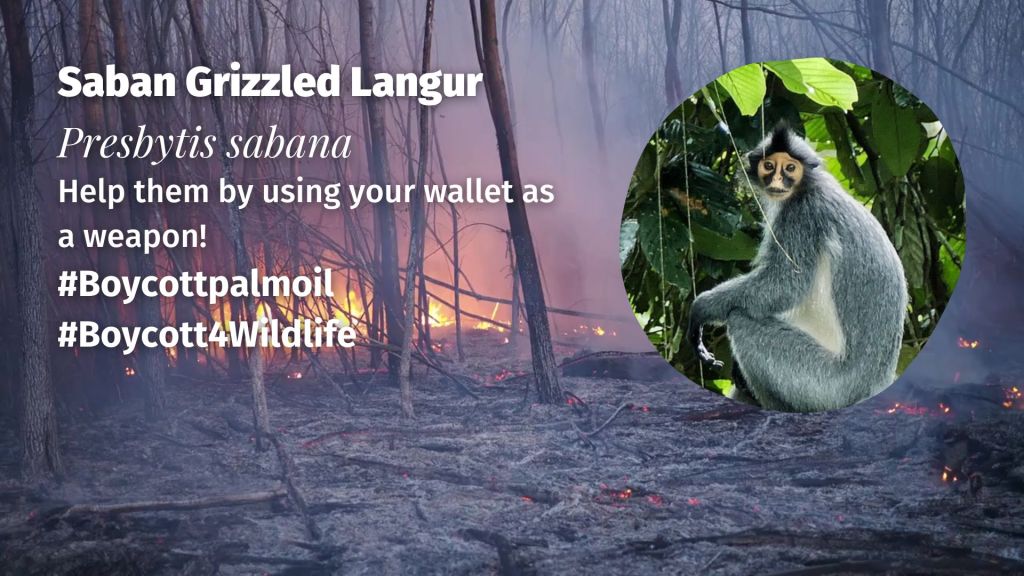
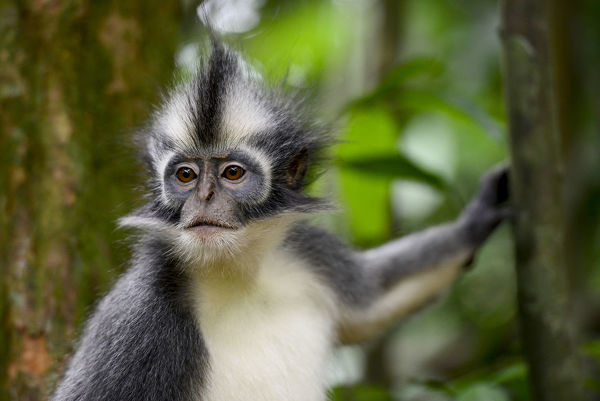
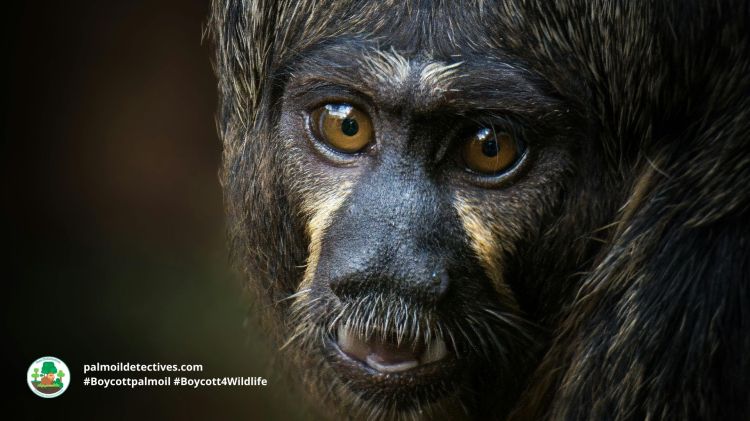
Sabah Grizzled Langur Presbytis sabana

Sabah Grizzled Langur Presbytis sabana

Red List Status: Endangered

Location: Malaysia (Sabah), Indonesia (North Kalimantan)

This elusive primate lives in lowland, riparian, montane, and evergreen forests of northern Borneo, including protected areas such as the Danum Valley, Tabin Reserve, and the Kinabatangan region.

The Sabah Grizzled Langur Presbytis sabana, also known as the Saban Grizzled #Langur or Crested Grizzled Langur, is a strikingly beautiful leaf #monkey found only in #Borneo. Their #Endangered status is a direct result of extensive habitat destruction caused by deforestation, out-of-control palm oil expansion, and #hunting—particularly for bezoar stones used in traditional medicine. With fragmented populations and little known about their behaviour or numbers, urgent action is needed to prevent their extinction. Use your wallet as a weapon. Avoid #palmoil when you shop and demand an end to wildlife trafficking and forest destruction. #BoycottPalmOil #Boycott4Wildlife #Vegan

Sabah Grizzled #Langurs live in the treetops of #Sabah #Malaysia 🐒🐵🇲🇾 Their main threats are #palmoil and #meat agriculture #deforestation. Help to protect these elegant monkeys when you #BoycottPalmOil 🌴🩸🔥☠️🤮🧐🙊⛔️#Boycott4Wildlife @palmoildetect https://palmoildetectives.com/2021/01/25/msaban-grizzled-langur-presbytis-sabana/

Share to BlueSkyShare to Twitter

Appearance and Behaviour

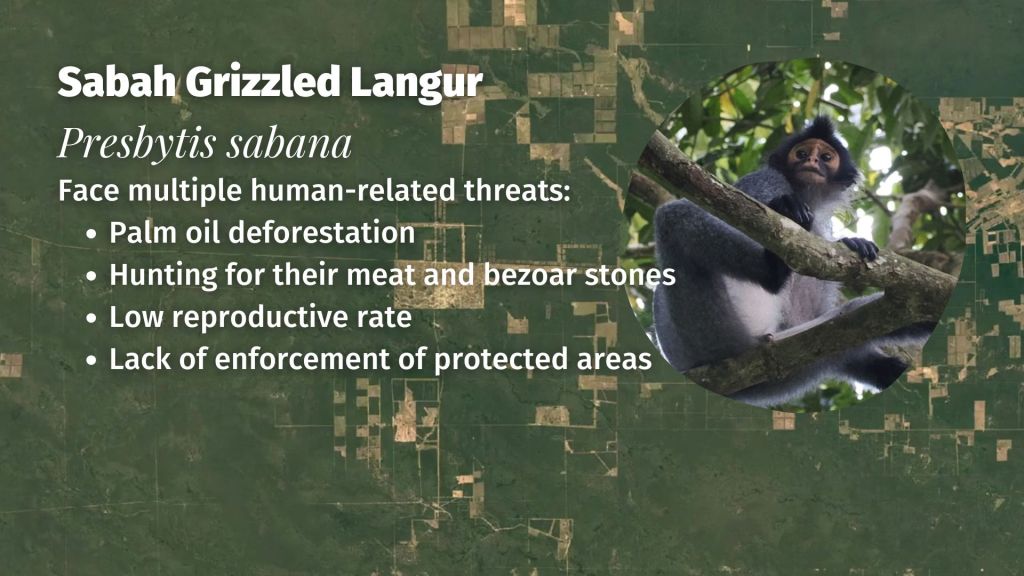
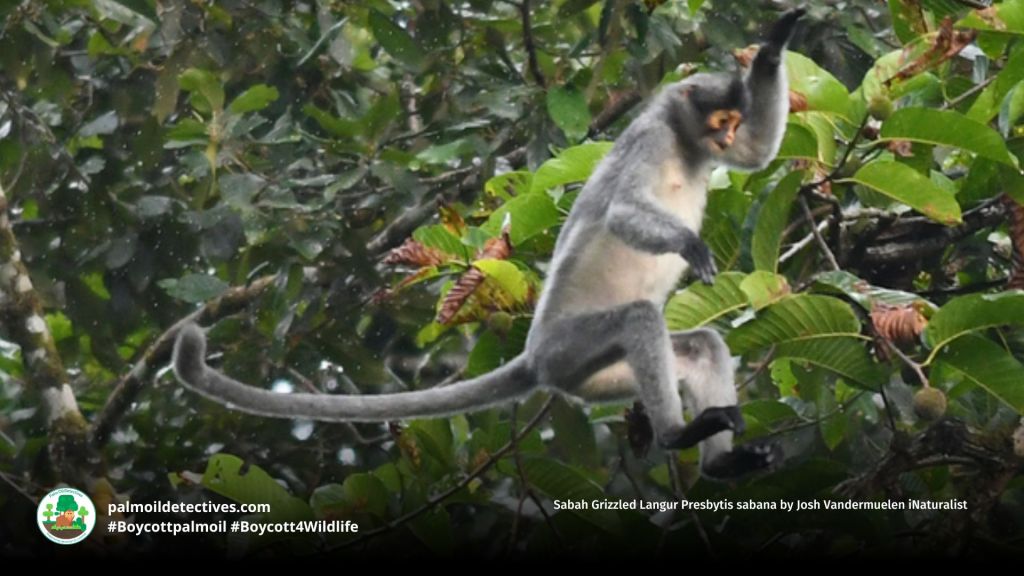
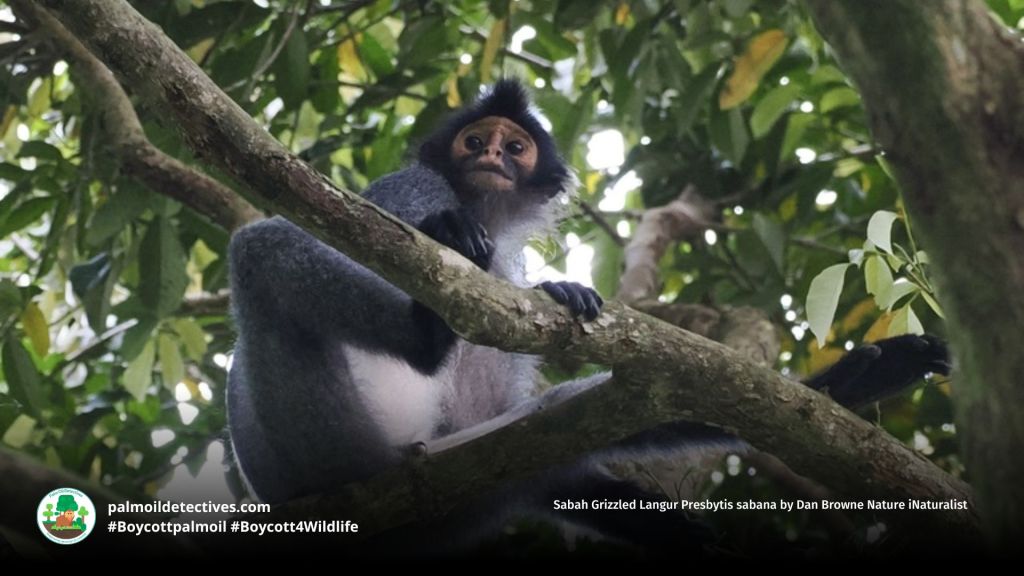
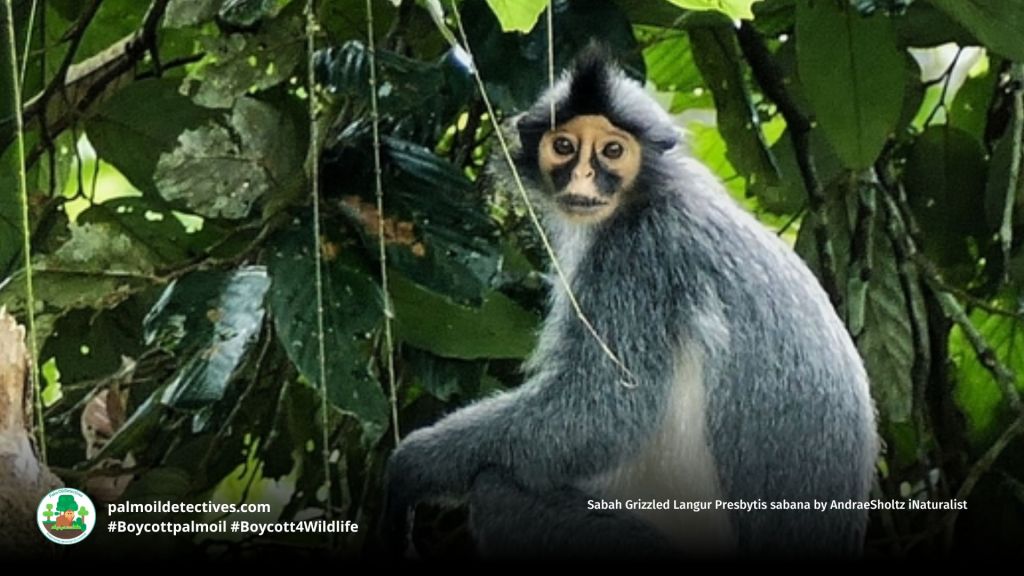
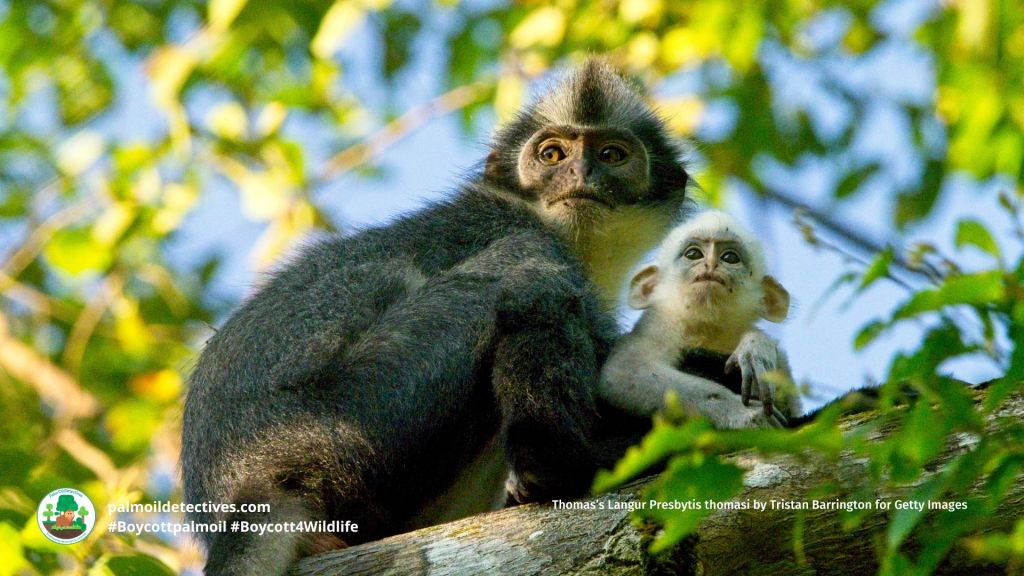
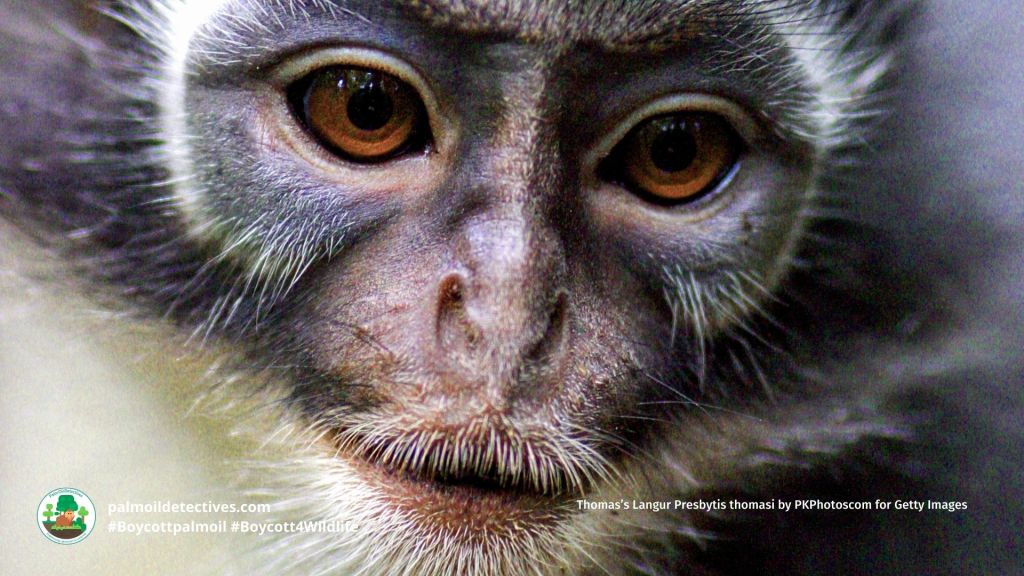
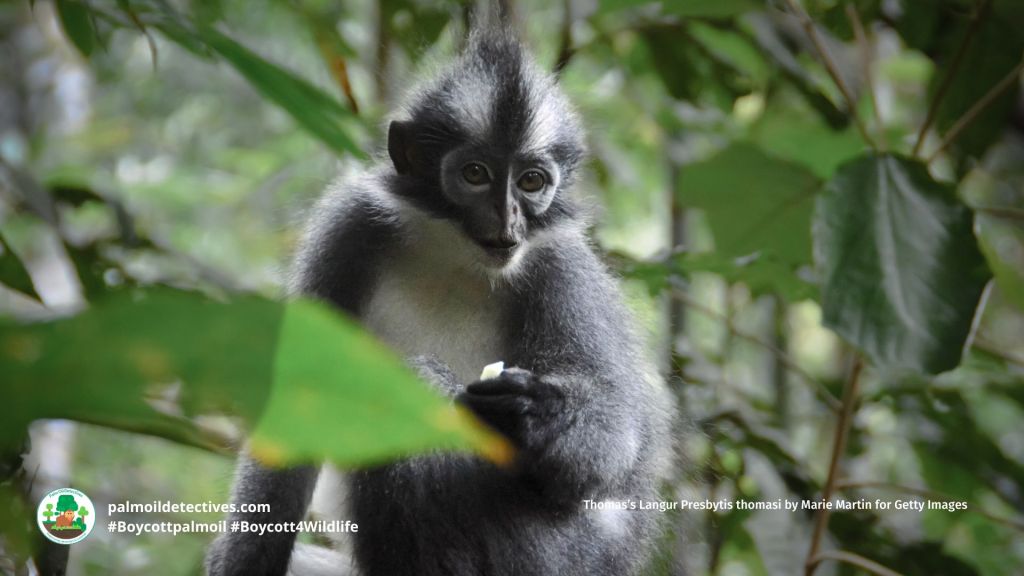
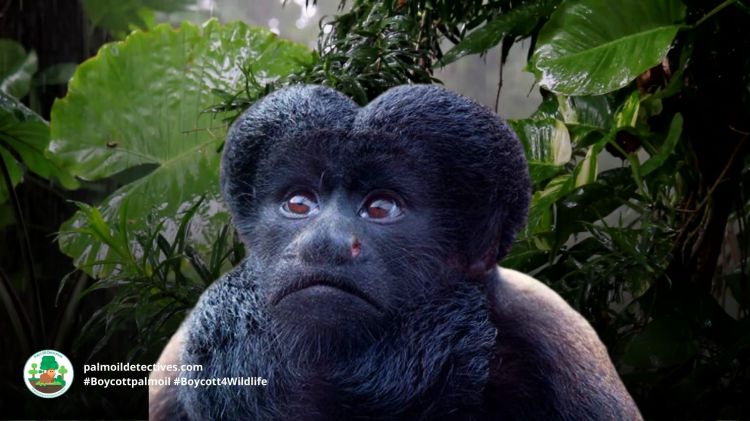
The Sabah Grizzled Langur is a captivating primate with a thick coat of grey, grizzled fur and a pale belly, sharply contrasted by black hands and feet. A pointed crown of fur rises from their head, giving them a distinct, almost regal look. Their spade-shaped, pale-pinkish faces are framed by dark rings around wide, expressive eyes—an appearance that makes them instantly memorable to anyone lucky enough to see one.
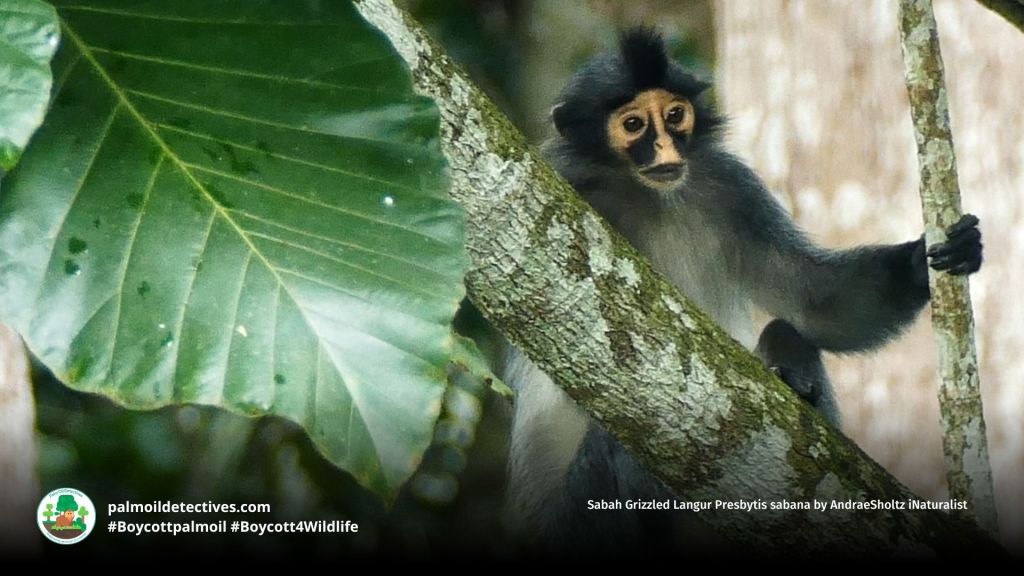
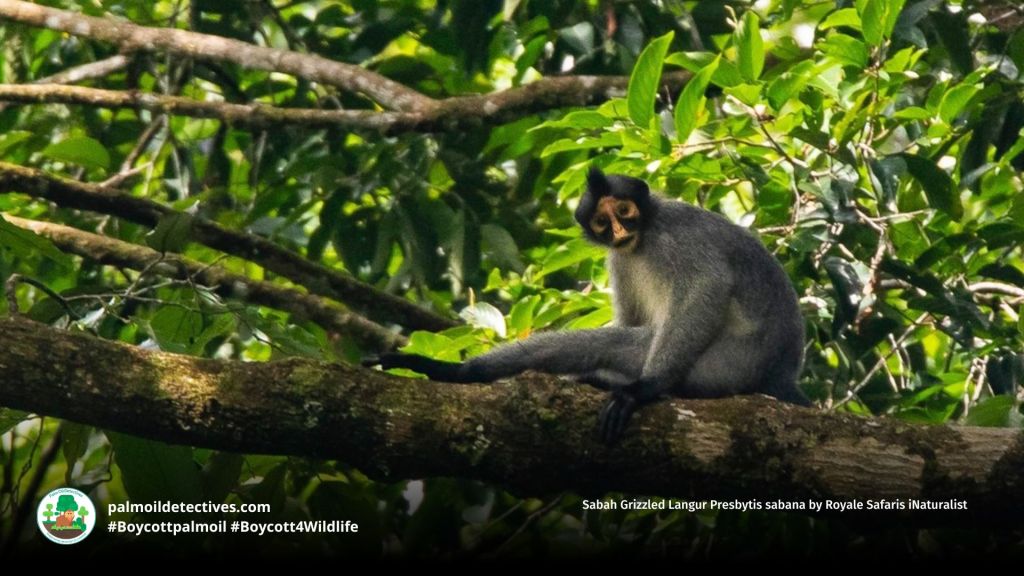
Sabah Grizzled Langur Presbytis sabana by AndraeSholtz iNaturalist (2)Sabah Grizzled Langur Presbytis sabana by Royale Safaris iNaturalistSaban Grizzled Langur Presbytis sabana threatsSabah Grizzled Langur Presbytis sabana by Josh Vandermuelen iNaturalistSabah Grizzled Langur Presbytis sabana by Dan Browne Nature iNaturalistSabah Grizzled Langur Presbytis sabana by AndraeSholtz iNaturalistSabah Grizzled Langur Presbytis sabana by AndraeSholtz iNaturalist (3)Saban Grizzled Langur Presbytis sabana boycott

These langurs are diurnal and arboreal, spending most of their lives high in the forest canopy. At night, they retreat to the upper branches of emergent trees to sleep, likely as a defence against predators. They are nimble and versatile movers, walking on all fours, leaping, climbing, and even hanging suspended beneath branches. Their daily lives involve foraging, grooming, resting, and socialising in cohesive groups that typically consist of one dominant male and several adult females with their young.

Diet

Sabah Grizzled Langurs are primarily folivores, feeding on a wide range of leaves, young shoots, and unripe seeds. They also eat fruit, flowers, buds, insects, bird eggs, and mineral-rich mud to supplement their diet. Their complex, multi-chambered stomachs ferment leafy material efficiently, allowing them to extract maximum nutrition from tough plant matter.

The diet of the Sabah Grizzled Langur shifts based on the level of forest disturbance. In undisturbed forests, leaves dominate their intake, but in logged areas, they consume more fruit and seeds. This adaptability may be crucial to their survival in fragmented landscapes.

Reproduction and Mating

This species follows a polygynous mating system, with a single adult male having exclusive breeding access to the females in the group. Breeding appears to occur year-round, but births peak between July and October. After a gestation of five to six months, the female gives birth to a single infant.

Infants are born with paler fur that darkens over time. They are weaned at around 11 months and become subadults between 21 and 36 months. Both males and females leave their natal groups upon reaching sexual maturity at about three years of age, either joining new groups or forming their own.

Geographic Range

Sabah Grizzled Langurs are endemic to the island of Borneo and are found only in Sabah (Malaysia) and northern parts of Indonesian Kalimantan. They inhabit evergreen, lowland, montane, and riverine forests, as well as selectively logged areas and tree plantations. Though once considered a subspecies of Presbytis hosei, they are now recognised as a distinct species. Populations are scattered and fragmented, with some surviving in protected areas like Danum Valley and the Maliau Basin, but others are highly vulnerable to extinction.

Threats
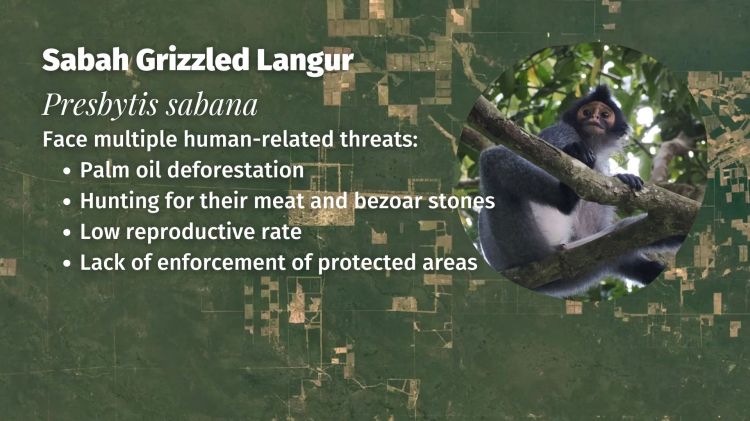
Saban Grizzled Langur Presbytis sabana threats

• Palm oil deforestation, monoculture expansion and habitat fragmentation

Large-scale clearing of Borneo’s forests for palm oil plantations has severely reduced the habitat of Presbytis sabana. This deforestation not only destroys the canopy cover they rely on for movement and shelter but also creates isolated forest patches that hinder gene flow and increase vulnerability to inbreeding and local extinction. Even selectively logged areas can remove critical roosting trees and food sources, leading to population collapse over time.

• Hunting for their meat and bezoar stones

Local hunting poses a grave threat to this species. Bezoar stones—calcified objects sometimes found in the gastrointestinal tracts of langurs—are falsely believed to have medicinal properties and fetch high prices in illegal markets. As a result, these langurs are hunted both for meat and for supposed curative use, putting intense pressure on already dwindling populations.

• Lack of enforcement in protected areas

While some populations live in conservation zones, many of these are inadequately protected. Illegal logging, poaching, and encroachment continue within the boundaries of national parks and reserves. Without sufficient monitoring, resources, and community involvement, these areas offer little real safety for the langurs.

• Low reproductive rate and slow population recovery

Like many primates, Sabah Grizzled Langurs have slow reproductive cycles, giving birth to a single infant every one to two years. This low birth rate means that even small increases in mortality can cause long-term population declines. Combined with hunting and habitat loss, this makes recovery especially difficult without urgent conservation action.

Take Action!

The fate of the Sabah Grizzled Langur is partially tied to our consumer choices. Avoid products that contain palm oil, especially those contributing to Bornean deforestation. Never support the exotic animal trade or products made from endangered species. Support indigenous-led conservation efforts and protect Southeast Asia’s remaining rainforests. #BoycottPalmOil #Boycott4Wildlife #Vegan #BoycottMeat

FAQs

How many Sabah Grizzled Langurs are left?

Exact population numbers are unknown due to a lack of comprehensive surveys, but the IUCN lists them as Endangered and rapidly declining. Fragmentation of their range and localised hunting make many populations highly vulnerable, and some may already be functionally extinct.

What is the lifespan of Presbytis sabana?

While the exact lifespan of Presbytis sabana is not documented, related langurs typically live around 20–25 years in the wild. Infant mortality may be high in disturbed habitats, especially where hunting pressure is intense.

Why are bezoar stones a threat?

Bezoar stones are hard masses found in the intestines of some langurs, falsely believed to have healing powers in traditional medicine. This belief drives illegal hunting, even though scientific evidence shows these stones have no proven medical value. Killing langurs for this purpose is both cruel and contributes directly to their extinction.

How are Sabah Grizzled Langurs affected by palm oil?

Palm oil plantations are a major cause of deforestation in Borneo. These plantations clear vast areas of native forest, severing the canopy corridors that langurs use to travel. Even plantations that claim to be ‘eco-friendly’ contribute to ecosystem collapse by fragmenting habitat and displacing wildlife.

Do Sabah Grizzled Langurs make good pets?

No. These langurs are not suited to captivity and have not been documented in zoos or pet markets. Their specialised diet and social needs cannot be met outside the wild. Keeping langurs as pets is illegal, unethical, and further threatens their survival.
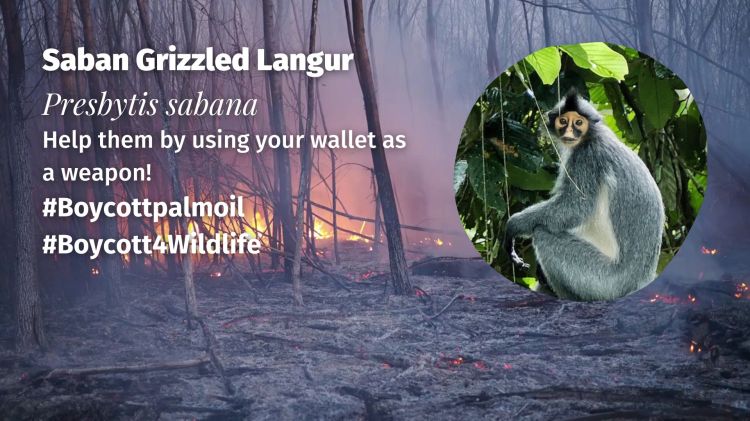
Saban Grizzled Langur Presbytis sabana boycott

Support the conservation of this species

This animal has no protections in place. Read about other forgotten species here. Create art to support this forgotten animal or raise awareness about them by sharing this post and using the #Boycottpalmoil #Boycott4Wildlife hashtags on social media. Also you can boycott palm oil in the supermarket.

Further Information
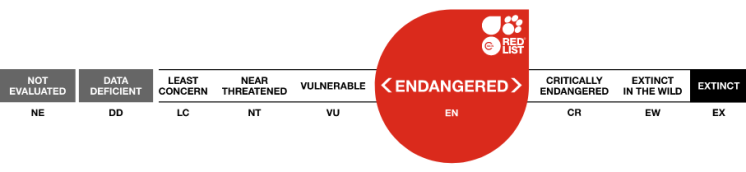
ICUN endangered logo

Nijman, V. (2017). Group composition and monandry in grizzled langurs, Presbytis comata, on Java. Folia Primatologica, 88(2), 237–254. https://doi.org/10.1159/000478695

Ramlee, H. (2013). Distribution, ecology and systematics of Presbytis hosei and other leaf monkey species in North Borneo [PhD thesis, Australian National University]. Open Research Repository. https://openresearch-repository.anu.edu.au/items/26fbc1b7-b536-427c-a8d2-62984e69b43e

Setiawan, A. & Traeholt, C. 2020. Presbytis sabana. The IUCN Red List of Threatened Species 2020: e.T39810A17987041. https://dx.doi.org/10.2305/IUCN.UK.2020-2.RLTS.T39810A17987041.en. Downloaded on 25 January 2021.

Wikipedia contributors. (n.d.). Sabah grizzled langur. Wikipedia. Retrieved from https://en.wikipedia.org/wiki/Sabah_grizzled_langur
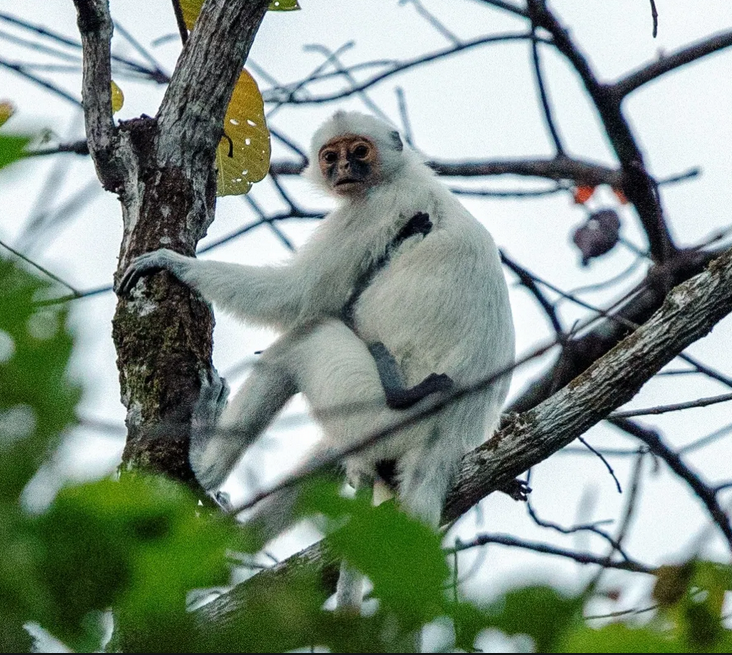
Sabah Grizzled Langur Presbytis sabana


Contribute to palm oil detectives - black rhino in profile

How can I help the #Boycott4Wildlife?


Take Action in Five Ways

1. Join the #Boycott4Wildlife on social media and subscribe to stay in the loop: Share posts from this website to your own network on Twitter, Mastadon, Instagram, Facebook and Youtube using the hashtags #Boycottpalmoil #Boycott4Wildlife.

Enter your email address

Sign Up

Join 3,528 other subscribers

2. Contribute stories: Academics, conservationists, scientists, indigenous rights advocates and animal rights advocates working to expose the corruption of the palm oil industry or to save animals can contribute stories to the website.
Wildlife Artist Juanchi Pérez
Wildlife Artist Juanchi Pérez

Read more

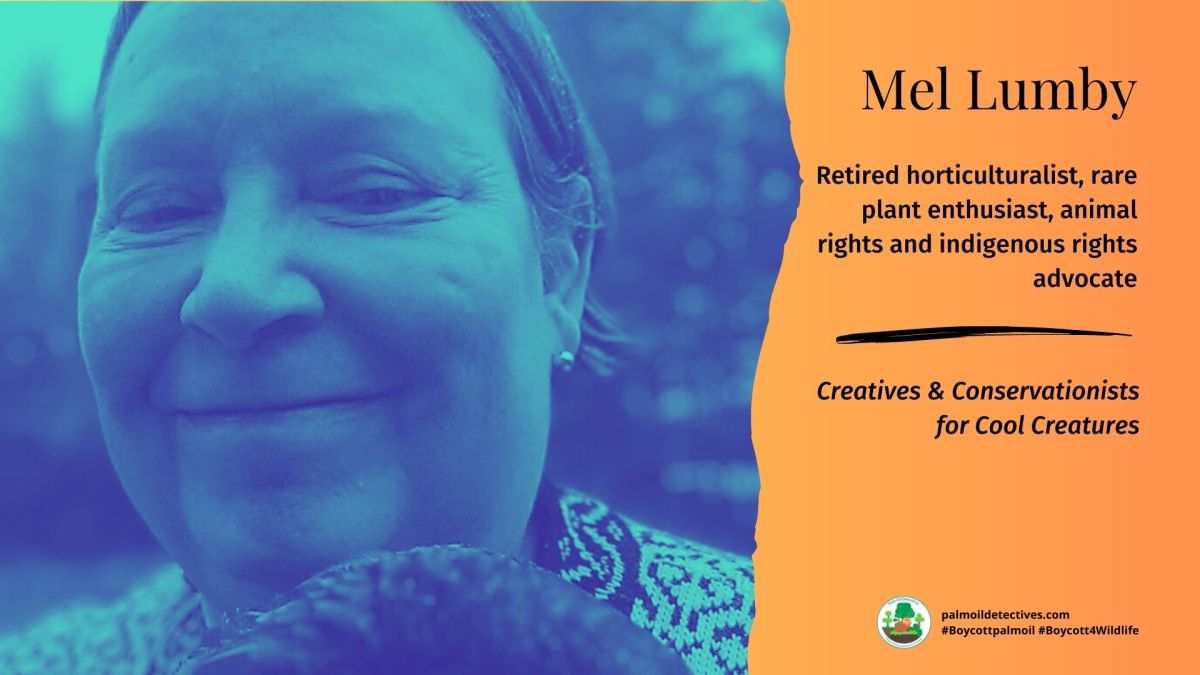
Mel Lumby: Dedicated Devotee to Borneo’s Living Beings
Mel Lumby: Dedicated Devotee to Borneo’s Living Beings

Read more

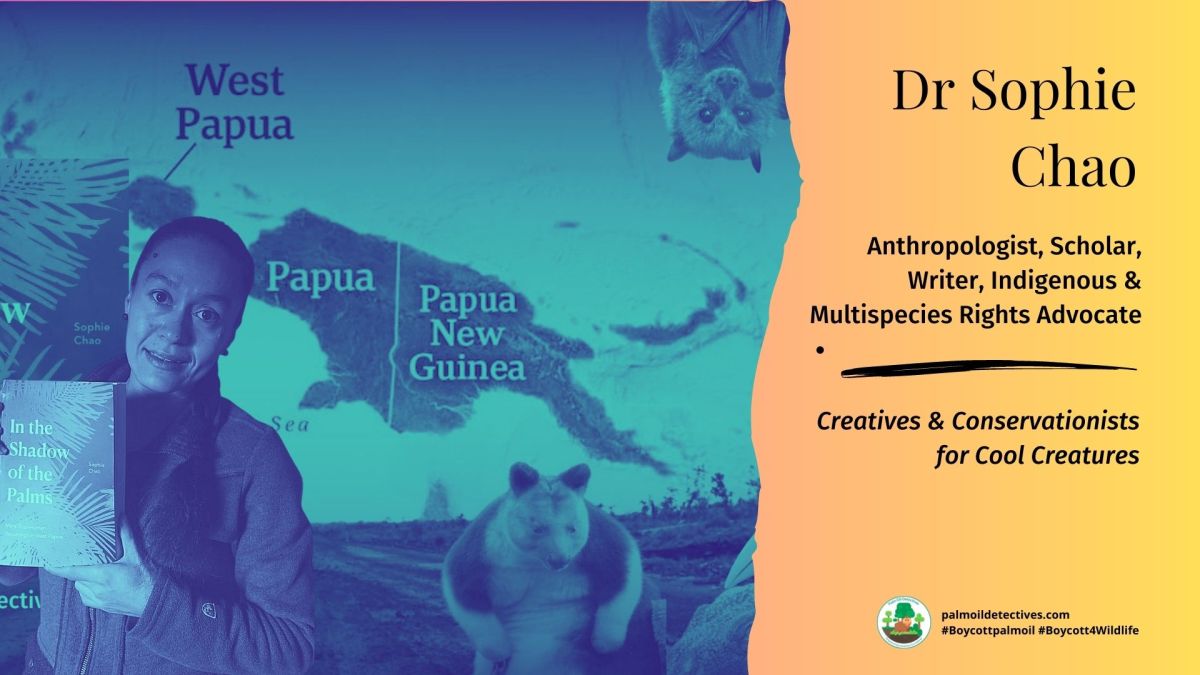
Anthropologist and Author Dr Sophie Chao

Anthropologist and Author Dr Sophie Chao

Read more

Health Physician Dr Evan Allen

Health Physician Dr Evan Allen

Read more

The World’s Most Loved Cup: A Social, Ethical & Environmental History of Coffee by Aviary Doert

The World’s Most Loved Cup: A Social, Ethical & Environmental History of Coffee by Aviary Doert

Read more

How do we stop the world’s ecosystems from going into a death spiral? A #SteadyState Economy

How do we stop the world’s ecosystems from going into a death spiral? A #SteadyState Economy

Read more

3. Supermarket sleuthing: Next time you’re in the supermarket, take photos of products containing palm oil. Share these to social media along with the hashtags to call out the greenwashing and ecocide of the brands who use palm oil. You can also take photos of palm oil free products and congratulate brands when they go palm oil free.

https://twitter.com/CuriousApe4/status/1526136783557529600?s=20

https://twitter.com/PhillDixon1/status/1749010345555788144?s=20

https://twitter.com/mugabe139/status/1678027567977078784?s=20

4. Take to the streets: Get in touch with Palm Oil Detectives to find out more.

5. Donate: Make a one-off or monthly donation to Palm Oil Detectives as a way of saying thank you and to help pay for ongoing running costs of the website and social media campaigns. Donate here

Pledge your support

#Agriculture #Bornean #Borneo #Boycott4wildlife #BoycottMeat #BoycottPalmOil #deforestation #endangered #EndangeredSpecies #ForgottenAnimals #hunting #Indonesia #Kalimantan #langur #Langurs #Malaysia #Mammal #meat #monkey #palmoil #poachers #poaching #Primate #Sabah #SabahGrizzledLangurPresbytisSabana #SouthEastAsia #vegan

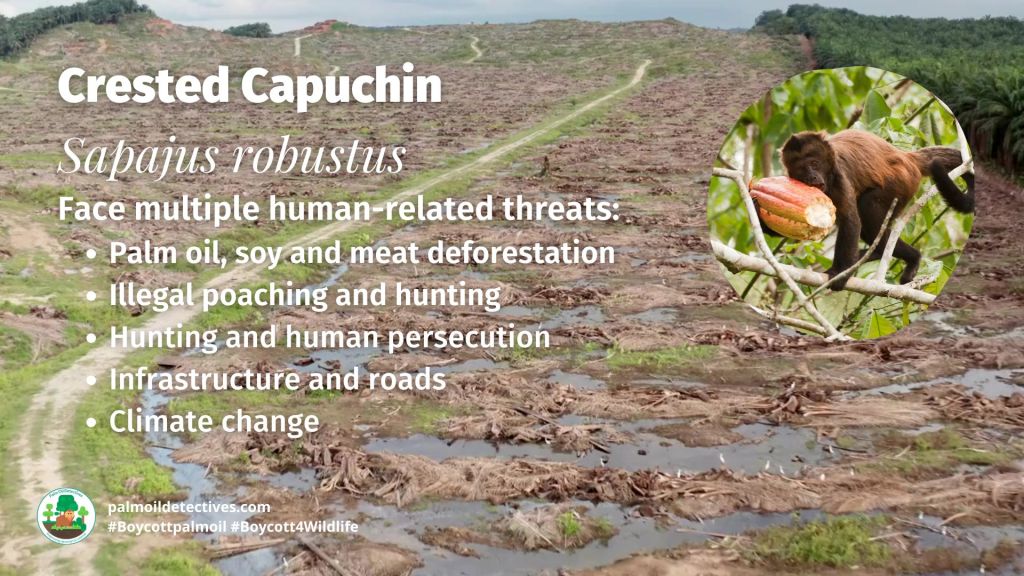
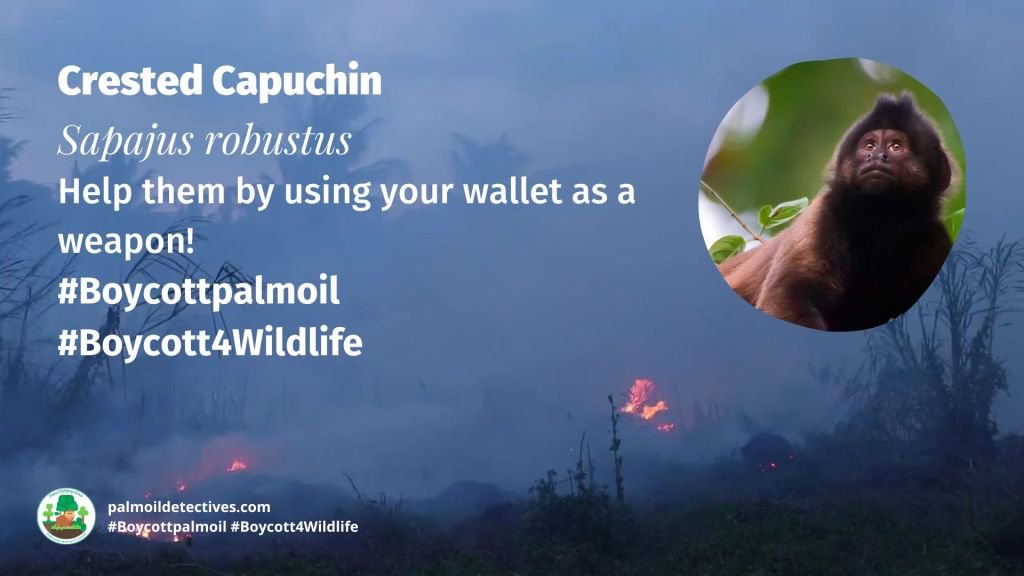
Crested Capuchin Sapajus robustus

Crested Capuchin Sapajus robustus
IUCN Status: Endangered

Location: Brazil (southern Bahia, eastern Minas Gerais, Espírito Santo). In Brazil’s Atlantic Forest, where morning mist clings to ancient trees, the crested capuchin moves through their shrinking world with quiet intelligence.

The crested capuchin stands as one of Brazil’s most endangered primates. Their distinctive scarlet crests catch filtered sunlight as they navigate forest fragments between the Jequitinhonha and Doce rivers. With only 14,400 individuals remaining, these intelligent tool-users face extinction as palm oil plantations, soy agriculture, and urban sprawl devour their ancestral homes. #BoycottPalmOil #Boycott4Wildlife every time you shop and be #Vegan to help their survival.

https://youtu.be/tu9-T8Aapg8

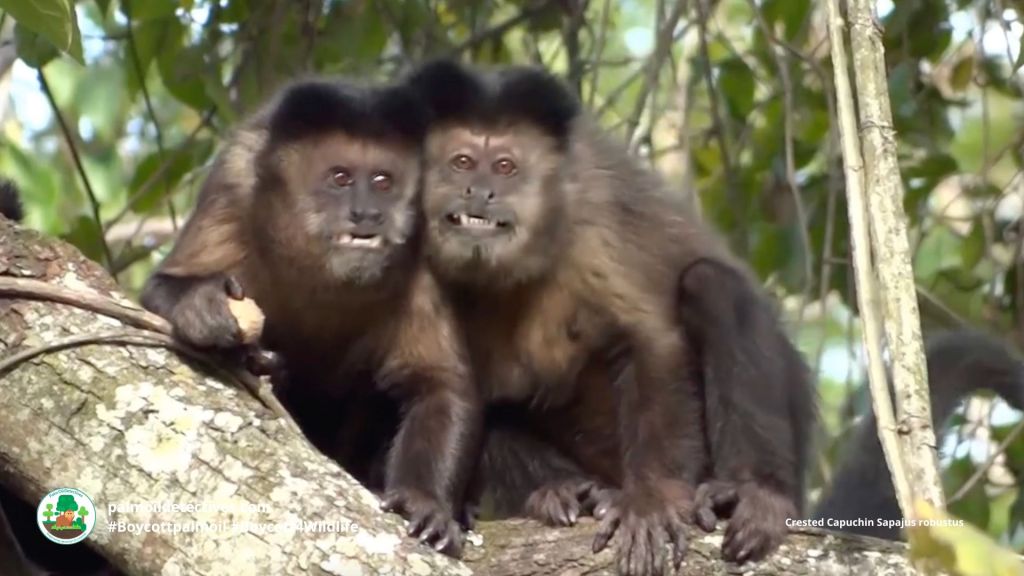
Cheeky Crested #Capuchins are gregarious tool-using #monkeys, #endangered in #Brazil 🇧🇷 from #palmoil 🌴⛔️ meat 🥩🐮⛔️ and soy #deforestation and the illegal #pettrade 🏹 Help save them, when you shop #BoycottPalmOil #Boycott4Wildlife @palmoildetect https://palmoildetectives.com/2021/06/12/crested-capuchin-sapajus-robustus/

Share to BlueSkyShare to Twitter

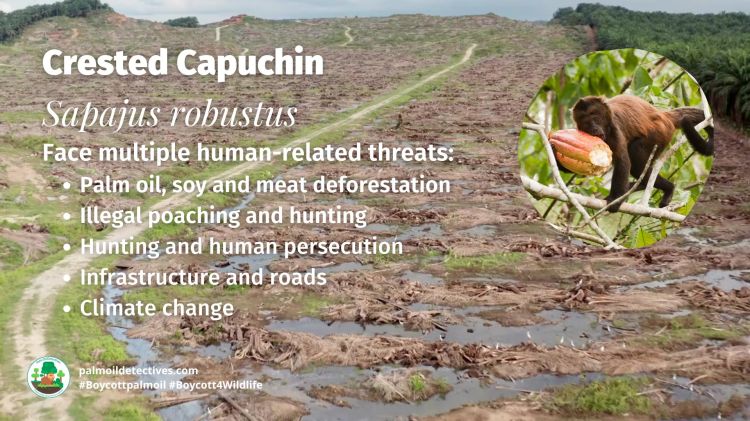
Main threats to Crested Capuchins are agriculture, urban sprawl, deforestation, increasing energy matrix, increasing road matrix habitat fragmentation, habitat reduction, hunting, harvesting and extensive areas of monoculture eucalyptus and pine.

IUCN red list

Appearance and Behaviour

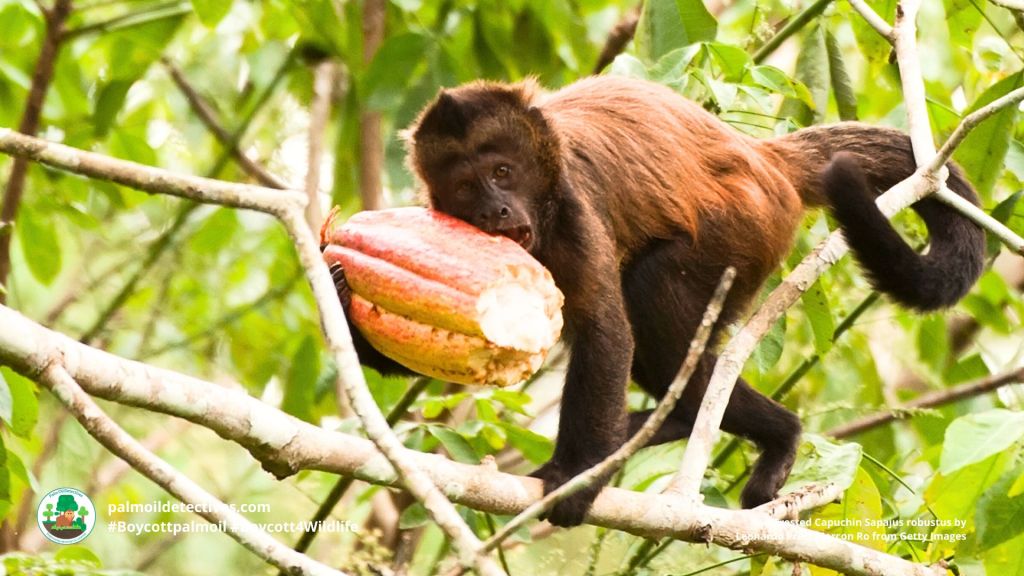
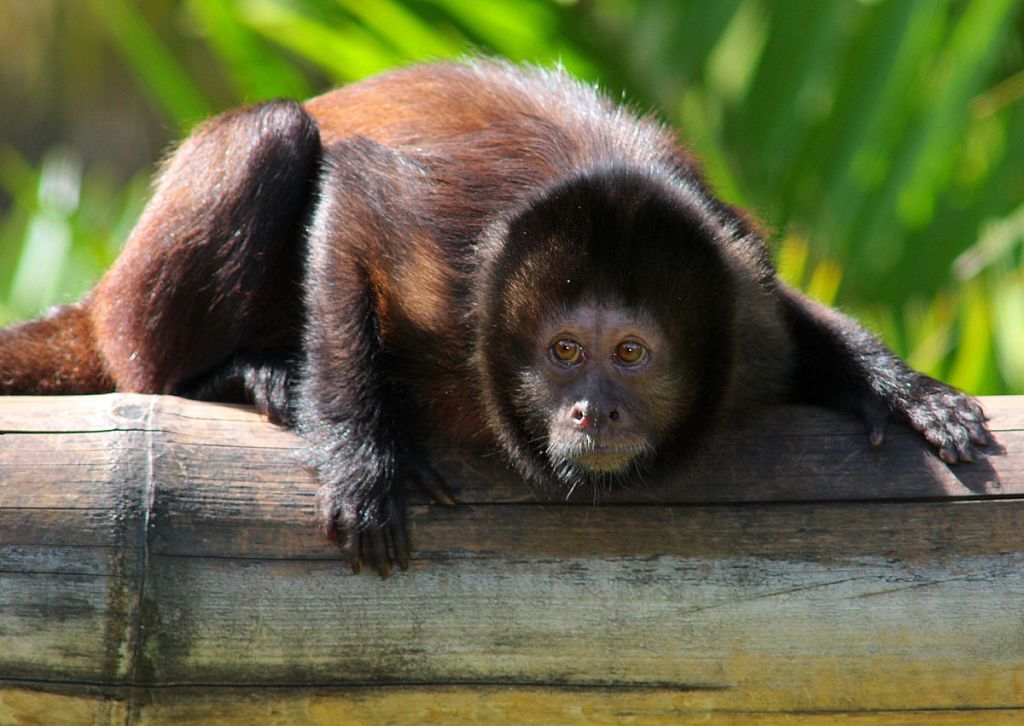
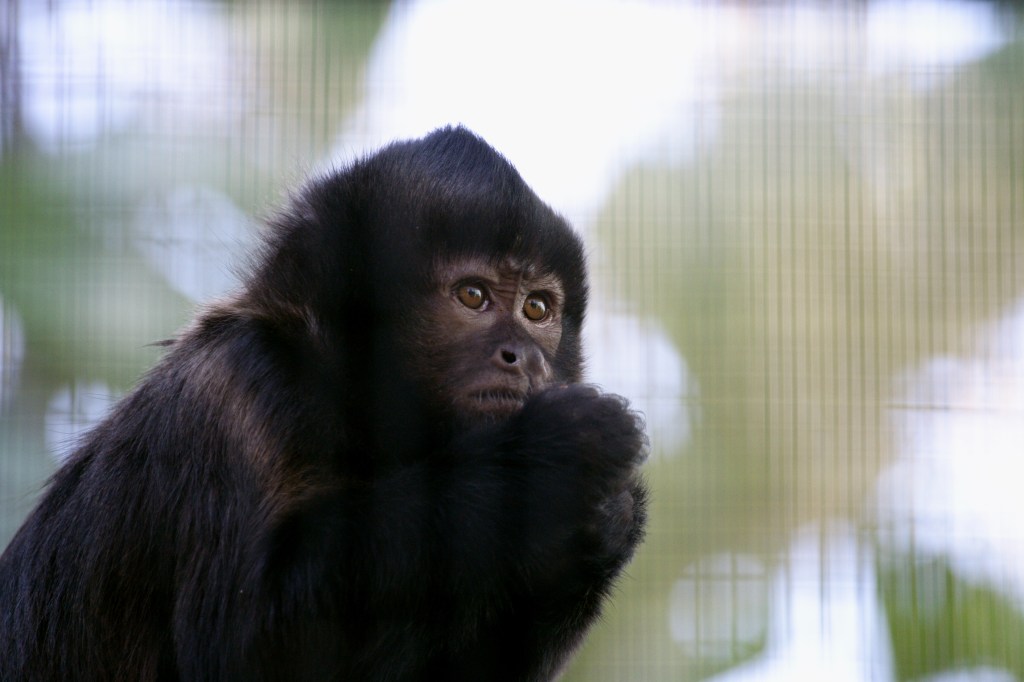
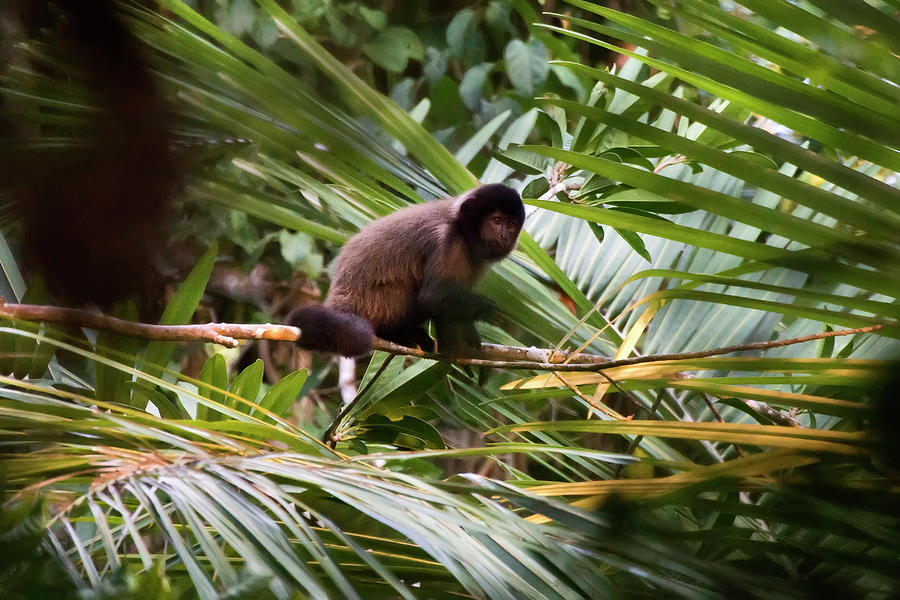
The Crested Capuchin’s most striking feature blazes against the Atlantic forest canopy —a conical crest of brilliant scarlet adorned with a black spot. Their crests may extend around their faces, creating elegant black beards. Their robust bodies measure 33-57 centimetres with tails reaching 40-47 centimetres. Males weigh up to 3.8 kilograms.

These remarkable and gregarious primates reveal intelligence through sophisticated tool use. They employ eleven distinct actions including hammering, probing, and sponging. The social structure of Crested Capuchins features linear hierarchies spanning both sexes, with dominant males commanding respect from highest-ranking females.

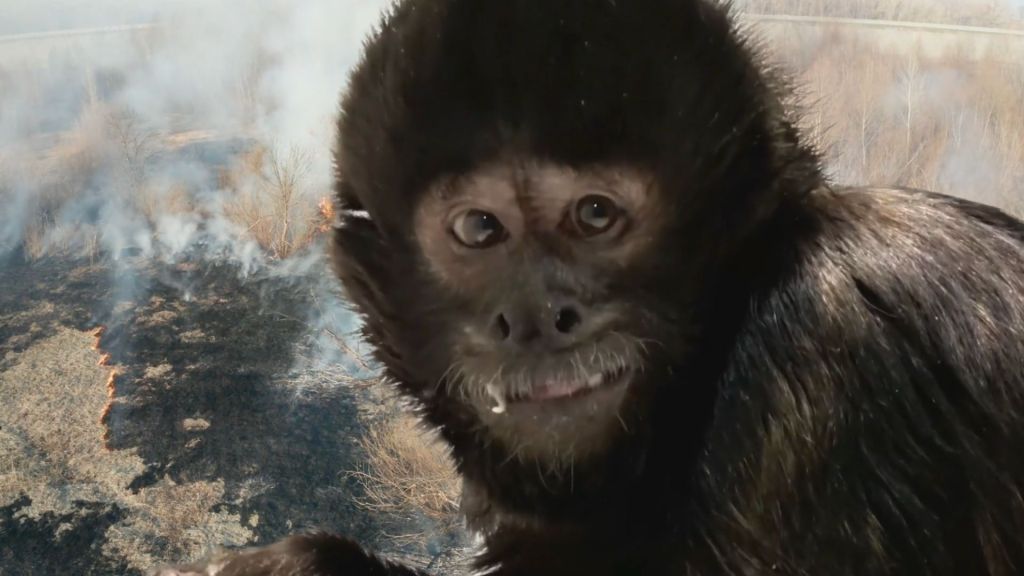
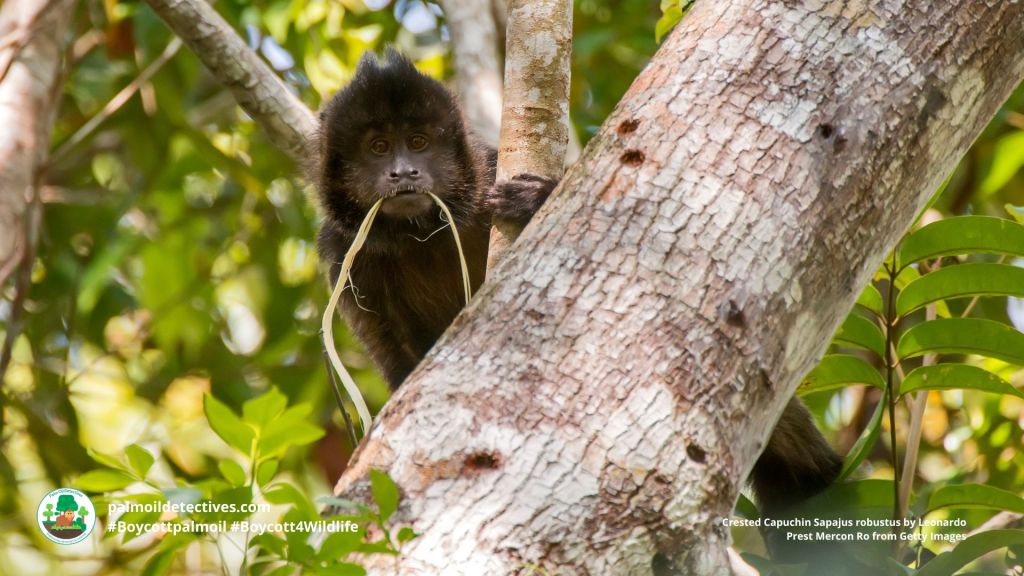
Crested Capuchin Sapajus robustus threatsCrested Capuchin Sapajus robustus by Leonardo Prest Mercon Ro from Getty ImagesCrested Capuchin Sapajus robustusTwo cheeky smiling Crested Capuchin Sapajus robustusCrested Capuchin Sapajus robustus close-up of primate's face while smiling, a burning Amazon backgroundCrested Capuchin Sapajus robustus boycott4wildlifeCrested Capuchin Sapajus robustus by Leonardo Prest Mercon Ro from Getty ImagesCrested Capuchin Sapajus robustus by Leonardo Prest Mercon Ro from Getty ImagesCrested Capuchin Sapajus robustusCrested Capuchin Sapajus robustusCrested Capuchin Sapajus robustus

Diet

Crested capuchins are master foragers. As frugivore-insectivores, they feast on fruits from 56 native species, protein-rich arthropods, tender shoots and leaves, and occasionally small mammals. Their nimble little hands extract seeds from tough-shelled fruits with craftsperson precision. Crested capuchins maintain preferences for wild forest fruits even when exotic options become available, allowing them to maintain home ranges of approximately 120 hectares.

Reproduction and Mating

Groups of capuchins ranging from 12 to 27 individuals create dynamic communities. Males typically disperse from natal groups seeking new territories. Females remain within birth communities, creating matrilineal bonds spanning generations. Dominant males secure priority access to females during breeding seasons. Mothers teach essential foraging skills and social behaviours determining offspring survival prospects.

Geographic Range

Once ranging broadly between the Doce and Jequitinhonha rivers across Espírito Santo, Minas Gerais, and Bahia, crested capuchins now survive primarily in forest fragments. Climate projections predict significant habitat deterioration by 2070. Their extent of occurrence spans greater than 119,000 square kilometres, yet actual occupancy remains unknown as habitat fragments into smaller islands.

Threats

Crested Capuchin Sapajus robustus threats

Cattle ranching, timber, palm oil and soy deforestation

Palm oil plantations strip away multilayered canopy, replacing complex ecosystems with sterile monocultures. Soy cultivation and cattle ranching carve geometric scars across landscapes. Roads slice through forest fragments, creating barriers preventing genetic exchange. Energy infrastructure fragments habitat further. Urban sprawl consumes forest edges with relentless appetite. Pine and eucalyptus plantations replace native forest with fast-growing exotic trees providing neither food nor shelter.

Hunting and illegal wildlife trade

Hunters target crested capuchins for bushmeat near human settlements. The illegal pet trade tears infants from mothers’ arms, condemning them to stress, loneliness, and early death. Young capuchins suffer psychological trauma often proving fatal. Local communities facing economic hardship may turn to hunting as protein sources. Law enforcement struggles to patrol vast fragmented areas.

Climate change

Rising temperatures and shifting weather patterns disrupt seasonal rhythms. Prolonged droughts stress fruit trees, reducing food source abundance. Earlier or delayed fruiting seasons create mismatches between peak food availability and energy demand periods. Extreme weather events caused by climate change destroy habitat and force populations of crested capuchins into marginal areas.

Take Action!

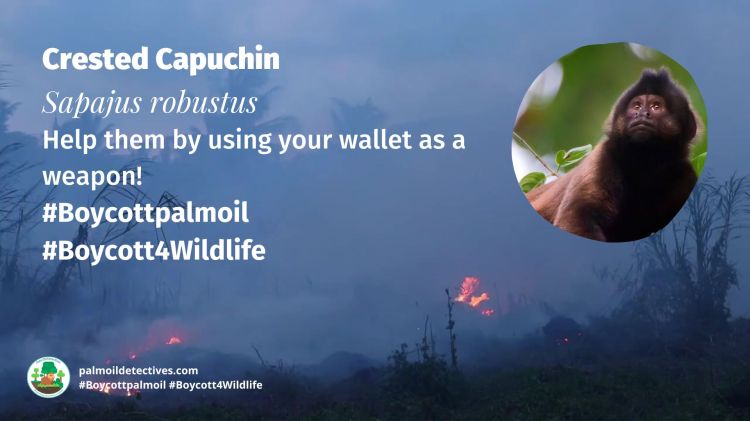
Use your wallet as a weapon and #BoycottPalmOil #Boycott4Wildlife every time you shop. Reject soy-fed meat and adopt a vegan lifestyle protecting wild and farmed animals. Support indigenous-led protection and agroecology. Refuse products containing palm oil and meat, which is driving Atlantic Forest deforestation. #BoycottPalmOil #Boycott4Wildlife and go plant-based every time you shop.

FAQs

What is the current population of crested capuchins?

The total remaining population of Crested Capuchins is estimated at 14,400 individual monkeys based on census data in protected areas. Population densities range from 2.47 sightings per 10 kilometres in protected areas to 0.22 groups per 10 square kilometres in degraded habitats. Groups of capuchins typically consist of 12-15 individuals, though larger assemblages of up to 27 individuals show remarkable fluidity. The species faces ongoing population decline of at least 50% over three generations due to continuing habitat loss.

How long do crested capuchins live?

Related capuchin species typically live 15-25 years in the wild and potentially longer in captivity. Their longevity depends heavily on habitat quality, food availability, and human disturbance levels. Dominant individuals may enjoy better access to resources and greater longevity. However, ongoing deforestation and declining food availability may be reducing average lifespans of Crested Capuchins as individuals face increased stress and greater exposure to human-related mortality factors.

What are the main conservation challenges facing crested capuchins?

The primary challenge is relentless destruction of their Atlantic Forest habitat, with less than 12% of original forest remaining in small, isolated fragments. Palm oil plantations, soy cultivation for livestock feed, and cattle ranching continue converting forest into monocultures. Climate change compounds pressures by altering rainfall patterns, potentially making suitable habitat uninhabitable by 2070. Hunting for bushmeat and illegal pet trade further reduce numbers while disrupting social structures. Their restricted range makes them particularly vulnerable to local extinctions.

What are some interesting and unusual facts about crested capuchins?

Crested capuchins display remarkable intelligence through sophisticated tool use, employing eleven distinct actions including hammering, probing, and sponging. They modify tools for specific tasks and learn from watching companions. Their most distinctive feature is the brilliant scarlet conical crest adorned with a black spot. They show remarkable dietary flexibility, maintaining preferences for wild forest fruits even when exotic cultivated options become available. Their social groups can reach up to 27 individuals with remarkable fluidity, sometimes forming temporary subgroups.

Do crested capuchins make good pets?

Absolutely not. Crested capuchins suffer extreme stress, loneliness, and early death in captivity. These highly social primates have complex needs that cannot be met domestically. The illegal pet trade rips infants from mothers’ arms, causing severe trauma while removing breeding individuals from critically endangered populations. They require sophisticated social interactions, diverse natural foods, and extensive territories. Legal ownership is prohibited under Brazilian law, making possession illegal and unethical.

Further Information

Chiarello, A. G. (1999). Effects of fragmentation of the Atlantic forest on mammal communities in south-eastern Brazil. Biological Conservation, 89(1), 71-82. https://doi.org/10.1016/S0006-3207(98)00130-X

Fragaszy, D. M., Izar, P., Visalberghi, E., Ottoni, E. B., & de Oliveira, M. G. (2004). Wild capuchin monkeys (Cebus libidinosus) use anvils and stone pounding tools. American Journal of Primatology, 64(4), 359-366. https://doi.org/10.1002/ajp.20085

Martins, W. P., de Melo, F. R., Kierulff, M. C. M., Mittermeier, R. A., Lynch Alfaro, J. W., & Jerusalinsky, L. (2021). Sapajus robustus (amended version of 2019 assessment). The IUCN Red List of Threatened Species 2021: e.T42697A192592444. https://dx.doi.org/10.2305/IUCN.UK.2021-1.RLTS.T42697A192592444.en

Santos, P. M., Bocchiglieri, A., & Chiarello, A. G. (2023). Impacts of climate change and habitat loss on the distribution of the endangered crested capuchin monkey (Sapajus robustus). American Journal of Primatology, 85(11), e23548. https://doi.org/10.1002/ajp.23548

Steinberg, D. L., Lynch, J. W., & Cartmill, E. A. (2022). A robust tool kit: First report of tool use in captive crested capuchin monkeys (Sapajus robustus). American Journal of Primatology, 84(11), e23428. https://doi.org/10.1002/ajp.23428

Crested Capuchin Sapajus robustus boycott4wildlife

You can support this beautiful animal

There are no known conservation activities for this animal. Share out this post to social media and join the #BoycottPalmOil #Boycott4Wildlife on social media to raise awareness

Further Information

Donate to help orphaned capuchins that are rescued from traffickers. At Merazonia Wildlife Sanctuary

ICUN endangered logo

Martins, W.P., de Melo, F.R., Kierulff, M.C.M., Mittermeier, R.A., Lynch Alfaro, J.W. & Jerusalinsky, L. 2021. Sapajus robustus (amended version of 2019 assessment). The IUCN Red List of Threatened Species 2021: e.T42697A192592444. https://dx.doi.org/10.2305/IUCN.UK.2021-1.RLTS.T42697A192592444.en. Downloaded on 06 June 2021.

Wikipedia

Reduced range of the endangered crested capuchin monkey (Sapajus robustus) and a possible hybrid zone with Sapajus nigritus

Crested Capuchin Sapajus robustus


Contribute to palm oil detectives - black rhino in profile

How can I help the #Boycott4Wildlife?


Take Action in Five Ways

1. Join the #Boycott4Wildlife on social media and subscribe to stay in the loop: Share posts from this website to your own network on Twitter, Mastadon, Instagram, Facebook and Youtube using the hashtags #Boycottpalmoil #Boycott4Wildlife.

Enter your email address

Sign Up

Join 3,529 other subscribers

2. Contribute stories: Academics, conservationists, scientists, indigenous rights advocates and animal rights advocates working to expose the corruption of the palm oil industry or to save animals can contribute stories to the website.

Wildlife Artist Juanchi Pérez

Wildlife Artist Juanchi Pérez

Read more

Mel Lumby: Dedicated Devotee to Borneo’s Living Beings

Mel Lumby: Dedicated Devotee to Borneo’s Living Beings

Read more

Anthropologist and Author Dr Sophie Chao

Anthropologist and Author Dr Sophie Chao

Read more

Health Physician Dr Evan Allen

Health Physician Dr Evan Allen

Read more

The World’s Most Loved Cup: A Social, Ethical & Environmental History of Coffee by Aviary Doert

The World’s Most Loved Cup: A Social, Ethical & Environmental History of Coffee by Aviary Doert

Read more

How do we stop the world’s ecosystems from going into a death spiral? A #SteadyState Economy

How do we stop the world’s ecosystems from going into a death spiral? A #SteadyState Economy

Read more

3. Supermarket sleuthing: Next time you’re in the supermarket, take photos of products containing palm oil. Share these to social media along with the hashtags to call out the greenwashing and ecocide of the brands who use palm oil. You can also take photos of palm oil free products and congratulate brands when they go palm oil free.

https://twitter.com/CuriousApe4/status/1526136783557529600?s=20

https://twitter.com/PhillDixon1/status/1749010345555788144?s=20

https://twitter.com/mugabe139/status/1678027567977078784?s=20

4. Take to the streets: Get in touch with Palm Oil Detectives to find out more.

5. Donate: Make a one-off or monthly donation to Palm Oil Detectives as a way of saying thank you and to help pay for ongoing running costs of the website and social media campaigns. Donate here

Pledge your support

#Boycott4wildlife #BoycottPalmOil #Brazil #bushmeat #capuchin #Capuchins #climateChange #climatechange #CrestedCapuchinSapajusRobustus #deforestation #endangered #EndangeredSpecies #hunting #illegalPetTrade #insectivore #meatAgriculture #meatAndSoyDeforestationInBrazil #monkey #monkeys #palmoil #petTrade #pettrade #Primate #primates #SouthAmericaSpeciesEndangeredByPalmOilDeforestation #vegan

Stop Gambling Our Future for Meat Deforestation

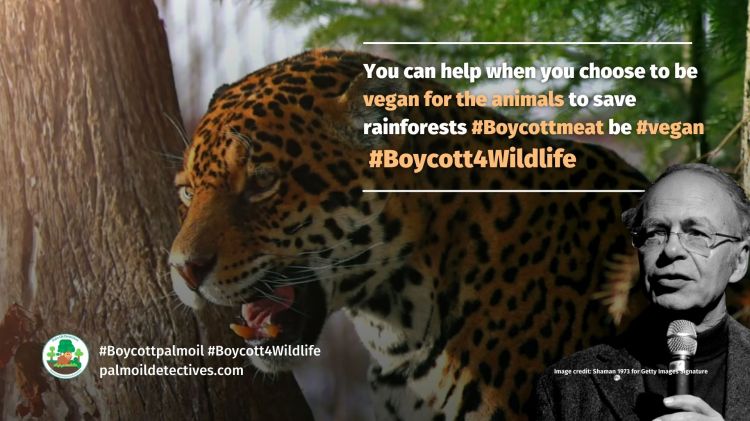
Renowned animal rights ethicist philosopher Peter Singer asserts that our dietary choices, particularly our consumption of meat and dairy, are jeopardising the Earth’s future. These industries contribute significantly to environmental degradation, deforestation, and greenhouse gas emissions, intensifying the impacts of climate change. By indulging in hamburgers and other meat-based products, we are not only compromising our health but also the wellbeing of our planet. For a more sustainable and compassionate future, consider boycotting meat and dairy. Choose to be vegan for the animals and to save our planet #Boycottmeat be #vegan #Boycott4Wildlife

https://youtu.be/ge4S2oHF5oY

Eating #meat 🥩 and #dairy 🥛is jeopardising the earth’s future says renowned #animalrights advocate Peter Singer. If you want to fight #climatechange 💚🌳🙏 be #vegan for the #animals 🐵 🦏 and planet 🌏 #Boycottmeat #Boycott4Wildlife @palmoildetect https://palmoildetectives.com/2024/05/05/peter-singer-we-are-gambling-with-the-future-of-our-planet-for-the-sake-of-hamburgers/

Share to BlueSky Share to Twitter

Famous #animalrights ethicist Peter Singer links eating of #dairy and #meat to carbon emissions. If you want to fight #climatechange you should be #vegan! #Boycottmeat and dairy for the #animals 🐷🐍🐘💚 #Boycott4Wildlife @palmoildetect https://palmoildetectives.com/2024/05/05/peter-singer-we-are-gambling-with-the-future-of-our-planet-for-the-sake-of-hamburgers/

Share to BlueSkyShare to Twitter

Originally published by The Conversation June 15, 2023 and republished here under the Creative Commons Licence, read original.


Peter Singer, Princeton University

I wasn’t aware of climate change until the 1980s — hardly anyone was — and even when we recognised the dire threat that burning fossil fuels posed, it took time for the role of animal production in warming the planet to be understood.

Today, though, the fact that eating plants will reduce your greenhouse gas emissions is one of the most important and influential reasons for cutting down on animal products and, for those willing to go all the way, becoming vegan.

Singer - We are gambling with the future of our planet for hamburgers

A few years ago, eating locally — eating only food produced within a defined radius of your home — became the thing for environmentally conscious people to do, to such an extent that “locavore” became the Oxford English Dictionary’s “word of the year” for 2007.

If you enjoy getting to know and support your local farmers, of course, eating locally makes sense. But if your aim is, as many local eaters said, to reduce greenhouse gas emissions, you would do much better by thinking about what you are eating, rather than where it comes from. That’s because transport makes up only a tiny share of the greenhouse gas emissions from the production and distribution of food.

With beef, for example, transport is only 0.5% of total emissions. So if you eat local beef you will still be responsible for 99.5% of the greenhouse gas emissions your food would have caused if you had eaten beef transported a long distance. On the other hand, if you choose peas you will be responsible for only about 2% of the greenhouse gas emissions from producing a similar quantity of local beef.

And although beef is the worst food for emitting greenhouse gases, a broader study of the carbon footprints of food across the European Union showed that meat, dairy and eggs accounted for 83% of emissions, and transport for only 6%.

More generally, plant foods typically have far lower greenhouse gas emissions than any animal foods, whether we are comparing equivalent quantities of calories or of protein. Beef, for example, emits 192 times as much carbon dioxide equivalent per gram of protein as nuts, and while these are at the extremes of the protein foods, eggs, the animal food with the lowest emissions per gram of protein, still has, per gram of protein, more than twice the emissions of tofu.

Singer - We are gambling with the future of our planet for hamburgers

Animal foods do even more poorly when compared with plant foods in terms of calories produced. Beef emits 520 times as much per calorie as nuts, and eggs, again the best-performing animal product, emit five times as much per calorie as potatoes.

Favourable as these figures are to plant foods, they leave out something that tilts the balance even more strongly against animal foods in the effort to avoid catastrophic climate change: the “carbon opportunity cost” of the vast area of land used for grazing animals and the smaller, but still very large, area used to grow crops that are then fed — wastefully, as we have seen — to confined animals.

Because we use this land for animals we eat, it cannot be used to restore native ecosystems, including forests, which would safely remove huge amounts of carbon from the atmosphere. One study has found that a shift to plant-based eating would free up so much land for this purpose that seizing the opportunity would give us a 66% probability of achieving something that most observers believe we have missed our chance of achieving: limiting warming to 1.5℃.

Singer - We are gambling with the future of our planet for hamburgers

Another study has suggested that a rapid phaseout of animal agriculture would enable us to stabilise greenhouse gases for the next 30 years and offset more than two-thirds of all carbon dioxide emissions this century. According to the authors of this study:

The magnitude and rapidity of these potential effects should place the reduction or elimination of animal agriculture at the forefront of strategies for averting disastrous climate change.

Climate change is undoubtedly the biggest environmental issue facing us today, but it is not the only one. If we look at environmental issues more broadly, we find further reasons for preferring a plant-based diet.

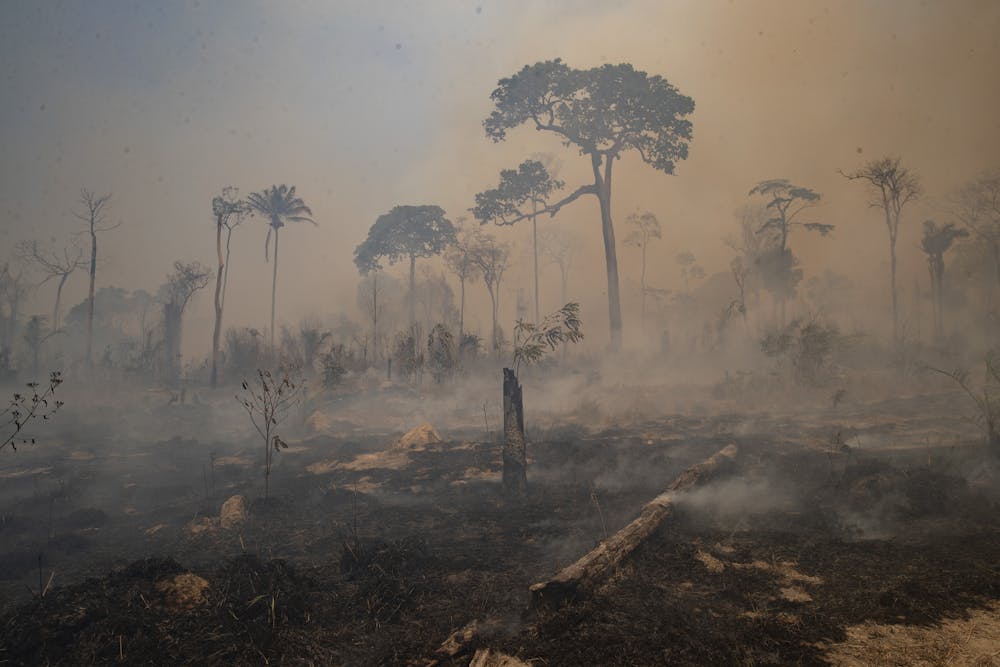
Smoky landscape photo, fire consumed land recently deforested by cattle farmers near Novo Progresso, Para state, Brazil.Fires in the Amazon and linked to cattle ranching. Andre Penner/AP Photo

The clearing and burning of the Amazon rainforest means not only the release of carbon from the trees and other vegetation into the atmosphere, but also the likely extinction of many plant and animal species that are still unrecorded.

This destruction is driven largely by the prodigious appetite of the affluent nations for meat, which makes it more profitable to clear the forest than to preserve it for the indigenous people living there, establish an ecotourism industry, protect the area’s biodiversity, or keep the carbon locked up in the forest. We are, quite literally, gambling with the future of our planet for the sake of hamburgers.

Joseph Poore, of the University of Oxford, led a study that consolidated a huge amount of environmental data on 38,700 farms and 1,600 food processors in 119 countries and covered 40 different food products. Poore summarised the upshot of all this research thus:

A vegan diet is probably the single biggest way to reduce your impact on planet Earth, not just greenhouse gases, but global acidification, eutrophication, land use and water use. It is far bigger than cutting down on your flights or buying an electric car, as these only cut greenhouse gas emissions.

Poore doesn’t see “sustainable” animal agriculture as the solution:

Really it is animal products that are responsible for so much of this. Avoiding consumption of animal products delivers far better environmental benefits than trying to purchase sustainable meat and dairy.

Those who claim to care about the wellbeing of human beings and the preservation of our climate and our environment should become vegans for those reasons alone.

Doing so would reduce greenhouse gas emissions and other forms of pollution, save water and energy, free vast tracts of land for reforestation, and eliminate the most significant incentive for clearing the Amazon and other forests.


This is an edited extract from Animal Liberation Now by Peter Singer (Penguin Random House).

Peter Singer, Professor of Bioethics in the Center for Human Values, Princeton University

This article is republished from The Conversation under a Creative Commons license. Read the original article.

Originally published by The Conversation June 15, 2023 and republished here under the Creative Commons Licence, read original.

ENDS


Read more about human health, veganism, nutrition and why you should #Boycottpalmoil, #Boycottmeat for your own and the planet’s health

Climate Change Driving Mass Bird Deaths in the Amazon

Climate Change Driving Mass Bird Deaths in the Amazon

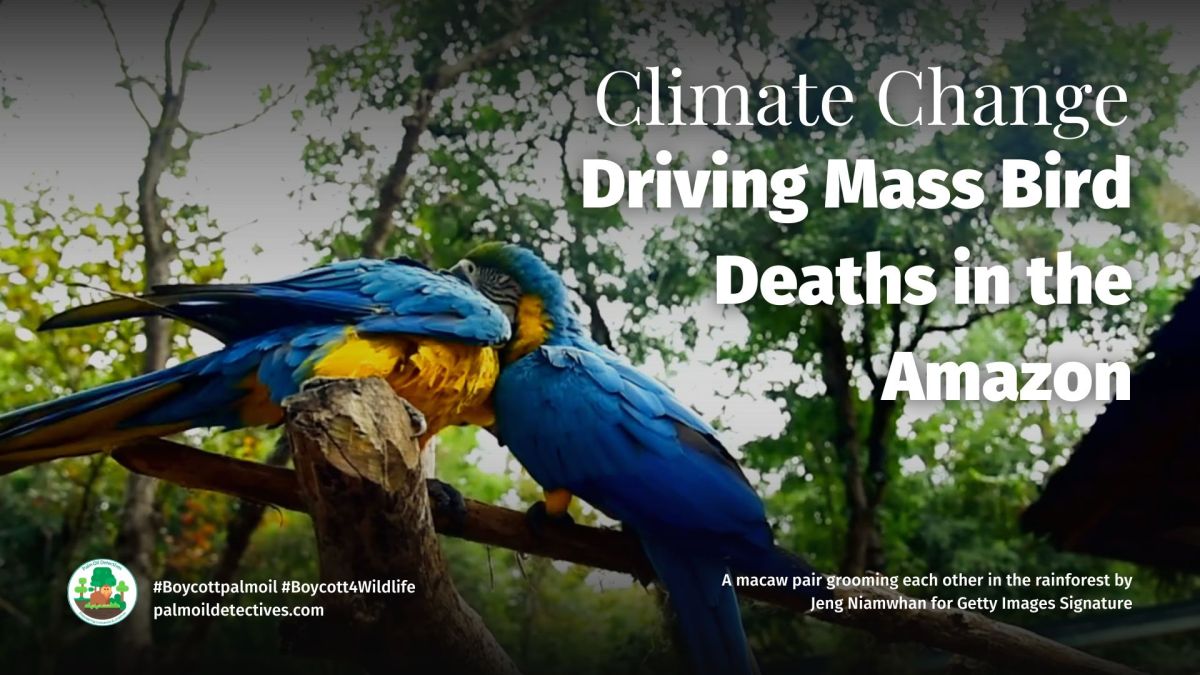
A recent #study has revealed that even in the most isolated parts of the #Amazon, bird #populations are collapsing due to #climatechange. Research published in Science Advances found that a 1°C increase in…

Read more

Declining primate numbers are threatening Brazil’s Atlantic forest

Declining primate numbers are threatening Brazil’s Atlantic forest

#Brazil’s Atlantic Forest, one of the most biodiverse ecosystems in the world, is facing severe threats due to deforestation and habitat fragmentation. This has led to a sharp decline in primate species, including…

Read more

Blue-streaked Lory Eos reticulata

Blue-streaked Lory Eos reticulata

Brilliantly coloured and full of energy, the Blue-streaked Lory (Eos reticulata) is a striking and unique #parrot living in the forests of the Banda Sea Islands, #Indonesia. Their scarlet plumage is decorated with…

Read more

Blonde Capuchin Sapajus flavius

Blonde Capuchin Sapajus flavius

The blonde #capuchin (Sapajus flavius) is an enigmatic and critically endangered #primate found in the northeastern forests of Brazil. With their striking golden-yellow fur and intelligent, expressive faces, these capuchins are among the…

Read more

Deforestation Devastates Tesso Nilo National Park’s Endangered Creatures

Deforestation Devastates Tesso Nilo National Park’s Endangered Creatures

Tesso Nilo National Park in #Sumatra, #Indonesia, has lost 78% of its primary forest between 2009 and 2023, primarily due to #palmoil plantations. This #deforestation threatens the habitat of critically endangered species like…

Read more

Load more posts

Something went wrong. Please refresh the page and/or try again.


Take Action in Five Ways

1. Join the #Boycott4Wildlife on social media and subscribe to stay in the loop: Share posts from this website to your own network on Twitter, Mastadon, Instagram, Facebook and Youtube using the hashtags #Boycottpalmoil #Boycott4Wildlife.

Enter your email address

Sign Up

Join 3,529 other subscribers

2. Contribute stories: Academics, conservationists, scientists, indigenous rights advocates and animal rights advocates working to expose the corruption of the palm oil industry or to save animals can contribute stories to the website.

Wildlife Artist Juanchi Pérez

Wildlife Artist Juanchi Pérez

Read more

Mel Lumby: Dedicated Devotee to Borneo’s Living Beings

Mel Lumby: Dedicated Devotee to Borneo’s Living Beings

Read more

Anthropologist and Author Dr Sophie Chao

Anthropologist and Author Dr Sophie Chao

Read more

Health Physician Dr Evan Allen

Health Physician Dr Evan Allen

Read more

The World’s Most Loved Cup: A Social, Ethical & Environmental History of Coffee by Aviary Doert

The World’s Most Loved Cup: A Social, Ethical & Environmental History of Coffee by Aviary Doert

Read more

How do we stop the world’s ecosystems from going into a death spiral? A #SteadyState Economy

How do we stop the world’s ecosystems from going into a death spiral? A #SteadyState Economy

Read more

3. Supermarket sleuthing: Next time you’re in the supermarket, take photos of products containing palm oil. Share these to social media along with the hashtags to call out the greenwashing and ecocide of the brands who use palm oil. You can also take photos of palm oil free products and congratulate brands when they go palm oil free.

https://twitter.com/CuriousApe4/status/1526136783557529600?s=20

https://twitter.com/PhillDixon1/status/1749010345555788144?s=20

https://twitter.com/mugabe139/status/1678027567977078784?s=20

4. Take to the streets: Get in touch with Palm Oil Detectives to find out more.

5. Donate: Make a one-off or monthly donation to Palm Oil Detectives as a way of saying thank you and to help pay for ongoing running costs of the website and social media campaigns. Donate here

Pledge your support

#animalRights #animalrights #animals #BoycottMeat #BoycottPalmOil #Boycott4wildlife #BoycottMeat #BoycottPalmOil #climateChange #climatechange #dairy #deforestation #diet #ethics #meat #nutrition #PalmOil #palmOilDeforestation #PeterSinger #plantBasedDiet #saturatedFats #vegan #veganism

View (PDF)

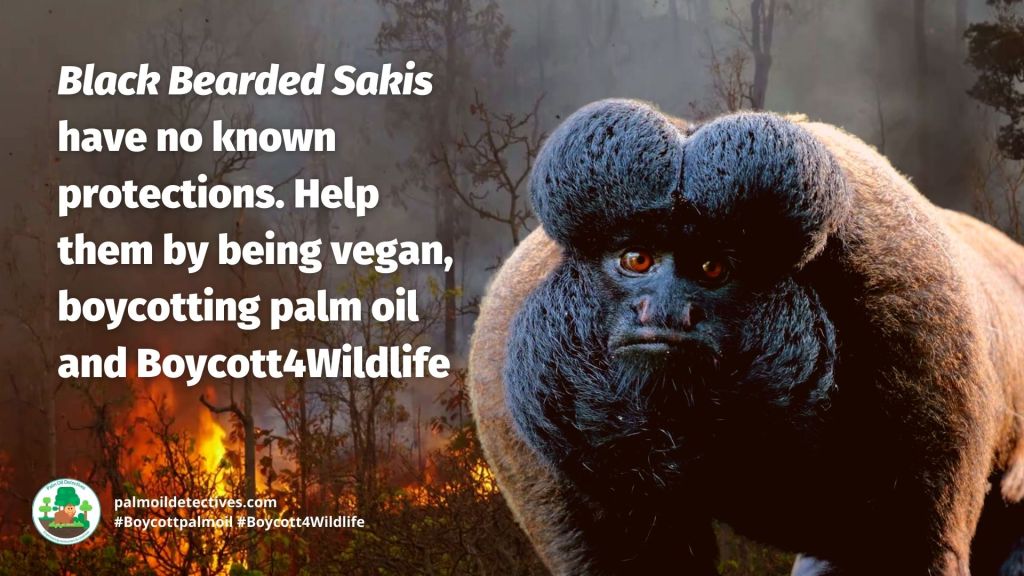
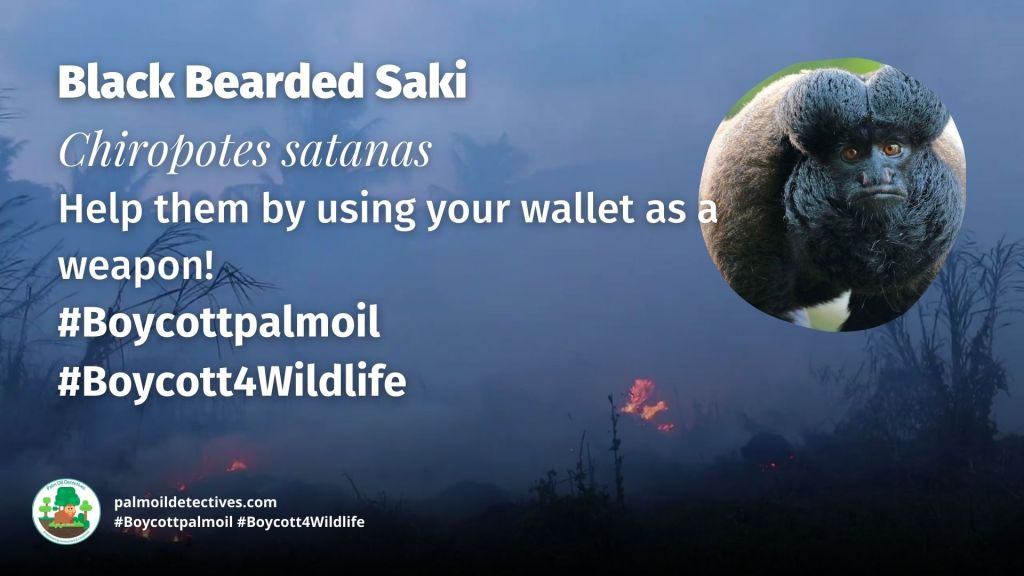
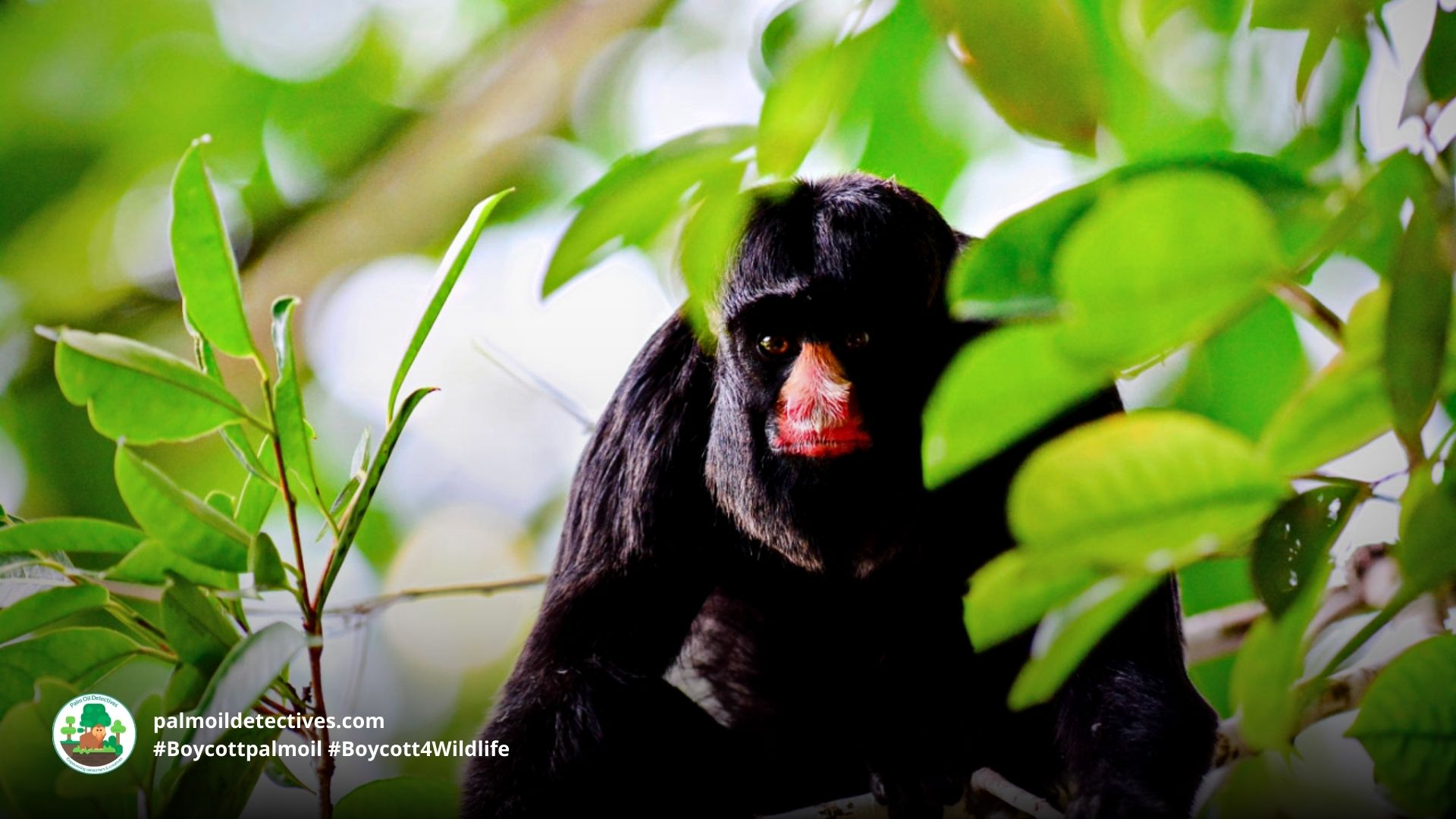
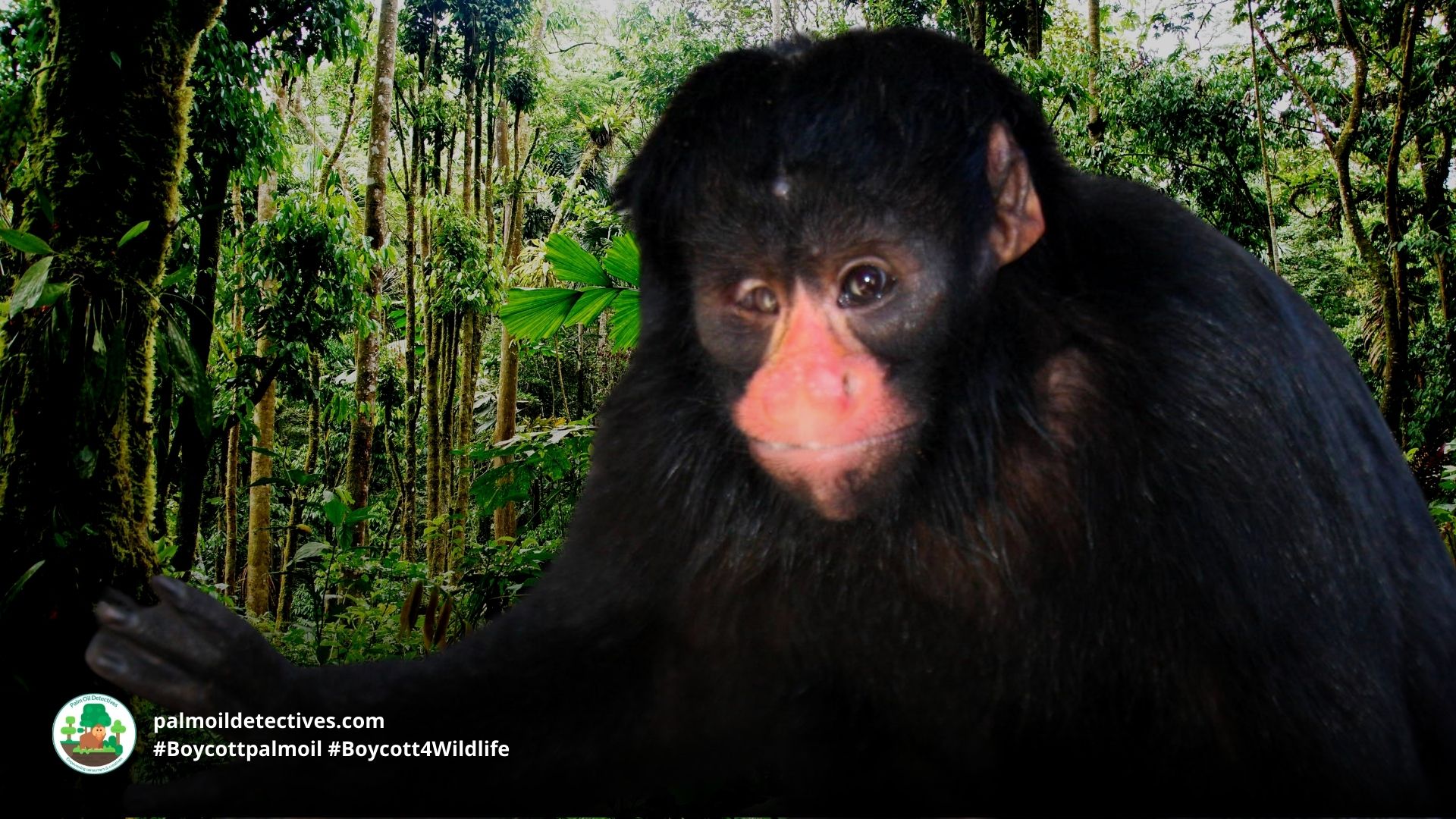
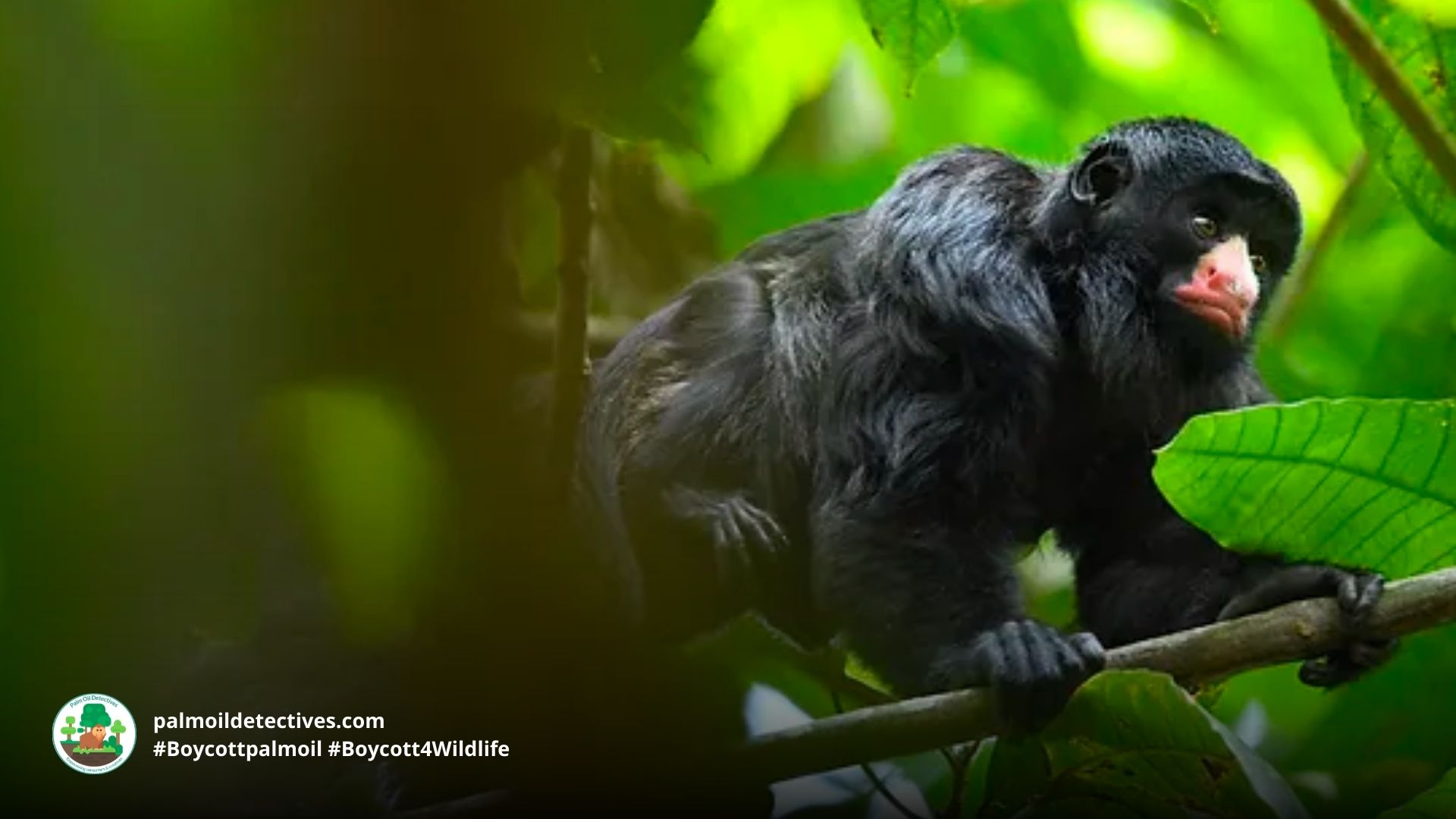
Black Bearded Saki Chiropotes satanas

Black Bearded Saki Chiropotes satanas
Red List Status: Endangered

Locations: North-eastern Amazon, Brazil (specifically from the Tocantins River in Pará east to around the Grajaú River in Maranhão)

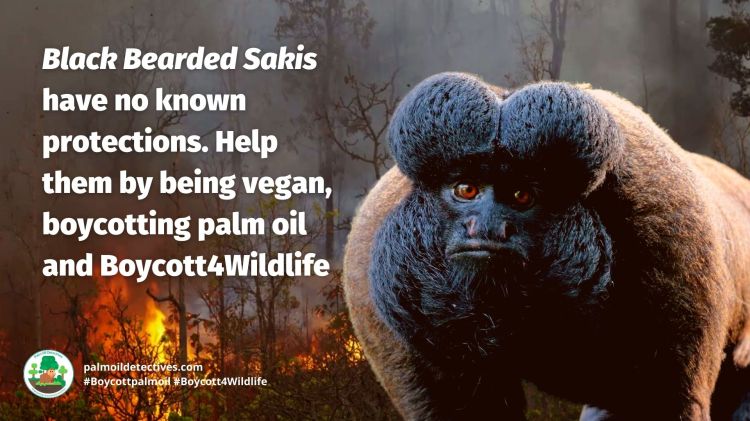
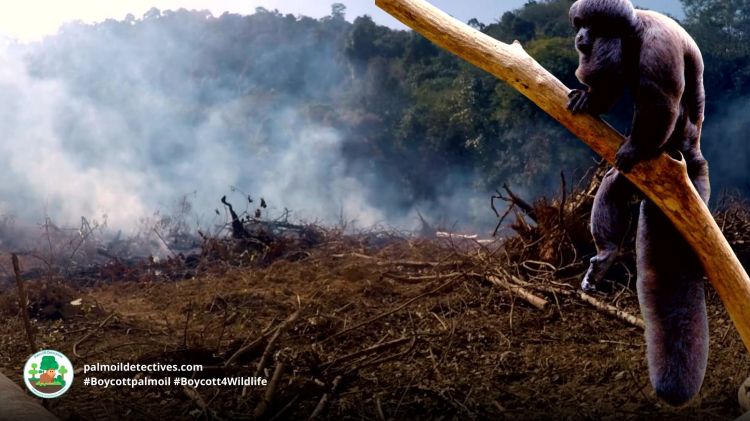
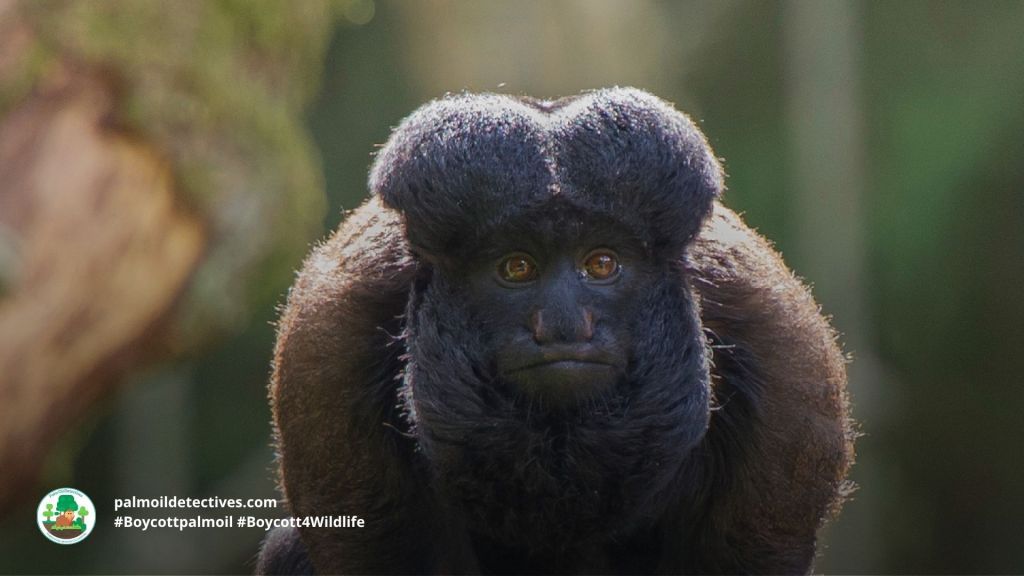
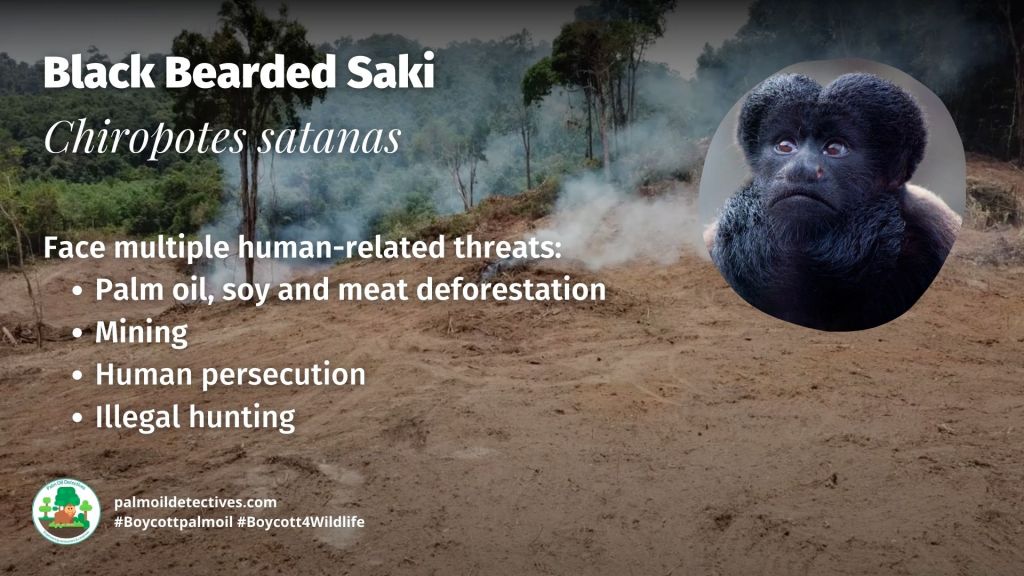
Beneath the towering canopy of the Amazon’s north-eastern forests, the Black Bearded Saki moves with quiet purpose, their distinctive shaggy beard and robust body a testament to their resilience in a world under siege. The air is thick with the scent of damp earth and the distant calls of unseen creatures, but the forest is changing—#roads, #dams, and #agriculture are carving scars across the landscape, fragmenting the Black Bearded Saki’s ancestral home. The black bearded saki’s survival is threatened by relentless deforestation and hunting, their fate bound to the fate of the forest—fight for their survival every time you shop #BoycottPalmOil #Boycott4Wildlife.

https://youtu.be/Cjh19F9Ux9o

Black Bearded #Sakis are #endangered large #monkeys 🐒 endemic to #Brazil 🇧🇷 #SouthAmerica they are #endangered by #timber #palmoil #hydroelectric dam #deforestation. Help save them and #Boycottpalmoil 🌴🩸🔥🙊⛔️ #Boycott4Wildlife @palmoildetect https://palmoildetectives.com/2021/08/28/black-bearded-saki-chiropotes-satanas/

Share to BlueSkyShare to Twitter

Appearance and Behaviour

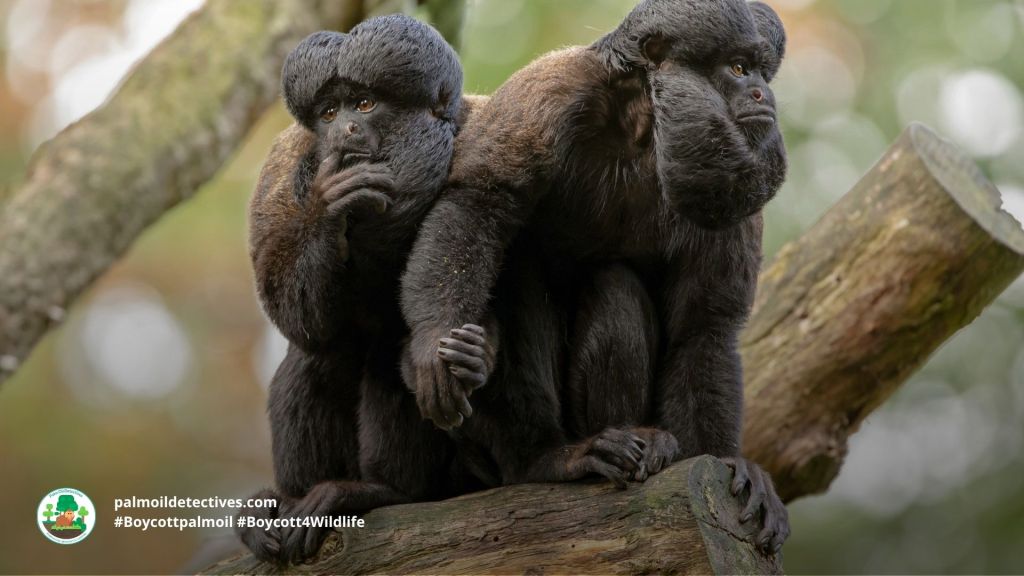
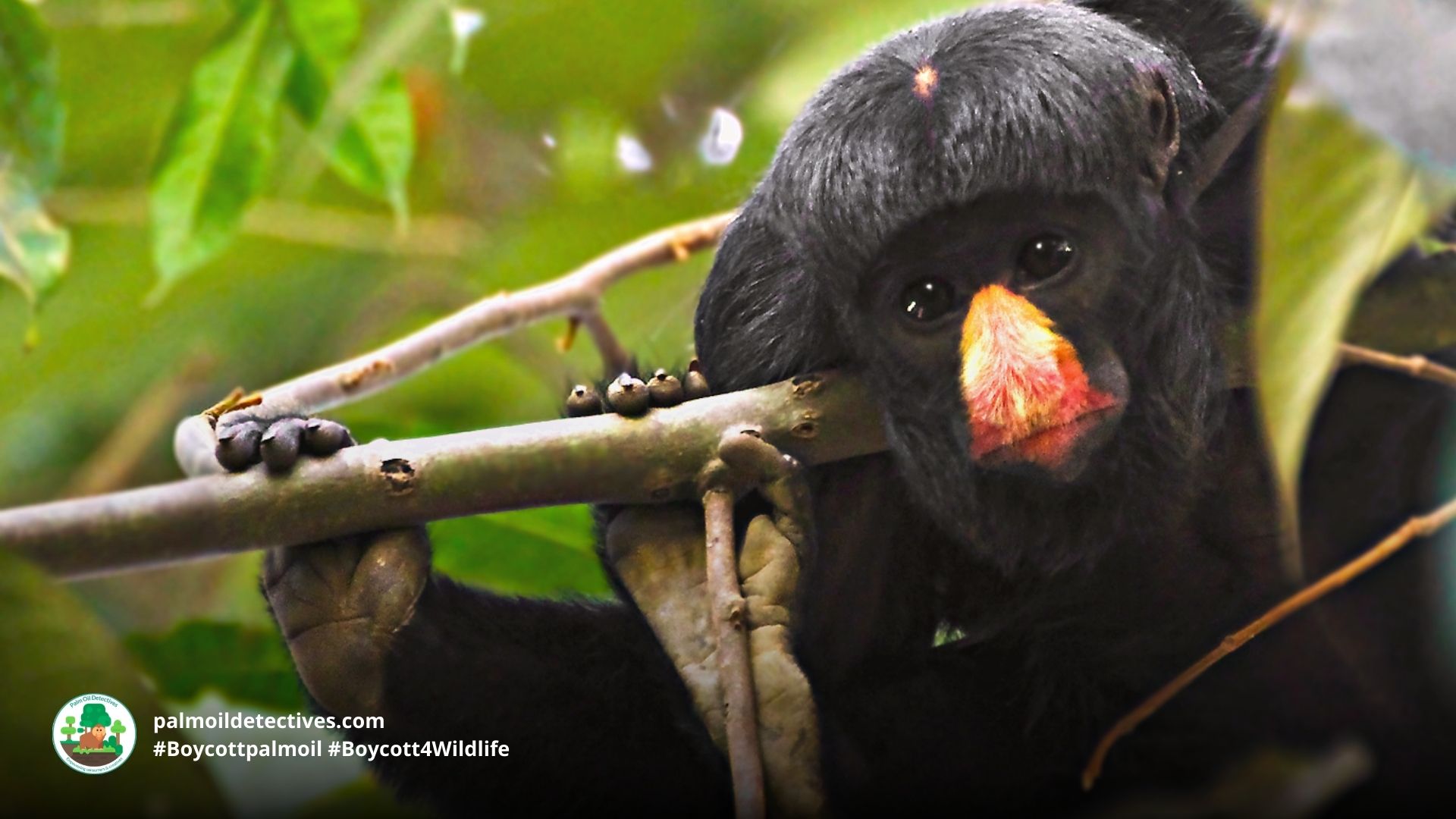
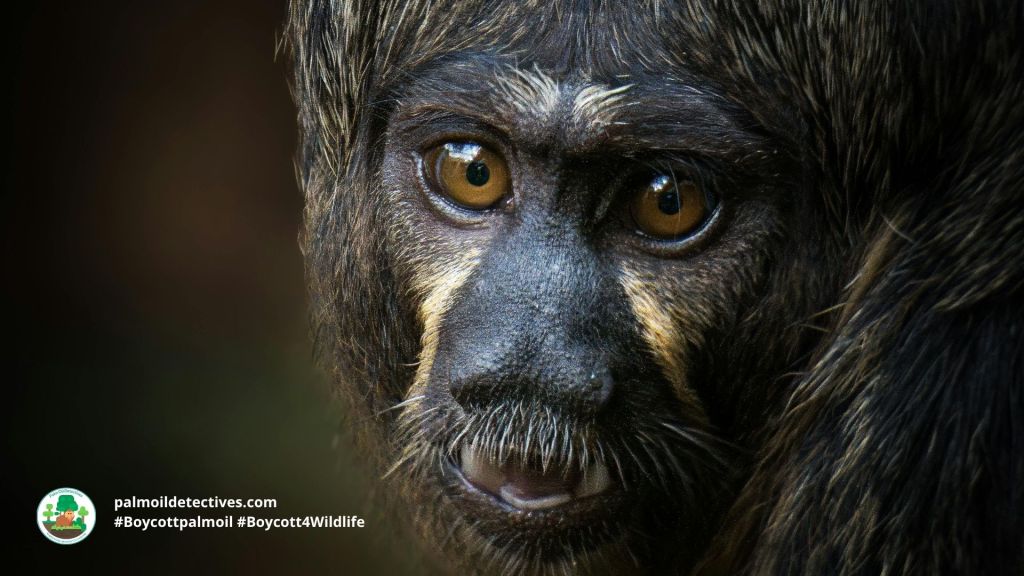
Black bearded sakis are medium-sized primates, their bodies draped in thick, dark fur and their faces framed by a distinctive, flowing beard. Adults typically measure around 50 centimetres in length, with a tail nearly as long as their body, and weigh between 2.5 and 3.5 kilograms. Their robust build and strong limbs allow them to move with surprising agility through the upper canopy, where they spend most of their lives. The black bearded saki’s most remarkable feature is their powerful jaw and specialised teeth, which enable them to crack open the hard shells of unripe fruits to reach the nutritious seeds inside. This adaptation makes them one of the most efficient seed predators and seed dispersers in the Amazon, and their foraging habits play a vital role in shaping the forest ecosystem.

Black bearded sakis live in groups of up to 40 individuals, though smaller groups are more common. They are highly social, with strong bonds between group members, and communicate through a variety of vocalisations, including chirps, whistles, and alarm calls. Their days are spent foraging, resting, and moving through the canopy, rarely descending to the forest floor. The black bearded saki’s presence is often marked by the sound of falling fruit and the rustle of leaves as they leap from branch to branch.

Black Bearded Saki Chiropotes satanasBlack Bearded Saki Chiropotes satanasBlack Bearded Saki Chiropotes satanasBlack Bearded Saki Chiropotes satanasBlack Bearded Saki Chiropotes satanasBlack Bearded Saki Chiropotes satanasBlack Bearded Saki Chiropotes satanas pairBlack Bearded Saki Chiropotes satanas boycott palm oil Black Bearded Saki Chiropotes satanas threats Black Bearded Saki Chiropotes satanasBlack Bearded Saki Chiropotes satanas close-up of faceBlack Bearded Saki Chiropotes satanas close up
Threats

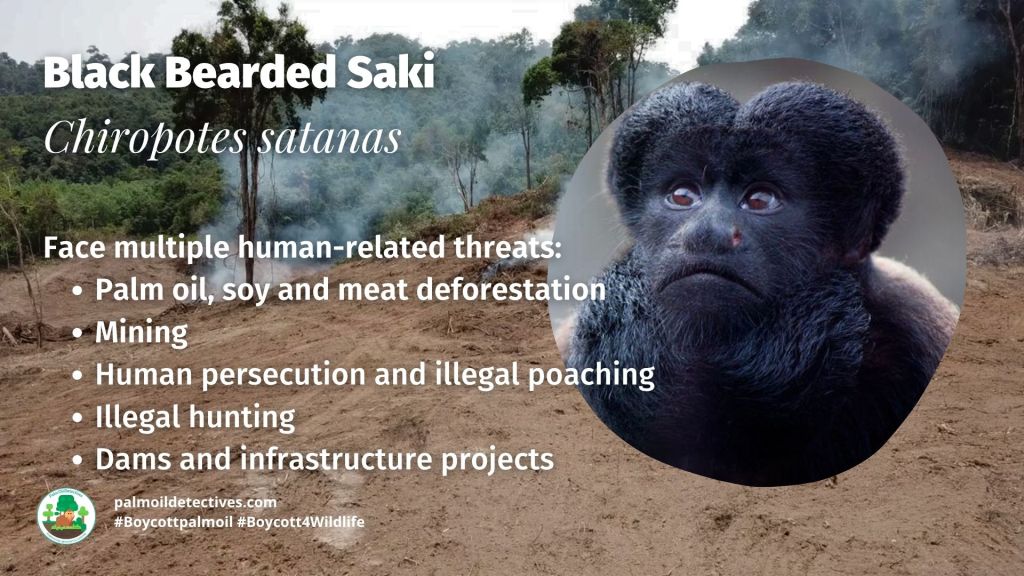
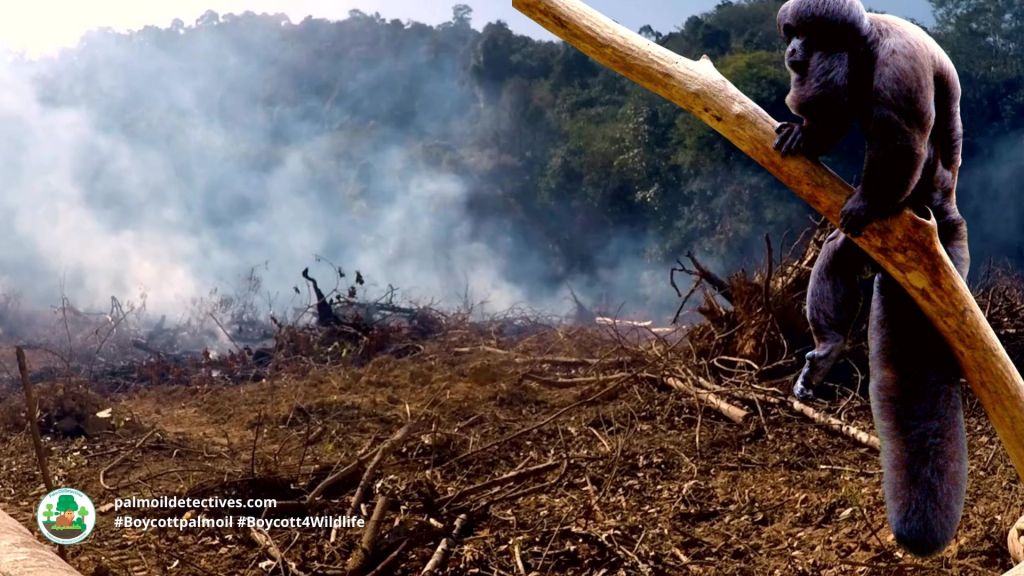
The greatest risks for the future survival of the Black Bearded Saki, also known as the Black Cuxiú are the loss and fragmentation of their habitat and hunting pressure.

IUCN Red list

Palm oil, meat, and soy deforestation

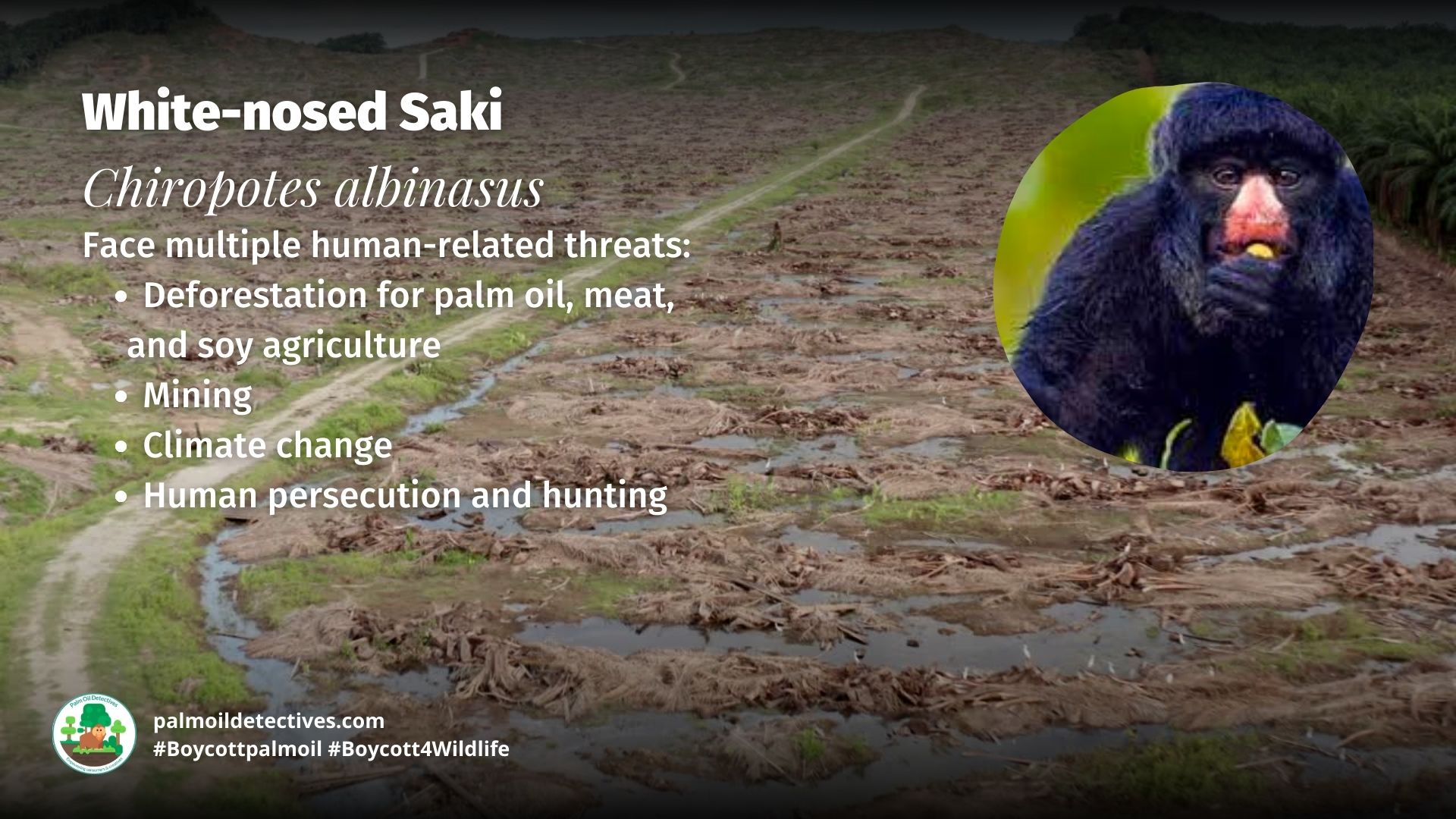
The black bearded saki is classified as Endangered on the Red List, with the loss and fragmentation of their forest habitat the primary threat to their survival. In the north-eastern Amazon, large-scale infrastructure projects—such as highways and the Tucurúi Dam—have destroyed vast tracts of forest, while smaller-scale logging and agriculture continue to fragment the remaining habitat. The forest, once a living, breathing entity, is being replaced by roads, fields, and settlements, leaving only isolated patches where the black bearded saki can survive. This fragmentation isolates populations, reduces genetic diversity, and increases the risk of disease and local extinction. The black bearded saki’s ability to adapt to habitat loss is limited, and their long-term survival depends on the protection and restoration of connected forest landscapes.

Hunting and poaching

Hunting for bushmeat is a persistent threat to the black bearded saki, with individuals targeted for their meat and, in some cases, their tails, which are used as dusters. The influx of people into previously uninhabited areas of the Amazon has increased hunting pressure, and the loss of habitat makes sakis more vulnerable to capture. Hunting disrupts social groups, reduces population numbers, and threatens the genetic health of remaining populations. The black bearded saki is already locally extinct in much of its original range, and continued hunting could push them closer to extinction.

Habitat fragmentation and climate change

The fragmentation of the Amazon’s forests has profound effects on the black bearded saki. Small, isolated forest patches limit the availability of food and mates, and groups living in these fragments often show reduced movement and vocalisation, as well as increased resting. Population densities in small fragments can increase, leading to higher rates of disease and parasite transmission. Climate change adds further pressure, altering rainfall patterns and the availability of key food sources. The black bearded saki’s world is becoming hotter, drier, and less predictable, with the forests they depend on shrinking year by year.

Diet

Black bearded sakis are among the most specialised seed dispersers in the Amazon, with seeds making up the majority of their diet. They spend at least 75% of their feeding time consuming seeds from more than 50 different fruit species, using their powerful jaws and specialised teeth to crack open hard-shelled fruits that few other animals can access. Their diet also includes ripe fruit, flowers, leaf stalks, and arthropods such as caterpillars, termites, and gall wasps. The black bearded saki’s foraging habits are closely tied to the seasonal availability of fruit, with peak feeding activity during the rainy season when many trees are fruiting. Their role as seed predators helps shape the composition of the forest, and their ability to exploit hard-shelled fruits gives them a unique niche in the ecosystem.

Reproduction and Mating

Little is known about the reproductive habits of black bearded sakis in the wild, but observations in captivity and from related species suggest that births occur at the beginning of the rainy season, typically in December or January. Gestation is estimated to last four to five months, and females give birth to a single infant. The mother is the primary caregiver, nursing and carrying her young until the infant is weaned at around three months of age. After weaning, infants remain close to their mothers for protection, and strong social bonds within the group help ensure the survival of young sakis. The reproductive success of black bearded sakis is closely tied to the availability of food and the stability of their forest home.

Geographic Range

The black bearded saki is endemic to the far eastern Amazon in Brazil, with a range restricted to a relatively small region from the Tocantins River in Pará east to around the Grajaú River in Maranhão. They inhabit primary terra firme forests and, occasionally, regenerating forests, rarely descending to the forest floor. The natural home range of a black bearded saki group can vary from 200 to 250 hectares, but habitat loss and fragmentation have reduced the size and connectivity of these ranges. The black bearded saki is already locally extinct in much of its original range, and the remaining populations are increasingly isolated and vulnerable.

FAQs

How many black bearded sakis are left?

Estimates suggest that fewer than 2,500 mature black bearded sakis remain in the wild, with populations continuing to decline due to habitat loss, fragmentation, and hunting. The species is already locally extinct in much of its original range, and the remaining individuals are scattered across increasingly isolated forest fragments.

What are the characteristics of the black bearded saki?

The black bearded saki is a medium-sized primate with thick, dark fur and a distinctive, flowing beard. Adults typically measure around 50 centimetres in length, with a tail nearly as long as their body, and weigh between 2.5 and 3.5 kilograms. They are highly specialised seed predators, with powerful jaws and unique dentition that allow them to crack open hard-shelled fruits. Black bearded sakis live in social groups, communicate through a variety of vocalisations, and spend most of their lives in the upper canopy.

What do black bearded saki eat?

Black bearded sakis are highly specialised seed predators, with seeds making up the vast majority of their diet. They spend at least 75% of their feeding time consuming seeds from more than 50 different fruit species, using their robust jaws and specialised teeth to crack open hard-shelled fruits that many other animals cannot access. Their diet also includes fleshy fruits and, to a lesser extent, insects. They are particularly fond of plants from the Sapotaceae, Lecythidaceae, and Chrysobalanaceae families. This dietary flexibility allows black bearded sakis to adapt to changing forest conditions, but their reliance on certain tree species makes them vulnerable to habitat loss and selective logging.

Is the black bearded saki a monkey?

Yes, the black bearded saki is a monkey—specifically, a New World monkey native to the Amazon rainforest. Unlike apes, monkeys have tails, and the black bearded saki’s long, muscular tail helps them balance as they move through the trees. They are part of the bearded saki group, known for their robust build, thick fur, and specialised feeding habits.

What are the main threats to the survival of the black bearded saki?

The main threats to the survival of the black bearded saki are habitat loss and fragmentation caused by infrastructure projects, logging, and agriculture, as well as hunting for bushmeat. The loss of forest isolates populations, reduces genetic diversity, and increases the risk of disease and local extinction. Hunting further reduces population numbers and disrupts social groups.

How does habitat fragmentation affect the black bearded saki?

Habitat fragmentation isolates black bearded saki groups, reducing the availability of food and mates and increasing the risk of disease. Groups living in small, isolated forest patches often show reduced movement and vocalisation, as well as increased resting. Population densities in small fragments can increase, leading to higher rates of disease and parasite transmission. The black bearded saki’s ability to adapt to habitat loss is limited, and their long-term survival depends on the protection and restoration of connected forest landscapes.

Do black bearded sakis make good pets?

Black bearded sakis do not make good pets. Captivity causes extreme stress, loneliness, and early death for these highly social, intelligent primates. The pet trade and hunting for bushmeat rip families apart and fuel extinction, as infants are stolen from their mothers and forced into unnatural, impoverished conditions. Protecting black bearded sakis means rejecting the illegal pet trade and supporting their right to live wild and free in their forest home.

Where do bearded sakis live?

Bearded sakis, including the black bearded saki, are endemic to the Amazon rainforest in South America. The black bearded saki specifically inhabits a small region in north-eastern Brazil, from the Tocantins River in Pará east to the Grajaú River in Maranhão. They prefer primary tropical rainforests with dense, continuous canopies, which provide safety from predators and abundant food sources. Their natural home ranges can vary from 200 to 250 hectares, but habitat fragmentation has dramatically reduced the size and connectivity of these ranges. Today, black bearded sakis are found only in scattered forest fragments, making their survival increasingly precarious.

What is the lifespan of a black bearded saki?

The lifespan of the black bearded saki is estimated to be up to 18 years in the wild, with sexual maturity typically reached at around 4 years of age. Females usually give birth every two years, and the long interval between births suggests a relatively slow reproductive rate. Closely related bearded saki species have been known to live up to 20 years in the wild, though specific data for the black bearded saki remains limited. Their longevity is closely tied to the quality and continuity of their forest habitat, with threats such as habitat destruction and hunting potentially reducing average lifespans in fragmented environments

Take Action!

Use your wallet as a weapon and #BoycottPalmOil #Boycott4Wildlife. Support indigenous-led conservation and agroecology. Reject products linked to deforestation, mining, and the illegal wildlife trade. Adopt a #vegan lifestyle and #BoycottMeat to protect wild and farmed animals alike. Every choice matters—stand with the black bearded saki and defend the forests of the Amazon.

Black Bearded Saki Chiropotes satanasBlack Bearded Saki Chiropotes satanasBlack Bearded Saki Chiropotes satanasBlack Bearded Saki Chiropotes satanas
You can support this beautiful animal

There are no known conservation activities for this animal. Share out this post to social media and join the #BoycottPalmOil #Boycott4Wildlife on social media to raise awareness

Further Information

ICUN endangered logo

Boubli, J. P., de Lima, E. M., Silva, M. N. F., & Silva Júnior, J. S. (2009). Bearded sakis in south-eastern Amazonia—back from the brink? Oryx, 43(2), 283–288. https://www.cambridge.org/core/journals/oryx/article/bearded-sakis-in-southeastern-amazoniaback-from-the-brink/703BC0853B02C2FB8017AD73EDA6BAB8

Neprimateconservancy.org. (n.d.). Black Bearded Saki, Chiropotes satanas. https://neprimateconservancy.org/black-bearded-saki/

Port-Carvalho, M., Muniz, C.C., Fialho, M.S., Alonso, A.C., Jerusalinsky, L. & Veiga, L.M. 2021. Chiropotes satanas (amended version of 2020 assessment). The IUCN Red List of Threatened Species 2021: e.T39956A191704509. https://dx.doi.org/10.2305/IUCN.UK.2021-1.RLTS.T39956A191704509.en. Downloaded on 05 June 2021.

van Roosmalen, M. G. M., Mittermeier, R. A., & Fleagle, J. G. (1988). Diet of the northern bearded saki (Chiropotes satanas chiropotes): A neotropical seed predator. American Journal of Primatology, 14(1), 11–35. https://doi.org/10.1002/ajp.1350140103

Veiga, L. M., & Ferrari, S. F. (2007). Conservation status of the black-bearded saki Chiropotes satanas in Maranhão, Brazil. International Journal of Primatology, 28(2), 347–358. https://doi.org/10.1007/s10764-007-9146-6

Wikipedia. (n.d.). Black bearded saki. https://en.wikipedia.org/wiki/Black_bearded_saki

Black Bearded Saki Chiropotes satanas

Contribute to palm oil detectives - black rhino in profile

How can I help the #Boycott4Wildlife?


Take Action in Five Ways

1. Join the #Boycott4Wildlife on social media and subscribe to stay in the loop: Share posts from this website to your own network on Twitter, Mastadon, Instagram, Facebook and Youtube using the hashtags #Boycottpalmoil #Boycott4Wildlife.

Enter your email address

Sign Up

Join 3,179 other subscribers

2. Contribute stories: Academics, conservationists, scientists, indigenous rights advocates and animal rights advocates working to expose the corruption of the palm oil industry or to save animals can contribute stories to the website.

Wildlife Artist Juanchi Pérez

Wildlife Artist Juanchi Pérez

Read more Mel Lumby: Dedicated Devotee to Borneo’s Living Beings

Mel Lumby: Dedicated Devotee to Borneo’s Living Beings

Read more Anthropologist and Author Dr Sophie Chao

Anthropologist and Author Dr Sophie Chao

Read more Health Physician Dr Evan Allen

Health Physician Dr Evan Allen

Read more The World’s Most Loved Cup: A Social, Ethical & Environmental History of Coffee by Aviary Doert

The World’s Most Loved Cup: A Social, Ethical & Environmental History of Coffee by Aviary Doert

Read more How do we stop the world’s ecosystems from going into a death spiral? A #SteadyState Economy

How do we stop the world’s ecosystems from going into a death spiral? A #SteadyState Economy

Read more

3. Supermarket sleuthing: Next time you’re in the supermarket, take photos of products containing palm oil. Share these to social media along with the hashtags to call out the greenwashing and ecocide of the brands who use palm oil. You can also take photos of palm oil free products and congratulate brands when they go palm oil free.

https://twitter.com/CuriousApe4/status/1526136783557529600?s=20

https://twitter.com/PhillDixon1/status/1749010345555788144?s=20

https://twitter.com/mugabe139/status/1678027567977078784?s=20

4. Take to the streets: Get in touch with Palm Oil Detectives to find out more.

5. Donate: Make a one-off or monthly donation to Palm Oil Detectives as a way of saying thank you and to help pay for ongoing running costs of the website and social media campaigns. Donate here

Pledge your support

#Agriculture #BlackBeardedSakiChiropotesSatanas #Boycott4wildlife #BoycottMeat #BoycottPalmOil #Brazil #bushmeat #dams #deforestation #endangered #EndangeredSpecies #ForgottenAnimals #hunting #hydroelectric #illegalPetTrade #infrastructure #Mammal #monkey #monkeys #palmoil #Primate #primates #roads #Sakis #SeedDispersers #seeddispersal #SouthAmericaSpeciesEndangeredByPalmOilDeforestation #SouthAmerica #timber #vegan